By now you’ve likely heard about Data Network Affiliates, a multilevel-marketing (MLM) company that launched by telling prospects it was in the business of recording license-plate numbers useful for the AMBER Alert program and then morphed virtually overnight into a purported cell-phone business.
“GAME OVER — WE WIN,” DNA told members in a message that offered unlimited cell-phone service for $10 a month. Within three weeks, however, DNA acknowledged that it could not offer such pricing. In an email to members, the company conceded that its earlier message announcing that it had conquered the cell-phone business within days of entering it was a mistake.
For good measure, DNA blamed an ambitious reseller for making it believe it could offer unlimited service for $10 a month, while also revealing it hadn’t researched cell-phone pricing structures prior to announcing it had conquered the trade.
Today the PP Blog is publishing a new poll that asks readers to rate DNA’s sales pitches. Some readers may wish to search the PP site before responding to the poll. The search function is in the upper-right corner of the Blog.
Today is May 25, 2010. As of the publication of this post, the poll is in the right sidebar, and also enclosed within the post.
UPDATED 10:17 A.M. EDT (May 25, U.S.A.) It has been another nasty day for the HYIP and autosurf “industries” and their apologists. Investigators have charged two Mexican nationals with operating a Ponzi scheme on U.S. soil. The alleged scheme, which used names such as New Golden Investment Group LLC (NGI), NGI Group LLC, New Golden Management, New Golden Entertainment LLC, Grupo NGI International Inc. and NGI International Inc., targeted Latinos in Greater Los Angeles, authorities said.
Charged by the CFTC is the case were the companies and their operators, Ruben Gonzalez of West Covina, Calif., and Jose C. Naranjo of La Mirada, Calif. Both men are Mexican nationals. Their ages were not immediately known. Gonzalez was jailed in October on immigration charges, authorities said.
Gonzalez also has been indicted on criminal charges of mail fraud and wire fraud, the CFTC said.
The alleged NGI scheme has ties to other fraud schemes, including the Traders International Return Network (TIRN) scheme and the alleged Finanzas Forex scheme, authorities said. Criminal charges have flowed from the TIRN scheme, and the Finanzas Forex scheme — allegedly part of an international scheme known as Evolution Market Group (EMG) — has resulted in allegations that proceeds from the EMG scheme found their way into bank accounts seized by the U.S. Drug Enforcement Administration in a narcotics investigation in Arizona.
Meanwhile, the TIRN scheme, which operated from Florida and claimed a presence in Panama, also has a tie to the alleged INetGlobal autosurf Ponzi scheme. Both TIRN and INetGlobal used the same debit-card company to pay members, according to court filings.
Gonzalez and Naranjo gathered $3.65 million in the NGI scheme beginning in August 2008, dumping at least $100,000 into TIRN and $290,000 into Finanzas Forex, the CFTC said. All of the money appears to have been misappropriated, with Gonzalez transferring “at least” $260,000 from NGI member funds to his personal bank account and Naranjo transferring “at least” $267,000 from NGI member funds to his personal bank account.
About $62,000 transferred into Naranjo’s bank account was withdrawn in cash, the CFTC said.
The men “used investor funds to purchase a Mercedes-Benz, airline tickets, various other retail items and to make payments on a home,” the CFTC said.
It is possible that as much as $1 million was directed at Finanzas Forex, the CFTC said.
Gonzalez and Naranjo tricked investors by making them believe NGI was a real commodities-trading business.
“Gonzalez, Naranjo and NGI falsely presented NGI as a successful trading company by displaying trading software on NGI’s office computers to make it appear to customers and prospective customers that NGI was engaged in electronic commodity futures trading,” the CFTC said.
In reality, “NGI did not trade commodity futures for customers and did not make any of their advertised profits. Instead, Gonzalez and Naranjo allegedly ran a Ponzi scheme using new investor money to pay purported profits to existing investors,” the CFTC said.
Part of the NGI sales pitch was similar to the sales pitch of yet another Ponzi scheme: the Learn Waterhouse scheme, which operated from California and also has a tie to INetGlobal, according to court records.
INetGlobal operator Steve Renner provided payment-processing services for the Learn Waterhouse Ponzi scheme through an entity known as Cash Cards International, according to court records.
Learn Waterhouse talked about purported investments in “gold” in Mexico. According to the CFTC complaint in the NGI case, NGI did the same thing, falsely claiming to customers that “they would double their money within a year in oil, gold, silver and other commodities.”
NGI stopped making payments to investors in about June 2009, the CFTC said. At least 165 investors were affected.
Gonzalez and Naranjo told customers that the payments stopped because a bank in Mexico was holding the funds and refused to release them. The men then told investors to have patience because a new deal involving oil was on the horizon and that investors who left their money with NGI son would have “huge” profits, the CFTC said.
Investors were encouraged to fund accounts with money from credit cards or retirement savings, the CFTC said.
NGI had been operating since about August 2008, according to records. That’s the same month INetGlobal was coming onto the autosurf stage, and AdSurfDaily was exiting the stage.
The U.S. Secret Service said it believed both INetGlobal and AdSurfDaily were operating Ponzi schemes.
In a fast-moving news day on the fraud front, the SEC has accused two men and their Florida company of orchestrating a real-estate “promissory note” Ponzi scheme.
Separately, the Financial Fraud Enforcement Task Force announced the guilty plea of a California attorney in a real-estate swindle, plus the indictments of seven other people in separate cases of mortgage fraud in California.
In the SEC case, the agency accused Edward A. Allen and David L. Olson of Lakeland, Fla., and their company A&O Investments LLC, of conducting a fraudulent, unregistered offer and sale of approximately $14.8 million in securities.
Although Allen and Olson allegedly pulled off the swindle in Florida, the case was brought in the Northern District of Ohio because part of the scheme operated in the Youngstown-area community of Boardman.
“Allen and Olson’s representations about their use of offering proceeds, the collateral securing the investments, and the success of the investments were all false,” the SEC charged.
Allen is 42; Olson is 59. Their scheme affected at least 100 investors in at least nine states, the SEC said.
“As part of their money raising tactics, Allen and Olson convinced some of their investors to take out home equity loans so that they could invest the proceeds in the A&O promissory notes,” the SEC charged. “They persuaded other investors to refinance their home mortgages to interest-only loans with lower monthly payments so that they could invest the excess cash from the new interest-only mortgages in the promissory notes.”
SEC: Investors Lulled By ‘Interest’ Payments
It was yet-another case in which investors were lulled into a false sense of security because they were receiving payments even as a Ponzi scheme was occurring, the SEC said.
“A&O made monthly ‘interest’ payments to the investors through approximately March 2008,” the SEC charged. “The regularity of the ‘interest’ payments led several investors to invest more money and caused others to encourage their family and friends to invest.
“In approximately March 2008, A&O stopped making regular monthly ‘interest’ payments to most of the existing investors and investors began requesting the return of their investments. At that time, Allen and Olson admitted to A&O’s employees that they did not have enough money to make A&O’s March payroll. However, they continued to solicit investors and raised an additional $2.2 million from March through December 2008, some of which was used for payroll.”
Allen and Olson also used about $2.2 million to pay personal expenses for themselves and their family members, about $3 million to pay A&O employees and other independent contractors, about $1 million to acquire, rehabilitate, and furnish a lavish office building from which they conducted A&O’s activities, and about $506,000 for other A&O-related operating expenses.
Investors were left in the dark about how the men and the company were conducting business, the SEC said. The agency added that the deception ran wide and deep.
“In addition, Allen and Olson also made payments for multiple start-up companies that Allen and Olson formed and controlled which were not involved with real estate,” the SEC said. “These companies had names such as Geriatric Care Partners, LLC, and Cornerstone International Ministries, Inc. Allen and Olson transferred approximately $959,000 of investor funds to those entities and used the vast majority of the funds for purposes unrelated to A&O’s real estate business.”
California Mortgage Fraud
Anthony G. Symmes, 59, of Paradise, has agreed to plead guilty to money-laundering and conspiracy to commit mail fraud for his role in a mortgage swindle and assist the government in an ongoing probe into the affairs of Garret G. Gililland.
Gililland is under indictment in the Eastern District of California for mortgage fraud. He was extradited from Spain and jailed while awaiting trial.
Symmes is an attorney, a CPA and a builder in the Chico area. The scheme involved the fraudulent sales of 62 houses. Symmes already has deposited $4 million for restitution, the Task Force said.
The Symmes’ case started as a state investigation by a local district attorney and morphed into a federal probe as the local DA discovered more and more fraud, the Task Force said.
“Greedy, crooked developers, appraisers, mortgage brokers, and others contributed significantly to the great mortgage meltdown of the past two years,” said Butte County District Attorney Mike Ramsey.
“Greed led this formerly well-respected Chico developer down a path to his downfall and the destruction of a number of neighborhoods populated by good folks who have found their homes devalued by the empty foreclosures on their block,” Ramsey said. “Once we discovered the complex, fraudulent scheme hatched here we began an extensive investigation. When we found the tentacles of this corrupt organization stretched beyond Butte County, we reached out to our federal partners for help. We are most gratified with the assistance and cooperation that has lead to the justice we see this day.â€
Federal agencies are attacking mortgage fraudsters aggressively, said U.S. Attorney Benjamin B. Wagner of the Eastern District of California.
Schemers Causing Collapse Of Home Prices
“The various schemes reflected in the cases announced today illustrate the many varieties of mortgage fraud,” Wagner said. “These types of crimes have a broad impact on our communities, not only weakening financial institutions and devastating individual victims of the fraud schemes, but also driving down the value of many families’ primary asset, their home. Rooting out and prosecuting fraudsters in the mortgage and real estate industries is an extremely high priority for the U.S. Department of Justice. We are working on other mortgage fraud investigations here in the Eastern District of California, and there will be more to come.â€
Tax criminals participating in mortgage fraud also will be weeded out, one of the region’s top tax investigators said.
From 2006 through 2008, Symmes sold Gililland and Gililland’s associates 62 houses at artificially inflated prices, prosecutors said.
“These fraudulent purchases were financed by mortgage lenders in the total amount of approximately $21 million,” prosecutors said. “Symmes wrote checks back to Gililland and his associates totaling approximately $2.5 million. These price rebates from Symmes were concealed from the lenders. To date, dozens of Symmes’s homes have been foreclosed or short-sold. Losses realized to date total almost $5 million and are expected to climb. Due to the volume of the artificially inflated prices on homes in Chico, Symmes and Gililland were able to create artificially high comparable sales that appraisers relied upon, affecting the overall new-home market in the Chico area.”
Indicted in separate cases in Sacramento County were Lawrence Davis, 26, and Joel Clark, 27, both formerly of Sacramento and currently living in Las Vegas, and Eric Mortenson, 28, of Sacramento.
The indictments were unsealed this morning after Clark and Mortenson were arrested by FBI and IRS agents in Sacramento and Las Vegas. The indictment charges them with conspiracy to commit wire fraud and wire fraud in connection with an alleged property-flipping scheme in the Sacramento County area.
The federal case evolved from a state probe by the California Department of Real Estate, the Task Force said.
Meanwhile, in Shasta County, Jeremiah Andrew Martin, 32, of San Antonio, Darrin Arthur Johnston, 45, of Redding, Todd Allen Smith, 47, of Redding, and Cheryl Ann Hitomi Peterson, 47, of Redding, were indicted yesterday by a federal grand jury.
The indictment was unsealed this morning when the defendants were arrested by FBI and IRS agents in Shasta County. All four defendants were charged with conspiracy to commit mail fraud, mail fraud and money laundering in connection with an alleged fraudulent foreclosure rescue scheme.
Assisting in the case are the FBI and the IRS, the Task Force said.
Calling it an “unprecedented partnership” brought about by a financial-fraud problem that is national in scope, federal and state officials today announced the creation of the Virginia Financial and Securities Fraud Task Force.
The Virginia Task Force, which is part of President Obama’s interagency Financial Fraud Enforcement Task Force, brings together criminal investigators and civil regulators to investigate and prosecute complex financial fraud cases in the nation and in Virginia.
“It has become all too clear that the complex financial crimes we confront are national in scope,†said U.S. Attorney Neil H. MacBride of the Eastern District of Virginia. “They require criminal and civil authorities across the country to utilize every tool at their disposal to ensure that the guilty are held accountable. The Eastern District of Virginia has the legal authority to bring cases here with national significance, regardless of where the fraud occurs.â€
Virginia’s Eastern District encompasses nearly 5 million residents in cities such as Alexandria, Richmond, Norfolk, Newport News and other communities.
Financial crime is jumping across local and state borders, a top SEC official said.
“Financial fraud schemes can be sophisticated, difficult to detect, and span multiple jurisdictions,†said Robert Khuzami, director of the SEC’s Division of Enforcement. “Opportunities to coordinate civil and criminal law enforcement efforts, such as those provided by this task force, are vital to combating financial fraud.â€
America’s economic future must be safeguarded, a veteran investigator said.
“Financial fraud is a threat to economic integrity and can harm individual investors,†said Stephen Obie, acting director of enforcement for the CFTC.
A centerpiece of the strategy is “to root out unscrupulous financial activity and protect market participants,†Obie said.
Virginia’s attorney general agreed.
“This partnership presents a tremendous opportunity to share information and resources among the experts in order to prosecute and deter fraud perpetrated against our citizens,†said Attorney General Ken Cuccinelli. “The efficiencies of state and federal cooperation and of law enforcement working together should not only prove more helpful in protecting consumers, but it should also save the taxpayers money.â€
Another part of the strategy is to create a force-multiplier to weed out fraudsters and send a message that they’ll get caught, a veteran FBI agent said.
“Large-scale financial crimes are on the rise and as such law enforcement agencies are working together to become force-multipliers in investigative and prosecutorial efforts,†said FBI Special Agent in Charge Michael Morehart. “The Richmond Division of the FBI welcomes the opportunity to work with our partners on this task force to demonstrate a commitment of aggressive investigative efforts and discourage criminal activity.â€
The top postal official in North Carolina’s largest city said he’s on board the effort.
“The Postal Inspection Service embraces the formation of the Virginia Financial and Securities Fraud Task Force,†said Postal Inspector in Charge Keith Fixel of the Charlotte Division. “This partnership with other state and federal agencies will enhance our ability to thoroughly investigate mail fraud and other financial related crimes that involve the nation’s mail system and ensure public trust in the mail.â€
Tax criminals and money-launderers also will be targeted, said the chief tax-fraud investigator in the District of Columbia.
“Financial-fraud crimes create huge losses of tax revenue,” said C. Andre’ Martin, special agent in charge of the IRS Criminal Investigations Division. “This type of fraud threatens the integrity of our tax system and erodes the financial health of our communities. IRS-Criminal Investigation is proud to be part of a formidable law enforcement team that is focused on investigating these fraud schemes and we will continue our efforts to investigate the tax-evasion and money-laundering aspects of these types of crimes.”
State securities regulators have a key role on the Task Force.
“The State Corporation Commission [SCC] looks forward to working with our state and federal partners to enhance our ability to enforce the provisions of Virginia law governing the financial services industry, assist investors who have lost their money, and enhance the integrity of markets by targeting and eliminating financial and securities fraud,†said Philip R. “Duke†de Haas, SCC deputy general counsel—Financial Services.
Officials said the Task Force will build on successes such as the prosecution of Edward Okun, sentenced to 100 years in prison for a $132 million fraud scheme.
In cases in which it is appropriate for civil regulators to share information with criminal investigators, such information will be shared, officials said.
The task force “is focused on facilitating the exchange of information on specific investigations,” officials said. “The independent legal responsibilities of each task member may limit the ability to share information; however, the task force members are committed to conduct parallel investigations and share as much information as they are allowed so every member may benefit from the different tools and resources each agency can provide.
President Obama formed the interagency Financial Fraud Task Force in November.
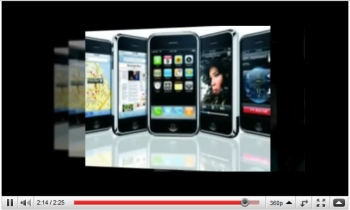
A YouTube video pitch for DataNetwork affiliates claims the company is offering a branded iPhone.
Have DataNetworkAffiliates and its multilevel-marketing sales force finally gone too far?
Oprah Winfrey and Donald Trump now have company on the list of famous names DNA promoters claim have ties to the firm — and this time the name is bigger and has even deeper pockets than Oprah or The Donald: Apple Inc., the inventive, Steve Jobs-led electronics behemoth that brought the world the Macintosh, the iPod, the iPad, iTunes and the iPhone.
A video on YouTube asserts that DNA is offering a branded iPhone dubbed the “DNA iPhone.” Meanwhile, the video asserts that DNA is the “ONLY Network Marketing Company With Branded iPhones.”
Video asserts that DNA is the "ONLY Network Marketing Company With Branded iPhones."
The video provides no substantiation of the claims and does not show such a branded iPhone. Regardless, a URL at the YouTube site encourages viewers to register for DNA and “JOIN A FREE BUSINESS AND MAKE INCREDIBLE RESIDUAL INCOME.”
It is far from clear that DNA has any business relationship at all with Apple, despite the claim it was selling DNA-branded iPhones. A separate YouTube video that appears to have been posted by another DNA member implies that DNA not only has an iPhone, but that the iPhone comes with a “No Term Contract” for $10 a month.
“You are Not in Kansas Anymore!” the second video screams. “This is Global Baby!”
Apple, which is known to defend its brand and intellectual property vigorously, did not respond immediately to the PP Blog’s request for comment. It
A second video implies the iPhone comes with a price tag of only $10 a month with no contract
is not believed that DNA, which uses a domain registered in the Cayman Islands and has conducted customer service for months with a free gmail address, has any licensing agreement with Apple for cell-phone marketing, pricing or the use of Apple’s intellectual property.
Images of iPhones, however, appear in the YouTube promotions and on DNA’s website. A picture of an iPhone G3 and other phones is featured prominently on the DNA site, below a headline of “Introducing UNLIMITED Talk, UNLIMITED Text with UNLIMITED Data Plans: DNA Cellular Begins Full Service May 2010.”
Neither Winfrey nor Trump’s organizations responded to requests for comment from the PP Blog when contacted in February to determine if either celebrity had endorsed DNA or authorized their images to be used in promotions for DNA. Images of Winfrey and Trump appeared for 10 continuous minutes in a YouTube video for DNA.
One DNA promoter claimed during a conference call earlier this year that the company had “certain people on speed dial that’s incredible.â€
Apple was made aware of the DNA iPhone claim on YouTube by both email and telephone earlier today.
The iPhone claim in the DNA promos is included among a series of claims — all of which raise questions about licensure, the use of trademarks and other intellectual property and the often seedy or disingenuous practices of multilevel-marketing (MLM) companies and affiliates who attempt to attach their names to famous entities and individuals to create legitimacy by osmosis.
DNA, which has been in business for only months, did not even start out in the cell-phone trade. Rather, the company told members that it was in the business of recording license-plate numbers for entry in a database that potentially could be helpful to law enforcement and the AMBER Alert program.
Claims that DNA could help the U.S. government and law enforcement locate abducted children were made despite the fact the company uses a domain registered offshore and conducts support through gmail, apparently by using an autoresponder.
In a bizarre response to concerns about the Cayman Islands domain, the company said it had chosen “privacy†protection on the domain for $5 “to prevent management from having to “put up with 100 stupid calls a day,†a member told the PP Blog.
Virtually overnight the company morphed into a purported cell-phone business, declaring “GAME OVER – WE WIN” and bragging “DNA goes CELLBALISTIC with TALK & TEXT Unlimited $10 Monthly with FREE PHONE . . . D.N.A. HITS 100,000 SIGN UPS in 60 DAYS . . . D.N.A. GOES CELLBALISTIC WORLD – WIDE . . . A TEN BY TEN EQUALS MORE MONEY THAN YOU CAN SPEND . . . If you thought finding ten people to write down 20 plates was easy . . . wait until you offer TALK and TEXT UNLIMITED FOR $10 A MONTH WITH FREE PHONE.”
DNA plants the seed on its own website that the iPhone is in its product lineup.
Within three weeks of making the claim that it had conquered the cell-phone business, DNA admitted it could not offer unlimited talk and text with a free phone for $10 a month. Incredibly, the company said it researched pricing only after announcing the $10 plan.
DNA then sent members a pitch for a product known as the “DNA Sleep System,” offering “50% off” a purported price of nearly $2,000.
“This sleep system has 400% Deeper Penetration than it’s predecessor with new ‘Three Dimensional Magnetic Fields’ The First of Its Kind with Patented Technology!†DNA said.
“The D.N.A. OUTFRONT Magnetic Sleep System is 400% more powerful than anything currently in the marketplace. Out of everything under the D.N.A. Opportunity this is one of the most exciting and more profitable items which will be listed with DNA CONNECTS.â€
Members of DNA continue to promote the $10 plan and to make liberal use of the names of famous people and products across the web.
EDITOR’S NOTE: Here’s one for your Bubba Blue notebook on the various ways to have a Ponzi scheme, as opposed to shrimp — and this one actually wafts with the myth of food — in this case, chicken and burgers.
More than 200 investors have been fleeced in a bizarre scheme in which an Ohio man persuaded them to turn over $7 million to build franchise restaurants for Pioneer Chicken and McDonald’s, the FBI said.
The trouble with David J. Harriett’s scheme, the FBI said, was that he “knew that neither he nor his company had any contracts with McDonald’s or Pioneer Chicken, let alone franchise construction contracts.”
Harriett, 60, of Warren, Ohio, now has been charged with mail fraud. Prosecutors said the scheme operated for at least 14 years through Harriett’s company, DJ Harriett Inc.
“Fraud in the market place is a significant problem that negatively affects consumer confidence and, ultimately, economic recovery,†said U.S. Attorney Steven M. Dettelbach of the Northern District of Ohio. “For these reasons, we will continue to vigorously prosecute Ponzi schemes.â€
The case was investigated by the interagency Financial Fraud Enforcement Task Force established by President Obama in November 2009.
Harriett told investors he was a “project manager” for Pioneer and McDonald’s and built restaurants in Northeast Ohio, New York, Indiana, Pennsylvania and Florida, the FBI said.
Investors were given promissory notes that purportedly “guaranteed the return of their investment, plus significant interest,’ the FBI said.
It was all a fantasy, the agency said.
“Harriet sent numerous letters through the mail to investors which falsely represented the success and growth of the company as well as the existence and success of franchise construction contracts,” the FBI said.
Ponzi payments were made using money from some investors to pay other investors in a shell game, the FBI said.
Harriett “knew the investor money was not being put to any legitimate use, but rather was being used to make Ponzi payments to other investors, to operate DJ Harriett and for his own purposes and personal use,” the agency said.
Kaboom! It has happened again. Explosive court filings by the government show that kneejerk apologists and defenders of High Yield Investment Programs (HYIPs) and autosurfs are quickly running out of cover when they assert that anything is noble or even real about the programs they relentlessly push for their share of purported profits from introducing others to the schemes.
A law-enforcement task force consisting of the U.S. Secret Service, the IRS and veteran investigators from other agencies that specialize in reverse-engineering complex money-laundering networks have tied funds from a widely promoted online HYIP to the international narcotics trade and a murky money-services business. Research shows that the program and offshoots could have gathered between $100 million and $200 million before the wanton criminality was exposed after exhaustive investigations. The program was advertised as lucrative and harmless on the Ponzi-friendly ASA Monitor and TalkGold forums.
Research by the PP Blog suggests the purported investment program was so sordid that promoters even claimed some of the funds were being used for the “humanitarian” purpose of assisting kidnapping victims in Colombia. In a sickening display of marketing theatrics, a claim was made that investors could “adopt” kidnapping victims for a payment of $1,000 and that the company would set aside $500 in corporate funds for each victim so that their families could have bright futures if the victims ultimately were released by their captors.
The HYIP scheme allegedly was associated with an entity known as Evolution Market Group (EMG), which purportedly had a Forex component known as FinanzasForex. Investigators alleged in January that there were schemes within schemes in a tangled web of domestic and international deception that featured dozens of bank accounts, shell companies and various fronts for money-laundering enterprises, including companies purportedly in businesses such as real estate and car washes.
The scheme was so corrupt, according to court filings, that some investors were told that, in order to leave the program whole, they had to recruit new investors, have the new investors pay them directly — and use the proceeds from the new investors to “recover” their initial outlays.
Members of the same Florida-based task force also are involved in the AdSurfDaily autosurf Ponzi scheme investigation. In the ASD case, records show that the company once advertised a debit card federal prosecutors in Connecticut say was offered by a Dallas-based firm that laundered money for a narco business in Medellin, Colombia. The Dallas firm, known as Virtual Money Inc. (VM), also agreed to launder purported drug proceeds in the Dominican Republic, according to court filings.
Robert Hodgins, the operator of VM, is now an international fugitive wanted by INTERPOL.
ASA and TalkGold are infamous for promoting international financial frauds, with posters routinely describing the programs as legitimate. The very first post about the alleged EMG scheme at ASA referenced yet another Ponzi scheme — 12DailyPr0 — and informed prospects that they could earn commissions by introducing the alleged Forex component of EMG to others.
“I have been in internet business for 3 years now and in autosurf industry from 12dailypro,” an ASA poster began, while promoting EMG’s Finanzas Forex arm, which investigators now say was part of a grandiose scheme with tentacles in Central America, South America and Europe.
“And the (sic) you can earn also money from people under you if you want, you get 0,5% (sic) from every one that you bring (0,5% (sic) from his investment),” the poster said in April 2008.
Court filings in the EMG case paint a picture of an incredibly elaborate maze of companies and bank accounts set up to confuse both investors and law enforcement. At least 59 bank accounts, 294 bars of gold and nine luxury vehicles have been seized in the case. One of the cars was a 2008 Lamborghini Murcielago valued at more than $430,000.
The EMG allegations are explosive because they showcase the now-undeniable fact that people who promote programs such as HYIPs and autosurfs because such programs may pay “commissions” to recruit new members may be operating as fronts or conduits for international drug dealers and money-launderers.
Although ASD is not mentioned in a Task Force affidavit in the EMG case, forfeiture complaints against assets tied to both companies include similar allegations of wanton, relentless fraud. Compellingly, EMG allegedly sponsored “rallies” of members, an allegation in common with allegations in the ASD case. At the same time, research suggests that EMG touted offshore events in exotic locations.
AdViewGlobal, an autosurf with close ties to ASD, also touted offshore venues and once sponsored at least one meeting on a ship at sea, according to members.
Meanwhile, research suggests that both EMG and ASD went to great lengths to mask the schemes just prior to interventions by law enforcement and that both schemes had ties to narcotics traffickers and professional money-launderers.
Both the alleged EMG and ASD schemes were operating during the same general time period, roughly between 2006 and 2008, according to court filings. Each of the schemes had components of investment fraud that targeted people who spoke Spanish or English. Task Force agents have been investigating entities and individuals linked to EMG since June 1, 2008, including a mysterious entity known as DWB Holding Co.
“The conspiracy to commit wire fraud offenses that gives rise to this action is an international Ponzi/Pyramid scheme operated by Evolution Market Group (EMG) d/b/a Finanzas Forex, DWB Holding Company (DWB), Superior International Investments Corporation (SIIC), German Cardona (Cardona), Daniel Fernandez Rojo Filho (Rojo Filho), Pedro Benevides (Benevides) and others in which investors have been defrauded out of millions of dollars,” federal prosecutors said.
Federal agencies, including the U.S. Drug Enforcement Administration (DEA), seized “financial accounts” in DWB’s name during a drug investigation in Arizona, according to court filings in Florida. One account seized during the drug probe contained more than $24 million. The money was seized on Aug. 22 and Aug. 26, 2008, about three to four weeks after agents seized more than $80 million in the ASD case.
A section of U.S. law referenced in the EMG forfeiture complaint refers to “cocaine” and “marihuana,” among other drugs.
As the investigation progressed, agents established additional money-laundering links — and other bank accounts were seized, according to court filings. The precise mechanism by which purported investment money ended up in accounts seized in the drug case was not immediately clear.
Shameful Behavior By HYIP And ‘Surf Advocates
Still promoting autosurfs and HYIPs? Still selling yourself on the delusional theory that they’re harmless and that only “Socialists” or “Nazis” would support the government’s efforts to destroy them? Still arguing that journalists who write about the cases are “liberal” lackeys, have no understanding of the “real” issues and won’t be pleased until every single American entrepreneur is assigned an individual bureaucrat to make their lives miserable?
Still calling for federal prosecutors and Secret Service agents to be investigated because you love your downline commissions gleaned from Ponzi proceeds and the sale of unregistered securities, don’t want to part with them and figure that, if only you scream loudly enough and long enough, you’ll be able to persuade your fellow Americans that the cops are the real crooks?
In August 2009, the PP Blog reported that members of ASD, which is implicated in an autosurf Ponzi scheme involving tens of millions of dollars, advertised that the company used the debit-card services of VM in Dallas. Research suggests that Hodgins or a VM designate attended an ASD function in Florida shortly after ASD’s launch in late 2006.
Prosecutors said that VM helped the Colombian drug operation offload at least $7.1 million in illegal proceeds at automated teller machines in Medellin. Medellin once was home base of the infamous Medellin Cartel, operated by drug lord and terrorist Pablo Escobar. Escobar was killed by Colombia National Police in 1993.
Escobar was implicated in the assassination of Colombian presidential candidate Luis Carlos Galán and the bombing of Avianca Flight 203 over Colombia, which killed 110 people.
Autosurf and HYIP promoters long have claimed that participation in the illegal enterprises is harmless. The indictment against VM — and the allegations that it laundered money for a Colombian drug organization — demonstrates the dangers of participating in murky businesses in which participants have no way of knowing what is in the hearts and minds of other participants.
It was not immediately clear how long ASD used the VM debit card, which was heavily promoted in early 2007 when ASD said it was having cash-flow problems. By 2008, ASD said it was generating tens of millions of dollars of revenue per week. Some members said they observed huge sums of cash and brief cases full of cashier’s checks at ASD rallies in Florida cities.
Two Colombian conspirators “directed their agents in the United States to provide proceeds of sales of controlled substances to agents of VIRTUAL MONEY, INC. to be sent to Colombia so the proceeds could be made available to the clients,†according to the indictment against Hodgins.
VM “stored value cards were used by the members of the conspiracy to make available at a Daviviendo Bank ATM in Medellin, Colombia the peso equivalent of US $2,430,810.24 in April 2006; US $2,437,023.53 in June 2006; and US $2,257,761.45 in August 2006,†prosecutors charged.
VM and its president, Robert Hodgins, were indicted under seal in 2008 in a case brought by the DEA. The seal was lifted in September 2008, a month after the U.S. Secret Service seized 15 bank accounts in the ASD case.
ASD was accused by the Secret Service of operating an international Ponzi scheme.
One of the alleged components of the ASD scheme was an autosurf named LaFuenteDinero, which targeted people who spoke Spanish. Records show that one of the Secret Service agents involved in the ASD investigation formerly was a member of a DEA Task Force in Florida and was experienced in “investigating large criminal organizations that distributed and sold controlled substances.â€
In November 2009, the PP Blog reported that the Secret Service expressed a fear in court documents originally filed under seal that ASD President Andy Bowdoin had become aware of scrutiny into his business affairs in 2008 and planned to flee the United States.
“Based [on] ASD’s indication that it intends to cease accepting funds into [Bank of America] at the end of July 2008, Bowdoin’s indication that he has relinquished his interest in Golden Panda [Ad Builder], and an indication that Bowdoin intends to establish his offshore presence, and the recent complaints governmental authorities have received, I believe that Bowdoin is aware of increasing scrutiny and that he intends to move himself, his proceeds, and, until it collapses possibly his operation, offshore,†the Secret Service wrote in an affidavit.
Golden Panda was the purported “Chinese” arm of ASD, according to court filings.
The agency said Bowdoin had moved millions of dollars into Canada just prior to the seizure of his assets.
Read a warrant originally issued under seal Aug. 1, 2008, by U.S. Magistrate Judge Alan Kay, who ordered the U.S. Department of Homeland Security to seize a Bowdoin bank account that contained more than $31.6 million. The entire sum was in an account under Bowdoin’s name. Agents eventually seized at least nine other Bowdoin accounts that, in the aggregate, contained more than $34.2 million.
In recent days, the PP Blog reported that the alleged INetGlobal autosurf Ponzi scheme in Minnesota, which allegedly targeted Chinese prospects, had ties to at least three other Ponzi cases, including ASD and a separate Florida case in which it was alleged that the same debit-card company that provided services for INetGlobal provided services for a company implicated in a $22 million Ponzi scheme with ties to Panama.
Some INetGlobal members provided Chinese prospects instructions on how to offload profits onto debit cards that could be used to withdraw cash at ATM machines, according to promotional material for INetGlobal. About $26 million has been seized in the INetGlobal case.
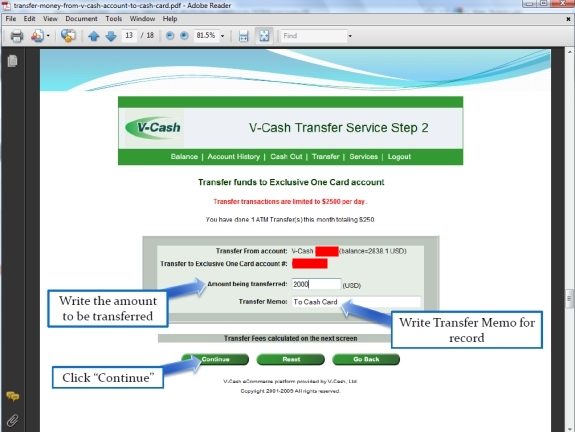
INetGlobal-related entities such as Cash Cards International (CCI) and V-Cash now have been linked to a fourth financial-fraud scheme known as Megafund. In the $13 million Megafund case, it was alleged that CCI and V-Cash provided services for certain participants in the Megafund HYIP scheme. At least $175,000 purportedly transferred by a mysterious entity known as MexBank S.A. de C.V. passed through CCC and V-Cash, according to court filings.
The money was described in court filings as commission payments for the Megafund scheme. Authorities later determined that MexBank was “neither a bank nor a legitimate financial institution licensed” in Mexico, despite its official-sounding name.
Bradley C. Stark, one of the defendants in the Megafund case, was convicted in 2003 of possessing counterfeit government securities. He was released from prison and was on probation while participating in the Megafund scheme, according to court records. The scheme targeted Christians, and investors were told money was being directed to humanitarian causes.
Forbes magazine wrote about the Megafund case in July 2005, in a story titled “Too Good To Be True.”
Less than four years later, the AdViewGlobal autosurf sent an email to members that included Forbes’ logo in a sales pitch. Research showed that the logo had been hotlinked from Forbes’ website and that AdViewGlobal members were attempting to create the appearance that the famous publishing company had endorsed the autosurf scheme. Like the Megafund and EMG schemes, participants in AdViewGlobal were told a portion of the money was devoted to humanitarian causes, including a purported fund devoted to preserving the rainforest.
In the AdSurfDaily case, members said the company touted a contribution of 100,000 “ad packs” to a charity. The donation was used by promoters to position Bowdoin as a benevolent human being.
At an ASD rally in Las Vegas in 2008, Bowdoin asserted that he thanked God daily for making him a “money magnet,” and he implored members to imagine themselves coming into large sums of money through rebates on ASD advertising purchases that not only would return 100 percent of the cost of the members’ advertisements, but also pay them at least 25 percent beyond that — more if they rolled over a percentage of their purchases.
The payment-processing arm of INetGlobal also has been tied to a Ponzi scheme known as Learn Waterhouse, which purportedly advertised a presence in Mexico, according to court filings. Four people have been sentenced to lengthy prison terms in the Learn Waterhouse case, some of the underpinnings of which led to the successful prosecution of INetGlobal operator Steve Renner for income-tax evasion in December 2009.
Filings in the Learn Waterhouse case assert that Renner, who operated both CCI and V-Cash, used customers’ funds as though they were his own.
When the Learn Waterhouse receiver tried to reclaim the funds to make Ponzi victims as whole as possible, the money was not available because Renner had spent it on personal purchases, according to court filings.
If you are playing the HYIP and autosurf games, the PP Blog suggests you read these documents from the alleged EMG Ponzi case.
This promo by a Narc That Car member appeared on a .org website that used AMBER Alert's name in its URL. The U.S. Department of Justice, which administers the AMBER Alert program, denied in February that it had any affiliation with Narc. Days later, Narc removed a reference to AMBER Alert in its own video production to advertise the opportunity. The actions of both Narc and its promoters have led to questions about whether the company had come into possession of money based on misrepresentations that caused prospects to believe they were helping out worthwhile causes by joining Narc. The very first Narc promotions observed by the PP Blog were authored by members of AdSurfDaily and Golden Panda Ad Builder, companies implicated in a Ponzi scheme involving tens of millions of dollars.
EDITOR’S NOTE: Narc That Car says it is a private company and has no duty to reveal the names of its data clients. This essay challenges Narc’s arguments.
UPDATED 4:33 P.M. EDT (U.S.A.) The public has a compelling interest not only in learning the identities of Narc That Car’s clients through appropriate channels, but also in learning the identities of the company’s data-gatherers who may hold jobs in the public sector and are supplementing their income by moonlighting for Narc as consultants.
Narc is a highly questionable business. Moonlighting by public employees in highly questionable ways is one of the elements in the Scott Rothstein Ponzi scheme in Florida. Rothstein is alleged to have employed off-duty members of law enforcement as bodyguards while he orchestrated a $1.2 billion fraud. Moonlighting also is an element in a recent case in which investigators in Georgia probed allegations of sexual assault against Pittsburgh Steelers’ quarterback Ben Roethlisberger, who employed off-duty police officers as bodyguards.
The assault allegedly took place in the women’s restroom of a nightclub. Roethlisberger was not charged in the case, but was suspended for six games by the NFL for conduct detrimental to society and the league. Two Pennsylvania police officers working for him potentially face disciplinary action for sullying the reputations of their departments and not extricating themselves from a situation in which a crime or crimes might have been committed in their presence.
Why Wouldn’t The BBB Have Questions?
Today the PP Blog challenges its readers, including its critics, to read this essay, observe the sampling of graphics and answer a few simple questions: Why would the Better Business Bureau, responsible businesspeople, journalists, law-enforcement agencies and taxpayers not have questions about Narc That Car? (Now suddenly known as Crowd Sourcing International after issuing checks to members under at least two different names earlier in the year.)
And why isn’t the company stepping forward with answers that enlighten, not deflect or hop-scotch, around key issues? The company should supply the information to the Better Business Bureau and any law-enforcement agency that asks for it. Information Narc provides could be kept private while any investigation ensues and released by the government if it is determined that wrongdoing has occurred.
Narc says it is in the business of paying people to record the license-plate numbers of cars for entry in a database that will be used by “lien holders” and companies that repossess automobiles when owners default on loans.
Members of Narc say they record plate numbers randomly — in places such as parking lots — on the off-chance the vehicle is or later will become a target of the repo man. Narc’s data-gatherers are required to provide the address at which the plate number was viewed and recorded. Because the location data likely will be stale and the car likely will be moved before it becomes the subject of a repo bid, there are legitimate concerns about the actual usefulness of the data to lien-holders and concerns about whether Narc is just an excuse for a business, not an actual business capable of making profits from retail sales to database clients.
There also are significant concerns about privacy, and the propriety, safety and legality of the Narc program. Some Narc members have advertised that they collect “extra” plate numbers and use them as incentives for prospects to qualify for commissions without gathering data themselves, a practice that leads to troubling questions about whether Narc members have provided corrupt data to the company. An unknown number of plate numbers recorded in Narc’s database may be third-party sightings passed along to incoming members who entered bogus addresses at which plates purportedly were sighted — all to qualify for payments.
Equally troubling is that Narc, which has to know that some members are providing plate numbers for downline recruits, does not reveal the names of its database clients, saying the information is proprietary. There may be no way for existing Narc clients to know whether the data Narc reportedly is selling has been corrupted by the practices of members so eager to earn money that they’re giving away plate numbers and the recipients of the plate numbers are fabricating addresses at which the plates were spotted.
Corrupt data is worthless data.
There are reports that Narc can verify the validity of a plate number — but it is inconceivable that Narc has the means to verify that the plate actually was spotted at a specific address. Adding to the ripples of a potentially corrupt data stream is that some Narc members have instructed incoming members in purported “training” videos not to bother noting the address at the time the plate number was sighted. Rather, the prospects have been told to go home and look up the address on the Internet or refer to a store receipt if they happened to be shopping at, say, Walmart or Giant Eagle, when they were doing their side business for Narc.
These practices introduce not only the potential for abuse, but also an undeniable element of “wink-nod” into the business proposition. Gather extra numbers. Give them away. It doesn’t really matter if the car was parked there or not. Any address will suffice. Just get an address off the Internet.
Members appear to be able to enter any address they please, whether the car was spotted there or not. Meanwhile, some members have openly said they don’t like their neighbors knowing they’re recording plate numbers for a fee, so they record the numbers in the same fashion a character in a spy novel hides behind a newspaper or makes himself invisible in plain sight. The casualty is transparency at virtually all levels, meaning clients don’t know if they’re buying reliable data, members of the public don’t know if their cars are being watched and if profiles are being created, and Narc members don’t know anything other than the information Narc chooses to share.
Public Esteem For Police At Stake Amid Confusing Claims
Narc members say police officers have joined the Narc program as data-gatherers and upline sponsors. If true (and the PP Blog believes that police officers are involved in Narc), it is incumbent upon Narc to publicly identify the police departments for which the officers work.
Because of claims made by Narc promoters, the public has the right to determine if officers who belong to Narc are collecting data while on “city time” or during their off-duty hours and assisting Narc in ways that nonpolice members of Narc cannot.
Why? Because Narc largely operates in the shadows. Moreover, some of the public claims of its promoters have been beyond reckless — and only Narc knows the truth about how it is paying members and using the data they collect. If Narc has police officers among its ranks amid these circumstances, it means the officers are promoting a business they may know very little about.
Police officers should not be promoting a business they know very little about, especially amid these circumstances. That Narc is paying members is not evidence that no wrongdoing is occurring. All successful pyramid and Ponzi schemes pay members. Moreover, the advertising and “training” claims of Narc promoters alone give officers all the information they need to pull out of Narc today and potentially spare themselves and their departments embarrassment later — just as Rothstein’s bodyguards and Roethlisberger’s bodyguards should have pulled out.
That the officers are repping for Narc and not providing security services is immaterial. Narc emits the same kind of stink. It stinks even if it’s legal.
Few people would begrudge a police officer for supplementing his or her income in legitimate fashion — but that is not the issue here. The issue is whether Narc and many of its data-gatherers are legitimate. The Better Business Bureau has expressed concerns that Narc might be a pyramid scheme. Whether Narc is a pyramid scheme is not the only issue, however. This essay points out some of the other issues.
Only Full Transparency Can Lead To Clarity For Narc Members
Absent full transparency from Narc, no police officer or nonpolice officer gathering data, asking people to send money to Narc and building Narc downlines can determine if they are promoting a scam.
Period.
There have been reports in recent days that Narc — through its own unfiltered channels — has claimed the reason it does not publish data clients’ names is because such clients got “incessant” calls when it did publish the names.
This claim strikes us as the precise kind of dreck that cannot pass the giggle test on Main Street but somehow passes the plausibility test in the most florid hallways of MLM, which much of America and the world already view as a cesspool. Not only is the claim absurd, it also is contrary to promoters’ claims that Narc was employing a revolutionary MLM concept by which members would build the database product first and Narc would sell it to retail customers later. This approach could be illegal if Narc does not have “true” customers (database clients) in sufficient volume to destroy the pyramid concerns. Although some Narc promoters have claimed the company has “investors,” the claim itself only leads to more questions: Who put up the purported investment money if investors actually exist?
Narc promoter “Jah” (see below) has been telling prospects for months that Narc reps engage in “No Selling, Trying, Switching, or Using Anything” — in short, Narc’s data-gatherers do not buy the retail database product. Rather, they pay an up-front fee to earn the right to submit plate numbers, become Narc recruiters and have the prospect of earning more money by sponsoring more fee-paying members who pay for the right to submit plate numbers and become recruiters themselves, and Narc sells the database to another set of customers.
These claims and similar claims have led to concerns that Narc was operating a pyramid scheme. Such an approach also can be viewed as a Ponzi scheme. Absent continuous membership growth and real profits from sales to retail database customers to support the payments to Narc’s data-gatherers, the business could collapse.
A video promotion in February by another Narc member showed a tab labeled “Clients.” The video was recorded inside the member’s Narc back office and appeared on YouTube — after Narc had been operating for months. “Don’t worry about that right now,†he said of the “Clients” tab. He did not explain why members should not concern themselves about the tab, which led to questions about whether Narc had data clients in sufficient volume to quash concerns that members were getting paid exclusively or almost exclusively with money from other members — not retail sales to database clients.
This Is ‘Training?’
The promo was described as a teaching tool in a YouTube headline titled, “NarcThatCar Training Video.†In the same video, viewers were told that the parking lots of libraries, schools and universities provided a steady stream of license-plate numbers to be harvested and entered into the Narc database.
“So, carry a pen and paper with you,†the narrator instructed. “You can go to parking lots. You can go to libraries. You can go to schools. My wife goes to the university, and just goes through the parking lot and collects license-plate numbers.â€
An address in the video suggests plate data was recorded in or around the University of Nevada, Las Vegas. The address is the same street address as the UNLV campus. Indeed, one Narc promoter after another has pointed one prospect after another to sources of license-plate data, implying that cars parked on both public and private property were fair game for downline commissions.
Not even public schools, universities and libraries were off limits in Narc’s universe of members. Narc itself has said its database will be used to locate people, boats, cars and any item imaginable. Data is being mined on both private and public property, and Narc itself says the plate numbers are checked against “the DMV,” commonly known in many U.S. states as the Department of Motor Vehicles.
If Narc’s data is checked against the DMV, then Narc’s business is the public’s business. The public has an interest in determining the identities of Narc’s data clients in no small measure because the data potentially could be used to monitor private citizens and people who hold sensitive jobs in government, science, research and the military.
Narc’s explanation that its clients’ names are proprietary is unacceptable. Its own members are claiming plate numbers are “public” information and “training” prospects to drive through “university” parking lots and the lots of retail stores and restaurants to get a supply of tags, which are checked against DMV records.
If you’re shopping at Walmart, for example, your plate number could be recorded and entered in Narc’s database by a Narc participant in search of MLM commissions and interested in recruiting prospects who could record your plate number elsewhere, leading to even bigger commissions and an even greater loss of your privacy. Incredibly, some Narc promoters have anticipated the public’s objection to such a pursuit, answering it with a chilling argument that people who’ve done nothing wrong have nothing to fear.
That is just downright creepy. Is it any of Narc’s business where you park your car because it wants to help the repo man repossess your neighbor’s car? And what if the repo man isn’t Narc’s only client?
What if a company poses as a repo company or a “lien holder” company and has an objective totally unrelated to the repossession of collateral? What if a suspicious husband with a violent streak, for example, wants to monitor sightings of his wife’s car? What if a private investigator wants to determine where you spend your time? What if the government wants to determine if you’re seeing a shrink? What if an unfriendly government wants to monitor the whereabouts of an important government official or scientist?
Narc’s purported assurance that members don’t record the plate numbers of government vehicles is hollow because government employees own private cars and do not always travel in government vehicles. The sensitivity of their jobs does not vanish if they are in their private cars whether on-duty or off, and the prospect that a data profile on the movement of these cars can be created and offered for sale is unacceptable.
It is unacceptable whether the target for monitoring is employed by the government or is just an ordinary citizen employed by any private company. Cars are inexorably linked to their owners. To track the car is to track the owner. Left unchecked, Narc could be used as a data source by private and public entities to monitor people. That is inconsistent with liberty and privacy. It is offensive by its very nature because it potentially puts people who don’t know they are being watched under a microscope, and it is offensive to any notion of propriety because it potentially puts private citizens in the business of spying on other private citizens to qualify for downline commissions. That Narc’s own members are cheerleading for the supposed riches to be made by helping the repo man theoretically get the neighbor’s car causes one to wonder if America is taking leave of its senses and willing to package and sell anything.
What’s next? News releases from Narc that announce yet-another successful repo brought about by the company’s army of commission-based spies?
A World-Class Example Of MLM Excess
MLM has served up a doozy this time: Peel away the hype and Narc emerges as a private spy-agency-in-waiting. At last count, 52,000 people have expressed a willingness to help Narc build the database and share in the joy of knowing they’ve helped the repo man separate a struggling, stay-at-home Mom from the car she shares with her laid-off husband who lost his job when the economy went in the tank.
Lien-holders do have the right to seize their collateral if a car owner is in default. Lenders do have a corresponding duty to be responsible to investors and depositors to protect assets. But to create a cheerleading section for the repo man when unemployment is at 10 percent is something only the darkest minds in MLM could serve up. That people seem actually to be comforting themselves with the thought that they’ve performed some sort of civic duty by ratting out their neighbor to the repo man and somehow made America a better place is one of the surest signs yet that a big pocket of U.S. commerce has become morally bankrupt.
And that’s before the Narc privacy and security issues are examined in any detail.
Does anyone really want Narc to come into possession of data that could be used to create movement profiles on private citizens in any context — all under some implausible theory that the repo man needs extra help?
Sensitive research — including research paid for by the government — is performed by some universities. The data could be used to monitor people who hold sensitive jobs. This makes it the public’s business to determine precisely what Narc is doing and how and why it is doing it.
A ‘GOOGLE Opportunity Like Never Before’
Narc, according to an email members received, also is blaming the media for not understanding what it is doing. Its response to the bad press it has received recently was to tell members not to worry, that Narc remains a “GOOGLE Opportunity like Never before” — and then close the email with insipid, flowery motivational drivel, including this gem: “EVERYTHING is funny when you [sic] making MONEY!”
Even dispossessing your cash-strapped neighbor of his car, apparently, is funny as long as it pays a downline commission.
The email reminded us of the now-defunct Surf’s Up forum, which promoted the now-defunct AdSurfDaily Ponzi scheme by instructing members that “there are no prizes for predicting rain, only for building arks.” Perhaps finding the fuel they needed in Surf’s Up’s trite prose, many members of ASD pressed forward, introducing prospects susceptible to the harmful power of trite prose to one Ponzi scheme after another.
As we proceed in this essay, we ask readers to note that check-waving videos and “earnings” reports produced by some members of MLM programs are not evidence of success or honesty. It often is the case in the MLM sphere that promoters who throw caution to the wind and pitch programs they know little or nothing about end up the biggest winners, with the vast majority of participants breaking even or losing both money and time that could be better spent trying to make ends meet by other means.
Moreover, it often is the case that willfull blindness and forced ignorance are the dominant traits displayed by promoters. Incongruously, a lack of knowledge about companies and products is what often drives MLM profits.
Practiced hucksters often prefer ignorance themselves, while also preferring prospects who will not ask hard questions and are willing to pass along hype and unchecked information as though they were the high gospel of truth.
BBB’s Concerns Grow
Although Narc That Car provided the identity of a single, purportedly “major” client to the Better Business Bureau April 27, the BBB now says “the client’s identity only raises more concerns” about the company.
The BBB did not disclose the name of the Narc client or reveal why its doubts were heightened after Narc provided the information. On its website, however, the organization said it is “communicating” its concerns about the client to Narc. The BBB also noted its inquiry into Narc advertising claims remains open. The advertising inquiry began Jan. 18. It has been unresolved for nearly four months.
On March 3, the BBB noted, the organization asked Narc to provide a “comprehensive” list of clients. Narc responded April 27 by providing the name of “one of its major clients,” a development that not only did not dampen the BBB’s concerns that Narc was using a pyramid business model and did not have a product with true value, but also ramped them up.
Narc That Car has identified Rene Couch as its vice president of marketing. He also has been listed by titles such as executive vice president and chief field advisor, leading to questions about whether Narc and its promoters were making things up as they went along.
Narc already has an “F” rating from the BBB, the lowest score on the organization’s 14-point scale. In the past two weeks, at least two television stations in major markets in the United States have aired reports about Narc, questioning Narc’s business practices, the level of knowledge Narc’s promoters have about the Dallas-based company and Narc’s willingness to address the questions in an atmosphere of transparency.
Meanwhile, some Narc promoters have been attacking the BBB and accusing the TV stations of biased reporting — instead of insisting that Narc get out in front of the stories and concerns and put the issues to rest.
BBB Under Attack
One of the promoters attacking the BBB is Ajamu M. “Jah” Kafele. Kafele once was accused in Ohio of practicing law without a license and ordered to pay a civil penalty of $1,000 by the Ohio Supreme Court after the bar proved its case against him.
Attorney or not, Kafele is no stranger to the courts. What follows in the passage below is an exchange between Kafele and the attorney for a law firm he had sued for attempting to collect a debt. The exchange started after the lawyer asked Kafele how old he was. In response, Kafele attempted to assert his 5th Amendment right not to answer the question — in a case in which he was the plaintiff, not the defendant, and a case in which a federal judge admonished him that his “invocation of the Fifth Amendment in response to that question was improper.”
A. [Kafele]. I don’t recall my age. Next question. Q. [Defense counsel]. What was your date of birth? A. I don’t recall my date of birth. Q. Do you have a driver’s license on you? A. No, I don’t. Q. Do you have any form of identification on you? A. No, I don’t. Q. Where were you born? A. I don’t recall. Q. Do you have parents? A. I don’t recall. Q. Do your parents — are your parents living or deceased? A. I don’t recall. Are you going to ask me some relevant questions to the defense and claims or are you going to find out about my livelihood for your personal gain? Q. You’ve indicated you don’t recall whether — A. That’s right. Q. — or not you have parents. Do you have siblings? A. I don’t know. Q. Are you married? A. I don’t recall. Q. Where do you live? A. I don’t recall. Q. What’s your home address? A. I don’t recall. Q. How long have you lived there? A. I don’t recall. Q. What’s your current occupation? A. Who said I had an occupation? Q. Are you gainfully employed? A. Who said I was employed? Q. I’m asking you a question. A. I’m asking you, who said I was employed? Q. Are you employed? A. I don’t recall being employed.
Three-figure, check-waving YouTube video by "Jah," who publicly announced his downline group was "not going to be out here flashing, you know, five-figure checks.†The video, which featured a claim that repping for Narc was like working for the "Census Bureau," later was removed from YouTube's public site. Why it was acceptable to publish a three figure-check but not a five-figure check was never explained.
Strikingly, Kafele, who once believed it was prudent to sue lawyers who were trying to collect on a debt, now has thrown in his lot with Narc That Car, which says it wants to help repossession companies collect their collateral when buyers default on loans. The case cited above did not have a happy ending for Kafele: A federal judge tossed the preposterous lawsuit he had brought, saying Kafele had engaged in “egregious” conduct.
“Plaintiff’s repeated and persistent refusal to participate in the discovery process has clearly been willful and done in defiance of the express and unambiguous orders of this Court,” U.S. District Judge John D. Holschuh said. “As a result, the defendants have been denied virtually all discovery in this case. Moreover, plaintiff has been warned — most recently in the April 4, 2005, Opinion and Order granting defendants’ motion to compel and awarding monetary sanctions against plaintiff, . . . that his continued refusal to participate in the discovery process would result in the dismissal of the action. Nevertheless, plaintiff persists in attempting to transform the litigation process initiated by him into a game. Under these circumstances, no sanction other than dismissal of the action is appropriate.”
Kafele now is telling prospects he is an authority on Narc That Car. He said he has hundreds of members in his downline. He has been conducting meetings in Ohio to recruit even more prospects, according to his website.
Fox TV Reports Exposed Promoters’ Willful Blindness
Not a single Narc promoter approached by Fox 5 in Atlanta in a package aired recently could identify a single Narc data client — and yet the promoters were out in force recruiting people for the firm. Meanwhile, Fox 11 in Los Angeles recently visited YouTube and reported on unsubstantiated claims passed long by Narc promoters to a worldwide audience, noting that California Attorney General Jerry Brown was seeking information on the firm.
It is known that attorneys general from at least three states — Georgia, California and Texas — are aware of growing doubts about Narc’s business practices.
Narc’s approach — and the approaches of its promoters — have caused even longtime proponents of multilevel marketing (MLM) to question whether the often-controversial industry had reached an all-time low and whether participants would buy into any scheme under the sun. It is clear that promoters either do not know if Narc is engaging in legitimate commerce or do not care if it is not
Narc promoter shows prospects that parking lots at the University of Nevada Las Vegas are an excellent source of license-plate data. Narc prospects in this promoter's YouTube video were given no guidance on whether the university or campus police needed to be consulted before recording the plate numbers of students, faculty and employees. The promoter said "libraries" were excellent sources of license-plate data.
— as long as commission checks for recruiting members keep streaming in.
As things stand, there is no way to determine if Narc is operating legally. The reason there is no way is that Narc does not reveal the names of clients, will not step out of the shadows, put an executive and attorney on TV or consent to a probing interview by a print journalist to answer the doubters and publish verifiable financial data audited by a CPA that shows inputs and outputs and the sources of revenue.
Any argument that suggests members are not entitled to this data or that the data is proprietary because Narc is a “private” company is not going to fly. The company’s promoters are saying that license-plate numbers are “public” information available for the harvesting by a membership roster of 52,000 people for the purpose of populating a database that Narc itself has said is going to be used to locate people, cars, boats and any item imaginable. That alone makes it the public’s business. Beyond that, promoters say Narc is using government databases to verify data. The assertion that Narc is using the DMVs of America’s 50 states to verify registration data gives the public a compelling reason to demand answers from the company.
Narc has a duty to tell the public through appropriate channels precisely what database it is using to cross-check data entered by members and how it is accessing the database. It also has a duty to reveal the names of its clients, explain how it screens clients, explain how it screens its data-gatherers, explain whether Narc is able to connect a car to a person when members enter license-plate numbers and explain how the data is secured.
Absent complete transparency, the privacy of every person whose tag number is entered by a Narc member is a potential casualty. It is inconceivable that Narc is empowering itself to collect your license-plate number — no matter where you park — because it has secret clients in the business of repossessing cars and there is a small chance that you are behind on your car payments or a person you do not even know parks his or her car in the same parking lot as you and is behind on his or her car payments.
This is the business Narc has chosen to enter — and the public has a compelling interest in knowing precisely how it operates.
Narc Subjecting Own Promoters To Embarrassment; Promoters, Company Blame It On Media
Narc exposed its own Atlanta-area members and prospects to embarrassment after a Fox 5 reporter showed up to a pitchfest with a hidden camera and could not get answers even to basic questions, but the company has not issued a statement that addresses the concerns in any real way and is suggesting the media is to blame.
No part of the Narc story is consistent with transparency or ordinary business practices — and the media attention likely is only now beginning. Viewers in Atlanta and Los Angeles — two of the largest markets in the United States — now have been treated to an appalling lack of professionalism in the MLM sphere, which only will fuel the public’s legitimate doubts about the industry as a whole.
Why wouldn’t the public believe the Internet is just one giant cesspool after viewing the reports on Fox here and here? If you’re a Narc fan and want to argue that Narc was ambushed, you need to know that Narc had plenty of opportunities to answer questions from journalists before they started hiding their cameras. The PP Blog, for instance, has attempted to contact Narc multiple times. The Blog is aware that other news sites have met dead ends in bids to get Narc executives and knowledgeable employees to answer questions, including NBC-5 of Dallas-Fort Worth and others.
The Fox 5 Atlanta report neatly exposed promoters’ willingness to cheer for a program, duck responsibility for their claims and then hide behind the skirt of a company when the heat became too intense.
The trouble with hiding behind Narc’s skirt, however, was that the skirt provided no cover for members. Promoters found themselves in the awkward position of taking heat for a company that did not defend them in any credible way. Narc’s skirt provided no cover at all, and yet some members merrily continue to promote the opportunity and apparently see no incongruity at all.
Let us spell it out: If you’re going to say the media must get answers from the company rather than promoters in the field, you are hiding behind the company’s skirt. And if the company does not provide the answers, you have no cover at all. This creates the appearance that the prospect of making money is the only thing you value. You certainly don’t value transparency if you’re hiding behind the company’s skirt, and the company certainly does not value transparency by ducking questions, avoiding them altogether or spinning things to create the appearance that the media are responsible for Narc’s lack of transparency.
The media are not responsible for Narc’s bad press; Narc and its promoters are. One Narc promoter created a red banner on a .org site to create the appearance that sending money to Narc was like donating to the Red Cross. Other promoters appropriated the name of the AMBER Alert program to do the same thing on a .org website. At one point the message became so impossibly butchered that a promoter urged prospects to “Help AmberAlert and other organizations find repossessed cars.â€
Some Narc members made much ado about a TV anchor referring to Narc as a “job,” but dozens of Narc members posted ads on craigslist that advertised Narc as a job. Promos for Narc have been reprehensible. One member claimed Narc would be used to help the Department of Homeland Security find terrorists. Others claimed that the FBI and the AMBER Alert program endorsed Narc.
These were blatant misrepresentations — plain and simple. If the MLM world wants the rest of the world to take it seriously, it has to quit serving up this slop and stop apologizing for its chefs and the seemingly mindless cheerleaders who cheer for the chefs even when roaches are swimming in the soup.
In the AdSurfDaily case, for instance, the Secret Service said the chef served up a Ponzi scheme. How did the cheerleaders respond? They called the Secret Service, the agency that guards the President and the Treasury, Nazis and “Satan.”
Now, amid a circumstance in which the BBB — one of America’s most recognized business organizations — has questioned whether the Narc chef is serving up a pyramid scheme that potentially affects tens of thousands of people, the cheerleaders are responding by trying to plant the seed that the BBB has a secret agenda and is infested with roaches. It is reprehensible — and it must not stand.
Myriad questions about Narc remain, including these:
Why are Narc promoters so willing to represent a company they know so little about?
Does Narc not understand that vague, ambiguous claims on its own website and its apparent unease in addressing media questions are what’s driving the story?
Why has a Narc PR spokesman not emerged to address media inquiries and become the face of the company? Why aren’t Narc executives stepping out in front of the cameras?
Why have the statements Narc has issued not explained the incongruity of insisting that license-plate data is “public” information while at once insisting the public has no right to know who its clients are, how they are being screened, how data-gatherers are being screened and how the information is being indexed and sold?
Why does Narc insist it has the right to collect your license-plate number and offer it for sale to a third party whose identity and motives are unknown to you?
Why do tens of thousands of Americans suddenly seem so willing to waltz through parking lots of major retailers to record the plate numbers of their neighbors and to recruit others to do the same — when they have knowledge in advance that troubling questions are being asked about the firm?
Why does the repo man suddenly need the help of a commission-hungry MLM army to dispossess people going through lean times?
Any chance that the “buy here, pay here” car business and the title loan business are backing Narc because the industry’s practice of approving anyone for a loan actually is driving repos?
Why are prospects so willing to hand over money when neither sponsors nor Narc itself are willing to provide information that could make the concerns go away?
How many data clients does Narc have and when did the clients become clients? How much revenue do the data clients generate for Narc weekly and monthly?
Is it possible that Narc is selling data to itself through a process in which it formed another company to become a Narc client or is relying on an alter ego of some sort or close association with another firm to create a client out of thin air?
Is Narc closely connected to the “buy here, pay here” automobile business, meaning an entity with a close association with Narc is making high-risk, front-loaded, usurious loans to disadvantaged consumers?
Is Narc closely connected to the title-loan and payday loan business?
Is Narc closely connected to the repossession business?
Does Narc have an investment angel? If so, what is the source of the money and was a private offering involved?
Is Narc making pyramid or Ponzi-style payments to members?
Narc promoter tells prospects the company was started to provide data to the Amber Alert system.
Who are Narc’s executives beyond CEO William Forester?
What are their names, job descriptions and backgrounds?
Do they have high positions in the MLM organization and rely mostly or exclusively on commissions or do they draw a salary?
Who are the members of Narc’s board of directors?
Are police officers involved in Narc? If so, are they collecting information off-duty or on-duty — and are they complying with the policies of their departments and their cities in their efforts to increase their income?
Promoters have claimed that Narc is authorized to verify license-plate data through the DMVs of all 50 states. Is that true? If so, is Narc able to view the names and addresses of vehicle owners and the makes and models of vehicles as police officers could do? If untrue, is Narc verifying the data entered by members through another process — for example, querying databases to determine if a plate number already is “taken” in a state and thus unavailable to any other party, and then concluding the plate is valid simply because it is unavailable to another party?
Is is possible that police officers are querying restricted databases on Narc’s behalf?
The parking lots of these famous companies are sources of license-plate data for Narc affiliates, according to a promoter. Whether any permission is required of store managers or motorists to record plate numbers for entry in a private, for-profit database is left to the imagination.
Are police officers and nonpolice officers alike collecting scores of plate numbers and using their supplies as incentives for people to join Narc? (The PP Blog has observed multiple instances in which Narc sponsors suggested they would supply the first 10 plate numbers to incoming recruits, thus qualifying them for an immediate payment from Narc.)
What part of the approach in the question above is consistent with an attempt to build a valid database, especially if Narc cannot verify that a “gift” plate number actually was viewed in a specific location by the recipient of the gift?
Why has Narc not publicly and loudly renounced the practice of providing the “gift” of plate numbers to incoming prospects? Can Narc tell if entire downline groups are simply trading or recycling existing plate numbers among members and instructing members and prospects to fabricate an address where the plate was sighted?
How can Narc possibly know if the cars members say were parked at a specific location actually were parked there?
What specific event occurred that caused Narc to remove a reference to AMBER Alert in a video promotion and insert the name Code Amber instead?
About Data Network Affiliates . . .
We’ll close this essay by asking a few questions about Data Network Affiliates, Narc’s purported competitor in the business of collecting license-plate numbers:
Is is possible that DNA saw that Narc’s new business of recruiting members to record license-plate numbers was resonating in the MLM universe? And did DNA then engage in a cynical ploy to build a customer base by incorporating Narc’s message — including references to law enforcement and AMBER Alert — simply because it was “working” for Narc?
DNA declares "GAME OVER – WE WIN" repeatedly in a hype-filled email pitch to announce a $10 unlimited cell-phone plan. The company had been in the cell-phone business only days when it claimed to be able to beat virtually every other competitor on earth on cell-phone pricing. Only weeks later DNA claimed it had been hoodwinked into believing it could offer such a price, removing the offer and claiming to be excited about its future.
DNA quickly backed away from emphasizing data collection after it observed Narc becoming the focus of critics who raised concerns about the propriety, safety and legality of Narc — and then DNA morphed into a sort of anti-Narc, saying it existed to help law enforcement only and would never share data with repo companies that wanted to take away cars owned by poor people.
What follows are DNA’s own words (italics added):
“DNA Affiliates STAY ALERT – They are watching out for their neighbors children. If DNA has 1 million affiliates that is 1,000,000 more people watching out for and caring about children world-wide.
“Other companies may collect data to sell to REPO COMPANIES to take cars away from many people who are just down on their luck. A single mom, a dad out of work or 100 other good reasons why good people just can not make a payment. One DNA Affiliate just had his car repossessed because he owed 3 payments and offer to pay two of them and they said no and picked up his car.
“DNA will have no part in such cases. At DNA we collect car data for one purpose and that purpose is that there is a small chance that this data in the right hands could help save a child or help prevent or solve a crime.
“We do not boast of 6 figure contracts with REPO COMPANIES. At the end of the day a DNA Affiliate knows that what they are trying to do will only be a FORCE FOR GOOD in their community…â€
DNA also positioned itself as the “free” Narc, before springing a $127 upgrade on customers to purchase a data-entry tool that worked faster than the clunker provided the “free” members at no cost. Free members were not told they were getting a clunker until the upgrade program was announced. Before long, DNA announced it was in the cell-phone business — and plenty of other businesses willing to sell products to members who thought they were joining a “free” business.
Could DNA’s approach be the most cynical, ribald effort in the entire history of MLM? And does the DNA braintrust not recognize that MLM has so many critics precisely because of the obnoxious and absurd approach of the man behind the green curtain and the men letting him get away with serving up ceaseless, hyperbolic slop?
In our view, DNA is the worst example of wretched excess the MLM trade has ever served up — and Narc is close on its heels for enshrinement in the Hall of Shame. To be sure, Narc is not the next Google, DNA is not the next anything — and the industry has demonstrated once again that many, many of its members think that trite talk about arks is the same thing as building one.
Part of the purported INetGlobal training material on how to transfer money to a debit card. (Red bar added to screen shot by PP Blog to block account number.)
Training material purportedly produced in November 2009 and published online shows prospects of INetGlobal how to transfer money from the company to a reloadable debit card. The presentation reveals that INetGlobal was using the same debit-card firm that provided services for a Florida man implicated in October 2009 — just a month before the INetGlobal training material purportedly was produced — in an alleged international fraud scheme that gathered at least $22 million and made Ponzi payments to members via debit cards.
The training material is confusing in places, and the form in which it was published suggests that some INetGlobal members with Chinese names shared information to recruit Chinese prospects. At the same time, the training material and other information accessible at the same website suggests Chinese members also worked together to create instructional materials that showed other Chinese members and prospects how to offload their profits in cash at ATM machines and receive $300 sign-up bonuses that may not have been available to all INetGlobal members.
It is possible that a single member or group of members created the training material and the companion information. Whether the material, which does not purport to be hypothetical and appears to include no disclaimer language, used the names of real members was unclear. Also unclear is whether the approach had the approval of INetGlobal. What is clear is that the information was published openly online and purportedly reflects INetGlobal financial transactions that occurred among Chinese members in November 2009.
A “Contact” address on the website that published the information lists a street address in British Columbia, even though the domain itself lists a registration address in Mainland China. The British Columbia street address returns a page in Google search results that purports to lay out a conspiracy case against judges in Canada for issuing unfavorable rulings in what appears to be a matter unrelated to INetGlobal.
Just two months earlier, in September 2009, some Clickbank vendors were complaining that links to their businesses were being placed in INetGlobal’s advertising rotator without their knowledge. The Clickbank vendors also complained that INetGlobal was passing along bandwidth costs to them and that their businesses were experiencing a surge in unproductive traffic from China.
The author of the training document on debit cards was listed as Annie Zhang, according to the “Properties” of the document, which was published in PDF format.
The training document was published on a website whose domain-registration address was listed as “Xian, Shanxi . . . China.” The domain on which the information was published was registered to Jun Zhang. The website encourages prospects to submit their email address and wait to receive a return email “to get a referrer ID and referrer name that you will need in the registration process.”
Visitors to the website registered in China are told that, by registering for INetGlobal in this fashion, they can “Make Free Fast Money $300 Right Now.” The site instructs viewers to purchase a “$2000 Executive Business Package,” provide proof of the purchase by return email and wait to receive their bonus.
“We will send $300 free fast money to your V-Cash account,” the site tells viewers. “If you prefer, we can send $300 to your PayPal account too!”
Another URL at the same domain instructs prospects on how to register for a Clickbank account to promote products through INetGlobal. The instructions are available in multiple languages, including English, Chinese and Japanese.
The debit card featured in the PDF training material on the website registered in China is known as the “Exclusive One” card and is issued by Anres Technologies Corp. of Las Vegas. The Exclusive One card is pictured in the INetGlobal training material, and Anres’ name is referenced in court filings by the U.S. Secret Service in the INetGlobal case.
Anres’ name also is referenced by the SEC in a case filed last year in Florida against David F. Merrick, Traders International Return Network (TIRN), MS Inc., GTT Services Inc., MDD Consulting Inc. and Go ! Tourism Inc. Merrick and the companies were accused of running a Florida-based Ponzi scheme that used debit cards and claimed a presence in Panama.
Among the claims in the SEC case was that “Merrick and TIRN falsely represented that investors requesting a withdrawal of funds would receive a debit card loaded with their initial investment and return on their investments, when, in fact, the money loaded on the cards was money from other investors,†according to the SEC.
The PP Blog wrote about the TIRN case on Oct. 15, 2009. Millions of dollars were moved across borders, the SEC said.
“[A]t least $2.3 million of investor funds were transferred to accounts in Panama, Mexico, Malaysia, Switzerland and the Netherlands,†the SEC said. It added that about $8.8 million was placed on debit cards to make Ponzi payments to members..
Although TIRN was not an autosurf, debit cards have become increasingly popular in the autosurf universe. The TIRN case demonstrated that alleged fraudsters were relying on debit cards to pull off international financial schemes.
Anres was not named a defendant in either the TIRN case or the emerging INetGlobal case. The company has not been accused of wrongdoing.
In recent months, the FBI has expressed public concerns that criminal organizations were turning to preloaded debit cards to launder money and that users were taking advantage of a “shadow” banking system.
Card Highlighted In Instructional PDF For INetGlobal
The purported INetGlobal training material appears in a PDF that includes screen shots. The person (or persons) who assembled the material appear to have Chinese names, and the English-language material walks prospects through the process of converting electronic credits to cash that can be loaded onto an Exclusive One debit card and withdrawn at ATMs.
In February, the Secret Service said it believed INetGlobal was targeting Chinese members in an international Ponzi scheme. The purported training material lists IP addresses in the United States and Canada in a manner that suggests Chinese members in both countries were working together to train other Chinese members how to offload profits onto debit cards and also how to transfer money using INetGlobal’s internal system from one Chinese member to another.
Among the assertions against INetGlobal by the U.S. Secret Service was that the company was engaging in wire fraud and money laundering. The IRS now has entered the case, which suggests that the government also suspects tax crimes.
Material Suggests Account-Sharing And Cross-Border Planning
The second page of the 18-page PDF purportedly shows the back office of an INetGlobal member who appears to have a Chinese name. This page lists the member’s name as “Dong,” lists a five-digit INetGlobal member number, a six-digit V-Cash account number and an IP address that comes back to Minneapolis. The page notes that automatic repurchasing of additional “adpacs” was enabled and set for 50 percent. Viewers were prompted to click on a tab labeled “V-Services.” In the next step, viewers were prompted to click on a graphic labeled “V-Cash Online Payment Services.”
This page forwarded to another prompt to click on a V-Cash logo, which led to a login screen that prompted members to enter a user ID and a password. A “Welcome” screen followed, and members were instructed to click on a tab that prompted them to go to the “Member Center.”
Once inside the Member Center, members were prompted to click on a tab labeled “V-Cash.” This led to a screen that prompted them to enter a password for their V-Cash accounts. The next screen shot showed that V-cash was logging members’ IP numbers; the IP number logged in this screen shot came back to Toronto. Why the shot displayed a Toronto IP when the earlier shot displayed a Minneapolis IP was unclear.
The Exclusive One Card, as pictured inside the training material.
The next screen shot prompted members to click on a tab labeled “balance.” This screen noted a “Currency balance” of more than $3,038 in the account. The next screen was confusing because the currency balance had been lowered by $200. Why the balance was lowered was not made clear in the presentation.
In the next screen shot, the presentation provided the initial instructions on how to transfer money to the Exclusive One card, which is pictured in the document. This screen shot also purported to show that members could transfer money from their V-Cash accounts to other V-Cash accounts from within the company’s internal system. The presentation prompted viewers to select the option to transfer money to the Exclusive One card and press “Continue.”
Thereafter, the presentation showed a purported transfer of $2,000 to the Exclusive One card. The presentation noted a $30 fee incurred when making the transfer. The fee rate for the transfer service was described as 1.5 percent. The screen shot noted that the total amount transferred, including the $30 fee, was $2,030. Viewers were prompted to “Click to Confirm” the transfer.
Part of purported INetGlobal traning material. (Red bars added to screen shot by PP Blog to block account numbers.)
One of the screen shots that followed purported to show a “History” of transfers to and from the account. One of the transfers showed a purported transfer “from” Annie Zhang to an INetGlobal member in the amount of $3,000. It was dated Nov. 3, 2009.
A person named Annie Zhang purportedly is one of INetGlobal’s top recruiters. Some promos for the firm have asserted Zhang was making $100,000 a month as an affiliate of INetGlobal.
Parts of the PDF presentation are confusing. For example, the member’s name that appears on the second page of the presentation does not agree with the member’s name that appears on Page 6 — even though the INetGlobal member account number appears to be the same, as does the V-Cash account number.
On Page 2, the member’s name is listed as “Dong” with an IP number that comes back to Minneapolis. On Page 6, however, the screen welcomes a member named “Lei.” An IP shown on Page 9 comes back to Toronto — not Minneapolis.
In the document’s published form, both Dong and Lei appear to have the same 5-digit INetGlobal number and the same six-digit V-Cash account number. Why two purported INetGlobal members would have the same account numbers is unclear.
INetGlobal Now Has Links To Three Ponzi Cases
In February and March court filings, the U.S. Secret Service linked INetGlobal to the alleged AdSurfDaily Ponzi scheme, alleging that an undercover agent was introduced to INetGlobal by an ASD member. The Secret Service brought the Ponzi case against ASD in August 2008.
The appearance of the Exclusive One card in the purported INetGlobal training material links INetGlobal to a second Ponzi court scrape: the SEC’s case against the alleged David Merrick/TIRN Ponzi scheme, which appears to have used the same debit card as INetGlobal to pay members. The CFTC also filed allegations against TIRN, and the U.S. Attorney for the Middle District of Florida also is investigating TIRN.
Separately, INetGlobal operator Steve Renner was linked to a Ponzi scheme known as Learn Waterhouse in 2004. A company Renner operates — Cash Cards International (CCI) — provided payment-processing services for the Learn Waterhouse scheme, and Renner himself purportedly was an investor in the scheme, according to court filings.
The document recounts the history of the case, including astonishing allegations that Learn Waterhouse told investors that it “had invested $2 billion in a gold mine in Mexico, and [was] working on a billion-dollar Columbus-era ‘find’ on the bottom of the ocean.”
Renner was alleged to have provided payment-processing services for Learn Waterhouse through CCI and to have spent investors’ money on personal purchases.
Randall Treadwell, the ringleader of the Learn Waterhouse scheme, “often claimed that he had a God-given ability to make money, but in hindsight it appears that his talents lay in extracting funds from duped investors,” according to court filings.
Indeed, according to filings in the Learn Waterhouse case, the “purported investments
did not exist at all.
“By the time the defendants’ far-reaching Ponzi scheme collapsed, more than 1,700 investors throughout the United States had lost their investments. At trial, the defendants produced no evidence to suggest that any investment profit was generated by their companies.”
Losses in the Learn Waterhouse case totaled at least $44 million.
Federal prosecutors say they believe INetGlobal and its parent company — Inter-Mark Corp. — hired an attorney for employees to derail a criminal probe into the companies’ business practices by muting the voices of workers who could become witnesses in the case.
Prosecutors made the dramatic claim in response to INetGlobal’s request last week for a court order that would prevent the U.S. Secret Service and other law-enforcement agencies “from contacting these represented individuals and requesting interviews.â€
No attorney-client relationship exists between the workers and attorney Paul Engh, prosecutors argued.
“Mr. Engh indicates that he ‘was hired’ to represent these employees, but refrains from indicating who it was who hired him,” prosecutors said. They added that “many of [Engh’s] purported clients seem to have never spoken with him.”
Engh argued last week that government agents were approaching employees “on a cold-call basis, at [employees’] homes, at night or in the early morning hours, and all without notice to counsel.†He added that the government appeared to be ignoring his duty as counsel to INetGlobal employees “on some federalist notion of superiority or entitled sense of un-accountability.â€
Nonsense, the government said.
“The United States opposes these outlandish claims of sweeping representation, and respectfully asks the Court to deny the pending motion for a protective order,” prosecutors said. “On May 4, 2010, the corporate targets made clear what lies behind Mr. Engh’s motion. The companies joined in the motion for a protective order . . . and quite candidly admitted that they have done so because ‘statements taken by the government could be used against IMC (InterMark Corporation) in subsequent proceedings.
“This, of course, crystallizes the motive behind the motion for a protective order,” prosecutors asserted.
Minnesota-Based Case Takes California Swing
The prosecution’s move occurred against the backdrop of a revelation Tuesday by the defense that the government had filed a forfeiture complaint March 15 against a San Diego property allegedly acquired for $595,000 by Inter-Mark in August 2009 with criminal proceeds from a Ponzi, wire-fraud and money-laundering scheme.
Inter-Mark lists Las Vegas as its home; INetGlobal and other related companies operate from Minneapolis.
A Secret Service agent alleged that the San Diego property was acquired with funds from INetGlobal advertisers in a multistep transaction in which credit-card payments from customers were funneled through at least three Inter-Mark bank accounts to pay for the building, which is situated near a beachfront and bay.
Court records suggest that INetGlobal has known about the forfeiture action since at least April 19, leading to questions about whether the firm withheld the news about the action from the membership at large for at least 15 days in a bid to prevent its support base from eroding. The forfeiture case is proceeding on a litigation track separate from the probe into INetGlobal operator Steve Renner’s business practices.
In February, the Secret Service said it believed Renner was operating an international Ponzi scheme through his affiliated companies that largely targeted Chinese members, including members from Mainland China. No criminal charges have been filed, but the government has seized about $26 million in the case, alleging wire fraud and money-laundering.
Prosecutors said Thursday that the probe into Renner’s business practices was continuing and that the government was “carrying out its constitutional obligation to ‘take care that the laws be faithfully executed’ . . . by investigating credible allegations of serious criminal conduct.”
Whether INetGlobal members at large knew about the building in San Diego remains unclear. At least one prominent supporter of the firm said she did not. She added that she did not believe it was a crime to expand a business and open a branch in California, but the government never alleged that opening a legal business was a crime.
The allegation against Inter-Mark in the forfeiture case was that it used criminal proceeds to purchase the building and that the building itself was the proceeds of a crime.
On Thursday — in a filing peppered with the words clients and client encased in quotation marks in what might have been a bid to highlight an emerging theory that the other side was trying to pull the wool over the eyes of both INetGlobal employees and the court, prosecutors said the legal approach chosen by the Renner companies could backfire because the employees Engh says he represents could have competing legal interests. (Emphasis added.)
“The potential for conflicts of interest also does not seem to have been considered in any depth by the corporation,” prosecutors said. “The motion filed by Mr. Engh is silent as to what course of action he will follow should one of his ‘clients’ implicate another ‘client’ in wrongdoing, or what he will do when one ‘client’ directs him to negotiate favorable terms with the government under which the first client may impart information that may incriminate other ‘clients.’
“The lack of planning for these eventualities is itself circumstantial evidence that this blanket assertion of representation is more strategic than real,” prosecutors argued.
The legal situation confronted by INetGlobal’s 70 employees perhaps is analogous to a hypothetical case in which a corporation believed to have stolen money arranged blanket counsel for employees whose ranks could include workers who had knowledge about the theft and workers who did not.
If the same lawyer is representing each of the employees — and if the employees have competing legal interests — serious doubts about a client’s right to receive thorough representation could arise.
Prosecutors said they would “scrupulously observe the limitations that the law places on investigative activities,” but added that they would not submit to defense maneuverings designed to derail the investigation.
“[W]e need not, and shall not, voluntarily accede to sweeping assertions that entire categories of potential witnesses are out-of-bounds because the investigative target has retained counsel and declared that attorney to be the legal representative of those witnesses,” prosecutors said.
“If a person from whom agents request an interview declines the request, the agents will depart; if the person states that they wish the interview request to go through their lawyer (whoever that lawyer may be) that request will be honored.
“Otherwise, we plan to proceed with our investigation, and to make use of all the investigative tools at our disposal, to the fullest extent allowed by law, including contact and interviews with witnesses,” prosecutors concluded.
BULLETIN:UPDATED 1:47 P.M. EDT (U.S.A.) Federal prosecutors and the U.S. Secret Service have filed paperwork that says INetGlobal’s parent company — Inter-Mark Corp. — acquired a property in San Diego last year and intended to remodel it with proceeds from a Ponzi scheme.
Records suggest the purchase price of the property was $595,000 and that Inter-Mark intended to spend a substantial sum on renovations paid for with money from INetGlobal members’ advertising purchases.
Prosecutors have filed a forfeiture complaint against the property, saying it is the proceeds of a criminal wire-fraud and money-laundering scheme. The forfeiture case was filed March 15 and is proceeding on a litigation track separate from a criminal probe that was launched into the business practices of INetGlobal operator Steve Renner in February.
The case number for the forfeiture action was disclosed in court filings by the defense in the criminal investigation earlier this week. Records suggest that Renner, Inter-Mark and INetGlobal have been aware of the forfeiture case since at least April 19. It was not immediately clear if Renner or the companies took any steps to inform members that the government had opened a second litigation front amid allegations of criminal conduct.
In April, some INetGlobal members — apparently unaware of the government’s claim that money from advertisers was used to pay for and renovate a California building far removed from INetGlobal’s base of operations in Minnesota — suggested the prosecution’s case was disintegrating.
The property, whose address is 3864 Mission Boulevard, San Diego, Calif., was acquired in August 2009 after funds from customers’ credit-card purchases were used in a series of illegal transactions, according to the Secret Service.
“These deposits are believed to be from individuals who are ‘purchasing’ advertising,” the agency alleged.
“More specifically, the purchase of the defendant real property was funded by the following transactions,” the agency alleged. “During the month of July 2009 over $2.5 million dollars in credit card transactions were deposited to Wells Fargo Inter-Mark Account #665543xxxx. These funds were later used to purchase the defendant real property (italics added):
“a. On August 10, 2009, $350,000 was transferred to Inter-Mark Account #137922xxxx from Account #66543xxxx.
“b. On August 11, 2009, an additional $300,000 was transferred to Inter-Mark Account #137922xxxx from Account #66543xxxx.
“c. On August 31, 2009, $650,000 was transferred to Inter-Mark Account #224620xxxx from Account #137922xxxx.
“d. On the same date, $20,000 was wire transferred from Account #224620xxxx to Eaton Escrow in San Diego, California.
“e. On September 14, 2009, $450,000 was transferred to Inter-Mark Account #224620xxxx from Account #137922xxxx.
“f. On September 14, 2009, $575,517 was wire transferred from Account #224620xxxx to Eaton Escrow. These funds were used to purchase a commercial building located at 3864 Mission Blvd., San Diego, California.
“g. On September 23, 2009 Eaton Escrow issued a check payable to Inter-Mark Corporation in the amount of $348.77 with a notation that the check proceeds was a “refund.â€
The Secret Service alleged that “[r]emodeling work is currently in progress to renovate the
defendant real property.
“Substantial sums of money have been invested towards the remodeling project,” the agency alleged.
On May 4, Renner, Inter-Mark and a related entity known as V-Media Marketing denied the allegations in the forfeiture complaint.
 By now you’ve likely heard about Data Network Affiliates, a multilevel-marketing (MLM) company that launched by telling prospects it was in the business of recording license-plate numbers useful for the AMBER Alert program and then morphed virtually overnight into a purported cell-phone business.