Author: PatrickPretty.com

  • U.S. Marshals, FBI, Police Capture Ponzi Figure Who Ducked Sentencing; Michael Derrick Peninger Returned To Jail Amid Reports He Cut Transmitter On Electronic Monitoring Device

    Michael Derrick Peninger was captured yesterday, nine days after he failed to show up for sentencing court in a South Carolina Ponzi scheme case.

    Authorities said he cut the transmitter on an electronic monitoring device he was ordered to wear prior to fleeing April 12. A federal magistrate judge jailed Peninger yesterday after he was arrested on a warrant issued by the federal judge in Charleston presiding over the Ponzi case.

    Peninger, 50, was convicted in October of eight counts of mail fraud and one count of making a false statement to an FBI agent. Though jailed briefly after the conviction, Peninger was freed pending sentencing after his 72-year-old mother appealed to U.S. District Judge P. Michael Duffy to permit her son to leave jail to assist with the care of her husband, who has Alzheimer’s disease.

    Duffy structured a release by which Peninger would wear an ankle monitor and submit to supervision pending sentencing. The sentencing date was set for April 12, and Peninger did not show up in court. He faced a maximum penalty of nearly two decades in prison, and prosecutors unsuccessfully argued last fall against the release.

    The U.S. Marshal’s Service “developed information that Peninger was on Daniel Island” yesterday, the agency said.

    Daniel Island is within the borders of Charleston and is the home of Peninger’s mother, although it was not immediately clear if Peninger — who had been living with his mother since his release last year — was attempting to return to her home.

    Deputy U.S. Marshals, Charleston City Police Officers and FBI Agents immediately responded to the Daniel Island area, the U.S. Marshals Service said.

    “K-9 officers tracked Peninger into a wooded area and followed his trail into the business district where Peninger was spotted walking in the 300 block of Seven Farms Drive and taken into custody,” the agency said.

    Peninger was captured as a result of teamwork, the agency said.

    “We appreciate the support from our fellow law enforcement community in apprehending Peninger,” said U.S. Marshal Kelvin Washington. “[H]e will now face the courts for his original sentence to be imposed.”

    Peninger may face more jail time for ducking sentencing court and faces the prospect of a contempt-of-court hearing.

    Prosecutors again argued yesterday that Peninger was a flight risk, and the magistrate judge jailed him.

    Just days prior to Peninger going on the lam, the CFTC obtained a judgment of more than $3.9 million against him in a civil fraud case brought in 2008.

  • BULLETIN: Another Spectacular Florida Ponzi Case Emerging; Nevin K. Shapiro Charged Criminally, Civilly In Alleged $900 Million Fraud

    BULLETIN: Nevin K. Shapiro, the founder and president of Capitol Investments USA Inc., surrendered to authorities this morning after being charged both criminally and civilly in an alleged $900 million Ponzi and fraud scheme in south Florida and elsewhere, the SEC said.

    Shapiro, 41, is a prominent Miami Beach businessman and philanthropist in the wholesale grocery business. He is expected to make a court appearance in New Jersey today.

    Most of Shapiro’s investors live in Florida or Indiana, according to the SEC complaint. Some diverted funds from their IRA’s to earn profits by investing with the grocery company, but Shapiro conducted virtually no meaningful business after 2004 and simply propped up his grocery business with a shell game that raised $880 million from investors between 2005 and 2009 before the scheme collapsed, the SEC charged.

    “Capitol’s sales were less than $300,000 in 2005 and 2006, and it had no sales from 2007 through 2009,” the SEC charged.

    “Shapiro lured investors by falsely touting Capitol’s securities as a risk-free investment with extraordinarily high returns,” said Eric I. Bustillo, director of the SEC’s Miami Regional Office. “He used his prominence and prestige to gain investors’ trust in funding Capitol’s grocery diverting business, but behind their backs he diverted their money to enrich himself.”

    Grocery-diverters buy merchandise in one market and sell it in another at a higher price. Shapiro’s company, however, began operating a Ponzi scheme in 2005 after operating at a loss in 2004, the SEC charged.

    The SEC said Shapiro diverted $38 million “to enrich himself and finance outside business activities unrelated to the grocery business, including a sport representation business and real estate ventures.

    “His lavish lifestyle includes a $5 million home in Miami Beach, a $1 million boat, luxury cars, expensive clothes, high-stakes gambling, and season tickets to premium sporting events,” the SEC said. “Shapiro additionally tapped approximately $13 million of investor funds to pay large undisclosed commissions to individuals who attracted other investors.”

    A girlfriend received goods totaling $116,000 that were charged to Capitol’s American Express Black Card, and Shapiro himself made personal purchases of about $524,000 on the card, the SEC charged.

    All in all, the SEC said, the scheme was “a $900 million offering fraud and Ponzi scheme.” Investors were offered returns of 26 percent annually, backed by bogus claims that “Capitol’s purchase contracts and accounts receivable secured their investments.”

    Earlier this year, U.S. Attorney General Eric Holder said south Florida was “ground zero” for Ponzi schemes, noting that many of Bernard Madoff’s victims lived in the region. The government still is in the process of unwinding Madoff’s $65 billion fraud and Scott Rothstein’s $1.2 billion fraud.

    Smaller — though still massive Ponzi frauds — recently have occurred in the state, and Shapiro’s alleged $900 million fraud now is included among them.

    “To those who see the victimization of others as an avenue to wealth, take notice,” Holder warned in a January speech in Florida. “If you fabricate a financial statement, if you propagate an investment scheme, if you are complicit in an act of financial fraud, you are writing your ticket to jail.”

    The FBI and IRS also are involved in the Shapiro probe, the SEC said.

    “By late 2004, Capitol was operating at a loss,” the SEC charged. “From 2005 though late 2009, Capitol had almost no business operations. To hide this from investors, Shapiro merely repaid earlier investors with approximately $769 million collected from new investors in typical Ponzi scheme fashion.”

    The agency said “Capitol has never registered an offering or class of securities under the Securities Act or the Exchange Act,” and Shapiro was charged with securities fraud.

    In the past 48 hours, law enforcement and regulators have filed complaints in cases in Florida and New York that allege frauds totaling about $1 billion.

  • 4 Ponzi Probes Spotlighted In Seattle; Cases Involve ‘Phony Business Plans’ With Sports Tickets, Point-Of-Sale Machines, Oil Fields, Aircraft Parts

    EDITOR’S NOTE: If you’re keeping a “Bubba Blue” notebook on the various ways to serve up a Ponzi scheme — as opposed to shrimp — these Ponzi investigations in Washington state might deserve an entry. The story below encapsulates four major cases. It also includes a link to the charging document in the Rhonda Breard Ponzi case, a fifth major probe in the Seattle area. The Breard case is not summarized below. We’ll publish a separate story on it in the future.

    Two new Ponzi schemes have emerged in Greater Seattle, and two other cases continue to be untangled, federal prosecutors said. The four cases combined involve more than $80 million, according to records.

    James Liddell, 55, of Seattle, remains at large after being indicted last week. Prosecutors said Liddell was indicted for a scheme in which he persuaded 13 investors to hand over a total of $3 million for his purported business of refurbishing point-of-sale machines and selling them to a drug-store chain.

    Liddell operated a company known as Payright Merchant Services, and showed investors “forged sales agreements and purchase orders” to pull off the scheme, prosecutors said.

    No machines were ever bought or sold to the Seattle retailer, and there were no contracts for any such sales, according to the indictment. Some of the money was used to pay “returns” to earlier investors, but Liddell used $1.2 million for his own benefit, prosecutors said.

    Read the Lidell indictment.

    Separately, Lorenzo V. Molina Jr., 49, of Sammamish, was indicted in a Ponzi case in which he is accused of telling investors his company rehabilitated aircraft parts through third-party vendors and sold the parts at a profit to airlines.

    Molina formerly worked for Boeing, but his purported parts business was a sham that gathered $3.6 million from investors duped by fraudulent documents, prosecutors said.

    About $1.7 million was returned to investors, but Molina “used the rest of the money for things such as a grand piano, private school tuition for his children, horses and real estate in Issaquah, Maple Valley, Fall City and Arizona,” prosecutors said.

    Western Washington’s top federal prosecutor said the Molina and Liddell schemes worked because they were targeted at friends and neighbors.

    “As these indictments demonstrate, Ponzi schemes are not limited to financial advisors,” said U.S. Attorney Jenny A. Durkan. “Investment brokers such as Bernie Madoff and Rhonda Breard make headlines, but in these cases it was literally ‘the guy next door,’ who bilked friends and neighbors. Each took in millions for a purported business plan, and then fraudulently used the money for his own benefit.”

    Read the Molina indictment.

    Durkan provided updates on two other Seattle-area cases.

    Kevin A. Halverson, 51, of Bothell, was indicted in February on charges of running a Ponzi scheme involving “high profile” sports tickets and tickets for other major events. Venues for the ticketing scheme included the Super Bowl, the Indianapolis 500, concerts and shows in Las Vegas, according to court records.

    The scheme collected $10 million. Prosecutors said Halverson “purchased a small number of tickets to make the business appear legitimate, but primarily used investor money to pay off earlier investors in the manner of a typical Ponzi scheme.”

    Read the Halverson indictment.

    Meanwhile, the Robert Miracle Ponzi scheme case also is proceeding, with sentencing set for October. Miracle, 49, of Bellevue, has pleaded guilty to mail fraud and tax evasion in a scheme involving Indonesian oil wells.

    “Miracle represented to investors in his companies that they were making money from oil field development and services on oil and gas fields in Indonesia,” prosecutors said. “In fact, the proceeds of later investors were used to pay off the investments of earlier investors.

    “Between September 2004 and October 2007, Miracle took in more than $65.3 million and paid out $36.7 million as dividends to investors. The remaining [money] — some $28.6 million — was used in part for efforts to develop oil and gas on fields in Indonesia, as well as to pay for a lavish lifestyle for Miracle and his cohorts,” prosecutors said.

  • Utah Ponzi Auction Features Wildebeest, Hyena, ‘Full Body African Lion,’ Other Exotic Animals; Event Expected To Draw Large Crowd And Help Recover Some Losses

    A taxidermy of a full-body African lion is part of the proceeds of the alleged Waterford Funding LLC Ponzi in Utah.

    America’s Ponzi culture now has spawned a taxidermy auction from “assets recovered in one of the largest alleged Ponzi fraud cases in Utah,” according to website of the auctioneer.

    Among the items up for bid are a “full body African lion,” Cape Horn buffalo, African antelope and hyena, wildebeest and other exotic animals. Forty-three firearms also will be sold, along with “beautiful, top-quality office furniture,” paintings, Persian and Oriental rugs, “fine home furnishings, antiques and more.”

    Statewide Auction Co. of Salt Lake City will conduct the auction at its Utah State Fair Park facility tomorrow beginning at 6 p.m. A preview begins at 10 a.m. The event is part of the bankruptcy of Waterford Funding LLC. Waterford was owned by Travis Wright.

    The company was placed in bankruptcy last year, and Ponzi allegations emerged.

    A separate, Ponzi-related auction involving more than 200 vehicles tied to the alleged Jeffrey Lane Mowen Ponzi was held in Utah earlier this year. Mowen was jailed after his extradition from Panama, and later charged in an alleged murder-for-hire plot to kill witnesses in his Ponzi case.

    Visit the website of Statewide Auction Co. to get details of the Waterford Funding LLC auction. (Got to the bottom of the page to find a link that leads to images of other assets of the alleged Ponzi that will be sold at a later date. One of the items is a “British ‘Tele’ Booth”; another is a “Child’s ‘Baby’ Grand Piano.”)

  • Man Whose Company Supplied Debit Cards To AdSurfDaily Wanted By INTERPOL In International Money-Laundering Case; Robert Hodgins On The Lam

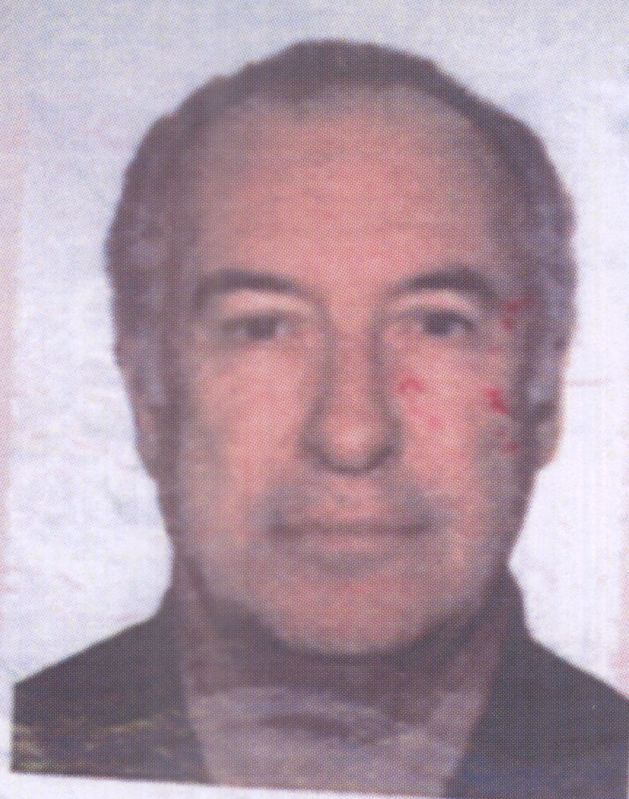
    Robert Hodgins: Source: INTERPOL

    The man who supplied debit cards to the AdSurfDaily autosurf is wanted by INTERPOL on an arrest warrant issued by U.S. District Court for the District of Connecticut, the international police agency says on its website.

    INTERPOL has published two photographs of Robert Hodgins, 65. People with information on Hodgins are urged to contact the General Secretariat of INTERPOL.

    Hodgins, whom INTERPOL says was born in Shawville, British Columbia, Canada, operated a Dallas-based company known as Virtual Money Inc. He was indicted under seal in 2008 in the United States on charges of assisting a Colombian narco-business launder money. He lived in the Oklahoma City area.

    His company, known as VM, was featured in advertising materials for ASD in 2007, and records suggest Hodgins or a VM designate participated in an ASD function in Orlando in late 2006. Five people have been convicted to date in the drug and money-laundering case, including two

    Robert Hodgins: Source: INTERPOL

    individuals from Medellin, Colombia, according to records. Medellin was the home base of the late drug lord and terrorist Pablo Escobar.

    Web records suggest VM supplied debit cards to other autosurfs and HYIPs, and the company’s name in mentioned in the Ponzi scheme litigation against ASD and in court papers in the PhoenixSurf Ponzi scheme.

    PhoenixSurf was sued successfully by the SEC in 2007.

    The criminal case against Hodgins was brought by the U.S. Drug Enforcement Administration after an undercover operation.

    In September 2008 — about a month after the U.S. Secret Service seized tens of millions of dollars from ASD President Andy Bowdoin amid wire-fraud, money-laundering and Ponzi scheme allegations in the District of Colombia — the indictment against Hodgins was unsealed in Connecticut.

    Some ASD members said they saw huge sums of cash and suitcases full of cashier’s checks at ASD “rallies” in American cities, leading to questions about whether the company was being used as a front for criminal enterprises.

  • FINRA/SEC Move Against New York Firm; Second Major Case In 24 Hours; Clients Suspect Colossal Ponzi Fraud At McGinn, Smith & Co.

    Another investigation into allegations of spectacular financial fraud is under way in New York. The case against McGinn, Smith & Co. of Albany is the second to rock the state in the past 24 hours.

    The Financial Industry Regulatory Authority (FINRA) filed a complaint against the company and its president David L. Smith yesterday. The SEC filed a complaint immediately on the heels of FINRA’s complaint, alleging a stunning fraud that may involve at least $120 million.

    “McGinn and Smith deceived investors about the true purpose behind these offerings,” said Andrew M. Calamari, associate director of the SEC’s New York Regional Office. “They falsely promised investors a profitable payday but secretly siphoned off money for their own payroll.”

    Multiple companies are involved, the regulators said. None of the offerings was registered, and the firm has been charged with selling unregistered securities. The SEC is seeking an emergency asset freeze.

    “[T]he debt offerings have been sold to hundreds of investors through four funds and at least 18 trusts created by MS & Co. affiliates,” the SEC said. “They made a host of representations about the extent of due diligence they had performed, among other things. Contrary to their representations to investors, McGinn and Smith used much of the money raised in these offerings to make prohibited investments in their other businesses or make unsecured loans to financially support them.

    “They also misused investor funds to pay exorbitant commission and transaction fees to their affiliated entities and make interest payments to investors in the other entities,” the SEC said.

    For its part, FINRA said “Smith and McGinn provided falsified documents, submitting backdated promissory notes for personal loans they and others previously received from two of the Related Entities.”

    The SEC added that “the full extent of the fraud is not yet known, [but] it appears that investors are currently owed at least $80 million.” Losses could total $84 million or more, according to court filings.

    Named defendants by the SEC were McGinn, Smith & Co. Inc.; McGinn, Smith Advisors LLC; McGinn, Smith Capital Holdings Corp.; First Advisory Income Notes LLC (FAIN); First Excelsior Income Notes LLC (FEIN); First Independent Income Notes LLC (FIIN); Third Albany Income Notes LLC (TAIN); Timothy M. McGinn and and David L. Smith.

    Clients became worried last year, the SEC said.

    “In 2009, Smith and McGinn received e-mails telling them the investors were wondering ‘if they’ve bought into a Ponzi Scheme,’ and a MS&Co. broker reported to McGinn and Smith that there are ‘many people who refer to our deals as a Ponzi Scheme,’” the SEC said.

    “As of September 2009, it appears that investors in the four Funds were owed at least $84 million, that the Four Funds had less than $500,000 in cash on hand, and that their remaining assets were worth only a small fraction of the amount owed to investors,” the SEC said.

    “Similarly, the Trusts have a negative equity of approximately $18 million, and have never had the ability to pay the interest rates promoted to investors and also pay back principal,” the SEC continued. “Nonetheless, McGinn and Smith have continued to raise money from investors, using similar misrepresentations, as recently as December 2009. During the first few months of 2010, contrary to representations to investors, McGinn and Smith have continued to drain what little cash remains through payment of ‘fees’ to themselves.”

    In the past 24 hours alone, investigators in New York have alleged that separate financial frauds involving multiple companies and individuals may have fleeced investors out of $101.5 million or more.

    Earlier today, federal prosecutors and the SEC moved against Gryphon Holdings Inc. and related entities of Staten Island. Five people were arrested in the case, which the SEC said involved the illicit collection of at least $17.5 million over the past three years.

  • FIVE ARRESTED: SEC Says Bogus Stock-Tips Website Faked Testimonial From George Soros; Gryphon Holdings Inc., Kenneth E. Marsh, Others Charged With Operating ‘Sham’

    BULLETIN: Five people have been arrested in New York on charges of conspiracy to commit securities fraud and wire fraud.

    Their preliminary court appearances  are occurring now — and the allegations in the case are spectacular.

    Separately, the SEC has gone to federal court in New York to obtain an emergency court order freezing the assets of a company and defendants allegedly involved in the fraud. The company is a Staten Island investment-advisory business that allegedly sold bogus stock tips from “fictional trading experts.”

    Federal prosecutors said the firm has no trading desk, despite professing to have a “legendary” one. Prosecutors added that false academic claims about “Harvard, Oxford, Colombia, and Wharton” were part of the scheme — and that the purported ringleader used multiple names to pull off the fraud.

    U.S. District Judge Jack B. Weinstein of the Eastern District of New York granted the emergency freeze.

    Charged criminally in the case were Kenneth E. Marsh, 43, of Staten Island; Baldwin Anderson, 55, and Robert Anthony Budion, 28, both of Staten Island, Jeanne Lada, 44, of Freehold, N.J., and James Levier, 34, of Beachwood, N.J.

    Each of the criminal defendants also was named a defendant in the SEC’s civil case, which also names Gryphon Holdings Inc., which is operated by Marsh.

    Several relief defendants who benefited from Gryphon’s alleged misconduct also were named in the SEC’s civil complaint.

    “Gryphon and its associates attracted clients through postings on the Internet that falsely exaggerated their investment prowess,” said George S. Canellos, director of the SEC’s New York Regional Office. “They sold a bill of goods by pretending to be legitimate money managers with a long track record of extraordinary returns, distinguished clients, and hundreds of millions of dollars under management.”

    The company  “touted offices on Wall Street and around the world while, in reality, defrauding investors from a strip mall on Staten Island,” said David Rosenfeld, associate director of the SEC’s New York Regional Office.

    “Gryphon was nothing more than a sham designed to separate clients from their money,” Rosenfeld said.

    Like other recent securities cases, the complaint reads almost like a work of fiction. Multiple company names were used, and multiple aliases were used to pull of the scam, authorities said.

    “Gryphon is a New York corporation doing business under various names, including Gryphon Holdings, Gryphon Financial, Gryphon Daily, Gryphon Consulting Group, Gryphon Hedge Fund Partners LLC, Gryphon Management Hedge fund, Gryphon Financial UK Ltd, and Gryphon Australia,” the SEC said in the complaint.

    “Gryphon’s physical offices are located in a strip mall in Staten Island, New York, but the firm’s Internet posts depict an international operation with offices located on Wall Street, in Chicago, California, London, England, and Australia,” the SEC said. “The firm claims to have twenty-five to thirty employees and affiliations with expert, successful securities traders.”

    The defendants also used aliases, the SEC said.

    “In communications with Gryphon’s prospective or existing clients, Defendant K. Marsh has used various aliases, including ‘Kenneth Maseka,’ ‘Michael Warren,’ and ‘Marcus Thorn,’” the SEC said. Federal prosecutors added that “Warren” and “Maseka” are fictional, and the SEC said “Thorn” was, too.

    Other bogus storylines and identities included “Chris Wolfe,” whose average profit since 1995 purportedly ‘exceeded 1000% per trade’; ‘Marc Seigel,’ who purportedly ‘manage[s] in excess of 700 million in daily option trading volume’ and whose ‘talents trading options can be traced back five generations’; ‘John Gage,’ a graduate of Columbia and Wharton, a partner at Gryphon Financial and head of ‘equity Hedge Strategies,’” the SEC said.

    The bogus “Marcus Thorn” was claimed to have “delivered ‘189% gain’ on an ‘Intel play in one day,’” the SEC said.

    Marsh was banned in 2007 by the National Association of Securities Dealers, the predecessor to the Financial Industry Regulatory Authority, “from associating in any capacity with any firm that is a member of the NASD,” the SEC said.

    “Since at least 2007, Gryphon has advertised its services on several websites, which at various times included, among others, www.gryphondaily.com, www.gryphonfmancial.net, www.poisonpilltrader.com, www.cnbceffect.com, www.6ammoneymachine.com,” the SEC said.

    “Gryphon describes itself as the ‘World’s No. 1 Investment Newsletter,’ and provides its investment recommendations through various services bearing names such as ‘6AM Money Machine,’ ‘Raging Bull,’ ‘Wolves of Wall Street,’ ‘Wall Street’s Most Wanted,’ ‘Put Play of the Day,’ ‘Pure Profit,’ ‘WolfOption Trader VIP,’ ‘Elite Option Service,’ ‘Inner Circle,’ ‘Brain Trust,’ and ‘Mafia Trader.’ Once a client pays Gryphon for one or more of these advisory services, Gryphon representatives provide the client with investment recommendations on an individualized basis via telephone, e-mail, and/or through a password-protected section of Gryphon’s website,” the SEC said.

    Meanwhile, the SEC said fake testimonials were part of the scheme.

    “Gryphon’s website and promotional materials were also replete with false testimonials from clients about its performance and affiliations, and a purported endorsement of Gryphon by George Soros, that in fact Gryphon fabricated.

    “Gryphon claimed that Soros stated: ‘Alone the traders of Gryphon Financial are incredible, together the [sic] are unstoppable.’  The client testimonials falsely attested to the success of Gryphon’s recommendations, which purportedly resulted in a ‘huge nest egg,’ the ability to buy expensive cars, and freedom to no longer work,” the SEC charged.

    The scheme gathered more than $17.5 million over the past three years, the SEC said.

    Read the agency’s astonishing complaint.

  • Former Enron Prosecutor Chosen To Direct Financial Fraud Enforcement Task Force; Website Debuts

    The executive director of the newly created Financial Fraud Enforcement Task Force is a veteran federal prosecutor who served on the team that shined the light on the spectacular fraud of Enron Corp. and gained the convictions of former executives Kenneth Lay and Jeffrey Skilling in 2006.

    Meanwhile, the Task Force now has its own website — StopFraud.gov — and is targeting fraudsters and criminals who have fleeced the American public through Ponzi schemes, mortgage fraud, tax schemes and other financial crimes, the Justice Department said.

    StopFraud.gov is designed to be an information hub and educational resource that “combines resources from a wide range of federal agencies on ways consumers can protect themselves from fraud and report fraudulent activity.”

    Tens of thousands of people — from Enron employees to employees of the Arthur Andersen accounting firm — lost their jobs because of the Enron fraud and the accompanying accounting scandal. Investors lost fortunes.

    Robb Adkins, who became executive director of the Task Force in February, was on the Enron prosecution team in the main case and was the lead prosecutor in Lay’s separate trial for bank fraud. The Enron case ranks among the largest frauds in U.S. history.

    Adkins formerly was the top federal prosecutor in Orange County, Calif., working out of the Ronald Reagan Federal Courthouse in Santa Ana.  He was a special prosecutor in the Enron trials, which were held in Houston.

    “The Financial Fraud Enforcement Task Force is the broadest coalition of law enforcement, investigatory and regulatory agencies ever assembled to combat fraud, but one of our best partners in the fight is a vigilant, informed public,” said Adkins. “Throughout government there are resources to help hardworking, honest Americans protect themselves from fraud and report fraud, and StopFraud.gov will connect the public with those valuable tools.”

    President Obama created the Task Force by executive order in November. One of the first cases it tackled was the prosecution of Minnesota resident Trevor Cook in a $190 million Ponzi scheme.

    Cook, 37, pleaded guilty last week to mail fraud and tax evasion. He is jailed awaiting sentencing, and his plea agreement requires him to cooperate with the government and the court-appointed receiver in the case to recover assets.

    Among other things, Cook, who purportedly bought a submarine to access his island retreat in Canada, is required to take a lie-detector test “if requested” to determine “whether he has truthfully disclosed the existence of all of his assets and the use of the fraud proceeds.”

  • Another HYIP Pushed By ASD Members Now DOA; Cypriot, Canadian Securities Regulators Issue Warnings About Genius Funds; Regulator Seeks Criminal Probe

    Regulators in Cyprus have referred Genius Funds for criminal investigation and released a warning that the company “[is] not permitted to provide investment and ancillary services in the Republic.”

    Genius Funds, a darling of the HYIP world,  was heavily promoted on the Ponzi boards. The program also is known as Genius Investments. The program was referred for criminal investigation by the Cyprus Securities and Exchange Commission, which also issued the warning. The announcement that the case was referred for criminal investigation was made Friday in Cyprus.

    One of the matters referred for criminal investigation pertained to a question about whether Genius Funds used a “falsified document that possibly stated that it possessed an operational license which was not authentic,” the Cypriot regulator said.

    Separately, Canadian securities regulators also have acted against Genius Funds, permanently banning the HYIP “for illegally selling securities,” the British Columbia Securities Commission (BCSC) said.

    Genius Funds’ website is throwing a server error.

    The program was pitched on the pro-AdSurfDaily Surf’s Up forum in December by a poster who dubbed himself “joe.” Genius Funds was one of four HYIP’s pitched by “joe” in an egg-themed promotion. The egg-themed domains redirected to HYIP programs.

    All of the programs appear to have failed or gone missing, but the egg-themed domain names now redirect to other HYIPs.

    “ALL MY EGGS ARE NOT IN ONE BASKET,” the Surf’s Up pitchman said in all-caps. “I MAKE 2000.00 A WEEK.”

    Some ASD members continued to promote autosurfs and HYIPs after the federal seizure of tens of millions of dollars from the personal bank accounts of ASD President Andy Bowdoin in August 2008. The Surf’s Up forum went missing earlier this year.

    In recent weeks, the Golden Panda Ad Zone forum (also known as the Online Success Zone forum), another website from which ASD members pitched autosurf and HYIP programs, also went missing.

    BCSC opened its probe into Genius Funds after receiving a tip from “a financial institution,” the agency said.

    Read the Genius Funds’ announcement from Cyprus. Read the announcement from Canada.

  • Federal Judge Delays Ruling In INetGlobal Case, Saying Attorney May Be ‘Primary Fact Witness’; Sends Case Back To Magistrate Judge

    UPDATED 8:29 A.M. EDT (APRIL 18, U.S.A.) Despite Internet and email claims yesterday and today by supporters of INetGlobal that the company had won a key battle with prosecutors, that the case was “over” and that news about the litigation engulfing the company “is better than anything we expected,” an order and memorandum by a federal judge suggests that celebrations could be premature.

    U.S. District Judge Donovan W. Frank yesterday sent the case back to Magistrate Judge Franklin L. Noel for the “limited” purpose of “maintaining the status quo” while clarifying elements of the case and seeing if there was a way to forge a settlement of at least some of the issues. (See subhead below.)

    As things stand, Frank said, certain issues on which INetGlobal owner Steve Renner and his affiliated companies are awaiting rulings “could be rendered moot” if Renner is “indicted or otherwise charged with one or more criminal offenses.”

    Renner has asked the court to return about $26 million and business records seized by the U.S. Secret Service in a Ponzi scheme, wire-fraud and money-laundering probe. Renner also wants Frank to conduct an evidentiary hearing.

    For its part, the prosecution has said it opposes Renner’s requests because a “major fraud and money laundering investigation is under way bearing serious criminal consequences” and because Renner’s filings were a “thinly veiled attempt to force the government to reveal facts relating to an on-going criminal investigation.”

    The money is “evidence,” and its release would mean “the money will be spent, and will be unavailable for future return to victims” should the government prevail, prosecutors said.

    In his memo, Frank said he was not prepared yesterday to rule on critical issues, given the procedural history of the case and recent filings by both the INetGlobal side and the prosecution.

    “Inter-Mark Corporation and its subsidiaries, without notice to the Court, filed a notice joining in the motion of Steven Renner,” Frank said. “That motion was filed by Mark J. Kallenbach, who is now the subject of a motion to be disqualified by the United States, given his 20-page, 81-paragraph affidavit filed on behalf of Steven Renner . . .”

    Prosecutors filed a motion 10 days ago that asked Frank to disqualify Kallenbach as an attorney for INetGlobal and related companies, saying Kallenbach had “made himself a necessary witness” by conducting an “investigation” and filing an affidavit prior to entering his notice of appearance as INetGlobal’s attorney.

    Kallenbach was trying to be both an attorney and a witness in the same case, prosecutors claimed.

    Jon Hopeman, an attorney for Renner, disputed the government’s contention about Kallenbach earlier this week, and Kallenbach joined in the brief.

    Although Frank delayed ruling on the issue, the order and memorandum he issued yesterday spoke to the dispute.

    “The Court reserves the right, pending receipt of Magistrate Judge Noel’s report, to rule on the motion of the United States to disqualify attorney Mark J. Kallenbach, although the Court would observe that, given the 20-page, 81-paragraph affidavit submitted on behalf of Steven Renner, it would appear that attorney Kallenbach is a primary fact witness in the above-entitled matter, absent stipulation of the parties.”

    A “fact witness,” according to the Federal Judicial Center, the education and research agency for the federal courts, is “a person with knowledge about what happened in a particular case who testifies in the case about what happened or what the facts are.”

    The order and memorandum may signal that, based on the current record of the case, Frank may be inclined to view Kallenbach as a witness subject to both cross examination by the prosecution and direct examination by the Renner/INetGlobal side.

    Judge Frank Orders Parties To Schedule Conference With Magistrate Judge Noel

    Frank ordered both sides to schedule a settlement conference with Magistrate Judge Noel. The order does not mean the case is “over” or that either side has won or lost.

    The conference will be “limited in scope,” Frank ordered.

    Among the issues to be determined (note: these are verbatim, from Frank’s order):

    • “The amount of money necessary to provide wages and health insurance coverage to the current employees maintaining a portion or portions of the business of Inter-Mark Corporation and its subsidiaries.”
    • “The amount of money presently being held by the Court, if any, in the event the parties agree that it is necessary to continue aspects of Inter-Mark Corporation, and its subsidiaries, pending resolution of the motion before the Court, pending completion of the investigation, be it civil or criminal, or both, by the United States.”
    • “Items seized by the United States by means of a search warrant, including, but not limited to, computers and other property necessary to the operation of the business.”
    • “Discussion of any items alleged to be attorney-client privileged items seized by the Government pursuant to the search warrants executed at Steven Renner’s companies on or about February 23, 2010, and thereafter.”

    Frank said the conference with Noel, absent an agreement by the parties, “shall be limited to maintaining the status quo, on a limited basis, pending the Court granting or denying an evidentiary hearing.”

    “The focus of the Status-Settlement Conference before Magistrate Judge Noel, absent agreement of the parties to broaden the scope and focus of the conference, will be the return of some portion of the money so that Steven Renner and the associated business entities can maintain the status quo of their business, including the maintenance of a skeletal crew of employees and the insurance for those employees,” Frank said.

    “The Court has conferred with Magistrate Judge Noel with respect to the purpose and limited scope of the conference,” Frank said.

    He added that he may defer ruling on Renner’s motion for an evidentiary hearing until after the settlement conference is conducted and the court had received Noel’s report on the status of the case.

    And Frank said the court “reserves the right, pending receipt of Magistrate Judge Noel’s
    report, to rule on the motion of the United States to disqualify attorney Mark J. Kallenbach, although the Court would observe that, given the 20-page, 81-paragraph affidavit submitted on behalf of Steven Renner, it would appear that attorney Kallenbach is a primary fact witness in the above-entitled matter, absent stipulation of the parties.”

    Spinning It As An INetGlobal ‘Win’

    As was the case in the AdSurfDaily autosurf Ponzi prosecution, some INetGlobal members are reporting to downline members that the prosecution’s case may be in the process of disintegrating.

    Despite the frequent claims in the ASD case, a federal judge went on to issue three orders of forfeiture totaling more than $80 million, handing ASD one shattering loss after another.

    One INetGlobal member sent an email to downline members yesterday that claimed “the indication is that we may have a huge win,” a member of his downline said.

    This email from the member was followed by another one with a five-exclamation point headline titled “Major News !!!!!”

    “The Judge has ordered a ‘Status Settlement Conference’ between both parties,” the sender advised members of his INetGlobal downline. “This news is better than anything we expected.

    “We thought a hearing would be set for 30 days plus from now and release of some money,” the sender continued. “This was to be a ‘evidential (sic) hearing’ to present a full days (sic) evidence about our business and hear from the Federal authorities on their side.

    “Also we were looking for some funds to be release (sic) for general operations of the business,” the sender wrote. “But today’s ruling is an acknowledgment of the facts of the case that this (sic) not at (sic) clear ‘Ponzi’ business and which therefore would apply to the Federal ‘Forfeiture Laws.’

    “This may lead to a negotiated deal with the government,” the sender wrote. “Also in the meantime we are much likely (sic) to get operational sooner than we ever thought.”

    Contrary to the email claim, nothing in Frank’s order and memorandum suggested that any of the facts of the case had been determined. Moreover, no “acknowledgment” was made by the judge or the government that INetGlobal was not operating as a Ponzi scheme. The judge has issued no orders pertaining to forfeiture because the government — as the record of the case stood yesterday — had filed neither a criminal nor a civil action against Renner or INetGlobal-connected assets that seeks forfeiture of property.

    The sender conceded that “my details and interpretation could be off,” according to the email, parts of which were republished on the Internet.

    It is indeed true that Frank referenced a Status-Settlement Conference, but the email sent by the INetGlobal member did not outline any details of the conference, including the fact it had been scheduled for a limited purpose.

    At the same time, the email made no reference to the fact that Frank said the case could take another turn and render some of the current issues moot if the government proceeds with an indictment.

    On April 2, the prosecution described the case as a “major fraud and money laundering investigation,” noting that the IRS had joined the U.S. Secret Service in the probe.

    A separate claim by an apparent INetGlobal supporter that the case was “over” was published today in the comments section of the Hospitalera Blog.

    “Inetglobal case is over!” the comment read in part. The commentator described the information as a claim made by his upline.

    “At the end of this afternoon, court has not received further evidence from government to accuse Inetglobal of Ponzy (sic) Scam in the period of time,” the comment read in part. “Judge made decision that the case could not be established. The written document from court will be released on Monday.”

    Frank made no such decision that a “case could not be established.”

    The Hospitalera Blog said in February that it had been targeted in a lawsuit for calling INetGlobal a “scam” in Sepember 2009. Some INetGlobal members have attacked the Blog for its point of view on INetGlobal.

  • UPDATE: 5 Convictions To Date In Money-Laundering Cases Involving Colombian Drug Operation That Used Same Debit Card As AdSurfDaily Autosurf

    Federal prosecutors have announced five convictions in an international money-laundering case involving drug proceeds and the use of “stored-value” debit cards. (See subhead below.)

    The cases were brought by the Drug Enforcement Administration in 2008 as a result of an undercover operation. The debit cards used in the transactions were provided by Virtual Money Inc., according to court records in Connecticut.

    Records show that Virtual Money, known simply as VM, was the same company that provided debit cards to AdSurfDaily and other autosurf companies. VM’s operator, Robert Hodgins, also was indicted in the drug-related cases and “is being sought by law enforcement,” federal prosecutors said.

    News about the convictions in Connecticut was announced about two weeks after FBI Director Robert Mueller III testified before Congress that “stored value devices” such as reloadable debit cards increasingly were being used to move criminal proceeds through a “shadow banking system” that endangered the United States.

    The PP Blog reported in August 2009 that VM’s name appeared in advertising materials for ASD in 2007. Research showed that VM also provided cards to other autosurfs and HYIPs, including the PhoenixSurf autosurf Ponzi scheme.

    Records suggest that Hodgins or a VM designate attended an ASD function in Orlando in November 2006, about a month after ASD began its rollout.

    During that same year, according to the DEA court filings unsealed in September 2008 after a two-year investigation, VM cards were used in Medellin, Colombia, to withdraw millions of dollars in drug proceeds at ATMs between April and August.

    The drug-related, money-laundering indictments against VM initially were filed under seal in April 2008 and then superseded under seal in June 2008. The documents were made public in September 2008, about a month after the federal seizure of tens of millions of dollars from the personal bank accounts of ASD President Andy Bowdoin, amid Ponzi scheme, wire-fraud, money-laundering and securities allegations in an autosurf case.

    Some ASD members said they observed large sums of cash at ASD “rallies” and suitcases full of cashier’s checks.

    After purportedly operating in the hole throughout much of its existence and allegedly experiencing an unreported theft of $1 million at the hands of “Russian” hackers, ASD suddenly  came into possession of tens of millions of dollars in the first half of 2008, leading to questions about whether it was serving as a front to launder proceeds from criminal organizations.

    References to VM appear in ASD advertising materials dating back to at least February 2007, and other ASD references to VM date back to the fall of 2006, when ASD was just getting off the ground.

    In March 2008, according to records, a DEA informant gave Hodgins $100,000 in undercover funds, saying an uncle needed drug money laundered in the Dominican Republic. Hodgins allegedly agreed to perform the service for a fee of 10 percent of the amount, and the DEA alleged it has audio and photographic evidence of the transaction.

    If the allegations are true, it means the DEA has audio and photographic evidence of the man who provided debit cards to ASD and other surf enterprises accepting money to participate in international drug transactions and international money-laundering.

    Convictions In Drug/Money-Laundering Cases

    On March 30, 13 days after Mueller testified before Congress on the dangers of stored-value devices, Juan Merlano Salazar, 35, of Medellin, Colombia, pleaded guilty in U.S. District Court in Connecticut to 11 counts of money-laundering and one count of conspiracy to commit money laundering.

    Merlano was named in the same indictment that charged VM’s Hodgins and the company itself. Merlano was extradited from Colombia in June 2009, a year after he, Hodgins, VM and seven other defendants were charged in the superseding indictment. Merlano has been detained since his extradition and faces sentencing in June.

    He faces a maximum penalty of 240 years in prison and a maximum fine of $6 million.

    Four other defendants also have pleaded guilty to date to “charges stemming from this conspiracy,” prosecutors said.

    Guilty pleas were entered by Francisco Dario Duque, 49, of Medellin, Colombia; Gonzalo Bueno, 72, of Brooklyn, New York; Juan Chavarriaga, 45, of Fort Lauderdale, Florida, and Jose Manotas, 46, of New York, New York.

    Each of the defendants is detained and awaiting sentencing, prosecutors said.

    “[T]he [drug]organization employed operatives in the United States and funneled millions of dollars in drug proceeds from the U.S. to Medellin, Colombia,” prosecutors said.  “The investigation, which utilized a variety of traditional and sophisticated investigative techniques, including court-authorized interception of international e-mail, disclosed that the money laundering organization used direct deposits of cash into third-party bank accounts, as well as payment of third-party debt obligations to move cash drug proceeds from the New York metropolitan area out of the country.

    “The organization also used ‘stored value cards,’ which function like debit cards and enabled cardholders to deposit U.S. dollars into accounts locally, to be withdrawn later from banks in Medellin as Colombian pesos,” prosecutors said.  “The Government has alleged that the scheme resulted in the laundering of more than $7 million in drug proceeds.”

    Hodgins was president and chief executive officer of VM, a Texas-based business.

    “Hodgins is being sought by law enforcement,” prosecutors said.

    In addition to the DEA, the case is being investigated by the Criminal Investigation Division of the IRS, prosecutors said.