Author: PatrickPretty.com

  • BREAKING NEWS: Host Of ‘Follow The Money’ Christian Radio Show Patrick Kiley Accused In Minnesota Of Operating Ponzi Scheme That Gathered $190 Million

    ponzinewsRadio talk-show host Patrick “Pat” Kiley is among the defendants accused in an emergency action by the SEC of operating a $190 million Ponzi scheme in Minnesota.

    A federal judge has granted an asset freeze and appointed a receiver. At least $51 million in Ponzi payments were made, the SEC said.

    Also charged were Trevor G. Cook, UBS Diversified Growth LLC, Universal Brokerage FX Management LLC, Oxford Global Advisors LLC, Oxford Global Partners LLC and four shell companies. Several companies were named relief defendants.

    “Cook and Kiley told investors that their money would be invested safely and profitably,” said Merri Jo Gillette, director of the SEC’s Chicago Regional Office. “Instead, they went on a $40 million-plus spending spree with investors’ money and lost another $40 million in risky foreign currency trading.”

    The SEC said “Cook and Kiley misappropriated $42.8 million of investors’ money, including $18 million that Cook used to buy ownership interests in two trading firms; $12.8 million that Cook and Kiley transferred to Panama to purportedly finance the construction of a casino; $2.8 million that Cook used to acquire the Van Dusen Mansion [in Minneapolis] and $4.8 million that Cook lost through gambling,” the SEC said.

    “Cook and Kiley also misspent approximately $51 million to make Ponzi-like payments to earlier investors,” the SEC charged.

    Meanwhile, “Cook and Kiley placed $108 million of investors’ funds into banking and trading accounts in the names of their various shell companies and used some of this money to trade foreign currencies, resulting in losses of at least $48 million,” the SEC said.

    Kiley, 71, hosted a program named “Follow the Money” on 200 stations and Christian short-wave radio.

  • BREAKING NEWS: ‘Billionaire Boys Club’ Attorney In Michigan Ponzi Scheme Case Indicted In North Carolina For Running His Own Securities Scheme

    ponzinewsUPDATED 7:02 P.M. ET (U.S.A.) A Georgia attorney representing defendants in the alleged “Billionaire Boys Club” Ponzi scheme in Michigan has been indicted in North Carolina on charges he ran his own securities-fraud scheme.

    Gregory Bartko, 56, of Berkeley Lake, Ga., was indicted in North Carolina under seal Nov 4, according to U.S. Attorney George E.B. Holding of the Eastern District of North Carolina. The seal was lifted Nov. 18.

    Bartko and a co-defendant were charged with three counts of mail fraud and two counts of making false statements. Prosecutors said the scheme also involved conspiring to commit mail fraud, laundering monetary instruments, engaging in unlawful monetary transactions, making false statements and obstructing proceedings of the United States Securities and Exchange Commission (SEC).

    Bartko is representing “Billionaire Boys Club” (BBC) defendants John J. Bravata, Shari Bravata and Antonio Bravata against civil charges in a case brought by the SEC in Detroit. The SEC said that as many as 400 investors were fleeced in a $50 million Ponzi scheme operated by John Bravata and a co-defendant, alleging the scheme paid for “expensive lifestyles” and “luxury homes, watercraft, jewelry, gambling, exotic vacations and expensive cars.”

    “Indeed, John Bravata used money from the first two investors to buy himself a $90,268 Ferrari,” the SEC said. “John Bravata and [co-defendant Richard] Trabulsy spent at least $7 million of the investors’ money for their own benefit, and for the benefit of John Bravata’s wife, Shari A. Bravata, and son, Antonio Bravata.”

    The 2009 Michigan case became known as the “Billionaires Boys Club” prosecution because a Bravata company was named “BBC Equities,” and the SEC asserted in July 2009 that BBC was intended to stand for “Billionaire Boys Club.”

    A California Ponzi scheme in the 1980s also was known as “The Billionaire Boys Club.”

    Despite the indictment against him in North Carolina, Bartko advised U.S. District Judge David M. Lawson of the Eastern District of Michigan that he intends to proceed as the attorney for the Bravata family members without objection from his clients.

    In North Carolina, prosecutors said Bartko operated a “criminal investment fraud scheme” and “held himself out as an investment banker” to carry out the scheme.

    Darryl Lynn Laws, Bartko’s co-defendant in the North Carolina case, posed as a “Ph.D. in finance” for his role in carrying out the scheme, prosecutors said. Laws, 58, lives in La Jolla, Calif.

    “Bartko and Laws used bank accounts controlled by Bartko in Georgia to collect hundreds of thousands of dollars in proceeds from fraudulent sales of investments,” prosecutors said. “[N]early all of the money collected by Bartko and Laws as part of the scheme had been obtained by a single salesman, [Scott Bradley Hollenbeck].

    “In making these sales, Hollenbeck used numerous materially false statements and omissions, including false promises to investors designed to conceal the true risk of the investment, such as ‘guarantees’ of yearly earnings of at least 12%, and the promise that the investment was insured when it was not,” prosecutors said.

    Hollenbeck is named an unindicted co-conspirator in the North Carolina case.

    Read the “Billionaire Boys Club” complaint by the SEC. Bartko is representing three defendants in the BBC case.

    Read a statement by U.S. Attorney George E.B. Holding announcing the indictment against Bartko in North Carolina.

    The United States Postal Inspection Service, the FBI and the IRS Criminal Investigation Unit are doing the legwork in the North Carolina case, prosecutors said.

  • SPECIAL REPORT: Convicted ‘3 Hebrew Boys’ Ponzi Figure Declares He Is ‘Sovereign’; Joseph Brunson Says Prosecutors Have No Authority Over Him

    Defining himself as “One,” a South Carolina man convicted Friday of operating an $82 million Ponzi scheme with two colleagues has filed a series of pleadings declaring himself “sovereign” and accusing a federal prosecutor of committing treason against the United States.

    The convicted schemer, Joseph B. Brunson of Hopkins, appears to trying to bolster his claim he is sovereign by constructing an argument that he is immune from prosecution because the United States is insolvent and has no jurisdiction over him. The pleadings were filed on the same day a jury found him guilty of mail fraud, money-laundering and transporting stolen goods and issued a special verdict for forfeiture of $82 million — the proceeds of the Ponzi scheme.

    Brunson is one of the so-called “3 Hebrew Boys” who operated a website with the same name. The name is taken from a biblical tale of believers who escaped a furnace by relying on their faith.

    Bond Revoked

    Upon the jury verdicts, prosecutors moved to revoke the bond of Brunson and co-defendants Tim McQueen and Tony Pough, asking a federal judge to jail them immediately, pending sentencing.

    Judge Margaret B. Seymour granted the request, pointing to a Brunson pleading that accused U.S. Attorney Walt Wilkins of treason.

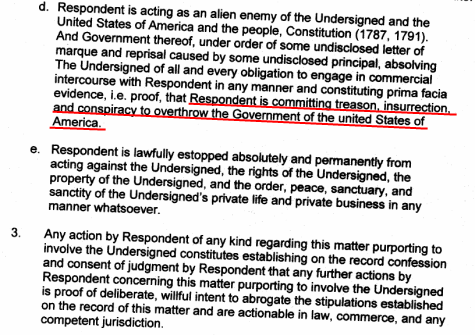
    Screen shot: Joseph Brunson declares that U.S. Attorney is guility of treason, insurrection and conspiracy to overthow the U.S. government in his efforts to prosecute Brunson.
    Screen shot: Joseph Brunson declares that U.S. Attorney Walt Wilkens is guilty of treason, insurrection and conspiracy to overthow the U.S. government in his efforts to prosecute Brunson.

    ‘Pembina’ Tie

    Web references connect Brunson to The Little Shell Pembina Band of North America, a reputed splinter group of a legitimate tribe of Native Americans in Montana. WIS News 10, the news arm of a TV station in South Carolina, reported in 2007 that Brunson was stopped by police for driving with illegal tribal license plates while out on bond after being charged by state authorities in the “3 Hewbrew Boys” case.

    The splinter group is listed by the Anti-Defamation League (ADL) as an “active anti-government extremist group.”

    “Members of the group claim that they belong to a ‘sovereign’ Native American tribe and therefore are not subject to laws and regulations,” ADL reports.

    Activities of the splinter group range from “driving with bogus license plates to perpetrating insurance fraud schemes [and] tax evasion,” ADL reports.

    ADL notes that the Little Shell Band of Montana is a legitimate tribe, but is not recognized by the federal government. It has no connection to extremism or to the Little Shell Pembina Band of North America, according to ADL.

    Bizarre Filings In Securities Cases

    Brunson’s filings in the South Carolina case are similar to pro se pleadings in the alleged AdSurfDaily Ponzi scheme case in the District of Columbia. Filings in both cases have included wild arguments, using words directed at prosecutors or judges such as “treason” and “conspiracy” in bids to short-circuit the government’s efforts to prosecute Ponzi and securities cases.

    Screen shot: Joseph Brunson asserts his purpurted sovereignty in the '3 Hebrew Boys' Ponzi scheme case.
    Screen shot: Joseph Brunson asserts his purpurted sovereignty in the '3 Hebrew Boys' Ponzi scheme case.

    Curtis Richmond, a mainstay pro se litigant in the ASD case, has been associated in court filings with a version of the Pembina tribal name and the name of a separate Utah tribe a federal judge ruled a “complete sham.” The purported Utah tribe filed enormous financial judgments against prosecutors and members of law-enforcement, and was successfully sued under federal racketeering and mail-fraud statutes.

    Richmond was among a group of litigants ordered to pay more than $108,000 in damages and costs for their roles in harassing members of the Utah law-enforcement community with vexatious legal filings. In a separate case, Richmond was found guilty in California of contempt of court for harassing federal judges.

    Despite the RICO ruling that went against him and his contempt conviction, members of the AdSurfDaily autosurf and a closely associated surf known as AdViewGlobal hailed Richmond a “hero.”

    ASD is implicated in an alleged $100 million Ponzi scheme. Federal prosecutors are attempting to force the forfeiture of tens of millions of dollars in the case, which includes two other autosurfs: Golden Panda Ad Builder and LaFuenteDinero. “LaFuenteDinero” means the “fountain of money,” and the surf was the purported Spanish arm of ASD. Golden Panda was the purported Chinese arm.

    For more than a year — at least since May 2008 — various operators or participants in alleged Ponzi schemes have claimed to be immune from U.S. law because they were “sovereign” beings or members of a “sovereign” Indian tribe.

    Screen shot: Joseph Brunson he is 'One' and that U.S. Attorney Walt Wilkins is engaged in acts of war against 'One.'
    Screen shot: Joseph Brunson he is 'One' and that U.S. Attorney Walt Wilkins is engaged in acts of war against 'One.'

    The arguments have been both bizarre and implausible. Gold Quest International (GQI), an alleged multimillion Ponzi scheme operating out of Las Vegas, claimed Panamanian registration and immunity from U.S. law because it was associated with a North Dakota Indian tribe.

    Despite the claim GQI was immune from the law because of its purported tie to the Pembina tribe, one of the alleged operators the Ponzi scheme, John Jenkins, left a Nevada courtroom to go outside to plug a parking meter to avoid getting a ticket.

    GQI attempted unsuccessfully to sue the SEC for the spectacular sum of $1.7 trillion for bringing the prosecution. The company reportedly relied on the services of a nonattorney as its “attorney general” and a nonnotary as its notary public to certify documents.

    “You are in an imaginary world where you belong to an unrecognized Indian group,” a federal judge advised Robert Neilson Baker, the nonnotary notary.

    In the “3 Hewbrew Boys” case, Brunson filed documents that appear to have been designed to force Wilkens, the U.S. Attorney, to default on a contact to which he never had agreed. The approach sometimes is referred to as “paper terrorism” or “mailbox arbitation.”

    A similar approach was used by litigants in the ASD case.

    Brunson wrote in a court filing he described as a “Bill of Peace” last week that Wilkens had a duty to appear before a notary public and acknowledge Brunson’s assertion of sovereignty in “red ink.” The document demanded that Wilkens use his “Christian name” in his response to Brunson.

    A refusal by Wilkens’ to carry out the demands within three days, Brunson said, would result in a contractual agreement that Wilkens was “an enemy of One and the [U]nited States of America and the people, Constitution, and Government thereof.”

    Read Joseph Brunson’s purported “writ” in the “3 Hebrew Boys” case.

    Read Joseph Brunson’s claim U.S. Attorney Walt Wilkens is committing treason against the United States.

    Read the jury’s special verdict ordering the forfeiture of $82 million in the “3 Hebrew Boys” case.

    Read a statement by acting U.S. Attorney Jeffrey Sloman on Audie Watson, a Florida man found guilty of selling bogus memberships in a “Pembina” tribe for $1,500 to illegal aliens.

  • ASD ALL OVER AGAIN? ‘3 Hebrew Boys’ Accuse U.S. Attorney Of ‘Treason’; Claim Draws Another Parallel To AdSurfDaily

    Three men found guilty in South Carolina last week of operating an $82 million Ponzi scheme accused a federal prosecutor of treason on the same day the jury returned its verdict, the FBI said.

    A treason claim also was made in the federal forfeiture proceeding against assets tied to Florida-based AdSurfDaily, an alleged Ponzi scheme involving $100 million.

    U.S. District Judge Margaret B. Seymour cited the treason claim in the “3 Hebrew Boys” case as a reason to send Joseph Brunson, Tim McQueen and Tony Pough to jail immediately to await sentencing.

    “After the jury’s verdict, Judge Seymour was asked to allow the men to remain free on bond until their sentencing,” the FBI said.  “She denied the request after noting that all three men filed documents [Friday] accusing U.S. Attorney Walt Wilkins of treason and committing acts of war by prosecuting them.”

    Brunson, McQueen and Pough became known as “3 Hebrew Boys” after operating a website with the same name, which is based on a biblical story of believers who escaped a furnace by relying on their faith. The Ponzi scheme operated under the name Capital Consortium Group LLC.

    Wilkens said the scheme targeted people of faith and members of the military.

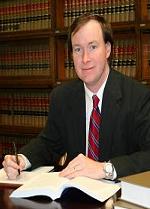
    U.S. Attorney W. Walter Wilkins
    U.S. Attorney W. Walter Wilkins

    “By calling themselves the Three Hebrew Boys, these con men tried to disguise their Ponzi scheme as a religious, charitable program of debt elimination in order to gain the trust of unsuspecting investors,” Wilkins said. “Unfortunately many people were victimized by these men, including many in our armed forces.”

    In the ASD case, the treason claim was made against U.S. District Judge Rosemary Collyer. ASD is known to have members who identify with the so-called sovereignty movement.

    California resident Curtis Richmond, a pro se litigant in the ASD case, identified himself in court documents in a separate case as a “sovereign” being who enjoyed diplomatic immunity from prosecution and answered only to Jesus Christ.

    Richmond is associated with a Utah “Indian” tribe ruled a “complete sham” last year by U.S. District Judge Stephen Friot. On the eve of a civil RICO trial last year, Richmond attempted to have Friot removed from the case by claiming he owed Richmond $30 million.

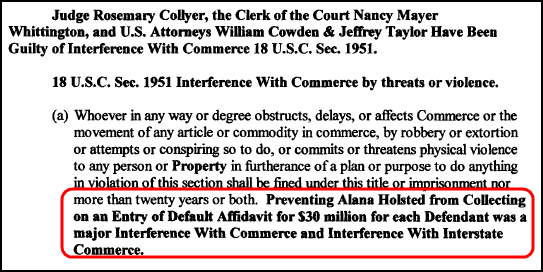
    Friot refused to step down in Utah, as did Collyer in the District of Columbia. Richmond accused Collyer earlier this year of operating a “Kangaroo Court” and violating her judicial oath. Collyer is presiding over the ASD civil-forfeiture case. Other filings in the ASD case suggested Collyer was guilty of as many as 60 felonies, and that an effort had been made by at least one ASD member to start a process to collect $120 million from Collyer, two federal prosecutors and a court clerk for “Interference With Commerce.”

    Screen shot: Section of a pro se filing in the ASD case.
    Screen shot: Section of a pro se filing in the ASD case.

    Such bizarre claims have been popping up more and more in litigation involving securities.

    Gold Quest International (GQI), a company accused by the SEC last year of operating a Ponzi scheme from Las Vegas, claimed it was part of a North Dakota Indian tribe and was immune from U.S. law.

    After the SEC brought the charges against GQI in May 2008, Michael Howard Reed, the purported “attorney general” of the tribe, tried to sue the SEC for $1.7 trillion. The sought-after amount would have exceeded the total of federal income tax paid by individual U.S. filers last year by about $575 billion.

    U.S. District Judge Kent J. Dawson struck a series of pleadings by Reed from the record.

    Meanwhile, Dawson jailed John Jenkins, one of the defendants implicated in the Ponzi scheme, for contempt. Dawson also dispatched the U.S. Marshals Service to arrest David Greene, also known as “Lord David Greene,” in part for violating orders to repatriate money offshore to the United States.

    Despite Richmond’s behavior, he was labeled a hero on the Pro-ASD Surf’s Up forum. Over the weekend, Surf’s Up reinforced an earlier announcement that it would not permit discussion about the AdViewGlobal (AVG) autosurf.

    “[P]lease don’t expect any information that concerns AVGA,” a forum Mod said Saturday. “[I]t doesn’t belong on this forum.”

    Another Mod reinforced the ban on AVG discussion today.

    “In the beginning days of AVG we made it clear this is not an AVG forum and it still will not be,” the Mod said.

    Surf’s Up members repeatedly have said they wanted to discuss AVG, which has close connections to ASD. Their requests have been consistently rebuffed. Some of the Surf’s Up Mods were among the founding members of the AVG surf, which came to life after a major court ruling went against ASD last year.

    AVG purported to be a “private association” that operated offshore. Members used the “offshore” angle as a key selling point, saying the surf’s purported country of operation — Uruguay — insulated it from prosecution.

    Like the “3 Hebrew Boys” operation, AVG sought to prevent members from discussing the company outside the confines of areas it controlled. AVG members were scolded for sharing information and calling the autosurf an “investment” program.

    As AVG was in failure mode in May and June, members were threatened with copyright-infringement lawsuits. Critics were told AVG would contact their ISPs to file abuse reports and suspend service.

  • FBI Asks For Help In Unraveling Connecticut Ponzi; Seeks Information On Michael Goldberg

    ponzinewsThe FBI has asked people who have information on Michael Goldberg, who ran a business in Wethersfield, Conn., known as Acquisitions Unlimited Group (AUG), “to immediately contact the FBI at (203) 777-6311.”

    Goldberg, 38, was arrested today on charges he had operated a $20 million Ponzi scheme over a period of 12 years from his former home in Wethersfield. He surrendered voluntarily, after initially contacting law enforcement last week. Goldberg was freed after posting a bond of $1 million.

    His initial contact with law enforcement occurred Nov. 16, federal prosecutors in Connecticut said today. Investigators preliminarily have determined that victims may exist in Connecticut, New York, Florida, Arizona, California and Vermont.

    A federal magistrate judge adjourned the case for three months “to permit the government to continue to investigate the extent of Goldberg’s alleged scheme,” prosecutors said.

    Goldberg ran AUG between 1997 and 2009, according to court statements today. More than 100 investors directed more than $20 million to the alleged scheme, prosecutors said.

    Goldberg “falsely represented to prospective investors that he and AUG were in the business of liquidating assets held by JP Morgan Chase (formerly Chase Manhattan Bank), and that GOLDBERG induced investors to provide him and AUG funds by promising and paying up to 20 percent quarterly returns,” prosecutors said.

    But Goldberg’s promises to investors were false. He “never had a relationship with Chase, nor did he purchase or liquidate assets as he represented,” prosecutors said.

    “Rather, Goldberg paid old investors with new investor funds,” prosecutors said.

  • BULLETIN: Tom Petters’ Ponzi Case Goes To Jury

    ponzinewsThe fate of Minnesota businessman Tom Petters is in the hands of a jury.

    Petters was accused last year of operating a $3.65 billion Ponzi scheme.  Testimony in the case lasted a little more than three weeks.

    Federal prosecutors blamed the alleged Ponzi on Petters, saying he presided over a colossal fraud that featured phantom sales of consumer electronics to big-box retailers. Petters’ defense counsel blamed the fraud on subordinates.

  • BLACK COMEDY EMERGES: Petition To Disbar Ponzi Figure Rothstein Arrives At Florida Supreme Court; Lawyer’s Victims Portrayed Unsympathetically In Some Media Accounts; Reporters Dredge Up Old SLAPP Lawsuit

    UPDATED 9 P.M. ET (U.S.A.) The alleged Ponzi scheme operated by Fort Lauderdale attorney Scott Rothstein is the stuff from which lawyer jokes are made. It is enough to make the Atticus Finch wing of the trade long for the days in which being a lawyer meant you were special — and being special meant you’d walk into a meeting with a client wearing your humble dress shoes, not your ostrich-skin boots, you drove a practical car, rather than a Ferrari, you understood that clients weren’t money machines — and perhaps especially understood that a fee paid in hickory nuts or collard greens by an impoverished client could make you feel as good as a big check from a wealthy one.

    A consentual petition to disbar Rothstein has arrived at the Florida Supreme Court. The court has not acted on the petition, but a clerk’s order was issued to attorneys to file an original plus eight copies of any additional motions because of “significant public and media interest.”

    Indeed, Florida is buzzing about the case, in part because it exposed a curious market in which purported sexual improprieties allegedly were presented by Rothstein as multimillion-dollar investment opportunities. Meanwhile, the case has dredged up embarrassing details from previous cases involving Rothstein investment clients or business contacts.

    A company once owned by one of the victims of the alleged Rothstein Ponzi fraud, for example, had a history that included bringing a purported SLAPP (Strategic Lawsuit Against Public Participation) action to chill a consumer advocate when the company itself had been named a defendant in a case in which as many as 900 complaints from customers piled up in Florida in the 1990s.

    The company, GGL Industries, once was owned by Florida businessman George Levin, a Rothstein investor and the registered manager of a Nevada company known as Banyon Investments LLC and other firms that used the Banyon name. There now are allegations that Frank J. Preve, who worked for one of the Banyon entities and had an office at the Rothstein Rosenfeldt Adler (RRA) law firm, played a role in the Rothstein Ponzi fraud.

    GGL did business as Classic Motor Carriages, selling kit cars in the 1980s and 1990s. Customers complained about slow deliveries or partial deliveries. GGL ultimately was charged criminally with wire fraud. Charges were not brought against Levin, but the company was convicted and agreed to pay $2.5 million in restitution.

    Various court actions against Rothstein have been filed this month. The lawsuits include spectacular allegations of fraud. Rothstein has not been arrested, but the FBI says the case could involve more than $1 billion.

    Federal agents have seized property, and new allegations have surfaced that Rothstein transferred millions of dollars in real-estate holdings to shell companies only weeks prior to the exposure of the alleged scheme in October.

    rotsteindisbarmentpetitionOne property acquired for $1.75 million was sold to a shell company for $10. Another property — the residence of Debra Villegas, COO of the RRA law firm — was acquired for $475,000 and sold to Villegas for $100 and “love and affection,” according to real-estate records.

    Worthy Of A Theoretical Seinfeld Movie?

    Unlike Ponzi scheme cases in which it is easy to view victims as sympathetic figures, some of the alleged victims of the Rothstein Ponzi are being portrayed as out-of-touch greedsters and, in the case of Preve, for instance, fraudsters themselves.

    Lawsuits have painted an ugly picture of how the alleged Ponzi scheme worked.

    Some of Rothstein’s purported victims would seem to qualify as the inspirations behind out-of-touch-characters in a theoretical Hollywood production titled “Seinfeld: The Anything-Goes-If-It-Involves-Profits Years.”

    Legal filings, for example, suggest the victims actually conducted detailed due diligence before choosing to participate in Rothstein’s scheme and determined that profits could be harvested from investments in lawsuits involving sexual indiscretions.

    Like would-be Seinfeld characters, however, some of the victims either did not connect dots that plenty of people would find the premise of mining profits from purported sexual indiscretions bundled as securities both bizarre and offensive  — or did connect the dots and decided that the profits were worth risking a PR catastrophe.

    Even victims who purportedly lost tens of millions of dollars by investing in Rothstein’s alleged scheme are not generating much media sympathy because of the presence of Preve, allegedly a convicted felon who worked for Banyon and had an office at Rothstein’s law firm. There also is an allegation that Rothstein’s general counsel — David Boden — did not have a license to practice law in Florida.

    A spokesperson for Levin told the Palm Beach Post that Levin did not know Rothstein was operating a Ponzi scheme and that “George Levin was first to contact the government when he smelled that something was not right with Mr. Rothstein’s purported investments.”

    Both Preve and Boden are alleged to have played pivotal roles in selling the scheme. Toronto Dominion Bank and bank personnel are alleged to have aided and abetted the scheme.

    RRA, which employed 70 attorneys, has been decimated by the scandal. The firm effectively is out of business.

    Perhaps the most spectacular allegation to date is that Rothstein told investors that he paid employees and “former F.B.I. and C.I.A. agents” to dig up dirt on the sexual infidelities of high-profile people — and then used the findings to extract multimillion-dollar legal settlements with the promise of confidentiality to the marks who had been targeted as defendants.

    Investors funded the purported “settlements” with the understanding that the plaintiffs in the case wanted money up front and would accept less than the settlement was worth. In effect, investors got to keep the spread between the settlement amount they funded for plaintiffs and the purported actual settlement amount, which was higher.

    Looking at it in a simple form for the sake of illustration, if a target perhaps was willing to pay $10 million to keep his name out of the newspaper — and if a plaintiff was willing to accept $2 million up front — Rothstein recruited investors to fund the purported $2 million settlement with the promise their profits would come when the case was settled over time for the higher amount.

    Preve, who was convicted of bank fraud in 1985, helped Rothstein line up investors, according to a lawsuit filed by attorney William Scherer.

    Preve’s bank-fraud fraud case in the 1980s had resulted in losses of $2.3 million, and Preve was placed on 10 years’ probation and fined $10,000 for falsifying documents, according to the lawsuit.

    Rothstein’s deals perhaps best are described as “purported,” because there are allegations they were fabricated in whole or in part. Through a practice derisively described as “piggybacking,” Rothstein allegedly sued defendants or monitored news about wealthy people caught up in allegations of sexual improprieties — and then sold interests in settlements, whether or not he had an actual role in the cases or whether or not an actual settlement existed.

    Victim’s Firm Has History Of Fling SLAPP Actions To Mute Critics

    Adding to the drama is the presence of Levin, one of the purported victims of the Ponzi scheme. GGL, which sold classic-car kits, once was owned by Levin. GGL has a felony conviction for wire fraud. GGL’s history includes corporate run-ins with both state and federal prosecutors and the filing of a SLAPP lawsuit against the late consumer advocate Stuart Rado, who helped organize victims in the case in which Levin’s company was convicted of wire fraud.

    Rado, according to court filings, had few financial resources and defended against the SLAPP lawsuit pro se. During the litigation, Rado was diagnosed with cancer. He lost the SLAPP case in which he was accused of violating the Florida Trade Secrets Act for sharing proprietary information about GGL customers, and died from the disease.

    After Rado died, GGL attempted to collect an $80,000 judgment against him for the company’s legal fees even though it had pleaded guilty to a felony, which prompted a court filing by the federal government and an attached exhibit by Rado’s estate that accused Levin’s firm of hounding Rado beyond his grave.

    The exhibit asserts Levin’s company systematically set out to destroy Rado financially for organizing fraud victims by subjecting Rado to an avalanche of legal filings — including notices sent to Rado only days after he was emerging from brain surgery.

    “GGLs suits against Rado were brought for two purposes,” the estate said. “One was to stop Rado from informing defrauded customers of a practical and inexpensive way to possibly obtain restitution, and by stopping Rado, stem the flow of complaints to the Attorney General’s office. The other purpose was to put people on notice that what was happening to Rado could happen to them if they dared challenge GGL.”

    The estate said the case against Rado was an orchestrated legal sham designed to silence him by making his net worth “go South” and to force him to “incur the expenses of defending two lawsuits over 4 years” — and to live “day-to-day with a barrage of pleadings, depositions and other legal maneuvers.”

    GGL persisted even after Rado died, according to the estate.

  • ‘3 Hebrew Boys’ Guilty In $82 Million Ponzi/Affinity Fraud Scheme; Company Operated In Fashion Similar To AdViewGlobal Autosurf, Imploring Members To Maintain Secrecy

    ponzinewsIn yet another case that may cause widespread unease in the autosurf world, three men accused of defrauding participants in a bogus debt-relief “ministry” have been found guilty of 174 counts of mail fraud, money-laundering and transporting stolen goods.

    Parts of the case against “3 Hebrew Boys” were remarkably similar to events engulfing the AdSurfDaily autosurf. In 2007, for example, the defendants filed a court document that described their investment program as an effort to free people from government “bondage” and referred to the investigation as “Satan’s handiwork.”

    In 2008, AdSurfDaily President Andy Bowdoin described the case against his purported Florida “advertising” firm as the work of “Satan,” comparing it to the 9/11 terrorist attacks. Prosecutors said ASD was selling unregistered securities, while engaging in wire fraud, money laundering and operating a $100 million Ponzi scheme.

    In 2007 and 2008, prosecutors brought essentially the same charges against “3 Hebrew Boys” — Joseph Brunson, Tim McQueen and Tony Pough.

    About 100 supporters of the “3 Hebrew Boys” rallied in Columbia, S.C., in the early days of the probe, to demand that investigators leave them alone. Participants told reporters that the government did not understand the program, had overreached in its prosecutorial efforts and refused to deny it was wrong, choosing to move forward with the case in a bid to save face.

    Prosecutors said the “3 Hebrew Boys” scam was targeted at churchgoers and members of the military from South Carolina and North Carolina, and also from other states. The scam got its name from the company’s website name, which was based on a biblical tale of believers who escaped a furnace by relying on their faith.

    At least $82 million was consumed in the scheme, prosecutors said.

    The company attempted to chill law enforcement, regulators and members of the media from scrutinizing operations, prosecutors said.

    In an approach similar to one used by the AdViewGlobal (AVG) autosurf,  members were forced to agree to a confidentially clause that purportedly prohibited them from discussing the company outside the confines of meeting places. Participants were threatened with a $1 million penalty for sharing information.

    AVG, which has close ties to ASD, morphed into a “private association” in February 2009. Members were scolded for sharing information and calling the autosurf an “investment” program. As the company appeared to be collapsing in May and June, members were threatened with copyright-infringement lawsuits. Critics were told AVG would contact their ISPs to file abuse reports and suspend service.

    Not only did the plan to force secrecy and mute criticism not work in the “3 Hebrew Boys” case, it resulted in intense scrutiny by federal prosecutors, the FBI, the IRS and other agencies. It also resulted in intense scrutiny on the state level.

    South Carolina Attorney General Henry McMaster filed civil and criminal charges, posting all the documents in the case on his website.

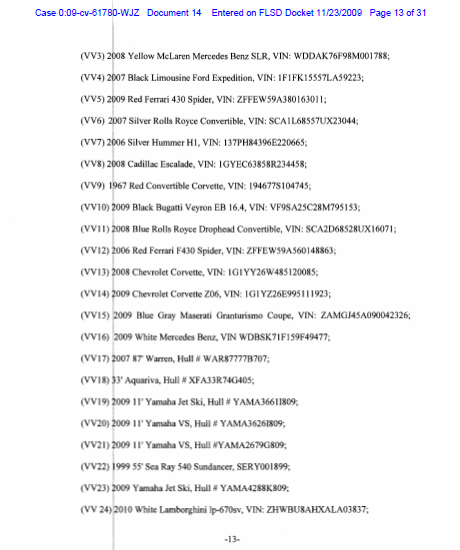
    A court-appointed receiver also published documents, listing an astonishing array of luxury purchases made by the schemers with investors’ money. Among the items were a Gulf Stream jet, a Prevost Motorcoach and automobiles with famous names such as Mercedes, Lexus, BMW, Saab, Cadillac and Lincoln.

    Some of the luxury items are missing, meaning they cannot be sold to compensate victims.

    Brunson, McQueen and Pough were found guilty yesterday. The jury in the case, which was heard in Columbia, S.C., returned the verdict in less than three hours, after listening to testimony for weeks.

    Separately, Lee Otis Fluker was charged with perjury and convicted in 2008 for lying about his knowledge of the scheme. He was sentenced to a year in prison.

    Brunson, McQueen and Pough face decades in prison and fines in the millions of dollars.

    Last month, Beattie B. Ashmore, the court-appointed receiver in the case, warned victims about “companies [that] claim to offer professional services for recovering losses associated with your involvement with CCG,” one of the companies associated with the “3 Hebrew Boys” scheme.

    “Please note that you are not required to respond to these letters in order to be considered for a distribution from the Receiver,” Ashmore said on the receiver’s website.  “In addition, the Receiver takes no position as to any consequential effect filing a claim and recovering funds in this case may have upon any action you have taken or may take with Fraud Recovery Group or any similar type company.

    “Therefore, it is strongly recommended that you seek professional legal and tax advice from a trusted advisor, and that you properly research any professional advice before acting upon it,” Ashmore said.

  • BEYOND BIZARRE: California Man Arrested For Soliciting Teen To Spit In His Face For Cash; Police Say Crime Began On MySpace And Ended In A Sting Operation

    UPDATED 4:27 P.M. ET (FEB. 8, 2012 U.S.A.) Charles Hersel informed the PP Blog today that he has been acquitted of the charges. The AP is confirming the acquittal.

    Here, below, our earlier story . . .

    A California man was arrested on charges he paid a teenager $31 to spit in his face, authorities said.

    Charles Hersel, 39, of Thousand Oaks, was charged Wednesday night with the crime of “child annoying.” He was booked at the Ventura County Jail and released Thursday, after promising to appear in Ventura County Superior Court Dec. 21.

    Ventura County Sheriff Bob Brooks and Thousand Oaks Police Chief Jeff Matson said the arrest was the result of a “sting operation.”

    The alleged crime traces its roots to contacts Hersel made with teens on MySpace.com, a social networking site.

    “[I]t didn’t take long for word to spread among local teens that they could get paid to spit in a man’s face,” police said. “Hersel has been paying young male Westlake High School students in cash to yell profanities at him, slap him in the face, and spit in his face.”

    Police said Hersel also solicited teens to urinate and defecate on him, offering money in return.

    Hersel’s apartment and computer were searched, police said.

    The probe is ongoing. People with information about Hersel’s alleged activities are asked to call Det. Anthony Aguirre at 805-371-8309.

  • BREAKING NEWS: Louisiana Man Indicted In Alleged $20 Million Ponzi Scheme Targeting Senior Citizens; Prosecutors Allege Witness Tampering, Obstruction

    UPDATED 9:44 P.M. ET (U.S.A.) A Louisiana man has been charged in a 64-count indictment with operating a $20 million Ponzi scheme that fleeced retirees, federal prosecutors said today.

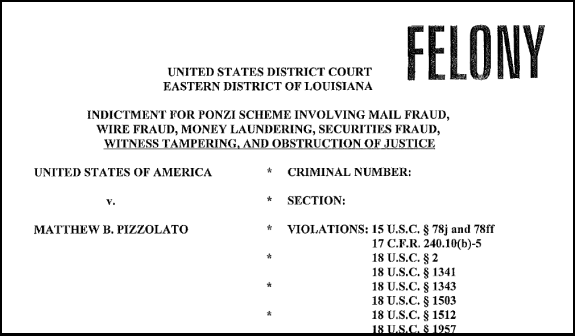
    So many fraud counts were filed against Matthew B. Pizzolato that he faces more than 1,100 years in prison if convicted of all of them. As many as 160 people were duped, prosecutors said.

    Pizzolato, 26, of Tickfaw, was charged with 52 counts of mail fraud, two counts of wire fraud, seven counts of money laundering, and single counts of securities fraud, obstruction of justice and witness tampering.

    It was the second time this week prosecutors alleged witness tampering in a major Ponzi scheme case. Jeffrey Lane Mowen was charged in Utah Nov. 18 with attempting to hire a man to kill four witnesses in a  case against him.

    In the Pizzolato case, prosecutors said he attempted to silence employees with bribes of  $20,000 and get them to destroy records to cover up the scheme. Meanwhile, prosecutors said Pizzolato obstructed justice by stealing documents that could incriminate him from the home of a client.

    pizzolatoartWhen the client called authorities, Pizzolato returned documents that he altered after stealing them,  prosecutors said.

    A veteran FBI agent called the crimes beyond the pale.

    “It is unconscionable that in this stressful economy senior citizens would be targeted and defrauded of their life savings, said Special Agent in Charge David Welker. “We have an obligation to aggressively investigate crimes against those citizens who are most vulnerable. The FBI and our law enforcement partners will continue to aggressively pursue those who target our most vulnerable citizens.”

    Federal agencies are working together to put an end to the Ponzi plague in the United States, said U. S. Attorney Jim Letten of the Eastern District of Lousiana

    “Today’s indictment demonstrates our resolve, along with our partners in federal law enforcement, including the FBI, IRS and U.S. Postal Inspection Service, to aggressively investigate and pursue those who seek to take advantage and prey upon those among us, including our senior citizens,” Letten said.

    The Office of the Louisiana Commissioner of Securities assisted in the probe, Letten said.

    Pizzolato had offices in Hammond, Covington, Lake Charles, Baton Rouge, and also conducted business in Greater New Orleans.

    He “lured his potential victims through advertisements in the local daily newspapers in New Orleans, Baton Rouge and Hammond by promising rates of returns that were higher than market rates for CDs or U.S. Treasury Bills, prosecutors said.

    Among the words Pizzolato used to lure investors into a false sense of security were “guaranteed”, “safe”, “conservative”, “insured”, and “no-risk,” prosecutors said.

    Despite his assurances that clients’ money had been placed in U.S. Treasury Bills, CDs and other government-backed securities, Pizzolato “used the investors’ money to purchase luxury items, to make payments totaling millions of dollars to friends and family, to invest in high-risk futures trading and/or commercial real estate, and to provide lulling payments to investors in an effort to conceal the true nature of the Ponzi scheme,” prosecutors said.

    Among the luxury items he purchased with investors’ money were a BMW 750LI, a Mercedes Benz S430V, a Range Rover Sport and a Chevrolet Corvette, prosecutors said. He also bought sports tickets, a $35,000 engagement ring, a $500,000 home in Ponchatoula, La., and spent $35,000 on Carnival cruises.

    All in all, Pizzolato took about $19.5 million from clients and spent “nearly all” of it, prosecutors said.

    Since 2005, prosecutors said, Pizzolato either operated, owned or was affiliated with several companies: Gulf Region Guaranty Inc. (Gulf Region Guaranty); Acadian Guaranty Group LLC; Allegiance Financial LLC; Annuity Presets LLC; Annuity Recovery Services LLC; Anova Marketing Systems LLC; Anytime Fitness of Sulphur LLC; Cornerstone Wealth Management LLC; Global Assured Financial Inc.; Green Pelican Group Inc.; Gulf South Guaranty Inc.; Gulf States Guaranty LLC; GRG Holdings LLC; GRG I LLC; GRG II LLC; Matt P LLC; National Insurance Advisors LLC; Pelican Guaranty Group Inc. (Pelican Guaranty); and Spectrum Lending Group LLC.

    If convicted, he faces up to 20 years in prison for each count of mail fraud, wire fraud, securities fraud and witness tampering, and up to 10 years for each of the money laundering and obstruction of justice charges. Meanwhile, Pizzolato faces fines of up to $16 million.

    Pizzolato was hit with 56 counts that could result in a maximum sentence of 20 years each if convicted of all of them, meaning he potentially faces more than 1,100 years in prison — even more if convicted of the less serious crimes.

    Michael J. De Palma, Special Agent in Charge of the Internal Revenue Service Criminal Investigation Division, said law enforcement is prepared to “follow the money” to reverse-engineer Ponzi schemes.

    “Financial Fraud and money laundering are not victimless crimes,” De Palma said. “IRS-Criminal Investigation is united with the rest of the law enforcement community in our resolve to disrupt those who commit crimes against our local citizens. Special Agents of IRS Criminal Investigations are expert financial investigators who ‘follow the money’ trail to identify potential offenders.”

    Read the Pizzolato indictment.

    See video on WWL-TV: