Category: Ad Surf Daily

  • Real HYIP Expert Says ‘Notion Of Secrecy’ In Commercial Fraud Meant To Discourage Reports To Law Enforcement; James Byrne Consulted With Government Before P2P Ponzi Case Was Filed

    EDITOR’S NOTE: Here is the declaration of James E. Byrne, an expert with whom the government consulted in the Nicholas Smirnow/Pathway To Prosperity Ponzi scheme case. It is a remarkable read — one that provides a free education from an expert who has consulted with the FBI and Scotland Yard, among other prominent law-enforcement organizations.

    DECLARATION OF PROFESSOR JAMES E. BYRNE

    I, Professor James E. Byrne, declare under penalty of perjury pursuant to 28 U.S.C. Section 1746:

    I. INTRODUCTORY STATEMENT

    1. I have been requested by counsel for the United States (hereafter “US”) to render my expert opinion in the above-styled litigation against Pathway to Prosperity Network or the P2P Network (hereafter “P2P”) in connection with the request for seizure of assets and other related relief. Specifically, I have been asked to opine regarding the character, nature, viability, and legitimacy of the transactions that are the subject of this action and any resemblance that they may have to fraudulent financial investments.

    2. I understand that it is my duty to express my expert opinion independently of any influence or advocacy.

    3. In rendering my opinion, I have examined the documents indicated in Exhibit A. My
    opinion is subject to revision or amplification should further documentation or information be provided to me.

    4. I have rendered my opinions in light of my experience, knowledge, research, and studies
    in the field of commercial transactions, banking operations, financial and payment systems and instruments, and commercial fraud.

    5. My Declaration is organized in the following manner:

    I. Introduction (~ 1 to ~ 5)
    II. Qualifications (~ 6 to ~ 13)
    III. Summary of Opinions (~ 14)
    IV. Explanation of Opinions (~ 15 to ~ 47)
    A. The Transactions Reflected in the Materials (~15 to ~ 19)
    B. The P2P Investment Compared to Legitimate Investment Opportunities
    and Transactions (~ 20 to ~ 22)
    C. High Yield or Multi Level Marketing Schemes (~ 23 to ~ 29)
    D. Resemblance of the Transactions in the P2P Materials to High Yield
    Features (~ 30 to ~ 47)
    V. Conclusions (~48 to ~ 49)

    II. QUALIFICATIONS

    6. For more than 25 years, I have served or do serve in various positions of leadership and
    responsibility in the field of international banking operations including:

    • Chair and Reporter of the International Standby Practices Working Group (1994-1998) which drafted ISP98 (ICC Publication No. 590) and Secretary to the Council on International Standby Practices (lSP) (since 1998) which issues Official Comments on the ISP.
    • Member of the Advisory Group to the International Chamber of Commerce (hereafter “ICC”) Task Force that drafted UCP600 (2003 – 2007).
    • Member of the U.S. Delegation to the Commission on Banking Technique and Practice of the ICC (since 1995).
    • Chair of the Group of Experts summoned to advise the Secretariat of the United Nations Commission on International Trade Law (hereinafter “UNCITRAL”) on the adoption and implementation of the United Nations Convention on Independent Guarantees and Standby Letters of Credit (since 2001).
    • Head of the U.S. Delegation to the UNCITRAL Working Group on International Contract Practices which drafted the United Nations Convention on Standby Letters of Credit and Independent Bank Guarantees (1988 – 1995).
    • Past Chair of the American Bar Association’s Subcommittee on Letters of Credit (1996 – 2000); Vice Chair (1994 – 1996).
    • Member o fthe following ICC Task Forces on the eUCP and the International Standard Banking Practice.
    • Member of the US Delegation to the meetings of the Commission on Banking Technique and Practice of the ICC .
    • Advisor to the US National Conference of Commissioners on Uniform State Laws Drafting Committee on the Revision of UCC Article 5 (1990 – 1995).
    • Director of the Institute of International Banking Law & Practice (since 1987).
    • Editor of Letter of Credit Update (1985 – 1997) and of Documentary Credit World (since 1997), monthly journals of letter of credit and bank guarantee law and practice including related commercial frauds.

    7. For more than 20 years, I have been involved in the following activities in connection
    with studying and combating commercial fraud:

    • Chair of the Group of Experts on Commercial Fraud of the Secretariat of the United Nations Commission on International Trade Law (hereafter “UNCITRAL”) (2002 to 2005).
    • Co-Chair of the UNCITRAL Symposium on International Commercial Fraud (14 to 16 April 2004).
    • Co-Chair of the North American and European Steering Committees on Combating Commercial Fraud (1999 – 2005).
    • Advisor to the Secretariat of UNCITRAL on Commercial Fraud (2005 – 2008).
    • At the request of the US Department of State, I have addressed the Plenary Session of UNCITRAL on its project on combating commercial fraud in 2002, 2003, and 2004.

    8. Since I first became aware of the problem of commercial fraud in 1987, I have been consulted by the US Office of the Comptroller of the Currency, the US Securities and Exchange Commission, the Federal Bureau of Investigation, Scotland Yard, Standard & Poor’s, the Commercial Crime Bureau of the ICC, various banks and corporations, and numerous individuals regarding commercial and financial fraud. In connection with this work, I have examined more than 1,500 sets of documents.

    9. For more than 25 years, I have lectured and taught courses in the areas of letters of credit, international trade finance, and commercial fraud, to bankers, business people, lawyers, banks, corporations, and trade associations in more than 35 countries throughout the world.

    10. In addition to the materials that I have reviewed, my opinions are based on my knowledge of standard international letter of credit and general commercial practice, and my research and studies regarding letters of credit and commercial fraud. My research and conclusions are regularly published and circulated in the letter of credit, financial, and commercial community and are subject to ongoing critical assessment. My qualifications and my publications are set forth in my resume which is attached as Exhibit B.

    11. I have received the following degrees: L.L.M., University of Pennsylvania (1978); J.D., magna cum laude, Stetson University College of Law (May 1977); B.A., cum laude, University of Notre Dame (June 1968).

    12. I have been a full-time faculty member at George Mason University School of Law since August 1982 where I teach subjects related to commercial law and practices including Commercial Paper, Letter of Credit Law, Contracts, Sales, Electronic Commerce, International Commercial Transactions, and Commercial Fraud.

    13. I have given sworn written expert statements to courts in China, France, England, Singapore, South Korea, Switzerland, and the United Kingdom. I have been admitted as an expert on commercial fraud, banking operations,and standby letter of credit practice and given expert testimony in Canada, Hong Kong, Norway, and Thailand as well as in approximately 20 federal and 4 state courts in the United States.

    III. SUMMARY OF OPINIONS

    14. In my considered professional opinion, the investment scheme described in the materials that I have reviewed are not legitimate but resemble and are classic instances of so-called high yield frauds and fraudulent pyramid schemes. The proposed returns are excessive for even the most risky legitimate investments and are simply preposterous for investments whose principal is supposedly guaranteed. In addition, the materials contain other features common to commercial frauds including an element of a pyramid scheme and, if there were payouts, it is my opinion that it is highly likely that they were derived from the investment of the same or other victims, making the scheme also a ponzi scheme. It is apparent to me that the materials and the scheme which they describe were deliberately and artfully constructed, drawing on similar scams to deceive, confuse, entice and trap would-be investors.

    IV. EXPLANATION OF OPINIONS

    A. The Transactions Reflected in the Materials

    15. Cast in the form of an “investment club”, the scheme described in the materials offer
    sustainable higher returns than those available from conventional forms of investment
    (“the highest returns in the safest environment”) in addition to so-called “handsome
    referral commissions”. The investment aims for investors with USI00 to US$25,000 to
    invest, making it a working class type of fraud.

    16. The funds are turned over to the investment and “earn” returns that range from 1.5% daily for a 7 day plan Plus the return of the initial investment to 2.67% daily for a 60 day plan or 160.2% plus the return of the initial investment. The weekly returns on the 7 day
    investment would amount to approximately 540% per year without taking into account
    the principal and the 60 day plan would return approximately 950% annualized.

    17. Despite the excessive nature of these returns, the principal invested is said to be
    “guaranteed” by a “personal guarantee”.

    18. There is no explanation in the materials that I have examined as to the source of these excessive returns or how they can be guaranteed. The materials do state, however, that it is not invested in “public securities” or the stock market, “Forex” (which I understand to mean foreign exchange transactions), and is chiefly “offshore” and managed by ”’EXPERTS in their own fields”.

    19. In the course of the investment, the materials that I have reviewed describe another venture that was begun, sometimes described as “Energy Ltd.”. “P2P Energy Bank”, and other times described as a “global ‘bank”‘. Coupled with this plan was the issuance of debit cards by which investors could withdraw their supposed funds.

    B. The P2P Investment Compared to Legitimate Investment Opportunities and
    Transactions

    20. While it is possible that a legitimate investment can occasionally yield a return in the ranges indicated in the materials, such returns in the times indicated are extremely rare and are not sustainable. Such investments are highly speculative and most such investments result not only in no returns but in the loss of principle.

    21. In the legitimate world of financial investments, the return on an investment correlates with the perceived risk undertaken. The riskier the investment, the higher the return and the lower the perceived risk, the lower the return. In legitimate financial transactions risk is measured in a variety of ways which, while not perfect, provide a relate notion of the perceived riskiness of the investment. The return on obligations of the US government for a similar period sets the bench mark for relatively safe investments and investments deemed by rating agencies to be investment grade track the yield on Treasury obligations.

    22. The returns indicated in the materials that I have examined for this scheme are so high that it would not be excessive to term them “extraordinary”. Yet because the principal is guaranteed, they would be regarded as extremely safe. Moreover, the returns are described in the materials as being obtained from “low or medium risk ventures”. Such combinations do not exist in the world of legitimate finance. These proposed returns turn the general rule regarding risk on its head, proposing to pay phenomenal returns for “safe” investments.

    C. High Yield or Multi Level Pyramid Schemes

    23. While it is my opinion that the investments described in the materials that I have reviewed do not resemble legitimate transaction, it is also my opinion that they do resemble and are, in fact, an instance of so-called high yield investment scams and of so called Pyramid scams.

    24. High Yield investment scams began to appear in a concentrated manner in the 1980s. They offered excessively high returns. Originally, they used different names since the term “high yield” was attached to a type of highly speculative legitimate investment at the time, one that involved investment in so-called ‘Junk bonds” or bonds which were not rated by rating agencies because of the low creditworthiness of their issuers. At that time, they were known by a variety of names, the most infamous of which was “prime bank” investments, a name taken from the fact that the preposterous returns were often attributed to the involvement of a major (or “prime”) bank. After the original meaning of “high yield” was forgotten and the term “prime bank” attracted unfavorable publicity, these schemes began to describe themselves as “high yield” investments.

    25. Regardless of the name, they have common characteristics which do not necessarily have anything to do with the involvement of banks. Indeed, the investments are of two types, some are very specific regarding the nature of the investment, attributing the returns to some esoteric aspect of international finance such as forfeit or first demand guarantees.

    Others are vague about the nature of the investment. Invariably, the esoteric sources of the returns turned out either to be fictions or not to yield such returns in the real world. On the other hand, the vague schemes were equally unreal. No real investment could simply avoid explaining its nature or character.

    26. Multi Level Marketing schemes (sometimes referred to as “MLM”) were quite common in the 1980s and early 1990s and when connected with high yield scams are invariably pyramid schemes. Recently, such combinations have been less common as their fraudulent character became exposed. The schemes play on notions of cooperative investment, with the pooling of funds to achieve a disproportionate return end. They involve incentives to attract other investors in the form of various financial incentives. frauds. It is also interesting to me that the materials themselves deny that P2P is a “failed” M.L.M. scheme.

    27. There are a variety of characteristics common to commercial frauds. Some are always present and others are less omnipresent. These features include:
    a. returns that are disproportionate to the risk involved;
    b. the source of the return is obscured;
    c. entail unnecessary secrecy;
    d. contain references to attractive moral principles;
    e. do not involve investments that can return the promised yields;
    f. involve intricate explanations as to why the promised returns have failed to materialize.

    28. While not all of these elements may appear in a single scheme, it is common for several of them to appear. The defining character of the scam is the promise of disproportionate returns.

    29. Regulatory authorities and other responsible institutions of the leading developed countries have publicly warned about High Yield Investment Scams and have disassociated themselves from them, including the US Office of the Comptroller of the Currency (since 1986), the Federal Reserve (1993), all US banking regulators (1993), the Head of the Banking Supervision Division of the Bank of England (1994), the British Bankers Association (1993), the US Securities and Exchange Commission (1993), the International Chamber of Commerce (1993), the US Bureau of the Public Debt (1999), and UNCITRAL and the UN Commission on Drugs and Crime (2007). Since the initial warnings, numerous other warnings have been given and can be readily obtained by any person professionally experienced in finance or investment.

    D. Resemblance of the Transactions in the P2P Materials to High Yield Features

    30. As indicated, the feature most characteristic of a high yield scam is the disproportion between the supposed returns and the perceived risk. That feature alone would identify the scheme described in the materials that I have reviewed as fraudulent. There are, however, other features of the scheme that reinforce this conclusion.

    31. As also indicated, a similar characteristic of a species of high yield scam is the failure of the scheme to offer any explanation whatsoever of the source of the extraordinary returns and guaranteed. The failure of the materials that I have reviewed to account for its promised guaranteed returns other than suggesting that it chiefly from “offshore” sources marks it as belonging to this branch of the scheme. It is somewhat unusual in that it excludes several investment modes such as traded stock, publicly traded securities, and foreign exchange (although such investments are not risk free and do not provide guarantees of the initial investment).

    32. A typical characteristic of high yield scams is that they contain an international dimension. Such an attribution adds an element of glamour, makes it much more difficult for an investor to determine the authenticity of the claimed returns. An investor could convince him or herself: “Even though such returns cannot be obtained locally, perhaps it is possible in other countries.” In fact, the same fundamental law about the correlation between risk and return applies everywhere. As indicated, the materials that I have reviewed peg the source of the promised extraordinary returns as being offshore and refer to the “international market” that they have attracted, falling into this pattern while providing some explanation for the source of the returns, however vague.

    33. Another feature of high yield scams is a sense of exclusivity. This sense is honed to a high degree in multi level marketing programs. The notion is that investors are being introduced into a special network of investors with insights not accessible to ordinary mortals and obtained in part by pooling their resources. The materials that I have reviewed contain such features as illustrated by the use of the word “Club” to describe the venture, regular reminders that the program is by invitation only and that membership is by the grace of the team of fraudsters that control the program, regular allusions to the positive affect produced by pooling (enabling investors to earn dividends “totally out of reach for the average individual” and referring to accessing “the high interest that millionaires enjoy”), and its ability to garner the type of returns only available to the very wealthy, and regular appeals to the common interest and proper behavior.

    34. Coupled with this sense of exclusivity, is the notion of confidentiality, another feature of high yield scams. The message is that the investment is by invitation only, not to be publicized, and that the investor is obligated to respect its confidentiality by not discussing it with outsiders. The materials that I have reviewed contain such references. The investor agrees that the material generated “must be kept private, confidential and protected from any public disclosure” [bold typeface in original]. The transactions are described as “private”. The materials also state that “[w]e will not tolerate nor accept any bad publicity of any nature, from anyone whatsoever” [bold typeface in original] with the threat of expulsion in the event that this prescription is violated. When complaints were made externally to service providers or supposed payment agents,
    scathing rebukes were made to the “members”.

    35. In part, this notion of secrecy in commercial frauds is meant to discourage reporting the scheme to investment councilors or public authorities who would recognize it for what it is. In addition to the features mentioned above, the materials that I have examined contain implicit warnings that complaints to public authorities contribute to the delays in paying out funds. In a similar vein, the materials incorrectly state that the transactions are exempt from the DC Securities Act of 1933 and the Securities Exchange Act of 1934 and that the materials themselves are not solicitations for an investment, a tactic not uncommon in high yield scams.

    36. In multi level marketing, there is an inconsistency with such a notion in that there are
    incentives to inducing others to invest. However, fraudulent commercial schemes are not
    noted for their internal consistency and such an inconsistency appears in the materials that I have examined. The materials that I have reviewed attempt to juggle this inconsistency by prohibiting advertising (unless it is approved) while offering incentives for finding new members and permitting them to inform relatives and friends and networking on a small scale without permitting general advertising.

    37. As noted, the materials that I reviewed contain elements of a pyramid scheme. A pyramid scheme is one in which early investors earn returns from inducing investments by subsequent investors. The more investors that a person introduces, the greater the yield to the person who introduced them.

    38. It is not uncommon for commercial frauds to contain or repeat warnings against similar
    frauds. This feature disarms suspicion with the notion that someone would not be warning about a fraud if it were itself such a fraud. The materials that I have reviewed contain several warnings about “H.Y.I.P.” (which I understand to refer to “High Yield Investment Plans”) and M.L.M.s (which I understand to refer to “Multi Level Marketing” programs). They also contain warnings to the effect that the fraudsters who have prepared the materials do not “believe” in them. Indeed, the materials that I have reviewed contain a perceptive critique of high yield programs (the interest that is offered is “ridiculous”) and state that “[t]his ‘Club’ does not rely on new people joining to succeed or sustain….”

    39. There is also a warning about the ponzi character of such schemes. The reference to “ponzi” schemes is derived from the scheme perpetrated by Charles Ponzi early in the 20th Century by which he paid earlier investors from the investments from subsequent investors or merely booked returns so that investors had large paper profits. Such schemes can only succeed provided that they balance the amounts withdrawn both by investors and the fraudsters themselves with the amounts invested. Recognizing its vulnerability to criticism, the materials cynically assure the investor that th funds pay “real returns/dividends”. They also describe a high yield program as one that “uses the funds from one investor to pay the next investors’ commission.”

    40. The cynicism of the drafters of these materials shows in their tongue in cheek statement that their “programers” recommend the use of “H.Y.I.P.” “Software”. Even if there was such software, the underlying ‘joke” was that the same software would have worked because the P2P program was just another high yield scam.

    41. Incidentally, I note that these references reveal the familiarity of those who developed this scheme with high yield and multi level marketing frauds. This familiarity is not surprising to me since the scheme that they have created is an instance of them but it is unusual for the scams to reveal their awareness of the nature of these schemes so expressly.

    42. As indicated, high yield scams often contain references to the altruistic nature of the program or those involved in it, seeking to appeal to this aspect of human nature in part in the hope that such an appeal will result in the suspension of prudent judgment about those who have (or claim to have) such traits. While not a major feature of the materials that I have examined, there is a reference in them to the “strong moral foundations” that underlie the scheme.

    43. It is not uncommon for high yield investments to refer to themselves as “legal” and to use the term “clean”, sometimes in reference to the funds that they receive or pay. Sometimes they require such a statement from investors. While the materials that I have reviewed do not use the common formula, they do contain a statement that the program is legal. While odd, this term alone is not decisive. However, the statement is that they program is “legal and clean”. The term “clean” has no meaning in this context in legitimate investments and in my opinion is drawn from the family of high yield frauds that commonly use it.

    44. In rendering my opinion, I am not unmindful of the disclaimers made in the materials that I have reviewed. It is not uncommon for high yield scams to contain such disclaimers in an attempt to provide the fraudsters with excuses or defenses in the event of inevitable complaints. Such attempts to avoid liability must be read in the context of the entire scheme. A few lines in pages of materials that suggest that the investor assumes all risk, particularly when they contradict the inducements and guarantees, would be readily overlooked by any investor and does not, in my opinion, alter the fraudulent character of a program promising impossible guaranteed returns. In this vein, the materials state that the investor agrees to indemnify and hold the principals harmless from “any liability”. They also state that the investment is at the investors own risk, despite the guarantee that is prominently given, and that past performance “is not an explicit guarantee for the same future performance”, conveniently ignoring the promised returns which are not said to be dependent on any such contingencies and do not refer to past performance but are promises of future performance.

    45. I note that the materials that I have reviewed state that the investments are undertaken by experts in their fields. Such claims are common in high yield investment scams. In my opinion and experience, any expert or and most experienced investment counselor would immediately recognize the fraudulent character of the scheme described in the materials.

    46. It is difficult from the materials to determine the full scope of the Energy Ltd. program and the plan to obtain debit cards. Attempts to imitate a bank or to provide debit cards are advantageous for a high yield scam in that they provide the appearance of legitimacy. However, claiming to be a bank or, as the materials sometimes qualify it, a “bank” does not make something a bank. Moreover, one need not be a bank to distribute debit cards. It is not clear from the materials whether the debit card program was ever launched but, even it it was, it merely would constitute a private label arrangement by which the program would fund withdrawals through a third party service provider. In the past, I have encountered high yield scams with such features.

    47. As indicated, it is common for high yield programs to generate numerous excuses when, as is inevitable, investors are unable to obtain their funds. Such excuses are intended to pacify investors, generate sympathy, or await the investment of further funds. The materials that I have reviewed contain numerous examples of such excuses. Delays are blamed on computer “glitches”, program failures, errors, trips, failure of investors to comply with rigid and counter-intuitive rules, failure to fill out forms properly, excessive demands on staff, marriages, third party providers, and the Great Recession of 2008/9. They are coupled with threats and warnings as well. A classic example is the expression of perplexity as to why anyone of good will would not “appreciate the opportunity” to earn “the returns we are being paid” and as to why they would “complain and moan” “if there is a 30,60,90, or even 120 day delay”.

    v. CONCLUSIONS

    48. It is my considered professional opinion that the programs described in the P2P materials that I have reviewed constitute an instance of high yield and multi level marketing fraud and are not legitimate.

    49. It is also my opinion that the materials that I have reviewed were deliberately constructed to give the impression of legitimacy and to entice unsophisticated investors.


  • BULLETIN: United States Seeks To Extradite Pathway To Prosperity’s Nick Smirnow From Philippines

    The U.S. government “shortly” will request the government of the Philippines to extradite accused HYIP Ponzi schemer Nicholas Smirnow to the United States to face charges of mail fraud (three counts), wire fraud (four counts), securities fraud (one count) and conspiracy to commit mail fraud, wire fraud, securities fraud and money laundering, federal prosecutors said.

    It was not immediately clear if Smirnow had been arrested and detained in the Philippines, but prosecutors listed a Philippines’ address for him. No precise timetable for the extradition was laid out early this afternoon on a website prosecutors established for victims.

    Smirnow, 53, formerly of Baysville, Ontario, Canada, is accused of operating a global Ponzi scheme through his company, Pathway To Prosperity (P2P). More than $70 million was lost in the scheme, prosecutors said.

    A message left at the office of U.S. Attorney A. Courtney Cox to clarify whether Smirnow had been arrested was not immediately returned.

    Prosecutors have set up a web page for victims here.

  • KABOOM! Affidavit In Pathway To Prosperity Case Paints Picture Of Wanton Criminality; Complaint References TalkGold, ASAMonitor, MoneyMakerGroup Posts; United States Throws Down Gauntlet

    Federal prosecutors serving under U.S. Attorney A. Courtney Cox of the Southern District of Illinois have thrown down the gauntlet, declaring that “[a] large percentage, if not all, HYIPs, are Ponzi schemes.”

    In a criminal complaint and accompanying affidavit that only can be described as remarkable, prosecutors and the U.S. Postal Inspection Service said the Pathway To Prosperity (PTP) HYIP was operated by a man with convictions for selling and cultivating drugs and driving the getaway car in a robbery.

    Part of the strategy of the HYIP scheme was to tell investors it was not an HYIP scheme and to trade on the purported moral fiber of operator Nicholas A. Smirnow, investigators said.

    Smirnow, 53, has a criminal past dating back to at least 1979, including convictions for breaking and entering and possession of stolen property, authorities said. Smirnow, who was charged Friday with operating an international Ponzi scheme from Canada and the Turks and Caicos Islands that gathered more than $70 million and fleeced more than 40,000 people, also told a colleague he was involved in a double homicide in Canada and claimed to have ties to organized crime in Ontario.

    U.S. and Canadian authorities are working under a Mutual Legal Assistance Treaty (MLAT) between the countries “in which both parties agreed to provide evidence to the other in criminal investigations,” prosecutors said.  “An ‘MLAT’ request was submitted by the Office of International Affairs of the U.S. Department of Justice to the International Assistance Group of the Department of Justice Canada on January 13, 2010.

    “While the Ontario Provincial Police has provided some materials to the United States Postal Inspection Service informally, as it is permitted to do under Section 3(2) of the Canadian Mutual Legal Assistance in Criminal Matters Act, the government is awaiting the production of the balance of the investigation materials by Canada,” U.S. authorities said.

    Certain records of  the Canadian payment processors AlertPay and Solid Trust Pay (STP) have been obtained by the United States, U.S. officials said.

    “STP was interviewed by the Anti Rackets Section of the Ontario Provincial Police (“OPP”),” the U.S. affidavit says. “The OPP advised [the investigating U.S. postal inspector] that STP also identified [Smirnow] as P-2-P’s principal, based upon identification documents submitted by Smirnow and communications between the two.”

    Investigators also have acquired records from International Payout Solutions (IPS), a payment processor based in Florida, authorities said.

    About 75 percent of payments made in the scheme flowed through STP, U.S. authorities said. The postal inspector said he had determined the identities of 11 people or entities that had received the most money from the scheme.

    “The largest payee of the top eleven was Tru-Mar Holdings which received $2,117,752.50,” the complaint said. “Tru-Mar Invest and Tru-Mar Holdings were names under which TMI Group, SA (“Tru-Mar”) operated. According to documents submitted by Tru-Mar to IPS, the principal of TMI Group, SA was E.M.”

    A second big winner was a company in Sweden referred to as “SV Holdings” and operated by “SV.”

    “The third largest payee is a company owned by someone I will refer to as ‘K.B.,” the postal inspector said in the affidavit. “K.B. received over $500,000 from P-2-P. K.B. was the owner of a web site that touts high yield investment programs. From the nature of K.B.’s business, it does not appear likely that P-2-P funneled $500,000 to K.B. to make legitimate investments on P-2-P’s behalf.”

    Other payees in the top 11 included “CWM from Oregon, JP from Florida, and CM of Washington State,” according to the complaint. Because the investigator could not contact some of the winners, they were not referred to either by names or initials in the complaint.

    Although Smirnow claimed not to be operating an HYIP scheme, the claim was a lie. Posts on forums such as ASA Monitor, TalkGold and MoneyMakerGroup sought to sanitize the scheme, authorities said.

    Not only was P2P an HYIP Ponzi scheme, it was operating in virtually every corner of earth, authorities said.

    “[Smirnow,] a Canadian citizen, was a resident of the Greater Toronto Area in the Province of Ontario, Canada,” prosecutors said. “When his scheme was first hatched, it was operated out of a rented house in Baysville, Ontario, which served as both his office and personal residence. Sometime around September 2007 [Smirnow] diverted approximately $315,000 Canadian in investor funds to purchase a substantial personal residence. He later fled Canada for the Philippines when his scheme began to unravel and also transferred some of P-2-P’s money to the Philippines as well.”

    The scheme was almost unimaginably widespread, the U.S. Postal Inspection Service said in an affidavit.

    “Financial records of payment processors utilized by P-2-P to collect investment funds from investors show that approximately 40,000 investors in 120 countries established accounts with P-2-P,” a postal inspector said. “Despite the fact that the investment was supposedly ‘guaranteed, investors lost approximately $70 million as a result of [Smirnow’s] actions.”

    The probe began when the U.S. government received a referral from the Illinois Securities Department “concerning an elderly Southern District of Illinois resident who had made a substantial investment in P-2-P,” the postal inspector said in the affidavit.

    “In addition to P-2-P’s own website, I discovered that P-2-P’s investment scheme was marketed on other websites, including High Yield Investment Program forums, which I was able to access directly through the internet,” the inspector said.

    Before long, the inspector determined that the scheme cost investors losses in 48 of the 50 U.S. states, and 18 of the 38 counties that comprise the Southern District of Illinois, prosecutors said.

    Such penetration in Illinois may suggest Smirnow had a promotional arm in the state. The complaint spells out a case against conspirators “known and unknown,” and the complaint notes that family members told other family members about the scheme.

    “When P-2-P’s funds were depleted and when investors did not receive a return of their funds as they had been promised, [Smirnow] caused a posting on P-2-P’s private forum warning investors not to complain to payment processors about P-2-P’s failure to return their money or they would find themselves ‘on the outside looking in,’” prosecutors charged.

    The postal inspector has spoken to “hundreds of P-2-P investors” during the course of the investigation, according to court filings.

    “Hundreds [of people] sent me copies of printouts they had made of P-2-P’s website, postings that had been made on the P-2-P’s members forum, and internet sites touting high yield investment programs which contained postings related to P-2-P,” the postal inspector said.

    International Financial Experts Weigh In On Alleged Fraud

    Prior to bringing the P2P case, prosecutors consulted with Professor James E. Byrne, an associate professor of law at George Mason University. Byrne has been an expert witness for both the Federal Reserve and the SEC in the area of High Yield Investment Programs, according to court filings. He also is an expert in international banking and served as chair of the Group of Experts on Commercial Fraud of the Secretariat of the United Nations Commission on International Trade Law (UNCITRAL), co-chair of the UNCITRAL Symposium on International Commercial Fraud, and co-chair of the North American and European Standing Committees on Combating Commercial Fraud.

    “In my considered professional opinion, the investment scheme described in the materials that I have reviewed are not legitimate but resemble and are classic instances of so-called high yield frauds and fraudulent pyramid schemes,” Byrne said in an affidavit. “The proposed returns are excessive for even the most risky legitimate investments and are simply preposterous for investments whose principal is supposedly guaranteed.”

    “It is apparent to me that the materials and the scheme which they describe were deliberately and artfully constructed, drawing on similar scams to deceive, confuse, entice and trap would-be investors,” Byrne said.

    Another professor and financial expert, Todd T. Milbourne of the Olin Business School at Washington University in St. Louis, also consulted with the government in the case. Prior to joining Washington University, Professor Milbourne was on the full-time faculty at the London Business School from 1996 to 1999. In 1999-2000, he was a Visiting Assistant Professor of Finance at the University of Chicago.

    Milbourne also described the alleged scheme as preposterous.

    “According to Professor Milbourne, Warren Buffett, Chairman arid CEO of Berkshire Hathaway, is considered one of the best investment managers there is,” prosecutors said, referring to their consultation with Milbourne. “[Buffet’s] nickname is the ‘Oracle of Omaha.’ Between 1977 and 2009, the average return to stockholders of Berkshire Hathaway was 27.3%, more than double the average return of the S&P 500,” prosecutors said.

    “However, Warren Buffet’s performance pales in comparison with the supposed financial acumen of [Smirnow], who claimed to be capable of achieving annual returns exceeding 500% in all four of his plans, more than twenty times better than the performance of one of the best performing money managers in the world,” prosecutors said.

    Countries Affected

    The scope of the alleged scheme was described as mind-boggling.

    “In reviewing records submitted by P-2-P to payment processors, I have found accounts set up by P-2-P investors from all of the permanently inhabited continents of the world,” the postal inspector said. “P-2-P account holders, when they registered for a P-2-P account, gave addresses in the following countries . . . :  the United States, Canada, and Mexico in North America; Costa Rica, EI Salvador, Honduras and Panama in Central America;

    “Argentina, Bolivia, Brazil, Chile, Columbia, Equador, Guyana, Peru, Uruguay and Venezuela in South America; The Bahamas, Barbados, Belize, Bermuda, British Virgin Islands, Cayman Islands, Dominica, Dominican Republic, Grenada, Guadeloupe, Haiti, Jamaica, Martinique, Netherlands Antilles, Saint Kitts and Nevis, St. Lucia, St. Vincent and the Grenadines, and Trinidad and Tobago in the Caribbean;

    “Iceland, Norway, Sweden, Finland, Denmark, Iceland, the Faroe Islands, United Kingdom,
    Ireland, France, Belgium, Netherlands, Germany, Switzerland, Liechtenstein, Luxembourg, Monaco, Andorra, Portugal, Spain, Malta, Italy, Austria, Hungary, Czech Republic, Slovakia,
    “Slovenia, Romania, Bulgaria, Poland, Estonia, Latvia, Lithuania, Russian Federation, Belarus, Ukraine, Azerbaijan, Republic of Georgia, Greece, Macedonia, Croatia, Bosnia and Herzegovina, and Yugoslavia in Europe;

    “Turkey, Cyprus, Armenia, Uzbekistan, Kazakhstan, Afghanistan, Pakistan, India, Republic of Maldives, Sri Lanka, Nepal, Cambodia, Thailand, Vietnam, Taiwan, South Korea, North Korea, Peoples Republic of China, Peoples Republic of China Hong Kong SAR, Singapore, Macau, Indonesia, Malaysia, Philippines, and Japan, in Asia.”

    See story from earlier today that references another alleged Ponzi scheme known as Legisi, which involved more than $70 million, affected at least 3,000 investors and also was pitched on ASA Monitor, Talk Gold and MoneyMakerGroup.

  • OBTAINED: Feds’ Affidavit In Nick Smirnow/P2P Case; Full Story To Follow

    The PP Blog has obtained an affidavit filed by the U.S. Postal Inspection Service in the Nicholas A. Smirnow/Pathway To Prosperity (P2P) case. Smirnow was charged criminally Friday with operating an international Ponzi scheme that fleeced more than 40,000 investors.

    Smirnow, according to investigators, has:

    A. A 2002 conviction for the crime of breaking and entering.
    B. A 2001 conviction for the crime of robbery with a firearm.
    C. A 1996 conviction for the crime of cultivation of a narcotic for purpose of
    trafficking.
    D. A 1981 conviction for the crime of possession of stolen property.
    E. A 1979 conviction for the crime of trafficking in a controlled drug.

    Smirnow “admitted having gone to prison for robbery and characterized his involvement in that crime as being ‘the wheel man,’” according to the affidavit, which is based in part on statements made by Canadian authorities. “Smirnow also admitted involvement in a double homicide in the Hamilton Niagara area of Ontario. He also claimed to have organized crime ties there.”

    Additional details from the affidavit will follow in a separate story this evening (U.S.A, EDT) . . .

    12:33 A.M. June 1. 2010. See follow-up story.

  • REQUIEM FOR THE FORUM PIMPS? Court Documents In Legisi Case Reference Secret Service, MoneyMakerGroup Ponzi Forum; SEC Has Postings From Legisi’s ‘Private’ Forum, Too

    This grainy likeness of Legisi President Gregory McKnight is part of a PDF exhibit of evidence in the SEC's Ponzi case against the firm. This particular exhibit was gleaned on May 7, 2007, about 10 days prior to the entries in the case of undercover agents from the U.S. Secret Service and the Michigan Office of Financial and Insurance Regulation, according to court filings.

    HYIP or autosurf Ponzi promoter? Player? Forum “expert?” Moderator? Cheerleader?

    Get ready for a surprise: Your downline perhaps already has identified you as a pimp or even one of the masterminds.

    If your plan is to continue to promote the programs on the Ponzi forums and though emails, you should know that things could be occurring behind the scenes that could put you four-square at the center of investigations. Not all HYIP and autosurf players are crooked. Not all of them understand the wink-nod nature of the HYIP and autosurf trades. In other words, they aren’t a crook or pimp like you and can’t be relied upon not to implicate you. They aren’t playing your game.

    You, on the other hand, are a veteran pusher of Ponzi poison and perhaps a tax schemer who recommended yet another pig and painted it yet again with lipstick. Your victims very well may come to see themselves as your marks, as their knowledge of this shadowy and insidious business grows. Some of them will talk. Some of them have talked.

    It’s now clear from court filings that some of them even are making handwritten notes and/or printing out emails and forum conversations — even if the forums purportedly are “private.”

    And, speaking of “private,” how crazy are you going to look — and how vulnerable to prosecution are you going to be — if you happen to be pitching a purported “offshore” program that requires a loyalty oath and forces members to swear they aren’t government informants or agents?

    Just agreeing to such bizarre terms potentially makes you a co-conspirator.

    Here’s how silly you could end up looking later as you try to impress forum mates today with your “insider” knowledge and claims of due diligence. The reality you cannot deny is that an undercover investigation already could be under way into the program you’re pushing.

    While you’re singing the praises of a company and talking about its purported expert management,  you could be revealing yourself as just another willfully blind pimp while demonstrating your actual lack of knowledge about the programs you’re pushing.

    Have you connected the dots yet? If not, here they are — in a nutshell: Your lack of knowledge can be construed as evidence of your guilt. You’re pushing programs you know virtually nothing about except what you’ve been told by people who rely on you to be the human equivalent of a trained seal who performs for a treat. You are not registered to sell securities, and you very likely are implicating yourself in a criminal wire-fraud, money-laundering and tax-evasion scheme.

    There you are, pitching a program, professing your knowledge while perhaps even dissing the doubters, and you don’t even know the program you’re cheering already is the subject of an undercover investigation.

    There’s a good chance the boss knows, though. He perhaps is in a secret panic. If word of the depths of the investigation leaks or the names of the agencies leak, well, the money stops streaming in. Maybe he didn’t tell you because he was too busy trying to figure out how to make it all go away when money was being seized in other investigations — and those seizures were leading to the choking of cash conduits for the programs you are pushing while purporting to be an expert.

    Paperwork later could reveal you weren’t an insider at all (or at least not enough of one actually to have the ear of the boss), that you were just another commission-grubbing or “earnings”-hungry liar in a sea of commission-grubbing and earnings-hungry liars. You’d say anything for a commission, which is why you’re now the potential target of a criminal prosecution and an accompanying lawsuit filed by victims. You have criminal and civil exposure. At the very least, you could become an unindicted co-conspirator, which means the government holds the hammer and sees you as a potentially useful witness.

    You never imagined yourself singing for your supper, of course. You were too busy picking the pockets of friends, neighbors and people you didn’t even know. If you get a break and become an unindicted co-conspirator, here’s what the jury will think as you’re singing for your supper: trained seal. Performed on cue for the schemers. Now batting the government’s ball to stay out of prison.

    Jurors contemplating how you got yourself in this box actually will be willing to give an actual trained seal more credit. Seals perform for treats because they don’t know any better; you performed for money and did know better — and you likely knew the money was stolen to begin with.

    Indeed, the marks who relied on your misrepresentations and claims of “due diligence” and other purported research could be maintaining a substantial paper trail. After all, it’s their money, and they want to make sure it’s safe. They’ve relied on your assertions. They’ll hold your feet to the fire when things start to go south, they’ll hold you to your claims and perhaps share your name, forum username and phone number with law enforcement.

    What Willfully Blind Promoters Can Learn From The Legisi Case

    Did you know that the U.S. Secret Service and the Michigan Office of Financial and Insurance Regulation (OFIR) sent undercover agents to interview Gregory McKnight, operator of the alleged Legisi Ponzi scheme, in May 2007, a full year before knowledge about the depths of an SEC investigation became public? Some Legisi members later learned the SEC was asking questions, but the inquiry was dismissed as routine. The SEC says Legisi continued to collect money up to November 2007, months after McKnight got the surprise of his life when he realized that two men with whom he had conversed actually were undercover agents.

    It is likely that very few Legisi members knew that the Secret Service and OFIR had infiltrated Legisi in May 2007. Undercover agents walked right through the front door, according to court filings.

    And did you know that the undercover agents were backed up by a Michigan state trooper who was only a short distance away — outside in the parking lot?

    How silly do you think your forum posts, your cheerleading look now? You were championing a program that already was under investigation by at least three agencies that were in the process of sharing information and assembling a time-consuming case that crossed international borders. The public filings were 12 months away.

    These are among many details about the probe, the paperwork for which originally was filed under seal by the SEC in May 2008. The Secret Service and OFIR agents posed as investors who wanted information on the Legisi program, which the SEC said was a massive Ponzi scheme. They recorded their discussion with McKnight, which took place in Legisi’s office in Flint, Mich. The Secret Service prepared a transcript of the conversation, which the SEC presented to a federal judge as part of 267 pages of exhibits used to gain an asset freeze.

    After the undercover agents met with McKnight, they left the building and met with the trooper in the parking lot. A short time later, the agents — this time accompanied by the trooper — went back inside and presented their identification to McKnight, according to court documents.

    Here’s what happened next, according to the SEC:

    “Within hours of the interview, an announcement appeared on the Legisi website stating that the Legisi program was closed to new investors, effective immediately, and representing that Legisi had to close that afternoon because of a ‘massive influx’ of new investors.

    “McKnight also cut off access to the Legisi website by the public by requiring a login and password to enter the site,” the SEC said.

    After McKnight found out he had been talking to undercover agents, he told them that Legisi did not accept checks for the program. Even as the interview was taking place, an unnamed individual approached the office with a check made out to Legisi Marketing Inc., according to court filings.

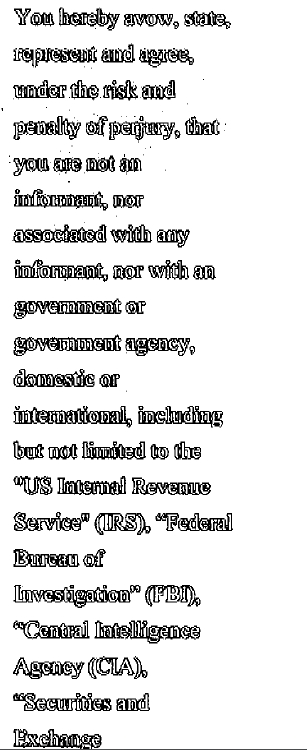
    This section of the Legisi Terms of Service purports that members must avow they are not an "informant, nor associated with any informant" of the IRS, FBI, CIA and the SEC, among others. The others included "Her Majesty's Police," the Intelligence Services of Great Britain, the Serious Fraud Office, Interpol and others.

    It has become clear that law enforcement is using multiple tools, including undercover operatives, infiltrations, Internet archives and notes kept by victims, to investigate and then prosecute HYIPs and autosurfs. Records viewed by the PP Blog show that the law-enforcement community is making one tie after another between and among various illegal investment businesses and their participants.

    The common signatures of the promoters of these illegal enterprises are greed and wanton lawlessness — all so the scammers can enjoy the proceeds of theft. This work has not generated headlines; it mostly has gone about quietly, but there simply no longer is any doubt that multiple state and federal agencies have pooled resources and talents to destroy these insidious enterprises and a day of reckoning is at hand for the purveyors.

    As the screen shot on the left shows, Legisi participants even were asked to certify that they weren’t “informants” or representatives of agencies such as the SEC, FBI, and IRS.

    Last week the PP Blog wrote about the fraud case filed by the SEC against Mazu.com operator Matt Gagnon, Gagnon was accused of helping Legisi pull off a $72 million Ponzi scheme affecting more than 3,000 investors by using Mazu to shill for Legisi while not disclosing that “he was to receive 50% of Legisi’s purported ‘profits’ under his agreement” with McKnight.

    Gagnon allegedly netted about $3.8 million in the scheme.

    The filing of the complaint against Gagnon prompted the Blog to perform some more research into Legisi. Among the documents we obtained was the 267-page exhibit of evidence originally filed under seal by the SEC in the case against Legisi on May 5, 2008.

    Prior to reading the document, we had wondered just how effective companies that purported to offer “private” HYIP and autosurf programs could be. For example, could these so-called “private” programs keep out what some investors describe as the prying eyes of government and the tax man?

    If such purportedly programs offered a “private,” members’-only forum, could those forums have any expectation that the prying eyes of government and the tax man could be kept out?

    “Private” is one of the big selling points of some HYIPs and autosurfs. We’ve always viewed the claims as dubious. After all, the schemes operate on the Internet. They involve people. People talk. It’s one thing to say you offer a “private” forum; it’s quite another to contain discussion to a single forum, perhaps especially when participants begin to smell a rat.

    We learned this in a big way when we were covering events surrounding the collapse of the AdViewGlobal (AVG) autosurf last year. When some members finally removed their blinders, AVG had no way to contain discussion to its purportedly “private” forum — not that it should have had any expectation that it could contain discussion even if things were going swimmingly.

    When AVG started to tank, some of its members couldn’t wait to share details about events that occurred in the “private” forum. Threats against them for purported copyright violations and to ban IPs and kick members out of the program for sharing information outside “association” walls did not work. In fact, they became the signatures of a scam in progress and the relentless efforts to hide it.

    But getting back to Legisi and the issue of whether a “private” forum provided any protection for members and any insulation from the prosecution  of Legisi . . .

    It turns out that the government did not even have to “break in” to Legisi’s “private” forum, so to speak, to gain information on the program. Legisi members concerned about losing their money were keeping notes, including handwritten notes, and printing out page after page of posts from the “private” forum and Legisi’s own website.

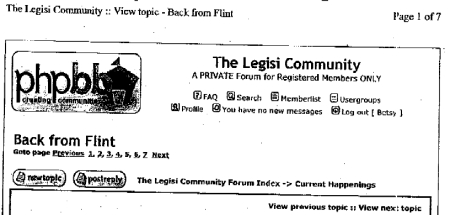
    Included in evidence exhibits are page after page of posts from Legisi's "private" forum and other communications such as emails to customer service and printouts Legisi members made while visiting the company's website and keeping notes about the program.

    Legisi members bothered by the company’s explanations and efforts to maintain secrecy when dealing with investors’ money turned over the information to the SEC.

    Yep. Avatars, pictures, user names, real names and all.

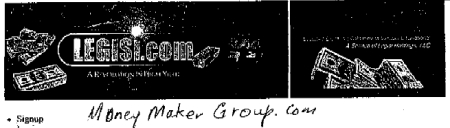
    In this evidence exhibit given to a federal judge prior to the Legisi asset freeze, a Legisi prospect writes the name "Money Maker Group.com" in longhand. The prospect also wrote the name "Matt Gagnon" in longhand and a telephone number for Gagnon.

    Prior to filing its case against Legisi, the SEC also had other hard-copy printouts from members, including emails and information from Legisi members’ back offices. At least one of the exhibits included the handwritten notes of a Legisi member.

    The words “Money Maker Group.com” are spelled out in longhand on one of the exhibits, as are telephone numbers of individuals associated with the program. One of the numbers has the name “Matt Gagnon” spelled out in longhand above it.

    Still promoting HYIPs and autosurfs? Still shilling in forums public and “private?”

    Your day of reckoning could be drawing near.

  • Nicholas A. Smirnow, Pathway To Prosperity (P2P) Operator, A ‘Convicted Burglar, Robber And Drug Dealer’ Who Fleeced At Least 40,000 People In International Ponzi Scheme

    Here is how Pathway To Prosperity (P2P), operated by Nicholas A. Smirnow, was described by members of the indefatigable, Ponzi-pushing ASA Monitor forum in 2007:

    “Just talked with Nick today on the phone,” one member said. “I always enjoy talking with him — honest and straightforward.”

    “This one is a WINNER,” another crowed. “People, you don’t know what you are missing if you aren’t in this program.”

    Here is how a member of TalkGold, another Ponzi-pushing site, described P2P:

    “[T]his program will go a long way to bringing back stability to investment sites,” he wrote. “[T]his one you can trust 100% and also the admin Nick . . . come and join our happy group.”

    Here is how P2P was described by a member of MoneyMakerGroup, yet another Ponzi-pushing site:

    “[T]his is the kind of program that is needed,” the poster wrote. “p-2-p gives the little man a chance to invest and relax knowing your money will be safe at the end of the investment.”

    And here, according to the St. Louis Post-Dispatch, is how the U.S. Postal Inspection Service and federal prosecutors described Smirnow after charging him yesterday with operating an international Ponzi scheme that gathered more than $70 million and fleeced more than 40,000 people:

    “convicted burglar, robber and drug dealer who told a former employee that he was involved in a double homicide.”

    Smirnow, believed to be on the lam in the Philippines, used aliases such as Nicolay Smirnow, Alexander Judizcev, Nicholas Kachura and Jeff Prozorowiczm. The scam spread across the world, and P2P shielded itself by using a website in the Netherlands and a company incorporated in the Turks and Caicos Islands.

    Although the program pitched interest rates of up to 17,000 percent, a poster on ASA Monitor incongruously said, “This is not a HYIP — Nick does not believe in them.” Regardless, the same poster — despite his cheerleading — acknowledged he was worried “about the authorities getting in and shutting things down . . . but since it is not a site being heavily promoted like CEP and not so open, it may keep under the radar . . .”

    CEP was yet another Ponzi scheme.

    It has been an electrifying week for opponents of HYIP and autosurf frauds, who routinely are derided as “naysayers” by commission-grubbing pitchmen who spread Ponzi pain across the planet for a share of illegal profits.

    On Tuesday, the SEC announced it had charged Mazu.com operator Matthew J. Gagnon, 41, of Weslaco, Texas, and Portland, Ore., with helping “orchestrate a massive Ponzi scheme conducted by Gregory N. McKnight . . . and his company, Legisi Holdings, LLC.”

    The Legisi scheme raised about $72.6 million from more than 3,000 investors “by promising returns of upwards of 15% a month,” the SEC said.

    Like Pathway to Prosperity, Legisi also was promoted on ASA Monitor, TalkGold, MoneyMakerGroup and other forums criminals and their shills frequent to separate people from their money.

    A U.S. warrant for Smirnow’s arrest was issued yesterday — although Smirnow is believed to have been ducking Canadian authorities for months because of an investigation into his business practices.

    Smirnow now joins Robert Hodgins — yet another international fugitive allegedly associated with the drug and HYIP trades — on the lam.

    Hodgins, who provided debit cards for the alleged AdSurfDaily Ponzi scheme and is believed also to have a tie to the PhoenixSurf autosurf Ponzi scheme and other autosurf and HYIP schemes, is wanted for helping a Colombian narco business launder money at ATM machines in Medellin and also for accepting $100,000 in purported drug proceeds for laundering money in the Dominican Republic.

    INTERPOL is searching for Hodgins.

    Read the Smirnow story in the St. Louis Post-Dispatch.

  • UPDATE: Web References, Images Linked To Investing Raise New Questions About PPE-Life; Records Suggest Recruitment Bids Started In January And That Promoters Referenced Warren Buffet

    A video promotion for PPE-Life, which is facing a challenge for allegedly selling unregistered securities in South Carolina, references Warren Buffet. Buffet, the chairman of Berkshire Hathaway, is a legendary stock trader. He is not believed to have any tie to PPE. The reference to Buffet as a "game changer" — and images of a bull and a bear — may make it harder for PPE to argue it is not selling securities as the South Carolina litigation proceeds. A PPE prospect or prosecutor reasonably could ask, "If PPE is not selling an investment, why does a video promo reference Warren Buffet and include images of a bull and bear?" Images of bulls and bears are inexorably linked to the investment business

    While securities regulators in South Carolina say a murky business known as PPE-Life recently has been holding recruitment meetings in the state, web records suggest that online recruitment efforts actually got under way months ago in anticipation of the company’s launch.

    Efforts to promote PPE appear to have begun in January, at least three months prior to PPE’s corporate registration being recorded in Florida and despite the fact virtually nothing was known about the firm’s business practices and business mix.

    At the same time, some promoters of PPE-Life appear to be building downlines by using a video that features narration about celebrated investment strategist Warren Buffet. The video is potentially embarrassing — if not problematic — for PPE because the company is facing a challenge in South Carolina amid allegations it is selling unregistered securities.

    Because Buffet — who is not believed to have any tie to PPE — is one of the foremost investment experts in the world, prospects and prosecutors alike reasonably could ask why his name is referenced in promotions for PPE if the company is not in the securities business. They also could ask why his name is referenced at all if Buffet has no tie to PPE.

    On Tuesday, the office of South Carolina Attorney General Henry McMaster described PPE-Life as a Florida company reluctant to provide details about its business, including the name of an unspecified “international bank” with which it purportedly is affiliated. McMaster ordered the company to cease and desist from selling securities and collecting money in the state.

    Advertisements and web records dating back to January, however, described PPE-Life as the “marketing arm” of an entity known as “PPE Bank International.” No such entity appears to have been registered in Florida, although a corporation named “PPE-Life Inc.” was formally registered on April 29, about three months after recruitment ads referencing both PPE-Life and PPE Bank International began to appear online.

    Other online references to PPE describe it as an “Agent with an offshore Lending Institution.”

    When John Barter, a PPE officer, was asked at a May 20 recruitment meeting in Sumter, S.C., to identify the bank, Barter allegedly responded that “I am the bank.”

    “Barter did not identify any bank and provided no evidence any such bank existed, but instead asserted, ‘I am the bank,’” according to South Carolina securities regulators.

    A domain name — PPELife.com — also was registered in January. The domain redirects to a website that displays a video. A message that reads “PPE Marketing welcomes you!” appears in the upper-right corner of the website, and the video includes images and commentary about NBA legend Michael Jordan and Microsoft Chairman Bill Gates, along with an image of a bull and a bear and narration about Berkshire Hathaway Chairman Warren Buffet.

    “Warren Buffet didn’t invent the stock market,” the video’s narrator intoned. “He changed the game of investing.” Gates was described as having changed the game of technology, and Jordan was described as having changed the game of basketball.

    It is not believed that Buffet, Gates and Jordan have any tie to PPE.

    It is common for multilevel-marketing (MLM) companies and affiliates to use images of celebrities and captains of industry in web promotions — even if the individuals depicted in photographs and mentioned by narrators have no connection to the business opportunities being advertised.

    The video appears to be a recruitment video to help participants build downlines in PPE and other programs. Although PPE’s name is not mentioned in the video, it is possible that the references to Buffet and Gates could put PPE in the position of explaining why promoters are spotligting the names of individuals associated with publicly traded companies if PPE is not in the business of selling securities. Meanwhile, the images of bulls and bears are inexorably tied to investment opportunities.

    Elsewhere on the web, a free classified ad with a publication date of Jan. 24, 2010, says this:

    “Ppe life is the marketing arm of ppe bank international. as a result of this marriage, banking has gone mlm!”

    The ad further claimed that PPE had chosen a service-provider for a recruitment feeder system.

    “what does this mean to you?” the ad asked. “this means that you can receive a paid position in this ground floor global opportunity for only $66 (one-time) not $599 (one-time). for $66 one- time, you will join a group of experienced entrepreneurs in a simple, forced 2×2, three-phase feeder system that will generate a third phase payout of $1,840. $599 of your $1840 will be used to to pay for your independent associate membership in ppe life. as an independent associate of ppe life you will receive: *a mastercard or visa credit card with a $1,000 limit (without a credit check)… *a monthly subscription to ppe lif …”

    The final words of the ad appear to have been cut off.

    Web records suggest that PPE affiliates are using at least two different feeder companies to build downlines in PPE. The presence of the feeder system suggests PPE’s recruitment efforts may be more widespread than initially believed, crossing both domestic and international borders.

    McMaster’s office said Tuesday that people who attended a May 20 PPE sit-down meeting in South Carolina were asked to pay $599 as an “initial membership fee” and a $50 per month “maintenance fee” thereafter. Attendees further were advised that returns of “up to $440,000 per year” could be earned through PPE.

    Attendees also were told they’d become eligible for loans at a “significant discount” and that funds collected from participants would be used to purchase “debentures earning 40% to 50% interest.”

    People who signed up were told they could earn “1.5% of loan payments on loans made to any members who subsequently join[ed] PPE” and also would receive a “free” credit card with a $1,000 limit, authorities said.

  • ONLINE PONZI FORUM BOMBSHELL: Matt Gagnon A ‘Danger To The Investing Public,’ SEC Says; Federal Judge Freezes Assets Of Mazu.com Pitchman Who Promoted Legisi, Other Alleged Scams

    Matt Gagnon of Mazu.com

    Ponzi forum operator or moderator? Online HYIP aficionado? Think you’re safe pitching fraud schemes because you’re “only” a promoter or forum “expert” and not the operator of the programs?

    Have a secret partnership deal with an HYIP fraudster? Using fancy, professional-sounding terms such as “due diligence” in your forum posts? Claiming you’ve done thorough research before recommending an “opportunity.”

    Pitching programs that advertise unusually large returns — while at once showcasing your knowledge about investment scams and steering people away from certain programs because they sound too good to be true?

    In an action that may send shockwaves across the Web world and Ponzi forums such as ASA Monitor, TalkGold and MoneyMakerGroup, the SEC has gone to federal court and filed an emergency action to halt “a series of fraudulent, unregistered securities offerings” made through Mazu.com.

    U.S. District Judge George Caram Steeh of the the Eastern District of Michigan has frozen the assets of Matthew J. Gagnon, 41, of Weslaco, Texas, and Portland, Ore. Gagnon is Mazu.com’s operator.

    “From January 2006 through approximately August 2007, Gagnon helped orchestrate a massive Ponzi scheme conducted by Gregory N. McKnight . . . and his company, Legisi Holdings, LLC,” the SEC said.

    The Legisi scheme raised about $72.6 million from more than 3,000 investors “by promising returns of upwards of 15% a month,” the SEC said.

    “Gagnon promoted Legisi but in doing so misled investors by claiming, among other things, that he had thoroughly researched McKnight and Legisi and had determined Legisi to be a legitimate and safe investment,” the SEC said.

    Among other things, the SEC alleged that Gagnon “had no basis for the claims he made about McKnight and Legisi.

    “Gagnon also failed to disclose to investors that he was to receive 50% of Legisi’s purported ‘profits’ under his agreement with McKnight,” the SEC said. “Gagnon received a net of approximately $3.8 million in Legisi investor funds from McKnight for his participation in the scheme.”

    Then, beginning in August 2007, “Gagnon fraudulently offered and sold securities representing interests in a new company that purportedly was to develop resort properties,” the SEC said.

    In this scheme, Gagnon “falsely claimed that the investment was risk-free and ‘SEC compliant,’ and guaranteed a 200% return in 14 months. In reality, however, Gagnon sent the money to a twice-convicted felon, did not register the investment with the SEC, and knew such an outlandish return was impossible,” the SEC said.

    Gagnon took in at least $361,865 from 21 investors, the SEC said.

    Still unfinished, Gagnon — in April 2009 — began promoting “a fraudulent offering of interests in a purported Forex trading venture,” the SEC said. “Gagnon guaranteed that the venture would generate returns of 2% a month or 30% a year for his investors. Gagnon’s claims were false, and Gagnon had no basis for making the claims.”

    Gagnon next turned to another Forex sceme, the SEC said.

    From October 2009 to November 2009, Gagnon “offered another purported Forex trading venture in which he claimed to have a trader in Europe who would trade foreign currencies for investors in exchange for 40% of any profits he generated,” the SEC said. “Gagnon removed this offer from his website in November 2009 when he received notice that the SEC had subpoenaed his bank records.”

    Despite his knowledge about Ponzi and fraud schemes, Gagnon repeatedly pitched such schemes, the SEC said.

    “Gagnon has been unrelenting in his efforts to raise money from the public through
    fraudulent, unregistered offerings,” the SEC said. “He remains a danger to the investing public.”

    Despite his sales pitches, “Gagnon has never been associated with a registered broker-dealer and has never been registered with the Commission as a broker or dealer or in any other capacity,” the SEC said.

    Among the people to whom Gagnon directed money was the late Bryan K. Foster, who was convicted in 1997 of five felony counts of wire fraud and sentenced to 41 months in prison. These convictions were recorded in U.S. District Court in Montana, according to records.

    In 2000, Foster was convicted in Colorado of one felony count of wire fraud and sentenced to five years in prison, according to records.

    Between July 13, 2007 and September 17, 2007, Gagnon sent at least $800,000 to accounts in the name of Trails Home LLC, which was controlled Foster, the SEC said. Money from the illegal Legisi program was included in the sum transferred to Foster for his purported investment program, the SEC said.

    The Legisi Program

    In 2005, McKnight was an underemployed General Motors worker living outside Flint, Mich., the SEC said, adding that he had financial problems.

    “In December 2005, McKnight began offering and selling interests in a pooled investment program variously called Legisi.com or Legisi,” the SEC said. “McKnight promoted the offering around the globe through an Internet website at www.legisi.com,” promising monthly returns of up to 15 percent.

    By February 2006, “McKnight incorporated a shell company called Legisi Holdings, LLC in the bank-secrecy haven of Nevis in the West Indies,” the SEC said.

    “McKnight asserted on the Legisi website that the Legisi program was merely a ‘loan program’ through which investors would ‘loan’ money to Legisi and, in return, Legisi would pay investors high rates of interest.

    But Legisi actually was “a classic pooled investment vehicle, in which investors invested money into a common venture with the expectation that the money would be used to generate profits, for McKnight and the investors, solely through the efforts of McKnight or others working on his behalf. The Legisi program was a security in the form of an investment contract,” the SEC said.

    “The Legisi program was also a massive Ponzi scheme,” the SEC said.

    In January 2006, McKnight and Gagnon discussed a deal by which Gagnon would promote Legisi on the Mazu.com website, the SEC said.

    “McKnight and Gagnon had known each other for several years after Gagnon recruited McKnight into a multilevel marketing business called ‘Mannatech,’” the SEC said. “McKnight became part of Gagnon’s ‘down line,’ meaning that a portion of McKnight’s commissions from selling Mannatech products went to Gagnon.”

    McKnight paid Gagnon “a total of approximately $4,532,512 between January 29, 2006 and April 14, 2008,” the SEC said. “All of the money Gagnon received from McKnight consisted of investor funds. There were no ‘profits’ generated by Legisi.”

    Gagnon netted about $3.8 million in the scheme, the SEC said.

    “On behalf of McKnight, Gagnon solicited investors around the world through the publicly available Mazu.com website,” the SEC said. “Gagnon wrote and/or reviewed and approved the content of the Mazu website. No valid registration statement was filed or was in effect with the Commission in connection with Gagnon’s offer and sale of Legisi program investment contracts.”

    SEC: Forum Moderators Helped Push Ponzi Scheme

    “Between approximately January 2006 and August 2007, Mazu employees working on Gagnon’s behalf and at his direction promoted the Legisi program in emails, in Mazu Business Packs and DVDs they sent to investors, and on the Legisi Forum,” the SEC charged.

    “The Legisi Forum was an on-line chat room accessible through the Legisi.com website. Several Mazu employees served as ‘moderators’ on the Legisi Forum. Mazu’s support services also included answering questions over the telephone and email,” the SEC said.

    Forum shills performed services for Legisi and deflected concerns when CNN carried a negative report on the company, the SEC said.

    “The Mazu employees acting as moderators encouraged readers to invest in Legisi, assisted them in transferring money to Legisi, encouraged investors to bring in new investors, and offered investors personal assistance in bringing in referrals,” the SEC said. “They also encouraged investors to keep their monthly earnings with Legisi, rather than withdrawing them, in order to achieve purportedly higher returns. They made sure transfers of money between investors and Legisi went smoothly. The moderators updated investors on changes to the Legisi program like new minimum investment amounts and referral fee rules.

    “The moderators made posts on the Legisi Forum to prevent and diffuse investor rumors and concerns,” the SEC continued. “After an article questioning Legisi’s legitimacy appeared on the CNN Money website on May 8, 2007, one moderator wrote, ‘I think it is worth mentioning that the Forum is probably being read by people who are not Legisi members. So let’s not raise red flags to any bulls out there shall we. . .. Of course so far as any discussion on the [CNN Money] article is concerned I’m sure that everyone is aware that Greg went into Legisi knowing the law and planning for this eventuality. So keep a cool head and stop worrying about what you should do.”

    No Due Diligence

    McKnight was operating a classic Ponzi scheme fueled in part by Gagnon’s cheerleading on Mazu.com, the SEC said.

    Despite the relentless hype, Gagnon performed no due diligence and simply fabricated information or passed along claims as though they were factual, the SEC said.

    “Gagnon did not obtain or review any of McKnight’s trading records, bank and brokerage account statements, or e-currency account records at any point prior to, or during, Gagnon’s promotion of Legisi,” the SEC charged.

    SEC: Gagnon ‘Recklessly Disregarded’ Scam Warning Signs

    “Throughout the time that Gagnon promoted Legisi, he simultaneously warned readers about a type of fraud referred to as a high yield investment program. High yield investment programs, commonly called ‘HYIPs,’ typically involve off-shore companies promising very high rates of interest generated by investment in foreign currencies and a variety of other vehicles, along with repeated hyping of the legitimacy of the program,” the SEC said.

    Gagnon understood the HYIP fraud universe, but nevertheless pitched Legisi, which had promoted an unusually high rate of return and had other markers of the exact kind of scam Mazu.com warned about on its website, the SEC said.

    “From at least April 2006 through at least May 2007 Gagnon provided on the Mazu website an accurate description of a HYIP by stating that they (emphasis added by PP Blog):

    collect funds from lenders as investment capital or deposits and promise a return that is usually extremely high in exchange for ‘borrowing your money.’ The result? Generally after a period of time you are free to withdraw your capital and or your profits, or you can ‘reinvest’ them to earn additional profits. In theory, the compounding can create a crazy return on investment given time . . .

    * * * * * *

    Sadly, most HYIPs are offshore fronts that don’t lie within U.S. jurisdiction and you have no recourse when they steal your money. Most HYIPs realize this and they bank on it! They’ve got you right where they want you. Most also allude to making their profit in legitimate investment vehicles when in reality, you have no idea where they’re making their profit.

    And Gagnon also warned readers about Ponzi schemes.

    “On the Mazu website between at least April 2006 and May 2007, Gagnon accurately described a Ponzi scheme as an ‘investment program touting huge returns in a short period of time. Any returns someone sees are paid out of monies gathered from the investors. No real product, investment, or business takes place,’” the SEC said.

    The Legisi Ponzi began to unravel by September 2007, its decay brought about in part by “the federal seizure of an e-currency provider that was holding $1.8 million for McKnight,” the SEC said.

    Gagnon then “attempted to extort money from McKnight,” the SEC said.

    “On September 9, 2007, Gagnon informed McKnight that he was ending the partnership between Legisi and Mazu,” the SEC said. “Gagnon offered McKnight a choice: send Gagnon and several of Gagnon’s associates approximately $2.5 million, tell the Legisi members that Gagnon was starting a real estate fund, and that Mazu and Legisi were parting amicably, or Gagnon would email the entire Legisi membership and tell them ‘the truth’ about McKnight’s fraud.”

    Read the SEC complaint.

  • Data Network Affiliates Asks Members If They Know About Their ‘DNA Tax Benefits’; Pitch Highlights Mileage Deduction; Firm Quotes IRS In First Paragraph Of Email

    An email DataNetworkAffiliates’ (DNA) members received today led with a pitch that participating in DNA could result in large tax deductions for mileage.

    DNA purports to be in the business of paying members to record license-plate numbers for entry in a database that would be potentially useful to law enforcement and the AMBER Alert program for abducted children. The company also purports to be in the cell-phone business and other businesses such as juices and magnetic sleep systems.

    Today’s email to affiliates suggested that people who racked up mileage while recording plate numbers for DNA could qualify for large, business-related tax write-offs.

    “Did you know about your DNA Tax Benefits . . .” the DNA pitch began. “Imagine driving 10,000 miles for your DNA Business = up to a $5,000 Tax Deduction… “IRS Announces 2010 Standard Mileage Rates” IR-2009-111, Dec. 3, 2009… and this is just one of many…”

    DNA did not explain what “one of many” meant. The line that trailed off with the ellipses, however, was in the context of tax deductions. The headline on the email was titled, “DNA = FREE = A Great Opportunity with Great Tax Benefits.”

    DNA then published snippets from an IRS news release with a Washington dateline. Because DNA’s email included only snippets of the IRS release — and because DNA added commentary to the email and appears not to have distinguished its words from the words of the IRS — members could become confused about whether the IRS was talking or whether DNA was talking.

    DNA’s email instructed members to “[c]heck with your accountant to find out what you DNA Business will allow you to legally write off . . .”

    Here is the full IRS news release from Dec. 3 (italics added):

    IR-2009-111, Dec. 3, 2009

    WASHINGTON — The Internal Revenue Service today issued the 2010 optional standard mileage rates used to calculate the deductible costs of operating an automobile for business, charitable, medical or moving purposes.

    Beginning on Jan. 1, 2010, the standard mileage rates for the use of a car (also vans, pickups or panel trucks) will be:

    * 50 cents per mile for business miles driven
    * 16.5 cents per mile driven for medical or moving purposes
    * 14 cents per mile driven in service of charitable organizations

    The new rates for business, medical and moving purposes are slightly lower than last year’s. The mileage rates for 2010 reflect generally lower transportation costs compared to a year ago.

    The standard mileage rate for business is based on an annual study of the fixed and variable costs of operating an automobile. The rate for medical and moving purposes is based on the variable costs as determined by the same study. Independent contractor Runzheimer International conducted the study.

    A taxpayer may not use the business standard mileage rate for a vehicle after using any depreciation method under the Modified Accelerated Cost Recovery System (MACRS) or after claiming a Section 179 deduction for that vehicle. In addition, the business standard mileage rate cannot be used for any vehicle used for hire or for more than four vehicles used simultaneously.

    Taxpayers always have the option of calculating the actual costs of using their vehicle rather than using the standard mileage rates.

    Revenue Procedure 2009-54 contains additional details regarding the standard mileage rates.

    Here is the portion of the email concerning tax write-offs DNA sent today (italics added):

    WASHINGTON — The Internal Revenue Service today issued the 2010 optional standard mileage rates used to calculate the deductible costs of operating an automobile for business, charitable, medical or moving purposes.

    Beginning on Jan. 1, 2010, the standard mileage rates for the use of a car (also vans, pickups or panel trucks) will be:

    * 50 cents per mile for business miles driven
    * 16.5 cents per mile driven for medical or moving purposes
    * 14 cents per mile driven in service of charitable organizations

    Taxpayers always have the option of calculating the actual costs of using their vehicle rather than using the standard mileage rates.

    Check with your accountant to find out what you DNA Business will allow you to legally write off…

    DNA spent the balance of the email on topics such as a “Travel Agent Package,” a “Back Relief System,” a “Foot Insole System,” cell phones, juices and other offerings.

    “CHECK OUT YOUR BACK OFFICE YOU CAN BUY $59.95 DNA MAGNETIC PRODUCTS FOR $19.95 AND THEY ARE CHEAPER BY THE DNA DOZEN . . .” DNA said. “BUY THE BACK RELIEF SYSTEM TODAY IT IS A GREAT DNA PRODUCT TO DEMONSTRATE . . .

    “I”N FACT YOU SHOULD BUY A DOZEN . . . GIVE THEM TO TEN FRIENDS OR 5 COUPLES TO TRY . . . THEY WILL MOST LIKELY BUY THEM AND . . . SIGN UP FOR FREE & START SELLING THEM . . .”

    DNA did not explain how it had arrived at the conclusion that people shown the products “most likely” will buy them.

    DNA, which uses a domain registered in the Cayman Islands and conducts customer service with a free gmail address, also did not say why it chose to highlight the tax advantages of repping for the company over the advantages of any actual product offered by the firm.

    The DNA program — and also a similar program operated by a company known as Narc That Car and Crowd Sourcing International — potentially could lead to tax challenges by the United States because of claims made by promoters and the nature of the business itself.

    Both DNA and Narc purport to pay members to record license-plate numbers. Both firms are multilevel-marketing (MLM) programs and have encouraged participants to write down plate numbers or record them on cell-phone cameras at retail outlets such as Walmart, Target, Giant Eagle and others.

    Promoters also have been encouraged to record plate numbers at places such as churches and doctors’ offices.

    The approach has led to questions about whether members would engage in tax abuses such as claiming trips to the grocery store and places of worship as deductible business miles because they recorded plate numbers while in parking lots. Because members have been encouraged to use cell phones and cameras to record plate numbers, a second tier of potential tax abuse could open up, with members trying to write off the costs in whole or in part of any item that had even a tenuous link to the purported business of recording plate numbers.

    There also are questions about whether DNA and Narc members could engage in grandiose frauds such as attending a funeral thousands of miles away and seeking to deduct the trip as a business expense because plate numbers were recorded at the destination site.

    Neither DNA nor Narc publish the names of purported clients of the database products. Affiliates have published purported “training” videos on YouTube that encouraged prospects to record plate numbers virtually anywhere. Some of the videos have suggested that members should behave inconspicuously while recording numbers — for example, driving to the parking lot of a retailer and remaining in the car while recording the plate numbers.

    Details about the propriety, safety and legality of the DNA and Narc programs have been given short-shrift in the purported training videos. It is known that members of an alleged Ponzi scheme known as AdSurfDaily have promoted DNA and Narc, and ASD has been linked to people who participate in tax schemes.

    Parts of DNA’s email today that did not deal with taxes appeared to have been copied from earlier emails and pasted into today’s email. DNA, for example, said today it was “CELEBRATING 69 DAYS IN BUSINESS . . .”

    Earlier emails made the same claim about a celebration for 69 days in business. DNA also celebrated a “Two Month Anniversary.”

  • KABOOM! Alleged Commodities Ponzi Scheme Run By Mexican Nationals On U.S. Soil Dumped Money Into TWO Other Failed HYIP Fraud Schemes, Investigators Say; Ruben Gonzalez, Jose C. Naranjo Charged By CFTC

    UPDATED 10:17 A.M. EDT (May 25, U.S.A.) It has been another nasty day for the HYIP and autosurf “industries” and their apologists. Investigators have charged two Mexican nationals with operating a Ponzi scheme on U.S. soil. The alleged scheme, which used names such as New Golden Investment Group LLC (NGI), NGI Group LLC, New Golden Management, New Golden Entertainment LLC, Grupo NGI International Inc. and NGI International Inc., targeted Latinos in Greater Los Angeles, authorities said.

    Charged by the CFTC is the case were the companies and their operators, Ruben Gonzalez of West Covina, Calif., and Jose C. Naranjo of La Mirada, Calif. Both men are Mexican nationals. Their ages were not immediately known. Gonzalez was jailed in October on immigration charges, authorities said.

    Gonzalez also has been indicted on criminal charges of mail fraud and wire fraud, the CFTC said.

    The alleged NGI scheme has ties to other fraud schemes, including the Traders International Return Network (TIRN) scheme and the alleged Finanzas Forex scheme, authorities said. Criminal charges have flowed from the TIRN scheme, and the Finanzas Forex scheme — allegedly part of an international scheme known as Evolution Market Group (EMG) — has resulted in allegations that proceeds from the EMG scheme found their way into bank accounts seized by the U.S. Drug Enforcement Administration in a narcotics investigation in Arizona.

    Meanwhile, the TIRN scheme, which operated from Florida and claimed a presence in Panama, also has a tie to the alleged INetGlobal autosurf Ponzi scheme. Both TIRN and INetGlobal used the same debit-card company to pay members, according to court filings.

    Gonzalez and Naranjo gathered $3.65 million in the NGI scheme beginning in August 2008, dumping at least $100,000 into TIRN and $290,000 into Finanzas Forex, the CFTC said. All of the money appears to have been misappropriated, with Gonzalez transferring “at least” $260,000 from NGI member funds to his personal bank account and Naranjo transferring “at least” $267,000 from NGI member funds to his personal bank account.

    About $62,000 transferred into Naranjo’s bank account was withdrawn in cash, the CFTC said.

    The men “used investor funds to purchase a Mercedes-Benz, airline tickets, various other retail items and to make payments on a home,” the CFTC said.

    It is possible that as much as $1 million was directed at Finanzas Forex, the CFTC said.

    Gonzalez and Naranjo tricked investors by making them believe NGI was a real commodities-trading business.

    “Gonzalez, Naranjo and NGI falsely presented NGI as a successful trading company by displaying trading software on NGI’s office computers to make it appear to customers and prospective customers that NGI was engaged in electronic commodity futures trading,” the CFTC said.

    In reality, “NGI did not trade commodity futures for customers and did not make any of their advertised profits. Instead, Gonzalez and Naranjo allegedly ran a Ponzi scheme using new investor money to pay purported profits to existing investors,” the CFTC said.

    Part of the NGI sales pitch was similar to the sales pitch of yet another Ponzi scheme: the Learn Waterhouse scheme, which operated from California and also has a tie to INetGlobal, according to court records.

    INetGlobal operator Steve Renner provided payment-processing services for the Learn Waterhouse Ponzi scheme through an entity known as Cash Cards International, according to court records.

    Learn Waterhouse talked about purported investments in “gold” in Mexico. According to the CFTC complaint in the NGI case, NGI did the same thing, falsely claiming to customers that “they would double their money within a year in oil, gold, silver and other commodities.”

    NGI stopped making payments to investors in about June 2009, the CFTC said. At least 165 investors were affected.

    Gonzalez and Naranjo told customers that the payments stopped because a bank in Mexico was holding the funds and refused to release them. The men then told investors to have patience because a new deal involving oil was on the horizon and that investors who left their money with NGI son would have “huge” profits, the CFTC said.

    Investors were encouraged to fund accounts with money from credit cards or retirement savings, the CFTC said.

    NGI had been operating since about August 2008, according to records. That’s the same month INetGlobal was coming onto the autosurf stage, and AdSurfDaily was exiting the stage.

    The U.S. Secret Service said it believed both INetGlobal and AdSurfDaily were operating Ponzi schemes.

  • Feds, State Team Up In Virginia To Short-Circuit White-Collar Crime Wave; ‘All Too Clear’ Problem National In Scope, Top Federal Prosecutor Says

    Neil H. MacBride

    Calling it an “unprecedented partnership” brought about by a financial-fraud problem that is national in scope, federal and state officials today announced the creation of the Virginia Financial and Securities Fraud Task Force.

    The Virginia Task Force, which is part of President Obama’s interagency Financial Fraud Enforcement Task Force, brings together criminal investigators and civil regulators to investigate and prosecute complex financial fraud cases in the nation and in Virginia.

    “It has become all too clear that the complex financial crimes we confront are national in scope,” said U.S. Attorney Neil H. MacBride of the Eastern District of Virginia. “They require criminal and civil authorities across the country to utilize every tool at their disposal to ensure that the guilty are held accountable. The Eastern District of Virginia has the legal authority to bring cases here with national significance, regardless of where the fraud occurs.”

    Virginia’s Eastern District encompasses nearly 5 million residents in cities such as Alexandria, Richmond, Norfolk, Newport News and other communities.

    Financial crime is jumping across local and state borders, a top SEC official said.

    “Financial fraud schemes can be sophisticated, difficult to detect, and span multiple jurisdictions,” said Robert Khuzami, director of the SEC’s Division of Enforcement. “Opportunities to coordinate civil and criminal law enforcement efforts, such as those provided by this task force, are vital to combating financial fraud.”

    America’s economic future must be safeguarded, a veteran investigator said.

    “Financial fraud is a threat to economic integrity and can harm individual investors,” said Stephen Obie, acting director of enforcement for the CFTC.

    A centerpiece of the strategy is “to root out unscrupulous financial activity and protect market participants,” Obie said.

    Virginia’s attorney general agreed.

    “This partnership presents a tremendous opportunity to share information and resources among the experts in order to prosecute and deter fraud perpetrated against our citizens,” said Attorney General Ken Cuccinelli. “The efficiencies of state and federal cooperation and of law enforcement working together should not only prove more helpful in protecting consumers, but it should also save the taxpayers money.”

    Another part of the strategy is to create a force-multiplier to weed out fraudsters and send a message that they’ll get caught, a veteran FBI agent said.

    “Large-scale financial crimes are on the rise and as such law enforcement agencies are working together to become force-multipliers in investigative and prosecutorial efforts,” said FBI Special Agent in Charge Michael Morehart. “The Richmond Division of the FBI welcomes the opportunity to work with our partners on this task force to demonstrate a commitment of aggressive investigative efforts and discourage criminal activity.”

    The top postal official in North Carolina’s largest city said he’s on board the effort.

    StopFraud.gov - Financial Fraud Enforcement Task Force“The Postal Inspection Service embraces the formation of the Virginia Financial and Securities Fraud Task Force,” said Postal Inspector in Charge Keith Fixel of the Charlotte Division. “This partnership with other state and federal agencies will enhance our ability to thoroughly investigate mail fraud and other financial related crimes that involve the nation’s mail system and ensure public trust in the mail.”

    Tax criminals and money-launderers also will be targeted, said the chief tax-fraud investigator in the District of Columbia.

    “Financial-fraud crimes create huge losses of tax revenue,” said C. Andre’ Martin, special agent in charge of the IRS Criminal Investigations Division. “This type of fraud threatens the integrity of our tax system and erodes the financial health of our communities. IRS-Criminal Investigation is proud to be part of a formidable law enforcement team that is focused on investigating these fraud schemes and we will continue our efforts to investigate the tax-evasion and money-laundering aspects of these types of crimes.”

    State securities regulators have a key role on the Task Force.

    “The State Corporation Commission [SCC] looks forward to working with our state and federal partners to enhance our ability to enforce the provisions of Virginia law governing the financial services industry, assist investors who have lost their money, and enhance the integrity of markets by targeting and eliminating financial and securities fraud,” said Philip R. “Duke” de Haas, SCC deputy general counsel—Financial Services.

    Officials said the Task Force will build on successes such as the prosecution of Edward Okun, sentenced to 100 years in prison for a $132 million fraud scheme.

    In cases in which it is appropriate for civil regulators to share information with criminal investigators, such information will be shared, officials said.

    The task force “is focused on facilitating the exchange of information on specific investigations,” officials said. “The independent legal responsibilities of each task member may limit the ability to share information; however, the task force members are committed to conduct parallel investigations and share as much information as they are allowed so every member may benefit from the different tools and resources each agency can provide.

    President Obama formed the interagency Financial Fraud Task Force in November.