Category: Ad Surf Daily

  • No Stranger To Controversy, Donald Allen Says He Is Cooperating With Secret Service In INetGlobal Probe And Has ‘One Hell Of A Story’ To Tell

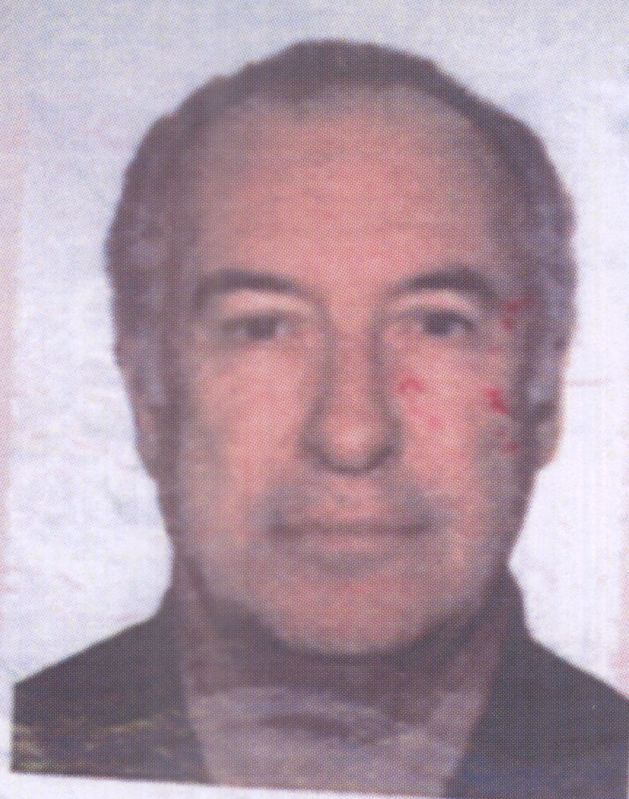
    Donald Allen

    UPDATED 6:08 P.M. ET (U.S.A. JAN. 20, 2011.)

    EDITOR’S NOTE: The story below includes an assertion by Donald Allen that his IBNN.org website was knocked offline Sunday by a company with ties to INetGlobal. Moments before the story was set for publication, the IBNN website returned. The story does not reflect this later event, and it is possible that the site is not viewable in all parts of the world owing to an apparent change in nameservers. Events surrounding the apparent change in nameservers are unclear.

    Acknowledging he had been advised that he potentially has “exposure” in the INetGlobal Ponzi scheme investigation, Donald Allen II said this morning that he had nothing to hide and would cooperate with the U.S. Secret Service and federal prosecutors “100 percent.”

    That cooperation already has begun, Allen said. He added that his thinking about INetGlobal has evolved since the Feb. 23 raid of company headquarters in Minneapolis, and he insisted he was out of the loop on INetGlobal’s financial affairs and that his efforts to promote the firm were legitimate.

    “Let me make it perfectly clear,” Allen said this morning. “I did the Global News Distribution and was never let in to the ‘workings’ of iNetGlobal. I met with the US Secret Service and [its] position is that I ‘shielded’ [Steve Renner] to operate a Ponzi, which is untrue.”

    Allen, a vice president with V-Newswire, an entity in the INetGlobal family controlled by Renner, claimed this morning that the company had blocked his access and the access of readers to a public-affairs Blog he operates. The Blog is known as the Independent Business News Network (IBNN).

    The company, Allen asserted, was penalizing him “for coming forward to answer ANY questions the Government has regarding iNetGlobal.”

    Renner has not been charged with a crime and has denied wrongdoing. The Secret Service said in court documents filed in February that “there is probable cause to believe that Renner is operating a large, Internet-based, Ponzi scheme through his umbrella corporation, InterMark, and some of its subsidiaries, particularly Virtual Payment Systems [LLC of Wisconsin/Brackets Denoting the LLC Designation added Jan. 20, 2011], V-Media, Cash Cards International, and V-Local.”

    NOTE IN BOLD ADDED JAN. 20, 2011: An Indianapolis-based company known as Virtual Payment Systems Inc. has contacted the PP Blog to let it know it is not affiliated with the Renner company Virtual Payment Systems LLC of Wisconsin, which is referenced in the paragraph above.

    The Secret Service alleged INetGlobal was the “primary vehicle for the perpetration of this fraud.”

    INetGlobal, which features an advertising rotator, is the so-called “autosurfing” platform of the Renner companies. The government has prosecuted several autosurf companies in recent years, saying they were selling investment programs disguised as advertising programs and engaging in wire fraud and money-laundering.

    Renner’s company has a high concentration of Chinese members who may have limited or no facility in English, the agency said. At least one INetGlobal member has said Americans flocked away from Renner’s autosurfing enterprise after the Secret Service, in August 2008, raided a similar company in Florida known as AdSurfDaily (ASD).

    The ASD litigation is referenced in court papers in the INetGlobal case.

    Allen said this morning that he also had performed work for V-Media and V-Local — both of which the Secret Service said had ties to the alleged INetGlobal fraud — but he insisted that he had done nothing wrong.

    “I wasn’t privileged to know anything about the compensation program” of InetGlobal, Allen said. “I could not explain it to this day.”

    An error message that reads “This Account Has Been Suspended: Please contact the V-Webs.com billing/support department as soon as possible” now appears on the IBNN site. In the early hours after Allen lost control of the Blog, the site would not return a ping and produced a “bad destination” error message, according to records.

    Even though Allen moved the content of the site from a hosting company controlled by Renner weeks ago, Renner controlled the domain registration and thus has the ability to block access, Allen asserted this morning.

    Allen’s access to the site was blocked sometime after “noon on Sunday,” two days after he met with the Secret Service, Allen said.

    Agents appeared at his home Friday unannounced, Allen said.

    He described his initial meeting with agents as “excellent.” Allen added that he is consulting with an attorney.

    “[The Secret Service] asked me if I would like legal representation,” Allen said. “I said yes.”

    A second meeting with the Secret Service occurred yesterday. Allen said he was consulting with his attorney again today, saying a characterization that described him as cooperating with the agency was “totally accurate.”

    The move to block IBNN also followed on the heels of a letter Allen gave to Renner April 22, Allen said. The letter claimed that Allen had “clear and documented” evidence of violations of the Federal Equal Employment Opportunity laws in a hiring decision it made.

    In the letter, Allen suggested he was not given an opportunity to interview for a job that went to an INetGlobal member with a large downline. The letter also questioned the operations of the company’s board of directors and claimed an INetGlobal “receptionist” was performing “confidential” work that should have been handled by the firm’s Human Resources department.

    Moreover, Allen said this morning that nothing in his employment contract with the Renner entity permitted the company to block access to the IBNN site. He claimed that the company now wants him to sign an agreement not to write about INetGlobal and also to inspect his computer.

    Allen Questions INetGlobal’s Operations

    Allen said this morning that he questioned how the company was paying its bills in the aftermath of the federal seizure of its assets. He claimed a member of INetGlobal with a Chinese name had received a promotion to a position that purportedly paid $120,000 a year after the seizure. This member, Allen said, also may have a seat on the board of directors and also purportedly had a downline organization in the company that purportedly paid $10,000 a day.

    His first question for Renner, Allen said, is “how is that possible with the current funds frozen by the US Government?”

    Allen said his position with the company was supposed to pay $75,000, but that he had not seen “a penny.”

    “I’m a little upset, a little traumatized by this attempt to shut me down, because I had one hell of a story,” Allen said. “I’m kind of devastated; I have a civil-rights Blog. A lot of people read it.”

    No Stranger To Controversy

    Allen and his IBNN Blog have been the subjects of controversy. He used an offshoot of the Blog to claim in March that “federal officials” were leaking information about the INetGlobal case to the PP Blog. After the PP Blog began to report on INetGlobal, Allen began to post comments on the PP Blog without initially identifying himself as a Renner employee, claiming that the PP Blog was “minor league” and engaging in a “witch hunt.”

    Separately, Allen used the IBNN Blog to attack the Star Tribune newspaper of Minneapolis St. Paul for its coverage of the INetGlobal raid. Meanwhile, Allen’s name is listed in the Secret Service affidavit filed in February to obtain search warrants at the firm’s headquarters. In the affidavit, the agency painted Allen as a person who provided confusing information to an INetGlobal prospect at a January event in Flushing, N.Y.

    Undercover agents attended the Flushing event, and one agent’s observations of Allen are noted in the affidavit.

    An INetGlobal prospect “stated she was struggling to understand how the business worked and explained that the person who brought her to the conference was not able to explain it either,” the agency said in the affidavit. “She asked what would happen if she sold iNetGlobal products to someone who had a website and they did not see an increase in their profits.

    “Donald Allen asked her what type of products the person was selling and the woman gave the example of beauty products,” the agency continued in the affidavit. “Donald Allen replied that if she was advertising beauty products and not selling any, then maybe she should be in a different business. The woman further challenged Donald Allen on people not truly viewing the websites, just simply opening them. Patricio Diez, iNetGlobal’s marketing director for Spanish-speaking countries, then stated that ‘that doesn’t matter for you.’

    “When the woman pressed further, stating that it does matter to whomever she sold the package to, Donald Allen simply stated ‘we have solutions for that’ but failed to expand upon those solutions,” the agency said.

    After the raid at INetGlobal’s offices in Minneapolis, Allen used the IBNN Blog to criticize both the media and the government for what he described as unfair treatment of the company — without disclosing his tie to the firm. Allen later told the PP Blog he should have disclosed the tie.

    Allen said this morning that his thinking about INetGlobal has evolved. He added that he also had revisited certain events at INetGlobal and had come to believe that things were not quite right.

    At an event in Las Vegas last year, for example, Allen was not given time to talk to attendees about V-Local, he said. In recent days he has publicly questioned why few if any members were interested in purchasing the company’s editorial products.

    “I can’t recall ever selling a press release to a Chinese member of iNetGlobal,” Allen said in a comment on the PP Blog April 23. “My yearly budget was in-part based on iNetGlobal members buying a press release from V-Newswire — hasn’t happened yet.”

    Meanwhile, Allen said this morning that he was sympathetic to Steven Keough, INetGlobal’s former chief executive officer and potentially the government’s star witness in the case. The company has claimed Keough tried to hatch an extortion plot after he was dismissed for incompetence.

    “Keough understood that INetGlobal members needed to buy the products,” Allen said this morning. “Steven Keough was the best thing that ever happened to that company,” adding that he believed Keough saw “noncompliance” with laws and was dismissed for pointing them out.

    See earlier story.
  • Man Whose Company Supplied Debit Cards To AdSurfDaily Wanted By INTERPOL In International Money-Laundering Case; Robert Hodgins On The Lam

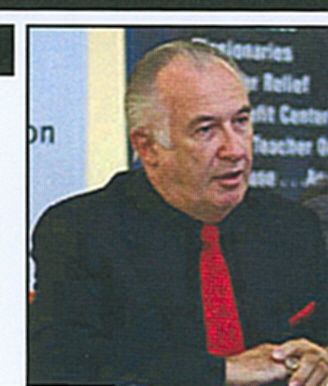
    Robert Hodgins: Source: INTERPOL

    The man who supplied debit cards to the AdSurfDaily autosurf is wanted by INTERPOL on an arrest warrant issued by U.S. District Court for the District of Connecticut, the international police agency says on its website.

    INTERPOL has published two photographs of Robert Hodgins, 65. People with information on Hodgins are urged to contact the General Secretariat of INTERPOL.

    Hodgins, whom INTERPOL says was born in Shawville, British Columbia, Canada, operated a Dallas-based company known as Virtual Money Inc. He was indicted under seal in 2008 in the United States on charges of assisting a Colombian narco-business launder money. He lived in the Oklahoma City area.

    His company, known as VM, was featured in advertising materials for ASD in 2007, and records suggest Hodgins or a VM designate participated in an ASD function in Orlando in late 2006. Five people have been convicted to date in the drug and money-laundering case, including two

    Robert Hodgins: Source: INTERPOL

    individuals from Medellin, Colombia, according to records. Medellin was the home base of the late drug lord and terrorist Pablo Escobar.

    Web records suggest VM supplied debit cards to other autosurfs and HYIPs, and the company’s name in mentioned in the Ponzi scheme litigation against ASD and in court papers in the PhoenixSurf Ponzi scheme.

    PhoenixSurf was sued successfully by the SEC in 2007.

    The criminal case against Hodgins was brought by the U.S. Drug Enforcement Administration after an undercover operation.

    In September 2008 — about a month after the U.S. Secret Service seized tens of millions of dollars from ASD President Andy Bowdoin amid wire-fraud, money-laundering and Ponzi scheme allegations in the District of Colombia — the indictment against Hodgins was unsealed in Connecticut.

    Some ASD members said they saw huge sums of cash and suitcases full of cashier’s checks at ASD “rallies” in American cities, leading to questions about whether the company was being used as a front for criminal enterprises.

  • Former Enron Prosecutor Chosen To Direct Financial Fraud Enforcement Task Force; Website Debuts

    The executive director of the newly created Financial Fraud Enforcement Task Force is a veteran federal prosecutor who served on the team that shined the light on the spectacular fraud of Enron Corp. and gained the convictions of former executives Kenneth Lay and Jeffrey Skilling in 2006.

    Meanwhile, the Task Force now has its own website — StopFraud.gov — and is targeting fraudsters and criminals who have fleeced the American public through Ponzi schemes, mortgage fraud, tax schemes and other financial crimes, the Justice Department said.

    StopFraud.gov is designed to be an information hub and educational resource that “combines resources from a wide range of federal agencies on ways consumers can protect themselves from fraud and report fraudulent activity.”

    Tens of thousands of people — from Enron employees to employees of the Arthur Andersen accounting firm — lost their jobs because of the Enron fraud and the accompanying accounting scandal. Investors lost fortunes.

    Robb Adkins, who became executive director of the Task Force in February, was on the Enron prosecution team in the main case and was the lead prosecutor in Lay’s separate trial for bank fraud. The Enron case ranks among the largest frauds in U.S. history.

    Adkins formerly was the top federal prosecutor in Orange County, Calif., working out of the Ronald Reagan Federal Courthouse in Santa Ana.  He was a special prosecutor in the Enron trials, which were held in Houston.

    “The Financial Fraud Enforcement Task Force is the broadest coalition of law enforcement, investigatory and regulatory agencies ever assembled to combat fraud, but one of our best partners in the fight is a vigilant, informed public,” said Adkins. “Throughout government there are resources to help hardworking, honest Americans protect themselves from fraud and report fraud, and StopFraud.gov will connect the public with those valuable tools.”

    President Obama created the Task Force by executive order in November. One of the first cases it tackled was the prosecution of Minnesota resident Trevor Cook in a $190 million Ponzi scheme.

    Cook, 37, pleaded guilty last week to mail fraud and tax evasion. He is jailed awaiting sentencing, and his plea agreement requires him to cooperate with the government and the court-appointed receiver in the case to recover assets.

    Among other things, Cook, who purportedly bought a submarine to access his island retreat in Canada, is required to take a lie-detector test “if requested” to determine “whether he has truthfully disclosed the existence of all of his assets and the use of the fraud proceeds.”

  • Another HYIP Pushed By ASD Members Now DOA; Cypriot, Canadian Securities Regulators Issue Warnings About Genius Funds; Regulator Seeks Criminal Probe

    Regulators in Cyprus have referred Genius Funds for criminal investigation and released a warning that the company “[is] not permitted to provide investment and ancillary services in the Republic.”

    Genius Funds, a darling of the HYIP world,  was heavily promoted on the Ponzi boards. The program also is known as Genius Investments. The program was referred for criminal investigation by the Cyprus Securities and Exchange Commission, which also issued the warning. The announcement that the case was referred for criminal investigation was made Friday in Cyprus.

    One of the matters referred for criminal investigation pertained to a question about whether Genius Funds used a “falsified document that possibly stated that it possessed an operational license which was not authentic,” the Cypriot regulator said.

    Separately, Canadian securities regulators also have acted against Genius Funds, permanently banning the HYIP “for illegally selling securities,” the British Columbia Securities Commission (BCSC) said.

    Genius Funds’ website is throwing a server error.

    The program was pitched on the pro-AdSurfDaily Surf’s Up forum in December by a poster who dubbed himself “joe.” Genius Funds was one of four HYIP’s pitched by “joe” in an egg-themed promotion. The egg-themed domains redirected to HYIP programs.

    All of the programs appear to have failed or gone missing, but the egg-themed domain names now redirect to other HYIPs.

    “ALL MY EGGS ARE NOT IN ONE BASKET,” the Surf’s Up pitchman said in all-caps. “I MAKE 2000.00 A WEEK.”

    Some ASD members continued to promote autosurfs and HYIPs after the federal seizure of tens of millions of dollars from the personal bank accounts of ASD President Andy Bowdoin in August 2008. The Surf’s Up forum went missing earlier this year.

    In recent weeks, the Golden Panda Ad Zone forum (also known as the Online Success Zone forum), another website from which ASD members pitched autosurf and HYIP programs, also went missing.

    BCSC opened its probe into Genius Funds after receiving a tip from “a financial institution,” the agency said.

    Read the Genius Funds’ announcement from Cyprus. Read the announcement from Canada.

  • Federal Judge Delays Ruling In INetGlobal Case, Saying Attorney May Be ‘Primary Fact Witness’; Sends Case Back To Magistrate Judge

    UPDATED 8:29 A.M. EDT (APRIL 18, U.S.A.) Despite Internet and email claims yesterday and today by supporters of INetGlobal that the company had won a key battle with prosecutors, that the case was “over” and that news about the litigation engulfing the company “is better than anything we expected,” an order and memorandum by a federal judge suggests that celebrations could be premature.

    U.S. District Judge Donovan W. Frank yesterday sent the case back to Magistrate Judge Franklin L. Noel for the “limited” purpose of “maintaining the status quo” while clarifying elements of the case and seeing if there was a way to forge a settlement of at least some of the issues. (See subhead below.)

    As things stand, Frank said, certain issues on which INetGlobal owner Steve Renner and his affiliated companies are awaiting rulings “could be rendered moot” if Renner is “indicted or otherwise charged with one or more criminal offenses.”

    Renner has asked the court to return about $26 million and business records seized by the U.S. Secret Service in a Ponzi scheme, wire-fraud and money-laundering probe. Renner also wants Frank to conduct an evidentiary hearing.

    For its part, the prosecution has said it opposes Renner’s requests because a “major fraud and money laundering investigation is under way bearing serious criminal consequences” and because Renner’s filings were a “thinly veiled attempt to force the government to reveal facts relating to an on-going criminal investigation.”

    The money is “evidence,” and its release would mean “the money will be spent, and will be unavailable for future return to victims” should the government prevail, prosecutors said.

    In his memo, Frank said he was not prepared yesterday to rule on critical issues, given the procedural history of the case and recent filings by both the INetGlobal side and the prosecution.

    “Inter-Mark Corporation and its subsidiaries, without notice to the Court, filed a notice joining in the motion of Steven Renner,” Frank said. “That motion was filed by Mark J. Kallenbach, who is now the subject of a motion to be disqualified by the United States, given his 20-page, 81-paragraph affidavit filed on behalf of Steven Renner . . .”

    Prosecutors filed a motion 10 days ago that asked Frank to disqualify Kallenbach as an attorney for INetGlobal and related companies, saying Kallenbach had “made himself a necessary witness” by conducting an “investigation” and filing an affidavit prior to entering his notice of appearance as INetGlobal’s attorney.

    Kallenbach was trying to be both an attorney and a witness in the same case, prosecutors claimed.

    Jon Hopeman, an attorney for Renner, disputed the government’s contention about Kallenbach earlier this week, and Kallenbach joined in the brief.

    Although Frank delayed ruling on the issue, the order and memorandum he issued yesterday spoke to the dispute.

    “The Court reserves the right, pending receipt of Magistrate Judge Noel’s report, to rule on the motion of the United States to disqualify attorney Mark J. Kallenbach, although the Court would observe that, given the 20-page, 81-paragraph affidavit submitted on behalf of Steven Renner, it would appear that attorney Kallenbach is a primary fact witness in the above-entitled matter, absent stipulation of the parties.”

    A “fact witness,” according to the Federal Judicial Center, the education and research agency for the federal courts, is “a person with knowledge about what happened in a particular case who testifies in the case about what happened or what the facts are.”

    The order and memorandum may signal that, based on the current record of the case, Frank may be inclined to view Kallenbach as a witness subject to both cross examination by the prosecution and direct examination by the Renner/INetGlobal side.

    Judge Frank Orders Parties To Schedule Conference With Magistrate Judge Noel

    Frank ordered both sides to schedule a settlement conference with Magistrate Judge Noel. The order does not mean the case is “over” or that either side has won or lost.

    The conference will be “limited in scope,” Frank ordered.

    Among the issues to be determined (note: these are verbatim, from Frank’s order):

    • “The amount of money necessary to provide wages and health insurance coverage to the current employees maintaining a portion or portions of the business of Inter-Mark Corporation and its subsidiaries.”
    • “The amount of money presently being held by the Court, if any, in the event the parties agree that it is necessary to continue aspects of Inter-Mark Corporation, and its subsidiaries, pending resolution of the motion before the Court, pending completion of the investigation, be it civil or criminal, or both, by the United States.”
    • “Items seized by the United States by means of a search warrant, including, but not limited to, computers and other property necessary to the operation of the business.”
    • “Discussion of any items alleged to be attorney-client privileged items seized by the Government pursuant to the search warrants executed at Steven Renner’s companies on or about February 23, 2010, and thereafter.”

    Frank said the conference with Noel, absent an agreement by the parties, “shall be limited to maintaining the status quo, on a limited basis, pending the Court granting or denying an evidentiary hearing.”

    “The focus of the Status-Settlement Conference before Magistrate Judge Noel, absent agreement of the parties to broaden the scope and focus of the conference, will be the return of some portion of the money so that Steven Renner and the associated business entities can maintain the status quo of their business, including the maintenance of a skeletal crew of employees and the insurance for those employees,” Frank said.

    “The Court has conferred with Magistrate Judge Noel with respect to the purpose and limited scope of the conference,” Frank said.

    He added that he may defer ruling on Renner’s motion for an evidentiary hearing until after the settlement conference is conducted and the court had received Noel’s report on the status of the case.

    And Frank said the court “reserves the right, pending receipt of Magistrate Judge Noel’s
    report, to rule on the motion of the United States to disqualify attorney Mark J. Kallenbach, although the Court would observe that, given the 20-page, 81-paragraph affidavit submitted on behalf of Steven Renner, it would appear that attorney Kallenbach is a primary fact witness in the above-entitled matter, absent stipulation of the parties.”

    Spinning It As An INetGlobal ‘Win’

    As was the case in the AdSurfDaily autosurf Ponzi prosecution, some INetGlobal members are reporting to downline members that the prosecution’s case may be in the process of disintegrating.

    Despite the frequent claims in the ASD case, a federal judge went on to issue three orders of forfeiture totaling more than $80 million, handing ASD one shattering loss after another.

    One INetGlobal member sent an email to downline members yesterday that claimed “the indication is that we may have a huge win,” a member of his downline said.

    This email from the member was followed by another one with a five-exclamation point headline titled “Major News !!!!!”

    “The Judge has ordered a ‘Status Settlement Conference’ between both parties,” the sender advised members of his INetGlobal downline. “This news is better than anything we expected.

    “We thought a hearing would be set for 30 days plus from now and release of some money,” the sender continued. “This was to be a ‘evidential (sic) hearing’ to present a full days (sic) evidence about our business and hear from the Federal authorities on their side.

    “Also we were looking for some funds to be release (sic) for general operations of the business,” the sender wrote. “But today’s ruling is an acknowledgment of the facts of the case that this (sic) not at (sic) clear ‘Ponzi’ business and which therefore would apply to the Federal ‘Forfeiture Laws.’

    “This may lead to a negotiated deal with the government,” the sender wrote. “Also in the meantime we are much likely (sic) to get operational sooner than we ever thought.”

    Contrary to the email claim, nothing in Frank’s order and memorandum suggested that any of the facts of the case had been determined. Moreover, no “acknowledgment” was made by the judge or the government that INetGlobal was not operating as a Ponzi scheme. The judge has issued no orders pertaining to forfeiture because the government — as the record of the case stood yesterday — had filed neither a criminal nor a civil action against Renner or INetGlobal-connected assets that seeks forfeiture of property.

    The sender conceded that “my details and interpretation could be off,” according to the email, parts of which were republished on the Internet.

    It is indeed true that Frank referenced a Status-Settlement Conference, but the email sent by the INetGlobal member did not outline any details of the conference, including the fact it had been scheduled for a limited purpose.

    At the same time, the email made no reference to the fact that Frank said the case could take another turn and render some of the current issues moot if the government proceeds with an indictment.

    On April 2, the prosecution described the case as a “major fraud and money laundering investigation,” noting that the IRS had joined the U.S. Secret Service in the probe.

    A separate claim by an apparent INetGlobal supporter that the case was “over” was published today in the comments section of the Hospitalera Blog.

    “Inetglobal case is over!” the comment read in part. The commentator described the information as a claim made by his upline.

    “At the end of this afternoon, court has not received further evidence from government to accuse Inetglobal of Ponzy (sic) Scam in the period of time,” the comment read in part. “Judge made decision that the case could not be established. The written document from court will be released on Monday.”

    Frank made no such decision that a “case could not be established.”

    The Hospitalera Blog said in February that it had been targeted in a lawsuit for calling INetGlobal a “scam” in Sepember 2009. Some INetGlobal members have attacked the Blog for its point of view on INetGlobal.

  • UPDATE: 5 Convictions To Date In Money-Laundering Cases Involving Colombian Drug Operation That Used Same Debit Card As AdSurfDaily Autosurf

    Federal prosecutors have announced five convictions in an international money-laundering case involving drug proceeds and the use of “stored-value” debit cards. (See subhead below.)

    The cases were brought by the Drug Enforcement Administration in 2008 as a result of an undercover operation. The debit cards used in the transactions were provided by Virtual Money Inc., according to court records in Connecticut.

    Records show that Virtual Money, known simply as VM, was the same company that provided debit cards to AdSurfDaily and other autosurf companies. VM’s operator, Robert Hodgins, also was indicted in the drug-related cases and “is being sought by law enforcement,” federal prosecutors said.

    News about the convictions in Connecticut was announced about two weeks after FBI Director Robert Mueller III testified before Congress that “stored value devices” such as reloadable debit cards increasingly were being used to move criminal proceeds through a “shadow banking system” that endangered the United States.

    The PP Blog reported in August 2009 that VM’s name appeared in advertising materials for ASD in 2007. Research showed that VM also provided cards to other autosurfs and HYIPs, including the PhoenixSurf autosurf Ponzi scheme.

    Records suggest that Hodgins or a VM designate attended an ASD function in Orlando in November 2006, about a month after ASD began its rollout.

    During that same year, according to the DEA court filings unsealed in September 2008 after a two-year investigation, VM cards were used in Medellin, Colombia, to withdraw millions of dollars in drug proceeds at ATMs between April and August.

    The drug-related, money-laundering indictments against VM initially were filed under seal in April 2008 and then superseded under seal in June 2008. The documents were made public in September 2008, about a month after the federal seizure of tens of millions of dollars from the personal bank accounts of ASD President Andy Bowdoin, amid Ponzi scheme, wire-fraud, money-laundering and securities allegations in an autosurf case.

    Some ASD members said they observed large sums of cash at ASD “rallies” and suitcases full of cashier’s checks.

    After purportedly operating in the hole throughout much of its existence and allegedly experiencing an unreported theft of $1 million at the hands of “Russian” hackers, ASD suddenly  came into possession of tens of millions of dollars in the first half of 2008, leading to questions about whether it was serving as a front to launder proceeds from criminal organizations.

    References to VM appear in ASD advertising materials dating back to at least February 2007, and other ASD references to VM date back to the fall of 2006, when ASD was just getting off the ground.

    In March 2008, according to records, a DEA informant gave Hodgins $100,000 in undercover funds, saying an uncle needed drug money laundered in the Dominican Republic. Hodgins allegedly agreed to perform the service for a fee of 10 percent of the amount, and the DEA alleged it has audio and photographic evidence of the transaction.

    If the allegations are true, it means the DEA has audio and photographic evidence of the man who provided debit cards to ASD and other surf enterprises accepting money to participate in international drug transactions and international money-laundering.

    Convictions In Drug/Money-Laundering Cases

    On March 30, 13 days after Mueller testified before Congress on the dangers of stored-value devices, Juan Merlano Salazar, 35, of Medellin, Colombia, pleaded guilty in U.S. District Court in Connecticut to 11 counts of money-laundering and one count of conspiracy to commit money laundering.

    Merlano was named in the same indictment that charged VM’s Hodgins and the company itself. Merlano was extradited from Colombia in June 2009, a year after he, Hodgins, VM and seven other defendants were charged in the superseding indictment. Merlano has been detained since his extradition and faces sentencing in June.

    He faces a maximum penalty of 240 years in prison and a maximum fine of $6 million.

    Four other defendants also have pleaded guilty to date to “charges stemming from this conspiracy,” prosecutors said.

    Guilty pleas were entered by Francisco Dario Duque, 49, of Medellin, Colombia; Gonzalo Bueno, 72, of Brooklyn, New York; Juan Chavarriaga, 45, of Fort Lauderdale, Florida, and Jose Manotas, 46, of New York, New York.

    Each of the defendants is detained and awaiting sentencing, prosecutors said.

    “[T]he [drug]organization employed operatives in the United States and funneled millions of dollars in drug proceeds from the U.S. to Medellin, Colombia,” prosecutors said.  “The investigation, which utilized a variety of traditional and sophisticated investigative techniques, including court-authorized interception of international e-mail, disclosed that the money laundering organization used direct deposits of cash into third-party bank accounts, as well as payment of third-party debt obligations to move cash drug proceeds from the New York metropolitan area out of the country.

    “The organization also used ‘stored value cards,’ which function like debit cards and enabled cardholders to deposit U.S. dollars into accounts locally, to be withdrawn later from banks in Medellin as Colombian pesos,” prosecutors said.  “The Government has alleged that the scheme resulted in the laundering of more than $7 million in drug proceeds.”

    Hodgins was president and chief executive officer of VM, a Texas-based business.

    “Hodgins is being sought by law enforcement,” prosecutors said.

    In addition to the DEA, the case is being investigated by the Criminal Investigation Division of the IRS, prosecutors said.

  • FBI Director Again References ‘Shadow Banking System’ In Congressional Testimony; Warns About ‘Homegrown Violent Extremists’ And ‘Lone Actor’ Terrorists

    EDITOR’S NOTE: Still selling autosurfs and HYIPs? Quick! Name your autosurfing neighbor, his or her neighbors, the source of their funding — and describe their intent. Do you even know the names of the program owners, the venues from which they operate and the sources of their funding? How many companies do they own? How many bank accounts do they control? How do they keep their books? Do they truly know their own customers? Has your need to believe you could not possibly be doing business with criminals affected your ability to think things through clearly?

    Getting paid via a debit card or an offshore processor? Ever ask why? Has your “due diligence” ever gone beyond parroting what you’ve been told by others? Have you ever really peeled back layers of the onion, looked for connections to other schemes and performed anything other than cursory research? How many “bad apples” do you think you might find in a barrel of tens of thousands of members, especially if the barrel exists in a business universe already infamous for shadowy practices? Think that some of the participants may live in the dimmest corners of the nation and world and have secret agendas?

    What if their agenda is to do the unthinkable in the United States or elsewhere? What if they’re a “lone wolf” — a lone actor waiting for the perfect time? And what if you’re helping them?

    The FBI has been advising Congress about the nexus between white-collar crime and the potential for terrorism. Some very strange things have been happening in the United States as a result of what FBI Director Robert Mueller III described as the emergence of a “shadow banking system” and an increasing reliance on “shell corporations” to commit crimes and hide from investigators. Some of the crimes have been elaborate, using multiple companies, domestic and offshore venues and selling multiple “services” such as tax-avoidance schemes and “debt-elimination” services.

    Although Mueller did not mention AdSurfDaily and other “autosurf” companies in Congressional testimony yesterday, the Justice Department did outline a separate case against several companies and individuals who offered “services” similar to the “services” offered by some ASD members.

    Longtime PP readers know that ASD and a closely connected autosurf known as AdViewGlobal have been linked to racketeering allegations and tax-avoidance and debt-elimination schemes similar to the cases encapsulated below. Some members of ASD also associated themselves with militia and tax-denial movements, underground “associations” and credit-repair organizations. Some of them associated themselves with wild conspiracy theories — the kind that would cause you to lose friends and cause your family to distance itself from you if you ever associated yourself with the theories.

    Find yourself attacking the messenger or spinning impossible yarns because the truth you fear is just downright uncomfortable and you are not ready to confront it yet? Have you generally supported law enforcement throughout your life — and yet now find yourself condemning the very agencies whose efforts have permitted you to rest comfortably at night since birth? Is it really you constructing a theory that the agents mysteriously somehow had become a sort of hybrid that mixes Nazism and Communism and that the hybrids have made it their business to destroy your entrepreneurial spirit?

    Here, now, a story about a mysterious and perhaps increasingly dangerous world that largely exists outside of public view . . .

    UPDATED 7:49 P.M. EDT (U.S.A.) Returning to a theme voiced last month, FBI Director Robert Mueller III appeared before another Congressional panel yesterday and warned lawmakers about a “shadow banking system” and a troubling increase in certain areas of U.S. white-collar crime, including mortgage fraud, securities fraud and money-laundering.

    Meanwhile, cross-border crime also is producing a dangerous cocktail, Mueller said.

    “[T]he potential for terrorism-related activities associated with criminal enterprises is increasing due to the following: alien smuggling across the southwest border by drug and gang criminal enterprises; Columbian based narco-terrorism groups influencing or associating with traditional drug trafficking organizations; prison gangs being recruited by religious, political, or social extremist groups; and major theft criminal enterprises conducting criminal activities in association with terrorist-related groups or to facilitate funding of terrorist-related groups,” Mueller said.

    “There also remains the ever-present concern that criminal enterprises are, or can, facilitate the smuggling of chemical, biological, radioactive, or nuclear weapons and materials,” he said.

    But Mueller said it would be a mistake to view terrorism as a uniquely international problem and look at it only through the narrow lens of traditional threats and the post-9/11 threat posed by al Qaeda.

    “Homegrown violent extremists also pose a very serious threat,” Mueller told the Senate Committee on Appropriations, Subcommittee on Commerce, Justice, Science, and Related Agencies.

    Beware The ‘Lone Actor’

    “Homegrown violent extremists are not clustered in one geographic area, nor are they confined to any one type of setting — they can appear in cities, smaller towns, and rural parts of the country,” Mueller said. “This diffuse and dynamic threat — which can take the form of a lone actor — is of particular concern.

    “While much of the national attention is focused on the substantial threat posed by international terrorists to the homeland, the United States must also contend with an ongoing threat posed by domestic terrorists based and operating strictly within the United States,” he said. “Domestic terrorists, motivated by a number of political or social issues, continue to use violence and criminal activity to further their agendas.”

    Mueller’s testimony took place against the backdrop of a order by a federal judge in Arkansas that effectively banned a “private banking system” from operating.

    Judge Shutters ‘Private Banking System’

    Wayne Hicks and his company, My Icis Inc., gathered about $100 million between 2003 and 2006 and helped customers avoid taxes by shielding their identities and other financial transactions from the Internal Revenue Service (IRS), the Justice Department said yesterday. Hicks and My Icis consented to an injunction that barred the system from operating.

    Hicks already is serving five years in federal prison after pleading guilty to conspiracy to defraud the United States in a related criminal case. Although the agency did not raise the issue of terrorism yesterday, the case underscores the sensitivity of the United States to banking practices that are hard to monitor and may involve thousands of people whose identities are murky or unknown.

    My Icis “helped customers set up purportedly anonymous bank accounts to hide their identities, income and other financial transactions, including deposits, wire transfers and bill payments,” the Justice Department said. “Hicks admitted in his criminal case that My Icis helped customers ‘get out’ of the traditional banking system and successfully shield their financial transactions from the government, more specifically the IRS, and thereby avoid paying federal income taxes.”

    The scheme was promoted through websites, seminars in Mexico and online newsletters, the Justice Department said.

    To recruit customers, Hicks promoted his banking system at Pinnacle Quest International (PQI) seminars in 2005 in the Mexican resorts of Cancun and Ixtapa, the Justice Department said.

    Eight people associated with PQI were convicted in Florida last month of wire-fraud, money-laundering and tax charges by a federal jury following a weeks-long trial in Pensacola.

    Investigators said PQI, which also was known as Quest International, was operating a “fraudulent tax and debt elimination scheme.” My Icis was one of its vendors, and the PQI scheme crossed U.S. borders and ventured into Panama, a hotbed for financial fraud.

    “PQI was an umbrella organization for numerous vendors of tax and credit card debt elimination scams,” the Justice Department said. “Some of the PQI vendors, such as Southern Oregon Resource Center for Education (SORCE), sold bogus theories and strategies for tax evasion.

    “For fees starting at $10,000, SORCE assisted its customers in the creation of a series of sham business entities in the United States and Panama,” the Justice Department said. “Other tax-related PQI vendors denied the legitimacy of the income tax system on various theories and provided customers with a purported ‘reliance defense’ that consisted of a paper trail of frivolous correspondence [that] a client could allegedly use as evidence of good faith if the client were prosecuted.”

    My Icis “operated as a sophisticated, computerized ‘warehouse bank,’” the Justice Department said. “[It] was a single bank account in which customers pooled their money. [My Icis] was promoted to PQI’s clients as a method to hide their assets from the IRS as a result of the pooled nature of the account.”

    The company had 3,000 clients, the Justice Department said of My Icis. PQI, meanwhile, had more than 11,000 members “throughout the United States.”

    Prosecutors established that Arthur Merino, who operated a company known as Financial Solutions and sold a scheme to eliminate credit-card debt, “charged its customers thousands of dollars for a series of letters to send to credit card companies disputing the lawfulness of the underlying debt.

    “The product was wholly ineffective, and customers typically were sued by their creditors and often forced into bankruptcy,” the Justice Department said.

    Convicted in the PQI case were Claudia Constance Hirmer and Mark Steven Hirmer of Niceville, Fla. They were found guilty of conspiracy to defraud the United States, conspiracy to commit wire fraud, conspiracy to commit money laundering and tax evasion.

    Eugene “Gino” Joseph Casternovia of Ashland, Ore., Arnold Ray Manansala of Renton, Wash., Dover Eugene Perry of Renton, Wash., and Michael Guy Leonard of Troy, N.Y., were convicted of conspiracy to defraud the United States, conspiracy to commit wire fraud and conspiracy to commit money laundering.

    Meanwhile, Mark Daniel Leitner of Fairport, N.Y., and Merino, who lives in Renton, Wash., were convicted of conspiracy to defraud the United States and conspiracy to commit wire fraud.

    “The use of abusive trust schemes and fraudulent debt elimination tactics intended to conceal income from the IRS isn’t tax planning; it’s criminal activity,” said Victor S.O. Song, chief of the IRS Criminal Investigation division. “There is no secret formula that can eliminate a person’s tax obligations.”

  • A SILENT DEATH? Did GoldenPandaAdZone Forum For Autosurf Shills Follow Surf’s Up Into The Electronic Graveyard?

    Has the Golden Panda Ad Zone forum, which was renamed the Online Success Zone after federal agents seized tens of millions of dollars from AdSurfDaily and Golden Panda Ad Builder in 2008, followed the Pro-AdSurfDaily Surf’s Up forum into the dust?

    The website URL — http://goldenpandaadzone.ning.com — now is returning the same error message Surf’s Up produced when it went missing early this year. Other failed autosurf forums on ning.com have generated the same error message.

    It was not immediately clear how long the Golden Panda Ad Zone forum has been offline. The forum was a meeting place at which promoters shilled for autosurf programs, cash-gifting schemes and other questionable “business opportunities” such as recyclers.

    It is believed that every single autosurf program pitched on the Golden Panda Ad Zone Forum collapsed or is in the process of failing, giving the forum an unblemished record for failure. In recent weeks, the forum was used to promote MLM programs such as Narc That Car and Data Network Affiliates.

    In one memorable video, the forum pitched multiple surf programs that reportedly collapsed this year or last after the spectacular seizures in the ASD case. These included — but are not limited to — Biz Ad Splash, AdGateWorld and Daily Profit Pond.

    Biz Ad Splash purportedly was operated by Clarence Busby, who presided over the collection of more than $14 million before it was seized in the ASD case and an untold sum with Biz Ad Splash. AdGateWorld, meanwhile, collapsed after collecting an untold sum and purportedly being sold to buyers in the “Middle East.”

    Daily Profit Pond, which suddenly went missing just prior to Christmas in 2008 after collecting an untold sum, also was said to have collapsed.

    In AdGateWorld’s earliest days, the acronym “ASD” appeared in its Terms of Service, which suggested the surf simply copied and pasted terms from one program to another.

    The Golden Panda Ad Zone forum also was notable for promoting MegaLido, another program that resulted in a spectacular flameout prior to the 2008 Holiday Season, and a host of cash-gifting schemes promoted as “Pay It Forward.”

    “Pay It Forward” is a promotional scheme by which members sign up under each others links as a means of assuring they can build downlines or establish relationships with like-minded participants.

    Autosurf programs that pay a lower daily rate “normally have sustainability,” a forum pitchman counseled prospects in a video. He cited no authority for the claim, but noted that 7 percent to 14 percent a week was a “really, really good” return that no bank could match.

    “I can assure you [of] that,” the pitchman said, noting that higher return-on-investment surf programs “just tend to go away quicker.”

    MegaLido, he explained, might have been a clunker because its advertised payout rate of about 13 percent a day perhaps made it unsustainable. How a program that paid a lower rate of say, 1 percent a day or 365 percent a year, could be any more sustainable without being a Ponzi scheme never was explained.

    Like their brick-and mortar cousins, autosurf Ponzi schemes are not sustainable. They sustain themselves temporarily only through the use of smoke-and-mirrors, paying old members with money from new members to create the mirage of sustainability and performing other sleight-of-hand such as “80/20” programs to minimize cash outflow. Ponzi scheme operators typically siphon funds paid by investors, which is a form of theft. Prosecutors view the money as proceeds of a crime.

    Like the Surf’s Up forum — but to a lesser degree — the Golden Panda Ad Zone forum became an outlet for members to complain about how the government views the autosurf “industry.” Some members complained openly, if not bitterly, about perceived “slow” refunds as a result of the seizure of assets connected to ASD and Golden Panda.

    Those assets were seized amid wire-fraud, money-laundering and Ponzi scheme allegations — but members continued to push surf programs even after the seizure, while still complaining about “slow” refunds.

    The complaints continued even after the government explained it had not perfected title to the seized assets because of court challenges by Andy Bowdoin. Although the government now holds title to the assets, an appeal filed by Bowdoin in one of the forfeiture cases — and the prospect of a Bowdoin appeal being filed in a second case — means that restitution could be delayed even longer, prosecutors said.

    Some Golden Panda Ad Zone members positioned new surf programs as a means by which ASD and Golden Panda members could recover losses. Like Surf’s Up, entire threads went missing at the Golden Panda Ad Zone forum.

    One thread that went missing pertained to a surf program purportedly operated by ASD Chief Executive Officer Juan Fernandez after the ASD seizure. Some Golden Panda Ad Zone members  used religion in their sales pitches.

    Religion also was an element in ASD pitches. ASD President Andy Bowdoin told a crowd assembled at a company “rally” in Las Vegas that he thanked God for making him a “money magnet.”

    Prosecutors said Bowdoin family members and at least one insider embarked on a spending spree less than two weeks after the Las Vegas rally concluded on May 31, 2008, purchasing cars, jet skis, a boat and haul equipment — and retiring the $157,000 mortgage on the Tallahassee home of George and Judy Harris.

    George Harris is Bowdoin’s stepson. Members later said he was the co-owner of the AdViewGlobal (AVG)  autosurf, which crashed and burned in June 2009, after launching in the aftermath of the ASD seizure and in the weeks after a key court ruling went against ASD.

    Some members of the Golden Panda Ad Zone also pitched AVG, despite everything that had happened to ASD, Golden Panda and a related surf known as LaFuenteDinero. There were reports later that at least $2.7 million was stolen from AVG, but the reports have not been confirmed.

    After AVG announced a suspension of cashouts last summer and exercised its version of a “rebates aren’t guaranteed” clause, the surf said that, if the program restarted, an “80/20” program would become mandatory.

    AVG pitchmen started out by saying the surf paid about 1 percent a day — or 365 percent a year — an amount the Golden Panda Ad Zone pitchman described as reasonable and sustainable for  autosurfs in general.

    The claims were made despite the fact that prosecutors had laid out a case against ASD that its 1 percent daily payout rate was unsustainable and that the surf was insolvent.

  • INetGlobal Disputes Government Assertion That Attorney Should Be Disqualified From Case; Says Lawyer Not ‘Necessary Witness’

    Attorney Mark Kallenbach should remain as counsel for INetGlobal because he is not a “necessary witness” as the prosecution claimed last week, an attorney for INetGlobal owner Steve Renner said today.

    Prosecutors moved last week to have Kallenbach disqualified, arguing that he was attempting to be both a lawyer and a witness in the Ponzi scheme case because he had filed an affidavit that outlined what he described as his “investigation” into INetGlobal’s business practices.

    Kallenbach did not enter his notice of appearance as INetGlobal’s attorney until April 5 — 11 calendar days after he filed the affidavit, prosecutors said. They asserted he was attempting to wear two hats in the case, arguing that Kallenbach’s court filings might create a conflict with the Minnesota Rules of Professional Responsibility, a local rule of U.S. District Court in Minnesota and the “Court’s inherent supervisory authority over its bar.”

    Not so, said Renner attorney Jon Hopeman.

    “Mr. Kallenbach is not a necessary witness as required for disqualification by Minnesota Rule of Professional Conduct 3.7,” Hopeman said in a brief today.

    The filing of the affidavit by Kallenbach does not not “give rise to a claim for disqualification, because the Affidavit did not waive the attorney-client privilege,” Hopeman said. “Rather, the Affidavit presents unprivileged facts, and information contained in non-privileged documents or available on public web sites. Nowhere does the Affidavit disclose any attorney-client communication. Further, the Affidavit s disclosure of facts which, of course, are not in themselves privileged, does not waive the attorney-client privilege.”

    Kallenbach’s affidavit, Hopeman said, “presents facts that can be proven in other ways, including through other witnesses, by the introduction of documents, or by reference to publicly available information.

    Hopeman urged the Court to be “mindful of potential for misuse when the Government seeks to classify an attorney as a necessary witness as a crippling litigation strategy.”

    He argued that the government “has not shown the disclosure of any attorney-client communication, and has not come close to meeting its burden of showing a waiver
    of the attorney-client privilege.”

    Kallenbach joined Hopeman in today’s brief.

    Attorney-client privilege also may be an issue in the AdSurfDaily autosurf Ponzi scheme case. In an appeals brief, ASD President Andy Bowdoin, through counsel, referenced two cases filed “under seal.”

    Bowdoin’s brief suggests that prosecutors subpoenaed at least two attorneys involved in the defense of ASD’s assets to appear at a grand-jury proceeding — and that a federal judge ordered the attorneys to appear.

    See story on prosecutors’ motion to disqualify Kallenbach.

  • Another Fraud Case In Minnesota: Renee Marie Brown Accused By SEC Of Starting ‘Sham’ Investment Fund Known As ‘X’

    UPDATED 7:52 A.M. EDT (April 13, U.S.A.) On the very day Tom Petters was sentenced in Minnesota to 50 years in prison for operating a colossal Ponzi scheme, a federal judge froze the assets of Renee Marie Brown after the SEC accused her of ripping off clients by persuading them to invest in a mysterious vehicle known as “Fund X.”

    U.S. District Judge Donovan W. Frank issued a temporary restraining order against Brown and her company, Investors Income Fund X LLC. The order was issued April 8.

    Brown, 46, of Golden Valley, was accused of operating a “sham” fund into which investors plowed more than $1.1 million between July 2009 and March 2010.

    “Brown told her investors that Fund X is a ‘bond fund’ with fixed annual returns of 8% or 9%,” the SEC said. “[S]he distributed fictitious ‘returns’ to investors, furthering the fiction that Fund X was a legitimate and successful investment opportunity.”

    But Brown “misappropriated most of the $1.1 million she raised from investors to, among other things, purchase a condominium for herself and build . . . office space for her new business,” the SEC said.

    Investors Income Fund X LLC was registered as a corporation in South Dakota, the SEC said.

    “Unbeknownst to her victims, Fund X is a sham — Brown’s alter ego,” the SEC said.

    The case features allegations of siphoning, forgery, cherry-picking clients of Brown’s former employer and issuing fraudulent “returns” in Bernard Madoff-like fashion. It also occurred against the backdrop of March 17 Congressional testimony by FBI Director Robert Mueller III that U.S. companies increasingly were relying on shell corporations to commit fraud.

    Minnesota Fraud Cases

    In recent months, investigators and prosecutors in Minnesota have opened up a number of major fraud probes. The combined cases are alleged to have drained hundreds of millions of dollars from investors. In some instances, prosecutors and regulators have asserted that companies used multiple names to commit fraud.

    Petters was convicted last week of presiding over that was described as the largest financial-fraud case in Minnesota history: a $3.65 billion Ponzi scheme.

    Petters displayed “stunning criminality,” prosecutors said. One of the victims wrote, “Our society, unfortunately, is becoming plagued with too many people like this, and like Bernard Madoff. Tom Petters needs to learn that there are severe consequences for his incomprehensible behavior.”

    Meanwhile, the SEC, the CFTC, the FBI, prosecutors and a court-appointed receiver are poring over records to reverse-engineer the alleged Trevor Cook/Pat Kiley Ponzi scheme. Court records suggest multiple company names were involved and that the scheme involved at least $190 million and caused investor losses of at least $139 million.

    Money was moved “all over the world,” according to court filings.

    Cook and Kiley were sued by the SEC and the CFTC in November. Cook was charged criminally last month. Prosecutors said he was “aided and abetted by others.” In this document, the National Futures Association, which also filed an action that references Cook, asserted that $75 million from a purported Swiss fund may have been directed at a mysterious investor known only as “Fased.”

    The purported payment occurred while Cook, a Minnesota resident, allegedly was managing money for a Canadian company known as KINGZ Capital Management Corp. KINGZ name also has been linked to an autosurf known as AdViewGlobal (AVG), which had close ties to an autosurf known as AdSurfDaily (ASD).

    On May 4, 2009 — on the same day the Obama administration announced a crackdown on international financial fraud — AVG announced that KINGZ had become its facilitator for international wire transfers. KINGZ denied the assertion, saying it believed it had been targeted in a scam. The company painted the picture that AVG was attempting to route money to itself through a U.S. shell company.

    AVG purportedly operated from Uruguay.

    Florida-based ASD, which members said was popular in Minnesota, was implicated in August 2008 by the Secret Service in a Ponzi scheme. A federal judge has issued orders of forfeiture totaling more than $80 million in the ASD case. ASD used at least three names, according to records: AdSurfDaily, AdSalesDaily, and ASD Cash Generator.

    Prosecutors also linked ASD to at least two other autosurfs: LaFuenteDinero (the “fountain of money”) and Golden Panda Ad Builder, the so-called “Chinese” option for ASD members.

    In February, the U.S. Secret Service alleged that Minnesota resident Steve Renner was operating a Ponzi scheme through a company known as INetGlobal and companies related to the firm. The scheme, the Secret Service said, largely targeted Chinese members who may have little or no facility in English.

    Renner denies the allegations. Prosecutors described the case as a “major fraud and money laundering investigation,” saying INetGlobal came to life during a period in which federal agents were seizing tens of millions of dollars in the ASD case amid Ponzi, wire-fraud and money-laundering assertions.

    An ASD member introduced an undercover Secret Service agent to INetGlobal, the agency said in court filings.

    Other recent fraud cases in Minnesota include the Gerard Cellette Jr. Ponzi case ($53 million); the Charles “Chuck” E. Hays case ($20 million); and the Kalin Thanh Dao case (up to $10 million).

  • Prosecutors Ask Judge For Order To Disqualify INetGlobal Attorney, Saying They May Wish To Cross-Examine Him As Witness In Ponzi Case

    UPDATED 11:31 A.M. EDT (U.S.A.) Federal prosecutors have filed a motion to disqualify attorney Mark Kallenbach as counsel for INetGlobal and related companies, claiming that Kallenbach is attempting to be both a witness in the case and a lawyer for multiple clients involved in a Ponzi scheme, wire fraud and money-laundering probe.

    Kallenbach, prosecutors said, has made himself a subject of cross-examination because of an affidavit he filed last month. They added that wearing two hats in the same case might create a conflict with the Minnesota Rules of Professional Responsibility, a local rule of U.S. District Court in Minnesota and the “Court’s inherent supervisory authority over its bar.”

    “Should Mr. Kallenbach testify, he will be cross-examined,” prosecutors said. “The Court will have to decide whether Mr. Kallenbach’s voluntary assumption of the role of witness works as a waiver of the attorney-client privilege on cross-examination, or whether the government’s cross-examination of Mr. Kallenbach will be limited, in ways it might not be limited if the witness was not counsel to several parties, in order to preserve the privilege.”

    On April 2 — a week ago yesterday — prosecutors said INetGlobal had no attorney of record in the autosurf Ponzi scheme litigation. Kallenbach filed a notice of appearance for the firm and several related companies on Monday, three days after the prosecution’s filing.

    On Wednesday, Kallenbach filed a second affidavit (see subhead below) labeled a supplement to an affidavit he filed March 25.

    Prosecutors responded by saying Kallenbach’s second affidavit “heightens the government’s concern about Mr. Kallenbach attempting to serve as both lawyer and witness” and that he should be disqualified as an attorney for “any of the individuals or companies involved” in the case.

    “This motion is brought because Mr. Kallenbach has made himself a necessary witness in this case,” prosecutors argued. “This is a case in which Mr. Kallenbach conducted his own
    investigation and then voluntarily drew up a lengthy affidavit setting forth his observations.”

    Their claim is based on a 20-page affidavit and 12 additional pages of exhibits Kallenbach filed March 25 — before he entered his notice of appearance as INetGlobal’s attorney in court.

    In his March 25 affidavit, Kallenbach said he conducted an “investigation” and concluded that “Inter-Mark and its subsidiary iNetGlobal and its other subsidiaries are clean, legitimate and profitable businesses.”

    Kallenbach, in the March 25 affidavit, attacked an affidavit for a search warrant by the U.S. Secret Service and also challenged assertions the government made about V-Local, a company related to INetGlobal.

    Prosecutors argued that the affidavit and conclusions Kallenbach described as “true facts” make him a witness. Some of the information was woven into a memorandum of law filed March 25 by Jon Hopeman on behalf of INetGlobal owner Steve Renner, prosecutors said.

    The prosecution motion was filed by Assistant U.S. Attorney John Docherty, one of the prosecutors who handled the Ponzi case against Tom Petters. Petters was sentenced this week to 50 years in prison for operating a $3.65 billion fraud.

    U.S. Attorney B. Todd Jones of the District of Minnesota approved the filing of the disqualification motion. The main page on Jones’ website lists three major Ponzi probes the office has undertaken in recent months, including the Petters’ case, the case involving Minnesota Ponzi scheme figures Trevor Cook and Pat Kiley, and the investigation into the business practices of Renner at INetGlobal.

    Minnesota’s Ponzi Plague

    Ponzi schemes have plagued Minnesota. The Cook/Kiley case involves at least $190 million and investor losses of at least $139 million, according to court filings.

    Another big case in Minnesota involved Gerard Cellette Jr. Cellette was implicated in a $53 million Ponzi scheme last year by Hennepin County Attorney Mike Freeman.

    Meanwhile, Charles “Chuck” E. Hays pleaded guilty last year to charges in a $20 million Ponzi-scheme case in which the government seized a $3 million yacht.

    Separately, three members of a Minneapolis family were indicted last year on Ponzi and fraud charges. The case became known as the Kalin Thanh Dao case. Dao’s parents also were indicted.

    Dao and her parents pleaded guilty. Prosecutors said money was siphoned from the scheme to pay for gambling in Las Vegas.

    “Investors were promised that their money would be placed in investment programs targeted within specific markets and industries,” prosecutors said. “Investors were also told that Kalin Dao had a ‘partner’ who held a seat on the New York Stock Exchange, had contacts in the emerging Asian markets who had ‘inside’ information, and was associated with various Las Vegas casinos.”

    The Kalin Thanh Dao probe uncovered a web of deceit in which Dao’s father claimed nearly $3 million in losses for businesses owned by his daughter to eliminate his personal tax liabilities, and Dao’s mother claimed to be “single,” the “head of [a] household” — and also claimed a tax exemption for Dao.

    Kalin Thanh Dao was 32 years old and operated at least four companies, prosecutors said.

    “Instead of investing the investors’ funds as promised, Kalin Dao diverted substantial amounts of the funds for her own purposes, including gambling, lulling payments and personal expenses,” prosecutors said. “She also admitted that the fraud was between $2.5 and $7 million.”

    Also on the Ponzi front, AdSurfDaily, a Florida-based company implicated in a massive autosurf Ponzi scheme by the Secret Service in 2008, was popular in Minnesota. Some Minnesota members of ASD were among the staunchest defenders of ASD President Andy Bowdoin.

    The Secret Service referenced the ASD case in filings in the INetGlobal case, saying an undercover agent was introduced to INetGlobal by an ASD member who described the operation as a wink-nod enterprise.

    A federal judge in the District of Columbia has issued three orders of forfeiture totaling more than $80 million in the ASD case. Bowdoin is appealing. His appeal brief cites two other cases filed under seal and suggests that prosecutors subpoenaed at least two attorneys involved in the defense of ASD’s assets to appear at a grand-jury proceeding.

    It is unclear if the attorneys attempted to invoke attorney-client privilege. What is clear is that a federal judge ordered the attorneys to appear and that the order is being challenged in a federal appeals court.

    Kallenbach’s Second Affidavit

    Kallenbach filed a second affidavit April 7. The affidavit asserts that a Renner entity known as V-Media Marketing LLC “borrowed” all of the money that was placed in a bank account at Premier Bank Minnesota in early March, about a week after the Secret Service raid at INetGlobal’s offices in Minneapolis.

    Prosecutors, describing the INetGlobal case as a “major fraud and money laundering investigation,” said $47,400 was deposited into the account.

    “IMC Desperately Needs Working Capital To Pay Its Creditors,” Kallenbach said.

    He also described a webcast he attended April 5 that was “sponsored by one of IMC’s marketing consultants.”

    “At the April 5th Meeting, I learned, amongst other things, that many of iNetGlobal’s new customers have demanded refunds,” Kallenbach said. “The number of customers seeking refunds and the amount of such refunds is unknown. What is known is that as each and every day passes, without iNetGlobal being in business as usual, more of iNetGlobal’s customers will seek refunds.”

    He also asserted that “iNetGlobal’s marketing consultants are clamoring for commission payments that are legitimately due and owing to them,” according to the affidavit. “iNetGlobal has been unable to pay the commissions.”

    Kallenbach’s filing also suggested that, through negotiations, a little more than $1 million has been returned to INetGlobal and that the sum was now considered “unrestricted” cash. The affidavit did not disclose specific details about the negotiations

    In the March 25 affidavit,  Kallenbach argued that INetGlobal had no cash to operate.

    “At the time I signed my March 25, 2010 Declaration, I believed it to be true that iNetGlobal had no unrestricted cash meaning cash available for working capital. I have since learned that as a result of negotiations in which I was involved, on March 22, 2010 iNetGlobal netted approximately $220,000 from the return of restricted cash. As of the time my March 25, 2010 Declaration was prepared, I was unaware that this money had been returned to iNetGlobal.

    “After my Declaration was signed, approximately $795,000 of restricted cash was made available to iNetGlobel for working capital after close of business on March 25, 2010,” Kallenbach said. “As of today [April 7], iNetGlobal’s unrestricted cash is approximately $1,015,000. I arrive at this sum by adding $220,000 and $795,000 to reach $1,015,000.”

    Prosecutors said that, because Kallenbach has become an “essential witness” subject to cross-examination by the prosecution and direct examination by the INetGlobal side, there is a question about “whether Mr. Kallenbach’s clients can be provided constitutionally effective assistance.”

    “The government did not bring this situation about,” prosecutors contended. “[T]he government has not subpoenaed Mr. Kallenbach, or raised questions about whether he, and only he, can testify as to certain facts.

    “This is a case in which Mr. Kallenbach conducted his own investigation and then voluntarily drew up a lengthy affidavit setting forth his observations. Nor may Mr. Kallenbach, at this juncture, announce that he will henceforth act only as an advocate, because the choice to be a witness was made when the affidavit was filed.”