Category: Ad Surf Daily

  • AdViewGlobal Recording Suggests Member Cashed Out $10,000 Only Days After Formal Launch And That Insiders Were Awarded Bonuses; Less Than Two Weeks Later, Surf Switched To ‘Private Association’ Structure

    breakingnewsUPDATED 7:19 P.M. ET (U.S.A.) A recording posted on a public website of a Feb. 12 conference call by the AdViewGlobal (AVG) autosurf suggests an unnamed male member of the surf qualified for a $10,000 cashout within days of the company’s formal launch.

    The recording leads to questions about how a participant could qualify for a large payout so soon after launch and whether others also could have benefited from early cashouts funded by members in Ponzi scheme fashion. AVG appears to have had virtually no income streams beyond fees paid by members when it launched earlier in the month.

    AVG suspended cashouts in June, threatening media outlets and members who shared the news with lawsuits and blaming its problems on the greed of members. It later said it had been a victim of a $2.7 million theft and filed reports about the theft with law-enforcement agencies.

    The Feb. 12 call featured a giveaway of money-earning AVG page impressions to both members and their sponsors. One of the bonus-winning sponsors was identified as David Meade, whose bonus-winning enrollee came on the line and jokingly asked whether the bonus he received qualified for an additional matching bonus of 50 percent.

    AVG relentlessly pitched bonuses to enrollees and their sponsors before announcing in June that it was suspending cashouts, making an 80/20 program mandatory and exercising its version of a “rebates aren’t guaranteed” clause.

    Another sponsor who qualified for a bonus because he had enrolled a member whose name was called for a bonus was identified as Larry Alford, the husband of Barb Alford, a Moderator at the Pro-AdSurfDaily Surf’s Up forum. Yet another member whose name was called for a bonus was Joey Shiver, the brother of Judy Harris, identified during the summer as one of AVG’s owners.

    Meanwhile, the call highlighted AVG’s purported “offshore” location in Uruguay, stressing that the company planned to fly high-quality servers to Uruguay on a date uncertain after the call was held.

    Web records show AVG’s servers resolved to Panama, suggesting the company never completed installation of servers in Uruguay. AVG had been collecting money for weeks at the time of the Feb. 12 call, which leads to questions about whether the company was selling unregistered securities from inside the United States or selling unregistered securities illegally to U.S. residents from offshore servers, all while engaging in wire fraud and acts of money-laundering.

    The conference call, hosted by Terralynn Hoy, a Moderator at both the Pro-AdSurfDaily Surf’s Up forum and a ning.com forum set up to promote AVG, did not disclose how the member amassed a large sum in only days and qualified for a cashout. But another participant in the call announced that the man excitedly expected to receive a check for $10,000.

    Neither Hoy nor any other AVG official or representative who participated in the call referenced a racketeering lawsuit that had been filed less than a month earlier against ASD President Andy Bowdoin and ASD attorney Robert Garner. At the same time, no official or representative in the call referenced a second forfeiture complaint that had been filed against ASD-connected assets in December 2008, a month after Surf’s Up received ASD’s official endorsement.

    In August 2008, prosecutors accused both ASD and Golden Panda Ad Builder of not disclosing information members needed to make informed decisions about joining the companies. The allegations were spelled out in a forfeiture complaint formally filed Aug. 5, 2008.

    Among the assertions were that Bowdoin did not disclose his arrest in a felony securities case in the 1990s, and that Golden Panda did not immediately disclose an SEC action against its president, Clarence Busby, in the 1990s. ASD members later said Bowdoin was the silent head of AVG, which began to solicit money in December 2008, a month after a major court ruling went against ASD.

    News about the December forfeiture complaint, which painted a jaw-dropping picture of insider dealings, special favors, a “silent” ASD partner, people getting paid large sums for doing virtually nothing and a claim that Russian hackers stole more than $1 million, broke on Jan. 15.

    The AVG conference call, dubbed the “first” official call, was conducted Feb. 12, about 10 days after AVG’s formal launch and within 30 days of the revelation that the government had filed the December forfeiture complaint and identified members of Bowdoin’s family as beneficiaries of ASD’s illegal conduct.

    Judy Harris was among those the government identified in the filing, as were her husband, George Harris, and his mother, Edna Faye Bowdoin. Edna Faye Bowdoin is Andy Bowdoin’s wife.

    Two weeks after the Feb. 12 conference call, on Feb. 26, AVG announced it was shifting to a “private association” structure. One day prior, on Feb. 25, Bowdoin signed the first of several sworn court documents as a pro se litigant in the ASD case, attempting to set aside the forfeiture of tens of millions of dollars and reverse a decision he made in January to surrender his claims to the money, which had been seized by the government in August 2008 from his 10 bank accounts.

    Less than a month after Bowdoin signed the court document, AVG announced the resignation of Chief Executive Officer Gary Talbert, a former ASD executive. On March 23, AVG announced its bank account had been suspended, blaming the suspension on members who wired too many transactions in excess of $9,500.

    Talbert was a participant in the Feb. 12 conference call. He was introduced by Hoy. Talbert, in turn, passed the the call back to Hoy, who then introduced a person identified as marketing consultant Kathy Robertson. Robertson made the claim about the $10,000 check.

    “I just talked to a friend tonight,” Robertson said in the call. “He’s cashing out and he’s gonna get a $10,000 check into his bank account. He’s more excited than he’s ever been.”

    Robertson urged AVG members to take notes of her remarks, according to the recording.

    “Many of you have wondered, ‘Are we a United States’ business or are we another country[‘s] business?’” Robertson said in the recording. “I gotta tell you we’re based in Uruguay. We’re definitely an offshore business, and we’ll be moving very robust servers — we’ll actually be flying them on a plane to land in Uruguay. So, even the servers that host all of the websites are going to be offshore, so go ahead and write that down as a note. We are truly an offshore business.”

    Robertson said AVG members should “feel secure” in the knowledge the company was operating offshore. She did not explain how the purported offshore venue made AVG’s venture, which targeted U.S. residents and former ASD members, legal. Robertson acknowledged in the recording that AVG had gotten off to a rocky start and that some members who could not fund accounts had had a disappointing experience.

    But she urged members to look to the future and see a well-honed enterprise capable of producing a seamless experience for huge numbers of participants.

    Federal prosecutors said ASD was operating a $100 million Ponzi scheme from inside the United States, while engaging in the sale of unregistered securities to U.S. residents and committing acts of wire fraud and money-laundering.

    Later in the call, during the page-impression giveaway, Meade came on the line to accept his bonus for sponsoring a member whose name was called for a bonus.

    “Thanks a million. Appreciate it,” Meade said.

    Less than two weeks after the Feb. 12 conference call, reports circulated among ASD members that the U.S. Secret Service had seized the bank accounts of unidentified ASD members. AVG announced Feb. 26 that it was switching to a “private association” structure after consulting with a company known as Pro Advocate Group.

    Pro Advocate Group is associated with Karl Dahlstrom, a convicted felon who served time in federal prison in a case involving securities fraud.
    Listen to the recording.

  • INTRIGUE: Is Our ‘joe’ The Surf’s Up ‘joe?’ Egg-Themed HYIP Pitch Leads To Questions As ASD Members Continue To Promote Programs Associated With Ponzi Model

    UPDATED 5:24 P.M. ET (U.S.A.) Is the “joe” who posted here before being blocked for showcasing an utter lack of restraint the same “joe” who pitched four HYIPs on the Pro-AdSurfDaily Surf’s Up forum two days ago?

    We don’t know.

    We do know, however, that both “joes” have pushed Ponzi programs and displayed an astonishing and unsettling amount of gumption. The Surf’s Up “joe,” for instance, used egg-themed, .info URLs that redirected to HYIPs, despite the fact state or federal prosecutors have brought racketeering charges against three alleged Ponzi schemes this week alone and ASD President Andy Bowdoin and ASD attorney Robert Garner have been sued by members for racketeering.

    Meanwhile, our “joe” — who as recently as three days ago still was pelting us with nuisance communications under multiple identities even after his access to posting here was blocked in September and he was warned publicly to cease — insisted we’d restore his posting privileges or else. He then embarked on a smear campaign against this Blog on Scam.com, using multiple posting identities there, too.

    Scam.com banned our “joe,” who has purported to have been a Prisoner of War in Vietnam, to have served harder time than the late Mafia figure John Gotti — and also to have been a graduate of MIT, whose curriculum is heavy on mathematics.

    Our “joe” hurt himself with the MIT claim. It’s highly unlikely that any MIT graduate could leave the campus without a core understanding of the math of Ponzi schemes. In the unlikely event “joe” did graduate from MIT, he’d be hard-pressed to explain to prosecutors he didn’t understand he was promoting illegal programs such as AdViewGlobal and AdVentures4U.

    He’d be equally hard-pressed to explain to POWs how pushing Ponzi schemes, which nowadays are getting widespread, constant publicity for the massive damage they cause, was a noble pursuit.

    Our “joe’s” most recent effort to stalk this Blog occurred Dec. 2, under yet another user identity. He used the wires to tell us that he’d be paying attention to our reports about the notorious cyberstalker “unclefesta26,” who is pillorying this Blog on YouTube and also stalking people who post here by publishing videos about them on YouTube.

    “By the way I can make excellent videos and have,” our “joe” suggestively told us Wednesday over the Internet. “Ole Festa doesn’t hold a candle to me.” Our “joe” called himself “Jake” in Wednesday’s reminder he was stalking us.

    “joe” has sent us dozens of illegitimate communications designed to harass since September. “joe leaves when joe wants to leave,” he said as the U.S. summer was beginning to transition into fall.

    ”You’ll be scrambling to put out fires,” our “joe” promised.

    “joe” no more has the right to do what he tries to do here than he does, say, to keep messaging his hometown newspaper with harassing communications (or any business) after being warned to cease and desist.

    Another thing we noticed about our “joe” during the summer was that he was sensitive to the word “racketeering” and the acronym RICO. He railed against this Blog in June, after it reported that the AdViewGlobal (AVG) autosurf had been mentioned in a racketeering lawsuit against Andy Bowdoin of AdSurfDaily. Indeed, some ASD members sued Bowdoin for racketeering. (See the comments in the thread for the link above.)

    Federal prosecutors later made a veiled reference to AVG in court filings in the ASD forfeiture case. Both the August 2008 and December 2008 forfeiture filings against ASD cite a racketeering statute in the body of the complaints. Regardless, plenty of ASD members went on to promote AVG, which formally launched in February 2009 — after two racketeering mentions in forfeiture complaints and after Bowdoin was sued by members for racketeering.

    Jaws dropped among people who pay attention to such things. The purveyors of AVG might as well have taken out an ad in the New York Times that read, “Yes, we are racketeers — and here’s how you, too, can harvest hefty profits from our racketeering scheme, especially if you belong to a Christian denomination!!”

    It’s clear that law-enforcement agencies with the power of arrest — the U.S. Secret Service, the FBI and state-level strike forces led by attorneys general and local prosecutors and police officers, for example — have had it up to their ears with Ponzi and affinity-fraud schemes and are treating purveyors like mobsters. They’re using both state and federal racketeering statutes to bring down the schemes.

    It’s also clear that the SEC, which does not have the power of arrest but can sue Ponzi scheme operators back to the Stone Age and works proactively with agencies that do have the power of arrest — also has had its fill of Ponzi and affinity-fraud schemes.

    How could it not? There now are allegations that Trevor Cook, implicated with Christian radio host Pat Kiley in an alleged $190 million Ponzi scheme in Minnesota, bought a private island in Canada with his loot and a submarine to access the island. Cook reportedly told his investors he discovered after purchasing the submersible craft on eBay that the waters surrounding the island were too dark to navigate by submarine, but that he planned to move his two-passenger sub to Panama, a country be believed to have clear waters.

    You can’t make this stuff up. It is an embarrassment to free enterprise, an embarrassment to the United States and the rest of the world. The word “Ponzi” has become positively nuclear as more and more senior citizens in their 80s have been fleeced out of their retirements by schemers and go to bed at night wondering how they’ll ever make ends meet.

    Basically, the U.S. law-enforcement and regulatory communities have been responding to the schemers’ crimes with nukes. Rarely a day passes without a detonation.

    Despite major undertakings by U.S. law-enforcement and regulatory entities such as the SEC, CFTC and state-level attorneys general and securities regulators to destroy Ponzi schemes — and despite racketeering, wire-fraud and money-laundering prosecutions — the “joes” of the Ponzi world apparently continue to believe there is something honorable about banking Ponzi profits earned while banks are failing in the United States, the foreclosure rate is surging in certain areas of the country, people of faith are being fleeced in Ponzi schemes, deaf people are being targeted in Ponzi schemes and 90-year-old men and women are looking for jobs to keep a roof over their heads.

    We don’t know if our “joe” is Surf’s Up’s “joe” — but we do know that “joe” is all about greed and the wanton disregard of the rules of a civilized society.

    Fact is, we did scramble to put out the fires promised by our “joe.” He did affect our ability to publish and asserted a nonexistent right to harass.

    joe“What I’m saying is get ready for the return of joe and then you can block all of these people from your site,” our “joe” said.

    He suggested that, although he is Uncle Festa’s superior in video production, he won’t use YouTube to harass this Blog or its readers.

    It’s our “joe’s” way: He dangles a suggestion, and then wraps it in words designed to create plausible deniability. It escapes him that the words alone constitute a crime because they are designed to chill recipients and put them in the position of scrambling to protect their property.

    That’s exactly what racketeers do. They suggest. They chill. They let you know there are consequences for not playing ball with them.

    “It would be fun [to make videos] but I don’t hate you like [Uncle Festa] does,” our “joe” said three days ago. “[I]n fact i don’t hate you at all. I’ll bet everyone misses me.”

    In a final bit of intrigue, it’s possible that the “joe” on Surf’s Up comes from Erie, Pa. That would be ironic indeed if it proved to be true. Erie is the birthplace of Harry Markopolos, the mathematician and financial analyst who exposed the $65 billion Ponzi scheme of Bernard Madoff.

    Erie has some fine high schools.  Harry Markopolos was a graduate of one of them and went on to become a world-class student of math and authority on Ponzi schemes. The Surf’s Up ” joe,” on the other hand, perhaps left Erie schools and went on to become  a cell-phone trafficker facing a $5 million judgment — and a purveyor of Ponzi schemes who said it was important not to have all of your Ponzi eggs in one Ponzi basket, that you should branch out into other Ponzi schemes.

    “ALL MY EGGS ARE NOT IN ONE BASKET,” the Surf’s Up ‘joe said. “I MAKE $2000.00 A WEEK.”

    And the Surf’s Up “joe” said it after Erie’s Harry Markopolos made the phrase “Ponzi scheme” impossible to ignore and kick-started the nuclear responses of the state and federal governments to those who would sell financial peril so they could own a Rolls-Royce or a submarine — or even make $2,000 a week on the Ponzi misery of others.

  • ‘Egg’-Themed HYIP Domains Pitched By Surf’s Up Poster Registered In Last Name Of Man Dubbed A ‘Co-Conspirator’ In Scheme To Defraud Prepaid Wireless Company; Government Of Belize Issued Warning About HYIP Site

    UPDATED 2:22 P.M. ET (U.S.A.) A poster using the handle “joe” at the Pro-AdSurfDaily Surf’s Up forum advertised four egg-themed domain names that redirected to four high-yield investment programs yesterday, saying in all-caps, “ALL MY EGGS ARE NOT IN ONE BASKET.

    “I MAKE $2000.00 A WEEK.”

    It is unclear if the poster has a license to sell securities or act as an investment dealer or broker. The domains to which the .info domains redirected were for programs titled “Gold Nugget Invest” (7.5 percent a week); “Genius Funds” (6.5 percent a week); “Cash Tanker” (2 percent a day); and “Saza Investments” (9 percent a week).

    The domains — all of which used .info extensions, the word “egg” and a numeral in their URLs — are registered to a man with the last name of  “Stablein” in Erie, Pa. The spelling of the owner’s first name in domain-registration data was “Jeffrery.”

    An Erie man named “Jeffrey Stablein” — note the slightly different spelling of the first name from the domain-registration data — was sued in U.S. District Court for the Western District of Pennsylvania in June and identified by attorneys as a co-conspirator in a scheme to defraud TracFone Wireless Inc., a prepaid cell-phone provider.

    The Erie street address associated with Stablein in the TracFone lawsuit is the same address listed in registration data for the egg-themed .info domains. Stablein was enjoined by a federal judge from a practice TracFone attorneys described as “cell-phone trafficking.”

    Cell-phone trafficking involves the “unauthorized resale and hacking” of prepaid mobile phones, TracFone attorneys said. Future violations by Stablein could result in a $5 million judgment being enforced against Stablein, according to court filings.

    Attorneys described how the scheme works after a buyer acquires prepaid phones in volume.

    “The phones are then passed to middlemen who alter or remove the prepaid software and resell the altered phones as new, often in counterfeit packaging, at a significant profit to unsuspecting customers domestically and abroad in Latin America, Asia and the Middle East,” according to attorneys James B. Baldinger and Steven J. Brodie of the Carlton Fields law firm.

    In September, U.S. District Judge Sean J. McLaughlin handed down a stipulated judgment against Stablein and his Erie-based firm, 1st Premier Communications, banning them “from continuing to engage in the bulk purchase, sale, or unlocking/reflashing of TracFone’s wireless phones,” the attorneys said in a news release.

    TracFone aggressively litigates against cell-phone traffickers, according to the company.

    In 2008, Muhammad Mubashir, 28, of Sugar Land, Tex., was sentenced to 57 months in federal prison for trafficking in cell phones.

    “TracFone will continue to aggressively pursue those who participate in prepaid mobile phone trafficking because it undermines our ability to provide affordable wireless phone service to our customers,” said F.J. Pollak, president and CEO of TracFone Wireless, in a statement.

    The U.S. Customs Service seized a shipment of 1,300 TracFones that Mubashir was exporting to a known trafficker in Hong Kong, the company said. TracFone obtained documents proving Mubashir sold approximately 9,000 TracFones, representing more than $1 million in losses to the company.

    “Schemes like those organized by Mubashir exist across the country and involve groups of ‘runners’ who purchase prepaid mobile phones from major retail outlets,” TracFone said. “The phones are then passed to middlemen who alter or remove the prepaid software and resell the altered phones as ‘new,’ often in counterfeit packaging, at a significant profit to unsuspecting customers domestically and abroad in Latin America, Asia and the Middle East.”

    Some Surf’s Up posters criticized the post by “joe,” saying it was in poor taste given the serious allegations against AdSurfDaily. Tens of millions of dollars were seized from ASD President Andy Bowdoin in August 2008, amid allegations of selling unregistered securities and operating a $100 million Ponzi scheme.

    Despite the allegations, some Surf’s Up posters continued to pitch autosurfs and HYIP programs, often using phrases such as “offshore” or “I got paid” as evidence of legitimacy.

    One Surf’s Up poster agreed with “joe” that the programs he advertised by using the egg-themed URLs that redirected to HYIP sites were excellent.

    “Your intentions are good but you are dead wrong about those particular four programs!” a Surf’s Up member exclaimed in a post directed at a member who had been critical of “joe’s” post advertising the HYIP programs.

    “I also make a lot of money from those four and your remarks tell me you don’t know anything about them…..they are very reputable [companies] who have been around for years….and the money is NOT made from ‘new’ people’s money….google them and look at various forums and see what others have to say about them….I don’t even know Joe, but I can vouch for the programs!”

    The government of Belize issued a warning Nov. 12 about the Gold Nugget Invest HYIP advertised by “joe” on Surf’s Up.

    Surf’s Up eventually deleted “joe’s” egg-themed HYIP thread.

    It is not clear if “joe” is Jeffrey Stablein, but the stipulated judgment entry in the TracFone case includes Stablein’s signature and the same address used in the domain-registration data for the egg-themed HYIP domains.

    Read the lawsuit against Stablein.

    Read a document that shows that a Stablein street address in the lawsuit is the same Erie address used in the domain registration data for the egg-themed HYIP domains.

  • RECOMMENDED READING: ‘Speed Of Wealth’ Defendant In Ponzi Scheme Case Pounds Denver Reporter With Offers To Join Trump Network, Other Opportunities

    EDITOR’S NOTE: The story below references a column by Renee McGaw in the Denver Business Journal. Make sure you read the column. The link is at the bottom of this story.

    The column reminded us of what occurred in the opening hours of the prosecution against the assets of Florida-based AdSurfDaily Inc., accused in August 2008 of operating a $100 million Ponzi scheme. Reporters who called ASD got a recording featuring the voice of ASD President Andy Bowdoin and intoning that God was on the company’s side.

    Within hours, Bowdoin’s supporters were complaining on Internet forums that the media refused to take ASD’s side of the story seriously.  Rather than questioning why the media might find such a recording important enough to mention in stories, Bowdoin’s apologists then sought to discredit reporters by casting them as conspirators in a plot to defame Bowdoin and to discredit members of law enforcment by painting the government as “evil.” The attack even featured a campaign to have a Florida television station and Florida Attorney General Bill McCollum charged with Deceptive Trade Practices for daring to raise the issue of the legitimacy of ASD.

    McGaw’s column on a Colorado company, Speed of Wealth LLC, is remarkable in a number of ways, perhaps principally in the sense that it shines a light on relentless email pitches to join online money-making “opportunities.” Not even serious Ponzi scheme allegations against Speed of Wealth principal Wayde McKelvy prevented McGaw from receiving pitches for other programs from him. The column leaves us with this question: Is it any wonder that much of America and the world views Internet Marketing as a vast wasteland filled with fraudsters and schemers?

    On a side note, readers of the PatrickPretty.com Blog occasionally have chided us about our view that exclamation points should be used like garlic — sparingly. We’ve enjoyed the banter on the topic. McGaw’s column also raises the issue of exclamation points in marketing pitches.

    Here, now, the story . . .

    Denver Business Journal reporter Renee McGaw says she is being pounded with offers from Wayde McKelvy, a defendant in a Ponzi scheme lawsuit filed by the SEC last month.

    McKelvy’s Colorado firm, Speed of Wealth LLC, was accused by the SEC of pitching a “green” Ponzi scheme for Mantria Corp. of Pennsylvania. The names of President Obama, former President Clinton and Secretary of State Hillary Clinton were prominently featured in a Mantria video that played on the Speed of Wealth website. The video, now missing from the site, was based on events that occurred in September at the annual meeting of the Clinton Global Initiative (CGI), one of President Clinton’s signature undertakings after he left the White House in January 2001.

    McKelvy describes himself as a wealth coach — and not even the assertion he was part of a $30 million fraud has slowed him down, McGaw reports.

    In a column yesterday, McGaw said she sent McKelvy an email Nov. 16 to inquire about the SEC allegations. (The SEC had brought the allegations earlier on the same day.) McGaw’s email to McKelvy triggered what she described as automated pitches describing her as a “fellow Wealthalete” and urging her to join money-making programs.

    “I am totally focused on one thing right now which I believe will be very, very fun and the opportunity to put money in your pocket by owning you’re own business with the help of ‘The Donald’,” McGaw quoted McKelvy as writing in an email Nov. 18, two days after the SEC filed civil charges against McKelvy, his former wife, and Mantria officers Troy Wragg and Amanda Knorr.

    The columnist noted she did not correct McKelvy’s spelling or punctuation when reproducing the email for readers of the Denver Business Journal.

    “Yes, I am talking about the ‘Trump Network,’” McKelvy stressed to McGaw.

    McGaw reported that McKelvy’s pitches often featured subject lines consisting of all capital letters and ending with exclamation points.

    “YOU MUST START YOUR OWN BUSINESS Renee!” McKelvy advised McGaw in one email. “What You Have Been Taught About Building Wealth is DEAD WRONG!”

    Through the Mantria video, Speed of Wealth also dropped the names of former U.N. Secretary General Kofi Annan, President Laurent Gbagbo of the Ivory Coast, Mike Duke, CEO of Wal-Mart, Muhtar Kent, CEO of the Coca-Cola Co. and actor Matt Damon.

    All of the individuals were among the prominent attendees of President Clinton’s CGI function. The video featured footage of Wragg appearing on stage next to Clinton.

    Mantria was a “supposed ‘carbon negative’ housing community in rural Tennessee,” the SEC said.

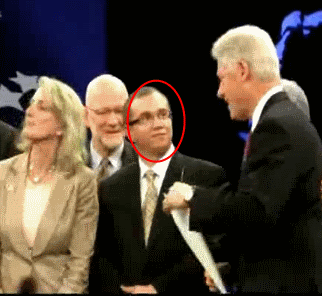
    Screen shot: Troy Wragg, whom the SEC said today was a manager at a janitorial company before becoming CEO of Mantria Corp., next to President Clinton at the annual meeting on the Clinton Global Initiative in New York on Sept. 25.
    Screen shot: Troy Wragg, whom the SEC said was a manager at a janitorial company before becoming CEO of Mantria Corp., next to President Clinton at the annual meeting on the Clinton Global Initiative in New York on Sept. 25.

    But the “green” representations “were laced with bogus claims, and investors were falsely promised enormous returns on their investments ranging from 17 percent to ‘hundreds of percent’ annually,” the SEC said.

    The agency charged that “Mantria’s environmental initiatives have not generated any significant cash, and any returns paid to investors have been funded almost exclusively from other investors’ contributions.”

    “These promoters fraudulently exaggerated Mantria’s green initiatives and used high-pressure tactics to convince investors to chase the promise of lucrative returns,” said Don Hoerl, director of the SEC’s Denver Regional Office. “In reality, the only green these promoters seemed interested in was investors’ money.”

    Read McGaw’s column in the Denver Business Journal.

  • THE PONZI CHILL: In Weeks Prior To Exposure Of $1.2 Billion Scheme, Scott Rothstein Threatened Journalist With Lawsuit, Newspaper Says

    In what is becoming a familiar refrain in the Ponzi universe, former Fort Lauderdale attorney Scott Rothstein threatened a Florida newspaper and one of its reporters in the weeks prior to the exposure of his $1.2 billion fraud, the Sun Sentinel reported.

    The Sun Sentinel identified the reporter as Brittany Wallman.

    “Am I not making myself clear?” Rothstein railed in a June 29 email to the newspaper’s attorney. “I just arrived home only to receive another message from another business associate advising that a representative of your client is asking questions about me and my business in a manner clearly intended to cast me and my business interests in a negative light . . . Your client’s representative is a renegade that stands for everything that your client should never tolerate, and guaranteed to result in your client being sued if their reporter continues on her current path.”

    Rothstein, now charged with racketeering and other offenses, also tried to muzzle the newspaper in an earlier email that threatened legal action, according to the Sun Sentinel. On June 26, Rothstein railed against Wallman for asking questions that led to a July 11 story in which the Sun Sentinel reported Rothstein was paying Fort Lauderdale city police $1,080 a day to guard his home 24 hours a day — a cost of nearly $400,000 per year.

    Another email threat — this one smarmy and passive-aggressive — was sent Aug. 4.

    “Hey David . . . hope all is well. We are getting ready to file and serve our action against Brittany and the paper and wanted to give you a heads up. Do you want to accept service or should we just serve Brittany directly and the paper through its registered agent. Let me know… Be well, Scott.”

    No lawsuit ever was served, the Sun Sentinel reported. By late October, Rothstein was fleeing to Morocco, his alleged giant Ponzi scheme involving fraudulent legal settlements about to be exposed.

    In 2008, the Moultrie Observer, a Georgia newspaper, posted a note on its website that it planned to publish an editorial warning against Ponzi and pyramid schemes. The simple act of posting the note sparked a series of emailed threats against the newspaper.

    The threats coincided with the exposure of the alleged AdSurfDaily and Golden Panda Ad Builder Ponzi scheme in Florida and Georgia.

    “Curiously, the e-mails appeared to be a form letter with different names attached. And ironically, the only people who named any companies were those making the lawsuit threats,” the newspaper reported.

    Throughout July 2008, various members of ASD used online forums to threaten the company’s critics with lawsuits. The threats continued even after the U.S. Secret Service seized tens of millions of dollars from the bank accounts of ASD President Andy Bowdoin.

    Earlier this year, supporters of AdViewGlobal, an autosurf firm with close ties to ASD, took a page from the ASD playbook and threatened to sue critics. The threats were made despite the fact Bowdoin had been named a defendant in a federal lawsuit filed under RICO statutes.

  • Senators Ask For Sanctions Against Antigua For Stonewalling Receiver In Alleged Allen Stanford Ponzi Case

    breakingnewsEight U.S. Senators have introduced a resolution calling for banking sanctions against the Caribbean island nation of Antigua for stonewalling in the Ponzi scheme investigation of Allen Stanford.

    The senators said Stanford might have lent the Antigua government “at least” $85 million before the alleged scheme collapsed earlier this year and that the money “presumably came from Stanford investor funds.”

    Stanford is accused by U.S. regulators and criminal prosecutors of presiding over a multibillion-dollar Ponzi scheme through the sale of CDs. He is jailed in Texas awaiting trial.

    The resolution calls on the United States to use its voices in the International Monetary Fund and the World Bank “to oppose making any loans to the Government of Antigua and Barbuda until that Government cooperates with the United States and compensates the victims of the Stanford Financial Group fraud.”

    “Instead of stonewalling efforts to recover assets linked to the scam perpetrated by Allen Stanford and his firm, the government of Antigua and Barbuda should join U.S. and international organizations in trying to find some measure of justice for victims,” said Sen. Thad Cochran, R.-Miss. “Government officials in Antigua and Barbuda must understand that their lack of cooperation is unacceptable.”

    A Democrat — Sen. Jeanne Shaheen of New Hampshire — joined seven Republicans in introducing the resolution.

    One Republican said Antigua and Barbuda were acting in “absurd” fashion.

    “The Ponzi scheme perpetrated by Allen Stanford cheated thousands of people, many of them in the United States, out of their investments,” said Sen. Richard Shelby of Alabama.

    Shelby is ranking Republican on the Senate Committee on Banking, Housing and Urban Affairs.

    “It is essential that to the extent possible these victims get their money back,” Shelby said. “It is absurd that the Government of Antigua and Barbuda is standing in the way of helping victims, while also holding out its hand for funding. This resolution makes clear that the United States will not accept such behavior.”

    A Mississippi Republican agreed.

    “Thousands of people have been victimized by the Stanford Ponzi scheme, including many who lost their life savings,” said Sen. Roger Wicker. “The cooperation of the Antigua government is essential to helping the victims of this fraud, but this assistance has been consistently denied. It is completely unacceptable for Antigua to receive any loan from the IMF and the World Bank, both of which receive significant funding from U.S. taxpayers. The American government needs to let it be known that this lack of cooperation is not acceptable. This resolution will send that message.”

    The alleged Stanford Ponzi sparked a banking crisis that rippled across the Caribbean and into Central and South America.  At least one autosurf made a veiled reference to the crisis in February.

    BizAdSplash was one of three surfs that came to life in the months following the seizure of funds tied to AdSurfDaily Inc., a surf registered in the United States and accused of running a $100 million Ponzi scheme.

    One of the key sales points of BizAdSplash was its purported offshore location. Two other surfs — AdViewGlobal and AdGateWorld — also bragged about being offshore. Promoters for the surfs said the offshore locations provided protection from the SEC, the IRS and state attorneys general. Promotions for the new surfs repeatedly referenced ASD.

    “We want to let you know that even though our banks in Panama are closed for the next day and half, the payment processors are NOT CLOSED,” BizAdSplash said on Feb. 24. “You can still buy Ad Packages through your chosen payment processor. You will get your 100% match today and will continue into next week.

    “So,” BizAdSplash continued, “if you purchased new Ad Packages yesterday from outside your Balance, you received a 100% matching bonus.

    “This 100% matching bonus will continue on today, through the weekend and on through Friday, March 6th!!!” the surf exclaimed.

    On Feb. 27 — just three days later — BizAdSplash told customers it was ending its affiliation with StrictPay, a payment processor with Panamanian ties.

  • Surf’s Up Celebrates One Year As Bowdoin-Endorsed Blather Box; Forum Deletes Another Discussion About AdViewGlobal Autosurf Amid Member Complaints

    A year ago yesterday these words appeared on AdSurfDaily’s Breaking News site:

    “All ASD Members are encouraged to join the ASD Members Advocate forum. The ASD Members Advocate forum should be your source for up-to-the-minute opinions and commentaries about ASD. We encourage you to join and get involved. Log on to http://asdmembers.ning.com/

    “Surf’s Up, Baby!”

    blatherAt about the same time, the AdViewGlobal (AVG) autosurf was preparing to set up shop — purportedly from Uruguay. The announcement by ASD that it had endorsed Surf’s Up occurred eight days after U.S. District Judge Rosemary Collyer issued a devastating ruling that ASD had not demonstrated it was a lawful business and not a Ponzi scheme that had gathered tens of millions of dollars from participants, placing the money in ASD President Andy Bowdoin’s personal bank accounts.

    Some of the Surf’s Up Mods went on to start a forum for AVG. That forum went missing during the summer of 2009, after AVG announced it was suspending cashouts and exercising its version of a “rebates aren’t guaranteed” clause. At first AVG, which had promoted a series of 200-percent, matching-bonus offers virtually nonstop in 2009, blamed its lack of cash on the greed of members.

    It later backed away from that position, saying it had been a victim of a $2.7 million theft. George and Judy Harris were AVG’s purported owners. George Harris is Bowdoin’s stepson. Bowdoin identified Harris as the head of ASD’s “real estate division” at an ASD rally in Miami on July 12, 2008. The company reportedly gathered millions of dollars at the rally.

    Less than three weeks later, the U.S. Secret Service seized 10 Bowdoin bank accounts containing a total of about $65.8 million, according to court filings. Money from two of Bowdoin’s accounts was used to start a new account at a separate bank, and more than $157,000 of the opening deposit was used to pay off the mortgage on the Tallahassee home shared by George and Judy Harris, according to federal prosecutors.

    Prosecutors made the announcement in a forfeiture complaint filed Dec. 19, 2008, exactly one month after Collyer’s November ruling went against ASD. Regardless, AVG launched in February 2009, in the wake of two forfeiture complaints and the filing of a racketeering lawsuit against Bowdoin.

    AVG spent part of the month of December 2008 gathering money from prospects and all of the month of January 2009. By March 20, 2009, AVG was announcing its bank account had been suspended because too many members had wired transactions in excess of $9,500.

    At the same time, AVG also announced the resignation of Gary Talbert, its chief executive officer. In January, AVG said it had no connection to ASD, despite the fact Talbert had been an executive at ASD and filed sworn court filings in the August 2008 forfeiture case against ASD.

    Even as AVG was making its series of announcements about bad financial news, promoter Shad Foss sent out an email claiming that $5,000 spent on ASD turned into $15,000 “instantly!” according to recipients of the email.

    In May 2009 — on the same day the Obama administration announced a crackdown on offshore financial fraud — AVG announced it had found a new company to facilitate offshore wire transfers. The surf provided members detailed wiring instructions. Three days later, the company AVG described as a facilitator of the wire transfers issued a public denial that it had any business relationship with AVG.

    AVG never addressed the denial, choosing instead to say it had removed the new wire facility it had just announced because of a breakdown in negotiations. By June 25, AVG was announcing the suspension of cashouts. The AVG forum set up by the Surf’s Up Mods then went dark, as did a forum set up by AVG itself.

    AVG threatened to sue members who spoke out about the firm, saying its communications were protected by copyright laws. The surf also threatened forum members that it would contact their ISPs and file abuse reports for questioning AVG in public.

    Both Surf’s Up and the AVG forum operated by some of its Mods championed the pro se pleadings of Curtis Richmond in the ASD case. Richmond was convicted of contempt of court for harassing federal judges in a separate case, and was among a number of RICO defendants in a separate lawsuit ordered to pay more than $108,000 in damages and costs for engaging in racketeering and mail fraud by nuisancing public employees with vexatious lawsuits.

    Surf’s Up has a history of deleting posts from members who attempt to raise the issue of AVG. The forum’s official explanation is that it is an ASD forum, not an AVG forum, even though its Mods started the AVG forum. Some Surf’s Up members said they joined AVG because of representations made by the Mods.

    A number of Surf’s Up members participated in letter-writing campaigns on Bowdoin’s behalf. Surf’s Up sent an email to members in February 2009, speaking approvingly of the campaigns.

    The email endorsed a mail campaign led by “Professor” Patrick Moriarty. One month later, Moriarty was indicted on tax-fraud charges in a separate case. Research showed that he once started a nonprofit organization for a Missouri man accused of murdering a woman in cold blood and shooting a police officer four times.

    Dozens of Surf’s Up members congratulated Bowdoin in March 2009, after the forum published a letter from Bowdoin. The letter said Bowdoin was reentering the ASD case as a pro se litigant, even though he had given up his claims to tens of millions of dollars in January, assuring Collyer and the prosecutors that he never intended ever to reassert the claims.

    In April 2009, in their final response to a series of pro se motions from Bowdoin to reenter the case, prosecutors revealed he had signed a proffer letter in the case prior to submitting to the forfeiture in January. Bowdoin, prosecutors said, had admitted ASD was operating illegally at the time of the August 2008 seizure and that the company made up numbers in a bid to keep new money flowing into the firm.

    Regardless, some Surf’s Up members continued to shill for Bowdoin. His critics were referred to as “Rats, Bed Bugs, Maggots, Cockroaches And Everything Else.”

    One Surf’s Up poster called for members to form a militia and take up arms against the government.

    In the fall of 2008 and thereafter, Surf’s Up perpetuated a myth that the government had admitted privately that ASD was not a Ponzi scheme. The claim, which was cited on both the forum and in emails, sustained itself even through the summer of 2009.

    Even after the government filed a second forfeiture complaint in December 2008 that accused ASD of operating a Ponzi scheme, Surf’s Up and some of its members continued to insist that prosecutors had said ASD was not a Ponzi scheme and were filing reckless motions in a bid to save face.

    Surf’s Up has not sought to dispel the myth — and a year into its tenure as a Bowdoin-endorsed blather shop, members have raised questions about why it is improper to discuss AdViewGlobal.

  • Conservative Radio Host Allegedly Cited Islamic Law To Dupe Christian Investors; Pat Kiley Issued Dire Warnings About ‘Greed’ Of Former President Clinton And ‘Massive Chaos’ To Come Under Obama

    A radio host pitched his Ponzi scheme to listeners and told some clients that his strategy employed an unnamed Islamic bank that complied with Shariah law in an apparent bid to make investors believe the firm borrowed money to trade currency on international exchanges without having to pay interest, according to the SEC.

    Shariah law prohibits the payment or acceptance of interest.

    Despite Patrick “Pat” Kiley’s assertion that his financial firm took advantage of an Islamic bank to reduce its borrowing costs to zero, Kiley, 71, made no secret that his firm paid spectacular sums of interest to investors, according to the SEC complaint made public yesterday.

    Kiley’s “Follow The Money” radio program was carried on 200 stations and also was available on Christian shortwave radio before going off the air in July, when investors began to raise public concerns about Kiley. The gravelly voiced host and co-defendant Trevor G. Cook now have become the central figures in an alleged $190 million Ponzi fraud in Minnesota.

    Some homemade videos into which the audio of Kiley’s radio broadcasts was dubbed appear on YouTube and other video sites. Kiley’s listener’s appear to have made the videos, rather than Kiley himself.

    One video — with audio from Kiley’s show dubbed in — featured Kiley advising his audience that he was about to share shocking, “confidential” information about an “unprecedented wave of massive, massive social chaos” about to occur in the United States.

    Although the video appears to have been posted in May 2009, the audio appears to have been dubbed from an earlier Kiley program that coincided with Barack Obama’s ascension to the Presidency.

    Things under Obama could get so out of control, Kiley suggested, that the U.S. military was on standby to deal with civilian insurrection through a law-enforcement arm known as the Consequence Management Response Force (CCMRF).

    CCMRF is a real branch of the Army, but it is not designed to engage in war against citizens. Rather, it is designed to respond to “chemical, biological, radiological, nuclear and high-yield explosive” incidents, according to the Army.

    Col. Lou Vogler, quoted on an Army website in September 2008, said CCMRF also was designed to complement local first-responders to disasters and emergencies. The Army cited the 9/11 terrorist attacks as the type of situation to which CCMRF would respond.

    News of the spectacular federal allegations against Kiley and Cook broke yesterday, even as the state was reeling from the alleged $3.65 billion Tom Petters’ Ponzi scheme, the alleged $100 million AdSurfDaily Ponzi scheme and the alleged $53 million Ponzi scheme of Gerard Frank Cellette Jr.

    “Kiley represented to investors that the trading strategy involved investing in a long position in one currency and an offsetting short position in a second currency,” the SEC said. “Kiley also represented to certain investors that the strategy utilized a bank that complied with Shariah law, which forbids the payment of interest, and that because no interest was paid to establish the short position, a greater profit could be earned.

    “Kiley’s representations were false,” the SEC said.

    A scan of the court document showed that investigators had used the word “false” or “falsely” at least 40 times to describe assertions Kiley, Cook and the companies with which they were associated had made to investors to get them to part with money.

    Some of the companies used the initials UBS, but the SEC said the firms had no connection to UBS AG, the famous Swiss firm.

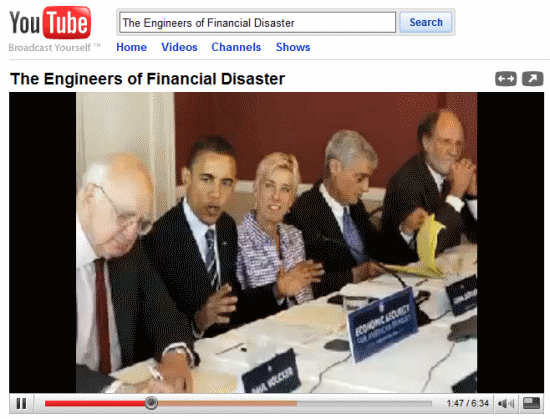
    Screen shot: An audio featuring the voice of radio-talk show host Pat Kiley was dubbed into this YouTube video, which featured a photograph of President Obama meeting with fiscal-policy advisers while Obama was President-Elect. Kiley intoned that the United States seemed ready to return to the "greed and irresponsibility" of fiscal policies advanced by former President Clinton.
    Screen shot: An audio featuring the voice of radio-talk show host Pat Kiley was dubbed into this YouTube video, which featured a photograph of President Obama meeting with fiscal-policy advisers while Obama was President-Elect. Kiley intoned that the United States seemed ready to return to the "greed and irresponsibility" of fiscal policies advanced by former President Clinton.

    Kiley sometimes used his radio show as a platform to rail against the administration of former President Bill Clinton, saying during one broadcast that Clinton’s fiscal policy was based on “greed and irresponsibility.”

    When Barack Obama became President-Elect after winning the White House in November 2008, Kiley warned listeners that Obama’s election signaled the return of Clinton-like financial policy.

    The video was titled, “The Engineers of Financial Disaster.”

    Only months later, Kiley finds himself at the center of a financial storm that may cause some investors and radio listeners to lose tens of millions of dollars.

  • SPECIAL REPORT: Convicted ‘3 Hebrew Boys’ Ponzi Figure Declares He Is ‘Sovereign’; Joseph Brunson Says Prosecutors Have No Authority Over Him

    Defining himself as “One,” a South Carolina man convicted Friday of operating an $82 million Ponzi scheme with two colleagues has filed a series of pleadings declaring himself “sovereign” and accusing a federal prosecutor of committing treason against the United States.

    The convicted schemer, Joseph B. Brunson of Hopkins, appears to trying to bolster his claim he is sovereign by constructing an argument that he is immune from prosecution because the United States is insolvent and has no jurisdiction over him. The pleadings were filed on the same day a jury found him guilty of mail fraud, money-laundering and transporting stolen goods and issued a special verdict for forfeiture of $82 million — the proceeds of the Ponzi scheme.

    Brunson is one of the so-called “3 Hebrew Boys” who operated a website with the same name. The name is taken from a biblical tale of believers who escaped a furnace by relying on their faith.

    Bond Revoked

    Upon the jury verdicts, prosecutors moved to revoke the bond of Brunson and co-defendants Tim McQueen and Tony Pough, asking a federal judge to jail them immediately, pending sentencing.

    Judge Margaret B. Seymour granted the request, pointing to a Brunson pleading that accused U.S. Attorney Walt Wilkins of treason.

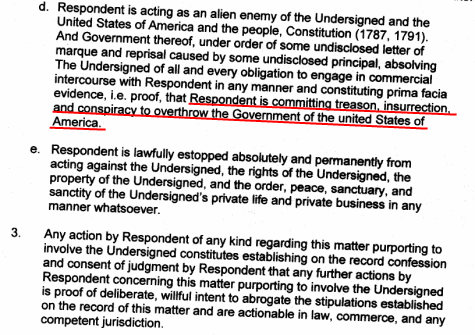
    Screen shot: Joseph Brunson declares that U.S. Attorney is guility of treason, insurrection and conspiracy to overthow the U.S. government in his efforts to prosecute Brunson.
    Screen shot: Joseph Brunson declares that U.S. Attorney Walt Wilkens is guilty of treason, insurrection and conspiracy to overthow the U.S. government in his efforts to prosecute Brunson.

    ‘Pembina’ Tie

    Web references connect Brunson to The Little Shell Pembina Band of North America, a reputed splinter group of a legitimate tribe of Native Americans in Montana. WIS News 10, the news arm of a TV station in South Carolina, reported in 2007 that Brunson was stopped by police for driving with illegal tribal license plates while out on bond after being charged by state authorities in the “3 Hewbrew Boys” case.

    The splinter group is listed by the Anti-Defamation League (ADL) as an “active anti-government extremist group.”

    “Members of the group claim that they belong to a ‘sovereign’ Native American tribe and therefore are not subject to laws and regulations,” ADL reports.

    Activities of the splinter group range from “driving with bogus license plates to perpetrating insurance fraud schemes [and] tax evasion,” ADL reports.

    ADL notes that the Little Shell Band of Montana is a legitimate tribe, but is not recognized by the federal government. It has no connection to extremism or to the Little Shell Pembina Band of North America, according to ADL.

    Bizarre Filings In Securities Cases

    Brunson’s filings in the South Carolina case are similar to pro se pleadings in the alleged AdSurfDaily Ponzi scheme case in the District of Columbia. Filings in both cases have included wild arguments, using words directed at prosecutors or judges such as “treason” and “conspiracy” in bids to short-circuit the government’s efforts to prosecute Ponzi and securities cases.

    Screen shot: Joseph Brunson asserts his purpurted sovereignty in the '3 Hebrew Boys' Ponzi scheme case.
    Screen shot: Joseph Brunson asserts his purpurted sovereignty in the '3 Hebrew Boys' Ponzi scheme case.

    Curtis Richmond, a mainstay pro se litigant in the ASD case, has been associated in court filings with a version of the Pembina tribal name and the name of a separate Utah tribe a federal judge ruled a “complete sham.” The purported Utah tribe filed enormous financial judgments against prosecutors and members of law-enforcement, and was successfully sued under federal racketeering and mail-fraud statutes.

    Richmond was among a group of litigants ordered to pay more than $108,000 in damages and costs for their roles in harassing members of the Utah law-enforcement community with vexatious legal filings. In a separate case, Richmond was found guilty in California of contempt of court for harassing federal judges.

    Despite the RICO ruling that went against him and his contempt conviction, members of the AdSurfDaily autosurf and a closely associated surf known as AdViewGlobal hailed Richmond a “hero.”

    ASD is implicated in an alleged $100 million Ponzi scheme. Federal prosecutors are attempting to force the forfeiture of tens of millions of dollars in the case, which includes two other autosurfs: Golden Panda Ad Builder and LaFuenteDinero. “LaFuenteDinero” means the “fountain of money,” and the surf was the purported Spanish arm of ASD. Golden Panda was the purported Chinese arm.

    For more than a year — at least since May 2008 — various operators or participants in alleged Ponzi schemes have claimed to be immune from U.S. law because they were “sovereign” beings or members of a “sovereign” Indian tribe.

    Screen shot: Joseph Brunson he is 'One' and that U.S. Attorney Walt Wilkins is engaged in acts of war against 'One.'
    Screen shot: Joseph Brunson he is 'One' and that U.S. Attorney Walt Wilkins is engaged in acts of war against 'One.'

    The arguments have been both bizarre and implausible. Gold Quest International (GQI), an alleged multimillion Ponzi scheme operating out of Las Vegas, claimed Panamanian registration and immunity from U.S. law because it was associated with a North Dakota Indian tribe.

    Despite the claim GQI was immune from the law because of its purported tie to the Pembina tribe, one of the alleged operators the Ponzi scheme, John Jenkins, left a Nevada courtroom to go outside to plug a parking meter to avoid getting a ticket.

    GQI attempted unsuccessfully to sue the SEC for the spectacular sum of $1.7 trillion for bringing the prosecution. The company reportedly relied on the services of a nonattorney as its “attorney general” and a nonnotary as its notary public to certify documents.

    “You are in an imaginary world where you belong to an unrecognized Indian group,” a federal judge advised Robert Neilson Baker, the nonnotary notary.

    In the “3 Hewbrew Boys” case, Brunson filed documents that appear to have been designed to force Wilkens, the U.S. Attorney, to default on a contact to which he never had agreed. The approach sometimes is referred to as “paper terrorism” or “mailbox arbitation.”

    A similar approach was used by litigants in the ASD case.

    Brunson wrote in a court filing he described as a “Bill of Peace” last week that Wilkens had a duty to appear before a notary public and acknowledge Brunson’s assertion of sovereignty in “red ink.” The document demanded that Wilkens use his “Christian name” in his response to Brunson.

    A refusal by Wilkens’ to carry out the demands within three days, Brunson said, would result in a contractual agreement that Wilkens was “an enemy of One and the [U]nited States of America and the people, Constitution, and Government thereof.”

    Read Joseph Brunson’s purported “writ” in the “3 Hebrew Boys” case.

    Read Joseph Brunson’s claim U.S. Attorney Walt Wilkens is committing treason against the United States.

    Read the jury’s special verdict ordering the forfeiture of $82 million in the “3 Hebrew Boys” case.

    Read a statement by acting U.S. Attorney Jeffrey Sloman on Audie Watson, a Florida man found guilty of selling bogus memberships in a “Pembina” tribe for $1,500 to illegal aliens.

  • ASD ALL OVER AGAIN? ‘3 Hebrew Boys’ Accuse U.S. Attorney Of ‘Treason’; Claim Draws Another Parallel To AdSurfDaily

    Three men found guilty in South Carolina last week of operating an $82 million Ponzi scheme accused a federal prosecutor of treason on the same day the jury returned its verdict, the FBI said.

    A treason claim also was made in the federal forfeiture proceeding against assets tied to Florida-based AdSurfDaily, an alleged Ponzi scheme involving $100 million.

    U.S. District Judge Margaret B. Seymour cited the treason claim in the “3 Hebrew Boys” case as a reason to send Joseph Brunson, Tim McQueen and Tony Pough to jail immediately to await sentencing.

    “After the jury’s verdict, Judge Seymour was asked to allow the men to remain free on bond until their sentencing,” the FBI said.  “She denied the request after noting that all three men filed documents [Friday] accusing U.S. Attorney Walt Wilkins of treason and committing acts of war by prosecuting them.”

    Brunson, McQueen and Pough became known as “3 Hebrew Boys” after operating a website with the same name, which is based on a biblical story of believers who escaped a furnace by relying on their faith. The Ponzi scheme operated under the name Capital Consortium Group LLC.

    Wilkens said the scheme targeted people of faith and members of the military.

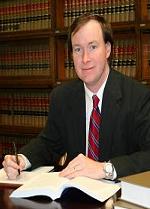
    U.S. Attorney W. Walter Wilkins
    U.S. Attorney W. Walter Wilkins

    “By calling themselves the Three Hebrew Boys, these con men tried to disguise their Ponzi scheme as a religious, charitable program of debt elimination in order to gain the trust of unsuspecting investors,” Wilkins said. “Unfortunately many people were victimized by these men, including many in our armed forces.”

    In the ASD case, the treason claim was made against U.S. District Judge Rosemary Collyer. ASD is known to have members who identify with the so-called sovereignty movement.

    California resident Curtis Richmond, a pro se litigant in the ASD case, identified himself in court documents in a separate case as a “sovereign” being who enjoyed diplomatic immunity from prosecution and answered only to Jesus Christ.

    Richmond is associated with a Utah “Indian” tribe ruled a “complete sham” last year by U.S. District Judge Stephen Friot. On the eve of a civil RICO trial last year, Richmond attempted to have Friot removed from the case by claiming he owed Richmond $30 million.

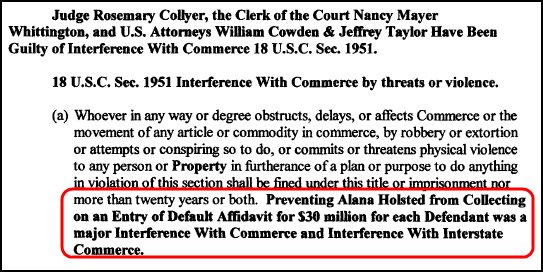
    Friot refused to step down in Utah, as did Collyer in the District of Columbia. Richmond accused Collyer earlier this year of operating a “Kangaroo Court” and violating her judicial oath. Collyer is presiding over the ASD civil-forfeiture case. Other filings in the ASD case suggested Collyer was guilty of as many as 60 felonies, and that an effort had been made by at least one ASD member to start a process to collect $120 million from Collyer, two federal prosecutors and a court clerk for “Interference With Commerce.”

    Screen shot: Section of a pro se filing in the ASD case.
    Screen shot: Section of a pro se filing in the ASD case.

    Such bizarre claims have been popping up more and more in litigation involving securities.

    Gold Quest International (GQI), a company accused by the SEC last year of operating a Ponzi scheme from Las Vegas, claimed it was part of a North Dakota Indian tribe and was immune from U.S. law.

    After the SEC brought the charges against GQI in May 2008, Michael Howard Reed, the purported “attorney general” of the tribe, tried to sue the SEC for $1.7 trillion. The sought-after amount would have exceeded the total of federal income tax paid by individual U.S. filers last year by about $575 billion.

    U.S. District Judge Kent J. Dawson struck a series of pleadings by Reed from the record.

    Meanwhile, Dawson jailed John Jenkins, one of the defendants implicated in the Ponzi scheme, for contempt. Dawson also dispatched the U.S. Marshals Service to arrest David Greene, also known as “Lord David Greene,” in part for violating orders to repatriate money offshore to the United States.

    Despite Richmond’s behavior, he was labeled a hero on the Pro-ASD Surf’s Up forum. Over the weekend, Surf’s Up reinforced an earlier announcement that it would not permit discussion about the AdViewGlobal (AVG) autosurf.

    “[P]lease don’t expect any information that concerns AVGA,” a forum Mod said Saturday. “[I]t doesn’t belong on this forum.”

    Another Mod reinforced the ban on AVG discussion today.

    “In the beginning days of AVG we made it clear this is not an AVG forum and it still will not be,” the Mod said.

    Surf’s Up members repeatedly have said they wanted to discuss AVG, which has close connections to ASD. Their requests have been consistently rebuffed. Some of the Surf’s Up Mods were among the founding members of the AVG surf, which came to life after a major court ruling went against ASD last year.

    AVG purported to be a “private association” that operated offshore. Members used the “offshore” angle as a key selling point, saying the surf’s purported country of operation — Uruguay — insulated it from prosecution.

    Like the “3 Hebrew Boys” operation, AVG sought to prevent members from discussing the company outside the confines of areas it controlled. AVG members were scolded for sharing information and calling the autosurf an “investment” program.

    As AVG was in failure mode in May and June, members were threatened with copyright-infringement lawsuits. Critics were told AVG would contact their ISPs to file abuse reports and suspend service.

  • ‘3 Hebrew Boys’ Guilty In $82 Million Ponzi/Affinity Fraud Scheme; Company Operated In Fashion Similar To AdViewGlobal Autosurf, Imploring Members To Maintain Secrecy

    ponzinewsIn yet another case that may cause widespread unease in the autosurf world, three men accused of defrauding participants in a bogus debt-relief “ministry” have been found guilty of 174 counts of mail fraud, money-laundering and transporting stolen goods.

    Parts of the case against “3 Hebrew Boys” were remarkably similar to events engulfing the AdSurfDaily autosurf. In 2007, for example, the defendants filed a court document that described their investment program as an effort to free people from government “bondage” and referred to the investigation as “Satan’s handiwork.”

    In 2008, AdSurfDaily President Andy Bowdoin described the case against his purported Florida “advertising” firm as the work of “Satan,” comparing it to the 9/11 terrorist attacks. Prosecutors said ASD was selling unregistered securities, while engaging in wire fraud, money laundering and operating a $100 million Ponzi scheme.

    In 2007 and 2008, prosecutors brought essentially the same charges against “3 Hebrew Boys” — Joseph Brunson, Tim McQueen and Tony Pough.

    About 100 supporters of the “3 Hebrew Boys” rallied in Columbia, S.C., in the early days of the probe, to demand that investigators leave them alone. Participants told reporters that the government did not understand the program, had overreached in its prosecutorial efforts and refused to deny it was wrong, choosing to move forward with the case in a bid to save face.

    Prosecutors said the “3 Hebrew Boys” scam was targeted at churchgoers and members of the military from South Carolina and North Carolina, and also from other states. The scam got its name from the company’s website name, which was based on a biblical tale of believers who escaped a furnace by relying on their faith.

    At least $82 million was consumed in the scheme, prosecutors said.

    The company attempted to chill law enforcement, regulators and members of the media from scrutinizing operations, prosecutors said.

    In an approach similar to one used by the AdViewGlobal (AVG) autosurf,  members were forced to agree to a confidentially clause that purportedly prohibited them from discussing the company outside the confines of meeting places. Participants were threatened with a $1 million penalty for sharing information.

    AVG, which has close ties to ASD, morphed into a “private association” in February 2009. Members were scolded for sharing information and calling the autosurf an “investment” program. As the company appeared to be collapsing in May and June, members were threatened with copyright-infringement lawsuits. Critics were told AVG would contact their ISPs to file abuse reports and suspend service.

    Not only did the plan to force secrecy and mute criticism not work in the “3 Hebrew Boys” case, it resulted in intense scrutiny by federal prosecutors, the FBI, the IRS and other agencies. It also resulted in intense scrutiny on the state level.

    South Carolina Attorney General Henry McMaster filed civil and criminal charges, posting all the documents in the case on his website.

    A court-appointed receiver also published documents, listing an astonishing array of luxury purchases made by the schemers with investors’ money. Among the items were a Gulf Stream jet, a Prevost Motorcoach and automobiles with famous names such as Mercedes, Lexus, BMW, Saab, Cadillac and Lincoln.

    Some of the luxury items are missing, meaning they cannot be sold to compensate victims.

    Brunson, McQueen and Pough were found guilty yesterday. The jury in the case, which was heard in Columbia, S.C., returned the verdict in less than three hours, after listening to testimony for weeks.

    Separately, Lee Otis Fluker was charged with perjury and convicted in 2008 for lying about his knowledge of the scheme. He was sentenced to a year in prison.

    Brunson, McQueen and Pough face decades in prison and fines in the millions of dollars.

    Last month, Beattie B. Ashmore, the court-appointed receiver in the case, warned victims about “companies [that] claim to offer professional services for recovering losses associated with your involvement with CCG,” one of the companies associated with the “3 Hebrew Boys” scheme.

    “Please note that you are not required to respond to these letters in order to be considered for a distribution from the Receiver,” Ashmore said on the receiver’s website.  “In addition, the Receiver takes no position as to any consequential effect filing a claim and recovering funds in this case may have upon any action you have taken or may take with Fraud Recovery Group or any similar type company.

    “Therefore, it is strongly recommended that you seek professional legal and tax advice from a trusted advisor, and that you properly research any professional advice before acting upon it,” Ashmore said.