Category: Alleged Ponzi Schemes

  • SEC Says It Missed Chance To Unravel Madoff Scheme; Probe Indicates Madoff Cooked Books And Falsified Docs

    Christopher Cox
    Christopher Cox

    BLOG UPDATE 12:12 P.M. EST (U.S.A.): A bail hearing for Bernard Madoff rescheduled for today has been canceled. Madoff was ordered last week to produce two additional co-signers to guarantee his $10 million bail, but was unable to come up with them. A federal judge, with consent of the prosecution, now has ordered Madoff placed on electronic monitoring and home detention, with a curfew between 7 p.m. and 9 a.m. His wife, Ruth, was ordered to surrender her passport.

    Here, below, our earlier post . . .

    The Securities and Exchange Commission said late yesterday that it had received “credible and specific” leads about alleged wrongdoing by Bernard Madoff a decade ago and failed to respond properly.

    Meanwhile, the agency has found evidence that Madoff kept multiple sets of books to help his securities firm pull off a Ponzi scheme that could cost investors $50 billion or more.

    In a dramatic concession, SEC Chairman Christopher Cox ordered an internal investigation of the agency to include a probe of contacts the agency had with Madoff family members.

    Shana Madoff, Madoff’s niece, is married to Eric Swanson, a former SEC attorney who once was a supervisor in an SEC unit that made an inquiry into Madoff’s business practices. Shana Madoff is the Madoff firm’s compliance attorney and the daughter of Peter Madoff, Bernard Madoff’s brother, and the firm’s chief compliance officer.

    Swanson, through spokesmen, told the New York Times that he did not begin to date his wife until years after the SEC inquiry and was not a participant in an inquiry during their romantic lives. Swanson and Shana Madoff married in 2007.

    Cox ordered SEC employees who had anything beyond “insubstantial personal contacts with Mr. Madoff or his family” to recuse themselves from the probe.

    “Since commissioners were first informed of the Madoff investigation last week, the Commission has met multiple times on an emergency basis to seek answers to the question of how Mr. Madoff’s vast scheme remained undetected by regulators and law enforcement for so long,” Cox said.

    “Our initial findings have been deeply troubling,” Cox continued. “The Commission has learned that credible and specific allegations regarding Mr. Madoff’s financial wrongdoing, going back to at least 1999, were repeatedly brought to the attention of SEC staff, but were never recommended to the Commission for action. I am gravely concerned  by the apparent multiple failures over at least a decade to thoroughly investigate these allegations or at any point to seek formal authority to pursue them.”

    Rather than use formal investigative powers and subpoena power, Cox said, the agency “relied upon information voluntarily produced by Mr. Madoff and his firm.”

    Madoff might have been cooking the books, Cox said.

    Records investigators have viewed in recent hours are “increasingly exposing the complicated steps that Mr. Madoff took to deceive investors, the public and regulators,” Cox said. “Although the information I can share regarding the ongoing investigation is limited, progress to date indicates that Mr. Madoff kept several sets of book and false documents, and provided false information regarding his advisory activities to investors and to regulators.”
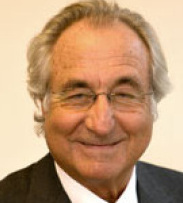
  • Bowdoin/Madoff Alleged Ponzis: Just ‘Andy’ And ‘Bernie’

    UPDATE 1:03 PM EST (U.S.A.): Quoting Stephen Harbeck, president and chief executive officer of the Securities Investor Protection Corp. (SIPC), Bloomberg News is reporting that Bernard Madoff’s financial records are “utterly unreliable.” We’ve added a link at the bottom of the post.

    Here, below, our earlier post . . .

    If you’ve been following the Ad Surf Daily/Andy Bowdoin Ponzi scheme case, you’re missing out if you haven’t been following the Bernard Madoff case.

    The cases are similar in that both ASD and Bernard L. Madoff Investment Securtites have been accused of using incoming funds to pay off older participants, thus the “Ponzi” terminology. Affinity fraud also is an element: ASD was popular among people who defined themselves Christians, and Madoff’s offer appealed to members of the Jewish community.

    Both ASD and Madoff had a worldwide client base (in Madoff’s case, European financial managers appear to have steered clients’ money to Madoff, while ASD sold directly to clients in Europe and elsewhere). Both companies also had Florida clientele, with ASD conducting “rallies” for less-affluent people to drum up business in the state and Madoff preferring the Country Club approach in Palm Beach.

    One principal difference is that ASD defined itself as an “advertising” company that offered “rebates” on ad purchases of up to 125 percent of the customers spend in about four months. Put $10,000 in ASD, and four months later you’d have $12,500. Madoff didn’t uses wordplay in the ASD sense in a bid to avoid regulatory scrutiny, but clients expected their investments to grow 10 percent to 12 percent a year, based on Madoff’s published “results.”

    Another difference is the degree of the alleged Ponzi. ASD, whose assets were seized by the U.S. government in August, is expected to top out at roughly $100 million; prosecutors in the Madoff case fear losses could top $50 billion, based on Madoff’s own words.

    Yet another difference is customers’ views in the hours after the word “Ponzi” was associated with Bowdoin and Madoff: Many ASD customers blasted the government, arguing that things would have been just fine had prosecutors not meddled in ASD’s affairs. Madoff’s investors, however, were furious with Madoff. They wanted to know why the government hadn’t detected the fraud earlier and stopped it before it mushroomed globally.

    What’s strikingly similar about the cases, though, is the degree to which Bowdoin and Madoff traded on their innate charisma: Bowdoin in a folksy, Southern way, and Madoff in a confident, aloof way with a pinch of “regular Joe” thrown in. Bowdoin was “Andy” to his fans; Madoff was “Bernie.”

    People waited in line to give them money and let them do their magic. ASD collected tens of millions of dollars from “advertisers” in just several weeks last summer. Some ASD members took out second mortgages and cashed out savings to qualify for matching bonuses at rallies. In Madoff’s case, some people felt genuinely humble that a Wall Street titan had agreed to manage their money.

    Roger and Diane Peskin of Bethlehem, Pa., entrusted $3 million earned over a lifetime to Madoff, after having waited six months for the privilege of having their money accepted by Madoff. The couple also took $400,000 from the sale of their home and passed it along to Madoff, according to the Allentown Morning Call.

    Unlike Bowdoin, Madoff hadn’t been accused of previous securities felonies. But he traded on a lifetime of supposed business acumen, something Bowdoin did as well. Bowdoin got in trouble with the government after some of his promoters made the claim that he’d received a special award from President Bush for career accomplishments. It turned out the award Bowdoin received was the “Medal of Distinction,” which is handed out by the National Republican Congressional Committee for campaign contributions. An Ohio drug addict got the same award. He, too, claimed close ties to the White House.

    Madoff was hailed a trading legend. He’d been chairman of Nasdaq and had a supposed reputation for transparency — except, apparently, when it came down to his own securities company, which people now say was run in secretive fashion.

    Person after person has claimed they’d performed “due diligence” on both Bowdoin and Madoff. Since prosecutors seized ASD’s assets in August, however, the company hasn’t published an audited balance sheet. U.S. District Judge Rosemary Collyer ruled last month that ASD had not demonstrated it was a legal business and not a Ponzi scheme at a Sept. 30-Oct. 1 evidentiary hearing. It is not known if the firm even employed an auditor.

    Madoff, it turns out, seems to have used a three-person auditing firm that operated out of a 13-by-18-foot office in a suburban plaza. He, too, seems to have a problem on the accounting front. Like ASD, it raises the question if due diligence claims are credible in the absence of verifiable financial data.

    Bowdoin has yet to be charged criminally, but his attorneys say that might be coming. Madoff has trouble on the civil and criminal fronts, his reputation in tatters. He had a list of celebrity clients. Jewish charities already have been forced to suspend operations, and the town of Fairfield, Conn., has lost a bundle in its pension fund — money that was supposed to take care of civil servants in their retirement years.

    Andy Bowdoin is not Bernie Madoff, and Bernie Madoff is not Andy Bowdoin. Regardless, they are two men from very different backgrounds who had one thing in common: The power to draw money like a magnet and to disarm doubters by putting their individual charms on full display — Bowdoin in Internet videos that reminded people of a sort of Southern Mr. Rogers, and Madoff in Wall Street’s power corridors and the country clubs of Palm Beach: Bernie being Bernie, and Andy being Andy, their critics disarmed, their investors’ financial lives now in shambles.

    Bloomberg News: Madoff’s Financial Records ‘Utterly Unreliable’

  • SIPC To Liquidate Bernard L. Madoff Investment Securities

    A federal judge has appointed a trustee to liquidate Bernard L. Madoff Investment Securtites under the auspices of the Securities Investor Protection Corp. (SIPC).

    SIPC went to court earlier today to seek liquidation. Irving H. Picard will serve as trustee. The law firm of Baker & Hostetler will serve as counsel to Picard.

    “I will work with SIPC to do what the law allows to ameliorate losses to customers,” Picard said.

    It will not be an easy job because insurance likely won’t put a dent in the staggering losses, which may total $50 billion or more.

    Stephen Harbeck, president and chief executive officer of SIPC, said Picard was the person for the job, but cautioned that the scope of the misappropriation and the state of Madoff’s records will make the task harder than most prior brokerage-firm insolvencies.

    “It is unlikely that SIPC and [Picard] will be able to transfer the customer accounts of the firm to a solvent brokerage firm,” Harbeck said.

    The state of the firm’s records “may preclude a transfer of customer accounts,” SIPC added in a News Release. “Also, because the size of the misappropriation has not yet been established, it is impossible to determine each customer’s pro rata share of ‘customer property.’”

    SIPC insures accounts up to $500,000 per customer. The insurance covers only money missing from brokerage accounts. It does not insure against investment losses.

    Learn more about SIPC.

  • BREAKING NEWS: AdSurfDaily Says Judge Lacks Jurisdiction

    AdSurfDaily Inc. has filed a defense in the civil-forfeiture case brought by the U.S. Secret Service and federal prosecutors in Washington, D.C. The firm is asking for a jury trial.

    Among the most interesting defenses is that the case was brought in the wrong court — U.S. District Court for the District of Columbia — and that the court lacks jurisdiction.

    ASD argued that U.S. District Judge Rosemary Collyer has no authority to hear the forfeiture issues. In August, the government seized nearly $100 million and real estate in Florida and South Carolina as part of the probe into ASD’s business practices.

    “To the extent the Court requires a response, Claimants deny that acts or omissions giving rise to forfeiture occurred in this district and, therefore, deny that venue is proper in this district,” ASD said today.

    Lawyers for ASD also said ASD was a legal business, denying it had engaged in money-laundering and wire fraud. The firm also raised Constitutional issues in its defense.

    Prosecutors said in their August forfeiture complaint, however, that an undercover agent made ASD purchases from Washington, D.C., which could make the venue issue ASD raised an uphill battle.

    “On or about July 20,2008, a[n] [agent] opened another ‘upgraded member’ account with ASD from a location in the District of Columbia, also via the Internet,” prosecutors said in the August complaint.

    “The next day, a[n] [agent]made a direct deposit into ASD’s [Bank of America] account, this time by delivering a check to the BOA branch at 700 13th Street, NW, Washington, DC. Thereafter, a TFA faxed a copy of the deposit receipt from the District of Columbia to ASD’s office in Florida.” prosecutors said in the August complaint.  “The ability to access ASD over the Internet from different states, and to open accounts from multiple locations by delivering payment to ‘your nearest Branch of Bank of America’ as directed by ASD confirms that ASD knows it operates in multiple states, and so intends.”

    Here is ASD’s defense, filed today.

    Here is the August civil-forfeiture complaint against ASD’s assets.

    Prosecutors said ASD was selling unregistered securities while calling itself an advertising business and running a Ponzi scheme.

  • Bowdoin, Busby, Garner: Still No Attorneys In RICO Case

    Nearly a month after being named defendants in a civil racketeering lawsuit filed in Florida, Ad Surf Daily President Andy Bowdoin, Golden Panda President Clarence Busby and ASD attorney Robert Garner have not filed notice with the court naming their attorneys.

    Such notices typically are filed by the attorneys themselves and are designed to notify the court the parties to a lawsuit have retained counsel.

    The lawsuit was brought as a RICO action and is contemplated as a class-action involving other ASD and Golden Panda members. The plaintiff is Natures Discount, a former ASD advertiser. The case is separate from a federal-forfeiture action filed in August by the office of U.S. Attorney Jeffrey A. Taylor of the District of Columbia. It also is separate from a state lawsuit filed in August by Florida Attorney General Bill McCollum.

    Attorneys for Natures Discount today filed time records with the Florida court. The records are under seal and are filed in U.S. District Court for the Northern District of Florida, Talahassee Division.

    Natures Discount filed the RICO lawsuit on Nov. 19, the same day U.S. District Judge Rosemary Collyer ruled ASD had not demonstrated it was a legal business and not a Ponzi scheme during a Sept. 30-Oct. 1 evidentiary hearing.

    Bowdoin notified the court he would invoke his 5th Amendment right against self-incrimination if called to the witness stand during the evidentiary hearing. Busby previously had withdrawn Golden Panda’s claim to funds seized as part of the ASD investigation. Garner was not named a defendant in the forfeiture case.

    In the forfeiture case, Bowdoin named his attorneys within five days. Busby named his in about 20 days. It is possible appearance notices will be filed in the coming days.

    Federal prosecutors claimed ASD was selling unregistered securities while calling itself an advertising firm and operating a Ponzi scheme. Nearly $100 million and real estate in Florida and South Carolina have been seized as part of the probe.

  • Madoff Victims Include Foundations, Business And Entertainment Icons, Mom And Pop

    The foundation of Nobel laureate Elie Wiesel and a charity operated by Hollywood icon Steven Spielberg were among the potential victims of Bernard L. Madoff Investment Securities, the Wall Street Journal reported today.

    Madoff, 70, was arrested last week. He is charged with defrauding investors and acknowledged he’d been running a giant investment Ponzi scheme for years. Losses could top $50 billion, authorities said.

    Other potential victims are a charity run by Sen. Frank Lautenberg (D.-N.J.), publishing and real-estate tycoon Mort Zuckerman, New York Mets owner Fred Wilpon, former Philadelphia Eagles owner Norman Braman, a host of large companies based in Europe, Yeshiva University and a number of Jewish charities, some of which have suspended operations.

    Here is a list of possible Madoff victims from Bloomberg News.

    Jewish charities have been particularly hard-hit. Organizations funded by the charities are now endangered, demonstrating a domino effect that could affect charitable budgets coast to coast in the United States.

    “The programs of the Robert I. Lappin Charitable Foundation and the Robert I. Lappin 1992 Supporting Foundation are discontinued, effectively immediately,” the Massachusetts based foundation said on its website. “This includes Youth to Israel and Teachers to Israel.

    “The money used to fund the programs of both Foundations was invested with Bernard L. Madoff Investment Securities and all the assets have been frozen by the federal courts. Mr. Madoff was arrested Thursday morning by the FBI and charged with criminal securities fraud by federal prosecutors. The money needed to fund the programs of the Lappin Foundations is gone.

    “The Foundation staff has been terminated today.

    “It is with a heavy heart that I make this announcement,” said Robert I. Lappin, Foundation trustee. “The Foundations’ programs have touched thousands of lives over many years in our efforts to help keep our children Jewish.”

    One of the big questions, of course, is how fraud of this alleged magnitude could go undetected for years. The SEC is being criticized for lack of oversight and for not peeling back enough layers of the onion in previous inquiries about Madoff’s business practices.

    Federal investigators pored over Madoff’s records in New York over the weekend. Guards were positioned outside his offices, the Wall Street Journal reported.

    Investors have been scrambing to hire attorneys. A number of firms that specialize in securities lawsuits have been issuing News Releases and advertising their plans to gather information and sue.

    Some pension funds also have been linked to Madoff’s business, meaning retirees’ income is at risk.

  • Judge Orders Freeze Of Madoff’s Assets; Investigators Will Try To Determine If Funds Were Co-Mingled In Ponzi Scheme

    Bernard Madoff
    Bernard Madoff

    UPDATE DEC. 14, 7:51 A.M. EST (U.S.A.): Forbes.com is quoting a lawyer from Akerman Senterfitt on the Bernard Madoff case. Akerman Senterfitt is representing Andy Bowdoin in the Ad Surf Daily Ponzi scheme case. The attorney quoted at Forbes.com is being quoted in a general sense as an expert in unraveling Ponzi schemes.

    We reported yesterday that some of the world’s great publications and journalists are reporting on the Bernard Madoff case. We’ve included a few links at the bottom of this post. Though Madoff’s alleged fraud is much more involved than the allegations against AdSurfDaily, the issues in the cases are strikingly similar. If you’ve been following the ASD case, you’ll learn a lot by following the Madoff case.

    Here, below, our earlier post . . .

    It hasn’t taken long for the probe into Bernard Madoff’s failed securities business to kick into high gear. A receiver appointed by a federal judge already has seized Madoff’s website. Meanwhile, the judge already has issued an order that empowers the SEC to go over Madoff’s financial statements and bank accounts with a fine-tooth comb. Included in the order are business and personal accounts.

    Elsewhere, clients and companies that have billions of dollars invested with Madoff already have started their own probes. One of them, Fairfield Greenwich Group, has acknowledged it had $7.5 billion — more than half of its $14.1 billion portfolio — “invested in vehicles connected to Bernard L. Madoff Investment Securities.”

    “We are shocked and appalled by this news,” said Jeffrey Tucker, founding partner of
    Fairfield Greenwich Group. “We have worked with Madoff for nearly 20 years, investing
    alongside our clients. We had no indication that we and many other firms and private
    investors were the victims of such a highly sophisticated, massive fraudulent scheme.”

    Federal prosecutors said last week that Madoff had been running a giant Ponzi scheme that had gone undetected for years. Preliminary losses were pegged at $50 billion. The alleged scheme reportedly unraveled when customers sought $7 billion due them and Madoff had no more shells to move.

    Madoff, the former chairman of Nasdaq and a Wall Street titan, is 70. If convicted, he faces up to 20 years in prison and a fine of up to $5 million.

    One of the things investigators will try to determine is whether Madoff co-mingled funds from business accounts and personal accounts.

    Co-mingling is an issue in the AdSurfDaily case. Authorities said ASD President Andy Bowdoin was running a $100 million Ponzi scheme tied to checking and bank-card accounts over which he had sole signatory authority. Investigators said the accounts were used to purchase $51,000 in jewelry on a single day, along with real estate in Florida and South Carolina.

    Prosecutors said ASD was insolvent and that Bowdoin was paying older program members with money from new members, the classic Ponzi set-up. The U.S. Secret Service seized ASD’s assets.

    Insolvency also is an issue in the Madoff case. Madoff acknowledged the firm was insolvent and had been running a giant Ponzi scheme for years, federal officials said. As was the case in the ASD probe, a judge froze Madoff’s assets in a bid to contain the damage — or, as the court documents say — to preserve the “status quo.”

    Madoff Links:

    1.) Forbes Quotes Michael Goldberg Of Akerman Senterfitt, The Firm Representing Andy Bowdoin

    2.) Wall Street Journal Identifies Some Alleged Victims

    3.) Forbes Says Some Victims Face Prospect Of Having To Return Illegal Profits

    4.) New York Times Questions Whether NY Mets’ Operations May Suffer Because Of Alleged Madoff Scheme

    5.) New York Times Calls It ‘The Stuff Of Nightmares’

    6.) Reuters: Geneva Banks Lost $4 Billion In Madoff Ponzi

    7.) Bloomberg: Madoff Used Three-Person Accounting Firm That Operated In 13-By-18-Foot Location

    8.) Boston Globe: Carl Shapiro Charitable Foundation Lost $145 Million With Madoff

  • Giant Wall Street ‘Ponzi Scheme’ Collapses; Potential Losses In Madoff Fraud Pegged at $50 Billion Amid ‘One Big Lie’

    And you thought AdSurfDaily members had problems, having been told their money was part of a $100 million Ponzi scheme.

    Former Nasdaq Chairman Bernard Madoff has been accused of running a monumental Ponzi scheme that sustained itself for years based on his reputation. Socialites from Palm Beach, New York’s celebrity elite, endowments, European banks and investment houses and others may sustain $50 billion — that’s billion, with a “b” — in losses.

    Madoff acknowledged he was “finished,” that he had “absolutely nothing,” that “it’s all just one big lie,” and that it was “basically a giant Ponzi scheme,” the SEC said.

    “We are alleging a massive fraud — both in terms of scope and duration,” said Linda Chatman Thomsen, director of the SEC’s Division of Enforcement. “We are moving quickly and decisively to stop the fraud and protect remaining assets for investors, and we are working closely with the criminal authorities to hold Mr. Madoff accountable.”

    The FBI charged Madoff, 70, criminally. He faces up to 20 years in prison and a fine of $5 million.

    “Madoff stated that the business was insolvent, and that it had been for years,” the Justice Department said. “Madoff also stated that he estimated the losses from this fraud to be at least approximately $50 billion.”

    One of the interesting things about this case is that people raised questions about Madoff’s investment-advisory business years ago, saying the company’s bountiful returns regardless of the market environment were inexplicable.

    An employee, however, told investigators Madoff shielded the company’s true financial picture from clients and employees, a common theme in Ponzi schemes.

    “Madoff kept the financial statements for the firm under lock and key, and Madoff was ‘cryptic’ about the firm’s investment-advisory business,” the Justice Department said.

    It all collapsed this week, when Madoff ran out of shells to move. He had been a fixture on Wall Street for decades.

    In a bizarre move, Madoff further informed the senior employees that, “in approximately one week, he planned to surrender to authorities, but before he did that, he had approximately $200-300 million left, and he planned to use that money to make payments to certain selected employees, family and friends.”

    Financiers described the alleged Ponzi scheme as one of epic proportions. The ripple effect could be considerable because at least some of the money was tied to hedge funds managed by investment companies.

    “The Madoff firm had more than $17 billion in assets under management as of the beginning of 2008,” the Justice Department said. “It appears that virtually all assets of the advisory business are missing.”

  • Transition Progresses: No ASD Court Updates Yesterday

    We checked Judge Rosemary Collyer’s docket in the AdSurfDaily case several times yesterday. The most recent entry was the Dec. 3 denial of “Leave to File” directed at an unnamed party. The party who was denied had attempted to file a motion to void judgment.

    On Nov. 20, Judge Collyer issued a separate denial of “Leave to File,” this one directed at ASD member Curtis Richmond. Richmond attempted to file a motion to dismiss the ASD forfeiture case, according to the docket.

    Richmond is associated with a Utah “Indian” tribe a judge ruled a sham and has a history of clashing with federal judges, prosecutors, law-enforcement agencies and others. It is unclear if Richmond was the party who attempted to file the motion to void judgment. The sham “Indian” tribe has filed similar motions in other cases, but Judge Collyer’s docket does not list a name in the Dec. 3 denial.

    If you’re new to this site, we’ve been covering the civil-forfeiture case against money and property linked to AdSurfDaily Inc. and ASD President Andy Bowdoin. Federal prosecutors believe ASD, which deemed itself a professional advertising service, was a criminal enterprise running an autosurf Ponzi scheme. Federal agents seized about $100 million in August.

    Separately, we still are in the process of porting this website. There may be occasional outages over the next few days. We made considerable progress yesterday, and fine-tuning will continue over the next several days.

    One thing you might notice is that the site may not load properly at all times. This is because the domain is re-propagating. It is possible that such quirks may occur over the next five days or so.

  • AdSurfDaily Readers: We’re In Transition

    Dear Readers,

    A good number of you have been following our coverage of AdSurfDaily and the forefeiture complaint filed by federal prosecutors.

    The URL for the “old” PP Blog should be redirecting here now. We are converting to WordPress and will be using a magazine-style theme to discuss writing, marketing, branding and topics of interest to Web-based businesses.

    There will be some downtime during this process. Our coverage will resume soon.