Category: The Economy

  • Judge To Ponzi Brokers Who Pushed ‘Ad’ Business: Pay Up

    Editor’s Note: This story was suggested by reader Tony H., who pointed us to an SEC News Release on the dismantling of yet another Ponzi scheme.

    Two principals of the American Investors Network (AIN) have been ordered to pay more than $1.4 million for foisting on investors an upstart advertising company that proved to be nothing more than their key to Ponzi riches.

    A federal judge declared Jarrod W. McMillin and Innovative Projects Inc. “jointly and severally liable” to pay back hundreds of thousands of dollars, including penalties and interest, for advancing the Ponzi.

    Judge Robert E. Blackburn of U.S. District Court for the District of Colorado entered a final judgment last week against McMillin and Innovative Projects.

    “The final judgment finds McMillin and Innovative Projects, Inc. jointly and severally liable for disgorgement in the amount of $673,983 representing profits from the conduct alleged in the Commission’s complaint plus pre-judgment interest of $19,349, for a total of $693,332,” the SEC said. “The Judgment also finds McMillin liable for a civil penalty in the amount of $130,000.”

    It was the second time the court ordered disgorgement against a Ponzi participant in the Innovative Projects case.

    On Dec. 22, Laurence G. Young was ordered to pay “$282,103 representing profits from the conduct alleged in the complaint, prejudgment interest of $16,698, and a civil penalty of $282,102, for a total of $580,903,” the SEC said.

    “AIN solicited funds to finance an advertising program and promised to return monthly profits of $10,000 to $20,000 on each $2,000 investment,” the SEC said. “The advertising interests were investment contracts which are securities under federal law.”

    Among other claims, the SEC said “there was no advertising program and that investors who received ‘profit’ distributions were paid with funds solicited from other investors.”

    Investigators also alleged McMillin and Young acted as unregistered broker-dealers in connection with the offer and sale of securities.

    Read the SEC Complaint.

  • Frogress Autosurf Apparently DOA

    doaartAn autosurf known as Frogress apparently has gone the way of MegaLido, leaving members in the lurch.

    Frogress seems to have started in October — about the same time as MegaLido. It advertised 12 percent a day for 12 days, and forum posts raved about the communications skills of the Frogress operator.

    MegaLido employed a similar model before going belly-up in a matter of weeks. People also raved about the communications skills of the MegaLido operator — until he stopped communicating, that is.

    In any event, the Frogress server is throwing an error message, and people in forums said the program has tanked. Some people, however, added that they’d join the next autosurf opened by the Frogress operator. After all, he had good communications skills — and 12 percent a day is nothing to sneeze at.

    Frogress and MegaLido both used the flameout model — high rebate percentages purportedly paid quickly.

    This is distinguished from the slow-motion model — low rebate percentages paid over considerably more time.

    Regardless, Ponzi math applies to both approaches, and a rational argument can be made that slow-motion Ponzis actually are more dangerous than flameout Ponzis because more people have more time to join and more money can enter the system before collapse.

    Bernard Madoff’s alleged $50 billion scheme was a slow-motion Ponzi, as was the alleged AdSurfDaily Ponzi.

    That a slow-motion Ponzi could be construed as more dangerous than a flameout Ponzi does not inply that there is any virtue in using the flameout model; it simply means the individual autosurf’s pot may not grow as large in the flameout model.

    No matter. A fameout Ponzi operator still can collect big sums quickly, shut down the autosurf, and start another flameout Ponzi, hopscotching across the Ponzi universe fueled by promoters who can’t say no to the sign-up commissions and the chance to make a quick kill.

    It’s worth pointing out that Ponzi collapses can be voluntary or involuntary. It’s common for autosurf Ponzi operators to take the money and run, invoking disclaimers and contract language members agreed to at sign-up:

    Advertising fees are “nonrefundable,” for instance. And “rebates aren’t guaranteed.”

    If the cessation of operations is involuntary, it could be because the government has stepped in to stop an alleged scam from mushrooming and sucking away even more money. That’s the ASD experience.

  • Madoff Bail Restrictions Tightened, But He’ll Stay Home

    It must have been a worrisome weekend for Bernard Madoff.

    Madoff, accused of masterminding a $50 billion Ponzi scheme that has affected investors worldwide, found out Friday that a federal judge planned to rule today whether to revoke his bail and jail him in response to prosecutors’ court pleadings.

    The judge now has ruled — and Madoff will be permitted to stay at home.

    Prosecutors had not proven Madoff was a security or flight risk, Judge Ronald Ellis said.

    But Ellis did tighten Madoff’s bail conditions.

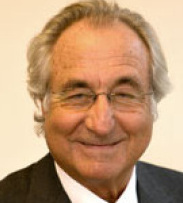
    Bernard Madoff
    Bernard Madoff

    Prosecutors had feared Madoff could transfer assets to family members, friends and employees, thus denyting victims of a means to recover losses.

    Madoff  now been ordered to compile an inventory of possessions and banned from transfering property.

    Federal prosecutors said last week that agents found $173 million in checks in Madoff’s office. The checks were to have been distributed to a list of people Madoff deemed worthy of receiving bonuses and gifts.

    All $173 million could have been dissipated had the checks been distributed — and people who deposited or cashed them could have been sued by victims and forced to return the proceeds.

    Prosecutors also said Madoff sent expensive jewelry and gifts to family and friends. Those gifts must be returned.

    Madoff is under house arrest in his New York City apartment. Under bail terms, he must wear an electronic monitoring advice.

    Baltimore officials now say the city’s police and fire pension funds reportedly lost $3.5 million through an indirect tie to Madoff.

  • Monday News And Notes

    Monday news and notes:

    • We’ve installed a WordPress plug-in called “Quote Comments” by Joen Asmussen. If you highlight a section of a comment to which you’d like to respond and click the “Quote” link next to the date, it will copy the highlighted text to the comment box. We initially couldn’t get the plug-in to work after installing it last week. But an update was released this morning, and it appears to be working.
    • A reader advises our column on whether the Seattle Post-Intelligencer can save itself by employing the autosurf model is just a bunch of hot air to ardent ASD supporters. We weren’t given specifics as to how we got so much so wrong in a single post, but would like to know. We’d like to publish a guest column by an ASD supporter that explains why existing companies with magical brand names and huge website traffic volume haven’t turned to the autosurf model — either to save themselves or to create an exciting, new revenue stream that would position them for 21st Century success. Please contact us through the contact tab if you’d like to write a bylined guest column that explains your point of view.
    • At some point this week — likely by Wednesday — we are installing a new contact form that uses a different system to process inquiries. Some testing is required. We’ll let you know when it is installed and operational.

    UPDATE 10:43 A.M. EST (USA): It appears the plug-in is not providing the “Quote” link until the first comment has been left. We’ll look into this.

  • Seattle Post-Intelligencer Imperiled: Could It Use The Autosurf Model To Save Itself?

    Yesterday we wrote about the U.S. unemployment rate surging to 7.2 percent, the highest since 1993. Today we’ll start with the news that the Seattle Post-Intelligencer, one of America’s great newspapers, has been put up for sale by Hearst.

    Our purpose for this post is twofold: To send our respect to staff members who may be confronting job losses in a poor economy, and to show the situation in Seattle demonstrates that there are no miracle cures in the publishing/advertising business.

    If no buyer for the Post-Intelligencer is found within 60 days, the property may become a Web-only publication “with a greatly reduced staff,” Hearst said.

    “A complete shutdown of all operations” even is possible, Hearst said. “In no case will Hearst continue to publish the P-I in printed form following the conclusion of this process.”

    High Print Truths

    The bitter truth about print publishing is that many publishers can’t sell enough advertising to sustain traditional operations. Print circulation, meanwhile, is falling across the board because readers prefer to get their news from the Web. The two major newspapers in Detroit — the Free Press and the Detroit News, for instance, have slashed home delivery to just three days a week.

    Elsewhere, The Albuquerque Journal will stop home deliveries to 30 communities around the state and take the paper off newsstands in those communities.

    And did you know The Christian Science Monitor  is becoming a Web-only publication?

    On the magazine front, U.S. News & World Report is dialing down print operations and transitioning toward a Web-focused model.

    Name a U.S. city, and you’ll find a struggling print publisher. In some cases, tourniquets applied earlier in bids to stop profuse bleeding are failing. Layoffs are common. The next sad call could be to the coroner to make the pronouncement.

    Both major Chicago papers are bleeding, and even the New York Times is not immune from the disease that is killing mass-produced print. The Times is not exactly flush with cash.

    No Miracle Cures

    Our heart goes out to the P-I employees. The print world finds itself in a battle to remain relevant, the same sort of battle blacksmiths confronted when cars replaced horses. We are well-acquainted with this battle.

    Now, let’s switch gears a bit to make a point that may seem off-topic in the context of this post.

    You’ve read some very famous names above. Indeed, some of the finest journalists in the world work for these publications. Some of the best salespeople — people who know advertising inside and out and through and through — work for these publications. Some of the best known companies in the United States advertise in these publications.

    If there were any merit at all to the autosurf advertising model, these publishing companies would be employing it to raise badly need cash or even to save themselves. Beyond that, though, they’d be doing it even if times were good as a means of  generating Rainy Day cash.

    Take U.S. News & World Report, for example. Its website gets 7 million unique hits monthly, and the number is on the rise. Readers are there for the editorial because they value it. Imagine a publishing/advertising company with a tremendous number of existing visitors installing an autosurf script.

    Such a company wouldn’t even have to fret over creating traffic from scratch because the volume already would be there. At the same time, the company wouldn’t have to start from scratch to build a brand because its existing brand already is well-known.

    Imagine Matt Drudge installing an autosurf script with his incredible traffic volume.

    So, why isn’t Drudge doing it? Why isn’t U.S. News & World Report doing it? Why isn’t the Seattle Post-Intelligencer, at death’s door, doing it? All of the companies have an existing product that readers love. All of them have enviable website traffic volume.

    Could it be they’re not doing it because the autosurf model — which often is pitched as the “new” way and the product of visionary thinking — is contemptible on its face, perhaps even criminal?

    The plain answer is yes. If the model had any merit at all, existing companies with well-known brands, loyal website viewers and loyal advertisers already would be employing it — using their economies of scale and the talents of in-house editors, writers, designers, webmasters and salespeople to crush amateur autosurf competitors like a bug.

    Stacking Myths

    A recent development in the autosurf world is to position paid-to-surf sites as social-networking outlets, the ushers of the Web 3.0 Age.

    Why, then, haven’t MySpace, Facebook, Twitter and other social networks installed their own autosurf scripts? After all, these leading-edge companies and their tens of millions of members could be swimming in cash –  if the autosurf operators using the “rebate” model can be believed, that is.

    Every time I see an autosurf claim it’s a professional advertising business I want to gag. I’ve spent the lion’s share of my career working for print publications — publications that employ top sales people, people who belong to professional trade associations and live to read Advertising Age and the vital publications of their occupation.

    Did federal agents seize even one copy of Advertising Age inside the offices of AdSurfDaily Inc., the Quincy, Fla., company accused of selling unregistered securities by calling them “advertisements” and operating a $100 million Ponzi scheme? Did ASD belong to a single local, statewide or national advertising trade association? Did Andy Bowdoin, its owner, understand advertising metrics or have a career-honed sense of what major national brands require before they’ll plunk down even a single dollar to make an ad purchase?

    ASD’s lack of a glossy Media Kit, audited circulation and polished PR skills would be deal-breakers for mainstream national brands. So would its inability to control its own message. Promoters’ ads for the company didn’t sell the value of the advertising; they sold the value of the income opportunity, often with outrageous excess.

    And when a lawyer appears in a video alongside the company owner to assure participants that everything is perfectly legal — well, not only would it raise eyebrows in the legitimate advertising world, it would cause media buyers to cling to their wallets.

    In all your years on this planet, did the local newspaper or media outlet ever have a need to reassure you that your purchases were legal? Did they ever promise you you’d get back all the money for your ad purchase and a profit of 25 percent — even if your product didn’t sell — by simply spending six minutes a day viewing ads they publish?

    I’ve worked side by side with editors and reporters and photographers who work their tails off to give readers the best possible publication. One of my former publishers was famous for saying, “You serve your advertisers best by serving your readers first” — in other words, the editorial team creates a product that educates, enlightens and informs readers, which in turn equips the sales staff with a powerful tool and creates the value for advertisers.

    Did you know that print consumers are like sports fans? They believe they own their hometown publications, just as sports fans believe they own their hometown teams. You should be in the newsroom when readers start calling because a production error resulted in “Cathy” being left out of the Comics section in the morning paper.

    Point is, the vessel through which ads are delivered must have value to readers and advertisers. It’s the publishing world’s raison d’être. A newspaper exists to make money. The publication is the vessel through which readers find information they value — a story about a tax hike and how residents are fighting it, or the ad from Staples.

    One of the great myths about autosurfs is that they somehow can entice major advertisers to spend big dollars running banner/display/text ads in the members’ area because of the value of the autosurf’s “captive” audience.

    Built into this theory is the assumption that big advertisers wouldn’t want to be actual participants in the autosurfs and qualify for big rebates: They’d only want people to see their ads as they signed into their autosurf accounts — or, if the advertiser did choose to advertise in the actual rotator, it wouldn’t want a rebate check; it would just want people to see their ads.

    In other words, this theoretical upperclass of advertisers would forgo their rebate profits so profits could be equitably distributed to the underclass of advertisers, a new form of Socialistic advertising.

    The people selling the system, by the way, all claim to be capitalists.

    It is complete bunk — the “captive” audience isn’t there because it’s drawn by an enthralling editorial product that readers or viewers crave; it’s there because it’s being paid a fee to be there. Main Street, big-dollar advertisers want legitimate prospects, not prospects who are being paid to assume the role of prospects.

    Besides, no major advertiser wants to damage its brand by participating in something unseemly — a Ponzi scheme, for instance. Media buyers also need verifiable, audited evidence of viewership — the sort that Nielsen and Audit Bureau of Circulations provide to ensure ad dollars are being spent wisely. Autosurfs aren’t keen on disclosure, particulary audited disclosure.

    The lack of an editorial product — or, in the TV sense, programming — is an autosurf deal-breaker for major advertisers. People surfing for a fee are not an attractive audience. People don’t watch “American Idol” for a fee; they watch it because they love it and it has meaning to them, which is what creates the value for advertisers.

    Moreover, people don’t read the newspaper or magazine for a fee or perform Google, Yahoo and MSN searches for a fee. They do it because the outlets have meaning to them. They need information. Advertisements are packaged with the information, whether the publication is print or digital.

    In all the discussion about autosurfs, I have never — not one single time — seen an operator brag about the quality of the editorial product. They can’t: There is no editorial product. Participants are there to view ads for a fee. The more you put into the autosurf, the more you “earn” by clicking on ads.

    Major advertisers wouldn’t know if a viewer paid $10 to view ads or $10,000. They wouldn’t know if you’re 13 years old or 73. Owing to unaudited viewership, major advertisers wouldn’t know if the autosurf had 100 members or 100,000. They wouldn’t know if bots were making the clicks to make the autosurf appear to have more members than it actually did.

    About the only thing major advertisers would know about you if they decided to sit through a surfing session is that you’re willing to view ads for a 1 percent (or higher) daily kickback — and apparently are extraordinarily interested in MLMs, cash-gifting programs, miracle potions and overnight-cash systems.

    $100 (Or Less) The Only ‘Credential’ Needed

    Anyone can acquire an autosurf script. They’re even available for free. No one has to have a single credential beyond a script — hardly a credential — to open an autosurf. What you need is a domain name and hosting account, $100 or less, someone who can throw up a few graphics, and access to a payment processor and a bank account. Set the script to the rebate percentage you choose, and start shouting from the rooftops.

    A few significant MLM promoters and side-dealers later, you’re sitting on a pile of money and in possession of your very own Ponzi scheme.

    So, the next time someone asks you to join an autosurf — the next time someone tells you that you’ll get back 100 percent of the total of your ad spend and emerge with a profit whether or not you make a single sale — ask yourself why the Seattle Post-Intelligencer isn’t starting an autosurf as a means of neutralizing the grim reaper and saving itself.

    Could it be that business ethics actually exist in this world and that reponsible companies actually take them seriously?

    If the paper started an autosurf tomorrow and followed the ASD model, it could generate tens of millions of dollars in a matter of weeks. By including a disclaimer that rebates weren’t guaranteed — only ad views were guaranteed — it could pocket huge sums of money and use it to save the print publication and all those jobs.

    Such things are possible in the fantasy world of the autosurf, which considers only the revenue side of the ledger and kites itself the authority to induce people to join by plying them with rebates — and then erasing accrued rebate liabilities by invoking disclaimers when the Ponzi math becomes unbearable.

    Next ask yourself why prominent, healthy companies — companies you know and love — aren’t running autosurfs. Ask yourself why Google, one of the biggest ad companies on earth and one with an enviable balance sheet, unrivaled traffic and a magical brand name — isn’t doing it.

    Could it be because these legitimate companies actually care about you — and what you think about them?

    To better times, P-I staff. We’ll be thinking about you.

  • CEP Receiver Settles With 14 Ponzi Scheme Participants

    The receiver in the CEP Ponzi scheme case has filed court papers to settle adversary proceedings against 14 participants who profited in the scam.

    In court since July 2007,  the case is not fully settled. Litigation against other participants is ongoing. Dozens of lawsuits were filed against CEP members.

    Settlement terms for the group of 14 appear to be generous.  Although each of the participants must hand over cash earned from the scheme, the proposed settlement amounts are only a percentage of what the receiver sought initially.

    The receiver, forensic accountant William Perkins, has been working on the case since the beginning. CEP was accused by the Securities and Exchange Commission of running an autosurf Ponzi scheme that collected millions of dollars.

    One CEP participant, for instance, will pay  $18,400 to settle a claim of $57,806, under the terms of the proposed settlement. Another will pay $20,000 to settle a $45,736 claim.

    Settlement amounts were reached after negotiations with individual participants. No universal formula was applied, meaning some participants will pay a higher percentage of their gains and some will pay a lower percentage. One person who received $140,612 from CEP, for example, will pay $10,000 under the settlement.

    Liberally viewed, the proposed settlement amounts seem small. But some CEP participants have declared bankruptcy. Others have had to sell their homes to return ill-gotten gains. All of them were thrust into a prolonged court battle because of their CEP participation.

    AdSurfDaily, itself an alleged Ponzi scheme, once advertised it accepted payments from CEP Trust, the failed payment processor operated by the principals in CEP, Trevor Reed and Clayton Kimbrell.

    View the proposed CEP settlement.

    Under the proposed settlement, any person who fails to pay the settlement amount will be subjected to a judgment in the amount of their ill-gotten gains from CEP. Perkins sued to recover “preferential and fraudulent transfers” — in other words, the “profit” participants received from the Ponzi scheme.

  • U.S. Unemployment Hits 7.2 Percent, Highest Since ’93

    theeconomyEmployers slashed nearly 525,000 jobs last month, sending the unemployment rate to 7.2 percent, the highest level since 1993, the Labor Department said today.

    The numbers are just plain bad. In 2008 as a whole, the economy lost 2.6 million jobs.

    In December, “job losses were large and widespread across most major industry sectors,” the Labor Department said.

    It’s a time to exercise caution online — not that one should abandon caution during good times.

    Lean times, however, create conditions that permit scams to proliferate. Being unemployed or living in fear that your job will be axed is like a baseball game in which you find yourself trailing 5-0 after the opposition bats in the top half of the first inning. You’re already confronting a big deficit, and the pit in your stomach existed before the game even began.

    Just remember there’s no such thing as a five-run homer. You can’t pare a five-run deficit in a single plate appearance.

    So, if you’re new online as the result of a job loss — or if you’re worried about losing your job and are looking for ways to supplement your income — just know that plenty of folks will try to get you to believe in a five-run homer.

    They’ll tell you to join autosurf programs, for example, explaining that you can earn $100 a day by entrusting $10,000 to them. They’ll tell you the autosurf companies offer an exciting, new way to advertise online. And they’ll promise you’ll become a member of one of the great teams within the multilevel marketing (MLM) organization.

    Along those lines, they’ll tell you that you’ll come to ask yourself why you ever worked to begin with once you realize it’s possible to earn huge sums of money by viewing advertisers’ websites for 10 or 12 minutes a day.

    And all of it will be bunk — every last syllable of it will be bunk.

    What they won’t tell you is that the government views such autosurf programs as Ponzi schemes that engage in the sale of unregistered securities. The government has a history of busting such schemes. Your entire investment could be lost. You could end up like the investors in the alleged Bernard Madoff Ponzi scheme

    Avoid such programs like the Plague. Some of our readers have reported they’ve lost upward of $100,000 in such programs. It’s somewhat common for church congregations to get involved in autosufs, some of which sell memberships with an appeal to religion.

    Take a leadership stance if you’re approached by a church member to join such a program. The member may be honest — but he or she may be caught up in a happy cloud that has stolen his or her ability to reason.

    And there’s always a chance that the member actually knows the game and is using your faith to cloud your ability to reason.

    Think about your former job — how your employer made money. The company probably built things or created things or fixed things and produced or supplied products or services that required both manual and intellectual labor.

    That’s the only real way to make money: create something of value and sell it. The product can’t be a mirage. Mirages are a dime a dozen on the Web. Someone always will be willing to sell you a mirage, a five-run homer, especially during lean times.

  • Prosecutors Turn Up The Heat On Madoff

    Ponzi schemes almost always have insiders, and sometimes the insiders may not even know they’re insiders.

    In an extraordinary revelation, federal prosecutors said this afternoon that Bernard Madoff took overt steps to distribute bonuses to preferred family,  friends and employees after he realized the Ponzi he created was crashing down around him

    “[When] the defendant’s office desk was searched, investigators found approximately 100 signed checks totaling more than approximately $173 million, ready to be sent out,” said prosecutors Marc Litt and Lisa A. Baroni.

    The assertions were made in a letter to Judge Ronald L. Ellis.

    “The only thing that prevented the defendant from executing his plan to dissipate these assets was his arrest by the FBI on December 11,” Litt and Baroni said. The letter was signed by Litt, under the authority of  Acting U.S. Attorney Lev. L. Dassin of the Southern District of New York.

    Today’s letter by prosecutors marked the first public disclosure that Madoff already had drafted and signed checks, a situation that could have led to an even greater calamity had the checks been mailed and cashed.

    Prosecutors earlier had said only that Madoff had discussed distributing up to $300 million to preferred individuals.

    Here is the  letter from prosecutors.

    Had the preferred parties received and deposited the checks, Madoff’s assets would have been depleted by $173 million, putting family members, friends and employees in the position of getting sued to disgorge illegal profits.

    Prosecutors said earlier this week that Madoff and his wife, Ruth, sent more than $1 million in jewelry and other items to friends and family after his arrest. The government viewed it as a bail violation, saying Madoff should be jailed.

    Madoff’s attorney, Ira Sorkin, explained Madoff’s behavior as an innocent mistake.

    Today’s filing by prosecutors makes it clear that the government believes home-detention with electronic monitoring weren’t enough to keep Madoff in line while awaiting trial. The gloves are off, and prosecutors now are playing hardball.

    “The nature and circumstances of the offense charged are unprecedented,” prosecutors told the judge. “The defendant has admitted to perpetrating one of the largest, if not the largest, Ponzi schemes in history — a scheme that required the defendant to lie routinely to thousands of people and a scheme which has caused extraordinary damage to individuals, families and institutions all over the world.”

  • Blagojevich Subject Of Debut RateMyVanity.com Poll

    Rod Blagojevich
    Rod Blagojevich

    He’s the governor who won’t go away, despite allegations he tried to sell the Senate seat vacated by President-Elect Obama.

    Gov. Rod Blagojevich of Illinois is the subject of the debut poll on RateMyVanity.com. So, if you’ve been following the Blagojevich saga and have a few minutes, visit the site and cast your vote. You’ll be asked to select a choice that best describes your perception of the governor’s vanity.

    We don’t anticipate heavy traffic in these early days. But we plan to build the site over time and make it a daily stopping point for people who enjoy following the news. The site was inspired by the Bernard Madoff Ponzi case.

    We’ll be adding additional content today. As it stands, some dummy posts still are in place. We’ve been testing systems and tweaking things. More tweaking will follow. Dummy content will be removed as fresh content fills in the holes. We left the dummy content in place for now so readers can get a better feel for the site.

    RateMyVanity.com mostly will cover newsmakers from the worlds of politics, media, entertainment and sports. We’ll mix in other stories and polls from time to time. The idea is to get a sense of how the public views the vanity of people in the news.

    We have two separate designs for the site and will be switching back and forth in the early days, based on what readers ultimately prefer. The articles will be short, with a hint of an “attitude.”

    Readers can leave comments. Some polls will have a feature than permits users to enter their own assessment of the newsmakers’ vanity, if they aren’t satisfied with the choices we provide.

    The site is using WordPress 2.7, the latest version. We’ve had to do some tweaking and anticipate some additional tweaks. Our plan is to provide lots of fresh content, based on what Americans are talking about.

    Visit Rate My Vanity.

  • AdViewGlobal, AdGateWorld Brands Leveraged To Sell Cash-Gifting, Other Programs; Pitches Also Use Tony Robbins’ Name

    It’s hard to imagine that motivational speaker Anthony Robbins would be pleased to learn his carefully cultivated brand name is being leveraged to sell highly questionable online-income opportunities such as cash-gifting programs.

    Robbins, however, has company — and it’s the sort of company that adds an extra layer of dubiousness to the drip-drop dilution of the Robbins’ brand: The brands of AdGateWorld and AdViewGlobal also are being used to harvest traffic to “opportunities” that appear to have nothing to do with the autosurf companies.

    AdGateWorld and AdViewGlobal are autosurf companies that surfaced in the wake of the alleged $100 million AdSurfDaily autosurf Ponzi scheme. The U.S. government takes a dim view of the autosurf business model, saying it’s a back-door way of selling securities without a license — while using money from new investors to pay redemptions requested by earlier investors: the classic Ponzi set-up.

    At the same time, the government also cautions against participating in cash-gifting programs, many of which use an illegal pyramid model and trade on get-rich-quick dreams.

    This is one of those bizarre things that happens only online. Autosurfs have been under public scrutiny in the aftermath of the well-publicized August seizure of ASD’s assets.

    Promoters of cash-gifting and MLM-style programs now appear to be trading on ASD’s pain — and the names of new autosurfs that have surfaced since the ASD asset seizure  — to harvest traffic and route dollars to their own questionable opportunities.

    Last night and this morning we noticed that some promoters of cash-gifting and other questionable programs have been using keywords such as “Ad View Global” and “Ad Gate World” to drive traffic to their video presentations. The autosurf names appear in headlines on the video sites, but the videos themselves don’t talk about the autosurfs.

    People who anticipate viewing an autosurf pitch instead are greeted with a cash-gifting pitch or a pitch for another MLM-style program.

    Robbins’ name also is being used in an apparent bid to siphon traffic that originates with autosurf- or business-opportunity-related keywords, and, in at least one case, is being used in an actual video ad for a cash-gifting program. We also noticed Robbins’ likeness in video stills whose headlines suggested the videos were about autosurfs.

    This morning we viewed a video with a headline of “Ad Gate World Create[s] the 4 Hour Work Week.” The video was about a cash-gifting program, not the Ad Gate World autosurf program. Robbins’ name was scrolled in the opening frames of the video.

    A woman who appeared in the video declared she’d found her nirvana through cash-gifting:

    “Cash-gifting is the way to go — hands down,” she told viewers. “This is what I want to do, like forever, now.”

    Like him or not, Tony Robbins has worked hard to cultivate a unique brand identity. Last year he sued Stephen Pierce, an Internet Marketer, amid allegations that Pierce was leveraging the Robbins’ brand without authorization.

    Read about the Robbins/Pierce lawsuit on TMZ.com.

    “[Robbins] carefully limits and vigorously protects and defends the good will and value of Robbins’ name, reputation and image,” Robbins said in the lawsuit.

    Some promoters of highly questionable programs are really pushing things by associating Robbins’ brand with their “opportunities.” This is one of the reasons large segments of the public view Internet Marketing as a cesspool.

    It’s painful to watch.

  • Enjoy WordPress Blogging? Try Elegant Themes

    If you enjoy WordPress blogging and are looking for ways to expand your online presence in 2009 while implementing a clean, fresh look, ElegantThemes may be a choice suited for you.

    First, though, let’s get you qualified: Elegant Themes is a membership site that provides attractive WordPress themes. You’ll need a core understanding of WordPress. You shouldn’t join Elegant Themes unless you have some WordPress experience or intend to gain it in the coming year.

    Skills you’ll need include the ability to download themes and plug-ins and upload them to your server. Occasionally you’ll need the ability to copy-and-paste code. If you’re already a Blogger these skills likely are second nature to you. If you’re inexperienced, expect to spend some time learning WordPress basics. The WordPress interface is user-friendly. Until a few weeks ago we had virtually no experience with WordPress, but now can’t imagine a world without it.

    One of the first things we noticed about Elegant Themes is that it provides psd files — for Photoshop — in its download packs, meaning you can use Photoshop to fashion a logo for your site.

    But Elegant Themes also provided a blank logo. If you don’t have Photoshop, you can edit the blank logo with a free program such as paint.net to create your own site logo. This is a big plus, because an average Blogger may not own Photoshop. We recommend that you familiarize yourself with paint.net if you don’t own Photoshop and have been looking for ways to make your own logos.

    As of this writing, ElegantThemes charges $19.95 for a one-year subscription via PayPal. Our purchasing experience was seamless, meaning there were no glitches and we were routed instantly to where we needed to be after purchase.

    There are 17 eye-catching themes available for download at the site. More will be added, and we anticipate they will have great curb appeal.  The owner impresses us as a hard-working designer. Elegant Themes provides a members’ Support Forum, so let’s talk about that for a moment.

    We have asked three questions in the forum. Each question was addressed promptly — by the owner and a fellow forum member. We were impressed by the swiftness of the responses, especially because we posed our questions on a weekend.

    What made the responses particularly memorable, though, was the thoroughness. We encountered a glitch with one of the themes — an alignment problem. This problem was caused by the recent upgrade of WordPress to version 2.7. A fellow member provided a solution — a code snippet — right in the forum, and the owner incorporated the fix into the theme within a matter of hours.

    In reading forum threads, we noticed other examples of members and the owner providing code snippets to fix individual issues. Issues, of course, are inevitable, regardless of the Blogging platform you choose. One of the great things about WordPress is that the user base is large and the documentation is thorough. When issues do arise, there is a worldwide knowledge base from which to glean answers. The Elegant Themes members’ Support Forum has added to this WordPress knowledge base, a big plus.

    We have done considerable shopping for WordPress themes. Many are available for free — the theme on the Patrick Pretty Blog is known as “Visionary,” for example. You’ll find no shortage of free themes if you enter the WordPress world.

    But we also did some shopping for paid themes. A good number of highly qualified WordPress designers offer paid themes. The range runs the gamut from “should have just used a free theme” to “we’d gladly have paid more for the theme.”

    Pricing at Elegant Themes is on the low end of what we viewed online and is more than fair. For a $19.95 annual subscription, we received access to 17 very attractive themes. We’ve seen membership sites that charge as much as $299 for a year’s subscription — while having fewer selections than Elegant Themes.

    As always, though, we encourage you to do your own shopping. For our money, Elegant Themes has provided exceptional value.

    Visit Elegant Themes.

    In the weeks ahead we plan to upgrade a couple of sites with themes from Elegant Themes. On Wednesday, we are launching RateMyVanity.com, and we’re using a theme from Elegant Themes on the site.

    rmvscreenshot

    We find Elegant Themes to be fresh and new. Our experience on the members’ Support Forum has been a positive one, and we get the sense the owner works hard to maximize value for members. The themes alone were worth the low price of admission.

    Visit Elegant Themes.