Category: The Economy

  • EDITORIAL: Uber Isn’t MLM, But It Sure Acts Like It

    From a letter from Sen. Al Franken to Uber, Franken, a Democrat, is a member of the powerful Senate Committee on the Judiciary. He also is chairman of the Subcommittee on Privacy, Technology and the Law.
    From a letter by Sen. Al Franken to Uber. Franken, a Democrat, is a member of the powerful Senate Committee on the Judiciary. He also is chairman of the Subcommittee on Privacy, Technology and the Law.

    We’ll begin by pointing out that Uber, the popular ride-sharing company and darling of venture capitalists, is not an MLM firm. But it sure is acting like one, even briefly vomiting one of MLM’s most familiar and reflexive responses to critics: HatersGonnaHate.

    Can MLM enterprises and MLMers in general learn from Uber’s bizarre missteps?

    You see, both Uber and MLM have a common problem: a certain internal recklessness coupled with a tin ear for PR, one that serves up one spectacular gaffe after another. Uber’s latest self-inflicted wound now has the attention of Sen. Al Franken, the Minnesota Democrat. Franken wants to know why “Uber’s Senior Vice-President of Business Emil Michael recently made statements suggesting that Uber might mine private information to target a journalist who had criticized the company.”

    As BuzzFeedNews reported on Nov. 17 (italics/bolding added):

    A senior executive at Uber suggested that the company should consider hiring a team of opposition researchers to dig up dirt on its critics in the media — and specifically to spread details of the personal life of a female journalist who has criticized the company.

    Put another way: make the lady sweat that some skeleton might surface and lead to her demise should she dare continue to write pieces Uber found unflattering.

    One Uber executive, BuzzFeed reported, planted the seed that Uber could prove “a particular and very specific claim about her personal life.”

    The journalist is Sarah Lacy, the editor-in-chief at PandoDaily and a Mom. Here we’ll mention that, in addition to the Uber thuggishness, she’s also had to deal with the sidebar contention that Pando just might be funded by the CIA.

    As a journalist who has been accused by MLMers of being on the CIA payroll and told by MLMers that my supposed secrets dealing with my supposed homosexuality and supposed porn addiction will be outed even as “sovereign citizens” threaten me with $500,000 fines for alleged trademark infringement, it will come as no surprise to PP Blog readers that I’m more than a little sympathetic to reporters who encounter thugs.

    This sympathy extends whether the thugs are in the Ivory Tower or operating from the sewers.

    The BuzzFeed Uber revelation set off a media firestorm now in its fourth day, putting Uber’s name in the papers for all the wrong reasons. Now, at least one reporter has come forward to claim that Uber tracked her without her permission as she rode in a Uber car. The device Uber uses to perform this tracking is known as “God View.”

    In September, venture capitalist Peter Sims wrote that he’d been tracked by Uber without his permission. Sims says he was in a Uber car in New York City and that Uberites in Chicago were monitoring his movements. What this means, in essence, is that Uber was using him as a stage prop without his knowledge and consent from halfway across the country while also invading his privacy.

    This reminds me of two crackpot MLM schemes making the rounds in 2010. These “programs” were known as NarcThatCar and Data Network Affiliates. Both schemes bizarrely reimagined mass invasions of privacy as exciting new products — and then wrapped pyramid schemes around their creations for good measure.

    The schemes worked approximately like this: Armies of MLMers would hit neighborhoods across the land and write down the license-plate numbers of cars parked on streets and the addresses at which they were parked. They’d also hit the parking lots of grocery stores, big-box retailers, restaurant chains, pharmacies, doctors’ offices, bookstores, libraries, theaters, video-rental companies and universities.

    All of this information would be entered in a database, purportedly to assist the AMBER Alert system of locating abducted children. AMBER Alert purportedly would get the data for free, but clientele purportedly including banks and companies in the business of repossessing cars during the height of the recession would pay for it.

    MLM recruits were told to try not to attract too much attention while writing down all these plate numbers. They also were falsely told they were helping the U.S. Department of Homeland Security track terrorists.

    Yes. MLM went in the spy business, using the pretext that it was one’s patriotic duty to monitor license plates and that enormous profits would flow from neighbors keeping track of automobiles in their neighborhoods. As the story was told, the database could tell the police what cars were parked at a fixed address at the time a child was snatched. This information then could be compared to the next sighting of the tag as entered in the database from a different fixed address, thus purportedly providing clues as to where the kidnapped child was being held.

    If anyone had the temerity to raise a stink or even make a polite inquiry about why a stranger was recording their plate number in a parking lot, the recorders were trained to respond that no one had anything to fear if they hadn’t done anything wrong.

    Both Narc and DNA were filled with such Orwellian outrageousness (and were such obvious pyramid schemes) that reporters began to hound both “programs.” The Better Business Bureau was subjected to bizarre attacks from the MLM sphere for raising questions about the “programs,” and some MLMers got the idea that the reporters, rather than the companies pulling off obvious scams, should be investigated.

    Nazi propagandist Joseph Goebbels couldn’t have imagined greater allies than the MLM Stepfordians.

    By 2012, MLMer and Zeek Rewards Ponzi-scheme figure Robert Craddock got the bright idea of putting himself in the opposition-research business — the opposition being reporters who wrote anything bad about Zeek. One of his targets was Zeek critic K. Chang, who briefly lost control over his HubPages site because Craddock had filed a complaint alleging copyright infringement, trademark infringement and libel.

    K. Chang eventually prevailed, but not without experiencing downtime while the Zeek scheme was still gathering cash. The SEC eventually shut down Zeek, alleging that it was operating a fraud that had gathered $850 million.

    Still sensing there was money to be made in the MLM cottage business of harassing reporters or soliciting dirt on them, Craddock eventually established a website known as “InternetClowns” that purportedly would serve all MLM firms. The supposed “clowns” included the PP Blog and BehindMLM.com, two sites that report on MLM frauds.

    At the beginning of this column I noted that perhaps MLM could learn something from the experience of Uber in the subject area of tracking reporters and soliciting dirt on them. It strikes me now that maybe it should be the other way around: that Uber could learn from MLM.

    One of the things Uber could learn is not to do anything MLMish if it wants to maintain its standing as a venture-capital darling.

    By MLMish, we mean something crazy and outlandish such as tracking reporters, bringing in opposition-research teams to menace them and telling a group of people in the Second City that you’re using your “God Machine” to spy on a venture capitalist in the Big Apple.

    And perhaps Uber also might want to avoid the most recent practice associated with “defenders” of  outrageous MLM “programs” and HYIP schemes.

    This would be the practice of trying to smear critics by using online forums to plant false stories about critics’ ties to Islamic terrorist groups and otherwise attacking human beings based on their Muslim faith.

    Uber can read all about that one on RealScam.com, a site that concerns itself with international mass-marketing fraud. RealScam.com currently is being hectored by a person known as “Happy Customer” who is making outrageous claims against critics, filing bogus reports at RipoffReport and trying to keyword stuff the forum with words such as “Islamic Forum” and “haven for Islamic Terrorists !”

    Happy Customer’s mind appears to be telling him (used presumptively) that, if only he can use the words “Islamic” and “Muslim” enough times — while mixing in words such as “terrorist” and “terrorism” — the eavesdropping and text-reading National Security Agency might just buzz by and turn off RealScam’s server.

    Study the strange MLM circus, Uber. What you’ll learn should be more than enough to help make most unwanted headlines go away.

  • BitClub Network Now Wants 500 New Suckers; Participants Exhorted To Be Patient Because Purported Mining ‘Community’ Venture Is Like ‘Building A Home-Made Space Ship To Explore Outer Space’

    BitClub Network apparently has found its first crop of 500 suckers willing to throw down $3,599 to become “Founders.”

    A link from a new post on Twitter suggests BitClub Network now is trying to line up 500 new suckers who’ll purportedly earn half of what the core group was promised. The new suckers will be called Founder[s]2.”

    Buy-in pricing for the Founders2 positions wasn’t immediately clear. BitClub Network is a purported mining-pool “community” with a Bitcoin theme.

    From the claim on the page linked from Twitter (italics added):

    “If you came to the party late you still have another chance to be in the second wave of Bitclub Network Founders. This group will split an additional 0.5% of total mining profits paid out to the next 500 members who become a ‘Bitclub Network Founder2.’”

    A week ago today, some existing BitClub Network promoters were trawling for suckers to let 100 percent of their money ride in the “program” by setting the repurchase scheme to 100 percent. BitClub Network’s repurchase scheme is similar to so-called “80/20” programs seen in Ponzi schemes such as Zeek Rewards.

    BitClub Network is being promoted by some former Zeek members, including clawback defendant T. LeMont Silver.

    In the affiliate pitch accessible today through Twitter, the claim was made that BitClub Network participants had to exercise patience because what the “program” is doing is like “building a home-made space ship to explore outer space.”

    Though not Bitcoin-themed, an emerging “program” known as The Achieve Community also is trading on a community theme. As is the case with BitClub Network, Achieve Community members are encouraged to let a percentage of their money ride.

    A video promo for Achieve Community viewed by the PP Blog today suggested that $50 plowed into the scheme could return $25,600 in 170 days or so by employing a 50-percent rollover strategy.

  • RECOMMENDED READING: Two Stories/Threads At BehindMLM.com On ‘The Achieve Community’

    recommendedreading1We recommend these two stories/Comments threads at BehindMLM.com on “The Achieve Community.” Access the first here. Access the second here.

    BehindMLM.com covers emerging MLM fraud schemes. Naturally the site separates some MLMers from their senses because it so neatly debunks cover stories and magical constructions that have helped MLM scams trading on the Internet thrive for years.

    We’d point out that, like other apparent “supporters” of other “programs,”  an apparent “supporter” of Achieve Community “defending” the “program” at BehindMLM.com is arguing that “The Achieve Community is not a scam [because] I GOT PAID . . .”

    Such arguments tend to reflect the coaching of willfully blind promoters and typically are seen on well-known Ponzi boards such as MoneyMakerGroup and TalkGold.

    All successful Ponzi/pyramid schemes “pay.” Those payments are used as “social proof” no scam exists and help to drive new dollars to scams. HYIP-flavored scams are among the most dangerous in the world. They pollute banks and payment processors with illicit proceeds, turning them into warehouses for fraud schemes. And because bad money follows bad money in the HYIP fraud sphere, the proceeds affect the commerce stream at multiple points of contact.

    Money purportedly “earned” in one “program” is used to join another. The banks and processors, in effect, end up warehousing radioactive financial waste. If that’s not bad enough, many of the schemes are exceptionally dark and murky. Money disappears down ratholes or ends up in the hands of ghosts. Such was the case at “Profitable Sunrise” and “Secure Investment” and many more.

    There are “I got paid” posts for both of those “programs” on the Ponzi boards.

    At Achieve Community, $50 somehow miraculously turns into $400, purportedly in 55 days or so. Our research shows that promos claim people can buy multiple “positions.” There also is a claim that, at some point in the future — a point at which Achieve Community lines up another payment processor — recruits will be able to buy 200 “positions” with two separate transactions of $5,000 each.

    This could be construed as an attempt to evade reporting requirements under the Bank Secrecy Act and to “structure” transactions to evade those reporting requirements. The Massachusetts Securities Division has raised the issue of structuring in its action against the TelexFree “program.”

    Structuring is dangerous because it accommodates both “micro” and “macro” scams. Some people may buy in at the “micro” level of $50, sometimes known in HYIP Ponzi Land as a “test spend.” Enough “I got paid” posts from cheerleaders at “micro” levels could cause others to buy in at “macro” levels of thousands of dollars.

    Some people in TelexFree appear to have made a series of purchases, effectively turning “micro” transactions into “macro” positions. The same thing likely also occurred with the Zeek Rewards and WCM777 MLM “programs.” Like TelexFree, Zeek and WCM777 cratered.

    MLMers should reject any contention that no scam exists because a program “pays” or that a member getting “paid” is proof that nothing untoward is occurring. HYIP schemes are infamous for fuzzy if not nonsensical math and for hiding scams behind green curtains.

    Beyond that, all successful Ponzi/pyramid schemes “pay.” Ever hear of Bernard Madoff? He “paid.”

    At the moment, 9,000 or so alleged winners are confronting clawback lawsuits to recover alleged fraudulent transfers from the c. $850 million Zeek Rewards scheme.

    Put another way, Zeek “paid.” After that, Zeek caused people it “paid” to have to hire lawyers and respond to subpoenas and prepare to sit for depositions — all at their own expense.

    Imagine Bernard Madoff, who “paid” far less than Zeek on an annualized percentage basis, strolling into court and addressing the judge at sentencing:

    “But . . . but, Your Honor,” he begins. “You don’t understand. I paid. This is so unfair! I’ll tell you what this is! It’s a [freaking] conspiracy by the government against people just trying to help their fellow man!”

    Next imagine the judge, after repairing from the bench to the restroom to projectile-vomit, returning to the courtroom and ordering the bailiff to escort Mr. Madoff through the side door to begin his 150-year tour of the prison system.

    Finally, imagine Madoff sitting in his cell and having the following conversation with himself.

    “If only the Achieve Community cycler had been around at the time. I could have rolled in all my clients’ money and, for each $50, I’d get paid $400 — in just two months or so, no less!”

    If you can imagine these things, you can imagine the insidious world of the HYIP universe. Madoff, no stranger to chicanery, might actually be mortified at the goings-on in certain MLM circles. Even so, he never would have insulted a judge by insisting no Ponzi scheme existed because he “paid.”

    Put another way, the greatest Ponzi schemer in U.S. history was more honest than the average HYIP purveyor and willfully blind promoter hoping to carve off profits from the mass production of scams on the Internet.

  • MILESTONE: The PP Blog’s 2,500th Post: Pennies For Our Thoughts

    EDITOR’S NOTE: This post originally was published at 12:40 a.m. ET on Nov. 3. It will continue to appear at the top of the PP Blog for a while, but new stories will appear below it . . .

    Dear Readers,

    What a long, strange, occasionally exhilarating and sometimes frightening ride it has been. This letter celebrates the PP Blog’s 2,500th post with WordPress. Our first was 2,152 days ago, excluding today’s date. Some of you have been with us every step of the way since December 2008.

    Many of you have shared your knowledge in our Comments sections and helped shape our thinking. This has helped us create a better publication, one that frames issues in context and provides analysis. Readers get breaking news, situational news and opinion.

    One thing became evident early on: the serial scammers and willfully blind hucksters hate the coverage and hold the analysis in particular contempt. As our story total increased from dozens to hundreds and, now, to 2,500, we’ve been able to point readers to more and more content that helps them see patterns and understand things in a fuller context, a context that is more meaningful to them.

    We often use both the current story and the Comments thread below the story to point readers to internal and external sources of information that create “lightbulb” moments. For example, lots of readers probably didn’t understand how similar Zeek Rewards was to AdSurfDaily until we helped them understand.

    There have been days in which so much news was breaking that we couldn’t get to it all or had to present capsules. On days we do not publish, we’re typically researching and reporting on a story that will be published later. Our deep editorial well remains available 24/7/365, even on days we do not add new content.

    The PP Blog started by covering the AdSurfDaily Ponzi scheme. It seemed for a while that it could never get stranger than ASD, but of course it has. The strangeness alone is worrisome. It is one of the reasons we’ve kept our nose to the grindstone. This amount of disconnect and the serial nature of the schemes speak to a growing menace.

    These schemes rob people of freedom, shatter dreams, create friction between nations and lead to situations in which the dark forces of criminality gain economic power.

    Because “sovereign citizens” made their presence known in in ASD and other unqualified debacles, we worked coverage of national-security issues into our coverage of securities fraud.

    Affinity fraud often accompanies Ponzi schemes and pyramid schemes. People of faith are constant targets. So are people whose first language may be one other than English. People frequently are targeted by race or ethnicity, often by magnetic personalities within the specific groups. It has become clear to us that people also are being targeted based on their political views.

    If you’re inclined to believe that being a traditional Republican or Democrat very well might be a sign of mental illness or that the antichrist or closeted Nazis and Communists are running things in the corridors of power, rest assured that a Ponzi schemer or securities fraudster has fashioned an offer designed to appeal to your prejudices.

    The PP Blog always has been free. It helps educate, inform and enlighten readers, including victims of Ponzi and pyramid schemes who’ve been reduced to ruin and spend their lives consumed by worry.

    It should not be that way in America – or any nation.

    We received a note the other day from a person who lives in an African nation that knows poverty. Some individuals in this country thankfully see themselves as up-and-coming entrepreneurs who not only will improve their own lives, but the lives of their family members and fellow citizens.

    This individual thanked us for our coverage of TelexFree, but reminded us that the fallout went way beyond the Latino and Portuguese communities. We’ve known for some time that we’re building a small audience in Africa. Our audiences in South America also are building. The first time we noticed this was when we became the first publication in the world to confirm through a government official that TelexFree, which had a presence in Brazil, was under investigation in its home state of Massachusetts.

    These hideous schemes are affecting people globally. The security situation they create is untenable. The local danger is that they turn family and friends against each other while at once harming local economies. Because murky forces are at work and marriages between organized crime and political extremists can occur, the schemes pose a threat to international security.

    Today, to mark our 2,500th post, we’re asking readers who believe in what this Blog is doing to take out a one-year subscription for either $25, $50, $75 or $100.

    At the same time, we’re trying to have a little fun with this. You see, the $25 fee constitutes a penny a post for our current editorial well of 2,500 articles. There’s a pull-down menu in case you decide you’d like personally to value the editorial well at 2 cents a post ($50), 3 cents a post ($75) or 4 cents a post ($100).

    The subscription will renew in a year.

    Friends, it hasn’t been easy. You’ll be helping me personally. And you’ll be helping a Blog that publishes an average of 416 stories a year and keeps matters important to readers a bookmark away remain free for other readers.

    My best to my longtime readers of goodwill, whether you become a yearly subscriber in any category or not. No one who is experiencing financial pain should sign up for a year’s subscription, even if you have the money right now.

    Some readers have inquired about subscriptions. I have thought about it for a long time, but always have been concerned that subscriptions could lead to lower readership. Lower readership is not a good thing, especially when scams are spreading virally on the Internet.

    This “penny-a-post” idea to commemorate our 2,500th post has helped me scotch the very real concern about affecting readership. There will be no paywall. The readers who subscribe will be helping keep the Blog free for those who cannot afford to subscribe and for those who simply choose not to.

    My sincere thank you for your continued interest in the PP Blog.

    Patrick


    PP Blog 2,500thPost Subscriptions


  • The Monumentally Alarming Tale Of ‘Secure Investment’

    “Secure Investment lured customers by creating its own good reputation and by publishing a seemingly successful trading record on its elaborate website. It was all a lie. The company’s claims to have offices and a large staff were also false. At least some of its so-called customer testimonials were actually delivered by actors.” Bloomberg News, Nov. 13, 2014

    From promo for 'Secure Investment' on YouTube.
    From promo for ‘Secure Investment’ on YouTube.

    Dear Readers,

    We’re about to provide you a link to a Bloomberg News story on a purported Forex-trading entity known as “Secure Investment.” Get ready: You’re about to read the maximum tale of how a nation’s security and faith in the legitimate marketplace can be undermined by criminals (or worse).

    We did a quick check. Sure enough, Secure Investment had a presence on Ponzi boards such as TalkGold and MoneyMakerGroup before it disappeared in May, possibly with $1 billion or more. At first glance, the Ponzi-board penetration appears not to have been particularly deep. Still there are “I got paid” posts, including one dated June 18, 2013. It says, “*** Great News ! *** You have successfully received money from a registered SolidTrust Pay member! Keep this email as your receipt.”

    The purported SolidTrustPay sender’s email address was from Yahoo, not from the SecureInvestment.com web domain.

    SolidTrustPay operates from Canada and has been associated with more scams than one has time to count.

    Congressional investigations over Secure Investment are a virtual certainty. The SEC, just yesterday, announced that yet-another scam trading on social media had plundered investors with a fantastical narrative about “1.5% daily returns for 100 days” and accompanying artifices to pull it off — things such as fake business addresses, fake names, fake domain registrations. That “program” was called “Profits Paradise” and allegedly was operating out of India.

    “Profits Paradise” also had a presence on the Ponzi boards.

    In terms of fantastical constructions, Secure Investment crushes Profits Paradise. As things stand, persons or persons unknown have consumed wealth on an epic scale.

    Read the Bloomberg News story, which is being widely quoted by the financial media today. A YouTube promo for Secure Investment appears below. Please note the link to the promo is featured in the very first MoneyMakerGroup post about Secure Investment. The MoneyMakerGroup category was “MoneyMaking: Markets, Real Estate, Banking, and Investments » Forex » Technical & Fundamental Analysis, Daytrading, & Other Strategies.”

  • REPORTS: Paul Burks, Alleged Operator Of $850 Million Zeek Rewards Ponzi, Pleads Not Guilty And Is Released On $25,000 Unsecured Bond

    Paul R. Burks
    Paul R. Burks

    Paul Burks pleaded not guilty this morning and has been released on $25,000 unsecured bond, The Dispatch newspaper of Lexington, N.C., is reporting.

    Burks, 67, was the alleged operator of Zeek Rewards, which federal authorities have described as an $850 million Ponzi- and pyramid scheme.

    He was indicted last month on charges of wire and mail fraud, wire- and mail-fraud conspiracy and tax-fraud conspiracy. In the civil portion of the case, Burks has consented to a civil judgment of $600 million, according to court filings.

    The low bond amount may suggest Burks effectively has been wiped out by his “program,” which prosecutors said created hundreds of thousands of victims and hundreds of millions of dollars in losses. It is believed Burks has cooperated with civil authorities investigating Zeek. Whether he is cooperating with criminal investigators is unclear.

    The office of U.S. Attorney Anne M. Tompkins of the Western District of North Carolina did not immediately respond to a request for comment from the PP Blog this morning.

  • URGENT >> BULLETIN >> MOVING: SEC Charges Alleged HYIP Operators Who Ran ‘Profits Paradise’ From India; Scammers Allegedly Used Fake Names And Engaged In Wanton Deception

    From an SEC exhibit in the Profits Paradise complaint.
    From an SEC exhibit in the Profits Paradise complaint.

    URGENT >> BULLETIN >> MOVING: (Updated 9:33 p.m. ET U.S.A.) The SEC has charged two Indian nationals with running an HYIP scheme known as “Profits Paradise” that reached into the United States and offered “extraordinary” returns of up to 480 percent in 240 days, plus “compounding.”

    As is typical in HYIP schemes, the “program” gained a head of steam on social media, the SEC charged. (A quick Google search shows that ProfitsParadise also had a presence on well-known Ponzi forums such as TalkGold and MoneyMakerGroup.)

    ProfitsParadise operated between April 2013 and early February of 2014 and offered “guaranteed” payouts, the SEC alleged.

    The scam “invited investors to deposit funds that supposedly would be pooled with money from other investors and traded on foreign exchanges as well as in stocks and commodities,” the SEC alleged.

    Pitches on Facebook, YouTube and Twitter were “pervasive” and resulted in investors being exploited, the SEC charged.

    The named respondents are Pankaj Srivastava of Mumbai and Nataraj Kavuri of Hyderabad. They also are accused of promoting the scam through Google Plus.

    Srivastava “used the pseudonym “Paul Allen,” the SEC charged. Kavuri called himself “Nathan Jones.”

    It was not immediately clear from the complaint whether the HYIP scammers intended to trade on the name of Microsoft co-founder Paul Allen. HYIP schemes, however, are infamous for trading on the names of prominent individuals.

    “Srivastava and Kavuri used excessive secrecy in their effort to swindle investors through social media outreach and a website that attracted as many as 4,000 visitors per day,” said Stephen Cohen, associate director of the SEC’s Division of Enforcement.  “Our investigation stopped the constant solicitations once the website disappeared, and successfully tracked down the identities of the perpetrators behind those fraudulent solicitations.”

    Bogus names also were used to register websites, the SEC charged.

    Srivastava caused the Profits Paradise website to be registered through GoDaddy in the name of “Jane Roe” of Seattle, the SEC charged.

    “Jane Roe is a fictitious name, and there is no connection between Profits Paradise and the dwelling at 300 Boylston Ave E., in Seattle, Washington, or its residents,” the SEC charged. “The telephone number provided to GoDaddy is a toll-free number for a conference call center that is unrelated to Profits Paradise,” the SEC charged.

    Meanwhile, a Gmail email address linked to the supposed Seattle street address was associated with IPs “located in India, not Seattle,” the SEC charged.

    At the same time, the agency charged, “Kavuri disguised Profits Paradise’s physical location by providing the false ‘whois’ data, indicating that Profit Paradise’s operations were within the United States when they were not.”

    From the SEC’s civil administrative complaint (italics added):

    “The phony name and address served a dual purpose. In addition to concealing the fact that Srivastava and Kavuri were behind the Website, the domain name registration to Jane Roe at a Seattle address was meant to attract American investors. Additionally, to create the illusion that mainly American investors were visiting the Profits Paradise Website, Srivastava instructed the web designer to ensure that the ‘Alexa detail’ showed the Website’s ‘rank in the United States’ rather than its ‘rank in India.’ “Alexa” refers to a website (www.alexa.com) that ranks other websites, by country, based on the amount of Internet traffic directed to the website.”

    Also typical of HYIP scams, payment processors such as Liberty Reserve, PerfectMoney and EgoPay were used. Dates cited in the SEC complaint suggest Profits Paradise opened its Liberty Reserve account just prior to federal prosecutors bringing criminal charges against Liberty Reserve in May 2013.

    Liberty Reserve has been described by prosecutors as a $6 billion money-laundering operation that propped up HYIPs and other frauds.

    Srivastava, in 2005, worked for Quixtar.com in Minneapolis, but returned to India in 2007, the SEC said.

    Read the SEC complaint,  which alleges the Profits Paradise scheme also was “structured so that under certain conditions investors could never recover their principal investments.”

    The SEC also has updated its Investor Alert on fraud schemes that trade on social media.

  • UPDATE: With Purported 100 Percent ‘Repurchase Or Recapitalization Feature,’ BitClub Network Dials Up The Scamming

    bitclub350small1Affiliates of the BitClub Network “mining” scam have taken to Twitter today with news asserted to be glorious: Participants can leave 100 percent of their money in the “program.”

    “The reason why you should consider setting all your bitclub network mining pool repurchases to 100% is the fact that you will build up your amount of bitclub network shares in those different bitclub network pools, hence the amount of bitcoins you will have in your bitclub network e-wallet [over time],” a website accessible through a Twitter link counsels. “What if like some experts claim the bitcoin price will go up to $10.000 a coin in a few years time? What if….?”

    This, of course, is madness that trades on an appeal to greed. Ponzi schemes routinely use artifices such as this to stem the outflow of cash. The fewer cashout windows open to the masses, the better it is for the individual scammers and teams of scammers who race from fraud scheme to fraud scheme to fraud scheme.

    BitClub Network is calling its artifice the “repurchase or recapitalization feature.” Even before planting the seed that good things would come to people who kept 100 percent in the system, the “program” appears to have forced members to make mandatory repurchases of between 30 percent and 50 percent, depending on which of three purported “pools” they purportedly owned “shares” in.

    In addition to being another marker of a scam in progress, the “repurchase or recapitalization feature” also may suggest BitClub Network already is having severe cash-flow troubles. Early adopters already could have plundered the system, and headlines about BitCoin-themed scams and a criminal prosecution in New York sure aren’t helping.

    Some members of the $850 million Zeek Rewards Ponzi- and pyramid scheme are pushing BitClub Network. Advertised buy-in sums have ranged from $500 to $3,500. Recruits are told they’ll earn for 1,000 days. Precisely who is operating BitClub Network is unknown.

    Because that is unknown, it’s also unknown if members could recover anything when the BitClub Network train derails.

    Read the PP Blog’s tag archives that reference BitClub Network.

  • U.S. Postal Service Targeted In Cyber Attack; Customer, Employee Data Breached

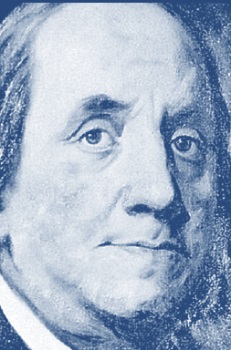
    Benjamin Franklin, first Postmaster General. Source: screen shot from USPS illustrated booklet, "The United States Postal Service: An American History, 1775-2006."
    Benjamin Franklin, first Postmaster General. Source: screen shot from USPS illustrated booklet, “The United States Postal Service: An American History, 1775-2006.”

    There have been cyber attacks on banks, retail outlets, U.S. government sites and sites operated by U.S. government contractors.

    And now the FBI is investigating an attack on the U.S. Postal Service.

    In some ways, the attack might be viewed by Americans as the most personally violative to date. Virtually the whole of America — from the largest of cities to the smallest of towns — has contact with USPS six days a week. In 1775, U.S. founding father Benjamin Franklin was appointed by the Continental Congress as the first postmaster general of the fledgling Democracy. The famous “Pony Express” would not begin for another 85 years.

    Early reports have described the attack as massive, one that has affected 2.9 million USPS customers and hundreds of thousands of USPS employees.

    From a statement by USPS (italics added):

    The Postal Service has recently learned of a cyber security intrusion into some of our information systems. We began investigating this incident as soon as we learned of it, and we are cooperating with the investigation, which is ongoing. The investigation is being led by the Federal Bureau of Investigation and joined by other federal and postal investigatory agencies. The intrusion is limited in scope and all operations of the Postal Service are functioning normally.

    Information potentially compromised in the incident may include personally identifiable information about employees, including names, dates of birth, Social Security numbers, addresses, beginning and end dates of employment, emergency contact information and other information.

    Postal Service transactional revenue systems in Post Offices as well as on usps.com where customers pay for services with credit and debit cards have not been affected by this incident. There is no evidence that any customer credit card information from retail or online purchases such as Click-N-Ship, the Postal Store, PostalOne!, change of address or other services was compromised.

    The intrusion also compromised call center data for customers who contacted the Postal Service Customer Care Center with an inquiry via telephone or e-mail between Jan. 1, 2014, and Aug. 16, 2014. This compromised data consists of names, addresses, telephone numbers, email addresses and other information for those customers who may have provided this information. At this time, we do not believe that potentially affected customers need to take any action as a result of this incident.

    The privacy and security of data entrusted to us is of the utmost importance. We have recently implemented additional security measures designed to improve the security of our information systems, including certain actions this past weekend that caused certain systems to be off-line. We know this caused inconvenience to some of our customers and partners, and we apologize for any disruption.

    We began communicating this morning with our employees about this incident, apologized to them for it, and have let them know that we will be providing them with credit monitoring services for one year at no charge to them. Employees also have the personalized assistance available to them provided by the Human Resources Shared Services Center. We are committed to helping our employees deal with this situation.


  • Self-Described Missouri ‘Sovereign Citizen’ And Associates Brought ‘Fake Criminal Charges’ Against Banker In Fictitious ‘International Environmental Court,’ Authorities Say

    recommendedreading1UPDATED 2:27 P.M. ET U.S.A. The prosecuting attorney for Greene County, Mo., has publicly thanked a People’s Bank manager for “not succumbing to [John F. Gibson’s] attempts to harass and bully his way out of responsibility for his criminal conduct.”

    Gibson, 61, of Willard, Mo., entered a guilty plea Oct. 29 to a felony charge of forgery, the office of Prosecuting Attorney Dan Patterson said.

    The case traces its roots to a circumstance that occurred in December 2010. That’s when Gibson, according to prosecutors, “created a money order on his personal computer falsely stating that it was to be paid by the United States Treasury. Gibson then presented the forged money order to People’s Bank to pay a debt his son owed.

    “Gibson identifies himself as a ‘sovereign citizen’ and claimed that he had authority to create this money order as a United States citizen,” prosecutors said.

    From a statement by prosecutors (italics added):

    While Gibson’s attempt to pass a forged money order may not seem particularly newsworthy, it is important that the public be aware of the sovereign citizen movement and the danger posed by the movement. Sovereign citizens consist of many loosely associated groups that are located throughout the country. Their beliefs vary widely, but they all share the common belief that the government lacks legitimate authority. Many times individuals involved with sovereign citizens groups intentionally act in a manner to subvert government authority and try to harm those who they view as assisting the government by, among other things, filing false liens against them.

    In this case, Gibson and his associates retaliated against the People’s Bank manager for her cooperation with the State by bringing fake criminal charges against her in a fictitious court. A sovereign citizens group in Taney County operating the
    fictitious “International Environmental Court” charged the bank manager with violating environmental laws and issued a finding that the bank manager was guilty. Gibson filed a copy of the bogus documents with the Greene County Circuit Court Clerk’s Office on the day of his guilty plea. That matter is currently under investigation.

    Also see coverage in the Springfield News-Leader.  Link to News-Leader video showing Gibson meeting with a police detective.

  • President Obama To Nominate Loretta Lynch To Replace Eric Holder As Attorney General

    Loretta Lynch. Source: U.S. Attorney's website.
    Loretta Lynch. Source: U.S. Attorney’s website.

    UPDATED 8:42 A.M. ET NOV. 9 U.S.A. Many Americans will have only a vague recollection of her name. Others will not be able to place her at all. But they’ll remember cases with which she has been involved.

    One of those involved the prosecution of New York City police officers, including Justin Volpe, implicated in the brutal and unthinkable attack against Haitian immigrant Abner Louima in 1997. Americans of all races and creeds were infuriated at the news cops had assaulted Louima  — and then hatched a coverup. The assault and the efforts to hide it embarrassed police agencies and prosecutors in New York and across the land because law enforcement is supposed to safeguard and champion civil rights, not violate and dispose of them.

    The White House announced yesterday that President Obama today will nominate Loretta Lynch, a member of the team that brought justice to one of America’s most famous crime victims, to replace Eric Holder as Attorney General of the United States. Holder, in September, announced that he is stepping down. Lynch currently is the U.S. Attorney for the Eastern District of New York. Local residents think of her as the U.S. Attorney for Brooklyn, Queens, Staten Island and Nassau and Suffolk Counties on Long Island.

    If confirmed by the Senate, Lynch will become the first African American female Attorney General in U.S. history. She was born in North Carolina 55 years ago.

    Here are two statements from Lynch that have appeared on the PP Blog:

    “As alleged in the complaint, the defendant came to this country intent on conducting a terrorist attack on U.S. soil and worked with single-minded determination to carry out his plan. The defendant thought he was striking a blow to the American economy. He thought he was directing confederates and fellow believers.”U.S. Attorney Loretta E. Lynch, Eastern District of New York, Oct. 17, 2012

    Read the PP Blog story here.

    In 2011, Lynch’s office became involved in the prosecution of Vincent P. McCrudden. He was accused of threatening to to kill 47 current or former market regulators from the SEC, FINRA and others, and of publishing an “Execution List” on his website. McCrudden, later convicted, allegedly also encouraged others to kill regulators.

    Here is what Lynch said when the charges were brought:

    “In this day and age, there is no such thing as an idle threat. Those who threaten injury or worse to the lives of others will be promptly investigated and vigorously prosecuted.”U.S. Attorney Loretta E. Lynch, Eastern District of New York, Jan. 14, 2011

    McCrudden’s arrest occurred just five days after a gunman in an unrelated incident had opened fire at an Arizona constituent event hosted by U.S. Rep. Gabrielle Giffords. Giffords was critically wounded in the attack. U.S. District Judge John Roll and five others were shot and killed.

    The PP Blog stories below also reference Lynch:

    BULLETIN: FBI Issues Wanted Posters, INTERPOL Issues Red Notices For Alleged International Cybercriminals Who Targeted Americans In Scam That Duped Big-Ticket Shoppers

    BULLETIN: Songkram Roy Shachaisere, Figure In AdSurfDaily Ponzi Story, Indicted With 8 Others In ‘One Of The Largest International Penny Stock Frauds In History’

    BULLETIN: Missing Investment Adviser Named In SEC Civil Complaint Yesterday In Atlanta Has Been Charged Criminally In New York

    BULLETIN: Vincent McCrudden Pleads Guilty To Threatening Regulators, Government Officials

    Accused Scammer And Convicted Felon Eric Aronson, 2 Others Indicted In Alleged Permapave Ponzi Scheme; ‘House Of Cards,’ Top Federal Prosecutor Says

    BULLETIN(S): (1) Missouri Con Man, 72, Charged In Alleged $3.18 Million Ponzi Caper While Jailed In Previous Fraud Scheme; (2) New York Woman Was Running Multiple Ponzi And Fraud Schemes That Gathered More Than $9 Million, Feds Say

    BULLETIN: Feds Say New York Man Was Running $50 Million Real-Estate Ponzi Swindle; Gershon Barkany Arrested By FBI