Blog

  • Earthquake Affects Eastern United States, Parts of Midwest; Temblor Has Reported Preliminary Magnitude Of 5.9; PP Blog’s Floor Started To Shake, But No Apparent Damage

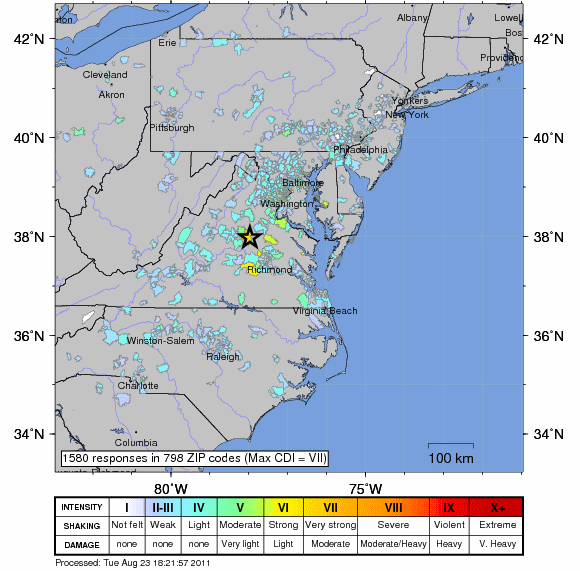
    Source: Preliminary data on where earthquake was felt: U.S. Geological Survey.

    An earthquake with a preliminary magnitude of 5.9 is resulting in reports of shaking from Washington, D.C., southward to North Carolina, northward to New York and westward to Ohio in the Midwest.

    The PP Blog is produced from a location within the shaking zone and uses a service within a second area of the zone to enable publishing. Several minutes ago — with Maddy the Wonder Puppy in our lap as we were typing — our office floor began to shake. This lasted for only a brief time, and did not appear to have caused any structural damage or a loss of critical publishing services.

    Preliminary reports from the U.S. Geological Survey say the quake was centered about 4 miles SSE of Louisa, Va., and approximately 83 miles SW of Washington.


  • UPDATE: HYIP Known As ‘Insectrio’ Has Collapsed; Website Of LibertyReserve- And PerfectMoney-Enabled Scheme Pushed On Ponzi Boards Goes Missing; Both Payment-Processing Firms Referenced In SEC’s Complaint Against Imperia Invest IBC

    The 'Insectrio' HYIP used the logos of the MoneyMakerGroup, TalkGold and DreamTeamMoney Ponzi forums in its sales pitch.

    UPDATE: (UPDATED 11:53 A.M. EDT (U.S.A.) RealScam.com is reporting that the website of a bizarre HYIP known as “Insectrio” will not resolve.

    As the PP Blog reported on May 27, Insectrio was emerging as a darling on the Ponzi boards. The purported “opportunity” even used a graphic showing the logos of TalkGold, MoneyMakerGroup and DreamTeamMoney in its vomitous sales pitch.

    Insectrio advertised an “Egg” plan purported to pay 103 percent after one day, a “Larva” plan purported to pay 120 percent after five days and other plans advertised to pay even more. It was enabled by the offshore processors LibertyReserve and PerfectMoney, both of which are listed in the SEC’s October 2010 complaint against Imperia Invest IBC as processors that allegedly gathered money for Imperia.

    Imperia was accused to stealing millions of dollars from deaf people. Its “program” also was promoted on the Ponzi boards.

    Efforts to popularize Insectrio on the Ponzi boards were beginning at roughly the same time the popularity of Club Asteria was waning on the fraud cesspits. Club Asteria targeted its offer to the world’s poor. It reportedly suspended payouts weeks ago, although some members of the Ponzi boards say they continue to get paid through AlertPay, a Canadian processor.

    Visit RealScam.com.

  • AlertPay Says It Was Targeted In DDoS Attack Last Week; Unclear Who Launched Assault; Site Processed Payments For Club Asteria And Other Collapsed HYIP And Money-Cycler ‘Programs’ Promoted On Ponzi Boards

    UPDATED 9:45 P.M. EDT (U.S.A.) AlertPay, a Canadian payment processor referenced frequently on Ponzi boards such as TalkGold and MoneyMakerGroup, announced on its Blog that it was subjected to a “large” DDoS attack last week that affected customers’ ability to access the site.

    In a Blog post dated Wednesday, the company said the DDoS attack began on Aug. 16.

    “We have measures in place to mitigate such attacks but when the intensity of the attack traffic peaks, said measures can occasionally drop legitimate traffic to the site,” AlertPay said. The firm’s website appears to be loading quickly today.

    No customer information was compromised in the attack, AlertPay said. The firm did not say whether it had identified a suspect in the attack or whether the attackers had provided a reason for targeting the firm.

    “Solving an issue like this unfortunately takes a bit of time to tweak appropriately so please bear with us while we attempt to adjust our filters and improve the situation,” the company said.

    AlertPay processes payments for Club Asteria, according to Club Asteria members who complained when Club Asteria reported earlier this year that it had suspended member cashouts after acknowledging its PayPal account had been frozen. Some Club Asteria members reported on the TalkGold Ponzi board that they continued to be paid through AlertPay after the PayPal freeze and despite the payout suspension Club Asteria had announced.

    Club Asteria traded on the name of the World Bank, targeting a purported Club Asteria “revenue sharing” offer to the world’s poor.

    Promotions for Club Asteria claimed the Virginia-based firm had recruited more than 300,000 members, was gaining thousands of new members each week and was on target to register 1 million members by the end of 2011.  Some Club Asteria members simultaneously were promoting a purported “opportunity” known as Centurion Wealth Circle.

    In short order, Centurion’s website then disappeared amid reports of a Ponzi collapse, but later reappeared. Reports soon surfaced that Centurion intended to implement a feeder cycler known as “The Tornado” to prop up its original, collapsed cycler. Members claimed AlertPay processed payments for both Centurion and “The Tornado.”

    Early reports on the MoneyMakerGroup Ponzi forum about the effectiveness of “The Tornado” in reversing the financial course of Centurion are confusing. Accompanying those reports are confusing reports that a second version of “The Tornado” is coming soon and that Centurion will contact “free” members to make sure they have a chance to pay Centurion for a membership “upgrade” that will permit them to get in on the action.

    Prior to its reappearance after an absence of days, Centurion’s DNS information suggested that the firm’s website had been disabled for spamming.

    Centurion, according to the MoneyMakerGroup post, now says its first implementation of “The Tornado” resulted in “13 HUNDRED POSITIONS earning many members good commissions & bonuses all round.”

    The firm, according to the MoneyMakerGroup post, did not say how much money it gathered in the first use of “The Tornado.”

    But a second implementation of “The Tornado” will be tweaked to make it even more “exciting” than the recently completed first, according to the MoneyMakerGroup post, which was dated today.

    “The next Tornado will run for 24 hours only,” Centurion was quoted in the MoneyMakerGroup post as saying. “It will consist of just one phase at 200%. The most exciting part is [. . .] we will run a a (sic) two way cycler that wont (sic) cross over each other. What this means is when the left-to-right cycler meets the right-to-left cycler they will both start again!!

    “This spreads the profits more evenly and ensures more positions profit – especially the later entries!” Centurion was quoted as saying. “All entries in the Tornado are worth 2 Product Tokens and these will be added to members main account! A Brand NEW Wealth Creation System is coming – Premium Members Only!”

    Earlier this year, AlertPay processed payments for Exotic FX, another program widely promoted on the Ponzi boards. Some Club Asteria members also promoted Exotic, which billed itself a “PRIVATE ASSET HAVEN.”

    Exotic appears to have collapsed in the spring, roughly at the same time Club Asteria was collapsing. The dollar value of Exotic member losses is unclear, and the firm’s website no longer loads. There were reports that AlertPay had blocked Exotic’s access to funds prior to the collapse. Exotic’s domain now resolves to a page that beams ads.

    AlertPay also processed payments for Pathway to Prosperity, which the U.S. Postal Inspection Service described last year as a collapsed $70 million Ponzi scheme that had spread to 120 countries over the Internet and created 40,000 victims.

    Separately, AlertPay’s name is referenced in U.S. Secret Service allegations against AdSurfDaily, an autosurf  company accused of propping itself up by creating at least three other feeder Ponzi schemes after its original Ponzi scheme collapsed in 2007. The ASD scheme allegedly gathered at least $110 million though a series of payment processors. The firm also used Bank of America to collect payments, according to filings by federal prosecutors and a private racketeering lawsuit brought against ASD President Andy Bowdoin by three ASD members in January 2009.

    Hank Needham, a Club Asteria principal, also was an ASD pitchman, according to web records. Club Asteria launched in the aftermath of the Secret Service seizure of tens of millions of dollars from Bowdoin in 2008.

    Like Club Asteria, Centurion Wealth Circle, “The Tornado,” Exotic FX and Pathway To Prosperity, ASD also was promoted on the Ponzi boards.

    It is common on the Ponzi boards for members to promote two or more fraud schemes simultaneously. One Club Asteria member who also promoted Centurion has claimed he participates in 35 forums.

  • BULLETIN: ASDCashGenerator Website Now Returns A Server Error; PP Blog Observed Error After Clicking On Link In 2008 ASD Promo That Featured Photo Of Current Club Asteria Pitchman Hank Needham

    This 2008 ad for AdSurfDaily features an image of Hank Needham and continues to appear online. Last month, an old ASD Cash Generator affiliate link within the ad began to resolve to a page for an opportunity known as Ad Sales Daily International. Today, however, the link is resolving to a page that returns a server error. The reason why was not immediately clear. In a video released last month, Needham identified himself as a principal of Club Asteria. The video was released after Club Asteria, which trades on the name of the World Bank, acknowledged that its PayPal account had been frozen and claimed that it had suspended payouts to members. Club Asteria blamed the developments on members. But some Club Asteria members, including "Ken Russo," have claimed that they continue to be paid by Club Asteria through AlertPay, a Canadian payment processor. "Ken Russo" posts as "DRdave" on the TalkGold Ponzi forum. Talk Gold, which is known for helping HYIPs and other "programs" that promise or suggest preposterous weekly or even daily payouts to members achieve virality on the Internet, moved ClubAsteria to its scam folder last week. The Financial Industry Regulatory Authority (FINRA) said in July 2010 that "HYIPs are old-fashioned Ponzi schemes dressed up for a Web 2.0 world." Some "programs" have tried to distance themselves from the term "HYIP" by declaring themselves "revenue-sharing" programs or using other language tweaks in their offers. Some Club Asteria members have claimed that the firm's program paid out up to 520 percent a year — while preemptively denying Club Asteria was an HYIP or Ponzi scheme and describing it as a revenue-sharing program. Other members described Club Asteria as a "passive" program that provided a weekly return on investment and an income of more than $20,000 a year if members paid only $19.95 a month.

    BULLETIN: (UPDATED 10:16 A.M. EDT (AUG. 22, U.S.A.) As the PP Blog first reported on July 12, the ASDCashGenerator.com domain once controlled by accused Ponzi schemer Andy Bowdoin had returned online and was promoting a mysterious opportunity known as “Ad Sales Daily International.”

    But the ASDCashGenerator website now is throwing a server error and returning this message: “The server encountered an unexpected condition which prevented it from fulfilling the request. The script had an error or it did not produce any output . . .”

    In July, the PP Blog observed that the ASDCashGenerator domain had become operational again after clicking on a link from a 2008 ASD affiliate promotion that featured a photograph of Hank Needham. After his days in 2008 as an ASD pitchman and lead generator, Needham emerged as a principal in Club Asteria.

    Club Asteria, which trades on the name of the World Bank and targets its offer to the world’s poor, announced weeks ago that its PayPal account had been frozen and that it had suspended payouts to members amid a serious cash crunch. The firm blamed the developments on members.

    Claims about Club Asteria are under investigation by Italian regulators.

    Some Club Asteria promoters claimed Club Asteria was a “passive” investment program that paid a return of up to 10 percent a week. The news section of the firm’s website has not been updated since July 21. The last Club Asteria news update occurred nine days after the PP Blog reported that the old ASD Cash Generator URL associated with Needham was sending visitors to the purported Ad Sales Daily International opportunity, which appears to have been an upstart that did not fully launch.

    Precisely when the old ASD Cash Generator domain became operational again is unclear. The domain, however, appears to have directed all old ASD affiliate links to the purported Ad Sales Daily International opportunity, which had its own logo.

    The PP Blog observed the server error on the ASDCashGenerator site today after it again clicked on the old ASDCashGenerator affiliate link in the 2008 ASD promotion that featured Needham’s photograph. On July 12, the same affiliate link returned a pitch page for the mysterious Ad Sales Daily International program.

    Federal prosecutors declined to comment in July on the curious return of the ASDCashGenerator website and the reactivation of the ASDCashGenerator domain name, which previously had been associated with Bowdoin and the alleged ASD Ponzi scheme.  The site had been reregistered in the name of Barbara Cruz.

    Cruz was associated in 2009 with an ASD cheerleading site known as ASD2Day that made confusing claims about the then-Bowdoin controlled ASDCashGenerator site, including a claim that ASD could not be a Ponzi scheme because the script employed by ASD could not be programmed to permit a Ponzi scheme to occur. The ASD2Day site also asserted that U.S. District Judge Rosemary Collyer was on an Aug. 28 [2009] deadline “to determine if the US Attorney General’s case against ASD should move forward.”

    Collyer, who presided over the civil-forfeiture cases involving Bowdoin and ASD Cash Generator and now is presiding over the criminal case against Bowdoin after he was arrested for wire fraud and other crimes in December 2010, was under no such deadline. Although a deadline did exist at the time, it was not one that applied to Collyer.

    Rather, it was a deadline imposed by Collyer on Bowdoin to file pleadings in one of the ASD civil-cases or face the forfeiture of more than $65.8 million seized by the U.S. Secret Service in August 2008. After not having heard from Bowdoin for more than two months, Collyer issued the order to Bowdoin in July 2009.  Bowdoin then asked for a series of delays to comply with the order, saying he was in negotiations with federal prosecutors.

    Collyer ultimately gave Bowdoin until Sept. 14, 2009, to comply with the order. Bowdoin ultimately complied, apparently after his negotiations with prosecutors had broken down.

    A supporter of the ASD2Day cheerleading site for ASD claimed on the PP Blog on Oct. 23, 2009, that Cruz was his mother and that “we where (sic) one of the biggest [ASD] leaders earning over $8,000 daily.”

    Little is known about the purported Ad Sales Daily International “opportunity” that, at least for weeks, was accessible through Bowdoin’s old ASDCashGenerator website that had been reregistered in the name of Cruz. The ASD2Day website, which also had a Cruz tie and promoted Ad Sales Daily International, now is displaying a page that beams advertisements.

    The domain registration for ASD2Day appears to have expired Aug. 19. AdSalesDailyInternational appears not to have a domain registered in its own name.

    Today’s strange developments follow on the heels of a bizarre bid by Bowdoin to raise $500,000 to pay for his criminal defense through a series of “blast” emails to the very individuals he is accused of defrauding: ASD members.

    Bowdoin disses Collyer in a fundraising video released July 26 — without mentioning Collyer by name.

    ASD is known to have ties to so-called “sovereign citizens.”


  • Andy Bowdoin Claims His ‘Army’ Is ‘Fighting Mad’; Bizarre Fundraising Effort By Accused Ponzi Schemer Whose Firm Has Ties To ‘Sovereign Citizens’ Continues

    Thomas A. “Andy” Bowdoin, the accused Florida Ponzi schemer whose firm has ties to “sovereign citizens,” now says his fundraising “Army” is “Fighting Mad and growing fast!”

    Bowdoin, 76, is accused of presiding over a massive Ponzi scheme involving at least $110 million at Quincy-based AdSurfDaily. He has been using military and Biblical references for weeks in an online campaign to raise $500,000 to pay for his criminal defense on charges of wire fraud, securities fraud and selling unregistered securities.

    Formal fundraising for Bowdoin began on July 26, the date upon which he released a video that dissed a federal judge, federal prosecutors and his former defense counsel.

    An email some ASD members received yesterday used a subject line of, “Let’s Fight the Gov. Injustice & Get Your Money Back!” Bowdoin did not explain in the email that the government already has civil judgments totaling about $65.8 million against money he claimed in court affidavits belonged to him, not to members.

    Nor did Bowdoin explain that the government has another civil judgment against ASD-related assets totaling more than $14 million. Why Bowdoin is telling members the money belongs to them is unclear. Bowdoin made similar claims in September 2009, causing the U.S. Secret Service and federal prosecutors to allege to U.S. District Judge Rosemary Collyer that Bowdoin was telling her one story and members another.

    Coinciding with Bowdoin’s email yesterday was an announcement by Rust Consulting Inc., the government-approved claims administrator for ASD victims, that the criminal prosecution against Bowdoin continues.

    Rust, which is managing a restitution pot the government formed from seized assets, pointed ASD members to a website maintained for victims by federal prosecutors in the District of Columbia.

    “The federal criminal prosecution of Andy Bowdoin is ongoing,” Rust said on its website. “The next hearing is scheduled for October 21, 2011. For updates regarding the criminal case, please visit the United States Attorney’s website at http://www.justice.gov/usao/dc/programs/vw/adsurfdaily.html

    Bowdoin claimed an early victory this week, exclaiming in a separate email that “We Are Winning! Over $15,000 Raised So Far!” His purported email “blasts” are going out to the very people he is accused of scamming, and some ASD members have complained that Bowdoin is spamming them.

    The bid by Bowdoin to collect money from ASD members has been marked by delays, including the postponements of two launch dates for the main fundraising website in July and as many as three postponements of the launch of an associated site on Facebook.

    Bowdoin left ASD’s corporate registration lapse in September 2009, even as he was telling members he had exciting plans for the company’s future. ASD members complained prior to the August 2008 seizure that the firm’s website often was inaccessible for days if not offline altogether and that payments to the company were not posted in timely fashion.

    Bowdoin claimed in 2009 that his battle against the government — now entering its fourth year — was inspired by a former Miss America who did not give up despite repeated losing bids to wear the crown.

    Bizarre claims have marked the ASD case, including a claim by two ASD figures that the government owed them $29 TRILLION — more than double the U.S. Gross Domestic Product in 2009 — for its actions against ASD.

    They’d take the money in “silver,” Kenneth Wayne Leaming and Christian Oesch explained.

    Curtis Richmond, another ASD mainstay, claimed Collyer was operating a “Kangaroo Court” and was guilty of “TREASON.”

    Like Bowdoin himself, Richmond sought unsuccessfully to have Collyer removed from the case.

    Leaming and Oesch filed a lawsuit against the government in the U.S. Court of Federal Claims, but a judge dismissed the case last year.

    There have been repeated efforts by some ASD members to dissuade fellow members from filing for restitution through Rust Consulting through a process known as remission. Some of the efforts had a threatening tone.

  • MIRACLE? TalkGold Ponzi Forum Rejects Club Asteria Payment Claim From Serial Scammer ‘Ken Russo’ (AKA ‘DRdave’); CA Thread Moved To ‘Closed Programs And Scam Warnings’ Folder

    Despite efforts by serial cash-gifting, cycler, HYIP and autosurf pitchman “Ken Russo” to prevent the TalkGold Ponzi forum from moving the 16-month-old Club Asteria thread to the scam folder,  TalkGold did exactly that today.

    “Ken Russo,” known as “DRdave” on TalkGold, posted purported proof that he had been paid through Ponzi-friendly AlertPay on Aug. 5 for his Club Asteria efforts. But the “Ken Russo” post — and another TalkGold post from Club Asteria promoter “martyboy” that also claimed an Aug. 5 payout — apparently weren’t enough to persuade even a Ponzi cesspit such as TalkGold that Club Asteria had any cash-sucking and wealth-draining life left in it.

    Club Asteria, which traded on the name of the World Bank and targeted its offer to the world’s poor, announced weeks ago that it had suspended payouts. The announcement of the payout suspension was accompanied by news that claims about Club Asteria were under investigation by Italian authorities and that Club Asteria’s PayPal account had been frozen.

    Like “Ken Russo,” one of Club Asteria’s principals — Hank Needham — promoted AdSurfDaily. ASD was implicated by the U.S. Secret Service in an alleged $110 million international Ponzi scheme in August 2008. ASD President Andy Bowdoin was indicted on charges of wire fraud, securities fraud and selling unregistered securities in December 2010.

    The TalkGold thread on Club Asteria had been active for eight months at the time of the Bowdoin indictment. It survived at TalkGold for another nine months beyond the Bowdoin indictment, but today was moved to the “Closed Programs And Scam Warnings” folder.

    Club Asteria has been said to be scrambling to save itself, perhaps by providing members a chance to sell MLM products. Club Asteria last updated its news page on July 21, nearly a month ago.

    On or about June 28, weeks prior to its most recent news update, Club Asteria announced that it had experienced a dramatic revenue plunge that had been driven by lies told by its members and bad publicity.

    Two days ago, “Ken Russo” announced on TalkGold that he’d received a Club Asteria payment of $256 on Aug. 5.

    “I request a withdrawal once a month and I always receive a payment,” Ken Russo claimed on the forum. “My last withdrawal request was processed in about 48 hours.”

    But in a span of less than a month — between May 30 and June 27 — “Ken Russo” claimed on TalkGold that he had asked for and received three Club Asteria payments, totaling $2,032.

    Even as “Ken Russo” showcased his purported Club Asteria payouts, other members of various Ponzi forums complained about not getting paid.

    Club Asteria asserted it was not an investment program, even though innumerable web promos positioned it as one that paid a “passive” return of up to 10 percent a week.

    Some Club Asteria members have turned their attentions to Centurion Wealth Circle, an AlertPay-enabled cycler that collapsed and is trying to resurrect itself with something called “The Tornado.”

    Club Asteria enthusiast “strosdegoz,” also known as “manolo,” now is pitching Centurion Wealth Circle and “The Tornado” — on the same Ponzi boards in which he pitched Club Asteria.

    TalkGold and MoneyMakerGroup are referenced in federal court filings as places from which Ponzi schemes are promoted.

  • URGENT >> BULLETIN >> MOVING: Triton Financial’s Kurt Barton Found Guilty In Ponzi Scheme That Defrauded People Of Faith, Football Stars, Family Members; Now-Convicted Fraudster May Face Life In Prison; ‘The Con Man Can Be As Brutal As Any Armed Robber,’ FBI Agent Says

    URGENT >> BULLETIN >> MOVING: A jury in Texas has returned dozens of guilty verdicts against Kurt Branham Barton in the Triton Financial LLC case.

    Barton, 44, potentially faces life in prison after being convicted of 17 counts of money laundering, 15 counts of wire fraud, five counts of making false loan statements, one count of securities fraud and one  count of conspiracy to commit wire fraud.

    Members of the Church of Jesus Christ of Latter Day Saints, professional football players, family members and business leaders were among the victims.

    David Akers, a kicker for the San Francisco 49ers, reportedly lost $3.7 million. Ty Detmer, a former Heisman Trophy winner and friend of Barton’s, entrusted more than $1.2 million to him.

    Professional athletes, including Detmer, worked as Triton pitchmen, giving the $50 million, affinity- fraud scheme an air of legitimacy. In 2009, a woman allegedly angry at Barton for scamming her got drunk on wine and took a gun to Triton headquarters to demand a refund.

    U.S. Attorney John E. Murphy said greed was the driving force of the scheme, which affected more than 300 investors.

    “It is regrettable that selfish, greedy individuals devise schemes to make themselves rich by victimizing honest and innocent people, often depriving the victims of their life savings,” Murphy said. “These con artists are usually very accomplished salesmen taking advantage of trusting investors, who unfortunately will never be made whole again.”

    A veteran FBI agent said the scheme was akin to an armed robbery, even though no gun was used to separate victims from their money.

    “The financial assault of Barton’s elaborate scheme has been as devastating to his victims as any physical robbery,” said FBI Special Agent in Charge Cory B. Nelson. “No matter the complexity of the scheme, the con man can be as brutal as any armed robber.”

    The Austin American-Statesman is reporting tonight that Barton was led from the courtroom in shackles after the guilty verdicts were returned and a defense bid to let Barton remain free until his November sentencing date failed.

  • FBI: ‘Sovereign Citizen Domestic Extremists Throughout The United States’ Are Perpetrating Mortgage Fraud And ‘Debt Elimination Schemes’ And ‘Coaching’ Others To Do So

    Is your purported debt coach or foreclosure-relief expert a “sovereign citizen” with an avowed contempt for the U.S. government and banking in general? Is he (or she) actually trying to recruit you into a criminal scheme that only will add to your stress? Is your last disposable dollar going into the pockets of a domestic extremist posing as a patriotic problem-solver and putting you in the position of having to explain incomprehensible legal filings to a judge?

    A new report by the FBI “indicates a continued effort by Sovereign Citizen domestic extremists throughout the United States to perpetrate and train others in the use of debt elimination schemes,” the agency said.

    “Victims pay advance fees to perpetrators espousing themselves as ‘sovereign citizens’ or ‘tax deniers’ who promise to train them in methods to reduce or eliminate their debts,” the agency said.

    “While they also target credit card debt, they are primarily targeting mortgages and commercial loans, unsecured debts, and automobile loans,” the FBI said. “They are involved in coaching people on how to file fraudulent liens, proof of claim, entitlement orders, and other documents to prevent foreclosure and forfeiture of property.”

    The finding is included in a 29-page report on mortgage fraud released this month. Sovereign citizens, though, are hardly the only force driving the fraud, according to the report.

    “Mortgage fraud enables perpetrators to earn high profits through illicit activity that poses a relative low risk for discovery,” the FBI said. “Mortgage fraud perpetrators include licensed/registered and non-licensed/registered mortgage brokers, lenders, appraisers, underwriters, accountants, real estate agents, settlement attorneys, land developers, investors, builders, bank account representatives, and trust account representatives.

    “There have been numerous instances in which various organized criminal groups were involved in mortgage fraud activity,” the FBI said. “Asian, Balkan, Armenian, La Cosa Nostra, Russian, and Eurasian organized crime groups have been linked to various mortgage fraud schemes, such as short sale fraud and loan origination schemes,” the FBI said.

    Read the full FBI report.

  • SIMPLY ‘CHARLOTTE’: Self-Styled Colorado ‘Sovereign Citizen’ Who Sued State Judge In Federal Court After Being Found Guilty Of Traffic Violations Loses Appeal In 10th Circuit

    EDITOR’S NOTE: So-called “sovereign citizens” have made news in the AdSurfDaily Ponzi case and in other court actions across America. One of the hallmarks of sovereign citizens is the pro-se pleading, including pleadings in which the filers do not use their full given names. (Think “Kenneth Wayne” in the ASD case, as opposed to “Kenneth Wayne Leaming” or “Kenneth W. Leaming.”)
    Such pleadings often are impossibly off-point and read like political statements, as opposed to well-reasoned legal arguments grounded in rational thought. Judges across the United States have encountered instances in which sovereign citizens try to impose financial penalties against them, and there even have been cases in which judges were threatened with arrest and civil prosecution under the federal RICO statute for carrying out their public duties.

    The story below is about how pro-se pleader and self-styled sovereign citizen  Charlotte Kempf sought to sue Colorado Judge Karla J. Hansen in federal court for alleged civil-rights violations. It begins with a quotation from a decision released Monday by the U.S. Court of Appeals for the 10th Circuit and concludes with a 21-year-old case-law citation involving a self-described sovereign citizen who received a five-year prison sentence for flouting the law.

    “[W]e note that an individual’s belief that her status as a ‘sovereign citizen puts her beyond the jurisdiction of the courts ‘has no conceivable validity in American law.’” — United States Court of Appeals, Tenth Circuit, Aug. 15, 2011.

    Simply ‘Charlotte’

    Charlotte Kempf was convicted of traffic violations in Colorado’s El Paso County Court. She then filed a civil-rights lawsuit in federal court against Karla J. Hansen, the trial-court judge who imposed fines and a five-day jail sentence, according to court records.

    The filing of the case meant that Hansen had to defend herself in federal court over her judicial decisions in a traffic case in state court because Kempf was displeased with the outcome. The financial costs to the judge and taxpayers were not immediately clear.

    Kempf’s first bid to hold Hansen accountable for alleged improper actions in a traffic case and allegedly conducting a flawed trial failed. U.S. District Judge  Robert E. Blackburn of the District of Colorado ruled last year that “absolute judicial immunity shields Judge Hansen from the plaintiff’s claims.”

    But Kempf, who describes herself as a “sovereign citizen” and sometimes refers to herself simply as “Charlotte,” appealed to the 10th Circuit. Kempf also sometimes refers to herself as “Charlotte of the Kempf family” and “Charlotte d.b.a. CHARLOTTE KEMPF” while rejecting “the use of her surname,” according to court filings.

    A three-judge appeals panel unanimously ruled against Kempf on Monday. The case is styled CHARLOTTE v. HANSEN,” with simply “CHARLOTTE” as the Plaintiff-Appellant, and KARLA J. HANSEN, State Trial Judge” as the Defendant-Appellee.

    “Kempf was convicted in El Paso County court of a number of traffic violations,” the appeals panel said. “She then sued Hansen, the judge who presided over her trial, in federal court. Hansen moved to dismiss Kempf’s complaint, asserting absolute judicial immunity from civil suit. Appealing pro se, Kempf repeats several arguments she asserted below, and advances a number of additional claims in her reply brief, including that she is a ‘sovereign citizen.’”

    In affirming the dismissal of the complaint against Hansen, the appeals panel wrote that it had a message for Kempf.

    “For Kempf’s benefit, however, we note that an individual’s belief that her status as a ‘sovereign citizen’ puts her beyond the jurisdiction of the courts ‘has no conceivable validity in American law.’”

    The panel pointed to United States v. Schneider, 910 F.2d 1569, 1570 (7th Cir. 1990), in its Kempf decision.

    Read U.S. v. Schneider on Leagle.com.

  • BULLETIN: FLORIDA — AGAIN: Man Once Jailed For Trying To Kill Woman He’d Beaten By Stuffing Her In Car Trunk And Drowning Her In Lake Now Accused Of Ponzi Scheme; Michael Scott Segal’s Fraud Caper Allegedly Began 5 Months After Prison Release

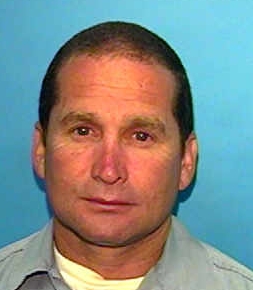
    Michael Scott Segal. Source: Florida Department of Corrections.

    A Florida man started a $1.3 million fraud and Ponzi scheme in November 2008, five months after he was released from prison after serving seven years for trying to kill a woman, according to federal prosecutors and state records.

    Michael Scott Segal, 50, of Miami, was charged in 2001 — when he was 40 — with attempted murder, kidnapping and aggravated battery for beating a woman, stuffing her into the trunk of car and trying to launch the car into a lake.

    The woman survived because a police officer was nearby and observed Segal repeatedly trying to drive the car over a raised embankment and into the lake, according to news accounts. Segal ultimately spent seven years behind bars for his crime.

    State records show that Segal was released from prison on June 1, 2008. Federal prosecutors now say he started a domestic and international fraud scheme five months later — not disclosing his felonious past to investors and referring to himself as “Scott Segal” to keep them from discovering his prison record.

    The scheme involved purported inexpensive consumer goods from China, a purported land-development project in China and a purported “Venezuelan security cargo locks deal,” prosecutors said.

    It operated through a Segal-controlled company known as Bright Jewel Holdings Limited Inc., and some investors were issued bad checks, prosecutors said.

    Segal has been charged with 12 counts of mail and wire fraud.

    Some investors appear to have started a Blog to publicize Segal’s alleged fraud before charges were filed. Supporters of Segal appear to have shown up at the Blog to defend him and his purported honesty, according to web records.

    “This blog is not real,” an apparent defender wrote. “[I]f he has wrote (sic) checks for 60k or others believe me he wont (sic) be out from jail for a long time. So stop writing false things about him and get back to real life and be honest. He is a good man and a very kind person.”

    Another apparent defender commented on a Blog that “writing these types of comments is counterproductive.”

    Andy Bowdoin, another accused Florida Ponzi schemer with a felonious past, initially enjoyed significant support among investors and continues to have some support while awaiting his criminal trial.

    Bowdoin was the head of Quincy-based AdSurfDaily. Federal prosecutors said he ripped off investors in a swindle in Alabama during the 1990s.

    Read April 19, 2001 news account of Segal’s attempted-murder case.


  • UPDATE: International Forex Ponzi Swindler David A. Smith Sentenced To 30 Years In U.S. Jail

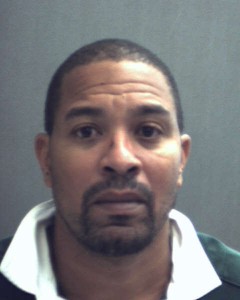
    David A. Smith. Source: Orange County Jail

    David A. Smith, the Ponzi schemer who swindled investors in the Caribbean and Florida in a caper that gathered more than $200 million, has been sentenced to 30 years in a U.S. prison.

    Smith, a Jamaican citizen who was brought to Florida last year to face the U.S. charges, first must serve a sentence of six and one-half years in the Turks and Caicos Islands. His time there will count toward his U.S. sentence, and U.S. federal prosecutors said he’d finish the balance of his U.S. term in the United States.

    His firm was known as OLINT, which stands for Overseas Locket International Corp.