BULLETIN: An Arkansas attorney and businessman caused a bank to collapse with his $47 million Ponzi scheme involving the sale of fraudulent bonds, federal prosecutors said.
Kevin Harold Lewis, 43, of Little Rock, pleaded guilty to a federal charge of bank fraud after waiving indictment, prosecutors said.
First Southern Bank, an FDIC-insured institution, collapsed after learning it had purchased $23 million in fraudulent bonds from Lewis, prosecutors said. At least seven other banks provided loans to Lewis that were collateralized with Lewis’ bogus bonds: Centennial Bank, Citizens, Liberty Bank, First Community, Allied, Simmons and Regions Bank.
Two banks continue to hold bogus bonds from the Lewis scheme: Centennial Bank and Bank of Augusta, prosecutors said.
The Lewis scheme caused losses of $47 million, and Lewis borrowed $4.6 million from First State Bank in Lonoke to gain a controlling interest in First Southern, collateralizing the First State loan with stock from First Southern, the very bank he was defrauding, prosecutors said.
“This case demonstrates that the actions of one individual can have far-reaching, detrimental effects, including the collapse of a financial institution,” said U.S. Attorney Christopher R. Thyer of the Eastern District of Arkansas. “The amount of fraud loss in this case is one of the highest in the history of our office. Fraud, whether of this magnitude or not, cannot be tolerated, and the Department of Justice will aggressively investigate and prosecute such schemes.”
A veteran FBI agent described the Lewis scheme as a brazen one that put multiple institutions in the line of financially injurious fire laid down by a con man.
“With each creation of a fraudulent bond, Mr. Lewis added to his house of cards that ultimately collapsed,” saidValerie Parlave, special agent in charge of the FBI’s Little Rock Field Office.
As the scheme grew, Lewis increased his ownership stake in First Southern to 64.9 percent, but the stake was built virtually entirely on the instruments of deceit, according to prosecutors. To up his stake in the bank from 53 percent to nearly 65 percent, Lewis used proceeds from the sale of fraudulent bonds he sold to First Southern, effectively imperiling the bank further by opening a second fraud front that destabilized the institution.
Based in Batesville, First Southern collapsed in December 2010. The cost to the FDIC insurance fund was estimated at $22.8 million.
At its collapse, First Southern became the 156th bank to fail in the United States in 2010. Only three banks failed in 2007.
Sixty one banks have failed this year in the United States, including three on July 29.
Lewis faces a maximum sentence of 30 years in federal prison. prosecutors said he upped his stake in First Southern through an entity known as PA Alliance Trust.
Late Tuesday, a fundraising email attributed to accused Ponzi schemer Andy Bowdoin of AdSurfDaily acknowledged that an advertised email “Blast” to 77,000 ASD members that was supposed to have occurred on Monday — the third anniversary of the Aug. 1, 2008, ASD-related asset seizures — had not occurred.
What actually occurred, according to the email, was a purported “Soft Launch” to fewer than 500 ASD members. Despite an earlier claim that the “Blast” to 77,000 members would occur Monday, the email backed away from the claim, advising recipients that the “Blast” was “COMING REAL SOON.”
Bowdoin’s fundraising venture itself missed two advertised launch dates, but finally launched on July 26, fours days after Bowdoin’s most recent appearance before a federal judge in the District of Columbia.
Tuesday’s email made various claims about the success of the purported “Soft Launch” so far while at once planting the seed that Bowdoin remains hugely popular among the ASD membership base.
Because the email did not identify the characteristics of the ASD members initially contacted, the purported results — including a result that 110 people among the group of fewer than 500 initially contacted had made donations totaling “Over $4,400” — could be heavily skewed in Bowdoin’s favor. As things stand, the email effectively makes the claim that more than 22 percent of the people initially contacted chose to donate to Bowdoin while suggesting the number could hold across a cross-section of 77,000 ASD members.
The “average” donation was pegged at $40. Averages in such a small sample, however, can be misleading. The email did not reveal the amount of the smallest donation or the largest one.
At the same time, the email does not say whether the “Soft Launch” group consisted of Bowdoin friends, family members, close business associates or people who may be friendly with Bowdoin such as former cheerleaders on the pro-ASD Surf’s Up forum. Nor does it say whether the initial contributors perhaps were predisposed to make a donation out of fear or concern that they had legal exposure because of the size of their downlines, the dollar volume they generated through ASD, the amount of “profits” they have lost as a result of their participation in ASD or the amount of interference they ran for Bowdoin before and after the August 2008 seizures of about $65.8 million from Bowdoin’s personal bank accounts.
Some ASD members have more legal and financial exposure than others and may be predisposed to help Bowdoin raise funds to mount his criminal defense as a means of delaying their own day of reckoning. The government, however, has two civil judgments against ASD-related assets in its favor, and announced nearly three years ago that it was implementing a remissions program through which ASD victims would receive compensation for their losses through seized funds.
Certain purported results suggest that, in the early stages of Bowdoin’s fundraising venture, the initial goal was to let Bowdoin bask in a preordained light and to shape the data to intensify the light. Although much has been made of a purported open rate of 42 percent — meaning that more than four out of 10 members of the initial group contacted opened the fundraising email — such a purportedly glowing statistic could be meaningless. Friends and foes alike are interested in Bowdoin news, and the nature of the initial group’s relationship with Bowdoin has not been revealed.
If Bowdoin and his fundraising helpers already had a “hot” list of sympathizers, early purported success would not be surprising — in the same way that a self-evident result culled from baseball fans asked to name their favorite team while already inside the park of their favorite team would not be surprising.
The PP Blog is experiencing an unusual circumstance that has affected operations throughout the day. Data suggest the circumstance presented itself in the early morning hours.
An engineer is addressing the problem, which has persisted into the evening and appears to involve rogue traffic that is affecting the site in multiple ways.
Yesterday marked the third anniversary of the seizure of tens of millions of dollars from the personal bank accounts of AdSurfDaily President Andy Bowdoin amid allegations he was presiding over an international autosurf Ponzi scheme from a former floral shop in Quincy, Fla.
Although some ASD members had received an email that claimed an “Email Blast to the ASD Members List of Over 77,000” would occur yesterday as part of a bid to raise $500,000 to pay for Bowdoin’s criminal defense, the PP Blog has received no reports that such a “Blast” was sent.
The Blog cannot independently confirm that no “Blast” occurred. If a full or partial “Blast” occurred yesterday, however, the event would have coincided with the third anniversary of the ASD-related asset seizures.
Any spam complaints triggered by a “Blast” yesterday potentially could further cement Aug. 1 as an ignominious date in ASD history. On Aug. 1, 2008 — a date that ironically coincided with a total eclipse of the sun observable in parts of the Northern Hemisphere — federal agents stationed south of the eclipse zone were busy preparing their Ponzi case.
Late in the afternoon of Aug. 1, a strange message signed “ASD Management” appeared on ASD’s website.
“Friday, August 1st 2008 afternoon update,” the message began.
“Upon direction from the U.S. Attorney’s Office in the District of Columbia, ASD will not be able to move funds into company accounts, or out of them. We will work to resolve this problem, and return to normal operation, as soon as we are permitted to do so.”
The ASD case has been nothing but strange since the initial asset seizures on the date it grew dark during daylight hours at the top of the earth. A short time after the initial seizures, Bowdoin compared federal prosecutors and the U.S. Secret Service to “Satan” and the 9/11 terrorists.
UPDATED: 3:07 P.M. EDT (U.S.A.) David R. Lewalski, a Florida man who ran a $30 million Forex Ponzi scheme through a firm known as Botfly LLC, has pleaded guilty in federal court in the Middle District of Florida.
Lewalski, 47, formerly resided in Gainesville. Parts of the Botfly case are reminiscent of the AdSurfDaily case. Public officials and others involved in the case were called names, and Lewalski is alleged to have discussed a plan by which he’d get investors to pay for his defense.
An attorney working for the court-appointed receiver in the Botfly case was called a Nazi and a “c[$%!],” and case filings also include a reference to an “FDLE chick.”
FDLE stands for Florida Department of Law Enforcement. Both the Botfly and ASD cases started with civil complaints, followed by criminal charges.
Like Botfly, ASD also was based in Florida. ASD President Andy Bowdoin now is trying to get members of his autosurf scheme to pony up $500,000 for Bowdoin’s defense. He previously described federal prosecutors and the U.S. Secret Service as “Satan,” and some ASD members described public officials as “Nazis” and “goons.”
Even as Lewalski was under investigation, at least one person gave Lewalski $50,000 to pay for a lawyer — and this occurred after Lewalski had chartered a private Gulfstream IV jet at a cost of $172,744 to fly from the United States to Belgium one day after he was charged civilly in Florida, according to court records.
In court filings, prosecutors argued that Lewalski also sought to tamper with witnesses and told “family members and other potential witnesses to stay quiet and not cooperate with law enforcement.”
Some members of AdSurfDaily advised other members not to fill out victims’ forms and not to file a restitution claim. Bowdoin has blamed his legal predicament on a federal judge, federal prosecutors, his former attorneys and the U.S. Secret Service.
Lewalski faces up to 20 years in federal prison.
Involved in the Botfly investigation were the Financial Fraud Enforcement Task Force, the U.S. Postal Inspection Service, the Florida Office of Financial Regulation and the Florida Office of the Attorney General.
UPDATED 7:42 A.M. EDT (July 31. U.S.A.) Accused Ponzi schemer Andy Bowdoin of Florida-based AdSurfDaily twice has tried to prevent U.S. District Judge Rosemary Collyer of the District of Columbia from presiding over Bowdoin and ASD-related matters. In December 2009, Bowdoin tried to have Collyer disqualified from hearing the civil-forfeiture case in which the U.S. Secret Service had seized $65.8 million from his personal bank accounts. In January 2011, Bowdoin sought a change of venue that would have taken the criminal case away from Collyer and put it in the hands of a federal judge in Florida.
Both of Bowdoin’s bids failed.
Bowdoin, though, now appears to have shifted strategies. Instead of continuing to insist that Collyer should be removed from the case or that the case should be removed from her courtroom in the District of Columbia and assigned to a federal judge in Florida, Bowdoin is now acting as spokesman-in-chief for his own slime machine. He is suggesting in a fundraising video that ASD lost the civil case “because of” Collyer, whom he described as a “single, lone” judge without mentioning her by name — and that ASD members should send him $500,000 to prevent him from losing the criminal case and being sentenced to prison by Collyer.
AndysFundraisingArmy.com — the web venue through which Bowdoin is seeking to raise half a million dollars to pay for his criminal defense — missed two advertised launch dates this month before finally launching late Tuesday (July 26).
The site first advertised a launch date of on or before July 15. Missing that date, it then advertised a July 20 launch, which it also missed. The need for additional “testing” delayed the launch, according to the promos.
The missed launch dates pose an intriguing question: Were the launch dates deliberately postponed because Bowdoin and “Andy’s Army” knew he had made a video in which he slimed Collyer without identifying her by name — and wanted neither Collyer nor the prosecution to know until he was safely out of Washington that he intended to use Collyer as a reason ASD members should fund his criminal defense?
The “Andy’s Army” fundraising video in which Bowdoin claimed he lost the forfeiture case “because of a single, lone judge” was not released until July 26, four days after Bowdoin’s most recent appearance before Collyer.
Because the video appears to have been produced weeks in advance of Bowdoin’s July 22 date in Collyer’s courtroom — and because Bowdoin himself was the “star” of the video and knew what he had said in the fundraising pitch — it is apparent that Bowdoin knew even as he was asking Collyer on July 22 for a six-month continuance that he’d already hatched a scheme by which he’d transfer blame for his legal predicament to Collyer as a means of raising defense funds. In the video, Bowdoin also suggested his former attorneys, federal prosecutors and the U.S. Secret Service were responsible for his legal woes.
Collyer denied the continuance on July 22, according to the case docket. The video debuted four days later.
Bowdoin’s fundraising video made no mention of the fact that the U.S. Court of Appeals had upheld rulings made by Collyer. Indeed, it was hardly the case that a “single, lone judge” had the only say in the forfeiture case. A three-judge panel on the appeals court unanimously ruled against Bowdoin and ASD.
The appeals panel issued its ruling on March 25, 2011 — about three months prior to the production of the fundraising video.
Among Bowdoin’s assertions in the forfeiture case was that he had tricked into releasing his claims to $65.8 million seized by the Secret Service in August 2008. The tricksters, according to Bowdoin, included at least one of his paid attorneys and also federal prosecutors.
“Despite Bowdoin’s protests to the contrary, his own affidavit shows that he understood well that he was receiving no promise in return for relinquishing his claims,” the appeals panel ruled.
“Moreover,” the panel ruled, “far from being negligent, appellants’ attorney had sound reasons for recommending that they cooperate with prosecutors by relinquishing their claims.”
The panel also concluded that “the witnesses AdSurfDaily offered at the evidentiary hearing to prove that it operated a legitimate business contradicted each other . . . and at least one actually undermined the company’s position.”
Bowdoin, however, makes no mention of the appeals-court decision in the fundraising video. Nor does he explain what happened to millions of dollars ASD allegedly had moved offshore — some of it to Canada, some of it to Antigua.
Andy Bowdoin's fundraising video in which he claims ASD lost the forfeiture case because of a "single, lone judge" appears to have been produced as early as June 24. But the video was not released publicly until July 26, four days after Bowdoin appeared before the very judge he had dissed in the video. Two advertised launch dates prior to Bowdoin's July 22 appearance In U.S. District Court for the District of Columbia were postponed.
An email attributed to ASD member Todd Disner was received by some ASD members on July 25, three days after Bowdoin’s Washington appearance but one day before the release of Bowdoin’s fundraising video. (Read story based on email.)
“I talked to Andy the other day,” the email read in part. “He was in Atlanta airport coming home from his hearing in Washington.”
It is unclear whether Disner watched Bowdoin’s fundraising video prior to its public release on July 26. What is clear is that Bowdoin was in Collyer’s courtroom in Washington on July 22 when Bowdoin had the knowledge that, weeks earlier (as early as June 24), he’d taped a fundraising commercial asking ASD members to send him money and painting Collyer as one of the reasons they should pony up $500,000.
The video does not reveal that Collyer, in 2008, granted ASD a two-day evidentiary hearing in the “interests of justice” in which ASD called a series of witnesses to make its case that it was operating lawfully.
Nor does the video reveal that Collyer gave ASD extension after extension to file pleadings and once moved a hearing to a larger courtroom so more ASD members could observe the events unfolding in public.
When ASD members stayed away in droves, Collyer moved the proceedings back to a smaller courtroom — only to be pummeled later by dozens of pro se pleadings from ASD members, including members who accused her of “treason” while championing Bowdoin through the U.S. mail.
While Collyer was deliberating the issues raised by attorneys for Bowdoin and attorneys for the government during the evidentiary hearing, ASD announced on its Breaking News website that it expected a revenue infusion of $200 million from a penny-stock company.
Bowdoin did not address the $200 million claim in his fundraising video, choosing instead to position himself as a victim of a “single, lone” judge — and a victim of his attorneys and federal prosecutors and Secret Service agents who had “crucified” him.
Bowdoin As Christian Flag-Waver
That Bowdoin, a self-styled Christian “money magnet,” is wrapping himself in the American flag and other patriotic symbols on the “Andy’s Army” website adds yet another layer of the absurd to the long-running ASD saga.
On Sept. 11, 2008, the seventh anniversary of the 9/11 attacks, an ASD member released a “prayer” that asked God to strike federal prosecutors dead.
“Pluck them out of their dwelling place!” the prayer commanded. “Root them out of the land of the living! Let evil slay them, and desolation be their lot!”
God, among other things, was asked to “Send divine angelic prophetic assaults against
all diabolical intelligence!” and to “Release divine viruses (emphasis added) to invade satanic databases (emphasis added) and command that they be consumed and destroyed!”
For good measure, God was asked to “Let all satanic manifestations cease and let divine abortive measures and miscarriages occur in satanic wombs and incubators!”
All in all, the “prayer” included 38 specific pleas for ASD/Bowdoin help from God. Included in the 38 was a plea that federal officials be “afflicted and tormented WITHOUT RELIEF.”
“Heavenly Father, you have given us a great work to accomplish! We war for the releasing of our finances and all resources that belong to us! Let those that hold on to our wealth longer than they should be afflicted and tormented WITHOUT RELIEF until they release what rightfully belongs to us!
“We command satan to cough it up! Spit it out! Release it! Loose (sic) it and let it go!!!!”
Nearly three years later, the prayer remains unanswered. It is almost certainly the case that, to Christian members of ASD who value intellectual honesty, the nonanswer was the answer. Indeed, asking God to let evil visit federal employees and cause their deaths is decidedly unChristian. No person with genuine faith in God ever would embrace an appeal for God to slay Bowdoin’s litigation opponents, whom the prayer defined as “satan.”
Since the prayer’s September 2008 debut, Bowdoin has lost two civil forfeiture cases, including one in which he did not even bother to file a claim. Bowdoin-connected assets have been targeted in a third forfeiture case. Meanwhile, he has been sued by some of his own members for racketeering — and, as was the case in the second forfeiture action, he did not bother to enter an immediate defense.
After nearly three years, it has come down to Andy Bowdoin blaming events on Collyer, Bowdoin’s attorneys and the agency that guards the life of the President of the United States while also guarding the U.S. financial infrastructure.
Even as Bowdoin is demonizing the U.S. justice system, he is clinging to his purported faith in God and using it as a reason to send him half a million dollars. Bowdoin, according to Bowdoin, has been attacked by the U.S. government under the direction of “Satan” himself.
Is Bowdoin Risking An Enormous Spam Fine?
In recent hours, some ASD members have received an “Andy’s Army” email (from a Google “gmail” address) that claims 75 people have ponied up “over” $3,000 for Bowdoin so far.
Why the email came from a Google address was unclear. What is clear is that some ASD members once tried to scam Google by encouraging ASD members to commit click fraud against Google. It also is clear that Google’s logo once was used in a promo for ASD that claimed Google and 23 other famous companies were ASD advertisers.
So, Bowdoin’s ASD — which at one time had members in its ranks who tried to defraud Google — apparently now has a subset of members (“andysdefensefund”) who are using Google’s gmail service and the “AndysFundraisingArmy” website to communicate with fundraising prospects. The email includes the name of “Andy Bowdoin” as the sender, and provides an “andysdefensefund” gmail address for return correspondence.
The email claims that an email “blast” will occur Monday “to the ASD Members List of Over 77,000.”
“This coming Monday, we will begin our email blast to the entire ASD Members list, and we will keep blasting this list every day or so, with different emails, until we get the Networking Momentum kicked in and turned on, causing rapid growth in our Fundraising Statistics, which will easily carry us to reaching our Goal” of $500,000, according to the email.
Sending “blasts” and repeating “blasts,” however, could trigger spam complaints if the intended recipients never agreed to receive email from “andysdefensefund” at a gmail address and had agreed only to receive email from ASD itself — not a defense fund or “Andy’s Army.”
The state of Florida dissolved AdSurfDaily Inc. in September 2009 and revoked its registration as a foreign corporation headquartered in Nevada. The state of Nevada also revoked ASD’s corporate registration.
A plan to “blast” 77,000 ASD members leads to questions about whether “andysdefensefund” at a gmail address and “Andy’s Army” are permitted to contact persons with whom they have no business relationship with a commercial proposition to send money to Bowdoin to pay for his defense.
And if ASD no longer is a registered corporation — and records in Florida and Nevada show that it is not — questions can be raised about how a dissolved entity is authorized to contact subscribers who no longer exist because the corporation itself has been dissolved.
Questions also can be raised about whether ASD, a dissolved corporation, is permitted to transfer an asset — its email list — to the “andysdefensefund” and the “Andy’s Army” fundraising entities without the express permission of former ASD members.
Still more horror surfaced in June 2009, when the AdViewGlobal (AVG) autosurf tanked. AVG, whose name is referenced in the 2009 racketeering lawsuit against Bowdoin, had close ties with ASD. The AVG collapse followed on the heels of a series of 200 percent “matching bonus” offers for both enrollees and their sponsors.
“Each separate email in violation of the “CAN-SPAM Act is subject to penalties of up to $16,000,” according to the FTC.
Even a small number of spam complaints triggered by the advertised email “blast” could be costly for Bowdoin if the “andysdefensefund” entity and “Andy’s Army” contact ASD members in unauthorized fashion.
BULLETIN: The website of CenturionWealthCircle.com will not resolve to a server, and DNS data that appears in domain-registration info strongly suggest the site was suspended for spam and abuse.
The DNS data include this string on two nameservers: SUSPENDED-FOR.SPAM-AND-ABUSE.COM.
CenturionWealthCircle.com is a new darling of Ponzi scheme and criminals’ forums such as TalkGold and MoneyMakerGroup, both of which are referenced in federal court filings as places from which Ponzi schemes are promoted.
Some members of Club Asteria, an “opportunity” that traded on the name of the World Bank amid claims that members could experience a “passive” return on investment of 10 percent a week, also promoted Centurion Wealth Circle. Included among the Centurion Wealth Circle promoters was “Ken Russo,” who claimed on TalkGold (as “DRdave”) to have received $2,032 from Club Asteria during the month of June alone.
Club Asteria later suspended member cashouts and claimed its revenue had plunged “dramatically.” The firm, whose website appears to have been registered on or near the same date the AdViewGlobal autosurf suspended cashouts in June 2009, blamed members for its problems.
A photo of Hank Needham, Club Asteria’s purported owner, appears in a promo for ASD Cash Generator, which was implicated by the U.S. Secret Service is an alleged Ponzi scheme that gathered at least $110 million. ASD Cash Generator, also known as AdSurfDaily, was operated by Andy Bowdoin.
Bowdoin was indicted on Ponzi, securities and wire-fraud charges in December 2010. Two days ago — in a video soliciting $500,000 to pay for his criminal defense — Bowdoin blamed lawyers and a federal judge for his legal problems, claiming he had been “crucified” by federal prosecutors and the U.S. Secret Service.
See the Centurion Wealth Circle thread on RealScam.com, an antiscam site.
The operator of a U.S.-based business contacted the PP Blog early this afternoon, saying the enterprise was being swarmed by unwanted traffic from Wellpaid-Bux.com, an apparent paid-to-click “program.”
Wellpaid-Bux uses a hotmail email address and a street address in Argentina, according to registration data, although the “program’s” domain appears to be hosted in the United States. The slow-loading site appears to use shared hosting, which may mean that website performance of other host customers on the same server is suffering.
At one time today, the operator of the U.S. based business said, there were “400 visitors” from Wellpaid-Bux “right now” — and all of the traffic was “junk.” The chief executive officer of the U.S.-based company said the firm never authorized the use of its URL in an advertising rotator or paid-to-click program.
The CEO, who has considerable computer expertise, said it was highly likely that Wellpaid-Bux was wasting the bandwidth of any number of companies by displaying their URLs and sending garbage traffic to the website owners so Wellpaid-Bux members — who apparently pay a fee to be listed by the firm — can theoretically get paid for clicking on “ads.”
Paid-to-click and autosurf sites are infamous for wasting the system resources of third parties, sending junk traffic and passing along the bandwidth costs or the costs of downtime and maintenance to owners of sites that have no ties to the “opportunity” and do not want their companies’ names and brands associated with murky enterprises.
After evaluating the unwanted condition caused by Wellpaid-Bux, the U.S.-based firm wrote .htaccess code to prevent Wellpaid-Bux from displaying an ad for the firm.
Little is known about Wellpaid-Bux, which appears to have been created on Christmas Day 2010. Its precise business model was not immediately clear.
What is clear is the the firm has caught the attention of at least one U.S.-based company that defined the unsolicited traffic it was receiving as maintenance-causing and resource-draining garbage.
A number of firms using a take on the word “bux” have participated in the PTC or autosurf spheres, promising payouts to members who click on “advertisements.” Some of the enterprises have been pure Ponzi schemes.
BULLETIN: The U.S. Federal Trade Commission and the Canadian Competition Bureau have taken down an alleged ‘Yellow Pages” scam in which businesses in the United States and Canada were deceived into paying for unwanted listings in online business directories.
The scam was centered in Europe, authorities from both countries said. The Competition Bureau said it is seeking $11.55 million in penalties.
U.S. targets received unsolicited faxes that included “a name such as YellowPage-Illinois.com, depending upon the location of the organization, and a ‘walking fingers’ logo similar to the one commonly associated with local yellow pages,” the FTC said.
In May 2009, the PP Blog reported that AdViewGlobal (AVG), an autosurf with close ties to Florida-based AdSurfDaily, sought to launch a new website. The launch ultimately failed, but not before it published a “Walking Fingers” logo and advertised the availability of a purported Yellow Pages directory service.
Whether AdViewGlobal was offering the purported service independently or through a vendor never was clear. What was clear is that regulators long have warned the public about Yellow Pages scams, which appear in various forms.
After AVG scrubbed its website launch and launched yet-another new site in the days following the failed launch, the Walking Fingers logo disappeared and the purported listing program that had existed only days earlier never again was referenced. Instead, AVG linked itself to a purported suite of new products and services and a purported bid to save the rain forest.
The appearance of the Walking Fingers logo on the AVG website and the purported directory program led to questions about whether AVG was immersing itself in yet another new scam.
U.S. officials said today that the most recent variant of the Yellow Pages scam operated from from Palma de Mallorca, Spain, and used “corporations based in England and the Netherlands.”
Named defendants in the case were Jan Marks; Yellow Page Marketing B.V., also doing business as Yellow Page B.V. and Yellow Page (Netherlands) B.V.; Yellow Publishing Ltd.; and Yellow Data Services Ltd., the FTC said.
“The FTC is committed to working with its law enforcement colleagues in Canada and around the world to stamp out international schemes that target U.S. consumers,” said David C. Vladeck, director of the FTC’s Bureau of Consumer Protection. “We applaud our friends in Canada for helping to coordinate this international effort.”
A top Canadian official called the alleged Yellow Pages scheme a “cross-border scam.”
“The [Competion] Bureau is pleased that the FTC has joined us in targeting the individuals and companies involved in this cross-border scam,” said Melanie Aitken, Commissioner of Competition. “International collaboration is key to cracking down on multi-jurisdictional scams.”
Churches, nonprofits, doctors’ offices and retailers were targeted in the scam, the FTC said.
The scam was designed to make fax recipients believe they had a preexisting relationship with the defendants and to dupe them into entering purported contracts and paying for listings. The Australian Competition and Consumer Commission also brought an action, the FTC said.
When AVG was claiming in 2009 that it had a listing service, promoters also were pumping purported “matching bonuses” of 200 percent and even 250 percent for autosurf enrollees and their sponsors.
AVG suspended cashouts about a month after displaying a Walking Fingers logo to which the acronym “AVGA” had been added.
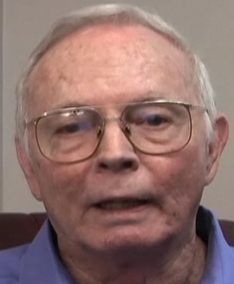
In a fundraising video released last night, ASD President Andy Bowdoin said he was "crucified" by federal prosecutors and the U.S. Secret Service.
EDITOR’S NOTE: This story is based in part on the content of a video released last night in which AdSurfDaily President and accused Ponzi schemer Andy Bowdoin appeared. A group known as “Andy’s Fundraising Army” is seeking to raise at least $500,000 to pay for Bowdoin’s defense on criminal charges related to the alleged ASD Ponzi scheme.
UPDATED 10:23 P.M. EDT (U.S.A.) One day after an AdSurfDaily member claimed that “We plan to go after Akerman [Senterfitt] next,” ASD President Andy Bowdoin — without mentioning the law firm by name — suggested the firm was responsible for his legal troubles.
And Bowdoin — again not naming names — suggested that criminal attorney Stephen Dobson, who is not employed by Akerman Senterfitt, also was to blame. (In court affidavits, Bowdoin has referred to Stephen Dobson as Steven Dobson. The U.S. Court of Appeals already has rejected a claim by Bowdoin that he had been “hoodwinked” by Dobson into releasing his claims to money seized by the Secret Service. At the same time, the appeals court upheld a ruling by U.S. District Judge Rosemary Collyer that Bowdoin “knowingly and voluntarily” released his claims to the money. Bowdoin released the claims while Akerman Senterfitt was his counsel-of-record in the civil-forfeiture case.)
Bowdoin also blamed Collyer — again without naming names — for his predicament. Bowdoin described Collyer as a “single, lone judge.”
“Now, after that law firm (Akerman Senterfitt) finished the civil case, which we lost because of a single, lone judge (Collyer) [who] had the final say in verdict [and] not a jury, they told me they couldn’t represent me in a criminal case, that I needed a criminal attorney because there would be a federal indictment.
“They recommended a law firm in Tallahassee, Florida, so I retained the firm. But the lead attorney in that Tallahassee firm (Dobson) was an ex-U.S. Attorney. And I’m sad to say that he actually sold me out to the federal government,” Bowdoin said.
Bowdoin described Aug. 1, 2008 — the day the U.S. Secret Service seized tens of millions of dollars from his personal bank accounts in a Ponzi scheme probe — as the day “when the government attacked.”
In 2008, Bowdoin referred to the Secret Service and federal prosecutors as “Satan,” and compared the seizure to the 9/11 terrorists attacks. In a video released yesterday, he now claims he was “crucified” and “heavily ridiculed” by two U.S. Attorneys and three Secret Service agents.
Bowdoin said he hoped to raise $500,000 for his legal defense fund, asserting ASD was not a Ponzi scheme. An indictment against Bowdoin was unsealed in November 2010, and he was arrested on Dec. 1, 2010. He is free on bond.
In September 2009, federal prosecutors described Bowdoin as “delusional,” alleging that he was telling ASD members one thing and Collyer another.
Bowdoin — without using Miami-based Akerman Senterfitt’s name in the new video but describing it as a “big law firm with hundreds of attorneys and even offices in Washington, DC” — opined that the firm “didn’t do us any good.”
“So, I learned quickly that big is not always better or good when it comes to hiring a winning law firm,” Bowdoin said.
Collyer issued a key ruling against ASD in November of 2008, saying that ASD had not demonstrated at an evidentiary hearing it requested that it was operating lawfully. Bowdoin submitted to the forfeiture in January 2009, claiming in September 2009 that he had done so in the belief he possibly could avoid a prison sentence.
Sometime in December 2008 or January 2009 — the precise date is unclear — Bowdoin signed a proffer letter and acknowledged the government’s material allegations were all true, according to filings by prosecutors. Bowdoin has acknowledged in his own filings that he gave information against his interests.
Even as Bowdoin was not naming the names of Collyer and his previous counsel in his new video, he was not naming the names of his current counsel in the Ponzi case. Those names (Charles A. Murray and Michael R.N. McDonnell) are available in the public record, Bowdoin said.
Bowdoin sought unsuccessfully in 2009 to have Collyer, who also is hearing the criminal case, removed from the civil case. Earlier this year, Bowdoin sought unsuccessfully to have a judge in the the Northern District of Florida hear the criminal case, as opposed to Collyer.
A recent price increase by our host — along with the higher monthly costs brought on by the DDoS attacks last fall — has put the PP Blog against the wall and its author at the edge of an abyss. These higher costs have coincided with a loss of income.
I am passing the hat reluctantly, but pass it I must.
The price increase, combined with the DDoS attacks, increased the monthly hosting cost more than fourteenfold. I simply do not have the resources to keep the Blog going.
Beyond that, my resources are thin, owing to the general slump in publishing and the general state of the economy.
The donation button appears in this post; I also plan to put it in the sidebar to the right and in other posts that readers may find helpful, meaningful or significant.
 BULLETIN: An Arkansas attorney and businessman caused a bank to collapse with his $47 million Ponzi scheme involving the sale of fraudulent bonds, federal prosecutors said.
 UPDATED 11:23 A.M. EDT (U.S.A.)
 UPDATED: 3:07 P.M. EDT (U.S.A.) David R. Lewalski, a Florida man who ran a $30 million Forex Ponzi scheme through a firm known as Botfly LLC, has pleaded guilty in federal court in the Middle District of Florida.
 BULLETIN: The website of CenturionWealthCircle.com will not resolve to a server, and DNS data that appears in domain-registration info strongly suggest the site was suspended for spam and abuse.
 The operator of a U.S.-based business contacted the PP Blog early this afternoon, saying the enterprise was being swarmed by unwanted traffic from Wellpaid-Bux.com, an apparent paid-to-click “program.”
 BULLETIN: The U.S. Federal Trade Commission and the Canadian Competition Bureau have taken down an alleged ‘Yellow Pages” scam in which businesses in the United States and Canada were deceived into paying for unwanted listings in online business directories.