Blog

  • ATTORNEY GENERAL: ‘Staggering Volume Of Money Being Stolen Online . . . Has The Potential To Threaten . . . Security Of Our Nation . . . [And . . .] Integrity Of Our Government’

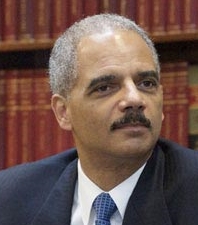
    U.S. Attorney General Eric Holder

    NOTE TO READERS: The headline of this news brief is excerpted from remarks made in Indiana today by U.S. Attorney General Eric Holder.

    Read Holder’s full remarks here.

    The attorney general was speaking at a summit on cybersecurity. His remarks may be the clearest sign yet that the United States is dialing up its efforts to fight online crime because of the threat it poses to national security and economic well-being.

    “In recent years, we’ve seen clear, and alarming, advances in the sophistication and commercialization of crimes involving electronic networks,” Holder said.  “And the staggering volume of money being stolen online today has the potential to threaten not only the security of our nation — but the integrity of our government, the stability of our economy, and the safety of our people.”

    The United States faces threats from criminal syndicates, terrorist organizations, foreign- intelligence groups, malicious intruders and others, Holder said.

  • BULLETIN: Part Of Bo Beckman Fraud Case Devolves Into AdSurfDaily-Like Sideshow; Beckman Filing ‘Bizarre’ Pro Se Claims That Are Hindering Victims From Recovering Assets And Adding Litigation Costs, Receiver Says

    BULLETIN: In 2009, federal prosecutors warned that pro se pleadings by members of Florida-based AdSurfDaily had the potential to slow efforts to provide restitution for victims of the ASD Ponzi scheme.

    Pro se filings by ASD President Andy Bowdoin and dozens of ASD members crowded the court docket for months and delayed the implementation of a remissions program for victims by at least a year, according to records.

    All of the pro se pleadings misrepresented the history of the ASD case and the applicable law — and included claims that only can be described as bizarre. Although a federal judge issued rulings that denied standing to the filers, new pleadings from new nonparties making the same arguments streamed into the courthouse, forcing the judge to address them and issue more orders denying standing to the filers.

    After months of such back-and-forth, each of the filers ultimately was ruled to have no standing, including Bowdoin, who at once was representing himself pro se and impermissibly representing his own corporation pro se.

    Now, R.J. Zayed, the court-appointed receiver in civil litigation related to the Trevor Cook Ponzi scheme in Minnesota, says pro se pleadings by accused scammer Jason Bo-Alan Beckman are slowing the receiver’s recovery efforts and wasting resources set aside for victims.

    In March, the SEC charged Beckman with fraud, identifying him as a “leading” figure in a scheme pulled off by Cook and others. Beckman was accused of raising about $47.3 million of the $194 million gathered in the overall fraud — roughly 25 percent of the overall total.

    Beckman has no standing to challenge the receiver’s authority to act in the interests of victims, Zayed argued. And, the receiver alleged, Beckman has filed pro se documents to delay the sale of properties he owns in Texas, actions that have forced Zayed to respond at the expense of victims of the scheme.

    “The law does not permit individuals in Beckman’s position to challenge the Receiver’s actions precisely to prevent this type of costly motion practice,” Zayed argued, citing a provision of the receivership order that required Beckman to “cooperate with and assist the Receiver.”

    Beckman was ordered that he “shall take no action . . . to hinder, obstruct, or otherwise interfere with the Receiver,” Zayed said.

    “The funds available to the investors decrease every time the Receiver responds to an opposition raised by an entity that lacks standing,” Zayed argued. “Thus, the Receiver suggests that the Court consider prohibiting Mr. Beckman from filing additional documents challenging the Receivership’s disposition of assets.”

    Zayed also claimed Beckman was making untrue and “bizarre” claims at odds with his own actions.

    In February, prior to the formation of the receivership and the filing of a complaint against Beckman by the SEC, Zayed said, Beckman put one of the Texas properties on the market.

    Although Beckman himself tried to sell the property only a few months ago, he is now asserting — despite having no standing to make the claim and the fact Zayed wants to sell the property before it becomes a cash-sucking white elephant on the receivership’s assets — that Zayed should not liquidate the property “during a recession or other time of economic difficulty,” Zayed said.

    Beckman, Zayed said, researched the local market before listing the property in February. After his appointment as receiver in March, Zayed went to Texas to research the market himself.

    “Tellingly, evidence that the Receiver recovered shows that Mr. Beckman sought to place the Paseo del Lago house on the market just weeks before the Court put the Receivership in place,” Zayed argued. “It is bizarre at best for Mr. Beckman to attack the Receiver for doing something he himself had sought to do several months earlier.”

    Moreover, Zayed argued, holding onto the property adds costs.

    “These costs — almost $10,000 in the first three months of operation, even excluding local counsel bills — are substantial, ongoing, and clearly outweigh any argument to wait years or even decades for the real estate market to recover,” Zayed said.

    “It would significantly deplete the limited restitution funds if legal fees and other
    expenses continue to accrue if the Receiver must continue to maintain and manage these properties,” Zayed said. “The Receivership is envisioned as a short-term entity, one that seeks to return value to the investors in the near future. As such, the Receivership does not have the luxury to play the market as Mr. Beckman suggests, even if the monthly maintenance expenses somehow disappeared.”

  • FTC: California Internet Marketer Duped Brits By Making Them Believe He Was Operating In United Kingdom; $500,000 Judgment Entered Against Jaivin Karnani And ‘Balls of Kryptonite’

    UPDATED 12:15 P.M. ET (U.S.A., FEB. 6, 2012) An Internet Marketer based in Calfornia used domains with “co.uk” extensions and duped British customers into believing they were doing business with a firm based in the United Kingdom, the Federal Trade Commison said.

    The actions of Jaivin Karnani and his associated firms, including a company known as “Balls of Kryptonite,” led to Brits being charged “unexpected import duties” while leaving them with worthless warranties.

    When customers tried to cancel their orders, they were hit with “draconian” cancellation and refund fees, the FTC charged.

    Karnani and his firms, which sold cameras, video games and other electronics, have been bit with a $500,000 court judgment. Under the terms of a settlement with the FTC in which the defendants neither admitted nor denied the allegations, the judgment was waived because of the defendants’ professed inability to pay.

    The settlement prohibits Karnani and the companies from engaging in deceptive business practices and from violating the Mail Order Rule. The FTC was assisted in its investigation by the U.K. Office of Fair Trading.

    U.S. investigators brought the action under provisions added to the FTC Act by the U.S. SAFE WEB Act of 2006, the FTC said.

    “SAFE WEB confirmed the agency’s authority to sue U.S.-based wrongdoers who harm consumers abroad, as part of a strategy to prevent the United States from becoming a haven for fraud,” the agency said.

    Read the FTC’s amended complaint. The complaint alleges Karnani also operated a Belize company known as Intrigue Inc., which also did business from California.

    As part of the overall fraud, the FTC said, British customers often did not receive what they ordered — instead receiving undisclosed “substitutions” unintended for sale outside the United States and perhaps even inoperable in the United Kingdom, along with an explanation that the ordered merchandise was out of stock.

    The defendants, though operating from California, used pricing schemes and the name of the Royal Mail as pretexts to advance the scheme, the FTC charged.

  • CFTC Revokes Registrations Of 2 Texas Firms That Operated Forex Ponzi Scheme Targeted At Elderly Churchgoers And Others In At Least 4 States; Firms Used ‘Charts’ Showing Magnificent Earnings And Cherry-Picked Name Of Warren Buffett For Fraud Pitch

    SCREEN SHOT OF SECTION OF OCT. 25, 2010, FINDINGS OF FACT: M25 and M37 used a "chart" projecting magnificent earnings and encouraged investors to roll over their returns by plying them with a purported "renewal bonus." After 11 years, $100,000 would turn into $1 million, according to the firms' claims. The firms also claimed they outperformed legendary investor Warren Buffett, according to uncontested findings of fact by U.S. District Judge Barbara M. G. Lynn. It is common in online fraud schemes for pitchmen to use charts and spreadsheets that promise spectacular returns. It also is common for scammers to trade on the name of Warren Buffett or other well-known business titans as a means showing off, sanitizing fraud schemes and gaining "legitimacy" by osmosis. (Red Emphasis added by PP Blog.)

    EDITOR’S NOTE: The cases against M25 Investments Inc. (M25) and M37 Investments LLC (M37) include elements that are common in online fraud schemes. For starters, the offers were targeted at senior citizens and people of faith. Moreover, the firms relied on PowerPoint presentations and charts that wowed victims with tales of fantastic earnings. The fraud schemes also traded on the name of a celebrity — in this case, famed investor Warren Buffett.

    Much of the information in the story below comes from uncontested findings of fact by a federal judge. Taken line by line, the CFTC’s allegations upon which the judicial findings were based paint a picture of the sort of fraudulent sales pitches that occur daily on the Ponzi forums and personal websites of hucksters. Spreadsheets that show fabulous earnings projections are in common use in the universe of fraudsters, for instance. So is the use of the name of a celebrity or famous company to sanitize a scheme and disarm skeptics.

    And appeals to faith are used daily online to separate Believers from their money.

    Even as this story is being published, members of Club Asteria are doing the sorts of things that led to a two-year legal quagmire for M25 and M37, a litigation nightmare the firms brought on themselves by relying on cheerleaders to drive business, engaging in affinity fraud and then trying to cover it up, according to court filings.

    Club Asteria members, for example, are using spreadsheets and earnings charts to lure prospects. Meanwhile, they’re trading on the name of the World Bank, citing guaranteed earnings, mixing in appeals to charity and using religious imagery to drive business to the Virginia-based firm . . .

    Two Texas firms that targeted a Forex Ponzi scheme at elderly people of faith and others in at least four states have had their registrations revoked by the Commodity Futures Trading Commission.

    The revocations against M25 Investments Inc. (M25) and M37 Investments LLC (M37) of Waxahachie mean that the firms no longer are registered Commodity Trading Advisors. CFTC’s issuance of the revocations follows on the heels of an administrative action the agency filed in February. The CFTC also sued the firms in federal court two years ago, gaining restitution and penalties of more than $16 million.

    An administrative law judge found the firms “unfit for registration” last month. Neither firm contested the administrative action.

    On Oct. 25, 2010, U.S. District Judge Barbara M. G. Lynn found that the firms operated a Ponzi scheme that gained a head of steam by luring customers with promissory notes that guaranteed interest payments of 2 percent a month or 24 percent a year.

    Neither M25 nor M37 contested the findings. Both firms agreed to an issuance of a consent order with specified penalties and a demand for restitution. The firms neither admitted nor denied the allegations.

    Business was solicited online and through word-of-mouth, and clients often did not even know the difference between the two firms, Lynn ruled.

    “Some or all” of the firms’ customers were unqualified investors who did not have the required millions of dollars of assets to become an “eligible contract participant,” the judge ruled.

    Sales pitches for both firms claimed the ability to outperform famed investor Warren Buffett while making ancillary claims the companies could turn $100,000 into $1 million if customers stayed with them for 11 years and plowed their interest payments and annual renewal bonuses of 2 percent back into the companies.

    The scheme gathered about $8 million from about 213 customers, the judge ruled, noting that company “representatives” solicited business after church services and in customers’ homes.

    On March 31, 2009, according to the judge’s uncontested findings of fact, the firms owed customers $7.6 million but had only $3.9 million in total assets. Investors were shielded from the news and issued false account statements showing gains.

  • BULLETIN: Nevin Shapiro, Operator Of $930 Million ‘Grocery’ Ponzi Scheme, Sentenced To 20 Years In Federal Prison; Fraudster ‘Used Other People’s Money To Live A Fantasy Life,’ U.S. Attorney Says

    BULLETIN: Nevin Shapiro, the Florida-based operator of a bizarre “grocery” Ponzi scheme that gathered nearly $1 billion and caused losses approaching $100 million, has been sentenced to 20 years in federal prison.

    Shapiro, 42, was charged by federal prosecutors in New Jersey last year after investigations by the FBI and the IRS. He pleaded guilty in September to one count of securities fraud and one count of money-laundering. All in all, the scheme brought in $930 million, prosecutors said.

    The SEC also sued Shapiro.

    “Nevin Shapiro used other people’s money to live a fantasy life built on false promises to unsuspecting victims,” said U.S. Attorney Paul J. Fishman.

    Elements of the case were brought by the interagency Financial Fraud Enforcement Task Force established by President Obama in November 2009.

    Shapiro operated a company known as Capitol Investments USA Inc., which purported to be in the wholesale grocery business.

    In reality, prosecutors said, Capitol “had virtually no income-generating business” between January 2005 and November 2009 — and Shapiro was running a colossal Ponzi scheme to fund his extravagant personal spending and penchant for gambling.

    At least $5 million evaporated when Shapiro stole from investors to pay illegal sports bets. He stole $26,000 a month to pay the mortgage on his Miami Beach home, which has been appraised at $5 million. Meanwhile, he stole $400,000 to pay for floor seats to watch the Miami Heat play basketball, while stealing $7,250 a month to make payments on his yacht and $4,700 a month to make payments on a leased Mercedes.

    Shapiro also lavished celebrities and sports figures, including college athletes, with gifts, prosecutors said.

    By the time the scheme collapsed and investor losses were totaled, Shapiro had stolen more than $82 million. He was ordered by U.S. District Judge Susan D. Wigenton to make restitution in the amount of $82.6 million.

    Prior to his arrest, he told investors one of the reasons they weren’t getting their payments was that his accountant was “on vacation,” prosecutors said.

  • BULLETIN: Thanh Viet Jeremy Cao Pleads Guilty In False Liens Case; Ponzi Schemer Admits He Filed 22 Bogus Claims For Hundreds Of Millions Of Dollars Against Public Officials

    BULLETIN: Thanh Viet Jeremy Cao, the California Ponzi schemer sentenced last month to 30 years in federal prison and ordered to pay $12.4 million in restitution, has pleaded guilty in a separate fraud case.

    Federal prosecutors in Nevada alleged last year that Cao filed nearly two dozen bogus liens against SEC attorneys, federal judges, federal magistrate judges, a U.S. Attorney, assistant U.S. Attorneys, U.S. Secret Service special agents and special agents of the IRS.

    In an agreement with prosecutors, Cao pleaded guilty today to six counts of filing false liens against public officials. He admitted he filed 22 false liens in all, the Justice Department, the IRS and the Office of the Treasury Inspector General for Tax Administration said.

    The bizarre Cao saga began in 2007, when the SEC named him a defendant in a fraud lawsuit. At the time, Cao also was under criminal investigation by the U.S. Attorney’s Office for the Southern District of California and the Secret Service for the same fraud scheme — and by the IRS for a tax scheme.

    Cao went on a lien-filing spree in retaliation for the various investigations, claiming in Nevada that various public officials were “debtors” who owed him sums ranging from $25 million to $300 million, according to records.

    Sentencing in the false-liens case is scheduled for Sept. 21 in Las Vegas.

    Cao’s 30-year prison sentence in the Ponzi case was one of the longest sentences in the history of federal white-collar prosecutions in Southern California.

    To keep victims in a state of terror, Cao said he knew people who previously had “chopped up” a baby in front of the baby’s parents, and then killed the baby’s mother, prosecutors said.

    Those threats led to an extortion and firearms case brought by the state of California.

    And Cao dialed up the terror by referencing an “assassination” and “fatal car accident.” When he was arrested, “he possessed a loaded firearm, and body armor and other firearms were found at his residence,” prosecutors said.

  • FLORIDA — AGAIN: Postal Inspectors Say Recidivist Felon With 24 Bank Accounts And Undisclosed Criminal History Bilked Investors In $20 Million Scam; James Risher Arrested Before He Could Take Flight To Bermuda

    A recidivist securities felon tied to at least 24 bank accounts had an airline ticket for Bermuda last week but was arrested in Florida  before he could get offshore after scamming investors in a long-running fraud scheme that had gathered $20 million, according to law-enforcement officials.

    Charged in a criminal complaint by the U.S. Postal Inspection Service was James D. Risher, who is associated with firms identified as Jade Asset Group LLC, Managed Capital LLC and Safe Harbor Investments. Risher is accused of mail fraud, wire fraud, money-laundering and conspiracy.

    Risher, 61, of Sanibel, Fla., was released from federal prison on Aug. 14. 2004, according to records. His imprisonment stemmed from 1997 convictions for mail fraud, securities fraud and money-laundering for which he was sentenced to 92 months, with three years’ supervised probation after his release.

    He also has state-level convictions in Georgia from a securities swindle in the early 1990s, according to records.

    The new charges against Risher suggest he embarked on a new swindle in early 2007, perhaps while still on probation for the swindle that led to his 1997 convictions. The FBI, the IRS, the Florida Department of Law Enforcement and the Florida Office of Financial Regulation are assisting postal inspectors in the new probe, which is ongoing.

    One of the keys to Risher’s arrest was a notification that law enforcement received from U.S. Immigration and Customs Enforcement (ICE) that Risher had a plane ticket to fly from North Carolina to Bermuda last week, according to court documents.

    Risher, according to the investigating postal inspector, had been placed on an ICE watch list during the probe and was being monitored for “scheduled travel outside of the country.”

    The investigating postal inspector advised a federal magistrate judge that Risher was a flight risk and may have a bank account in Bermuda, which is located in the Atlantic Ocean about 640 miles from North Carolina. ICE is part of the U.S. Department of Homeland Security.

    Risher had reason to believe  investigators were closing in, according to the postal inspector’s affidavit.

    Fleeced investors were demanding their money, according to the affidavit. Meanwhile, at least two Florida law firms were investigating claims against Risher on behalf of about 150 investors, according to other records.

  • KABOOM! Web-Based Ponzi Pitchman For Legisi Hit With Judgments Totaling More Than $2.5 Million; Receiver Hires Law Firm To Collect Against Matthew J. Gagnon; Scheme Was Promoted On TalkGold, MoneyMakerGroup, Among Others

    Matthew J. Gagnon, an alleged web-based pitchman of Ponzi schemes and Forex frauds, has been hit with judgments totaling more than $2.5 million by the receiver in the Legisi Ponzi and fraud case. Gagnon also was charged separately by the SEC.

    A web-based pitchman for the alleged Legisi Ponzi scheme has been hit with separate court judgments of $1.69 million and $810,000. Meanwhile, the court-appointed receiver in the Legisi case has hired local counsel in Oregon to pursue the judgments against Matthew J. Gagnon and Mazu Publishing Inc.

    Legisi was alleged by the SEC in 2008 to have operated an international Ponzi and fraud scheme that gathered about $72 million from more than 3,000 investors. The scam was promoted on TalkGold, MoneyMakerGroup and other websites, including Gagnon’s Mazu.com.

    MoneyMakerGroup’s name is referenced in federal court filings in the Legisi case — and records show that shills on TalkGold and MoneyMakerGroup sought to sanitize the scheme even as the U.S. Secret Service and the Michigan Office of Financial and Insurance Regulation were using undercover agents to gather evidence about the fraud.

    The judgments against Gagnon and Mazu illustrate the legal and financial nightmares to which forums such as TalkGold and MoneyMakerGroup contribute. Meanwhile, the fact that Legisi was promoted at the forums even as it was under investigation exposes a myth advanced on such forums that investors would know in advance that a government probe of an “opportunity” was under way.

    In this evidence exhibit given to a federal judge prior to the Legisi asset freeze, a Legisi prospect writes the name "Money Maker Group.com" in longhand. The prospect also wrote the name "Matt Gagnon" in longhand and a telephone number for Gagnon.

    At the same time, the judgments against Gagnon destroy the myths that online promoters of securities schemes have no legal exposure and that offers positioned as “private”  insulate promoters from prosecution.

    Indeed, the judgments against Gagnon resulted from litigation brought by Robert D. Gordon, the court-appointed receiver in the Legisi case, in October 2009. The SEC sued Gagnon in May 2010, seven months after Gordon brought his actions.

    Among the SEC’s allegations against Gagnon was that he continued to promote fraud schemes online — even after the Legisi scheme was exposed.

    “Gagnon has been unrelenting in his efforts to raise money from the public through fraudulent, unregistered offerings,” the SEC said in May 2010. “He remains a danger to the investing public.”

    Despite his sales pitches, “Gagnon has never been associated with a registered broker-dealer and has never been registered with the Commission as a broker or dealer or in any other capacity,” the SEC said.

    After the Legisi HYIP fraud, Gagnon transitioned to pushing Forex frauds, the SEC said.

    Gagnon was hit with an asset freeze after the SEC brought its action.

    Records show that Legisi was among a number of “opportunities” that used E-Bullion, which was operated by James Fayed.

    A jury in Los Angeles last week recommended the death penalty for Fayed for arranging the slaying of his estranged wife, Pamela Fayed.

    Federal prosecutors said in December that AdSurfDaily, yet another alleged Ponzi scheme, had an E-Bullion tie. Records show that Gold Quest International, still another Ponzi scheme, also used E-Bullion.


  • URGENT >> BULLETIN >> MOVING: Club Asteria Promoters Blocked By CONSOB, Italian Equivalent Of SEC; Agency Issues Suspension Order; Is ‘Opportunity’ Described As ‘Passive’ Investment Being Targeted At Deaf?

    BULLETIN: UPDATED 7:35 P.M. EDT (U.S.A.) The Commissione Nazionale per le Società e la Borsa (CONSOB), the Italian equivalent of the U.S. Securities and Exchange Commission, is conducting a probe into claims made about Club Asteria and has issued a 90-day suspension order that bars promoters from trading in Italy.

    Club Asteria is based in Virginia. Members say it also conducts business from Hong Kong.

    Promoters in Italy positioned Club Asteria as an investment company that “guaranteed” returns, CONSOB said in preliminary findings.

    CONSOB’s action is detailed in Resolution No. 17790.

    “Asteria Corporation presents itself as a company that ‘started as a U.S. financial company, with the aim of offering . . . humanitarian, educational and financial support in the poorest countries in the world, proposing an investment program with the slogan: ‘How to Invest € 15 After a year and earn 1200 Euros a month and a half for ever!’” the Italian regulator said. (Italian-to-English conversion by Google Translate.)

    The translation uses the phrase “sign language,” giving rise to questions about whether Club Asteria members were targeting the deaf. Investors were encouraged to use PayPal to join.

    Club Asteria reported a problem with its PayPal account last month, claiming promoters had misrepresented the company. A website apparently operated by promoters in Italy appears to have been stripped of content.

    It was not immediately clear if CONSOB removed the content or caused it to be removed from a domain name that ended with an .it extension. The website now carries this message:

    “Il sito à momentaneamente chiuso” — or “The site is temporarily closed.”

    CONSOB said there also were “several” Italian forums in which Club Asteria and the possibility of getting “easy money” from monthly payments were discussed. Word about Club Asteria also was spreading through social-media sites such as Facebook, the regulator said.

    ClubAsteria has been promoted in English on the TalkGold and MoneyMakerGroup forums, both of which are referenced in U.S. court filings as places from which Ponzi schemes are promoted.

    Scores of Club Asteria promoters — not just in Italy — have positioned the firm as a seller of a “passive” investment program that pays $400 a week based on a payment of $19.95 a month.

    Such claims also were made in Italy, CONSOB said.

  • BULLETIN: SEC Charges ‘Sovereign International Group LLC’ Amid Allegations It Funded Ponzi Payout With Cash Infusion From 93-Year-Old Boyfriend Of Accused Fraudster’s Elderly Mother; Arthur Weiss, Ronald Abernathy Charged In Bizarre Scheme That Allegedly Claimed Ownership Of $50 Million Note From ‘U.S. Financial Agency LLC’

    BULLETIN: Two men have been charged by the SEC with fraud in an alleged Ponzi scheme that features allegations that read like fiction — although the agency says they are true.

    Among the SEC’s spectacular claims is that Ponzi payments to investors were made after the 93-year-old boyfriend of the elderly mother of one of the scheme’s accused operators deposited $100,000  with the scheme.  The scheme also traded fraudulently on the names of Major League Baseball, Paul Allen, co-founder of Microsoft, and Ted Turner, founder of CNN.

    Charged in the alleged caper were Ronald Abernathy of Scottsdale, Arizona, and Arthur Weiss of Pasadena, Calif., and Delray Beach, Fla. Also charged was their company: Sovereign International Group LLC (SIG) of Nevada.

    Abernathy is 66; Weiss is 61. Both men were pitchmen for other fraud schemes, and used a deposit made by the elderly boyfriend of Weiss’s elderly mother to make payments to investors in their most recent scheme, the SEC charged.

    At the time the elderly man deposited $100,000 with Weiss and Abernathy, the SEC charged, their bank accounts “collectively held less than $500.”

    The elderly man’s deposit subsequently was appropriated to make $14,450 in Ponzi payments to earlier investors, the SEC charged. All in all, the agency alleged, the scheme gathered $560,000 through the sale of fraudulent promissory notes and investment contracts.

    When investors demanded the return of their funds, Weiss and Abernathy piled on the excuses. Investors were told the men traded in “precious ore concentrate,” along with “multi-million and multi-billion dollar financial instruments” and “fine art,” the SEC charged.

    But it was all just a massive scam — one that included a claim that the men were in “possession of a ‘medium term note’ issued by an entity called ‘U.S. Financial Agency LLC’ with a purported face value” of $50 million, the SEC charged.

    “The U.S. Financial Agency Note is worthless,” the SEC charged.

    Prior to issuing a Summer 2009 update to investors, “Abernathy attempted to deposit the U.S. Financial Agency Note with Banc of America Investment Services,” the SEC charged.  “BAI rejected the worthless U.S. Financial Agency Note.  After this rejection by BAI and despite their knowledge that the U.S. Financial Agency Note was worthless, the Defendants issued the Summer 2009 update which falsely told investors that SIG had been assigned and was in possession of more than $50 million in corporate assets.”

    As payments to investors became further delayed, the men falsely told an investor that they “were in the final stages of a deal that would result in a $15,000,000 to $20,000,000 payout to SIG and that the only thing delaying the payout is the U.S. Department of Homeland Security which was following its standard procedure to make sure that the money involved in the deal had no ties to terrorist organizations or drug trafficking,” the SEC charged.

    “SIG, in its entire existence, has not earned any profits, realized any returns or generated any revenue from any business operations,” the SEC said. “SIG’s only income has consisted of money received from investors.”

    The SIG scam began in “late 2008,” the SEC charged.

    Previous scams in which Abernathy and Weiss were associated were identified by the SEC as “G-5 Global,” “Safevest LLC” and “The Omicron Group LLC.”

    Those three scams led to losses of about $14.7 million, the SEC said.

    Read the SEC complaint.

  • ANOTHER FALSE LIENS CASE: Man Who Asserted ‘Diplomatic Immunity’ Claimed Utah Officials Owed Him $53 TRILLION, Feds Say; Harvey Douglas Goff Charged In 14-Count Indictment After Probe By Joint Terrorism Task Force, IRS

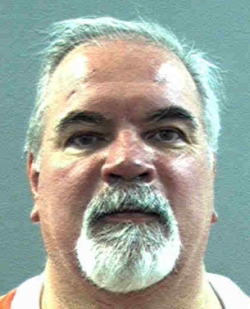
    Harvey Douglas Goff. SOURCE: Weber County (Utah) Sheriff's Office.

    EDITOR’S NOTE: Longtime readers will recall that some members of Florida-based AdSurfDaily engaged in a hectoring campaign against public officials after the U.S. Secret Service seized tens of millions of dollars in the ASD Ponzi case in August 2008. Such actions can lead to serious criminal consequences, as the story below illustrates.

    It has happened again — this time in Utah, this time involving claims for the spectacular sum of more than $53 TRILLION.

    Harvey Douglas Goff, 53, of Ogden, was indicted last month on charges he placed fraudulent liens against Utah public officials after asserting “diplomatic immunity” during a traffic stop last year.

    Goff filed bogus liens against 77 parcels in Weber County “[i]n an apparent effort to create an appearance of indebtedness” to him on the part of officials representing the state of Utah, Weber County, Ogden City and the Ogden Police Department, federal prosecutors said.

    He has been charged in a 14-count indictment with obstruction of justice, impeding internal revenue laws, filing fictitious obligations, attempted mail fraud and using the mail in furtherance of a scheme and artifice to defraud.

    In November 2010, prosecutors said, Goff “mailed” documents styled “Notice of International Commercial Claim Within the Admiralty ab initio Administrative Remedy of Harvey Douglas Goff, Jr., Creditor Secured Party,” prosecutors said. “The documents claimed the agencies contracted to pay more than $53 trillion in damages to Goff. The documents purported to be part of a ‘self-help administrative process’ and asserted that the recipients had 10 days to respond before a ‘default’ resulted.”

    The case in part traces its roots to encounters Goff had with law enforcement during traffic stops, including one in which he asserted “diplomatic immunity,” prosecutors said, charging that Goff also impeded tax laws and filed “false and frivolous documents” involving a judge in an IRS case.

    Goff challenged the jurisdiction of a state-court judge in pro se pleadings, but the court denied his arguments. When Goff failed to appear for a pretrial conference in December 2010, a bench warrant was issued, prosecutors said.

    After Goff was arrested on May 12, he refused to stand before U.S. Magistrate Judge Judge Samuel Alba, which led to an “intervention” by the U.S. Marshals Service, prosecutors said.

    Among other things, Goff refused the appointment of counsel, would not state his name or acknowledge his identity and “claimed he had been kidnapped from his home even though the Court made findings in his presence that federal agents had served a duly authorized search warrant,” prosecutors said.

    Goff was ordered to undergo a mental-health examination, prosecutors said. He potentially faces decades in prison if convicted on all counts.

    The two “fictitious obligation” counts alone carry penalties of up to 25 years in prison, prosecutors said.

    An investigation by the FBI’s Joint Terrorism Task Force and the IRS continues, prosecutors said.