Blog

  • CAUTION FLAG: Murky Website With .Org URL Pops Up Online; OnlineInvestmentBank.org Registration Data Hidden Behind Proxy; Claims Huge Commission And Interest Payments — And Exemptions From U.S. Law

    An apparent investment and banking website whose domain registration is hidden behind a proxy appears to be preparing to accept money from investors worldwide by planting the seed it is a charitable enterprise.

    The website of OnlineInvestmentBank.org appears to have been registered just days ago — on Jan. 21. The site suggests it is both “private” and eager to do business with Americans and others worldwide. Meanwhile, the site suggests it does not have to comply with U.S. law when soliciting U.S. residents.

    Examples of fractured English syntax appear across the site.

    “Don’t post bad vote on Public Forums and at Gold Rating Site without contacting the administrator of our program FIRST,” the site prompts prospects. “Maybe there was a technical problem with your transaction, so please always CLEAR the thing with the administrator.”

    Other examples of the awkward use of the English language appear on the site. At the same time, OnlineInvestmentBank.org  appears to be issuing an appeal for customers to embrace a culture of both spamming and secrecy.

    “You agree that all information, communications, materials coming from onlineinvestmentbank.org are unsolicited and must be kept private, confidential and protected from any disclosure,” the site advises prospects.

    The site also claims an exemption from U.S. law:

    “As a private transaction, this program is exempt from the US Securities Act of 1933, the US Securities Exchange Act of 1934 and the US Investment Company Act of 1940 and all other rules, regulations and amendments thereof,” the site claims. “We are not FDIC insured. We are not a licensed bank or a security firm.”

    Money can be sent to the firm via Liberty Reserve and Perfect Money, according to the website.

    Why a purported investment company and banking firm would use a .org domain was not immediately clear. On its website, OnlineInvestmentBank.org says it is offering a referral program and promises to pay participants “5% of your referrer’s deposit.”

    “Everyone can participate in this program,” the website claims in its FAQ section. “We accept members from any country in the world.”

    The site says it accepts a minimum deposit of “USD 10” and a maximum of “USD 500000.”

    How it purportedly earns money and is able to give away 5 percent of its deposits in the form of commission payments are unclear.

    Bizarrely, the website also appears to claim that customer deposits are locked down, but earn spectacular sums of interest daily — in addition to the 5 percent commissions paid for referrals.

    Under an FAQ that reads, “What do you mean xxx% on your plans? can (sic) I withdrawal (sic) Principal (sic) too?”, the website notes:

    “You can’t withdrawal (sic) your principal money. For example 102% after 1 day is (sic) means 100% which is your principal money plus 2% as profit.”

    And the website also says it favors “e-currencies” because they attract less attention from two notable groups of potential meddlers: “hackers” and “any of the governmental organizations (like tax structures).”

  • BULLETIN: CFTC Conducts Major Sweep; 14 Forex Firms Accused Of Illegal Solicitation Of U.S. Citizens; Actions Filed In New York, Chicago, D.C. And Kansas City

    BULLETIN: The Commodity Futures Trading Commission has gone to federal courts in New York, Chicago, the District of Columbia and Kansas City and simultaneously filed 14 lawsuits against Forex companies to enforce registration requirements and provisions of the Dodd-Frank Act.

    One of the lawsuits — one filed in the District of Columbia against a Nevada company known as Kingdom Forex Trading and Futures Ltd. that claims to be a “legally registered company in Belize and Nevis” — alleges that the firm was not registered with the CFTC but that U.S. customers were instructed to send money via wire and credit/debit cards.  Money also can be sent by Liberty Reserve, a payment processor favored by online financial schemes. Liberty Reserve says it operates from Costa Rica.

    The case against Kingdom Forex has been assigned to U.S. District Judge Rosemary Collyer, the same judge assigned to hear the AdSurfDaily autosurf Ponzi scheme cases.

    This morning, Liberty Reserve was advertising on its website a company known as FXOpen.com. FXOpen.com, according to the CFTC, is the website of a firm known as FXOpen Investments Inc. — yet-another of the defendants sued in the sweep.

    FXOpen is described in the complaint as “company of undisclosed origin” that claims “its headquarters is located at Ebene Heights No. 34, Cybercity Ebene, Mauritius.”

    It also claims to have “worldwide regional offices” in Cairo, Egypt; Paris, France; Kuala Lumpur, Malaysia; Jakarta, Indonesia; Almaty, Kazakhstan; and Moscow, Russia, CFTC charged.

    “FXOpen’s websites, including www.fxopen.com, are hosted on servers” in the United States, CFTC charged in the complaint.

    The firm, whose website would not load this morning when visitors clicked the link at the Liberty Reserve page, is accused of directly soliciting U.S. investors and claiming U.S. law does not apply to it.

    “[I]n the ‘Forum’ section of its website, FXOpen representatives specifically solicit United States residents to open accounts with FXOpen, in part by advertising that potential customers in the United States can escape United States laws and regulations by opening accounts with FXOpen,” CFTC charged.

    “For example, on October 5, 2010, in response to a question regarding whether FXOpen could accept applicants from the United States after October 18, 2010 following recent CFTC rulings, an FXOpen representative answered with a post, stating, ‘Since we don’t have an office in the US, nor are we an affiliate of a US based broker, we are not bound by CFTC rulings. Rest assured we will be able to accept US clients for the foreseeable future unless a legal impediment appears,’” CFTC charged in the complaint.

    All of the companies named defendants in the sweep are accused of “illegally soliciting members of the public to engage in foreign currency (forex) transactions and that they are operating without being registered with the CFTC,” the agency said.

    Among the defendants are domestic and offshore companies.

    Here is the lineup of defendants in what the CFTC described as a major nationwide sweep:

    • EuroForex Development LLC, a Delaware LLC.
    • FIG Solutions Limited Inc., a Delaware corporation.
    • ForInvest, a Delaware corporation.
    • FXOpen Investments Inc., a Delaware LLC.
    • FXPRICE, a Delaware LLC.
    • GIGFX LLC., a Delaware company.
    • InovaTrade. Inc., a company with purported offices in Florida.
    • InstaTrade Corp., d/b/a InstaForex, a British Virgin Islands company.
    • InvesttechFX Technologies. Inc., a Canadian corporation located in Toronto.
    • J&K Futures. Inc., a company with purported offices in California and New York.
    • Kingdom Forex Trading and Futures. Ltd., a Nevada company.
    • Prime Forex LLC, a Delaware LLC.
    • Wall Street Brokers LLC, a Delaware LLC.
    • ZtradeFX LLC, a Connecticut LLC.
  • Federal Judge Grants Asset Freeze In Bizarre Fraud Case That Allegedly Mixed A Forex Ponzi Scheme With A Cash-Gifing And Tax Scheme; Arizona Resident Anthony Eugene Linton Promised Software System Let Customers ‘Profit Every Time’, CFTC Charges

    The assets of an Arizona man who allegedly mixed a Forex Ponzi scheme with a cash-gifting scheme and claimed his software system let clients “profit every time” from trades have been frozen by a federal judge after the CFTC filed an emergency court action.

    Anthony Eugene Linton of Tucson told investors that entrusting their money to him posed “no risk whatsoever” because of his miraculous trading abilities, personal wealth and software system, the CFTC charged.

    Some customers were told their profits under Linton were not taxable because the enterprise was structured as a “tax free gift plan in which participation interests would be considered to be gifts” to Linton’s company, known as “The Private Trading Pool” (PTP).

    Returns from PTP were positioned as “gifts” back to participants, “with the result that the transactions would not have to be disclosed to the Internal Revenue Service . . . and would be considered ‘tax free’ by the IRS,” CFTC charged.

    Linton told one whopper after another, CFTC said.

    “[W]hat little forex trading Linton did using customer funds resulted in consistent net losses, and, in the aggregate, he lost more than 90 percent of the funds traded,” CFTC charged.

    When the scheme began to unravel, CFTC charged, Linton blamed purported “new restrictions” on Forex trading imposed by the U.S. Congress and the National Futures Association (NFA) for his inability to make payments, CFTC charged.

    He also told some investors that a “Permanent Injunction” placed against him in his divorce case prevented him from making payments, CFTC charged.

    The alleged scheme gathered at least $650,000 from at least 19 investors. Some of the funds were used in Ponzi scheme fashion, CFTC said.

    Linton also used customer funds to make his “personal mortgage, car and credit card payments,” CFTC charged.

    At the same time, he used customer funds “to buy and sell items on Ebay and converted large sums of customer funds into cash and stashed it in a safe in his home,” CFTC said.

    U.S. District Judge David C. Bury ordered the asset freeze.

  • Arthur Heffelfinger Sentenced To Prison For Ponzi Scheme That Fleeced 97-Year-Old Widow Suffering From Advanced Dementia

    Arthur Heffelfinger, the Montana man accused criminally under state law last year of operating a pyramid promotional scheme and using clients’ money to sustain a Ponzi scheme that had gathered more than $2 million from at least 20 clients, has been sentenced to prison.

    Heffelfinger, 64, pleaded guilty to Ponzi and theft charges in July 2010. But he disputed a charge of Exploitation of an Older Person, amid allegations he had raided the account of a 97-year-old widow afflicted with advanced dementia. The widow was living out her final days in a nursing home. She died in 2009.

    Prosecutors said she was a nurse who had spent much of her life as a missionary in Africa. Heffelfinger also was accused of ripping off her husband, who had died in 2002 after suffering from Alzheimer’s disease. The husband also was in his 90s.

    Lewis and Clark County District Judge Kathy Seeley found Heffelfinger guilty of the exploitation charge in October 2010. Sentencing on all of the charges to which Heffelfinger either pleaded guilty or was found guilty occurred yesterday.

    Heffelfinger was given concurrent sentences of 10 years each on the pyramid/Ponzi and exploitation charges, and a suspended sentence of 10 years on the theft charge. The Helena Independent Record reported that Heffelfinger, a Vietnam veteran who argued he was driven to commit the crime by post-traumatic stress from the war, could be eligible for parole after serving 30 months of the sentence.

    Prosecutors said Heffelfinger began using the elderly couple’s money to make Ponzi payments just days after receiving it in March 2001, setting aside $36,000 of the couple’s initial deposit of $97,000 for his own use.

    After the woman’s husband died, prosecutors said, Heffelfinger continued to manage money for the woman. Subsequent funds entrusted to him also went to Ponzi payments. Records in the case suggest a tax-refund check for the woman in the amount of $28,776  received in June 2003 and entrusted to Heffelfinger immediately was used to make Ponzi payments and pay Heffelfinger’s bills.

    See earlier story.

  • Patrick H. Rakotonanahary Sentenced To Prison For Forex Scheme That Defrauded Investors In Hawaii And On The U.S. Mainland; Case Was One Of The First Brought By Financial Fraud Enforcement Task Force

    A Florida resident charged with defrauding investors in Hawaii and the U.S. mainland has been sentenced to 90 months in federal prison, ordered to begin serving his sentence immediately and make restitution — and advised he faces deportation to Madagascar upon his release from a U.S. prison.

    The case against Patrick H. Rakotonanahary, 34, of Punta Gorda, was one of the first assembled by President Obama’s Financial Fraud Enforcement Task Force. He was sued civilly by the CFTC and charged criminally by the FBI in March 2010 with 21 counts of wire fraud, amid allegations he operated a forex Ponzi scheme and pocketed $1 million for himself.

    The scheme affected about 100 investors, most of them residents of Hawaii, state and federal investigators said.  The state of Hawaii also sued Rakotonanahary.

    Rakotonanahary operated a company known as Cyber Market Group LLC, which marketed a Forex scheme that purported to pay investors up to 10 percent interest per week. The scheme netted more than $10.2 million.

    Only minimal Forex trading occurred — and the trading that did occur resulted in losses, authorities said. The scheme sustained itself in typical Ponzi fashion.

    See earlier story.

  • NEW HAVEN REGISTER: Feds, State Investigating Cash-Gifting Schemes In Connecticut; Grand Jury Convenes; State AG Called Gifting Programs The Business Of ‘Parasites’ In Statement About ‘The Women’s Gifting Table’ Last Year

    State and federal probes into cash-gifting schemes are under way in Connecticut, the New Haven Register is reporting.

    Investigators are concerned about so-called “Women’s Gifting Tables,” and women soon will be called before a federal grand jury, the newspaper reported.

    Similar probes are under way in Michigan. Seven women were charged with felonies last month, and the Michigan State Police issued a warning that gifting schemes targeting women were sweeping across the state.

    The Connecticut probe began more than a year ago, when then-Attorney General Richard Blumenthal warned that the schemes were illegal and doomed to collapse. Blumenthal is now a member of the U.S. Senate, and the gifting probe now is under the direction of George Jepsen, Connecticut’s new attorney general.

    Gifting is the business of parasites, Blumenthal said in November 2009, noting that “The Women’s Gifting Table” had been positioned as a “sisterhood” in which women provide a $5,000 gift to another woman in the network.

    Participants were encouraged to take cash advances on their credit cards and even to sell their cars and family heirlooms to grease the “pernicious” pyramid-scheme wheel, Blumenthal said.

    “As new women join the group, others move to higher ‘positions’ to eventually receive their own gifts totaling much more than their initial contribution,” Blumental said.

    “Gifting clubs take more than they gift — often ending in economic ruin for participants and their families,” Blumenthal said. “A gifting club is merely a fancy name for an old-fashioned pyramid scheme that bleeds newcomers to feed the parasites above them. Even as I investigate, I urge all Connecticut citizens to immediately reject and report such schemes.

    “Gifting clubs are the gifts that keep on taking,” he continued. “These fraudulent clubs exploit economic catastrophe — urging newcomers to sell their belongings, jeopardize their credit and assume devastating debt with deceptive and dangerous promises. Citizens facing foreclosure and job loss may risk everything for these ominous opportunities.

    “State and federal law prohibit all pyramid schemes because each one is a house of cards doomed to collapse,” Blumenthal said. “Any offer involving upfront money payments with promises of riches, but no product or service, should be considered suspect.”

    In August 2008 — in the days immediately following the seizure of tens of millions of dollars in the AdSurfDaily autosurf Ponzi scheme probe — some ASD members raced to forums in bids to recruit members for emerging cash-gifting schemes.

    Efforts to recruit members for other autosurf and HYIP schemes also continued after the seizure of assets in the ASD case.

    Some gifting schemes are targeted at people of faith and promoted as an opportunity to “pay it forward” to put cash in the hands of participants while positioning yourself also to get a pile of cash. The language of “pay it forward” increasingly has become a marker that a scam is under way.

  • ‘FRAUD CREEP’: The Two-Word Term That Explains How Crime Expands On The Internet To Affect Tens Of Thousands Of Victims At A Time

    EDITOR’S NOTE: Our definition of “fraud creep” — and suggestions on the context in which the term should be applied — appears lower in this story.

    First, some background . . .

    Investigators now are counting victims of massive, web-based fraud schemes tens of thousands at a time. Such scams pose both budgetary and logistical challenges to law enforcement, bankruptcy trustees and court-appointed receivers — and a single scam may take years to unravel. In recent court filings, federal prosecutors said they had amassed 500,000 pages of emails, 100,000 pages of banking records and 5,000 pages of other records as part of the AdSurfDaily Ponzi probe, which began in July 2008. The U.S. Secret Service raided ASD’s headquarters in August 2008.

    The ASD Ponzi scheme, which operated from Florida, may have defrauded 40,000 or more victims while gathering at least $110 million, prosecutors said.

    Meanwhile, in a civil case brought in Utah in October 2010, the SEC said Imperia Invest IBC defrauded more than 14,000 investors worldwide while gathering small sums that ultimately led to a haul of more than $7 million. Among the victims were thousands of deaf investors in the United States.

    Imperia claimed until late 2009 to be located in the Bahamas, but the Bahamian address was “fictitious,” the SEC said, adding that Imperia later claimed to be located in Vanuatu.

    But Imperia was “not registered to do business in Vanuatu and the address listed on its website appears also to be fictitious,” the SEC said.

    Despite the fact Imperia gathered money from thousands of Americans, “[n]either Imperia nor its securities are registered with the Securities and Exchange Commission,” the SEC said. “Imperia is not licensed or registered with the Commission, with any state, or with any Self Regulatory Organization.”

    In a separate civil case brought in Nevada last month, the FTC accused Utah resident Jeremy Johnson, I Works Inc. and other companies of orchestrating a massive, continuity-billing scheme that used 51 shell companies, maildrops and “straw-figures” as company officers “to keep the scam going.”

    The complaint names as defendants 10 individuals, 10 corporations and the 51 shell companies. Citing court documents, the Salt Lake Tribune reported that Johnson’s companies allegedly took in more than $350 million and ensnared 15,000 consumers a day at the height of the scheme.

    Customers were lured into purchasing “trial” memberships for “bogus government-grant and money-making schemes,” and then were “repeatedly” charged monthly fees “for these and other memberships that they never signed up for,” the FTC said.

    “[T]his scheme has caused hundreds of thousands of consumers to seek chargebacks — reversals of charges to their credit cards or debits to their banks accounts,” the FTC said.

    “The high number of chargebacks has landed the defendants in VISA’s and MasterCard’s chargeback monitoring programs, resulted in millions of dollars in fines for excessive chargebacks, and prevented the defendants from getting access to the credit card and debit card billing systems using their own names,” the FTC said.

    “To keep the scam going, the defendants tricked banks into giving them continued access to these billing systems by creating 51 shell companies with figurehead officers, and by providing the banks with phony ‘clean’ versions of their websites.”

    Like ASD’s Andy Bowdoin, Johnson denies wrongdoing.

    Making Sense Of It All

    Today the PP Blog offers a two-word term, contexts in which we believe the term applies and proposed definitions as a means of educating the public by describing a complex process of organized, international theft and reducing it to its essence. Understanding how online schemes proliferate — and the emotions they trade on and “scam signals” they send — may help consumers protect themselves from the fraudsters.

    fraud creep [frawd kreep]

    1. Principal definition: The tendency of a web-based financial crime undetected by law enforcement to expand across the Internet until it achieves critical mass, reaches the limits of a criminal organization’s ability to manage and forces investigators to respond. Such a crime may creep (advance slowly) to ultimately create thousands or even tens of thousands of victims globally.

    2. Associated definition: A criminal business model (fraud-creep enterprise) that includes a suggestion of exceptional earnings and generous recruiting commissions and the use of tailored messages that appeal to greed, envy, despair or anger. A fraud-creep enterprise also may be characterized by images of wholesome or enticing amenities designed to attract prospects to an illicit scheme whose purpose is hidden or undisclosed.

    3. Associated definition: A form of deceit (fraud-creep plan) employed by hucksters, particularly on the Internet, characterized by efforts to popularize an illicit pursuit by withholding critical information and demonizing market regulators. Profits are reaped by tapping into disillusionment and despair and creating a bogeyman or figure of blame to rationalize participation in a dubious or illegal enterprise. The bogeyman or figure of blame often may be the government, a branch of government, a law-enforcement or regulatory agency or government employee.

    4. Associated definition: A particular instance of such deceit in which an appeal is made to recruit holders of a particular political philosophy into a scam. Politicians and other public figures may be demonized in this form of fraud creep, which may include vicious name-calling or passive-aggressive slime. Images of success may be juxtaposed against images of people or entities cast as barriers to success. This form of fraud creep also may be accompanied by an effort to create marketplace sympathy and to sanitize and expand a fraud scheme by suggesting evil forces are seeking to prevent investors and eager entrepreneurs from creating wealth by erecting barriers or denying them access to the marketplace.

    5. Associated definition: One who practices fraud creep — i.e., a fraud creep.

    Usage example: As the economy struggles and mortgage foreclosures pile up, law-enforcement agencies nationwide are seeing more and more examples of fraud creep in which criminals succeeded in  making Internet scams go “viral” by luring thousands of prospects with images of amenities they’ll purportedly enjoy by registering for a program and sending money.

    Usage example: The ASD fraud-creep and Ponzi scheme gradually expanded to fleece more than 40,000 investors out of at least $110 million, investigators said, noting that participants were lured by the promise that they would be paid $5,000 if a family member or friend they recruited spent $50,000 on “advertising.”

    Usage example: Although Smith routinely bemoaned “Washington” while showing a video of himself behind the wheel of a Maserati parked outside a mansion in a driveway lined by exotic flowers as a groundskeeper toiled nearby, authorities say the investigation uncovered a classic case of fraud creep: Smith simply decided that registering with the SEC was for the “fools who don’t understand the Constitution.” The Maserati, authorities said, was a day rental — and Smith paid the groundskeeper $100 to let him film the driveway and mansion scenes on a Saturday morning when the owners were on the golf course.

    Usage example: The stage was set for fraud creep, authorities said, when the accused huckster — a recidivist who did not disclose his previous conviction for securities fraud in a $20 million scheme  — persuaded  unsophisticated investors that the FBI was forcing the best companies to move offshore and that the SEC and IRS were trying to destroy the middle class.

    Usage example: Authorities began to suspect fraud creep when Jones incongruously explained to investors that the United States was turning into both a “Nazi” and a “Socialist” state and making it impossible for honest “Main Street Capitalists to deliver the American Dream and do what the market does best: get poor people and illegals off Food Stamps and turn them into productive citizens.”  Although Jones, a U.S. resident, frequently talked about his “attorney” and the efforts he had undertaken to ensure his offshore company complied with all laws and regulations,  he refused to provide prospects the name of the attorney, claiming that a previous attorney had been hounded by callers who had sought to verify claims about the program.

    Usage example: Federal agents announced the arrest of yet-another alleged fraud creep today, saying the Florida man was either running or participating in multiple fraud-creep schemes, including autosurfs, HYIPs and penny-stock scams.

    Usage example: Fraud creeps on the fraud-creep forums were urging their marks not to file complaints with regulators or law enforcement — and not to contact the offshore payment processors that had processed all the Ponzi payments for the suddenly defunct HYIP. One forum fraud creep opined that the government would steal any remaining money. Another issued a dire warning that a receiver was sure to be appointed by the court and that the “greedy” receiver and “brain-dead” judge would conspire against the participants. Yet-another fraud creep ventured that the government would use the remaining fraud proceeds to help it finance its own Ponzi scheme: Social Security.

    Usage example: In court documents, federal authorities said fraud-creep forums such as TalkGold, MoneyMakerGroup and ASAMonitor were helping fraud creeps and fraud-creep schemes steal millions of dollars globally.

  • DEVELOPING STORY: Device Found Monday In Backpack Along Martin Luther King Jr. Parade Route In Spokane Was A Bomb ‘Capable Of Inflicting Multiple Casualties,’ FBI Says

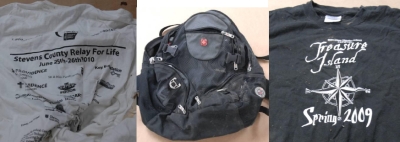
    This backpack, which contained an explosive device, was found along the route of the Martin Luther King Jr. parade in Spokane on Monday. Articles of clothing (pictured below) helped conceal the bomb, the FBI said.

    On Monday, America celebrated the national holiday commemorating the life and legacy of community service of slain civil-rights leader Martin Luther King Jr. with events in city after city. King, a recipient of the Nobel Peace Prize, was assassinated in Memphis in 1968.

    He had become an international figure in 1963, the year hundreds of thousands of Americans streamed to Washington in late August and heard what became known as the “I Have a Dream” speech. The speech was delivered from the steps of the Lincoln Memorial.

    “I have a dream that my four little children will one day live in a nation where they will not be judged by the color of their skin, but by the content of their character,” King intoned. “I have a dream that one day on the red hills of Georgia the sons of former slaves and the sons of former slave owners will be able to sit down together at a table of brotherhood.”

    In Washington on Monday, President Obama encouraged Americans to give back to their communities to honor King’s legacy.

    “Martin Luther King Jr. lived his life for others, dedicating his work to ensuring equal opportunity, freedom, and justice for all,” Obama said. “I encourage every American to observe this holiday in honor of Dr. King’s selfless legacy by volunteering in their own communities and by dedicating time each day to bettering the lives of those around us.”

    U.S. Attorney General Eric Holder, speaking at the King Center in Atlanta on Monday, recalled King’s “Mountantop” speech delivered on the eve of his death. King’s speech proved to be prophetic.

    “And then I got to Memphis,” King intoned more than 40 years ago. “And some began to say the threats, or talk about the threats that were out. What would happen to me from some of our sick white brothers?

    “Well, I don’t know what will happen now,” King continued. “We’ve got some difficult days ahead. But it doesn’t matter with me now. Because I’ve been to the mountaintop. And I don’t mind. Like anybody, I would like to live — a long life; longevity has its place. But I’m not concerned about that now. I just want to do God’s will. And He’s allowed me to go up to the mountain. And I’ve looked over. And I’ve seen the Promised Land. I may not get there with you. But I want you to know tonight, that we, as a people, will get to the Promised Land. So I’m happy, tonight. I’m not worried about anything. I’m not fearing any man. Mine eyes have seen the glory of the coming of the Lord.

    King was shot and killed the next day.

    Holder told the Atlanta gathering that “our long struggle to end suffering and to eradicate violence goes on.”

    And the attorney general referenced the Jan. 8 shootings in Arizona that killed U.S. District Judge John Roll and five others, including a nine-year-old girl. Rep. Gabrielle Giffords was critically wounded in the attack. She was shot in the head at close range. Eighteen others also were shot.

    “As we continue to mourn those recently lost, and to pray for those now in need of healing and comfort, let us also recommit ourselves to carrying on Dr. King’s work and to honoring the values that were at the center of his life: tolerance; nonviolence; compassion; love; and – above all – justice,” Holder remarked in Atlanta.

    The attorney general delivered his remarks on Monday morning in the Eastern time zone of the United States.

    On the same day — in the Pacific Northwest, the FBI now says — someone planted a bomb in a backpack along the Martin Luther King Jr. parade route in Spokane, Wash.

    These articles of clothing were found inside the backpack, which contained a bomb, the FBI said.

    “At approximately 9:25 a.m. PST on Monday, 1/17/2011, a suspicious backpack was discovered on a bench at the southeast corner of N. Washington Street and W. Main Avenue in downtown Spokane,” the FBI said. “The Spokane Explosives Disposal Unit was notified and safely neutralized the device. Subsequent preliminary analysis revealed the backpack contained a potentially deadly destructive device, likely capable of inflicting multiple casualties.”

    The agency is treating the incident as a case of domestic terrorism. It noted that the suspect should be considered armed and dangerous.

    “As a part of this ongoing investigation, the FBI is seeking any information regarding the identity of the person or persons that may have been seen with this backpack from approximately 8:00 a.m. to 9:25 a.m. on Monday, 1/17/2011,” the FBI said. “If anyone has any information regarding this incident, they are requested to immediately contact the FBI. In addition, if anyone took photographs or video in the area of N. Washington Street and W. Main Avenue from approximately 8:00 a.m. to 11:00 a.m., they are also requested to contact the FBI as soon as possible.”

    Here is the phone number: 206-622-0460.

    A bomb was found outside a federal courthouse in Spokane in March 2010.

    Earlier this month — on Jan. 12, six days prior to the Tucson shootings — federal prosecutors charged a California man with threatening to kill Rep. Jim McDermott of Washington state.

    Charles Turner Habermann, 32, of Palm Springs, was charged with making “two expletive-laden, threatening phone calls” to McDermott’s Seattle office on Dec. 9, 2010.

    “In the first call recorded on the office answering system, Habermann threatens to kill Congressman McDermott, his friends and family,” the FBI said. “In the second call Habermann says he will hire someone to put Congressman McDermott ‘in the trash.’”

    Last week, the FBI arrested a New Jersey man amid allegations he threatened to kill 47 federal regulators. Vincent P. McCrudden, 49, was accused of creating an “execution list.”

    Yesterday in suburban Los Angeles, two students were shot when a gun concealed in a backpack discharged inside Gardena High School.

  • BULLETIN: At Least 2 People Shot At Gardena High School Near Los Angeles; Teen Taken Into Custody On Live TV As Confusing Scene Plays Out

    At least two people have been shot at Gardena High School near Los Angeles, KTLA is reporting.

    Early reports from a host of media sources were wildly conflicting. The first reports described a situation in which a gunman who had shot three people had either fled the scene or was holed up inside a classroom, putting the public, students, teachers and police at continued risk.

    Later reports suggested the shootings were accidental and occurred when a gun that had been inside a backpack under the control of a 16-year-old student discharged inside the school.

    How a gun got inside the school undetected, why a backpack would be used to conceal a gun and why a high school sophomore would be in possession of a gun on school property were not immediately clear. The 16-year-old student was taken into custody as the confusing drama played out on live TV.

    The conditions of the victims were not immediately known. Ambulances were at the scene. One student was reported to have suffered a gunshot wound to the head. A second student was reported to have been grazed by the same bullet.

    Prior to the detention of the student, heavily armed police were seen with weapons drawn outside a building on the campus. Gardena, a city of about 57,700, is in Los Angeles County. Gardena High School is part of the Los Angeles Unified School District.

    A police officer, perhaps fearing that an adult seen exiting a room was standing in the line of fire of a shooter, was seen pulling the adult away from a doorway. The adult, described as a teacher, tumbled to the ground.

    A short time later students were seen streaming from the room. The scene was confusing because some of the students were seen holding their hands in the air, an image that suggested a gunman could have been forcing them them to leave the room at gunpoint and force them to walk as hostages in front of police.

    NOTE: This dramatic video from KTLA shows the scene as it evolved, including the teacher being pulled from the doorway by an officer as armed police and a sniper stood nearby — and students coming out with their hands up. The scene originally was broadcast live.

  • Two Days Before Remissions Deadline, ASD Members Receive Yet-Another Confusing, Highly Questionable Email That Suggests Victims Seeking Restitution Should Tell Administrator That Program Was Not An Investment

    Andy Bowdoin.

    Some AdSurfDaily members have received an email that appears to be attributed in part to Sara Mattoon, the embattled autosurf firm’s former spokeswoman. The most recent correspondence fractures facts, suggests the government has no credible witnesses or evidence in its wire-fraud and securities-fraud case against ASD President Andy Bowdoin and implies suggestions given to recipients are a legal “opinion” from a qualified expert.

    The date upon which the email was sent was unclear. At least one former ASD member reported receiving a copy of it today.

    Like previous emails, the content of the email appears to be a compendium in which Mattoon and perhaps others assembled information and passed it along as though it were fact.

    Among the claims are that federal prosecutors are creating victims out of thin air, that the government is engaging in trickery, that a pyramid-scheme case filed against ASD in Florida “was decided in ASD’s” favor, that “the government is in a very bad position to win a jury trial,” that prosecutors have “have no material tangible evidence and no credible witnesses to prove their case” — and that the remissions program is a “scam.”

    Contrary to the claims in the email, the pyramid case brought by the state of Florida was not decided in ASD’s favor. The case did not go to trial, and no judge ruled that the government’s case was fatally flawed. Moreover, no judgment was issued in ASD’s favor.

    State prosecutors said they dismissed the Florida civil case because two final orders of forfeiture already had been entered by U.S. District Judge Rosemary Collyer in civil litigation in federal court and that victims had a compensation remedy through the federal remissions program.

    The deadline for filing a claim through Rust Consulting Inc. — the official claims administrator — is Jan. 19. There have been repeated attempts by some ASD members to discredit Rust, which is under contract with the U.S. government to administer the program.

    A list of Florida victims already had been submitted to Rust, Florida prosecutors said. In October 2010, Florida confirmed it had dismissed the state-level pyramid case. Two months later, in December 2010, Bowdoin was charged criminally under federal law with wire fraud, securities fraud and selling unregistered securities. An investigation into his business practices has been under way since July 2008.

    Regardless, the most recent email suggests that government evil is afoot.

    “And we all need to be very pragmatic about this,” the email read in part, citing a purported “opinion” without providing the source of the opinion. “We purchased advertising legitimately. … Now it’ll be up to a real jury, and if ASD/Andy have lawyers that are even remotely competent, the verdict will be not guilty.”

    Bowdoin was arrested Dec. 1. Federal prosecutors accused him of operating a Ponzi scheme that had gathered at least $110 million. Bowdoin, 76, is free on bail.

    In the email, the criminal charges against him were pooh-poohed, apparently by the author of the “opinion.”

    “But the bottom line on all of this is twofold,” the email read. “First, the government is in a very bad position to win a jury trial – they have no material tangible evidence and no credible witnesses to prove their case. Second – all these ‘scams’ including the Rust group are ploys, most likely instigated by the government to try and turn up ‘witnesses’ who will say they have been victims of investment fraud. But those who will say that can be torn apart by the ‘Terms and Conditions’ they agreed to during Defense cross-examination. The other witnesses – the government agents (or informers) can also be torn apart during cross examination. The vote by the jury must be unanimous in a felony case BEYOND A REASONABLE DOUBT and the government knows that they simply don’t have the evidence or the witnesses to get by that.”

    Repeated claims have been made by some ASD members for months that the government lacked both witnesses and evidence. Despite the claims, the government announced last week in court filings that it had gathered at least 500,000 pages of emails and at least 100,000 pages of bank records as part of the probe.

    Meanwhile, prosecutors said the U.S. Secret Service had identified at least 40,000 potential ASD victims.

    Like a previous email, the most recent email also suggested that ASD members should use the remissions form to claim ASD was not an investment program. Such an approach potentially could result in a situation in which participants disqualified themselves from receiving restitution from assets seized in the case by the U.S. Secret Service.

    Prosecutors alleged that ASD was an investment business masked as an advertising company.

    Even so, some ASD members are sticking with an assertion that ASD was a legitimate advertising firm.

    “If you feel that you want to fill it out, [the claims form] must be mailed to [Rust] by 1/19/11,” the email read. “If you do choose to fill it out, then where your signature would be, you may want to write the words ‘See Addendum.’ Then attach a statement something like this (in your own words):

    ‘I am very clear that this was not an investment and that I was purchasing advertising. And, since the government shut down my advertising company and I therefore did not get the advertising I paid for, I would like to get my advertising money back from whomever is holding it now.’

    “Sign it and send it in with the forms supplied by Rust,” the email advised recipients.

    At the same time, the email solicited prayers and cautioned against working with AnShell Financial Services, a company that says it is helping some ASD members fill out the remissions form for a fee.

    Rust, the official claims administrator, has specifically disclaimed any affiliation with AnShell and has urged caution in dealing with the firm, which is approved neither by Rust nor the government.

    Some ASD members appear to be as paranoid about the work AnShell is doing for certain members as they are about the government and Rust.

    “The form you received from Sheldon Drobny, CPA/AnShell Financial Services is someone who was retained by a group of ASD/Golden Panda members to get their money back from the government,” the most recent email read. “This is the company that is holding the conference calls. If you feel you want to participate, be careful here also. Use the same attitude there: you didn’t make an investment; you purchased advertising. There is danger that this could be used against ASD also. Pray about it and decide for yourself if you want to participate.”

    The email ended by citing the name “Sara” as the sender.

    “That’s all I have for now,” the email concluded. “I am still very swamped caring for my husband and I am not a lawyer so I can’t really advise you further and answer any questions. Hope this is helpful. I still haven’t been able to process all the emails I received from ASD members in the Fall of 2009, giving me their change of e-address, so please pass it on to all ASD members you know. God’s Blessings, Sara.”

  • URGENT >> BULLETIN >> MOVING: New York Man Arrested After Threatening To Kill CFTC, SEC, NFA And FINRA Regulators; Vincent McCrudden Used Emails, Website To Terrorize Officials, Prosecutors Charge

    A New York man sued by the CFTC last month for registration violations has been arrested on criminal charges of threatening to kill 47 current or former market regulators, federal prosecutors said.

    Vincent P. McCrudden, 49, who recently had been living in Singapore, was arrested yesterday by the FBI at Newark Liberty International Airport after returning to the United States.

    The arrest occurred just five days after a gunman opened fire at an Arizona constituent event hosted by U.S. Rep. Gabrielle Giffords. Giffords was critically wounded in the attack. U.S. District Judge John Roll and five others were shot and killed.

    McCrudden was denied bail this afternoon in the alleged threats against regulators, some details of which U.S. Attorney Loretta E. Lynch of the Eastern District of New York released today.

    “In this day and age, there is no such thing as an idle threat,” said Lynch. “Those who threaten injury or worse to the lives of others will be promptly investigated and vigorously prosecuted.”

    On Sept. 30, prosecutors said, McCrudden sent an email to an employee of the National Futures Association (NFA) that made a death threat.

    “[I]t wasn’t ever a question of ‘if’ I was going to kill you, it was just a question of when,” the email read, prosecutors said. “And now, that question has been answered. You are going to die a painful death.”

    McCrudden also published an “Execution List” on his website. The list included the names of 47 current and former officials of the SEC, FINRA, NFA, and CFTC.  Included on the list were the names of the “the Chairperson of the SEC, the Chairman of the CFTC, a former Acting Chairman and Commissioner of the CFTC, the Chairman and CEO of FINRA, the former chief of Enforcement at FINRA, and other employees of the NFA and CFTC,” prosecutors said.

    “[T]hese people have got to go,” McCrudden wrote, prosecutors said. “And I need your help, there are just too many for me alone.”

    And McCrudden “posted a $100,000 reward on his website for personal information of several government officials and proof that those officials were punished,” prosecutors charged.

    On Dec. 16, according to the complaint, McCrudden sent a CFTC official an email with a subject line of, “You corrupt mother[*!&$$%]!”

    The email went on to inform the official that he was “first on my list.”

    McCrudden used the website to encourage others to “[g]o buy a gun” and take back the country. On the website, McCrudden wrote that he would lead by example, prosecutors said.

    A top FBI official said the threats were “especially troubling.”

    “Overt threats of the sort made by this defendant must be dealt with to the fullest extent of the law,” said Janice K. Fedarcyk, assistant director-in-charge of the FBI’s New York field office.

    “The threats were direct, extreme, and specific, vowing to kill securities regulators and encouraging others to do the same,” Fedarcyk said.  “The allegations, coming as they do during a period of national mourning in the wake of horrific violence done to public officials and others, are especially troubling.”