Tag: affinity fraud

  • BULLETIN: Florida Man, 71, Booked Into Alabama Jail On Theft Charges; James Leonard Craft Is Subject Of Probe By Alabama Securities Commission Into Purported ‘South American’ Railroad Cross Ties; Some Strange Parallels To ASD Case Emerge

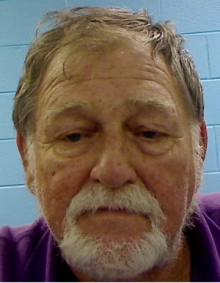
    James Leonard Craft booking photo: Source: Etowah County Sheriff's Office.

    BULLETIN: The cavalcade of senior citizens implicated in alleged securities schemes continues. James Leonard Craft has been taken from a jail cell in Florida and placed in one in Alabama to answer felony charges that he was at the helm of a securities swindle.

    Craft, 71, of Milton, Fla., originally was arrested in Florida Sept. 23 on an out-of-state fugitive warrant. He was held at a Santa Rosa County detention facility until yesterday, when he was transported to Etowah County Jail in Alabama to face charges. Bond was set at $30,000, according to records.

    In October 2010, the Alabama Securities Commission (ASC) named Craft in a cease-and-desist order. The agency alleged that Craft, beginning in 2008, was selling unregistered securities for a purported lumber business that produced or sold railroad ties.

    The securities were offered through LLCs known as Universal Wood Products LLC, Century Lumber and Land LLC and Milton Timber LLC, according to the ASC order.

    An Alabama resident told investigators he was introduced to the opportunity by a “business associate and missionary residing in Tennessee,” according to ASC records. Whether ASC suspects affinity fraud was not immediately clear.

    NorthEscambia.com is reporting that Craft was part of an October 2010 ribbon-cutting ceremony for an upstart business that the struggling Florida small town of Century expected would create 500 jobs. Those jobs never materialized, the site reported. More than 3,000 applications for employment were received.

    ASC records claim that at least two Alabama residents were told that the purported lumber firms could make money because Craft and a business partner bought railroad ties in “South America” and sold them to U.S. railroad companies “suffering from a shortage of the lumber product.”

    Alabama investors directed at least $180,000 to a promissory-notes scheme involving Craft, according to ASC.

    Precisely how the Craft case had morphed into a criminal prosecution was not immediately clear today. Etowah County Jail records show that Craft is being held for another “agency,” but the name of the agency was not listed.

    In Alabama, county-level prosecutors and ASC work together on securities cases.

    The emerging Craft case has bizarre coincidences and parallels to the AdSurfDaily case. ASD was operated by Andy Bowdoin, a senior citizen in the small Florida town of Quincy, which is situated in Gadsden County. Craft, himself a senior citizen, also operated from a small town in Florida. By coincidence, the jail in which he’s currently lodged is in Gadsden, Ala.

    Andy and Faye Bowdoin at a July 2008 Chamber of Commerce photo op. The small town of Quincy was pleased that ASD had created jobs, but the ASD story took a sour turn when the U.S. Secret Service accused Andy Bowdoin of operating an international Ponzi swindle a month after this photo was taken. Some ASD employees were getting paid in "ad packs," according to court records.

    In the case of ASD, the Gadsden County Chamber of Commerce announced in 2008 it was pleased that ASD had made its home in Quincy and was creating jobs. The Century Area Chamber of Commerce appears to have felt the same way about the Craft-related  firms. The NorthEscambia.com story linked to above shows a Chamber banner at the Craft ribbon-cutting ceremony. Craft appears in the photo alongside people who appear to be genuinely pleased and proud that a jobs-creator had come to the small town.

    Like Craft, ASD’s Andy Bowdoin was implicated in an Alabama securities swindle. Bowdoin’s Alabama caper occurred in the 1990s, according to records.


  • BULLETIN: California Woman Pleads Guilty In ‘Christian Rock Concerts’ Ponzi Scheme; Recidivist Swindler Lauren Baumann Used Money From Latest Scam To Pay $10,000-A-Month Mansion Rent, Prosecutors Say

    BULLETIN: A California woman has pleaded guilty to wire fraud in a Ponzi scheme in which investors were falsely told their money was being used to fund “Christian rock concerts” and to flip real estate at a profit.

    Lauren Baumann, 43, of Downey, was a recidivist  huckster who failed to disclose she’d been sued for fraud by the SEC in 1998 and convicted in Texas of securities fraud in 1999 in a criminal case that evolved from the SEC probe. The 1990s-era caper gathered about $5 million, and the scam targeted at Christian music fans that would follow later netted about $1 million.

    Investors in the rock-concert scam were told their money would be used to finance “battle of the bands” events that would feature “Christian rock bands and other music groups that would generate profits from ticket sales and company sponsorships,” the office of U.S. Attorney André Birotte Jr. of the Central District of California said this afternoon.

    The scheme operated through a company known as Stewardship Estates LLC, prosecutors said.

    “Baumann also used investor funds to pay approximately $10,000 a month to rent a historic mansion in Downey and to pay private school tuition for her children, among other personal expenses,” prosecutors said.

    Although some of the investors got paid, the money they received was Ponzi proceeds. All in all, the scam sucked in more than two dozen investors and caused at least $560,000 in losses, prosecutors said.

    Baumann faces up to 20 years in federal prison. She is scheduled to be sentenced by U.S. District Judge Josephine S. Tucker on Dec. 12. The FBI handled the criminal probe in Baumann’s latest swindle.

  • EDITORIAL: As Financial Fraud Enforcement Task Force Website (StopFraud.gov) Spotlights AdSurfDaily Prosecution, Bizarre Email Circulating Among ASD Members Raises New Conspiracy Theories

    UPDATED 10:31 A.M. EDT (U.S.A).

    ASD case subject of discussion in Washington’s highest power corridors: The Financial Fraud Enforcement Task Force was formed by President Obama in November 2009. U.S. Attorney General Eric Holder, a member of the President’s cabinet and the chief law-enforcement officer of the U.S. government, presides over the Task Force.

    Secret Service is charter member of Task Force. The U.S. Secret Service, whose duties include protecting the President of the United States, the integrity of the economy and the financial infrastructure of the nation, is a member of the Task Force.

    Among the allegations in the ASD case is that members were falsely trading on the name of then-President George W. Bush to sanitize a $110 million Ponzi scheme, that ASD President Andy Bowdoin encouraged the false claims and arranged to spend Ponzi proceeds to retire the $157,000 mortgage on a home in Tallahassee occupied by his wife’s son and the son’s wife, purchase a lakefront home in Florida, purchase an $800,000 building (for cash), purchase jet skis, a Cabana boat, haul trailers and marine equipment — all while owing restitution to victims of an Alabama securities caper in the 1990s and “thousands of dollars” to an ex-wife.

    Some of the purchases occurred within days of Bowdoin’s return from a May 2008 ASD “rally” in Las Vegas at which he defined himself as a Christian “money magnet” and encouraged others to follow him in thanking God and becoming like-minded “money magnets.” At the rally, Bowdoin urged members not to miss the opportunity to provide ASD with money by the tens of thousands or hundreds of thousands of dollars at a time, according to records.

    “Thank you, God, for destining me to great wealth,” he exhorted the Las Vegas crowd to internalize and recite during the day.

    And he exhorted members to picture themselves wealthy.

    “See a big check coming in from AdSurfDaily,” he urged. “I signed a check the other day, about $22,000. See those checks like that coming for you constantly, just flowing to you.”

    One of Bowdoin’s business partners — Walter Clarence Busby Jr., the operator of the Golden Panda autosurf — was implicated by the SEC in three prime-bank schemes in the 1990s, according to records. Golden Panda, according to Busby, was hatched after he went fishing with Bowdoin on a Georgia lake in April 2008. Just days after the fishing expedition, Bowdoin boarded a plane and flew to Costa Rica, according to court filings.

    Weeks after his return from Costa Rica, Bowdoin headed to Washington, D.C., to rub elbows with politicians, according to court filings.

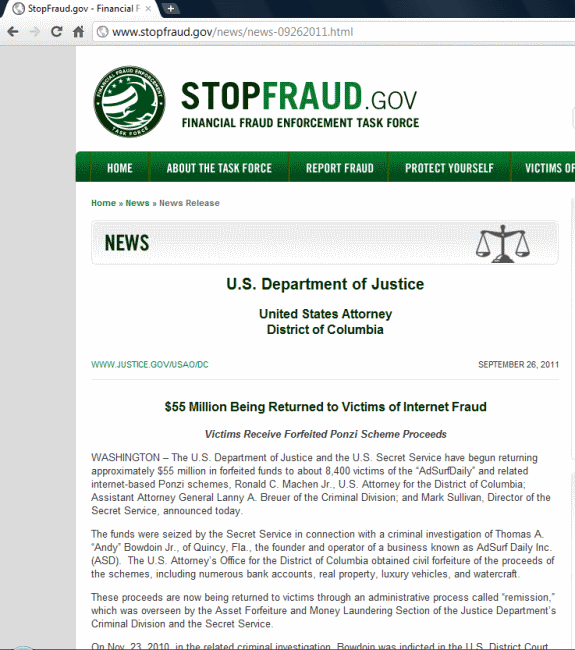
    Read the full news release on the AdSurfDaily case here. It is published on StopFraud.gov, the Task Force website.

    New conspiracy theory emerges after government compensates ASD victims. As often has been the case, some ASD members appear not to have taken the clue that top Justice Department officials and perhaps the White House itself are being briefed on developments in the ASD case. The ASD case became a national-security case when the U.S. Secret Service discovered in 2008 that Andy Bowdoin, a recidivist securities swindler in his seventies who allegedly had “earned no significant income from legal employment in the twenty years prior to his commencement of ASD’s operation,” suddenly was sitting on tens of millions of dollars and had handed out some of it to political rainmakers.

    Some of the handouts, which came in the form of contributions to the National Republican Congressional Committee (NRCC), occurred in early 2007, even as the first Ponzi scheme iteration of ASD was collapsing and the firm’s original members were left holding the bag while Bowdoin explained $1 million had been stolen by “Russian” hackers. Bowdoin did not file a police report about the purported theft because he did not want to draw the attention of law enforcement, according to court filings.

    The NRCC handouts continued in 2008, after Bowdoin had changed the name of his collapsed autosurfing venture from AdSurfDaily to ASD Cash Generator, plumbed it with new cash from a new group of suckers, started a second Ponzi venture known as LaFuenteDinero, arranged with Busby to form a third Ponzi-in-waiting  (Golden Panda) and had flown to Costa Rica with a “North Carolina lawyer” (and co-owner) of LaFuenteDinero, according to court filings and Federal Election Commission records.

    In a bizarre email that began to circulate among ASD members yesterday, the seed was planted that that the government was trying to recruit witnesses by luring them with remissions payments — and that prosecutors might claw back the remissions money if  the member “did not cooperate in testifying against ASD.”

    The date upon which the email was written could not immediately be determined, but the email appears to be the second in a two-part series sent after ASD members began to receive remissions payments late last week.

    The content of the email, which was described as “insider information” and attributed in part to an unamed third party who purportedly overheard a conversation involving a federal prosecutor at an unspecified location, was titled, “Important Warning: ASD/Golden Panda.”

    Among the suggestions in the email was that the government planned to “force” ASD members who received remissions distributions to testify against Bowdoin in his upcoming criminal trial on charges of wire fraud, securities fraud and selling unregistered securities. The email was signed “Sara.”

    Here is the email verbatim (italics added):

    “Hi Everyone-

    Since I sent the last email update about ASD/Golden Panda monies being received by members, I received some very important insider information you should know. This is an important warning.

    The information (these are not quotes) I am sharing with you was spoken by and was heard directly from an attorney for the government, in relation to the ASD legal case. I must protect the source but I can assure you it is reliable (it is not Andy). I was told that the person heard the government attorney say they had hired the Rust Company to send a remission form by email and US-mail to ASD and Golden Panda members. The form was to be sent under the pretense that the member would get their money back if they filled out the form to request a remission of their ASD/Golden Panda monies seized by the government on 8/1/08. Those members would then receive their remission monies directly into their bank accounts, but the attorney said that their names would go onto a list and they would then be summoned by the court (at the members own expense) to testify against ASD. They would be forced to testify against ASD even if they did not believe that ASD was illegal, because the form they signed was set up in such a way that the member was essentially stating that ASD victimized them in an illegal business. I’m imagining a typical scenario in court would be: The attorney for the government would read statements from the form and the member’s answers and then say something like, “Is this your signature?” to force the member into saying that the statements were theirs.  And, take note, that it was also mentioned by the attorney that the direct deposit into the member’s account could be reversed at any time if ASD should eventually lose the case or if the member did not cooperate in testifying against ASD. If the money isn’t in the account anymore, it would be money owed back to the government, so moving the money would not help. The addendum that I was advised to suggest to you if you were drawn to fill out the form (sent by the Rust Company on behalf of the government) that stated that you did not make an investment in ASD/Golden Panda, but rather bought advertising, would apparently protect you from the government’s tactics, but I honestly do not know that for sure.

    Many of us had major red flags when we read the form as it was obvious what the government was trying to do. That’s why it was advised that members add the addendum to their form, to protect themselves from the government’s deceptive practices. So pray about how you should proceed. Please don’t ask me. I can’t make this decision for you.

    God’s Blessings,

    Sara

    The email appears to have followed the email below, which divines a construction by which  the government seized ASD money illegally and set up the remissions program only because ASD members outraged at the illegal seizure demanded the return of their funds (verbatim/italics added):

    “Dear ASD & Golden Panda Members-

    I have some news! ASD and Golden Panda Members have recently received a “remission” of the money that was in their ASD and/or Golden Panda accounts, deposited directly into their personal bank accounts by the government; amounts like $50,000 and $60,000 and it was apparently 100% of the money that was owed to them!

    Personally, I am stunned. My experience over the last decade or more has been that the government has never fulfilled their obligation to return money they have seized from programs they deemed illegal. My opinion is that they are scrambling to do this in order to diffuse the outrage ASD members have felt toward the government from their (in my opinion, illegal) seizure of members’ account funds, so that members will have less opposition toward the government during the eventual ASD trial.

    But, for whatever reason the government is doing it, it is irrelevant to those relieved members who are finally receiving justice from this (in my opinion, illegal) seizure.

    If you have not received your remission, you can go to this website to fill out the form there: adsurfdailyremission.com. You can also call the following toll free information line for more information and even talk to a customer service agent in person to ask any questions you might have about this process: 888-398-8214. The following email address has also been provided to communicate about this: info@adsurfremission.com You will notice that, in the recorded message, the government does NOT back down in their assertion that Golden Panda and ASD were illegal ponzi schemes, but that is obviously not stopping them from returning members’ funds.

    Some of you will notice that this form is the one that many of you did not feel inspired to fill out when it was first presented to us. It really puts members in an uncomfortable position of stating that they were victims of ASD/Golden Panda when they don’t believe they were and many felt as if they were also being set up to incriminate themselves.

    At the time, I was advised to suggest to you that, if you felt drawn to fill it out, you include an addendum that stated that you understood that you were purchasing advertising, not making an investment. That continues to be the advice. Now that people are actually receiving their money back, perhaps some of you may feel more motivated to risk filling out the form. Just be careful not to incriminate yourselves. Be alert as you do it. Do not leave any question unanswered or it will be rejected. You must also provide documentation so hopefully you kept good records.

    You will notice on that website (upper left corner) that it says that you must fill it out and submit it by a date in January, 2011. The way around this may be to say that you just found out about it (you didn’t get their letter in the mail or an email from them) and therefore you are only responding to it now. You might want to make that clear to the Customer Service agent at the number above BEFORE you take the time to fill it out, to confirm that they are still accepting them. If not, take a stand for your right to your monetary remission and ask for a supervisor. I am hearing that they are swamped trying to keep up with the communications they are receiving from members, so please be patient.

    Blessings,

    Sara

    Read a January 2011 story about ASD-related emails. Read a November 2010 story. Read another November 2010 story. Read a December 2009 story.

  • BULLETIN: 77-Year-Old Amish Man Now Faces Criminal Charge In Alleged ‘Massive’ Caper; Monroe L. Beachy Indicted For Mail Fraud; SEC Filed Civil Charges Earlier This Year

    An Amish man has been indicted in Ohio in an alleged long-running scheme that devoured more than $16.8 million.

    Victims of Monroe L. Beachy included fellow Amish and the Amish Helping Fund, according to court filings.

    Beachy, 77, resides in Sugarcreek, Ohio. He was charged civilly by the SEC in February 2011. A criminal indictment charging Beachy with mail fraud was announced today by federal prosecutors in Cleveland.

    “This is fraud on a massive scale,” said Steven M. Dettelbach, U.S. Attorney for the Northern District of Ohio. “This defendant took advantage of people’s trust in him and squandered the life savings of hundreds upon hundreds of families.”

    Beachy operated a company known has A&M Investments, and customers believed their money was safe in conservative Ginnie Mae Bond Funds, prosecutors said.

    There are at least 2,698 victims, according to the indictment.

    A top FBI agent described the scheme as elaborate.

    “Unfortunately, he violated[investors’] trust over and over again resulting in a combined loss of over $16 million,” said Stephen D. Anthony, special agent in charge of the Cleveland FBI office. “The FBI and its partners were committed to unraveling this elaborate scheme . . . and to work with those victims who were affected by this large-scale investment fraud.”

    Beachy did not invest the money as promised, prosecutors said, noting that he had been gathering money for 20 years before the scheme collapsed last year.

    The Amish Helping Fund helps members of the Amish community purchase land and buildings, among other things, prosecutors said.

  • UPDATE: Eliott Jay Dresher Pleads Guilty In $13.5 Million Ponzi Scheme That Traded On Famous ‘NASCAR’ Brand

    UPDATE: Eliott Jay Dresher, the California man whose Ponzi scheme traded on the famous racing brand of NASCAR, now faces up to 20 years in federal prison after pleading guilty in Los Angeles to mail fraud.

    Dresher, 64, of Chatsworth, was jailed in December 2009 in a case brought by the FBI and the U.S. Postal Inspection Service. Investigators said he promised investors returns of up to 25 percent every six months for financing a purported NASCAR merchandising business.

    The business, however, was bogus — and Dresher had been using NASCAR’s name and operating a Ponzi scheme for about 10 years before the scheme collapsed in 2008.

    “[A]ll of the funds paid to investors were ‘Ponzi’ payments that came from money invested by victims,” prosecutors said.

    Among the victims was a Dresher friend from whom Dresher had solicited more than $250,000, prosecutors said. All in all, victims’ losses could total $9.5 million.

    U.S. District Judge Philip S. Gutierrez is presiding over the case. Dresher is scheduled to be sentenced on Dec. 19.

    Dresher was arrested in Las Vegas in 2009. He has been held without bond since then. Family members also were among his victims, prosecutors said.

    It is common for Ponzi and fraud schemes to trade on the names of famous people and companies.

    Famed “Cheers” and “Fraiser” actor Kelsey Grammer claims he was duped by pyramid-scheme promoters tied to Staropoly.com and that his name and image were used without authorization, RadarOnline reported yesterday.


  • BULLETIN: SEC Says Alleged Life-Settlement Scammer Ran $4.5 Million Fraud And Ponzi Scheme — And Spent $5,000 On ‘Cowboy Boots’ And Another $5,000 For ‘Dating Service’ While Directing $55,000 To A ‘Tribute’ For Deceased Entertainer Michael Jackson; Image Of Former President Bill Clinton Appears On Website

    UPDATED 4:32 P.M. EDT (U.S.A.) It’s only getting stranger . . .

    The SEC has gone to federal court in Los Angeles and obtained an emergency asset freeze for what it described as a $4.5 million life-settlement fraud and Ponzi scheme operated by a man who spent more than $5,000 in investor funds on “cowboy boots,” nearly another $5,000 on a “dating service,” $1,300 on designer sunglasses, more than $200,000 on luxury cars — and $55,000 in a tribute to the late pop icon Michael Jackson.

    The alleged scam also directed enormous sums toward other purchases, the SEC charged. A photo on a website linked to the principal defendant in the SEC’s civil case features an image of former President Bill Clinton, with the White House as its backdrop.

    Of the $4.5 million gathered in the fraud, only $90,000 — about 2 percent — was applied to its “avowed” purposes, the SEC charged.

    Even the avowed purposes — purchasing life settlements, developing coal leases in Kentucky purportedly worth $11.8 billion or developing interests in gold reserves in Nevada — were dubious or not carried out, the SEC said.

    Charged in the case were Daniel C.S. Powell, 29, of Los Angeles, and his company Christian Stanley Inc. Two Powell-related entities — Christian Stanley LLC and Daniel Christian Stanley Powell Realty Holdings Inc. — were named relief defendants.

    About 50 investors were fleeced, the SEC said.

    “Powell and Christian Stanley created the façade of an actual business when in reality they have virtually no revenue,” said Rosalind Tyson, director of the SEC’s Los Angeles Office. “Most of the money raised from investors has been used to finance Powell’s extravagant lifestyle and for other purposes that have not been disclosed to investors.”

    “As of August 23, 2011, only $29,396.55 remained in Christian Stanley’s bank accounts,” the SEC charged.

    The “Message From Our Chairman” page of “Christian Stanley’s website features a photo of Powell and former President Bill Clinton with the White House as its backdrop. The photo appears to include a disclaimer of some sort, but the type in the disclaimer is small and washes out, making it difficult or impossible to read.

    A similar photo featuring an image of Powell and Clinton is displayed elsewhere on the site, but appears to be cropped in a different fashion — and also in such a way that any disclaimer language was lost.

    Images of Clinton also were used in promotions for the Mantria “green energy” Ponzi scheme in 2009. It is common for fraud schemes to use images of celebrities to sanitize offers. In 2008, for instance, members of the alleged AdSurfDaily Ponzi scheme painted word pictures that then-President George W. Bush and the White House had given a special award to ASD President Andy Bowdoin.

    This list is not all-inclusive, but here are some of the alleged purchases and sums consumed in the alleged fraud by Powell and Christian Stanley:

    • $212,000 for cars, including a Porsche, a Ferrari, a BMW and a Dodge Ram.
    • More than $290,000 in debit card transactions, mostly consisting of payments of Powell’s daily living expenses, including gas, groceries, pharmaceuticals, dry cleaning and retail goods.
    • Cash withdrawals and checks payable to Powell or to cash totaling almost $240,000.
    • More than $160,000 toward Powell’s exorbitant lifestyle, including almost $90,000 for hotels, more than $49,000 for nightclubs, more than $17,000 for restaurants and more than $4,800 for limousines.
    • More than $100,000 in rent paid on behalf of a woman who Powell has described as “like a mother” to him and another woman with no apparent connection to the company.
    • Donations totaling $91,000, including $55,000 toward a tribute to Michael Jackson and $35,000 to the rapper Usher’s New Look Foundation.
    • Miscellaneous luxury purchases, including $8,700 for jewelry, almost $5,000 to register for a dating service, more than $5,000 for cowboy boots and more than $1,300 for designer sunglasses.

    Investors believed they’d receive returns of between 5 percent and 15.5 percent per year, the SEC said.

    U.S. District Judge George H. King of the Central District of California has ordered an asset freeze and appointed a temporary receiver, the SEC said.

    “A life settlement is a transaction in which an individual with a life insurance policy sells that policy to another person, who then assumes responsibility for paying the premiums,” the SEC said. “Typically, the seller no longer wants the policy or can no longer afford to pay the premiums. In exchange, the insured party typically receives a lump sum payment that exceeds the policy’s cash surrender value, but is less than the expected payout in the event of death.”

    In its complaint, the SEC charged that Powell and Christian Stanley were selling unregistered securities and that Christian Stanley “has not purchased a single life settlement.”

    The scheme has operated for at least seven years, the SEC said.

    Read the SEC complaint.

  • UPDATE: MLM Pitchman Jeff Long Warned Against ‘EZ MONEY Pitches’ When He Fled DNA, Narc That Car Last Year; Long Now Promoting AutoXTen Cycler Amid Claims That Members Can ‘Turn $10 into $199,240’

    This video in which Jeff Long was driving an automobile and pitching the MLM license-plate schemes of DNA and Narc That Car was edited to insert the red balloon and annoucement from Long that he had dumped both DNA and Narc — and to warn prospects to stay away from "EZ MONEY'" MLM schemes. Long now is promoting AutoXTen amid claims the firm's matrix cycler can turn $10 into nearly $200,000 and is appropriate for "churches."

    Jeff Long, one of the purported founders of the AutoXTen matrix-cycler scheme, warned his followers last year to “Stay away from ‘EZ MONEY’ pitches and claims.”

    A year later, Long appears to be ignoring his own advice.

    The 2010 warning appeared in a YouTube video Long edited after he had led his troops into registering for the Narc That Car and Data Network Affiliates’ (DNA) license-plate MLM schemes. Long first joined Narc, but quickly abandoned it in favor of DNA. He then touted DNA online and hawked the Phil Piccolo-associated scheme in a DNA sales-hype conference call.

    Long, billed as DNA’s top recruiter,  then abandoned DNA. Both Narc and DNA came under Better Business Bureau and media scrutiny, and Long’s YouTube video became part of a Fox News local affiliate’s scam coverage. (See graphic below.)

    Eventually Long edited the video to insert an announcement in a red balloon with white type that he no longer was with either DNA or Narc and to warn about “EZ MONEY” claims.

    But Long now has emerged this year as a central figure in the AutoXTen cycler scheme.

    One promo for AutoXTen claims members can “Turn $10 into $199,240.”

    In 2010, Jeff Long's YouTube video for Narc That Car was referenced by Fox News 11 in Los Angeles as part of the station's Narc coverege. The original Narc video was repurposed by Long into a YouTube text pitch for DNA, but later edited to insert an annoucement Long had left both Narc and DNA.

    Remarks attributed to Long on the AutoXTen help desk claim that AutoXTen is appropriate for “churches.” DNA made similar claims about one of its “programs” last year. After Long pulled out of both DNA and Narc after reportedly recruiting hundreds of participants, he noted in his YouTube red balloon that he hoped affiliates would “Be Blessed!”

    Officials in Oregon yesterday announced a $345,000 penalty against cycler pitchman Kristopher K. Keeney, saying he was promoting a “pyramid scheme” and acting as an unlicensed seller of securities — while selling unregistered securities and lying to prospects of a collapsed matrix known as “InC” or “I need Cash.”

    Keeney’s Oregon fine was broken down as follows, according to the state:

    $100,000 for 221 violations of ORS 59.055 for “selling unregistered securities.”

    $15,000 for 1 violation of ORS 59.055 for “offering to sell unregistered securities in Oregon.”

    $100,000 for 221 violations of ORS 59.165(1) for “selling securities without a license.”

    $30,000 for the “untrue statements of material facts made in connection with the sale of securities” in violation of ORS 59.135(2).

    $100,000 for the “omissions of material facts in connection with the sale of securities” in violation of ORS 59.135(2).

  • BULLETIN: FLORIDA — AGAIN (UPDATE): James Risher Ponzi Scheme Used Pitchman Who Targeted Teachers, Retirees, Church Members, Golfers, SEC Says; Risher Had 5 Prior Criminal Convictions; Pitchman Daniel Joseph Sebastian Now Charged Civilly

    “[Y]ou invest in this fund and all of a sudden you start making more money than you’ve ever made in your life with your investors. And then all of a sudden you start making enough money where you don’t have to go to work . . . [a]t Safe Harbor, you could retire today, like right now. And I’m telling you, you get rid of the struggle.” — SEC,  quoting accused Ponzi pitchman Daniel Joseph Sebastian, Aug. 29, 2011

    BULLETIN: A Ponzi schemer arrested on criminal charges in June had the help of a pitchman who targeted senior citizens, church members, educators and golfers, the SEC said. The agency identified the pitchman as Daniel Joseph Sebastian of Celebration, Fla.

    Sebastian conducted business as “Safe Harbor,” and helped James D. Risher pull off a $22 million Ponzi scheme that affected more than 100 investors, the SEC said.

    Risher, 61, of Sanibel, Fla., was arrested on criminal charges by the U.S. Postal Inspection Service in June. He, too, now has been charged civilly by the SEC, which noted he had been charged criminally five times since 1992 in various schemes and had spent 11 of the past 21 years in jail.

    “Risher, who masqueraded as a highly successful equity trader, teamed up with Sebastian to tout sophisticated trading strategies they claimed would generate substantial profits for investors,” said Eric Bustillo, director of the SEC’s Miami Regional Office. “Instead, Risher and Sebastian used investors’ life savings and retirement nest eggs to line their own pockets.”

    The scheme also operated under the names of Safe Harbor Private Equity Fund, Managed Capital Fund and Preservation of Principal Fund, the SEC said.

    Risher had been arrested at least four times in Georgia, and at least once in Florida prior to the 2007 launch of the Safe Harbor scheme, the SEC said.

    Sebastian turned to old customers of his insurance business and recruited them into the Ponzi scheme, the SEC said.

    “From 2007 through July 2010, Sebastian solicited his former insurance customers, educators, retirees, and members of several churches in Florida,” the agency charged. “During the same time period, he also solicited investors in California, other states, and Canada. Sebastian persuaded his former customers to roll over the funds in their insurance and annuity products into the Fund. He told his customers the Fund would provide a higher rate of return than they could receive from the products he had previously sold them. At least one investor liquidated an annuity she had purchased from Sebastian and invested the proceeds in the Fund.”

    No registration statement was filed for any elements of the Safe Harbor scheme, the agency said.

    “Throughout the fraud, Sebastian also hosted numerous annual golf tournaments and other promotional events for investors, which Risher sometimes attended,” the agency charged. “At an investor event held on March 12 through 14, 2010 at an Orlando resort, Sebastian told investors in a speech, ‘[Y]ou invest in this fund and all of a sudden you start making more money than you’ve ever made in your life with your investors. And then all of a sudden you start making enough money where you don’t have to go to work . . . [a]t Safe Harbor, you could retire today, like right now. And I’m telling you, you get rid of the struggle.’”

    Read the SEC complaint.


  • URGENT >> BULLETIN >> MOVING: Triton Financial’s Kurt Barton Found Guilty In Ponzi Scheme That Defrauded People Of Faith, Football Stars, Family Members; Now-Convicted Fraudster May Face Life In Prison; ‘The Con Man Can Be As Brutal As Any Armed Robber,’ FBI Agent Says

    URGENT >> BULLETIN >> MOVING: A jury in Texas has returned dozens of guilty verdicts against Kurt Branham Barton in the Triton Financial LLC case.

    Barton, 44, potentially faces life in prison after being convicted of 17 counts of money laundering, 15 counts of wire fraud, five counts of making false loan statements, one count of securities fraud and one  count of conspiracy to commit wire fraud.

    Members of the Church of Jesus Christ of Latter Day Saints, professional football players, family members and business leaders were among the victims.

    David Akers, a kicker for the San Francisco 49ers, reportedly lost $3.7 million. Ty Detmer, a former Heisman Trophy winner and friend of Barton’s, entrusted more than $1.2 million to him.

    Professional athletes, including Detmer, worked as Triton pitchmen, giving the $50 million, affinity- fraud scheme an air of legitimacy. In 2009, a woman allegedly angry at Barton for scamming her got drunk on wine and took a gun to Triton headquarters to demand a refund.

    U.S. Attorney John E. Murphy said greed was the driving force of the scheme, which affected more than 300 investors.

    “It is regrettable that selfish, greedy individuals devise schemes to make themselves rich by victimizing honest and innocent people, often depriving the victims of their life savings,” Murphy said. “These con artists are usually very accomplished salesmen taking advantage of trusting investors, who unfortunately will never be made whole again.”

    A veteran FBI agent said the scheme was akin to an armed robbery, even though no gun was used to separate victims from their money.

    “The financial assault of Barton’s elaborate scheme has been as devastating to his victims as any physical robbery,” said FBI Special Agent in Charge Cory B. Nelson. “No matter the complexity of the scheme, the con man can be as brutal as any armed robber.”

    The Austin American-Statesman is reporting tonight that Barton was led from the courtroom in shackles after the guilty verdicts were returned and a defense bid to let Barton remain free until his November sentencing date failed.

  • Former DNA/Narc That Car Pitchman Jeff Long Now Says Churches May Join Matrix Known As AutoXTen; Company Says It Uses AlertPay To Avoid PayPal ‘Limits’; Web Pitchmen Say $10 May Fetch Nearly $200,000

    U.S.-based MLM pitchman Jeff Long is one of the purported founders of an “opportunity” known as AutoXTen that is collecting money through Canada-based AlertPay and says churches may join the AutoXTen matrix. Early promos for AutoXTen claim members can “Turn $10 into $199,240.”

    Long’s recent flops include Narc That Car, which came under fire from Fox News outlets, and Data Network Affiliates (DNA), a Phil Piccolo-affiliated firm that claimed it was the “MORAL OBLIGATION” of churches to pitch a purported mortgage-reduction program.

    Long himself says churches may join AutoXTen, according to a post bearing Long’s photo on what is billed the AutoXTen Help Desk.

    “Yes a church can join, there would be no issue with this,” the post under Long’s name and photograph read.

    Both Narc and DNA purported to pay members for recording the license-plate numbers of automobiles. After leaving Narc last year and quickly setting up shop with DNA, Long also left DNA.

    AutoXTen appears to be a matrix program.

    “We are only accepting Alertpay,” according to the AutoXTen Help Desk. “Paypal limits the amount of transactions we can make per day, and we would have to cap people off from becoming paid members. ”

    Still in its early days, AutoXTen has claimed a “malicious hack” into its database that “altered and in some cases deleted member data,” according to an email members received in late July.

  • BULLETIN: Church Pastor Accused Of Running Forex Ponzi And Fraud Scheme Ordered To Pay More Than $2 Million; Jeremiah C. Yancy Promised Monthly Returns Of 40 Percent And Told Customers His Firm Managed Funds For ‘Orphanages,’ Judge Says

    BULLETIN: A federal judge in Texas has ordered the former pastor of an Idaho church and his firm to pay more than $2 million in restitution and penalties in a Forex Ponzi scheme that affected 64 customers, including church members allegedly targeted in the preacher’s scam.

    The order, which was entered by consent, applies to Jeremiah C. Yancy, who now resides in Atoka, Okla. Yancy also is known as Jeremiah C. Glaub. He ran a Texas-based firm known as Longbranch Group International LLC. The order also applies to the firm.

    U.S. District Judge Vanessa Gilmore of the Southern District of Texas issued the order.

    Yancy and Longbranch told Forex customers they managed money for churches and orphanages. Customers were told they could expect monthly returns of between 20 percent and 40 percent, and were shown bogus trading results and account statements, the CFTC said.

    The agency charged Yancy and the firm in August 2010. Yancy and Longbranch neither admitted nor denied the allegations.