Tag: Andy Bowdoin

  • Judge Signs Forfeiture Order In AdSurfDaily Case; Gives Government Title To $65.8 Million In Bowdoin Bank Accounts; Case Resolved In ‘Entirety’

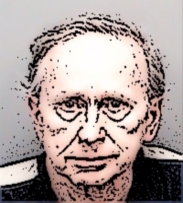
    Andy Bowdoin

    After more than 17 months, more than 165 court filings and more than $1 million in legal fees, ASD President Andy Bowdoin has lost the August 2008 civil forfeiture case and the government has been granted title to $65,838,999.70 seized from Bowdoin’s 10 Bank of America accounts.

    U.S. District Judge Rosemary Collyer, whom Bowdoin attempted to have disqualified from the case last month, has entered a default judgment and final order of forfeiture in the case.

    In a footnote, Collyer said the order decreeing forfeiture “resolves all remaining issues and this forfeiture action in its entirety.”

    As PatrickPretty.com first reported last year, three of Bowdoin’s accounts contained the exact same sum: $1,000,388.91. Why the accounts contained the exact same sum remains a mystery.

    Another mystery is why Bowdoin, 75, initially submitted to the forfeiture on Jan. 13, 2009 — a year ago next week — but then changed his mind more than a month later and attempted to reassert his claims as a pro se litigant. Bowdoin’s former attorneys, Akerman Senterfitt, said in court filings that Bowdoin began to file pro se “without consulting with counsel and without bothering to advise counsel that he would be submitting motions on his own.”

    Akerman Senterfitt filed a motion to withdraw as Bowdoin’s counsel, saying its representation of him had become unreasonably difficult.

    Bowdoin’s pro se re-entry in the case coincided with the shift by the AdViewGlobal (AVG) autosurf to a “private association” structure. This shift was announced to AVG members on Feb. 26, 2009, after AVG said it had consulted with a company known as Pro Advocate Group.

    Bowdoin signed the first of his pro se pleadings just one day before, on Feb. 25, 2009. Pro Advocate Group, which says it can help people practice law and medicine without a license through a private-association structure, is associated with Karl Dahlstrom.

    In 1997, Dahlstrom was sentenced to 78 months in federal prison for his participation in a securities scheme. In court documents in a tax case, Karl Dahlstrom is described as having  “been in the abusive trust business for many years.”

    Bowdoin has not publicly revealed the identities of his pro se advisers, describing them as members of a “group.” Nor has Bowdoin revealed how much he paid for the pro se advice.

    Bowdoin, however, told members in a letter published on the now-defunct Pro-ASD Surf’s Up forum in March 2009 that he had paid his professional lawyers $800,000 before firing them. In September 2009, Bowdoin said his legal fees had exceeded $1 million.

    “Now I’ve spent over a million dollars in legal fees to get your money back, and to stay out of prison,” Bowdoin said on Sept. 21, according to a transcript by the U.S. Secret Service. Bowdoin made the remark in a conference call with members. The Secret Service transcribed the call, and then filed the document  in court.

    Collyer refused to disqualify herself last month, saying Bowdoin no longer had standing in the case.

    Read the final order of forfeiture in the August 2008 case against assets connected to ASD.

    Collyer earlier ordered the forfeiture of more than $14 million from the bank accounts of Golden Panda Ad Builder, whose assets also were seized in the ASD case.

    Bowdoin did score a win of sorts in the forfeiture litigation. He asked for — and was granted — an evidentiary hearing in 2008 to refute the government’s Ponzi allegations and to ask for the emergency release of $2 million because the company could not pay its rent and hosting bills and needed money to implement a new business plan.

    Prosecutors did not object to the hearing, but pointed out that Bowdoin had $1 million in a bank on the Caribbean island nation of Antigua in an account under a different name.

    Bowdoin asserted his 5th Amendment right against self-incrimination, advising the court through counsel that he would not testify at the evidentiary hearing he had requested. Surf’s Up described the performance of ASD’s witnesses at the hearing as uniformly “excellent,” while at once describing the government’s case as “not so much.”

    At the same time, the forum helped spread the rumor that the government had admitted that ASD was not a Ponzi scheme.

    In November 2008, Collyer ruled that ASD had not demonstrated at the hearing that it was a lawful business and not a Ponzi scheme. A month later, prosecutors filed a second forfeiture complaint against ASD-connected assets, restating the Ponzi allegations despite the Surf’s Up claim that prosecutors had admitted ASD was not a Ponzi scheme.

    The AVG autosurf was laying the groundwork for launch within days of Collyer’s November 2008 ruling against ASD. Promoters highlighted its purported location in Uruguay as a reason to join.

    AVG suspended cashouts in June 2009, exercising its version of a “rebates aren’t guaranteed” clause.

    Dozens of pro se litigants attempted to intervene in the ASD case, largely causing the court docket to swell from about 40 entries in January 2009 to its current total of 166.

  • North Carolina Man Adds To List Of Alleged Schemers Who Bought Jet Skis With Fraud Proceeds; J.V. Huffman Jr. Also Faces Trial On Weapons Charge

    J.V. Huffman Jr. Source: Catawba Country Sheriff's Office

    It’s not as though alleged fraudster J.V. Huffman Jr. did not have the expensive cars and real estate often associated with Ponzi schemes or financial frauds.

    Huffman, jailed awaiting trial in North Carolina on Ponzi and weapons charges, had plenty of those, according to William Walt Pettit, the court-appointed receiver. He had an Aston Martin ($100,000+), three Mercedes (nearly $180,000 combined), and a Prevost motor home (insured against loss for $825,000) , for example. And Huffman had at least 14 parcels or properties, including a $765,000 property in North Carolina and multiple interests in time-shares at Walt Disney World in Orlando.

    But Huffman also had jet skis, which oddly seem to have become a signature purchase among operators of alleged Ponzi schemes or financial frauds. Disbarred Florida attorney Scott Rothstein, implicated in an alleged $1.2 billion Ponzi scheme, had jet skis.

    Affiliate Strategies Inc., a Kansas company under whose umbrella the shuttered Noobing autosurf fell, had a jet ski. ASI is among a number of companies sued by the Federal Trade Commission and the attorneys general of four states for operating a grant-writing scheme.

    Florida-based AdSurfDaily, whose president is implicated by the U.S. Secret Service in a $100 million Ponzi scheme, also had jet skis — two of them. Andy Bowdoin told his members that the jet skis (and a lakefront home) were for their benefit, but the statement was met with anger, the jet skis and Bowdoin’s other marine equipment dismissed derisively as “water toys.”

    Huffman’s next court appearance in North Carolina has been delayed until Jan. 25. He also faces a civil prosecution by the SEC, which said his Ponzi scheme began in 1991 and operated for 17 years before collapsing.

    The weapons charge was added when guards found a razor blade hidden in Huffman’s Bible in his jail cell. Prosecutors said the alleged financial scheme largely was targeted at Lutherans.

    SEC investigators said Huffman and his company — Biltmore Financial Group — gathered as much as $25 million from 500 investors. At first, Huffman told investors he operated a mutual fund.

    After the 9/11 terrorist attacks and the ensuing volatility in financial markets, Huffman changed his story, telling investors that he pooled funds to purchase and sell safe mortgages that had strong equity positions and were insured, the SEC said.

    “Contrary to his representations, Huffman and Biltmore did not invest the funds as represented,” the SEC said. “Instead, Huffman spent investor funds to subsidize his lavish lifestyle. Returns to investors were paid from money invested by new investors. The purported insurance protecting the investments did not exist and much of the principal has been dissipated or used to purchase real estate for Huffman and/or his wife, expensive automobiles or other luxuries.”

    In another claim reminiscent of the AdSurfDaily case, the SEC said Huffman dropped famous acronyms such as “FDIC” to get people to invest with him.

    North Carolina Secretary of State Elaine F. Marshall is spearheading the criminal prosecution.

    “People who are knowledgeable in the investment industry came to us saying that the
    promises being made sounded ‘too good to be true,’” she said, after agents arrested Huffman in November 2008. “In most cases, when an investment sounds too good to be true, it usually is.”

  • Better Business Bureau Revokes Accreditation Of Speed Of Wealth After SEC ‘Green’ Ponzi Action; Firm Experiences ASD-Like PR Disaster In Wake Of Allegations

    The accreditation of a Colorado company implicated in an alleged $30 million “green” Ponzi scheme by the SEC has been revoked by the Denver/Boulder branch of the Better Business Bureau.

    BBB now gives Speed of Wealth a rating of “F” — the worst possible score on a scale of “A+” to “F” — and says the accreditation was revoked because the company did not comply with BBB standards.

    Speed of Wealth’s BBB accreditation was revoked on Dec. 16, precisely one month after the SEC accused the firm of selling a Ponzi scheme for Philadelphia-based Mantria Corp. A rating for Mantria was not immediately available. The BBB of the Mid-Atlantic region, Metro Washington, D.C., and Eastern Pennsylvania says on its website that the organization is in the process of updating its report on Mantria.

    Under “Government Actions” in Speed of Wealth’s BBB listing, the organization summarizes the SEC allegations against Speed of Wealth and Mantria and provides links to the SEC’s charging document and news release in the case (emphasis added):

    On November 16, 2009 the U.S. Securities and Exchange Commission “SEC” filed a complaint with charges against Mantria Corporation, Troy B. Wragg, Amanda Knorr, Speed of Wealth LLC, Wayde M. McKelvy, and Donna M. McKelvy alleging that they are involved in perpetrating a $30 million Ponzi Scheme, which they persuaded more than 300 investors nationwide to participate in purported environmentally- friend[ly] investment opportunities.

    Click below view the entire press release and the complaint from the “SEC”:

    http://denver.bbb.org/Storage/33/Documents/9-16-09%20SEC_Complaint_Speed%20of%20Wealth.pdf

    http://www.sec.gov/news/press/2009/2009-247.htm

    PR Disasters Mark Speed Of Wealth, AdSurfDaily Cases

    Speed of Wealth’s website now throws a server error and appears to have been disabled. In a column in the Denver Business Journal last month, reporter Renee McGaw said she attempted to email Wayde McKelvy, a Speed of Wealth principal, to get his comments on the SEC action.

    McGaw reported that her email to McKelvy resulted in a steady stream of pitches to join wealth-building programs.

    “YOU MUST START YOUR OWN BUSINESS Renee!” McKelvy exclaimed to McGaw in one email. “What You Have Been Taught About Building Wealth is DEAD WRONG!”

    The Denver Post also wrote about the Trump Network emails from McKelvy in the wake of the SEC action. A college professor interviewed by the newspaper said words such as “amazing,” “unbelievable” and “phenomenal” used by McKelvy to describe the Trump Network should be considered red flags.

    The emails demonstrated that a crisis affecting one company can bring an unwanted spotlight on wholly separate brands. Indeed, the Denver Post reported that it contacted the Trump Network for comment on McKelvy’s emails. The calls were not returned.

    Even the names of President Obama, former President Bill Clinton and Secretary of State Hillary Clinton became part of the Mantria/Speed of Wealth story. The companies used a video that included images of Obama, the Clintons and other politicians and media figures in promotional materials.

    Meanwhile, the McKelvy emails were reminiscent of the experiences reporters had when they tried to contact Florida-based AdSurfDaily for comment after federal prosecutors seized tens of millions of dollars from the firm amid Ponzi allegations in August 2008.

    Like Speed of Wealth, ASD also has a rating of “F” from the BBB, which cites government actions against the autosurf firm. Unlike Speed of Wealth, ASD has unresolved consumer complaints, according to the BBB.

    Reporters who called ASD got a recording featuring the voice of ASD President Andy Bowdoin. Bowdoin, whom prosecutors later said had “followers,” intoned in the recording that that God was on the company’s side.

    Thirteen months later, Bowdoin told an audience listening to a conference call that his ongoing legal fight against the government was inspired by the story of a former Miss America who now operates a Christian organization. The PP Blog contacted both the Miss America Organization and the Christian organization for comment.

    The Miss America Organization did not return the call; the Christian organization, Salem Family Ministries, responded by saying it had no comment, except to say it did not recognize Bowdoin’s name. The Secret Service transcribed Bowdoin’s remarks in the conference call and presented them to the federal judge hearing the forfeiture cases against the firm.

    Companies in legal crisis can lose the PR war quickly if their initial actions lead to more questions than answers. Within days of the federal action against ASD, Bowdoin invoked “Satan,” comparing the U.S. Secret Service to the 9/11 terrorists who killed nearly 3,000 people.

    In a Nov. 19 conference call with participants, McKelvy described the SEC allegations as “ridiculous,” but at the same time acknowledged he possibly sold securities without a license, according to the Denver Business Journal.

    But in the same conference call — just days after the SEC action — McKelvy also said he was turning his attention to the Trump Network, an MLM opportunity. The comment — and the emails Speed of Wealth sent out to promote the Trump Network — led to more headlines in newspapers, forums and Blogs.

    Read Speed of Wealth’s BBB report.

    Read ASD’s BBB Report.

  • 2009 Ends With Ponzi Clawbacks In Nadel Case, Demands By Fleeced Investors In Bolze Case For Politicians To Return Tainted Campaign Donations

    EDITOR’S NOTE: There is a link at the bottom of this story to a report filed by Burton Wiand, the receiver in the Arthur Nadel Ponzi case in Sarasota, Fla. We encourage readers to read the document in its entirety. The Nadel case is not yet a year old. Nadel, who turned 77 today and is  a onetime attorney, was disbarred in 1982 for taking money from a trust fund to pay off a loan shark, a fact allegedly hidden from investors. Nadel allegedly also employed an unlicensed accountant.

    Among other things, the Wiand document shows that unwinding a Ponzi scheme is a monumental undertaking. At the same time, the document may leave some readers scratching their heads and asking how on earth any person actually could advocate for Ponzi schemes — and yet such advocacy occurs on a daily basis in the bizarre world of autosurf and HYIP Ponzi schemes, where so-called “leaders” get paid for recruiting people into Ponzis.

    Here, now, the story . . .

    Arthur Nadel turns 77 today. He is jailed in New York.
    Arthur Nadel turns 77 today. He is jailed in New York.

    Burton Wiand, the court-appointed receiver in the alleged Arthur Nadel Ponzi scheme involving at least $350 million, has identified at least 85 investors who received more than they paid in and is working to identify more.

    Clawbacks have begun in earnest, with the winners offered a choice of settling for 90 percent of the total they received and returning the money or being sued for 100 percent and paying lawyers to defend them in the lawsuits.

    Meanwhile, fleeced investors in a separate Ponzi case in Tennessee are demanding that politicians who received campaign donations from the Dennis Bolze Ponzi scheme return the money so it can be used to compensate victims.

    Bolze, 61, of Gatlinburg, Tenn., pleaded guilty Nov. 10 to all counts against him, and is awaiting sentencing. He was accused of wire fraud and money-laundering in a $21.5 million scheme.

    WATE reported that Bolze gave money to a number of politicians.

    Beyond the Bolze case, it is clear that substantial sums of Ponzi money made its way into the coffers of local, state and national politicians in various jurisdictions. It is equally clear that there is no uniform approach to returning the money. Some politicians have said they’ve spent the money. Others have said they donated it to charity after Ponzi allegations surfaced. Still others have returned money.

    Unlike fleeced Ponzi investors who receive tainted largess directly, politicians’ ill-gotten gains may come indirectly from a polluted money stream linked to a Ponzi. There are allegations in Florida, for instance, that disbarred Fort Lauderdale attorney Scott Rothstein provided campaign donations from Ponzi proceeds, while at the same time paying lawyers in his now-shuttered, 70-attorney firm from Ponzi proceeds. It is possible that some of the Ponzi money paid to attorneys also made its way into the political process.

    Elsewhere in Florida, there are allegations that Andy Bowdoin, president of Quincy-based AdSurfDaily — itself implicated in a Ponzi scheme — donated at least $5,500 to the National Republican Congressional Committee (NRCC) — before the alleged ASD Ponzi scheme was exposed in August 2008.

    Meanwhile, the Miami Herald reported that Allen Stanford, implicated in an alleged $7 billion Ponzi scheme, also donated to politicians prior to the scheme being exposed. Like the Rothstein case, politicians in both major U.S. political parties received donations.

    Nadel Clawbacks

    In the Nadel case, Wiand estimated that the winners received at least $39 million in fictitious profits — ill-gotten gains from the scheme. He has settled with 26 investors to date, meaning that at least 59 potential clawback cases remain to be resolved. The number could increase because Wiand still is working to identify winners.

    The Sarasota Herald Tribune reported that six of the 26 settled clawback cases were settled in the final two weeks of 2009. One investor agreed to return $207,000 in fictitious profits by making four payments over the next three years.

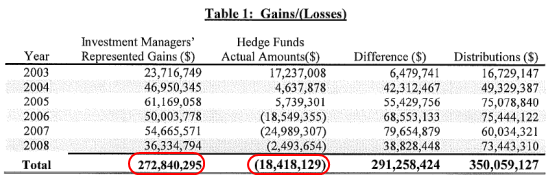
    This chart from Burton Wiand's court filings in the Arthur Nadel case shows that the hedge funds purported to have recorded more than $272 million in gains between 2003 and 2008, then the funds actually lost more than $18 million. In 2007, the funds purported to have gained more than $54 million, but actually lost nearly $25 million.
    This chart from Burton Wiand's court filings in the Arthur Nadel case shows that the hedge funds purported to have recorded more than $272 million in gains between 2003 and 2008, when the funds actually lost more than $18 million. In 2007, the funds purported to have gained more than $54 million, but actually lost nearly $25 million.

    The SEC approved the 90 percent settlement figure, Wiand said. He added that the window was closing on the discount deal.

    In a November court filing, Wiand said that “those who do not settle with the Receiver should anticipate that litigation will be commenced in the immediate future” and that the discount “will no longer be available.”

    It appears as though two groups of clawback targets exist: a group of 85 who received letters and were offered the discount, and a group of an unknown size that will receive settlement letters soon.

    Wiand said the group of 85 represented about $16.2 million in fictitious profits from the scheme. The other group represents about $22.8 million.

    Read Wiand’s interim receivership report in the Nadel case.

    See Nadel story in Sarasota Herald Tribune.

    See Bolze story from WATE.

  • POLL: As 2009 Draws To A Close, Cast Your Vote For The Most Interesting Figure In The AdSurfDaily Story

    EDITOR’S NOTE: Included in this post is a year-end poll to determine “The Most Interesting Figure” in the long-running AdSurfDaily story. Five of the seven choices are individuals who’ve been an intriguing part of the story. The remaining two choices are intriguing entities consisting of individuals.

    The individuals include Andy Bowdoin (the only individual in our ASD poll against whom prosecutors have asserted allegations of wrongdoing — and so far just civil allegations); Curtis Richmond; “Professor” Patrick Moriarty; Bob Guenther; and Poster “joe,” also known as “little joe.” The entities are the Pro-ASD Surf’s Up forum and a less public group we’ve deemed the “Conspiracy Theorists.”

    Brief memory-refreshers appear below the poll. Some readers perhaps will want to read the memory-refreshers before voting. You may make only one selection.

    Here, now, the story and the poll . . .

    From the date upon which federal prosecutors filed the first of two forfeiture complaints against Florida-based AdSurfDaily in August 2008, the ASD story and accompanying black comedy quickly became less about the Ponzi and more about the intriguing personalities.

    ASD President Andy Bowdoin has had two birthdays since then; he’s now 75 — and one of several U.S. senior citizens implicated in Ponzi schemes of national and international significance. On Aug. 1, 2008, the U.S. Secret Service filed a 37-page affidavit under seal in the case. The affidavit was accompanied by 57 pages of evidence — enough to persuade a federal magistrate judge to order more than a dozen bank accounts to be frozen.

    In its affidavit, the Secret Service said it feared Bowdoin had become aware of scrutiny into his business affairs and planned to flee the country.

    “I have not included every detail of every aspect of the investigation for this affidavit,” the agent who prepared the affidavit said. “Rather, it only includes the information necessary to prove that probable cause exists for a seizure warrant to be issued for property constituting proceeds of a wire fraud scheme.”

    U.S. Magistrate Judge Alan Kay agreed the Secret Service had made a compelling argument. Kay issued 13 orders directing the Secretary of the U.S. Department of Homeland Security “and any Authorized Officer of the United States” to seize 10 Bowdoin bank accounts and three accounts tied to Golden Panda Ad Builder, a closely-connected autosurf purportedly born on a Georgia fishing lake in April 2008 after Bowdoin had spent the day casting lines with Rev. Walter “Clarence” Busby Jr., who would later emerge as GP’s president.

    Aug. 1, 2008, was a Friday. Almost instantly ASD members spun the seizure of the bank accounts as a positive development, claiming the government would see the beauty of ASD’s business model after taking time to listen to the company’s story and that ASD would return quickly to the business of paying “advertisers” profits of 30 percent a month.

    Agents were planning a friendly “visit” in the days ahead, members claimed, again positioning the purported “visit” as a net plus because ASD’s business model was legally sound.

    What the vast, vast majority of the members making the initial claims did not know at the time was that the Secret Service had conducted surveillance in the case in multiple locations and gathered damning evidence from records and interviews with members.

    No criminal charges have been filed to date against Bowdoin or ASD, although the prosecution asserts in civil filings that ASD operated as a criminal enterprise.

    What had been positioned as a friendly “visit” in the earliest hours after the seizure proved to be the execution of search warrants at Bowdoin’s home and at ASD’s headquarters in a former floral shop in Quincy, Fla. The warrants were executed on Aug. 5, a Tuesday, four days after the Secret Service stopped the scheme from mushrooming any further by seizing the bank accounts.

    By Aug. 12, according to members, Bowdoin was comparing the actions of the Secret Service to the actions of the 9/11 terrorists who killed nearly 3,000 people, with Bowdoin saying “Satan” was at work. The allegations contained in the August forfeiture complaint, which was a public filing with several evidence exhibits attached, created a significant PR problem for Bowdoin in addition to the legal problem.

    The vast, vast majority of ASD members learned for the first time in the Aug. 5 civil filing by prosecutors that Bowdoin had been arrested in Alabama in the 1990s in a felony securities-fraud case and had entered guilty pleas. As a result of the filing, many members also learned for the first time that Rev. Busby had been implicated by the SEC in a prime-bank scheme in the 1990s and that Busby had declared bankruptcy.

    This information had been shielded from ASD and Golden Panda members as they were throwing money at the surfs, the Secret Service said. Agents went on to seize two more GP accounts. After reconciliations, the 15 accounts linked to ASD and Golden Panda contained just shy of $80 million, according to records.

    As strange as it sounds, a core group of ASD members pooh-poohed the allegations. Instead of considering that perhaps they had been conned by two individuals who previously had been central figures in serious securities litigation, the core group set out to demonize the government.

    In the months after the federal seizure — and in the months after Florida Attorney General Bill McCollum filed a fraud lawsuit against ASD — federal prosecutors released more information drip-by-drip. The information was part of follow-up filings in the August 2008 case. By December 2008, prosecutors had filed a second forfeiture complaint against ASD-connected assets.

    Several intriguing personalities have emerged since the initial filing in August 2008. Bowdoin, for example, initially contested the forfeiture. In January 2009, however, he submitted to it after meeting with prosecutors over a period of at least four days.

    But before February 2009 had come to a close, Bowdoin reentered the case — this time as a pro se litigant who’d purportedly fired his paid attorneys.

    Curtis Richmond, an ASD member, also emerged as a pro se litigant. He accused the prosecutors of crimes, suggesting a federal judge was operating a “Kangaroo Court” and was guilty of treason. For good measure, he accused a second federal judge of operating a “Kangaroo Court.” Dozens of pro se litigants would follow, some using a Richmond litigation blueprint and others using a blueprint that had been provided by an ASD upline.

    “Professor” Patrick Moriarty, who advanced Richmond’s theories of the case, embarked on a certified-mail campaign to discredit the prosecution. He also wrote a letter to Sen. Patrick Leahy, asserting that Leahy, the head of the Senate Judiciary Committee, should set the committee’s investigative sights on the prosecutors who brought the ASD case, not the alleged wrongdoers who operated ASD.

    Bob Guenther, de facto head of the ASD Members Business Association (ASDMBA), also emerged as an intriguing personality. Guenther led a campaign to raise money so ASD members could hire an attorney to protect their legal interests in the case, and was criticized for not providing transparent accounting of how the money was spent and for bullying members verbally.

    Among other things, Guenther also was criticized for not revealing he had pleaded guility to a felony count of bank fraud in the 1990s and for responding to his critics by asserting they were “wusses” or “liberals.” Some ASDMBA members now say they see the organization as an entity that collected money and dissipated it while taking no effective action.

    Poster “joe,” meanwhile, emerged as an intriguing personality when he rationalized the so-called autosurf “industry” as just another business pursuit akin to gambling. He blasted autosurf opponents, saying he did not care if autosurf Ponzi schemes were illegal as long as they paid.

    “joe,” who described himself as a former Vietnam Prisoner of War, apparently decided eventually that the best way to express his point of view was to become chronically disruptive and abusive. He then morphed from Ponzi promoter to cyberstalker, threatening to set “fires” to disrupt the PP Blog’s operations.

    Since the fall of 2008, Surf’s Up has been a constant presence — and an intriguing personality — in the ASD story. Among the forum’s notable contributions was an assertion that Bowdoin, despite his felonious history, was “too honest” to testify at a hearing ASD asked a federal judge to conduct. The “too honest” explanation came in response to Bowdoin’s decision to take the 5th Amendment at a proceeding his company specifically requested.

    Surf’s Up also has urged members to take part in various letter-writing campaigns in support of Bowdoin, including Moriarty’s campaign. Moriarty was indicted on federal tax charges about a month after his February 2009 campaign to Leahy had begun, although the Moriarty prosecution and the ASD prosecution do not appear to be related.

    Research showed, however, that Moriarty, who started a nonprofit company to advocate for ASD, also had started a nonprofit company in the name of a Missouri man who had been accused of murdering a woman in cold blood and shooting a police officer four times.

    Federal prosecutors alleged that Moriarty, who at one time advertised tax expertise, had under-reported his income by an unspecified amount for the tax year 2002; claimed a false deduction of $30,000 for “legal fees” for the tax year 2003; and claimed a false amount of $23,533 withheld for the tax year 2004 and a false amount of $23,433 withheld for the tax year 2005.

    No poll that did not include the ASD conspiracy theorists as a choice for the most interesting figure would be complete. We’re aware, of course, that there may be some crossover, as some of the other poll choices have shared one conspiracy theory after another and conflated one new reality after another in their zeal to lend support to Bowdoin.

    Readers inclined to select the “Conspiracy Theorists” option, however, should make an effort to divorce the other nominees from the theories. For the purpose of this poll, the “Conspiracy Theorists” are those intriguing ASD members who purport to believe that paper currency is a government plot, that President John F. Kennedy was assassinated because he was about to expose the overall government conspiracy pertaining to money and that U.S. lawmakers passed secret legislation in the 1990s in anticipation of a visit by reptilian aliens.

    The ASD Ponzi story is like none other. Will Bowdoin emerge as the most interesting personality? Will Moriarty, “joe,” Richmond, Surf’s Up or Guenther?

    Or will it be the “Conspiracy Theorists?”
  • REPORT: Feds Open Inquiry Into Allen Stanford’s Political Donations; Committee To Which Andy Bowdoin Donated Money Again Makes News In Ponzi Probe

    The Justice Department has opened a probe into the political donations of R. Allen Stanford, according to the Miami Herald.

    Stanford is jailed in Texas amid allegations he presided over a $7 billion Ponzi scheme on the Caribbean island nation of Antigua.

    Among the first names to surface were the names of the National Republican Congressional  Committee (NRCC) and its chairman, Rep. Pete Sessions, R-Texas. The names of Democratic politicians also have surfaced, according to the newspaper.

    NRCC is the organization to which AdSurfDaily President Andy Bowdoin — himself implicated in a Ponzi scheme by the Justice Department — donated money in 2007 and 2008 as the purported head of two companies and received the Congressional “Medal of Distinction.”

    Despite its important-sounding name, the medal is part of an NRCC marketing plan and signifies only an individual’s ability to write a check for what amounts to the purchase of banquet tickets.

    In a story apt to embarrass Sessions and others, the Miami newspaper reported yesterday that, on Feb. 17, the date Stanford was indicted, Sessions sent an email to Stanford.

    “I love you and believe in you,” the newspaper quoted Sessions as writing. “If you want my ear/voice — e-mail.”

    Today the newspaper reported that Rep. Gregory Meeks, D-N.Y., traveled to Venezuela in 2006 after Stanford asked him to carry a message to President Hugo Chávez.

    Stanford was concerned that a former employee in Venezuela who had been accused of fraud was questioning whether Stanford’s operation itself was a fraud, the newspaper reported. A year after Meeks carried the message to Chavez, the Stanford employee was indicted by Venezuelan prosecutors and charged with swindling money.

    The story raises questions about whether Meeks’ purported intercession with Chavez might have helped Stanford delay the inevitable exposure of the alleged Ponzi scheme and whether he was relying on politicians to run interference for him prior to the exposure of the scheme.

    Stanford’s empire, which prosecutors and regulators said was a Ponzi scheme propped up by Certificates of Deposit that paid above-market rates and lured investors into unsafe, uninsured offshore banking instruments, collapsed less than two months after the Bernard Madoff Ponzi collapsed in December 2008.

    Meeks traveled to Venezuela in April 2006, according to the newspaper.

    The extent of prosecutors’ interest in linking Ponzi money to politics and determining if corrupt money influenced votes and policy is unclear. At a minimum, however, prosecutors are known to have peeled back layers of the onion in Florida.

    In an announcement dripping with the word “co-conspirators” last month, Acting U.S. Attorney Jeffrey Sloman of the Southern District of Florida, the FBI and the IRS said that money from disbarred Florida attorney Scott Rothstein’s alleged Ponzi scheme was “used to make contributions to federal, state, and local political candidates.”

    In the Rothstein case, investigators are seeking to determine if the scheme existed in part as a means to evade campaign-finance laws. Rothstein Ponzi money also was used “to provide gratuities to high ranking members of police agencies,” officials said.

    In August 2008, prosecutors said that ASD’s Bowdoin had donated money to NRCC and that ASD members claimed the “Medal of Distinction” Bowdoin received for the donations was an important award from the White House.

    Federal Election Commission (FEC) records show that Bowdoin gave money to NRCC and claimed to be the owner of two companies: AdSurfDaily and AdSalesDaily.

    On Feb. 27, 2007, the Federal Election Commission recorded a $250 donation from “Mr. T. Bowdoin” in the name of “AdSalesDaily Inc.” The FEC recorded another $250 donation from “Mr. T. Bowdoin” in the name of “AdSalesDaily Inc.” on March 27, 2007.

    Screen shot of Federal Election Commission record showing 'Mr. T. Bowdoin' was the 'owner' of 'Adsalesdaily, Inc' and made a political donation under that name in 2007.

    Both 2007 donations were targeted to NRCC and used an address — 13 S. Calhoun Street, Quincy, FL 32351 — federal prosecutors later said was bogus.

    Although the donations listed Bowdoin as the “owner” of Florida-based AdSalesDaily Inc., the corporation appears not to have been registered in Florida. Records in Georgia list “Ad Sales Daily, Inc.” as a corporation that initially was registered in Georgia May 8, 2007, more than two months after Bowdoin identified himself as the owner in federal campaign records.

    The Georgia entity does not list Bowdoin as an owner, officer or filer for the corporation — or as a person involved in any capacity. Rather, “Ad Sales Daily, Inc.” is listed as a Delaware foreign corporation, with J. Heardy Myers listed as the corporate filer and Myers (of Marietta, Ga.) and Otis Whitcomb (also of Marietta) listed as officers.

    AdSalesDaily Inc. was incorporated in Delaware on March 22, 2007, about 24 days after Bowdoin made his initial NRCC donation, according to filings.

    FEC records show that Bowdoin — under the name of “Mr. T. Andy Bowdoin, Jr” and “AdSurfDaily Inc. and AdSurfsDaily Inc.” (the second “s” is an apparent typo)  — gave $5,000 to NRCC in 2008. Two donations of $2,500 were recorded — one on June 6, 2008, and another on July 7, 2008.

    Even as the FEC was recording the donation on July 7, undercover agents from an IRS/Secret Service task force based in Florida were beginning to scrutinize ASD.

    Bowdoin has a tie to a bank in Antigua, although it is unclear whether the tie is to a bank controlled by Stanford because Bowdoin has not identified the bank. Prosecutors, however, said ASD had $1 million on deposit in Antigua in an account under a different name.

    Records suggest that the alleged Bowdoin Ponzi scheme might have operated under as many as four names dating back to early 2006: DailyProSurf, AdSurfDaily, AdSalesDaily and ASDCashGenerator.

    Litigation surrounding tens of millions of dollars seized from ASD in August 2008 has turned into Theater of the Absurd, with dozens of pro-se litigants attempting to enter the legal skirmish between the Justice Department and Bowdoin.

    One of the great mysteries of the case is why Bowdoin suddenly started donating money to NRCC in 2007 — during a time in which the company was not making payments to members and said it needed to issue a stock offering in which shares would be sold for $10,000 to raise funds.

  • Senior Citizen Guilty In Michigan Ponzi Scheme; Feds Say Richard Taft Johnson Sold ‘Charitable’ Program To Fellow Seniors, Duping Them Into Ruin

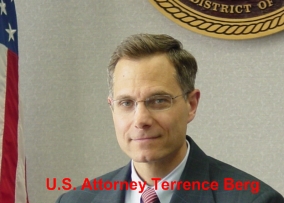
    U.S. Attorney Terrence Berg
    U.S. Attorney Terrence Berg

    Both state and federal prosecutors in Michigan have been attacking Ponzi schemers and affinity fraudsters. Yesterday the office of Michigan Attorney General Mike Cox charged three men with racketeering for their roles in an alleged time-share Ponzi scheme targeted at senior citizens.

    In a separate Michigan case, federal prosecutors have announced the guilty plea of Richard Taft Johnson, 67, of Orchard Lake. Johnson is a member of an ever-lengthening list of senior citizens implicated in Ponzi schemes. The list includes names such as Bernard Madoff, 71, (New York/Florida); Richard Piccoli, 83, (New York); Andy Bowdoin, 75, (Florida); Julia Ann Schmidt, 68, (Texas); Judith Zabalaoui, 71, (Louisiana); Arthur Nadel, 77, (Florida/NewYork); Ronald Keith Owens, 73, (Texas); James Blackman Roberts, 71, (Arkansas); and Larry Atkins, 65, (North Dakota).

    bowdoinmadoffnadel

    Johnson pleaded guilty to mail fraud for devising a Ponzi scheme known as the “American Charitable Program,” which led investors to believe “investments would benefit
    charitable organizations such as universities or other educational institutions,” prosecutors said.

    But the purported charitable program was a fraud that promised returns of 10 percent per quarter — and the fraud was magnified by bogus “periodic statements showing the purported increasing value of their investment accounts,” prosecutors said.

    “This was an insidious Ponzi scheme because investors were told it was a safe, secure investment that would ultimately help charities,” said U.S. Attorney Terrence Berg of the Eastern District of Michigan.

    “Like most Ponzi schemes, it went undetected for a number of years, allowing some investors to reap a profit on their investments, and encouraging others to invest,” Berg said.

    He added that Ponzi perpetrators often recruit others to spread the word about exciting investment programs, which later prove to be Ponzi schemes that cause embarrassment and ill-will among family and friends.

    “It can be very disturbing for a victim to discover that he has innocently caused friends or relatives financial ruin,” Berg said. “In the end, a number of the [Johnson] investors, some quite elderly, lost everything because their monies were used to keep the scheme going until the inevitable collapse.”

    The Johnson probe is ongoing, despite the plea. “In the course of this investigation, we will be attempting to help ascertain what, if anything, the victims’ might be able to salvage of their financial worth,” Berg said.

    Assisting in the probe are the FBI, the State of Michigan Office of Financial Insurance Regulation and the State of Florida Division of Insurance Fraud. Berg said the agencies have “worked very hard to investigate and compile the information about Mr. Johnson’s fraudulent activities.”

    Johnson faces up to 20 years in prison and a fine of up to $250,000. He conducted business in Bloomfield Hills, Mich., as Investor Planning Services.

    “As in all Ponzi schemes, Mr. Johnson would pay out earlier investors, or investors who demanded a return of their money, with newer investors’ monies,” prosecutors said. “But he also diverted significant funds to his personal use.”

    The Johnson scheme began to collapse in 2008.

  • EDITORIAL: God, Las Vegas, Satan, The 9/11 Terrorists, The Shills, Andy Bowdoin, And The U.S. Secret Service

    Andy Bowdoin
    Andy Bowdoin

    A claim was made yesterday in a now-deleted Surf’s Up post that AdSurfDaily President Andy Bowdoin “would not sell us out and he has stood his ground firm since August of 2008.”

    It was a lie by Bowdoin through a shill. The source to prove the lie is Bowdoin himself. Bowdoin has acknowledged in his own court filings that he previously was “cooperating” with prosecutors and investigators so he “could possibly avoid a prison sentence.”

    Bowdoin, in fact, advised a federal judge in his own sworn court filings that one of his meetings with the government “lasted three days.” Another meeting lasted at least one day. Bowdoin advised U.S. District Judge Rosemary Collyer that he had “revealed significant information against my interest.”

    The meetings were held in December 2008 and January 2009. Bowdoin’s affidavit implies that the December meeting was the one that lasted three days. So, Andy Bowdoin met with the government for a period of at least four days and revealed “significant information” against his interests and presumably the interests of others — and now Bowdoin, through his Surf’s Up shills, is trying to tell the membership that “he has stood his ground firm since August of 2008.”

    It was all there in black and white at Surf’s Up yesterday — until it was deleted, of course.

    There was no mention of the proof to the contrary: Bowdoin’s sworn affidavit.

    Two Whoppers Since September

    This was the second time since late September that Bowdoin has lied to the membership. During a Sept. 21 conference call, Bowdoin told listeners that the tens of millions of dollars seized in the wire-fraud, money-laundering, securities-fraud and Ponzi scheme case belonged to the members. The U.S. Secret Service listened to this call, transcribed it and presented it to the judge.

    The trouble with Bowdoin’s claim that the money belonged to members is that he told Collyer in three sworn documents he signed on Aug. 13, 2008, that the money belonged to him and his companies.

    Bowdoin now is trying to have Collyer disqualified from the case. It is not the first time an effort evolved to force Collyer to step down. Curtis Richmond, an ASD member who has declared himself a “sovereign” being in other cases and has attempted to have judges and litigation opponents jailed, also tried.

    A Devil In The Details

    Here is how Bowdoin, the purported “Christian,” sought to rally members in August 2008:

    “This is an attack of Satan because we were helping tens of thousands of people around the world,” members quoted Bowdoin as saying in describing the forfeiture case. “But we are more than over-comers, and we get our strength from God. And with God all things are possible. And we’re on our way to a miracle folks. I believe beyond a shadow of a doubt that we’ll be back in business, stronger than ever. It’ll take all the doubts away from all these people about being a Ponzi, because it’ll be proven that we are NOT a ponzi.”

    Of course, the same Andy Bowdoin solicited testimonials from the membership to assist in his battle to retain his money before all of the facts of the case were in. Thousands of trusting members — many of whom identify themselves as Christians and have described Bowdoin as a grandfatherly Christian — provided testimonials.

    Only later did they find out that Bowdoin was “advertising” a failed, dissolved business in his own rotator to qualify for “rebates” and that Bowdoin had told the Secret Service that ASD had $1 million in a bank on the Caribbean island nation of Antigua in an account under a different name.

    Let’s walk that one back: ASD, a purported “advertising” business, was so effective that even a company that no longer exists could make money. Prosecutors later said that Bowdoin paid an an employee to surf for Bowdoin’s son, so the son could make money.

    Bowdoin apparently forgot to tell his own attorneys about the Antigua money. Prosecutors reminded him of it, though, after Bowdoin filed for emergency release of $2 million in seized funds, saying ASD could not pay its rent or hosting bills.

    On or about June 10, 2008, less than two weeks after a May 31 ASD “rally” concluded in Las Vegas with Bowdoin talking about his relationship with God, Bowdoin’s wife and her son, George Harris, used money from two ASD Bank of America accounts and opened an account at a separate bank.

    More than $157,000 of the opening deposit was used to pay off the mortgage on the Harris home in Tallahassee. In the following days, ASD money was used to buy jet skis, a Cabana boat, marine equipment and two automobiles, according to prosecutors.

    Flash forward two months to August 2008 — and Bowdoin’s remarks that ASD had been on the receiving end of an attack from “Satan.”

    “[O]n Friday August 1st we had a 9/11 but it was about 30 times worse,” ASD members quoted Bowdoin as saying on Aug. 12, 2008.

    On the very next day, Aug. 13, Bowdoin signed the sworn affidavits saying the ASD money belonged to him and his companies.

    Bowdoin did not mention the cars, the jet skis, the boat, the marine equipment and the paid-off Harris mortgage at the time. He did not tell members that he was paying an employee to surf for his son. His core message was to inundate the offices of investigators and lawmakers with letters that told the recipients what a poor job they are doing, how unfair they are being, that people are hurting because of the actions prosecutors had taken the previous week in freezing certain ASD assets.

    Only 15 days prior to Bowdoin’s invocation of “Satan” on Aug. 12, 2008, ASD money was used to purchase a Lincoln luxury sedan for $48,244.03. About 16 days after Bowdoin invoked Satan and compared the Secret Service to the 9/11 terrorists, Bowdoin sent a check for $100 to his victims in an Alabama securities scheme a decade earlier.

    At the time, the victims were owed about $45,000, about $3,244 less than the purchase price of the Lincoln.

    God As A Stage Prop

    Yesterday will go down in history as one of the oddest days in ASD’s odd history. Bowdoin, through a shill, told the troops he was still fighting the good fight. The Surf’s Up missive implored members to “get a little excited folks!”

    “Andy explained a few things to me of which I cannot share them all, but I can say that the government attorney’s ‘have’ finally admitted to some things that are totally in our (ASD) favor,” the email from the shill claimed.

    Bowdoin, according to the email, just knew ASD would be back better than ever. The email did not reference a fresh ruling from Collyer that Bowdoin no longer even had standing in the forfeiture case.

    In fact, the email treated the membership as simpletons. It did not acknowledge the proffer letter Bowdoin had signed in the case, his meetings with prosecutors in which he provided information against his interests, his acknowledgments that ASD was operating illegally, his cooperation with the government, his decision to submit to the forfeiture in January 2009 to maximize his chances of avoiding prison time.

    What the email did was insist that Bowdoin had stood “firm” since August 2008, despite the overwhelming proof to the contrary. Indeed, the same man who invoked “Satan” and the 9/11 terrorists to destroy the reputation of the agency that guards the Treasury and the life of the President of the United States — the same man who tried to destroy the reputation of his defense counsel — is the same man who now is trying to have a federal judge removed from the case.

    Collyer can’t be fair, Bowdoin says — and he apparently says it with a straight face, just as he did when he said this on May 31, 2008, in Las Vegas:

    “We need to have an attitude of gratitude with God.

    “And I always say, ‘Thank you, God, for developing me into a money magnet.’ And I see myself as a money magnet in attracting money and, I say, attracting large sums of money.”

    Only 11 days later, the money was deposited to pay off the Harris mortgage.

    harrismortgage

  • BREAKING NEWS: Bowdoin Tries To Have Judge Collyer Disqualified; Collyer Says She Will Not Step Down From Ponzi Forfeiture Case

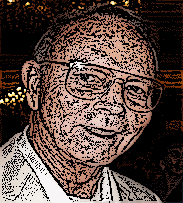
    andybowdoinart12AdSurfDaily President Andy Bowdoin has filed a motion to disqualify U.S. District Judge Rosemary Collyer from hearing the civil-forfeiture case against tens of millions of dollars seized from ASD last year.

    Collyer reponded by issuing an order in which she refused to disqualify herself. Collyer said Bowdoin no longer had standing in the case.

    “If Mr. Bowdoin is displeased with a ruling of the Court, he has a right to appeal,” Collyer said. “If Mr. Bowdoin wishes to file a complaint against the Court for perceived judicial misconduct, he may address such complaint to Mark J. Langer, Clerk of Court, U.S. Court of Appeals for the District of Columbia Circuit.”

    Bowdoin’s motion was filed Dec. 17 — the same date ASD members said they received what purported to be an emailed Christmas greeting from ASD and Bowdoin. The email suggested Bowdoin planned to continue his legal fight and that 2010 would be the year ASD would prove it was not a Ponzi scheme after having failed to do so either in 2008 or 2009.

    In September, prosecutors said Bowdoin was “delusional.”

    In an affidavit in support of the disqualification motion, Bowdoin claimed Collyer had a “deep seated animosity” toward him and that the judge “has a personal bias and predudice” against him.

    Among Bowdoin’s assertions in the sworn affidavit was that an order Collyer issued last month proved she was biased against him.

    “The Honorable Judge Collyer evidenced personal bias and prejudgment, stating that if I were found eventually guilty of the criminal charges now being investigated by a grand jury, but upon which no indictment has yet been issued, Bowdoin ‘will face a term of incarceration for sure,” Bowdoin said.

    Charles A. Murray, a Bowdoin attorney, filed the disqualification motion.

    “Judge Collyer has, prior to trial on the merits on potential criminal charges, already foreclosed the possibility of parole, or probation, evidencing precisely . . .  ‘a deep-seated favoritism or antagonism’ which renders ‘fair judgment impossible,’” Murray argued.

    Collyer, though, said she was not stepping down.

    Noting that Bowdoin formally withdrew his claims to the seized funds in January 2009 and then attempted to reassert the claims a month later, Collyer said she ruled in November 2009 that she was not going to reverse herself and permit Bowdoin to reaasert his claims.

    “[O]n November 10, 2009, finding that he knowingly and voluntarily released his claims with respect to Defendant properties, the Court denied his motion to renew those claims,” Collyer said. “Thus, Mr. Bowdoin is no longer a party to this action. The Court therefore will deny Mr. Bowdoin’s motion for disqualification due to lack of standing.”

  • Purported Andy Bowdoin Christmas Email With Prayerful Message Causes A Stir Among Members; ASD President Has Not Refuted Authenticity Of Greeting

    Andy Bowdoin
    Andy Bowdoin

    Several PP readers reported Thursday and Friday that they’d received a prayerful email purportedly sent as a Christmas greeting by AdSurfDaily President Andy Bowdoin.

    We did not receive a single correspondence from a reader who was happy about receiving the email. In one way or another, the readers questioned the prudence of sending such an email.

    “Does this mean he is fighting the govt. and there will be more court dates over the next year?” one reader inquired.

    “I just received an email Christmas Card from Andy,” another reader wrote. “He wishes me a year of prosperity and believes that this year he will prove that ASD is NOT a ponzi and that they will be back in business during 2010. If you did not receive it, I will be happy to forward it to you.”

    We are skeptical that the email came from Bowdoin, despite the fact ASD’s address in Quincy, Fla., appears at the bottom. Regardless, Bowdoin, so far, has not publicly refuted the authenticity of the email. The more time that passes, the more it will look like Bowdoin sent the email, authorized it to be sent or could not prevent it from being sent.

    It’s bad news for him whether or not he is the author.

    If Bowdoin waits too long to issue a statement, then people will question why he did not refute the authenticity of the email earlier and why someone other than Bowdoin seems to have control over the ASD database. If he acknowledges the email came from him, then he’ll appear to be every bit as delusional as federal prosecutors said he was in a September court filing.

    Some ASD members say they are viewing the email as a sick joke by an unknown person. Others say they believe that Bowdoin actually sent it, speculating that he is so out of touch that he actually believes that ASD will return to business next year, as the email suggests. The email also implores members to rely on their religious faith.

    A few lines in the email don’t strike as Bowdoin-like, perhaps particularly an exultation that ASD will rise again and “will blow your socks off.”

    That sounds more like a prankster or amateur than it does Bowdoin. Even so, it would have to be a prankster or amateur who had access to names and email addresses in an ASD database.

    Or it might not be a prankster at all. ASD was fundamentally corrupt from top to bottom. The email could be from someone who has the database in whole or in part and is testing it to achieve an end that is unclear.

    There are lots of interesting possibilities — something always in play with ASD because of its history of sending impossibly mixed messages. Although it purports to be a professional communications firm, the company has displayed remarkable tone-deafness and a tin ear for anything even remotely resembling an understanding of real-world PR.

    If there is a lightning rod, ASD will touch it. If there is a speeding train bearing down on ASD,  the company will not step out of harm’s way. In September, for instance, Bowdoin informed members in a conference call that the money the government has seized in the Ponzi scheme forfeiture case was seized from participants, a story completely at odds with a story he told a federal judge in court filings.

    Indeed, Bowdoin had insisted in sworn court documents that the money belonged to him, not the members. The U.S. Secret Service transcribed the conference call and presented it to the judge in a filing.

    Bowdoin’s erratic behavior and history as a con man leads to all sorts of questions about the purported Christmas greeting. Could Bowdoin or someone else be using the ASD database to test support or weed out perceived spies and critics to eliminate them from the database?

    Could people who respond to the email with anything other than “You rock, Andy!” be deleted for posing a continuing danger to the next enterprise?

    Paranoia runs high in the ASD enterprise and among its promoters. The only truly safe members under this scenario are those who can be relied on not to rat. Some of ASD’s more ardent supporters have used thuggish language, calling critics and doubters “rats” and “maggots” and “cockroaches,” for instance.

    Such words generally are not used by legitimate enterprises or enterprises that have a core understanding of public relations. They are more consistent with enterprises that are trying to enforce cohesiveness through fear of reprisal.

    Could another form of deception be in play? Could it somehow serve a useful purpose for Bowdoin to have sent the email or silently approved its sending, only to refute it later and suggest others within the enterprise have hijacked the business?

    Bowdoin and a progeny autosurf known as AdViewGlobal (AVG) have a history of blaming members for unsettling developments in the companies. Prosecutors said Bowdoin had at least one “silent” partner in ASD, which leads to the possibility there was more than one. Meanwhile, ASD members now say Bowdoin was the silent head of AVG.

    In March 2009,  AVG blamed the reported suspension of its bank account on members. It later blamed members for its inability to pay members. At one point, AVG appeared to be using some of the same arguments ASD had used to explain troubling events, suggesting that members who questioned the company and insisted AVG operate in transparent fashion by identifying its owners and managers and providing proof of its geographic location were responsible for the company’s troubles.

    Is someone using the ASD database to try to build an All-Criminal Team or to determine the identities of members who’d be most inclined to do business with criminals?

    Could Andy Bowdoin be the victim of a practical joke or an effort to make him look as bad as possible in the eyes of the membership at large?

    We don’t know.

    What we do know is that the very nature of ASD has led to scores of questions, a laundry list of possibilities and one unqualified PR and legal disaster after another.

    For now, we’re going with the theory that a person or entity unknown to the email recipients is trying to determine the identities of ASD members most inclined to do future business with criminals.

    That would be very useful information — so useful, in fact, that it could aid an unknown person or entity to create a list consisting of the names of people who don’t mind doing business with criminals. That would not be a bad thing if prosecutors could obtain such a list and use it as a filter to segment the names of criminal perpetrators from the names of actual victims of ASD’s corruption.

  • FEDS: Man Bilked $10 Million In Ponzi Scheme That Traded On Name Of The Famous NASCAR Brand

    ponziblotterEven as stock-car fans were celebrating the news that Indy-car driving star Danica Patrick would hopscotch circuits and participate in a limited number of events in NASCAR’s Nationwide Series next year, federal prosecutors were putting together a Ponzi scheme case against a man alleged to have obtained $10 million by using NASCAR’s name.

    Eliott Jay Dresher, 63, of Chatsworth, Calif., was jailed yesterday in California after a federal judge ruled him a flight risk.

    In a case put together by the FBI and the U.S. Postal Inspection Service, prosecutors said Dresher “solicited money from investors with promises that their money would be used to finance a business in which [he] purchased NASCAR apparel and sold the merchandise to ‘big box’ stores such as Costco.”

    Dresher, however, “did not really operate such a business and all of the funds paid to investors were ‘Ponzi’ payments that came from the victims’ principal investments,” prosecutors said.

    NASCAR races are among the most popular spectator sports in the world. Fans are extremely loyal to the brand. It was not immediately clear if investigators were viewing the case against Dresher as a form of affinity fraud or perhaps brand leeching.

    Affinity fraud often is an element in Ponzi schemes, which frequently are targeted at specific groups of people, including members of a particular faith or ethnicity.

    Brand leeching also is associated with Ponzi models. Such approaches may include claims a company is the “next Google” or the “next Microsoft,” for instance. In the alleged $100 million AdSurfDaily Ponzi scheme, prosecutors said the company tried to leech credibility by falsely claiming that its president, Andy Bowdoin, had received a special award from the White House for business acumen.

    Investigators said the Dresher scheme using NASCAR’s name operated for about 10 years before collapsing in 2008.

    About 50 participants invested a total of $10 million over the years, lulled by Dresher’s guarantee that they would receive returns “typically between 20 percent and 25 percent every six months,” prosecutors said.

    The Dresher case has some of the hallmarks of Ponzi schemes under investigation in Minnesota and Illinois in which investors were told their money was being used to finance sales of goods that would be resold at a significant profit.

    Minnesota businessman Tom Petters, 52, was convicted in a $3.65 billion Ponzi scheme earlier this month. Meanwhile, Gerard Frank Cellette Jr., 44, is jailed in the state amid allegations he fleeced $53 million in a Ponzi scheme involving bogus printing contracts.

    In Illinois, Matthew Scott, 50, was accused of running a $28 million Ponzi scheme by assuring investors their funds would be used to purchase or finance the purchase of high-speed commercial printers that would be sold to third-party buyers at a profit.

    The machines were said to be valued in excess of $100,000, and Scott claimed his mark-up of 20 percent led to big profits, the FBI said.

    Scott, 50, of Elmhust, Ill., was charged with mail fraud. His Chicago-area company, Gelsco, neither purchased nor financed such printers, the FBI said.