Tag: ASD

  • URGENT >> BULLETIN >> MOVING: Kenneth Wayne Leaming, AdSurfDaily Figure And Purported ‘Sovereign Citizen,’ Has Been Arrested In Washington State

    Kenneth Wayne Leaming

    UPDATED 3:59 P.M. ET (U.S.A.) : Kenneth Wayne Leaming, an AdSurfDaily figure and a purported “sovereign citizen,” has been arrested in Washington state.

    Leaming, 55, is listed as a prisoner at the Sea Tac Federal Detention Center near Seattle, a spokesman for the Federal Bureau of Prisons said this afternoon. The circumstances under which Leaming was arrested and detained were not immediately clear. Also unclear was the date upon which he was arrested.

    Federal prosecutors in the office of U.S. Attorney Ronald C. Machen Jr. in the District of Columbia — the venue from which ASD President Andy Bowdoin was charged last year with operating a Ponzi scheme involving at least $110 million — did not immediately return a call seeking comment on Leaming’s arrest and whether it was related to his ASD activities.

    The office of U.S. Attorney Jenny A. Durkan in Seattle had no immediate details on Leaming’s arrest and detention.

    In 2010, Leaming unsuccessfully sought to sue the United States — apparently for the staggering sum of more than $29 trillion — for its actions in the ASD case.

    Meanwhile, in 2009, Leaming sought to place the Washington State Bar Association in involuntary bankruptcy, according to federal records. Records also show that Leaming sought to place a Franciscan hospital in Washington state in bankruptcy.

    The Anti-Defamation League lists Leaming as a member of an “active anti-government extremist group that calls itself the ‘Little Shell Pembina Band of North America.’”

    Leaming, who uses the names of “Kenneth Wayne” and “Keny,”  was blocked in 2010 by U.S. District Judge Rosemary Collyer from filing pro se pleadings in the civil case against ASD’s assets. That case was brought in the District of Columbia by the U.S. Secret Service in August 2008.

    Records show that, in 2010, ads listing Leaming as an “attorney” appeared online. Leaming, though, appears to have no law degree.

    ASD members have claimed Leaming was providing them legal advice.

    Leaming’s company — American-International Business Law Inc. of Spanaway, Wash. — is listed as registered agent for at least 73 companies. Some of the companies use the word “federal” in their names. One company conjures the image of a U.S. government agency in its name, calling itself “Homeland Security Service.” Another company calls itself “Presidential Detail.”

    Two other companies use forms of the name “JP Morgan.”

    Some sovereign citizens — including members of ASD — have clashed with banks in litigation unrelated to ASD.

    In October 2011, some ASD members received an email that used the Leaming nickname “Keny” and encouraged them to file paperwork at the “county” level that identified a federal judge, prosecutors and a U.S. Secret Service agent as “DOJ thieves.”


  • BULLETIN: OH, FLORIDA! Receiver In Alleged Commodities Online LLC Ponzi Caper Says Scheme Operated Through Multiple Companies; James Clark Howard III, Louis N. Gallo III, George Saliba And Martin Vegas Sued For Combined Millions Of Dollars

    James Clark Howard III

    BULLETIN: David S. Mandel, the receiver in the alleged Commodities Online LLC Ponzi and fraud scheme, has sued four Florida residents and is demanding more than $9 million.

    Named defendants in U.S. District Court in the Southern District of Florida are James C. Howard III of Parkland; Louis N. Gallo III of Parkland; Martin Vegas of North Bay Village; and George Saliba, also known as George Saliva, of Parkland.

    “From January 26, 2010 until April 1, 2011, Howard and Gallo operated and controlled a Ponzi Scheme designed to defraud investors that allowed Howard, Gallo and their confederates to steal and misappropriate investor funds,” Mandel alleged in the lawsuit.

    “Howard and Gallo, in running the Ponzi Scheme, regularly made transfers of Commodities Online funds from one related entity to another with no business purpose other than to make the Ponzi Scheme more difficult to detect and assist in conveying the appearance of a profitable business to investors,” Mandel alleged.

    Howard controlled Florida firms known as Sutton Capital LLC and J&W Trading LLC, Mandel alleged. Meanwhile, Gallo controlled Florida firms known as Minjo Corp. and American Financial Solutions LLC, according to the lawsuit.

    Four “related entities involved in the inter-company transfers utilized in the Ponzi scheme” were identified by Mandel as:

    • SSH2 Acquisitions Inc, controlled by nondefendant Michael Palermo.
    • Rapallo Investment Group LLC, controlled by non-defendant Patricia Saa.
    • Minerales Mexiron LLC, a Florida firm controlled by defendant George Saliba.
    • Minerales Mexico Iron SACV Inc., another Florida company controlled by Saliba.

    Former AdSurfDaily member and Surf’s Up moderator Terralynn Hoy is listed in Nevada records as a “director” of SSH2. She has not been accused of wrongdoing. SSH2 sued Howard and others in 2010, in a case that alleged it was a victim of a Ponzi scheme.

    On two dates in February 2010, Mandel alleged, Howard “wrongfully converted” more than $1.74 million my moving it from Commodities Online to Sutton Capital and JW Trading.

    In March 2010 and April 2010, according to Mandel, Howard caused Commodities Online to “lend” more than $320,000 to yet another entity: Pisces Trading Inc.

    “Howard thereafter directed Pisces Trading, Inc. to repay these loaned Commodities Online funds to his wholly owned and controlled entity, J&W Trading, thereby converting the Commodities Online funds to his own benefit and use,” Mandel alleged.

    From March 2010 to March 2011, “Gallo converted $413,143 of Commodities Online funds to his own use and benefit by causing net funds to be transferred to his wholly owned and controlled entity, American Financial,” Mandel alleged.

    Between May 2010 and March 2011, according to the lawsuit, “Gallo converted $1,767,870 of Commodities Online funds to his own use and benefit by causing net funds in that amount transferred to his wholly owned and controlled entity, Minjo.

    In March 2011, according to the lawsuit, Gallo also “converted $360,000 of Commodities Online funds to his own use and benefit by causing those funds to be wired to Minerales Yacimientos y Reservas in Mexico, which the Receiver is advised is a fictitious company.”

    Still moving money in March 2011, Gallo “converted $226,200 of Commodities Online funds to his own use and benefit by causing those funds to be wired to Terracerias y Pavimentos in Mexico” — plus the following sums and destinations:

    • $40,044 to Jorge Ortega Balderas in Mexico.
    • $700,000 to Diego Diaz Ceballos Torre in Mexico.
    • $625,000 to Grupo Minero Leecota in Mexico.
    • $150,000 to Franscisco Javier Ortiz Gonzalez in Mexico.

    In a separate filing, Mandel said that the process of determining whether Commodities Online had any iron holdings in Mexico had proven difficult, but that investigators now believe that there is “no recoverable iron ore in Mexico.”

    What happened to the money in Mexico is unclear. In April 2011, the SEC alleged that about $3.8 million funds linked to Commodities Online flowed to Mexico and the Netherlands as the agency was issuing subpoenas in the emerging fraud case in March 2011.

    The transfers were “extremely suspicious,” the agency said in April.

    “Howard, Gallo, and Vegas breached their fiduciary duty to Commodities Online and its investors by personally stealing and misappropriating Commodities Online funds, allowing coconspirators to steal and misappropriate those funds, and dissipating almost $3 million through imprudent transfers of Commodities Online funds to Mexico without adequate controls and documentation to insure the company’s assets and funds,” Mandel alleged in the lawsuit.

    Money continued to flow to Mexico even after Commodities Online retained attorney James Sallah in March 2011 and Sallah “counseled management of Commodities Online to discontinue all solicitations of new investor money, to freeze all existing company assets and otherwise cooperate with the Securities and Exchange Commission,” according to Mandel’s lawsuit.

    “Contrary to Mr. Sallah’s advice, defendants Howard, Gallo and Vegas, in disregard of their fiduciary duties to Commodities Online and its investors, continued to authorize wire transfers of Commodities Online funds to various accounts in Mexico where the funds became untraceable and defendants could re-divert the proceeds of the wire transfers to their personal use and benefit,” according to the lawsuit

    Vegas, according to Mandel, “converted $631,264 of Commodities Online funds to his personal use and benefit by causing those net funds to be paid out to him for no consideration.”

    Saliba, according to the lawsuit, “controlled” Minerales and Mexiron and “converted $2,089,368 of Commodities Online funds to his own use and benefit” between May 2010 and November 2010.

  • UPDATE: David Lewalski, Head Of Botfly LLC Ponzi Caper In Florida, Sentenced To 20 Years; In Rationalizing $30M Fraud Scheme, Lewalski Painted Investigators As Bogeymen, Complaining About ‘Orwellian Totalitarian Tactics’ As He Called Victims’ Advocate A ‘Nazi’ And ‘Bi***’

    David R. Lewalski, the Florida man who ran a $30 million commodities Ponzi and fraud scheme known as Botfly LLC and persuaded at least one investor to pony up cash to pay for his defense, has been sentenced to 20 years in federal prison.

    Elements of the Lewalski caper were reminiscent of elements of the alleged AdSurfDaily Ponzi scheme, which also operated from Florida. Vile language was directed at investigators in both cases, and Lewalski urged victims not to cooperate with authorities. One person gave Lewalski $50,000 to pay for a lawyer — after Lewalski jetted to Europe on a private Gulfstream IV a day after Florida investigators implicated him in a Ponzi scheme, according to court filings.

    ASD President Andy Bowdoin also is asking his members to pony up for his defense to Ponzi charges. A number of ASD members have urged fellow members not to cooperate with authorities.

    After his European junket, Lewalski eventually came back to the United States and ensconced himself in a swanky hotel suite overlooking Central Park in New York while pretending to be elsewhere, according to court filings.

    The U.S. Postal Inspection Service alleged that Lewalski complained to investors he defrauded about “recent ‘Orwellian’ totalitarian tactics” employed by U.S. investigators in Ponzi scheme cases, instead of accepting accountability for his fraud.

    Assistant U.S. Attorney General Lanny A. Breuer joined U.S. Attorney Robert E. O’Neill of the Middle District of Florida in making the announcement about Lewalski’s prison sentence.

    In September, Breuer joined with U.S. Attorney Ronald C. Machen Jr. of the District of Columbia in announcing that $55 million had been returned to ASD victims. The U.S. Secret Service seized the money in August 2008.

    Bowdoin called investigators “Satan.” Other ASD members called them “Nazis” and “goons.”

    In the Botfly case, Lewalski described a victims’ advocate a “c[$%!]” and a “Nazi,” according to court filings. In one rant, Lewalski allegedly said, “So f[$%!] her what a bitch.”

    Court documents also allude to a woman who allegedly was called an “FDLE chick” and described by Lewalski as “nuts” and a “bitch.”

    FDLE is the acronym of the Florida Department of Law Enforcement, which assisted in the state and federal probes of Lewalski.


  • BULLETIN: E-Bullion Operator And Emerging AdSurfDaily Figure James Fayed Formally Sentenced To Death For Contract Slaying Of Estranged Wife; A ‘Cold, Calculating Human Being’

    BULLETIN: The Los Angeles Times is reporting (link below) that James Fayed has been formally sentenced to the death penalty for arranging the brutal slashing death of Pamela Fayed, his estranged wife and a potential witness against him.

    James Fayed, 48, is an emerging figure in the AdSurfDaily Ponzi case. Federal prosecutors in the District of Columbia said in December 2010 that E-Bullion was used to forward money to ASD, which the U.S. Secret Service described as a massive international Ponzi scheme that used multiple payment venues to amass at least $110 million.

    Erma Seabaugh, an ASD member who used E-Bullion, was an ASD trainer, according to the government. Records in Oregon show that Seabaugh, whose assets were seized in the ASD case, was operating a purported “religious” nonprofit firm from Missouri. The purported religious entity was known as Carpe Diem.

    Seabaugh’s assets were seized in February 2009, during a period of time in which the AdViewGlobal (AVG)  autosurf was launching and ASD President Andy Bowdoin was morphing into a pro-se litigant and trying to undo his January 2009 decision to submit to the forfeiture of $65.8 million seized by the Secret Service from 10 Bowdoin bank accounts in August 2008. AVG had close ASD ties, according to members.

    E-Bullion has been linked to multiple Ponzi schemes, including Legisi, Gold Quest International and FEDI. The FEDI scheme has been linked to Abdul Tawala Ibn Ali Alishtari, also known as Michael Mixon. Ali Alishtari pleaded guilty in 2009 to financing terrorism and fleecing investors in the FEDI scheme.

    FEDI participants could expect to receive payouts deemed “rebates,” according to documents obtained by the Ontario Securities Commission from a FEDI promoter who simultaneously was promoting a mysterious business known as the “Alpha Project.” ASD also used the word “rebates” to describe its payouts, according to court filings.

    Ali Alishtari, like ASD’s Bowdoin, contributed money to Republican causes and heralded a purported GOP award for his business acumen, according to documents.

    Seabaugh used ASD’s advertising “rotator” to promote an apparent “pyramid scheme” known as StreamlineGold.net, according to federal court filings. Like ASD, Legisi and GoldQuest International, StreamlineGold.net was promoted on Ponzi boards such as TalkGold and MoneyMakerGroup.

    Pamela Fayed was stabbed 13 times in a Greater Los Angeles parking garage on July 28, 2008. The Times reported today that James Fayed was seated on a nearby park bench “texting” on his cell phone while his alleged accomplices carried out the slaying.

    Los Angeles Superior Court Judge Kathleen Kennedy described James Fayed as “one cold, calculating human being,” according to the Times. Kennedy formally imposed the death sentence yesterday. The jury that convicted James Fayed in May recommended the sentence.

    From the Times (italics added):

    The only person within earshot who didn’t react was the victim’s estranged husband who was sitting on a nearby bench “texting on his cellphone, like he doesn’t have a care in the world,” Los Angeles County Superior Court Judge Kathleen Kennedy said Thursday, moments before sentencing James Fayed to death for the contract killing.

    Read the chilling story in the Times.

  • UPDATE: More Red Flags At ‘Text Cash Network’; Firm’s ‘Official’ Video Has YouTube Upload Date Of Nov. 15, 2011 — But Same Video With Nearly 3-Year Old Upload Date Also Appears On YouTube For Same ‘Opportunity’

    In this Nov. 13 post, the PP Blog published a list of red flags concerning online promos for Text Cash Network (TCN), purportedly an emerging business “opportunity” involving text advertising and cell phones. A promo for TCN appeared — and then vanished — from a website linked to huckster Phil Piccolo, known online as “the one-man Internet crime wave.” Piccolo has been associated with other schemes that involved cell phones, namely Data Network Affiliates (DNA).

    This post raises another red flag — and once again, the issue is about Piccolo’s potential TCN involvement or the involvement of Piccolo associates. In the DNA scam, the purported firm used generic YouTube videos to drive traffic to its purported opportunity. In 2010, for example, DNA incongruously posted a YouTube video known as “JK Wedding Entrance Dance” to its website, using the video to promote DNA.

    The “JK Wedding Entrance Dance” video — a You Tube smash — had absolutely nothing to to with DNA. The video was designed in part to create awareness about domestic violence and to publicize the Sheila Wellstone Institute.

    Sheila Wellstone was a human-rights advocate. She and her husband, Sen. Paul Wellstone, D-Minn., were killed in a plane crash in 2002. Their daughter, Marcia, died in the same crash.

    After conducting a “prelaunch” event with much fanfare on Nov. 11 — Veterans Day in the United States — TCN now has added a You Tube video to its website. An all-caps line of “OFFICIAL LAUNCH 12/12/2011” appears below the video, which plays in miniature on TCN’s site.

    But the video also is playing in full size on YouTube’s site. Text on the YouTube site dubs it “THE OFFICAL TEXT CASH NETWORK (TCN) – RIGHT HERE – RIGHT NOW” site. The upload date of the video is listed as Nov. 15, 2011: yesterday.

    The same video, however,  appears elsewhere on YouTube — and its upload date is listed as Jan. 26, 2009, nearly three years ago. Despite the upload date, the video also is promoting TCN, whose website appears to have been registered just last month.

    Both videos raise questions about whether YouTube is being gamed by TCN and affiliates. Meanwhile, the videos use the same soundtrack by Fat Boy Slim: “Right here, right now.”

    Among other things, Piccolo is known to use all-caps presentations and to hype “prelaunches” and “launches” for weeks. He also is known to hype launches by publishing the names of top promoters — something TCN is doing — and to try to stay in the background of “opportunities,” as opposed to becoming the public face of them.

    Joe Reid, a known Piccolo associate, has served as a conference-call host for TCN. Reid also hosted conference calls for DNA, which was linked to Piccolo last year and served up Theatre of the Absurd and a sea of incongruities.

    DNA, for example, misspelled the name of its own CEO — and didn’t advise members that the CEO had left the company for nearly a week. The former CEO told the PP Blog last year that the firm was engaging in “bizarre” conduct and a campaign of “misinformation and lies.”

    After the former CEO agreed to an interview with the PP Blog, a PR handler who described himself as a conflict-management strategist” sought to intervene. As the year proceeded, DNA appeared to have both entered and exited the cell-phone business in a matter of weeks — while planting the seed that it would pay enormous rates of return to customers who provided it money, even as it purportedly entered businesses such as mortgage writedowns and offshore “resorts” after apparently abandoning its purported core business of helping police recover kidnapped children.

    At one point, DNA was urging members to record the license-plate numbers of cars in a purported bid to assist the AMBER Alert program — while it was selling a purported “protective spray” that would make it impossible for cameras placed by police at intersections to snap usable photographs of the plates.

    In 2009, another purported “advertising” opportunity known as Biz Ad Splash (BAS) used the same Fat Boy Slim soundtrack. Walter Clarence Busby Jr., the purported operator of BAS, is a figure in the alleged AdSurfDaily Ponzi scheme and is the former operator of Golden Panda Ad Builder. Golden Panda surrendered more than $14 million in the ASD Ponzi case, and the SEC said that Busby was involved in three prime-bank schemes in the 1990s.

    The SEC has not responded to requests for comment on the emerging TCN “opportunity.”

    As of now, it can be said that two “advertising” schemes — BAS and TCN — are using the same music in what appears to be largely generic promos for business “opportunities.”

    It also can be said that DNA, one of the “businesses” associated with Piccolo, also used generic videos and caused them to play in miniature on “prelaunch” and “launch” sites for “opportunities.”

    It also seems possible — if not likely — that certain MLM promoters have found a way to edit YouTube sites to make the content appear “current” or to store generic videos and use them for multiple “opportunities.”

    Questions

    Why does one video for TCN show an upload date of January 2009 while the “official” site shows a video upload date of yesterday — when it is the same video and TCN purportedly is a “new” opportunity?

    Did TCN exist in an earlier form as far back as 2009? If so, what happened back then — and why is it reemerging now?

    Are certain MLMers simply using generic videos they uploaded earlier to YouTube — and then editing the YouTube sites when a new “opportunity” comes along, thus potentially maintaining a search-engine advantage no matter what “opportunity” comes along?

    Why would a company that purports to be a market and technology leader use what appears to be a generic video as its “official” video?

    Why did a promo for TCN that appeared on the website of OWOW — a site linked to Piccolo — suddenly go missing last week?

    Why does TCN appear to be closely following “prelaunch” and “launch” strategies associated with purported Piccolo “opportunities?

    Screen Shot 1

    This YouTube video for Text Cash Network bears an upload date of Jan. 26, 2009, even though TCN claims it is a new company proceeding from a "prelaunch" in recent days to "launch." The video is a duplicate of a video dated Nov. 15, 2011 that claims to be TCN's "official" video.

    Screen Shot 2

    This YouTube video for Text Cash Network bears an upload date of Nov. 15, 2011, even though the same video for the purported TCN opportunity appears elsewhere on YouTube and bears an upload date of Jan. 26, 2009, nearly three years ago. TCN claims it is a new company proceeding from "prelaunch" to "launch." TCN claims the Nov. 15, 2011 video is its "official" one. Both video sites feature all-caps when addressing prospects and content that is virtually the same.

    Screen Shot 3

    This 2009 YouTube video for the purported Biz AdSplash "advertising" program used the music of Fat Boy Slim. An emerging "advertising" opportunity known as Text Cash Network is using the same Fat Boy Slim music: "Right here, right now." While BAS purported to deliver "advertising" to computers, TCN purports to deliver it to cell phones.
  • In Rejecting Tortured Legal Constructions, Judges Across America Now Point To Utah Case Involving AdSurfDaily Mainstay Curtis Richmond

    UPDATED 11:54 A.M. ET (U.S.A.) Curtis Richmond claimed the federal judge overseeing the AdSurfDaily civil-forfeiture case in the District of Columbia was among a group of “Co-Conspirators” that included two federal prosecutors and a court clerk.

    The judge, Richmond claimed, was violating her oath and conspiring with another judge to deny ASD members justice. Prosecutors, meanwhile, were helping the judge interfere with commerce, according to Richmond. The judge rejected Richmond’s arguments — but it didn’t stop other ASD pro se litigants from advancing similar arguments.

    For his bid to intervene in the ASD Ponzi case, Richmond was labeled a “hero” on both the pro-AdSurfDaily “Surf’s Up” forum (now defunct) and on a forum that championed the AdViewGlobal autosurf (now defunct). Among Richmond’s boosters was “Professor” Patrick Moriarty, a Missouri man who once started a purported nonprofit in the name of a man accused of murdering a woman in cold blood and shooting a police officer.

    Moriarty later was indicted for tax fraud. He pleaded guilty after prosecutors said they had “casino” records and intended to use them in the case against Moriarty, who advertised that he sold fake academic degrees on e-Bay as “gag gifts.”

    Prior to Moriarty’s indictment, members of the Surf’s Up forum joined with him in forming a purported Missouri nonprofit known as ASD Members International (ASDMI). ASDMI’s stated mission was to litigate against the government for its role in the ASD Ponzi case.

    Utah resident and ASD figure Christian Oesch — later to join with Washington state resident and ASD figure Kenneth Wayne Leaming in a failed 2010 bid to sue the United States for more than twice the U.S. Gross Domestic Product in 2009 — filed pro se pleadings in the ASD case that championed Richmond’s take on the law.

    But Curtis Richmond’s court forays now have been cited by various judges in various jurisdictions as reasons to reject tortured legal constructions. A federal judge in North Dakota, for example, cited this Utah case involving Richmond as a reason to reject tortured arguments advanced by Michael Howard Reed, a so-called “sovereign citizen” now serving two prison sentences for federal crimes.

    One of Reed’s crimes was filing false liens and threatening a federal judge; the other was possession of a firearm and ammunition by a fugitive from justice.

    Richmond, a Californian who advanced the notion in the 2006 Utah case that he enjoyed diplomatic immunity that extended to him from an “Indian” tribe, became a figure in the ASD case in 2008. The “tribe,” which a federal judge ruled a “sham,” came to be known derisively as the “Arby’s Indians” because it once conducted a meeting at an Arby’s restaurant.

    Reed, whose name surfaced in the 2008 SEC Ponzi case against Gold Quest International after he claimed to be the “attorney general” of an unrecognized tribe and asserted a claim against the agency for $1.7 trillion, asserted in a separate case that the government could not prosecute him because he was immune to U.S. law and had trademarked his name.

    Here is a verbatim section from one of Reed’s nonsensical pleadings in federal court in North Dakota. (Italics/identation added):

    “boa-kaa-konan-na-ishkawaanden=Michael-Howard-Reed=original-creditor-original-beneficiary: for MICHAEL-HOWARD-REED=original-debtor-trustee agent; Under the Penalties of Perjury Affirm that MICHAEL HOWARD REED©TM is a Fictional Entity . . .”

    Richmond’s Utah case was cited in the North Dakota case as a reason to reject Reed’s bizarre arguments.

    It also was cited in this Colorado case in which a U.S. Magistrate Judge rejected the tortured legal constructions of Christopher Douglas Wise. Among other things, Wise, a prisoner in the Colorado state system,  asserted that he was a “secured party creditor” who’d never lived in the “District of Columbia” — and that somehow this alleged fact set destroyed the jurisdiction of the Adams County District Court in which he was convicted of a crime.

    In a separate case in Florida, a federal magistrate judge pointed to Richmond’s Utah “Indian” pleadings as a reason to reject arguments advanced by Timothy Black, who was serving two life sentences for sex crimes involving children and tried to overturn his conviction in part by claiming he had copyrighted his name and by arguing he was not subject to Florida law.

    “Petitioner was found guilty by a jury and convicted of two counts of sexual battery on a person less than twelve years of age, and one count of lewd or lascivious molestation on a person less than twelve years of age,  and sentenced to two terms of life and one term of thirty years, to be served concurrently,” the judge noted.

    Here is a verbatim section from Black’s court claims. (Italics added):

    “Therefore the Third Party [Intervener] is the party who is injured by the action at large as he is incarcerated as surety for his collateral, Debtor TIMOTHY W BLACK© Ens Legis . . .”


  • HAVE THE ‘GAMES’ BEGUN? AdSurfDaily Members Todd Disner, Dwight Owen Schweitzer File Lawsuit Against Government That Claims Undercover Agents Violated Firm’s Terms Of Service; Federal Prosecutors Say Money Was Seized Properly With Valid Warrants

    UPDATED 11:27 P.M. ET (U.S.A.) In May, an email attributed to AdSurfDaily member Todd Disner declared, “Let the games begin!” The remark was in the context of a lawsuit Disner and fellow ASD member Dwight Owen Schweitzer intended to file against the United States once ASD members chipped in enough money to fund the complaint.

    Those games apparently have begun with the filing today of a pro se “complaint for declaratory relief” by Disner and Schweitzer in the Southern District of Florida against the United States and Rust Consulting Inc., the government-approved claims administrator in the civil-forfeiture portion of the ASD Ponzi case.

    The lawsuit asks a federal judge in Florida to find that the seizure of assets and business records belonging to Disner and Schweitzer was “illegal and void” and demands their return. It also asks the judge to order Rust to “disclose all information in its possession or available to it pertaining to” Disner and Schweitzer.

    Among the claims in the lawsuit are that undercover agents from a U.S. Secret Service/IRS Task Force who joined ASD prior to the seizure of tens of millions of dollars from the bank accounts of ASD President Andy Bowdoin violated ASD’s Terms of Service and had a duty to report their alleged TOS violations, including the insertion of an agent’s undercover “MySpace” page in ASD’s advertising rotator, to the company.

    Rust is headquartered in Minnesota. Although the complaint named the United States a defendant alongside Rust, the address listed for the United States by Disner and Schweitzer was the address of the office of U.S. Attorney Ronald C. Machen Jr. in the District of Columbia.

    Disner, an unsuccessful pro se litigant in the ASD civil case brought by the government, is a co-founder of the Quiznos sandwich franchise. He lives in Miami. Schweitzer, a former attorney, also lives in Miami. The government’s case against ASD-related assets was filed in the District of Columbia in August 2008. Disner was denied standing in the District of Columbia on Aug. 31, 2009, more than two years ago.

    Among other things, Disner and Schweitzer claim their private records as contained in ASD’s database were confiscated illegally by the government. They also claimed  an affidavit filed in the forfeiture case by the U.S. Secret Service was flawed and that the government hired Rust to implement a remissions program “designed to collect evidence and coerced admissions from the plaintiffs to be used by the government” at the criminal trial of ASD President Andy Bowdoin.

    Federal prosecutors in the District of Columbia — the venue in which both the criminal and the civil cases against Bowdoin and ASD-connected assets were filed — had a different take.

    “The funds in this case were seized under properly issued judicial warrants,” Machen’s office said today. “Beyond that, the U.S. Attorney’s Office has no comment on the matter at this time. ”

    Puzzlingly, the complaint filed by Disner and Schweitzer and recorded on the docket of U.S. District Judge Cecilia M. Altonaga today makes the assertion that “To date the plaintiffs are unaware of any remission payments having been made and specifically the plaintiffs were unable to get the information required for their submissions, all of which are still in the possession of the government.”

    On Sept. 22 — more than six weeks ago — the PP Blog reported that thousands of ASD members who filed approved remissions claims would receive back 100 cents on the dollar. Members reported that the money was deposited electronically into their bank accounts beginning on Sept. 23. On Sept. 26, the government announced that $55 million was being returned, with the Secret Service describing ASD as a “criminal enterprise” and the Department of Justice describing the ASD scheme as “insidious.”

    In a Sept. 28 email, even Bowdoin acknowledged that he was aware the government had returned money to members through the remissions process. Among other things, the ASD patriarch claimed the government had forced members to lie to receive compensation.

    Disner and Schweitzer not only claim in their complaint that they are “unaware” of any money being returned, they also claim the remissions program was designed to “prevent, hamper and forestall the return” of funds.

    Meanwhile, Disner and Schweitzer claim that ASD was a profitable venture, in stark contrast to assertions by the government that ASD was insolvent because it created a liability of $1.25 for each dollar it took in through the sale of purported “advertising.”

    Disner and Schweitzer also took issue with government agents joining ASD and allegedly violating the ASD membership agreement, including an undercover agent who placed his undercover “MySpace” page in ASD’s advertising rotator. In August 2008, the government alleged that “ASD did not require, or even verify that the agent “had any product or service to sell.”

    Had the agents “lived up to the obligations they took on by becoming members of ASD they should have reported their own violations of the ASD terms of service with the result that the sites they foisted upon ASD would have been removed and the benefits to them as advertisers’ would be forfeited as the ASD rules mandated,” Disner and Schweitzer argued.

  • A BRIEF STUDY IN CASH-GIFTING CONTRASTS: The Attorney General, The BBB — And Hank Needham (Before The Club Asteria Brainstorm And CONSOB Probe)

    In this June 2008 video, Hank Needham — later to emerge as a Club Asteria principal — counts out a stack of £20 British notes delivered in a cash-gifting scheme. Using the pronoun "we" without defining who "we" was, Needham told viewers that "we" intended to open a cash-gifting "school." About three years later, Club Asteria positioned itself as an online "education" leader. In a March 2008 cash-gifting video, Needham was featured counting out a small stack of U.S. $100 bills. What was needed, Needham coached, was "training" on how to post cash-gifting videos on the Internet. Prosecutors say cash-gifting is illegal. The BBB calls it a pyramid scheme. In May 2011, CONSOB, the Italian securities regulator, blocked promos for Club Asteria in Italy. Needham has called himself a Club Asteria owner, and Club Asteria had described him as the director of sales and marketing “responsible for establishing Country, Regional and Network Team Leaders."

    In this post, we included a March 2008 Dailymotion video of Hank Needham — later to emerge as one of Club Asteria’s purported owners — hawking a cash gifting scheme in which five $100 bills (U.S.) spilled out of an envelope tucked inside an envelope delivered by overnight courier DHL. (Please note that March 2008 video also appears on a separate site. The date notation on that site is May 2008.)

    Another cash-gifting video from Needham — this one  dated June 2008 — has surfaced. In the June 2008 video, Needham is holding an envelope from FedEx, another overnight courier. “Now, we have another [envelope] — I won’t really go through the courier — I don’t think we’re supposed to use this courier anymore,” Needham tells viewers, after making sure they notice what he describes as a “little pile of cash that’s accumulating” to his left.

    As the June 2008 video proceeds, Needham removes cash that has been packed snugly in the FedEx envelope. It’s British pounds as opposed to U.S. currency this time — and this time the money has come from “Robin” (or Robyn?) in the “British Isles.” Unlike the March (and May) 2008 video in which “George,” presumably an American, is reported by Needham to have sent five large U.S. bills, “Robin,” presumably a Brit, has chosen to send 25 twenty-pound notes. Needham counts out all 25 bills, creating five rows with five bills in each row. Why Needham was reluctant the mention the name of FedEx was not made clear in the video. What was clear was the Needham wanted viewers to know that “we’re opening up a website called CashGiftingSchool.com.”

    He did not define “we.” The “school” website, which appears to have been registered in April 2008 while Needham was pushing the AdSurfDaily scheme in addition to cash-gifting, now resolves to a page that beams ads. (It’s worth noting that Needham, in 2008, was wearing casual attire while hawking the cash-gifting “school,” apparently from his home. Flash forward three years to 2011: Club Asteria is positioning itself as an “education” leader and featuring Needham on video. He is wearing a crisp, black suit in the 2011 video — and the backdrop is a board room. A button promoting the 2011 Club Asteria video in which Needham is showcased in the black suit is labeled “ABOUT COURAGE.” The button appears in Club Asteria’s October 2011 recruitment house organ.)

    Various Club Asteria-related entities have been trading on the names of various charities, including the American Red Cross. The Red Cross sent the purported Asteria Philanthropic Foundation a cease-and-desist letter 11 days ago, and the relief agency said yesterday that the foundation agreed to stop using the Red Cross  logo and other materials. How long it will take the Asteria-themed enterprises to comply is unclear.

    Needham’s image also appeared in 2008 promos for AdSurfDaily, an autosurf the U.S. Secret Service called an international Ponzi scheme.

    The Attorney General

    Before you take a look at the June 2008 Needham video — which appears to have been placed on Dailymotion just two months before the spectacular seizure by the U.S. Secret Service of tens of millions of dollars in the ASD Ponzi case — we’d like you to take a look at what the attorney general of Michigan says about cash gifting. Bill Schuette notes that purveyors can be charged with felonies. Mike Cox, Schuette’s predecessor as attorney general, said the same thing.

    Needham does not mention the law in either of his videos; he’s too busy counting bills. He appears to be less than pleased that “Robin,” unlike “George” in the other video, packed the bills tightly. It is unclear in either video whether DHL or FedEx left the envelopes in a secure place before Needham retrieved them. In other words, had the envelopes been left on Needham’s doorstep, they could have been stolen, an outcome sure to have created an unpleasant situation for both the senders and Needham.

    The BBB

    Now — to accent this brief study in contrast before you view Needham’s June 2008 cash-gifting video — take a look at this brief video on cash-gifting fraud by the Better Business Bureau:

    Hank Needham


    The CASH PROOF by hankneedham

  • EDITORIAL: Another Dark Day For ‘Asteria Foundation’ And Related Entities As American Red Cross Issues Statement Suggesting It Was Duped: ‘We Have No Record Of Receiving A Donation From This Organization And Have Not Partnered With Them’ On Japan Earthquake Relief ‘Or Any Other Projects’

    UPDATED 9:36 P.M. EDT (U.S.A.) The American Red Cross is a national treasure whose powerful and noble name never should be diluted or trifled with. But it is now apparent that various Club Asteria-related entities have done exactly that by not revealing certain critical information to the Red Cross while at once shamelessly seeking to build the Asteria brand across multiple platforms by tying it to the Red Cross — beginning in the spring during a period in which the agency was responding to a crisis in Japan.

    To describe what the Asteria entities have done as spectacularly parasitic with equally disgusting measures of greed and ham-handedness thrown in would be a gross  understatement. In any event, the Asteria entities have created a deplorable situation that sparked the Red Cross to issue a statement today. (You’ll see the full statement beginning four paragraphs below.) The statement was issued this afternoon from Washington, D.C., and emailed by the Red Cross to the PP Blog. The statement concerns the purported Asteria Philanthropic Foundation, which is linked to the purported Club Asteria business “opportunity” and other Asteria-themed enterprises. The Asteria enterprises are using the Red Cross name and logo in promos across multiple websites — while calling the Red Cross a partner. No partnership exists, the Red Cross made clear today.

    Members of Club Asteria — participants in any of the Asteria-themed enterprises — need to know that at least one of Club Asteria’s purported owners, Hank Needham, has been linked to promotions for online Ponzi schemes and pyramid schemes. (You’ll see a cash-gifting video starring Needham below.) The stench lives on three years after the taping, and it cannot be dissipated by leeching off the name of the Red Cross.

    This is a story that only is getting uglier. Ten days ago — after becoming concerned that its name and logo were being misused — the Red Cross sent the purported Asteria Foundation a cease-and-desist letter. It later developed that Needham had appeared in a May 2008 video that advertised a cash-gifting scheme. Needham, whose face also appeared in a 2008 promo for the alleged $110 million AdSurfDaily Ponzi scheme, is seen in the video opening an envelope from a courier service. A smaller envelope was packaged in the courier envelope — and five $100 bills spilled out of the smaller envelope. Needham fanned them for the camera. Cash-gifting schemes are prosecutable under pyramid-scheme statutes, despite what prospects are led to believe. U.S. Sen. Richard Blumenthal, D-Conn., called cash-gifters “parasites” when he was attorney general of Connecticut.

    The PP Blog has added the italics to today’s statement by the Red Cross:

    The Asteria Foundation contacted the American Red Cross in April and said it wanted to make a donation to aid relief efforts in Japan after the earthquake and tsunami. At the time, the organization requested information on how the donation might be put to use and we directed their representative to published information on Red Cross recovery efforts. The organization also requested the ability to mention its donation to us in its own press materials, which we felt was appropriate.

    However, we have no record of receiving a donation from this organization and have not partnered with them on that or any other projects. We have requested that the organization remove our logo and other materials from its web site, and they have agreed to do so.

    In September, Club Asteria removed an image and purported “interview” with famed actor Will Smith from its recruitment emagazine amid questions about whether the purported “opportunity” was trying to plant the seed that Smith had endorsed the company.

    Scores of promos for Club Asteria, which trades on the name of the World Bank, have appeared online this year. The promos described Club Asteria as a “passive” investment opportunity that generated a weekly return of up to 10 percent. Club Asteria suspended member cashouts in June, after acknowledging its PayPal account had been suspended — and after claims about Club Asteria came under investigation in Italy.

    Club Asteria was widely promoted on Ponzi scheme forums such as TalkGold and MoneyMakerGroup. Members said payouts were routed through a Hong Kong entity known as Asteria Holdings Limited. When things turned sour at Club Asteria, the Ponzi-forum promoters turned their attentions to other HYIP “programs” that offered absurd returns that translated into purported yearly gains in the hundreds of percent.

    The Asteria Foundation also has used a Hong Kong address — tying it to a fax number in Virginia. Asteria Corp., Club Asteria’s apparent parent company and also the apparent driving force behind the purported Asteria Foundation, is based in Virginia.

    State authorities said last month that neither Club Asteria nor Asteria Corp. was registered to sell securities. Club Asteria has blamed its members for promotional blunders and for PayPal’s decision to suspend its account. That explanation, however, strains credulity — given Needham’s history of pushing multiple fraud schemes. It is inconceivable that Club Asteria did not know that its growth was being fueled by serial hucksters on Ponzi forums and by thousands of promos on the independent websites of Club Asteria affiliates, many of whom preemptively denied Club Asteria was conducting a Ponzi scheme. They could not possibly know whether Club Asteria was on the up-and-up without seeing the books and records from banks and as many as four separate payment processors.

    How much money Club Asteria gained as a result of promos that positioned the company as a cash cow is unclear. Scores of members claimed that paying Club Asteria $19.95 a month would produce a yearly income of more than $20,000. Club Asteria is believed to have gained considerable traction in the Third World. Club Asteria pitchman “Ken Russo,” who also is known as “DRdave” and is believed to operate from the United States, claimed on Ponzi boards to have received thousands of dollars in recruitment commissions via wire from Hong Kong.

    Club Asteria, which has described itself as a revenue-sharing program, does not publish verifiable financial information. The firm now appears to be branching out into social networking, positioning itself as an education leader and “cause” marketing company.

    Ponzi forum promoters, whom some critics describe derisively as “pimps” and “referral whores,” shilled for Club Asteria for months before the company suspended cashouts.

    2008 Hank Needham Video On Cash-Gifting

    Please note that the URL advertised in the Dailymotion video below — ptigift.com — no longer resolves to a server.


    What is all the fuss about Cash Gifting? by hankneedham

  • EDITORIAL: Bogdan Fiedur Of AdLandPro’s Deplorable Bid To Chill RealScam.com In The Age Of International Mass-Marketing Fraud

    A few weeks prior to the Aug. 1, 2008, seizure of tens of millions of dollars in the personal bank accounts of AdSurfDaily President Andy Bowdoin, Bowdoin apparently believed it prudent to plant the seed that the ASD autosurf had amassed a giant pot of cash and would use it to “hammer” critics. His willfully blind followers helped spread the word on forums that ASD detractors soon would feel the sting of being sued back to the Stone Age.

    Here, according to federal court filings, is what Bowdoin told ASD members at a company rally in Miami on July 12, 2008:

    “These people that are making these slanderous remarks, they are going to continue these slanderous remarks in a court of law defending about a 30 to 40 million dollar slander lawsuit. Now, we’re ready to do battle with anybody. We have a legal fund set up. Right now we have about $750,000 in that legal fund. So we’re ready to get everything started and get the ball rolling.” (Emphasis added.)

    Bowdoin thuggishly suggested that ASD had hired a law firm and that the firm was experienced at “bringing the hammer down on people that need it.” It is worth noting that federal prosecutors included the remarks attributed to Bowdoin in a document labeled “Government Exhibit 5.”

    Meanwhile, it’s also worth noting that “Government Exhibit 1” consisted of the 2006 SEC complaint against 12DailyPro that accused the firm of operating an autosurf Ponzi scheme. It was the government’s way of showing that autosurfs such as ASD rely on willfully blind promoters to proliferate. “Government Exhibit 2,” meanwhile, was the SEC’s 2007 complaint against the PhoenixSurf autosurf. The inclusion of this exhibit was another way to show willful blindness.

    One of the interesting things about the PhoenixSurf complaint was that it referenced Virtual Money Inc., which federal prosecutors in Connecticut later linked to alleged money-laundering by a narcotics cartel in Medellin, Colombia.

    Robert Hodgins, the operator of Virtual Money, is an international fugitive wanted by INTERPOL. ASD also used Virtual Money, according to promos for the firm. In December 2010, federal prosecutors said ASD also had a tie to E-Bullion, a shuttered California payment processor whose operator was accused (and convicted) of arranging the brutal slashing murder of his wife in a Greater Los Angeles parking garage. ASD also had a link to E-Gold, a processor convicted in a money-laundering conspiracy case. So did PhoenixSurf.

    “Government Exhibit 4” in the August 2008 ASD Ponzi case consists of surveillance photos taken in ASD’s hometown of Quincy, Fla. The date upon which the photos were taken is unclear, but it is known that the U.S. Secret Service began to investigate ASD on July 3, 2008, a little more than a week before the Miami rally.

    The entry of the Secret Service in the ASD case fundamentally sent two signals: The U.S. government believed its financial infrastructure might be under attack by an organization — ASD — that was trading on the name of the President of the United States. The SEC has said nothing about the ASD case — at least not in public. Bowdoin was indicted on criminal charges in December 2010. If he is convicted on all counts, the man who once claimed to have a giant pot from which he could draw to “hammer” critics could face up to 125 years in federal prison, fines in the millions of dollars and forfeiture orders totaling at last $110 million.

    In the earliest days of the ASD probe, at least three media outlets — including a local newspaper, a Blog and a regional publication — were threatened with lawsuits. Bowdoin ended up suing no one. In fact, within months he was consumed by litigation directed at him from virtually all fronts. Multiple civil-forfeiture complaints were filed, as was a racketeering lawsuit. These things occurred as a criminal investigation was unfolding slowly.

    For all these reasons and more, Bogdan Fiedur — and members of the AdLandPro online “community” — should perform a sober assessment of Fiedur’s recent threat to sue RealScam.com, an antifraud forum.

    Threats to sue journalists, media outlets, forums, Blogs and other websites that publish information about online schemes are bids to chill speech. These bids are occurring as an epidemic of white-collar crime and securities fraud is sweeping the globe during a period in which government budgets are strained and literally thousands of fraud investigations are under way that reach into all corners of the world.

    It is clear that online fraud is responsible for billions of dollars in global losses. These worlds are exceptionally murky. No one knows for certain where the money goes when fraud schemes disappear — as they so often do. It is equally clear that criminal puppeteers behind the schemes are taunting investigative agencies. From the standpoint of the U.S. government, the government and financial institutions are facing attacks of thousands of tiny cuts.

    Lanny Breuer, the head of the U.S. Department of Justice’s Criminal Division, testified on Capitol Hill yesterday that the “convergence of threats” posed by transnational organized crime is “significant and growing. ”

    “Transnational organized crime is increasing its subversion of legitimate financial and commercial markets, threatening U.S. economic interests and raising the risk of significant damage to the world financial system,” Breuer told the Senate Judiciary Subcommittee on Crime and Terrorism.

    Despite worldwide headlines of one massive fraud scheme after another — and despite the fact that the financial lives of real human beings in all corners of the world are being reduced to rubble by serial Ponzi schemers and scammers — Bogdan Fiedur is threatening to sue RealScam.com.

    At a minimum, it is a PR blunder of the highest magnitude. Bowdoin made the same mistake. So did Data Network Affiliates (DNA), a purported business “opportunity” associated with serial huckster Phil Piccolo, who once planted the seed that, if lawsuits didn’t work, he knew the type of people willing to break legs to silence critics. One apologist for Piccolo and DNA planted the seed that a former federal prosecutor, federal judge and director of the U.S. Department of Homeland Security was a suspect in the 9/11 terrorist attacks.

    It doesn’t get much more bizarre than that — unless one is willing to consider that Bowdoin now is trying to raise funds for his criminal defense on Facebook and claiming that God established a program known as OneX to help him do just that.

    OneX is among the “programs” promoted by members of the AdLandPro “community” — as were ASD and Finanzas Forex (and many others) before it.

    And yet Fiedur apparently believes he can chill RealScam.com into stop doing what it does by registering a domain titled “RealScamClassActionSuit.com.”

    Inverting reality, the purported class-action site ventures that “RealScam encourages cyber-bullying and cyber-stalking by allowing the creation of anonymous accounts and by allowing the users to present of (sic) unproven accusations towards individuals of their targeted organization. The RealScam.com turns out to be just a harassment and bashing site with no verification of facts and indiscriminate attacks at anyone who looks like an easy target.”

    It’s easy to imagine Andy Bowdoin or Phil Piccolo saying the same thing — while doling out accolades to the AdLandPro “community” for its excellent judgment about the types of “programs” the world’s masses should be joining.

    “The wealth generated by today’s drug cartels and other international criminal networks enables some of the worst criminal elements to operate with impunity while wreaking havoc on individuals and institutions around the world,” Breuer of the Justice Department observed yesterday. “Generating proceeds often is only the first step — criminals then launder their proceeds, often using our financial system to move or hide their assets and often with the help of third parties located in the United States. Indeed, international criminal organizations increasingly rely on these third parties and on the use of domestic shell corporations to mask crimes and launder proceeds under the guise of a seemingly legitimate corporate structure.”

    And then Breuer asked the Senate panel to enact legislation that would strengthen money-laundering and asset-forfeiture laws and broaden the federal RICO statute.

    Whether the Senate — and the Congress as a whole — will listen is unclear. What is clear is that, at least in the context of online fraud schemes, victims are piling up in numbers that America’s largest sports stadiums cannot accommodate. Losses are in the billions. Vast sums of wealth have been taken from rightful owners and placed in the hands of criminals.

    It is simply beyond the pale that Fiedur asserts that RealScam.com is a menace, when it is one of the few sites in the world that tasks itself with exposing the menace of international mass-marketing fraud that occurs over the Internet.

    One final thing worth mentioning: A few weeks before Breuer ventured to Capitol Hill to testify before the Senate panel, he carried out another important public duty.

    On Sept. 26, Lanny Breuer joined U.S. Attorney Ronald C. Machen Jr. in announcing that ASD victims who filed successful remissions claims in the civil Ponzi case were getting $55 million back.

    “We will continue to use every tool at our disposal to bring justice to the citizens defrauded by these insidious schemes,” Breuer said.

    Get a clue, Mr. Fiedur.

    Visit RealScam.com.
  • Arrest Warrant Issued For Jacob Franz Dyck; Purported Florida ‘Sovereign Citizen,’ 72, Wanted For ‘Committing Criminal Acts Through Simulated Use Of The Legal Process,’ Polk County Sheriff’s Office Says

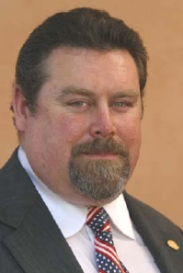
    Jacob Franz Dyck: Source: Polk County Sheriff's Office

    Jacob Franz Dyck, a purported Florida “sovereign citizen,” is wanted on a felony arrest warrant for “Criminal Act Under Color Of Law Or Committing Criminal Acts Through Simulated Use Of The Legal Process,” the Polk County Sheriff’s Office said.

    Dyck, 72, has been the subject of considerable reporting by the St. Petersburg Times. See story about Dyck’s alleged filing of “wild deeds” to cloud property titles here. See story here about a missing pickup truck that led to the issuance of the arrest warrant.

    Three of Dyck’s associates, including a notary public, have landed in jail, the Times reports.

    See August 2011 PP Blog story on an FBI report that asserts there is a “continued effort by Sovereign Citizen domestic extremists throughout the United States to perpetrate and train others in the use of debt elimination schemes.”

    See July 2011 PP Blog report on a 25-year prison sentence handed down to Jeff McGrue, a Washington state man who targeted people “at the end of their rope” in a foreclosure-rescue scam.

    See August 2011 PP Blog report about disciplinary actions against notaries public associated with AdSurfDaily figure Kenneth Wayne Leaming.

    Leaming is a purported sovereign citizen whom records show once filed an involuntary bankruptcy petition against the Washington State Bar Association and a community hospital in Washington state.