URGENT >> BULLETIN >> MOVING: The PP Blog has received the first report from an AdSurfDaily Ponzi victim that Rust Consulting Inc. has deposited his remissions distribution into his bank account and that the sum was 100 percent of his ASD loss.
The money appeared in the member’s bank account this morning. Rust is the Minnesota-based claims administrator in the ASD case.
After weeks of delays, a Facebook “Fan” page for accused Ponzi schemer Thomas Anderson “Andy” Bowdoin finally has launched. The site includes a link to “Andy’s Fundraising Army,” the web venue at which Bowdoin’s bid to raise $500,000 to pay for criminal lawyers has fallen 95 percent short of its goal.
Bowdoin, 76, was arrested in Florida in December 2010 and freed on bail. Federal prosecutors described him as a recidivist securities huckster who’d presided over Quincy-based AdSurfDaily.
ASD was an “autosurf” Ponzi scheme disguised as an “advertising company,” and Bowdoin used some of the money sent in by members to make campaign donations to the National Republican Congressional Committee, prosecutors said.
An early version of Bowdoin’s alleged $110 million Ponzi scheme collapsed in 2007, leaving members holding the bag, according to records. After weeks in limbo, ASD switched the URL from which the purported “program” operated and relaunched under the new name of ASD Cash Generator, sucking in a new crop of victims, prosecutors said.
The accounts and unpaid redemptions of participants active at the time of the 2007 collapse were rolled into the new scheme, and incoming members were not told about the original Ponzi failure and that members were getting paid with recycled cash, prosecutors said.
ASD eventually gained momentum by creating a video lie about the program’s purported legality and by arranging “rallies” in U.S. cities. In late 2007, Bowdoin added a second autosurf Ponzi known as LaFuenteDinero — Spanish for “the fountain of money” — to his criminal tool kit, and compounded his deception, prosecutors said.
In 2008, Bowdoin and Clarence Busby Jr. of Acworth, Ga., struck up a partnership that resulted in the creation of an autosurf known as Golden Panda Ad Builder, describing it as ASD’s “Chinese” option, according to records.
The SEC has described Busby as a prime-bank swindler implicated in three securities schemes in the 1990s. Busby has described himself as a minister and real-estate professional. Records suggest he has lost property in Georgia to foreclosure, was the operator of yet-another surf scheme known as BizAdSplash (BAS) and was on the receiving end of an IRS tax lien.
BAS went missing in early 2010, after positioning itself as a purported offshore business. Its web servers resolved to Panama.
Like Busby, Bowdoin also was implicated in securities schemes in the 1990s, according to records. He narrowly avoided prison time in Alabama by agreeing to make restitution to defrauded investors.
Bowdoin has asked Facebook members to “like” his site. The Facebook site does not mention that three ASD members filed a prospective-class action lawsuit against Bowdoin in 2009, accusing him of racketeering and disguising the nature of ASD’s business.
Nor does the Facebook site reveal that ASD and related businesses have been on the receiving end of at least three civil-forfeiture judgments totaling about $80 million. In August 2008, the U.S. Secret Service seized about $65.8 million from 10 personal bank accounts of Bowdoin through which he was operating the ASD business, according to records.
The seizure occurred after ASD members falsely claimed that Bowdoin had received an award for business acumen from then-President George W. Bush, prosecutors said. Bowdoin filed two appeals when forfeiture orders were entered against his assets, but lost both. His new appeals for cash are targeted at the people Bowdoin is accused of defrauding: the ASD membership base.
In the aftermath of the 2008 seizures, Bowdoin described federal prosecutors in the District of Columbia — the venue in which the forfeiture actions were filed — as “Satan.” Bowdoin’s use of the word “Satan” occurred just weeks after he described himself at a company “rally” in Las Vegas as a Christian “money magnet.”
Bowdoin also compared the seizures to the 9/11 attacks, saying the actions against ASD by the Secret Service were “30 times worse” in some ways than the terrorist attacks that killed nearly 3,000 people in New York, Pennsylvania and Washington.
One of the Washington victims of the 9/11 attacks was Barbara Olson, an author, television commentator and former assistant U.S. Attorney (AUSA) in the District of Columbia office. Olson was the wife of former U.S. Solicitor General Theodore Olson.
In commemoration of the 10-year anniversary of the 9/11 attacks, prosecutors in the District of Columbia dedicated a national-security conference room in Barbara Olson’s memory last week.
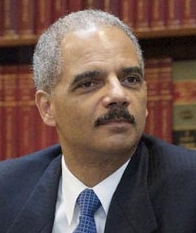
“As an AUSA in [the District of Columbia] office, and throughout her career, Barbara proved that her convictions ran deep, and that her fidelity — to the values she held dear, the principles she fought to defend, and the countless people whose lives she touched — was unshakeable,” U.S. Attorney General Eric Holder said last week.
ASD is known to have so-called “sovereign citizens” in its ranks. Two ASD figures — Kenneth Wayne Leaming and Christian Oesch — sought unsuccessfully to sue the government for its actions in the ASD case, apparently seeking the staggering sum of more than $29 trillion, more than twice the U.S. Gross Domestic Product in 2009.
Leaming was accused in Washington state in 2005 of practicing law without a license. Records show he also was involved in a lawsuit that sought more than $9 billion against a local hospital in Washington state. Filings in the case show that Leaming sought liens against the hospital and even sought to attach it water and mineral rights. At least two notaries public in Washington state with ties to Leaming have had their licenses revoked. The names of both notaries appear on the docket of U.S. District Judge Rosemary Collyer in the District of Columbia.
Collyer is presiding over the ASD-related forfeiture actions and the criminal case against Bowdoin. Bowdoin twice has tried to have Collyer removed from the case. Both efforts failed, and the U.S. Court of Appeals has upheld the forfeiture orders she issued in the case.
Sixty-two people (as of the time of this post) have “liked” Bowdoin’s Facebook fan page. It is unclear if Bowdoin’s fans have followed the ASD case closely.
A Florida man’s weeks-long, nonstop efforts to raise defense funds from the people he is accused of defrauding in a $110 million Ponzi scheme have fallen flat, leaving him 95 percent short of his $500,000 goal.
But AdSurfDaily President Andy Bowdoin says he still wants members to send him money — and he’s asking for one more thing: “positive testimonials . . . for a new page on the fundraising website.”
In a strangely worded email filled with bizarre bullet points some ASD members have received, Bowdoin said this:
Each of you, who have already donated to the Legal Defense Fund, are thanked by me, and I warmly invite you to write your personal viewpoint and testimony in answer to one, or more or all of the following topics:
Why you want to help us fight back against the Govt injustices.
Why you think this Fundraising Army is an excellent way to join forces and do something about it.
Why you donated your small contribution and why you think all ASD members should do the same quickly.
Why you feel positive and hopeful that I can win my court case AND be found “Not Guilty” by the Jury.
Why proving to the jury that ASD is not a Ponzi Scheme is so important.
Why you want us to win the case and what you will do when ASD gets back in business again.
Why you are hopeful that ASD members can get their advertising money back from the US govt.
The accused felon said in the email that he’d gathered only $24,400 of the $500,000 needed. His formal bid to raise funds began on July 26 after weeks of prelaunch hoopla for his website, which is known as Andy’s Fundraising Army.
In August 2008, the U.S. Secret Service seized tens of millions of dollars from Bowdoin amid allegations he was presiding over a massive international fraud caper. Federal prosecutors say Bowdoin is well aware he was conducting a Ponzi scheme.
The money was seized in civil-forfeiture actions, and U.S. District Judge Rosemary Collyer issued final orders of forfeiture and judgments in the government’s favor last year. Prosecutors have established a remissions program from which victims of ASD will receive compensation from seized funds.
More than 11,000 people have filed remissions claims, prosecutors said in court filings.
Bowdoin claimed in court filings that the seized money belonged to him. In a September 2009 conference call, he told members it belonged to them — despite what he had told Collyer.
The U.S. Court of Appeals upheld Collyer’s forfeiture orders.
EDITOR’S NOTE: The U.S. Attorney’s Office for the District of Columbia brought both the civil and criminal prosecutions in the AdSurfDaily Ponzi case. In 2008, ASD President Andy Bowdoin compared prosecutors in the office to “Satan,” saying that what happened to ASD was “30 times worse” in some ways than what happened on Sept. 11, 2001. The 9/11 attacks killed nearly 3,000 people.
Barbara Olson, a former assistant U.S. Attorney (AUSA) in the District of Columbia office, was killed on 9/11 when American Airlines Flight 77 — the plane she was aboard — slammed into the Pentagon. Today the Justice Department dedicated a national-security conference room in the D.C. office in her memory.
Olson was 45 at the time of her death. She was the wife of former U.S. Solicitor General Theodore Olson.
Here are the remarks U.S. Attorney General Eric Holder delivered today in the office of U.S. Attorney Ronald C. Machen Jr. in the District of Columbia. Holder once was U.S. Attorney for the District of Columbia.
Attorney General Eric Holder
Thank you, Ron [Machen], for your kind words, and for your outstanding leadership of an office that is very special to me – and an essential part of our nation’s Department of Justice.
As Ron just mentioned – and as many of you remember firsthand – I once had the privilege of leading this office. I understand the unique jurisdiction, and the vital national security prosecutions, that place you at the center of the Justice Department’s efforts to protect the safety of the American people. In a very real sense, you serve on the front lines of this fight. You’re helping to advance our most critical priorities. And you’re doing extraordinary work.
Let me assure you – Ron never misses an opportunity to brag about his team, and to tell me just how much you’re accomplishing. Especially as we commemorate the tenth anniversary of the most devastating terrorist attacks ever carried out against the United States, it’s clear that this work – your work – has never been more important, or more urgent.
That is one of the lessons of September 11th, 2001 – a day that transformed our entire nation and touched each of our lives. And I know that many of you experienced the human cost of 9/11 in a deeply personal – and painful – way.
The nearly 3,000 innocent victims of 9/11 included a remarkable, and cherished, alumna of this office. Some of us had the chance to work with Barbara Olson – to learn from her example, and to count her as a friend. She reached many others with her professional commentary, her bestselling books, and the enduring impact of her contributions.
Barbara was a wonderful woman – a dedicated public servant, a brilliant attorney, and a loving wife. As an AUSA in this office, and throughout her career, Barbara proved that her convictions ran deep, and that her fidelity – to the values she held dear, the principles she fought to defend, and the countless people whose lives she touched – was unshakeable.
On the morning of September 11th, 2001, Barbara boarded American Airlines Flight 77 – which soon was hijacked by five al-Qaeda terrorists, and plunged into the western side of the Pentagon.
Like so many others on that fateful day – in Arlington, Virginia; in my hometown of New York; and in a field outside of Shanksville, Pennsylvania – Barbara’s life was cut tragically short. But – one decade later – as we gather to reflect on the events of 9/11, and to remember those who were taken from us so suddenly, I believe that – thanks to the heroic efforts of so many law enforcement officers and military service members; the vigilance of dedicated public servants like you; and the extraordinary resilience that the American people – today, our nation is not only safer, but stronger, than ever before.
Despite the best efforts of our enemies, our resolve has never wavered or weakened. Our commitment to doing not just what is necessary, but what is right – to protect the safety and the civil liberties of those we serve – remains certain. And, over the last 10 years, we have proven this nation’s ability to respond to terror threats, but never – never – to submit to them.
That’s why, at its core, the anniversary we observe every September 11th is about far more than the buildings that our enemies brought down, or the damage that they inflicted on our fellow citizens. It’s about honoring the heroism we witnessed. It’s about offering our strongest support to law enforcement officers, military service members, and the families of every victim. And it’s about renewing our commitment to upholding the uniquely American values that have always defined and strengthened this great nation.
In this spirit – and in honor of our fallen colleague – I am proud to join you in dedicating a national security conference room to Barbara’s memory, here in the critical office where she once served.
As we carry on her work – and build on the record of achievement that each of you has helped to establish – let us draw inspiration from all those who have dedicated their lives to the service of others, and whose memories remind us of the quiet power of compassion, patriotism, and selflessness that shone through the smoke and the wreckage of 9/11.
These values have always given our nation strength – even in our darkest moments. Let us continue to honor them. And let us continue our work to ensure that – in our own time and in the work of future generations – the lessons of September 11th, and the rich legacies of those we lost, will never be forgotten.
The bizarre descent into chaos of a failing “program” that claimed to be moving to “offshore” servers and once made its participants swear they were not government spies or media lackeys has gotten stranger yet.
Poster “10BucksUp,” who’s now flogging the JustBeenPaid “program,” falsely claimed on the MoneyMakerGroup Ponzi forum today that the PP Blog posts on MoneyMakerGroup as “ISPY” and published a link to the Blog on the forum to discredit him.
The PP Blog is not “ISPY” and does not post on MoneyMakerGroup under any identity. Nor does the Blog communicate with “ISPY” in any fashion, know his (or her) identity or encourage “ISPY” directly or indirectly to post links to the Blog. The Blog has never encouraged any member of MoneyMakerGroup — or any other Ponzi scheme forum — to post links to the Blog.
It is somewhat common for posters on Ponzi boards, including so-called “naysayers,” to post links to the Blog’s coverage of schemes-in-progress or schemes gone bust. It also is somewhat common for Ponzi board promoters to exhibit paranoia about the Blog’s reporting and even claim the Blog is part of a U.S. government operation.
Prior to asserting that “ISPY” was the PP Blog, “10BucksUp” accused ISPY of threatening him. ISPY denied threatening “10BucksUp.”
“10BucksUp” rose to Ponzi forum prominence as a pitchman and apologist for ClubAsteria, which became the subject of a probe by the Italian securities regulator CONSOB in May, had its PayPal account frozen, slashed weekly payouts to members and then eliminated the payouts.
Meanwhile, “10BucksUp” also acknowledged today that he was a member of the collapsed Cherry Shares HYIP. In June, Cherry Shares was referenced in freeze and trade orders brought by The Autorité des marchés financiers (AMF), the securities regulator for the province of Quebec in Canada.
The acknowledgement by “10BucksUp” of his Cherry Shares involvement means that he was participating in a second “program” that had come under government scrutiny — but nevertheless plowed headlong into JustBeenPaid.
Earlier this month, “10BucksUp” advised members of JustBeenPaid that late-entry members were engaging in hurtful and “drastic measures” if they filed disputes with AlertPay. Among other things, JustBeenPaid has asserted it is a “private association.”
The AdViewGlobal (AVG) autosurf made the same claim prior to its collapse in June 2009. AVG was one of the so-called AdSurfDaily clones — each of which launched (and collapsed) after the August 2008 seizure by the U.S. Secret Service of tens of millions of dollars in a Ponzi scheme investigation.
Today’s false MoneyMakerGroup claims about the PP Blog also occurred against the backdrop of a securities fraud case brought by the SEC against Jody Dunn, an alleged pitchman for Imperia Invest IBC. Imperia Invest also was promoted on MoneyMakerGroup and TalkGold, and the SEC charged that Dunn had promoted it blindly and relied on claims made by the purported opportunity, rather than conducting any actual due diligence.
Millions of dollars directed at Imperia Invest went missing, the SEC charged.
“You want to arrest me? [G]o ahead,” 10BucksUp wrote on MoneyMakerGroup today. “Send a Secret Service/US Seal/intergalactic commando force in my little 3rd world village. Afterall, that is what some Americans think of us right? We all should live under your whims, at what you dictate as legal and not illegal. And then when somebody else invoke that ‘power’ against you, you cry ‘dont tread on me’ or ‘taxed enough already[.”]
“Go ahead with your crusade, Mr ISPY/Patrick Pretty/Twerp,” 10BuckUp continued. “Clean up the world of garbages like us. There are millions of us. I hope you can finish up in your lifetime.”
10BucksUp did not say whether he believed U.S. and other world citizens unwise to the ways of the Ponzi pitchman should simply remain silent after they recognize they’ve been scammed and permit fraudsters to steal their money. Nor did he say whether he believed the U.S. government was making a mistake in prosecuting fraudsters who have disappeared with tens of millions of dollars in recent cases such as Legisi and Pathway to Prosperity — in an era of terrorism and economic uncertainty.
The combined haul of the Legisi, Pathway to Prosperity and ASD “opportunities” was about $250 million, according to court filings. Separately, the Financial Industry Regulatory Authority (FINRA) said last year that Genius Funds, a collapsed HYIP, had gathered $400 million.
Like Club Asteria, JustBeenPaid and Cherry Shares, Legisi, Pathway To Prosperity, ASD, AVG and Genius Funds were promoted on the Ponzi boards.
FINRA specifically warned last year that HYIP fraud schemes spread on the Internet through social media and forums.
“10BucksUp” said today that he used a “a free, blogger blog” to promote Club Asteria. Blogger is part of Google’s Blogspot platform.
"ABOUT US" and "JOIN NOW" buttons — each punctuated with exclamation points — appear below this image of actor Will Smith in Club Asteria's September 2011 house organ. The PP Blog has cropped this screen shot not to show Smith's face, but his face appears in the Club Asteria promo.
UPDATED 1:47 P.M. EDT (U.S.A. OCT. 29, 2011.) An image of famed actor and rapper Will Smith appears in Club Asteria’s September house organ, an online glossy used by the firm to recruit affiliates across the world. It was unclear if Smith had knowledge of the promo or had authorized Club Asteria to use his likeness.
A link to the publication featuring the image of Smith appeared on the TalkGold Ponzi forum yesterday. TalkGold is referenced in federal court filings as a place from which international fraud schemes are promoted.
Smith’s publicists at the 42West agency in Los Angeles had no immediate comment on the promo when contacted today by the PP Blog, which provided a link to the Club Asteria publication. The entertainer’s image appears on Page 7 of the September gusher.
Buttons using the words “LEARN MORE!” “ABOUT US! and “JOIN NOW!” appear a short distance below the image of Smith. But readers who press the buttons do not receive information about Smith. Rather, the buttons forward to Club Asteria’s website. The “JOIN NOW” button, for instance, takes readers to Club Asteria’s registration page.
The presence of the image of Smith, the wording and design of the page and the positioning of the buttons lead to questions about whether the “Independence Day” and “Men in Black” star had endorsed the purported Club Asteria opportunity or whether Club Asteria was trying to create the impression among readers that he was a spokesman for the company.
In May, Club Asteria promotions were banned in Italy by the Italian securities regulator CONSOB. The agency has published its orders and findings on Club Asteria affiliate websites in Italy.
It is common for shady promoters of multilevel-marketing (MLM) “opportunities” to plant the seed in promos that a particular product or service is endorsed by a celebrity when no actual endorsement exists.
A headline of “Will Smith Inspires the World With Enthusiasm for Life, Work & People!” appears above the image of Smith in the Club Asteria promo.
A deck below the headline uses these words, “An Interview With Will Smith,” suggesting that Club Asteria itself had a direct connection to him. In a short blurb below the deck, readers are told that the “interview” and “discussion” with Smith will inform them about the wisdom he gained “throughout his journey to success” and that Smith will explain “the importance of extraordinary dreams.”
A button to a video — apparently one that appeared on YouTube and is being reframed inside the house organ — appears below the image of Smith. When clicked, the video loads footage of an interview with Smith conducted by 60 Minutes reporter Steve Kroft (NOTE: This paragraph was edited on Oct. 29, 2011, to reflect that Kroft, not Scott Pelley, conducted the 60 Minutes’ interview.) As the video proceeds, it loads footage of Smith being interviewed by broadcaster Charlie Rose. It then works in footage of a Smith interview on NBC’s Today show and a Smith interview on the “Ellen” show. Footage from other shows also are spliced into the video.
Club Asteria reportedly recruited more than 300,000 members in a worldwide promotional blitz that traded on the name of the World Bank. Hundreds — if not thousands — of promos for the firm claimed Club Asteria was a program that provided a weekly return on investment of between 3 percent and 10 percent. The offers were targeted at the world’s poor, with Club Asteria positioned as a company that could lift them out of poverty.
Club Asteria was widely promoted on forums associated with Ponzi schemes and the sale of unregistered securities. Members said Club Asteria first slashed weekly payouts to members in the spring and then eliminated them. Club Asteria announced in May that its PayPal account had been frozen, a development it blamed on members.
In various promos prior to the PayPal freeze, Club Asteria affiliates preemptively denied Club Asteria was operating a Ponzi scheme. Club Asteria managing member Andrea Lucas, whom the World Bank said in March once held a staff position at the bank, last worked for the bank in 1986 — 25 years ago.
Lucas was described in promos for Club Asteria as a former “Director,” chairman and vice president of the World Bank. Images of Hank Needham, another Club Asteria principal, appeared in 2008 promos for AdSurfDaily.
In August of that year, the U.S. Secret Service seized tens of millions of dollars from the personal bank accounts of ASD President Andy Bowdoin, alleging that he was presiding over an international Ponzi scheme.
Bowdoin was arrested on criminal charges of wire fraud, securities fraud and selling unregistered securities in December 2010. His trial is pending. Like Club Asteria, ASD also was promoted on Ponzi boards such as TalkGold and MoneyMakerGroup, which is listed in federal court filings as a place from which the alleged Pathway To Prosperity and Legisi Ponzi schemes were promoted.
ASD, Pathway To Prosperity and Legisi created tens of thousands of victims globally and fraudulently obtained a combined total of about $250 million, according to court filings.
UPDATED 12:09 P.M. EDT (U.S.A.) Federal prosecutors effectively advised U.S. District Judge Rosemary Collyer last month that enough people to fill a small city had filed remissions claims in the AdSurfDaily autosurf Ponzi case.
Although prosecutors did not reveal a precise number, they said in court filings that more than 11,000 people had filed claims and provided more than 150,000 pages of documentation. ASD was based in Quincy, Fla.
Remissions is a form of restitution. Prosecutors have said for more than two years that the government intends to compensate ASD victims from funds seized by the U.S. Secret Service in civil-forfeiture actions against ASD-related assets in 2008. Collyer issued civil judgments in the government’s favor totaling about $80 million in 2009 and 2010. Bowdoin was charged criminally with wire fraud, securities fraud and selling unregistered securities in December 2010.
ASD created Ponzi victims all over the world, prosecutors have said. The claims number alone greatly exceeds the Gadsden County community of Quincy’s population of roughly 7,000. It also greatly exceeds the population of Perry, the 7,000-inhabitant Florida town in Taylor County Bowdoin once represented as a council member and mayor.
The claims number would consume nearly 80 percent of combined populations of Perry and Quincy. Looking at the number a different way, had ASD’s membership consisted only of residents of those two communities in separate counties, only one in five inhabitants — 20 percent — would be left untouched by the scheme. Had the 80 percent of residents who filed claims lost significant sums in ASD, the economies of both cities could have been brought to their knees.
Among the core dangers of autosurf schemes is that criminals — domestic and international — establish means by which they can tap into bank accounts, payment processing accounts and credit accounts at the local level. When a scheme collapses, it may affect commerce far and wide while also putting banks in multiple communities in possession of tainted cash. By some accounts, large numbers of members of individual churches became ASD members.
A collapsed autosurf scheme not only may affect individual churches, it may affect the finances of the church itself and the commerce stream in reach of the church and its members. One 2008 promo for ASD and a purported “millionaire” advertising co-op viewed by the PP Blog as part of its reporting encouraged members (verbatim, text coloring added by PP Blog) to:
Go to your nearest ATM machine Use your Debit card to withdraw the necessary cash for your payment OR Use your Credit card to make a “cash advance” of the necessary funds for your payment. Note: there is usually a much higher Annual Percentage Rate for a credit card cash advance. Take the cash to your nearest branch of Bank of America and deposit the cash amount in the AdSurfDaily, Inc. account, using the following information:
The promo appeared on a website linked to Tari Steward, whom Bowdoin has identified as a potential defense witness and the Internet Marketer behind an effort by Bowdoin to raise funds to pay for his criminal defense.
Screen shot: From a 2008 promo for an ASD millionaire co-op.
The U.S. government warned in December 2010 that securities schemes such as AdSurfDaily and Imperia Invest IBC that spread virally on the Internet were creating tens of thousands of victims at a time. Imperia, which was smashed by the SEC in October 2010, was targeted at people with hearing impairments and gathered millions of dollars.
Noobing, an autosurf that became popular after the ASD-related bank-account seizures in 2008 and collapsed in 2009 after the FTC took action against its parent company, also was targeted at the deaf community. Internet-based crimes and scams are creating victims in numbers America’s largest sports stadiums cannot accommodate, according to records.
ASD gathered at least $110 million in its scheme and may have created 40,000 or more victims, prosecutors have said, asserting in January 2011 that “as far as the Government is aware, there is no available accurate compilation” of all individuals or entities that lost money in the scheme.
“It appears from the investigation that there may be members who provided funds to ASD but whose information ASD did not enter into its database,” prosecutors said in January.
Bowdoin, with Steward’s reported assistance, has busied himself since June to raise funds online for his criminal defense from the members he is accused of defrauding. A web entity known as “Andy’s Fundraising Army” has been sending “blast” emails for weeks to a list of ASD members that purportedly contains 77,000 names.
Bowdoin also announced plans to complement his “Andy’s Army” fundraising efforts with a Facebook site, but no such site appears to have launched on the popular social network. At least three advertised launch dates for the Facebook site were missed.
Meanwhile, the “Andy’s Army” bid appears to have fallen flat, with Bowdoin stuck more than 95 percent short of his $500,000 goal after five continuous weeks of formal fundraising. Some ASD members have said they had received multiple fundraising appeals from Bowdoin in a single week.
Screen shot: From the 2008 "millionaire" co-op promo.
The SEC has gone to federal court in Los Angeles and obtained an emergency asset freeze for what it described as a $4.5 million life-settlement fraud and Ponzi scheme operated by a man who spent more than $5,000 in investor funds on “cowboy boots,” nearly another $5,000 on a “dating service,” $1,300 on designer sunglasses, more than $200,000 on luxury cars — and $55,000 in a tribute to the late pop icon Michael Jackson.
The alleged scam also directed enormous sums toward other purchases, the SEC charged. A photo on a website linked to the principal defendant in the SEC’s civil case features an image of former President Bill Clinton, with the White House as its backdrop.
Of the $4.5 million gathered in the fraud, only $90,000 — about 2 percent — was applied to its “avowed” purposes, the SEC charged.
Even the avowed purposes — purchasing life settlements, developing coal leases in Kentucky purportedly worth $11.8 billion or developing interests in gold reserves in Nevada — were dubious or not carried out, the SEC said.
Charged in the case were Daniel C.S. Powell, 29, of Los Angeles, and his company Christian Stanley Inc. Two Powell-related entities — Christian Stanley LLC and Daniel Christian Stanley Powell Realty Holdings Inc. — were named relief defendants.
About 50 investors were fleeced, the SEC said.
“Powell and Christian Stanley created the façade of an actual business when in reality they have virtually no revenue,” said Rosalind Tyson, director of the SEC’s Los Angeles Office. “Most of the money raised from investors has been used to finance Powell’s extravagant lifestyle and for other purposes that have not been disclosed to investors.”
“As of August 23, 2011, only $29,396.55 remained in Christian Stanley’s bank accounts,” the SEC charged.
The “Message From Our Chairman” page of “Christian Stanley’s website features a photo of Powell and former President Bill Clinton with the White House as its backdrop. The photo appears to include a disclaimer of some sort, but the type in the disclaimer is small and washes out, making it difficult or impossible to read.
A similar photo featuring an image of Powell and Clinton is displayed elsewhere on the site, but appears to be cropped in a different fashion — and also in such a way that any disclaimer language was lost.
Images of Clinton also were used in promotions for the Mantria “green energy” Ponzi scheme in 2009. It is common for fraud schemes to use images of celebrities to sanitize offers. In 2008, for instance, members of the alleged AdSurfDaily Ponzi scheme painted word pictures that then-President George W. Bush and the White House had given a special award to ASD President Andy Bowdoin.
This list is not all-inclusive, but here are some of the alleged purchases and sums consumed in the alleged fraud by Powell and Christian Stanley:
$212,000 for cars, including a Porsche, a Ferrari, a BMW and a Dodge Ram.
More than $290,000 in debit card transactions, mostly consisting of payments of Powell’s daily living expenses, including gas, groceries, pharmaceuticals, dry cleaning and retail goods.
Cash withdrawals and checks payable to Powell or to cash totaling almost $240,000.
More than $160,000 toward Powell’s exorbitant lifestyle, including almost $90,000 for hotels, more than $49,000 for nightclubs, more than $17,000 for restaurants and more than $4,800 for limousines.
More than $100,000 in rent paid on behalf of a woman who Powell has described as “like a mother” to him and another woman with no apparent connection to the company.
Donations totaling $91,000, including $55,000 toward a tribute to Michael Jackson and $35,000 to the rapper Usher’s New Look Foundation.
Miscellaneous luxury purchases, including $8,700 for jewelry, almost $5,000 to register for a dating service, more than $5,000 for cowboy boots and more than $1,300 for designer sunglasses.
Investors believed they’d receive returns of between 5 percent and 15.5 percent per year, the SEC said.
U.S. District Judge George H. King of the Central District of California has ordered an asset freeze and appointed a temporary receiver, the SEC said.
“A life settlement is a transaction in which an individual with a life insurance policy sells that policy to another person, who then assumes responsibility for paying the premiums,” the SEC said. “Typically, the seller no longer wants the policy or can no longer afford to pay the premiums. In exchange, the insured party typically receives a lump sum payment that exceeds the policy’s cash surrender value, but is less than the expected payout in the event of death.”
In its complaint, the SEC charged that Powell and Christian Stanley were selling unregistered securities and that Christian Stanley “has not purchased a single life settlement.”
The scheme has operated for at least seven years, the SEC said.
Kenneth Wayne Leaming, aka "Kenneth Wayne" and "Keny."
BULLETIN: The state of Washington has revoked the notary license of Kathryn E. Aschlea. The precise reason for the revocation was not immediately clear, although the state’s website said Aschlea “failed to comply with [a] fine and education sanction.”
Aschlea is listed in Washington state records as a business associate of AdSurfDaily figure Kenneth Wayne Leaming, a purported “sovereign citizen.” On June 11, 2010, Aschlea was blocked by U.S. District Judge Rosemary Collyer from filing a document styled “Claim by Notary Presentment/Acceptance” in the ASD forfeiture case in the District of Columbia.
The revocation of Aschlea’s license occurred about 10 months after the state revoked the notary license of Tina M. Hall, another Leaming business associate who tried to file notary claims in the civil-forfeiture case against the assets of ASD President Andy Bowdoin.
Collyer blocked Hall from filing claims on Jan. 27, 2010, and Feb. 9, 2010, according to the docket of the case.
Aschlea is listed in Washington records as vice president of American-International Business Law Inc., Leaming’s Spanaway-based firm.
In 2010, some ASD members said Leaming was performing legal work for them. There is no record that he is a licensed attorney, despite the fact advertisements describing him as one have appeared online.
Cornell University Law School, Justia.com and Oyez.org removed Leaming’s online profiles in November 2010. The profiles had featured a photograph of Leaming — and advertised a fee structure of up to $250 an hour.
In December 2010, the U.S. Court of Federal Claims dismissed a bizarre, ASD-connected, pro se lawsuit brought against the United States by Leaming and ASD figure Christian Oesch. Hall’s also name is referenced in the dismissal.
Dozens of pro se litigants sought unsuccessfully to intervene in the ASD civil-forfeiture case brought by federal prosecutors and the U.S. Secret Service in August 2008 in U.S. District Court for the District of Columbia. Among the bizarre claims in the pleadings was that the government had produced no “EVIDENCE” against ASD — despite the fact that some of the evidence had appeared on the public record of the case a year before the claims that no “EVIDENCE” had been produced were made.
At least one other notary public in Washington state lost her license as a result of performing work for Leaming, according to records. In 2005, the notary — a woman — told the Washington State Bar Association that Leaming had coerced her into notarizing documents and that he had been “physically and emotionally abusive to her.”
The woman “voluntarily resigned her notary license as a consequence of the acts” directed at her by Leaming and obtained a protection order against Leaming, according to a letter the Practice of Law Board of the State of Washington sent Leaming in 2005.
In recent emails to members, accused Ponzi schemer Andy Bowdoin of Florida-based AdSurfDaily has predicted that a jury in the District of Columbia will acquit him based on the testimony of expert witnesses.
Bowdoin, 76, has been appealing to members he is accused of defrauding in a $110 million scheme to pony up $500,000 to pay for his criminal defense on charges of wire fraud, securities fraud and selling unregistered securities.
Formal fundraising efforts have been under way since July 26 — after weeks of online hoopla that preceded Bowdoin’s bid raise to money from the people he is accused of scamming. Those efforts have not gone well: Bowdoin said last week that he had raised only $19,300 and was $480,700 short of his goal of raising half a million dollars.
In an email some members received today, Bowdoin said he encountered more trouble over the weekend.
“Our Website was down most of the weekend, due to power outages caused by [H]urricane Irene that took our server Offline,” Bowdoin advised members.
But he assured them that the site now was back online — and that he was confident he would be acquitted.
“When you watch my Good News Update video and read the 3 Expert Witness testimonies on our Website, you will understand why we are so confident the Jury will come back with a Not Guilty verdict on all counts against me and ASD,” Bowdoin said.
The email was titled, “More TRUTH – Why We Will Be Found “Not Guilty”! A largely similar email ASD members reported receiving on Aug. 26 was titled, “The TRUTH – Why ASD is Not a Ponzi Scheme!”
Why Bowdoin asserted ASD had been charged with a crime was unclear. Bowdoin was indicted as an individual in December 2010. The government already has at least three civil judgments against about $80 million seized from ASD-related bank accounts in 2008 — and has implemented a program in which ASD members who filed for remission and provided the required documentation will be compensated through the seized funds described in the civil judgments.
Within days of Bowdoin’s arrest, some ASD members received an email that encouraged them to contact the remissions administrator and “write that you knew this was not a investment and you where (sic) purchasing advertising.”
The email was attributed to Gary Talbert, a former ASD executive, and purported to have been based on an email conversation with Bowdoin after his arrest.
“Got a email from Andy and he told me to go ahead and send this email out to everyone,” noted the email attributed to Talbert.
Various email missives have encouraged ASD members either not to file for remissions or to insert addendums on the official remissions form.
A federal judge in Florida has ordered a convicted narcotics and firearms felon who emerged as a central figure in a Ponzi scheme case after his release from prison to disgorge $1.45 million.
The order, signed Aug. 23 by U.S. District Judge Patricia A. Seitz, applies to James Clark Howard III and Sutton Capital LLC.
Howard, a co-managing member of Commodities Online LLC, “directed” that $1.3 million in investor funds from Commodities Online be wired to Sutton Capital, “his wholly owned limited liability company,” Seitz found.
In the 1990s, Howard was sentenced to 57 months in federal prison on cocaine and weapons charges. He also was implicated last year in a separate fraud scheme targeting Haitian Americans.
The SEC sued Commodities Online in March, alleging that the firm was selling unregistered securities and operating an international commodities fraud from South Florida.
Seitz found that the $1.3 million transaction was recorded on the books of Commodities Online as a “loan” to Sutton, “even though no evidence has been found establishing a promissory note, interest rate or terms of repayment.”
The $1.3 million transaction occurred on Feb. 9, 2010, Seitz found.
On Feb. 18, 2010, Howard directed another $150,000 be transferred from Commodities Online to Sutton, Seitz found. She now has ordered Howard and Sutton to return the entire amount of $1.45 million from both transactions, saying they “remain in possession and control of these investor funds.”
Separately, David S. Mandel, the court-appointed receiver in the Commodities Online case, said aspects of his investigation have been “severely delayed and impeded by the noncooperation of the majority of the former officers of the Defendants.”
Although Commodities Online may own iron ore in Mexico, efforts to get at the truth have been hampered “due to the current nature of business in Mexico, and in particular, the iron ore business, which at times can be unsafe, unreliable and uncertain,” Mandel said.
In court filings, Mandel said that he has “received information that others have been purporting to act on the Defendants’ behalf in Mexico.” Mandel hired local counsel in Mexico, an attorney who is a citizen of Mexico and an international security firm to peel back layers of the onion and to protect receivership assets.
A forensic accounting of Commodities Online and thousands of transactions is ongoing, Mandel said.
One phase of the forensic accounting involved 9,500 transactions and 35 bank accounts “maintained at various financial institutions,” Mandel said.
An updated analysis of records shows that Commodities Online gathered nearly $12 million from “insiders and related parties” between January 2010 and April 2011, and paid the insiders and related parties more than $20.2 million.
All in all, the scheme gathered more than $35 million, according to the analysis.
Howard was arrested by the Boca Raton Police Department in a separate scheme targeting Haitian Americans on March 5, 2010.
About six months later — in September 2010 — he was sued by a Nevada company that listed former AdSurfDaily member and Surf’s Up moderator Terralynn Hoy as a director.
The Nevada company — SSH2 Acquisitions Inc. — alleged that Howard was part of a Ponzi scheme that also involved Patricia Saa, Sutton Capital LLC and Rapallo Investment Group LLC.
Howard and the defendants, according to the lawsuit, told SSH2 it was trading in commodities and “would produce profits of 40% per month or more, while not risking any of the invested funds.”
In its lawsuit, SSH2 alleged that its dealings with Howard and the others began in “early 2009” and continued through March 2010.
If SSH2?s assertions against Howard and the others are true, it means the transactions occurred during a period in which Hoy, later to emerge as an SSH2 director, also was moderating cheerleading forums for ASD and the AdViewGlobal autosurf.
Surf’s Up became infamous for deleting commentary unflattering to ASD President Andy Bowdoin and links members left to outside sources of information. The forum mysteriously vanished in January 2010, after cheerleading for Bowdoin and ASD nonstop for more than a year.
AdViewGlobal, which collapsed in June 2010, purported to operate from Uruguay and enjoy protection from U.S. regulators because of a purported “private association” structure. ASD was implicated by the U.S. Secret Service in August 2008 in an alleged $110 million Ponzi scheme. Bowdoin was arrested on charges of wire fraud, securities fraud and selling unregistered securities in December 2010.
Former moderators of Surf’s Up, which unabashedly cheered for Bowdoin and received ASD’s official endorsement in November 2008, just days after a key court ruling in a civil-forfeiture case went against Bowdoin and ASD, largely have been silent since the January 2010 disappearance of Surf’s Up.
It is not known if individual ASD members also invested money with Howard. What is known is that many ASD members did not skip a beat after the Secret Service moved against ASD in August 2008. Within days, some ASD members were promoting other autosurf schemes, HYIP schemes and cash-gifting schemes, positioning them as a way ASD members could make up their ASD losses.
Hoy has not been accused of wrongdoing. Court filings and other records suggest that Hoy could have been conducting business with firms (ASD, Sutton and Rapallo) and individuals (Bowdoin, Howard and Saa) who were running separate Ponzi schemes involving at least $149 million and perhaps more.
SSH2, with Hoy as a director, alleged that it was scammed by Howard, Sutton and Saa, and plowed$39 million into their Ponzi. The firm accused the defendants of selling unregistered securities and causing at least $19 million in damages. It specifically accused Howard and the other defendants of not revealing that Howard was a convicted felon.
As a Surf’s Up moderator, however, Hoy presided over a forum that overlooked or pooh-pooed matters pertaining to the alleged ASD Ponzi, ASD’s alleged sale of unregistered securities to thousands of people internationally and Andy Bowdoin’s previous encounters with law enforcement in fraud cases.
In October 2008, at the conclusion of an evidentiary hearing, Surf’s Up held an online party for Bowdoin, who’d been charged with felonies in an Alabama securities caper in the 1990s and avoided jail by agreeing to make restitution to investors he defrauded. The party was conducted during an active criminal investigation into Bowdoin’s conduct at ASD.
A federal prosecutor was derided as “Gomer Pyle” on Surf’s Up. He also was described as a “goon” and a person who should be made to suffer in a medieval torture rack. Critics were described as “rats” and “maggots.”
The party was conducted despite the fact the Secret Service had alleged that one of Bowdoin’s business partners had been implicated by the SEC in the 1990s in three prime-bank schemes.
 URGENT >> BULLETIN >> MOVING: The PP Blog has received the first report from an AdSurfDaily Ponzi victim that Rust Consulting Inc. has deposited his remissions distribution into his bank account and that the sum was 100 percent of his ASD loss.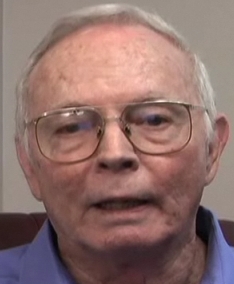




 UPDATED 4:32 P.M. EDT (U.S.A.) It’s only getting stranger . . .

