NOTE TO READERS: Some of the evidence federal prosecutors have in the Ponzi scheme case against AdSurfDaily President Andy Bowdoin is coming into clearer focus. The PP Blog expects to publish a report within the next couple of hours.
Our report is based on an affidavit originally filed under seal by the U.S. Secret Service in February 2009, during a time in which some ASD members were promoting a purported “offshore” autosurf known as AdViewGlobal — even after the August 2008 seizure of tens of millions of dollars from Bowdoin’s bank accounts amid wire-fraud and securities allegations.
The affidavit builds on earlier affidavits and paints a picture of a worried Bowdoin at the helm of ASD — and of astonishing corruption and deceit within ASD leading up to the summertime seizure nearly three years ago.
Instead of pulling the plug on his crime before investors were ruined, Bowdoin ramped up the criminality and sought to sanitize it, going so far as to trade falsely on the name of the President of the United States and permit others to do so, according to the Secret Service affidavit.
Much of the information in the affidavit never before has been published, although it was previously known that Bowdoin allegedly tried to tie ASD to the White House to disarm skeptical investors and keep the firm’s money wheel greased.
Here is a verbatim snippet from the affidavit:
“Hand-written notes that Bowdoin prepared in about December 2006 (which were recovered in August 2008, during a search warrant at Bowdoin’s home) show his and his silent partner’s awareness of the risks of the auto-surf program they were conducting. Bowdoin’s notes indicate that he told his silent partner that the partner should have made him better aware of those risks ‘knowing regulators were on the prowl for surfing sites.’”
Translation: Bowdoin knew at least 18 months prior to his June 2008 trip to Washington to receive the “Medal of Distinction” that ASD was playing with fire.
The “medal” was not a presidential acknowledgment of Bowdoin’s business acumen. Rather, it was a “marketing” memento from the National Republican Congressional Committee, according to the affidavit.
And the affidavit also spells out other things Bowdoin allegedly knew while he was touting Presidential recognition of his business career. (We’ll write about those things in the upcoming story.)
The February 2009 affidavit was prepared in part to seize more than $413,000 held in the bank accounts of certain ASD members from Iowa — and also to seize more than $310,000 in the bank accounts of two other ASD members: one from Florida, the other from Missouri.
At least $10,510 of the amount the government moved to seize was traceable to E-Bullion, according to the affidavit.
E-Bullion is a shuttered California money-services business whose operator, James Fayed, was convicted last month of ordering the murder of his estranged wife, Pamela Fayed, a potential witness against him.
Fayed faces the prospect of execution for the murder. The jury recommended the death penalty earlier this month. Formal sentencing is scheduled for September.
Get ready for some prosecutorial bombshells in the ASD case . . .
BULLETIN: In 2009, federal prosecutors warned that pro se pleadings by members of Florida-based AdSurfDaily had the potential to slow efforts to provide restitution for victims of the ASD Ponzi scheme.
Pro se filings by ASD President Andy Bowdoin and dozens of ASD members crowded the court docket for months and delayed the implementation of a remissions program for victims by at least a year, according to records.
All of the pro se pleadings misrepresented the history of the ASD case and the applicable law — and included claims that only can be described as bizarre. Although a federal judge issued rulings that denied standing to the filers, new pleadings from new nonparties making the same arguments streamed into the courthouse, forcing the judge to address them and issue more orders denying standing to the filers.
After months of such back-and-forth, each of the filers ultimately was ruled to have no standing, including Bowdoin, who at once was representing himself pro se and impermissibly representing his own corporation pro se.
Now, R.J. Zayed, the court-appointed receiver in civil litigation related to the Trevor Cook Ponzi scheme in Minnesota, says pro se pleadings by accused scammer Jason Bo-Alan Beckman are slowing the receiver’s recovery efforts and wasting resources set aside for victims.
In March, the SEC charged Beckman with fraud, identifying him as a “leading” figure in a scheme pulled off by Cook and others. Beckman was accused of raising about $47.3 million of the $194 million gathered in the overall fraud — roughly 25 percent of the overall total.
Beckman has no standing to challenge the receiver’s authority to act in the interests of victims, Zayed argued. And, the receiver alleged, Beckman has filed pro se documents to delay the sale of properties he owns in Texas, actions that have forced Zayed to respond at the expense of victims of the scheme.
“The law does not permit individuals in Beckman’s position to challenge the Receiver’s actions precisely to prevent this type of costly motion practice,” Zayed argued, citing a provision of the receivership order that required Beckman to “cooperate with and assist the Receiver.”
Beckman was ordered that he “shall take no action . . . to hinder, obstruct, or otherwise interfere with the Receiver,” Zayed said.
“The funds available to the investors decrease every time the Receiver responds to an opposition raised by an entity that lacks standing,” Zayed argued. “Thus, the Receiver suggests that the Court consider prohibiting Mr. Beckman from filing additional documents challenging the Receivership’s disposition of assets.”
Zayed also claimed Beckman was making untrue and “bizarre” claims at odds with his own actions.
In February, prior to the formation of the receivership and the filing of a complaint against Beckman by the SEC, Zayed said, Beckman put one of the Texas properties on the market.
Although Beckman himself tried to sell the property only a few months ago, he is now asserting — despite having no standing to make the claim and the fact Zayed wants to sell the property before it becomes a cash-sucking white elephant on the receivership’s assets — that Zayed should not liquidate the property “during a recession or other time of economic difficulty,” Zayed said.
Beckman, Zayed said, researched the local market before listing the property in February. After his appointment as receiver in March, Zayed went to Texas to research the market himself.
“Tellingly, evidence that the Receiver recovered shows that Mr. Beckman sought to place the Paseo del Lago house on the market just weeks before the Court put the Receivership in place,” Zayed argued. “It is bizarre at best for Mr. Beckman to attack the Receiver for doing something he himself had sought to do several months earlier.”
Moreover, Zayed argued, holding onto the property adds costs.
“These costs — almost $10,000 in the first three months of operation, even excluding local counsel bills — are substantial, ongoing, and clearly outweigh any argument to wait years or even decades for the real estate market to recover,” Zayed said.
“It would significantly deplete the limited restitution funds if legal fees and other
expenses continue to accrue if the Receiver must continue to maintain and manage these properties,” Zayed said. “The Receivership is envisioned as a short-term entity, one that seeks to return value to the investors in the near future. As such, the Receivership does not have the luxury to play the market as Mr. Beckman suggests, even if the monthly maintenance expenses somehow disappeared.”
Matthew J. Gagnon, an alleged web-based pitchman of Ponzi schemes and Forex frauds, has been hit with judgments totaling more than $2.5 million by the receiver in the Legisi Ponzi and fraud case. Gagnon also was charged separately by the SEC.
A web-based pitchman for the alleged Legisi Ponzi scheme has been hit with separate court judgments of $1.69 million and $810,000. Meanwhile, the court-appointed receiver in the Legisi case has hired local counsel in Oregon to pursue the judgments against Matthew J. Gagnon and Mazu Publishing Inc.
Legisi was alleged by the SEC in 2008 to have operated an international Ponzi and fraud scheme that gathered about $72 million from more than 3,000 investors. The scam was promoted on TalkGold, MoneyMakerGroup and other websites, including Gagnon’s Mazu.com.
MoneyMakerGroup’s name is referenced in federal court filings in the Legisi case — and records show that shills on TalkGold and MoneyMakerGroup sought to sanitize the scheme even as the U.S. Secret Service and the Michigan Office of Financial and Insurance Regulation were using undercover agents to gather evidence about the fraud.
The judgments against Gagnon and Mazu illustrate the legal and financial nightmares to which forums such as TalkGold and MoneyMakerGroup contribute. Meanwhile, the fact that Legisi was promoted at the forums even as it was under investigation exposes a myth advanced on such forums that investors would know in advance that a government probe of an “opportunity” was under way.
In this evidence exhibit given to a federal judge prior to the Legisi asset freeze, a Legisi prospect writes the name "Money Maker Group.com" in longhand. The prospect also wrote the name "Matt Gagnon" in longhand and a telephone number for Gagnon.
At the same time, the judgments against Gagnon destroy the myths that online promoters of securities schemes have no legal exposure and that offers positioned as “private” insulate promoters from prosecution.
Indeed, the judgments against Gagnon resulted from litigation brought by Robert D. Gordon, the court-appointed receiver in the Legisi case, in October 2009. The SEC sued Gagnon in May 2010, seven months after Gordon brought his actions.
Among the SEC’s allegations against Gagnon was that he continued to promote fraud schemes online — even after the Legisi scheme was exposed.
“Gagnon has been unrelenting in his efforts to raise money from the public through fraudulent, unregistered offerings,” the SEC said in May 2010. “He remains a danger to the investing public.”
Despite his sales pitches, “Gagnon has never been associated with a registered broker-dealer and has never been registered with the Commission as a broker or dealer or in any other capacity,” the SEC said.
After the Legisi HYIP fraud, Gagnon transitioned to pushing Forex frauds, the SEC said.
Gagnon was hit with an asset freeze after the SEC brought its action.
Records show that Legisi was among a number of “opportunities” that used E-Bullion, which was operated by James Fayed.
A jury in Los Angeles last week recommended the death penalty for Fayed for arranging the slaying of his estranged wife, Pamela Fayed.
Federal prosecutors said in December that AdSurfDaily, yet another alleged Ponzi scheme, had an E-Bullion tie. Records show that Gold Quest International, still another Ponzi scheme, also used E-Bullion.
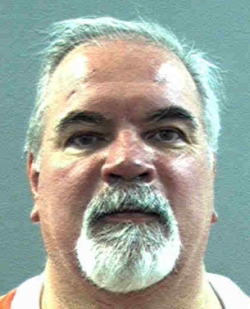
Harvey Douglas Goff. SOURCE: Weber County (Utah) Sheriff's Office.
EDITOR’S NOTE: Longtime readers will recall that some members of Florida-based AdSurfDaily engaged in a hectoring campaign against public officials after the U.S. Secret Service seized tens of millions of dollars in the ASD Ponzi case in August 2008. Such actions can lead to serious criminal consequences, as the story below illustrates.
It has happened again — this time in Utah, this time involving claims for the spectacular sum of more than $53 TRILLION.
Harvey Douglas Goff, 53, of Ogden, was indicted last month on charges he placed fraudulent liens against Utah public officials after asserting “diplomatic immunity” during a traffic stop last year.
Goff filed bogus liens against 77 parcels in Weber County “[i]n an apparent effort to create an appearance of indebtedness” to him on the part of officials representing the state of Utah, Weber County, Ogden City and the Ogden Police Department, federal prosecutors said.
He has been charged in a 14-count indictment with obstruction of justice, impeding internal revenue laws, filing fictitious obligations, attempted mail fraud and using the mail in furtherance of a scheme and artifice to defraud.
In November 2010, prosecutors said, Goff “mailed” documents styled “Notice of International Commercial Claim Within the Admiralty ab initio Administrative Remedy of Harvey Douglas Goff, Jr., Creditor Secured Party,” prosecutors said. “The documents claimed the agencies contracted to pay more than $53 trillion in damages to Goff. The documents purported to be part of a ‘self-help administrative process’ and asserted that the recipients had 10 days to respond before a ‘default’ resulted.”
The case in part traces its roots to encounters Goff had with law enforcement during traffic stops, including one in which he asserted “diplomatic immunity,” prosecutors said, charging that Goff also impeded tax laws and filed “false and frivolous documents” involving a judge in an IRS case.
Goff challenged the jurisdiction of a state-court judge in pro se pleadings, but the court denied his arguments. When Goff failed to appear for a pretrial conference in December 2010, a bench warrant was issued, prosecutors said.
After Goff was arrested on May 12, he refused to stand before U.S. Magistrate Judge Judge Samuel Alba, which led to an “intervention” by the U.S. Marshals Service, prosecutors said.
Among other things, Goff refused the appointment of counsel, would not state his name or acknowledge his identity and “claimed he had been kidnapped from his home even though the Court made findings in his presence that federal agents had served a duly authorized search warrant,” prosecutors said.
Goff was ordered to undergo a mental-health examination, prosecutors said. He potentially faces decades in prison if convicted on all counts.
The two “fictitious obligation” counts alone carry penalties of up to 25 years in prison, prosecutors said.
An investigation by the FBI’s Joint Terrorism Task Force and the IRS continues, prosecutors said.
This post begins with background because the autosurf world, which is dominated by serial scammers, financial fraudsters and shadowy criminals, is about as murky as it gets.
On Aug. 1, 2008, tens of millions of dollars in the bank accounts of AdSurfDaily President Andy Bowdoin were seized. Federal prosecutors went on to say that Bowdoin, a recidivist swindler in his seventies, was conducting an international Ponzi scheme involving at least $110 million from the small town of Quincy, Fla.
ASD allegedly had more than 100,000 members.
Bowdoin was running the massive scheme through his 10 personal bank accounts and trading on the name of the President of the United States to sanitize the fraud, prosecutors said in a forfeiture complaint.
A federal magistrate judge in the District of Columbia, the nation’s capital and center of power, ordered the money seized by the U.S. Department of Homeland Security after reviewing a 37-page affidavit by the U.S. Secret Service and a 57-page evidence exhibit. Incredibly, though, some ASD members didn’t take the strong clues that the U.S. government had come to view ASD and others like it as a threat to to the nation.
The government made sure that the allegations and certain information about Bowdoin, including the fact that ASD was not his first brush with securities felonies and that he was partnered with a man implicated by the SEC in the 1990s in three prime-bank schemes, were available for wide distribution. The forfeiture complaint was published on the Internet in multiple places and was made available at no charge by the government.
Bowdoin reacted to the seizure by describing it as an act of “Satan” and comparing it to the 9/11 terrorist attacks. A message from Bowdoin on ASD’s answering machine claimed God was on the company’s side. Within days of the breathtaking seizure and a follow-up raid of company headquarters caught on camera by a local TV station, ASD members started pitching other fraud schemes, positioning them as ways to make up for ASD losses. The disconnect of ASD members was stunning.
They hawked cash-gifting schemes, HYIP schemes, cycler matrices and other autosurf schemes — often using an appeal to religion in their pitches and claiming the “programs,” unlike ASD, operated outside U.S. jurisdiction and thus insulated the players from prosecution. They made the claims despite the fact the “programs” were targeted at U.S. citizens and players were paid in U.S. dollars after using U.S. dollars to join the “programs.”
On Nov. 19, 2008, ASD lost a key court battle. A federal judge ruled that ASD, which had requested an evidentiary hearing, had not demonstrated it was a lawful business and not a Ponzi scheme. Instead of exiting the autosurf Ponzi “industy,” some ASD members next turned their attentions to an upstart “offshore” surf known as AdViewGlobal.
Which brings us to the reason for this post . . .
A woman who said she believed she was an AdSurfDaily investor entitled to restitution through the government remissions program administered by Rust Consulting Inc. told the PP Blog yesterday that she gave $5,000 to her sponsor, who converted the sum to cashiers’ checks made payable to a murky enterprise known as TMS Association.
The PP Blog referred the woman to the office of U.S. Attorney Ronald C. Machen Jr. in the District of Columbia.
But her transaction, according to the woman, occurred in April 2009 — eight months after the August 2008 seizure of tens of millions of dollars by the Secret Service in the ASD Ponzi case. ASD ceased operations after the seizure.
Although the woman apparently believed she was investing in ASD, her story strongly suggests that she actually was investing in AdViewGlobal (AVG), one of the so-called ASD “clones” that launched in the aftermath of the ASD seizure. TMS Association was a murky Arizona business linked to eWalletPlus, which reportedly was the in-house payment processor for AVG.
The woman, saying she believed she was an ASD victim, also said she believed she was entitled to restitution through the remissions program set up for ASD victims through Rust. Her remissions claim, however, appears to have been rejected because the program is for victims of ASD, LaFuenteDinero and Golden Panda Ad Builder, not victims of AVG.
“I am having troubles with the Ad Surf Daily Remission Administrator on getting the information that my checks I sent in that were endorsed to TMS Association were ‘linked’ to the Ad Surf fraud suit that is going on,” the woman asserted.
Facts surrounding TMS, eWallet Plus and AVG are exceptionally murky, and there is no remissions program for victims. It is believed that the U.S. government has opened a probe into the companies, and AVG was referenced as an extension of ASD in a 2009 racketeering lawsuit filed against Bowdoin by a group of ASD members seeking class-action certification.
At least three companies, including a penny-stock firm known as Vana Blue, have claimed to own eWallet Plus, which AVG also claimed to own. Also adding confusion are the presence of company names such as TMS Corp. USA LLC, TMS Corp., Karveck International and Karveck Corp. — all of which haven been referenced in the context of AVG.
The woman said she contacted the PP Blog because of its reporting on TMS Association.
AVG, which had close ASD ties, announced it was suspending cashouts two years ago this month. The surf was positioned as a remedy for ASD losses, amid claims it operated in Uruguay outside of U.S. jurisdiction. Its servers resolved to Panama, as did the servers for eWallet Plus.
One promo for AVG claimed that $5,000 turned into $15,000 “instantly.” Some ASD members have claimed Bowdoin was a silent partner in AVG and fronted the money to purchase eWallet Plus.
Although AVG purported to have no ties to ASD, it listed George and Judy Harris as its owners. George Harris is Bowdoin’s stepson. The AVG incongruities did not end there. Indeed, AVG’s graphics once appeared on an ASD-controlled website, an event that was bizarrely explained away as an “operational coincidence.”
Even as AVG was disclaiming ASD ties in early 2009, the person disclaiming the ties was a former ASD employee, Chuck Osmin, who testified on ASD’s behalf at an evidentiary hearing in 2008. Despite the claims, AVG listed its first chief executive officer as Gary Talbert, a former ASD executive who filed a sworn court affidavit on ASD’s behalf in 2008.
The woman’s claims, however, lead to questions about whether some AVG members are trying to use the ASD remissions program to cover losses in AVG, perhaps with encouragement of their upline sponsors
Among other questions raised by the woman’s claims is whether ASD sponsors who promoted for AVG despite the ASD seizure told the truth about ASD to their recruits or shielded them from the news, thus denying recruits information they needed to make an informed decision about joining AVG.
At the same time, the woman’s story leads to questions about whether AVG recruits denied the facts by their sponsors about the ASD prosecution tried to pressure their AVG sponsors for refunds when the truth became known — and whether the AVG sponsors are trying to cover their tracks by pointing their recruits to the ASD remissions program without disclosing that it is reserved for ASD, LaFuenteDinero and GoldenPandaAdBuilder victims only.
It is likely that any bids to mask AVG losses as ASD losses will fail because the government requires ASD members to certify themselves as crime victims and provide paperwork as proof of investment.
Based on the woman’s claims, it also seems possible that some AVG members may have been serving as unlicensed brokers and investment advisers by collecting cash or negotiable instruments from recruits, converting the money to cashiers’ checks and then sending the money to AVG.
If transactions such as that occurred, it leads to questions about whether AVG investors ever could prove they’d actually joined the program. If the accounts were not opened in their names and instead were opened in the names of sponsors who collected their money, there may be no proof at all that the recruit was the source of the funding.
Even if the AVG accounts were opened in the names of the recruits, it may be hard for a recruit to prove they provided the funds if the money was converted to cashiers’ checks and submitted to AVG by the sponsors
The extent to which AVG sponsors may be trying to game the remissions system is unclear. What is clear is that the woman’s story is yet another reminder that the universe in which ASD and other autosurfs operated was dark and dangerous to the purse strings.
BULLETIN: The jury that returned the guilty verdict against James Fayed for the murder of his estranged wife in July 2008 has recommended the death penalty.
James Fayed, 48, was found guilty May 19 in the murder-for-hire slaying of Pamela Fayed. On May 20, the penalty phase of the case began — and the jury returned the death recommendation today.
Pamela Fayed, 44, was slashed to death in a California parking garage on July 28, 2008.
James Fayed, the operator of E-Bullion and an emerging figure in the AdSurfDaily Ponzi case, paid $25,000 to have his wife killed and then plotted to kill the hit men, prosecutors said.
Pamela Fayed was a potential witness against her husband over financial matters. Court records show that E-Bullion had been linked to multiple Ponzi schemes.
Sentencing for James Fayed is scheduled for Sept. 22.
Three other men have been charged with Pamela Fayed’s killing.
Steven Vicente Simmons, 22, stabbed her, prosecutors said.
Jose Luis Moya, 50, a Fayed employee, was paid $25,000 to arrange the murder, and Gabriel Jay Marquez, 46, acted as lookout, prosecutors said.
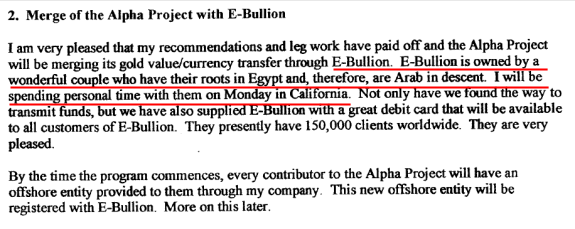
E-Bullion is referenced in court or regulatory documents in the ASD Ponzi case, the Legisi Ponzi case, the Gold Quest International Ponzi case and the FEDI fraud scheme. A mysterious enterprise known as the “Alpha Project”also is referenced along with FEDI in filings in Canada.
This chilling document from the Ontario Securities Commission references both FEDI and the Alpha Project — and appears to make a veiled reference to Pamela Fayed.
From a 2003 filing by the Ontario Securities Commission. Click on link above to read entire document.
Just prior to Christmas last year, seven Michigan women were charged with felonies in an alleged cash-gifting pyramid scheme that targeted women.
Now, just prior to Memorial Day, eight more women have been charged, bringing the total number of women charged to date to 15. The Michigan State Police said last year that gifting schemes were sweeping across the state.
The Muskegon Chronicle was among the first newspapers to report on the new defendants.
Separately, the BBB has added a video on cash-gifting scams and added to its previous warning about “thousands” of such schemes using YouTube and the Internet to proliferate.
In August 2008, after the U.S. Secret Service seized tens of millions of dollars in the AdSurfDaily autosurf probe, some ASD members immediately turned to cash-gifting, positioning it as a way for ASD members to make up their losses. Gifting scams typically pluck heartstrings, targeting people of faith, people down on their luck and people who can ill afford to lose a single dollar, let alone hundreds or thousands at a time.
“Cash gifting is a pyramid scheme — pure and simple,” the BBB says. “There are thousands of YouTube videos and websites out there touting cash gifting as an empowerment program or a way to make easy money from the security of your home.”
We’ve previously noted that the Financial Industry Regulatory Authority (FINRA) has described the HYIP sphere as a “bizarre substratum of the Internet.”
That substratum now is getting crazier yet.
Three weeks ago, Club Asteria was a great darling of the Ponzi boards. But weekly payout rates that purportedly have been slashed — coupled with a purported freeze of Club Asteria’s PayPal account — appear to have put the “program” in a death spiral.
Club Asteria stopped short of announcing it had placed a call to the coroner, but did announce a “downward spiral,” according to a post on the MoneyMakerGroup Ponzi scheme and criminals’ forum.
Not to worry, though: Some Club Asteria promoters on the Ponzi forums have turned their attentions to JSS Tripler, whose site appears to be accessible through multiple domains, including a site known as JustBeenPaid (JBP).
JBP appears to be tied to something called Synergy Surf, which appears to be another darling of the Ponzi boards.
“I buyed (sic) new 8 positions for that,” a MoneyMakerGroup poster announced.
JPB encouraged enrollees to “[s]et up your AlertPay account and fund it, or link your credit card to it,” according to web records.
These instructions also were provided.
Upgrade in JBP by making your $10 or $20 payments.
Enter your AlertPay email address in the JBP Member Area.
Buy and/or sponsor downline members.
Study and apply ‘Upgrade Your Brain’ and the ‘Big Success Breakthrough’ — see ‘Access Our Products’ in your JBP member area.
Make JBP’s Synergy Surf (JSS) your primary moneymaker.
In the spring of 2009 — as the AdViewGlobal (AVG) autosurf was in its death throes before a fatal gurgle — the AVG braintrust pointed the finger of blame at the membership.
Other surfs that launched in the aftermath of the seizure of tens of millions of dollars from Florida-based AdSurfDaily did the same thing. These included AdGateWorld, which once referenced ASD in what appeared to be a copy-and-paste lift from ASD’s Terms of Service, and BizAdSplash, whose purported “chief consultant” was ASD/Golden Panda Ad Builder figure Clarence Busby.
Fast forward two years, and Club Asteria, which lists Andrea Lucas as managing director, appears to be doing the same thing — along with serving up some Busby-like syrup for the soul:
“Greed is a very powerful motivation, but the kindness, generosity and goodness in all of us all are even more powerful,” Club Asteria is reported on MoneyMakerGroup to have intoned.
“The challenges that we are facing recently have been caused by a small percentage of our members misusing their membership privileges,” Club Asteria is reported to have told members. “As any good company would have done to protect their members and future members, we had to reinforce our Code of Ethics and Conduct, to ensure that our message of a better life for all of us is presented honestly and accurately.
“We are working very hard to make sure that any benefit from Club Asteria and all of our products and services are accurately represented. Any company, no matter how good their products and services are, can be destroyed with misleading information, bad publicity, false rumors and inactivity of their members/customers.”
Two years ago, AVG’s death spiral began as the ASD grand jury was meeting in the District of Columbia. The surf first slashed payouts — something Club Asteria reportedly is doing right now — and then eliminated them altogether, while at once announcing an 80/20 program would become mandatory after AVG completed an audit of itself.
One of the issues complicating matters for AVG was the purported misuse of a member-to-member cash button. Club Asteria members also purportedly misused a money-transfer facility.
“Bizarre substratum of the Internet” just about covers it — except for the heartache and myriad nightmares created by the various HYIP darlings, of course.
Thinking Outside The Box
Our friends at RealScam.com report another nightmare in the making. It’s bizarrely called Insectrio — and it bizarrely has an “Egg” plan purported to pay 103 percent after one day, a “Larva” plan purported to pay 120 percent after five days and other plans advertised to pay even more.
The sales pitch for Insectrio, apparently an emerging HYIP, touts MoneyMakerGroup, TalkGold and DreamTeamMoney.
Given JBP’s prompt for enrollees to “upgrade” their brains — which we view as a prompt to think outside the box — the PP Blog concludes this post by providing readers an outside-the-box way to look at the Insectrio offer:
InSECtrio.
Indeed, the three letters centering the HYIP’s name are real attention-getters.
We are plugging our nose as we publish this document (link at bottom of post). You should know up front that we converted the document to PDF format after receiving it in Microsoft Word format. We did so based on the belief that many readers may not own Word but likely have a free PDF reader among the programs on their computers.
We obtained the document from a source. An email introducing the document prompted recipients to “Please forward this to as many of our people as you can.”
The PDF conversion altered the format of the original document, causing certain typesetting errors to appear — but the text content of the body of the document is unchanged. We did not edit the body text in any way. For the sake of convenience, we named the PDF file declaratoryreliefdraft.
The Word original is titled “T&D v USA UNITED STATES DISTRICT COURT.” It purports to be a draft of a “Complaint for Declaratory Relief” some AdSurfDaily members say they intend to file in U.S. District Court for the Southern District of Florida. The document lists ASD members Todd Disner and Dwight Owen Schweitzer as pro se plaintiffs.
It is unclear if other plaintiffs will emerge. Previous ASD pro se litigants appeared to have shared a do-it-yourself litigation template. U.S. District Court for the District of Columbia was inundated with ASD-related, pro se filings in 2009.
No other plaintiffs are listed in the caption of the draft. The defendant is listed as:
THE UNITED STATES OF AMERICA
c/o United States Attorney’s Office
555 Fourth Street N.W.,
Washington, DC 20530
The address is the office of U.S. Attorney Ronald C. Machen Jr. No individual defendants are named. The document, which references U.S. District Judge Rosemary Collyer of the District of Columbia, misspells her name as “Collier.”
Disner lost a pro se round in the civil forfeiture complaint against Andy Bowdoin’s assets filed in the District of Columbia in August 2008. His petition — and the petitions of dozens of other ASD pro se filers who sought to intervene in the case amid claims the government “confiscated” their assets “wrongfully” — was denied for lack of standing.
In the original set of pro se pleadings in Collyer’s D.C. court, former Assistant U.S. Attorney William Cowden’s last name was misspelled as “Crowden.”
ASD President Andy Bowdoin advised Collyer in a sworn affidavit nearly three years ago that the seized assets in the U.S. Secret Service probe belonged to him or ASD, not individual members. In short, Bowdoin agreed with the prosecution’s view of the case with respect to the ownership of the seized assets.
In its current form, the draft appears to advance the notion that individual ASD members can gain standing in Florida after having been denied in the District of Columbia, get a judgment against the government and undo the government’s remissions program organized by the Secret Service and federal prosecutors in the District of Columbia. Prosecutors have said the ASD Ponzi scheme case may have 40,000 or more victims.
Among other things, the draft asks a Florida federal judge to declare that the government conducted an “illegal search and seizure in that it failed to meet the requirements of the fourth amendment to the United States Constitution and that therefore the search and seizure of their assets was illegal and void.”
At the same time, the draft appears to suggest ASD had a subset of members who should have been treated differently than ordinary members whose lives were altered by the alleged Ponzi scheme. Meanwhile, the draft makes a puzzling argument that ASD’s Terms of Service superseded federal law.
(In this snippet from the draft, the PP Blog added the emphasis to this Blog post.)
“Among the items seized were the accounts, funds and records specifically identified as belonging to the plaintiffs which were separately accounted for on the computer programs and data seized as they were members of ASD, having bought ad packages as specified in the rules and regulations of the ASD business model,” a section of the draft complaint reads.
“Consistent with the rules and regulations applicable to the plaintiffs’ their information was confidential and could only be accessed by them through the use of their password protected account with ASD and their accounts were separate and distinct from any other individuals or businesses who were participants in the ASD advertising program,” the section claimed.
If the document does get filed in a final form — and if the U.S. Attorney’s Office in D.C. gets served and files a response — we sincerely hope the government moves instantly to protect ASD victims at large from further restitution delays caused by pro se sideshows.
Make no mistake: This is gamesmanship.
An email currently circulating among ASD members and attributed to Disner even describes it as such.
“Let the games begin!” the email declares.
It’s as though the first round of games were not enough for some ASD members.
“Here is a draft of the complaint Dwight finished today,” the email, which is dated today, reads.
“I think you will be impressed.
“We will schedule another conference call to field any “feed back” to this motion.
“Please forward this to as many of our people as you can. (As I know you will)
URGENT >> BULLETIN >> MOVING: (UPDATED 10:37 P.M. EDT (U.S.A.) James Fayed has been found guilty of first-degree murder and conspiracy in the death of his wife, Pamela Fayed.
Fayed, 48, now potentially faces the death penalty. The penalty phase of the case is scheduled to get under way tomorrow at 10:30 a.m. (PDT).
A jury returned the verdict late this morning on the West Coast. Deliberations began Tuesday, and the jury found “the special circumstances of murder for financial gain and lying in wait to be true,” which brought the death penalty into play.
James Fayed was the operator of the now-shuttered E-Bullion payment processor. Federal prosecutors revealed in December that AdSurfDaily, a Florida company accused of operating a $110 million Ponzi scheme, used the services of E-Bullion.
Investigators have linked E-Bullion to multiple Ponzi schemes.
Prosecutors in Los Angeles said Pamela Fayed was a potential witness against her husband.
“Pamela Fayed was stabbed 13 times near her SUV parked in a garage at Watt Tower on July 28, 2008,” prosecutors said in a statement moments ago.
James Fayed paid $25,000 to arrange his wife’s murder, according to court documents. Three others have been charged in the plot and await trial.
Steven Vicente Simmons, 22, is accused of fatally stabbing Pamela Fayed; Gabriel Jay Marquez, 46, allegedly acted as a lookout.
Jose Luis Moya, 50, a Fayed employee, accepted the $25,000 to arrange the murder, prosecutors said.
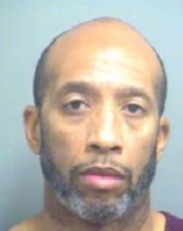
James Clark Howard III: At the center of three Florida fraud investigations. (Photo source: Boca Raton Police Department,)
The court-appointed receiver unraveling the affairs of a Florida firm accused by the SEC of operating a $27 million commodities fraud and selling unregistered securities says the company had “insiders and related parties” who took out twice what they put in.
Clawback actions are anticipated against unspecified “targets” because the money they received constituted “fraudulent transfers,” receiver David S. Mandel advised a federal judge.
Meanwhile, Mandel says Commodities Online shared office space with a law firm. On the second floor of the shared space was a “boiler room” with 12 cubicles, phone lines and computers.
At the same time, Mandel says an early analysis of records shows that the company had at least five bank accounts, including accounts at Bank of America, Fifth Third Bank, JP Morgan Chase, PNC Bank and Wachovia.
The insiders at Commodities Online put more than $5.36 million into the firm between Jan. 1, 2010, and April 1, 2011, and took out more than $10.84 million, according to the early analysis.
“[T]he Receiver was able to identify potential targets who received fraudulent transfers under §726.101 of the Florida Statutes,” Mandel said. “In the upcoming weeks, the Receiver intends to send letters to each of these targets demanding the disgorgement of profits and the recovery of fraudulent transfers.”
Although the firm operated only for about 16 months and allegedly told investors they would “earn 5% or more per month without price speculation,” Mandel’s preliminary analysis suggests more than $885,000 was allocated for “salaries” and more than $523,000 was allocated for “Legal and Professional” fees.
The firm was not registered with the SEC, according to court filings. Mandel said a forensic analysis continues and that records, including computer records, are being scoured for clues.
“Existing email from the Defendants has been downloaded and is being searched for potential transfers of funds or other related activity that may yield additional assets to be acquired for the receivership estate,” Mandel said.
And, he noted, there are “preliminary indications” that Commodities Online “may own a substantial quantity of iron ore located in Mexico,” but that ownership has not been verified.
“The Receiver has retained Mexican counsel to attempt to determine if the Defendants do, in fact, own the iron ore, and if so, to take whatever steps are required to safeguard the ore for later sale or liquidation, for the benefit of the receivership estate,” Mandel said.
At least two persons associated with Commodities Online have criminal records for offenses ranging from “narcotics and firearms felonies” to bank fraud and “transmitting a threat to injure,” according to the SEC.
Although the SEC did not identify the individuals, records show that Commodities Online figures James Clark Howard III and Louis Gallo were charged with the offenses. Implicated in a drugs and weapons case, Howard was sentenced to 57 months in federal prison in the 1990s.
Gallo was implicated bank-fraud and threats cases, and was on supervised release while the firm operated.
Howard is at the center of at least three financial storms in Florida, including the SEC case against Commodities Online. Separately, private litigants — including SSH2 Acquisitions, a company that listed former AdSurfDaily (ASD) member and Surf’s Up Mod Terralynn Hoy as a director — alleged last year that Howard was part of a separate Ponzi scheme that gathered at least $39 million.
Florida authorities charged him criminally in 2010 in a fraud scheme that allegedly targeted the Haitian American community.
ASD was implicated by the U.S. Secret Service in an alleged $110 million Ponzi scheme. Hoy has not been accused of wrongdoing.