Tag: ASD

  • ASD ALL OVER AGAIN? ‘3 Hebrew Boys’ Accuse U.S. Attorney Of ‘Treason’; Claim Draws Another Parallel To AdSurfDaily

    Three men found guilty in South Carolina last week of operating an $82 million Ponzi scheme accused a federal prosecutor of treason on the same day the jury returned its verdict, the FBI said.

    A treason claim also was made in the federal forfeiture proceeding against assets tied to Florida-based AdSurfDaily, an alleged Ponzi scheme involving $100 million.

    U.S. District Judge Margaret B. Seymour cited the treason claim in the “3 Hebrew Boys” case as a reason to send Joseph Brunson, Tim McQueen and Tony Pough to jail immediately to await sentencing.

    “After the jury’s verdict, Judge Seymour was asked to allow the men to remain free on bond until their sentencing,” the FBI said.  “She denied the request after noting that all three men filed documents [Friday] accusing U.S. Attorney Walt Wilkins of treason and committing acts of war by prosecuting them.”

    Brunson, McQueen and Pough became known as “3 Hebrew Boys” after operating a website with the same name, which is based on a biblical story of believers who escaped a furnace by relying on their faith. The Ponzi scheme operated under the name Capital Consortium Group LLC.

    Wilkens said the scheme targeted people of faith and members of the military.
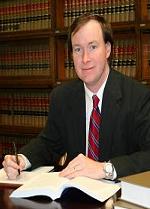
    U.S. Attorney W. Walter Wilkins
    U.S. Attorney W. Walter Wilkins

    “By calling themselves the Three Hebrew Boys, these con men tried to disguise their Ponzi scheme as a religious, charitable program of debt elimination in order to gain the trust of unsuspecting investors,” Wilkins said. “Unfortunately many people were victimized by these men, including many in our armed forces.”

    In the ASD case, the treason claim was made against U.S. District Judge Rosemary Collyer. ASD is known to have members who identify with the so-called sovereignty movement.

    California resident Curtis Richmond, a pro se litigant in the ASD case, identified himself in court documents in a separate case as a “sovereign” being who enjoyed diplomatic immunity from prosecution and answered only to Jesus Christ.

    Richmond is associated with a Utah “Indian” tribe ruled a “complete sham” last year by U.S. District Judge Stephen Friot. On the eve of a civil RICO trial last year, Richmond attempted to have Friot removed from the case by claiming he owed Richmond $30 million.

    Friot refused to step down in Utah, as did Collyer in the District of Columbia. Richmond accused Collyer earlier this year of operating a “Kangaroo Court” and violating her judicial oath. Collyer is presiding over the ASD civil-forfeiture case. Other filings in the ASD case suggested Collyer was guilty of as many as 60 felonies, and that an effort had been made by at least one ASD member to start a process to collect $120 million from Collyer, two federal prosecutors and a court clerk for “Interference With Commerce.”
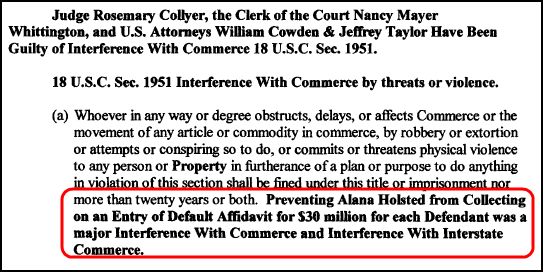
    Screen shot: Section of a pro se filing in the ASD case.
    Screen shot: Section of a pro se filing in the ASD case.

    Such bizarre claims have been popping up more and more in litigation involving securities.

    Gold Quest International (GQI), a company accused by the SEC last year of operating a Ponzi scheme from Las Vegas, claimed it was part of a North Dakota Indian tribe and was immune from U.S. law.

    After the SEC brought the charges against GQI in May 2008, Michael Howard Reed, the purported “attorney general” of the tribe, tried to sue the SEC for $1.7 trillion. The sought-after amount would have exceeded the total of federal income tax paid by individual U.S. filers last year by about $575 billion.

    U.S. District Judge Kent J. Dawson struck a series of pleadings by Reed from the record.

    Meanwhile, Dawson jailed John Jenkins, one of the defendants implicated in the Ponzi scheme, for contempt. Dawson also dispatched the U.S. Marshals Service to arrest David Greene, also known as “Lord David Greene,” in part for violating orders to repatriate money offshore to the United States.

    Despite Richmond’s behavior, he was labeled a hero on the Pro-ASD Surf’s Up forum. Over the weekend, Surf’s Up reinforced an earlier announcement that it would not permit discussion about the AdViewGlobal (AVG) autosurf.

    “[P]lease don’t expect any information that concerns AVGA,” a forum Mod said Saturday. “[I]t doesn’t belong on this forum.”

    Another Mod reinforced the ban on AVG discussion today.

    “In the beginning days of AVG we made it clear this is not an AVG forum and it still will not be,” the Mod said.

    Surf’s Up members repeatedly have said they wanted to discuss AVG, which has close connections to ASD. Their requests have been consistently rebuffed. Some of the Surf’s Up Mods were among the founding members of the AVG surf, which came to life after a major court ruling went against ASD last year.

    AVG purported to be a “private association” that operated offshore. Members used the “offshore” angle as a key selling point, saying the surf’s purported country of operation — Uruguay — insulated it from prosecution.

    Like the “3 Hebrew Boys” operation, AVG sought to prevent members from discussing the company outside the confines of areas it controlled. AVG members were scolded for sharing information and calling the autosurf an “investment” program.

    As AVG was in failure mode in May and June, members were threatened with copyright-infringement lawsuits. Critics were told AVG would contact their ISPs to file abuse reports and suspend service.

  • ‘3 Hebrew Boys’ Guilty In $82 Million Ponzi/Affinity Fraud Scheme; Company Operated In Fashion Similar To AdViewGlobal Autosurf, Imploring Members To Maintain Secrecy

    ponzinewsIn yet another case that may cause widespread unease in the autosurf world, three men accused of defrauding participants in a bogus debt-relief “ministry” have been found guilty of 174 counts of mail fraud, money-laundering and transporting stolen goods.

    Parts of the case against “3 Hebrew Boys” were remarkably similar to events engulfing the AdSurfDaily autosurf. In 2007, for example, the defendants filed a court document that described their investment program as an effort to free people from government “bondage” and referred to the investigation as “Satan’s handiwork.”

    In 2008, AdSurfDaily President Andy Bowdoin described the case against his purported Florida “advertising” firm as the work of “Satan,” comparing it to the 9/11 terrorist attacks. Prosecutors said ASD was selling unregistered securities, while engaging in wire fraud, money laundering and operating a $100 million Ponzi scheme.

    In 2007 and 2008, prosecutors brought essentially the same charges against “3 Hebrew Boys” — Joseph Brunson, Tim McQueen and Tony Pough.

    About 100 supporters of the “3 Hebrew Boys” rallied in Columbia, S.C., in the early days of the probe, to demand that investigators leave them alone. Participants told reporters that the government did not understand the program, had overreached in its prosecutorial efforts and refused to deny it was wrong, choosing to move forward with the case in a bid to save face.

    Prosecutors said the “3 Hebrew Boys” scam was targeted at churchgoers and members of the military from South Carolina and North Carolina, and also from other states. The scam got its name from the company’s website name, which was based on a biblical tale of believers who escaped a furnace by relying on their faith.

    At least $82 million was consumed in the scheme, prosecutors said.

    The company attempted to chill law enforcement, regulators and members of the media from scrutinizing operations, prosecutors said.

    In an approach similar to one used by the AdViewGlobal (AVG) autosurf,  members were forced to agree to a confidentially clause that purportedly prohibited them from discussing the company outside the confines of meeting places. Participants were threatened with a $1 million penalty for sharing information.

    AVG, which has close ties to ASD, morphed into a “private association” in February 2009. Members were scolded for sharing information and calling the autosurf an “investment” program. As the company appeared to be collapsing in May and June, members were threatened with copyright-infringement lawsuits. Critics were told AVG would contact their ISPs to file abuse reports and suspend service.
    Not only did the plan to force secrecy and mute criticism not work in the “3 Hebrew Boys” case, it resulted in intense scrutiny by federal prosecutors, the FBI, the IRS and other agencies. It also resulted in intense scrutiny on the state level.

    South Carolina Attorney General Henry McMaster filed civil and criminal charges, posting all the documents in the case on his website.

    A court-appointed receiver also published documents, listing an astonishing array of luxury purchases made by the schemers with investors’ money. Among the items were a Gulf Stream jet, a Prevost Motorcoach and automobiles with famous names such as Mercedes, Lexus, BMW, Saab, Cadillac and Lincoln.

    Some of the luxury items are missing, meaning they cannot be sold to compensate victims.

    Brunson, McQueen and Pough were found guilty yesterday. The jury in the case, which was heard in Columbia, S.C., returned the verdict in less than three hours, after listening to testimony for weeks.

    Separately, Lee Otis Fluker was charged with perjury and convicted in 2008 for lying about his knowledge of the scheme. He was sentenced to a year in prison.

    Brunson, McQueen and Pough face decades in prison and fines in the millions of dollars.

    Last month, Beattie B. Ashmore, the court-appointed receiver in the case, warned victims about “companies [that] claim to offer professional services for recovering losses associated with your involvement with CCG,” one of the companies associated with the “3 Hebrew Boys” scheme.

    “Please note that you are not required to respond to these letters in order to be considered for a distribution from the Receiver,” Ashmore said on the receiver’s website.  “In addition, the Receiver takes no position as to any consequential effect filing a claim and recovering funds in this case may have upon any action you have taken or may take with Fraud Recovery Group or any similar type company.

    “Therefore, it is strongly recommended that you seek professional legal and tax advice from a trusted advisor, and that you properly research any professional advice before acting upon it,” Ashmore said.

  • BREAKING NEWS: Judge Suggests ASD Forfeiture Could Occur Before Christmas; Finds Bowdoin ‘Knowingly And Voluntarily’ Released Claims To $65.8 Million

    Will the August 2008 forfeiture case against $65.8 million in the personal bank accounts of AdSurfDaily President Andy Bowdoin end before Christmas?

    A federal judge suggested today that it might.

    Bowdoin, 74, knew what he was doing when he submitted in January 2009 to the forfeiture of the cash and “knowingly and voluntarily” agreed never again to raise the claims, Judge Rosemary Collyer said in an order today.

    Collyer added that the time to file claims has expired, thus agreeing

    Andy Bowdoin
    Andy Bowdoin

    with an argument advanced by federal prosecutors earlier this month. But Collyer today left the door open for 30 more days before ordering the final forfeiture of the money to the government, issuing an order that any “potential claimant(s)” must “show cause in writing” before Dec. 20 why she should not grant the final forfeiture.

    Earlier this month Collyer denied a bid by Bowdoin that began in February with his emergence as a pro se litigant to reassert claims to the money. Prosecutors said Bowdoin’s acts — and acts by dozens of other ASD members who had attempted to intervene in the case — were delaying the implementation of a restitution program for victims of the alleged ASD wire-fraud, money-laundering, securities and Ponzi scheme.

    Collyer has denied dozens of bids by ASD members to intervene for money in the case, saying they had no standing and no “cognizable interest” because the money had belonged to Bowdoin alone at the time of its seizure.

    On Nov. 10 alone, Collyer denied 13 such bids to intervene. All were filed by ASD members who shared a pro se litigation template. The judge repeatedly denied pro se attempts to intervene, denying the bids en masse in July, August, September and November. More than 70 such motions were filed in the case, dating back to February 2009.

    Curtis Richmond, a California man, was one of the pro se litigants. Records show Richmond was a member of a Utah “Indian” tribe a federal judge in a separate case last year ruled a “complete sham” that tried to extort money from public officials to gain a favorable litigation result.

    Richmond was hailed a “hero” on the pro-ASD Surf’s Up forum, even as thousands of ASD members were waiting to gain a share of a restitution pool the government is setting up for ASD victims.

    Read today’s order from Judge Collyer.

    Read Judge Collyer’s Nov. 10 mass denial of claims.

  • BREAKING NEWS: Bowdoin Family Knew About December Forfeiture Complaint A Month Prior To Launch Of AdViewGlobal; AdSurfDaily-Connected Assets Seized In December ’08 Case Prepped For Sale

    Even though Andy Bowdoin and his family knew in January 2009 that the government intended to seize the Tallahassee home of his stepson George Harris and an $800,000 building purchased with cash in ASD’s home city of Quincy, Fla., the AdViewGlobal (AVG) autosurf proceeded with its launch in February 2009, according to an analysis of web records and new court filings.

    Although a “Proof of Service” filed by federal prosecutors yesterday did not mention AVG, other records say that Bowdoin was given “direct notice” of a second forfeiture complaint that had been filed in December 2008 against ASD-connected assets. The initial forfeiture complaint against ASD was filed in August 2008.

    Yesterday’s filing by the prosecution showed that the Harris home and ASD building in

    Andy Bowdoin
    Andy Bowdoin

    Quincy were publicly posted for forfeiture on Jan. 8, 2009. AVG launched less than a month later, triggering a virtually relentless series of 200-percent, matching bonus offers to generate cash and events that ultimately led to its collapse after the Harrises were identified by AVG as the owners of the company.

    A Nov. 6 filing by the prosecution states that Bowdoin was given “direct notice” of the December 2008 seizure in January 2009, as were “all known potential claimants.” Prosecutors noted in the Nov. 6 filing that they had “signed receipts” from Bowdoin and others.

    Other records clearly show that AVG’s launch proceeded in February 2009, pushed by former members of ASD despite the filing of two forfeiture complaints against the firm and a racketeering lawsuit.

    Cash and property seized by the U.S. Secret Service in the December 2008 forfeiture complaint against assets tied to Bowdoin, his wife, stepson and Golden Panda Ad Builder are being prepared for liquidation, according to yesterday’s filing in the December case.

    The property includes $634,266.13 in cash seized from a Golden Panda bank account. It is being held in a U.S. Customs Suspense account in Indianapolis.

    The $800,000 building ASD paid for in cash also is being prepared for liquidation. The building is located in Quincy, Fla. It was promoted by Bowdoin as the site to which the company intended to move to accommodate employees and customers, owing to ASD’s rapid expansion.

    ASD’s growth was fueled by both video and written lies that its business was legal, the Secret Service said.

    In only months last year, ASD morphed from a company that earlier said it could not afford to pay members because of a malfunctioning computer script that purportedly had overpaid members and an accompanying  $1 million theft at the purported hands of “Russian” hackers  to a purported cash turbine was was going to buy an interest in an “international bank” and a “call center” in South America, the Secret Service said.

    In August 2008 — in the first forfeiture case filed against ASD’s assets — prosecutors told a federal judge that they believed Bowdoin was preparing to flee the United States. After reviewing a 37-page affidavit filed by the Secret Service and an additional 57 pages of evidence, including surveillance photos taken in Quincy prior to the filing of the application for seizure, a federal magistrate judge ordered Bank of America to freeze 13 bank accounts linked to ASD or Golden Panda and the U.S. Department of Homeland Security to seize the money.

    Prosecutors later seized two additional Golden Panda accounts at Bank of America, as part of the August complaint, bringing the total of accounts seized in the August matter to 15 — 10 from ASD, and five from Golden Panda. Those accounts, after reconciliations, contained more than $79.88 million, according to court filings.

    As the investigation continued, prosecutors established more links to ASD-connected assets. In December 2008, they filed a second forfeiture complaint, naming an additional Golden Panda account maintained by Bartow County Bank, rather than Bank of America. The Bartow County account is the one that contained the $634,266.13 now being held in Indianapolis.

    Prosecutors also seized the Tallahassee home of George and Judy Harris in the December complaint, saying its mortgage of more than $157,000 had been paid off with illegal proceeds from ASD. Records show the mortgage  was paid off about three weeks after a May 31, 2008, ASD rally in Las Vegas had concluded.

    George Harris is the son of Bowdoin’s wife, Edna Faye Bowdoin. Judy Harris is the wife of George Harris. The AdViewGlobal (AVG) autosurf, which came to life four months after the August seizure of tens of millions of dollars from Bowdoin’s bank accounts and approximately one month after a key court ruling went against ASD in November 2008, later identified George and Judy Harris as its owners.

    Bowdoin invoked God at the May 2008 Las Vegas rally, imploring members to imagine themselves wealthy and thanking God for providing him tremendous wealth.

    “And I always say, ‘Thank you, God, for developing me into a money magnet,’” Bowdoin said at the rally. “And I see myself as a money magnet in attracting money and, I say, attracting large sums of money.”

    Within days of the conclusion of the rally, according to court filings, ASD money was used by Edna Faye Bowdoin and George Harris to open a bank account into which more than $177,000 of illegal proceeds were deposited. More then $157,000 of the opening deposit was used to pay off the Harris home, which was seized in the December complaint.

    Neither George nor Judy Harris filed a claim to the home, prosecutors said. In September 2009, prosecutors made a veiled reference to the AVG autosurf in court filings.

    “Maybe Bowdoin thought that before the government brought its charges he (like some of his family members) could move to another country and profit from a knock-off autosurf program that Bowdoin funded and helped to start,” prosecutors said.

    AVG purportedly was headquartered in the South American country of Uruguay. Servers of the purported “advertsing” firm that operated in largely the same form as ASD resolved to Panama.

    Also seized in the December complaint were three automobiles: a 2009 Lincoln luxury sedan that had been acquired in July 2008 for nearly $50,000; a 2008 Honda CRV registered to George and Judy Harris acquired in June 2008 for nearly $30,000 after the Las Vegas rally; and a 2009 Acura TXS registered to former ASD figure Hays Amos for nearly $34,000.

    The check to acquire the Acura registered to Amos was signed by ASD Chief Executive Officer Juan Fernandez, prosecutors said.

    Also seized in the December complaint were computer equipment, two jet skis and a hauling trailer that were purchased with $20,506 of ASD money; and a Triton Cabana boat, Mercury motor and trailer purchased with $23,445 of ASD funds, prosecutors said.

    All of the property seized in December now is being prepared for liquidation, pending an order from U.S. District Judge Rosemary Collyer. Prosecutors said no one made a claim to any of the seized property.

    Based on the lack of claims, it is possible that prosecutors may argue that none of the property was claimed because ASD already had a plan to replace it through AVG.

    ASD’s seized computers are being held at Secret Service headquarters in Orlando, according to to the prosecution court filing. Meanwhile, the Lincoln luxury sedan registered to Bowdoin/Harris Enterprises and the Honda registered to George and Judy Harris are being held at a company in the auto-auction business in Lakeland, Fla.; the Acura registered to Amos is being held at an auto-auction company in Daytona Beach, Fla.; and the marine equipment is being held at auction companies in Fort Lauderdale and Pensacola, Fla.

    The $800,000 building and the Harris home were posted for forfeiture on the same date — Jan. 8, 2009, according to the prosecution filing. Only 5 days later Bowdoin surrendered his claims to the millions of dollars seized in August 2008.

    Regardless, the AVG autosurf proceeded with its formal launch in February 2009 — less than a month after the Harris home in Tallahassee and the ASD building in Quincy were posted for forfeiture.

    By the end of February, Bowdoin attempted to reenter the August case, acting as his own attorney and saying he’d changed his mind about submitting to the August seizure. Coinciding with Bowdoin’s pro se filings was an announcement by the AVG autosurf that it was becoming a “private association” based offshore.

    During the same time period, a poster at the Pro-ASD Surf’s Up forum told members that the Secret Service had seized the bank accounts of ASD promoters. The poster warned members to remove money from their bank accounts before it could be seized.

    By June 25, 2008, AVG announced that it was suspending cashouts. After initially blaming its inability to pay members on the greed of some members, it later changed its story and said $2.7 million had been stolen from the firm.

    The story was remarkably similar to the story the Secret Service said ASD had told about the purported “Russian” hackers to explain why it couldn’t pay members.

    See the prosecution’s filing yesterday that shows ASD’s Quincy building and the Harris home in Tallahassee were posted prior to the February 2009 launch of the AVG autosurf.

    See the prosecution’s Nov. 6 filing that says Bowdoin and family members had “direct notice” of the December 2008 forfeiture case and that the government had “signed receipts” prior to the launch of AVG, which later was linked to George and Judy Harris.

  • BREAKING NEWS: Prosecutors Ask Judge To Order Forfeiture Of Bowdoin’s Quincy Residence, Tens Of Millions Of Dollars Seized From Bank Accounts

    Federal prosecutors have asked a federal judge to order the formal forfeiture of more than $65.8 million seized from 10 bank accounts in the personal name of AdSurfDaily President Andy Bowdoin.

    Prosecutors also asked for a forfeiture order covering Bowdoin’s residence at 8 Gilcrease Lane in Quincy, Fla.

    “Plaintiff applies for a default judgment and final order of forfeiture because these eleven defendants in rem were properly served, and no timely paper, pleading, or other claim to the defendant properties remain properly filed that permits any person to challenge their forfeiture,” prosecutors said.

    They added that a default notice to the property had been requested, and entered by the Clerk of

    Court Nov. 16. Prosecutors said all of the property — the proceeds of the bank accounts and the

    Andy Bowdoin
    Andy Bowdoin

    residence — had been advertised for forfeiture beginning on Nov. 15, 2008, more than a year ago.

    Court documents unsealed in the case show that the U.S. Secret Service feared Bowdoin had become aware of scrutiny into his business affairs last year and planned to flee the country.

    Prosecutors filed 13 separate applications for seizure warrants to trap money connected to ASD on Aug. 1, 2008. A federal magistrate judge ruled that the agency had established probable cause to seize the money, and ordered Bank of America to freeze the accounts.

    On the same day, a message appeared on ASD’s website that it was unable to move money in and out of its accounts. Prosecutors said Bowdoin had been talking about South America and planned to stop using Bank of America in July 2008, choosing instead to switch to offshore service-providers, including Canada-based Solid Trust Pay.

    Because Bowdoin had suddenly relinquished in July 2008 what had been described as a 50 percent ownership interest in Golden Panda Ad Builder and investigators determined that Bowdoin either had bought or was planning to buy a home in another country — and because a bank other than Bank of America had closed a Bowdoin-connected account just prior to the seizure amid Ponzi concerns — investigators said Bowdoin was setting the stage to flee.

    Read the prosecution motion for a formal order of default and forfeiture.

  • BREAKING NEWS: Secret Service Feared Bowdoin Would Flee Country After Moving Money Offshore And Relinquishing His Interest In Golden Panda Ad Builder

    The U.S. Secret Service feared AdSurfDaily President Andy Bowdoin had become aware of scrutiny into his business affairs and planned to flee the country, according to a 37-page affidavit originally filed under seal in the case.

    Meanwhile, the affidavit revealed that a key Secret Service investigator in the case formerly was a member of a Drug Enforcement Administration (DEA) Task Force in Florida and was experienced in “investigating large criminal organizations that distributed and sold controlled substances.”

    The Secret Service affidavit, however, did not list allegations of a drug crime. Instead the agency focused on what was described as a “wide-spread Ponzi fraud” and the crimes of wire-fraud and conspiracy to commit wire fraud, noting that the affidavit had been “submitted for the limited purposes of establishing probable cause.”

    “I have not included every detail of every aspect of the investigation for this affidavit,” the agent who prepared the affidavit said. “Rather, it only includes the information necessary to prove that probable cause exists for a seizure warrant to be issued for property constituting proceeds of a wire fraud scheme.”

    Accompanying the affidavit were government exhibits of evidence totaling 57 pages, all of which were reviewed by U.S. Magistrate Judge Alan Kay, who determined that the Secret Service had established probable cause to seize 10 Bowdoin bank accounts.

    In a series of 13 orders dated Aug. 1, 2008, Kay directed the Secretary of the U.S. Department of Homeland Security “and any Authorized Officer of the United States” to seize Bowdoin’s bank accounts and three accounts tied to Golden Panda Ad Builder.

    Bank of America, the financial institution in all 13 cases, was ordered to freeze the accounts.

    The documents are the first to reveal that a judge other than U.S. District Judge Rosemary Collyer had a role in the case. Meanwhile, the documents destroy myths advanced by some ASD members that the seizure was accomplished extrajudicially, that the government was not authorized to seize the funds — and even that agents were partying with the money.

    “Based [on] ASD’s indication that it intends to cease accepting funds into [Bank of America] at the end of July 2008, Bowdoin’s indication that he has relinquished his interest in Golden Panda [Ad Builder], and an indication that Bowdoin intends to establish his offshore presence, and the recent complaints governmental authorities have received, I believe that Bowdoin is aware of increasing scrutiny and that he intends to move himself, his proceeds, and, until it collapses possibly his operation, offshore,” the Secret Service wrote in the affidavit.

    The agency said Bowdoin had moved millions of dollars into Canada just prior to the seizure

    Read a warrant originally issued under seal Aug. 1, 2008, by U.S. Magistrate Judge Alan Kay, who ordered the U.S. Department of Homeland Security to seize a Bowdoin bank account that contained more than $31.6 million based on the government’s affidavit in the case.

    On July 22, prior to the seizure and during the early part of the investigation, the Secret Service listened to a Golden Panda conference call featuring Clarence Busby, according to the affidavit.

    “During the call, a person who identified himself as Busby said that Bowdoin approached him about running ‘Golden Panda,’” the Secret Service said in the affidavit. “Busby stated that he and Bowdoin were 50% partners but that Busby would be in charge of the daily operations of Golden Panda.”

    But Busby’s words ultimately conflicted with a note on Golden Panda’s website “purportedly written by Bowdoin advising that he was relinquishing his role as President, as well as his ownership rights in, Golden Panda,” the Secret Service said.

    A federal judge lifted the seal on the records in October 2008. Although the filings became public records upon the lifting of the seal, the information was difficult — though not impossible — to obtain though federal database searches.

    Records were filed under 13 different case numbers — one for each bank account — none of which could be accessed by searching under the names of Bowdoin, Busby, AdSurfDaily or Golden Panda.

    Agents had been probing ASD since early July, and increasingly gained knowledge about the firm by conducting surveillance in ASD’s home city of Quincy, Fla. Multiple agents joined the autosurf, the Secret Service said.

    Among the troubling developments in the earliest days of the probe were that a bank other than Bank of America had closed a Bowdoin account amid Ponzi scheme fears and that Bowdoin was moving money into Canada, where it could not be easily traced, according to the affidavit.

    Bowdoin’s behavior pointed to a plan to leave the United States, the Secret Service said.

    At the same time, the Secret Service said, the FBI was beginning to receive complaints about ASD, including an inquiry from the Gadsden County Chamber of Commerce about the legitimacy of the surf firm.

    Bowdoin proved to be an embarrassment for the Chamber, which initially lauded him for creating jobs but later found itself confronting troubling questions about the firm.

    Investigators “also learned that Bowdoin had purchased, or was seeking to purchase, a home in another country,” according to the affidavit.

    On July 12 in Miami, the Secret Service said in the affidavit, Bowdoin told attendees of an ASD “rally” that the company “was looking to purchase a South American call center, to purchase a credit card processing center, to purchase an interest in an international bank, and to profit from future investments in real estate.”

    All of the ASD bank accounts were in Bowdoin’s personal name, with a “D/B/A,” the Secret Service noted.

    A Dallas-based company with ties to ASD was charged in a sealed indictment in April 2008 with helping a Colombian cocaine operation launder money by providing debit cards that were used to convert drug proceeds to cash in Medellin.

    The company — Virtual Money Inc. — once provided debit cards to ASD. A grand jury in the Virtual Money case authorized forfeiture complaints totaling $7.12 million. The complaint was unsealed in September 2008, several weeks after ASD’s assets were frozen. The indictment names 10 defendants, including VM President Robert Hodgins, who is believed to have fled the United States.

    Prosecutors said that Virtual Money, known simply as VM, helped the Colombian drug operation offload at least $7.1 million in drug proceeds at automated teller machines in Medellin. Medellin once was home base of the infamous Medellin Cartel, operated by drug lord and terrorist Pablo Escobar. Escobar was killed by Colombia National Police in 1993.

  • OBTAINED: Copies Of ASD Seizure Warrant, ‘Freeze’ Order

    ANNOUNCEMENT 7:21 P.M. ET (U.S.A.): The PatrickPretty.com Blog has obtained copies of seizure warrants, warrant returns and “freeze” orders in the alleged AdSurfDaily Ponzi scheme.

    The warrants are part of the forfeiture case against ASD’s assets. They were filed under seal Aug. 1, 2008 — the same date a note appeared on the ASD website that the autosurf firm could not move money in and out of its bank accounts.

    A federal magistrate judge presided during the opening hours of the case, ordering Bank of America to freeze tens of millions of dollars. The documents are the first to reveal that a judge other than U.S. District Judge Rosemary Collyer has had a role in the case.

    “I am satisfied that the affidavit(s) and any recorded testimony establish probable cause to believe that the property so described is subject to seizure and that grounds exist for the issuance of this seizure warrant,” the orders advised the bank.

    Seizure warrants for ASD President Andy Bowdoin’s bank accounts were signed by U.S. Magistrate Judge Alan Kay, whose signature on the documents destroys the myth advanced by some ASD supporters that the U.S. Secret Service seized Bowdoin’s assets extrajudicially.

    Kay’s order specifically directed the Secretary of the Department of Homeland Security and “any Authorized Officer of the United States” to seize the accounts between 6 a.m. and 10 p.m. and the the bank to freeze the accounts.

    An affidavit submitted to Kay by a Secret Service agent to gain warrant approval was 37 pages in length. A separate showing of evidence comprised 57 pages, including surveillance photos of ASD’s headquarters building and the entire “Legality Statement” issued by ASD attorney Robert Garner.

    Indeed, the U.S. Secret Service was in ASD’s home base of Quincy, Fla., observing the lay of the land before filing the Aug. 1, 2008,  affidavits and evidence exhibits.

    We will file a full report soon.

    UPDATE 10:42 A.M. ET (U.S.A.) NOV. 18

    See follow-up story.

  • Guenther Acknowledges ‘Intimidating’ Autosurf Members For Refunds; Calls ASD-Biz Forum Readers ‘Left Wing Liberal No B***** People’; Says Woman A ‘Mouthy Broad’

    The ASD Business Information Zone (ASD-Biz) forum covers news and opinion on AdSurfDaily, Golden Panda Ad Builder and what the forum describes as “Related Scams.” ASD-Biz has been a central discussion site on the subject of the ASD Members Business Association (ASDMBA).

    Some ASD-Biz members have urged Bob Guenther, the de facto head of ASDMBA, to provide straightforward, transparent accounting of how ASDMBA spent money it collected from ASD members to provide legal representation in a bid to gain back money they spent in the ASD and Golden Panda autosurfs.

    Among the assertions by ASDMBA’s critics is that members received no value for the money they contributed to ASDMBA. Specific concerns have been raised about Guenther’s leadership and management skills, including his ability to interact with people. Some members said Guenther seems to operate with the presumption that all people who contributed money to ASDMBA were Republican or conservative in their political beliefs, even though ASDMBA never advised contributors when it was collecting money that it had a political agenda.

    Guenther pleaded guilty in the 1990s to a felony count of bank fraud — something members said they did not know when they contributed money to ASDMBA. Earlier this year Guenther was charged with two felony counts in Arizona for allegedly ignoring a court order not to harass a company with which he has a dispute.

    Guenther initially said police had obtained evidence against him unlawfully. He now says the case will be settled.

    Guenther has used the ASD-Biz forum to respond to his critics. Overnight he came out firing — but not before acknowledging ASDMBA engaged in intimidation tactics to retrieve money for members of the ASD and Golden Panda autosurfs.

    “Vigilanteism, is that what you call intimidating a THIEF to give back money he stole from a disabled veteran,” Guenther said. “Is that what YOU call intimidating a thief like Busby to reimburse over $50,000 to a group of active and retired police officers, is that what you call to convince a young pretty scam artist to refund $4000 she stole from a Dallas executive[?]

    “You call it what you want, I call it street justice,” Guenther said.

    He then brought politics into the discussion, using street language. “Ill take my chances and if it bothers you, stay right where all you left wing liberal no balled people like to sit, on the sidelines.”

    Earlier Guenther had cautioned an ASD-Biz poster to “Put up or shut up, you ignorant mouthy broad.”

    His comments in which he acknowledged using intimidation tactics to retrieve money came in response to a link to a March news release from the FBI about allegations of attempted extortion against a California man. The agency said the man had “attemped to extort monies” to recover funds in the alleged EIMT Ponzi scheme.

    Agents described the case against Michael David Sanders as a “shake-down scheme.” As the investigation proceeded, Sanders and three others who allegedly assisted him in recovering the money by posing as federal agents were charged with serious crimes.

    No one asserts that Guenther posed as a federal agent in bids to recover money from the Golden Panda and ASD schemes. But ASDMBA’s website urged visitors to make an ASD member’s life “miserable until he refunds Mr. Smith’s $2,000.00 dollars.” The site published the phone number, postal address and email address of Dan Trost, Smith’s purported ASD sponsor.

    “Call, email and write this man until he gives Bill Smith, Jr. his $2,000.00,” ASDMBA’s website urged.

    ASDMBA members say Guenther frequently uses coarse language and engages in threatening, menacing conduct.

    Guenther said the effort to get back money for Smith, a disabled veteran, was successful. ASDMBA’s website lists the effort to gain back the money as a “Testimonial” to the group’s effectiveness.

    ASDMBA, however, has no license to engage in the collection of purported debts, and efforts to collect money on behalf of members occurred while a federal investigation into the business affairs of ASD and Golden Panda was under way.

    Guether said the group retrieved funds for retired and active-duty police officers in Texas and California, and for a “high profile Dallas Cowboy” executive.

    More than $14 million was seized from Golden Panda last year by the U.S. Secret Service in a wire-fraud, money-laundering, securities and Ponzi scheme probe. More than $65.8 million was seized from ASD, all of it in accounts maintained by ASD President Andy Bowdoin.

    In recent days, Guenther has discouraged ASD victims from going through a government program to receive restitution from the alleged fraud, suggesting he has a way that cuts through government red tape.

    Visit the ASD-Biz forum.

  • BREAKING NEWS: Default Notice Against ASD Entered

    UPDATED 12:29 P.M. EDT (U.S.A.) A default notice to real estate and more than $65.8 million seized from the bank accounts of ASD President Andy Bowdoin has been docketed in U.S. District Court for the District of Columbia.

    A clerk entered the notice this morning in response to an affidavit from the prosecution last week. The notice is dated Nov. 13. Today’s filing means the government is one step closer to perfecting title to the property and money, which were seized in an August 2008 forfeiture complaint.

    “[I]t is this 13th day of November, 2009, declared that the defendants . . . are in default,” the clerk’s notice reads.

    Judge Rosemary Collyer will have to issue a formal order of forfeiture for the government to exercise permanent control of the assets. The timeline for such an order is unclear, but prosecutors say the time for filing claims has expired.

    Last week, Collyer rejected a bid Bowdoin launched in February to reassert claims to the money. She also has rejected dozens of bids by pro se litigants to gain standing in the case, including a denial of 13 motions on a single day last week.

    In August, pro se motions to gain standing in the case — all of them featuring a legal template shared by members of ASD — began to flood the courthouse. Collyer rejected the arguments of each of the prospective litigants.

    See Nov. 13 story on prosecution filing.

    See Clerk’s Entry of Default.

  • Widow Shares Story Of $20,000 Loss In AdSurfDaily

    EDITOR’S NOTE: This is the story of Shannon Allison, an Idaho widow with five children. It is in her own words. Only light editing has been performed.

    My name is Shannon Allison and I’m a widow with 5 children. My husband, 5 kids, and I were involved in a horrific car accident in July of 2003. A driver fell asleep at the wheel on the highway and hit our camper trailer, which resulted in our SUV rolling 8 times into the median. My husband was killed and me and my children suffered numerous injuries.

    In a matter of seconds, my entire life had become a nightmare and it took many years to physically and emotionally recover from the accident. At times, I wanted to die myself until finally, one day I realized that my children and I survived for a reason and I needed to learn to live life again. We were given a second chance at life and I knew my husband would want us to be happy!

    After all was said and done, I received a lump sum of money from insurance and settlement funds. I tried to make sound financial decisions and invest my money wisely. I even hired a financial planner and invested in various developments and projects. I bought some real estate and looked for ways to start my own business at home so I could spend more time with my kids.

    I was a registered nurse but needed a change in my life. I started marketing a product I really believed in and set up my own website through the product I sold. I was introduced to the product by a good friend’s brother-in-law who was an oral surgeon in California. During that time he also introduced me to ASD.

    No Early Reason To Doubt

    He, my friend’s brother-in-law, had wonderful things to say about ASD! He himself had earned thousands over his original investment and really believed the rebates were legal and everything was on the up and up, so to speak. He loved the fact he could advertise his business through ASD and make money! In fact, he was so excited about it that he shared the site information with all his family and friends.

    He had originally been introduced to the site by his Aunt, I believe, who didn’t invest a lot of money in the beginning but was making substantial returns. He said at first he was skeptical but once he got into ASD, he started making money right away.

    A 20K Leap: Sent Check To One Of The ‘Top Guys’

    I was always looking for ways to advertise my new product. This seemed like an easy way plus make money at the same time! He showed me his own site and his returns. He got me so excited about the site that I decided to take the risk and put 20k into it. In fact, I was given a name and address to one of the top guys in the company to send my certified check to overnight and I would start making money right away since he could set up my account personally. Basically, there would be no delays since sometimes it could take up to a month to get going or so I was told. I was nervous but the pressure to get going took precedent.

    Back Office Showed 7K Profit In Weeks

    Everything was set up right away as promised and I started building money right away, according to my ASD account. In the beginning, which was in June of 2008, I surfed my required pages and reinvested my rebate returns daily. By the beginning of July, my ad packs were worth 27k and I decided to start pulling out some money.

    My gut told me to start taking out enough money every week until my original principal was returned. You could only get your rebates back on certain days. During this time, the site started having trouble. It would be unaccessible or it would freeze up often. It was nearly impossible to even get to your ASD account. Sometimes, it would take days before it was up and working again!

    There would be a message on the site stating the site was down because of the increase in traffic and new software to handle the traffic was being installed. By the time I got back into my account and requested a check, the seizure of ASD assets by the govt. had begun. The first and only check for $1,800 sent to me by ASD bounced and that was it.

    Finding Out Info From ASD ‘Nearly Impossible’

    At that time, ASD members were promised daily that all would be cleared up and we would be back online in no time at all. Weeks turned into months and months into a year and a half! Finding out info. was nearly impossible and I had come to realize that I was a victim of a Ponzi Scheme.

    I told you this story because I wanted you to know that many of us truly just got into ASD because it was a way to advertise and make money at the same time. We would spread the word because we were getting rebate returns and thought we were part of something legal. Yes, I should of known that some things are just too good to be true but I guess I thought if it was illegal, why did it continue on for so long before they were caught?

    I trusted the system and had no idea it was a Ponzi. Apparently, I’m not the only one as many members lined up at numerous rallies in different states to give ASD money. I thought for sure if this was illegal there would be no way he would hold public rallies to increase revenue. Wouldn’t you think the govt. would of been suspicious after the first rally?

    I have learned a lot since this whole ordeal started. I research and research before ever investing any money or what money I do have which isn’t much anymore. Unfortunately, I am so distrustful now that often I pass on good investments. It’s so frustrating. I feel there are more corrupt people out there than just plain good, honest folks.

    What ever happen to having a conscience? How do these people live with themselves like Madoff and Bowdoin after they destroy good people and their families?  We need to educate ourselves and make informed decisions, not ones based on impulsivity and making a quick buck! I feel if you don’t have the time to do the research, you don’t have the money to invest! Hopefully, things will change and these criminals will finally be punished for their illegal acts!

    Shannon Allison
    Pocatello, Idaho

  • EDITORIAL: Bowdoin, Family Suffered Second Legal Blow Yesterday; August AND December Cases Will Proceed To An Outcome Apt To Send A Chill Across ‘Surfing’ Universe

    adviewglobalstreetaddressmagnifiedYesterday’s ruling by a federal judge that AdSurfDaily President Andy Bowdoin would not be permitted to change his mind about submitting to the forfeiture of tens of millions of dollars in a case brought in August 2008 dealt the embattled surf firm a crippling blow.

    But a virtually unnoticed ruling yesterday by Judge Rosemary Collyer in a second forfeiture case brought in December 2008 against other ASD-connected assets was equally devastating — at least from the point of view of Bowdoin’s champions on the Pro-ASD Surf’s Up forum and unnamed members of a mysterious “group” of surf participants who had advised him earlier this year to embark on a scorched-earth campaign against the government.

    Yesterday’s ruling by Collyer in the December case did not generate headlines, in part because Bowdoin had managed to rivet the attention of ASD members on the August case and the enormous sum of money involved. The ruling in the December case, though, was the second clear win for prosecutors yesterday because it maximized the leverage they can apply to destroy the alleged ASD Ponzi scheme operation.

    In the December case, Collyer used exactly 13 words to discharge an order that had required prosecutors to defend against dismissal for failure to prosecute the action, which involves assets held by Bowdoin family members.

    Collyer issued the order Oct. 5. Prosecutors responded to it Friday, saying Bowdoin and unnamed others were served “direct notice” in January 2009 of the complaint but did not file claims to property the government intends to seize as proceeds of a crime.

    In short, Bowdoin was defending a case (August) and making personal claims to tens of millions of dollars with great fanfare — but was not defending the second case, which involved family members and far less money, at all.

    Here is a question all ASD members should ask themselves: Why didn’t Bowdoin fight for the money and property seized in December?

    If circumstances warrant, prosecutors now can argue that the reason neither Bowdoin nor family members defended against the second case was because they did not need the money and a plan was in place to generate even more cash — perhaps to replace all the property seized in the December case.

    Prosecutors have suggested in court filings — through a veiled reference to the AdViewGlobal autosurf — that Bowdoin indeed had a plan to replace the lost money and property by operating an autosurf offshore. They could argue, for example, that while Bowdoin was negotiating to settle the August case, he was not negotiating in good faith because of a secret plan to launch a second surf to cover losses sustained by ASD.

    And they could argue that, while Bowdoin was telling members in a conference call that the tens of millions of dollars seized in August belonged to them, he was so unconcerned about the December money and property that he didn’t bother even to stake a claim to it.

    Along those lines, prosecutors could argue that, if the August money belonged to members as Bowdoin claimed, so, too, did the December money.

    Why didn’t he file a claim to it if it belonged to members?

    Prosecutors, in effect, could argue that the December money was chump change to Bowdoin because there already was a plan to replace it.

    The ruling in the December case paves the way for the government to seek a default judgment to more than $1 million in personal property prosecutors said was acquired with illegal proceeds from ASD. Owners of the personal property include George and Judy Harris.

    George Harris is the son of Bowdoin’s wife, Edna Faye Bowdoin. Judy Harris is the wife of George Harris.

    Even Edna Faye Bowdoin had been a potential claimant in the December case. Prosecutors said she and George Harris opened a bank account in June 2008, funding it with an opening deposit of more than $177,000.

    George Harris later called the bank on the telephone and caused more than $157,000 of the opening deposit to be transferred by wire to a third bank to pay off the mortgage on the Harris home in Tallahassee, prosecutors said.

    In the December complaint, prosecutors described the transaction as money that had been obtained illegally by ASD and deposited in Bank of America in a wire-fraud and money-laundering scheme — and money that ultimately left Bank of America through the actions of Bowdoin, his wife and George Harris to be used in a second wire-fraud and money-laundering scheme involving two other banks.

    There’s your answer to the question about why Bowdoin didn’t fight for the money in the December case. Fighting for it would have forced ASD’s rank-and-file to focus on the inconvenient  facts of the twin cases, not the convenient story Bowdoin and his shills were putting out about the August case.

    The December allegation, which laid out a case for wire fraud and conspiracy, put George Harris, Judy Harris and Edna Faye Bowdoin in jeopardy of losing their freedom. Andy Bowdoin had to know that — and yet he focused the attention of members on the August case, even saying he was inspired to keep fighting for them by a former Miss America who had to learn to walk again after being seriously injured in an automobile accident.

    By not explaining to members the gravity of the December complaint — indeed, by virtually ignoring it in communications with members and relying on shills to deflect attention away from the more sinister elements of the case — Andy Bowdoin demonstrated that the rank-and-file was just a tool he used to serve his own ends.

    Some of his most prominent shills even tried to keep members from filling out the government victims’ form. They were not serving the members at large; they were serving only themselves. They didn’t want to give up the money any more than Bowdoin — and they certainly didn’t want to join Bowdoin as a defendant in a criminal prosecution.

    So, they painted the government as evil. And they chose to cloud the issues and not share information that members could use to make informed choices. People who insisted on discussing the actual facts were dismissed as “Rats, Bed Bugs, Maggots, Cockroaches And Everything Else.”

    You can look it up.

    “In keeping with the likely outcome of this notification [of the December complaint], plaintiff also is preparing a motion for default judgment and a final order of forfeiture,” prosecutors said last week. “As things now stand, plaintiff expects that the Court will be in a position to grant such a motion, which should result in the dismissal of this case, by approximately January 15, 2010, that is, in 70 days.”

    No one from ASD filed a claim to an $800,000 building in Quincy, Fla., prosecutors said.

    The building had been paid for in cash and had been described as the new headquarters for ASD and its dozens of employees. Regardless, the building ultimately proved expendable. That’s noteworthy, considering the fact that Bowdoin argued in the August case that the government was responsible for the job losses. He blamed the government — and then didn’t fight for the building he told employees would be their new home.

    Also noteworthy is that neither George Harris nor Judy Harris filed a claim to their own home. At the same time, neither George nor Judy Harris filed a claim for a 2008 Honda automobile with a value of nearly $30,000. Prosecutors said the car also had been acquired with criminal proceeds.

    Claims also were not filed for two other cars — a 2009 Acura and a 2009 luxury Lincoln sedan with a combined value of more than $80,000, prosecutors said. Marine equipment valued at more than more than $44,000 also was not claimed.

    Fighting for members and employees? Hardly. Andy Bowdoin and his crew were lying to them — both overtly and through lies of omission.

    The December case provided plenty of leverage to the prosecutors, and Collyer’s ruling yesterday means the case will proceed to an outcome, rather than dying on the vine.

    Indeed, the “Rats, Bed Bugs, Maggots, Cockroaches And Everything Else” have been exposed.