Tag: ASD

  • Roster: Are These Autosurfs In Litigation? Troubled?

    miseryindexBack in August we began to cover AdSurfDaily Inc., a Florida company accused of being an illegal enterprise. Federal prosecutors said ASD, an autosurf, was selling unregistered securities by calling itself an “advertising” company and running a $100 million Ponzi scheme.

    A sister site, LaFuenteDinero, was named in the same federal forfeiture complaint. So was GoldenPandaAdBuilder, a site reportedly conceived on a Georgia fishing lake as a “Chinese” option for ASD members. The site reportedly came to fruition after talks between ASD President Andy Bowdoin and Clarence Busby, who went on to become the operator of Golden Panda.

    Golden Panda has officially dissolved its articles of incorporation and removed its claim to funds seized in the ASD probe. The case still is in litigation.

    Since August, a number of other autosurfs have appeared, some positioning themselves as attractive alternatives to ASD. At least two of them — MegaLido and Frogress — already have failed.

    We decided to keep a running chart of autosurfs. Names will be added over time, as readers contact us or we learn independently of their operations. One of the purposes of this chart is to get a sense about how many autosurfs are involved in litigation, are operating in troubled fashion or are operating freely.

    Autosurf Roster (Updated Jan. 14, 2009)

    NAME LITIGATION (Y/N) NOTES
    AdSurfDaily (Andy Bowdoin) Y Ongoing
    GoldenPandaAdBuilder (Clarence Busby) Y Ongoing
    LaFuenteDinero (Andy Bowdoin) Y Ongoing
    MegaLido (“Michael?”) N DOA
    Frogress (“Jake?”) N DOA
    CEP Y Ongoing/DOA
    PhoenixSurf Y DOA
    12DailyPro Y Ongoing/DOA
    DailyProfitPond N Offline/DOA?
    AdGateWorld (No owner takes credit) N (Debuted Jan. 14) Panama?
    AdViewGlobal (Some former ASD members) N (Prelaunch Buzz) Uruguay?
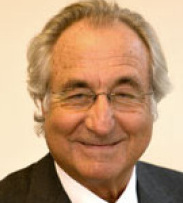
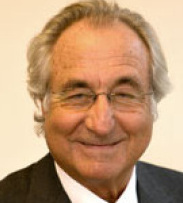
    Bernard Madoff Y (Nonautosurf Ponzi) $50 B Ponzi
    American Investors Network (AIN) Y (Nonautosurf Ponzi) Bogus Ad. Co.
    Biz Ad Splash (Ownership undeclared) N Panama?
    Increaser.biz (Ownership undeclared) N Netherlands?
    Instant2u (“Billy?”) N DOA. Uzbekistan?
    Noobing (Ownership undeclared) N Kansas?
    Premium Ads Club (135% over 15 days) N DOA 2-23-09
    Aggero Investment (Tied to Premium Ads Club) N Slow-mo DOA 3/1-09
    Name Name Name
    Name Name Name
  • Frogress Autosurf Apparently DOA

    doaartAn autosurf known as Frogress apparently has gone the way of MegaLido, leaving members in the lurch.

    Frogress seems to have started in October — about the same time as MegaLido. It advertised 12 percent a day for 12 days, and forum posts raved about the communications skills of the Frogress operator.

    MegaLido employed a similar model before going belly-up in a matter of weeks. People also raved about the communications skills of the MegaLido operator — until he stopped communicating, that is.

    In any event, the Frogress server is throwing an error message, and people in forums said the program has tanked. Some people, however, added that they’d join the next autosurf opened by the Frogress operator. After all, he had good communications skills — and 12 percent a day is nothing to sneeze at.

    Frogress and MegaLido both used the flameout model — high rebate percentages purportedly paid quickly.

    This is distinguished from the slow-motion model — low rebate percentages paid over considerably more time.

    Regardless, Ponzi math applies to both approaches, and a rational argument can be made that slow-motion Ponzis actually are more dangerous than flameout Ponzis because more people have more time to join and more money can enter the system before collapse.

    Bernard Madoff’s alleged $50 billion scheme was a slow-motion Ponzi, as was the alleged AdSurfDaily Ponzi.

    That a slow-motion Ponzi could be construed as more dangerous than a flameout Ponzi does not inply that there is any virtue in using the flameout model; it simply means the individual autosurf’s pot may not grow as large in the flameout model.

    No matter. A fameout Ponzi operator still can collect big sums quickly, shut down the autosurf, and start another flameout Ponzi, hopscotching across the Ponzi universe fueled by promoters who can’t say no to the sign-up commissions and the chance to make a quick kill.

    It’s worth pointing out that Ponzi collapses can be voluntary or involuntary. It’s common for autosurf Ponzi operators to take the money and run, invoking disclaimers and contract language members agreed to at sign-up:

    Advertising fees are “nonrefundable,” for instance. And “rebates aren’t guaranteed.”

    If the cessation of operations is involuntary, it could be because the government has stepped in to stop an alleged scam from mushrooming and sucking away even more money. That’s the ASD experience.

  • AdViewGlobal, AdGateWorld Brands Leveraged To Sell Cash-Gifting, Other Programs; Pitches Also Use Tony Robbins’ Name

    It’s hard to imagine that motivational speaker Anthony Robbins would be pleased to learn his carefully cultivated brand name is being leveraged to sell highly questionable online-income opportunities such as cash-gifting programs.

    Robbins, however, has company — and it’s the sort of company that adds an extra layer of dubiousness to the drip-drop dilution of the Robbins’ brand: The brands of AdGateWorld and AdViewGlobal also are being used to harvest traffic to “opportunities” that appear to have nothing to do with the autosurf companies.

    AdGateWorld and AdViewGlobal are autosurf companies that surfaced in the wake of the alleged $100 million AdSurfDaily autosurf Ponzi scheme. The U.S. government takes a dim view of the autosurf business model, saying it’s a back-door way of selling securities without a license — while using money from new investors to pay redemptions requested by earlier investors: the classic Ponzi set-up.

    At the same time, the government also cautions against participating in cash-gifting programs, many of which use an illegal pyramid model and trade on get-rich-quick dreams.

    This is one of those bizarre things that happens only online. Autosurfs have been under public scrutiny in the aftermath of the well-publicized August seizure of ASD’s assets.

    Promoters of cash-gifting and MLM-style programs now appear to be trading on ASD’s pain — and the names of new autosurfs that have surfaced since the ASD asset seizure  — to harvest traffic and route dollars to their own questionable opportunities.

    Last night and this morning we noticed that some promoters of cash-gifting and other questionable programs have been using keywords such as “Ad View Global” and “Ad Gate World” to drive traffic to their video presentations. The autosurf names appear in headlines on the video sites, but the videos themselves don’t talk about the autosurfs.

    People who anticipate viewing an autosurf pitch instead are greeted with a cash-gifting pitch or a pitch for another MLM-style program.

    Robbins’ name also is being used in an apparent bid to siphon traffic that originates with autosurf- or business-opportunity-related keywords, and, in at least one case, is being used in an actual video ad for a cash-gifting program. We also noticed Robbins’ likeness in video stills whose headlines suggested the videos were about autosurfs.

    This morning we viewed a video with a headline of “Ad Gate World Create[s] the 4 Hour Work Week.” The video was about a cash-gifting program, not the Ad Gate World autosurf program. Robbins’ name was scrolled in the opening frames of the video.

    A woman who appeared in the video declared she’d found her nirvana through cash-gifting:

    “Cash-gifting is the way to go — hands down,” she told viewers. “This is what I want to do, like forever, now.”

    Like him or not, Tony Robbins has worked hard to cultivate a unique brand identity. Last year he sued Stephen Pierce, an Internet Marketer, amid allegations that Pierce was leveraging the Robbins’ brand without authorization.

    Read about the Robbins/Pierce lawsuit on TMZ.com.

    “[Robbins] carefully limits and vigorously protects and defends the good will and value of Robbins’ name, reputation and image,” Robbins said in the lawsuit.

    Some promoters of highly questionable programs are really pushing things by associating Robbins’ brand with their “opportunities.” This is one of the reasons large segments of the public view Internet Marketing as a cesspool.

    It’s painful to watch.

  • 2008 Concluded With ‘Ponzi-Equals-Pain’ Message

    Bernard Madoff
    Bernard Madoff

    Dear Readers,

    Our best to you with the dawning of the new year — and our thanks for making this Blog one of your stopping points.

    If you have a moment in the coming days, think about leaving a comment that answers this question: What will you remember most about 2008?

    One of the things we’ll remember most is the AdSurfDaily, LaFuente Dinero and Golden Panda Ad Builder case. As mentioned in a previous post, we never intended to do more than a few posts on the subject.

    The ASD case kept itself in the news, though, mostly because of the behavior of some of its more ardent supporters. Andy Bowdoin’s own declaration that Satan was at work — as well as comparing what the company was confronting to the 9/11 terrorist attacks — set the standard for some of the oddities that followed.

    There were Kool-Aid campaigns to Bill O’Reilly of Fox News; letter-writing campaigns to the

    Elie Wiesel, Ponzi Victim
    Elie Wiesel, Ponzi Victim

    Inspector General for the Justice Department; petition drives to the U.S. Senate; a call for a million-person march on Washington; prayer campaigns; name-calling; rants; a gleeful forum party after the Sept. 30-Oct. 1 evidentiary hearing concluded; claims that the prosecutors, Secret Service agents and judge were brainless.

    None of these messages was consistent with a comprehensible PR strategy or the behavior one normally would expect from a company that called itself a professional advertising firm. The presence of numerous other autosurfs also didn’t help. ASD’s claim of offering an exciting, new business model was just plain silly. Scam.com and other sites have been covering autosurfs for years.

    Another thing that didn’t help ASD were the Ponzi allegations against financier Bernard Madoff. The accusations alone brought the word “Ponzi” into widespread public use. The Wall Street Journal and Bloomberg News, in particular, have been providing exceptional coverage of the Madoff case. Practically everyone knows what a Ponzi is now, something that could affect juror pools in the ASD case. Madoff has become a national disgrace, a punch-line for late-night comics and a source of global disgust and heartache.

    “Ponzi” has become a radioactive word. In short, “Ponzi” = “pain” — the kind of pain that destroys people, dreams, fortunes and the good works of charities, endowments and universities.

    The word “Ponzi” became central to many lives in 2008. It is our sincere hope that 2009 will be defined by a much better word:

    Prosperity.

    Our warm wishes to you.

    Sincerely,

    Patrick

  • Madoff Case Sparks Talk Of ‘Clawbacks’

    Bernard Madoff
    Bernard Madoff

    BLOG UPDATE 2:19 P.M. EST (U.S.A.): La Tribune, a French business newspaper, is reporting that a founder of Access International Advisors, a hedge fund with large sums invested with Bernard Madoff, has been found dead in his New York City office building.

    Rene-Thierry Magon de la Villehuchet, 65, was found this morning. The French newspaper called it a suicide, as have other media outlets, but the medical examiner hasn’t listed a cause of death.

    Here, below, our earlier post . . .

    In the CEP autosurf Ponzi scheme case, a court-appointed receiver filed dozens of lawsuits against program “winners,” forcing them to return profits on the theory there can be no winners in an illegal enterprise. The receiver, William F. Perkins, placed CEP in bankruptcy and then methodically went about the task of clawing back money for the estate.

    Perkins, who effectively is running CEP as a debtor-in-possession, has negotiated settlements with a number of winners.

    Last month he triumphed over CEP’s owners, Clayton Kimbrell and Trevor Reed, in a civil trial for fraud and breach of fidiciary duty.

    Judge James E. Massey ordered Kimbrell and Reed to return about $1.5 million in fraudulent transfers they made to themselves, family members, employees and other CEP principals.

    Some of the clawback cases against CEP winners still are being heard, about 17 months after the initial filing. More than 20 trials against individual defendants are scheduled next month in U.S. Bankruptcy Court in Atlanta.

    CEP was declared a Ponzi by a federal judge, while Madoff remains an alleged Ponzi operator who told authoritites that the Ponzi could amount to $50 billion in losses.  The July 2007 SEC complaint against CEP said about $12 million flowed through the firm in an illegal securities offering.

    Perkins maintains a CEP website from which visitors may access all the court documents. It’s well worth a visit.

    Talk in the Madoff case has turned to what the court-appointed receiver might do to recover cash. Owing to the size of the alleged scheme, things could get downright ugly. In theory, people who made withdrawals could be ordered to return them — and this group includes individual investors, money managers and charities.

    Lawyers are apt to use terms such as “fictitious profits” and “fraudulent conveyance” to describe redemptions by investors before the Ponzi collapse. The prospects are horrifying because investors didn’t know anything untoward was occurring behind the scenes, and many of them likely have spent all or part of the money.

    See this Bloomberg News story.

    If the case follows the CEP model, Madoff and insiders — if any — could be forced to return illegal transfers. Prior to his arrest, Madoff said he wanted to distribute up to $300 million to employees. If such transfers were made — recently or in years past in the form of bonuses — it’s possible that the money could be ordered returned even if spent.

    Ugly doesn’t even begin to describe the battles that could ensue. Charities that relied on Madoff to manage money used for good deeds and took dedemptions could be targeted to pay the money back. There is the potential for pain in many, many places, and it’s possible the clawbacks could go back six years.

    Blinded to the reality that Ponzi schemes can have devastasting consequences, some autosurf supporters still are arguing that the government has no business sticking its nose in where it doesn’t belong.

    Incredibly, an autosurf whose launch is set for next year has targeted nonprofits in early promotions. Promoters have suggested it’s a great way to publicize the business and get cash flow.

    AdSurfDaily, which has ceased to operate in the wake of the government’s August seizure of nearly $100 million, promoted at least one nonprofit, funding it with $100,000 in “ad packs” and asking members to contribute.

    “ASD President, Andy Bowdoin, has generously donated 100,000 ad packages to this organization,” the ASD Breaking News site said on July 5, about a month prior to the seizure.

    ASD encouraged members to send donations for the charity to ASD headquarters and even to transfer “donations from your [ASD] Cash Balance.”

  • Ad View Global, New ‘Advertising’ Program, Debuts

    This morning we read an early pitch for Ad View Global (AVGlobal), a new “advertising” company that is coming online in the wake of the $100 million government seizure of assets tied to AdSurfDaily Inc.

    AVGlobal, according to the promoter’s ad we read, is positioning itself as a guarantee against the recession and poor economy. You’ll have to plunk down a minimum of $360 to get paid for viewing ads. ASD’s minimum purchase was $10, so AVGlobal wants 36 times more to get you started earning fabulous amounts of money for viewing ads while the economy is in the tank.

    Talk about stoking the furnace.

    AVGlobal, which for shorthand purposes also is called AVG, is headquarted in Uruguay, according to the promoter. You shouldn’t worry about this, he implied, because the company has banking relationships throughout the free world and “many” of its employees are “citizens” of the United States or other affluent countries.

    It’s not clear if the “citizens” employed by AVG will continue to live in the United States while they’re running a business from South America.

    At least two of the employees are identified in the promotion, and at least one is an ASD executive: “Gary,” whose last name wasn’t mentioned, appears to be the head man, and Juan Fernandez, chief executive officer of AdSurfDaily, is listed as “national sales manager.”

    Whether Fernandez’ job is to serve exclusively as “national sales manager” for a single country is unclear. One would think a company headquartered in Uruguay might appoint an “international sales manager,” as opposed to a more localized “national sales manager.”

    “National Sales Manager” is an interesting title, to be sure.

    Fernandez, through counsel, notified the federal judge in the ASD case that he would take the 5th Amendment against self-incrimination if called to testify at the Sept. 30-Oct. 1 evidentiary hearing. The judge ruled last month that ASD had not demonstrated it was operating legally and not a Ponzi scheme at the hearing.

    Just two paragraphs below the place in the pitch where the promoter mentions “Gary” and Fernandez by name, he insists “there is no connection with the company ASD . . .”

    There is no disclosure at any point in the pitch about ASD’s legal troubles and the risk associated with participating in an autosurf. What’s important, according to the promoter, is that you can “Make Your Financial Life Recession Proof” by joining Ad View Global, which permits you to plunk down up to $9,500 a day for ad purchases.

    One of the reasons ASD put itself on federal radar screens is because it permitted purchases of $10,000 or more, something that catches the attention of banks, the U.S. Secret Service and the IRS. Banks and the Secret Service and the IRS can become suspicious even of $9,500 transactions, though. They’re smart enough to understand that, if $10,000 is viewed as the magic cutoff to avoid suspicion, some folks just might dial it down a bit.

    It appears that everyone who joins AVGlobal gets dubbed an “account executive,” but if you want to earn you have to become a “VIP” account executive. VIP stands for “Viewing Incentive Program.”

    The promoter stressed that AVGlobal is selling “page impressions,” not simple advertisements.

    “Imagine if NBC paid you to watch their station during the hours of 4:00pm – 8:00 pm each evening, regardless of time zone?” the promoter droned. “What if they had hundreds of thousands of people worldwide that they could guarantee to be watching NBC during this time period? Just how valuable would this time be worth?”

    Exciting stuff, to be sure.

    Hmmm. Perhaps NBC should start paying people for viewing ads, only after making a minimum $360 purchase, registering as account executive VIPs and running things out of South America, of course. If the venture proved to be a Ponzi scheme, NBC could use its own news division to sanitize its own Bernard Madoff or Andy Bowdoin-like scandal.

    Here’s a headline idea: “Make Your Financial Life Recession Proof.”

    Oops. Already taken by AVGlobal. Regardless, NBC has lots of talented writers. Someone will be able to come up with a good headline if the network enters the paid-to-view-ads fray.

    It’s a plain fact that people are hurting as a result of poor economic times. It’s also a plain fact that many folks are turning to the Web to learn ways to supplement their income. Here’s hoping they decide against viewing “page impressions” for a living.

    The Feds believe that ASD President Andy Bowdoin was running a criminal enterprise that sold unregistered securities, called them “advertisements” and operated as a Ponzi scheme. Bowdoin’s own attorneys say he is the target of a criminal probe, and he has been sued in a separate action under federal racketeering laws.

    As pointed out above, Juan Fernandez, Bowdoin’s own CEO, took the 5th at the ASD evidentiary hearing. So did Bowdoin.

    Bowdoin also has been sued by Bill McCollum, the attorney general of Florida, under pyramid statutes. Not long ago Bowdoin claimed during a conference call that “Ponzi” allegations had been dropped in Florida, but “Ponzi” allegations never even were brought in Florida, McCollum’s office said. The state always used pyramid statutes, unlike the federal government, which brought Ponzi allegations.

    Now AVG has emerged, using a similar business model, changing a few things, running things offshore and asking for at least $360 up front so people can play. Perhaps they’ll even get the chance to meet the “national sales manager.”

  • EDITORIAL: $7,260 An Hour: The Dangerous Allure Of Autosurfs

    I first learned about Ad Surf Daily and Andy Bowdoin in July, prior to the asset seizure, back when I served as a Moderator at the Warrior Forum. ASD members swore by the company, flocking to the forum in droves when Andy Bowdoin had become a topic of widespread conversation on the Web.

    Some of the Warrior Forum discussions became heated, and people who had no previous connection to the forum suddenly registered as members. ASD supporters, it seemed, couldn’t even fathom that other people might have opposing points of view. Few senior Warriors have anything good to say about autosurfs and cash-gifting programs. In general, they see them as poor excuses for a business pursuit, let alone an actual business.

    Lots of Warriors make their own information and/or software products, largely eschewing cash-gifting and autosurfs as the playgrounds of hype purveyors. The dream of many senior Warriors is to make products that fill an information vacuum and add value to customers’ lives. Some of them are “How To” publishers. Others write software and scripts or sell MRR, rebrandables or Affiliate products. Virtually all of them are resigned to the fact that actual work is involved. It takes time to build a brand and a business. Very few see the act of plunking down $12,000 and surfing for six minutes to claim a daily paper profit of $120 a noble pursuit.

    Walking Back The Claims

    One of the first claims we read about ASD was that a member was making $1,000 a day ($365,000 a year) passively by surfing a handful of websites with a daily time investment of only a few minutes. If true, it would have meant the member had directed about $100,000 at the company or accumulated that amount by surfing and reinvesting. The most shocking extrapolation, however, was that $100,000 could morph into $365,000 in a year’s time.

    No legitimate company offers such a return. It was a dead giveaway that ASD’s days were numbered, even though people were citing the $1,000-a-day profit claim in promotions as a reason to join. They might as well have taken out an ad in the New York Times that read, “We Are Just Dying For The Government To Investigate Our Favorite Autosurf Because It Likely Is A Ponzi Scheme.”

    Some of the biggest Warrior Forum fights involved cash-gifting programs. Perhaps the biggest of all occurred when an ad for a gifting program accidentally got approved by a tired, overworked Mod in the Warrior Special Offers (WSO) forum. WSOs are supposed to be products you created. This particular WSO was a 30-page PDF ad for a gifting program, complete with pictures of fabulous homes, fabulous cars and fabulous piles of money. Senior members went nuts, and the ad was deleted quickly with a sincere apology.

    Naturally some opportunistic members stepped in to speak out in support of gifting programs, defending them with velvet talk and claims of superior knowledge and unquestioned propriety, despite very public warnings from the Federal Trade Commission. Senior members don’t let that kind of talk go unchallenged. Gifting as a business? You’re kidding, right?

    Most senior members feel the same way about autosurfs.

    Due Diligence?

    All kinds of declarations were made that people had done comprehensive due diligence on ASD. The thought alone was preposterous, as are current claims about comprehensive due diligence having been performed by investment companies that directed money at disgraced financier Bernard Madoff, now accused of running a massive Ponzi scheme.

    It is simply impossible to perform due diligence on a financial product absent verifiable financial data. “Trust” is not a synonym for “due diligence,” no matter now many times promoters confuse the terms, either deliberately or because a neuron misfires and instructs them to invest based on feeling, not fact.

    The phrase “I got paid” used in autosurf promotions also is not due diligence. Ponzi schemes thrive precisely because they pay people. Then those people tell other people they got paid. The cycle repeats itself until:

    • A.) The mathematical deception no longer is sustainable because too many people want too much money simultaneously. (Madoff reportedly faced $7 billion in simultaneous redemptions and had run out of shells to move.)
      B.) The Ponzi becomes too worrisome for the operator or technological problems become unmanageable and drain interest or create a run on the bank.
      C.) The autosurf Ponzi operator decides he is going to keep all the money he’s collected because he’s reached a secret target and covered himself in the Terms of Service.
      D.) The government intervenes.

    Echoes On The Web

    The same defenses that surfaced for Andy Bowdoin have surfaced in other autosurf Ponzi schemes. Research the scheme, and you’ll find the defenses, up to and including the all-caps, screaming, deflection defenses.

    “IT’S NOT A PONZI SCHEME, [EXPLETIVE!]” is, perhaps, the signature deflection, with the “HOW DARE YOU EVEN SUGGEST THIS UPSTANDING BUSINESS PERSON WOULD BE INVOLVED IN SOMETHING UNTOWARD?” deflection coming in a close second. “GET READY FOR THE LAWSUIT” comes in a close third.

    Some purveyors of autosurfs are so accustomed to people saying “yes” and settling for velvet talk in response to legitimate questions that they reflexively demonize anyone who strays from the company line. They’ll try to maintain the veneer of superior knowledge even if the autosurf is in failure mode, explaining that such occurrences are a natural part of doing business online and demonstrate the need to have a “diverse” portfolio.

    They’ll sell autosurfs as an investment in one breath and, in the next, deny that customers had purchased an investment. Why? Because they don’t want to get sued by their downlines and don’t wanted to be named a defendant in a fraud or a securities beef.

    It’s common for them to suggest they pitched a failed autosurf in good faith, pointing out that nobody should have invested more than they could afford to lose. Forum posters, including people who got fleeced, want to think the best of their sponsors and even thank them for their “candor.” It’s a curious online cousin to Stockholm Syndrome.

    What’s lost in the discussion is the fact the government clearly views the autosurf model as illegal, because virtually all autosurfs operate as Ponzi schemes that sell unregistered securities and because they raise concerns about criminality.

    Anyone can purchase an autosurf script or even find one for free. Plug in the variables — the daily “rebate,” for example — and you’re the owner of your very own Ponzi scheme. A terrorist could join and you wouldn’t know. A criminal surfing team could join and you wouldn’t know. A criminal or terrorist could be the autosurf operator and you wouldn’t know.

    Another common defense is that the government doesn’t understand the model. Yet another is that the autosurf operator has discovered the magic pill that makes the model legal, separating it from illegal programs that use a similar model but exclude the magic pill. Still another is the selective-enforcement defense: With so many other autosurfs out there, why go after this one? When all else fails, of course, the most ardent defenders always can attack the prosecutors as mindless fools, free-market opponents, Socialists, perhaps even calling them names and comparing them to Satan.

    One defense staple is the argument that the government has no right to mess with autosurf Ponzi schemes if it continues to permit Social Security to operate. Indeed, changing the subject is a critical skill if your aim is to defend the autosurf trade.

    $7,260 An Hour

    One particularly desperate defense for Bowdoin, uttered by a supporter in the aftermath of Bowdoin’s decision to take the 5th Amendment at the Sept. 30-Oct. 1 evidentiary hearing, was that he was “too honest” to testify.

    One of the questions prosecutors could have asked is how it was possible to morph $100,000 into $365,000 in a year’s time — simply by clicking on ads — when there were no additional profit centers that generated huge amounts of revenue.

    Walk it back: Give Bowdoin $100,000. Surf for six minutes a day (2,190 minutes over the course of the year, or 36.5 hours). Emerge with your $100,000 principal back, and a tidy profit of $265,000. Your profit computes to $7,260 an hour. ($265,000/36.5 hours.)

    Yes, $7,260 in profit per hour from clicking on ads. Where did that money come from? Work just three hours and you’ve topped the yearly earnings of an average Walmart employee. In just nine hours you’ve topped the average yearly earnings of a middle-class manufacturing worker or teacher in the United States. See, now, why selling the autosurf dream is so important?

    It’s always convenient to hate bureaucrats and the cops until you need them.

    Smoke And Mirrors

    The argument that Bowdoin was selling “advertising” and not a financial product is absurd. So is the corresponding argument that ASD was an autosurf like none other, the one that figured out how to get everything nice and legal. The ASD Terms of Service (TOS) was among the most consumer-unfriendly documents we have ever read.

    Basically, participants were agreeing to give Bowdoin license to collect amounts from $10 to $12,000 (or more, with special permission), while empowering him to keep the money even if he chose to quit paying rebates. “Advertising” purchases were nonrefundable. Rebates weren’t guaranteed. Essentially all he had to do was show ads to honor the contract.

    Boxed In

    What’s interesting about the Feds’ approach to Bowdoin is that, to date, they’re not trying to bust the contract. They’re saying, in effect, “OK, Mr. Bowdoin. Want to hide behind your contract? Well, start showing your customers’ ads without paying a corresponding rebate. Let’s see how happy somebody who paid you $40,000 will be if you run off 40,000 ads, one painful $1 click at a time.”

    As a side note — and using a figure of $50 million as a conservative estimate of Bowdoin’s advertising liability — Bowdoin would have to deliver 50 million clicks if ASD came back online. Where is the audience going to come from if the deal doesn’t include rebates for viewing? It could take forever for the ads to be displayed.

    Nice contract, huh?

    What the government did by telling Bowdoin he was permitted to show ads is neatly expose the wink-nod nature of autosurfs. Imagine the insurrection that would result if ASD suddenly came back online and began to run off 50 million ads — $50 million worth of ads backed up in the queue — one painful click at a time. Every person who complained to the government would neatly expose himself or herself as a co-conspirator, a wink-nod participant. After all, rebates weren’t guaranteed. Only ad views were guaranteed. You paid for advertising only, right?

    What Bowdoin’s TOS seems to have done is box in participants as possible co-conspirators.

    In our view, prosecutors’ best card is the assertion he was selling securities and calling them advertisements.  We base this view on the fact the government is 3-0 in autosurf prosecutions, dating back to 12DailyPro and including CEP and PhoenixSurf.

    One difference — and it’s a notable one — is that Bowdoin didn’t surrender upon seizure and has a well-known law firm challenging the government’s forfeiture case on his behalf.

    That ASD is lawyered up, however, does not change the plain fact that the government believes — as it did in previous auotsurf cases — that the autosurf model involves the sale of unregistered securities disguised as advertisements.

    Prosecutors weren’t born yesterday. They lack the budget and manpower to chase down all autosurfs, but they understand the game. And, in this particular area of law, they have significant advantages over defense lawyers because the law is weighted toward them. It’s that way by design: Ponzi schemes and the sale of unregistered securities on a mass scale pose a clear and present danger to the economy.

    From the government’s point of view, a security is a security no matter what you call it. You can call it an “advertisement” until the cows come home and it still will be a security.

    Emerging Models

    “New” autosurf models emerging in ASD’s wake appear to be incorporating even more smoke and mirrors to skirt regulation, perhaps even moving offshore or adding gaming or social-networking elements. The rebate underpinnings still appear to be in place, which means they, too, will come under scrutiny. It’s highly likely that their own promoters will bring them down because they won’t be able to restrain themselves from using glutonnous hype.

    Remember that $1,000-a-day claim? New operators won’t be able to stop the hype purveyors, any more than Bowdoin could stop them.

    I never planned to do more than a few stories on ASD’s troubles. What kept my focus riveted were constant attacks against this Blog by ASD supporters. Almost all of it was drivel, nonsense of the highest order, often served up in ad hominem or passive-aggressive fashion. I never minded posting opposing points of view. What I minded was a lack of sober thought and the stunning commitment to intellectual dishonesty. In all the time I’ve published news and opinion on ASD, I have not received a single comment from an ardent ASD supporter that did not attempt to change the subject in some way.

    Not one.

  • MegaLido Autosurf, Pushed By ASD Members, Vanishes

    We’ve written previously that members of an autosurf known as MegaLido had reported their support requests had been ignored and they they were seeking refunds from AlertPay and SolidTrustPay.

    MegaLido members now say the site itself has gone offline.  The paid-to-surf site rose to prominence in the weeks after the government seizure of AdSurfDaily’s assets, with some ASD members touting MegaLido as a safe, offshore alternative. Reports suggest as many as 27,000 people joined MegaLido, whose promoters clearly traded off ASD’s miseries.

    One forum poster said today that all 10 autosurfs in which he was a participant were encountering various problems, meaning they were failing or perhaps on the verge of doing so.

    Here’s the thing about autosurfs:

    • It is a virtual certainty they are operating as Ponzi schemes, a cousin to the type of alleged fraud pulled off by Bernard Madoff.
    • They are virtually impossible to police.
    • The SEC has a history of shutting them down. The Justice Department also is involved in the autosurf fray these days. Witness the civil forfeiture complaint against the assets of AdSurfDaily, including the seizure tens of millions of dollars.
    • You don’t know if your fellow autosurfer is a criminal or terrorist.
    • You don’t know if the autosurf operator is a criminal or terrorist. It is likely that the U.S. government, at least, would view him as a criminal if he is using the Andy Bowdoin/ASD playbook.
    • It is impossible to perform due diligence.
    • Virtually all autosurfs engage in the sale of unregistered securities, calling themselves “advertising companies” that offer “rebates.” Equivalent words also are used, all to avoid regulatory scrutiny.
    • There is nothing to prevent an autosurf operator from gathering a planned amount of funds and then running off with the money. Early “pay-outs” may be designed just to create buzz and keep money flowing into the system.
    • Receivers have a history of suing autosurf participants to force the return of illegal profits. Madoff wasn’t operating an autosurf, of course. But attorneys are lining up to sue institutions and people and who received redemptions from Madoff on the theory of ill-gotten gains.
    • Participating in an autosurf puts you at risk of losing money, being sued or even arrested.
  • Bowdoin/Madoff Alleged Ponzis: Just ‘Andy’ And ‘Bernie’

    UPDATE 1:03 PM EST (U.S.A.): Quoting Stephen Harbeck, president and chief executive officer of the Securities Investor Protection Corp. (SIPC), Bloomberg News is reporting that Bernard Madoff’s financial records are “utterly unreliable.” We’ve added a link at the bottom of the post.

    Here, below, our earlier post . . .

    If you’ve been following the Ad Surf Daily/Andy Bowdoin Ponzi scheme case, you’re missing out if you haven’t been following the Bernard Madoff case.

    The cases are similar in that both ASD and Bernard L. Madoff Investment Securtites have been accused of using incoming funds to pay off older participants, thus the “Ponzi” terminology. Affinity fraud also is an element: ASD was popular among people who defined themselves Christians, and Madoff’s offer appealed to members of the Jewish community.

    Both ASD and Madoff had a worldwide client base (in Madoff’s case, European financial managers appear to have steered clients’ money to Madoff, while ASD sold directly to clients in Europe and elsewhere). Both companies also had Florida clientele, with ASD conducting “rallies” for less-affluent people to drum up business in the state and Madoff preferring the Country Club approach in Palm Beach.

    One principal difference is that ASD defined itself as an “advertising” company that offered “rebates” on ad purchases of up to 125 percent of the customers spend in about four months. Put $10,000 in ASD, and four months later you’d have $12,500. Madoff didn’t uses wordplay in the ASD sense in a bid to avoid regulatory scrutiny, but clients expected their investments to grow 10 percent to 12 percent a year, based on Madoff’s published “results.”

    Another difference is the degree of the alleged Ponzi. ASD, whose assets were seized by the U.S. government in August, is expected to top out at roughly $100 million; prosecutors in the Madoff case fear losses could top $50 billion, based on Madoff’s own words.

    Yet another difference is customers’ views in the hours after the word “Ponzi” was associated with Bowdoin and Madoff: Many ASD customers blasted the government, arguing that things would have been just fine had prosecutors not meddled in ASD’s affairs. Madoff’s investors, however, were furious with Madoff. They wanted to know why the government hadn’t detected the fraud earlier and stopped it before it mushroomed globally.

    What’s strikingly similar about the cases, though, is the degree to which Bowdoin and Madoff traded on their innate charisma: Bowdoin in a folksy, Southern way, and Madoff in a confident, aloof way with a pinch of “regular Joe” thrown in. Bowdoin was “Andy” to his fans; Madoff was “Bernie.”

    People waited in line to give them money and let them do their magic. ASD collected tens of millions of dollars from “advertisers” in just several weeks last summer. Some ASD members took out second mortgages and cashed out savings to qualify for matching bonuses at rallies. In Madoff’s case, some people felt genuinely humble that a Wall Street titan had agreed to manage their money.

    Roger and Diane Peskin of Bethlehem, Pa., entrusted $3 million earned over a lifetime to Madoff, after having waited six months for the privilege of having their money accepted by Madoff. The couple also took $400,000 from the sale of their home and passed it along to Madoff, according to the Allentown Morning Call.

    Unlike Bowdoin, Madoff hadn’t been accused of previous securities felonies. But he traded on a lifetime of supposed business acumen, something Bowdoin did as well. Bowdoin got in trouble with the government after some of his promoters made the claim that he’d received a special award from President Bush for career accomplishments. It turned out the award Bowdoin received was the “Medal of Distinction,” which is handed out by the National Republican Congressional Committee for campaign contributions. An Ohio drug addict got the same award. He, too, claimed close ties to the White House.

    Madoff was hailed a trading legend. He’d been chairman of Nasdaq and had a supposed reputation for transparency — except, apparently, when it came down to his own securities company, which people now say was run in secretive fashion.

    Person after person has claimed they’d performed “due diligence” on both Bowdoin and Madoff. Since prosecutors seized ASD’s assets in August, however, the company hasn’t published an audited balance sheet. U.S. District Judge Rosemary Collyer ruled last month that ASD had not demonstrated it was a legal business and not a Ponzi scheme at a Sept. 30-Oct. 1 evidentiary hearing. It is not known if the firm even employed an auditor.

    Madoff, it turns out, seems to have used a three-person auditing firm that operated out of a 13-by-18-foot office in a suburban plaza. He, too, seems to have a problem on the accounting front. Like ASD, it raises the question if due diligence claims are credible in the absence of verifiable financial data.

    Bowdoin has yet to be charged criminally, but his attorneys say that might be coming. Madoff has trouble on the civil and criminal fronts, his reputation in tatters. He had a list of celebrity clients. Jewish charities already have been forced to suspend operations, and the town of Fairfield, Conn., has lost a bundle in its pension fund — money that was supposed to take care of civil servants in their retirement years.

    Andy Bowdoin is not Bernie Madoff, and Bernie Madoff is not Andy Bowdoin. Regardless, they are two men from very different backgrounds who had one thing in common: The power to draw money like a magnet and to disarm doubters by putting their individual charms on full display — Bowdoin in Internet videos that reminded people of a sort of Southern Mr. Rogers, and Madoff in Wall Street’s power corridors and the country clubs of Palm Beach: Bernie being Bernie, and Andy being Andy, their critics disarmed, their investors’ financial lives now in shambles.

    Bloomberg News: Madoff’s Financial Records ‘Utterly Unreliable’

  • BREAKING NEWS: AdSurfDaily Says Judge Lacks Jurisdiction

    AdSurfDaily Inc. has filed a defense in the civil-forfeiture case brought by the U.S. Secret Service and federal prosecutors in Washington, D.C. The firm is asking for a jury trial.

    Among the most interesting defenses is that the case was brought in the wrong court — U.S. District Court for the District of Columbia — and that the court lacks jurisdiction.

    ASD argued that U.S. District Judge Rosemary Collyer has no authority to hear the forfeiture issues. In August, the government seized nearly $100 million and real estate in Florida and South Carolina as part of the probe into ASD’s business practices.

    “To the extent the Court requires a response, Claimants deny that acts or omissions giving rise to forfeiture occurred in this district and, therefore, deny that venue is proper in this district,” ASD said today.

    Lawyers for ASD also said ASD was a legal business, denying it had engaged in money-laundering and wire fraud. The firm also raised Constitutional issues in its defense.

    Prosecutors said in their August forfeiture complaint, however, that an undercover agent made ASD purchases from Washington, D.C., which could make the venue issue ASD raised an uphill battle.

    “On or about July 20,2008, a[n] [agent] opened another ‘upgraded member’ account with ASD from a location in the District of Columbia, also via the Internet,” prosecutors said in the August complaint.

    “The next day, a[n] [agent]made a direct deposit into ASD’s [Bank of America] account, this time by delivering a check to the BOA branch at 700 13th Street, NW, Washington, DC. Thereafter, a TFA faxed a copy of the deposit receipt from the District of Columbia to ASD’s office in Florida.” prosecutors said in the August complaint.  “The ability to access ASD over the Internet from different states, and to open accounts from multiple locations by delivering payment to ‘your nearest Branch of Bank of America’ as directed by ASD confirms that ASD knows it operates in multiple states, and so intends.”

    Here is ASD’s defense, filed today.

    Here is the August civil-forfeiture complaint against ASD’s assets.

    Prosecutors said ASD was selling unregistered securities while calling itself an advertising business and running a Ponzi scheme.

  • Transition Progresses: No ASD Court Updates Yesterday

    We checked Judge Rosemary Collyer’s docket in the AdSurfDaily case several times yesterday. The most recent entry was the Dec. 3 denial of “Leave to File” directed at an unnamed party. The party who was denied had attempted to file a motion to void judgment.

    On Nov. 20, Judge Collyer issued a separate denial of “Leave to File,” this one directed at ASD member Curtis Richmond. Richmond attempted to file a motion to dismiss the ASD forfeiture case, according to the docket.

    Richmond is associated with a Utah “Indian” tribe a judge ruled a sham and has a history of clashing with federal judges, prosecutors, law-enforcement agencies and others. It is unclear if Richmond was the party who attempted to file the motion to void judgment. The sham “Indian” tribe has filed similar motions in other cases, but Judge Collyer’s docket does not list a name in the Dec. 3 denial.

    If you’re new to this site, we’ve been covering the civil-forfeiture case against money and property linked to AdSurfDaily Inc. and ASD President Andy Bowdoin. Federal prosecutors believe ASD, which deemed itself a professional advertising service, was a criminal enterprise running an autosurf Ponzi scheme. Federal agents seized about $100 million in August.

    Separately, we still are in the process of porting this website. There may be occasional outages over the next few days. We made considerable progress yesterday, and fine-tuning will continue over the next several days.

    One thing you might notice is that the site may not load properly at all times. This is because the domain is re-propagating. It is possible that such quirks may occur over the next five days or so.