Tag: Bank of America

  • RECOMMENDED READING: Prospective Class Action Against Accused Ponzi Schemer Ephren W. Taylor II Names Alleged Facilitators And Raises Specter Of Crime Spigot Involving ‘Self-Directed’ IRAs

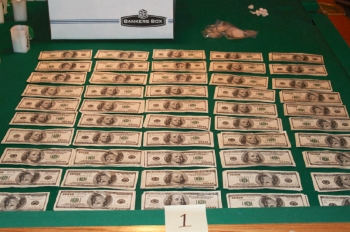
    This cash came from the Trevor Cook Ponzi scheme and was stashed, according to filings in the civil case against Cook. Cook is serving a 25-year-sentence in federal prison. Photo source: Court records.

    EDITOR’S NOTE: As America’s fraud plague continues, some of the scammers are polluting the free market with incongruous and even bizarre schemes  — even as they purport to represent the best that freedom offers.

    The PP Blog highly recommends that readers check out this September 2011 document from the SEC that warns about scammers targeting holders of self-directed IRAs. Reading the document may help improve your understanding of the story below. There are differences between IRAs (emphasis added below): 

    “An Individual Retirement Account (IRA) is a form of retirement account that provides investors with certain tax benefits for retirement savings,” the SEC says. “Some common examples of IRAs used by investors include the traditional IRA, Roth IRA, Simplified Employee Pension (SEP) IRA, and Savings Incentive Match Plan for Employees (SIMPLE) IRA. All IRA accounts are held for investors by custodians or trustees. These may include banks, trust companies, or any other entity approved by the Internal Revenue Service (IRS) to act as a trustee or custodian.

    A self-directed IRA is an IRA held by a trustee or custodian that permits investment in a broader set of assets than is permitted by most IRA custodians,” the SEC continues. “Most IRA custodians are banks and broker-dealers that limit the holdings in IRA accounts to firm-approved stocks, bonds, mutual funds and CDs.

    “Custodians and trustees for self-directed IRAs, however, may allow investors to invest retirement funds in other types of assets such as real estate, promissory notes, tax lien certificates, and private placement securities. While self-directed IRAs may offer investors access to an array of private investment opportunities that are not available through other IRA providers, investments in these kinds of assets may have unique risks that investors should consider. Those risks can include a lack of disclosure and liquidity — as well as the risk of fraud.”

    Here, now, a story about how holders of self-directed IRAs allegedly had their pockets picked . . .

    There’s Trevor Cook, who’s doing 25 years for his massive Minnesota Ponzi caper aimed at Christians, even as the trial of three of his accused colleagues is getting under way. Then there’s Kurt Barton, who’s doing 17 years for his Texas fraud scheme that also targeted people of faith and was described by the FBI as a robbery that took place without the aid of a gun.

    Meanwhile, there’s William Wise, a onetime international fugitive charged in California with a massive Ponzi scheme centering on offshore CDs. (Wise surrendered earlier this week.) And then there’s Robert Stinson Jr., the Pennsylvania Ponzi swindler now doing more than 33 years for his “Life’s Good” scam. (The FBI said he was wiring money even as a raid was under way.)

    And who could forget Californian Daniel C.S. Powell, implicated by the SEC in a life-settlement scam? (The venture became known as “Christian Stanley,” and its website traded on the name of former President Bill Clinton.)

    Then there’s Chris Cornett, implicated by the CFTC in a Forex swindle.

    Here’s why these names are important: All of these individuals — and more — are listed as scammers or alleged scammers in a proposed class-action lawsuit against Ephren W. Taylor II, now implicated by the SEC in a massive Ponzi swindle known as “City Capital.” The alleged City Capital targets were  people of faith.

    Though not defendants in the Taylor/City Capital lawsuit, the other alleged (or proven) scammers all had something in common beyond their abilities to separate people from their money, according to the complaint: complicit bankers and/or a means of plowing customers’ money from self-directed IRAs (SDIRAs) into their fraud schemes.

    SDIRAs are sold as freedom-celebrating devices that encourage personal responsibility and permit their holders to be more flexible in their investment choices. By law, the accounts are held by a custodian or trustee. Even so, sharks allegedly swim in these waters — and the worst of the worst may deny they have any duties to their customers and may be turning a blind eye to fraud schemes as a means of keeping a fee-generating, steady supply of fresh meat and blood in the water.

    “I am encouraging our plaintiffs to raise their voices and to make their legislators and regulators aware of how Ponzi schemes continue to be perpetrated through the use of self-directed IRA investment vehicles,” said Cathy Lerman of Cathy Jackson Lerman PA, one of the firms involved the prospective class action.

    Other attorney/firms involved in the litigation include California local trial counsel David Dorenfeld of Snyder Dorenfeld LLP; Michael W. Brown, an associate at Snyder Dorenfeld; and Jim Gitkin, principal of Salpeter Gitken LLP.

    Among the defendants named in the Taylor class action are Bank of America; Missouri Bank and Trust of Kansas City; Equity Trust Corp. of Ohio (an SDIRA provider); Entrust New Direction IRA Inc. of Colorado; The Entrust Group of California (an SDIRA provider); Entrust Administration Inc. of California; and Sunwest Trust Inc. of New Mexico. Other defendants also are named, and there is an allegation that Taylor used as many as 50 shell companies as part of his long-running fraud.

    A separate proposed class action has been filed against SDIRA providers named in the Taylor class action. That lawsuit alleges that as much as $94 billion may be tied up in SDIRAs nationwide, suggesting that fresh meat and blood could churn in the waters indefinitely.

    In effect, the lawyers are arguing that SDIRAs, which are lightly regulated or not regulated at all, have become the tools of criminals and are being used to separate investors from their money in one scam after another. Unlike traditional IRAs, SDIRA vessels may end up steering vast sums of cash into “opportunities” that not only may be exceptionally risky, but also may be downright crazy — such as Taylor’s purported “sweeps machines.”

    The Taylor lawsuit, for instance, argues that African American Christians effectively found themselves owning machines used in illegal gambling parlors and that churches that had invited Taylor to speak also got swept into incongruous schemes.

    Liberty City Church of Christ in Miami lost $100,000, owing to Taylor’s scams, the lawsuit contends. William Lee of Raleigh, N.C., got duped of $160,000 because Taylor and associates caused him to believe he was making a “socially conscious” investment that would help the public at large while at once resulting in an individual profit.

    The same thing happened to Gennet Thompson of Delray Beach, Fla. Thompson entrusted $17,200 to Taylor in one “opportunity” and $10,500 in another, according to the complaint.

    Trudy Morgan of Lithonia, Ga, had a similar experience — one that sucked away $30,000, according to the complaint.

    Read the complaint against Taylor, the banks and the SIDRAs.


  • AdSurfDaily Downline Group Known As ‘Oneteam’ Repeatedly Used Names Of Government Agencies, Bank Of America In Advertisements For Embattled Andy Bowdoin ‘Surf’ Firm

    An AdSurfDaily downline group known as “oneteam” used the names of U.S. government agencies, a Congressionally chartered insurance entity for depositors and Bank of America in what appears to have been a brazen bid to disarm doubting prospects continuously in advertisements for at least 18 months.

    The ads appeared online beginning in February 2007.

    Among other things, the ads advised prospects that ASD provided “shelter” from the Federal Trade Commission (FTC) and the Securities and Exchange Commission (SEC). The FTC, among its many duties, polices false advertising; the SEC regulates the securities industry, prosecuting illegal activities such as securities fraud, the sale of unregistered securities and Ponzi schemes in a securities environment — all of which are activities associated with the so-called autosurf “industry.”

    Autosurfs typically call themselves “advertising” companies in a bid to avoid regulatory scrutiny and short-circuit prosecutions. “oneteam’s” ads began to appear one year to the month after the SEC filed fraud charges against 12DailyPro in February 2006, in a widely publicized case that effectively smashed a $50 million Ponzi scheme. ASD was struggling to recruit members when the “oneteam” ads debuted.

    “oneteam’s” ads also repeatedly mentioned the Federal Deposit Insurance Corp. (FDIC), an independent agency created by Congress during the height of the Great Depression in 1933 to maintain stability and public confidence in the U.S. financial system. One version referenced the FDIC in prominent type in a headline box and included another FDIC reference below, placing Bank of America’s name right next to the FDIC claim.

    The web library archive.org archived the ads at a specific “oneteam” URL between February 2007 and October 2007, a period of eight months. The ads, however, appear to have continued for at least 10 months beyond that, according to a screen shot taken Aug. 26, 2008, as part of this Blog’s research into ASD.

    ‘Damned Determined To Be Rich’

    Meanwhile, a second URL associated with “oneteam” styled the group as “Teamed For Integrity,” noting that members were known as the “Damned Determined To Be Rich Bunch.”

    The URL “oneteam” created for its ASD ads was active for a minimum of 25 days after the government began the process of seizing tens of millions of dollars from ASD on Aug. 1, 2008, amid allegations of wire fraud, money-laundering and securities fraud in a Ponzi environment. The “oneteam” ad appeared at the URL at least through Aug. 26, 2008. It went missing on a date uncertain after Aug. 26.

    The URL — http://oneteam.homestead.com/asdall.html — now resolves to the main page at homestead.com, a hosting service. Previously it behaved as a subdomain, with the URL resolving to the ASD ads.

    An archive.org archive from Feb. 9, 2007 (see note below about an earlier archive from a different URL), strongly suggests that “oneteam” was trying to plant the seed that ASD was like no other surf program because member deposits were “insured” by the FDIC. Bank of America’s name appeared directly next to the FDIC claim, the third claim on a numbered list.

    Here is a screen shot of “oneteam’s” Bank of America claim, with our notes included in red outlines:

    Screen shot on 'oneteam' making claim that ASD deposits were insured by the FDIC, that the company provided 'shelter' from the FTC and the SEC -- and highlighting a tie to Bank of America next to the FDIC claim.
    Screen shot of 'oneteam' making claim that ASD deposits were insured by the FDIC, that the company provided 'shelter' from the FTC and the SEC — and highlighting a tie to Bank of America next to one of the FDIC insurance claims.

    To see the archive.org archives of “oneteam” ads, visit archive.org and type in this URL:

    http://oneteam.homestead.com/asdall.html

    To see the archive.org archive of the “Teamed For Integrity” page, visit archive.org and type in this URL:

    http://oneteam.homestead.com/index.html

    NOTE ABOUT EARLIER ARCHIVE: To see the archive.org archive for yet another URL “oneteam” used to promote ASD, visit archive.org and type in this URL:

    http://oneteam.homestead.com/asd.html

    The URL that ends with “asd.html” first was recorded by archive.org on Feb. 3, 2007, and lists several captures beyond that. In these versions of the ad, “oneteam” touted ASD “longevity.” The Feb. 3, 2007, version of the ad said ASD was “predicted to go mainstream by 2/23/07!” — making an additional claim that ASD had a “NEW Un-Breakable Business Model.” The “oneteam” group later changed the predicted date ASD would go “mainstream” from Feb. 23, 2007, to May 1, 2007. The earliest archived version of this URL (Feb. 3, 2007) also featured the FDIC claim in a prominent headline box, and placed Bank of America’s name next to the FDIC claim lower in the ad.

    FDIC Claim Removed From Headline

    The Feb. 9, 2007, ad at “asdall.html” appears to have been pulled quickly — perhaps appearing online for a minimum of one day and a maximum of eight before being edited and restructured. By Feb. 17, Bank of America’s name had been deleted from the numbered list — although the FTC, SEC and FDIC claims remained — and Bank of America’s name continued to appear elsewhere in the ad.

    “oneteam” also restructured the ad in other places. The Feb. 9 version, for instance, made the brazen FDIC insurance claim in 14-point Arial type in a headline box near the top of the page. The FDIC claim in the headline box did not appear on Feb. 17, 2007, the date archive.org recorded its next visit to the site.

    Later versions of the ad also dropped the FDIC claim from the headline, while maintaining the claim lower in the ad and not mentioning Bank of America in the context of FDIC insurance. The final archive entry is dated Oct. 5, 2007.

    “oneteam’s” pitch was supplemented in forum posts that also used Bank of America’s name. Here is a claim from Feb. 25, 2007, that cites the “oneteam” URL, Bank of America’s name and a sign-up link for ASD.

    At one time, the first external link on the “oneteam” page at “asdall.html” resolved to this URL: http://www.adsurfdailytraining.com

    ASD President Andy Bowdoin is listed as the adsurfdailytraining.com domain owner. The domain was registered on Oct. 12, 2006. It listed an address — 13. S. Calhoun Street, Quincy, Fla. — federal prosecutors later said was fraudulent. Heardy Myers of Marietta, Ga., is listed as the technical contact for the domain. The URL now resolves to a parked GoDaddy.com page.

    Virtually every claim made in the “oneteam” ad is dubious or demonstrably false, including the apparently toned-down version that deleted Bank of America’s name from the numbered slot next to the FDIC claim. Some of the claims — the references to the SEC, FTC and FDIC, for instance — can be described aptly as utterly preposterous.

    Although the Bank of America reference in the numbered list next to the FDIC claim was deleted, subsequent versions of the ad continued to reference the bank lower in the copy, using these words:

    “*USA – Direct Deposits can be made through Bank of America*.”

    The asterisks led to a prompt to “*Please get back to the person who invited you to this page for their Web Site Link*.” A confusing claim also was made that Dallas Cowboys’ owner Jerry Jones had provided a testimonial, apparently for a non-Bank of America debit card somehow connected to ASD.

    Even as Bowdoin — whom prosecutors described as a “convicted fraudster” — was suspending pay-outs and blaming problems on a script that purportedly overpaid members and drained ASD’s resources in early 2007, “oneteam” positioned ASD as “well-capitalized” with “top management.”

    “oneteam” also repeatedly heralded (for months) an imminent ASD name change and, at one point, asserted that ASD had been marketing itself  “all wrong.”

    Some of the claims border on the bizarre, because they are so obviously untrue. The references to “shelter” can be construed as a bid to make ASD appear to be legal or a safe option — unlike 12DailyPro, which was smashed by the SEC in February 2006, one year prior to the appearance of “oneteam’s” ASD ads.

    Meanwhile, the FDIC claims can be construed as a bid to fool customers into believing that money they invested in ASD was insured against investor losses, meaning there was no way to lose money with ASD.

    Here is a screen shot taken by this Blog Aug. 26, 2008, of a “oneteam” ASD ad that appeared live at the “asdall.html” URL:

    Screen shot of second version of 'oneteam' claim that eliminates the FDIC insurance claim in the headline (while preserving it lower in the copy) and drops Bank of America's name from the ad.
    Screen shot of a second version of 'oneteam' claim. This ad eliminated the FDIC insurance claim in the headline (while preserving it lower in the copy) and dropped Bank of America's name from the slot next to the FDIC claim. Bank of America's name, however, appeared elsewhere in the ad (not pictured).
  • BREAKING NEWS: Plaintiffs In RICO Action Say AdSurfDaily Hired Bank Of America Employees, Paid Them More Than Others Doing The Same Work; Accuse Bank Of Turning A Blind Eye To Ponzi Scheme Involving Tens Of Millions Of Dollars

    Lawyers for three plaintiffs who accuse AdSurfDaily President Andy Bowdoin, ASD attorney Robert Garner and Golden Panda Ad Builder President Clarence Busby of racketeering have filed an amended complaint that accuses Bank of America of turning a blind eye to a Ponzi scheme.

    Bank of America is not named a RICO defendant in the amended complaint filed today — as was the case with the original complaint filed in January. Rather, the bank is accused of aiding and abetting a fraudulent scheme — and the plaintiffs say that, rather than reporting unusual banking activities to authorities, Bank of America employees in Quincy, Fla., went to work for ASD while still holding down their jobs at the bank.

    “As the inflow of money increased rapidly after [ASD] rallies [in U.S. cities], Bank of America employees from the Quincy, Florida branch began paid work for ASD at the ASD office in Quincy, Florida,” the plaintiffs charged.

    On March 20, Bank of America said it had done nothing wrong and asked for the original complaint to be dismissed.

    Tens of millions of dollars connected to ASD, Golden Panda and LaFuenteDinero were seized by the U.S. Secret Service in August, amid allegations of wire fraud, money-laundering, selling unregistered securities and operating a Ponzi scheme.

    “Banks are not guarantors of their customers’ conduct,” BOA argued in its motion to dismiss. The bank further argued that the complaint was vague and speculative, lacking in facts to such a degree that U.S. District Judge Rosemary Collyer of the District of Columbia must dismiss BOA as a defendant.

    Today’s filing by the plaintiffs included allegations not listed in the original complaint, including the allegations that Bank of America employees had taken second jobs with ASD and that a “majority” of the employees of the bank’s Quincy branch also worked for ASD.

    “Among other things, these employees assisted ASD in processing incoming funds, including funds acquired through Visa transactions,” the plaintiffs said. “Bank of America management knew that its employees also worked as ASD employees. To say the least, this involvement of Bank of America employees in the day-to-day operations of ASD provided Bank of America with additional knowledge of the RICO Defendants’ financial transactions.”

    The bank helped “increase the scope” of damage done by ASD’s racketeering scheme by not seeing things for what they were, the plaintiffs charged.

    One of ASD’s employees also employed by Bank of America was the branch manager in Quincy, the plaintiffs said. They further asserted that a Bank of America vice president of business banking from Tallahassee visited ASD’s headquarters and reported nothing unusual.

    Bank of America workers who took second jobs at ASD were paid higher wages than other ASD employees performing the same work, the plaintiffs said.

    Attorneys for plaintiffs Mike Collins, Frank Greene and Nature’s Discount Inc. — all former ASD members — said the bank helped ASD carry out the scheme. The lawsuit was brought as a prospective class-action. Bank of America and Garner have responded to the lawsuit, which was brought in January. Bowdoin and Busby have not.

    ASD was having trouble processing payouts because of a $2 million daily limit on electronic transactions imposed by Bank of America, the plaintiffs said.

    “Bank of America subsequently modified the RICO Defendants’ accounts to provide ASD with the opportunity for a higher capacity of electronic transactions,” the plaintiffs said. “The Quincy, Florida branch office of Bank of America initiated this upgrade in the RICO Defendant’s account or accounts, and Bank of America management outside of the Quincy, Florida branch validated the upgrade after conducting an in-person investigation [that] included a visit by a Vice President to ASD’s offices.”

    The bank failed to spot problems at ASD, even with bank employees working for ASD, the plaintiffs said.

    Among other things, according to the plaintiffs, Bank of America failed to:

    • Recognize the illegitimacy of ASD.
    • Stop the RICO defendants from using the bank’s products and services in furtherance of illicit purposes.
    • Halt the bank’s atypical involvement in the scheme.

    Two other banks in Quincy refused to maintain back accounts for the RICO defendants, the plaintiffs said.

    “Bank of America did not,” the plaintiffs said, alleging that the bank had “teamed up with the RICO Defendants to perpetrate this fraud.”

    About $53 million remained in Bank of America accounts linked to the RICO defendants when the U.S. Secret Service seized the funds in August, the plaintiffs said — “and hundreds of millions of dollars had been dissipated.”

  • BREAKING NEWS: BOA Asks Court To Dismiss Claims Against It In RICO Lawsuit Against Bowdoin, Busby, Garner

    Bank of America has filed a motion to dismiss claims against it in a class-action racketeering lawsuit against ASD President Andy Bowdoin, ASD attorney Robert Garner and Golden Panda Ad Builder President Clarence Busby.

    BOA was not named a RICO defendant in the lawsuit. Instead, former ASD members Mike Collins of Savage, Minn.; Frank Greene of Washington, D.C.;  and Natures Discount of Aventura, Fla., accused the bank of aiding and abetting Bowdoin, Busby and Garner in an organized effort to defraud.

    Tens of millions of dollars connected to ASD, Golden Panda and LaFuenteDinero were seized by the U.S. Secret Service in August, amid allegations of wire fraud, money-laundering, selling unregistered securities and operating a Ponzi scheme.

    “Banks are not guarantors of their customers’ conduct,” BOA argued in its motion to dismiss. The bank further argued that the complaint was vague and speculative, lacking in facts to such a degree that U.S. District Judge Rosemary Collyer of the District of Columbia must dismiss BOA as a defendant.

    The bank filed the motion on its behalf, not on behalf of the RICO defendants. Neither Bowdoin nor Garner nor Busby has responded to the lawsuit, which was filed Jan. 15, more than two months ago. The court reissued the summons last week to the trio of RICO defendants.

    “All told, Plaintiffs’ allegations merely describe Bank of America as having engaged in legitimate banking services without pleading any facts that Bank of America engaged in any wrongdoing whatsoever,” BOA said in its motion.

    The plaintiffs, however, said BOA ignored red flags that should have signaled the bank that surf-operators Bowdoin and Busby were using it to launder money and conduct a criminal enterprise.

    “From ASD’s inception in November 2006, Defendant Bank of America played an integral role in ASD’s operations and success,” the plaintiffs charged. “While other financial institutions and payment processors refused to facilitate ASD’s fraud, Bank of America, even in the face of significant banking best practices ‘red flags’ and likely violations of the Bank Secrecy Act and relevant anti-money laundering statutes, not only conducted business with ASD and the RICO Defendants, but it also substantially assisted the expansion of the ASD scheme.”

  • BREAKING NEWS: Bowdoin, Busby, Garner, BOA Sued Anew

    Attorney Robert Garner
    Attorney Robert Garner

    UPDATED 7:42 P.M. EST (U.S.A.) Individuals associated with AdSurfDaily Inc. have been sued in U.S. District Court in Washington, D.C. The complaint alleges racketeering, and names Bank Of America a defendant for aiding and abetting the scheme.

    BOA was not named a RICO defendant.

    The case was brought by Mike Collins of Savage, Minn.; Frank Greene of Washington, D.C.;  and Natures Discount of Aventura, Fla. It was filed as a class-action and has been assigned to Judge Rosemary Collyer, the same judge hearing the ASD civil-forfeiture case filed by federal prosecutors in August and a second forfeiture case against ASD assets seized in December.

    Natures Discount previously sued the same defendants in U.S. District Court for the Northern District of Florida, but withdrew the case.

    “From ASD’s inception in November 2006, Defendant Bank of America played an integral role in ASD’s operations and success,” the plaintiffs charged. “While other financial institutions and payment processors refused to facilitate ASD’s fraud, Bank of America, even in the face of significant banking best practices ‘red flags’ and likely violations of the Bank Secrecy Act and relevant anti-money laundering statutes, not only conducted business with ASD and the RICO Defendants, but it also substantially assisted the expansion of the ASD scheme.”

    Plaintiffs Hint Of Other Bowdoin, Busby, Garner Schemes

    ASD President Andy Bowdoin, Golden Panda President Clarence Busby and ASD attorney Robert Garner were accused in the complaint of conspiring with unnamed parties in organized efforts to defraud.

    The complaint alleged the men were involved in “other” schemes beyond ASD, Golden Panda and LaFuenteDinero, and have “committed or aided and abetted in the commission of countless acts of racketeering activity,” including indictable offenses.

    “The ASD Enterprise provides the RICO Defendants and other unnamed co-conspirators with a system by which to operate fraudulent schemes such as ASD, to hide the fraudulent nature of the schemes, and to profit from such schemes,” the plaintiffs alleged. “Each RICO Defendant agreed to perform services of a kind which facilitated the operation of the ASD Enterprise and facilitated the RICO Defendants and others in the operation of various fraudulent schemes, including ASD.”

    Attorneys for the plaintiffs did not name the other alleged schemes. One of the attorneys, Steven N. Berk, is a former federal prosecutor and a former staff attorney for the Securities and Exchange Commission. Berk served as an assistant U.S. Attorney for the District of Columbia, and is a partner in Chavez & Gertler in Washington.

    In recent weeks, at least three autosurfs using a model similar to ASD either have launched or are in the process of launching. One of the autosurfs — AdGateWorld — once published a Terms of Service document on its website that included references to “ASD.”

    adgatetermssmall1

    Screenshot from Oct. 25, 2008.

    A second autosurf known as AdViewGlobal has known ties to ASD. Early promotions for the surf listed Juan Fernandez, chief executive officer of ASD, as “national sales manager” for AdViewGlobal.

    Meanwhile, a surf known as Biz Ad Splash is using a model that requires members to become “qualified distributors” after 30 days to take advantage of surfing rebates. ASD briefly tried a similar approach in July, according to a forfeiture complaint filed in December by federal prosecutors against assets linked to ASD.

    “In July 2008, on the first page of its website, ASD informed prospective ad purchasers that “[a]d purchasers will continue to be paid rebates until they receive 100 percent of their ad purchases,” prosecutors said. “To earn an additional 25% rebate on their ad purchase, an ad purchaser must have a minimum group sales volume of $15 per month or their sales volume must average $15 per month while the ad package is still active. This helps us maintain a constant growth so everyone can reap their profits.”

    None of the new surf sites identifies the owners/operators. And they all list offshore registration — BizAdSplash and AdGateWorld in Panama, and AdViewGlobal in Uruguay. The IP addresses for each of the surfs resolve to Panama.

    adgateworld525Early AdGateWorld promoter’s pitch.

    Plaintiffs in the RICO lawsuit outlined an alleged pattern of fraud and deceit on the parts of Bowdoin and Busby, citing their previous encounters with securities regulators — a felony conviction for Bowdoin in Alabama and a deal Busby struck with the Securities and Exchange Commission to settle charges he was a principal in three prime bank schemes that defrauded investors. Neither man disclosed their previous involvement in securities schemes to members before launching ASD and Golden Panda Ad Builder, the plaintiffs charged.

    Bowdoin spun an untrue tale of fabulous business success to recruit ASD members, and the company and some of its participants told lie after lie to separate people from their money, the plaintiffs alleged.

    Included among the lies were assertions that ASD was going to “sign up” more than 100 Fortune 500 companies “such as Google, Coke, Pepsi” and others to pay for advertising and generate revenue to pay for rebates. Another lie was that ASD had a contract to place ads for three companies and would collect “at least $13 million a year” as a result of the contract, the plaintiffs alleged.