Tag: Federal Trade Commission

  • FTC Announces Major, Multiagency Sweep; Says Government Will Seize Assets Of Scammers; Heralds New Partnerships With Craigslist, Microsoft, Others To Combat Online Fraud

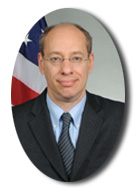
    David Vladeck, FTC.

    The Federal Trade Commission has announced a major sweep involving numerous companies and defendants — and a new partnership with Craigslist, Microsoft, Monster.com and CareerBuilder to combat employment and work-at-home fraud.

    Meanwhile, the agency said it was working with AARP’s Legal Counsel for the Elderly to keep America’s senior citizens’ pocketbooks out of the clutches of scammers.

    Dubbed “Operation Bottom Dollar,” the sweep includes seven new civil cases against the operators of deceptive and illegal job and money-making scams, 43 criminal actions by the Department of Justice and 18 actions by state attorneys general.

    A separate action by the U.S. Postal Inspection Service is part of the sweep, and the FTC announced updates in four previous cases. “Operation Bottom Dollar” specifically targets “con artists who are preying on unemployed Americans with job-placement and work-at-home scams,” the FTC said.

    “Employment and business opportunity fraud causes terrible hardship to those who are suffering the most in these difficult economic times,” said Assistant U.S. Attorney General Tony West. “The Justice Department is committed to prosecuting those who defraud through false promises of employment or financial success.”

    The days of getting away with posting bogus job and money-making offers online are coming to an end, said David C. Vladeck, director of the FTC’s Bureau of Consumer Protection.

    Using  terse language, Vladeck said scammers should not get too comfortable with the money they’ve stolen.

    “If you falsely advertise that you will connect people with jobs or with opportunities for them to make money working from home, we will shut you down,” Vladeck said. “We will give your assets to the people you scammed, and, when it’s appropriate, we’ll refer you to criminal authorities for prosecution.”

    Monster.com, Careerbuilder, Bing and Craigslist will display FTC consumer education material to people who are using the companies’ Web sites to look for jobs, the FTC announced.

    Charged in Operation Bottom Dollar were:

    Government Careers Inc. – Jon Coover; Richard Friedberg; and Rimona Friedberg. Abili-Staff, Ltd. – Pamela Barthuly; Jorg Becker; and Equitron LLC. Darling Angel Pin Creations Inc. – Shelly R. Olson and Judith C. Mendez; d/b/a/Angel Pin Creations.

    Entertainment Work Inc. – Jason Barnes and Racquelle Barnes; d/b/a Resource Publishing Co. Independent Marketing Exchange Inc. – Wayne Verderber, II, d/b/a National Data Management, N.D.M., Global Mailing Services, G.M.S., Independent Mailing Services, Independent Mailing Services Inc., I.M.S., Independent Shoppers Network, Independent Shoppers, Success At Home, Success-At-Home Mailing, IMEX, IMEX, Inc., and Continental Publishing Company.

    Preferred Platinum Services Network – Rosalie Florie; d/b/a Home Based Associate Program and PPSN, LLC. and Philip D. Pestrichello, individually. Real Wealth, Inc. – Lance Murkin; doing business as American Financial Publications, Emerald Press, Financial Research, National Mail Order Press, Pacific Press, United Financial Publications, Wealth Research Group, and Wealth Research Publications.

    “What makes job scams particularly insidious—and what makes today’s efforts so important—is that these scams most often exploit honest consumers who are trying to make an honest living,” said Ohio Attorney General Richard Cordray.

    “Instead of making money, victims end up losing hundreds if not thousands of dollars,” Cordray said.

    Other agencies involved in “Operation Bottom Dollar” include AARP’s Legal Counsel for the Elderly; the U.S. Postal Inspection Service, Tampa Field Office; Better Business Bureaus of Southern Arizona, West Florida, New Jersey, the Southland (Southern California), and Coastal, Central, & Southwest Texas; U.S. Attorneys offices for the Southern District of New York, New Jersey and Western District of Missouri; the attorneys general of Florida, New Jersey and Pennsylvania; Florida Department of Agriculture and Consumer Service; Washington State Department of Financial Institutions, Securities Division; Los Angeles County Department of Consumer Affairs; Ocean County New Jersey Department of Consumer Affairs; and the Tucson Police Department.


  • FTC To Announce Major ‘Law Enforcement Sweep’; Justice Department, Postal Inspectors Will Be Present At News Conference Wednesday

    Assistant Attorney General Tony West will be on hand at a FTC news conference Wednesday in Washington, D.C.

    Still pushing work-at-home schemes on the Internet? The Federal Trade Commission has a message for you.

    On Wednesday, the FTC will announce a major “law enforcement sweep cracking down on job and work-at-home fraud fueled by the economic downturn,” the agency said.

    Investigators will release “[s]till shots from the Web sites of some of the operators charged in this law enforcement sweep,” as well as a consumer-protection video.

    The FTC disclosed few details about the sweep, but it is known that officials from the the U.S. Department of Justice and the U.S. Postal Inspection Service will attend the news conference.

    Speaking on behalf of the Justice Department will be Assistant Attorney General Tony West of the Civil Division. West was appointed to the post by President Obama in January 2009.

    Ohio Attorney General Richard Cordray also will be present at the news conference.

    West, a law-enforcement veteran knowledgeable about high-tech crimes, is a graduate of both Harvard and Stanford . He has served as a prosecutor on both the state and federal levels, including a five-year stint as an Assistant U.S. Attorney for the Northern District of California.

    As a state Special Assistant Attorney General, West advised former California Attorney General Bill Lockyer on high-tech crime, identity theft, antitrust litigation, civil rights, police-officer training and police misconduct.

    Although the FTC did not release specific details about the crackdown, work-at-home schemes come in many forms. Fraudsters, for example, often use high-traffic Internet sites operated by famous companies to post “job” listings for jobs that don’t actually exist.

    In some instances, the “jobs” have proven to be multilevel-marketing “opportunities” in which participants must pay a fee to become a sales rep and to recruit others for a chance to increase “earnings.” In other cases, the “jobs” have proven to be scams such as stuffing envelopes, entering data and labeling postcards.

    Such scams frequently target people of limited means.

    “Work-at-home scams prey on some of the most vulnerable in our society — the economically disadvantaged, the unemployed, the disabled, and the elderly — who are trying to supplement their income by working from home,” U.S. Attorney Preet Bharara said earlier this month.

    Bharara is U.S. Attorney for the Southern District Of New York. On Feb. 3, Bharara and postal inspectors announced the arrests of Philip Pestrichello, 38, and his wife, Rosalie Florie, also 38, in a work-at-home scheme that operated in New Jersey.

    In the alleged Pestrichello/Florie scheme, participants were targeted in advertisements that assured them the companies were ethical and “NOT a gimmick or some shady ‘get rich quick scheme.’”

    Participants further were told “Our company has a rock-solid reputation,” prosecutors said.

    A check revealed that Pestrichello had spent three years in federal prison for operating a previous scheme and had repeated run-ins with regulators dating back to the early 1990s.

  • Deaf Woman, 64, Says She Lost $5,300 In Noobing Autosurf And ‘Can’t Sleep At Night’; Contacts FBI And San Bernardino Sheriff’s Office For Help

    Noobing promoter Jim Beach pitched the program using sign language on YouTube.
    Noobing promoter Jim Beach pitched the program using sign language on YouTube.

    EDITOR’S NOTE: “Carolyn,” the subject of this story, is deaf. She uses a videophone and a human interpreter. The interpreter served as Carolyn’s voice for the interview, translating the Blog’s questions for Carolyn and her responses.

    Here, now, the story . . .

    A 64-year-old California woman — “Carolyn” — said she lost $5,300 in the Noobing autosurf.  Carolyn is deaf. She described herself as a person of limited means financially, saying her experience with Noobing is keeping her awake at night and that the company simply pretended she did not exist when she repeatedly sought answers.

    Carolyn, who lives in the Mojave Valley community of Needles in San Bernardino County, said she was introduced to Noobing, part of the Affiliate Strategies Inc. (ASI) umbrella of companies, in January 2009.  The introduction was made by another deaf person who had 18 members in her downline.

    Carolyn’s sponsor was in the downline of Noobing promoter Jim Beach, Carolyn said. The sponsor lost more than $6,000 in Noobing, Carolyn said.

    ASI was named a defendant in a fraud lawsuit filed by the Federal Trade Commission in July 2009. Neither Noobing nor Beach is a defendant in the FTC action, but Noobing is mentioned in court documents filed by Larry Cook, the court-appointed receiver.

    In a preliminary report, Cook said Noobing generated more than $590,000 in revenue in 2008 and and more than $541,000 in 2009 before going offline. He estimated that Noobing was in the hole nearly $550,000 since 2008, and noted that the ASI network of companies “were high revenue/low margin operations which required significant cash in-flows from new victims to meet current trade creditor and consumer refund obligations.”

    Beach used sign language and promoted the autosurf on YouTube, according to web records. Carolyn, who described herself as “fairly new” to the Internet, said she became increasingly worried about the money she had entrusted to Noobing.

    On a website deemed “The Official Web Blog” of Noobing, the program was described as a “hit” among deaf people. Noobing, according to the Blog, was promoted at Deaf Expos in Kansas, Missouri, New Jersey and Texas in 2008 “to connect with the often overlooked hearing impaired business community.”

    Deaf people “waited in long lines just for a chance to check out Noobing,” according to the Blog.

    Beach, whom the Blog described as “Noobing Sales Manager” and a CODA — the child of a deaf adult — traveled extensively to recruit  deaf members, according to the Blog.

    Carolyn communicated with Beach at least three times in her early days with Noobing in 2009,  but he told her he “left the management of Noobing in April 2009,”  Carolyn said. He then asked her if she wanted to join a program involving the sale of vitamins. Carolyn declined to join the vitamin program.

    Noobing was no help when she called to get answers, Carolyn said.

    “Whenever I called Noobing, they would just hang up on me,” Carolyn said, adding that her sponsor also has ceased communicating with her.

    She added that she “had to go to a debt counselor.”

    “It’s a frustrating road to hoe,” Carolyn said. “It has been very frustrating.”

    “It was on my [credit] card,” she said. “I just racked up my debt unbelievably.”

    Carolyn provided this URL as an example of a site at which hearing-impaired members discussed and promoted Noobing:

    http://www.alldeaf.com/introduce-yourself/60136-hi-deafies-new-here-today-want-friends-affiliate-noobing.html

    Noobing was popular among members of AdSurfDaily, a Florida company implicated in an alleged $100 million Ponzi scheme. Carolyn said she was not a member of ASD, adding that she has contacted the Internet Crime Complaint Center operated by the FBI, the National White Collar Crime Center and the Bureau of Justice Assistance to complain about Noobing.

    She also contacted the San Bernardino County Sheriff’s Department, and will meet with an investigator tomorrow, Carolyn said.

    “I feel depressed,” she said. “I feel I’ve been really victimized. It’s hard to make ends meet. I can’t sleep at night; I’m constantly worried over my finances.”

    Read an Aug. 3, 2008, story about the litigation against ASI and other defendants. The case largely centers around an alleged grant-writing scheme.

    Visit the site of Larry Cook, the court-appointed receiver in the FTC case against ASI and other defendants.

    Visit the site of Kansas Attorney General Steve Six, one of four state attorneys general who have joined the FTC in the ASI action.

  • Judge Orders Scam Artist To Turn Over Home Or Face Jail; Defendant Played ‘Trust’ Game To Thwart Receiver

    A federal judge found a man implicated in an elaborate fraud scheme in contempt of court and ordered him to turn over his Las Vegas home to a court-appointed receiver or go to jail.

    It was the second time Richard C. Neiswonger was found to have been in contempt of court, according to the Federal Trade Commission.

    “In April 2007, the same court held Neiswonger, his business partner William S. Reed, and their firm, Asset Protection Group, Inc., in civil contempt for violating the terms of a 1997 court order prohibiting them from deceptively promoting any ‘program,’ as that term is defined in the order, and from failing to disclose material facts to consumers,” the FTC said today.

    “The court’s 2007 order banned Neiswonger from telemarketing and from selling any business opportunity program to consumers,” the agency continued. “The court subsequently entered $3.2 million judgment against Neiswonger — the amount of his ill-gotten gains — and required him to transfer the title of his Las Vegas home to a court-appointed receiver within 20 days if he failed to pay the judgment in full.”

    Neiswonger engaged in gamesmanship and now faces jail, the FTC said.

    “Despite Neiswonger’s arguments that he had done everything he could to transfer the title, the court disagreed, leading to the contempt order announced today,” the agency said. “If Neiswonger fails to comply with the current contempt order, he could be imprisoned until he complies fully.”

    U.S. District Judge Stephen N. Limbaugh Jr. of Missouri minced no words in his order to Neiswonger.

    “It is clear that since the inception of the present lawsuit regarding defendant’s contempt of the 1997 Stipulated Final Judgment and Order for Permanent Injunction, the defendant has engaged in suspect activities regarding this property, including but not limited to, an attempt to sell the property in April 2007 (after the original Civil Contempt Order was entered invoking an asset freeze).

    “He now contends that the property is held in trust (the SRN Trust), he has resigned
    as a trustee under the trust, and that his wife Shannon is the only one as Trustor that can convey (or must also convey) title to the Verlaine Property,” Limbaugh said.

    Limbaugh also threatened to jail Neiswonger’s wife for taking part in a game to prevent the government from seizing the home.

    “Shannon Neiswonger, spouse of defendant Richard C. Neiswonger, shall immediately sign any and all documents tendered to her by the FTC and/or the Receiver to facilitate the transfer of marketable title to the residence located at 9509 Verlaine Court, Las Vegas, Nevada. Failure to comply with this Court’s order risks the finding of civil contempt and the imposition of sanctions, including but not limited to, incarceration until such time the contempt is purged,” Limbaugh ordered.

    Read the judge’s order.

    Read information from the FTC.

  • Noobing-Connected Firm Discussed In Senate Hearing

    Jon Leibowitz, FTC chairman
    Jon Leibowitz, FTC chairman

    The head of the Federal Trade Commission told a Senate panel yesterday that a firm associated with the Noobing autosurf embarked on a scheme to sell a $59 book and then used a telemarketing company to upsell customers to an expensive program that fraudulently sold “guaranteed” government grants from economic-stimulus funds.

    “Just last week, some of the defendants allegedly responsible for the ‘Grant Writers Institute’ [GWI] grant scam agreed to a preliminary injunction halting their operation pending final resolution of the matter by the court,” FTC Chairman Jon Leibowitz told the Senate Committee on Homeland Security and Governmental Affairs.

    Noobing, which pitched itself to deaf consumers and was promoted by members of AdSurfDaily (ASD), went offline in the aftermath of the FTC lawsuit against Affiliate Strategies Inc., GWI and related companies.

    “The complaint charged that GWI falsely claimed that consumers were eligible for grants as part of the recently announced economic stimulus package,” Leibowitz told the panel. “For example, consumers who called GWI in response to a mass-mailed postcard heard a recording that said, ‘If you’ve been reading the papers you know that recently our government released $700 billion into the private sector. What you probably don’t know is that there is another $300 billion that must be given away this year to people just like you.’ The recording continued, ‘And if you’re one of the lucky few who knows how to find and apply for these grants, you will receive a check for $25,000 or more, and we guarantee it . . . If you don’t get a check for $25,000 or more, you pay nothing.”

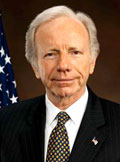
    Sen. Joseph Leiberman, chairman,
    Sen. Joseph Lieberman, chairman, Senate Committee on Homeland Security and Governmental Affairs.

    Sen. Joe Lieberman, ID-Conn., presided over the hearing, which was titled “Follow the Money: An Update on Stimulus Spending, Transparency, and Fraud Prevention.”

    Leibowitz updated Lieberman’s panel on efforts by “[c]on artists [who] have sought to exploit the American Recovery and Reinvestment Act of 2009,” according to his testimony.

    He noted that some fraudsters had used images of “President Obama and Vice President Biden to add legitimacy to their misrepresentations.”

    In a forfeiture case against ASD, a Florida company accused of operating an international Ponzi scheme from a former flower shop in a small town, federal prosecutors said promoters of the scheme falsely claimed that ASD President Andy Bowdoin had received an award for a business achievement from President George W. Bush.

    Rather than let the wire-fraud, money-laundering and securities investigation proceed until all the facts of ASD’s business practices were known, some ASD members embarked on a letter-writing campaign to the Senate and asked members of Congress to investigate the prosecutors, not the alleged schemers.

    Others filed court motions that accused a federal judge and the prosecutors of crimes.

    See Reuters story on the Senate hearing.

  • BREAKING NEWS: Judge Orders Offshore Assets Of Firm Associated With Noobing Autosurf Repatriated; Broadens Authority Of Receiver To Pursue Recovery

    In a ruling that may send shockwaves throughout the offshore autosurf “industry,” a federal judge has ordered the parent company of the Noobing autosurf to repatriate to the United States all assets and documents held on foreign soil.

    U.S. District Judge Julie A. Robinson also cleared the way for any safe-deposit boxes to be opened and inspected. Meanwhile, the judge gave Larry Cook, the receiver in the case against Affiliate Strategies Inc., Brett Blackman and other defendants, broad powers to exercise authority over individual and corporate assets of the defendants.

    At the same time, Robinson ordered assets not to be concealed or dissipated and records not to be destroyed.

    The defendants acknowledged no wrongdoing, but agreed to the order in a stipulation with the Federal Trade Commission and the attorneys general of three states. The order appears to apply to Noobing, which is registered both in the United States and the Caribbean island of Nevis, but is not named a defendant in the case.

    Noobing launched last year and was promoted by members of AdSurfDaily Inc., a surf firm from which the U.S. government seized tens of millions of dollars last year in a wire-fraud, money-laundering and Ponzi scheme probe.

    “[W]ithin 5 business days following the service of this Order, each Corporate Defendant and Individual Defendant shall (emphasis added):

    “A. Provide the Commission and the Receiver with a full accounting of all funds, documents, and assets outside of the United States which are (1) titled in the name, individually or jointly, of any Corporate Defendant or Individual Defendant; or (2) held by any person or entity for the benefit of any Corporate Defendant or Individual Defendant; or (3) under the direct or indirect control, whether jointly or singly, of any Corporate Defendant or Individual Defendant;

    “B. Transfer to the territory of the United States and deliver to the Receiver all funds, documents, and assets located in foreign countries which are (1) titled in the name, individually or jointly, of any Corporate Defendant or Individual Defendant; or (2) held by any person or entity for the benefit of any Corporate Defendant or Individual Defendant; or (3) under the direct or indirect control, whether jointly or singly;

    “C. Provide the Commission access to all records or accounts or assets of any Corporate Defendant or Individual Defendant held by financial institutions located outside the territorial United States by signing the Consent to Release of Financial Records attached to this Order as Attachment C.

    In an extraordinary warning titled “NONINTERFERENCE WITH REPATRIATION,” the judge ordered the defendants to walk the straight-and-narrow when repatriating offshore assets.

    She specifically banned “[s]ending any statement, letter, facsimile transmission, e-mail or wire transmission, or telephoning or engaging in any other act, directly or indirectly, which results in a determination by a foreign trustee or other entity that a ‘duress’ event has occurred under the terms of a foreign trust agreement, until all Assets have been fully repatriated . . .”

    And the judge took it one step farther, specifically ordering the defendants not to advise “any trustee, protector or other agent of any foreign trust or other related entities of either the existence of this Order, or of the fact that repatriation is required pursuant to a court order, until all Assets have been fully repatriated . . .”

    Robinson empowered Cook to assume full “control of the Receivership Defendants by removing, as the Receiver deems necessary or advisable, any director, officer, independent contractor, employee, or agent of any of the Receivership Defendants, including any Individual Defendant, from control of, management of, or participation in, the affairs of the Receivership Defendants.”

    Cook also was empowered to use his discretion to separate alleged perpetrators from alleged victims.

    The receiver “shall have full power to divert mail and to sue for, collect, receive, take in possession, hold, and manage all assets and documents of the Receivership Defendants and other persons or entities whose interests are now under the direction, possession, custody, or control of, the Receivership Defendants,” Robinson said.

    In her order for assets not to be dissipated and records not to be destroyed, Robinson defined documents as “equal in scope and synonymous in meaning to the usage of the term in Federal Rule of Civil Procedure 34(a), and includes, but is not limited to, writings, drawings, graphs, charts, photographs, audio and video recordings, computer records, and any other data compilations from which information can be obtained.”

    Read the judge’s order.

  • Noobing, Surf Site That Pitched Itself To Deaf Community, Goes Missing; Purported President Was Named In FTC Complaint Against Separate Firm Last Month That Alleged ‘Guaranteed’ Government ‘Stimulus’ Grants Of $25,000

    UPDATED 10:48 A.M. EDT (U.S.A.) The Noobing surf site is throwing a server error and will not resolve. The development came in the aftermath of a Federal Trade Commission complaint filed late last month against Brett Blackman and others, although Noobing was not named in the FTC complaint.

    On July 24, a federal judge froze Blackman’s assets and the assets of other defendants in the case.

    Attorneys general from Kansas, Minnesota and North Carolina joined the FTC in the action. One of the claims in the case is that Blackman was part of a scheme to make customers believe they would receive a “guaranteed” $25,000 grant from the government from economic-stimulus funds.

    Web records identified Blackman as Noobing’s president. The precise time the Noobing site vanished is unclear.

    Noobing had a considerable presence in the deaf community, and at least 15 YouTube videos featured sign language.

    Members complained publicly about “bait and switch” in February, saying they were attracted to the program by suggestions of returns of up to 3 percent a day.

    Returns, however, plunged to only a fraction of 1 percent. A Noobing staffer explained at the time that Noobing learned from the AdSurfDaily case that “it became clear that any system that is not SEC registered as an investment that returns more than 100% risks getting shut down and everyone loses everything.”

    What he did not explain is why Noobing chose even to operate in the post-ASD environment.

    The staffer went on to blame the government for the decision to slash the payout rate.

    “The SEC did not contact us,” explained the employee in February, on the ASA Monitor forum. “We are simply being smart and not putting ourselves in a bad position to risk losing everything. Once ASD gave up, and we stood without a firm ruling from the courts, the risk was too high. We’d have preferred that ASD won, or that at least we got a clear ruling, as it is now, cautious action is best.”

    Noobing was popular among some some members of ASD. After the seizure of tens of millions of dollars from ASD President Andy Bowdoin a year ago this month, some promoters turned to Noobing in the fall.

    In the FTC complaint, the agency and the attorneys general seek “a court order permanently stopping the defendants’ illegal conduct and forcing them to return money to consumers injured by the scheme,” the FTC said.

    Named defendants were:

    • Affiliate Strategies, Inc.
    • Landmark Publishing Group, LLC (d/b/a G.F. Institute and Grant Funding Institute)
    • Grant Writers Institute, LLC
    • Answer Customers, LLC
    • Apex Holdings International LLC
    • Brett Blackman, individually and as an officer, manager, and/or member of Affiliate Strategies, Inc., Landmark Publishing Group, LLC, Grant Writers Institute, LLC, Answer Customers, LLC, and Apex Holdings International, LLC
    • Jordan Sevy, individually and as a manager of Landmark Publishing Group
    • James Rulison, individually and as president of Answer Customers, LLC

    In addition, the complaint names the following North Carolina entities as defendants: Real Estate Buyers Financial Network LLC (d/b/a Grant Writers Research Network); Martin Nossov, individually and as a manager and member of Real Estate Buyers Financial Network LLC; Alicia Nossov, individually and as a manager and member of Real Estate Buyers Financial Network LLC.

    “Since at least 2007, GWI has mass mailed postcards to consumers across the country falsely claiming that the consumers “are Guaranteed a $25,000 Grant from the U.S. Government,” the FTC said. “Consumers who call the number are pitched a $59 book titled ‘Professional Grant Writer[:] The Definitive Guide to Grant Writing Success.’”

    “The company’s telemarketers falsely claim that the book will explain how to get government grants — including the ‘guaranteed’ $25,000 grant,” the FTC continued. “GWI and its North Carolina-based telemarketers, also named as defendants in the complaint, then call consumers who have bought the book, trying to get them to pay hundreds of dollars or more for grant research, writing, or coaching services, falsely claiming a 70 percent success rate in securing grant funding. In reality, few, if any consumers ever receive any grant money.”

    From federal complaint.
    From federal complaint.

    Meanwhile, the FTC said, “GWI used the current government stimulus package to make its pitch. For example, when consumers called the number on the mass-mailed postcard, they heard a recording that said, ‘If you’ve been reading the papers you know that recently our government released $700 billion into the private sector. What you probably don’t know is that there is another $300 billion that must be given away this year to people just like you.’”

    It did not end there, the FTC said.

    “The recording continues, ‘And if you’re one of the lucky few who knows how to find and apply for these grants, you will receive a check for $25,000 or more, and we guarantee it . . . If you don’t get a check for $25,000 or more, you pay nothing.’”

    Read the FTC news release. Read the federal/state complaint.