Tag: Forex Ponzi schemes

  • CFTC: Michigan Man Sucked Church Members Into Forex Ponzi Scheme; Jeffery L. Groendyke Sued For Fraud

    A Michigan man has been sued for fraud and misappropriation in yet-another alleged Forex Ponzi scheme, the CFTC said.
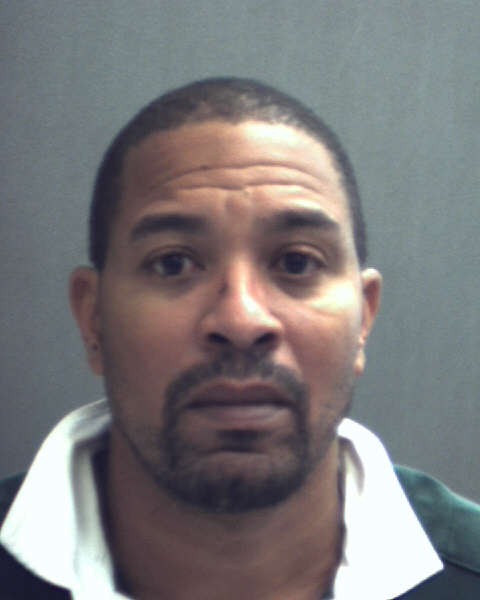

    Jeffery L. Groendyke of the Grand Rapids-area community of Middleville, Mich., gathered at least $953,305 since May 2010 and ripped off at least 54 customers through his at-home business known as JG Forex Fund (JGF), the CFTC said.

    The scheme “primarily” was targeted at congregants of a Middleville church, the agency alleged.

    As the scheme progressed, some customers ended up becoming recruiters lured by commissions, the CFTC said.

    But Groendyke never was registered with the CFTC “in any capacity,” and he traded customers’ commodity-pool funds in his own personal accounts, the CFTC said.

    One account in which Groendyke allegedly traded purportedly had a balance of more than $1 million on Dec. 31, but actually had a balance of $14, the CFTC alleged.

    Another account that purportedly contained more than $458,000 had an actual balance of $49, the CFTC charged.

    Investors were given bogus information on the account balances and Groendyke’s trading prowess, the CFTC said. Filings suggest the scheme began to unravel last fall, but Groendyke continued to solicit funds

    Although Groendyke “solicited and accepted at least $953,305,” he used “no more than $366,950 of that amount to trade forex,” the CFTC said.

    “Instead of using participants’ funds to trade forex, as Groendyke represented, he transferred $461,385 of their funds to his personal bank account, used at least $26,966.14 to pay purported forex trading profits to existing participants in the manner of a Ponzi scheme, and used $124,970 to trade commodity futures for his own account,” the CFTC said.


  • SPECIAL REPORT: Investor In Alleged Florida Forex Caper Arrested For Bankruptcy Fraud; Botfly LLC Ponzi Case Reminiscent Of ASD Case; Female Investigator Called Vile Names; Accused Schemer David Lewalski Shifted Blame To Government, Feds Say

    UPDATED 1:14 P.M. EDT (U.S.A.) A Florida man who allegedly received $1.5 million from an international Forex fraudster now jailed in the United States has been arrested on charges of bankruptcy fraud, federal prosecutors said.

    The three-count indictment against Jon Jerald Hammill, 39, of St. Petersburg, was unsealed yesterday. It marked the fourth major Ponzi-related event in Florida in recent days. The state is the site of some of the most complex fraud investigations in the nation, and the case against David R. Lewalski — from whom Hammill and his company allegedly received money — is no exception.

    Hammill, whose arrest was announced in Washington yesterday by Assistant Attorney General Lanny A. Breuer, was accused of failing “to disclose that he had received more than $100,000″ from Lewalski’s company prior to the filing of his bankruptcy petition” in February 2009. He is further accused of not disclosing his ownership of a shell company into which payments from Lewalski’s Ponzi scheme were routed and not disclosing his business relationship with Lewalski.

    Although Hammill’s Chapter 7 bankruptcy initially was granted in July 2009, U.S. Bankruptcy Trustee Donald F. Walton later reopened the case and sought to revoke Hammill’s discharge for fraud. In court filings, Walton said Hammill invoked his 5th Amendment right against self-incrimination when questioned about his dealings with Lewalkski’s company, which was known as Botfly LLC.

    Breuer is the head of the Criminal Division of the U.S. Department of Justice. The federal probe into the alleged $29 million Botfly Forex caper is being led by U.S. Attorney Robert O’Neill of the Middle District of Florida, with the U.S. Postal Inspection Service in Washington as the lead agency. O’Neill and his predecessor — former U.S. Attorney A. Brian Albritton — have squared off against against a series of spectacular fraud schemes operating in the region.

    Among the cases are the Beau Diamond Ponzi scheme, the David Merrick Ponzi scheme known as TIRN, the $220 million Forex Ponzi scheme of Jamaican David A. Smith and the alleged EMG/Finanzas Forex fraud. Investigators say they have traced proceeds from the EMG/Finanzas fraud to the international narcotics trade. A task force working in the region also did investigative legwork in the alleged AdSurfDaily Ponzi scheme.

    Some of the cases have elements that only can be described as bizarre and deeply disturbing. In the Lewalski case, for instance, it is alleged that Lewalski discussed a plan by which he’d divert blame to the government for his legal predicament in a bid to get his victims to pay for his defense.

    By making the government the bogeyman, Lewalski hoped victims would come to believe that he — as opposed to investigators — offered the best shot of getting back their money, according to court filings.

    At least one person gave Lewalski $50,000 to pay for a lawyer — and this occurred after Lewalski had chartered a private Gulfstream IV jet at a cost of $172,744 to fly from the United States to Belgium one day after he was charged civilly in Florida, according to court filings.

    One women — an attorney for the court-appointed receiver in Florida’s civil case — was made the subject of misogynistic rants by Lewalski, according to court filings. The rants were cited by federal prosecutors who argued successfully that Lewalski should not be released on bond.

    Prosecutors also argued that Lewalski had spent astronomical sums of investors’ money on luxuries in the United States and Europe and advised investors to take the 5th Amendment when questioned. In court filings, prosecutors argued that Lewalski also sought to tamper with witnesses.

    Lewalkski, prosecutors said, told “family members and other potential witnesses to stay quiet and not cooperate with law enforcement.”

    The receiver’s attorney was called a “c[$%!]” and a “Nazi,” according to court filings. In one rant, Lewalski allegedly said, “So f[$%!] her what a bitch.” Court documents also allude to a woman who allegedly was called an “FDLE chick” and described by Lewalski as “nuts” and a “bitch.”

    It was not immediately clear if Lewalski was talking about the receiver’s attorney or a different woman employed by the Florida Department of Law Enforcement  when making the alleged “FDLE chick” remark. In the context of the remark, however, Lewalski is alleged to have discussed a “nuclear option.”

    Separately, the U.S. Postal Inspection Service alleged that Lewalski complained to investors he defrauded about “recent ‘Orwellian’ totalitarian tactics” employed by U.S. investigators in Ponzi scheme cases, instead of accepting accountability for his fraud.

    But even as Lewalski was grumbling that his U.S. assets had been frozen, he allegedly did not tell his investors what had happened to their money and why they had not been paid as promised prior to the seizure. Instead, according to the investigating postal inspector, he talked about money he was able to access in Europe after he left the United States hastily, saying he had as many as six offshore accounts.

    Among Lewalski’s other claims was that he had been “investigated and cleared by the Securities and Exchange Commission,” according to court filings. Members of ASD also have claimed that ASD, which was accused of orchestrating a $110 million international fraud from Florida, was given the green light by the SEC.

    No evidence has surfaced in either the ASD case or the Botfly case that the SEC approved of the companies’ operations. Meanwhile, ASD members also have directed rants at prosecutors and investigators, describing them as “goons,” “Nazis,” merchants of “Satan” and criminals. One ASD member proposed that a federal prosecutor be placed in a medieval torture rack, with ASD members at large drawing straws to determine who got the honor of turning the torture wheel.

    Another ASD member proposed that a “milita” storm Washington in defense of ASD. Still another said that the company’s critics consisted of “Rats, Bed Bugs, Maggots, Cockroaches And Everything Else.”

    Lewalski, 47, operated Botfly from his mother’s home in Bayonet Point, Fla., according to court records.

    After being charged civilly by the state of Florida in April 2010, Lewalski immediately left the United States, spending the next seven months in Europe, according to court filings.

    He is believed to have returned to the United States in October 2010, but investigators said he pretended still to be in Europe. Lewalski was arrested in New York on November 4, 2010. Prosecutors said he was staying in a luxury suite atop the Mandarin Oriental Hotel for which he had paid $143,000 in advance with investors’ money.

    The Mandarin bills itself “the most breathtaking luxury hotel in New York,” and Lewalski’s suite overlooked Central Park, according to court records.

    Visit the site of the court-appointed receiver in the Lewalski Forex Ponzi case.

  • BULLETIN: OLINT’S David A. Smith Pleads Guilty In $220 Million Ponzi Scheme; International Forex Caper Laundered $128 Million, Feds Say

    David A. Smith. Source: Orange County Jail

    BULLETIN: David A. Smith, who presided over a $220 million Forex fraud known as OLINT, has pleaded guilty in U.S. District Court for the Middle District of Florida.

    Smith, 41, is a citizen of Jamaica. He “executed a Ponzi scheme to defraud over 6,000 investors located in the Middle District of Florida and elsewhere out of more than $220 million,” prosecutors said. “Smith led investors to believe that he was investing their money in foreign currency trading, earning 10 percent per month on average. In fact, he was not trading their funds.”

    The case included a conspiracy with unnamed others to launder $128 million, prosecutors said.

    “Considerable investigative support”  was provided by the Financial Crimes Unit with the Royal Turks and Caicos Police Force, the Financial Services Commission in Jamaica, the Special Investigation and Prosecution Team in Turks and Caicos, and the governments of the United Kingdom, Turks and Caicos, and Jamaica, the FBI said today.

    Lead agencies in the United States included U.S. Immigration and Customs Enforcement’s (ICE) Homeland Security Investigations (HSI), the FBI and the IRS. Also assisting in the probe were the CFTC and the NFA.

    Smith pleaded guilty to four counts of wire fraud, one count of conspiracy to commit money laundering and 18 counts of money laundering. He was the majority owner in a Lake Mary, Fla., firm known as I-Trade FX LLC, prosecutors said last year.

  • FLORIDA — AGAIN: CFTC Charges Sunshine State Couple Amid Spectacular Allegations They Posed As Forex Experts, Targeted Seniors And Handed Off More Than $22 Million To Man Who Was Trying To Cover Up Previous Ponzi Scheme

    Gary and Brenda Martin of St. Augustine, Fla., posed as Forex dealers and experts, operated a website advertising their purported expertise, bragged about the talents of their unqualified sales “consultants” — and collected more than $22 million in an incredibly elaborate fraud scheme, the CFTC has charged.

    Neither of the Martins was registered with the CFTC. In fact, the agency said, they had “no expertise or experience in trading forex or any other commodity” and had “no trading accounts.”

    “[N]o forex trading occurred and no profits were ever realized,” the CFTC said.

    Unbeknown to customers, what the Martins did, according to the CFTC’s disturbing allegations, was funnel money from their customers to Sidney S. Hanson.

    Hanson, in turn, paid the Martins “referral fees” of up to 5 percent, based on the sums the Martins’ customers provided the couple. In this way, the Martins racked up $1.44 million in undisclosed commissions paid by Hanson, while the Martins’ customers believed they were doing business with the couple.

    And just who is Sidney S. Hanson?

    Why, Sidney S. Hanson is none other than the Sidney S. Hanson charged criminally in North Carolina by the Feds two years ago in a money-laundering, wire-fraud and securities-fraud case that alleged he was operating schemes dating back at least to 2000.

    And Sidney S. Hanson is the same Sidney S. Hanson charged in this companion action by the SEC in 2009. Also charged in the SEC case was Charlotte Hanson, Sidney Hanson’s wife. The CFTC also charged the Hansons in 2009.

    The first scheme was a loan scheme known as Apollo Trust, which promised “extraordinary rates of return,” according to federal prosecutors.

    Apollo, the CFTC said, was a Ponzi scheme — and a new scheme known collectively as the Queen Shoals Group emerged to cover the Apollo fraud.

    Along the way, customers’ money was used to finance “luxury resort vacations, private plane rentals, daily living expenses, and the purchase of an 88 acre farm,” the CFTC said in 2009.

    Sidney Hanson is scheduled to be sentenced on the criminal charges March 31.

    The Martins operated a Queen Shoals website and a Florida company known as Queen Shoals Consultants LLC, the CFTC said.

    They “simply” turned over huge sums to Hanson to plumb a commission, the CFTC charged.

    When Gary Martin was asked what Hanson did with the money, he replied, “I don’t know,” the CFTC charged.

    And this occurred after the Martins assured their customers that they were Forex experts with “vast experience.”

    Retirees and persons nearing retirement were lured into the scheme with the promise of high profits, the CFTC charged.

    “The Martins allegedly targeted customers at or near retirement who held individual retirement accounts (IRAs), luring them with promises of guaranteed annual returns of between eight to 24 percent generated by trading forex and other instruments,” the CFTC charged.  “The Martins also guaranteed an’ additional 1%’ to customers who held IRAs and agreed to rollover their IRAs into the defendants’ scheme.”

  • Report By Small-Town Newspaper In Colorado Leads To Forex Ponzi Scheme Arrest In Chicago; FBI Nabs Mark Akins After Durango Herald Readers Provide Tips

    A fugitive suspected of helping organize a Forex Ponzi scheme that traded on a claim that a special “algorithm” led to hefty profits has been arrested in Chicago after a small-town Colorado newspaper 1,350 miles away reported he was wanted.

    The Durango Herald, which has a circulation of 9,400 and has received awards from the Associated Press, the Society of Professional Journalists and the Colorado Press Association over the years, reported earlier this month that Mark Akins was wanted for a scheme that allegedly had operated in Durango.

    Akins was accused of being the “gatekeeper” for the scheme, which netted at least $1.2 million and affected 70 investors.

    Also charged in the case was Frederick H.K. Baker of Utah. Baker already has made an initial court appearance in Utah. Akins is scheduled to make an appearance in Illinois next week, the Herald reported.

    After reading the Herald report that Akins was wanted, a woman contacted the newspaper to say she believed Akins was living in Chicago. The newspaper referred her to law enforcement.

    A reader in Chicago, meanwhile, said he contacted the FBI after reading the story, the Herald reported.

    The reader then emailed the paper to report that Akins had been arrested in the Windy City.

    “We saw your article and notified the FBI and he was arrested on Thursday night,” the reader told the newspaper.

    Read the Herald’s first story.

    Read the Herald’s follow-up story about the arrest of Akins.

    Claims of miraculous trading algorithms and fool-proof software are common in the universe of Forex hucksters.

    Robert Mihailovich Sr., a convicted felon, was charged by the CFTC last year with presiding over a Forex fraud that purportedly used a “mass sub-algorithm.” Mihailovich allegedly started the new scam after his release from prison in 2007.

    Enrique F. Villalba was charged last year with presiding over a futures fraud that allegedly used a unique “momentum filter.”

    Earlier this month, Jacob Juma Omukwe was charged in a Forex caper in which it was alleged he used software to trick customers into believing their money was segregated for safety.

    Anthony Eugene Linton was charged in January in a case that alleged he told customers that his miraculous software system let them “profit every time.”

  • Judges Across United States Hammer Forex Ponzi-Schemers And Commodities Fraudsters; Nearly $100 Million In Penalties Announced Last Week Alone

    Federal judges in California, New York, Tennessee and Arizona last week ordered spectacular financial penalties against Forex and commodities fraudsters.

    Dennis R. Bolze was assessed a penalty of more than $36.6 million and ordered to pay restitution of more than $13 million to investors he scammed. The orders were entered by Chief U.S. District Judge Curtis L. Collier of the Eastern District of Tennessee.

    Bolze was sentenced last year to more than 27 years in federal prison by U.S. District Judge Thomas A. Varlan, also of the Eastern District of Tennessee.

    Meanwhile, Robert D. Bame was assessed restitution and a financial penalty totaling $46.9 million by U.S. District Judge R. Gary Klausner of the Central District of California.

    In May 2009, Bame was sentenced to 97 months in federal prison for wire fraud and engaging in monetary transactions with property derived from specified unlawful activity.

    The cases against Bame and Bolze alone resulted in monetary sanctions of more than $96.6 million.

    Separately, a restitution order and penalty totaling more than $1.1 million was entered against Helmut H. Weber by U.S. District Judge David G. Campbell of the District of Arizona. Weber was indicted in October 2008 by state authorities for fraud and the misappropriation of customer funds.

    In New York, meanwhile, Jeffrey Shalhoub was ordered to pay more than $700,000 in restitution and penalties. Those orders were entered by U.S. District Judge Joanna Seybert of the Eastern District of New York.

    The CFTC, which brought the civil cases against each of the defendants referenced in this story, said Shalhoub ran a Ponzi scheme, using customers’ money to “pay for computer and golfing equipment, clothing, car payments on a Land Rover and a $3,500 tab at a Manhattan restaurant.”

    Bolze, one of the earliest of the so-called “mini-Madoffs,” also ran a Ponzi scheme. Bolze bolted from Tennessee in December 2008, the same month the Madoff Ponzi was exposed.

    After his arrest in Pennsylvania, Bolze asked for an opportunity to recoup the money he had fleeced from victims. All he needed, he argued to a federal judge, was the Internet, a computerized program — and a little time.

    Bame, the CFTC said, “diverted about $19 million of investors’ money either to pay off other investors or for his personal use, such as purchasing automobiles or traveling in private jets.”

    In the case of Weber, the CFTC said, “the majority of the funds were misappropriated to pay for [his] lavish lifestyle.”

  • Florida Serves Up Another Bizarre One: CFTC Files Emergency Action To Halt Alleged Ponzi Scheme; David L. Ortiz Charged Amid Allegations ‘Holistic’ Health Firm Was Collecting Forex Funds

    A Florida man who operated a website known as “Forex Futures Trader” to drive business to his Ponzi scheme has been sued for fraud in an emergency action, the CFTC said.

    Some of the cash was routed through a firm that continued to do business despite the fact it was dissolved by the state in 2005, the CFTC said. At the same time, the agency alleged, customers were told to send money to a firm in the holistic health business, not in the Forex business.

    Named defendants were David L. Ortiz of Vero Beach, Goyep International Inc. of Vero Beach, and Royal Returns Inc. of Hollywood. Neither Ortiz nor the firms was registered with the CFTC, and a federal judge has frozen their assets, the agency said.

    Royal Returns was “involuntarily dissolved” by the state of Florida in 2005 after being operational for less than a year, but continued to do business after the dissolution, the CFTC said.

    In May 2008, after Royal Returns had been dissolved for nearly three years, it began soliciting money for a Forex program, the CFTC said. Despite advertising the Forex program, Ortiz told some customers to send their money to a company known as Natural Health Matters LLC, which purported to be in the business of “holistic health care and freelance services.”

    Natural Health Matters has been named a relief defendant in the case because it allegedly received ill-gotten gains. Loredana Ortiz also was named a relief defendant.

    At least 10 investors plowed at least $420,000 into the scheme, which the CFTC described as a Ponzi in which at least $232,000 was misappropriated for things such as shopping trips, travel, resort hotels, restaurants, utility bills, car payments and making payments on personal credit cards.

    Investors were lured by promises of guaranteed returns of 10 percent a month, the CFTC said.

    One customer tried to close her account and be reimbursed in August 2009, but met resistance from David Ortiz, who explained reimbursement was not possible “due to multiple factors beyond his control,” the CFTC charged.

    Ortiz then ignored the woman’s “repeated” emails and calls for weeks, but eventually sent her a bad check. After that, the CFTC said, Ortiz “wired a refund to this customer from funds from another investor.”

    Another customer was paid purported “profits” on his investment, but the funds came from the man’s own investment principal, the CFTC alleged.

    Other customers falsely were told not to withdraw principal or profits because doing so “would result in significant trading losses due to a premature liquidation of open trading positions,” the CFTC alleged.

    Ortiz also told a lie that he was registered with the SEC and had 30 years’ investment experience, the CFTC said.

    In reality, Ortiz had no SEC registration, had traded Forex for less than three years, had a record of futility — and covered up his losses by providing bogus statements to customers, the CFTC said.

    Read the CFTC complaint.

  • BULLETIN: Another Alleged Forex Ponzi Scheme — This One In Texas; CFTC Says Convicted Felon And Known Securities Swindler Ran New Scam By Trading In Accounts In Wife’s Name

    A Texas man with federal convictions two decades ago in Utah on charges of securities fraud, mail fraud, making false statements and conspiracy started a Forex Ponzi scheme in 2008 and stole at least $750,000 from investors, according to a CFTC complaint originally filed under seal earlier this month.

    U.S. District Judge Richard Schell of the Eastern District of Texas now has frozen the assets of Larry Benny Groover of Gunter, and the seal on the case has been lifted.

    Groover, 70, consented to a judgment in a 1986 registration and antifraud case brought by the SEC, and was the recipient of a five-year civil ban in 1987 from associating with a broker, dealer or investment adviser, the CFTC said.

    Criminal charges were brought against him in 1989, resulting in his 1991 conviction and a jail sentence of two years, the CFTC said.

    His wife, Joanne Groover, has been named a relief defendant in the new CFTC action, and the agency is seeking the return of what it described as ill-gotten gains.

    Like her husband, Joanne Groover never has been registered with the CFTC “in any capacity,” the CFTC said.

    The agency advised Schell that it believed Larry Groover “needed Mrs. Groover’s name” to open forex trading accounts because of his past encounters with regulators and his prison record.

    While on five years’ federal probation after his criminal conviction, Groover’s probation was revoked in 1997 for not making good on a $16,000 restitution order, the CFTC said. Federal records show he was released from prison in 1999.

    Investor funds were commingled with the personal funds of both Groover and his wife in Groover’s most recent scam, the CFTC charged.

    One of Groover’s customers formed a company and plowed $250,000 into the scheme, the CFTC alleged.

    On Aug. 21, 2008, Groover faxed the customer an account statement indicating that the customer’s funds had grown “5% monthly” over a sustained period and that the customer now had a balance of $393,378.09.

    “This account statement was completely false,” the CFTC charged. “In reality, in less than a month’s time, Groover lost nearly the full balance of the . . . account trading forex.”

    The CFTC charged in the complaint that the customers account actually had incurred “$211,505 in trading losses and $17,226 in fees.”

    Some it not “all” of Groover’s customers were not “eligible contract participants” because they lacked sufficient assets, the CFTC alleged.

  • SEC: 77-Year-Old Amish Man Ran $33 Million Fraud Scheme Targeted At Fellow Amish; Meanwhile, CFTC Says North Carolina Pastor And Colleague Ran Forex Ponzi Scheme

    UPDATED 2:50 P.M. ET (U.S.A.) A 77-year old Amish man in Sugarcreek, Ohio, ran a fraud scheme that gathered at least $33 million and affected 2,600 investors in 29 states, the SEC has alleged.

    Monroe L. Beachy’s long-running scheme mostly targeted fellow Amish, the agency charged. The scheme, which operated under the name of A&M Investments and began in 1986 during the Reagan administration, eventually got out of control and resulted in a June 2010 bankruptcy filing by Beachy.

    “Because Beachy’s offer and sale of investment contracts continued for such a long period of time, some members of the older generation of Amish investors recommended to their children that they invest with Beachy,” the SEC said. “Amish children did in fact purchase investment contracts from Beachy.”

    Investors opened accounts by hand-delivering money to Beachy or sending checks and cash in the mail.

    “At the time of the investment, Beachy did not give his investors any documents regarding the investment other than a handwritten receipt showing the amount invested,” the SEC alleged.

    Meanwhile, the CFTC has gone to federal court in North Carolina to accuse a church pastor and his business colleague of operating a Forex Ponzi scheme that used a business address at a UPS store.

    It was at least the second time since November that the CFTC has alleged that a pastor presided over a Forex Ponzi scheme.

    Charged in the North Carolina case were Timothy Bailey, the pastor of Mount Olive AME Zion Church in Monroe, and Michael Hudspeth of Statesville.

    Bailey and Hudspeth operated a company known as PMC Strategy LLC.

    While Hudspeth solicited funds for the scheme and interacted with customers, Bailey performed the trading as losses mounted, the CFTC charged.

    Neither man was registered with the CFTC in “any capacity,” the CFTC charged.

    The scheme began in 2008 and ultimately involved at least 22 investors while raising about $669,000, the CFTC charged. Hudspeth, Bailey and the firm “misappropriated” $129,000 of customer funds for their personal use, according to the CFTC.

    A federal judge has frozen their assets. The CFTC alleged the defendants concealed their losses and sent “false profit checks to customers.”

    “As recently as November 2010, the defendants were still soliciting funds from current and prospective customers, but since February 2010, they failed to make promised monthly customer payments and to honor customers’ redemption requests,” the CFTC charged.

    In November, the CFTC accused Rev. Ronald E. Satterfield, the now-former pastor of St. John’s Reformed Episcopal Church in Charleston, S.C., of operating a Forex Ponzi scheme from inside the historic church facility.

    Satterfield, 63, was arrested last month on criminal charges of bank fraud.

    Satterfield claimed he traded Forex between 3 a.m. and 6 a.m., went back to bed until 8 a.m., and then resumed trading until 10 a.m. or 11 a.m., according to court records.

    Mixing Forex trading with his ministry worked well, Satterfield wrote in a letter to a federal judge, because most church activities were in the afternoon or evening. And because Forex is a 24-hour activity, he advised the judge, he had the “ability to respond even in the morning hours if a pastoral need or commitment emerged.”

    Beachy, the alleged Amish fraudster, told his investors that he was purchasing “risk-free U.S. government securities,” the SEC charged.

    In reality, the SEC charged, Beachy plowed the money into junk bonds and made speculative investments in mutual funds and stocks.

    He settled the SEC case without admitting or denying the allegations. The agency said Beachy’s illegal investment-contract scheme ultimately put him upside down to the tune of $15 million and that his assets were under the control of a bankruptcy trustee.

    “During at least the last decade of Beachy’s scheme, based on the loss of investor principal, Beachy would not have had the ability to meet redemptions if there were a ‘run on the bank,’” the SEC said.

    “Beachy did not disclose his losses to investors,” the SEC said. Instead, he issued “fabricated statements” and “maintained the charade that the investors were making money.”

  • MIND-BOGGLER: Forex Scammer Who Never Traded Forex Charged In $35 Million Ponzi Scheme; CFTC’s Real-Life Complaint Against Keith F. Simmons And Co-Defendants Reads Like Bizarre Fiction

    And people actually are questioning President Obama’s November 2009 decision to create the interagency Financial Fraud Enforcement Task Force when things such as this are going on?

    An unregistered North Carolina company that churned tens of millions of dollars in a long-running shell game and described itself as a Forex dealer was operated by a now-convicted felon who worked with another now-convicted felon and told the FBI he never actually traded Forex, the Commodity Futures Trading Commission has alleged in court filings that only can be described as alarming.

    Black Diamond Capital Solutions LLC, operated by convicted felon Keith F. Simmons of West Jefferson, N.C., became a cancer on the legitimate Forex landscape, the CFTC charged. The firm and associated companies combined to create a sales force consisting of scammers who ultimately stole from investors and each other, pocketing huge sums to fund businesses not disclosed to investors and to pay for things such as luxury cars, real estate, maid service and sky-diving vacations.

    One of the alleged scammers — Deanna Salazar, a purported alternative-investments specialist and the owner of Life Plus Group LLC of Yucca Valley, Calif. — herself is a now-convicted felon. She has been linked to multiple fraud schemes, including a local one in California in which investors allegedly were told they were financing B-movies, and now has been linked by the CFTC to Simmons’ spectacular Forex Ponzi scheme.

    Salazar, according to the CFTC, never conducted “any due diligence” on Simmons or his Black Diamond companies. Instead, she simply passed along his bogus claims, including a claim that Simmons used an “exclusive” computerized trading system that had led to an “actual result” of $5,000 turning into $194,340 in three years.

    In 2008 alone, according to the bogus “actual” trading results, an account-holder purportedly enjoyed monthly Forex returns that ranged between 4.765 percent and 13.357 percent, according to the CFTC.

    Two other alleged Simmons’ associates — Bryan Coats of Clayton, N.C., and Jonathan Davey, a CPA from Newark, Ohio — also blindly followed Simmons and helped him orchestrate the massive Ponzi scheme, the CFTC alleged.

    Davey, according to records, organized a Belize company known as Divine Circulation Services Ltd. that assisted Simmons in pulling off the scam, which the CFTC alleged traded on religion. Davey also was at the helm of a Belize firm known as Sovereign Grace Inc., a firm that benefited from the scam, the CFTC said.

    Coats, meanwhile, was at the head of companies known as Genesis Wealth Management LLC and Genesis Wealth Partners LP, both of Delaware.

    Multiple companies with high-sounding names were created by the defendants and either assisted in pulling off the scam or benefited from the scam, the CFTC said. Among the names of the companies were Safe Harbor Ventures Inc., owned by Shari Davey, Davey’s wife, and Safe Harbor Wealth Inc.

    Salazar’s husband — Lawrence Salazar — also benefited from the scheme, the CFTC alleged.

    All in all, the CFTC charged, the scheme netted at least $35 million from at least 240 investors. It is believed that most if not “all” of the customers were not even eligible to become investors in the purportedly private program because they lacked assets totaling at least $5 million and thus were not “eligible contract participants.”

    Adding yet-another layer of the bizarre, Simmons allegedly told the FBI and the CFTC that Black Diamond did not engage in Forex — despite the fact it had gathered tens of millions of dollars by holding itself out as a Forex company and customers received statements showing their purported gains, the CFTC charged.

    When the Ponzi began to collapse in early 2009 — and with Black Diamond never having done any actual Forex trading — Salazar, Coats and Davey continued either to work for the firm or to steer business to it, the CFTC alleged.

    On March 19, 2009 Simmons sent an email to Salazar and Coats, instructing them that the company “would be shutting down for restructuring” and that all accounts would be liquidated with investors profits paid out, the CFTC alleged.

    Incredibly, the CFTC alleged, Simmons claimed a month later — in April 2009 — that Black Diamond’s trading was only hypothetical, despite the fact customers had sent in tens of millions of dollars to conduct real trading and received statements showing their gains.

    A months-long round of excuse-making about why customers weren’t getting paid then began, starting with Simmons’ assertion that a restructuring was under way. Coinciding with the restructuring claim were bank statements showing  that Black Diamond had “less than $200,000” in its accounts, the CFTC alleged.

    The CFTC, alleging that Simmons had purported to be an active Forex dealer who’d turned $5,000 from one investor into more than $194,000 and then insisted he had not executed a single trade despite issuing account statements showing gains of more than 13 percent a month, then defaulted to a strategy of claiming multiple “accounting reviews” were under way.

    He then claimed “excessive withdrawal requests by customers were causing delays in the return of funds.”

    Simmons also claimed a “non-existent German liquidity provider by the name of Klaus was attempting to provide $120 million to Black Diamond to payout customers and replace Black Diamond on the purported platform, but his alleged transfer of funds was frozen by bank or regulatory procedures,” the CFTC charged.

    At the same time, Simmons said “interventions” by the Federal Reserve, the U.S. Department of the Treasury and the CFTC had led to a situation that made it impossible for Black Diamond to pay customers, the CFTC alleged.

    Simmons made excuses from March 2009 through Dec. 17, 2009, the date he was arrested on criminal charges to which he already has pleaded guilty.

    Salazar, Coats and Davey strung customers along while Simmons was piling on excuses that were becoming increasingly “complex and outrageous,” the CFTC alleged.

    By passing on the excuses after earlier having performed no due diligence — and by continuing to forward the excuses to investors — Salazar, Coats and Davey “recklessly failed to ascertain the cause of the funding problem at Black Diamond” and helped perpetuate lies, the CFTC alleged.

    Salazar even helped Simmons shape the lies, according to the CFTC.

    In July 2009, Salazar worked with Simmons “to draft the excuse” about why Black Diamond wasn’t making payments, the CFTC charged.

    Coats, meanwhile, also worked with Simmons on creating an excuse that payments were not immediately forthcoming because of “stricter capital requirements imposed on our banking system,” the CFTC charged.

    Davey informed customers that payouts could not be made because the Federal Reserve had forced Simmons to fill out “anti-money laundering” forms and had frozen $16 million until he completed the task.

    In an approach often employed on Ponzi scheme and criminals’ forums such as TalkGold and MoneyMakerGroup, Simmons and Coats warned investors not to contact regulators or attempt to interfere with payment facilitators.

    “Simmons threatened certain customers that if they contacted the alleged paymaster, Black Diamond would lose access to the paymaster services and the payout to customers would be jeopardized,” the CFTC alleged.

    The agency did not identify the alleged paymasters in the complaint.

    And in an act reminiscent of some of developments in the AdSurfDaily Ponzi scheme case, Coats allegedly warned investors that the CFTC was “randomly calling all Forex . . . clients across the America to try and identify possible Madoff scams,” the CFTC alleged.

    It was Coats’ “suggestion,” the CFTC alleged, that “members not have any discussions with the Commission.” The suggestion occurred while Black Diamond was refusing to return clients’ money.

    In the ASD case, members were urged not to cooperate with the U.S. Secret Service and not to fill out forms that would identify them as victims of a scam.

    Salazar, Coats and Davey continued to solicit funds for Black Diamond even though the company was not paying out and was engaged in chronic excuse-making, the CFTC alleged.

    Despite assertions that Black Diamond had a miraculous trading platform and expert software developers, “the so-called system developers and the Black Diamond trading platform never existed, the CFTC charged.

    Although Salazar’s customers plowed more than $7 million into the scheme — including more than $2 million paid directly to Salazar that was supposed to go to Black Diamond — she “failed to send Black Diamond approximately $1.5 million,” the CFTC charged.

    Black Diamond transmitted more than $1.9 million to Salazar, but she returned only $600,000 of that sum to customers and kept $1.3 million for herself, the CFTC alleged.

    Of the $2.8 million Salazar cherry-picked in the scam, the CFTC alleged, she used more than $400,000 to purchase cars and took “expensive personal trips.”

    Coats’ customers plowed more than $27 million into the scam, and Coats took purported management fees or owner gains of more than $400,000, including about $200,000 after Black Diamond quit paying customers, the CFTC alleged.

    Customer funds were used by Coats to acquire an “expensive car,” maid service, home improvements and “a sky diving trip,” the CFTC said.

    Davey used customer funds to make $1.3 million in “loans” to his “Sovereign Grace” firm and other companies he controlled. He also bought 47 acres of land and built a “lavish home,” the CFTC charged.