“We know of at least one victim who borrowed, I think, $50,000 from his mother and gave it all to [TelexFree]. And it was her entire retirement.” — Melissa Armstrong, assistant chief litigation counsel, U.S. Securities and Exchange Commission, Oct. 29, 2014
UPDATED 12:19 P.M. EDT OCT. 30 U.S.A. Affinity fraud was one of the topics at an all-day symposium today at the Federal Trade Commission (FTC). The event was titled, “Fraud Affects Every Community.”
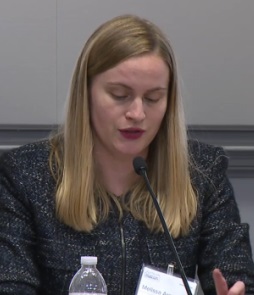
Melissa Armstrong, assistant chief litigation counsel for the U.S. Securities and Exchange Commission (SEC), was one of the featured speakers. Her topic was the SEC’s pyramid- and Ponzi case against TelexFree and how TelexFree was a form of affinity fraud.
In her view, Armstrong said, some TelexFree promoters exploited members of the Dominican and Brazilian communities.
And, she told the audience, the scheme spread over YouTube, Facebook, Twitter, Instagram and though local pitchfests.
“They sold a version of the American dream that was [meant] to appeal to recent immigrants,” she said.
Over time, Armstrong said, TelexFree gathered “hundreds of millions of dollars from hundreds of thousands of promoters. It had promised to pay them back to the tune of [about] $5 billion.”
“The message was always consistent: You could go from having nothing to having it all in a very short time with this program,” she said. “The organizers would travel from city to city.”
Organizers “were given the rock-star treatment,” she said. Recruiters provided “testimonials.”
And, she said, “training centers were nothing more than recruitment centers.”
“Ministers” of church congregations helped the scam spread, Armstrong said.
Armstrong also touched on TelexFree’s April 2014 bankruptcy filing. And, without mentioning TelexFree co-owner Carlos Wanzeler by name, she said he “fled to Brazil” and now faces criminal charges in the United States.
Former TelexFree President James Merrill also faces criminal charges.
The SEC now has a “newly established pyramid-scheme task force,” Armstrong said.
Armstrong’s remarks begin at about the 4:22 mark below.
More information on the “Fraud Affects Every Community” FTC symposium, including the roster of speakers and topics, is available here.
Topics:
- Welcome/Introduction
- A Look at the Marketplace for Different Communities
- How and Why Fraud Affects Different Communities
- Getting More Specific: Community Case Studies on Fraud
- Education and Community Outreach: An Open Discussion
- Fraud Research: Building on Solid Data
- Wrap Up