Tag: Learn Waterhouse

  • Debit-Card Firm Spotlighted In Purported Training Material For Minnesota-Based INetGlobal Was Referenced In $22 Million Ponzi Case In Florida Last Year; Renner Company Now Has Link To Third Ponzi Court Scrape

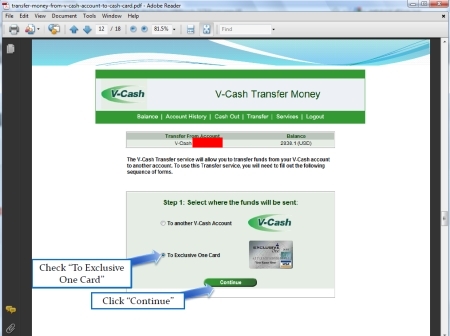
    Part of the purported INetGlobal training material on how to transfer money to a debit card. (Red bar added to screen shot by PP Blog to block account number.)

    Training material purportedly produced in November 2009 and published online shows prospects of INetGlobal how to transfer money from the company to a reloadable debit card. The presentation reveals that INetGlobal was using the same debit-card firm that provided services for a Florida man implicated in October 2009 — just a month before the INetGlobal training material purportedly was produced — in an alleged international fraud scheme that gathered at least $22 million and made Ponzi payments to members via debit cards.

    The training material is confusing in places, and the form in which it was published suggests that some INetGlobal members with Chinese names shared information to recruit Chinese prospects.  At the same time, the training material and other information accessible at the same website suggests Chinese members also worked together to create instructional materials that showed other Chinese members and prospects how to offload their profits in cash at ATM machines and receive $300 sign-up bonuses that may not have been available to all INetGlobal members.

    It is possible that a single member or group of members created the training material and the companion information. Whether the material, which does not purport to be hypothetical and appears to include no disclaimer language, used the names of real members was unclear. Also unclear is whether the approach had the approval of INetGlobal. What is clear is that the information was published openly online and purportedly reflects INetGlobal financial transactions that occurred among Chinese members in November 2009.

    A “Contact” address on the website that published the information lists a street address in British Columbia, even though the domain itself lists a registration address in Mainland China. The British Columbia street address returns a page in Google search results that purports to lay out a conspiracy case against judges in Canada for issuing unfavorable rulings in what appears to be a matter unrelated to INetGlobal.

    Just two months earlier, in September 2009, some Clickbank vendors were complaining that links to their businesses were being placed in INetGlobal’s advertising rotator without their knowledge. The Clickbank vendors also complained that INetGlobal was passing along bandwidth costs to them and that their businesses were experiencing a surge in unproductive traffic from China.

    The author of the training document on debit cards was listed as Annie Zhang, according to the “Properties” of the document, which was published in PDF format.

    The training document was published on a website whose domain-registration address was listed as “Xian, Shanxi  . . . China.” The domain on which the information was published was registered to Jun Zhang. The website encourages prospects to submit their email address and wait to receive a return email “to get a referrer ID and referrer name that you will need in the registration process.”

    Visitors to the website registered in China are told that, by registering for INetGlobal in this fashion, they can “Make Free Fast Money $300 Right Now.” The site instructs viewers to purchase a “$2000 Executive Business Package,” provide proof of the purchase by return email and wait to receive their bonus.

    “We will send $300 free fast money to your V-Cash account,” the site tells viewers. “If you prefer, we can send $300 to your PayPal account too!”

    Another URL at the same domain instructs prospects on how to register for a Clickbank account to promote products through INetGlobal. The instructions are available in multiple languages, including English, Chinese and Japanese.

    The debit card featured in the PDF training material on the website registered in China is known as the “Exclusive One” card and is issued by Anres Technologies Corp. of Las Vegas. The Exclusive One card is pictured in the INetGlobal training material, and Anres’ name is referenced in court filings by the U.S. Secret Service in the INetGlobal case.

    Anres’ name also is referenced by the SEC in a case filed last year in Florida against David F. Merrick, Traders International Return Network (TIRN), MS Inc., GTT Services Inc., MDD Consulting Inc. and Go ! Tourism Inc. Merrick and the companies were accused of running a Florida-based Ponzi scheme that used debit cards and claimed a presence in Panama.

    Among the claims in the SEC case was that “Merrick and TIRN falsely represented that investors requesting a withdrawal of funds would receive a debit card loaded with their initial investment and return on their investments, when, in fact, the money loaded on the cards was money from other investors,” according to the SEC.

    The PP Blog wrote about the TIRN case on Oct. 15, 2009.  Millions of dollars were moved across borders, the SEC said.

    “[A]t least $2.3 million of investor funds were transferred to accounts in Panama, Mexico, Malaysia, Switzerland and the Netherlands,” the SEC said. It added that about $8.8 million was placed on debit cards to make Ponzi payments to members..

    Although TIRN was not an autosurf, debit cards have become increasingly popular in the autosurf universe. The TIRN case demonstrated that alleged fraudsters were relying on debit cards to pull off international financial schemes.

    Anres was not named a defendant in either the TIRN case or the emerging INetGlobal case. The company has not been accused of wrongdoing.

    In recent months, the FBI has expressed public concerns that criminal organizations were turning to preloaded debit cards to launder money and that users were taking advantage of a “shadow” banking system.

    Card Highlighted In Instructional PDF For INetGlobal

    The purported INetGlobal training material appears in a PDF that includes screen shots. The person (or persons) who assembled the material appear to have Chinese names, and the English-language material walks prospects through the process of converting electronic credits to cash that can be loaded onto an Exclusive One debit card and withdrawn at ATMs.

    In February, the Secret Service said it believed INetGlobal was targeting Chinese members in an international Ponzi scheme. The purported training material lists IP addresses in the United States and Canada in a manner that suggests Chinese members in both countries were working together to train other Chinese members how to offload profits onto debit cards and also how to transfer money using INetGlobal’s internal system from one Chinese member to another.

    Among the assertions against INetGlobal by the U.S. Secret Service was that the company was engaging in wire fraud and money laundering. The IRS now has entered the case, which suggests that the government also suspects tax crimes.

    Material Suggests Account-Sharing And Cross-Border Planning

    The second page of the 18-page PDF purportedly shows the back office of an INetGlobal member who appears to have a Chinese name. This page lists the member’s name as “Dong,” lists a five-digit INetGlobal member number, a six-digit V-Cash account number and an IP address that comes back to Minneapolis. The page notes that automatic repurchasing of additional “adpacs” was enabled and set for 50 percent. Viewers were prompted to click on a tab labeled “V-Services.” In the next step, viewers were prompted to click on a graphic labeled “V-Cash Online Payment Services.”

    This page forwarded to another prompt to click on a V-Cash logo, which led to a login screen that prompted members to enter a user ID and a password. A “Welcome” screen followed, and members were instructed to click on a tab that prompted them to go to the “Member Center.”

    Once inside the Member Center, members were prompted to click on a tab labeled “V-Cash.” This led to a screen that prompted them to enter a password for their V-Cash accounts. The next screen shot showed that V-cash was logging members’ IP numbers; the IP number logged in this screen shot came back to Toronto. Why the shot displayed a Toronto IP when the earlier shot displayed a Minneapolis IP was unclear.

    The Exclusive One Card, as pictured inside the training material.

    The next screen shot prompted members to click on a tab labeled “balance.” This screen noted a “Currency balance” of more than $3,038 in the account. The next screen was confusing because the currency balance had been lowered by $200. Why the balance was lowered was not made clear in the presentation.

    In the next screen shot, the presentation provided the initial instructions on how to transfer money to the Exclusive One card, which is pictured in the document. This screen shot also purported to show that members could transfer money from their V-Cash accounts to other V-Cash accounts from within the company’s internal system. The presentation prompted viewers to select the option to transfer money to the Exclusive One card and press “Continue.”

    Thereafter, the presentation showed a purported transfer of $2,000 to the Exclusive One card. The presentation noted a $30 fee incurred when making the transfer. The fee rate for the transfer service was described as 1.5 percent. The screen shot noted that the total amount transferred, including the $30 fee, was $2,030. Viewers were prompted to “Click to Confirm” the transfer.
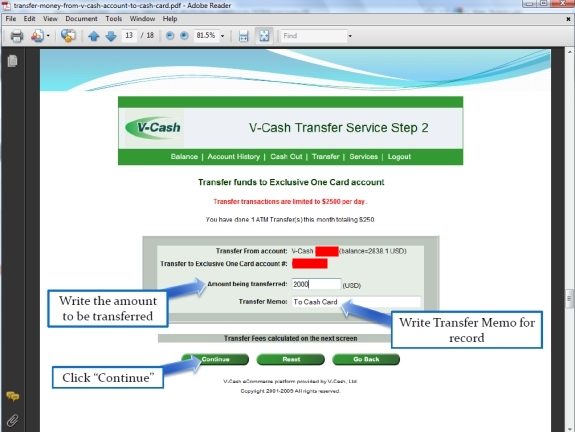
    Part of purported INetGlobal traning material. (Red bars added to screen shot by PP Blog to block account numbers.)

    One of the screen shots that followed purported to show a “History” of transfers to and from the account. One of the transfers showed a purported transfer “from” Annie Zhang to an INetGlobal member in the amount of $3,000. It was dated Nov. 3, 2009.

    A person named Annie Zhang purportedly is one of INetGlobal’s top recruiters. Some promos for the firm have asserted Zhang was making $100,000 a month as an affiliate of INetGlobal.

    Parts of the PDF presentation are confusing. For example, the member’s name that appears on the second page of the presentation does not agree with the member’s name that appears on Page 6 — even though the INetGlobal member account number appears to be the same, as does the V-Cash account number.

    On Page 2, the member’s name is listed as “Dong” with an IP number that comes back to Minneapolis. On Page 6, however,  the screen welcomes a member named “Lei.”  An IP shown on Page 9 comes back to Toronto — not Minneapolis.

    In the document’s published form, both Dong and Lei appear to have the same 5-digit INetGlobal number and the same six-digit V-Cash account number. Why two purported INetGlobal members would have the same account numbers is unclear.

    INetGlobal Now Has Links To Three Ponzi Cases

    In February and March court filings, the U.S. Secret Service linked INetGlobal to the alleged AdSurfDaily Ponzi scheme, alleging that an undercover agent was introduced to INetGlobal by an ASD member. The Secret Service brought the Ponzi case against ASD in August 2008.

    The appearance of the Exclusive One card in the purported INetGlobal training material links INetGlobal to a second Ponzi court scrape: the SEC’s case against the alleged David Merrick/TIRN Ponzi scheme, which appears to have used the same debit card as INetGlobal to pay members. The CFTC also filed allegations against TIRN, and the U.S. Attorney for the Middle District of Florida also is investigating TIRN.

    Separately, INetGlobal operator Steve Renner was linked to a Ponzi scheme known as Learn Waterhouse in 2004. A company Renner operates — Cash Cards International (CCI) — provided payment-processing services for the Learn Waterhouse scheme, and Renner himself purportedly was an investor in the scheme, according to court filings.

    Four of the scheme’s operators were sentenced to lengthy prison sentences in the Learn Waterhouse case. (If you have the time, the PP Blog highly recommends you read this document from the U.S. Court of Appeals for the Ninth Circuit, denying appeals in the case.)

    The document recounts the history of the case, including astonishing allegations that Learn Waterhouse told investors that it “had invested $2 billion in a gold mine in Mexico, and [was] working on a billion-dollar Columbus-era ‘find’ on the bottom of the ocean.”

    Renner was alleged to have provided payment-processing services for Learn Waterhouse through CCI and to have spent investors’ money on personal purchases.

    Randall Treadwell, the ringleader of the Learn Waterhouse scheme, “often claimed that he had a God-given ability to make money, but in hindsight it appears that his talents lay in extracting funds from duped investors,” according to court filings.

    Indeed, according to filings in the Learn Waterhouse case, the “purported investments
    did not exist at all.

    “By the time the defendants’ far-reaching Ponzi scheme collapsed, more than 1,700 investors throughout the United States had lost their investments. At trial, the defendants produced no evidence to suggest that any investment profit was generated by their companies.”

    Losses in the Learn Waterhouse case totaled at least $44 million.

  • Spokesman For Renner-Related Company Did Not Disclose Tie In Opinion Piece That Attacked Star-Tribune Newspaper; Name Is Referenced In Secret Service Affidavit; Declines To Answer Questions From PP Blog

    UPDATED 2:25 P.M. ET (March 2, U.S.A.) The vice president and director of public relations for V-Newswire — a company in Steve Renner’s INetGlobal family — authored an opinion piece lambasting a Minnesota newspaper’s coverage of a Secret Service raid at INetGlobal’s Minneapolis offices last week on his personal Blog, but did not disclose his tie to the firm.

    Donald W.R. Allen II operates a Blog known as The Independent Business News Network (IBNN). Allen did not disclose his INetGlobal tie when authoring an editorial titled, “Minneapolis’ Star Tribune newspaper’s bias reporting causes defamatory speculation at Internet marketing firm.”

    The piece began, “If the Star Tribune newspaper can use its ‘power’ to taint a company’s image prior to investigation by authorities, whose (sic) to say the news you get is true and accurate?”

    The Star-Tribune was among the first media outlets to report that federal agents believed INetGlobal was operating a Ponzi scheme.

    Information gleaned during the federal probe led to allegations that INetGlobal also was engaging in wire fraud and money-laundering.

    Allen, whose name is referenced in a search-warrant application in the INetGlobal case, now says he should have disclosed the tie in the IBNN editorial.

    “I will give full disclosure on the iNetGlobal piece today because I have 3 more follow up stories,” he said this morning. He asserted that the IBNN domain, which is registered in Renner’s name under the organization of V-Webs LLC, “has nothing to do with iNetGlobal other than being registered by the company as part of my employment agreement.”

    Allen defined the IBNN Blog as a “Civil Rights, Politics and News Blog for mostly the Twin Cities area.” IBBN’s site content includes an endorsement of the Tea Party Movement in the United States and a “Declaration of Tea Party Independence.”

    Allen emailed the PP Blog Sunday after appearing at the Blog, posting comments and using the IBNN URL, not a URL associated with the Renner companies. He dismissed the Blog as “minor league,” writing it was engaging in a “witch hunt.” The Blog responded to Allen’s email by asking him to comment on a number of issues concerning INetGlobal and inquiring why he was using the IBNN URL if he was a spokesman for a Renner entity.

    Later in the day, Allen responded to the Blog’s questions by saying he would answer questions about his role at V-Newswire, but he did not address the questions the Blog asked previously.

    The Blog then resubmitted the questions, adding several more questions to a list of four it previously had asked. Allen responded to the email, but chose not to answer a number of questions.

    Among the questions Allen declined to answer was whether INetGlobal, in the aftermath of the Ponzi scheme allegations, believed it should inform members about Steve Renner’s December conviction on four felony counts of income-tax evasion. Allen also declined to answer a question on whether INetGlobal had a duty to inform members that Cash Cards International (CCI) — a payment processing firm once operated by Renner — could not return money to Ponzi scheme victims in a case brought by the SEC against a California company known as Learn Waterhouse because Renner had spent the customers’ money.

    Allen did say he saw “nothing illegal with V-Newswire or the V-News Network.”

    The Blog asked Allen whether he was the “Donny Allen” referred to in an INetGlobal news release and the “Donald Allen” referred to in a Secret Service affidavit that alleged “Donald Allen” provided confusing information to a person who attended an INetGlobal function in New York.

    Allen did not answer the question, which the Blog posed twice.

    Undercover Secret Service agents also attended the New York function, according to the affidavit.

    The PP Blog also asked Allen whether he believed he should disclose his tie to INetGlobal when responding to Blog and forum posts. He declined to answer the question, which was posed twice.

    He also declined to answer a question about how it served INetGlobal’s PR ends to dismiss as “minor league” Blogs that report the serious allegations against the company.

    AdSurfDaily, a Florida company implicated in a $100 million Ponzi scheme, employed a similar PR approach. The ASD case is referenced in the Secret Service affidavit, amid allegations that an ASD member described INetGlobal as a wink-nod enterprise and attempted to have an undercover Secret Service agent participate in a three-way call with the ASD members’ sponsor for the purpose of recruiting the agent into INetGlobal.

    Allen also declined to answer a question on whether he was the author of an INetGlobal news release after the raid that said federal agents had arrived at Renner’s offices “looking for something to substantiate their claim that illegal activity was occurring in the business.”

    The news release used Allen’s email address, which he described as temporary in an email to the PP Blog, but did not mention Renner’s income-tax conviction and the allegations that Renner had spent money belonging to CCI customers.

  • SECRET SERVICE: INetGlobal Forced Members To Keep Money In The Company With ‘Automatic Repurchasing’ Scheme; Undercover Agent Sent Email To Support, Which Verified Repurchase Was Mandatory

    UPDATED 11:07 A.M. ET (U.S.A.) One of the undercover Secret Service agents who joined INetGlobal discovered that the company had implemented an “automatic repurchasing” program by default and that the program could not be switched off, thus distancing participants — many of whom may not have understood English — from their money.

    Although it is unclear when the automatic-repurchasing program began, it was in operation in the weeks after INetGlobal owner Steve Renner was convicted on Dec. 8, 2009, of four felony counts of income-tax evasion, according to court filings.

    Other filings show that another Renner company — Cash Cards International (CCI), a money-transmission business  — was upside down by more than $2.5 million when a court-appointed receiver in a Ponzi scheme case sought to convert electronic credits to cash to compensate victims of the scheme.

    Beginning on Feb. 1, the Secret Service agent — a woman — repeatedly tried to turn off INetGlobal’s automatic-repurchasing feature, but it “came back on” each time. The agent, who speaks and writes in English, attempted to disable the feature “several times on different days,” failing each and every time, according to an affidavit for a search warrant filed in the case.

    INetGlobal had a high concentration of Chinese members who did not speak English, according to the affidavit. How they even could understand the automatic-repurchasing scheme or fully comprehend INetGlobal’s operations and English-language website is far from clear, and has led to questions about whether the company deliberately was targeting members who could not understand what they were purchasing and would have both a language and a geographic disadvantage when seeking explanations or filing complaints with authorities.

    The company generated “at least” 87 percent of its revenue from the sale of memberships to members “residing in China,” according to an analysis referenced in the affidavit. The analysis was performed by an unnamed INetGlobal employee.

    On Feb. 17, the undercover agent sent an email to INetGlobal customer service, asking if the feature could be turned off.

    “Customer service replied in the negative,” the agent said, suggesting that the automatic-repurchasing feature was forcing participants to keep at least 40 percent of their money in the company.

    In the affidavit, the Secret Service said a “high level iNetGlobal member” from Nevada was becoming increasingly frustrated by an inability to withdraw funds. The member complained to management that “for over one week [in January] they had been unable to get a money order payment from the company for value they are owed.”

    “The victim contacted iNetGlobal’s customer service on several occasions only to get excuses,” the Secret Service said.

    Eventually, the victim spoke with former InetGlobal CEO Steven Keough.

    Keough, according to the Secret Service, told the victim on Jan. 11 to “cash out” of the system.

    “We can’t cash out,” the victim said. “[I]t is not possible, due to mandatory repurchasing built into the system.”

    On the very next day — Jan. 12 — Keough, an attorney and former naval officer, met with the Secret Service. He had contacted federal prosecutors Jan. 8 to express concerns about the company’s business practices. His first contact occurred only two months after he was appointed CEO on Nov. 7, 2009, according to the affidavit.

    Steve Renner’s Tax Convictions, Link To Previous Ponzi Scheme

    Renner was found guilty Dec. 8 of four felony counts of federal income-tax evasion.

    Prosecutors said he “diverted substantial funds” from CCI between 2002 and 2005 to pay his personal living expenses as well as to make personal investments in coins, oil wells, art, stamps, and vintage musical instruments.

    CCI, which once served as a money-transmitter for a California Ponzi scheme known as “Learn Waterhouse,” used the same office facility in Minneapolis as INetGlobal, the Secret Service said.

    When a court-appointed receiver in the Learn Waterhouse case attempted to get Renner to return money due Ponzi scheme victims, he explained that he could not do so because it had been “invested,” according to the affidavit.

    Thomas Lennon, the receiver in the Learn Waterhouse case, met with Renner, who “provided . . . financial statements indicating that the assets of Cash Cards and Renner are insufficient to cover all outstanding vcredit balances and obligations to other creditors.

    “Specifically, the statements show that Cash Cards and Renner have assets with an estimated value of $2,946,000 and an outstanding v-credit liability of $5,450,000,” Lennon said in court filings in 2007. “Renner has also informed the Receiver that he is currently being audited by federal and state taxing authorities which may result in large additional liabilities and liens on his property.”

    Lennon’s name is well-known among victims of financial crimes. He also was the court-appointed receiver in the 12DailyPro autosurf Ponzi scheme.

    Repurchasing programs, which autosurf operators employ to minimize the outflow of cash, are one of the oldest tricks in the Ponzi book. “Trainers” for Florida-based AdSurfDaily, implicated in a $100 million Ponzi scheme, routinely pushed a so-called “80-20” program whereby members would remove no more than 20 percent of money they were due and plow 80 percent back into the surf.

    In June 2009, AdViewGlobal, an autosurf with close family, management and promotional ties to ASD, announced it was ceasing payouts and making an 80/20 program mandatory should payouts ever resume. AdViewGlobal promptly crashed and burned.

    In January, according to the affidavit, Keough told investigators that he could not make sense out of what was going on inside INetGlobal and had observed instances in which Renner appeared to be gaming the payout system.

    “Keough said he was concerned that large amounts of money were flowing through bank accounts related to iNetGlobal and that unusual system manipulation was being conducted by . . . Renner,” the Secret Service said. “Keough had recently been fired by Renner. Keough believed he had been fired because he continually questioned iNetGlobal’s business practices.”

    On Jan. 20, according to the Secret Service, the agency received information that TCF National Bank was closing the accounts of a Renner entity known as Inter-Mark Corp. after an investigation by the bank led to “suspicions that the activity in the accounts might be money laundering,” according to the affidavit.

    “TCF Bank had given notice to Renner that the accounts were going to be closed,” the Secret Service said. It is unclear if Renner ever advised INetGlobal members that the bank had closed the accounts, citing suspicions they were being used to commit crimes.

    TCF prepared a cashier’s check for “for a little over $5 million,” presenting it to a Renner employee.

    Later that day, the check was deposited into Bremer Bank, which also held Renner-connected accounts, according to the Secret Service.

    Balances in Renner-connected accounts began “moving up sharply in August 2008,” the Secret Service said.

    August 2008 was the month in which the Secret Service raided the headquarters of ASD — and the month in which Renner’s autosurf was coming onto the stage. Golden Panda Ad Builder, a surf that is part of the ASD litigation, positioned itself as a company that sought to cater to Chinese members.

    Golden Panda’s operator — Clarence Busby — was implicated by the SEC in a prime-bank investment scheme in the 1990s, the same sort of scheme that engulfed Learn Waterhouse and later resulted in the determination that Renner’s CCI money-services business was impossibly upside down because he had used customers’ money to make personal purchases.

    INetGlobal issued a statement yesterday that acknowledged the Secret Service probe, but did not mention Renner’s tax conviction in December or the trouble he encountered when he could not fund a payment to the Learn Waterhouse receivership estate in the Ponzi case.

    “iNetGlobal offices will remain open to provide support to our 1,000’s of customers from around the world,” the company said. “iNetGlobal will continue to provide the level of quality service our customers have come to expect now and into the future.

    “We would like to thank all of our Members and Customers for their support and well wishes in this trying time,” the company said.

  • AdSurfDaily Cited In INetGlobal/Steve Renner Search Warrant Application; Former Company CEO Helped Agents Prior To Raid; Undercover Agent Joined Surf Program; Agents Witnessed Spectacle At New York Function

    The U.S. Secret Service observed Minnesota-based INetGlobal’s operations for weeks in January, dispatched undercover agents to join the autosurf, learned that a bank recently had closed accounts tied to the firm amid money-laundering suspicions — and already had received incriminating information from the firm’s former chief executive officer prior to executing multiple search warrants Tuesday, according to records.

    Agents even traveled to a company function in New York, mixed in with the audience and observed INetGlobal owner Steve Renner, according to records. The function was known as “Freedom Conference 2010.”

    Most of the attendees were Chinese, the Secret Service said.

    “[C]onference registration took a long time because nobody at the registration desk spoke Chinese, and many of the conference attendees could not make themselves understood in English,” the agency said.  “There was an interpreter in the main hall, but Renner often spoke over the interpreter.”

    At one point, Renner started a pandemonium by holding up $20 bills, which he began handing out to attendees in exchange for $10 bills, the agency said.

    “This caused a crush of people to approach the front of the hall, and Renner eventually needed assistance moving people back,” the Secret Service said. “Renner asked, through an interpreter, how many people in attendance had their own business, and only two raised their hands.”

    Steven Keough, a retired naval officer who was INetGlobal’s CEO for only weeks before being fired by Renner, contacted federal prosecutors Jan. 8 to report concerns about Renner and the company, according to court documents.

    Meanwhile, the search-warrant application cites the government’s prosecution of assets tied to Florida-based AdSurfDaily and a Jan. 4 order of forfeiture by U.S. District Judge Rosemary Collyer to bolster the case against INetGlobal and related companies. The application also cites the successful prosecution of the 12DailyPro and Phoenix Surf Ponzi schemes by the SEC.

    As was the case in the ASD prosecution, the Secret Service raised allegations of Ponzi fraud, wire fraud and money-laundering against INetGlobal, saying the company had grossly overstated its membership numbers, had co-mingled funds and operated the business in slipshod fashion.

    Agency Assigns Veteran From ASD Case To INetGlobal Case

    At least one of the Secret Service agents involved in the INetGlobal investigation also was involved in the ASD investigation, according to the search-warrant affidavit. Agents located an INetGlobal sales pitch online, and the agent involved in the ASD probe called the INetGlobal member.

    Out of the gate, INetGlobal was described by the member as a wink-nod proposition, the Secret Service said — and it turned out that the INetGlobal member also had been an ASD member.

    “The member said he had previously been a member of ASD . . . and said, ‘We know what happened there,’” the Secret Service said. “The member said he was reluctant to join iNetGlobal due to it being similar to ASD.

    “The member said, ‘we all know what this program is.’ The member said his daughter and wife surfed the websites and the member did not care about the services provided. The member said he just wanted to put his money in and get it out. The member said you convert your earnings to V-cash and then receive payouts by check or through an ATM card you can sign up for. The member said members earn a daily return on their investment but that he was not sure what he exactly earned. The member said he has not been able to figure out the percentage of return due to the convoluted information provided on the iNetGlobal website.”

    Regardless of the member’s own concerns about the program, the member nonetheless was eager to recruit the undercover Secret Service agent, according to the affidavit.

    “The member pushed [the undercover agent] to join and wanted to conduct a three way call with his sponsor,” the Secret Service said. “The member said bringing in new members under you was the best way to earn maximum returns.”

    CEO Met With Secret Service Prior To Raid

    Keough’s holds a Bachelor of Science in Chinese from the U.S. Naval Academy at Annapolis, Md.; a Master of Arts in Congressional Studies from the Catholic University of America, Washington, D.C.; and a law degree from Boston College Law School.

    After working for INetGlobal for only weeks, Keough said things going on inside the firm made no sense and he had come to believe Renner had hired him as a “good face” for the company, according to the search-warrant application.

    Keough told agents he believed Renner fired him for asking too many questions, according to the filings.

    “Keough described what he called his first ‘red flags,’ which were the reported size (50,000 members) and purported revenue ($100 million) of iNetGlobal; the complete disarray and disorganization of the businesses; and the seemingly small outside legitimate income,” the Secret Service said. “Keough further stated that the companies’ website never seemed to work properly, making him question what customers who purchased the advertising service alone, without the possibility of rebates, were getting for their money.

    “Keough said on occasion he witnessed Renner manually manipulating the iNetGlobal system to pay out percentages that were different, and smaller, from the percentage listed on the iNetGlobal website,” the Secret Service continued. “Keough also wondered how, with so little outside income, the company could pay these outlandish returns. Keough said Renner would explain away his concerns by telling him how beneficial the advertising was and about all the different levels a member could achieve. Keough said, ‘I never really understood how it could work.’

    “Renner told him iNetGlobal had 50,000 members, had been in business for 10 years, was debt free, and had made over $100 million in revenue. Keough said he later learned all these facts were ‘lies.’

    “Keough further stated that Renner used the misleading information in power point presentations and webinars to recruit others,” the agency said.

    Once becoming CEO, “Keough conducted his own internal audit and found, contrary to Renner’s statements, that iNetGlobal had only approximately 30,000 members, iNetGlobal had only been in business for 14 months, there were huge liabilities associated with the members’ ‘investments’ and the company’s estimated revenue was approximately $28 million, not the $100 million in revenue claimed by Renner.

    “Keough said he was particularly alarmed because he knew Renner and/or representatives of iNetGlobal were using these false statements to promote and market iNetGlobal to would-be members (investors),” the Secret Service said. “Keough believed these false statements caused individuals to invest with iNetGlobal.’

    “Keough said he had an iNetGlobal employee conduct an analysis to determine the member liability,” the Secret Service said. “The employee reported back to Keough that at least 87% of the company’s revenue was generated from sale of memberships to members residing in China.”

    The search-warrant application also claimed that a company Renner owned provided payment-processing services for a Ponzi scheme called “Learn Waterhouse,” which was smashed by the SEC in 2004.

    When a court-appointed receiver asked Renner to turn over funds to the receivership estate by converting electronic credits to cash, it was learned that Renner could not do it because he had “invested” more than $2.5 million in Learn Waterhouse V-Credits on “stamps, coins, Salvador Dali sculptures, autographed letters, guitars and amplifiers, fractional interests in motion picture companies, and fractional interests in oil wells, among other things.

    “Additional sums of customers’ money had been spent by Renner personally, including on daily living expenses,” the Secret Service said.