Tag: Legisi

  • PRIMING THE PUMP: TalkGold, MoneyMakerGroup Publish String Of ‘I Got Paid’ Posts From Club Asteria Members; ‘It’s No Scam Now,’ Poster Declares

    Two forums listed in federal court documents as places from which Ponzi schemes are promoted have published a series of “I got paid” posts from commentators who say they are members of Club Asteria (CA).

    The “I got paid” posts on MoneyMakerGroup and TalkGold appeared after CA members had complained publicly about not getting paid and fretted about the firm’s slow-loading website.

    Both the complaints and the “I got paid” posts lead to questions about whether CA’s revenue stream is polluted by Ponzi proceeds.

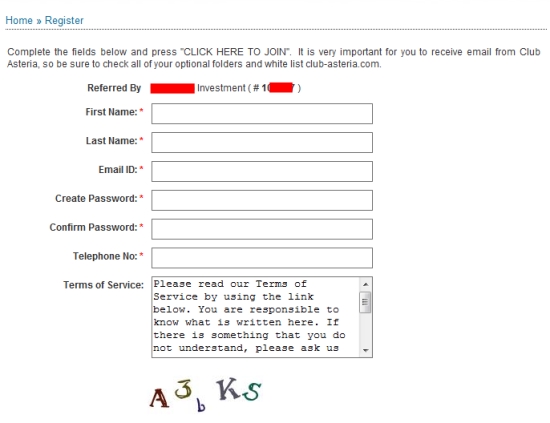
    “It’s no scam now,” a poster on MoneyMakerGroup confidently opined after the “I got paid” posts began to appear. A link under the comment led to the affiliate’s CA registration page,  which implied prospects were receiving guidance from an “Investment” company or professional financial adviser.

    This Club Asteria affiliate's sign-up page is accessible from a link on the MoneyMakerGroup Ponzi forum. The registration page implies that CA prospects are receiving guidance from a professional "Investment" company or adviser. In May 2010, the U.S. Postal Inspection Service identified MoneyMaker group as a site from which the alleged Pathway To Prosperity Ponzi scheme was pushed. Pathway To Prosperity gathered more than $70 million, creating about 40,000 victims from "all of the permanently inhabited continents of the world," according to federal court filings in the Southern District of Illinois.

    Separately on MoneyMakerGroup, another CA poster declared, “I am in over 35 forums and everyone is posting paid.”

    In July 2010, the Financial Industry Regulatory Authority (FINRA) issued an alert about investment scams and how they spread on the Internet.  Separately, court filings from May 2008 in the SEC’s case against an alleged $70 million Ponzi scheme known as Legisi include a handwritten note from a Legisi enrollee.

    “Money Maker Group.com,” the note read in part. The note was part of a 267-page evidence exhibit the SEC presented a federal judge. The SEC alleged that Legisi created thousands of victims.

    On both MoneyMakerGroup and TalkGold, posters have repeatedly noted that CA payments come from “Asteria Holdings Limited (Hong Kong).”

    CA says it accepts money through SolidTrustPay and AlertPay, both of which are Canada-based payment processors. Both companies are referenced in federal court filings in the alleged AdSurfDaily Ponzi scheme, which the U.S. Secret Service said gathered at least $110 million and created as many as 40,000 victims.

    ASD also was promoted on MoneyMakerGroup and TalkGold. Solid Trust Pay and AlertPay also are referenced in court filings in the Pathway To Prosperity Ponzi case.

    CA also notes that it conducts business with CashX, another Canadian firm. When the ASAMonitor Ponzi scheme and criminals’ forum mysteriously vanished in October 2010, the site’s landing page initially redirected to CashX.

    Some CA members are selling the “program” by describing what it is not. It is not a Ponzi scheme, and it is not an investment, they claim.

  • TalkGold Ponzi And Criminals’ Forum Deletes ‘Sticky’ Thread On InstaForex; Firm Named Defendant In CFTC Sweep Used Payment Processor Whose Contact Person Is Referenced In International Money-Laundering And Narcotics Case

    The TalkGold Ponzi scheme and criminals’ forum has deleted a “sticky” thread reportedly paid for by InstaForex, a dubious company named a defendant in a registration sweep conducted by the U.S. Commodity Futures Trading Commission last month.

    The PP Blog reported two days ago that InstaForex was using TalkGold to promote a scheme by which participants who sent InstaForex at least 1,000  U.S. dollars could qualify to win a Lotus Elise valued at more than $50,000. Although sweepstakes that require a purchase are illegal in the United States, InstaForex bizarrely instructed investors that they could improve their odds of winning the car by opening up to 100 accounts each.

    Some of the InstaForex promoters used photographs of attractive women to promote the scheme. It was unclear whether the photos were actual pictures of the promoters or whether they were stage props designed to lure skeptical investors.

    Why any investor from any country would open a single account — let alone 100 accounts — with a firm that advertises on TalkGold was left to the imagination. TalkGold and similar sites such as MoneyMakerGroup are referenced in multiple filings in U.S. federal courts as places from which international Ponzi and fraud schemes are pushed.

    A separate ad for which InstaForex apparently paid TalkGold $95 remains operational on the forum. The ad shows an image of a red Lotus and claims the company is “THE BEST BROKER IN ASIA.” Directly below the ad is an ad for a company that claims to provide a return of 525 percent “After 1 Minute” and 9,860 percent “After 6 Hours.”

    Just four of the thousands of schemes pushed on TalkGold — Imperia Invest IBC, EMG/Finanzas Forex, Legisi and Pathway to Prosperity — created tens of thousands of victims globally while gathering hundreds of millions of dollars, according to court records.

    The precise time at which TalkGold deleted the paid “sticky” thread on InstaForex and the precise reason why the thread of at least 109 pages was deleted were unclear. Records suggest the thread was deleted in the past 24 hours. The once-massive thread now returns a “No Thread specified” error.

    Among other things, InstaForex advertised that it accepted payments through Perfect Money, a murky money-services business purportedly operating from Panama. Imperia Invest, which the SEC accused in October of stealing millions of dollars from thousands of participants, also used Perfect Money, according to court filings.

    Included among the Imperia Invest victims were thousands of Americans with hearing impairments, according to the SEC.

    Meanwhile, the name of Roger Alberto Santamaria del Cid — the purported contact person of Perfect Money — appears in federal court filings in the EMG/Finanzas Forex forfeiture case.

    A Florida-based task force that specializes in detecting and uncovering massive fraud schemes brought the EMG/Finanzas Forex case last year. Del Cid, Perfect Money’s purported contact person in Panama, is listed as EMG’s “Secretary” in court filings that allege that tens of millions of dollars seized in the probe were tied to the international narcotics trade.

    EMG/Finanzas Forex was so corrupt that some participants were told the only way they could get their money out was to recruit new investors, have the new investors pay them directly — and use the proceeds from the new investors to recover their initial outlays, according to court filings.

    The very first EMG post on the now-shuttered ASA Monitor Ponzi and criminals’ forum referenced yet-another widely promoted Ponzi scheme: 12DailyPro. The 12DailyPro case, brought by the SEC in February 2006, also is cited in the AdSurfDaily Ponzi prosecution brought by the U.S. Secret Service in August 2008. ASD also was promoted on TalkGold.

    Writing on ASA Monitor, an EMG/Finanzas Forex aficionado claimed to have learned the ropes from 12DailyPro.

    “I have been in internet business for 3 years now and in autosurf industry from 12dailypro,” the ASA poster began. He (or she) then proceeded to tell readers about how they could earn commissions by recruiting for EMG/Finanzas, which the Feds later described as an international menace with tentacles in Central America, South America and Europe.

    Court filings in the EMG/Finanzas case paint a picture of an incredibly elaborate maze of companies and bank accounts set up to confuse both investors and law enforcement. At least 59 bank accounts, 294 bars of gold and nine luxury vehicles were seized.

    The EMG allegations were explosive because they showcased the undeniable fact that people who promote programs such as HYIPs and autosurfs because such programs may pay “commissions” to recruit new members may be operating as fronts or conduits for international drug dealers and money-launderers.

  • EDITORIAL: On Club Asteria, FxPowerPro And DisasterClub — And What The U.S. State Department Could Do To Contain The Danger Posed By The Talk Gold Ponzi And Criminals’ Forum And Others Of Its Ilk Worldwide

    Let’s start with the chaos in Egypt this week. Protesters have streamed into the streets to demand that President Hosni Mubarak step down after three decades of autocratic rule. The government initially reacted by shutting down the Internet. As tensions rose, protesters, activists and journalists covering the events were beaten. Some of the protesters were killed.

    When a government shuts down the Internet and starts chilling its people and journalists, it’s for a reason: It does not want the world to witness events, and it wants journalists to know they’ll pay a price for trying to report anything other than the government line to the masses. State-run TV beamed images of tranquility, not images of unrest. When the chaos became impossible to sanitize or ignore, the government blamed events on impure thinkers and their media lackeys, planting the seed that “foreign agendas” were at work.

    It was the cue the loyalists needed to start threatening journalists with death by beheading. Fearing for their safety, the journalists abandoned the immediate turf — but not the story. They started reporting from “undisclosed locations.” The word was still getting out, just not the pictures in the degree desired.

    The immediate events in Egypt, of course, are much more serious than, say, the immediate events at the TalkGold Ponzi scheme and criminals’ forum. Even so, some of the parallels are striking.

    The Egyptian government, for example, is trying to control the message. So is the TalkGold forum, which wants the Ponzi shills and criminals who’ve involved the worldwide masses in one catastrophic fraud scheme after another to know they have a safe haven. TalkGold also wants the critics to know the Mods regard them as naysayers and trolls who can be “banned” without notice, rather like the Mubarak regime regards those muckraking reporters and their “foreign agendas.”

    It won’t work at TalkGold for the same reason it won’t work in Egypt: People still have eyes and ears and the ability to be discerning. There may be only one Tahrir Square in central Cairo to control, but “undisclosed locations,” voices, cell phones, cameras and reporters’ pads and tape recorders are in plentiful supply. They can’t be controlled.

    Egypt’s bid to control the message has resulted in a catastrophic PR problem on top of a political crisis. Meanwhile, TalkGold’s ineptitude, ham-handedness and arrogance has set the stage for its own PR disaster. You can read about it on RealScam.com, which sides with the afflicted masses, not the people who’d afflict the masses.

    While state-run TV in Egypt is airbrushing the dangers of autocratic rule and beaming images of tranquility as the country’s inhabitants try to figure out how they’ll get by for yet-another year on the wages of poverty, TalkGold is airbrushing the economic and security dangers of viral criminality and seeking to tranquilize (and recruit) the masses by using flowery language and even flattery to tell them that opening an account with an offshore payment processor and sending money to any one of hundreds of schemes is their ticket out of the ranks of hopelessness.

    Poster “Ken Russo,” for example, would have the people of Egypt — and the poverty-stricken people of the United States and other countries  — know that the latest “program” he is promoting is one of the “best” he has ever seen.

    One of “Ken Russo’s” current favorites is Club Asteria, which claims to “care” and contends that its “100,000 PLUS MEMBERS CAN’T BE WRONG.” Meanwhile, Club Asteria further claims to “Empower our Members” and to “help expatriates and immigrants to become more successful in their personal and professional lives and enable them to send money home to their loved ones.”

    Tugging at heartstrings, Club Asteria further claims that “[t]hrough our philanthropic efforts we make an immediate difference for struggling individuals, families and communities by focusing on improving nutrition, housing, health care and education.”

    That performing legitimate due diligence on Club Asteria is virtually impossible doesn’t seem to compute with “Ken Russo” and other affiliates. The mere fact the “program” is being promoted on TalkGold is reason enough to avoid it. Any business the company generates from TalkGold likely is radioactive. Club Asteria, for example, could find itself in possession of money that has flowed from fraud scheme to fraud scheme. Even if Club Asteria were legitimate, the fact it is being promoted on TalkGold puts it at one of the principal intersections of crime and fraud.

    About the only good thing about the Internet being down in Egypt this week while its people took to the streets was that “Ken Russo” and his fellow promoters couldn’t sell Club Asteria and other highly questionable “programs” to the disaffected Egyptian masses. (On a side note, one of the companies named in a Forex lawsuit by the U.S. Commodity Futures Trading Commission(CFTC)  just days ago announced on TalkGold that the shutdown of the Internet in Egypt had disrupted its ability to interact with Egyptian clients and other clients in the region. A poster purporting to represent FXOpen — under an underlined  heading of “Arabic Live Chat Disruption” — noted that “[o]ur hopes and prayers go out to the Egyptian people.”)

    And even as the Egyptian government is inciting violence against journalists — to the degree that the U.S. Department of State issued a special statement on the matter — the TalkGold forum is banning posters who speak ill of Ponzi and fraud schemes that are gathering untold sums of money, channeling cash to some of the darkest corners of the Internet and keeping people in financial bondage.

    Here is an idea for the Department of State and Secretary Hillary Clinton: Warn Americans — and other peoples of the world — about sites such as TalkGold. Mention them at a Congressional hearing. Instruct U.S. diplomats the world over to inform their host governments about the security and economic dangers posed by TalkGold and a sea of similar sites. Tell elected officials that the State Department is serious about monitoring sites that are keeping people in human bondage by spreading financial misery globally. Define Talk Gold as a global pariah, an enterprise without a state that would be proud to claim it. Inform the world regularly that the only form of diplomacy on TalkGold is robbery without a gun.

    TalkGold has been named repeatedly in court filings that identify it as a place from which fraud schemes are openly pushed. The ink on recent CFTC lawsuits that identify two of TalkGold’s paid Forex advertisers as the purveyors of unregistered offerings targeted at U.S. citizens is barely dry, and yet the unabashed cheerleading continues.

    The alleged AdSurfDaily Ponzi scheme, which also was pushed from TalkGold, gathered at least $110 million. It caught the attention of the U.S. Secret Service and resulted in civil and criminal probes that could put people in prison for decades, and yet the unabashed cheerleading continues.

    All the autosurfs prominently touted on TalkGold are just recycled forms of ASD, which itself allegedly was a recycled form of 12DailyPro, which the SEC smashed five years ago this month.

    It’s the same thing with Pathway To Prosperity, yet-another alleged scheme promoted on TalkGold that gathered tens of millions of dollars and could put people in jail for decades. All of the HYIPs promoted on TalkGold are just recycled forms of Pathway to Prosperity, which was busted by the U.S. Postal Inspection Service, and Legisi, which was busted by the SEC after the U.S. Secret Service infiltrated its operations by using an undercover operative. The state of Michigan also used an undercover operative in the Legisi probe.

    The best way to deal with TalkGold and similar sites is to tell the world that they promote global criminality and rank illicit profits above human rights and common human decency.

    Like Egypt in its current state, TalkGold is not about freedom — financial or political. It is about the institutionalization of corruption. If TalkGold were an oncological hospital, its doctors would be cheerleading for the cancer to spread and its nurses would be rooting for the highest death rate because intervening to cure the disease and comfort the afflicted would be bad for institutional and personal profits.

    A purported Forex program known as FxPowerPro currently has a 20-page thread on TalkGold. Among other things, FxPowerPro is claiming that “YOUR STABILITY IS OUR PURPOSE.” Its website appears to come from an editable script kit used by hundreds of sites globally, and it says it will accept any sum between $5 and $20,000. FxPowerPro proudly displays a link the the TalkGold forum.

    A few days ago an eagle-eyed PP Blog reader passed along some information about yet-another incongruous program known as “Disaster Club.” Disaster Club appears to be a new wrinkle on cash-gifting schemes. It purports to arrange member-to-member “grants,” asking visitors if they’d like to turn a “One-Time $100 into $17,700.”

    Bizarrely, Disaster Club uses a presentation by which it names four hypothetical members: “Job,” and “Cain, Abel and Eve.”

    “After joining the Club you will receive the name of your assigned member, and each week on Monday you are to send a grant in the amount shown in the grant schedule directly to that assigned member,” Disaster Club says.

    “Should you join the Club between Tuesday and Sunday, send your grant as soon as you receive your assigned name, do not wait until Monday,” Disaster Club coaxes. “Every grant thereafter will be sent according to the Monday schedule. To create a cash explosion from your home three members will each be given your name to send their $100 grants to ($100 X 3 = $300) and each stage you will keep the stated amount shown from the amount you received from the 3 members $100 + $100 + $100 = $300 you keep $50. Then according to the grant schedule shown, you are to send your grant directly to the same member (Job), and the same three members (Cain, Abel and Eve) will each send their grants directly to you.”

    Disaster Club purports to be headquartered in Florida and claims to be a “club that allows like minded members to pool their resources together to help the hurting and homeless victims of any Disaster in any State, or even help others anywhere in the world.”

    The “opportunity” does not appear to have its own thread at TalkGold yet, but there are plenty of disasters already waiting there for its readers. Just don’t expect to get a warm reception if you have a “foreign agenda” — you know, like those muckraking enemies of the Mubarak regime in Egypt.

    Although it’s not likely you’ll be threatened with beheading at TalkGold, you might get deleted if you tangle with “Ken Russo” and others and challenge readers to use their heads for something other than a hat rack.

    There is nothing decent about Talk Gold and its cancer-spreading cousins worldwide. Only the broadest public-awareness campaign can succeed against the threats they pose to the governments of the world and billions of Internet users globally — and the U.S. State Department could make a difference by describing the criminal forums as places from which human rights are set up to be trampled 24/7/365.

    Any true diplomat from any country worldwide who spent so much as 15 minutes on TalkGold could see the danger to countries, governments and citizens worldwide. The world’s diplomatic corps are uniquely positioned to do something the world’s law-enforcement corps cannot do: be at all places at all times.

    A sustained effort by the world’s diplomats to identify and monitor the fraud sites — and openly share the information with the people of the world — could go a long way toward containing a plague that only will mushroom into a catastrophe if left alone.
  • EDITORIAL: ASD By The Numbers: Why America And The World Should Be Shocked — And Why Serial Autosurf And HYIP Promoters Should Be Prosecuted

    ASD's Andy Bowdoin.

    UPDATED 12:04 P.M. ET (U.S.A.) In court filings this week in the AdSurfDaily autosurf Ponzi scheme case, federal prosecutors in the District of Columbia revealed a series of jaw-dropping numbers. The biggest of these is 500,000 — the number of pages of emails gleaned so far in the investigation, which began in July 2008.

    Because prosecutors put the qualifier “at least” on the already-staggering number, it is clear the number actually could increase. Each of the pages is subject to the discovery process, meaning that attorneys from both sides and perhaps the court itself faces the monumental challenge of sifting through at least half a million pages of scheme-related correspondence.

    Other big numbers in the alleged $110 million ASD Ponzi include 100,000, the number of pages of bank records, and 5,000, the number of pages of documents that emerged after the U.S. Secret Service searched ASD’s office in Quincy, Fla., and the home of company president Andy Bowdoin.

    To date, investigators have identified 40,000 potential ASD victims. This number also could grow because there is reason to believe that “there may be members who provided funds to ASD but whose information ASD did not enter into its database,” according to prosecutors.

    ASD’s database included information on 97,000 members. Some participants have claimed ASD actually had 120,000 members. Regardless of the final number that emerges, ASD created victims by the tens of thousands, including victims who do not live in the United States, prosecutors said.

    The import — and the danger of these numbers — is that ASD is only one autosurf. There may be hundreds if not thousands of autosurfs operating in the world at any one time, along with hundreds or thousands of HYIPs. Like other autosurfs and HYIPs, ASD was promoted on Ponzi forums such as TalkGold, MoneyMakerGroup and ASA Monitor. The Ponzi pitchmen love American money, and commission-grubbing American salespeople and serial promoters who play dumb to line their pockets at the expense of their fellow countrymen specialize in spreading the misery globally.

    In May, the PP Blog reported on criminal charges filed against Nicholas Smirnow, the alleged operator of the Pathway to Prosperity (P2P) Ponzi and HYIP scheme. The numbers that have emerged from that alleged scheme are equally stunning: $70 million fleeced from 40,000 victims in 120 countries from “all of the permanently inhabited continents of the world,” according to the U.S. Postal Inspection Service.

    The criminal complaint filed against Smirnow specifically references the TalkGold, MoneyMakerGroup and ASA Monitor Ponzi forums — the same forums from which ASD and countless other schemes have been promoted.

    Legisi, yet another alleged scheme pitched at the forums, also produced some big numbers. Among them are $72.6 million fleeced from at least 3,000 victims. Matthew Gagnon, one Legisi pitchman, netted $3.8 million alone from the scheme, according to the SEC.

    So, in just the three alleged schemes referenced in this column — ASD, P2P and Legisi — the numbers shape up like this: at least $252.6 million gathered from at least 83,000 victims. If the P2P and Legisi cases are shaping up like the ASD case from the standpoint of paper production, investigators, attorneys from both sides and the courts may have to go through more than a million pages of documents and corresponding bank records to make sense of it all.

    Meanwhile, the wink-nod, serial promoters continue to ply their trade on the Ponzi boards — all while the U.S. and world economies are trying to navigate the choppiest waters since the Great Depression. While the serial promoters are lining their pockets at the expense of Moms and Pops from virtually every corner of the earth, they are anticipating the danger signs consistent with the implosion of their currently favorite Ponzi — and they are preparing their next round of lies to protect their illicit profit pipeline and explain away the problems that inevitably will emerge.

    Some of the professional criminals will tell their marks that it is their duty to be patient when Ponzi payments slow down. They’ll add that problems affect all enterprises regardless of size, and that it’s not unusual for payment bottlenecks to occur. They’ll explain that it likely is a problem with software or the need to acquire a new server to accommodate traffic. After all, they’ll say, “growing pains” are something to celebrate because they signal the success of the enterprise.

    And the serial criminals also will talk about a doubting recruit’s duty to be loyal to the enterprise. After all, they’ll explain, the company is doing the right thing by acquiring the equipment and manpower needed to streamline operations and thus return to a normal payout schedule.

    While the professional Ponzi criminals are explaining all of this, investors will become further separated from their money before the final round of excuse-making begins. Investors will be cautioned not to contact the authorities and told not to contact the payment processors. After all, the serial pitchmen will explain, if the authorities seize the cash or if the payment processors freeze the accounts, no one will get paid.

    When the scheme ultimately collapses, some of the serial criminals will shrug their shoulders and feign surprise. They’ll explain why they had every reason to believe that this one was different, that they’d been assured by the Christian operator it was different. No matter, they’ll say, perhaps positioning themselves as people of faith. Recruits who invested more than they could afford to lose have only themselves to blame, they’ll claim. (This is if they call it “investing” at all; many serial criminals avoid that word like the plague. After all of these years and all of this Bible-thumping, they still apparently believe that it’s possible to skirt securities laws by avoiding the word “investment” and calling it something else.)

    Then they’ll unapologetically move on to the next scam. After all, they’ll explain, they have a right to make a living. Some of them will explain that the government, which refuses to see the beauty of the autosurf and HYIP models, is to blame. Along the way they’ll create some clone promoters, and the clones will multiply. The clones will add to the purported, pro-Bible (and antigovernment chorus) — and before long, investigators trying to reverse-engineer a single case will be sifting through 500,000 pages of emails, 100,000 pages of bank records and 5,000 pages of records created as the result of the execution of a search warrant or as a result of actual documents seized.

    Agents then will begin the mind-numbing and time-consuming process of identifying victims by the tens of thousands.

    Some of the victims will lose their homes because they borrowed against their equity to take advantage of “bonus” ad packs and to maximize their “earnings” through “compounding.” Others will have lost savings set aside to educate their children. Still others will have lost their life savings and money set aside for retirement.

    Many of the people who created all the pain will sprint back to the Ponzi forums — and the government will be left to clean up the colossal mess. The Ponzi pitchfest is in constant motion as property values decline in neighborhood after neighborhood, driven by the foreclosures glut. The Stepfords among the promoters will write their Congressman or Senator or perhaps the Inspector General at the Justice Department.

    They’ll more or less say that it would be in the interests of America if the Congressman or Senator or Inspector General would see fit to fire all the prosecutors and agents who made these unseemly events occur.

    And then they’ll gather up their lists of suckers and try to recruit them into yet-another MLM, autosurf or HYIP nightmare. This they will call “freedom.” Some of them will be angry. Some of them will write rambling diatribes on forums. Invective will be part of the diatribes. Some of them will call public officials “Nazis” and “Socialists,” perhaps even in the same fractured paragraph. Some of them even will try to sue the government or have the prosecutors and judges charged with crimes. They’ll talk about “treason” and high crimes against the Constitution.

    What they will never do is make any sense.

    It is impossible to imagine that any government agency has the resources to take down all of the corrupt MLMs, autosurfs and HYIPs. But one can imagine a systematic process by which the government identifies the serial promoters and plans a litigation strategy from which will emerge the “shot heard round the world” of corrupt online investment “opportunities.”

    That day cannot come soon enough — and the numbers demand it: more than $250 million gathered from victims of just the three alleged schemes referenced on this page, perhaps 1 million or more emails and other documents produced by the investigations, at least 83,000 victims from virtually all corners of the earth, an untold number of agents/investigators from multiple government entities forced to sift though monumental piles of evidence.

    It is clear that wealth is being drained by the billions. It is equally clear that vast sums of money have gone missing in the Age of Terrorism.

    Clearest of all, however, is that the corrupt MLMs, autosurfs and HYIPs cannot thrive without their greedy and dangerous promoters — and that highly public lawsuits and early morning raids designed to hold the wink-nod Ponzi pitchmen accountable would send an unmistakable message that pain is in your future if you promote these criminally toxic businesses. Serial promoters deserve the same treatment as mid-level drug dealers.

    No economy can thrive if a single case among thousands of potential cases is producing 500,000 pages of emails and creating 40,000 victims while consuming tens of millions of dollars — and if “shell companies,” the “shadow banking system” and wink-nod, serial promoters are driving the wanton criminality and letting the cancers metastasize globally.

    Here’s hoping such an operation aimed specifically at corrupt MLMs, autosurfs and HYIPs already is under way.

  • UPDATE: E-Bullion, Firm Alleged To Have Provided Payment Services To ASD, Linked To Alleged Legisi Ponzi Scheme; Like ASD, FEDI Fraud Scheme Called Payments ‘Rebates’

    Andy Bowdoin

    UPDATED 2:25 P.M. ET (U.S.A.) Still pushing autosurf and HYIP frauds?

    Last week, the PP Blog reported that the U.S. Secret Service and federal prosecutors had established a link between California-based E-Bullion and Florida-based AdSurfDaily. E-Bullion is a shuttered payment processor whose owner, James Fayed, is awaiting trial on charges of murdering his wife, Pamela Fayed, whom prosecutors said wished to cooperate in the E-Bullion probe.

    It was the first public assertion by the government that ASD had a tie to E-Bullion.

    The Blog further reported that E-Bullion had been linked to at least three alleged Ponzi or fraud schemes: ASD, Gold Quest International (GQI) and Flat Electronic Data Interchange (FEDI), whose convicted operator, Abdul Tawala Ibn Ali Alishtari, was associated with convicted Ponzi schemer Brian David Anderson.

    Alishtari, also known as Michael Mixon, was convicted in 2009 of financing terrorism. Anderson, a FEDI pitchman, was sentenced to federal prison for his role in yet-another Ponzi scheme known as Frontier Assets. He also has been linked to a mysterious scheme known as the “Alpha Project.”

    Like ASD’s Andy Bowdoin, Alishtari donated money to the National Republican Congressional Committee, according to the Federal Election Commission database. Documents reviewed by the PP Blog show that payments from the FEDI scheme were referred to as “rebates.” ASD also called its payments to participants “rebates.”

    Today the PP Blog is reporting that federal investigators also have established a link between E-Bullion and Legisi, a company whose operator, Gregory N. McKnight, was accused by the SEC in May 2008 of operating a massive Ponzi and fraud scheme based in Michigan. During the same month, the SEC also accused GQI of operating a massive Ponzi and fraud scheme from Las Vegas. Investigators likewise established a GQI link to E-Bullion.

    Documents reviewed by the PP Blog show that records maintained by E-Bullion were the subject of a subpoena issued on Aug. 6, 2008 — five days after tens of millions of dollars were seized by the U.S. Secret Service from bank accounts controlled by ASD’s  Bowdoin. The subpoena was issued in the Legisi case.

    As the PP Blog previously reported, the Secret Service, which used undercover operatives in the ASD case, also used an undercover operative in the Legisi case. In fact, the Blog reported, the Secret Service undercover operative and an undercover operative from the state of Michigan, had a face-to-face meeting with Legisi’s McKnight in his office.

    Legisi later began to act in a fashion that only can be described as bizarre, allegedly morphing into a sort of super-secret enterprise that was exhibiting clear signs of paranoia. Investors, for example, were asked to submit to a loyalty oath and pledge that they weren’t government investigators or informants.

    The AdViewGlobal autosurf, which has close ties to ASD, later began to operate in a similar fashion, morphing into a so-called “private association,” scolding members for asking questions in public and exhibiting paranoia.

    “This Association of members hereby declares that our main objective is to protect our rights to freedom of choice regarding our advertising and marketing information and conduct, through maintaining our Constitutional rights,” AVG announced on its website in February 2009.

    Court records show that the Secret Service also employed undercover operatives in the investigation of the INetGlobal autosurf. An affidavit in the case notes that at least two operatives were present at an INetGlobal function in New York earlier this year and that one undercover agent had been introduced to INetGlobal by an ASD member.

    ASD President Andy Bowdoin was indicted earlier this month on federal charges of wire fraud, securities fraud and selling unregistered securities. Prosecutors alleged he was operating a Ponzi scheme that had gathered at least $110 million. The indictment accused Bowdoin of making campaign donations to the National Republican Congressional Committee with proceeds from the ASD Ponzi scheme.

    Six days ago, prosecutors alleged in a forfeiture complaint that ASD member Erma Seabaugh used E-Bullion in November 2007 to transfer $10,510 to ASD. The alleged transfer occurred about six months before E-Bullion’s name surfaced in the GQI and Legisi cases brought by the SEC.

    When investigators later searched the home of James Fayed in the murder investigation, they found “approximately $60,000 in cash wrapped in plastic material; approximately $3,000,000 in gold; and approximately 31 firearms, including one with a long-range night vision scope, along with thousands of rounds of matching ammunition,” prosecutors alleged.

    Pamela Fayed was stabbed to death in a California parking garage on July 28, 2008. The Secret Service, which had begun its investigation of Bowdoin less than a month earlier, seized his assets three days later, on Aug. 1, 2008.

    The agents said Bowdoin was moving large sums of money outside the United States and had talked about buying a home in another country. In September 2008, the month after ASD’s assets were seized, an indictment was unsealed in Connecticut that accused Robert Hodgins of Virtual Money Inc. of helping a Colombia narcotics operation launder money at ATMs in Medellin.

    Virtual Money Inc. once provided debit cards to ASD, according to an ASD downline group.

    CLOSING NOTE: Read this chilling document from the case against Fayed in California.  Also see this 2007 report from CBS News. CBS reported FEDI operator Alishtari claimed to be “[National Republican Congressional Committee] New York State Businessman of the Year. ASD members later would make similar claims about Bowdoin.)

  • Justice Department Using Undercover Agents To Battle White-Collar Criminals; Top Official Says Investigative Tactics Normally Used To Prosecute Organized Crime Figures Useful In Battling Fraud Epidemic

    EDITOR’S NOTE: The remarks below are excerpted from a speech last week in New York by Assistant U.S. Attorney General Lanny A. Breuer. As the PP Blog has previously reported, the Justice Department and agencies such as the FBI and U.S. Secret Service have been using undercover operatives to infiltrate criminal operations and networks used by the criminals.

    One of the FBI investigations Breuer referenced was the Trevor Cook Ponzi scheme in Minneapolis. The scheme consumed tens of millions of dollars, defrauding victims of at least $158 million. Many mysteries remain in the case.

    Meanwhile, undercover operatives also recently were used to expose penny-stock schemes operating in Florida.

    It also is known that the Secret Service used undercover operatives in the AdSurfDaily case, the INetGlobal case, the Regenesis 2×2 case, the Legisi case and a case involving alleged international fraudster Vladislav Horohorin, accused of using criminal forums to peddle stolen credit-card information.

    Here, now, some excerpts from Breuer’s speech . . .

    Part of Trevor Cook's stash.

    “Now, as I’m sure you know, financial criminals can be extraordinarily innovative, and they are often expert at covering their tracks. So we are always looking for creative ways to gather the evidence we need to bring financial criminals to justice. To that end, we have begun increasingly to rely, in white collar cases, on undercover investigative techniques that have perhaps been more commonly associated with the investigation of organized and violent crime.

    “As part of this effort, we have significantly strengthened the Criminal Division’s Office of Enforcement Operations (known as OEO), which is the office in the Justice Department that reviews and approves all applications for federal wiretaps from across the country. We have a dynamic new OEO Director, Paul O’Brien, and we’ve substantially increased the number of attorneys at OEO who review these wiretap applications, adding to their ranks experienced prosecutors and recent graduates who have completed federal clerkships. As a result, the number of wiretaps we authorize – in all types of cases – has gone up.

    “Let me give you just two examples of white collar cases in which we have used undercover techniques, both of which also highlight areas in which we have stepped up our white collar enforcement efforts more generally.

    “The first example is the case of Trevor Cook, which was prosecuted by the U.S. Attorney’s Office in Minneapolis. Mr. Cook is just one of dozens of individuals whom we’ve prosecuted in recent months for participating in investment fraud schemes. Over the course of several years, Mr. Cook schemed to defraud at least 1,000 people out of approximately $190 million by pretending to sell them investments in a foreign currency trading program.

    “In reality, he was pocketing the money or using it to pay off other investors. As was recently reported in the New York Times, we gathered evidence against Mr. Cook by using an undercover informant to record his transactions and conversations. [Cook] pleaded guilty earlier this year and was recently sentenced to 25 years in prison.

    “Trevor Cook is one of literally hundreds of financial criminals who have preyed upon vulnerable, individual investors and bilked them out of their savings using investment fraud schemes. And as with Mr. Cook, we have been prosecuting these people aggressively, all over the country – from New Jersey and Connecticut to Texas and California, and everywhere in between.

    “The second example comes from our enhanced efforts in the area of FCPA enforcement. Earlier this year, as I’m sure many of you know, we indicted 22 defendants in the military and law enforcement products industry for their participation in widespread schemes to bribe foreign government officials. These indictments resulted from the Department’s most extensive use ever of undercover law enforcement techniques in an FCPA investigation, and they represent the single largest prosecution of individuals in the history of our FCPA enforcement efforts. In September, one of the defendants in the case, Richard Bistrong, pleaded guilty . . .

    “Over the last 18 months, we’ve devoted significant additional resources to the Criminal Division’s Fraud Section. We’ve recruited talent not only from white shoe law firms, but also from a deep pool of prosecutors around the country who bring with them extensive experience in prosecuting everyone from violent mobsters to dangerous terrorists. We are now bringing that extraordinary talent and experience to bear on prosecuting financial fraudsters.”

    See related story on alleged Pathway To Prosperity Ponzi scheme.

    See related story on alleged Legisi Ponzi scheme.

    See related story on Matt Gagnon and Mazu.com.

  • BULLETIN: Woman Who Did Not Report Ponzi Schemer Richard Piccoli Sentenced To 18 Months In Federal Prison For ‘Misprision Of Felony’ And Tax Charge; Kathleen Fuoco Turned ‘Blind Eye’ To Fraud, Prosecutors Say

    BULLETIN: In a case that could send shockwaves across the culture of promoting scams and accepting payments from scams, a New York woman who turned a blind eye to Richard Piccoli’s long-running Ponzi scheme in New York state has been sentenced to 18 months in federal prison for misprision of a felony and willful failure to file tax returns.

    Kathleen Fuoco, 60, of West Seneca, N.Y., pleaded guilty to the charges in June. She was sentenced today in Buffalo. Piccoli, 83, was sentenced to 20 years in prison last year. He became infamous in the Buffalo region for targeting people of faith in the scheme.

    Fuoco knew Piccoli was operating a scam, but did not report him, prosecutors said in June. Her failure to report the scheme brought about the misprision charge and also resulted in an agreement with prosecutors in which a financial judgment of $25 million would be placed against Fuoco, the total amount of restitution due victims.

    Piccoli operated a firm known as Gen-See Capital Corp., and directly targeted Christians and senior citizens.

    “Our seniors and clergy are absolutely pleased with Gen-See’s Re-Investment Program,” Piccoli said, according to marketing materials gathered by investigators as evidence in the case.

    The Piccoli prosecution was brought after an undercover sting by the U.S. Postal Inspection Service and the IRS.

    After Fuoco’s guilty plea in June,  U.S. Attorney William J. Hochul said “the public should know that if you attempt to defraud any hard working citizen or turn a blind eye while someone else is committing fraud, you will be caught and prosecuted to the fullest extent of the law.”

    Hochul built on his earlier remarks after Fuoco’s sentencing today.

    “The best defense for investors is to conduct your own due diligence and research,” he said. “When unscrupulous defendants take advantage of others through fraud, however, my office stands ready to bring the full force of law to punish the crime.”

    Misprision of felony is a charge that serial promoters of online scams such as autosurfs, HYIPs and 2×2 matrix cyclers potentially could face. The schemes proliferate in no small measure because promoters who play dumb to the fraud create the conditions that make it possible for the “programs” to go “viral” on the Internet.

    Some promoters help fuel scheme after scheme after scheme, perhaps saying later that they were surprised the programs proved to be fraudulent.

    Such bids to create plausible deniability have been unmasked by the U.S. Secret Service in a number of investigations since 2008. In some cases, the agency has used undercover identities to join the schemes and later advised federal judges that the agents were instructed by members of the schemes to avoid using certain phrases in sales pitches to minimize the chance of getting caught.

    In certain undercover operations, the Secret Service revealed it had agents in rooms or venues from which scammers were delivering sales pitches to an audience. Some schemers have been kept under surveillance for weeks by agents.

    Court documents in the alleged AdSurfDaily (Florida) and INetGlobal (Minnesota) Ponzi schemes — and in the alleged Regenesis 2×2 (Washington state) Ponzi scheme — show that agents moved from location to location and even city to city to build evidence against Ponzi schemers.

    Meanwhile, court documents show that undercover Secret Service operatives and their state law-enforcement colleagues even have posed as interested investors and walked right through the front doors of offices operated by suspected fraudsters.

    Court filings in the alleged Legisi Ponzi scheme brought by the SEC show that the behavior of the alleged schemer changed after he came to understand he was under investigation — a development that allegedly led to even greater chicanery to hide the scheme.

  • BULLETIN: SEC Gains Asset Freeze, Seeks Shutdown Of Imperia Invest In Emergency Action; Program Pitched On Same Ponzi Forums Promoting MPB Today; Agency Says Imperia Defrauded Thousands Of Deaf Americans

    BULLETIN UPDATED 5:02 P.M. EDT (U.S.A.): The SEC has gone to federal court in Utah to halt the operations of Imperia Invest IBC, alleging a spectacular fraud that fleeced money from thousands of Americans with hearing impairments.

    Imperia was promoted from the MoneyMakerGroup Ponzi forum — one of the Ponzi forums promoting the MPB Today “grocery” MLM. Imperia also was the topic of discussion and defenses on TalkGold and ASAMonitor, two other forums that are pitching MPB Today.

    The SEC’s allegations against Imperia are stunning. More than 14,000 investors were defrauded worldwide, the agency said.

    Among the victims were thousands of deaf investors in the United States, the SEC said.

    Imperia gathered relatively small sums from thousands of people, the SEC charged, noting that “no evidence has been found that any of the investors have received a single payment.”

    “Imperia Invest IBC is a web-based entity that claimed, until late 2009, to be located in the Bahamas,” the SEC charged. “The Bahamian address listed by Imperia is fictitious. Imperia now claims to be located in Vanuatu. However, Imperia is not registered to do business in Vanuatu and the address listed on its website appears also to be fictitious. Neither Imperia nor its securities are registered with the Securities and Exchange Commission. Imperia is not licensed or registered with the Commission, with any state, or with any Self Regulatory Organization.”

    Categorically absurd representations of earnings and the program’s potential were made to investors, the SEC said.

    “Investors were promised eye-popping amounts of money in return for a simple $50 or $100 investment, and Imperia has made numerous excuses on its website about why these returns haven’t been paid,” said Ken Israel, director of the SEC’s Salt Lake Regional office.

    “The Imperia website shows an example of such earnings in which a $50 investment will return $134,000 to the investor in six months,” the SEC charged. At the same time, the agency said some investors were told that spectacular sums were due them for doing business with Imperia.

    “Imperia represented to one investor who invested $150.00 with Imperia that Imperia owed him $36,610,755.20 within a two year time frame,” the SEC charged. “Another individual’s account statement who invested $500 in July 2007 showed he is owed $43,907,652.20 as of May 2010.”

    It was not immediately clear how so many deaf investors became involved in Imperia. A federal judge has approved an asset freeze.

    Imperia called its product Traded Endowment Policies (TEP), which the SEC described as “the British term for viatical settlements.”

    “A TEP or viatical settlement involves the sale of an insurance policy by the policy owner before the policy matures, and policies are sold at a discount from face value in an amount greater than the current cash surrender value,” the SEC said.

    “There are at least 14,000 [Imperia] investors worldwide with a total investment exceeding $7 million,” the SEC said. “In the United States, there appear to be approximately 6,000 investors, most of whom belong the hearing impaired community, who have invested in excess of $4 million with Imperia.”

    Imperia used offshore payment processors such as “Liberty Reserve, located in Costa Rica; Perfect Money, located in Panama; and Procurrex, located in the British Virgin Islands,” the SEC charged. “Once Imperia received funds from Investors, it appears that Imperia then transferred amounts from these accounts to foreign bank accounts, including but not limited to accounts located in Cyprus and New Zealand.”

    Even as Imperia was ripping off investors, it also was infringing trademarks and the intellectual property of Visa, the credit-card service, the SEC charged..

    “Imperia also requires that investors purchase a Visa debit card to access their investment proceeds,” the SEC said. “Imperia charges customers a fee to purchase the Visa debit card ranging from $145 to $450.

    “Visa has not authorized Imperia to use its name or trademarks and has sent Imperia a cease-and-desist letter to halt its unauthorized use of the Visa name and logo,” the SEC said. “There is no evidence that any investor who has ordered a Visa debit card from Imperia has actually received such a card.”

    One poster on the MoneyMakerGroup forum advised prospects that he would keep an “open mind” about Imperia, according to web records.

    “Anyway, in the final analysis each person must make their own decision,” the poster said in 2007.

    While the MoneyMakerGroup poster was holding forth about keeping an “open mind,” Imperia was cloaking itself to siphon millions of dollars, according to web records and court records.

    “Imperia took proactive steps to conceal the identity of its control persons by using an anonymous browser to host its website, by communicating with all investors via email without disclosing the identity of any control persons and by establishing off-shore Paypal-style bank accounts to conceal the recipient of the investment proceeds,” the SEC charged.

    In July, the Financial Industry Regulatory Authority issued a warning about HYIP schemes pitched online. In May, the U.S. Postal Inspection Service accused an HYIP known as Pathway To Prosperity of defrauding more than 40,000 people in a scheme that took in about $70 million.

    Pathway To Prosperity also was promoted on the Ponzi and criminals’ forums. ASAMonitor, TalkGold and MoneyMakerGroup are specifically referenced in court filings in the Pathway to Prosperity case.

    MoneyMakerGroup is specifically referenced in court documents in the alleged Legisi HYIP and Ponzi scheme, a fraud that allegedly gathered more than $70 million.

    Read the SEC complaint against Imperia.

  • ASA Monitor Ponzi And Criminals’ Forum Locks MPB Today Thread — Again; Naysayers Scolded By Mod For Challenging ‘Ken Russo’

    EDITOR’S NOTE: The ASA Monitor Ponzi forum now has reopened its thread on the MPB Today MLM program — with a warning in red to “Play nice . . .”

    UPDATED 9:54 A.M. EDT (U.S.A.) A forum infamous for promoting Ponzi schemes and other criminal pursuits has locked the thread from which the MPB Today 2×2 matrix cycler is being pitched.

    The official explanation for locking the thread was that naysayers challenging ASA Monitor member “Ken Russo” needed a “temporary cooling off period.” (See Editor’s Note above: The thread now has been unlocked.)

    “Ken Russo” is a reliable cheerleader for Ponzi schemes and highly questionable business pursuits on ASA Monitor and other forums. ASA Monitor’s name is referenced in a May criminal case filed against the alleged Pathway To Prosperity Ponzi scheme. Prosecutors said the scheme mushroomed globally, gathering about $70 million and defrauding more than 40,000 participants.

    A similar program known as Legisi gathered more than $70 million and also fleeced thousands of participants, according to the SEC. It, too, was promoted on the Ponzi forums. A court filing in the Legisi case specifically references the MoneyMakerGroup forum, another venue from which MPB Today is being promoted.

    This marks the second time the MPB Today thread has been locked at ASA Monitor. It was locked earlier this month and then reopened amid similar circumstances. ASA Monitor initially deleted several references to the PP Blog in the initial closure of the thread, but later restored them.

    One of the principal incongruities of the MPB Today program is that it is being targeted at people of faith from a known Ponzi forum. Because ASA Monitor members routinely promote Ponzi schemes, some of the funds being passed to MPB Today could be criminal proceeds from Ponzi and other fraud schemes.

    “Ken Russo,” for example, promoted the alleged Regenesis 2×2 Ponzi scheme. Like MPB Today, Regenesis used a 2×2 matrix cycler. The U.S. Secret Service executed search warrants in the Regenesis case in July 2009. The agency said in court filings that it had linked the scheme to a convicted felon.

    Spectacular international frauds have been promoted at ASA Monitor. Meanwhile, some of MPB Today’s own members have said there are liars and thieves in the organization, including liars and thieves who are using false information to recruit prospects. The claims have been made in public on YouTube. Incongruously, they have been positioned as reasons to join the program under specific uplines that purport to be honest.

    How MPB Today’s payments to members could be clean if it has come into possession of money tainted by the lies of its own pitchmen and money tainted by Ponzi schemes promoted on forums such as ASA Monitor is left to the imagination.

    Last week the PP Blog reported that a “news release’ that appeared online encouraged MPB Today prospects to sell $200 worth of Food Stamps to raise money to join the program. One of the URLs referenced in the release also was being promoted on ASA Monitor by “Ken Russo.” Other information suggests that promoters of the judicially declared CEP Ponzi scheme are promoting MPB Today.

    Some ASA Monitor members use a strategy of playing dumb to promote Ponzi schemes. One form of the strategy is to repeatedly accept at face value whatever a company says in sales literature — and then blame the company and dishonest affiliates if a scheme collapses or is taken down by law enforcement.

    Another form of the strategy is to include links to the sites of other promoters, apparently on the theory that favorable commentary about an “opportunity” demonstrates that no scam could be occurring. If the opportunity later proves to be a Ponzi or a fraud scheme, promoters who employ the play-dumb method point out that others got taken, perhaps through the actions of a fraudster who was particularly clever.

    Yet another form of the play-dumb method is to position an opportunity as a matter of free choice. Such wink-nod efforts are part of numerous Ponzi schemes.

    In February 2010, the Secret Service said in a search-warrant application in Minnesota that it believed a company known as INetGlobal was operating a Ponzi scheme. In court filings, the agency said an undercover agent was introduced to INetGlobal by a member of the alleged AdSurfDaily (ASD) Ponzi scheme, describing the introduction as a wink-nod deal.

    ASD, which was accused of operating a $100 million Ponzi scheme, also was promoted from websites and forums. Federal agents seized about $26 million in the INetGlobal case, which is still under investigation. Steve Renner, the operator of INetGlobal, is in federal prison for income tax-evasion in a case linked to his money-services business.

    Court records show Renner-related ties to at least four Ponzi schemes.

    Among the targets of promotions for MPB Today were victims of the alleged ASD Ponzi scheme, foreclosure subjects, the unemployed, Food Stamp recipients, senior citizens, college students and other vulnerable populations.

  • INTERPOL Chief Says His Identity Was Stolen In Fraud Bid On Facebook; Meanwhile, MPB Today Members Post Check-Waving Videos On Social-Media Sites And WebsiteTester.biz Gathers 400,000 Names And Email Addresses

    Earlier this week the PP Blog reported that members of MPB Today were using YouTube and other sites to post images of checks drawn on a distressed Florida bank. The checks, which were supplied as purported “proof” of MPB Today’s legitimacy, may expose both the posters and the bank to security breaches and identity theft.

    The bank, Gulf Coast Community Bank of Pensacola, has been operating under an FDIC consent agreement since January. It did not respond to a request for comment from the PP Blog. It is possible that the bank was unaware that its name was being used as a form of purported “proof” that one of its customers — MPB Today, which operates an MLM advertised on Ponzi forums such as ASA Monitor — was above-board.

    Like MPB Today, the alleged Legisi Ponzi scheme was pushed on Ponzi forums such as MoneyMakerGroup. This bizarre section of the Legisi Terms of Service purports that members must avow they are not an "informant, nor associated with any informant" of the IRS, FBI, CIA and the SEC, among others. The others included "Her Majesty's Police," the Intelligence Services of Great Britain, the Serious Fraud Office and Interpol.

    In the alleged AdSurfDaily (ASD) Ponzi scheme in 2008, members cited ASD’s relationship with Bank of America as purported “proof” of legitimacy. Federal agents later seized more than $65.8 million from 10 bank accounts controlled by ASD President Andy Bowdoin amid allegations of wire fraud and money-laundering.

    ASD also was promoted on the Ponzi boards. Robert Hodgins, who operated a company ASD members said supplied debit cards to the firm, now is wanted by INTERPOL in a case that alleges he assisted in the laundering of money for Colombian narcotics traffickers. The money was accessed with debit cards through ATMs in Medellin, according to court records.

    A mysterious business opportunity known as WebsiteTester.biz also is being hawked at ASAMonitor and other Ponzi boards. WebsiteTester claims it has collected the names and email addresses more than 400,000 prospects across the world. WebsiteTester claims its legitimacy can be established by watching a YouTube video that shows no faces and by reading a news release published by an anonymous author.

    In July, the Financial Industry Regulatory Authority (FINRA) issued an alert about fraud schemes that use forums and social-media sites such as YouTube and Facebook to spread virally.

    Among the other “programs” pushed on the Ponzi boards was Legisi, an alleged Ponzi scheme that gathered more than $70 million. Legisi members were specifically prompted to “avow” they were not “an informant” for law enforcement, including INTERPOL, the FBI and the SEC, among other agencies.

    Despite repeated public warnings by authorities to exercise caution on the Internet, fraud schemes continue to proliferate globally. INTERPOL now says one of its own was targeted in an identity-theft bid on Facebook — and it was the boss himself.

    “Just recently INTERPOL’s Information Security Incident Response Team discovered two Facebook profiles attempting to assume my identity,” said Ronald K. Noble, INTERPOL’s Secretary General.

    “One of the impersonators was using this profile to obtain information on fugitives targeted
    during our recent Operation Infra Red,” Noble said. “This Operation was bringing investigators from 29 member countries at the INTERPOL General Secretariat to exchange information on international fugitives and lead to more than 130 arrests in 32 countries.”

  • KABOOM! Feds Release Info On ‘Alpha Trade Group’ Forex Scheme With Ties To Mexico, Panama; Records Suggest Scheme Was Collapsing Even Prior To Promos On TalkGold, MoneyMakerGroup Forums

    Yet another HYIP scheme pushed on the TalkGold and MoneyMakerGroup forums has been outlined by federal prosecutors — this time in Florida.

    The name of the scheme was Alpha Trade Group (ATG), and web records show that the scheme was pitched on TalkGold and MoneyMakerGroup beginning on Oct. 7, 2009. Court records, meanwhile, show that ATG already was under investigation by the U.S. Department of Homeland Security when the first posts to promote the scheme appeared on the forums.

    Just days earlier, on Sept. 25, 2009, a U.S. bank closed an account prosecutors later linked to the scheme, according to court records. Taken together, the court and web records strongly suggest that the ATG investment “opportunity” first was advertised on MoneyMakerGroup and TalkGold when the scheme already was in a state of collapse because one of its key money conduits had been blocked.

    This screen shot shows the first post about Alpha Trade Group appeared at the MoneyMakerGroup Ponzi forum on Oct. 7, 2009 — days after a U.S. bank already had closed an account linked to the scheme amid fears it was being used to launder money.
    This screen shot, taken from Paragraph 23 of a federal affidavit in the ATG Ponzi case, shows that a U.S. bank closed an account later linked to the scheme at least 12 days prior to the ATG promo on the MoneyMakerGroup forum. Court records show the scheme already was under investigation by federal authorities before the sales posts were made on the MoneyMakerGroup and TalkGold forums.

    It is possible that the scheme was in a state of collapse even earlier than September 2009. Court records show that at least one bank account tied to the business was closed on June 18, 2009 — nearly four months prior to the first posts promoting the scheme on MoneyMakerGroup and TalkGold.

    One MoneyMakerGroup poster — apparently angry that the program was being advertised in public — scolded the poster who started the thread.

    “Please take down your posts,” the scolder wrote. “ATG asked all of the members not to advertise. Otherwise your account with the company will be closed. Go to recent e-mails from the company. This is serious. Please comply.”

    The post scolding the advertiser appeared on Oct. 29, more than three weeks after the original sales pitch appeared on the forum and more than a month after federal agents began their probe into ATG.

    By Feb. 22, 2010, federal prosecutors and Immigration and Customs Enforcement (ICE), a division of the U.S. Department of Homeland Security, were in federal court in Orlando filing a forfeiture complaint.

    The Feds sought the seizure of $316,418.50 in a bank account linked to the scheme, according to court records. The forfeiture complaint alleged a Forex Ponzi scheme, and prosecutors linked the fraud to ATG, a Florida company known as Online Market Solutions and at least four individuals: Jose Cecilio Martinez Beltran, Francisco Amaury Suero Matos, Yehodiz Padua Valentin and Welinton Bautista Castillo.

    Unnamed “others” also were referenced in the complaint.

    “Investment opportunities offered by Alpha Trade Group promised participants unusually high monetary returns on investments and for referring other persons to the programs,” prosecutors said, in a statement to victims. “In reality, the investment opportunity was little more than ‘Ponzi’ or ‘Pyramid’ scheme, in which if participants actually received funds, those funds were generated by investments made by other Alpha Trade Group investors.”

    A federal judge ordered the money forfeited on July 26, according to court records.

    The case was brought by the office of U.S. Attorney A. Brian Albritton of the Middle District of Florida. Albritton’s office is handing a number of highly complex financial-fraud schemes.

    Websites such as TalkGold, MoneyMakerGroup, ASAMonitor and MyCashForums have promoted one fraud scheme after another. TalkGold, MoneyMakerGroup and ASAMonitor are specifically referenced in court documents filed in the Pathway To Prosperity (P2P) fraud scheme.

    P2P’s Nicholas Smirnow was charged in May by the U.S. Postal Inspection Service and federal prosecutors in Southern District of Illinois with operating a massive HYIP Ponzi scheme that affected investors across the world.

    MoneyMakerGroup also is referenced in court filings by the SEC in the alleged Legisi Ponzi scheme.

    Earlier this month, the U.S. Department of Justice announced that the U.S. Secret Service had helped bring about the arrest in France of an alleged international thief in part by monitoring criminal forums.

    Vladislav Anatolievich Horohorin, 27, was arrested by French authorities in Nice. Court filings show that the Secret Service used undercover agents and “undercover communications” to develop the case.

    Federal records show that ATG purported to be registered in Panama and was using “various corporations and fictitious names registered in Florida” to pull off the scheme.

    Among the names used was “Orsa Investment Group LLC,” according to an affidavit filed in the case. The scheme began in April 2009, according to court filings.

    An ICE agent said in an affidavit that the Internet and “business opportunity meetings” in Central Florida were used to promote the scheme.

    Read the ATG forfeiture complaint, which paints a picture of a commission-based, multilevel-marketing (MLM)  scheme within a Forex fraud scheme — and other schemes within schemes.