BULLETIN: The website of CenturionWealthCircle.com will not resolve to a server, and DNS data that appears in domain-registration info strongly suggest the site was suspended for spam and abuse.
The DNS data include this string on two nameservers: SUSPENDED-FOR.SPAM-AND-ABUSE.COM.
CenturionWealthCircle.com is a new darling of Ponzi scheme and criminals’ forums such as TalkGold and MoneyMakerGroup, both of which are referenced in federal court filings as places from which Ponzi schemes are promoted.
Some members of Club Asteria, an “opportunity” that traded on the name of the World Bank amid claims that members could experience a “passive” return on investment of 10 percent a week, also promoted Centurion Wealth Circle. Included among the Centurion Wealth Circle promoters was “Ken Russo,” who claimed on TalkGold (as “DRdave”) to have received $2,032 from Club Asteria during the month of June alone.
Club Asteria later suspended member cashouts and claimed its revenue had plunged “dramatically.” The firm, whose website appears to have been registered on or near the same date the AdViewGlobal autosurf suspended cashouts in June 2009, blamed members for its problems.
A photo of Hank Needham, Club Asteria’s purported owner, appears in a promo for ASD Cash Generator, which was implicated by the U.S. Secret Service is an alleged Ponzi scheme that gathered at least $110 million. ASD Cash Generator, also known as AdSurfDaily, was operated by Andy Bowdoin.
Bowdoin was indicted on Ponzi, securities and wire-fraud charges in December 2010. Two days ago — in a video soliciting $500,000 to pay for his criminal defense — Bowdoin blamed lawyers and a federal judge for his legal problems, claiming he had been “crucified” by federal prosecutors and the U.S. Secret Service.
See the Centurion Wealth Circle thread on RealScam.com, an antiscam site.
EDITOR’S NOTE: Clarence Busby Jr., a figure associated with at least four autosurfs — AdSurfDaily, Golden Panda Ad Builder, LaFuenteDinero and BizAdSplash — has encountered a recent string of troubles, including a mortgage foreclosure and tax liens. Owing to his association with ASD President Andy Bowdoin, who operated ASD and LaFuenteDinero and once had a partnership with Busby in Golden Panda, Busby also was forced to spend an unknown sum on legal fees after the seizure of ASD- and Golden Panda-connected assets in 2008.
Bowdoin said in September 2009 that he’d spent more than $1 million on legal fees in the first 13 months of ASD-related litigation. He was arrested on federal charges on Dec. 1, 2010, and had to arrange a bond of $350,000. Sixteen days later — on December 17, 2010 — federal prosecutors filed yet another (the third) civil-forfeiture complaint against Bowdoin-connected assets. Bowdoin filed appeals in the first two forfeiture cases, losing both and driving up his legal costs.
Despite the costly troubles encountered by both Bowdoin and Busby — and the remarkable staying power of those troubles, which next month will enter their fourth year — promoters on TalkGold, MoneyMakerGroup and other Ponzi forums still are pushing autosurfs and HYIPs.
They’re pushing them even though Bowdoin and others potentially face long prison sentences and have lost significant dollar sums and property as a result of their infatuation with what prosecutors have described as serial lawlessness.
On July 6, a federal judge ordered Gregory N. McKnight, the operator of the Legisi HYIP Ponzi scheme, to pay more than $6.81 million in disgorgement and penalties. Like ASD and countless schemes, Legisi was promoted on TalkGold and MoneyMakerGroup — and court filings in the Legisi case specifically reference MoneyMakerGroup.
Still pushing ‘surfs and HYIPs?
Apparently using a fill-in-the-blank litigation template, Clarence Busby Jr. sought foreclosure relief on a central Cobb County property in Marietta, Ga. Busby's filing also placed the property in Gwinnett County, which does not border Cobb County. (Graphic from Wikipedia.)
When former autosurf operator Clarence Busby Jr. filed a lawsuit last year last seeking relief from from a bank and other parties involved in a mortgage foreclosure against him, he’d already been put on notice by the Internal Revenue Service that the agency intended to collect thousands of dollars in back taxes from him, according to records in Cobb County, Ga.
The taxes were from 2009, according to records. During the same year, Busby launched an autosurf known as Biz Ad Splash — but the tax bill was for a different Busby entity.
On Aug. 11, 2010, the IRS prepared a federal tax lien against Busby and a company known as Freedom Achievement LLC for $15,481. The lien was formally recorded on Aug. 26, 2010. A note on the lien described Busby as “SOLE MBR” of Freedom Achievement, whose business purpose was not immediately clear.
About four months later — in December 2010 — Busby filed a pro se lawsuit demanding relief from Quicken Loans, OneWest Bank, MERSCorp and 1,000 “Doe” defendants in Cobb County Superior Court.
OneWest and MERS responded in January 2011 by moving to have Busby’s case transferred to federal court in the Northern District of Georgia because the lawsuit named defendants in multiple states and involved a controversy that exceeded the sum of $75,000.
Busby’s case was assigned to Senior U.S. District Judge Robert L. Vining Jr., who dismissed it for failure to state a claim. Beyond dismissing the lawsuit for failure to state a claim, Vining agreed with the defendants that Busby’s arguments had no legal merit. Busby’s pro se pleadings appeared to have come from a fill-in-the-blank legal kit.
These words appeared on the first page of Busby’s complaint: “COMES NOW, name here, as plaintiff” — and Busby did not insert his name in the “name here” space.
By contrast, some filings in the ASD/Golden Panda forfeiture case begin with these words, “COMES NOW, plaintiff United States of America, by and through its attorney.”
The Busby complaint also claims the Busby property in dispute is located in “Gwinnett County.” The document claimed elsewhere that the property was located in the city of Marietta in “Cobb County,” the venue in which Busby sued.
Marietta is situated in central Cobb County. Cobb County and Gwinnett County do not border one another. and the property is listed in Cobb County courthouse records, meaning it is possible that Busby used an existing legal template and never swapped out an existing reference to Gwinnett County — in the same manner in which he did not insert his name in the “name here” space.
Whether Busby’s apparent fill-in-the-blank oversights added to the defendants’ costs in successfully defending against the lawsuit is unclear. What is clear is that Busby came out on the losing end and that the defendants referenced the IRS tax lien against Busby in Cobb County in their response to his complaint.
Separately, the state of Georgia dissolved a Busby company known as Homeshare Investment Club Corp. The dissolution occurred on Sept. 13, 2010, less than a month after the IRS tax lien was filed against Freedom Achievement LLC, according to records.
Records pertaining to Homeshare Investment Club show that it used the same address used by Busby in the formation of Biz Ad Splash NA LLC.
BizAdSplash, or BAS, was an autosurf that ceased operating in January 2010. BAS launched in the aftermath of the ASD- and Golden Panda-related asset seizures. A separate address associated with the BAS filing in Georgia is the address of a maildrop in Kennesaw.
BAS purported to operate offshore. Its apparent U.S. domestic brand is listed in noncompliance by the office of Georgia Secretary of State Brian P. Kemp.
Members of BAS have complained to the PP Blog about not getting refunds from the autosurf. How much money the surf collected is unclear.
At the same time the state of Georgia was dissolving Homeshare Investment Club, it also was dissolving another Busby enterprise: Ocean View Enterprises Inc. Meanwhile, yet another Busby firm — Legacy Premier Properties Inc. — is listed in a state of noncompliance.
This old ad for AdSurfDaily features an image of Hank Needham, the purported owner of Club Asteria. An ASD affiliate link in the ad summons ASD’s old ASDCashGenerator.com URL, which went dormant after the federal raid on ASD’s Florida headquarters in August 2008. In recent hours, however, the old ASDCashGenerator URL began to resolve to an apparent new business opportunity known as Ad Sales Daily International. Needham’s one-time tie to ASD leads to questions about whether Virginia-based Club Asteria, through Needham or ASD downline members, could have benefited from ASD cash prior to the federal seizure of tens of millions of dollars from the personal bank accounts of ASD President Andy Bowdoin nearly three years ago. The Club-Asteria domain name was registered in June 2009, the same month an autosurf with ASD connections known as AdViewGlobal collapsed. Club Asteria’s domain now is registered behind a proxy, but once was registered to Needham, according to web records.
BULLETIN: (UPDATED 9:36 P.M. EDT (U.S.A.) A website identified in a 2008 forfeiture complaint as the site of a major financial crime allegedly engineered by AdSurfDaily President Andy Bowdoin and unidentified co-conspirators is active again and appears to be redirecting traffic to an entity named “Ad Sales Daily International” (ASDI) and a second entity known as ASD2Day.
“Make $10 per direct referral & $5 for every 2nd level indirect!” the site exclaims. “Recieve (sic) $2000 Account Initiation Credits! Hurry, while we are in pre-launch.”
A spokesman for U.S. Attorney Ronald C. Machen Jr. in the District of Columbia declined to comment on the development, saying that ASD is part of an active investigation.
The ASDI site is accessible through an affiliate link to Bowdoin’s old ASDCashGenerator.com site, which appears to have been re-registered in the name of Barbara Cruz, whose name previously has appeared in the context of ASD. The PP Blog accessed the ASDI site by clicking on an old ASDCashGenerator affiliate link . The link was within an ASD ad from 2008 that featured an image of Club Asteria’s purported owner Hank Needham.
The ASD ad with Needham’s image positioned ASD as a “Perfectly Credible Business” and included a contact email address that used the characters “ptigold.” The ASD ad, however, does not load Needham’s name as an ASDI affiliate when the link is clicked. Instead, it loads the name of another individual. The reason was not immediately clear.
This page for ASDI, an apparent upstart, is accessible when a link is clicked in an old ad for Andy Bowdoin's ASD Cash Generator program. The old ASD ad features a photo of Hank Needham, the purported owner of Club Asteria, but the ad does not load Needham's name as an ASDI affiliate when the link is clicked. Instead, the ad loads the name of another person. The reason was not immediately clear. Bowdoin is under federal indictment for wire fraud, securities fraud and selling unregistered securities. Questions have been raised about whether Club Asteria also was selling unregistered securities as part of a purported "passive" investment program.
A separate link within the ad with Needham’s image forwards to a page that displays pornography ads.
All or part of the old ASDCashGenerator site appears to be redirecting to the domain name of ASD2Day.com. In 2009, the ASD2Day site was registered with Cruz listed as the contact person at an address in Florida that state investigators had tied to a major insurance scam. Although Cruz now is listed as the registrant of the ASDCashGenerator site, the ASD2Day site is registered in the name of another individual.
In October 2009, the PP Blog published a story about the ASD2Day site, which was making odd claims about the state of the ASD litigation a year after the federal seizure of Bowdoin’s assets and assets linked to Golden Panda Ad Builder, an autosurf implicated by the U.S. Secret Service in the ASD probe.
ASD2Day.com claimed, among other things, that ASD could not be a Ponzi scheme because the script employed by the autosurfing firm could not be programmed to permit a Ponzi scheme to occur. It also made a puzzling claim that U.S. District Judge Rosemary Collyer was on an Aug. 28, 2009, deadline “to determine if the US Attorney General’s case against ASD should move forward.” (Also see this story and comments thread.)
Collyer was on no such deadline. In January 2010, Collyer issued a forfeiture order that awarded $65.8 million seized from Bowdoin’s bank accounts to the U.S. government, which is using the seized money to compensate victims of ASD. In July 2009, Collyer issued a forfeiture order for more than $14 million linked to Golden Panda, ASD’s one-time purported “Chinese” option.
The ASD ad that featured Needham’s image also made a veiled reference to Golden Panda.
A section of the ad read, “OPENING IN CHINA[:] July 2008.”
Undercover agents from a Secret Service/IRS task force began to investigate ASD and Golden Panda on July 3, 2008, according to court filings. The court process of seizing cash linked to both entities began on Aug. 1, 2008, with the issuance of seizure warrants.
It appears to be the case that all old ASD Cash Generator affiliate links, including the links in the ad that featured Needham’s photograph, now load the new ASDI webpage at the old ASD Cash Generator URL.
Claims made about Club Asteria are under investigation by Italian authorities. Club Asteria first slashed payouts to members then reportedly suspended them for 60 days. The firm also reportedly has had its PayPal account frozen.
Like ASD, Club Asteria was promoted on Ponzi scheme forums such as TalkGold and MoneyMakerGroup.
In a video dated July 8, a Club Asteria executive claimed the firm had “a philanthropic foundation both domestically and internationally where we help causes all over the world.”
Among the claims in the video, which appeared online after Club Asteria reportedly suspended payouts, was this one:
“We donate cows and pigs and water buffaloes and camels to help families all over the world.”
Virginia-based Club Asteria trades on the name of the World Bank. Members said payments came from an entity known as Asteria Holdings Limited (Hong Kong) — before the payments stopped.
One of Club Asteria’s principal concerns, according to a new video, is children.
Investigators long have fretted that some promoters of online business “opportunities” simply race from fraud scheme to fraud scheme, collecting commissions for introducing others to “programs” that prove to be scams.
Like the now-collapsed AdViewGlobal (AVG) autosurf, Club Asteria has blamed its reported problems on members. AVG had promoters and members in common with Bowdoin’s ASD, which the Secret Service described as a massive international Ponzi scheme.
Among other things, AVG plucked the heartstrings of members by telling them that the company was interested in saving the rain forest.
BULLETIN: UPDATED 6:44 A.M. EDT (U.S.A.) Club Asteria, a Virginia-based company that claims to elevate people out of poverty globally by involving them in an MLM-like income and recruitment scheme, has acknowledged a revenue plunge and described it as dramatic.
In an audio recording posted online, the firm blamed its current state on lies from members and bad publicity. The audio is dated June 24.
“It’s taken our revenue, and it has hurt it dramatically,” the company said.
Club Asteria, which described itself as a ’cause’ marketing company concerned about the impoverished people of India and other countries across the world, conceded it has been swamped by “thousands” of support tickets from members.
Eight weeks ago, approximately a year after its launch, Club Asteria discovered that it had liars in its ranks, the company claimed in the recording. The liars created problems, according to the firm.
Among other places, Club Asteria is being promoted on forums linked to numerous Ponzi schemes. A Club Asteria thread on TalkGold, for example, has been active since April 5, 2010. Meanwhile, a Club Asteria thread on MoneyMakerGroup has been active since May 29, 2010. Both forums are referenced in federal court filings as places from which Ponzi schemes are promoted.
Club Asteria did not say in the recording precisely where it believed its problems with untruthful promoters had begun. Nor did the company say how much money it believed it had collected as a result of lies told by its freelance sales staff or what it planned to do with tainted proceeds.
“The challenge that occurred is that, all of a sudden, we found that our membership — many of our members — were presenting Club Asteria in an inaccurate, untruthful manner,” the company said.
False claims and “all kinds of distortions” were being made “all over the Internet” that Club Asteria provided “passive” income of $400 per week, the company said.
Members — and not the company itself — were responsible for the false claims, the revenue plunge and putting the firm at risk, the company suggested in the recording.
“It’s like a bank where somebody says, ‘They have no money left.’ And everybody runs to the bank and takes their money out,” the company said. “Of course, the bank is going to be in serious trouble . . .”
Many Club Asteria members have claimed preemptively in promos for the firm that Club Asteria was not operating a Ponzi scheme. Why the firm chose a bank-run analogy to describe its problems was not immediately clear.
Some Ponzi schemes topple — the Bernard Madoff scheme, for instance — when a company encounters cash-flow problems and cannot meet redemption requests, the Ponzi equivalent of a run on the bank. In a classic Ponzi scheme, no real business exists — and a firm takes money from “new” members to meet the payout expectations of “old” members.
Club Asteria said it hoped to reverse its financial course by inspiring members to sell more products and services to increase revenue. Meanwhile, the firm said it hoped to sell a tablet computer to members on time payments beginning on a date uncertain. Club Asteria did not identify a manufacturer for the computer, but said the device would help members become better equipped to run successful businesses.
Whether impoverished members of Club Asteria could afford a tablet computer or whether such a computer would be operable in all the countries of the world was not made clear in the recording.
Pricing for the tablet was not revealed. The firm also said it planned to offer apparel, vitamins and other products.
There have been claims in recent weeks that Club Asteria has slashed cashouts, which some members claimed provided a return of 10 percent a week. Other members said Club Asteria normally paid between 3 percent and 4 percent a week. In recent days, there have been claims that the firm suspended cashouts altogether. These claims followed on the heels of claims that Club Asteria had offered bonuses convertible to cash to lure members to join.
Club Asteria did not say in the recording whether it believed its bonus program had contributed to its problems. Nor did the firm say why it had come to recognize only weeks ago that false claims about its business opportunity were appearing online.
In a strange turn-of-phrase, however, the company did say this: “We offer them products and services to purchase under the guise of ’cause’ marketing.”
The firm described “cause” marketing as an inspirational “concept” that targets people globally who may be enduring personal poverty and motivates them to climb the ladder of economic success by giving them something in which to believe.
Two of the problems the company is experiencing are that fewer people now believe in it because of the lies told by members and because members were complaining in public about the firm, Club Asteria said.
A Virginia-based company that trades on the name of the World Bank and claims to help lift some of the poorest people on earth out of poverty by involving them in an income and MLM-like recruitment scheme has suspended member cashouts, according to posts on Ponzi scheme and criminals’ forums.
If the news about Club Asteria is true — and the company is not confirming it on its news webpage — then the firm may be following the AdViewGlobal (AVG) autosurf into the darkness virtually two years to the day after AVG suspended cashouts after collecting an unknown sum of money and declaring member payouts never were guaranteed.
Club Asteria, according to chatter on infamous Ponzi forums such as MoneyMakerGroup, did not call its decision not to pay members a suspension. Rather, the firm described it as a “decision to accumulate revenue share disbursements for the next 30 to 60 days.”
Members have claimed in promos for months that Club Asteria provided a “passive” investment opportunity and that earnings were guaranteed. The company itself has implied as much, according to promotional materials. Club Asteria is under investigation by Italian authorities, and confirmed in May that its PayPal account had been frozen.
After the PayPal freeze, which involved an unspecified sum of money, Club Asteria slashed its weekly payout rate to less than 1 percent and urged members to use offshore payment processors.
Like AVG, Club Asteria blamed negative developments on its own members. The firm does not publish verifiable financial data, and members say payments come via wire from an entity known as Asteria Holdings Limited in Hong Kong.
Why a Virginia-based company would route money through an apparent Hong Kong-based subsidiary to both U.S.-based members and international members never has been clear. Some members have published spreadsheets and ads that state plainly or imply that Club Asteria members can count on earning $400 a week for a payment of $19.95 a month, with earnings projected at a rate of 10 percent a week.
Other members have claimed Club Asteria pays 3 percent to 4 percent a week, numbers that project to a return of between 156 percent and 208 percent per year. References to a “passive” earnings opportunity with guaranteed payouts gave rise to questions about whether Club Asteria and its members were selling unregistered securities as investment contracts.
Meanwhile, the presence of promotions and “I got paid” posts on infamous Ponzi forums led to questions about whether Club Asteria had come into possession of funds tainted by one or more Ponzi or fraud schemes.
When AVG collapsed two years ago this week, the firm said it was retooling and would make an 80/20 program mandatory upon relaunch. Club Asteria, whose domain name appears to have been registered on June 25, 2009, reportedly incorporated an 80/20 program into its business model upon its launch in 2010.
Club Asteria’s domain, according to web records, was registered on the very same day news about the collapse of AVG surfaced. On June 30, 2009 — five days after its collapse — AVG’s name was referenced as an iteration of Florida-based AdSurfDaily in a racketeering lawsuit filed against ASD President Andy Bowdoin.
Bowdoin was arrested by the U.S. Secret Service for wire fraud, securities fraud and selling unregistered securities in December 2010. In August 2008, prior to the launches of both AVG and Club Asteria, tens of millions of dollars were seized from Bowdoin’s 10 personal bank accounts by the Secret Service.
It is believed that ASD, AVG and Club Asteria had promoters and members in common.
In the online Ponzi world, 80/20 programs are used to minimize cash outflow and disguise the nature of the programs. Club Asteria members preemptively have claimed the firm was not operating a Ponzi, a highly dubious claim given that the company does not publish audited financial information and that members — perhaps particularly members from Third World countries, countries ravaged by war or countries governed by dictators or strongmen — likely lacked the means or ability to visit Club Asteria’s U.S. headquarters to examine the books in person.
BULLETIN: The Autorité des marchés financiers (AMF) has obtained freeze and cease-trade orders against three Quebec residents and two business entities — and has shut down at least one website amid allegations that an international marketing scam was under way.
At least two of the programs referenced in AMF’s action were promoted on the TalkGold and MoneyMakerGroup Ponzi forums: Cherryshares, an HYIP darling that collapsed last year, and Mega Pension Plan.
Cherryshares was a paid advertiser on the Ponzi forums. It vanished under mysterious circumstances in December.
AMF described the scams as insidious because the promoters didn’t ask for big money from individual investors, instead relying on relatively small sums to add up to a larger sum.
“These seemingly modest amounts add up to anything but,” according to an AMF news release.
Named in the AMF action are Warren English of Laval, and Alain-André Desarzens and Michèle Amiot of Rimouski. Desarzens and Amiot are married, AMF said.
“Messrs. English and Desarzens had issued a mass e-mailing to thousands of potential investors with promises of pocketing a lot of money fast,” AMF said.
Using different email addresses, English and Desarzens promoted “numerous investments,” including Cherryshares and Mega Pension Plan, AMF alleged.
“They offered thousands of investors around the world, including two Quebeckers, the opportunity to generate possible returns ranging from U.S.$1,000 to $90,000 on a minimum investment of between U.S.$10 and $300,” AMF alleged.
Even as he was soliciting new prospects, English was under a cease-trade order issued by the Ontario Securities Commission in 2003, AMF said.
Desarzens, meanwhile, was under a cease-trade order issued by the Pennsylvania Securities Commission in 1999, AMF said.
English used some of the funds from the Mega Pension Plan scam to acquire a “luxury condominium” in Laval, AMF said.
“Based on the data gathered by the AMF, Mr. English moved nearly $525,000 between his accounts and those of his company, Méga International Business,” AMF said.
All in all, Desarzens allegedly acquired $875,000 as a result of scamming.
No breakdown of which scam was more profitable was provided, but some of the cash ended up with Desarzens’ spouse — and some of it ended up with a Desarzens-controlled entity known as Institut des médecines universelles, AMF said.
A website linked to Desarzens — www.myleads.8k.com — was ordered shut down.
Screen shot from a PowerPoint presentation on Club Asteria. The presentation is attributed to Andrea Lucas and is accessible online. (White highlights in screen shot added by PP Blog.)
UPDATED 9:09 A.M. EDT (June 14, U.S.A.) A PowerPoint pitch titled “Asteria Corporation” raises serious questions about the nature of the business “opportunity” and may undermine Club Asteria’s own claims that members alone are to blame for the company’s apparent troubles.
The document is slugged “[ClubAsteriaPresentation]” and attributed to Asteria Corp. and Andrea Lucas. It describes the “program” as one that enables “passive” income and provides a “25% Matching Bonus” — and claims Gold and Silver members are “100% GUARANTEED to Make Money.”
Screen shot: The "Properties" of this Club Asteria PowerPoint pitch identifies Andrea R. Lucas as the author.
The PowerPoint presentation leads to questions about whether Club Asteria is selling unregistered securities as investment contracts. Meanwhile, it casts doubt on Club Asteria’s claim that members are uniquely responsible for positioning the program as a passive investment opportunity with guaranteed earnings.
Virginia-based Club Asteria identifies Andrea Lucas as its managing director. The program, which members say has slashed payouts and sends money via wire from a Hong Kong company known as Asteria Holdings Limited, is being investigated by Italian authorities. Club Asteria acknowledged last month that its access to PayPal had been blocked, blaming the development on misrepresentations made by members. Member payouts plunged after the PayPal development.
Promoters of Club Asteria routinely trade on the name of the World Bank.
Separately, promoter “Ken Russo” — posting on the TalkGold Ponzi scheme and criminals’ forum as “DRdave” weeks after the PayPal freeze and the developments in Italy — noted he has received by wire $1,632 from Club Asteria since June 2. In separate posts, “Ken Russo” claimed to have received $1,311 on June 2 and $321 on June 12. Both payments came from “Asteria Holdings Limited (Hong Kong),” according to the posts.
Other Ponzi-forum posters claim they were less fortunate than “Ken Russo.” A poster on MoneyMakerGroup, for example, lamented a payment this week of only 30 cents.
“my astrios (sic) stand at almost 1000 and you will be shocked to know that i earned only 30 cents this week, thats (sic) like 4 cents per day for an investment of $1000,” the poster complained.
Another MoneyMakerGroup poster said this: “I made 80 cents from my 2,500 asterios.”
Even TalkGold, which provides the cyberspace criminals and hucksters use to fleece hundreds of thousands of people globally in one Ponzi or fraud scheme after another, is questioning why Russo appears to be doing so well while others have been left holding the bag.
“Something unreal compare[d] to others cashouts amount (sic),” a TalkGold Mod wrote on June 10 about “Ken Russo’s” June 2 claim of a $1,311 Club Asteria payout.
Other forum posters say they plan to retaliate against Club Asteria by filing disputes with Alert Pay, an offshore processor used by Club Asteria.
“This worked for me with genius funds,” wrote one TalkGold promoter, referring to Genius Funds, an international scam promoted on the Ponzi boards that the Financial Industry Regulatory Authority (FINRA) said last year stole $400 million.
And the TalkGold poster who’d previously been ripped off in the Genius Funds scam and filed an Alert Pay dispute said he’d do the same thing with Club Asteria — and encouraged others to do the same.
“Yesterday I filed 3 complaints for myself and family and if enough people do it, maybe they will block their alertpay account and share it out to us,” the poster claimed.
He found a receptive audience, and a TalkGold poster who responded to his plea to contact Alert Pay suggested Andrea Lucas was trying to stop members from filing disputes.
“I have contacted to Alertpay too just some days ago,” the TalkGold poster wrote. “Andrea Lucas contacted to me and started whine. Whaiting (sic) message from Alertpay.
“I think their PayPal account was blocked in the same way as it’s going to be with their Alertpay account,” the poster wrote. “Some smart guys did it before us.”
Some Club Asteria members have offered inducements for prospects to join the program, including partial reimbursements of monthly fees. Such members now potentially find themselves in the position of having locked in their own losses by bribing prospects up front and expecting to recapture the expense as the program expanded.
In 2010, “Ken Russo” — while promoting the MPB Today “grocery” program on the Ponzi boards — said one of his downline members was offering up-front payments to incoming prospects to drive business to MPB Today.
Matthew J. Gagnon, an alleged web-based pitchman of Ponzi schemes and Forex frauds, has been hit with judgments totaling more than $2.5 million by the receiver in the Legisi Ponzi and fraud case. Gagnon also was charged separately by the SEC.
A web-based pitchman for the alleged Legisi Ponzi scheme has been hit with separate court judgments of $1.69 million and $810,000. Meanwhile, the court-appointed receiver in the Legisi case has hired local counsel in Oregon to pursue the judgments against Matthew J. Gagnon and Mazu Publishing Inc.
Legisi was alleged by the SEC in 2008 to have operated an international Ponzi and fraud scheme that gathered about $72 million from more than 3,000 investors. The scam was promoted on TalkGold, MoneyMakerGroup and other websites, including Gagnon’s Mazu.com.
MoneyMakerGroup’s name is referenced in federal court filings in the Legisi case — and records show that shills on TalkGold and MoneyMakerGroup sought to sanitize the scheme even as the U.S. Secret Service and the Michigan Office of Financial and Insurance Regulation were using undercover agents to gather evidence about the fraud.
The judgments against Gagnon and Mazu illustrate the legal and financial nightmares to which forums such as TalkGold and MoneyMakerGroup contribute. Meanwhile, the fact that Legisi was promoted at the forums even as it was under investigation exposes a myth advanced on such forums that investors would know in advance that a government probe of an “opportunity” was under way.
In this evidence exhibit given to a federal judge prior to the Legisi asset freeze, a Legisi prospect writes the name "Money Maker Group.com" in longhand. The prospect also wrote the name "Matt Gagnon" in longhand and a telephone number for Gagnon.
At the same time, the judgments against Gagnon destroy the myths that online promoters of securities schemes have no legal exposure and that offers positioned as “private” insulate promoters from prosecution.
Indeed, the judgments against Gagnon resulted from litigation brought by Robert D. Gordon, the court-appointed receiver in the Legisi case, in October 2009. The SEC sued Gagnon in May 2010, seven months after Gordon brought his actions.
Among the SEC’s allegations against Gagnon was that he continued to promote fraud schemes online — even after the Legisi scheme was exposed.
“Gagnon has been unrelenting in his efforts to raise money from the public through fraudulent, unregistered offerings,” the SEC said in May 2010. “He remains a danger to the investing public.”
Despite his sales pitches, “Gagnon has never been associated with a registered broker-dealer and has never been registered with the Commission as a broker or dealer or in any other capacity,” the SEC said.
After the Legisi HYIP fraud, Gagnon transitioned to pushing Forex frauds, the SEC said.
Gagnon was hit with an asset freeze after the SEC brought its action.
Records show that Legisi was among a number of “opportunities” that used E-Bullion, which was operated by James Fayed.
A jury in Los Angeles last week recommended the death penalty for Fayed for arranging the slaying of his estranged wife, Pamela Fayed.
Federal prosecutors said in December that AdSurfDaily, yet another alleged Ponzi scheme, had an E-Bullion tie. Records show that Gold Quest International, still another Ponzi scheme, also used E-Bullion.
BULLETIN: UPDATED 7:35 P.M. EDT (U.S.A.) The Commissione Nazionale per le Società e la Borsa (CONSOB), the Italian equivalent of the U.S. Securities and Exchange Commission, is conducting a probe into claims made about Club Asteria and has issued a 90-day suspension order that bars promoters from trading in Italy.
Club Asteria is based in Virginia. Members say it also conducts business from Hong Kong.
Promoters in Italy positioned Club Asteria as an investment company that “guaranteed” returns, CONSOB said in preliminary findings.
CONSOB’s action is detailed in Resolution No. 17790.
“Asteria Corporation presents itself as a company that ‘started as a U.S. financial company, with the aim of offering . . . humanitarian, educational and financial support in the poorest countries in the world, proposing an investment program with the slogan: ‘How to Invest € 15 After a year and earn 1200 Euros a month and a half for ever!’” the Italian regulator said. (Italian-to-English conversion by Google Translate.)
The translation uses the phrase “sign language,” giving rise to questions about whether Club Asteria members were targeting the deaf. Investors were encouraged to use PayPal to join.
Club Asteria reported a problem with its PayPal account last month, claiming promoters had misrepresented the company. A website apparently operated by promoters in Italy appears to have been stripped of content.
It was not immediately clear if CONSOB removed the content or caused it to be removed from a domain name that ended with an .it extension. The website now carries this message:
“Il sito à momentaneamente chiuso” — or “The site is temporarily closed.”
CONSOB said there also were “several” Italian forums in which Club Asteria and the possibility of getting “easy money” from monthly payments were discussed. Word about Club Asteria also was spreading through social-media sites such as Facebook, the regulator said.
ClubAsteria has been promoted in English on the TalkGold and MoneyMakerGroup forums, both of which are referenced in U.S. court filings as places from which Ponzi schemes are promoted.
Scores of Club Asteria promoters — not just in Italy — have positioned the firm as a seller of a “passive” investment program that pays $400 a week based on a payment of $19.95 a month.
Exotic FX, an HYIP promoted on the Ponzi scheme and criminals’ forums by members of the Club Asteria HYIP, has collapsed. Exotic billed itself a “PRIVATE ASSET HAVEN.” The dollar value of member losses is unclear, and the firm’s website no longer loads.
Chatter on Ponzi boards such as TalkGold and MoneyMakerGroup also suggests that ClubAsteria is in a free-fall, although the Virginia-based firm continues to wax on about its “deep philosophical commitment.” Some Club Asteria members have claimed a $19.95 monthly payment to the firm returns $400 a week.
Club Asteria lists its managing director as Andrea Lucas, “former Director of the World Bank.”
The news of the Exotic FX collapse comes on the heels of news that H. David Kotz, the inspector general for the Securities and Exchange Commission, opened a probe earlier this year into the actions of an SEC employee who was a member of Imperia Invest IBC, yet another fraud scheme promoted on TalkGold and MoneyMakerGroup.
Imperia stole millions of dollars from thousands of deaf investors, the SEC charged last year.
In October, the PP Blog published a story about the dramatic, emergency action the SEC filed against Imperia. Some Imperia supporters came to the Blog to defend the firm and insist the SEC had no jurisdiction.
One of Imperia’s supporters claimed a “retireed (sic) exec of the World Bank” had vetted Imperia. The supporter did not identify the retired World Bank executive.
In the murky world of HYIPs, there often is connectivity among scams. Promoters race from scheme to scheme to scheme, injecting fraud proceeds from one scam into another scam. Because the scams “pay” in their early stages to build credibility — and because money from the scams get deposited into banks — the banks come into possession of fraud proceeds.
See Oct. 7, 2010, story on the SEC’s action against Imperia Invest. (Make sure you read the comments thread below the story.)
We’ve previously noted that the Financial Industry Regulatory Authority (FINRA) has described the HYIP sphere as a “bizarre substratum of the Internet.”
That substratum now is getting crazier yet.
Three weeks ago, Club Asteria was a great darling of the Ponzi boards. But weekly payout rates that purportedly have been slashed — coupled with a purported freeze of Club Asteria’s PayPal account — appear to have put the “program” in a death spiral.
Club Asteria stopped short of announcing it had placed a call to the coroner, but did announce a “downward spiral,” according to a post on the MoneyMakerGroup Ponzi scheme and criminals’ forum.
Not to worry, though: Some Club Asteria promoters on the Ponzi forums have turned their attentions to JSS Tripler, whose site appears to be accessible through multiple domains, including a site known as JustBeenPaid (JBP).
JBP appears to be tied to something called Synergy Surf, which appears to be another darling of the Ponzi boards.
“I buyed (sic) new 8 positions for that,” a MoneyMakerGroup poster announced.
JPB encouraged enrollees to “[s]et up your AlertPay account and fund it, or link your credit card to it,” according to web records.
These instructions also were provided.
Upgrade in JBP by making your $10 or $20 payments.
Enter your AlertPay email address in the JBP Member Area.
Buy and/or sponsor downline members.
Study and apply ‘Upgrade Your Brain’ and the ‘Big Success Breakthrough’ — see ‘Access Our Products’ in your JBP member area.
Make JBP’s Synergy Surf (JSS) your primary moneymaker.
In the spring of 2009 — as the AdViewGlobal (AVG) autosurf was in its death throes before a fatal gurgle — the AVG braintrust pointed the finger of blame at the membership.
Other surfs that launched in the aftermath of the seizure of tens of millions of dollars from Florida-based AdSurfDaily did the same thing. These included AdGateWorld, which once referenced ASD in what appeared to be a copy-and-paste lift from ASD’s Terms of Service, and BizAdSplash, whose purported “chief consultant” was ASD/Golden Panda Ad Builder figure Clarence Busby.
Fast forward two years, and Club Asteria, which lists Andrea Lucas as managing director, appears to be doing the same thing — along with serving up some Busby-like syrup for the soul:
“Greed is a very powerful motivation, but the kindness, generosity and goodness in all of us all are even more powerful,” Club Asteria is reported on MoneyMakerGroup to have intoned.
“The challenges that we are facing recently have been caused by a small percentage of our members misusing their membership privileges,” Club Asteria is reported to have told members. “As any good company would have done to protect their members and future members, we had to reinforce our Code of Ethics and Conduct, to ensure that our message of a better life for all of us is presented honestly and accurately.
“We are working very hard to make sure that any benefit from Club Asteria and all of our products and services are accurately represented. Any company, no matter how good their products and services are, can be destroyed with misleading information, bad publicity, false rumors and inactivity of their members/customers.”
Two years ago, AVG’s death spiral began as the ASD grand jury was meeting in the District of Columbia. The surf first slashed payouts — something Club Asteria reportedly is doing right now — and then eliminated them altogether, while at once announcing an 80/20 program would become mandatory after AVG completed an audit of itself.
One of the issues complicating matters for AVG was the purported misuse of a member-to-member cash button. Club Asteria members also purportedly misused a money-transfer facility.
“Bizarre substratum of the Internet” just about covers it — except for the heartache and myriad nightmares created by the various HYIP darlings, of course.
Thinking Outside The Box
Our friends at RealScam.com report another nightmare in the making. It’s bizarrely called Insectrio — and it bizarrely has an “Egg” plan purported to pay 103 percent after one day, a “Larva” plan purported to pay 120 percent after five days and other plans advertised to pay even more.
The sales pitch for Insectrio, apparently an emerging HYIP, touts MoneyMakerGroup, TalkGold and DreamTeamMoney.
Given JBP’s prompt for enrollees to “upgrade” their brains — which we view as a prompt to think outside the box — the PP Blog concludes this post by providing readers an outside-the-box way to look at the Insectrio offer:
InSECtrio.
Indeed, the three letters centering the HYIP’s name are real attention-getters.
 BULLETIN: The website of CenturionWealthCircle.com will not resolve to a server, and DNS data that appears in domain-registration info strongly suggest the site was suspended for spam and abuse.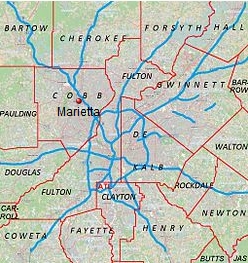



 BULLETIN: UPDATED 6:44 A.M. EDT (U.S.A.) Club Asteria, a Virginia-based company that claims to elevate people out of poverty globally by involving them in an MLM-like income and recruitment scheme, has acknowledged a revenue plunge and described it as dramatic.
 A Virginia-based company that trades on the name of the World Bank and claims to help lift some of the poorest people on earth out of poverty by involving them in an income and MLM-like recruitment scheme has suspended member cashouts, according to posts on Ponzi scheme and criminals’ forums.


