Tag: Richard Taft Johnson

  • SENIOR FRAUD CAVALCADE CONTINUES: Ponzi Schemer, 86, Pleads Guilty; Stephen J. Klos Ripped Off Fellow Senior Citizens, Prosecutors Say

    Stephen J. Klos, an 86-year-old church usher who sold elderly congregants in the Seattle area into a $3 million Ponzi scheme that began in 2004, has pleaded guilty to 10 counts of securities fraud, the office of King County Prosecuting Attorney Daniel T. Satterberg said.

    Klos “met several of victims at his church and told them that he would invest their money but used most of it to repay prior investors and for his personal benefit,” Satterberg’s office said. He faces between 51 and 68 months in prison when sentenced Dec. 28 by Judge Bruce Heller.

    Only four years short of his 90th birthday, Klos now joins a curiously long list of convicted or alleged Ponzi schemers and/or swindlers who were detected or charged after their 65th birthdays.

    Others on the list include Bernard Madoff (New York/Florida); Andy Bowdoin (Florida); Arthur Nadel (Florida/now deceased); Martin B. Feibish (Rhode Island); Richard Piccoli (New York); Anthony Lupas (Pennsylvania); John William “Jack” Cranney (Massachusetts); Pat Kiley (Minnesota); Richard Elkinson (Massachusetts); Edward May (Michigan); John F. Langford (Texas); Hans P. Seibt (Nevada); Louis J. Borstelmann (California); Gerald J. “Jerry” Berke (California/Canada); Richard Horace Mayfield (Colorado); Richard M. Hersch (California); Richard Taft Johnson (Michigan); Julia Ann Schmidt (Texas); Ronald Keith Owens (Texas); James Blackman Roberts (Arkansas); Larry Atkins (North Dakota); Maxwell B. Smith (New Jersey); Judith Zabalaoui (Louisiana); Arthur Ferdig (California).

    NOTE: The list above is incomplete.

  • California Man, 72, Sentenced To 110 Months For HYIP Rip-Off; Richard M. Hersch Also Ordered To Pay ‘At Least’ $9.2 Million In Restitution

    First, Richard M. Hersch, 72, told investors they’d earn up to 6 percent a week by plowing money into his company, All States ATM Inc.

    He then explained the company had “contracts” with major horse-racing tracks in California and elsewhere to operate Automated Teller Machines (ATMs) on the “back side” of the tracks.

    Ordinary horse-racing fans could not use the ATMs, according to Hersch, because the “backside” was off-limits to the general public and situated for the convenience of racetrack employees, horse owners, horse trainers and others — his own, highly profitable niche.

    Hersch then made the investments appear to be even more lucrative by explaining “the racetracks allowed him to operate a check-cashing or loan service on the back side of the track for the exclusive use of those with access to that area,” prosecutors said.

    To further disarm skeptical prospects, “Hersch claimed that he had 160 employees and hundreds of ATMs and that his company was in its eighth year of business,” prosecutors said.

    But the tracks Hersch said used his ATM and check-cashing business “reported having no contracts with him or All States ATM to provide financial services of any sort,” prosecutors said.

    Hersch was charged with mail fraud and structuring, and was arrested last year by the FBI and IRS. Investigators determined he had coaxed more than 150 people to invest about $25 million in his company.

    He pleaded guilty in November and was sentenced yesterday, acknowledging he operated an HYIP fraud and conspired with others to structure 15 transactions totaling $141,500 to evade currency-reporting requirements. Prosecutors said he and co-conspirators withdrew cash from a bank account in amounts between $9,000 and $9,500 because they knew that withdrawals of cash over $10,000 triggered the reporting requirements.

    U.S. District Judge John A. Houston sentenced Hersch to 110 months in federal prison and to pay “at least” $9.2 million in restitution.

    “[Hersch’s] sentencing should remind the public of the financial perils associated with high yield investment fraud scams,” said Keith Slotter, FBI special agent in charge.

    HYIP schemers will get caught, a veteran IRS investigators warned.

    “Currency-report information filed by banks and financial institutions provides a paper trail, or roadmap, for investigations of financial crimes and illegal activities, including tax evasion, embezzlement, and money laundering,” said Leslie P. DeMarco, special agent in charge of the IRS Criminal Investigation unit in the agency’s Los Angeles Field Office.

    “Individuals who deliberately break down cash withdrawals into amounts less that $10,000, so as not to trigger a bank’s reporting requirement, are committing a financial crime,” said DeMarco. “In this investigation, IRS special agents used their financial expertise to uncover Mr. Hersch’s intentionally structured cash withdrawals, designed to hide his investment fraud scheme.”

    U.S. Attorney Laura E. Duffy of the Southern District of California said Hersch’s sentence sent a message to financial fraudsters who are duping investors.

    “[The] sentence demonstrates our commitment to investigating and prosecuting those individuals who prey upon innocent victims in our community through fraudulent investment schemes,” Duffy said.

    Hersch now joins the ranks of Bernard Madoff, 71, (New York/Florida); Richard Piccoli, 83, (New York); Andy Bowdoin, 75, (Florida); Julia Ann Schmidt, 68, (Texas); Judith Zabalaoui, 71, (Louisiana); Arthur Nadel, 77, (Florida/NewYork); Ronald Keith Owens, 73, (Texas); James Blackman Roberts, 71, (Arkansas); Larry Atkins, 65, (North Dakota), Richard Taft Johnson, 67, (Michigan), Maxwell B. Smith, 69, (New Jersey) and others as senior citizens implicated in large financial frauds.

  • Senior Citizen Guilty In Michigan Ponzi Scheme; Feds Say Richard Taft Johnson Sold ‘Charitable’ Program To Fellow Seniors, Duping Them Into Ruin

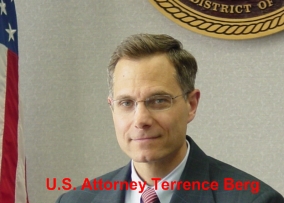
    U.S. Attorney Terrence Berg
    U.S. Attorney Terrence Berg

    Both state and federal prosecutors in Michigan have been attacking Ponzi schemers and affinity fraudsters. Yesterday the office of Michigan Attorney General Mike Cox charged three men with racketeering for their roles in an alleged time-share Ponzi scheme targeted at senior citizens.

    In a separate Michigan case, federal prosecutors have announced the guilty plea of Richard Taft Johnson, 67, of Orchard Lake. Johnson is a member of an ever-lengthening list of senior citizens implicated in Ponzi schemes. The list includes names such as Bernard Madoff, 71, (New York/Florida); Richard Piccoli, 83, (New York); Andy Bowdoin, 75, (Florida); Julia Ann Schmidt, 68, (Texas); Judith Zabalaoui, 71, (Louisiana); Arthur Nadel, 77, (Florida/NewYork); Ronald Keith Owens, 73, (Texas); James Blackman Roberts, 71, (Arkansas); and Larry Atkins, 65, (North Dakota).

    bowdoinmadoffnadel

    Johnson pleaded guilty to mail fraud for devising a Ponzi scheme known as the “American Charitable Program,” which led investors to believe “investments would benefit
    charitable organizations such as universities or other educational institutions,” prosecutors said.

    But the purported charitable program was a fraud that promised returns of 10 percent per quarter — and the fraud was magnified by bogus “periodic statements showing the purported increasing value of their investment accounts,” prosecutors said.

    “This was an insidious Ponzi scheme because investors were told it was a safe, secure investment that would ultimately help charities,” said U.S. Attorney Terrence Berg of the Eastern District of Michigan.

    “Like most Ponzi schemes, it went undetected for a number of years, allowing some investors to reap a profit on their investments, and encouraging others to invest,” Berg said.

    He added that Ponzi perpetrators often recruit others to spread the word about exciting investment programs, which later prove to be Ponzi schemes that cause embarrassment and ill-will among family and friends.

    “It can be very disturbing for a victim to discover that he has innocently caused friends or relatives financial ruin,” Berg said. “In the end, a number of the [Johnson] investors, some quite elderly, lost everything because their monies were used to keep the scheme going until the inevitable collapse.”

    The Johnson probe is ongoing, despite the plea. “In the course of this investigation, we will be attempting to help ascertain what, if anything, the victims’ might be able to salvage of their financial worth,” Berg said.

    Assisting in the probe are the FBI, the State of Michigan Office of Financial Insurance Regulation and the State of Florida Division of Insurance Fraud. Berg said the agencies have “worked very hard to investigate and compile the information about Mr. Johnson’s fraudulent activities.”

    Johnson faces up to 20 years in prison and a fine of up to $250,000. He conducted business in Bloomfield Hills, Mich., as Investor Planning Services.

    “As in all Ponzi schemes, Mr. Johnson would pay out earlier investors, or investors who demanded a return of their money, with newer investors’ monies,” prosecutors said. “But he also diverted significant funds to his personal use.”

    The Johnson scheme began to collapse in 2008.