Tag: SEC

  • WHEN PONZIS COLLIDE: Receiver’s Probe Into Commodities Online LLC ‘Severely Delayed And Impeded’ By ‘Noncooperation’; Federal Judge Orders James Clark Howard III And Sutton Capital LLC To Disgorge $1.45 Million; Firm That Listed AdSurfDaily Figure (And ‘Surf’s Up’ Mod) As ‘Director’ Sued Howard In 2010

    James Clark Howard III

    A federal judge in Florida has ordered a convicted narcotics and firearms felon who emerged as a central figure in a Ponzi scheme case after his release from prison to disgorge $1.45 million.

    The order, signed Aug. 23 by U.S. District Judge Patricia A. Seitz, applies to James Clark Howard III and Sutton Capital LLC.

    Howard, a co-managing member of Commodities Online LLC, “directed” that $1.3 million in investor funds from Commodities Online be wired to Sutton Capital, “his wholly owned limited liability company,” Seitz found.

    In the 1990s, Howard was sentenced to 57 months in federal prison on cocaine and weapons charges. He also was implicated last year in a separate fraud scheme targeting Haitian Americans.

    The SEC sued Commodities Online in March, alleging that the firm was selling unregistered securities and operating an international commodities fraud from South Florida.

    Seitz found that the $1.3 million transaction was recorded on the books of Commodities Online as a “loan” to Sutton, “even though no evidence has been found establishing a promissory note, interest rate or terms of repayment.”

    The $1.3 million transaction occurred on Feb. 9, 2010, Seitz found.

    On Feb. 18, 2010, Howard directed another $150,000 be transferred from Commodities Online to Sutton, Seitz found. She now has ordered Howard and Sutton to return the entire amount of $1.45 million from both transactions, saying they “remain in possession and control of these investor funds.”

    Separately, David S. Mandel, the court-appointed receiver in the Commodities Online case, said aspects of his investigation have been “severely delayed and impeded by the noncooperation of the majority of the former officers of the Defendants.”

    Although Commodities Online may own iron ore in Mexico, efforts to get at the truth have been hampered  “due to the current nature of business in Mexico, and in particular, the iron ore business, which at times can be unsafe, unreliable and uncertain,” Mandel said.

    In court filings, Mandel said that he has “received information that others have been purporting to act on the Defendants’ behalf in Mexico.” Mandel hired local counsel in Mexico, an attorney who is a citizen of Mexico and an international security firm to peel back layers of the onion and to protect receivership assets.

    A forensic accounting of Commodities Online and thousands of transactions is ongoing, Mandel said.

    One phase of the forensic accounting involved 9,500 transactions and 35 bank accounts “maintained at various financial institutions,” Mandel said.

    An updated analysis of records shows that Commodities Online gathered nearly $12 million from “insiders and related parties” between January 2010 and April 2011, and paid the insiders and related parties more than $20.2 million.

    All in all, the scheme gathered more than $35 million, according to the analysis.

    Howard was arrested by the Boca Raton Police Department in a separate scheme targeting Haitian Americans on March 5, 2010.

    About six months later — in September 2010 — he was sued by a Nevada company that listed former AdSurfDaily member and Surf’s Up moderator Terralynn Hoy as a director.

    The Nevada company — SSH2 Acquisitions Inc. — alleged that Howard was part of a Ponzi scheme that also involved Patricia Saa, Sutton Capital LLC and Rapallo Investment Group LLC.

    Howard and the defendants, according to the lawsuit, told SSH2 it was trading in commodities and “would produce profits of 40% per month or more, while not risking any of the invested funds.”

    In its lawsuit, SSH2 alleged that its dealings with Howard and the others began in “early 2009” and continued through March 2010.

    If SSH2?s assertions against Howard and the others are true, it means the transactions occurred during a period in which Hoy, later to emerge as an SSH2 director, also was moderating cheerleading forums for ASD and the AdViewGlobal autosurf.

    Surf’s Up became infamous for deleting commentary unflattering to ASD President Andy Bowdoin and links members left to outside sources of information. The forum mysteriously vanished in January 2010, after cheerleading for Bowdoin and ASD nonstop for more than a year.

    AdViewGlobal, which collapsed in June 2010, purported to operate from Uruguay and enjoy protection from U.S. regulators because of a purported “private association” structure. ASD was implicated by the U.S. Secret Service in August 2008 in an alleged $110 million Ponzi scheme. Bowdoin was arrested on charges of wire fraud, securities fraud and selling unregistered securities in December 2010.

    Former moderators of Surf’s Up, which unabashedly cheered for Bowdoin and received ASD’s official endorsement in November 2008, just days after a key court ruling in a civil-forfeiture case went against Bowdoin and ASD, largely have been silent since the January 2010 disappearance of Surf’s Up.

    It is not known if individual ASD members also invested money with Howard. What is known is that many ASD members did not skip a beat after the Secret Service moved against ASD in August 2008. Within days, some ASD members were promoting other autosurf schemes, HYIP schemes and cash-gifting schemes, positioning them as a way ASD members could make up their ASD losses.

    Hoy has not been accused of wrongdoing. Court filings and other records suggest that Hoy could have been conducting business with firms (ASD, Sutton and Rapallo) and individuals (Bowdoin, Howard and Saa) who were running separate Ponzi schemes involving at least $149 million and perhaps more.

    SSH2, with Hoy as a director, alleged that it was scammed by Howard, Sutton and Saa, and plowed$39 million into their Ponzi. The firm accused the defendants of selling unregistered securities and causing at least $19 million in damages. It specifically accused Howard and the other defendants of not revealing that Howard was a convicted felon.

    As a Surf’s Up moderator, however, Hoy presided over a forum that overlooked or pooh-pooed matters pertaining to the alleged ASD Ponzi, ASD’s alleged sale of unregistered securities to thousands of people internationally and Andy Bowdoin’s previous encounters with law enforcement in fraud cases.

    In October 2008, at the conclusion of an evidentiary hearing, Surf’s Up held an online party for Bowdoin, who’d been charged with felonies in an Alabama securities caper in the 1990s and avoided jail by agreeing to make restitution to investors he defrauded. The party was conducted during an active criminal investigation into Bowdoin’s conduct at ASD.

    A federal prosecutor was derided as “Gomer Pyle” on Surf’s Up. He also was described as a “goon” and a person who should be made to suffer in a medieval torture rack. Critics were described as “rats” and “maggots.”

    The party was conducted despite the fact the Secret Service had alleged that one of Bowdoin’s business partners had been implicated by the SEC in the 1990s in three prime-bank schemes.


  • BULLETIN: FLORIDA — AGAIN (UPDATE): James Risher Ponzi Scheme Used Pitchman Who Targeted Teachers, Retirees, Church Members, Golfers, SEC Says; Risher Had 5 Prior Criminal Convictions; Pitchman Daniel Joseph Sebastian Now Charged Civilly

    “[Y]ou invest in this fund and all of a sudden you start making more money than you’ve ever made in your life with your investors. And then all of a sudden you start making enough money where you don’t have to go to work . . . [a]t Safe Harbor, you could retire today, like right now. And I’m telling you, you get rid of the struggle.” — SEC,  quoting accused Ponzi pitchman Daniel Joseph Sebastian, Aug. 29, 2011

    BULLETIN: A Ponzi schemer arrested on criminal charges in June had the help of a pitchman who targeted senior citizens, church members, educators and golfers, the SEC said. The agency identified the pitchman as Daniel Joseph Sebastian of Celebration, Fla.

    Sebastian conducted business as “Safe Harbor,” and helped James D. Risher pull off a $22 million Ponzi scheme that affected more than 100 investors, the SEC said.

    Risher, 61, of Sanibel, Fla., was arrested on criminal charges by the U.S. Postal Inspection Service in June. He, too, now has been charged civilly by the SEC, which noted he had been charged criminally five times since 1992 in various schemes and had spent 11 of the past 21 years in jail.

    “Risher, who masqueraded as a highly successful equity trader, teamed up with Sebastian to tout sophisticated trading strategies they claimed would generate substantial profits for investors,” said Eric Bustillo, director of the SEC’s Miami Regional Office. “Instead, Risher and Sebastian used investors’ life savings and retirement nest eggs to line their own pockets.”

    The scheme also operated under the names of Safe Harbor Private Equity Fund, Managed Capital Fund and Preservation of Principal Fund, the SEC said.

    Risher had been arrested at least four times in Georgia, and at least once in Florida prior to the 2007 launch of the Safe Harbor scheme, the SEC said.

    Sebastian turned to old customers of his insurance business and recruited them into the Ponzi scheme, the SEC said.

    “From 2007 through July 2010, Sebastian solicited his former insurance customers, educators, retirees, and members of several churches in Florida,” the agency charged. “During the same time period, he also solicited investors in California, other states, and Canada. Sebastian persuaded his former customers to roll over the funds in their insurance and annuity products into the Fund. He told his customers the Fund would provide a higher rate of return than they could receive from the products he had previously sold them. At least one investor liquidated an annuity she had purchased from Sebastian and invested the proceeds in the Fund.”

    No registration statement was filed for any elements of the Safe Harbor scheme, the agency said.

    “Throughout the fraud, Sebastian also hosted numerous annual golf tournaments and other promotional events for investors, which Risher sometimes attended,” the agency charged. “At an investor event held on March 12 through 14, 2010 at an Orlando resort, Sebastian told investors in a speech, ‘[Y]ou invest in this fund and all of a sudden you start making more money than you’ve ever made in your life with your investors. And then all of a sudden you start making enough money where you don’t have to go to work . . . [a]t Safe Harbor, you could retire today, like right now. And I’m telling you, you get rid of the struggle.’”

    Read the SEC complaint.


  • UPDATE: CONSOB, Italy’s Securities Regulator, Issues New Order In Probe Related To Club Asteria; Findings And Effect Not Immediately Clear; Google Translation Software Calls CONSOB A ‘Bag’; Yahoo Calls Club A ‘Starfish’; PP Blog Awaits Official Government Translation

    Dear Readers,

    The PP Blog became aware last night that CONSOB, Italy’s equivalent of the U.S. Securities and Exchange Commission (SEC), had issued a new order on Monday in its investigation into certain claims made online in Italy about the purported Club Asteria business “opportunity.”

    Club Asteria has been widely promoted online as a “passive” investment program that provides a weekly return that projects to yearly gains in the hundreds of percentage points. The firm, which claims to be a revenue-sharing program, is based in Virginia. Its offer is targeted at the world’s poor.

    The CONSOB order, which addresses concerns first raised by the agency during the spring about how citizens of Italy were approached in online solicitations to join Club Asteria, was signed by CONSOB President Giuseppe Vegas on Aug. 22 and announced yesterday.

    The PP Blog has a copy of the order. What it does not have is a reliable translation from Italian to English.

    Italy first raised issues about Club Asteria in May. It is believed to be the first nation to have done so publicly, and Club Asteria may have sales affiliates in 150 or more countries worldwide. The Italian probe — coupled with claims about Club Asteria in other languages or in butchered or even highly polished, stylized English — led to questions about whether Club Asteria and tens of thousands of affiliates were selling unregistered securities on a global scale — with Club Asteria being the beneficiary of an unlawful offering.

    Because Google’s translation tool leaves a lot to be desired — and because the CONSOB order potentially affects thousands of Club Asteria members and was released in Italian — the PP Blog contacted CONSOB by email at 5:49 a.m. (EDT, U.S.A.) today to see if an official English translation was available and to clarify certain CONSOB findings. The Blog addressed CONSOB in English — and is uncertain if its email was received in Italy and understood.

    It’s easy to imagine an Italian reporter who did not speak English and needed the SEC to provide a document in Italian or an SEC employee to answer questions in Italian encountering the same information hurdles.

    At 1:08 p.m. (EDT, U.S.A.) today — approximately seven hours after asking CONSOB for assistance and lacking confidence that its email to CONSOB in Italy had been received and understood — the PP Blog contacted Italy’s U.S. Embassy in Washington by phone. The Blog asked the Embassy’s assistance in translating the new CONSOB order from Italian to English, and the Embassy provided an email address through which the Blog could submit a request for journalistic assistance through the Embassy. At 1:55 p.m. (EDT, U.S.A.), the Blog emailed the Embassy with the CONSOB order as it exists in Italian, and also supplied a link to the CONSOB webpage at which the agency’s order is published. The Blog is awaiting the Embassy’s response.

    An English translation by Google of the CONSOB order is available, but it is highly confusing, if not tortured. CONSOB, for instance, is described in the translation as “THE NATIONAL COMMISSION FOR THE SOCIETY AND THE BAG.” A translation available through Yahoo is no better; it refers to Club Asteria as “Club Starfish.”

    Club Asteria, which trades on the name of the World Bank and has blamed members for its PR problems and a freeze of its PayPal account, has not updated its news webpage since July 21. Members across the globe have been left in an information vacuum for weeks, while the firm directs attention to its glossy “e-Magazine” and asks members to “Imagine the Possibilities with Club Asteria.”

    The PP Blog hopes to publish a comprehensive report about CONSOB’s findings after it hears back from the Embassy.

    For now, the Blog is reporting that suspension orders against two websites CONSOB identified in May as Club Asteria troublespots apparently continue to be in effect and that the sites are serving PDFs in Italian of the Italian allegations.

    Posters on Ponzi scheme forums well-known to U.S. law enforcement claim that Club Asteria has more than 300,000 members globally — and Club Asteria sales pitches on the Ponzi forums and websites independent of the forums are almost incomprehensibly reckless.

    Some members have claimed that a monthly payment of $19.95 to Club Asteria produces a “passive” income of $20,800 a year. In other words, more or less pay Club Asteria a yearly total of $240 in 12 easy installments of $20 a month. Do nothing else unless you want to sponsor new members to make even more money. Receive  nearly $21,000 annually — forever.

    The offers are targeted at the world’s poor.

    Whether the impoverished people of the world made any meaningful money after becoming pitchmen for Club Asteria remains far from clear. What is clear — if the “I Got Paid” posts on Ponzi forums are reliable — is that well-known Ponzi pitchmen cleaned up by recruiting members for Club Asteria.

    In July 2010, the Financial Industry Regulatory Authority (FINRA) issued a warning about HYIP schemes popularized in web forums and through social-media outlets. FINRA called the HYIP sphere a “bizarre substratum of the Internet.”

    Just a month before, in June 2010, the United States and six other member-nations of the International Mass Marketing Fraud Working Group (IMMFWG) issued a warning about global marketing fraud.

    It is known that some promoters race from online scheme to online scheme.

    A photograph of Hank Needham, a Club Asteria principal, appears online in a 2008 sales pitch for the alleged $110 million AdSurfDaily Ponzi scheme. Like Club Asteria, ASD was based in the United States — and also was promoted on the Ponzi boards.

    ASD President Andy Bowdoin was arrested by the U.S. Secret Service in December 2010 after his indictment on felony charges of wire fraud, securities fraud and selling unregistered securities online.

  • UPDATE: HYIP Known As ‘Insectrio’ Has Collapsed; Website Of LibertyReserve- And PerfectMoney-Enabled Scheme Pushed On Ponzi Boards Goes Missing; Both Payment-Processing Firms Referenced In SEC’s Complaint Against Imperia Invest IBC

    The 'Insectrio' HYIP used the logos of the MoneyMakerGroup, TalkGold and DreamTeamMoney Ponzi forums in its sales pitch.

    UPDATE: (UPDATED 11:53 A.M. EDT (U.S.A.) RealScam.com is reporting that the website of a bizarre HYIP known as “Insectrio” will not resolve.

    As the PP Blog reported on May 27, Insectrio was emerging as a darling on the Ponzi boards. The purported “opportunity” even used a graphic showing the logos of TalkGold, MoneyMakerGroup and DreamTeamMoney in its vomitous sales pitch.

    Insectrio advertised an “Egg” plan purported to pay 103 percent after one day, a “Larva” plan purported to pay 120 percent after five days and other plans advertised to pay even more. It was enabled by the offshore processors LibertyReserve and PerfectMoney, both of which are listed in the SEC’s October 2010 complaint against Imperia Invest IBC as processors that allegedly gathered money for Imperia.

    Imperia was accused to stealing millions of dollars from deaf people. Its “program” also was promoted on the Ponzi boards.

    Efforts to popularize Insectrio on the Ponzi boards were beginning at roughly the same time the popularity of Club Asteria was waning on the fraud cesspits. Club Asteria targeted its offer to the world’s poor. It reportedly suspended payouts weeks ago, although some members of the Ponzi boards say they continue to get paid through AlertPay, a Canadian processor.

    Visit RealScam.com.

  • Recidivist Felon Robert Stinson Of ‘Life’s Good’ Pleads Guilty To 26-Count Ponzi Indictment, Faces Decades In Prison

    Robert Stinson Jr., the Philadelphia-area recidivist felon and securities swindler accused last year of stealing $17 million in a Ponzi scheme and wiring money to prevent it from being seized even as the FBI was conducting a raid, has pleaded guilty.
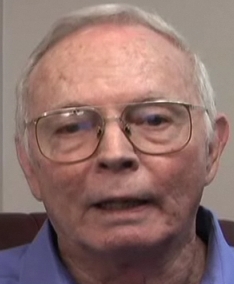

    Stinson, 56, of Berwyn, faces a maximum under federal sentencing guidelines of nearly 34 years in prison, federal prosecutors said. In his most recent scam, he pleaded guilty to nine counts of money laundering, five counts of wire fraud, four counts of mail fraud, three counts of filing false tax returns, two counts of obstruction of justice, two counts of making false statements to federal agents and one count of bank fraud.

    Investors in various entities under Stinson’s Life’s Food Inc. were wiped out, and Stinson stole $17 million, prosecutors said.

    In 1986, Stinson was convicted of wire fraud and larceny in U.S. Court in Delaware, according to records. In 1987, he was convicted of forgery and larceny in New Jersey state court. During the same year, he was convicted of mail fraud in U.S. District Court for the Eastern District of Pennsylvania.

    Meanwhile, in 1996, he was convicted of criminal conspiracy in state court in Pennsylvania. In 2001, he was convicted of bank fraud in U.S. District Court for the Eastern District of Pennsylvania.

    Stinson filed two bankruptcy petitions in 1999, one in October and another in December, according to records.

    Nine years earlier, in 1990, he was charged with fraud by the SEC. He was ordered to pay a judgment of $7,680, but the judgment remains unpaid, according to court filings.

  • ONLY ON THE INTERNET: Accused Huckster Andy Bowdoin’s Email ‘Blast’ To Raise 500K In Defense Funds May Begin Today; Recidivist Fraudster And Self-Described ‘Money Magnet’ Also Plans Facebook Appeal

    Accused Ponzi schemer Andy Bowdoin says he plans to open a Facebook fan page this weekend so AdSurfDaily members won't miss out on the opportunity to help him raise $500,000 to pay for his criminal defense, according to an email some ASD members received today.

    Federal prosecutors say Andy Bowdoin scammed investors in a securities swindle in the 1990s. They add that one of his partners in the autosurf trade was accused by the SEC in the 1990s of pitching a prime-bank swindle.

    Bowdoin, 76, was arrested in December on charges that he presided over an autosurf Ponzi scheme known as AdSurfDaily between 2006 and 2008. Among the allegations against Bowdoin was that the original iteration of ASD collapsed in a pile of Ponzi dust — and that Bowdoin simply started a new autosurf scheme to replace the collapsed one.

    After Bowdoin started his replacement fraud scheme in 2007, he then presided over efforts to start at least two additional autosurf fraud schemes. Those criminal efforts became hugely successful in 2008, sucking in at least $110 million, prosecutors said.

    Bowdoin, a self-described  “money magnet,” now is using a video pitch to raise $500,000 for his criminal defense. The accused con man now says an email “blast” to 77,000 ASD members he hopes will provide the funds to pay his lawyers will take place today after having been postponed last week.

    And Bowdoin, who once referred to the U.S. Secret Service and federal prosecutors as “Satan” and claimed God was on his side, says he will launch a Facebook fan page “THIS WEEKEND” to bolster his fundraising efforts, according to an email some ASD members received today.

    Some ASD members have referred to the Secret Service and prosecutors as “goons” and “Nazis.” Others circulated a prayer calling for Bowdoin’s accusers to be struck dead from the heavens.

    In 2008, a federal judge presiding over a civil-forefeiture case involving about $80 million in seized funds linked to ASD was described as “brain dead” if she ruled against the firm.

    After the judge issued a key ruling against against the company, she was described as the operator of a “Kangaroo Court” who was conspiring with another federal judge also said to be operating a “Kangaroo Court.”

    Bowdoin, though, blamed his losses in the civil case — which included orders of forfeiture totaling about $80 million — on a “single, lone” judge.

    He also blamed his original attorneys and prosecutors. Bowdoin’s fundraising video in which he blamed the judge was released on the Internet on July 26, four days after he made his most recent appearance before the judge.

    Although the video initially advertised a July 15 launch date, that launch date was postponed until July 20 — and then until July 26.

  • ASD ECHO CHAMBER? Bizarre Ponzi Case That Included Apparent ‘Sovereign Citizens’ And Crackpot Legal Theories Ends With Spectacular Total Of 465 Guilty Verdicts Against Final 2 Defendants

    UPDATED 7:57 P.M. EDT (U.S.A.) It featured a Ponzi huckster touting a can’t-miss earnings scheme in an Internet video. For good measure, it featured apparent “sovereign citizens,” crackpot claims that U.S. law did not apply to the scheme and incongruous claims that the scheme had passed muster with the SEC.

    It also included a failed bid to remove for alleged bias a federal judge presiding over both criminal and civil aspects of the case. Meanwhile, it featured a failed bid to hamstring law enforcement’s efforts to probe a large fraud scheme through assertions that investigators would suffer astronomical financial penalties in court.

    At the same time, it featured claims from supporters that a wrongfully accused promoter-in-chief actually was an astute businessman who’d found a way to provide a legitimate return of 30 percent a month and suggestions that the investigating agents simply were too thick-headed to see the beauty of the computerized business model.

    But it was not the AdSurfDaily autosurf Ponzi case, which has featured similar claims.

    Rather, it was the Forex Ponzi scheme case of Ronald Wade Smith Jr., 36, and Safeguard 30/30 Investment Club — and it has resulted in straight-line wins for federal prosecutors in the Western District of Virginia, including the return last week of a whopping 465 guilty verdicts against Smith’s wife and a fellow promoter.

    Ronald Smith, who came out of the gate loudly protesting the government’s actions, ended up pleading guilty to more than 240 counts of wire fraud, commodities fraud and conspiracy. The guilty pleas followed an earlier claim by Smith that he’d trademarked his name, an apparent bid to stifle scrutiny and chill investigators.

    Any federal agent who used his name in a court document would owe him $50 million for each instance his name appeared, Smith once claimed, according to court filings.

    Smith, according to court filings, also claimed that he had to personally authorize any civil or criminal prosecution against him and that Chief U.S. District Judge James P. Jones had no “authority over him because ‘the Court has authority based on the Constitution’ and he ‘was not party to the signature of the Constitution; therefore, the Constitution doesn’t apply to me unless I choose to sign it.”

    Smith’s wife, Angela Allison Duty Smith, 35, of Davenport, Va., was fund guilty Aug. 4 of 210 counts of wire fraud, 23 counts of money laundering, one count of commodities fraud and one count of conspiracy to commit wire fraud.

    Terrance Keith Cunningham, 39, of Alpharetta, Ga., was found guilty of 210 counts of wire fraud, 17 counts of money laundering, one count of obstruction, one count of commodities fraud and one count of conspiracy to commit wire fraud.

    The verdicts were returned after a nine-day jury trial.

    During the early phase of the criminal case, Ronald Smith’s father-in-law, Charles Duty, testified on Smith’s behalf despite the fact he had given his life savings to Smith and the money could not be accounted for, according to court records.

    Duty, according to court records, testified that “he was confident Smith had properly invested his money and that he believed Smith’s promise of a 30 percent return every 30 days.”

    Prosecutors moved to have Ronald Smith detained pending trial as a flight risk, but Duty said he put up his real estate as security if his son-in-law were freed. Prosecutors also asked that Ronald Smith he subjected to a competency exam. Smith ultimately was ruled competent to stand trial.

    His wife, who joined her father in testifying on Smith’s behalf after Smith claimed he had a personal net worth of $28 billion and owned a company known as Homer Securities that was worth $4 trillion, also joined with her husband in asserting that U.S. law did not apply to the scheme.

    “Both Duty and Angela Smith appear to have fully accepted the defendant’s outlandish theories and I believe they are substantially under the defendant’s control,” Jones ruled in April 2010.

    Like her husband, Angela Smith was charged criminally.

    “This case demonstrates our commitment to prosecute those who prey upon investors with false promises of unreasonably high rates of return,” said U.S. Attorney Timothy J. Heaphy. “While we will continue to identify and apprehend individuals who make these bogus claims, investors need to be vigilant and carefully scrutinize the promises made by individuals seeking to invest their money. The old adage applies: if it sounds too good to be true, it probably is.”

    Cunningham was a pitchman who recruited Safeguard 30/30 investors, according to court filings.

    All in all, investors lost about $1 million in the caper, prosecutors said.

    Cunningham and both Smiths lied about why returns were not being paid to investors, prosecutors said.

    See earlier story.

  • BULLETIN: Judge Finds That Purported Forex ‘Experts’ Used Bogus Website, Former High School Coaches And J.C. Penney Sales Clerks In Scheme That Funneled Millions To Ponzi Schemer Now Jailed With Bernard Madoff

    EDITOR’S NOTE: Both the CFTC and SEC have encountered incredibly elaborate fraud schemes — some with elements that only can be described as bizarre and deeply disturbing. The story below is based on  a fraud case brought by the CFTC against Gary D. Martin and Brenda K. Martin of St. Augustine, Fla. The Martins are husband and wife. Their company, Queen Shoals Consultants LLC, also was named in the March 2011 complaint. The complaint was filed in the Western District of North Carolina.
    The CFTC now has obtained a consent order against the defendants. Chief U.S. District Judge Robert J. Conrad Jr. presided over the case. In issuing the uncontested order, Conrad highlighted testimony by Gary Martin. Martin’s testimony and the fact set against him and his co-defendants was disturbing in several ways. The PP Blog previously has written about “fraud creep” on the Internet, and the Martin/Queen Shoals case provides another compelling example of viral larceny that traded in part on religion and devastated senior citizens . . .

    A Florida couple scammed investors in an elaborate Forex and commodities swindle in which they posed as “experts” to recruit customers while funneling $22 million to a criminal scammer now serving a 22-year prison sentence in the same North Carolina facility that houses Bernard Madoff.

    Among the alarming consent findings by Chief U.S. District Judge Robert J. Conrad Jr. against Gary D. Martin and his wife Brenda K. Martin were that they used the Internet and pitchmen who had minimal or no trading credentials to fuel a fraud turbine that put money in their pockets as well as the pocket of Ponzi schemer Sidney S. Hanson.

    Hanson controlled a similarly named entity known as Queen Shoals LLC and was running a $33 million Ponzi scheme that targeted senior citizens and people of faith by using QSC and other entities as feeders, according to court filings.

    In March 2011, Hanson, 63, was sentenced to 22 years in federal prison. He is listed as an inmate at the Butner Federal Correctional Complex in Butner, N.C. The Martins and QSC drove $22 million to the Hanson scheme, receiving referral fees of up to 5 percent while maintaining the illusion that legitimate commerce was taking place, according to court filings.

    Said Noth Carolina Secretary of State Elaine F. Marshall upon Hanson’s sentencing, “What made this case even more sickening was that the scam was crafted to appeal to victims through their deeply held religious beliefs.”

    Through a process that remains unclear, the Martins and QSC managed to recruit at least 53 “consultants” to pitch their scheme, according to Conrad’s ruling.

    “Although the Martins represented via the QSC website that ‘[our consultants have a vast background in financial services … ,’ Martin admitted that this representation was false,” Conrad wrote. “Of the 53 known QSC consultants, only 8 to 10 had taken a four day course to become ‘certified estate planners, but even these consultants had no other background in financial services. None had any experience trading forex. Martin admitted that a number of the QSC consultants represented to customers as possessing a ‘vast background in financial services’ were actually former high school coaches, J. C. Penney sales clerks, or insurance salesmen . . .”

    The ruling makes in clear that, not only were unqualified reps acting as QSC pitchmen, the QSC scheme was a fraud itself — one that was enabling an even larger fraud operated by Hanson.

    “All of the representations concerning the Defendants’ alleged experience and expertise in trading forex were false,” Conrad ruled. “Martin admitted in his testimony under oath as the corporate designee of QSC that, contrary to the Defendants’ in-person and website representations to prospective and actual customers, he and his wife had no training or experience in buying or selling foreign currency, commodity futures contracts, options on commodity futures contracts, or any other financial instrument.”

    Promises of “guaranteed” annual earnings of between 8 percent and 24 percent were used by the Martins to lure customers as part of the fraud, Conrad ruled.

    Fancy terminology such as “non-depletion,” “leveraged” trading and “proprietary trading practices” also were part of the fraud, according to court filings.

    Customers also were told that “no less than 18 different profit centers” existed and that the purported profit centers “allowed the creation of the profits claimed to be achieved by the Defendants,” Conrad ruled.

    “Indeed, the website touted that all customer funds were ‘immediately placed into our approximate (sic) 60 sub accounts’ and that the forex accounts traded by the Defendants were ‘profit generating,’” Conrad ruled.

    But “[a]ll of the representations concerning trading and guaranteed profits were false,” Conrad ruled.

    “[Gary] Martin admitted under oath that the Defendants never engaged in any forex trading on behalf of customers,” Conrad ruled. “In fact, Martin admitted that the Defendants never engaged in any type of trading or investing with customer funds. There were no forex accounts, gold accounts, silver accounts, or ’60 sub accounts.’

    “All of the Martins’ representations regarding ‘profitable accounts’ were false,” Conrad ruled. “There was no ‘leveraging’ on behalf of customers, no ‘profit centers,’ and, because there was no trading, there were no profits. Instead, the Martins simply turned over customer funds to Sidney S. Hanson . . . in return for a payment of approximately $1.44 million Martin described in his testimony as a ‘referral’ fee.”

    Read earlier story.

    Read the consent order.

  • URGENT >> BULLETIN >> MOVING: Judge Declares Mantria Corp. A ‘Smoke And Mirrors’ Ponzi Scheme, Says Troy Wragg And Amanda Knorr-Led Firm Acted With ‘Sociopathic Greed’; Defendants ‘Shamelessly’ Raised $54.5 Million Through ‘Blatant Lies’

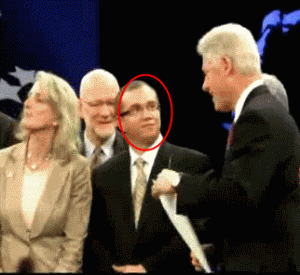
    Screen shot: Troy Wragg, whom the SEC said was a manager at a janitorial company before becoming CEO of Mantria Corp., next to President Clinton at the annual meeting on the Clinton Global Initiative in New York on Sept. 25, 2009.

    URGENT >> BULLETIN >> MOVING: Using direct, no-nonsense language, U.S. District Judge Christine M. Arguello has ruled Mantria Corp. a Ponzi scheme that operated with “sociopathic greed” to defraud investors of millions of dollars.

    Some investors were encouraged to drain equity in their homes to invest with Mantria, according to the ruling.

    The ruling was a straight-line win for the SEC, which charged the firm, its principals and chief pitchman in November 2009 amid allegations that Mantria had orchestrated a colossal fraud targeted at people interested in “green” energy and protecting the environment. Mantria executives Troy Wragg and Amanda Knorr were charged in the caper, as was pitchman Wayde McKelvy of an entity known as “Speed of Wealth LLC.”

    Arguello found that Mantria had scammed more than $54.5 million “by egregiously, recklessly, knowingly, and shamelessly perpetrating a fraudulent scheme” that used “misrepresentations, omissions, and blatant lies to induce unsuspecting and unwitting victim investors to liquidate the equity in their homes and take out bank loans to invest in Defendants’ scheme, which was nothing more than smoke and mirrors.”

    The judge’s ruling specifically points to internal Mantria emails uncovered by the SEC during the probe.

    One email from Wragg to McKelvy read, “Mantria Speed of Wealth = MSOW = Many Souls Owe Wayde.” Another from McKelvy to Wragg allegedly touting seminar registrations and a new crop of suckers read, “110 registered for tonight 75% names I don’t recognize. Let’s blow them away my brother!” An email attributed to Knorr read, “Let’s just make some f*****g money.”

    Mantria traded in part on the name of former President Bill Clinton, who once presented Wragg an award for commitment to the environment. Prospective investors were shown a video that included footage of Clinton and other famous politicians and business figures.

    Fraud schemes often spread virally by planting the seed that famous people endorse the “opportunities” when they do not. In fraud case case after fraud case, celebrity endorsements, which are used to disarm skeptics and create positive feelings, have been manufactured out of wholecloth.

    In the alleged AdSurfDaily Ponzi scheme, for instance, the U.S. Secret Service said promoters claimed that ASD President Andy Bowdoin had received an important award from then-President George W. Bush. The “award” actually was a memento for campaign donations to the National Republican Congressional Committee, according to court filings.

    The Secret Service is known to have seized a significant volume of email during the ASD probe. Some of it has been described in court filings as incriminating to Bowdoin.

    Reporters who emailed McKelvy for comment after the SEC brought it charges against Mantria and Speed of Wealth received invitations to join the Trump Network multilevel-marketing opportunity.

    “YOU MUST START YOUR OWN BUSINESS Renee!” McKelvy advised a reporter in one email, according to the Denver Business Journal. “What You Have Been Taught About Building Wealth is DEAD WRONG!”

    Read the Mantria ruling on Leagle.com.

  • UPDATE: CenturionWealthCircle, ‘Program’ Pushed By Club Asteria Cheerleaders On The Ponzi Boards, May Be Trying To Address Ponzi Collapse By Implementing ‘Feeder’ Ponzi; ASD Tried The Same Thing, Only With ‘Autosurfs,’ Court Filings Say

    CenturionWealthCircle (CWC) appears to be moving from the ridiculous to the absurd, fueled in no small measure by serial, wink-nod scammers on the Ponzi boards. Members of Club Asteria, an “opportunity” that suspended cashouts weeks ago amid reports its PayPal account had been frozen, were among CWC’s early cheerleaders.

    Club Asteria promoters also have been linked to Florida-based autosurf purveyor AdSurfDaily. ASD President Andy Bowdoin was arrested in December on charges of wire fraud, securities fraud and selling unregistered securities. He potentially faces decades in prison, if convicted.

    Bowdoin now is seeking to raise $500,000 to pay for his criminal defense, according to a video featuring Bowdoin released last month.

    CWC began to emerge as a Ponzi darling in mid- to late June, after Club Asteria’s problems had become known. By late July, however, CWC’s website appears to have been suspended for spamming — and the site disappeared. The site appears to have switched servers, even as members were complaining about low or absent payouts.

    In an apparent bid to re-plumb a collapsed Ponzi that already had been the subject of spam complaints, CWC now appears ready to suck up more cash by implementing a “feeder” program that at least one Club Asteria cheerleader (manolo) is describing on the TalkGold Ponzi forum as a “Mini cycler” or “The Tornado.”

    Among other things, manolo claims that “more exciting updates are coming on top of the above news.”

    Various incongruities dot various posts about CWC on both TalkGold and the MoneyMakerGroup Ponzi forums, where some posters have declared in public that CWC is in need of new money to survive.

    CWC has not said whether it is confident that its income stream is not polluted with proceeds from various Ponzi schemes. The nature of the cycler business itself is to recycle money from one group of members to another. One of the allegations against ASD was that it was a classic Ponzi scheme that recycled funds.

    These words (see next paragraph) appear in a February 2009 affidavit originally filed under seal by the U.S. Secret Service in the ASD Ponzi scheme forfeiture case. (NOTE: The document identifies certain ASD promoters and was used to seize their ASD-related funds.)

    “Based on his experience with 12daily Pro, and his review of the SEC’s filings against it, Bowdoin knew that a paid auto-surf program that promised returns of that magnitude and recycled (emphasis added) member funds was a business model that was both unsustainable and illegal. He also knew that selling an unregistered investment opportunity to thousands of investors was illegal. Nevertheless, after the collapse of 12daily Pro, Bowdoin agreed with his 12daily Pro sponsor to start a similar autosurf program. Both individuals were aware that, before its collapse, 12daily Pro had taken in millions of dollars from its members.”

    Among the other allegations against ASD is that it formed a new autosurf Ponzi to address a collapsed, old autosurf Ponzi — and later launched more autosurf Ponzis to sustain the deception that legitimate commerce was under way.

    CWC appears to be doing the same thing — only with cyclers, as opposed to autosurfs.

  • URGENT >> BULLETIN >> MOVING: Former Major League Baseball All-Star Doug DeCinces Charged With Insider Trading; Attorney, Physical Therapist And Businessman Who Knew Longtime Third Baseman Charged In Same Case

    URGENT >> BULLETIN >> MOVING: Former Major League Baseball star Doug DeCinces, who threw out the honorary first pitch last night at a game between the Los Angeles Angels of Anaheim and the Minnesota Twins, today was charged with insider trading by the SEC.

    Also charged in the civil case were attorney Fred Scott Jackson, 65, of Newport Beach, Calif.; Joseph J. Donohue, 49, a physical therapist who resides in Trabuco Canyon, Calif.; and Roger A. Wittenbach, 69, a businessman in Lutherville- Timonium, Md.

    DeCinces, a third baseman who retired from the big leagues in 1987, spent 15 seasons in the majors, mostly for the Baltimore Orioles. He was an American League All-Star in 1983, and hit 237 career homers. He also played for the Angels and the St. Louis Cardinals, driving home nearly 900 runs during the course of his long and successful baseball career.

    But the SEC said today that DeCinces, 60, began to drive home illegal profits from insider trading when he came into possession of material, nonpublic information that Abbott Laboratories Inc. was acquiring Advanced Medical Optics Inc. through a tender offer in 2008.

    DeCinces shared the information with the other charged defendants, putting each of them in position to profit illegally, the SEC charged. DeCinces bought 83,700 shares of Advanced Medical ahead of the acquisition news, and allegedly “sold all of his shares for $1.2 million in profits.”

    “Time and again, we see reputable people engaging in insider trading and risking their good names in order to enrich themselves and those around them,” said Daniel M. Hawke, chief of the SEC Division of Enforcement’s Market Abuse Unit and director of the Philadelphia Regional Office. “People need to understand that we are watching for suspicious trading activity, and they will pay a heavy price when we catch them insider trading.”

    Donohue made $75,570 on the illegal tip, while Jackson made $140,259, the SEC charged. Meanwhile, Wittenbach made $201,692. After Wittenbach told his sister to buy the stock, she made $13,214, the SEC said. The sister was not charged.

    DeCinces agreed to settle the case for $2.5 million, without admitting or denying the allegations. The other defendants also settled without admitting or denying.

    Donohue agreed to pay disgorgement of $75,570 and a penalty of $37,785, while Jackson agreed to pay disgorgement of $140,259, prejudgment interest of $12,508 and a penalty of $140,259.

    At the same time, Wittenbach agreed to pay disgorgement of $201,692, prejudgment interest of $5,768, and a penalty of $214,906.

    Jackson bought 8,500 shares of Advanced Medical with a handheld device while having breakfast with DeCinces, the SEC said.