Tag: SEC

  • OFFICIALS: Ponzi Schemes, Investment Fraud Have Led To Staggering Losses In Utah; Hundreds Of Potential Perpetrators Identified

    UPDATED 8:38 P.M. EDT (U.S.A.) Recent Ponzi schemes and cases of investment fraud have cost Utah residents an estimated $1.4 billion, the FBI said today.
    About 370 investigative “subjects” — defined as “potential perpetrators” in current cases — have been identified, and the agency and its law-enforcement partners have embarked on a public awareness and education campaign aimed at keeping Utahns safe from scammers.

    About 4,400 people have been affected by investment-fraud schemes in the state, the FBI said. The education campaign includes billboards and public-service messages.

    Under the umbrella of the Utah Securities Fraud Task Force, the FBI and its partners — including the SEC, the IRS, the U.S. Postal Inspection Service, the Utah Department of Commerce’s Division of Securities, the Utah County Attorney’s Office, the United States Attorney’s Office for the District of Utah and the Utah Attorney General’s Office — have produced a video that encourages viewers to be aware that schemers may target them based on their religious affiliation or interests.

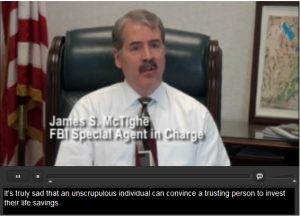
    “Affinity fraud is when someone you know — for example a church member, a coworker, or a friendd — takes advantage of you in an investment fraud scheme,” said James S. McTighe, FBI special agent in charge.

    Con artists have been known to deliberately target members of the Church of Jesus Christ of Latter-Day Saints, the FBI said.

    No group of believers — and no group of people who share a common bond — is immune to the cunning of expert con men, the FBI added.

    An investor featured in the educational video said her experience of being duped can serve as a warning to others:

    “He was a religious man, so he says, and he really, he really put on the ‘You know I am so guided by the spirit’, and ‘I know I am here to help you’, and ‘just trust me,’” the woman said.

    Nothing about a Ponzi scheme is good news, warned the SEC’s top official in Salt Lake City.

    “Ponzi schemes always collapse eventually and it’s typically because you run out of newer investors,” said Ken Israel.

    How do fraudsters profit from a Ponzi scheme?

    “The hallmark of the Ponzi scheme is that you use money from new investors to pay off your old investors and of course put a bunch in your pocket at the same time,” said Keith Woodwell, director of the Utah Division of Securities.

    Officials warned the public to be on the look out for “signs of trouble”:

    • The investment offer is unsolicited.
    • It sounds too good to be true.
    • You’re promised big monthly or yearly returns with little or no risk.
    • You’re asked to keep the investment offer secret.
    • The promoter cannot answer specific questions or provide you with written financial documentation.
    • Slick websites and glossy literature can be deceiving, and also be suspicious of documentation that looks unprofessionally produced.
    • The promoter won’t give you time to research the investment.
    • You are told you are one of the lucky few allowed in on the investment.
    • You are required to bring in more investors.
    • The salesperson is not licensed or the product is not registered.

    “Con artists who run Ponzi schemes often promise big financial returns and may tell potential investors they operate programs that can sound impressive,” the FBI said. The agency advised investors to do their homework and be skeptical of pitches for programs such as these:

    • Foreign Exchange Currency Trading.
    • Prime Bank Investment.
    • Commodities Investments.
    • Real Estate Investments.

    “Research before you invest, the FBI warned, recommending these resources for Utah residents:

    Get educated for free at the June 30 “Fraud College” at Utah Valley University in Orem

    Watch the Task Force video.

    Get more information from the FBI:

    NOTE: This story has been republished at a URL that is different than its original URL. Although this post reflects a date of June 13, it is not the original publication date. Click here to read why.

  • BULLETIN: Yet Another Florida Ponzi Scheme; SEC Accuses Luis Felipe Perez Of Operating $40 Million Fraud Backed By Fake Diamonds And Bogus ‘Pawn Shops’

    EDITOR’S NOTE: Here’s one for your Bubba Blue notebook on the various ways to have a Ponzi scheme, as opposed to shrimp.

    UPDATED 5:50 P.M. EDT (U.S.A.) A Miami man has been charged by the SEC with gathering $40 million in a Ponzi scheme, pocketing $6 million for himself and telling investors they were helping him finance his Florida jewelry businesses and pawn shops in New York.

    Investors believed their money was safe because it was backed by the man’s jewelry operations, diamonds and life insurance, the SEC said.

    The trouble with the claims of Luis Felipe Perez, according to the SEC, was that he “had no dealings with pawn shops and never provided financing to them.”

    UPDATE 5:50 P.M: Perez also has been charged criminally by federal prosecutors with six counts of securities fraud, after a probe by the U.S. Secret Service and U.S. Immigration and Customs Enforcement, according to U.S. Attorney Wifredo A. Ferrer of the Southern District of Florida.

    The criminal case is part of an ongoing series of actions by the interagency Financial Fraud Enforcement Task Force, which President Obama established in November 2009, according to Ferrer’s office.

    At the same time, the SEC said, two “purported” jewelry businesses owned by Perez — Lucky Star Diamonds Inc. and Luis Felipe Jewelry Design Corp. — “did not generate sufficient revenue to pay investors’ principal and interest payments.”

    Clients did not know that “his primary source of money to pay investor returns was from new investors,” the SEC said.

    Although Perez said his offering was backed by “diamonds” in a bank safety-deposit box, the purported diamonds in the box “were fake,” the SEC said.

    Meanwhile, investors’ funds were not protected by a life-insurance policy as Perez had claimed because he had “defaulted on the policy premium” and allowed it to lapse, the SEC said.

    “Perez created an aura of success around him to lure old and new acquaintances into investing substantial sums of money,” said John C. Mattimore, associate regional director of the SEC’s Miami Regional Office. “Behind the luster of diamonds and jewelry, Perez told outright lies and made promises he couldn’t possibly keep.”

    While investors were imagining “guaranteed annual returns of 18 percent to 120 percent through monthly interest payments,” the SEC said, Perez spent $3.2 million of their money on a home, $1 million on jewelry for himself and his wife, $400,000 to lease luxury cars, $300,000 on clothing for his wife, $300,000 for travel by private jet and $100,000 on artwork.

    In addition, Perez paid himself a salary of $250,000, gave away more than $1 million to family members and made $100,000 in political contributions, the SEC said.

    The scheme collapsed in June 2009, when Perez “was no longer able to recruit new investors,” the SEC said.

    Because the scheme largely targeted Hispanics, it also had an element of affinity fraud, the SEC said. About 35 investors were affected.

    The U.S. Secret Service, U.S. Immigration and Customs Enforcement and the Miami Police Department assisted in the probe, the SEC said.

  • Wayne McLeod Becomes Subject Of FBI Probe; Agency Asks Victims, Witnesses To Come Forward

    EDITOR’S NOTE: This story originally was published June 30. The PP Blog later encountered a database problem, which caused the site to go down and resulted in the temporary loss of some data. The data now has been retrieved.

    The FBI in Jacksonville has opened a probe into Kenneth “Wayne” McLeod, the Florida man who appears to have committed suicide last week when his alleged $34 million Ponzi scheme was exposed by the SEC.

    In a statement on its website, the FBI confirmed an investigation was under way and asked victims and witnesses to come forward.

    “Victims and other individuals with knowledge of FEBG are encouraged to call the FBI’s Jacksonville Field Office at (904) 248-7000 or to contact us via e-mail at Jacksonville@ic.fbi.gov and include “FEBG” in the e-mail subject line,” the agency said.

    Individuals are asked to provide the following:

    1. Their full name, address, and contact information.
    2. Their point of contact at Federal Employee Benefits Group (FEBG), McLeod’s company, and how they learned of the company and the investment opportunity.
    3. Their understanding of the terms of their investment(s).
    4. The total dollar amount of their investment(s).
    5. A description of any records they have in their possession that confirm their investment(s) — for example, statements, correspondence, etc.

    “Clients of FEBG should be aware that not all of the firm’s investments are at risk,” the FBI said. “However, individuals who invested in the ‘FEBG Bond Fund’ or ‘FEBG Special Fund’ may be victims of investment fraud and are welcome to contact the FBI.”

    McLeod was 48 when he died June 22. The SEC said his Jacksonville company was paid “up to” $15,000 by government agencies for seminars conducted by McLeod.

    The SEC alleged last week that McLeod was operating a Ponzi scheme dating back to at least 1988. The scheme was alleged to have gathered “at least” $34 million.

    McLeod’s company conducted seminars at various federal agencies, and also used the Federal Law Enforcement Training Center (FLETC) in Glynco, Ga., as a seminar outlet, according to the firm’s website.

    FLETC is operated by the Department of Homeland Security and serves as an interagency law-enforcement training organization for 88 federal agencies.

    If the company’s seminar schedule is accurate, FEBG completed a seminar for U.S. Immigration and Custom Enforcement (ICE) at the FLETC facility in Georgia June 8 — 14 days prior to McLeod’s death. Another ICE seminar was listed for July 2 at the same FLETC facility.

    Seminars for the Federal Air Marshals Service (FAMS) were scheduled July 7-9 in Miami. Dual seminars were scheduled for July 21 — one at the Georgia FLETC facility for ICE, and another in San Antonio for “SSA – OIG,” which stands for Social Security Administration, Office of the Inspector General.

    Seminar schedules dating back to 2006 appear on the site, featuring names such as the FBI, WIFLE (Women in Federal Law Enforcement), the DEA, the IRS, the U.S. Census Bureau, USSS (United States Secret Service), the U.S. Forest Service, USPS (United States Postal Service), ATF (the Bureau of Alcohol, Tobacco, Firearms and Explosives), NAADHS (National Association of African-Americans in the Department of Homeland Security, US Bankruptcy Court and US District Court, the Federal Public Defenders Office, the National Park Service, the US Fish & Wildlife Service, NABNA (National Association of Black Narcotics Agents), DCIS (Defense Criminal Investigative Service), NCIS (Naval Criminal Investigative Service) and others.

    It was not immediately clear if members of each of the agencies or employee associations invested in the alleged scheme. Also unclear was the total exposure of investors to losses.

  • REQUIEM FOR THE FORUM PIMPS? Court Documents In Legisi Case Reference Secret Service, MoneyMakerGroup Ponzi Forum; SEC Has Postings From Legisi’s ‘Private’ Forum, Too

    This grainy likeness of Legisi President Gregory McKnight is part of a PDF exhibit of evidence in the SEC's Ponzi case against the firm. This particular exhibit was gleaned on May 7, 2007, about 10 days prior to the entries in the case of undercover agents from the U.S. Secret Service and the Michigan Office of Financial and Insurance Regulation, according to court filings.

    HYIP or autosurf Ponzi promoter? Player? Forum “expert?” Moderator? Cheerleader?

    Get ready for a surprise: Your downline perhaps already has identified you as a pimp or even one of the masterminds.

    If your plan is to continue to promote the programs on the Ponzi forums and though emails, you should know that things could be occurring behind the scenes that could put you four-square at the center of investigations. Not all HYIP and autosurf players are crooked. Not all of them understand the wink-nod nature of the HYIP and autosurf trades. In other words, they aren’t a crook or pimp like you and can’t be relied upon not to implicate you. They aren’t playing your game.

    You, on the other hand, are a veteran pusher of Ponzi poison and perhaps a tax schemer who recommended yet another pig and painted it yet again with lipstick. Your victims very well may come to see themselves as your marks, as their knowledge of this shadowy and insidious business grows. Some of them will talk. Some of them have talked.

    It’s now clear from court filings that some of them even are making handwritten notes and/or printing out emails and forum conversations — even if the forums purportedly are “private.”

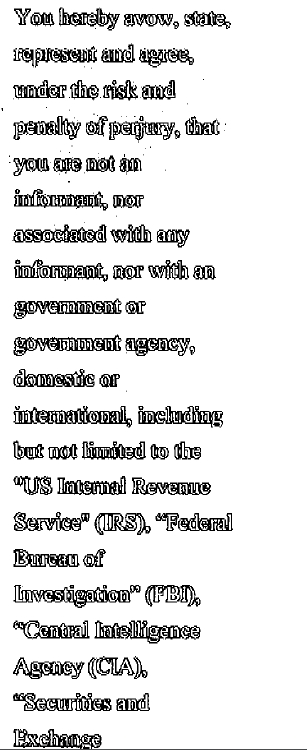
    And, speaking of “private,” how crazy are you going to look — and how vulnerable to prosecution are you going to be — if you happen to be pitching a purported “offshore” program that requires a loyalty oath and forces members to swear they aren’t government informants or agents?

    Just agreeing to such bizarre terms potentially makes you a co-conspirator.

    Here’s how silly you could end up looking later as you try to impress forum mates today with your “insider” knowledge and claims of due diligence. The reality you cannot deny is that an undercover investigation already could be under way into the program you’re pushing.

    While you’re singing the praises of a company and talking about its purported expert management,  you could be revealing yourself as just another willfully blind pimp while demonstrating your actual lack of knowledge about the programs you’re pushing.

    Have you connected the dots yet? If not, here they are — in a nutshell: Your lack of knowledge can be construed as evidence of your guilt. You’re pushing programs you know virtually nothing about except what you’ve been told by people who rely on you to be the human equivalent of a trained seal who performs for a treat. You are not registered to sell securities, and you very likely are implicating yourself in a criminal wire-fraud, money-laundering and tax-evasion scheme.

    There you are, pitching a program, professing your knowledge while perhaps even dissing the doubters, and you don’t even know the program you’re cheering already is the subject of an undercover investigation.

    There’s a good chance the boss knows, though. He perhaps is in a secret panic. If word of the depths of the investigation leaks or the names of the agencies leak, well, the money stops streaming in. Maybe he didn’t tell you because he was too busy trying to figure out how to make it all go away when money was being seized in other investigations — and those seizures were leading to the choking of cash conduits for the programs you are pushing while purporting to be an expert.

    Paperwork later could reveal you weren’t an insider at all (or at least not enough of one actually to have the ear of the boss), that you were just another commission-grubbing or “earnings”-hungry liar in a sea of commission-grubbing and earnings-hungry liars. You’d say anything for a commission, which is why you’re now the potential target of a criminal prosecution and an accompanying lawsuit filed by victims. You have criminal and civil exposure. At the very least, you could become an unindicted co-conspirator, which means the government holds the hammer and sees you as a potentially useful witness.

    You never imagined yourself singing for your supper, of course. You were too busy picking the pockets of friends, neighbors and people you didn’t even know. If you get a break and become an unindicted co-conspirator, here’s what the jury will think as you’re singing for your supper: trained seal. Performed on cue for the schemers. Now batting the government’s ball to stay out of prison.

    Jurors contemplating how you got yourself in this box actually will be willing to give an actual trained seal more credit. Seals perform for treats because they don’t know any better; you performed for money and did know better — and you likely knew the money was stolen to begin with.

    Indeed, the marks who relied on your misrepresentations and claims of “due diligence” and other purported research could be maintaining a substantial paper trail. After all, it’s their money, and they want to make sure it’s safe. They’ve relied on your assertions. They’ll hold your feet to the fire when things start to go south, they’ll hold you to your claims and perhaps share your name, forum username and phone number with law enforcement.

    What Willfully Blind Promoters Can Learn From The Legisi Case

    Did you know that the U.S. Secret Service and the Michigan Office of Financial and Insurance Regulation (OFIR) sent undercover agents to interview Gregory McKnight, operator of the alleged Legisi Ponzi scheme, in May 2007, a full year before knowledge about the depths of an SEC investigation became public? Some Legisi members later learned the SEC was asking questions, but the inquiry was dismissed as routine. The SEC says Legisi continued to collect money up to November 2007, months after McKnight got the surprise of his life when he realized that two men with whom he had conversed actually were undercover agents.

    It is likely that very few Legisi members knew that the Secret Service and OFIR had infiltrated Legisi in May 2007. Undercover agents walked right through the front door, according to court filings.

    And did you know that the undercover agents were backed up by a Michigan state trooper who was only a short distance away — outside in the parking lot?

    How silly do you think your forum posts, your cheerleading look now? You were championing a program that already was under investigation by at least three agencies that were in the process of sharing information and assembling a time-consuming case that crossed international borders. The public filings were 12 months away.

    These are among many details about the probe, the paperwork for which originally was filed under seal by the SEC in May 2008. The Secret Service and OFIR agents posed as investors who wanted information on the Legisi program, which the SEC said was a massive Ponzi scheme. They recorded their discussion with McKnight, which took place in Legisi’s office in Flint, Mich. The Secret Service prepared a transcript of the conversation, which the SEC presented to a federal judge as part of 267 pages of exhibits used to gain an asset freeze.

    After the undercover agents met with McKnight, they left the building and met with the trooper in the parking lot. A short time later, the agents — this time accompanied by the trooper — went back inside and presented their identification to McKnight, according to court documents.

    Here’s what happened next, according to the SEC:

    “Within hours of the interview, an announcement appeared on the Legisi website stating that the Legisi program was closed to new investors, effective immediately, and representing that Legisi had to close that afternoon because of a ‘massive influx’ of new investors.

    “McKnight also cut off access to the Legisi website by the public by requiring a login and password to enter the site,” the SEC said.

    After McKnight found out he had been talking to undercover agents, he told them that Legisi did not accept checks for the program. Even as the interview was taking place, an unnamed individual approached the office with a check made out to Legisi Marketing Inc., according to court filings.

    This section of the Legisi Terms of Service purports that members must avow they are not an "informant, nor associated with any informant" of the IRS, FBI, CIA and the SEC, among others. The others included "Her Majesty's Police," the Intelligence Services of Great Britain, the Serious Fraud Office, Interpol and others.

    It has become clear that law enforcement is using multiple tools, including undercover operatives, infiltrations, Internet archives and notes kept by victims, to investigate and then prosecute HYIPs and autosurfs. Records viewed by the PP Blog show that the law-enforcement community is making one tie after another between and among various illegal investment businesses and their participants.

    The common signatures of the promoters of these illegal enterprises are greed and wanton lawlessness — all so the scammers can enjoy the proceeds of theft. This work has not generated headlines; it mostly has gone about quietly, but there simply no longer is any doubt that multiple state and federal agencies have pooled resources and talents to destroy these insidious enterprises and a day of reckoning is at hand for the purveyors.

    As the screen shot on the left shows, Legisi participants even were asked to certify that they weren’t “informants” or representatives of agencies such as the SEC, FBI, and IRS.

    Last week the PP Blog wrote about the fraud case filed by the SEC against Mazu.com operator Matt Gagnon, Gagnon was accused of helping Legisi pull off a $72 million Ponzi scheme affecting more than 3,000 investors by using Mazu to shill for Legisi while not disclosing that “he was to receive 50% of Legisi’s purported ‘profits’ under his agreement” with McKnight.

    Gagnon allegedly netted about $3.8 million in the scheme.

    The filing of the complaint against Gagnon prompted the Blog to perform some more research into Legisi. Among the documents we obtained was the 267-page exhibit of evidence originally filed under seal by the SEC in the case against Legisi on May 5, 2008.

    Prior to reading the document, we had wondered just how effective companies that purported to offer “private” HYIP and autosurf programs could be. For example, could these so-called “private” programs keep out what some investors describe as the prying eyes of government and the tax man?

    If such purportedly programs offered a “private,” members’-only forum, could those forums have any expectation that the prying eyes of government and the tax man could be kept out?

    “Private” is one of the big selling points of some HYIPs and autosurfs. We’ve always viewed the claims as dubious. After all, the schemes operate on the Internet. They involve people. People talk. It’s one thing to say you offer a “private” forum; it’s quite another to contain discussion to a single forum, perhaps especially when participants begin to smell a rat.

    We learned this in a big way when we were covering events surrounding the collapse of the AdViewGlobal (AVG) autosurf last year. When some members finally removed their blinders, AVG had no way to contain discussion to its purportedly “private” forum — not that it should have had any expectation that it could contain discussion even if things were going swimmingly.

    When AVG started to tank, some of its members couldn’t wait to share details about events that occurred in the “private” forum. Threats against them for purported copyright violations and to ban IPs and kick members out of the program for sharing information outside “association” walls did not work. In fact, they became the signatures of a scam in progress and the relentless efforts to hide it.

    But getting back to Legisi and the issue of whether a “private” forum provided any protection for members and any insulation from the prosecution  of Legisi . . .

    It turns out that the government did not even have to “break in” to Legisi’s “private” forum, so to speak, to gain information on the program. Legisi members concerned about losing their money were keeping notes, including handwritten notes, and printing out page after page of posts from the “private” forum and Legisi’s own website.

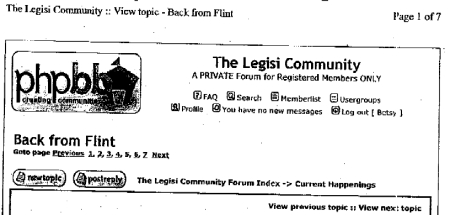
    Included in evidence exhibits are page after page of posts from Legisi's "private" forum and other communications such as emails to customer service and printouts Legisi members made while visiting the company's website and keeping notes about the program.

    Legisi members bothered by the company’s explanations and efforts to maintain secrecy when dealing with investors’ money turned over the information to the SEC.

    Yep. Avatars, pictures, user names, real names and all.

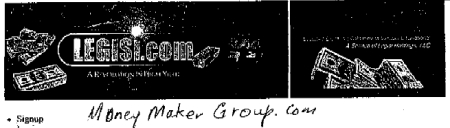
    In this evidence exhibit given to a federal judge prior to the Legisi asset freeze, a Legisi prospect writes the name "Money Maker Group.com" in longhand. The prospect also wrote the name "Matt Gagnon" in longhand and a telephone number for Gagnon.

    Prior to filing its case against Legisi, the SEC also had other hard-copy printouts from members, including emails and information from Legisi members’ back offices. At least one of the exhibits included the handwritten notes of a Legisi member.

    The words “Money Maker Group.com” are spelled out in longhand on one of the exhibits, as are telephone numbers of individuals associated with the program. One of the numbers has the name “Matt Gagnon” spelled out in longhand above it.

    Still promoting HYIPs and autosurfs? Still shilling in forums public and “private?”

    Your day of reckoning could be drawing near.

  • FBI, SEC Nab Pair Using Gmail To Run Insider-Trading Scam; Undercover Agents Responded To Offer To Sell Disney Earnings Report

    So, you want to use Google’s free Gmail service to pull off a scam? From this day forward you should not be confident that you’re not already caught. The FBI today announced that it set up a sting to nail two people who were trying to sell the quarterly earnings report of Walt Disney Co. before its scheduled release date by communicating with potential buyers through a Gmail account.

    Arrested today on federal charges of wire fraud and conspiracy were Bonnie J. Hoxie and Yonnie Sebbag. Hoxie, 33, of Los Angeles, was a Disney administrative assistant and had access to the company’s confidential communications. Sebbag, 29, also of Los Angeles, is a friend of Hoxie’s and used the alias “Jonathan Cyrus.”

    The scheme began when Sebbag and Hoxie sent anonymous letters through the U.S. mail to “multiple hedge funds and other investment companies, many of which were located in Manhattan, offering to sell the Inside Information for purposes of illegal insider trading,” authorities said.

    FBI agents posing as hedge-fund traders interested in obtaining the information communicated with the scammers, authorities said.

    In a separate fraud action by the SEC, the agency said the letters all had Los Angeles postmarks and stated (emphasis added):

    Hi, I have access to Disney’s (DIS) quarterly earnings report before its release on 05/03/10 [sic]. I am willing to share this information for a fee that we can determine later. I am sorry but I can’t disclose my identity for confidentiality reasons but we can correspond by email if you would like to discuss it. My email is [Actual Gmail Address Email Deleted By PPBlog]. I count on your discretion as you can count on mine. Thank you and I look forward to talking to you.

    At least 20 hedge funds, including funds based in several U.S. states and European countries, received the same or substantially the same letter, the SEC said.

    The SEC’s filing suggests the scammers were made to believe that the actual undercover agents were worried about the scammers being agents.

    “First of all, i am not a fed,” Sebbag allegedly wrote to the undercover agents. “I have no way to prove it at this point but i am not asking you to disclose your identity not i will disclose mine. It is up to you to determine if this is worth the risk as i did. I work for Disney, that is all i can tell you.”

    Sebbag, though, did not work for Disney. He lied about that and relied on the information provided by Hoxie, an actual Disney employee and Sebbag’s co-conspirator, authorities said.

    On May 14, the FBI “paid” Sebbag $15,000 for the inside information after meeting him in New York to seal the deal.

    “This investigation should serve as a warning, if you’re contemplating acquiring and profiteering from insider information, sometimes the person you’re trying to sell it to is really an undercover FBI agent,” said George Venizelos, acting assistant director-in-charge
    of the New York FBI field office.

    “What the case also shows is that the FBI’s vigilance is needed to police the small percentage of bad apples who can cause so much damage,” Venizelos said. “The majority behave like the dozens of hedge funds and investment companies that received Hoxie and Sebbag’s offers of insider Disney information: none took the bait, and almost all notified the FBI.”

    The SEC’s director of enforcement said the case sends a powerful message.

    “Hoxie and Sebbag stole Disney’s confidential pre-release earnings information and put it up for sale,” said Robert Khuzami. “Fortunately, multiple hedge funds reported the illicit scheme, and the SEC and criminal law enforcement authorities acted quickly to stop this brazen attempt to establish an ongoing insider trading business.”

    Prosecuutors noted that, after Sebbag received the $15,000, he “further agreed that he would provide similar confidential information in the future in return for a thirty percent share of any profits from the insider-trading scheme.”

    It is common for scammers to use free email addresses to cloak their identities.

    Credit for the busts was given to the interagency Financial Fraud Enforcement Task Force, which President Obama created in November 2009.

  • ONLINE PONZI FORUM BOMBSHELL: Matt Gagnon A ‘Danger To The Investing Public,’ SEC Says; Federal Judge Freezes Assets Of Mazu.com Pitchman Who Promoted Legisi, Other Alleged Scams

    Matt Gagnon of Mazu.com

    Ponzi forum operator or moderator? Online HYIP aficionado? Think you’re safe pitching fraud schemes because you’re “only” a promoter or forum “expert” and not the operator of the programs?

    Have a secret partnership deal with an HYIP fraudster? Using fancy, professional-sounding terms such as “due diligence” in your forum posts? Claiming you’ve done thorough research before recommending an “opportunity.”

    Pitching programs that advertise unusually large returns — while at once showcasing your knowledge about investment scams and steering people away from certain programs because they sound too good to be true?

    In an action that may send shockwaves across the Web world and Ponzi forums such as ASA Monitor, TalkGold and MoneyMakerGroup, the SEC has gone to federal court and filed an emergency action to halt “a series of fraudulent, unregistered securities offerings” made through Mazu.com.

    U.S. District Judge George Caram Steeh of the the Eastern District of Michigan has frozen the assets of Matthew J. Gagnon, 41, of Weslaco, Texas, and Portland, Ore. Gagnon is Mazu.com’s operator.

    “From January 2006 through approximately August 2007, Gagnon helped orchestrate a massive Ponzi scheme conducted by Gregory N. McKnight . . . and his company, Legisi Holdings, LLC,” the SEC said.

    The Legisi scheme raised about $72.6 million from more than 3,000 investors “by promising returns of upwards of 15% a month,” the SEC said.

    “Gagnon promoted Legisi but in doing so misled investors by claiming, among other things, that he had thoroughly researched McKnight and Legisi and had determined Legisi to be a legitimate and safe investment,” the SEC said.

    Among other things, the SEC alleged that Gagnon “had no basis for the claims he made about McKnight and Legisi.

    “Gagnon also failed to disclose to investors that he was to receive 50% of Legisi’s purported ‘profits’ under his agreement with McKnight,” the SEC said. “Gagnon received a net of approximately $3.8 million in Legisi investor funds from McKnight for his participation in the scheme.”

    Then, beginning in August 2007, “Gagnon fraudulently offered and sold securities representing interests in a new company that purportedly was to develop resort properties,” the SEC said.

    In this scheme, Gagnon “falsely claimed that the investment was risk-free and ‘SEC compliant,’ and guaranteed a 200% return in 14 months. In reality, however, Gagnon sent the money to a twice-convicted felon, did not register the investment with the SEC, and knew such an outlandish return was impossible,” the SEC said.

    Gagnon took in at least $361,865 from 21 investors, the SEC said.

    Still unfinished, Gagnon — in April 2009 — began promoting “a fraudulent offering of interests in a purported Forex trading venture,” the SEC said. “Gagnon guaranteed that the venture would generate returns of 2% a month or 30% a year for his investors. Gagnon’s claims were false, and Gagnon had no basis for making the claims.”

    Gagnon next turned to another Forex sceme, the SEC said.

    From October 2009 to November 2009, Gagnon “offered another purported Forex trading venture in which he claimed to have a trader in Europe who would trade foreign currencies for investors in exchange for 40% of any profits he generated,” the SEC said. “Gagnon removed this offer from his website in November 2009 when he received notice that the SEC had subpoenaed his bank records.”

    Despite his knowledge about Ponzi and fraud schemes, Gagnon repeatedly pitched such schemes, the SEC said.

    “Gagnon has been unrelenting in his efforts to raise money from the public through
    fraudulent, unregistered offerings,” the SEC said. “He remains a danger to the investing public.”

    Despite his sales pitches, “Gagnon has never been associated with a registered broker-dealer and has never been registered with the Commission as a broker or dealer or in any other capacity,” the SEC said.

    Among the people to whom Gagnon directed money was the late Bryan K. Foster, who was convicted in 1997 of five felony counts of wire fraud and sentenced to 41 months in prison. These convictions were recorded in U.S. District Court in Montana, according to records.

    In 2000, Foster was convicted in Colorado of one felony count of wire fraud and sentenced to five years in prison, according to records.

    Between July 13, 2007 and September 17, 2007, Gagnon sent at least $800,000 to accounts in the name of Trails Home LLC, which was controlled Foster, the SEC said. Money from the illegal Legisi program was included in the sum transferred to Foster for his purported investment program, the SEC said.

    The Legisi Program

    In 2005, McKnight was an underemployed General Motors worker living outside Flint, Mich., the SEC said, adding that he had financial problems.

    “In December 2005, McKnight began offering and selling interests in a pooled investment program variously called Legisi.com or Legisi,” the SEC said. “McKnight promoted the offering around the globe through an Internet website at www.legisi.com,” promising monthly returns of up to 15 percent.

    By February 2006, “McKnight incorporated a shell company called Legisi Holdings, LLC in the bank-secrecy haven of Nevis in the West Indies,” the SEC said.

    “McKnight asserted on the Legisi website that the Legisi program was merely a ‘loan program’ through which investors would ‘loan’ money to Legisi and, in return, Legisi would pay investors high rates of interest.

    But Legisi actually was “a classic pooled investment vehicle, in which investors invested money into a common venture with the expectation that the money would be used to generate profits, for McKnight and the investors, solely through the efforts of McKnight or others working on his behalf. The Legisi program was a security in the form of an investment contract,” the SEC said.

    “The Legisi program was also a massive Ponzi scheme,” the SEC said.

    In January 2006, McKnight and Gagnon discussed a deal by which Gagnon would promote Legisi on the Mazu.com website, the SEC said.

    “McKnight and Gagnon had known each other for several years after Gagnon recruited McKnight into a multilevel marketing business called ‘Mannatech,’” the SEC said. “McKnight became part of Gagnon’s ‘down line,’ meaning that a portion of McKnight’s commissions from selling Mannatech products went to Gagnon.”

    McKnight paid Gagnon “a total of approximately $4,532,512 between January 29, 2006 and April 14, 2008,” the SEC said. “All of the money Gagnon received from McKnight consisted of investor funds. There were no ‘profits’ generated by Legisi.”

    Gagnon netted about $3.8 million in the scheme, the SEC said.

    “On behalf of McKnight, Gagnon solicited investors around the world through the publicly available Mazu.com website,” the SEC said. “Gagnon wrote and/or reviewed and approved the content of the Mazu website. No valid registration statement was filed or was in effect with the Commission in connection with Gagnon’s offer and sale of Legisi program investment contracts.”

    SEC: Forum Moderators Helped Push Ponzi Scheme

    “Between approximately January 2006 and August 2007, Mazu employees working on Gagnon’s behalf and at his direction promoted the Legisi program in emails, in Mazu Business Packs and DVDs they sent to investors, and on the Legisi Forum,” the SEC charged.

    “The Legisi Forum was an on-line chat room accessible through the Legisi.com website. Several Mazu employees served as ‘moderators’ on the Legisi Forum. Mazu’s support services also included answering questions over the telephone and email,” the SEC said.

    Forum shills performed services for Legisi and deflected concerns when CNN carried a negative report on the company, the SEC said.

    “The Mazu employees acting as moderators encouraged readers to invest in Legisi, assisted them in transferring money to Legisi, encouraged investors to bring in new investors, and offered investors personal assistance in bringing in referrals,” the SEC said. “They also encouraged investors to keep their monthly earnings with Legisi, rather than withdrawing them, in order to achieve purportedly higher returns. They made sure transfers of money between investors and Legisi went smoothly. The moderators updated investors on changes to the Legisi program like new minimum investment amounts and referral fee rules.

    “The moderators made posts on the Legisi Forum to prevent and diffuse investor rumors and concerns,” the SEC continued. “After an article questioning Legisi’s legitimacy appeared on the CNN Money website on May 8, 2007, one moderator wrote, ‘I think it is worth mentioning that the Forum is probably being read by people who are not Legisi members. So let’s not raise red flags to any bulls out there shall we. . .. Of course so far as any discussion on the [CNN Money] article is concerned I’m sure that everyone is aware that Greg went into Legisi knowing the law and planning for this eventuality. So keep a cool head and stop worrying about what you should do.”

    No Due Diligence

    McKnight was operating a classic Ponzi scheme fueled in part by Gagnon’s cheerleading on Mazu.com, the SEC said.

    Despite the relentless hype, Gagnon performed no due diligence and simply fabricated information or passed along claims as though they were factual, the SEC said.

    “Gagnon did not obtain or review any of McKnight’s trading records, bank and brokerage account statements, or e-currency account records at any point prior to, or during, Gagnon’s promotion of Legisi,” the SEC charged.

    SEC: Gagnon ‘Recklessly Disregarded’ Scam Warning Signs

    “Throughout the time that Gagnon promoted Legisi, he simultaneously warned readers about a type of fraud referred to as a high yield investment program. High yield investment programs, commonly called ‘HYIPs,’ typically involve off-shore companies promising very high rates of interest generated by investment in foreign currencies and a variety of other vehicles, along with repeated hyping of the legitimacy of the program,” the SEC said.

    Gagnon understood the HYIP fraud universe, but nevertheless pitched Legisi, which had promoted an unusually high rate of return and had other markers of the exact kind of scam Mazu.com warned about on its website, the SEC said.

    “From at least April 2006 through at least May 2007 Gagnon provided on the Mazu website an accurate description of a HYIP by stating that they (emphasis added by PP Blog):

    collect funds from lenders as investment capital or deposits and promise a return that is usually extremely high in exchange for ‘borrowing your money.’ The result? Generally after a period of time you are free to withdraw your capital and or your profits, or you can ‘reinvest’ them to earn additional profits. In theory, the compounding can create a crazy return on investment given time . . .

    * * * * * *

    Sadly, most HYIPs are offshore fronts that don’t lie within U.S. jurisdiction and you have no recourse when they steal your money. Most HYIPs realize this and they bank on it! They’ve got you right where they want you. Most also allude to making their profit in legitimate investment vehicles when in reality, you have no idea where they’re making their profit.

    And Gagnon also warned readers about Ponzi schemes.

    “On the Mazu website between at least April 2006 and May 2007, Gagnon accurately described a Ponzi scheme as an ‘investment program touting huge returns in a short period of time. Any returns someone sees are paid out of monies gathered from the investors. No real product, investment, or business takes place,’” the SEC said.

    The Legisi Ponzi began to unravel by September 2007, its decay brought about in part by “the federal seizure of an e-currency provider that was holding $1.8 million for McKnight,” the SEC said.

    Gagnon then “attempted to extort money from McKnight,” the SEC said.

    “On September 9, 2007, Gagnon informed McKnight that he was ending the partnership between Legisi and Mazu,” the SEC said. “Gagnon offered McKnight a choice: send Gagnon and several of Gagnon’s associates approximately $2.5 million, tell the Legisi members that Gagnon was starting a real estate fund, and that Mazu and Legisi were parting amicably, or Gagnon would email the entire Legisi membership and tell them ‘the truth’ about McKnight’s fraud.”

    Read the SEC complaint.

  • Feds, State Team Up In Virginia To Short-Circuit White-Collar Crime Wave; ‘All Too Clear’ Problem National In Scope, Top Federal Prosecutor Says

    Neil H. MacBride

    Calling it an “unprecedented partnership” brought about by a financial-fraud problem that is national in scope, federal and state officials today announced the creation of the Virginia Financial and Securities Fraud Task Force.

    The Virginia Task Force, which is part of President Obama’s interagency Financial Fraud Enforcement Task Force, brings together criminal investigators and civil regulators to investigate and prosecute complex financial fraud cases in the nation and in Virginia.

    “It has become all too clear that the complex financial crimes we confront are national in scope,” said U.S. Attorney Neil H. MacBride of the Eastern District of Virginia. “They require criminal and civil authorities across the country to utilize every tool at their disposal to ensure that the guilty are held accountable. The Eastern District of Virginia has the legal authority to bring cases here with national significance, regardless of where the fraud occurs.”

    Virginia’s Eastern District encompasses nearly 5 million residents in cities such as Alexandria, Richmond, Norfolk, Newport News and other communities.

    Financial crime is jumping across local and state borders, a top SEC official said.

    “Financial fraud schemes can be sophisticated, difficult to detect, and span multiple jurisdictions,” said Robert Khuzami, director of the SEC’s Division of Enforcement. “Opportunities to coordinate civil and criminal law enforcement efforts, such as those provided by this task force, are vital to combating financial fraud.”

    America’s economic future must be safeguarded, a veteran investigator said.

    “Financial fraud is a threat to economic integrity and can harm individual investors,” said Stephen Obie, acting director of enforcement for the CFTC.

    A centerpiece of the strategy is “to root out unscrupulous financial activity and protect market participants,” Obie said.

    Virginia’s attorney general agreed.

    “This partnership presents a tremendous opportunity to share information and resources among the experts in order to prosecute and deter fraud perpetrated against our citizens,” said Attorney General Ken Cuccinelli. “The efficiencies of state and federal cooperation and of law enforcement working together should not only prove more helpful in protecting consumers, but it should also save the taxpayers money.”

    Another part of the strategy is to create a force-multiplier to weed out fraudsters and send a message that they’ll get caught, a veteran FBI agent said.

    “Large-scale financial crimes are on the rise and as such law enforcement agencies are working together to become force-multipliers in investigative and prosecutorial efforts,” said FBI Special Agent in Charge Michael Morehart. “The Richmond Division of the FBI welcomes the opportunity to work with our partners on this task force to demonstrate a commitment of aggressive investigative efforts and discourage criminal activity.”

    The top postal official in North Carolina’s largest city said he’s on board the effort.

    StopFraud.gov - Financial Fraud Enforcement Task Force“The Postal Inspection Service embraces the formation of the Virginia Financial and Securities Fraud Task Force,” said Postal Inspector in Charge Keith Fixel of the Charlotte Division. “This partnership with other state and federal agencies will enhance our ability to thoroughly investigate mail fraud and other financial related crimes that involve the nation’s mail system and ensure public trust in the mail.”

    Tax criminals and money-launderers also will be targeted, said the chief tax-fraud investigator in the District of Columbia.

    “Financial-fraud crimes create huge losses of tax revenue,” said C. Andre’ Martin, special agent in charge of the IRS Criminal Investigations Division. “This type of fraud threatens the integrity of our tax system and erodes the financial health of our communities. IRS-Criminal Investigation is proud to be part of a formidable law enforcement team that is focused on investigating these fraud schemes and we will continue our efforts to investigate the tax-evasion and money-laundering aspects of these types of crimes.”

    State securities regulators have a key role on the Task Force.

    “The State Corporation Commission [SCC] looks forward to working with our state and federal partners to enhance our ability to enforce the provisions of Virginia law governing the financial services industry, assist investors who have lost their money, and enhance the integrity of markets by targeting and eliminating financial and securities fraud,” said Philip R. “Duke” de Haas, SCC deputy general counsel—Financial Services.

    Officials said the Task Force will build on successes such as the prosecution of Edward Okun, sentenced to 100 years in prison for a $132 million fraud scheme.

    In cases in which it is appropriate for civil regulators to share information with criminal investigators, such information will be shared, officials said.

    The task force “is focused on facilitating the exchange of information on specific investigations,” officials said. “The independent legal responsibilities of each task member may limit the ability to share information; however, the task force members are committed to conduct parallel investigations and share as much information as they are allowed so every member may benefit from the different tools and resources each agency can provide.

    President Obama formed the interagency Financial Fraud Task Force in November.

  • Debit-Card Firm Spotlighted In Purported Training Material For Minnesota-Based INetGlobal Was Referenced In $22 Million Ponzi Case In Florida Last Year; Renner Company Now Has Link To Third Ponzi Court Scrape

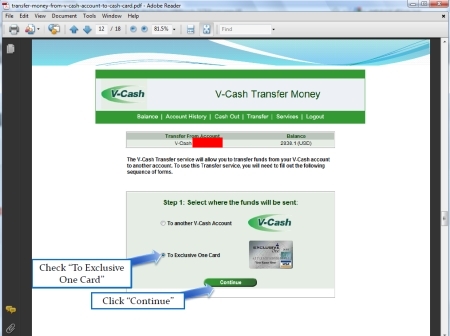
    Part of the purported INetGlobal training material on how to transfer money to a debit card. (Red bar added to screen shot by PP Blog to block account number.)

    Training material purportedly produced in November 2009 and published online shows prospects of INetGlobal how to transfer money from the company to a reloadable debit card. The presentation reveals that INetGlobal was using the same debit-card firm that provided services for a Florida man implicated in October 2009 — just a month before the INetGlobal training material purportedly was produced — in an alleged international fraud scheme that gathered at least $22 million and made Ponzi payments to members via debit cards.

    The training material is confusing in places, and the form in which it was published suggests that some INetGlobal members with Chinese names shared information to recruit Chinese prospects.  At the same time, the training material and other information accessible at the same website suggests Chinese members also worked together to create instructional materials that showed other Chinese members and prospects how to offload their profits in cash at ATM machines and receive $300 sign-up bonuses that may not have been available to all INetGlobal members.

    It is possible that a single member or group of members created the training material and the companion information. Whether the material, which does not purport to be hypothetical and appears to include no disclaimer language, used the names of real members was unclear. Also unclear is whether the approach had the approval of INetGlobal. What is clear is that the information was published openly online and purportedly reflects INetGlobal financial transactions that occurred among Chinese members in November 2009.

    A “Contact” address on the website that published the information lists a street address in British Columbia, even though the domain itself lists a registration address in Mainland China. The British Columbia street address returns a page in Google search results that purports to lay out a conspiracy case against judges in Canada for issuing unfavorable rulings in what appears to be a matter unrelated to INetGlobal.

    Just two months earlier, in September 2009, some Clickbank vendors were complaining that links to their businesses were being placed in INetGlobal’s advertising rotator without their knowledge. The Clickbank vendors also complained that INetGlobal was passing along bandwidth costs to them and that their businesses were experiencing a surge in unproductive traffic from China.

    The author of the training document on debit cards was listed as Annie Zhang, according to the “Properties” of the document, which was published in PDF format.

    The training document was published on a website whose domain-registration address was listed as “Xian, Shanxi  . . . China.” The domain on which the information was published was registered to Jun Zhang. The website encourages prospects to submit their email address and wait to receive a return email “to get a referrer ID and referrer name that you will need in the registration process.”

    Visitors to the website registered in China are told that, by registering for INetGlobal in this fashion, they can “Make Free Fast Money $300 Right Now.” The site instructs viewers to purchase a “$2000 Executive Business Package,” provide proof of the purchase by return email and wait to receive their bonus.

    “We will send $300 free fast money to your V-Cash account,” the site tells viewers. “If you prefer, we can send $300 to your PayPal account too!”

    Another URL at the same domain instructs prospects on how to register for a Clickbank account to promote products through INetGlobal. The instructions are available in multiple languages, including English, Chinese and Japanese.

    The debit card featured in the PDF training material on the website registered in China is known as the “Exclusive One” card and is issued by Anres Technologies Corp. of Las Vegas. The Exclusive One card is pictured in the INetGlobal training material, and Anres’ name is referenced in court filings by the U.S. Secret Service in the INetGlobal case.

    Anres’ name also is referenced by the SEC in a case filed last year in Florida against David F. Merrick, Traders International Return Network (TIRN), MS Inc., GTT Services Inc., MDD Consulting Inc. and Go ! Tourism Inc. Merrick and the companies were accused of running a Florida-based Ponzi scheme that used debit cards and claimed a presence in Panama.

    Among the claims in the SEC case was that “Merrick and TIRN falsely represented that investors requesting a withdrawal of funds would receive a debit card loaded with their initial investment and return on their investments, when, in fact, the money loaded on the cards was money from other investors,” according to the SEC.

    The PP Blog wrote about the TIRN case on Oct. 15, 2009.  Millions of dollars were moved across borders, the SEC said.

    “[A]t least $2.3 million of investor funds were transferred to accounts in Panama, Mexico, Malaysia, Switzerland and the Netherlands,” the SEC said. It added that about $8.8 million was placed on debit cards to make Ponzi payments to members..

    Although TIRN was not an autosurf, debit cards have become increasingly popular in the autosurf universe. The TIRN case demonstrated that alleged fraudsters were relying on debit cards to pull off international financial schemes.

    Anres was not named a defendant in either the TIRN case or the emerging INetGlobal case. The company has not been accused of wrongdoing.

    In recent months, the FBI has expressed public concerns that criminal organizations were turning to preloaded debit cards to launder money and that users were taking advantage of a “shadow” banking system.

    Card Highlighted In Instructional PDF For INetGlobal

    The purported INetGlobal training material appears in a PDF that includes screen shots. The person (or persons) who assembled the material appear to have Chinese names, and the English-language material walks prospects through the process of converting electronic credits to cash that can be loaded onto an Exclusive One debit card and withdrawn at ATMs.

    In February, the Secret Service said it believed INetGlobal was targeting Chinese members in an international Ponzi scheme. The purported training material lists IP addresses in the United States and Canada in a manner that suggests Chinese members in both countries were working together to train other Chinese members how to offload profits onto debit cards and also how to transfer money using INetGlobal’s internal system from one Chinese member to another.

    Among the assertions against INetGlobal by the U.S. Secret Service was that the company was engaging in wire fraud and money laundering. The IRS now has entered the case, which suggests that the government also suspects tax crimes.

    Material Suggests Account-Sharing And Cross-Border Planning

    The second page of the 18-page PDF purportedly shows the back office of an INetGlobal member who appears to have a Chinese name. This page lists the member’s name as “Dong,” lists a five-digit INetGlobal member number, a six-digit V-Cash account number and an IP address that comes back to Minneapolis. The page notes that automatic repurchasing of additional “adpacs” was enabled and set for 50 percent. Viewers were prompted to click on a tab labeled “V-Services.” In the next step, viewers were prompted to click on a graphic labeled “V-Cash Online Payment Services.”

    This page forwarded to another prompt to click on a V-Cash logo, which led to a login screen that prompted members to enter a user ID and a password. A “Welcome” screen followed, and members were instructed to click on a tab that prompted them to go to the “Member Center.”

    Once inside the Member Center, members were prompted to click on a tab labeled “V-Cash.” This led to a screen that prompted them to enter a password for their V-Cash accounts. The next screen shot showed that V-cash was logging members’ IP numbers; the IP number logged in this screen shot came back to Toronto. Why the shot displayed a Toronto IP when the earlier shot displayed a Minneapolis IP was unclear.

    The Exclusive One Card, as pictured inside the training material.

    The next screen shot prompted members to click on a tab labeled “balance.” This screen noted a “Currency balance” of more than $3,038 in the account. The next screen was confusing because the currency balance had been lowered by $200. Why the balance was lowered was not made clear in the presentation.

    In the next screen shot, the presentation provided the initial instructions on how to transfer money to the Exclusive One card, which is pictured in the document. This screen shot also purported to show that members could transfer money from their V-Cash accounts to other V-Cash accounts from within the company’s internal system. The presentation prompted viewers to select the option to transfer money to the Exclusive One card and press “Continue.”

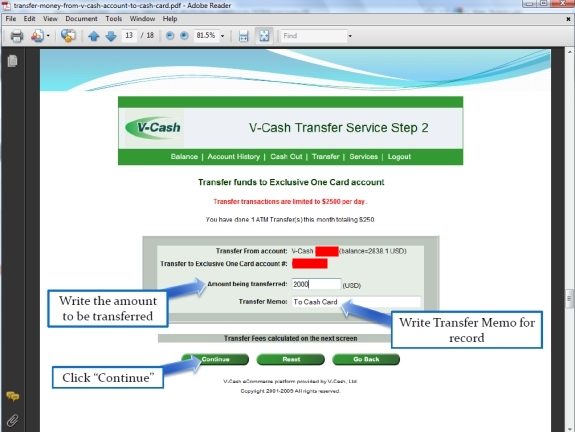
    Thereafter, the presentation showed a purported transfer of $2,000 to the Exclusive One card. The presentation noted a $30 fee incurred when making the transfer. The fee rate for the transfer service was described as 1.5 percent. The screen shot noted that the total amount transferred, including the $30 fee, was $2,030. Viewers were prompted to “Click to Confirm” the transfer.

    Part of purported INetGlobal traning material. (Red bars added to screen shot by PP Blog to block account numbers.)

    One of the screen shots that followed purported to show a “History” of transfers to and from the account. One of the transfers showed a purported transfer “from” Annie Zhang to an INetGlobal member in the amount of $3,000. It was dated Nov. 3, 2009.

    A person named Annie Zhang purportedly is one of INetGlobal’s top recruiters. Some promos for the firm have asserted Zhang was making $100,000 a month as an affiliate of INetGlobal.

    Parts of the PDF presentation are confusing. For example, the member’s name that appears on the second page of the presentation does not agree with the member’s name that appears on Page 6 — even though the INetGlobal member account number appears to be the same, as does the V-Cash account number.

    On Page 2, the member’s name is listed as “Dong” with an IP number that comes back to Minneapolis. On Page 6, however,  the screen welcomes a member named “Lei.”  An IP shown on Page 9 comes back to Toronto — not Minneapolis.

    In the document’s published form, both Dong and Lei appear to have the same 5-digit INetGlobal number and the same six-digit V-Cash account number. Why two purported INetGlobal members would have the same account numbers is unclear.

    INetGlobal Now Has Links To Three Ponzi Cases

    In February and March court filings, the U.S. Secret Service linked INetGlobal to the alleged AdSurfDaily Ponzi scheme, alleging that an undercover agent was introduced to INetGlobal by an ASD member. The Secret Service brought the Ponzi case against ASD in August 2008.

    The appearance of the Exclusive One card in the purported INetGlobal training material links INetGlobal to a second Ponzi court scrape: the SEC’s case against the alleged David Merrick/TIRN Ponzi scheme, which appears to have used the same debit card as INetGlobal to pay members. The CFTC also filed allegations against TIRN, and the U.S. Attorney for the Middle District of Florida also is investigating TIRN.

    Separately, INetGlobal operator Steve Renner was linked to a Ponzi scheme known as Learn Waterhouse in 2004. A company Renner operates — Cash Cards International (CCI) — provided payment-processing services for the Learn Waterhouse scheme, and Renner himself purportedly was an investor in the scheme, according to court filings.

    Four of the scheme’s operators were sentenced to lengthy prison sentences in the Learn Waterhouse case. (If you have the time, the PP Blog highly recommends you read this document from the U.S. Court of Appeals for the Ninth Circuit, denying appeals in the case.)

    The document recounts the history of the case, including astonishing allegations that Learn Waterhouse told investors that it “had invested $2 billion in a gold mine in Mexico, and [was] working on a billion-dollar Columbus-era ‘find’ on the bottom of the ocean.”

    Renner was alleged to have provided payment-processing services for Learn Waterhouse through CCI and to have spent investors’ money on personal purchases.

    Randall Treadwell, the ringleader of the Learn Waterhouse scheme, “often claimed that he had a God-given ability to make money, but in hindsight it appears that his talents lay in extracting funds from duped investors,” according to court filings.

    Indeed, according to filings in the Learn Waterhouse case, the “purported investments
    did not exist at all.

    “By the time the defendants’ far-reaching Ponzi scheme collapsed, more than 1,700 investors throughout the United States had lost their investments. At trial, the defendants produced no evidence to suggest that any investment profit was generated by their companies.”

    Losses in the Learn Waterhouse case totaled at least $44 million.

  • THE MODERN PONZI: Federal Judge Orders Parties Not To ‘Harass’ Receiver In Mantria/Speed Of Wealth Case; Dozens Of Companies Now Ensnared In Litigation

    Mantria CEO Troy Wragg in a music video by ICEBLOC.

    A federal judge has issued an order that effectively puts a court-appointed receiver in control of dozens of entities related to Mantria Corp. and Speed of Wealth LLC in a search for “recoverable assets.”

    One of the receiver’s duties is to determine if fraudulent transfers occurred between or among companies, according to the order.

    The order, which is designed to prevent the dissipation of assets and maneuvering to hide or transfer money, is breathtaking because it covers not only Mantria and Speed of Wealth, but also “all of their subsidiaries, parent companies, and. . .  interests in any affiliated entities of any kind.”

    All in all, the order applies to a staggering total of at least 55 entities, a figure that demonstrates the enormous task of unraveling a modern-day fraud amid a maze of corporations.

    The SEC sued Mantria and Speed of Wealth in November, amid allegations that Mantria was running a “green” Ponzi scheme that focused on biochar and a “carbon negative” housing community in rural Tennessee  that purported to be environmentally friendly. Speed of Wealth allegedly helped Mantria get investment clients.

    Appointed receiver in the case was John Paul Anderson of Alvarez & Marsal Dispute Analysis & Forensic Services LLC.

    U.S. District Judge Christine M. Arguello listed dozens of names, perhaps signaling that the order could become even broader by noting that it was “not limited to” the names on the initial list. She also ordered Anderson to come up with a liquidation plan and warned the entities and their agents not to meddle in receivership affairs.

    Anderson was granted the authority to seek the court’s permission to place the entities in bankruptcy if the circumstances warrant such an approach. Arguello minced no words when ordering parties not to meddle. She specifically warned them not to “harass” Anderson or interfere in his duties as receiver (italics/bold added).

    “The Receivership Defendants and all persons receiving notice of this Order by personal service, facsimile or otherwise, are hereby restrained and enjoined from directly or indirectly taking any action or causing any action to be taken, without the express written agreement of the Receiver, which would:

    A. Interfere with the Receiver’s efforts to take control, possession, or management of any Receivership Property; such prohibited actions include but are not limited to, using self-help or executing or issuing or causing the execution or issuance of any court attachment, subpoena, replevin, execution, or other process for the purpose of impounding or taking possession of or interfering with or creating or enforcing a lien upon any Receivership Property;

    B. Hinder, obstruct or otherwise interfere with the Receiver in the performance of his duties; such prohibited actions include but are not limited to, concealing, destroying or altering records or information;

    C. Dissipate or otherwise diminish the value of any Receivership Property; such prohibited actions include but are not limited to, releasing claims or disposing, transferring, exchanging, assigning or in any way conveying any Receivership Property, enforcing judgments, assessments or claims against any Receivership Property or any Receivership Defendant, attempting to modify, cancel, terminate, call, extinguish, revoke or accelerate (the due date), of any lease, loan, mortgage, indebtedness, security agreement or other agreement executed by any Receivership Defendant or which otherwise affects any Receivership Property; or

    D. Interfere with or harass the Receiver, or interfere in any manner with the exclusive jurisdiction of this Court over the Receivership Estates.

    Here is the initial list of entities covered under Arguello’s order:

    1. Mantria Realty LLC
    2. Mantria Communities Inc.
    3. Mantria Real Estate Opportunities Group LLC
    4. Mantria Investments LLC
    5. Mantria Financial LLC
    6. Mantria Capital Advisors LLC
    7. Mantria Industries LLC
    8. Carbon Diversion Inc.
    9. Mantria Records LLC
    10. The Mantria Foundation Inc.
    11. Mantria Realty FL LLC
    12. Mantria Communities LP
    13. Mantria Real Estate Opportunities Group I LP
    14. KITN Investments LLC
    15. The Mantria Renewable Energy Fund LP
    16. The Mantria Place Renewable Energy Site Development LP
    17. The Mantria Industries Hohenwald Tennessee Eco-Industrial Center Site Development L.P.
    18. Earth Mate Technologies LLC
    19. Clean Energy Components LLC
    20. EternaGreen Capital LLC
    21. The EternaGreen International Carbon Economy Network LLC
    22. EternaGreen University
    23. EternaGreen Global Corporation
    24. C&M Industrial Center LLC
    25. Mantria Industries II LLC
    26. Carbon Diversion Carlsbad New Mexico Manufacturing Plant LLC
    27. Indian Trail Estates LLC
    28. Mantria Village LLC
    29. Mantria Bluffs LLC
    30. IronBridge Properties LLC
    31. Legacy Ridge LLC
    32. Iris Village LLC
    33. Mantria Place LLC
    34. The Mantria Group LLC
    35. Mantria Indian Trail Development LLC
    36. Indian Trail Estates Phase I LLC
    37. Indian Trail Estates Phase II LLC
    38. Indian Trail Estates Phase III LLC
    39. Indian Trail Estates Homeowners Association Inc.
    40. Legacy Ridge Homeowners Association Inc.
    41. The Mantria Place Homeowners Association Inc.
    42. SOW Trust Deed LLC
    43. SOW Hard Money Loans Investment Club LLC
    44. SOW Hard Money Loans II LLC
    45. SOW Trust Deed Group II LLC
    46. Trust Deed Group I LLC
    47. SOW Hard Money 50 Economic Stimulus Investment Club LLC
    48. SOW Mantria Income LLC
    49. SOW Mantria Diversification LLC
    50. SOW Mantria 5% LLC
    51. SOW Mantria Place 25% LLC
    52. SOW Mantria 25% LLC
    53. Speed of Wealth Investments Gold Club LLC
    54. Trust Deed 3.0 LLC
    55. SOW MI 25% Sale of Systems LLC

    Arguello said she recognized “that not all of Speed of Wealth, LLC’s assets and/or business may be related, directly or indirectly, to the conduct alleged in the Commission’s Complaint.”

    Named individual defendants in the alleged $30 million fraud by the SEC in November were Mantria CEO Troy Wragg and Mantria COO Amanda Knorr, along with the company itself. Also named defendants were Speed of Wealth and its principals, Wayde and Donna McKelvy, formerly husband and wife.

    One of the companies under the Mantria umbrella was Mantria Records LLC, which purportedly promoted a hip-hop duo known as ICEBLOC.

    Two months after Troy Wragg accepted a kudo from former President Bill Clinton for environmentally friendly business practices, Wragg was implicated by the SEC in an alleged "green" Ponzi scheme. The Financial Industry Regulatory Authority (FINRA) later issued an Investment Alert warning the public about a relatively new form of fraud: “green energy investments” that trade on investors’ affinity for keeping the planet clean.

    The case became notable for reasons beyond its size and scope. Wragg, for instance, appeared alongside former President Bill Clinton at the 5th Annual Meeting of the Clinton Global Initiative (CGI) in New York Sept. 25.

    CGI had lauded Mantria in part for helping to “mitigate global warming” through its business practices. Just two months later Mantria and Speed of Wealth were accused of a colossal fraud.

    After the CGI event in New York, Mantria and Speed of Wealth seized on Clinton’s name and the names of prominent individuals who attended the event to produce marketing materials used to entice investors.

    Even after the SEC brought the charges, reporters who tried to contact Speed of Wealth received email pitches to join money-making opportunities.

    Video promotions by Mantria and Speed of Wealth were notable for dropping the names of President Obama, former U.N. Secretary General Kofi Annan, President Laurent Gbagbo of the Ivory Coast, Mike Duke, CEO of Wal-Mart, Muhtar Kent, CEO of the Coca-Cola Co. and actor Matt Damon.

    Leeching off the names of celebrities, famous businesspeople and politicians to sell fraudulent financial schemes is a common tactic among multilevel marketing (MLM) and Ponzi scammers. By implying that prominent people endorse a product or service, the fraudsters hope to turn skeptics into clients.

    Claims were made in the AdSurfDaily Ponzi scheme case, for example, that ASD President Andy Bowdoin had received an award from President George W. Bush for a lifetime of business achievement. The award proved to be the so-called Congressional “Medal of Distinction,” which is given for campaign contributions to the National Republican Congressional Committee and signifies only the ability to write a check for the purchase of banquet tickets.

    In an SEC case last month, the agency alleged that a Staten Island investment-advisory business known as Gryphon Holdings Inc. told clients that famed businessman George Soros backed the company. A purported “testimonial” from Soros was fraudulent, the SEC said.

  • Is Trevor Cook Lying To Ponzi Investigators In $190 Million Case After Accepting Plea Deal? Investors Say Story Too Incredible To Believe

    EDITOR’S NOTE: Some of the investors in the Trevor Cook/Pat Kiley Ponzi scheme in Minnesota say they believe Cook is lying to investigators about the whereabouts of assets and perhaps other elements of the probe.

    “We do not believe this much money could be totally lost in such a short period of time,” an investor told the PP Blog this evening.

    The comment followed on the heels of a grim statement issued today by R.J. Zayed, the court-appointed receiver in lawsuits brought against Cook by the SEC and CFTC in November. Cook, 37, pleaded guilty to criminal charges earlier this month and is required to cooperate in unraveling the money mystery as part of his plea agreement.

    Zayed said he met with Cook April 23 — and Cook shed little new light on the probe.

    Here is the verbatim statement of the receiver (coloring added to distinguish Zayed’s statement from the PP Blog’s Editor’s Note):

    The Receiver met with Trevor Cook on April 23, 2010 at the United States Attorney’s office in Minneapolis, Minnesota for about 4½ hours for the purposes of identifying, locating, and retrieving assets belonging to the Receivership Estates. Also present at the meeting were representatives of the SEC, the CFTC, the FBI, the IRS, and the United States Attorney’s Office.

    Other than the $362,700 in cash and the collection of “Fabergé” eggs or purses resembling “Fabergé” eggs that Cook caused to be turned over to FBI on April 12, 2010, and which were identified at Cook’s change-of-plea hearing on April 13, 2010, Cook provided the Receiver with little new information with respect to the nature and location of any Receivership assets. Almost all of the information that Cook provided to the Receiver was already known to the Receiver as a result of the Receiver’s own investigation in this matter.

    Cook informed the Receiver that he had no submarines, houseboats, or hidden cash. He also identified no real estate, personal property, cash, bank accounts, safe-deposit boxes, jewelry collections, art collections, bonds, stocks, precious metals, buried treasures, or assets of any kind that were not already known to the Receiver. Cook further informed the Receiver that he has not given any assets to others to hold or hide for him. In sum, Cook identified little more than what the Receiver had previously identified, through the Receiver’s investigation, as assets belonging to the Receivership Estates.

    Cook identified three gambling accounts that were not included in the public Receiver reports; however, the Receiver already was aware of them. Those accounts contain over $100,000, but the Receiver has not been able to retrieve the money because the accounts are located in places outside of the Receiver and the Court’s authority (Costa Rica, Cyprus, and Jamaica). With Cook’s cooperation, these funds may be recoverable.

    According to Cook’s plea agreement, “his currency trading during the period from July 1, 2006 through August 31, 2009 at PFG in Chicago generated trading losses in excess of $35 million.” Cook also filed a claim against Crown Forex, S.A. for $67 million in investor funds that he claims were being held by Crown Forex, S.A. Crown Forex, S.A., however, is insolvent. Therefore, the timing and the amount of any potential recovery is speculative, uncertain, and unknown.

    R. J. Zayed
    Court-Appointed Receiver for Trevor Gilson Cook et al.

  • SPECIAL REPORT: SEC Says Detroit Pension Funds Looted By Outside Manager, Used-Car Dealer; Agency Alleges Elaborate Fraud Into Which Millions Dumped Into Firms That Financed High-Risk Loans In Metro Atlanta

    EDITOR’S NOTE: The story below is about a compelling case in which nearly $16 million in public-pension funds from the Detroit area allegedly ended up in the control of an Atlanta-area, used-car dealership that operates in a business segment commonly known in the auto trade as “buy here, pay here.” Research shows that the dealership is situated more than 700 miles from Detroit and seeks business from high-risk borrowers who cannot qualify for bank loans. Three pension funds entrusted the money to a start-up, outside investment-advisory business that operated as a sort of venture-capital firm, according to records. The SEC now says the vast majority of the pension funds’ investment was plowed into the dealership and its in-house lending arms — and that the dealership and its financial arms are controlled by a “friend” of the outside adviser. More than $3 million invested by the funds was stolen in a highly complex fraud scheme, according to the SEC.

    If you’re already scratching your head and thinking that plowing millions of dollars in public funds earmarked for Midwest retirees in their Golden Years into a high-risk “buy here, pay here” car lot hundreds of miles away in the Southeast would be imprudent if not impossible, you’re not alone.

    Intrigued? Your mind may fairly well bubble over with questions when you discover that, not only did the “second-chance” car lot allegedly end up with the money, the outside money manager who persuaded the pension funds to trust him was viewed by at least one of the funds as too inexperienced to handle the job. The doubting fund, however, later decided to go ahead with the investment after the outside manager provided it a document the SEC now says was forged to dupe the pension fund into getting on board.

    Here is a question for readers to ponder: Given the astonishing level of corruption investigators are exposing in U.S. financial markets — and given the fact that one of the assertions in the case outlined below is that public pension funds for Detroit and Pontiac, Mich., municipal workers ended up being directed to an Atlanta-area used car dealer — is it possible that pension funds from other U.S. cities are being used to finance high-risk car loans and perhaps subsequent repossessions if the owners default?

    Beyond that, is it possible that used-car lots that provide in-house financing in other areas of the country have been capitalized with public money or are serving as illicit conduits for private investment capital? Could a silent party be under way with venture-capital funds at corrupt “buy here, pay here” dealers that are not linked to a retirement system, setting the stage for shady operators to siphon and squander money investors believed was earmarked for legitimate purposes?

    There are no early answers, and few people would argue against legitimate venture capitalism that provides a return on investment and the opportunity for entrepreneurs to create wealth and jobs. Regardless, the prospect of pensioners’ money or pooled investment capital not linked to a pension fund being used to capitalize “buy-here, pay-here” car lots and other inherently risky businesses raises intriguing questions.

    As always, one of the questions is this: What constitutes “legitimate” and who’s minding the store? Remember: This is the era of Scott Rothstein, the disbarred Fort Lauderdale attorney and Ponzi operator who managed to recruit investors by packaging nonexistent legal settlements in sexual-harassment cases as securities. Americans have seemed willing to buy into all sorts of extremely speculative, highly dubious or just downright illicit schemes in recent years.

    Here are a few things you should know about the “buy here, pay here” business and the repossession business that often accompanies it.

    Disreputable “buy here, pay here” firms have been known to sell grossly overpriced cars to financially strapped consumers amid promises of “easy” weekly or monthly payments — and then take extreme measures to repossess the cars if the owner defaults, thus potentially creating a second tier of business for in-house or contract repo men. (See subhead titled “National Consumer Law Center Describes Underbelly Of Repo Business” in this post.) The NCLC says the “self-help” repo business is dangerous for low-income consumers and has been linked to six deaths in recent years.

    Some of the companies in the “buy here, pay here” business position dealerships in areas of high poverty and unemployment,  buy cars at auction prices, sell them at inflated retail prices, require large down payments, tack on usurious interest rates of 20 percent or higher, equip the cars with technology that disables the motor if a payment is late (thus, for example, potentially stranding a mother with young children in a supermarket parking lot during freezing weather or making it impossible for the mother to get to her job), and then dispatch the repo man and sell the car all over again to another consumer with money troubles.

    The “buy here, pay here” business also may be spawning offshoots and cottage industries, including one in which members are told they can earn money by helping repo companies seize collateral for clients.

    At least one U.S. company — Narc That Car, also known as Crowd Sourcing International — says it is paying members to record license-plate numbers for entry in a database that will be used by companies in the repo business. Narc That Car is believed to have ties to companies and individuals in the “buy here, pay here” business. There have been no allegations of wrongdoing against the company, although critics have questioned its business model and promoters of the firm have made one vague claim after another.

    Narc That Car, which operates as a multilevel marketing firm and is promoted by members as a way to make money by recruiting other members, says “lien holder” companies are interested in purchasing the license-plate data.  Questions have been raised about whether Dallas-based Narc That Car is operating a pyramid business model to pay members or has an investment angel or angels with ties to the title-loan and repo businesses.

    Critics also have raised privacy concerns and questioned the propriety, safety and legality of neighbors recording the plate numbers of neighbors and entering the information in a database. Narc That Car, which scored an “F” rating from the Better Business Bureau, operates in a shroud of mystery. The company recently said it had signed a “multi year, six figure contract is to lease our growing Data Base to a Texas Based Lien Holder Company,” but did not name the company.

    The business of providing in-house financing and following up with repossessions when car buyers default can be downright unseemly. That public funds from the Detroit area allegedly were passed to an Atlanta-area used-car dealer that had at least 38 bank accounts and multiple affiliated entities is a matter for great introspection. There also are allegations of forgery and siphoning in the case. A look at the websites of two of the entities allegedly involved reveals the need for a good editor — and yet millions of dollars of public money changed hands in what the SEC described as an elaborate fraud.

    The allegations in the SEC’s case against Onyx Capital Advisors LLC, investment adviser Roy Dixon Jr., and Michael A. Farr., who operates used-car lots that provide in-house financing, are mind-numbing. The 24-page complaint in the civil case includes charts that reverse-engineer the alleged fraud and hundreds and hundreds of words that paint a picture of an astonishing, highly complex theft involving multiple companies in multiple venues. The story below does not address in detail the issue about how Detroit municipal pension funds ended up in the control of a used-car dealer in Greater Atlanta, although the media in Detroit are asking some very tough questions. Hats off to the Detroit Free Press.

    Here, now, the story of the allegations against Oynx Capital Advisors, Dixon, Farr and related entities in the pension case . . .

    A former wide receiver for the Detroit Lions has been named a defendant in a complex fraud and theft scheme in which the SEC alleges that pension funds belonging to Detroit-area municipal workers were given to a used-car company in Metropolitan Atlanta that provides a type of financing commonly known as “buy here, pay here.”

    Michael A. “Mike” Farr, who played three seasons for the Lions (1990-1992) and hails from a family whose name is synonymous with football and the car business in Greater Detroit, is the owner of Second Chance Motors Inc., which sells used cars in Marietta and Conyers, Ga., according to its website.

    Farr’s father, uncle and older brother all played in the NFL. Mel Farr Sr., the father, was named NFL Rookie of the Year by the Associated Press in 1967 and went on to become one of the most prominent Ford dealers in the United States after he retired from football.

    The senior Farr’s story was one of African American success. He last played professional football in 1973, entered the car business in 1975 and became famous for his homemade, low-budget commercials in which he wore a Superman-like cape. On the downside, some customers later sued him for outfitting cars with devices that disabled them if payments were missed. The shut-off devices are legal, but some consumer advocates oppose them.

    Like his father, Michael Farr entered the car business after his NFL career ended. The younger Farr set up shop in Michigan, Georgia, North Carolina and Texas, according to records.  His NFL career is not mentioned on the website of Second Chance Motors, although Farr’s name and his company’s name is listed in business records in Texas and on the website that promotes athletics at UCLA. Farr played for UCLA in college.

    Also named defendants were Onyx Capital Advisors LLC and its founder Roy Dixon Jr., whom the SEC described as as a money manager and investment adviser to the pension funds and a friend of Farr’s. Onyx Capital directed nearly $16 million from the Onyx Fund to Farr-controlled entities, according to the SEC. Onyx describes itself as a sort of venture-capital firm that “invests private equity capital into small and medium sized companies primarily located in the Midwest through the Southeast United States and Canada.”

    The recipients of capital from Onyx are “stable” companies that “possess superior products or management know-how,” according to the company’s website. Parts of the website feature vague claims, along with grammar and usage errors.

    Farr, 42, lives in Atlanta, according to the SEC. He also controls SCM Credit LLC and SCM Finance LLC, Georgia companies that provide financing support to Second Chance, the SEC said. Farr and his wife also own another Georgia company known as 1097 Sea Jay LLC.

    Second Chance’s website says the company is “not only in the business of selling cars; we are in the business of helping people. With our strong banking relationship with SCM Credit, we can guarantee your approval the spot!”

    In essence, the Michael Farr-controlled car dealer appears to have boasted about a strong “banking relationship” with another Farr-controlled entity — SCM Credit — one of its lending arms. Georgia corporation records suggest that Farr was affiliated with as many as 10 entities that use or used the “Second Chance” name, and Farr is listed as the registered agent for SCM Credit and SCM Finance.

    “We are not in the repossession business; therefore our experienced financial staff at SCM Credit will take a look at your credit history and recommend a car and payment that fits your budget and your style,” the Second Chance website says.

    How the company handles repossessions if customers default was not immediately clear.

    At issue in the SEC case is the alleged chain of events that occurred prior to the dealership coming into possession of the money and what happened to the money after it was advanced to Farr’s companies.

    Roy Dixon Jr. And Oynx Capital

    Dixon, 46, resides “primarily” in Atlanta, and is “the owner and founding member of Onyx Capital, a private equity firm based in Detroit,” the SEC said. The agency said Dixon owns “numerous” rental properties in Detroit and Pontiac, and an insurance business known as Oynx Financial Group LLC.

    Dixon used money from the scheme to make mortgage payments on more than 40 rental properties in Detroit and Pontiac, and Dixon, Farr and related entities “stole more than $3 million” invested by the Detroit-area pension funds, the SEC charged.

    “These public pension funds provided seed capital to the Onyx [F]und, and Dixon betrayed their trust by stealing their money,” said Merri Jo Gillette, director of the SEC’s Chicago Regional Office. “Farr assisted Dixon by making large bank withdrawals of money ostensibly invested in Farr’s companies, and together they treated the pension funds’ investments as their own pot of cash.”

    The SEC’s use of the phrase “ostensibly invested” may be a key to the case because it suggests the investment was a sham from the start, even though the Oynx Fund ended up owning majority stakes in SCM Credit and SCM Finance. At the end of 2009, the Oynx Fund owned 80 percent of SCM Credit, and 52 percent of SCM Finance, the SEC said.

    Dixon and his company raised $23.8 million from the pension funds, the SEC said, accusing Dixon of misappropriating money soon after it came under his control in 2007.

    “Between 2007 and 2009, Dixon and Onyx Capital misappropriated approximately $3.11 million from the Onyx Fund,” the SEC charged. “They took more than $2.06 million in excess management fees. In addition, Farr assisted Dixon and Onyx Capital in misappropriating almost $1.05 million through the Onyx Fund’s purported investments in companies Farr controlled.

    “Dixon used the proceeds from his and Onyx Capital’s misappropriations to pay personal and business expenses,” the SEC said in its complaint. “These expenses included payments for the construction of Dixon’s multimillion-dollar house in Atlanta, Georgia, and mortgage payments on more than forty rental properties Dixon owns in Detroit and Pontiac, Michigan.”

    On at least 15 occasions, the SEC said, “Dixon withdrew investor money from the Onyx Fund’s bank accounts to cover overdrafts in his own personal accounts, or Onyx Capital’s bank accounts.”

    Dixon also took “advances” against unearned management fees, overbilled the fund by $1.74 million for fees to which he was not entitled and, in at least one instance, double-billed for fees that already had been withdrawn from the fund and placed in Dixon’s personal bank account, the SEC charged.

    Pension Funds Allegedly Denied Access To Records

    “Dixon and Onyx Capital have taken a number of steps to prevent the pension funds from discovering their misappropriations from the Onyx Fund,” the SEC charged. “Among other things, Dixon and Onyx Capital have disregarded the requirements of the partnership agreement and have failed to provide the pension funds with copies of the Onyx Fund’s tax returns for 2007 and 2008.

    “Those tax returns identified some of the excess management fees taken by Onyx Capital as a related party receivable,” the agency charged. “Dixon and Onyx Capital also sent each of the pension funds an annual Investor’s Report in August 2008, and several quarterly account statements, which falsely stated that Onyx Capital had been paid only the management fees that it was entitled to receive under the partnership agreement.”

    Michael Farr’s Alleged Role In $15.7 Million Scheme

    Dixon and Michael Farr were friends “since before Dixon started Onyx Capital” in 2006, the SEC said. “In fact, Dixon selected Farr’s father to serve on the Onyx Fund’s initial advisory board.”

    The senior Farr is not named a defendant in the SEC complaint.

    Michael Farr’s Second Chance dealership and related financing arms initially received $4.25 million from the Oynx Fund, the SEC said.

    “However,” the agency charged, “after entering into these agreements, Dixon and Onyx Capital transferred funds in excess of agreed amounts to SCM Credit and SCM Finance. The Onyx Fund did not execute new investment agreements, showing an additional debt or equity investment with these two entities, until the end of 2008 and the end of 2009.

    “The Second Chance entities treated the money obtained from the Onyx Fund as if it was a line of credit,” the SEC alleged. “By the end of 2009, Dixon and Onyx Capital had transferred approximately $15.7 million to the Second Chance entities.”

    Farr knew that the money had come from public pension funds and even attended a meeting conducted by one of the funds, the SEC said. Regardless, he used the money to aid and abet Dixon in a fraud, the agency charged.

    The pension funds’ exposure to loss was not immediately clear. What is clear is that money was diverted and siphoned in a whirlwind of transactions, some involving cash, according to the complaint.

    “Beginning in 2008, Dixon coordinated additional misappropriations from the Onyx Fund with Farr,” the SEC alleged. “In total, Dixon and Farr misappropriated approximately $1.05 million of the money the Onyx Fund purportedly invested in Farr’s companies.”

    The fraud mushroomed, the agency charged.

    “Between June 2008 and November 2009, Farr transferred approximately $2.34 million from the Second Chance entities to Sea Jay, a company owned by Farr,” the SEC said. “Sea Jay’s only asset was a piece of real property leased to one of Second Chance’s used car dealerships for $10,000 per month. Sea Jay had the right to receive a total of $230,000 from the Second Chance entities for this purpose. The Second Chance entities had no legitimate business purpose to transfer an additional $2.11 million to Sea Jay.

    “Farr assisted Dixon in misappropriating approximately $948,000 of the investor funds which had been transferred to Sea Jay,” the SEC continued. “Farr later returned $1.16 million of the money transferred into Sea Jay to the Second Chance entities. Of the approximately $948,000 which Dixon and Farr misappropriated, $719,000 was used to benefit Dixon and $229,000 was used to benefit Farr.

    “Between October and December 2008, Farr made approximately $522,000 in payments from Sea Jay’s bank account to three construction companies that performed work on Dixon’s new house in Atlanta,” the SEC charged. “On December 30, 2008, Farr and Dixon executed a promissory note pursuant to which Dixon was not required to repay any amount to Sea Jay for six years.

    “During December 2008, Farr also made a series of cash withdrawals from Sea Jay’s bank account at approximately the same date and time, and in the same locations, as Dixon made cash deposits,” the SEC alleged. “Over the course of approximately two weeks, Farr and Dixon made at least 25 corresponding cash transactions in banks near Atlanta, Georgia and Naples, Florida where they both own homes. On many of these days, Farr and Dixon made similar withdrawals and deposits of cash on the same day.

    “In addition, Farr misappropriated at least $100,000 of the money invested in his businesses by the Onyx Fund through one of Second Chance’s used car dealerships, Second Chance Motors of Houston, LLC (‘SCM Houston’),” the agency said. “On December 29, 2008, Dixon transferred $125,000 from the Onyx Fund to SCM Credit for investment purposes. Farr immediately transferred $100,000 of that money to SCM Houston. The next day, Farr withdrew $100,000 in cash from SCM Houston’s account at a bank in Estero, Florida and Dixon deposited $130,000 in cash into Onyx Capital’s account at a bank located approximately 20 miles away.”

    The fraud was in part designed to cover tracks, the SEC charged.

    “Dixon used most of the December 2008 cash deposits so that it would appear to the Onyx Fund’s auditor that Onyx Capital had repaid the excess management fees it had withdrawn from the Onyx Fund during 2008,” the agency charged. “In this manner, Dixon and Onyx Capital were able to avoid reporting any excess management fees as a related party receivable on the Onyx Fund’s tax return and audited financial statements for 2008.

    “Finally,” the agency said, “Farr commingled the funds invested by the Onyx Fund among the three Second Chance entities and Sea Jay — which between them maintained at least 38 bank accounts at seven separate banks. On several occasions, Farr made at least ten transfers between and among these bank accounts in a single day.”

    Oynx compounded the fraud by sending a “forged letter to one of the pension funds misrepresenting the principals of Onyx Capital,” the SEC said. The letter was used to allay the fund’s concerns that Dixon was too inexperienced to manage the investments, the SEC said.

    U.S. District Judge Denise Page Hood of the Eastern District of Michigan has frozen the assets of the defendants and issued a temporary restraining order.

    Read the SEC complaint.