Tag: SEC

  • SPECIAL REPORT: Alleged Colorado Ponzi Schemer Had Criminal Record For Securities Fraud, Previous Bankruptcy Record; Allegations Reminiscent Of ASD/Golden Panda Cases

    EDITOR’S NOTE: This story is about securities and fraud allegations leveled in Colorado against Philip R. Lochmiller and others. The case was brought amid assertions Lochmiller was operating a real-estate Ponzi, although the backdrop of the story is similar to the backdrop of the story on the “advertising” Ponzi allegations against Florida-based AdSurfDaily. Some of allegations against Lochmiller are strikingly similar to the allegations against ASD President Andy Bowdoin. Part of the story backdrop also shares a common venue: Vernal, Utah.

    Lochmiller had a real-estate development in Vernal, which also was home base to the so-called “Arby’s Indians,” a sham “tribe” of which ASD mainstay Curtis Richmond was a member. The “tribe” used the address of a Vernal doughnut shop as the address of its “Supreme Court,” and became known as the “Arby’s Indians” because it held a meeting at an Arby’s restaurant in Provo, Utah, in 2003.

    There are no assertions that the Lochmiller, ASD and “Indian” cases are in any way related or that Lochmiller had any ties to ASD or “tribal” figures. However, ASD members — as well as members of AdViewGlobal (AVG) and Golden Panda Ad Builder (GP) — may find the similarities in the Lochmiller and ASD cases instructive.

    Here, now, the story . . .
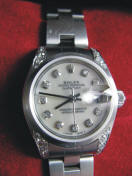
    This Rolex watch is an auction item in the Lochmiller case.A Colorado man sentenced to prison in California in the 1980s on state charges of securities fraud was indicted Dec. 15 in Denver on federal charges of securities fraud. Philip R. Lochmiller, 61, of Mack, settled in Colorado after his release from prison and started a new company, prosecutors said.

    That Grand Junction-based company, which first was called Valley Mortgage in the 1990s and is known today as Valley Investments, now is at the center of a new firestorm in a complex Ponzi scheme case that includes spectacular allegations of forgery and real-estate fraud in Colorado, Idaho and Utah.

    Investor losses could exceed $30 million. Also indicted and arrested for multiple felonies in the Colorado case were Philip R. Lochmiller II, 38, of of Olathe, Kansas, and Shawnee N. Carver, 33, of Grand Junction. If convicted, the defendants face dozens of years in federal prison. Each is free on bond, awaiting court appearances and trial.

    Lochmiller II is Lochmiller’s son.

    Certain assets, including a Rolex watch and a vintage 1955 GMC 450 American fire truck, already are being auctioned by a court-appointed receiver to raise money for an estimated 400 fraud victims.

    Family Fraud Affairs

    Records show that Philip R. Lochmiller was sentenced to three years in a California state prison in the 1980s after he was charged with 60 counts of securities fraud and pleaded guilty to about half of them.

    Also sentenced to prison in the California case were Lochmiller’s mother and brother. Jo Alice Lochmiller, Lochmiller’s mother, pitched the California scheme involving a Vista-based company known as Lochmiller Mortgage Co. on TV. She was sentenced to three years.

    Lochmiller’s brother, Stephen Lochmiller, was sentenced to four years, according to news accounts at the time.

    The 1980s scheme operated in the Greater San Diego area and resulted in 1,600 investors being bilked out of a total of $5 million. Jo Alice Lochmiller, who pleaded guilty to 10 counts and was sentenced to three years on the most serious one and given concurrent three-year sentences on the other nine, appealed her sentence.

    Jo Alice Lochmiller argued her intent was not to fleece customers but to raise money for Lochmiller Mortgage. She further argued that she should not be punished for each separate sale of unregistered securities and that her sentence was unfair because it subjected her to double punishment.

    A California appeals court consisting of a three-judge panel unanimously rejected her claim.

    “Because each unlawful sale [of unregistered securities] occurred at different times for different amounts of money to different victims, punishment for each separate sale is not prohibited by Penal Code section 654. A single object, to obtain money, does not bar multiple punishment for separate crimes,” the panel wrote.

    “The situation here is analogous to that of the robber who commits several robberies and claims he had one objective, to gain money,” the panel wrote.

    Citing case law, the panel wrote, “[W]here there are consecutive robberies in several communities . . .  over a period of several hours, a defendant may not bootstrap himself into avoidance of additional penalties by claiming that the series of divisible acts, each of which had been committed with a separate identifiable intent and objective, composed an indivisible transaction.”

    Under Jo Alice Lochmiller’s logic, the panel wrote, a defendant could fleece millions of people and expect to be punished as though she had fleeced only one person.

    “Lochmiller, through her part in the unlawful scheme, took the life savings of a group of elderly citizens,” the panel wrote. “She did so by making separate sales to 11 individuals on 10 occasions over a 3-month period. This was not one act or one indivisible course of conduct. To accept her argument, she could have continued to take the savings of every citizen in San Diego County and be punished no more than if she had done so to one individual.”

    Parallels To ASD

    The Colorado Ponzi case against Philip Lochmiller, his son and Carver is drawing comparisons to the fraud case against Florida-based AdSurfDaily and Georgia-based Golden Panda Ad Builder, the so-called “Chinese” option for ASD members.

    Federal prosecutors said Philip Lochmiller did not disclose his previous felony conviction in a securities case to investors; prosecutors made the same assertion against Bowdoin, adding that Golden Panda President Clarence Busby did not reveal his previous run-in with the SEC in a securities case alleging that Busby was involved in a prime-bank scheme.

    At the same time, prosecutors in the Lochmiller case said both Lochmiller and Lochmiller II had bankruptcy filings that were not disclosed to investors. Busby also had a bankruptcy that was not disclosed to Golden Panda members, prosecutors in the ASD case said.

    At the same time, the AVG autosurf  — purportedly based in Uruguay and now collapsed –  appears to have close Bowdoin family ties and appears to have risen from the ashes of the alleged ASD Ponzi scheme. Prosecutors alleged Philip Lochmiller’s family scheme in Colorado surfaced after his previous scheme in California collapsed and that the Colorado scheme also collapsed.

    Company name changes also are present in both the alleged Lochmiller and ASD schemes, according to court records.

    Feds Outline The Lochmiller Colorado Scheme

    “Between November of 1999 through April 2008, Valley Investments acquired five properties purportedly to develop affordable housing subdivisions,” prosecutors said.  “To finance the properties, Lochmiller and Lochmiller II advertised and solicited investments from individuals by promising a short duration high percent interest rate to be paid monthly. The advertisements characterized the investment as a ‘solid security’ secured and recorded by a Deed of Trust in the investor’s name.”

    The properties were in Colorado, Idaho and Vernal, Utah. With respect to the Vernal property, prosecutors said, Lochmiller, Lochmiller II and Carver “secured at least 12 separate investments, all with purported first Deeds of Trust, on Lot 34, Country Living Park, a lot with a rental trailer.”

    Indeed, prosecutors said, the trio sold 12 “first” positions on the same Utah property. Similar shenanigans were pulled in Idaho and Colorado, and prosecutors alleged that some people bought “first” positions in properties that already had been sold.

    Despite the fact Lochmiller was warned in 2001 by the Colorado State Securites Commission to cease and desist from selling unregistered securities, the scheme continued unabated, prosecutors said.

    In January 2004, “[Philip] Lockmiller and others traveled by air to Cancun, Mexico,” prosecutors said. In February 2004, Philip Lochmiller “caused two wire transfers for $25,000.00 each, one from his Mesa National Bank account and one from his Community First Bank account, to be sent to a recipient in Mexico as a down payment on the purchase of a furnished condominium located in Puerto Aventuras, near Cancun, Mexico.”

    In April and May 2004, Philip Lochmiller made various wire transfers to pay for the condominium in the famous resort area of Cancun, prosecutors said, adding that Lochmiller and his son traveled to Mexico by air at least 18 times.

    “The Lochmillers and Carver continued to misrepresent to investors that the business was thriving, and did not disclose to new investors how their money was being used,” prosecutors said. “Also, because there were not sufficient funds, the defendants did not file all of the Trust Deeds on behalf of investors, and most of the filed Trust Deeds were not the first encumbrance of the properties named and were thus worthless.”

    Carver was charged with notarizing forged signatures of investors for fraudulent releases of Deeds of Trust.

    “Investors should always remember the old saying that if it looks too good to be true, it probably is,” said U.S. Attorney David Gaouette of the District of Colorado. “Unfortunately, there are many people out there who are unscrupulous and tempting potential investors with false claims. Law enforcement will investigate these criminals and our office will prosecute them, but the public needs to be wary and only invest after thoroughly checking out these claims of large profits.”

    A veteran FBI agent said the agency was pursuing financial fraudsters aggressively.

    “These arrests demonstrate the FBI’s continuing commitment to aggressively investigate complex financial crimes, especially when the targeted victims are vulnerable and elderly,” said James Davis, special-agent-in charge of the Denver FBI office.

    Davis lauded victims for their willingness to cooperate in getting to the bottom of the mess.

    “We are especially appreciative of the tremendous cooperation from the victims in this case. The success of this investigation to date is tribute to the combined efforts of our federal law enforcement partners, including the IRS-CID, U.S. Postal Inspection Service, and the U.S. Attorney’s Office in Grand Junction.”

    An IRS agent who specializes in financial crime said the agency was leaving no stone unturned in the case.

    “Money laundering creates an untaxed economy that uses legitimate businesses to conceal criminal activity,” said Christopher M. Sigerson, special-agent-in-charge of IRS Criminal Investigation Unit in Denver. “IRS-CI has the financial investigators and expertise to follow the money and deprive criminals of their gains.”

    He was backed by a colleague in the U.S. Postal Inspection Service.

    “Postal Inspectors partnered with fellow law enforcement agencies in this investigation to assure the arrest of individuals utilizing the U.S. Mail for fraudulent means,” said U.S. Postal Inspector In Charge Shawn Tiller. “This is an offense the Postal Inspection Service takes very seriously.”

    Philip R. Lochmiller faces one count of conspiracy to commit mail fraud and securities fraud, one count of conspiracy to commit money laundering, 20 counts of money laundering and 10 counts of mail fraud.

    Lochmiller II faces one count of conspiracy to commit mail fraud and securities fraud, one count of conspiracy to commit money laundering, eight counts of money laundering and 10 counts of mail fraud.

    Carver faces one count of conspiracy to commit mail fraud and securities fraud, one count of conspiracy to commit money laundering, and 10 counts of mail fraud.

  • SEC Moves Against Triton Financial After Woman With Gun Showed Up At Firm’s Texas Office To Demand Refund; Alleged Fraud Scheme Embarrasses NFL, Heisman Trophy Winners, PGA Champions Tour

    A case in Texas may provide the clearest sign yet that securities fraud in the United States is separating people from their senses — not that law enforcement missed the important clues provided by an earlier case in California in which investors who were purportedly fleeced allegedly posed as federal agents and attempted an armed coup at the company that allegedly ripped them off.

    Now comes word that fleeced Texas investor Christine Cayton became so angry at being hoodwinked out of her retirement savings that she got drunk on wine earlier this month, took an unloaded gun to the headquarters of Triton Financial LLC and demanded a refund from Triton principal Kurt B. Barton.

    Visit KXAN to watch Christine Cayton video

    Cayton did not shoot anyone, but was said to be fumbling for bullets in her purse. She was arrested on a felony weapons charge, and since has posted bond. She explained her state of mind to NBC affiliate KXAN. (See KXAN video. )

    Triton, according to Sports Illustrated, initially responded to Cayton’s arrest by issuing a brief statement questioning her mental health,  but now the SEC and the Texas State Securities Board (TSSB) — both of which had been investigating Triton and Barton — have filed actions that raise troubling concerns about Triton’s corporate mental health and whether professional athletes will push any product for a fee.

    First, the answer to the question PP readers may have about why Triton became fodder for a Sports Illustrated story is that Triton used former National Football League players and former Heisman Trophy winners in sales and marketing promotions, and also sponsored a golf event on the PGA Champions Tour.

    None of the athletes has been accused of wrongdoing.

    Triton appears to have defaulted on its PGA contract during the very first year — at the same time the golf world finds itself suddenly confronting a PR disaster caused by the Tiger Woods scandal and residual fallout from a PR disaster caused by alleged Ponzi schemer Allen Stanford, whose company sponsored a signature PGA Tour event.

    Questions about Triton’s corporate mental health came to the fore when investigators discovered the company was promoting investment returns as high as 32 percent and a complex scheme that involved an insurance company, a diverted offering, promissory notes and the unauthorized pooling of funds.

    “Since at least 2004, Triton has sponsored more than 40 limited partnerships and limited liability companies, raising over $50 million for these ventures,” the SEC said.

    An entity known as Triton Insurance issued a Confidential Investment Memorandum (CIM) that outlined a $12 million offering of 240 investor units at $50,000 per unit. The offering pertained to yet another Triton company — Triton Holdings — whose purpose “was to acquire and turn around underperforming insurance companies,” the SEC said.

    Triton identified National States Insurance Co. (NSIC) as a company it intended to acquire through the offering, the SEC said.

    But unbeknown to Triton Insurance investors, “Barton had put the NSIC acquisition on indefinite hold around October 2008” and Triton “did not return the funds raised to investors or hold them for future acquisitions.

    “Instead, Barton and Triton Insurance misapplied the funds to pay the expenses and obligations of Triton and its affiliates,” the SEC said.

    Proceeds gathered from investors for the NSIC acquisition were combined with proceeds from other Triton entities and promissory notes to acquire a Nebraska company known as Axis Capital, an equipment-leasing firm, contrary to the purpose of the Triton Insurance offering, the SEC said.

    “After the Axis acquisition, Defendants continued to sell Triton Insurance investor units, raising over $2 million, using the Original CIM,” the SEC said. “The CIM nowhere disclosed the Axis purchase, but instead described only the NSIC acquisition. Investors also were not told that Triton continued to divert offering proceeds.”

    One former NFL player purportedly sent an email “to numerous NFL alumni ‘updating’ them on Triton’s activities and touting Triton’s returns on its investments,” the SEC said in fraud allegations filed against Triton and Barton yesterday.

    The word “Ponzi” has not been used yet, but some of the behavior attributed to Triton by the SEC and the TSSB is creating plenty of bad press for the NFL and the PGA Tour.

    Professional sports has been no stranger to headlines about financial fraud in recent months. In November, former Denver Broncos quarterback John Elway, a member of the Pro Football Hall of Fame, got some embarrassing ink for speaking at events hosted by Speed of Wealth LLC, which was implicated  in an alleged $30 million Ponzi scheme.

    In February, PGA Tour Commissioner Tim Finchem found himself in the position of having to tackle his first sudden PR nightmare of the year: the Ponzi allegations against Allen Stanford, sponsor of the Stanford St. Jude Championship, which raises millions of dollars for the St Jude Children’s Research Hospital in Memphis.

    Stanford is jailed in Texas, awaiting trial. So ruinous was Stanford’s name — and so important was the tournament to the hospital, the Memphis region in general and the PGA’s rich history — that the PGA Tour proceeded with the event despite having no title sponsor.

    After Triton got up a head of PR steam by recruiting famous football players such as Tony Dorsett, Jeff Blake, Ty Detmer and Chris Weinke as pitchmen, providers of testimonials or employees, it then expanded into sponsoring a PGA Champions Tour event in Texas, sucking the golf world into its alleged scheme.

    Sports Illustrated broke the Triton story in March, but it gained little media attention elsewhere. Yesterday, however, both the SEC and the TSSB announced dramatic legal actions — and those actions put both the NFL and the Champions Tour in the difficult position of seeing their famous brands associated with a large-scale fraud scheme.

    Read the SEC complaint.

    Read a TSSB filing that alleges Triton tried to thwart a state investigation into its business practices by providing bogus and altered documents.

  • Receiver In Gold Quest International Ponzi Scheme Case Settles With Charles Capps Ministries For $100,000; Other GQI Money Is Part Of California Homicide Investigation

    breakingnewsAll that glitters was not gold in the seedy world of Gold Quest International (GQI), according to the receiver in the GQI Ponzi scheme case.

    Corrupt money was given to a ministry in the form of a gift, and other corrupt money is part of a homicide investigation in Los Angeles, according to court filings.

    Receiver Larry Cook has informed a federal judge that he has accepted a settlement of $100,000 from Charles Capp Ministries, saying the Oklahoma-based Christian organization unwittingly received fraudulent transfers of “at least” of $201,517 between January 2006 and August 2008 from the Ponzi scheme, according to court filings.

    “No allegations of fraud or securities violations were alleged against Charles Capps Ministries in the complaint filed by the SEC in this action,” Cook said. “Based on the information and belief of the receiver, Charles Capps Ministries was the unwitting recipient of investor funds from Defendant David Greene. Upon learning of the source of the funds it received from Greene, Charles Capps Ministries agreed to return the $100,000 settlement amount.”

    David Greene also is known as “Lord David Greene.” He is one of four named defendants in the SEC case. The others are GQI, John Jenkins and Michael McGee. The SEC filed the action in May 2008, and was hit almost immediately with a bizarre effort to undermine the prosecution.

    A litigant purporting to be the “attorney general” of a purported “sovereign” Indian tribe attempted unsuccessfully to file a lawsuit against the SEC for $1.7 trillion for enforcing securities laws. The GQI entity may have links to an extremist group — The Little Shell Pembina Band of North America — monitored by the Anti Defamation League.

    The ‘Goldfinger’ Murder

    Cook, who performed an international paper chase in the GQI case, further informed the judge that certain GQI assets are tied up in a homicide investigation in California.

    “The owner of E-Bullion was arrested in August 2008 for arranging the murder of his wife, a co-owner of E-Bullion,” Cook said. “The Receiver and the Commission have made numerous inquiries regarding future access to the E-Bullion business records and funds, and we have been advised the U.S. Attorney’s office has not made a decision on when or how these records and funds will be administered.”

    E-bullion co-founder James Fayed, 46, was charged with murder by the Los Angeles District Attorney’s office in September 2008. Prosecutors said he paid Jose Luis Moya, 49, a sum of $25,000 to arrange the murder of his wife, Pamela Fayed. The case has been dubbed the “Goldfinger Murder” in California.

    E-bullion was one of the payment processors used by GQI, which the SEC says operated a $28 million Ponzi scheme with Panamanian registration from Las Vegas. GQI purported to be immune from U.S. law because it was part of a “sovereign” Indian tribe in North Dakota.

    More than 2,100 investors from the United States and Canada participated in GQI. Participants perhaps received as much as $19 million in Ponzi payments, according to investigators in the United States and Canada.

    Cook reported that he had recovered only $389,145.57 to date by tracking money all over the world. Much of the money simply disappeared after making its way to New Zealand, he said.

    “Defendant David Greene has testified that he believed that GQI was going to pay investors the returns promised to them via the profits earned by GQI’s investments in Topaz Group Ltd., an entity based in New Zealand,” Cook said. “The Receiver has identified approximately $3.15 million in payments to Topaz Group from the Tri Fund Inc. account, David Greene[‘s] personal account, and John Jenkins[‘] personal account.

    “The Receiver identified and contacted the owner of Topaz Group Ltd., John Davies, in New Zealand,” Cook continued. “Davies advised the Receiver that the funds he received from David Greene were sent to him on behalf of David Greene. Davies stated that Greene always represented that the investment was Greene’s personal investment and it was not until February 2008 that Greene disclosed the funds belonged to an investment group. Davies stated the funds were not for a specific investment, but were used to fund the expenses of individuals working in Europe to complete various banking transactions that were scheduled to close and pay large profits. Davies further stated that none of these transactions were successful.

    “The Receiver, with the Commission’s assistance, has obtained copies of the Topaz Group Ltd. bank account records in New Zealand,” Cook said. “The Receiver has examined and analyzed this account and determined the majority of the funds transferred by Greene to Topaz were immediately transferred from the Topaz Group business account to the account of Wendy Smurthwaite Davies, the wife of John Davies. A small percentage of the funds Greene sent to Topaz were wired to the individuals identified by John Davies as working on the banking transactions in Europe, and the remainder appear to be used for Topaz Group’s miscellaneous expenses.

    “The Receiver and the Commission have participated in conference calls with the New Zealand law enforcement authorities,” Cook said. “The Receiver has provided the New Zealand investigators with information concerning transfers of investor funds from Defendants Greene and Jenkins to Topaz Group Ltd.”

    For additional information see this document from the Alberta Securities Commission.

    See this filing by the SEC.

    Cook also is the receiver in the case against Affiliate Strategies Inc., the parent company of the Noobing autosurf. Noobing pitched itself to individuals with hearing impairments.

  • SEC Seeks Contempt Order Against Trevor Cook; Minnesota Man Said To Have Bought Two-Person ‘Submarine’ With Ponzi Proceeds

    ponziblotterTrevor Cook, the Minnesota man implicated with Christian radio host Pat Kiley in a Ponzi and currency-trading scheme that collected at least $190 million, already has taken the 5th Amendment in a civil case brought by the SEC.

    The SEC now is seeking a contempt ruling against Cook, amid allegations he violated the asset freeze and receivership orders entered by a federal judge last month.

    A hearing on the contempt allegations began Dec. 11, but was continued to Jan. 5. The SEC said Cook, whom investors said bought a submarine on eBay for $40,000 and used it to access a private island he bought in Canada, hid assets from the court “by using an undisclosed credit card to make thousands of dollars of retail purchases.”

    Screen shot: Deposition in the Trevor Cook case.
    Screen shot: Deposition in the Trevor Cook case.

    Chief U.S. District Judge Michael Davis ordered Cook to surrender his passport.

    The Star Tribune of Minneapolis – St. Paul, which finds itself covering at least three major Ponzi scheme cases in the state, reported that Cook bought “gift cards” after the asset freeze.

    An attorney for the SEC argued that the gift cards smack “of money laundering,” the newspaper reported.

    The gift-card purchases occurred after the asset freeze was ordered, the SEC said. The agency also alleged that Cook failed “to turn over assets to the Court appointed receiver, to repatriate assets held in foreign countries, and to produce an accounting of investor funds.”

  • EDITORIAL: Think ‘Offshore’ Means ‘Shelter’ From The SEC Or The FBI Or The IRS? Don’t Tell That To John And Marian Morgan — Or Jeffrey Lane Mowen

    You’ve seen the ads or heard the pitches trying to persuade you to put money in “offshore” ventures such as the AdViewGlobal, AdGateWorld and MegaLido autosurfs. You’ve been told they were safe. You’ve been told the people who run them are out of the reach of U.S. securities regulators and law-enforcement agencies.

    And you’ve been told your investment, which the surf purveyors call an “advertising” purchase, provides shelter from the FTC, the SEC and state attorneys general.

    Don’t tell John and Marian Morgan of Florida that “offshore” means “safe” and that “offshore” provides a blanket of protection from law enforcement.

    And don’t tell it to Jeffrey Lane Mowen, either.

    John and Marian Morgan were charged by the SEC in June with running a prime-bank scheme. They skipped the country rather than appear for a hearing in July, first going to Europe and later to Sri Lanka.

    Guess where they are now?

    John and Marian Morgan are in separate cells in a U.S. jail. In addition to the SEC’s civil charges, they now face criminal charges after being indicted by a federal grand jury. They did not outmaneuver the SEC. They did not outmaneuver the U.S. Marshals Service. They did not outmaneuver the FBI. They did not outmaneuver the IRS. They did not outmaneuver Interpol.

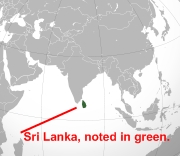
    Nor did John and Marian Morgan outmaneuver the government of Sri Lanka. They were arrested and jailed on the island, which is situated about 20 miles off the southern coast of India, in August. Sri Lanka deported them, and the United States brought them home earlier this month.

    morgansrilankaIt’s big news in Sarasota — and it should be big news among the autosurf or forex/HYIP schemers who are telling you the United States is powerless to act against “offshore” enterprises or people inclined to start a get-rich-quick program and then scurry offshore one step ahead of what surf promoters derisively describe as the “sheriff” or “Big Brother.”

    Do yourself a favor and read this story in the Sarasota Herald Tribune. Longtime opponents of the autosurf “industry” — in this upside-down world, the opponents are called “naysayers” and the Ponzi advocates are called “leaders” — will recognize the utter absurdity.

    Sadly, though, most of the “leaders” likely will be too busy “leading ” the troops to even bigger and better catastrophes to take the time to read it.

    Or they simply won’t care because leading people into catastrophes pays too well.

    If you missed it earlier, take the time to read this story on how the FBI brought home Jeffrey Lane Mowen from Panama to face charges in a Utah Ponzi case that now has morphed into murder-for-hire investigation.

  • RECOMMENDED READING: ‘Speed Of Wealth’ Defendant In Ponzi Scheme Case Pounds Denver Reporter With Offers To Join Trump Network, Other Opportunities

    EDITOR’S NOTE: The story below references a column by Renee McGaw in the Denver Business Journal. Make sure you read the column. The link is at the bottom of this story.

    The column reminded us of what occurred in the opening hours of the prosecution against the assets of Florida-based AdSurfDaily Inc., accused in August 2008 of operating a $100 million Ponzi scheme. Reporters who called ASD got a recording featuring the voice of ASD President Andy Bowdoin and intoning that God was on the company’s side.

    Within hours, Bowdoin’s supporters were complaining on Internet forums that the media refused to take ASD’s side of the story seriously.  Rather than questioning why the media might find such a recording important enough to mention in stories, Bowdoin’s apologists then sought to discredit reporters by casting them as conspirators in a plot to defame Bowdoin and to discredit members of law enforcment by painting the government as “evil.” The attack even featured a campaign to have a Florida television station and Florida Attorney General Bill McCollum charged with Deceptive Trade Practices for daring to raise the issue of the legitimacy of ASD.

    McGaw’s column on a Colorado company, Speed of Wealth LLC, is remarkable in a number of ways, perhaps principally in the sense that it shines a light on relentless email pitches to join online money-making “opportunities.” Not even serious Ponzi scheme allegations against Speed of Wealth principal Wayde McKelvy prevented McGaw from receiving pitches for other programs from him. The column leaves us with this question: Is it any wonder that much of America and the world views Internet Marketing as a vast wasteland filled with fraudsters and schemers?

    On a side note, readers of the PatrickPretty.com Blog occasionally have chided us about our view that exclamation points should be used like garlic — sparingly. We’ve enjoyed the banter on the topic. McGaw’s column also raises the issue of exclamation points in marketing pitches.

    Here, now, the story . . .

    Denver Business Journal reporter Renee McGaw says she is being pounded with offers from Wayde McKelvy, a defendant in a Ponzi scheme lawsuit filed by the SEC last month.

    McKelvy’s Colorado firm, Speed of Wealth LLC, was accused by the SEC of pitching a “green” Ponzi scheme for Mantria Corp. of Pennsylvania. The names of President Obama, former President Clinton and Secretary of State Hillary Clinton were prominently featured in a Mantria video that played on the Speed of Wealth website. The video, now missing from the site, was based on events that occurred in September at the annual meeting of the Clinton Global Initiative (CGI), one of President Clinton’s signature undertakings after he left the White House in January 2001.

    McKelvy describes himself as a wealth coach — and not even the assertion he was part of a $30 million fraud has slowed him down, McGaw reports.

    In a column yesterday, McGaw said she sent McKelvy an email Nov. 16 to inquire about the SEC allegations. (The SEC had brought the allegations earlier on the same day.) McGaw’s email to McKelvy triggered what she described as automated pitches describing her as a “fellow Wealthalete” and urging her to join money-making programs.

    “I am totally focused on one thing right now which I believe will be very, very fun and the opportunity to put money in your pocket by owning you’re own business with the help of ‘The Donald’,” McGaw quoted McKelvy as writing in an email Nov. 18, two days after the SEC filed civil charges against McKelvy, his former wife, and Mantria officers Troy Wragg and Amanda Knorr.

    The columnist noted she did not correct McKelvy’s spelling or punctuation when reproducing the email for readers of the Denver Business Journal.

    “Yes, I am talking about the ‘Trump Network,’” McKelvy stressed to McGaw.

    McGaw reported that McKelvy’s pitches often featured subject lines consisting of all capital letters and ending with exclamation points.

    “YOU MUST START YOUR OWN BUSINESS Renee!” McKelvy advised McGaw in one email. “What You Have Been Taught About Building Wealth is DEAD WRONG!”

    Through the Mantria video, Speed of Wealth also dropped the names of former U.N. Secretary General Kofi Annan, President Laurent Gbagbo of the Ivory Coast, Mike Duke, CEO of Wal-Mart, Muhtar Kent, CEO of the Coca-Cola Co. and actor Matt Damon.

    All of the individuals were among the prominent attendees of President Clinton’s CGI function. The video featured footage of Wragg appearing on stage next to Clinton.

    Mantria was a “supposed ‘carbon negative’ housing community in rural Tennessee,” the SEC said.

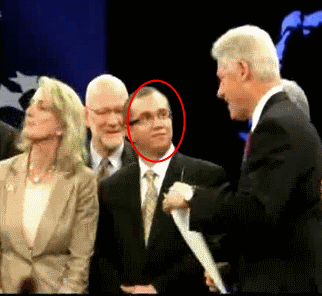
    Screen shot: Troy Wragg, whom the SEC said today was a manager at a janitorial company before becoming CEO of Mantria Corp., next to President Clinton at the annual meeting on the Clinton Global Initiative in New York on Sept. 25.
    Screen shot: Troy Wragg, whom the SEC said was a manager at a janitorial company before becoming CEO of Mantria Corp., next to President Clinton at the annual meeting on the Clinton Global Initiative in New York on Sept. 25.

    But the “green” representations “were laced with bogus claims, and investors were falsely promised enormous returns on their investments ranging from 17 percent to ‘hundreds of percent’ annually,” the SEC said.

    The agency charged that “Mantria’s environmental initiatives have not generated any significant cash, and any returns paid to investors have been funded almost exclusively from other investors’ contributions.”

    “These promoters fraudulently exaggerated Mantria’s green initiatives and used high-pressure tactics to convince investors to chase the promise of lucrative returns,” said Don Hoerl, director of the SEC’s Denver Regional Office. “In reality, the only green these promoters seemed interested in was investors’ money.”

    Read McGaw’s column in the Denver Business Journal.

  • REPORT: Former SEC Supervisor Aided Arizona ‘Numerologist’ Running A Ponzi Scheme; SEC Employee In Separate Case Probed For Threatening Boss, Bringing Weapons To Work

    H. David Kotz, SEC Inspector General
    H. David Kotz, SEC Inspector General

    A former supervisor with the Securities and Exchange Commission unwittingly aided a man accused of operating a Ponzi scheme in Arizona, according to a report by SEC Inspector General H. David Kotz.

    Meanwhile, Kotz reported that the Office of Inspector General (OIG) also investigated a case in which an SEC enforcement accountant allegedly threatened a supervisor by email. The supervisor, according to Kotz, reported the incident to the SEC’s Security Branch, claiming that the accountant “routinely brought a ‘large buck knife’ to work.”

    A “buck knife” commonly is associated with hunting, although the report did not identify the weapon as a hunting knife.

    On April 1, investigators interviewed the accountant and discovered he was carrying a folding knife with “a 31/2 to 4-inch blade.” An investigator also discovered two similar knives in the accountant’s back pack. The knives were confiscated “immediately,” and the accountant was placed on leave and banned from the building.

    “The OIG found that the Enforcement Accountant violated Title 18 U.S.C. § 930 of the
    Federal criminal code by knowingly carrying dangerous weapons into a federal facility,” according to the Kotz report. “Specifically, the OIG found that on April 1, 2009, the Enforcement Accountant knowingly possessed at least three ‘dangerous weapons’ in a ‘federal facility,’ as those terms are defined in 18 U.S.C. § 930(g), and had routinely been in possession of dangerous weapons within the SEC building for several years despite his own admission that he knew it was unlawful to do so.”

    Investigators also discovered evidence that suggested the accountant “was not completely truthful in his testimony before the OIG and in his previously-submitted Declaration for Federal Employment regarding his prior criminal conviction and probation for driving while intoxicated.”

    Federal prosecutors referred the case to an administrative proceeding, and the SEC is seeking to fire the accountant. The dismissal case is pending.

    Ponzi Case And ‘Soothsayer’

    In the Ponzi case, the OIG concluded that a former supervisor in the SEC’s Office of Administrative Services used an SEC computer to exchange “approximately 2,300 e-mails that were related to the Ponzi scheme perpetrator and his companies.”

    Although the Kotz report did not identify the specific Ponzi suspect by name, the Arizona Corporation Commission (ACC) did in a June 11 news release: Jerome Carter of Scottsdale.

    ACC identified Carter as a purported “soothsayer” who could predict the future. Carter said on his website that he checked into a hotel in the World Trade Center on Sept. 10, 2001, one day before the 9/11 attacks.

    Getting a “bad feeling” later in the day, Carter said, he checked out of the hotel. The Trade Center complex was struck by two hijacked airliners the next day, killing nearly 3,000 people.

    Carter himself was killed in a motorcycle accident in September 2009, about four months after admitting he had operated the Ponzi scheme.

    “Through a website, video teleconferences, radio shows and event appearances, Carter proclaimed himself as an international numerologist and spiritual adviser who could predict the future,” ACC said. “While working as a life coach to individuals in his VIP coaching program, Carter represented to potential investors that he could, through the use of numerology concepts, improve their financial well-being by investing in futures and commodities.

    “As owner and operator of The Greatest Only Divine Productions, LLC and Good Only Done Productions, Carter sold investment and commodity contracts totaling $432,450 to at least 65 investors,” ACC said. “The Commission found that Carter used investor funds for his own personal use and benefit, but in Ponzi-like fashion, returned a total of $154,450 to some of the investors. In settling this matter, Carter admits to the Commission’s findings and agrees to the entry of the consent order.”

    During its probe of Carter, ACC came into possession of emails from the SEC supervisor and turned them over to the OIG.

    “The ACC investigator also informed the OIG that several other witnesses in the ACC investigation had identified the Supervisor as the person who handled money for this Ponzi scheme perpetrator and his companies,” the Kotz report said.

    OIG investigators did not name the supervisor in the report, but said she took early retirement after the OIG probe began and accepted a $25,000 buyout.

    “The OIG discovered that during the period in question, the Supervisor used her SEC e-mail account to conduct business on behalf of the Ponzi scheme perpetrator and his companies on virtually a daily basis,” the Kotz report said. “The OIG found that the Supervisor was extensively involved in handling the payments to and from his victims, and used her SEC e-mail account to communicate directly with those victims.”

    No evidence was found that the supervisor knew Carter was operating a Ponzi scheme.

    OIG investigators “did find that the Supervisor violated Commission rules and policies on the use of SEC office equipment, as well as the Standards of Ethical Conduct for Employees of the Executive Branch by using the SEC’s email system, her SEC computer, and other SEC resources to assist the Ponzi scheme perpetrator operate his companies, whether or not she knew those companies were a Ponzi scheme,” according to the report.

    Federal prosecutors declined to file criminal charges, the Kotz report said. The OIG recommended that the SEC try to claw back the $25,000 buyout accepted by the former supervisor, and the matter is pending.

    Read the Inspector General’s report.

  • Shawn Merriman Pleads Guilty In Colorado Ponzi Case; Faces 20 Years In Prison For Swindling Investors And Using Money To Buy Rembrandt Paintings And Go On Safari

    breakingnewsShawn R. Merriman has pleaded guilty to mail fraud in a Ponzi scheme case that swindled dozens of investors in Colorado,  Minnesota and Utah. The scheme involved more than $20 million, prosecutors said.

    Merriman, 46, of Aurora, Colo., faces up to 20 years in prison and a fine of up to $250,000. The SEC said he used some of the money to buy valuable art, including works by Rembrandt.

    Like Bernard Madoff and others, Merriman’s scheme featured bogus account statements.

    “Merriman repeatedly deceived investors, many of whom considered him a personal friend, by sending them fictitious account statements showing annual rates of return of 7 to 20 percent,” the SEC said.

    But Merriman “did not trade stocks and options after his first year of operations,” the SEC said.

    Regardless, “he used millions of dollars in investor funds to support his lavish lifestyle and pay out withdrawals by other investors. He also offered ‘rebates’ to existing investors to entice them to invest additional money with him.”

    Merriman also bought “classic cars, motorcycles, motor homes, a cabin in Idaho and fine art collections, including works by Rembrandt that are worth millions of dollars,” the SEC said.

    Partial list of art seized by prosecutors in Shawn Merriman Ponzi case.
    Partial list of art seized by prosecutors in Shawn Merriman Ponzi case.

    Among Merriman’s cars seized by prosecutors were an Aston Martin and a 1930 Lincoln. Prosecutors also seized at least 34 firearms, along with taxidermy. One of Merriman’s pastimes was safari.

    Prosecutors said Merriman operated his scheme for 15 years before it collapsed. He once was a Mormon bishop.

  • BREAKING NEWS: Two-Time Convicted Felon With $3 Million Judgment Against Him Emerged From Prison And Targeted Ponzi Scheme At Chinese-Americans In Oklahoma City, CFTC Says

    ponzinewsA man imprisoned between 1996 and 2001 after being convicted in Texas of two financial felonies emerged from the penitentiary and targeted Greater Oklahoma City’s ethnic Chinese in a Ponzi scheme, the U.S. Commodity Futures Trading Commission (CFTC) said.

    Kenneth W. Lee also had a $3 million civil judgment placed against him in the 1990s in a fraud case, CFTC said.

    Despite the felony convictions and the huge judgment against him, Lee and business partner Simon Yang hatched a new scheme in 2003. Yang pitched the scheme to members of his church in Edmond, Okla., CFTC said.

    Information shown prospects to get them to join the scheme claimed Lee was an exceptional trader. But when investigators reverse-engineered literature about Lee’s alleged prowess, they discovered that Lee was in prison during a time in which Lee and Yang claimed Lee was “achieving great returns,” CFTC said.

    CFTC’s announcment of the filing in Oklamoma City came only hours after it had joined with the SEC yesterday in announcing a Ponzi complaint against radio talk-show host Pat Kiley and his colleague Trevor G. Cook in Minnesota.

    The Oklahoma Ponzi scheme operated at least in part from South Carolina and Texas. Two companies named co-defendants along with Lee and Yang claimed to be registered corporations in Panama, CFTC said.

    Charged with Lee and Yang were Prestige Ventures Corp.  and Federated Management Group Inc. (FMG). The Oklahoma Securities Commission joined in the prosecution.

    Regulators said the 13-year-old judgment for $3 million against Lee in Texas also included a company named Federated.

    Lee was convicted of felonies in both 1995 and 1996, CFTC said.

    Yang, the agency said, also used the aliases Simon Chen and Xiao Yang.

    “[T]he defendants fraudulently operated a commodity futures pool that had at least $8.7 million in assets and 140 participants,” CFTC said.

    Lies, Losses, Yacht Fees

    Lee and Yang lied to participants, never telling them about Lee’s felony convictions or the judgment. At the same time, CFTC said, they issued bogus account statements that “consistently showed monthly profits generated by Lee’s purportedly successful trading of commodity futures, foreign currency (forex) and other instruments.

    “However, Lee sustained net losses of approximately $4.3 million trading primarily commodity futures and forex,” CFTC said. “Lee, Prestige and FMG also allegedly misused pool participant funds to pay off other pool participants and for personal use, such as paying for cars and yacht fees and funneling money to family members.”

    Yang was charged with submitting a false declaration to CFTC in response to a subpoena requiring the production of documents and information relating to Yang, Lee, FMG and others.

    “In his declaration, Yang falsely claimed that he solicited only through email based on information on the FMG website, that the persons he solicited did not open accounts and that he no longer solicited for FMG,” CFTC said.

    Both Yang and Lee also failed to tell prospective pool participants that Yang and Lee were under investigation by federal authorities.

    In 2003, just two years after Lee’s release from prison, Yang and Lee reported to prospects that Prestige had $1 billion in assets under management and FMG had up to $379 million, CFTC said.

    They also falsely told participants that Lee “never suffered losses,” that FMG’s marketers or solicitors were members of the National Futures Association and that the accounts of participants were insured by FMG’s credit union.

    U.S. District Judge David L. Russell froze the defendants’ assets and appointed a receiver.

  • Conservative Radio Host Allegedly Cited Islamic Law To Dupe Christian Investors; Pat Kiley Issued Dire Warnings About ‘Greed’ Of Former President Clinton And ‘Massive Chaos’ To Come Under Obama

    A radio host pitched his Ponzi scheme to listeners and told some clients that his strategy employed an unnamed Islamic bank that complied with Shariah law in an apparent bid to make investors believe the firm borrowed money to trade currency on international exchanges without having to pay interest, according to the SEC.

    Shariah law prohibits the payment or acceptance of interest.

    Despite Patrick “Pat” Kiley’s assertion that his financial firm took advantage of an Islamic bank to reduce its borrowing costs to zero, Kiley, 71, made no secret that his firm paid spectacular sums of interest to investors, according to the SEC complaint made public yesterday.

    Kiley’s “Follow The Money” radio program was carried on 200 stations and also was available on Christian shortwave radio before going off the air in July, when investors began to raise public concerns about Kiley. The gravelly voiced host and co-defendant Trevor G. Cook now have become the central figures in an alleged $190 million Ponzi fraud in Minnesota.

    Some homemade videos into which the audio of Kiley’s radio broadcasts was dubbed appear on YouTube and other video sites. Kiley’s listener’s appear to have made the videos, rather than Kiley himself.

    One video — with audio from Kiley’s show dubbed in — featured Kiley advising his audience that he was about to share shocking, “confidential” information about an “unprecedented wave of massive, massive social chaos” about to occur in the United States.

    Although the video appears to have been posted in May 2009, the audio appears to have been dubbed from an earlier Kiley program that coincided with Barack Obama’s ascension to the Presidency.

    Things under Obama could get so out of control, Kiley suggested, that the U.S. military was on standby to deal with civilian insurrection through a law-enforcement arm known as the Consequence Management Response Force (CCMRF).

    CCMRF is a real branch of the Army, but it is not designed to engage in war against citizens. Rather, it is designed to respond to “chemical, biological, radiological, nuclear and high-yield explosive” incidents, according to the Army.

    Col. Lou Vogler, quoted on an Army website in September 2008, said CCMRF also was designed to complement local first-responders to disasters and emergencies. The Army cited the 9/11 terrorist attacks as the type of situation to which CCMRF would respond.

    News of the spectacular federal allegations against Kiley and Cook broke yesterday, even as the state was reeling from the alleged $3.65 billion Tom Petters’ Ponzi scheme, the alleged $100 million AdSurfDaily Ponzi scheme and the alleged $53 million Ponzi scheme of Gerard Frank Cellette Jr.

    “Kiley represented to investors that the trading strategy involved investing in a long position in one currency and an offsetting short position in a second currency,” the SEC said. “Kiley also represented to certain investors that the strategy utilized a bank that complied with Shariah law, which forbids the payment of interest, and that because no interest was paid to establish the short position, a greater profit could be earned.

    “Kiley’s representations were false,” the SEC said.

    A scan of the court document showed that investigators had used the word “false” or “falsely” at least 40 times to describe assertions Kiley, Cook and the companies with which they were associated had made to investors to get them to part with money.

    Some of the companies used the initials UBS, but the SEC said the firms had no connection to UBS AG, the famous Swiss firm.

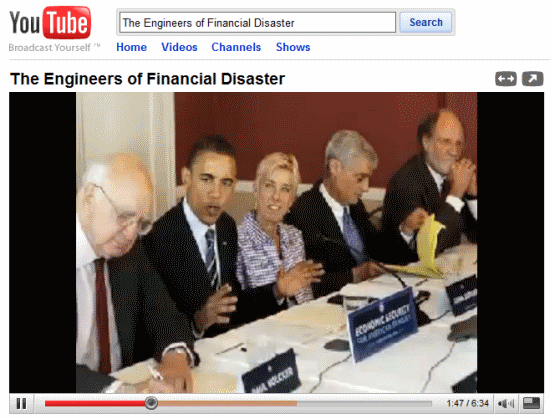
    Screen shot: An audio featuring the voice of radio-talk show host Pat Kiley was dubbed into this YouTube video, which featured a photograph of President Obama meeting with fiscal-policy advisers while Obama was President-Elect. Kiley intoned that the United States seemed ready to return to the "greed and irresponsibility" of fiscal policies advanced by former President Clinton.
    Screen shot: An audio featuring the voice of radio-talk show host Pat Kiley was dubbed into this YouTube video, which featured a photograph of President Obama meeting with fiscal-policy advisers while Obama was President-Elect. Kiley intoned that the United States seemed ready to return to the "greed and irresponsibility" of fiscal policies advanced by former President Clinton.

    Kiley sometimes used his radio show as a platform to rail against the administration of former President Bill Clinton, saying during one broadcast that Clinton’s fiscal policy was based on “greed and irresponsibility.”

    When Barack Obama became President-Elect after winning the White House in November 2008, Kiley warned listeners that Obama’s election signaled the return of Clinton-like financial policy.

    The video was titled, “The Engineers of Financial Disaster.”

    Only months later, Kiley finds himself at the center of a financial storm that may cause some investors and radio listeners to lose tens of millions of dollars.

  • BREAKING NEWS: ‘Billionaire Boys Club’ Attorney In Michigan Ponzi Scheme Case Indicted In North Carolina For Running His Own Securities Scheme

    ponzinewsUPDATED 7:02 P.M. ET (U.S.A.) A Georgia attorney representing defendants in the alleged “Billionaire Boys Club” Ponzi scheme in Michigan has been indicted in North Carolina on charges he ran his own securities-fraud scheme.

    Gregory Bartko, 56, of Berkeley Lake, Ga., was indicted in North Carolina under seal Nov 4, according to U.S. Attorney George E.B. Holding of the Eastern District of North Carolina. The seal was lifted Nov. 18.

    Bartko and a co-defendant were charged with three counts of mail fraud and two counts of making false statements. Prosecutors said the scheme also involved conspiring to commit mail fraud, laundering monetary instruments, engaging in unlawful monetary transactions, making false statements and obstructing proceedings of the United States Securities and Exchange Commission (SEC).

    Bartko is representing “Billionaire Boys Club” (BBC) defendants John J. Bravata, Shari Bravata and Antonio Bravata against civil charges in a case brought by the SEC in Detroit. The SEC said that as many as 400 investors were fleeced in a $50 million Ponzi scheme operated by John Bravata and a co-defendant, alleging the scheme paid for “expensive lifestyles” and “luxury homes, watercraft, jewelry, gambling, exotic vacations and expensive cars.”

    “Indeed, John Bravata used money from the first two investors to buy himself a $90,268 Ferrari,” the SEC said. “John Bravata and [co-defendant Richard] Trabulsy spent at least $7 million of the investors’ money for their own benefit, and for the benefit of John Bravata’s wife, Shari A. Bravata, and son, Antonio Bravata.”

    The 2009 Michigan case became known as the “Billionaires Boys Club” prosecution because a Bravata company was named “BBC Equities,” and the SEC asserted in July 2009 that BBC was intended to stand for “Billionaire Boys Club.”

    A California Ponzi scheme in the 1980s also was known as “The Billionaire Boys Club.”

    Despite the indictment against him in North Carolina, Bartko advised U.S. District Judge David M. Lawson of the Eastern District of Michigan that he intends to proceed as the attorney for the Bravata family members without objection from his clients.

    In North Carolina, prosecutors said Bartko operated a “criminal investment fraud scheme” and “held himself out as an investment banker” to carry out the scheme.

    Darryl Lynn Laws, Bartko’s co-defendant in the North Carolina case, posed as a “Ph.D. in finance” for his role in carrying out the scheme, prosecutors said. Laws, 58, lives in La Jolla, Calif.

    “Bartko and Laws used bank accounts controlled by Bartko in Georgia to collect hundreds of thousands of dollars in proceeds from fraudulent sales of investments,” prosecutors said. “[N]early all of the money collected by Bartko and Laws as part of the scheme had been obtained by a single salesman, [Scott Bradley Hollenbeck].

    “In making these sales, Hollenbeck used numerous materially false statements and omissions, including false promises to investors designed to conceal the true risk of the investment, such as ‘guarantees’ of yearly earnings of at least 12%, and the promise that the investment was insured when it was not,” prosecutors said.

    Hollenbeck is named an unindicted co-conspirator in the North Carolina case.

    Read the “Billionaire Boys Club” complaint by the SEC. Bartko is representing three defendants in the BBC case.

    Read a statement by U.S. Attorney George E.B. Holding announcing the indictment against Bartko in North Carolina.

    The United States Postal Inspection Service, the FBI and the IRS Criminal Investigation Unit are doing the legwork in the North Carolina case, prosecutors said.