Tag: SEC

  • ASD ALL OVER AGAIN? ‘3 Hebrew Boys’ Accuse U.S. Attorney Of ‘Treason’; Claim Draws Another Parallel To AdSurfDaily

    Three men found guilty in South Carolina last week of operating an $82 million Ponzi scheme accused a federal prosecutor of treason on the same day the jury returned its verdict, the FBI said.

    A treason claim also was made in the federal forfeiture proceeding against assets tied to Florida-based AdSurfDaily, an alleged Ponzi scheme involving $100 million.

    U.S. District Judge Margaret B. Seymour cited the treason claim in the “3 Hebrew Boys” case as a reason to send Joseph Brunson, Tim McQueen and Tony Pough to jail immediately to await sentencing.

    “After the jury’s verdict, Judge Seymour was asked to allow the men to remain free on bond until their sentencing,” the FBI said.  “She denied the request after noting that all three men filed documents [Friday] accusing U.S. Attorney Walt Wilkins of treason and committing acts of war by prosecuting them.”

    Brunson, McQueen and Pough became known as “3 Hebrew Boys” after operating a website with the same name, which is based on a biblical story of believers who escaped a furnace by relying on their faith. The Ponzi scheme operated under the name Capital Consortium Group LLC.

    Wilkens said the scheme targeted people of faith and members of the military.
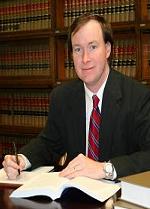
    U.S. Attorney W. Walter Wilkins
    U.S. Attorney W. Walter Wilkins

    “By calling themselves the Three Hebrew Boys, these con men tried to disguise their Ponzi scheme as a religious, charitable program of debt elimination in order to gain the trust of unsuspecting investors,” Wilkins said. “Unfortunately many people were victimized by these men, including many in our armed forces.”

    In the ASD case, the treason claim was made against U.S. District Judge Rosemary Collyer. ASD is known to have members who identify with the so-called sovereignty movement.

    California resident Curtis Richmond, a pro se litigant in the ASD case, identified himself in court documents in a separate case as a “sovereign” being who enjoyed diplomatic immunity from prosecution and answered only to Jesus Christ.

    Richmond is associated with a Utah “Indian” tribe ruled a “complete sham” last year by U.S. District Judge Stephen Friot. On the eve of a civil RICO trial last year, Richmond attempted to have Friot removed from the case by claiming he owed Richmond $30 million.

    Friot refused to step down in Utah, as did Collyer in the District of Columbia. Richmond accused Collyer earlier this year of operating a “Kangaroo Court” and violating her judicial oath. Collyer is presiding over the ASD civil-forfeiture case. Other filings in the ASD case suggested Collyer was guilty of as many as 60 felonies, and that an effort had been made by at least one ASD member to start a process to collect $120 million from Collyer, two federal prosecutors and a court clerk for “Interference With Commerce.”
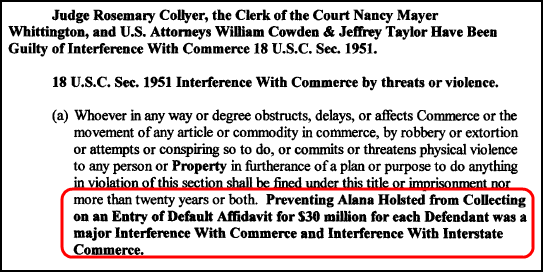
    Screen shot: Section of a pro se filing in the ASD case.
    Screen shot: Section of a pro se filing in the ASD case.

    Such bizarre claims have been popping up more and more in litigation involving securities.

    Gold Quest International (GQI), a company accused by the SEC last year of operating a Ponzi scheme from Las Vegas, claimed it was part of a North Dakota Indian tribe and was immune from U.S. law.

    After the SEC brought the charges against GQI in May 2008, Michael Howard Reed, the purported “attorney general” of the tribe, tried to sue the SEC for $1.7 trillion. The sought-after amount would have exceeded the total of federal income tax paid by individual U.S. filers last year by about $575 billion.

    U.S. District Judge Kent J. Dawson struck a series of pleadings by Reed from the record.

    Meanwhile, Dawson jailed John Jenkins, one of the defendants implicated in the Ponzi scheme, for contempt. Dawson also dispatched the U.S. Marshals Service to arrest David Greene, also known as “Lord David Greene,” in part for violating orders to repatriate money offshore to the United States.

    Despite Richmond’s behavior, he was labeled a hero on the Pro-ASD Surf’s Up forum. Over the weekend, Surf’s Up reinforced an earlier announcement that it would not permit discussion about the AdViewGlobal (AVG) autosurf.

    “[P]lease don’t expect any information that concerns AVGA,” a forum Mod said Saturday. “[I]t doesn’t belong on this forum.”

    Another Mod reinforced the ban on AVG discussion today.

    “In the beginning days of AVG we made it clear this is not an AVG forum and it still will not be,” the Mod said.

    Surf’s Up members repeatedly have said they wanted to discuss AVG, which has close connections to ASD. Their requests have been consistently rebuffed. Some of the Surf’s Up Mods were among the founding members of the AVG surf, which came to life after a major court ruling went against ASD last year.

    AVG purported to be a “private association” that operated offshore. Members used the “offshore” angle as a key selling point, saying the surf’s purported country of operation — Uruguay — insulated it from prosecution.

    Like the “3 Hebrew Boys” operation, AVG sought to prevent members from discussing the company outside the confines of areas it controlled. AVG members were scolded for sharing information and calling the autosurf an “investment” program.

    As AVG was in failure mode in May and June, members were threatened with copyright-infringement lawsuits. Critics were told AVG would contact their ISPs to file abuse reports and suspend service.
  • BREAKING NEWS: Prosecutors Allege Ponzi Murder Plot; Jeffrey Lane Mowen Accused Of Soliciting Prisoner To Kill Witnesses In Multimillion-Dollar Case Against Him

    EDITOR’S NOTE: In August, a poster here who defended autosurf Ponzi schemes demanded readers to “show me one time where the [U.S. government] has even started a lawsuit or ‘gone after’ a company off shore.” The post concerned the AdVentures4U (ADV4U) autosurf, which, like a number of autosurfs, claimed legal ties to Panama. Promoters said the purported ties insulated the surf from prosecution. Readers responded by providing several examples of prosecutors extending their reach beyond U.S. domestic soil to pierce the illusion of corporate veils and bring schemers to justice.

    The story below is about an alleged Utah Ponzi, real-estate leveraging and forex-trading scheme in which the operator was arrested in Panama, brought back to the United States and jailed.

    While Jeffrey Lane Mowen was in jail awaiting trial, the FBI said yesterday, he solicited a fellow inmate scheduled to be released in October to murder four witnesses “with the intent of preventing their attendance and testimony at his federal fraud trial” in the Ponzi scheme case.

    UPDATED 4:14 P.M. ET (U.S.A.) In a case that puts more than just the financial dangers of Ponzi schemes on full display, jailed Ponzi suspect Jeffrey Lane Mowen has been indicted in Utah on charges of hatching a plot to hire a fellow prisoner to kill four witnesses in the Ponzi scheme case upon the inmate’s release from prison.

    Mowen was indicted yesterday on charges of wire fraud, solicitation to commit a crime of
    violence, witness tampering and retaliating against a witness. Mowen, jailed in Davis County, Utah, earlier this year after being arrested by Panamanian authorities working proactively with U.S. officials, was extradited to the United States to face the original charges in the case.

    Jeffrey Lane Mowen
    Jeffrey Lane Mowen

    Prosecutors indicted Mowen in February under seal for the alleged Ponzi, announcing when the indictment was unsealed April 21 that he was “living outside of the United States.” He was arrested just three days later in Panama “by Panamanian authorities in conjunction with the FBI Legal Attache office,” the FBI said.

    U.S. authorities said Mowen used investor funds “to purchase more than 200 high-end antique, classic, and modern vehicles, including cars, trucks, trailers, motorcycles, three-wheelers, and other vehicles.”

    Mowen, 47, of Lindon, Utah, used his material possessions “as symbols of his success to investors,” the FBI said. The agency added that Mowen also used investor funds to “pay for personal expenses, including payments to himself and his [former] wife, dining expenses, vehicle storage fees, travel, utilities, and credit card expenses.”

    For its part in a separate civil case, the Securities and Exchange Commission alleged that Mowen had three prior convictions in Utah for securities fraud and two for theft. Despite Mowen’s criminal record and history as a fraudster, promoters still did business with him. Their faith drained millions of dollars from investors, the SEC said.

    Using language apt to cause unease in the autosurf Ponzi world, the SEC said one promoter “either knew or was reckless in not knowing that Mowen had multiple recent felony convictions involving crimes of dishonesty.”

    Indeed, the SEC said, the promoter learned in approximately late June 2007 that Mowen had been convicted of securities fraud . . . [but] continued to solicit new investor funds for several months while failing to disclose Mowen’s criminal history to any of the Promoters or their investors.”

    Downstream promoters who entrusted the promoter “conducted virtually no due diligence in connection with [his] purported investment opportunities, but transferred investor money to [him] without any documentation or limitation on his use of the funds,” the SEC said.

    “[T]he Promoters were reckless in failing to discover [his] association with Mowen and that their funds were being placed into a Ponzi scheme or used for other undisclosed purposes,” the SEC said.

    Among the SEC’s civil allegations against Mowen were that he siphoned off $8 million in investor funds for his personal use and transferred $650,000 to his former wife, who is named a relief defendant in the case.

    Authorities painted a picture yesterday of a scheme that had morphed from financial crimes that crossed international borders to murder-for-hire — all in the name of Ponzi profits.

  • Federal Judge Issues Restraining Order, Asset Freeze In Alleged Mantria Ponzi Scheme; Video Featuring President Obama, Former President Clinton And World Business Leaders Pulled From ‘Speed Of Wealth’ Website

    In a day of notable irony, the Obama administration announced the creation of an Interagency Financial Fraud Task Force led by the Department of Justice. Critical support functions will be provided by the Treasury Department, the Department of Housing and Urban Development and the Securities and Exchange Commission.

    One of the first cases the new Task Force may find itself discussing is the alleged Mantria Corp. Ponzi scheme — a scheme in which a video featuring an image of President Obama and recorded remarks by former President Clinton was used in marketing materials by the alleged schemers.

    Even as the Task Force announcement was being made, the SEC was announcing that a federal judge had granted a Temporary Restraining Order and asset freeze in the alleged “green” Ponzi operated by Mantria Corp. of Pennsylvania and sold by Speed of Wealth LLC of Colorado.

    Within minutes, a video featuring a snapshot of President Obama and recorded remarks by President Clinton at the Clinton Global Initiative (CGI) annual meeting in New York Sept. 25 went missing from Speed of Wealth’s website. Meanwhile, the Mantria website defaulted to a message that read, “We Are Rebuilding this Site to Make it the Most Informational Site Possible. Please check back with us in 10 days.”

    Only yesterday the Mantria website showcased a PDF that appeared to have been assembled in part from CGI press materials to spotlight President Clinton’s efforts to improve the world.

    The Speed of Wealth video, a marketing prop that dropped the names of famous politicians and international celebrities such as former U.N. Secretary General Kofi Annan and actor Matt Damon, still had been accessible this morning.

    That changed quickly after the announcement of the TRO and asset freeze. The SEC announced civil charges against Speed of Wealth and Mantria yesterday. Speed of Wealth’s video highlighted Mantria’s purported devotion to the environment, under the headline “Mantria Honored by President Bill Clinton and Secretary of State Hillary Clinton.”

    In the video, Mantria CEO Troy Wragg appeared on the stage next to President Clinton, Secretary of State Clinton and others. CGI had lauded Mantria for helping to “mitigate global warming through the use of its Carbon Fields site, where Mantria will perform trials on their product BioChar, a carbon-negative charcoal, to prove how this product can sequester carbon dioxide, improve soil quality when buried, and reduce emissions in developing countries.”

    Regulators said yesterday that BioChar was part of a $30 million Ponzi fraud.

    Despite claims that “Mantria was the world’s leading manufacturer and distributor of biochar and had multiple facilities producing it at a rate of 25 tons per day,” the SEC said, “Mantria has never sold any biochar and has just one facility engaged in testing biochar for possible future commercial production.”

    Others featured in the Speed of Wealth video included President Laurent Gbagbo of the Ivory Coast, Mike Duke, CEO of Wal-Mart and Muhtar Kent, CEO of the Coca-Cola Co.

    All of the individuals were among the prominent attendees of President Clinton’s CGI function.

    It is not unusual for companies to promote themselves by trying to establish ties to prominent figures. AdSurfDaily, a Florida company accused by the U.S. Secret Service and federal prosecutors of operating a $100 million Ponzi scheme, was featured in promotions that claimed company President Andy Bowdoin had received a special award for business achievement from President George W. Bush.

    Prosecutors said the claim was false. What ASD promoters had called an important award from the White House, investigators called a souvenir for donations to the National Republican Congressional Committee.

    What was unusual about the Speed of Wealth video is that it shamelessly dropped so many names of well-known people who attended the CGI event, a dignified function hosted by President Clinton that annually draws global political and business leaders.

    Some of the snap shots used in assembling the video appeared to have been pulled from media materials on CGI’s website.

    Along with showcasing the video cobbled together from one of President Clinton’s signature events, the Speed of Wealth website announced what it described as “the Partnership of the Century!” between itself and Mantria.

    Speed of Wealth said money was to be made while itself and Mantria were saving the environment and “helping Middle America secure its financial future!”

    Topics covered included:

    • Why investing in foreclosures today will make you rich and the only way you should be doing it is sitting on the beach in Bermuda while your foreclosure empire grows.
    • How to build $2,000,000 dollars of wealth with absolutely no money out of your pocket ever.
    • How to easily receive up to 25% returns on your money annually in an investment that I believe to be safer than a bank CD.
  • Defendant In $50 Million Texas Ponzi Taken Into Custody

    A previous encounter with the Securities and Exchange Commission and a $50,000 fine did not stop Benny Lee Judah from selling unregistered securities, and now Judah has been taken into federal custody.

    Judah, 50, of Lubbock, Texas, pleaded guilty today to one count of money laundering and one count of sale and delivery after sale of unregistered securities. He faces up to 20 years in prison and a fine of up to $250,000 on the money-laundering charge, and up to five years in prison and a $250,000 fine on the count of selling and delivering unregistered securities.

    Although his formal sentencing is scheduled later, Judah was taken into immediate custody by federal agents. His company, Excel Lease Fund Inc., already is in receivership. Judah’s assets have been frozen since April, when the SEC sued him for the second time this decade for selling unregistered securities.

    Both Judah and Excel were previously sued in 2001. He was fined and put on notice not to break securities laws. In 2005, however, he again began to sell unregistered securities, collecting at least $50 million, but Judah actually was running a Ponzi scheme and lying to investors that his company was profitable, investigators said.

    “As part of his scheme, Judah misrepresented the viability of Excel by failing to disclose the true and actual use of investor funds, and the true financial condition of Excel, thus allowing him to conceal, disguise and convert investor monies for unauthorized purposes,” prosecutors said. “He generated false documents consisting of prospectuses, balance sheets, income statements and interest accrual letters that were represented to be true in order to perpetuate the image of a successful company. He mailed these fraudulent documents to investors and received approximately $50,162,707. He represented to investors that Excel was profitable, when it was not, and grossly overstated the value and nature of Excel’s assets.”

    Restitution in the case was pegged at more than $48 million, according to records.

  • FBI Arrests 14, Including 2 Lawyers, In Major Insider-Trading Probe; SEC Says Attorneys Provided Tips For Kickbacks In Latest Scandal That Rocks Wall Street

    As the FBI and IRS executed search warrants at the Florida office of attorney Scott Rothstein this morning amid allegations he ran a covert Ponzi scheme that could have drained as much as $500 million from investors, prosecutors up north were concentrating on arresting lawyers in a separate case involving insider trading on Wall Street.

    U.S. Attorney Preet Bharara of the Southern District of New York announced the arrests of attorneys Arthur J. Cutillo of the prestigious law firm Ropes & Gray LLP of New York, and Jason Goldfarb, a New York attorney.

    Cutillo and Goldfarb were among 14 people charged in a case with ties to the alleged Raj Rajaratnam insider-trading scandal at the Galleon Group. Rajaratnam’s arrest last month rocked Wall Street.

    Today’s news demonstrated again that law-enforcement and regulatory agencies in all corners of the United States are seeking to put an end to a wave of financial crime that could undermine the public’s confidence in the markets and imperil economic recovery in the age of the corporate bailout.

    “When Wall Street professionals or others exploit inside information for an illegal tip-and-trade binge, they undermine the level playing field that is fundamental to our capital markets,” said Robert Khuzami, director of the SEC’s Division of Enforcement. “These defendants thought the rules that apply to all investors did not apply to them, but the one rule they cannot avoid is the rule of law. Now they face the prospect of financial penalties, industry bars, and even jail time for their indiscretions.”

    ‘A Bag Of Cash’

    Attorneys will not be permitted to ignore the law and hide behind their legal shingles, added Scott W. Friestad, associate director of the SEC’s Enforcement Division, using stark language.

    “Today’s action highlights the apparent ease with which far too many lawyers, hedge funds and Wall Street traders are willing to break the law to obtain a bag of cash, a trading advantage or other perceived benefit,” Friestad said. “It is fundamentally unfair for these individuals to profit at the expense of honest investors and compromise the integrity of our markets.”

    Although the emerging Rothstein Ponzi allegations in Florida are not connected to the Galleon Group insider-trading investigation in New York, California and elsewhere, dramatic developments last night and this morning in Fort Lauderdale were a stark reminder that financial crimes that were once unthinkable suddenly have become commonplace in the aftermath of the arrests of Bernard Madoff, Tom Petters, Allen Stanford, Arthur Nadel, Nicholas Cosmo and others implicated in Ponzi schemes for mind-boggling sums.

    Agents in Fort Lauderdale hauled away dozens of boxes of evidence, seized computers and thumb drives, copied computer hard drives, took control over an unspecified amount of cash, sifted through financial and other records — and also seized the key to a Ferrari.

    Though Rothstein has not been charged, the case has become a spectacle in Florida. The state has been rocked by one financial scandal after another involving allegations of mortgage fraud, hedge-fund fraud, affinity fraud targeting vulnerable residents, HYIP fraud, autosurf Ponzi scheme fraud and Ponzi schemes in general.

    In New York, far north of Florida’s warm climate, Bharara and the FBI released some of the details surrounding today’s arrests of lawyers and Wall Street insiders. For its part, the SEC made a separate flow chart to demonstrate how part of the fraud worked.

    SEC Flow Chart" Source: SEC
    SEC Flow Chart: Source: SEC

    Attorney Cutillo “had access to confidential information about at least four major proposed corporate transactions in which his firm’s clients participated,” the SEC said. “Through his friend and fellow attorney Jason Goldfarb, Cutillo tipped this inside information to Zvi Goffer,” a proprietary trader at Schottenfeld Group of New York.

    “Goffer promptly tipped four traders at three different broker-dealer firms and another professional trader Craig Drimal, who each then traded either for their own account or their firm’s proprietary accounts,” the SEC said.

    Cell Phone Intrigue Part Of Allegations

    In allegations that read like a cross between an Ian Fleming and Robert Ludlum novel, the SEC outlined some of the case.

    “Goffer was known as ‘the Octopussy’ within the insider trading ring due to his reputation for having his arms in so many sources of inside information,” the agency said. “Cutillo, Goldfarb, and Goffer at times used disposable cell phones in an attempt to conceal the scheme. For example, prior to the announcement of one acquisition, Goffer gave one of his tippees a disposable cell phone that had two programmed phone numbers labeled ‘you’ and ‘me.’

    “After the announcement, Goffer destroyed the disposable cell phone by removing the SIM card, biting it, and breaking the phone in half, throwing away half of the phone and instructing his tippee to dispose of the other half,” the SEC charged.

    Read the SEC news release.

    Read Bharara’s news release on the criminal charges to get the full list of defendants, at least five of whom already have pleaded guilty.

    Read part of the South Florida Business Journal’s ongoing coverage of the Rothstein allegations, which are not connected to the insider-trading case announced in New York today.

  • UPDATE: Another Parallel To ASD/Golden Panda/AVG Emerges In Canadian Probe Of Manna Trading Corp. Ltd.

    Yesterday we reported that the British Columbia Securities Commission (BCSC) ordered penalties and disgorgement totaling $42 million in the case against Legacy Capital Inc., Legacy Trust Inc., Manna Trading Corp Ltd. and Manna Humanitarian Foundation.

    We reported several parallels to the ongoing investigation in the United States into the business practices of AdSurfDaily/Golden Panda Ad Builder and the AdViewGlobal (AVG) autosurf.

    Another parallel has emerged, and it is a significant one: Two of the principals in the Canadian scheme previously had been disciplined for banking or securities violations.

    Hal (Mick) Allan McLeod was disciplined by the British Columbia Superintendent of Financial Institutions in 2003 for violations of the Financial Institutions Act and ordered to “cease carrying on a trust or deposit business,” BCSC said.

    Citing the superintendent’s order, BCSC said two companies with which McLeod had served as a director — First Capital Trading & Financing Corp. and First Capital Credit Corp. — “took and kept funds from the public, and engaged in conduct that was deceptive and misleading.”

    David John Vaughan, meanwhile, “was disciplined by this Commission [in 1999] for engaging in an illegal distribution that had many features in common with the Manna scheme,” BCSC said. “Orders against him from that misconduct remain in force today.”

    In the 1990s, both ASD President Andy Bowdoin and Golden Panda Ad Builder President Clarence Busby had run-ins with securities regulators.

    Bowdoin pleaded guilty to felonies in Alabama and was sentenced to a year in prison. The sentence was suspended when he agreed to pay restitution. In August 2008, he sent his victims a restitution check for $100. One month earlier, in July 2008, nearly $50,000 in ASD funds were used to purchase a luxury Lincoln sedan registered in the name of Bowdoin/Harris Enterprises, prosecutors said.

    Florida now has revoked ASD’s corporate registration and dissolved the registration of Bowdoin/Harris Enterprises. Although both companies are involved in serious litigation that potentially affects thousands of people, neither company submitted required annual reports to maintain their corporate standing. Florida provided the companies a five-month buffer to file the required paperwork. Neither firm complied.

    In May 1998, a federal judge permanently enjoined Clarence Busby from violations of the Securities Act of 1993 and the Securities Exchange Act of 1934. Busby was ordered to pay $15,000 in disgorgement for ill-gotten gains he had received “from sales of interests in three prime bank schemes,” the SEC said.

    The SEC waived the penalty because Busby certified he was unable to pay, the SEC said.

    Busby and Bowdoin went on a decade later to form Golden Panda Ad Builder after discussing the surf on a Georgia fishing lake in April 2008. In July 2008 — just prior to the seizure of tens of millions of dollars from the bank accounts of ASD and Golden Panda — Bowdoin distanced himself from Busby after Busby’s run-in with the SEC became known publicly.

    The “cause and effect” of Bowdoin’s actions with Golden Panda never has been clear. For example, was Bowdoin really too busy to run Golden Panda with Busby — as Bowdoin suggested — or did Bowdoin distance himself from Golden Panda because he learned about Busby’s alleged SEC violations and feared the allegations could lead to a probe of ASD?

    Golden Panda surrendered its claim to more than $14 million in the U.S. Secret Service probe. Busby now is listed as the “chief consultant” to BizAdSplash (BAS), another surf — one that purports to be operating offshore.

    BAS suspended payouts earlier this year, and then announced a relaunch. The firm, according to its website, now is selling tiered “charter memberships” for as much as $10,000.

    A “Presidential” charter membership is priced at $10,000; an “Executive” charter membership is priced at $5,000. Two other tiered charter memberships — “Visionary” and “Pioneer” — are sold at $2,500 and $1,000, respectively.

    BAS has not updated the news on its website since Oct. 7, nearly three weeks.

    Canadian officials say the whereabouts of three of the respondents in the Manna probe who were ordered to pay huge financial penalties is unknown. McLeod, Vaughan and Kenneth Robert McMordie (also known as Byrun Fox) “have fled the jurisdiction,” BCSC told The Globe and Mail, in a story published this morning.

    The Royal Canadian Mounted Police have opened a criminal investigation, BCSC said.

    Like ASD/Golden Panda, AVG and BizAdSplash, the Canadian Ponzi schemers pushed debit cards to offload profits, BCSC said.

    “Manna fraudulently used the investments of later investors to fund the promised returns to earlier investors, to pay commissions to the affiliates and consultants, to invest in an online gaming business, and to buy real estate in Costa Rica,” BCSC said.

    Other traits the Canadian scheme and the alleged U.S. scheme involving Bowdoin, Busby and offshoot companies had in common include:

    • Secrecy. AVG, for instance, did not identify its executives, morphed into a “private association” and advised members not to share information outside association walls.
    • False information. Some ASD members repeatedly have asserted that the U.S. government has admitted ASD was not a Ponzi scheme. Other members have sent emails that suggest participants should not cooperate with the U.S. Secret Service.
    • Offshore venues. Both AVG and BAS, for example, claim connections to South America and Central America, leading to fears that money could be hidden.
    • Use of ‘common law’ in various writings. Some ASD pro se litigants have cited common law in court filings in defense of the surf. One apparent argument of the litigants is that all commerce is legal as long as there is is contract between two parties. In the Canadian case, some purveyors of the scheme pushed what authorities described as a “private common law spiritual trust.”
    • Efforts that can be viewed as intimidation tactics. AVG, for example, threatened to sue members who shared information and to file abuse complaints with the Internet Service Providers of participants who complained on online forums.
    • Purported ties to charitable entities. AVG, for instance, advertised that it supported the World Rain Forest Movement. In Canada, Manna advertised the Manna Humanitarian Foundation.
    • An MLM-style sales structure. All of the Canadian and U.S. entities sold the programs as multilevel marketing opportunities.
    • Earnings “compounding.” Both the Canadian schemes and the alleged American schemes encouraged members to keep money in the systems and employ compounding strategies to maximize earnings.

  • BULLETIN: Richard S. Piccoli, 83, Sentenced To 20 Years In Prison For Ponzi And Affinity-Fraud Scheme

    In a case that features some of the same elements of the alleged AdSurfDaily Ponzi scheme — a senior citizen as the operator, appeals to religion, the sale of unregistered securities, commingling of funds, seized assets and advertising materials that promised a payout — an 83-year-old New York man today effectively was sentenced to life in prison.

    Richard S. Piccoli, the Buffalo-area man who operated the Gen-See Capital Corp. Ponzi scheme that targeted Catholic priests, parishioners and senior citizens, received 20 years. He pleaded guilty in June to a single count of mail fraud and a single count of tax fraud. Gen-See pleaded guilty to a single count of mail fraud.

    Many more counts could have been filed.

    Piccoli cooperated in the probe when caught, “to give up other assets whose value has not yet been determined, such as life insurance policies, property and stocks,” prosecutors said in June, after Piccoli’s guilty plea.

    U.S. District Judge William M. Skretny said he understood the sentence meant Piccoli likely would die in prison.

    “It’s time after all these years to pay the price,” the judge said, according to The Buffalo News.

    Federal prosecutors and the SEC said the scheme had operated for more than 30 years, draining investors of their life savings, college savings and retirement savings.

    “Our seniors and clergy are absolutely pleased with Gen-See’s Re-Investment Program,” Piccoli said, according to marketing materials gathered by investigators as evidence in the case.

    Piccoli’s ads said, “[S]erving Seniors and Retirees Since 1975.”

    Authorities became wise to Piccoli, and he became the target of a sting operation by the U.S. Postal Inspection Service and the IRS. He was arrested in January. Losses suffered by victims may total $25 million.

    Like the ASD case, investigators located resources before the scheme collapsed entirely, seized assets and announced plans to provide a restitution program. Approximately $6 million has been located, and investigators continue to seek other assets that can be pooled to compensate victims.

    Investigators said Piccoli simply dumped money into a checking account, issued bogus certificates to investors and paid redemptions with new money that entered the system. Customers thought they were investing in a mortgage company.

    “[B]ank records show that Gen-See’s only business activity is depositing checks written by new investors or existing investors depositing more funds, and the payment of checks to investors using funds received from other investors,” prosecutors said.

    Piccoli’s attorneys, citing their client’s age, asked the judge for a downward departure from sentencing guidelines that could have led to a sentence of 24.5 years, saying a six-year sentence was long enough for an old man.

    Prosecutors, however, argued for enhanced sentencing because the case included more than 250 victims, at least 100 of whom were put in danger of insolvency.

    Read story in The Buffalo News.

    Read the SEC complaint.

    Piccoli was 82 when arrested in January. Investigators said he advertised in Catholic newspapers

  • INCREDIBLE: Yet Another Florida Man Indicted In Alleged Ponzi Scheme; Prosecutors Say Sean Healy Of Weston Bought A Bentley And ‘Several Ferraris’

    There has been nonstop news about Florida Ponzi schemes in the past 48 hours. Several indictments have been announced, the latest involving Sean Healy of Weston.

    Healy, 38, was charged in a 55-count indictment unsealed in Pennsylvania with multiple counts of wire fraud, mail fraud, money laundering and obstruction of justice.

    Prosecutors said Healy “spent the money to fund a lavish lifestyle.”

    Purchases included “numerous exotic vehicles and sport cars, including a Bentley and several Ferraris, Lamborghinis and Porsches worth over $2.3 million,” prosecutors said.

    Obstruction of justice was charged because Healy thwarted a grand jury by providing “phony bank statements and phony trading records, indicating that the Pennsylvania investor’s money was used for legitimate trading activity in stocks and commodities,” prosecutors said.

    “When the authentic records were obtained, they revealed that Healy had simply spent the money on his extravagant lifestyle and used some of it to pay back earlier investors who he defrauded between 2003 and 2008,” prosecutors said.

    The grand-jury probe began in March, after an investor who had been scammed in Pennsylvania sued Healy and his wife, Shalese Rania Healy, in U.S. District Court in the Southern District of Florida, alleging that Pennsylvania investors had lost $14.6 million with Healy between April 2008 and February 2009.

    In July, the SEC and CFTC sued Healy in a case that alleged massive fraud. Also named in the complaints was Healy’s company, Sand Dollar Investing Partners LLC. Healy’s wife was named a relief defendant, meaning investigators believed she had received ill-gotten gains from the scheme.

    CFTC said investor funds also were used to purchase gold bullion and “to lease a luxury suite at Miami’s BankAtlantic Arena.”

    The sky was the limit, said an SEC official.

    “Rather than investing the money as he promised, Sean Healy used investor funds to finance an extravagant lifestyle for himself and his family,” said Antonia Chion, associate director of the SEC’s Division of Enforcement.

    The July complaint by the SEC also alleged that Healy provided false information to the U.S. Attorney’s Office for the Middle District of Pennsylvania, which brought the obstruction charges and the other charges. The indictment was unsealed yesterday in Harrisburg, Pa.

    Dennis Pfannenschmidt, U.S. Attorney for the Middle District of Pennsylvania, cataloged the spectacular purchases Healy allegedly made with investors’ funds.

    In addition to the automobles, Healy also bought a $2.4 million waterfront mansion furnished with more than $2 million of home improvements, plus $1.5 million in men’s and women’s jewelry, Pfannenschmidt’s office said.

  • BREAKING NEWS: SEC Attacks ANOTHER Alleged Florida Ponzi And Affinity-Fraud Scheme; FBI Investigating Amid Report Indictments Alleging Securities Fraud, Wire Fraud, Money-Laundering And Conspiracy Have Been Unsealed

    UPDATED 2:03 P.M. EDT (U.S.A.) The Securites and Exchange Commission — which announced yesterday that it had broken up a $22 million Ponzi scheme in Florida — announced today that it was working with the FBI to break up yet another Ponzi scheme in the Sunshine State.

    The newest scheme was targeted at Haitian-Americans who were promised investment returns of 100 percent every 90 days, the SEC said.

    It was not immediately clear when the criminal indictments would become available for public viewing, but the SEC said the indictments were unsealed this morning in Florida.

    Charged civilly by the SEC were HomePals Investment Club LLC and HomePals LLC (Home Pals), and their principals, Ronnie Eugene Bass Jr., Abner Alabre and Brian J. Taglieri.

    Bass, Alabre and Taglieri are charged criminally with securities fraud, conspiracy to commit securities fraud, wire fraud and money laundering, the SEC said.

    “The extraordinary promises made by these three men spread by word of mouth throughout a close-knit community,” said Glenn Gordon, associate director of the SEC’s Miami Regional Office. “Bass presented himself as a master trader of stock options and commodities, when in reality he was a master of deceit.”

    Victims resided primarily in South Florida, the SEC said.

    At least $14.3 million was raised in the scheme, which gathered money from as many as 64 “investment clubs,” the SEC said.

    “By the end of December 2008, HomePals had only $7,300 left and stopped making payments to investors,” the SEC alleged.

    On its website, Home Pals claimed “[i]nvestments of $25,000 or more earn higher interest rates.”

    “The defendants claimed they were able to generate such spectacular returns through Bass’ purported successful trading of stock options and commodities,” the SEC alleged.

    “[I]n reality, Bass traded no more than $1.2 million of the $14.3 million raised, generated trading losses of 19 percent, and . . . HomePals used the bulk of the investor funds to repay earlier investors in typical Ponzi scheme fashion.”

    Bass, Alabre and Taglieri misappropriated at least $668,000 of investor funds for personal use, the SEC said.

    The defendants told one lie after another, the SEC said. Among the lies was that investors were protected by a $25 million insurance policy.

    Another lie was that returns were guaranteed, the SEC said.

    Yet another — allegedly told by Bass and Taglieri — was that that Taglieri was HomePals’ attorney.

    “This representation was false because Taglieri is not an attorney,” the SEC said.

    Home Pals advised website viewers that the company was “honest” and adhered to “uncompromising ethics.”

    “We guarantee realistic, honest financial strategies that achieves results. We will lead you on a course to financial freedom. Our years of experience and notable expertise ensure that your financial future is in good hands,” Home Pals said.

    “Our consistent track record of uncompromising ethics instills confidence and trust,” Home Pals told viewers.

    The SEC saw things differently.

    “Bass and Alabre used at least $380,000 to pay for a house where they both resided until recently,” the SEC alleged. “Bass misappropriated an additional $28,000 for himself, part of which he used to purchase an automobile.

    “HomePals also distributed approximately $28,000 to Alabre as ‘compensation,’” the SEC continued. “Additionally, Taglieri received an undisclosed salary of $8,000 per month, and diverted $85,000 of investor funds to pay his overdue child support obligations.”

    Read the SEC complaint.

    Read story from yesterday on another alleged Florida Ponzi scheme.

  • BREAKING NEWS: SEC, CFTC Seek To Smash Alleged Florida-Based Ponzi Scheme With Ties To Panama; David F. Merrick Charged With Unlawfully Acting As Investment Adviser And Operating An Unregistered Foreign Investment Firm From Inside The United States

    UPDATED 12:39 A.M. EDT (OCT. 16 U.S.A.) In twin actions that may send shockwaves across the offshore autosurfing “industry,” the Securities and Exchange Commission and the U.S. Commodity Futures Trading Commission have gone to court to stop an alleged Florida-based Ponzi scheme that claimed a presence in Panama.

    Today’s announced actions by the SEC and CFTC expose the vulnerability of autosurfs that register as corporations offshore and arrange web-hosting overseas, but do not comply with securities laws of the United States and foreign countries in which they have a paper footprint or are not regulated in the foreign countries.

    The moves also demonstrate that U.S. securities regulators — no matter where a company arranges webhosting — intend to treat American owners who flout laws as issuers of unregistered securities, unregistered investment advisers and operators of unregistered foreign investment companies from inside the United States

    Named defendants in emergency actions filed yesterday in U.S. District Court for the Middle District of Florida were David F. Merrick, Traders International Return Network (TIRN), MS Inc., GTT Services Inc., MDD Consulting Inc. and Go ! Tourism Inc.

    U.S. District Judge Gregory Presnell entered orders freezing the assets of the defendants and ordering them to repatriate assets to the United States.

    Merrick, 61, lives in Apopka, Fla. On its website, TIRN lists the corporate address of Edificio Advanced 099-Piso 13, Calle Ricardo Arias, Panamá City, República de Panamá.

    “TIRN has been soliciting U.S. residents, and directing them to deposit their funds in U.S. bank accounts,” CFTC said.

    Entities Merrick controls operated a Ponzi scheme that gathered at least $22 million, the SEC said. For its part, CFTC charged Merrick and TIRN with solicitation fraud, accusing them of misappropriating customer funds totaling at least $16.4 million.

    At least $3.7 million in customer funds were diverted to pay Merrick’s personal expenses and “to pay credit cards debts of MS and GTT Services,” the SEC said.

    Millions of dollars were diverted to a firm that provides debit cards — another allegation that may cause autosurf participants to lose sleep.

    “[A]t least $8.8 million was transferred to Anres Technologies Corporation, a privately owned company that issues pre-paid debit cards,” the SEC charged.

    “Merrick and TIRN falsely represented that investors requesting a withdrawal of funds would receive a debit card loaded with their initial investment and return on their investments, when, in fact, the money loaded on the cards was money from other investors,” the SEC alleged.

    Debit cards have become increasingly popular among autosurf operators. Today’s announced actions by the SEC and CFTC, however, demonstrate that regulators are viewing the money placed on cards as money taken from Peter to pay Paul.

    Millions of dollars were moved across borders, the SEC said.

    “[A]t least $2.3 million of investor funds were transferred to accounts in Panama, Mexico, Malaysia, Switzerland and the Netherlands,” the SEC said.

    Although TIRN purported to engage in forex trading and was not an autosurf, the allegations could send a chill across the so-called “offshore” surfing industry.

    TIRN, whose servers appear to resolve to Malaysia, is a registered corporation in Panama. But the Panama National Securities Commission issued a warning that TIRN “is not authorized to act as a financial intermediary for securities and investments and that the [Panama Commission] does not supervise or regulate it,” CFTC said.

    See the TIRN warning by the Panama National Securities Commission, which says TIRN “has not been issued any kind of license.”

    AdViewGlobal (AVG), a surf with close ties to Florida-based AdSurfDaily, is among a number of surfs that use servers that resolve to Panama. Others include BizAdSplash, which says its chief consultant is Clarence Bubsy.

    Busby was the president of Golden Panda Ad Builder, whose assets were seized in August 2008 by the U.S. Secret Service as part of the investigation into ASD and ASD President Andy Bowdoin.

    Another surf company with servers in Panama is the now-defunct AdGateWorld.

    Merrick was charged by the SEC with acting as an unregistered investment adviser and operating an unregistered foreign investment company from inside the United States.

    “From at least July 2008 and continuing through at least October 2009, Merrick and TIRN have raised more than $22 million from approximately 2,500 investors through the fraudulent offer and sale of unregistered securities, in the form of investment contracts in TIRN,” the SEC charged.

    “TIRN instructs investors to deposit funds into bank accounts in the names of MS and GTT, entities controlled by Merrick, and falsely states it will invest these funds in securities and other investments such as stocks and bonds. In fact, Merrick then transfers these funds to other entities he controls, including MDD and Go Tourism, and to himself, colleagues and/or entities under these individuals’ direct control, for their own benefit. Merrick has also used investors’ funds to repay other investors. None of the investors’ funds are invested in any securities or other investments described on the TIRN website,” the SEC said.

  • Richard M. Harkless, Ponzi Scheme Figure, Sentenced To 100 Years In Prison; Judge Says He Showed No Remorse

    A California man convicted of wire fraud, mail fraud and money-laundering in a $60 million Ponzi scheme has been sentenced to 100 years in prison and ordered to pay nearly $35.5 million in restitution.

    Separately, Richard M. Harkless was ordered to pay $42 million in disgorgement, prejudgment interest and civil penalties in a case brought by the SEC. Three accomplices were ordered to pay assessments totaling $28 million and sentenced to a combined total of up to 18 years in prison.

    The scheme featured payouts to whet the appetites of investors, a program designed to encourage them to “roll over” money to keep it in the system and appeals to get family members and friends involved, prosecutors said.

    Dozens of victims wrote to the judge, requesting a harsh sentence. One of the victims in the case was a 79-year-man who lost $85,000 and now depends on help from a church and a senior center that serves free meals to get by.

    Harkless’ 100-year sentence is believed to be the longest sentence for a white-collar crime ever handed down in the Central District of California, and the judge minced no words in condemning the scheme

    U.S. District Judge Virginia A. Phillips said Harkless had shown no remorse for his crimes, pointing out that he had taken advantage of vulnerable people, some of whom lost their retirement savings and college funds.

    Harkless, 65, caused “every kind of grief and loss imaginable” and demonstrated he “would commit his crimes all over again if given the chance,” Phillips said.

    Harkless operated the MX Factors Ponzi scheme earlier this decade. Prosecutors said he began to hide money offshore when the scheme was on the verge of discovery by authorities.

    “As the scheme began to collapse [in 2004], Harkless diverted millions of dollars of investor money to Belize and Mexico,” said the office of Acting U.S. Attorney George S. Cardona. “In the final months of the scheme, once Harkless knew that he was under investigation by various state regulators, he accelerated his fundraising and accelerated the transfer of funds to his own accounts in Belize.”

    Harkless then fled to Mexico, prosecutors said. He tried to slip back into the United States in 2007, but was arrested by IRS special agents in Phoenix.

    The case featured the combined investigative tools of the Justice Department, the IRS, the SEC, the U.S. Postal Inspection Service and the FBI.

    Harkless “skimmed investor funds to finance a Mexican crab fishing business, pay personal expenses, and fund overseas bank accounts,” the SEC said today, in announcing the sentence.

    Three Harkless accomplices also have been sentenced to federal prison.

    Daniel Berardi, Thomas Hawkesworth and Randall Harding pleaded guilty and received sentences of up to six years each.

    Berardi and Hawkesworth were ordered to pay more than $11 million in disgorgement, prejudgment interest and civil penalties. Harding was ordered to pay more than $17 million.

    Investors in what MX Factors positioned as a government-guaranteed loans program were promised returns of up to 14 percent every 60 to 90 days and encouraged to keep their money in the system by “roll over,” prosecutors said.

    “The vast majority of MX Factors investors were ‘reloaded,’ meaning that they were convinced to invest money more than once,” prosecutors said.

    Much of the evidence in the case would sound like a familiar refrain to readers of autosurf Ponzi boards and surf promoters, although MX Factors was not an autosurf.

    “[S]everal victims testified that Harkless and his co-conspirators encouraged potential investors to try out the MX Factors program, investing in one 60- or 90-day cycle and then withdrawing their money to see if it worked,” prosecutors said.

    “Once victims felt more comfortable with the program, Harkless and his co-conspirators encouraged them to invest even more and to get their families and friends to invest as well,” prosecutors said.