“ Thousands” of AdSurfDaily Ponzi victims with approved claims will receive remissions payments of “100 percent” in the coming days, a source familiar with the process tells the PP Blog.
It is quite rare “to have a remissions program that comes back with 100 percent,” the source said.
The claims process was administered by Rust Consulting Inc. of Minnesota. The process was coordinated by the U.S. Department of Justice, the U.S. Secret Service and the office of U.S. Attorney Ronald C. Machen Jr. in the District of Columbia.
After three long years waiting for the process to be finalized after two forfeiture appeals by ASD President Andy Bowdoin and attempted pro se interventions by dozens of members who claimed the government was the bad guy, ASD members who stuck with the process expressed joy.
“YAYAYAYAY!” exclaimed one. Another characterized the news as “amazing.”
A small percentage of ASD members who filed claims will not receive compensation because they failed to demonstrate a loss, the source said.
An “overwhelming majority” of claims were granted, the source said. Court records show that about 11,000 people filed claims.
Payments are expected to begin within 15 days. The money will be deposited electronically into the accounts of ASD members whose claims were granted.
In 2008, Bowdoin compared the prosecutors in the case to “Satan.” Other ASD members described the U.S. Secret Service as “Nazis” and “goons.” A poster on the now-defunct Surf’s Up forum said that the lead prosecutor in the case should be placed in a medieval torture rack and that ASD members should draw straws to determine who received the honor of carrying out the torture.
A federal judge was called “brain dead” if she did not agree with ASD’s side of the case, and a purported “prayer” was circulated among ASD members calling for the prosecutors to be struck dead. One prosecutor was described derisively as “Gomer Pyle,” and rumors were unleashed on the Surf’s Up forum that the government had admitted secretly that ASD was not a Ponzi scheme.
Some ASD members encouraged others not to file for remissions. Those who ignored the advice and were able to demonstrate a loss now will receive back 100 cents on the dollar.
Remissions payments will be made from funds seized by the U.S. Secret Service in the earliest days of the ASD probe more than three years ago.
Bowdoin filed appeals in the forfeiture cases, but lost. He is now soliciting funds to pay for his criminal defense to charges of wire fraud, securities fraud and selling unregistered securities.
Some ASD members ignored the seizure and a parallel criminal investigation. They immediately joined other autosurfs, HYIPs and cash-gifting programs, claiming they were excellent ways to make up their ASD losses.
In a March 2009 letter to ASD members on the Surf’s Up forum, Bowdoin chided prosecutors and the Secret Service, claiming his pro se filings in the civil portion of the case “should really get their attention.”
A month later — in April 2009 — prosecutors revealed in a final response to a series of pro se pleadings by Bowdoin that Bowdoin had signed a proffer letter in the case and acknowledged that the government’s material allegations were all true.
Bowdoin acknowledged in his own court filings that he had given information against his interests and had met with prosecutors over a period of at least four days in late 2008 and early 2009. In January 2009, he abandoned the forfeiture cases, releasing his claims to the seized money “with prejudice.”
By the end of February 2009, however, Bowdoin reentered the case as a pro se litigant, claiming later that his decision was driven by a “group” of ASD members. He did not identify members of the group.
ASD is known to have so-called “sovereign citizens” in its ranks.
Bowdoin has not referenced the proffer letter in his fundraising bid. Nor has he referenced a racketeering lawsuit filed against him in January 2009 by some members.
It was not immediately clear how many members destroyed their chances to receive remissions after coming under the influence of various crackpot theories spun by certain ASD members. One of the theories held that all commerce is lawful if a contract exists. Another held that members should include notes on the claims forms that explained Bowdoin was conducting business lawfully.
Another theory held that the government had invested approximately $80 million seized in the case, had earned a return in excess of $1 billion — and that prosecutors were partying with the money. Still another held that a federal judge was conspiring with another federal judge to deny ASD justice and that at least one of the judges was guilty of 60 felonies.
Yet another theory held that ASD members should not cooperate with investigators and should not file remissions forms.
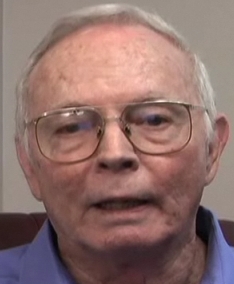
 He once had command of legions — and AdSurfDaily members lined by the hundreds and waited in line for hours to pay Andy Bowdoin to give them a chance to “build wealth.” At its peak in the summer of 2008, ASD reportedly was posting tens of millions of dollars a week in revenue.