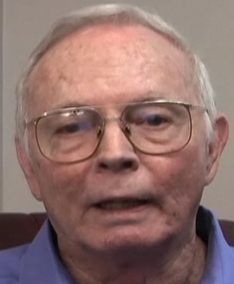
Tag: Stephen Dobson

  • Bowdoin Blames Former Attorneys, ‘Single, Lone Judge’ For His Legal Predicament; ASD Patriarch Now Claims He Was ‘Crucified’ By Prosecutors, Secret Service — After Earlier Comparing Them To ‘Satan’ And The 9/11 Terrorists

    In a fundraising video released last night, ASD President Andy Bowdoin said he was "crucified" by federal prosecutors and the U.S. Secret Service.

    EDITOR’S NOTE: This story is based in part on the content of a video released last night in which AdSurfDaily President and accused Ponzi schemer Andy Bowdoin appeared. A group known as “Andy’s Fundraising Army” is seeking to raise at least $500,000 to pay for Bowdoin’s defense on criminal charges related to the alleged ASD Ponzi scheme.

    UPDATED 10:23 P.M. EDT (U.S.A.) One day after an AdSurfDaily member claimed that “We plan to go after Akerman [Senterfitt] next,” ASD President Andy Bowdoin — without mentioning the law firm by name — suggested the firm was responsible for his legal troubles.

    And Bowdoin — again not naming names — suggested that criminal attorney Stephen Dobson, who is not employed by Akerman Senterfitt, also was to blame. (In court affidavits, Bowdoin has referred to Stephen Dobson as Steven Dobson. The U.S. Court of Appeals already has rejected a claim by Bowdoin that he had been “hoodwinked” by Dobson into releasing his claims to money seized by the Secret Service. At the same time, the appeals court upheld a ruling by U.S. District Judge Rosemary Collyer that Bowdoin “knowingly and voluntarily” released his claims to the money. Bowdoin released the claims while Akerman Senterfitt was his counsel-of-record in the civil-forfeiture case.)

    Bowdoin also blamed Collyer — again without naming names — for his predicament. Bowdoin described Collyer as a “single, lone judge.”

    “Now, after that law firm (Akerman Senterfitt) finished the civil case, which we lost because of a single, lone judge (Collyer) [who] had the final say in verdict [and] not a jury, they told me they couldn’t represent me in a criminal case, that I needed a criminal attorney because there would be a federal indictment.

    “They recommended a law firm in Tallahassee, Florida, so I retained the firm. But the lead attorney in that Tallahassee firm (Dobson) was an ex-U.S. Attorney. And I’m sad to say that he actually sold me out to the federal government,” Bowdoin said.

    Bowdoin described Aug. 1, 2008 — the day the U.S. Secret Service seized tens of millions of dollars from his personal bank accounts in a Ponzi scheme probe — as the day “when the government attacked.”

    In 2008, Bowdoin referred to the Secret Service and federal prosecutors as “Satan,” and compared the seizure to the 9/11 terrorists attacks. In a video released yesterday, he now claims he was “crucified” and “heavily ridiculed” by two U.S. Attorneys and three Secret Service agents.

    Bowdoin said he hoped to raise $500,000 for his legal defense fund, asserting ASD was not a Ponzi scheme. An indictment against Bowdoin was unsealed in November 2010, and he was arrested on Dec. 1, 2010. He is free on bond.

    In September 2009, federal prosecutors described Bowdoin as “delusional,” alleging that he was telling ASD members one thing and Collyer another.

    Bowdoin — without using Miami-based Akerman Senterfitt’s name in the new video but describing it as a “big law firm with hundreds of attorneys and even offices in Washington, DC” — opined that the firm “didn’t do us any good.”

    “So, I learned quickly that big is not always better or good when it comes to hiring a winning law firm,” Bowdoin said.

    Collyer issued a key ruling against ASD in November of 2008, saying that ASD had not demonstrated at an evidentiary hearing it requested that it was operating lawfully. Bowdoin submitted to the forfeiture in January 2009, claiming in September 2009 that he had done so in the belief he possibly could avoid a prison sentence.

    Sometime in December 2008 or January 2009 — the precise date is unclear — Bowdoin signed a proffer letter and acknowledged the government’s material allegations were all true, according to filings by prosecutors. Bowdoin has acknowledged in his own filings that he gave information against his interests.

    Even as Bowdoin was not naming the names of Collyer and his previous counsel in his new video, he was not naming the names of his current counsel in the Ponzi case. Those names (Charles A. Murray and Michael R.N. McDonnell) are available in the public record, Bowdoin said.

    Bowdoin sought unsuccessfully in 2009 to have Collyer, who also is hearing the criminal case, removed from the civil case. Earlier this year, Bowdoin sought unsuccessfully to have a judge in the the Northern District of Florida hear the criminal case, as opposed to Collyer.

    See Bowdoin affidavit from September 2009.

    Compare to February 2010 Bowdoin affidavit. (See related story from Feb. 17, 2010.)

    See transcript by Secret Service of Bowdoin recorded conference call in September 2009.

    See previous story.


  • BULLETIN: New Affidavit Filed By Andy Bowdoin Appears To Be At Odds With Claims He Made In September

    Andy Bowdoin

    A sworn affidavit filed today by AdSurfDaily President Andy Bowdoin appears to make claims that are the polar opposite of claims he made in a sworn affidavit witnessed by a notary public and filed in federal court Sept. 15.

    Separately, Bowdoin’s lawyer, Charles A. Murray, filed a brief that may be the opening volley in a bid to challenge the Constitutionality of the government’s forfeiture case, suggesting the U.S. Secret Service had no “probable cause” to seize tens of millions of dollars from Bowdoin’s bank accounts in August 2008.

    Murray also said that Bowdoin had not received fair notice about court rulings and did not challenge the rulings previously because of an email glitch that affected Murray’s computer between Nov. 10, 2009, and “early January” of this year.

    “I experienced as yet unidentified computer/server issues, wherein multiple email messages apparently never loaded to the firm’s Inbox,” Murray said.

    Bowdoin, 75, now flatly claims he was told by a former defense attorney that, if he submitted to the forfeiture of tens of millions of dollars, he would face no jail time if criminal charges were filed in the ASD Ponzi scheme case.

    He did not name the attorney in today’s filing, referring to him obliquely as “prior counsel.” In an earlier filing, Bowdoin identified his counsel as Stephen Dobson.

    “I was assured by my prior counsel that, if I released my claims in this [civil-forfeiture] action, I would not be facing any incarceration,” Bowdoin claimed today. “My January 2009 motion to withdraw my claim . . . was solely based upon prior counsel’s unilateral mistaken belief that my release of claims would unequivocally assure that any subsequent criminal sentence entered would not include any prison time.”

    Today’s filing was witnessed by Florida notary public Joe B. Cox of Lee County.

    But in a sworn affidavit Bowdoin signed Sept. 15 before a different notary public — Patricia C. Sanson of Lee County — Bowdoin repeatedly said Dobson had said only that there was a possibility Bowdoin would not be sentenced to prison if criminal charges emerged.

    In the Sept. 15 affidavit, Bowdoin repeatedly swore that Dobson had not promised him no jail time.

    These are among the phrases Bowdoin swore to in the Sept. 15 affidavit (emphasis added):

    • Dobson represented to me that I could possibly avoid prison or get a reduced sentence if I agreed to disclose details concerning ASD and releasing the assets.
    • I also signed a document stating that I would release my claims in the abovecaptioned civil in rem forfeiture proceeding, again thinking that necessary for a possible avoidance of a prison term.
    • I did all of this on the understanding that by cooperating I could possibly avoid a prison sentence.
    • I agreed not to exercise my rights in the civil forfeiture proceeding, anticipating from representations made by Dobson that this could possibly keep me out of prison.
      Dobson lead [sic] me to believe that if I cooperated there was a possibility that I would not be incarcerated or imprisoned.
    • I believed that my cooperation would still result in a criminal sentence that could possibly not include imprisonment or incarceration.
    • I slowly came to understand what I understood from Dobson not to be the case: that my agreement to cooperate provided me no benefit in the criminal matter except the possibility of a reduced sentence if the judge desired which would still be a life sentence.

    Bowdoin’s filing today leads to questions about whether he deliberately chose to appear before a different notary to swear to the affidavit. At the same time, it leads to questions about whether Bowdoin somehow was unaware that U.S. District Judge Rosemary Collyer already had cited Bowdoin’s Sept. 15 sworn affidavit in a major ruling that Bowdoin no longer had standing in the case.

    On Nov. 10, Collyer noted Bowdoin’s repeated use of the words “possibly,” “possible” and “possibility” in the Sept. 15 affidavit when referring to the advice Dobson had given him on the matter of jail and and finding that Dobson had behaved responsibly while representing Bowdoin.

    “Such an approach from counsel could be seen as the norm when the Government’s evidence is strong,” Collyer said. “What Mr. Bowdoin hoped to gain from his release of claims/early acceptance of responsibility and his debriefing with the Government was a promise of no jail time. When that was not forthcoming from the Assistant United States Attorney, Mr. Bowdoin balked and tried to back up, as if he had not already released his claims and talked to the Government.”

    Read the sworn affidavit Bowdoin filed today after appearing before notary Joe B. Cox.

    Read the Sept. 15, 2009, sworn affidavit Bowdoin filed after appearing before notary Patricia C. Sanson.

    Read a story from earlier today on a possible split in the Bowdoin/Harris family.