Tag: T. Lemont Silver

  • BULLETIN: Lyoness, ‘Plan B’ Program Of Zeek And ASD Figure Keith Laggos, Charged In Australia With Operating ‘Pyramid Scheme’

    recommendedreading1BULLETIN: (Updated 2:35 p.m. EDT U.S.A. Aug. 29) Lyoness, the purported “Plan B” scheme of Zeek Rewards and AdSurfDaily figure Keith Laggos, has been charged in Australia with operating a pyramid scheme.

    News of the Australian prosecution was published tonight by BehindMLM.com.

    The Australian Competition and Consumer Commission (ACCC) has issued a statement on the Lyoness prosecution. It appears below (italics added):

    The Australian Competition and Consumer Commission has instituted proceedings against Lyoness International AG, Lyoness Asia Limited, Lyoness UK Limited and Lyoness Australia Pty Limited (together ‘Lyoness’) for operating a pyramid selling scheme and engaging in referral selling.

    Although Lyoness has been investigated by regulators for conduct in other countries, this is the first court action taken against Lyoness alleging that the Lyoness Loyalty Program constitutes a pyramid scheme.

    Pyramid schemes involve new participants providing a financial or other benefit to other existing participants in the scheme. New participants are induced to join substantially by the prospect that they will be entitled to benefits relating to the recruitment of further new participants. Pyramid schemes may also offer products or services, but making money out of recruitment is their main aim, and often the only way for a member to recover any money is to convince other people to join up. In contrast, people in legitimate multi-level marketing schemes earn money by selling genuine products to consumers, not from the recruiting process.

    The ACCC alleges that Lyoness has operated the scheme in Australia from mid-2011 and that it continues to operate the scheme. The scheme offers ‘cash back’ rebates to members who shop through a Lyoness portal, use Lyoness vouchers or present their Lyoness card at certain retailers.

    Whilst cash back offers themselves are not prohibited by the Australian Consumer Law (ACL), the ACCC alleges that the Lyoness scheme also offers commissions to members who recruit new members who make a down payment on future shopping.

    “Pyramid schemes are often sophisticated and may be operated under the guise of a legitimate business. Although these schemes can appear to be legitimate, the most significant inducement for new members to get involved is to earn ‘residual’ or ‘passive’ income from new members signing up,” ACCC Chairman Rod Sims said.

    “The concern with pyramid schemes is that the financial benefits held out to induce potential members to join up rely substantially on the recruitment of further new members into the scheme. For these schemes to work so that everyone can make a profit, there would need to be an endless supply of new members.”

    “Under the Australian Consumer Law, it is illegal not only to establish or promote a pyramid scheme, but also to participate in one in any capacity,” Mr Sims said.

    The ACCC also alleges that the conduct by Lyoness breached the ACL prohibition on ‘referral selling’, where a consumer is induced to buy goods or services by the promise of a commission or rebate contingent on a later event.

    The ACCC is seeking declarations, pecuniary penalties, injunctions, an order requiring the Lyoness website to link to the case report and costs.

    As Lyoness International AG, Lyoness Asia Limited and Lyoness UK Limited are located overseas, the ACCC will be making arrangements for service on those entities.

    The first Directions Hearing in these proceedings will be at 9.30am on 16 September, 2014 before Justice Flick in Sydney.

    Among other things, Lyoness traded on the name of Nelson Mandela.

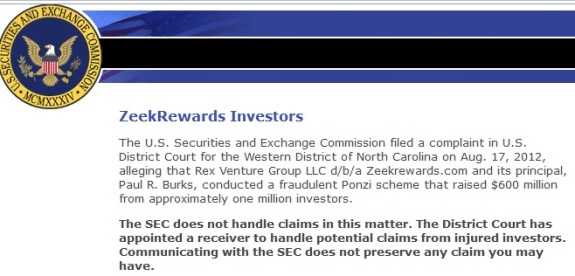
    Laggos pushed Lyoness as a “Plan B” to members of Zeek Rewards, suggesting in 2012 that it could be used as a “passive” hedge in case things went south at Zeek. Indeed, things did go south at Zeek: The U.S. Securities and Exchange Commission (SEC) described it as an international Ponzi- and pyramid scheme that had gathered hundreds of millions of dollars while engaging in securities fraud and selling unregistered securities as investment contracts.

    Among the tips Laggos provided Zeekers on a Lyoness conference call was this: “Don’t put no more than 70 percent back in [Zeek]. Take out 20 or 30 percent [on] a daily basis. [Unintelligible.]  This would be a good place. But, by the same token, if you put $10,000 in Zeekler, if nothing happens over the next year, you’ll probably make $30,000 or $40,000, if that’s all you do without building the front end, the matrix . . . The same amount of money in Lyoness, you’re looking . . . and not doing anything else, without single sponsoring . . . you can probably make a quarter-million dollars.”

    Also see Aug. 3, 2014, PP Blog story: ANOTHER MLM PR TRAIN WRECK: Receiver Alleges Clawback Defendants May Be ‘Serial’ Participants In Zeek-Like ‘Revenue Sharing’ Schemes, Asks Court To Take ‘Judicial Notice’ Of T. LeMont Silver Videos

    News of the Lyoness action in Australia was received on the same day that TelexFree was squaring off against both the SEC and federal prosecutors in Boston over matters pertaining to scheduling. TelexFree was charged by the SEC in April 2014 with operating a massive Ponzi- and pyramid scheme. The agency had charged Zeek less than two years earlier

    TelexFree figures James Merrill and Carlos Wanzeler were indicted in July 2014 on criminal charges of wire fraud and wire-fraud conspiracy.

    Lawyers from both sides are battling over contentious issues such as whether the SEC’s civil case should be stayed (delayed indefinitely) in favor of the criminal case and whether Merrill can receive a speedy, fair trial on the criminal side of things.

    An enormous amount of evidence remains to be sifted through by both sides.

    “The United States Attorney’s office has contacted the parties indicating that it intends to seek a stay of these proceedings while the criminal case is pending and sought assent from the parties,” the SEC and defense attorneys said in a joint filing in the agency’s civil case today. “The parties have not unanimously assented to a stay.”

    On the criminal side of things, Merrill contended today that his right to a fair trial would be put at risk if prosecutors were permitted to use “additional press releases and newspaper notices” to contact potential TelexFree victims.

    “Every press release and/or newspaper notice issued by the government will likely repeat the government’s characterization of TelexFree and Mr. Merrill” as a pyramid scheme and a pyramid schemer, Merrill attorney Robert Goldstein contended.

    And, Goldstein argued, “Mr. Merrill hereby respectfully opposes the government’s motion for complex case designation and exclusion of time . . . wherein the government seeks the exclusion of 90 days commencing on September 10, 2014, and instead respectfully asks the Court to defer a ruling regarding the exclusion of any time until the September 10, 2014 status conference (i.e., after the defense has had at least a minimal amount of time to review the government’s automatic discovery production, which was received today.”

    The office of U.S. Attorney Carmen Ortiz asked for the complex-case designation and to carve out an exception to the Speedy Trial Act earlier this month.

    Among other things, prosecutors contended that “evidence underlying this case is closely tied to certain foreign countries, especially Brazil” and that “it is likely that the parties will need to review evidence in foreign countries and arrange for foreign witnesses and/or law enforcement officers to travel to the United States to testify at trial.”

    Schemes that operate over the Internet may grow to affect hundreds of thousands of people. Cases can become extremely complex if a pyramid or Ponzi scheme (or both) are alleged.

    Regulators have warned for years that the schemes may use intricate disguises and exceptionally complex mechanics to ward off prosecutions. Cross-border schemes can pose monumental challenges to law enforcement.

    NOTE: Our thanks to the ASD Updates Blog.

    UPDATE 7:18 A.M. EDT U.S.A. Lyoness has denied the ACCC allegations. See denial in story at News.com.au.

  • ANOTHER MLM PR TRAIN WRECK: Receiver Alleges Clawback Defendants May Be ‘Serial’ Participants In Zeek-Like ‘Revenue Sharing’ Schemes, Asks Court To Take ‘Judicial Notice’ Of T. LeMont Silver Videos

    Florida “Expat” and  Zeek Rewards Ponzi-scheme figure T. LeMont Silver yuks it up earlier this year in the Dominican Republic. Source: YouTube.
    Florida “Expat” and Zeek Rewards Ponzi-scheme figure T. LeMont Silver yuks it up earlier this year in the Dominican Republic. Source: YouTube.

    MLM, witness your latest PR train wreck — as voiced by alleged Zeek “winner” and purported “revenue sharing” consultant/trainer and Florida “Expat” T. LeMont Silver. (Video below.)

    In a consolidated motion in response to motions by various alleged Zeek “winners” to dismiss the clawback lawsuits against them, the court-appointed receiver in the Zeek Rewards Ponzi- and pyramid case has asked the court to take “judicial notice” of two YouTube videos featuring Silver, a veteran HYIP huckster.

    In typical HYIP fashion that marries the merely imponderable to the truly bizarre, one of them painfully is titled, “(T. Le Mont Silver, Sr.), (7 Figure Producer) shares about Plan B part #2.” (Bold emphasis added by PP Blog.)

    The HYIP sphere, the staging waters for boat sharks who throw purported rescue jackets to victims bloodied in the water from earlier scams and desperately struggling to stay afloat, is infamous for Plans B.

    Although the “program” isn’t identified in the video, Silver’s Plan B appears to be the ill-fated JubiRev/JubiMax. (See June 18, 2013, BehindMLM.com story.)

    MLM may have a problem with “serial participants” in Zeek-like schemes to defraud, Zeek receiver Kenneth D. Bell suggests in the motion asking the court to take judicial notice of the Silver videos.

    The language chosen by the receiver is similar to language the SEC used in 2013 to describe MLM HYIP huckster Matthew John Gagnon. Gagnon, the SEC said at the time, was a “serial fraudster.”

    Earlier, in 2010, the SEC described Gagnon as a “danger to the investing public.”

    The context of the SEC’s Gagnon prosecution may be important. Indeed, one of the “programs” he was accused of promoting was the infamous Legisi scheme, a semi-offshore debacle the SEC took down in 2008. Like Zeek, the Legisi case started with asset freezes and the appointment of a receiver.

    Time slowly marched on. But in 2009, the receiver sued Gagnon. In 2010, the SEC filed civil charges against him. He was charged criminally in 2011.

    Legisi, the SEC said, operated a “classic pooled investment vehicle.” In one of the Silver videos cited by the receiver, Silver describes his “Plan B” program as the operator of a “pot.”

    Women between the ages of 30 and 55  were the financial targets of the “opportunity,” according to one of the videos referenced by Bell.

    The video tends to suggest that Silver understood how Zeek got caught by using highly questionable “bids” as its “product” and that the MLM’s trade’s serial fraud wing immediately sought more clever disguises — hiding an HYIP scam behind the purported sale of ostensibly legitimate products such as cosmetics and diet shakes, for instance.

    Silver has appeared in “many” online videos and has promoted “several ‘revenue sharing’ schemes in addition to Zeek,” receiver Kenneth D. Bell advised Senior U.S. District Judge Graham C. Mullen.

    Bell supplied the court links to the videos.

    In the HYIP sphere, the term “revenue sharing” is used to make schemes appear to be innocuous.

    As noted above, the HYIP sphere is infamous for purported Plans B, which typically are cosmetically tweaked reload schemes designed to fleece an initial group of marks for a second time.

    Here, it’s appropriate to revisit HYIP history for a second time. If you believe AdSurfDaily Ponzi schemer Andy Bowdoin caused an almost inconceivable amount of PR damage to the MLM trade by comparing the U.S. Secret Service to “Satan” and the 9/11 terrorists, wait until you get a load of what T. LeMont Silver does in one of his videos cited by the receiver. (Video appears at bottom of this column.)

    By way of background, the HYIP sphere is infamous for dropping the names of famous entities and people, even if they have no ties whatsoever to the “opportunity” being presented.

    Although Silver apparently isn’t selling Avon or Amway or Mary Kay or Herbalife or ViSalus in the video, he drops the names of all of them (and more). Along the way he drops in a veiled reference to Zeek, describing it as a penny auction “program” in which affiliates would “make large purchases of . . . let’s say ‘bids’,” with Zeek’s product creating a “big issue” with regulators.

    Silver notes that he’ll provide “training” for the upstart “program,” positioning it as a way for average MLMers to make money without having to recruit or to orchestrate “dog and pony” presentations. Regardless, Silver assures the audience that he’s a master of the MLM dog and pony. He further suggests that, because Zeek’s “bids” had caught the attention of regulators, the trade’s braintrust now is turning toward “more traditional MLM-type products and services.”

    Putting lipstick on brand-new HYIP pigs or evolving ones is part and parcel to the HYIP sphere. Silver’s video suggests that the HYIP trade has learned that sketchy products such as Zeek’s bids might not fly and now was concentrating on attracting women between the ages of 30 and 55 by wrapping cosmetics, weight-loss shakes, home products and travel into a purported “revenue sharing” model in which participants who bought in would receive “pro rata” shares from a giant revenue pot.

    After suggesting he has inside information about the new HYIP regime, Silver curiously observes that he is “very, very key on genealogical integrity.” We interpret this to mean that he’d be exceptionally pleased if people with existing MLM organizations within traditional companies would port them into his next scam.

    Even though he’s apparently not selling Amway in the video, he bizarrely also prompts viewers not to dare “call Amway Scamway.” Equally bizarrely, Silver congratulates the company for “legitimizing this industry” back in the 1970s by purportedly “kick[ing] the backside” of the U.S. government and the government’s “[p]atootie.”

    “My goodness,” he says. “Thank you, Amway.”

    Yes. T. LeMont Silver has now publicly thanked Amway for kicking the government’s ass 35 years ago and, under his interpretation of In the Matter of Amway Corporation, Inc., et al., paving the way for people to send tremendous sums of money to companies with presumptively better disguises than Zeek.

    Amway is a lot of things — good and bad — to a lot of people. Unlike Zeek, however, it is not an HYIP that offered “passive” investors who sent in $10,000 or smaller sums a laugh-out-loud,  average daily return of 1.5 percent, basically in perpetuity.

    Gawd!

    Our take on Silver’s take of the 1979 non-HYIP Amway decision is that it somehow made preposterous “revenue sharing programs” as seen in the HYIP sphere lawful or that all HYIP schemes are lawful if they have product such as those offered by Avon, Amway, Herbalife and the others. But the pyramid analysis, of course, does not exclusively hinge on whether a company has a “product.” If it did, Zeek (“bids”) and BurnLounge (“music”) would still be in business. Moreover, there would be no Bill Ackman/Herbalife dichotomy, no question about whether Herbalife was Jurassic Park or Disneyland. In short, MLM heaven on earth would not be a rumor, it would be a reality.

    “Plan B,” meanwhile, is a virtual calling card of HYIP swindles, with prospects typically given instructions to join at least two “programs” in case one of them fails or to quickly join another “program” when a favored one collapses or encounters regulatory scrutiny.

    Silver is a longtime pusher of “Plan B” MLM HYIPs, which, as noted above, typically call themselves “revenue sharing programs.” He’s hardly alone. Zeek figure and purported MLM expert Keith Laggos pushed the Lyoness “program” to Zeekers as a “Plan B” just prior to the Aug. 17, 2012, collapse of Zeek. (See Aug. 12, 2012, PP Blog editorial: “Karl Wallenda Wouldn’t Do Zeek.”)

    Lyoness, among other things, dropped the name of Nelson Mandela in sales promos.

    Among the tips Laggos provided to listeners of a Lyoness conference call was this: “Don’t put no more than 70 percent back in [Zeek]. Take out 20 or 30 percent [on] a daily basis. [Unintelligible.]  This would be a good place. But, by the same token, if you put $10,000 in Zeekler, if nothing happens over the next year, you’ll probably make $30,000 or $40,000, if that’s all you do without building the front end, the matrix . . . The same amount of money in Lyoness, you’re looking . . . and not doing anything else, without single sponsoring . . . you can probably make a quarter-million dollars.”

    Laggos, an alleged Zeek winner of more than $1,000, also was a figure in the AdSurfDaily Ponzi scheme story, now making news in the context of Zeek.

    One of the problems with HYIP schemes is that they cause polluted money to flow between and among scams, in part because the scams have serial promoters in common. The inevitable result is that payment vendors become warehouses for fraud proceeds, prompting the government to apply for asset freezes and account seizures to stop the flow of tainted cash.

    Receiver Cites Second Silver Video

    The second video featuring Silver — an alleged winner of more than $1.71 million in Zeek — is titled “Internet Entreprenuer Family Chooses Cabrera [Dominican Republic] For Their New Expat Lifestyle.” It shows Silver and his wife — another alleged Zeek winner — lounging in the Dominican Republic after the collapse of the Zeek scheme.

    As the PP Blog reported on April 26, 2014 (italics added):

    Prior to relocating to the Dominican Republic, Silver told his downline in a failed MLM “program” known as GoFunPlaces to take advantage of “low-hanging fruit” (other disaffected GoFunPlaces members) and become recruiters for a “program” known as Jubimax. The “programs” ultimately accused each other of fraud.

    Silver also promoted “OneX,” which federal prosecutors in the District of Columbia described as an AdSurfDaily-like, money-circulating scheme. ASD operator Andy Bowdoin, now jailed after the collapse of the ASD fraud in 2008, also promoted OneX, explaining to prospects that they’d earn $99,000 very quickly and that he’d use the money he’d earned to pay for his criminal defense in the ASD case.

    Bowdoin asserted OneX was great for college students. Silver asserted that positions being given away were worth $5,000.

    Prosecutors also linked Bowdoin to AdViewGlobal, an ASD reload scam that operated as a “Plan B.” AdViewGlobal, which purported to operate offshore but actually was operating from Florida and Arizona, mysteriously vanished in the summer of 2009.

    Zeek receiver Bell, who connected alleged Zeek winner Todd Disner to the ASD Ponzi scheme in court filings this week, now says in court filings that certain Zeek clawback defendants “may well be serial participants in these types of schemes.”

    Well-known HYIP huckster Faith Sloan has been charged by the SEC with securities fraud in the April 2014 TelexFree case. Sloan also promoted Zeek and Profitable Sunrise, which cratered after an SEC action in April 2013.

    One of the things that makes Zeek-related litigation unique in the history of actions flowing from HYIP schemes is that Bell is not limiting his lawsuits to a relatively small universe of alleged major winners such as Silver. In a proposed class action, he’s also pursuing more than 9,000 alleged winners of smaller sums (more than $1,000 but less than $900,000), something that could have a long-needed chilling effect on serial promoters who may enter an HYIP Ponzi knowingly but less publicly.

    Some early HYIP Ponzi entrants may recruit heavily at first and be satisfied with smaller sums, because the larger plan is to get out quickly on the theory smaller winners won’t be pursued.

    Regulators have warned for years about the online phenomenon of “riding the Ponzi.”

    Our thanks to the ASD Updates Blog. (See Page 32 of Doc. 67 for reference to Silver videos and “serial” participants.)

  • TelexFree Affiliate Pitches Appear To Have Been ‘Scraped’ To Drive Traffic To Purported Gold And Silver Venture In Panama; Spam Link Leads To Site That Showcases ‘First Zeek Red Carpet Event’ And ‘Banners Broker’ In Folder Labled ‘aaronsharazeek’

    UPDATED 7:36 P.M. ET (U.S.A.) Let’s say you’re out there feverishly flogging the TelexFree MLM even as the pyramid-scheme probe moves forward in Brazil, a judge and prosecutor have been threatened with death and TelexFree executive Carlos Costa is pulling an Andy Bowdoin and telling the world that God used him to bring the purported opportunity to the flock.

    There’s always risk associated with HYIP schemes. Now, however, it seems those risks are becoming even greater.

    With us so far? We’ll connect the dots below.

    At 5:56 p.m. on Friday, the PP Blog received a would-be “comment” that targeted this Nov. 17 story thread: NEW RECORDING: TelexFree Members Told To Pay The Piper 20 Percent Within 10 Days Or Lose Positions.”

    Here is a key fact: The sender used an IP based in France that has been associated by Project Honeypot with comment-spamming — pitches for porn sites and sites that purport to give you a good price on designer goods in advance of a predicted “downturn,” for example. (Basic message: You can look wealthy even if you’re not, even after the economy tanks. Buy your knockoffs now and look good when the sky is falling on your life.)

    The sender, now adding HYIP schemes to the porn and designer-good mix from that specific IP, used a handle that incorporated the word “Silver” within its overall handle and sought to plant a URL at the PP Blog to a Panamanian venture that advertises a custody service for precious metals. The PP Blog is declining to publish the URL and the name of the enterprise which, among other things, reproduces on its website the logos of an internationally famous insurer based in London and an internationally famous accounting firm based in Chicago. The site also publishes various contact phone numbers in the United States, Panama, New Zealand, Australia, Switzerland, the United Kingdom and Hong Kong. Although there is a chance that the service is legitimate, the PP Blog questions why someone or some thing is spamming links to the precious-metals site and loading them up further with links to “positive” coverage of seemingly unrelated HYIPs.

    For the purposes of this PP Blog post, the Panamanian venture is a sidebar tidbit. Far more interesting was the body content of the spam, which appears to be a compendium of gushing affiliate pitches for TelexFree that appear on the net. The spam appears to have been cobbled together by a human scraper or scraping device of some sort that had visited one or more TelexFree-related websites. Links embedded in the spam are the “real story” in the context of this PP Blog post.

    So, for starters, TelexFree’s name is being used as part of a bid to drive traffic to a precious-metals website on which visitors curiously are told they must provide 15 days’ notice if they wish to visit the office in Panama City. The PP Blog likely was targeted by the spammer simply because the word “TelexFree” appears here many times in reports about TelexFree-related events in Brazil and the United States.

    The spammer  — be it bot or human — appears to have made the calculation that TelexFree members might be the perfect customers for the precious-metals venture. Contained within the spam were three links: One to a site styled TelexFreeUnitedStates and two to a URL-shortening service that redirected visitors to Photobucket, the popular image-hosting and story-sharing website.

    Here’s where the story really begins . . .

    One of the picture stories told at at the Photobucket site was told inside a subfolder of a folder labeled “aaronsharazeek.” (Emphasis added.) The subfolder was slugged “First Zeek Red Carpet Event April 18th 2012.” Zeek conducted a Red Carpet event on that date.

    Exactly a month earlier — on March 18, 2012 — the popular BusinessForHome Blog listed “Aaron and Shara” as top Zeek earners. Whether the Photobucket site is operated by the same Aaron and Shara is unclear. Here’s a link to the BusinessForHome story. (If you’re not a Platinum member of Business For Home, you’ll need to purchase a subscription to read the entire story.) The PP Blog referenced the BusinessForHome story within a June 14, 2012, story titled, “Did Zeek Give Puff Piece To Rep Who Signed Petition For U.S. Senate To Investigate AdSurfDaily Prosecutors And U.S. Secret Service Agent?”

    The SEC moved against Zeek on Aug. 17, 2012. On the same date, the Secret Service said it also was investigating Zeek. Court records suggest the SEC began the Zeek probe at least by April 17, 2012, one day before the April 18 Zeek Red Carpet event highlighted within the “aaronsharazeek” folder on Photobucket.

    On April 17, 2012, according to court filings, the SEC tasked an IT specialist to “conduct Website/video capture” of ZeekRewards.com.

    Paul Burks appears to have been in deep thought on April 18, 2012, one day after the SEC tasked an IT specialist to capture content from Zeek Rewards.com. This is a slice of a photo from a larger photo that appears on Photobucket in a folder labeled "XXXX."
    Paul Burks appears to have been in deep thought on April 18, 2012, one day after the SEC tasked an IT specialist to capture content from Zeek Rewards.com. This is a slice of a photo from a larger photo that appears on Photobucket in a folder labeled “First Zeek Red Carpet Event April 18 2012.”

    Precisely when Zeek operator Paul R. Burks found out about the SEC probe remains unclear. But photos inside the “First Zeek Red Carpet Event April 18th 2012” subfolder at the Photobucket site show a Burks who appears to be in deep thought. One can only wonder what 66-year-old Burks was thinking about on that date. His health? His wife’s stress level, given the noise Zeek was creating in the small town of Lexington, N.C.? His ability to keep Zeek going? The prospect that investigators were closing in?

    There are 18 other photos in the Red Carpet event subfolder, some showing Zeek luminaries such as former SEC defendant Keith Laggos, former Zeek COO Dawn Wright-Olivares, former Zeek videographer OH Brown (looking happy), former Zeek trainer Peter Mingils (identified in one photo as the “V.P. of the Association of Network Marketing Professionals”). Other photos of Zeek personalities/staffers appear in the folder, as do photos showing attendees.

    Absent the “Silver”/TelexFree spammer, the PP Blog likely never would have seen these photos.

    Also within the “aaronsharazeek” folder at Photobucket is a subfolder slugged “Zeek Trip,” and subfolders slugged “Banners Broker” and “telexfree.” The “Zeek Trip” folder appears to contain four photos of Zeek-related real estate in Lexington, N.C. (In the ASD Ponzi case, affiliates suggested that ASD couldn’t possibly be illegitimate because ASD had an office. The same thing has been asserted by TelexFree promoters.)

    Meanwhile, the “Banners Brokers” folder contains a video of a sales pitch, and the “telexfree” folder contains images of government documents from the state of Massachusetts and the country of Brazil that appear to have been designed to plant the seed that TelexFree couldn’t possibly be a scam.

    Taken as a whole, the various folders and photos demonstrate the interconnectivity of MLM HYIP schemes, regardless of who actually controls the Photobucket site. It is known from other sources that some Zeekers also were in the JSSTripler/JustBeenPaid scam and the exceptionally murky Profitable Sunrise scam shut down by the SEC and various state regulators earlier this year.

    Banners Broker is an uber-bizarre Ponzi-board program. On July 2, 2013, the PP Blog reported that MLM attorney Kevin Thompson said that the name of his law firm had been used by scammers in a bid to dupe members of Banners Broker and Profit Clicking, the JSS/JBP-associated “program” linked to Frederick Mann that may have ties to the extremist “sovereign citizens” movement. The July 2 PP Blog post was titled, “Law Firm’s Name Used In Bid To Dupe Members Of Banners Broker, Profit Clicking, MLM Attorney Says.”

    Within the July 2 post, the PP Blog reported that it had received menacing messages in apparent “defense” of Banners Broker. As the Blog reported at the time (italics added):

    WARNING: The next paragraph  includes quoted material from one of the Jan. 18, 2013, spams, and the PP Blog is reproducing it to illustrate the bizarre and often menacing nature of the HYIP sphere. Indeed, the apparent Banner’s Broker supporter wrote (italics added):

    ” . . . I am Big Bob’s cock meat sandwich. Your mom ate me and made me do press ups until I threw up . . . I am gonna report you. When you make false accusations, you can get done. Maybe you will be seen in court soon . . .”

    It is as ugly today as it was on the January date the PP Blog received the communication.

    Why “programs” such as TelexFree, Zeek Rewards, BannersBroker and ProfitClicking become popular with people of faith is one of the head-scratching mysteries of current times. Gold fever, of course, is nothing new; it’s been around for centuries. What’s at least relatively new in the Internet Age is that the gold- and silver-sellers appear to be piggybacking off HYIP pitchmen, apparently hoping to rope in customers for shiny-object schemes.

    This "comment" sent to the PP Blog on Nov. 22 sought to drive traffic to a precious-metals site while using the TelexFree "program" as the engine.
    This “comment” sent to the PP Blog on Nov. 22 sought to drive traffic to a precious-metals site by planting a link to the site and also planting links related to TelexFree.

    On Oct. 25, the PP Blog reported that an alleged shiny-object scheme had taken root in Zeek’s back yard in North Carolina. On June 19, the PP Blog reported that the receiver in the Legisi HYIP Ponzi case was going after assets linked to E-Bullion, a collapsed payment processor with shiny-object woo. James Fayed, E-Bullion’s operator, is sitting on death row in California after a jury found him guilty of arranging the brutal contract slaying of his own wife.

    The Legisi scheme was targeted at Christians, and E-Bullion’s cheerleaders included the Canadian clergyman Brian David Anderson, who was sent to U.S. federal prison in 2010 for the Frontier Assets Ponzi scheme. Anderson also was linked to the Flat Electronic Data Interchange (FEDI) HYIP scheme that put Abdul Tawala Ibn Ali Alishtari, also known as “Michael Mixon,” in federal prison after his September 2009 convictions for financing terrorism and fleecing FEDI investors.

    Yes, financing terrorism.

    Alishtari traded on his purported ties to prominent politicians, just like ASD’s Andy Bowdoin. At least one of the schemes linked to Alishtari and Anderson used the term “rebates,” just like ASD. The narrative surrounding FEDI read like impossibly outrageous fiction, a mind-bending example of a shiny-object scheme. Ten members of purported “Royal families” in the Middle East were said to have set aside “50 Billion in Gold” ($5 billion each) to advance the scheme. Another entity in the Middle East was said to have supplied a “total of 100 Billion in Gold.” Still another entity was said to have put up “500 Million dollars in liquid gold assets.”

    FEDI marks were solicited to purchase what effectively were trading desks that somehow would enable them to profit on the coattails of Middle East royals interested in escrowing huge sums to fund worldwide construction projects, with money purportedly flowing to the “labor” force. If that weren’t enough, the scheme purportedly was married to a venture that purportedly would put vending machines in at least 50,000 locations. The vending machines purportedly would sell debit cards, and were purportedly backed by $150 billion in gold and an insurance policy in Canada.

    In March 2012, the PP Blog reported on FTC allegations that three Florida companies and a Florida man had roped customers into a shiny-object scam, a precious-metals boondoogle allegedly carried out by telemarketers.

    Imagine what would happen if a scamming telemarketing firm had the customer lists for TelexFree, Zeek, Banners Broker, Profit Clicking, AdSurfDaily, Legisi and others.

    If the MLM industry seeks to win favor on Main Street and stop being the brunt of jokes, it needs to act forcefully to eradicate these schemes. MLM attorneys need to stop permitting schemes to trade on their names, thus potentially setting the stage for prospects to believe that no scam could be occurring because no lawyer would permit his name to be used in this fashion.

    But even today, what does one get when one visits the website of TelexFree? A pitch in which the alleged TelexFree pyramid scheme announces its pride at having MLM lawyer Gerald Nehra on board.

    Zeek traded on the name of MLM attorney Kevin Grimes, who comes off in Red Carpet Day shots as a Zeek crowd prop, and also the name of Nehra. Bidify traded on Kevin Thompson’s name. The lawyers should not permit this to happen. And they should stop making personal appearances at “opportunity” events and start questioning why so many of these “programs” are targeted at people of faith and promise or suggest the likelihood of absurd returns.

    Profitable Sunrise — perhaps recognizing that an MLM scheme can be made to appear legitimate if affiliates simply are provided the name of a  purported lawyer  — appears to have conjured up an attorney’s name out of thin air. It then allegedly proceeded to run off with millions and millions of dollars. When ASD’s Bowdoin switched from the two scams that eventually put him in prison (ASD and AdViewGlobal) and began pitching the alleged OneX pyramid scheme, one of the first things he did was assure the former ASD members he was pitching in a webinar that OneX had an “attorney,” adding that the venture was a great fit for college students. Bowdoin,  mixing in God talk during the October 2011 webinar, never identified the purported lawyer by name. Neither did a former ASD pitchwoman pitching the OneX scheme alongside Bowdoin.

    One of Bowdoin’s fellow OneX pitchmen was Zeek Rewards figure T. LeMont Silver.

    In the absence of self-imposed, self-regulatory restraints in the MLM industry — lawyers restraining themselves from becoming accidental or purposeful stage props and sanitizers of “programs,” for example — MLM prospects may be well-advised to view any MLM “program” with the highest degree of skepticism, regardless of the programs’ wares.

    Every single one of the “programs” referenced in this story has ridden on the coattails of a deity and lawyers. It did not matter whether the lawyers were real or imagined.

    And it did not matter that the Gods of many faiths were observing it all, perhaps mournfully wondering how the precious Children of the Earth had come to view MLM money as the maximum deity.


  • SPECIAL REPORT: Like AdSurfDaily And OneX Before It, Alleged TelexFree Pyramid Scheme May Be Engaging In Game Of Payment-Processor Roulette

    “While reviewing the ASD website in the District of Columbia, [an undercover agent] found a posting within ASD’s News section, apparently posted by ASD on July 2, 2008. The title of the posting was, “Alert Pay & Direct Deposit are being phased out July 31, 2008.” According to ASD’s posting, “We have notified BOA not to accept cash or personal checks for deposit account – English or Spanish.” ASD further stated, “Please remember that the preferred method of purchasing Ad Packages is by mailing a Check or by Solid Trust Pay . . . Solid Trust Pay is a Canada based money transmitting and payment company that, like the e-Gold system, operates over the Internet. It appears that beginning August 1, 2008, Solid Trust Pay will be ASD’s preferred method for receiving funds from members, and for paying rebates and commissions to members . . . Within the past two weeks, ASD has wired several million dollars to Solid Trust Pay from its BOA Accounts. A TFA also learned that earlier in July 2008, a bank other than BOA closed the last account that was controlled by Bowdoin or family members after that bank determined, and explained to them, that an investigation by the bank determined that Bowdoin appeared to be operating a Ponzi scheme.”AdSurfDaily Ponzi scheme forfeiture complaint, August 2008

    TelexFree affiliate promos encouraging participants to register for International Payout Systems (I-Payout) began to appear online in recent hours. Just last month, TelexFree affiliates were encouraged to register for Global Payout Gateway, another e-Wallet vendor that supposedly would solve TelexFree's payment problems. There now are reports online that GPG has dumped TelexFree, leading to questions about whether TelexFree is trying to port its alleged fraud scheme to yet another vendor -- I-Payout.
    TelexFree affiliate promos encouraging participants to register for International Payout Systems (I-Payout) began to appear online in recent hours. Just last month, TelexFree affiliates were encouraged to register for Global Payroll Gateway, another e-Wallet vendor that supposedly would solve TelexFree’s payment problems as a pyramid-scheme probe moved forward in Brazil. There now are reports online that GPG has dumped TelexFree, leading to questions about whether TelexFree is trying to port its alleged fraud scheme to yet another vendor — I-Payout. Source: Google search results.

    In 2008, the U.S. Secret Service effectively accused the AdSurfDaily MLM “program” of playing a game of payment-processor roulette as U.S. law enforcement put the squeeze on certain money-movers, the willfully blind enablers of online fraud schemes.

    ASD, a $119 million HYIP Ponzi scheme that led to a 78-month prison sentence for operator Andy Bowdoin, started out by accepting “e-Gold and Virtual Money,” according to a Ponzi-scheme forfeiture complaint filed in federal court in August 2008.

    But ASD, according to the complaint, realized e-Gold had come under investigation for enabling the laundering of money, something that could put the heat on ASD.

    “Shortly after publicity surrounding the government’s investigation into e-Gold appeared, ASD discontinued using the e-Gold system as a means for receiving member funds,” the complaint alleged.

    And even as these events were occurring, according to court filings in the ASD case and in other cases, Robert Hodgins, a supplier of debit cards and the operator of Virtual Money Inc. — now listed by INTERPOL as an international fugitive — came under investigation in Connecticut amid allegations he was assisting in the laundering of narcotics proceeds in Medellin, Colombia, and prepping himself to assist in the laundering of funds in the Dominican Republic.

    Virtual Money, whom some ASD members said was supplying debit cards to ASD, also was linked to the PhoenixSurf Ponzi scheme, according to court filings.

    In December 2010, federal prosecutors alleged that ASD also had accepted money from e-Bullion, a California firm that processed payments for Ponzi schemes, including the $72 million Legisi HYIP scheme in Michigan that led to prison sentences for operator Gregory McKnight and pitchman Matthew John Gagnon. E-Bullion operator James Fayed has been sentenced to death for ordering the brutal contract slaying of his wife, a potential witness against him. Pamela Fayed’s throat was slashed repeatedly in the shadows of a Greater Los Angeles parking garage, her husband seated on a nearby park bench “like he doesn’t have a care in the world.”

    ASD, according to court filings, also used AlertPay and SolidTrustPay, money-movers based in Canada that have been linked to multiple Ponzi schemes, including the alleged $600 million Zeek Rewards Ponzi scheme broken up by the SEC last year.

    Not even Bowdoin’s arrest in 2010 stopped him from pitching fraud schemes, according to court filings. Facing serious criminal charges for his actions in ASD, Bowdoin (in 2011) became a pitchmen for the OneX “program,” which federal prosecutors later alleged to be a pyramid scheme recycling money in ASD-like fashion. Among Bowdoin’s fellow OneX pitchmen was T. LeMont Silver, later of Zeek and later of  JubiMax and GoFunPlaces, two MLM “programs” that are suing each other amid allegations of financial fraud.

    At one time, OneX claimed to have a relationship with SolidTrustPay. It then claimed to have ended that relationship and to have started a relationship with I-Payout. Earlier, I-Payout had listed the uber-bizarre TextCashNetwork MLM “program” with ties to the Phil Piccolo organization as a “selected client.” TextCashNetwork now appears to have disappeared, but still is operating with the acronym “TCN” — this time as TrueCashNetwork. How the “new” TCN is processing payments is unknown. What is known is that someone associated with the “new” TCN has sent emails to “winners” in the Zeek scheme in an apparent bid to get them to flog for the new iteration, an apparent investment arm of which is being promoted as an opportunity to earn an interest rate of 50 percent.

    Now — as incredible as it seems — promoters of the alleged TelexFree pyramid scheme operating in Brazil and the United States now are claiming that TelexFree is using I-Payout, known formally as International Payout Systems Inc. Equally incredibly, this is happening less than a month after TelexFree promoters advised TelexFree participants to register with Global Payroll Gateway (GPG), another eWallet company and supplier of debit cards, as a means of getting paid after payouts to Brazilian members of TelexFree were blocked in Brazil.

    Just last month, TelexFree affiliates were encouraging prospects to register with Global Payroll Gateway (GPG). In recent hours --0 and amid reports GPG has given TelexFree the boot -- TelexFree affiliates have been urged to register with I-Payout.
    Just last month, TelexFree affiliates were encouraging prospects to register with Global Payroll Gateway (GPG). In recent hours — and amid reports GPG has given TelexFree the boot — TelexFree affiliates have been urged to register with I-Payout. Source: Google search results.

    There are reports online, including on Facebook from self-identified members of TelexFree, that GPG gave TelexFree the boot in recent days. No sooner did those reports surface than videos went up on YouTube encouraging TelexFree members to register for I-Payout.

    One of the reports that TelexFree suddenly had shifted from GPG to I-Payout is published on the MoneyMakerGroup forum. MoneyMakerGroup’s name appears in U.S. court files as a place from which Ponzi and fraud schemes are promoted. Both FINRA and the SEC have warned that HYIP schemes spread in part through social-media sites such as forums, YouTube and Facebook.

    Because international MLM HYIP fraud schemes often have promoters in common — and because the schemes are promoted on Ponzi cesspits such as MoneyMakerGroup and TalkGold —  proceeds from the schemes can flow into banks at the local level, putting them in the position of becoming warehouses for the ill-gotten gains of participants, including winners and insiders. The use of stored-value debit cards such as those in play in HYIP schemes can lead to the quick dissipation of assets, meaning that victims of an HYIP scheme may have limited hope (or even no hope) that a recovery can be made for their benefit.

    The most recent incongruous events involving TelexFree are occurring even as at least one judge and one prosecutor involved in the TelexFree pyramid probe in Brazil reportedly have been threatened with death. And, as was the case with ASD, some promoters of TelexFree have claimed an ability to expedite the flow of money to the scheme — perhaps through back-office transactions within the TelexFree system.

    Also see report on BehindMLM.com.


  • No Immediate Comment From Zeek Receiver On Third-Party Lawsuit That References Zeek Pitchman T. LeMont Silver And 100 ‘Does’; MLMers Sue Each Other — And Receiver’s Law Firm Represents Plaintiffs In One Of The Cases

    gofunplacesUPDATED 8:48 A.M. EDT (MARCH 24, U.S.A.) Oz at BehindMLM broke the news that eAdGear Inc. and GoFunPlaces Inc. have sued Randal Williams and JubiMax LLC (and others) — and that Williams earlier had sued eAdGear and GoFunPlaces (and others).

    You’ll see a reference to Randal Williams in this August 2011 PP Blog story about a scheme known as “Fast Profits Daily,” a cycler matrix pitched in part from the Ponzi boards. Fast Profits Daily had promoter ties to Jeff Long’s AutoXTen cycler matrix. Two of the infamous claims surrounding AutoXTen was that $10 could fetch $200,000 very quickly and that the “program” was suited for churches.

    Long was fresh from the NarcThatCar and DataNetworkAffiliates MLM scams when AutoXTen was gaining a head of steam. (Memory Lane: DNA misspelled the name of its own departing CEO while at once claiming domain registration in the Cayman Islands, a tax haven.)

    There is plenty of offshore intrigue in the developing stories about eAdGear/GoFunPlaces/Williams/JubiMax matters, too.

    As for Fast Profits Daily? Well, it claimed that “ALL Purchases are FINAL and NO REFUNDS or CHARGEBACKS are allowed. Any attempts to acquire a refund or chargeback constitute theft and fraud, and are grounds for legal prosecution.”

    Pardon us while we vomit as we remember recent MLM history and the interconnectivity of schemes and report on some new history in the making . . .

    The stories by Behind MLM on the allegations flying between parties in the matters pertaining to eAdGear, GoFunPlaces, Williams and JubiMax aren’t apt to make the trade feel any better about itself, perhaps particularly since at least 30 regulatory agencies have issued cease-and-desist orders or Investor Alerts on the Profitable Sunrise scheme.

    MLMers rushed to Profitable Sunrise, too. This they did both before and after after the August 2012 Ponzi complaint by the SEC against the Zeek Rewards “program.” And they did it after the attorney general of North Carolina issued a warning on “reload scams.”

    The PP Blog yesterday sought comment from the Zeek Rewards receivership on the actions involving eAdGear, GoFunPlaces, Williams and JubiMax.

    That’s because eAdGear once filed a lawsuit against ZeekRewards.com, amid some strange circumstances.

    And it’s also because McGuireWoods, the law firm for the Zeek receivership, also is representing eAdGear and GoFunPlaces in their lawsuit against Williams and JubiMax and 100 “Does.” (It is not the Charlotte-based Zeek receivership suing Williams, JubiMax and the Does, it is Los Angeles-based attorneys from the same national law firm hired by the Zeek receiver.)

    Whether Kenneth D. Bell, the receiver in the Zeek case, was aware of the McGuireWoods-managed lawsuits against Williams and JubiMax is unclear. The receivership did not immediately reply to emails seeking comment.

    Also unclear is whether the lawsuits could pose any conflict for the receivership.

    In the eAdGear/GoFunPlaces lawsuit against Williams/JubiMax, the firms raise the name of T. LeMont Silver in the body of the complaint.

    Silver is a former Zeek pitchman who participated in a conference call with Zeek figure Robert Craddock to condemn the SEC and the receiver for their actions in the Zeek Ponzi case.

    Silver recently has been musing about “asset protection things” — this after the Zeek receiver has publicly stated that he has “obtained information indicating that large sums of Receivership Assets may have been transferred by net winners to other entities in order to hide or shelter those assets.

    Meanwhile, former Zeek pitchman Gregory Baker also participated in conference calls with Craddock. After Zeek, Baker became a pitchman for GoFunPlaces.


  • Florida Man Who Hosts Zeek Calls Featuring Robert Craddock Was Winner In Botfly LLC Ponzi Scheme

    ponzinews1UPDATED 3:57 P.M. ET (U.S.A.) Gregory Baker, a Florida man who hosts calls featuring Robert Craddock in the aftermath of the SEC’s Ponzi-scheme case against Zeek Rewards, is listed as a winner in the Botfly LLC Ponzi scheme case, one of the Sunshine State’s ugliest fraud schemes.

    Prosecutors said that David Lewalski, Botfly’s now-imprisoned operator, tried to dupe investors into not cooperating with investigators and to coach investors on their testimony. The SEC last week accused Craddock of encouraging Zeek affiliates “not to cooperate” with Kenneth D. Bell, the court appointed receiver.

    No charges have been brought against Craddock.

    Court records show that Baker, who has used an address in the Tampa suburb of Valrico, was sued for his Botfly winnings by Michael E. Moecker, the court-appointed receiver in the Botfly case. Other records show that Baker presided over a now-defunct Florida entity known as Integrity Currency Traders LLC.

    Integrity was formed on March 15, 2010. Less than three weeks later — on April 1, 2010 — then-Florida Attorney General Bill McCollum alleged that Botfly was a massive Ponzi scheme that affected at least 550 investors, gathered tens of millions of dollars and got its name from “an insect whose larvae burrow under the skin of mammals and eat their flesh until they mature into an adult fly.”

    Bell asserted last week that he had “obtained information indicating that large sums of [Zeek] Receivership Assets may have been transferred by net winners to other entities in order to hide or shelter those assets.” The receiver did not identify winners who may be hiding assets.

    Moecker sued Baker in December 2011, alleging that Baker had received $8,580 in ill-gotten gains from Botfly, a purported Forex company prosecutors said promised a return on “promissory notes” of 10 percent a month. Under the terms of a settlement with the receiver, Baker agreed on Jan. 31, 2012 — only weeks after being sued — to pay the Botfly receivership estate $7,722, according to court filings. The sum represented a discount of $858 from Baker’s alleged winnings.

    Zeek planted the seed that it provided a return of 1.5 percent a day.

    Whether Baker was a member of Zeek when he paid back his Botfly winnings is unclear. In August 2012, the SEC described Zeek as a $600 million Ponzi- and pyramid scheme that potentially had defrauded more than 1 million people. Baker now is listed on a website styled gofunplaces.info as a member of the “Top Team” and a leader of Go Fun Places, a nascent MLM program.

    Lewalski operated Botfly in part from the Florida home of his 82-year-old mother, according to prosecutors.

    After McCollum sued Lewalski/Botfly, Lewalski chartered a private Gulfstream IV jet at a cost of $172,744 to fly from the United States to Belgium, prosecutors said. He eventually became the target of a federal criminal probe and, in November 2011, was sentenced to 20 years in federal prison. Moecker, the receiver, sued Baker a month later.

    Lewalski became infamous for wretched conduct before, during and after the Botfly probe. He directed conspiracy theories at investigators, complaining about “recent ‘Orwellian’ totalitarian tactics” allegedly employed by U.S. investigators in Ponzi scheme cases. He described a female attorney working for the receiver as a “c[$%!]” and a “Nazi,” and further described a female investigator for the Florida Department of Law Enforcement (FDLE) as “nuts” and a “bitch” — all while seeking to obstruct the Botfly probe, according to prosecutors.

    After the SEC brought the Zeek Ponzi prosecution, Craddock dropped the name of McCollum in a conference call, describing the former Attorney General now in private practice at the SNR Denton law firm as a good friend. Craddock’s efforts to secure counsel through SNR Denton for a purportedly “protected” group of Zeek affiliates upset by the actions of the SEC and the appointment of a receiver in the Zeek case ultimately failed.

    On the line with Craddock in one of his Zeek-related conference calls was Todd Disner, a Zeek pitchman and a figure in the AdSurfDaily Ponzi scheme story. McCollum sued ASD in 2008. His office later provided the names of ASD victims to the Feds as part of remissions program by which ASD members received compensation as crime victims from proceeds seized by the U.S. Secret Service in 2008. In November 2011, Disner sued Rust Consulting Inc., the remissions administrator. A federal judge eventually tossed Disner’s claim against Rust. That claim was brought in the same case in which Disner sued the United States, alleging that ASD was a legitimate enterprise and that the government had violated his Constitutional rights by seizing ASD’s database and business records.

    A judge tossed Disner’s claims against the government, too. He is now appealing. Disner’s co-plaintiff in the case was fellow ASD and Zeek pitchman Dwight Owen Schweitzer, a former attorney whose license was suspended in Connecticut.

    On the line with Craddock in another Zeek conference call was T. LeMont Silver. Like ASD’s Andy Bowdoin, Silver was a pitchman for a scheme known as OneX. In April, about four months before the SEC’s Zeek action, federal prosecutors described OneX as a “fraudulent scheme” and pyramid that was recycling money in ASD-like fashion. ASD was a Ponzi scheme that gathered at least $119 million, according to prosecutors.

    Zeek appears not to have been Silver’s first encounter with an alleged Ponzi scheme. During the call with Craddock, Silver identified himself as a victim of a separate Ponzi scheme he did not name. He complained bitterly during the call about the purported lack of action by an unnamed receiver in the second scheme.

    Craddock has been leading a chorus of boos against the SEC and the receiver in the Zeek case, planting seeds of doubt that Zeek was a Ponzi scheme. Court filings suggest that Zeek winners potentially have tens of millions of dollars in clawback exposure in the Zeek case.

    When Baker was sued by the receiver in the Botfly case, the lawsuit effectively was filed on the same theory the Zeek receiver is using: that proceeds from a Ponzi scheme are ill-gotten gains. Whether Baker has exposure as a Zeek winner is unclear.

    What is clear is that Craddock says reporters are spreading misinformation about Zeek. In a call last week, Craddock said he intended to file a police report against Blogger Troy Dooly after hearing from Zeek members who complained about how Dooly is covering the Zeek fallout on his MLMHelpDesk Blog.

    Dooly once was a fan of Zeek and has acknowledged he was reimbursed for certain expenses by Zeek while covering Zeek. His reports on the scheme apparently have become too negative for Craddock, who once spoke positively of Dooly.

    “I am always looking for a new Epic Adventure, so this should be fun to experience,” Dooly said on his Blog on Friday, in response to Craddock’s claims that he’ll use police contacts against Dooly.

    As was the case when he dropped McCollum’s name while collecting funds to challenge the actions of the SEC and the receiver in the Zeek case, Craddock last week dropped the name of the Florida Department of Law Enforcement in his remarks about the police action he has planned against Dooly.

    Dooly, Craddock ventured, needed to be charged with cyber harassment and gotten “rid of” by law enforcement.

    Whether FDLE would take kindly to Craddock’s dropping of its name was not immediately clear.

    In the 2010 Botfly case, McCollum’s office said this (italics added):

    The order to freeze assets and the injunction were obtained yesterday after an investigation by a dedicated team in the Attorney General’s Office that works under the Florida Securities and Investor Protection Act, a new law championed last year by the Attorney General and bill sponsors Representative Tom Grady and Senator Garrett Richter. The law provides the Attorney General’s Office with greater authority to pursue investment and securities fraud.

  • SEC Says Zeek Probe ‘Is Continuing’; Agency Updates Information Page

    UPDATED 10:05 P.M. EDT (U.S.A.) The SEC today updated its information site on the Zeek Rewards Ponzi scheme case, noting its investigation “is continuing” and pointedly adding language that “ZeekRewards and [Paul R.] Burks immediately consented to an asset freeze, the appointment of a receiver over their assets, and the payment of a $4 million penalty.”

    Although the agency gave no specific reason for the update, it occurred against the backdrop of an ongoing effort by Zeek figure Robert Craddock to intervene in the case after collecting donations from individual members of Zeek.

    1.

    Screen shot of section from Google cache. This is how this section of the SEC's Zeek information page looked prior to today's update.

    2.

    Screen shot: The red highlights were added by the PP Blog and show today's change to the SEC's Zeek info site.

    Blogger Jordan Maglich of PonziTracker.com noted yesterday that Craddock reportedly had been subpoenaed to appear before the SEC.

    From PonziTracker (italics added):

    While the SEC did not provide the reason for the subpoena, some have speculated that recent comments attributed by Craddock to the SEC concerning purported admissions of fault in the SEC’s case against Zeek which were later refuted may have piqued the SEC’s interest.

    On Sept. 23, the PP Blog reported that Craddock’s name did not appear on a Sept. 17 list of “EMPLOYEES, OTHER PERSONNEL, ATTORNEYS, ACCOUNTANTS & OTHER AGENTS/CONTRACTORS” submitted by Zeek to Senior U.S. District Judge Graham C. Mullen even though Craddock identified himself in July as a Zeek “consultant.”

    Craddock also was present on separate fundraising calls last month with Todd Disner, a Zeek pitchman and a member of the AdSurfDaily 1-percent-a-day Ponzi scheme, and with T. LeMont Silver. Silver was described on a Zeek website in June as a Zeek “employee.”

    Among other things, Silver was a pitchman for OneX, which federal prosecutors in the District of Columbia described in April as a “fraudulent scheme” and “pyramid” that was cycling money in ASD-like fashion. Jailed ASD Ponzi scheme operator Andy Bowdoin also was a OneX pitchman.

    ASD was a Ponzi scheme that gathered at least $119 million, according to federal prosecutors. Zeek’s business model was very similar to ASD’s business model.

    Zeek was a Ponzi scheme that gathered $600 million, according to the SEC.

    See Sept. 19 PP Blog story.

    Visit the SEC’s Zeek infomation page.

  • ZEEK: Part Of The Backstory — In Pictures

    UPDATED 4:20 P.M. EDT (U.S.A.) Unsolved mysteries remain in the Zeek Rewards Ponzi scheme case. Among the unanswered questions are these:

    • How many members did Zeek have in common with AdSurfDaily, a predecessor 1-percent-a-day scam to the Zeek scheme?
    • Why do some Zeek “defenders” appear to be engaged in bizarre bids to harass and menace Zeek critics?
    • Why did Zeek list certain ASD members or story figures as employees on its website — and why does some of the employee information published on Zeek’s website in June appear to be at odds with employee information contained in court filings by Zeek last week?
    • How much connectivity did Zeek have with scams such as NarcThatCar, AdViewGlobal, OneX and JSSTripler/JustBeenPaid, a “program” that may have ties to the “sovereign citizens” movement?

    On June 7, the PP Blog reported that a Zeek Rewards MLM “program” website was listing the names of 16 Zeek “employees,” including the name of Terralynn Hoy, a mainstay in the AdSurfDaily Ponzi scheme story. Also included was the name of OH Brown, an executive at a company (USHBB Inc.) that produced ads for the NarcThatCar pyramid scheme. This information is reflected in screen shots Nos. 1 and 2. Notes by the PP Blog also are included.

    Hoy participated in at least one conference call for Zeek, as did Brown. Zeek’s 1-percent-a-day-plus business model was very similar to the business model of ASD, which the U.S. Secret Service described in 2008 as a massive online Ponzi scheme that had gathered tens of millions of dollars. Zeek launched after the collapse of ASD and had members and/or figures in common with ASD and AdViewGlobal, a collapsed 1-percent-a-day “program” federal prosecutors linked in April 2012 to ASD.

    1.


    2.

    ADDITIONAL NOTES: T. LeMont Silver, identified by Zeek in June as an employee, also was a pitchman for “OneX.” In April, federal prosecutors in the District of Columbia described OneX as a “fraudulent scheme” and “pyramid” that was recycling money in AdSurfDaily-like fashion. ASD was a $119 million Ponzi scheme operated by the now-jailed Andy Bowdoin, who also was a OneX pitchman.

    Among Silver’s OneX claims was that OneX positions being given away were worth $5,000. Bowdoin declared OneX an excellent “program” for college students.

    Even though Zeek claimed Silver, Hoy, Catherine Parker, Brown, Trudy Gilmond and Marie Young Cain as “employees” in June, they are not referenced as “EMPLOYEES, OTHER PERSONNEL, ATTORNEYS, ACCOUNTANTS & OTHER AGENTS/CONTRACTORS” in a Sept. 17 court filing by Rex Venture Group LLC/Zeek operator Paul R. Burks.

    Also absent from Burks’ Sept. 17 list of Rex/Zeek employees/contractors is Robert Craddock, who identified himself in July as a Rex “consultant.” In July, prior to the SEC’s Ponzi allegations against Zeek, Craddock sought to disable the Hub of Zeek critic “K. Chang” by filing a complaint for purported copyright/trademark infringement and libel with HubPages.com. Craddock was successful briefly, but HubPages eventually restored the “K. Chang” Hub. Craddock later became involved in a purported effort to raise funds to “protect” Zeek affiliates from the SEC and/or the court-appointed receiver in the Zeek Ponzi case.

    Gilmond once pitched Regenesis2x2, a “program” that became the subject of a U.S. Secret Service investigation in 2009. The Secret Service also is investigating Zeek. The SEC described Zeek last month as a $600 million Ponzi- and pyramid scheme.

    Precisely how and when Rex/Zeek hired or replaced/dismissed employees is unclear. The names of a number of individuals listed by Zeek as employees in June do not appear on the list Burks filed in court last week.

    NarcThatCar effectively collapsed in 2010, after coming under scrutiny by the Better Business Bureau and investigative reporters. Narc operated from Texas — and yet did part of its banking in North Carolina at one of the banks used by Zeek. Both Narc and Zeek used USHBB Inc. to produce ads for their respective “programs.” Both Narc and Zeek scored “F” grades with the BBB — and when the BBB published negative information about the respective “programs,” some affiliates of the respective “programs” claimed the BBB was a fraud.

    Zeek ‘Defender’ Stalks PP Blog, Starts Disinformation Site After HubPages Restores ‘K. Chang’ Site Targeted By Craddock

    The PP Blog is reporting today that, after the SEC described Zeek as a $600 million fraud and after HubPages restored the “K. Chang” Hub critical of Zeek and targeted by Craddock, a purported Zeek “defender” used the Internet repeatedly to send harassing communications to the PP Blog. Dated Aug. 28, one such communication was an announcement that the PP Blog and “K. Chang” had been targeted in a retaliation campaign for their respective reporting on Zeek.

    3.

    4.

    The Blog’s stalker created more than a dozen bogus usernames and email addresses to send harassing (and bizarre) communications to the PP Blog.

    Here is one from Aug. 31 (italics added):

    Watch out for the Romney lover namely KSChang!!!! He was saw holding hands with Mitt, caressing the presidential candidate, while surfing PatrickP’s amazing, smart, funny, and romantic blog.

    Mitt Romney is the Republican nominee for President of the United States.

    For reasons that remain known only to the PP Blog’s cyberstalker, the individual also sent a one-word harassing communication — “Pussy” — to the thread below this Aug. 29 PP Blog guest column by Gregg Evans. Separately, the cyberstalker sent a communication that planted the seed Evans would get sued for his Aug. 29 PP Blog column.

    “Are you willing go toe to toe with a lawyer on your claims and back up this article?” the cyberstalker wrote.

    On Aug. 31, the cyberstalker — who’d been banned under multiple identities — sent this harassing communication to the PP Blog:

    “What happened to your face dude, looks like you got ran over by an ugly truck.”