Tag: TalkGold

  • REPORT: Nicholas Smirnow, Pathway To Prosperity Operator, Sentenced To Prison In Canada

    Nicholas Smirnow: From INTERPOL.
    Nicholas Smirnow: From INTERPOL.

    Nicholas Smirnow, the operator of the Pathway To Prosperity Ponzi-board “program” charged with fraud by U.S. authorities in 2010, has been sentenced in Canada to seven years in prison.

    News of the sentence appeared Sept. 30 at MuskokaRegion.com.

    Smirnow was arrested in Canada for P2P-related crimes in 2014. The United States has submitted an extradition request.

    INTERPOL’s wanted notice for Smirnow is still active. It lists his age as 59 and says he faces charges of conspiracy, securities fraud, wire fraud and money-laundering in the United States.

    In June 2010, the U.S. Department of Justice pointed to P2P as an example of international mass-marketing fraud that occurs on the Internet. The “program” was a Ponzi-forum darling. MoneyMakerGroup and TalkGold are referenced in P2P-related filings in the United States as places from which Ponzi schemes are promoted.

    P2P operated in all the  “permanently inhabited continents of the world,” a member of the U.S. Postal Inspection Service said in 2010.

    Losses were pegged at about $70 million.

    Ponzi forums and social media continue to drive traffic to hideous schemes. Recent examples of Ponzi-board programs include Traffic Monsoon, Zeek Rewards and TelexFree. There are many more.

    NOTE: Thanks to a reader for the heads-up on Smirnow’s sentencing in Canada.


  • SEC: Claims That Traffic Monsoon Was A Successful Advertising Business ‘Merely An Illusion’

    “The complaint alleges that more than 99% of Traffic Monsoon’s revenue is derived from new investor funds, making claims that it is a successful advertising business merely an illusion.”U.S. Securities and Exchange Commission, July 28, 2016

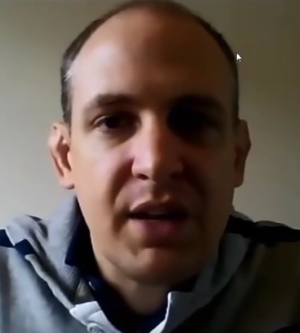
    Charles Scoville.
    Charles Scoville.

    EDITOR’S NOTE: This (below) is the full litigation statement of the SEC on its Ponzi case against Traffic Monsoon and Charles Scoville. The statement was issued today. It asserts Traffic Monsoon “raised more than $207 million from investors worldwide, primarily in the U.S., India and Russia.” The case was brought July 26 in Utah federal court. The photo (left) of Charles Scoville is a screen shot by the PP Blog of a video on YouTube featuring Scoville. The SEC’s Salt Lake City office, referenced in the statement below, has experience uncovering online schemes, including the infamous Imperia IBC caper targeted at Americans and others with hearing impairments. Like  Traffic Monsoon, Imperia was a Ponzi-board “program” with a presence on sites such as MoneyMakerGroup and TalkGold. 

    **_______________________________**

    U.S. SECURITIES AND EXCHANGE COMMISSION

    Litigation Release No. 23604 / July 28, 2016

    Securities and Exchange Commission v. Traffic Monsoon et al., No. 2:16-cv-00832-JNP (D. Utah filed July 26, 2016)

    SEC Halts $207 Million Internet-Based Ponzi Scheme

    The Securities and Exchange Commission today announced that it has obtained an asset freeze against the operator of a Utah-based international Ponzi scheme that raised more than $207 million from investors worldwide, primarily in the U.S., India and Russia.

    In a complaint filed in federal court in Salt Lake City on July 26, the SEC alleges that Traffic Monsoon LLC and Charles Scoville, the company’s only member operated an Internet-based Ponzi scheme that they falsely represented to investors was an advertising company. According to the SEC complaint, Scoville began operating Traffic Monsoon in October 2014 as a combination Internet traffic exchange and pay-per-click program and recruited more than 162,000 investors around the world. According to the complaint, although Traffic Monsoon markets itself as a highly successful company, nearly all of its revenue is generated by other investors, not its products or services. The complaint alleges that more than 99% of Traffic Monsoon’s revenue is derived from new investor funds, making claims that it is a successful advertising business merely an illusion.

    The SEC’s complaint alleges that Traffic Monsoon and Scoville violated Sections 5(a), 5(c) and 17(a)(1) and (3) of the Securities Act of 1933 and Section 10(b) of the Securities and Exchange Act of 1934 and Rule 10b-5(a) and (c) thereunder. Among other things, the SEC’s complaint seeks permanent injunctions, prohibiting further violations of the laws charged, disgorgement of ill-gotten gains plus prejudgment interest and civil penalties from Traffic Monsoon and Scoville.

    The SEC’s investigation was conducted by Alison Okinaka, Scott Frost and Cheryl Mori of the SEC’s Salt Lake Regional Office. Daniel Wadley is leading the SEC’s litigation.

    SEC Complaint

    [SOURCE] http://www.sec.gov/litigation/litreleases/2016/lr23604.htm

    **_______________________________**


  • At Chicago Symposium, SEC Highlights Pyramid Scheme Task Force And Notes ‘Whack-A-Mole’ Nature Of Online Scams

    “These frauds are easily duplicated, and at times, we find ourselves playing ‘whack-a-mole,’ chasing the same set of fraudsters who, after feeling a bit of heat, simply close down one scheme and quickly set up a new one under a different name.”Andrew Ceresney, SEC Enforcement Division director, March 2, 2016

    EDITOR’S NOTE: Type “whack-a-mole” into the PP Blog’s search box near the upper-right corner to find our stories that touch on frauds rising to replace other frauds. Examples include so-called “programs” that claim to be “advertising” companies or to have an “advertising” component — for example, Zeek Rewards, TelexFree, Banners Broker and AdSurfDaily. If you’re in an “advertising” program such as MyAdvertisingPays (MAPS) or TrafficMonsoon, you should asking some serious questions and thinking about whether serial fraudsters are whacking you.

    When one scheme collapses, another quickly rises to replace it. Many such schemes operate simultaneously, drafting the unwary into multiple miseries. Ill-gotten gains or losses pile up in the billions of dollars. Yes, billions.

    Of course, “whack-a-mole” is not limited to “advertising” schemes. There are “cycler” schemes such as “The Achieve Community” and its Ponzi-board equivalents. Meanwhile, there are HYIP schemes such as “Profitable Sunrise” and its Ponzi-board equivalents. MoneyMakerGroup and TalkGold are examples of Ponzi boards. The scammers now have added social media such as YouTube, Facebook and Twitter to their arsenal. Vulnerable people and population groups are constant targets.

    Scams such as WCM777 that claim to have a “product” also are part of “whack-a-mole.”

    **________________________________**

    cautionflagLet’s begin by encouraging you to read Andrew Ceresney’s opening remarks at a joint symposium today sponsored by the SEC and the University of Illinois at Chicago. (Link at bottom of story. Also see Twitter links.)

    UIC promoted the event on its website, titling it “How to Detect and Combat Fraudsters Who Target Our Immigrant Groups and Affinity Communities Through Pyramid and Ponzi Schemes.” The institution notes it is “one of the most ethnically and culturally diverse universities in the country,” so it was a perfect place to host such a confab.

    Ceresney is the SEC’s director of enforcement. One of the things the PP Blog noted while reading the text of his remarks is that it included a subhead titled “Pyramid Schemes and Multi-Level Marketing.”

    This reflected on ongoing effort by the SEC to educate the public that the presence of a “product” in a scheme does not necessarily mean no scam is under way. Many MLMers erroneously believe that a “product” (or purported one) offered for sale cures all ills. That is simply not the case. A year ago in Congressional testimony, the director spoke about a “coordinated effort” to disrupt pyramid schemes.

    Ceresney today provided more details on a new Task Force that is combating pyramid fraud. Here is part of his remarks (italics/bolding added):

    After seeing an increase in complaints regarding pyramid schemes and affinity fraud, the SEC formed a nationwide Pyramid Scheme Task Force in June 2014 to provide a disciplined approach to halting the momentum of illegal pyramid scheme activities in the United States. The goal of the Task Force is to target these schemes by aggressively enforcing existing securities laws and increasing public awareness of this activity.

    The Division is deploying resources to disrupt these schemes through a coordinated effort of timely, aggressive enforcement actions along with community outreach and investor education. More than fifty SEC staff members are part of the nationwide Task Force, which is enhancing its enforcement reach by collaborating with other agencies and law enforcement authorities. We are also using new analytic techniques to identify patterns and common threads, thereby permitting earlier detection of potential fraudulent schemes.

    Collaboration with other regulators, including criminal authorities, is an important goal of the Task Force. To advance this goal, the Task Force has hosted an interagency summit attended by over 200 representatives from other federal and state agencies and has presented at local trainings and agency-specific conferences. And, of course, we have partnered with other regulators and criminal authorities to bring high-impact actions in this space. For example, one month after we filed our enforcement action against the operators of the TelexFree pyramid scheme, two of TelexFree’s principals were charged by the criminal authorities.

    Will the “program” you’re currently pitching become the subject of a “high-impact action?” Time will tell.

    In 11 SEC actions since 2012 involving pyramid operators, the damage resulted in ill-gotten gains or losses totaling more than $4.2 billion, Ceresney said today.

    Read his opening remarks at today’s Chicago symposium.

  • Is Profitable Sunrise Pyramid Case At Risk? SEC Declines Comment

    profitablesunriseimage1The SEC this afternoon declined comment on an order by a federal judge in Atlanta that could lead to the dismissal of the agency’s 2013 case against Profitable Sunrise, an alleged international pyramid scheme and offering fraud targeted at U.S. residents by one or more murky figures.

    Such a dismissal almost certainly would embolden overseas HYIP scammers who reach into the United States over the Internet to steal hundreds of millions of dollars. Profitable Sunrise targeted Christians.

    In April 2013, the PP Blog reported that the SEC alleged the “program” was using a “mail drop” in England and that “Profitable Sunrise operates for the benefit of unknown individuals and/or organizations doing businesses through companies formed in the Czech Republic and using bank accounts in the Czech Republic, Hungary, Latvia, and China, among other places.”

    Two days ago, on Jan. 19, Judge Thomas W. Thrash Jr. ordered the SEC to show cause within 21 days why the case should not be dismissed — apparently for lack of prosecution.

    “Decline comment beyond what we say in court filings,” the agency told the PP Blog today.

    How the agency would proceed in the next three weeks was unclear.

    Thrash’s order says there has been no action in the case since July 15, 2015, a period of more than six months.

    From the judge’s order (italics added):

    The above complaint was filed on April 4, 2013, on April 4, 2013 the Court granted plaintiff’s Motion for Temporary Restraining Order; on April 15, 2013 the Court granted plaintiff’s Motion for Preliminary Injunction; Clerk’s Entries of Default have been entered as to various defendants; on July 15, 2015 the Court directed the Clerk of Court to Receive Repatriated Funds. Since that date no further action has occurred; IS THEREFORE ORDERED that the plaintiff show cause in writing within twenty (21) days why the case should not be dismissed. The Clerk is DIRECTED to submit the case to the Court for further action at the expiration of the 21 days. SO ORDERED, this 19th day of January 2016.

    One of the claimed “plans” of Profitable Sunrise was bizarrely dubbed the “Long Haul” and purported to pay 2.7 percent a day. At least 34 U.S. states and provinces in Canada issued Investor Alerts or cease-and-desist orders against Profitable Sunrise.

    Among other things, the scheme demonstrated the dangers of doing business with exceptionally murky enterprises making claims that fabulous wealth would flow to investors. U.S. promoters working for commissions apparently believed the “program” was operated by “Roman Novak” and his brother “Radoslav,” a purported attorney.

    Whether the brothers actually exist is unclear. So is the final sum gathered by the “program,” which had a presence on well-known Ponzi-scheme forums such as TalkGold and MoneyMakerGroup.

    No receiver has been appointed to date in the Profitable Sunrise case. How victims would go about filing claims is unclear. So, too, is the amount of money available to victims from actions such as asset freezes.

    Hungary is reported to have suspected Profitable Sunrise of money-laundering.

    In May 2013, the PP Blog reported a Virginia man had petitioned the U.S. court for return of more than $57,000 wired to Profitable Sunrise. The SEC later objected to the petition, arguing it could open the floodgates to similar petitions while the agency was working to repatriate assets that one day could be distributed to victims.

    Christian author James Paris has said he feared for his safety and the safety of his family when writing about Profitable Sunrise. (See PP Blog October 2013 comment on the matter at the RealScam.com antiscam forum.)

    See PP Blog’s tag archive on references to Profitable Sunrise or use the Blog’s search function near the upper-right corner.

    NOTE: Our thanks to the ASD Updates Blog.


  • BULLETIN: ‘TeamVinh,’ A Ponzi-Board ‘Program,’ Charged By SEC

    teamvinhlogoBULLETIN: (8th Update 3:34 p.m. ET U.SA.) The SEC has gone to federal court in Minnesota, alleging that an enterprise known as “TeamVinh” that pushed something called “VPAKs” was operating a securities-fraud scheme targeted at MLMers.

    TeamVinh, which allegedly recruited more than 5,600 participants,  has a presence on the Ponzi boards, including MoneyMakerGroup and TalkGold. Recent chatter suggests the scheme may have been making selective payouts, a classic maneuver in HYIP Ponzi land. The scheme eventually morphed into a “purported commodities trading platform,” the SEC said.

    Morphing into a new scheme is another classic form of Ponzi fraud.

    “Defendants claimed that TeamVinh members are able to obtain the placement of individuals in their downline salesforce through purchasing what TeamVinh refers to as ‘VPAKs,'” the SEC charged. “Each VPAK is supposed to represent another individual who signed up for TeamVinh, and TeamVinh promises to ‘fulfill’ the VPAK by placing the person represented by the VPAK in the member’s downline at the third-party MLM company and in the member’s TeamVinh account. Defendants claim that, through the VPAKs, TeamVinh would ‘continuously SPILL in NEW Active Paying Members into [the existing member’s] Downline.’ Members could also earn funds by referring additional individuals to TeamVinh. ”

    Claims of tremendous spillover are common in MLM schemes.

    Charged were TeamVinh.com LLC and alleged operator Vu H. Le, also known as Vinh H. Le.

    Le, 39, lives in Minnesota and was convicted of forgery in Wisconsin in 1995. He spent two years in prison, the SEC said.

    By 2007, the SEC charged, “the States of Wisconsin and Minnesota barred Le from offering or selling securities in those states based on Le’s involvement in a real estate scam.”

    Le raised more than $3 million through TeamVinh, spending $2 million of it at “a single casino” in Las Vegas, the SEC charged. He allegedly also spent investor money at other casinos.

    Promises of “passive income” were part of the TeamVinh scheme, the SEC alleged. Earlier Ponzi-board scams such as Zeek Rewards and TelexFree made similar claims. So did “The Achieve Community.”

    Ponzi-board posts suggest TeamVinh was using a curious (and lengthy) acronym to sanitize the scheme: ACCESS WEW. This apparently stands for “A Crazily Cost Effective Self-Sustainable Wealth the Easier Way” system.

    A higher-priced scheme within the overall scheme was known as VET, which stood for “Vinh’s Elite Team,” the SEC said.

    The VET membership costs ranged “from $3,995 to $24,995.”

    TeamVinh buy-ins for as low as $40 also allegedly were offered, potentially making the business both a microscheme and a macroscheme.

    With TeamVinh already in trouble in 2014, “Le solicited additional investments from TeamVinh members in what he referred to as the ‘Platform.’ As new member and investor proceeds began to dwindle, Le told existing members and investors that he needed $200,000 to finalize TeamVinh’s launch of VodeOx,” the SEC charged. “Le claimed that an investor had committed the $200,000, but the investor’s bank would not clear the funds.”

    VodeOx purportedly was “TeamVinh’s own MLM company,” after TeamVinh earlier had operated as an apparent affiliate of other MLM firms.

    Read the SEC statement on TeamVinh. Read the complaint.


  • Watch The Trailer For ‘Madoff’ And Think About How You Could Have Avoided Schemes Such As Zeek And TelexFree

    Bernard Madoff, played by Richard Dreyfuss, tells investors "Look, it's a closed fund" in the ABC miniseries. Ponzi schemes often trade on suggestions of exclusivity.
    Bernard Madoff, played by Richard Dreyfuss, tells investors “Look, it’s a closed fund” in the ABC miniseries. Ponzi schemes often trade on suggestions of exclusivity.

    ABC has made available the first trailer for “Madoff,” a network miniseries debuting Feb. 3, 2016. Richard Dreyfuss plays the notorious Ponzi schemer, with Blythe Danner starring as Ruth Madoff.

    Bernard Madoff’s name first appeared on the PP Blog nearly seven years ago, on Dec. 13, 2008. It has appeared numerous times since then.

    Says Dreyfuss, as Madoff, in the trailer: “You want to know how to get people to trust you with their money? I’ll tell you right now: You present it as an exclusive thing.”

    Any number of the “programs” we have covered tried to sell Madoff-like exclusivity. One of them was Zeek Rewards, an alleged MLM fraud involving more than $850 million taken down by the SEC in 2012.

    Zeek Rewards, according to the SEC, called itself a “private, invitation-only, affiliate advertising division” for Zeekler, a penny-auction “opportunity.”

    Of course, the interest rate Zeek promised made Madoff look like an amateur.

    As the PP Blog reported on June 10, 2012, a couple of months prior to the SEC’s Zeek action (italics added):

    When Zeek’s story is compared to the tale of Madoff’s relatively modest (compared to Zeek) but unusually consistent returns of around 10 percent a year, Zeek is outperforming the notorious Ponzi swindler by a factor on the order of 30 to one. Zeek, though, insists it is not offering an investment. It also preemptively denies it is a “pyramid scheme” and plants the seed it will terminate any affiliate who suggests Zeek is offering an investment program.

    Lessons flowing from Madoff continue to go unheeded — things such as suggestions of exclusivity and unusually consistent returns.

    But with HYIPs, the danger signs may be even clearer: preposterous interest rates that dwarf Madoff’s “returns,” a presence of a scheme on the Ponzi boards such as TalkGold and MoneyMakerGroup, menacing behavior by a company or its affiliates, cult-like qualities (such as allegedly existed at TelexFree), bizarre antigovernment rhetoric suggesting the presence of “sovereign citizens” or political extremists.

    One of the classic refrains is that “it can’t be a scam because the company is registered.”

    TelexFree, which allegedly generated $3 billion in economic activity, was “registered.”

    So was Bernard L. Madoff Investment Securities LLC.

    As was the case at Zeek, the TelexFree interest rate dwarfed that of Madoff. From the SEC’s 2014 TelexFree complaint filed years after Madoff made “Ponzi” household word in 2008 (italics added):

    One version of the marketing presentation on the company website contained slides indicating that an AdCentral promoter could clear $2,296 per year on a $289 investment, that an Ad Central Family promoter could clear $11,599 per year on a $1,375 investment, and that a Team Builder promoter could receive as much as $39,600 per year.

    The “Madoff” trailer is below. It includes lots of lessons for the mind and soul in just one minute — and it’s not just about making people think they are becoming members of an exclusive club. The con man serving 150 years in federal prison also made appeals to naked greed.

    Your Ponzi-board sponsor may be doing the same thing to you right now.


  • STATS: High Interest Globally In Criminal Probe Involving Payza And Obopay

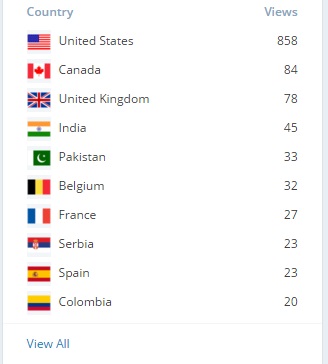
    On Oct. 19, the PP Blog received traffic from 76 countries. This graphic reflects the Top 10 on that date and suggests high global interest in a criminal probe involving Payza and Obopay.
    On Oct. 19, the PP Blog received traffic from 76 countries. This graphic reflects the Top 10 on that date and suggests high global interest in a criminal probe involving Payza and Obopay.

    On the past four Mondays — Oct. 26, Nov. 2, Nov. 9 and Nov. 16 — the PP Blog averaged viewership from 32 countries, according to a compilation of data from Jetpack summarized by the Blog. These numbers are typical. On any given day, viewers from between 25 and 40 countries arrive here.

    But on Oct. 19 — also a Monday and the day the Blog reported that a criminal investigation involving the Payza and Obopay payment processors was under way — the Blog’s viewership shot up to 76 countries. That’s nearly 40 percent of the nations in the world. Viewers from other countries followed Payza- and Obopay-related content in subsequent days, suggesting that people in an even higher percentage of the world’s nations are concerned about the probe.

    As the Blog reported on Oct. 21, the targets of the investigation are unclear and much info has been redacted from public filings.

    The Blog is reporting today that Payza’s name again has appeared in a filing by the court-appointed receiver in the 2012 Zeek Rewards’ Ponzi- and pyramid scheme case. The filing was dated yesterday and includes these lines (italics added):

    The Receiver Team continues to investigate and pursue outstanding funds from Payza, Payment World, Solid Trust Pay, and Cyberprofit and is working with various government agencies and McGuireWoods Consulting in pursuit of these assets.

    Millions of dollars tied to U.S.-based Zeek may be in Moldova, according to receiver Kenneth D. Bell. Moldova is a neighbor to Ukraine, a world hot spot described by the Financial Times as “war torn.”

    Payza, its predecessor AlertPay and SolidTrustPay are Ponzi-forum darlings operating in an era of almost unimaginable cross-border fraud that frequently has an MLM or direct-sales component. The numbers are truly staggering — so high that agencies such as the U.S. Department of Homeland Security and the FBI have become involved in investigations.

    Money moves across borders in a flash these days, including the borders of nations under terrorist threat. Perhaps especially in the HYIP sphere, the aims of the “program” operators and the identities of the recipients of the cash may be particularly murky.

    Information filed by the U.S. Postal Inspection Service in the 2010 “Pathway To Prosperity” case alleges the P2P scheme spread to at least 120 countries, “all of the permanently inhabited continents of the world” and cost investors losses in 48 of the 50 U.S. states.

    Though uncharged, AlertPay and SolidTrustPay both are referenced in the P2P case, as well as the AdSurfDaily case from 2008. Ponzi forums such as TalkGold and MoneyMakerGroup also are referenced in U.S. filings.

    The office of U.S. Attorney Channing D. Phillips of the District of Columbia says it expects to release more information on the Obopay/Payza matter “shortly after” Jan. 22, 2016.

    NOTE: Our thanks to the ASD Updates Blog.


  • BULLETIN: SEC Hits Another Ponzi-Board Scam; Action Against CashFlowBot (DollarMonster) May Cause Restlessness Among ‘Small’ Operators

    breakingnews72BULLETIN: The SEC has gone to federal court in Atlanta, charging the alleged operator of CashFlowBot (DollarMonster) with operating a Ponzi scheme. The “program” had a presence on Ponzi-scheme forums such as TalkGold and MoneyMakerGroup.

    James A. Evans, 33, of Villa Rica, Ga., has been charged with selling unregistered securities and securities fraud. The SEC accused him of making misrepresentations to investors and operating CashFlowBot as a Ponzi scheme dating back at least to 2012.

    CashFlowBot, according to the SEC complaint, used the SolidTrustPay payment processor.

    From the SEC complaint (italics added):

    The underlying mechanics of the DollarMonster scheme were simple: investors deposited funds into their Solid Trust accounts and then transferred those funds to a Solid Trust account controlled by Defendant Evans. Defendant Evans then transferred a portion of the funds to his personal bank account, and also redistributed funds to investors’ Solid Trust accounts as purported investment returns.

    Investors were able to log into their DollarMonster accounts, which included the purported dollar value of their accounts (without identifying any underlying securities or ownership interests), including purported earnings.

    The DollarMonster website did not contain language limiting investors to accredited or sophisticated investors, nor did the process of registration or creating an account require information indicating whether investors were sophisticated or accredited.

    The scam gathered about $1.15 million, the SEC alleged. The agency’s action is the second this year against a Ponzi-board scheme that, relatively speaking, appears not to have collected a tremendous sum of money. (Not that $1.15 million is anything to sneeze at.)

    In February, the SEC sued Achieve Community, alleged to have gathered about $3.8 million. The actions against Achieve and CashFlowBot may demonstrate that the agency is tracking schemes large and small, something that could cause fitful sleep in the HYIP sphere.

    Some schemes such as TelexFree (2014/$1.8 billion) and ZeekRewards (2012/$897 million) gathered tremendous sums of money before interventions by law enforcement.

    After he was subpoenaed in July 2014, Evans appeared to be hatching a new scheme at TheInvestorsExchange.com, the SEC said.

    “Theinvestorsexchange.com purports to match investors looking for an investment return with individuals and companies that need capital,” the SEC alleged. “Theinvestorsexchange.com website also lists various advertisements for purported investment opportunities, with links to email addresses that potential investors can contact for further information.”

    Read the SEC’s statement on CashFlowBot.

  • ‘Bacon’ Crumbles — And Yet Props Up MAPS

    EDITOR’S NOTE: The interconnectivity of fraud schemes is one of the core dangers of the HYIP sphere. Stolen proceeds continually cycle between and among scams, making banks and payment vendors virtual warehouses for cross-border criminals and their serial enablers. The problem may be intensifying. More and more HYIP schemes appear to be using script kits — essentially prefabricated websites — in which emerging schemes simply plug in their information and graphics. These kits allow schemes to show ads for other schemes, including competitive schemes.

    Simply put, modern scams are driving business to other modern scams.

    As the story below illustrates, the cycle may not be broken even if a particular scheme suspends payouts.

    **____________________**

    baconmapssmall“Bring The Bacon Home,” a Ponzi-board “program” popularized in part by Achieve Community hucksters, reportedly has crumbled.

    The circumstance surrounding the collapse, however, demonstrates that BTBH is contributing to ongoing harm. Indeed, the “program” continues to publish ads for other HYIP schemes, including “MyAdvertisingPays.”

    MAPS, as it is known, is referenced in a prospective class-action complaint filed against multiple TelexFree figures and financial vendors in U.S. District Court for the Southern District of New York in December 2014.

    TelexFree was alleged by the SEC last year to have been a combined pyramid and Ponzi scheme. The trustee in the TelexFree bankruptcy case says the cross-border “program” may have gathered as much as $1.8 billion.

    TelexFree and MAPS are known to have had promoters in common. It was learned last month that Shaun Smith, an alleged “winner” in the Zeek Rewards scheme broken up by the SEC in 2012, also is promoting MAPS.

    Zeek receiver Kenneth D. Bell is suing Smith and more than 9,000 other alleged “winners,” amid claims they are in possession of proceeds that flowed from a Ponzi scheme.

    Despite the reported collapse of BTBH, it continues not only to publish ads for MAPS, but other schemes.

    BTBH, which had claimed $40 turned into $1,800, encountered a failed launch in January. The “program” then embarked on a self-styled “relaunch,” but that, too, appears now to have failed — leaving investors holding the bag.

    Before Achieve Community collapsed under the weight of an SEC investigation announced in February in which the agency alleged Achieve was a combined Ponzi- and pyramid scheme that had gathered $3.8 million, any number of Achieve promoters also were promoting other cross-border scams.

    Another of the scams currently advertised on BTBH is “MooreFund,” as the screen shot below demonstrates. MooreFund also was promoted by Achieve members.

    baconmoorefundsmall

    As the PP Blog reported on Feb. 24 (italics added):

    Like Achieve, MooreFund has a presence on well-known Ponzi-scheme forums such as MoneyMakerGroup and TalkGold. The “program” purports to offer four investment plans. These promise absurd daily interest rates of between 1.5 percent and 3 percent, with “compounding” available on three of the four plans and tiered recruitment commissions offered on all four.

    MooreFund, in turn, was promoted online alongside a “binary options” scheme known as SpotFN that recently became the subject of a cease-and-desist order in Missouri.

    See April 12 report on BTBH at BehindMLM.com.

  • SEC Declines Comment On ‘IntellaShares’ And Its Purported ‘BLACKLIST’; Ponzi-Board ‘Program’ Trades On Name Of Save The Children

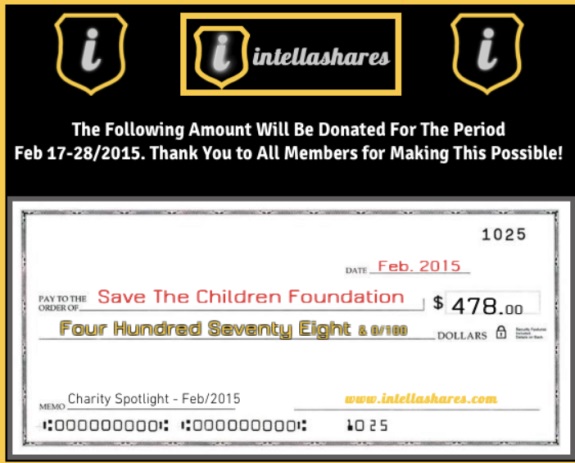
    IntellaShares reportedly is threatening members who file disputes -- all while trading on the name of Save The Children. Photo source: screen shot from website of IntellaShares.
    IntellaShares reportedly is threatening members who file disputes — all while trading on the name of Save The Children. Photo source: 4/1/2015 screen shot from website of IntellaShares.

    UPDATED 11:31 A.M. EDT U.S.A. In 2010, the Federal Trade Commission took action against an online venture known as iWorks. This allegation appeared on Page 7 of the FTC’s Dec. 21, 2010 complaint:

    “They have also attempted to drive down their chargeback rates by threatening to report consumers who seek chargebacks to an Internet consumer blacklist they operate called ‘BadCustomer.com’ that will ‘result in member merchants blocking [the consumer] from making future purchases online!'”

    BehindMLM.com is reporting today that a “program” known as “IntellaShares” appears to be threatening participants with entry on a “BLACKLIST.”

    IntellaShares appears to have launched earlier this year and then experienced a prompt collapse. Despite this, the “program” claims on its website that it has or will donate $478 to the “Save The Children Foundation.”

    It is unclear if IntellaShares actually was referring to Save the Children Federation Inc., the internationally prominent Connecticut charity that operates at SaveTheChildren.org.

    BehindMLM has described IntellaShares as a “$2.50 micro Ponzi investment scheme.”

    The “program” has a presence on well-known Ponzi-scheme forums such as MoneyMakerGroup. There are assertions of an imminent “relaunch.”

    So far this year, the SEC has taken actions against two Ponzi-board “programs”: Achieve Community and Wings Network. In Congressional testimony on March 19, the agency said it is targeting scams that operate “under the guise of ‘multi-level marketing’ and ‘network marketing’ opportunities.”

    Such scams may use social media such as forums, YouTube, Twitter and Facebook to target marks. Some may imply they are linked to a charity or perform good deeds with money sent in by participants.

    In 2009, for instance, a Ponzi scheme known as AdViewGlobal purported to be involved in an effort to preserve the rain forest. AdViewGlobal, which was a knockoff of the 2008 AdSurfDaily Ponzi scheme, later disappeared.

    Like IntellaShares, AdViewGlobal purported to be in the “advertising” business. It also had a presence on the Ponzi boards.

    In 2011, a Ponzi-board “program” known as “Club Asteria” promised weekly payouts of up to 8 percent while trading on the name of the American Red Cross. During the same year, a TalkGoldPonzi forum promoter pitching both Club Asteria and a separate scam known as JSSTripler/JustBeenPaid (730 percent a year) claimed that filing disputes with payment processors meant that “all members will suffer.”

    IntellaShares may be operating out of New York.

    The SEC this morning declined to comment on IntellaShares. The FTC did not immediately respond to a request for comment.

    Update 11:31 a.m. The FTC said this morning that it “hasn’t brought any enforcement actions involving IntellaShares.”

    Whether it would remains an open question. The agency has an aggressive enforcement history when consumers end up on the receiving end of threats or are duped into joining work-at-home “programs.”

  • BULLETIN: ‘MooreFund,’ A Ponzi-Board HYIP ‘Program’ Pushed By Achieve Community Huckster, Is Using Unauthorized Security Seal From Norton

    moorefundBULLETIN:  (Updated 8:17 a.m. ET Feb. 25 U.S.A.) An HYIP “program” that operates at MooreFund.com is using a “Norton Secured” seal that is not authorized, Symantec told the PP Blog late this afternoon.

    Symantec, owner of the famous Norton brand, is a software and computer-security company. Its name is misspelled as “Symentec” on the FAQ page of MooreFund in an awkwardly worded passage that plants the seed Symantec and other security firms are providing deposit insurance.

    Under a subhead that reads “How can I be sure that Moore Fund is licensed and safe,” the MooreFund site claims (italics added/verbatim):

    Moore Property Investment Co Limited is registered in United Kingdom and verified by Worlds most popular security insurance company like Symentec-Norton (veriSign), Comodo and TRUSTe. MOORE PROPERTY INVESTMENT CO LIMITED holds a website identity assurance warranty of $1,750,000. This means that you are insured for up to $1,750,000 when relying on the information provided by IdAuthority on this site. US Patent Number 7,603,699.”

    The PP Blog contacted Symantec after observing a YouTube promo today for MooreFund by Achieve Community huckster Rodney Blackburn. The Blog also contacted the U.K.’s Financial Conduct Authority because MooreFund purports to operate from the United Kingdom through Moore Property Investment Co Ltd. FCA, closed for the evening, did not immediately respond to a request for comment.

    Update 8:17 a.m. ET Feb. 25 U.S.A. Chris Hamilton, a spokesperson for FCA, declined this morning to comment specifically on MooreFund. Hamilton added, however, that “the FCA is one of a number of organisation that does investigate, and prosecute, Ponzi schemes. The other UK authorities include the Police and the Serious Fraud Office.” (Original story continues below . . .)

    “They have insurance to cover . . . so, it helps you to feel, you know, more peace of mind in getting into an investment like this,” Blackburn says in his video for MooreFund. The 13:11 production is dated today and titled, “Moore Fund- Rodney’s Review on this HYIP.”

    Blackburn also advised MooreFund registrants to place banner ads for the “program” on other HYIP sites. In what might be a troubling trend, HYIP schemes recently have been publishing ads for other HYIP schemes, a development that suggests tainted proceeds are circulating among any number of scams.

    Achieve Community, which was charged by the U.S. Securities and Exchange Commission on Feb. 12 with operating a Ponzi- and pyramid scheme that had gathered more than $3.8 million, permitted members to place banner ads for other “programs.”

    Like Achieve, MooreFund has a presence on well-known Ponzi-scheme forums such as MoneyMakerGroup and TalkGold. The “program” purports to offer four investment plans. These promise absurd daily interest rates of between 1.5 percent and 3 percent, with “compounding” available on three of the four plans and tiered recruitment commissions offered on all four.

    Investors, according to the website, may send in sums from $15 to $99,999, a circumstance that suggests MooreFund is operating both a micro and macro scam.

    MooreFund claims its accepts Bitcoin. It also claims prospects can send money via Western Union, bank wire and a range of processors, including well-known fraud enablers such as SolidTrustPay, Perfect Money and EgoPay.

    The site includes a number of awkward passages in English such as “Fill up the form to make a new deposit,” “Sometime website is down due to ongoing maintenance work,” “You just have to contact the support department and ask for cancelling your investment” and “MooreFund minimizes risk level by offering deposit insurance system.”

    This is the supposed insurance (italics added/verbatim):

    Plan Beginner – 99.99% of the funds are insured
    Plan Pro – 75% of the funds are insured
    Furthermore, You can cancel and refund your money anytime between first 7 days of your deposit.

    Using a calculator on the MooreFund site, Blackburn asserts that by compounding his $500 deposit over the course of a year, he’ll emerge with $53,721.54.

    “Guys, that is a nice little nest egg right there,” he says.