Tag: TrafficMonsoon

  • EDITORIAL: Arguments Of Zeek Winners Continue La-La Land Narrative, But Come As No Surprise In MLM’s HYIP Wing

    Zeek receiver Kenneth D. Bell.
    Zeek receiver Kenneth D. Bell.

    Many people in the antiscam community applauded Kenneth D. Bell, the receiver for Zeek Rewards, when he sued more than 9,000 individuals more than two years ago for return of their gains from the scheme. Those gains — more than $200 million — came from Ponzi proceeds, Bell alleged.

    And he pointed out that the money rightfully should go to the hundreds of thousands of Zeekers globally who were “affiliate victims.” Court filings later would show that Zeek gathered on the order of $940 million in less than two years. Only TelexFree, another MLM HYIP scheme that was disintegrating when Bell announced his lawsuit against the Zeek “winners” in March 2014, may be bigger.

    More than 90,000 (gulp!) alleged TelexFree winners now are being sued by Trustee Stephen B. Darr. TelexFree infamously caused angry affiliates to pour into the company’s billion-dollar broom closet in Massachusetts. It was a good thing police were there to keep order.

    Thanks to the willful blindness and serial disingenuousness brought to you by serial MLM HYIPers such as Todd Disner, T. LeMont Silver and “Ken Russo,” huge class-action cases in which “winning” promoters of MLM securities schemes are named defendants now are a reality.

    Bell, unfairly maligned among some MLM HYIPers and even some apparent “sovereign citizens,” deserves a lot of credit for trying to bring a measure of financial justice to the hundreds of thousands of individuals ripped off by Zeek and for establishing a sort of blueprint for how Darr could proceed.

    This blueprint also is there in case the Traffic Monsoon receiver needs it. Traffic Monsoon, an alleged $207 million scheme, was broken up by the SEC last month. There already is evidence that Traffic Monsoon had promoters in common with TelexFree.

    It is true that the number of potential defendants across the HYIP sphere is staggering. But it is equally true that the number of victims of these cross-border schemes is even more staggering. This number is in the millions. The global losses are in the billions. Absent actions such as those brought by Bell and Darr, however, there would be virtually no financial accountability. Society would be saying that it’s OK to profit through the promotion of online Ponzi schemes.

    For years, the PP Blog has raised questions about the national-security implications of cross-border HYIP schemes. The narratives surrounding such schemes typically are bizarre, with anonymous Ponzi-board pitchmen typically beginning with “I am not the admin” of the “program.” It all goes recklessly downhill from there.

    To those who feel a chill every time one of these schemes gains a head of steam, it came as no surprise that the alleged Zeek “winners” are arguing they should get to keep their hauls. It is simply the natural progression of the HYIP narrative.

    Bell, a former federal prosecutor, is having none of this. Indeed, his is the voice of common sense.

    From his argument (italics/bolding added):

    Defendants still act as if Zeek was a legitimate business and Defendants were “internet marketing specialists” entitled to be paid as employees rather than investors in the scheme, all of which is of course pure fiction.

    Specifically, Defendants ask the Court to absolve the scheme’s net winners from their obligation to repay the victims’ money because of an alleged “limitation” on the timing of future claims included in the scheme’s website’s “Terms of Service” (or “TOS”), which in any event do not limit the Receiver’s claims against Defendants. The Court should resist Defendants’ invitation to create the dangerous loophole of allowing a fraudster to use the terms implementing a Ponzi scheme to limit the right of a subsequently appointed Receiver to recover funds paid to the winners of the fraudulent scheme. While such a rule would be a great recruiting tool for future Ponzi scheme operators, it is surely an unacceptable legal rule and public policy.

    Also, Defendants urge the Court to rule that by purchasing bids, posting online advertisements (which Zeek boasted would take only three to five minutes a day), and recruiting thousands of victims to the scheme, they provided “reasonably equivalent value” to ZeekRewards such that they get to keep the victims’ money that they won in the scheme. In other words, Defendants claim that those Defendants who spent the most time successfully promoting the scheme and multiplying the number of its victims should be given the most credit against the Receiver’s claims to recover their fraudulently transferred winnings. In fact, in arguing that they were supposedly rightly paid for their “services,” Defendants stretch to compare themselves to the utility company, which among many other differences does not invest money in their customers’ businesses hoping to share in compounding profits of 125% every ninety days.

    NOTE: Our thanks to the ASD Updates Blog.


  • Private Attorneys Now Investigating Traffic Monsoon

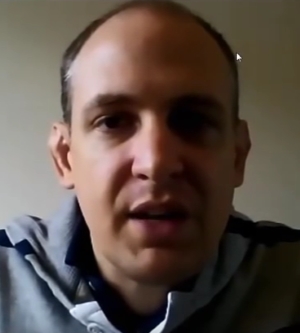
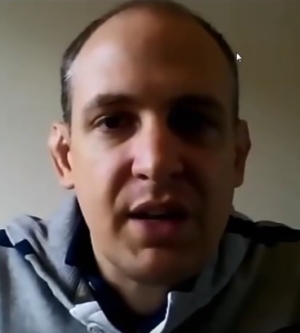
    Charles Scoville: From YouTube.
    Charles Scoville: From YouTube.

    UPDATED 1:15 P.M. EDT U.S.A. It has happened in previous cases involving alleged violations of federal securities laws, and now it’s happening with Traffic Monsoon.

    “The Peiffer Rosca Wolf law firm is investigating Traffic Monsoon, LLC and Charles Scoville’s alleged Ponzi scheme on behalf of investors – whom Traffic Monsoon called ‘members,'” the firm said in a PR release today.

    How the firm would proceed is unclear. The announcement, however, potentially means Traffic Monsoon and Scoville will be facing litigation on a front separate from the Ponzi case filed by the SEC on July 26.

    After the 2008 AdSurfDaily Ponzi case was filed by the U.S. Secret Service, private attorneys filed a racketeering complaint against ASD operator Andy Bowdoin (and others) that helped out a second Ponzi scheme known as AdViewGlobal.

    Class-action attorneys also filed complaints in the TelexFree and Zeek Ponzi- and pyramid cases. Certain TelexFree-related actions alleged racketeering and referenced a “program” similar to Traffic Monsoon: My AdvertisingPays. There also were counts of fraud against TelexFree principals and some individual promoters.

    Even if they don’t result in a recovery, the actions filed by private individuals — as opposed to government plaintiffs — force defendants to confront litigation on multiple fronts. Defense costs may soar.

    “The Peiffer Rosca Wolf lawyers are preparing to take action and seek compensation on behalf of those who invested in the alleged Ponzi scheme orchestrated by Traffic Monsoon and Scoville,” the firm said.

    Traffic Monsoon gathered at least $207 million, according to the SEC.


  • Does Mysterious TrafficMonsoon.plus Domain Have A Bogus Comodo Security Logo?

    trafficmonsoonlogoThe last time the PP Blog covered something such as this was in February 2015. That’s when “Moore Fund,” a preposterous Ponzi-board “program” that later vanished with an unknown haul, was using a “Norton Secured” logo unauthorized by Symantec to fool the masses.

    Unfortunately, the masses included members of The Achieve Community, who’d already been ripped off in that preposterous Ponzi-board scam.

    On July 26, 2016, the SEC accused Traffic Monsoon and alleged operator Charles Scoville of Utah of operating a Ponzi scheme that had gathered at least $207 million.

    Like Moore Fund and Achieve Community, Traffic Monsoon was a Ponzi-board scheme. The scheme operated from TrafficMonsoon.com, which now rotates to the website of Peggy Hunt, the court-appointed receiver.

    With TrafficMonsoon.com now under the control of the receiver, a new domain has surfaced: TrafficMonsoon.plus.

    To hear some TrafficMonsoon promoters tell it on YouTube and other web venues,  Traffic Monsoon will start anew at the .plus domain and somehow will rally the membership to defeat the SEC. The .plus site appears to a virtual duplicate of the .com as allegedly operated by Scoville, except for a few edits that claim the “program” now is operating from Finland.

    There have been scattered reports that whoever is operating the .plus site has access to the TrafficMonsoon database, property that may be counted among the seized assets.

    The TrafficMonsoon.plus domain has a “COMODO SECURED” logo in the lower-right corner. When clicked, it resolves to a page on the Comodo site that in part reads, “IdAuthority Credentials not available for this site.”

    As was the case with Moore Fund, the Comodo logo may be a bid to trick visitors to TrafficMonsoon.plus that a well-known global Internet security company is aboard the Traffic Monsoon train — or the train of the purported Traffic Monsoon members trying to reboot an alleged $207 million Ponzi scheme during an asset freeze.

    Comodo did not respond immediately to a request for comment.


  • BULLETIN: Utah Division of Securities Rejects Claims In Traffic Monsoon Promo That Scheme Had Been Given Clean Bill Of Health

    Charles Scoville of Traffic Monsoon.
    Charles Scoville of Traffic Monsoon.

    BULLETIN: The Utah Division of Securities — the state-level regulator — has rejected online claims that the agency had investigated Traffic Monsoon and had given it a clean bill of health.

    Federal regulators sued Traffic Monsoon and alleged operator Charles Scoville last week, alleging Ponzi fraud, securities fraud and the sale of unregistered securities to unaccredited investors.

    The PP Blog contacted the state Division on Aug. 1, after reading a Traffic Monsoon affiliate promo that in part read, “The State of Utah’s security division & Consumer Protection went to the offices of Traffic Monsoon to investigate their business model. The result of the investigation was that Traffic Monsoon wasn’t committing any kind of investment scheme or security fraud.”

    That simply didn’t happen, the Division said through Director Keith Woodwell early this afternoon in response to the PP Blog’s inquiry.

    “[T]he Division has not investigated Traffic Monsoon,” the agency said flatly.

    It added that it “never made any determinations as to whether Traffic Monsoon was ‘committing any type of investment scheme or security fraud’ and that it had “made no determination as to whether there was a pyramid scheme.”

    It is not unusual for promoters of MLM-type or direct-sales fraud schemes to claim that a scheme had passed muster with regulators.

    The Division said it had received one complaint about AdHitProfits, another Scoville scheme, in December 2013. No action was taken there, the Division said, because the Division determined there was no offer of securities under state law.

    Regardless, the Division said, it does not offer clean bills of health to schemes or issue statements of “nothing wrong.”


  • Some Traffic Monsoon Promoters Are Zeek Clawback Defendants

    trafficmonsoonlogoUPDATED 11:51 A.M. EDT U.S.A. Zeek Rewards’ receiver Kenneth D. Bell had no comment this morning on reports that some Zeek clawback defendants also were participants in Traffic Monsoon, alleged last week by the SEC to have been a Ponzi scheme that had gathered at least $207 million.

    The reports appeared on RealScam.com.

    In March 2015, Bell sued Adrian Hibbert of the United Kingdom, alleging he had received more than $82,000 in Ponzi proceeds from Zeek. Zeek was charged with fraud by the SEC in August 2012.

    Another Zeek promoter listed by Bell as a winner in that scheme — Frank Calabro Jr. of the United States — also promoted Traffic Monsoon. Bell has expressed concern about online pitchmen moving from one fraud scheme to another.

    “Winnings” from MLM or direct-sales fraud schemes may be subject to return through clawback litigation.

    Both Zeek and Traffic Monsoon were purported “revenue sharing” programs. Paul Burks, the operator of Zeek Rewards, potentially faces a long prison term after his conviction earlier this month on multiple fraud counts.

    On July 26, the SEC civilly charged alleged Traffic Monsoon operator Charles Scoville of Utah with fraud. He has not been charged criminally and is believed to be residing overseas.

    Peggy Hunt of the Salt Lake City office of the Dorsey & Whitney law firm has been appointed receiver over Traffic Monsoon. Neither she nor the firm responded immediately this morning to a request for comment on the issue of common promoters between Traffic Monsoon and Zeek.

    The law firm confirmed to the PP Blog last week that there would be a receivership website for Traffic Monsoon, but the site was not yet live. The URL has not been released.

    Some Zeek clawback defendants also were participants in the AdSurfDaily Ponzi scheme. ASD was a “program” similar to Traffic Monsoon broken up by the U.S. Secret Service in 2008 in a highly publicized action.

    In U.S. domestic clawback litigation and in cases filed against non-U.S. residents, Bell has sued thousands of alleged Zeek winners for return of their gains and interest.

    Hunt’s plans with Traffic Monsoon are unclear.

    Hibbert appears also to have a page promoting the “My Advertising Pays” scheme.  MAPS, as it is known, has caught the attention of class-action attorneys involved in litigation against the TelexFree scheme broken up by the SEC and the U.S. Department of Homeland Security in 2014. The litigation also includes Zeek figures.

    TelexFree and Zeek may be the two largest combined Ponzi- and pyramid schemes in history, generating on the order of $4 billion in illicit, cross-border business and affecting hundreds and hundreds of thousands of people.

    The MAPS’ page attributed to Hibbert claims that MAPs operator Mike Deese “has been in the trenches with Zeek, ASD, Banners Broker, Ad Hit Profits, and many other advertising revenue sharing companies some of which continue to thrive and some that are not.”

    AdHitProfits also was a Scoville scheme. BannersBroker was a cross-border fraud that led to arrests in Canada.

    Separately, the Zeek page attributed to Hibbert claims, “If you want to make money and get paid everyday, you have to look at Zeek Rewards and understand how it works.”

    The SEC and federal prosecutors in the Western District of North Carolina said Zeek worked as a Ponzi scheme.

    Visit the TrafficMonsoon thread at RealScam.com.


  • TRAFFIC MONSOON: Whack-A-Mole — For Sure

    trafficmonsoonlogoNews came early this morning that the SEC had moved against Traffic Monsoon, calling it a Ponzi scheme. Both the “program” and alleged operator Charles Scoville were charged civilly yesterday in Utah federal court with securities fraud and selling unregistered securities to unaccredited investors.

    Scoville also was the braintrust behind AdHitProfits, a Ponzi-board “program” in part targeted at people who also were targeted in the egregious 2013 Profitable Sunrise cross-border scam in which millions of dollars appear to have vanished overseas.

    As the PP Blog reported on June 2, 2013 (italics added):

    A spammer hit a Profitable Sunrise Facebook site yesterday with five drive-by offers for “AdHitProfits.” All five of the machine-gunned theft bids claimed the same thing: “make money every half an hour…100% commission let your money grow for you at high speed.”

    The AHP “program” also is being pitched on the Ponzi boards, with the thread-starter at MoneyMakerGroup bragging that “Payza, []STP & Liberty Reserve Accepted !!”

    LibertyReserve was described last week by federal prosecutors in New York as a criminal enterprise that had laundered more than $6 billion for Ponzi schemers, credit-card fraudsters, identity thieves, investment fraudsters, computer hackers, child pornographers and narcotics traffickers.

    Traffic Monsoon allegedly used PayPal, SolidTrustPay and Payza, a processing firm under fire from the court-appointed receiver in the Zeek Rewards Ponzi- and pyramid-scheme case. Payza also is involved in a federal investigation centered in the District of Columbia.

    In its complaint against Traffic Monsoon and Scoville, the SEC says PayPal restricted Traffic Monsoon during the winter, in January 2016.

    Our research shows that Scoville then turned to Payza for the heavy lifting and that Payza attended a Traffic Monsoon event in May 2016, during the spring and while funds in PayPal had been frozen by PayPal.

    From the SEC complaint (italics added):

    After the PayPal freeze, Scoville began using other payment processors more extensively: Solid Trust Pay, headquartered in Ontario, and Payza, headquartered in London with offices in New York. He has also used an account at JPMorgan Chase to receive investor funds.

    Zeek used both SolidTrustPay and Payza, as did the AdSurfDaily Ponzi scheme before it.

    Traffic Monsoon’s haul appears to have exceeded $200 million, potentially making it one of the largest advertising “revshare” schemes of all time. As things stand, it is larger than other well-known revshare frauds such as AdSurfDaily ($119 million) and Banners Broker ($156 million). Some of the Banners Broker cash reportedly ended up in KulClub, yet another Ponzi-board MLM scheme.

    Ponzi-board schemes are eviscerating wealth globally. It is not unusual for such schemes to use multiple payment processors and to target vulnerable population groups. Agencies from the U.S. Department of Homeland Security have been involved in a number of major investigations of Ponzi-board “programs.”

    It is unclear if DHS or other U.S. agencies with the power of arrest are involved in a Traffic Monsoon probe. History has shown, however, that when the SEC brings a civil case, other agencies sometimes carry out criminal investigations on a parallel track.


  • REPORT: SEC Moves Against ‘TrafficMonsoon,’ Calls It A Ponzi

    trafficmonsoonlogoThe SEC has filed a lawsuit against the Traffic Monsoon “program” and called it a Ponzi scheme that had gathered $207 million, the Salt Lake Tribune is reporting.

    The assets of Traffic Monsoon and alleged operator Charles Scoville have been frozen, the newspaper reports.

    On June 1, the PP Blog reported that Payza — a payment processor under fire from the court-appointed receiver in the Zeek Rewards Ponzi- and pyramid case brought by the SEC in 2012 — bragged about its attendance at a Traffic Monsoon event in May.

    Zeek’s Paul Burks was found guilty last week of multiple felonies for his operation of Zeek, a purported auction “program.”

    Traffic Monsoon, which may be a whack-a-mole scheme, is a purported “advertising “program” similar to the AdSurfDaily Ponzi scheme and other scams, including Banners Broker.

    The SEC warned about whack-a-mole schemes in March.

    More as the situation develops . . .


  • PAYZA TO ZEEK RECEIVER: Don’t Blame Us

    ponzinews1Payza, an HYIP-friendly payment processor that recently bragged on Twitter about its attendance at an event for the teetering TrafficMonsoon scheme, has advised a federal judge that it is not responsible for millions of dollars that allegedly went missing in the Zeek Rewards’ scheme taken down by the SEC in 2012.

    Zeek receiver Kenneth D. Bell alleged in February that Payza and an outfit known as Payment World “facilitated” the epic cross-border Zeek Ponzi- and pyramid scheme. The PP Blog reported on Feb. 21 that the money at issue — about $13.1 million — may have ended up in one or more collapsed Russian banks after being transferred out of VictoriaBank in Moldova.

    Payza acknowledged it was a business partner with Payment World, but maintained the account in Moldova was Payment World’s alone and that it has sued Payment World for more than $20 million because it, too, had been ripped off.

    In response to Bell, who is seeking a contempt sanction and to hold Payza jointly liable with Payment World and VictoriaBank for return of the cash, Payza says it never had “dominion and control” over the money and thus should not be held liable.

    Payza, which operates out of Canada as part of a company known as MH Pillars of the United Kingdom, further contends with worked cooperatively and proactively with Bell and U.S. authorities tracking the money. The defense filing by Payza was docketed yesterday in the Western District of North Carolina and also claims Payza performed due diligence on Rex Venture Group, the operator of Zeek. The filing contained a declaration by MH Pillars Executive Vice President Firoz Patel.

    In a May 15 Twitter post, Payza said Patel was a speaker at a May 15 event in New York for the Traffic Monsoon program.

    The Tweet made no due-dilignce claims about Traffic Monsoon, which reportedly is under investigation by PayPal and has been blocked from a sum totaling on the order of $60 million.

    NOTE: Our thanks to the ASD Updates Blog.

    Also see TaraTalks site.


  • At Chicago Symposium, SEC Highlights Pyramid Scheme Task Force And Notes ‘Whack-A-Mole’ Nature Of Online Scams

    “These frauds are easily duplicated, and at times, we find ourselves playing ‘whack-a-mole,’ chasing the same set of fraudsters who, after feeling a bit of heat, simply close down one scheme and quickly set up a new one under a different name.”Andrew Ceresney, SEC Enforcement Division director, March 2, 2016

    EDITOR’S NOTE: Type “whack-a-mole” into the PP Blog’s search box near the upper-right corner to find our stories that touch on frauds rising to replace other frauds. Examples include so-called “programs” that claim to be “advertising” companies or to have an “advertising” component — for example, Zeek Rewards, TelexFree, Banners Broker and AdSurfDaily. If you’re in an “advertising” program such as MyAdvertisingPays (MAPS) or TrafficMonsoon, you should asking some serious questions and thinking about whether serial fraudsters are whacking you.

    When one scheme collapses, another quickly rises to replace it. Many such schemes operate simultaneously, drafting the unwary into multiple miseries. Ill-gotten gains or losses pile up in the billions of dollars. Yes, billions.

    Of course, “whack-a-mole” is not limited to “advertising” schemes. There are “cycler” schemes such as “The Achieve Community” and its Ponzi-board equivalents. Meanwhile, there are HYIP schemes such as “Profitable Sunrise” and its Ponzi-board equivalents. MoneyMakerGroup and TalkGold are examples of Ponzi boards. The scammers now have added social media such as YouTube, Facebook and Twitter to their arsenal. Vulnerable people and population groups are constant targets.

    Scams such as WCM777 that claim to have a “product” also are part of “whack-a-mole.”

    **________________________________**

    cautionflagLet’s begin by encouraging you to read Andrew Ceresney’s opening remarks at a joint symposium today sponsored by the SEC and the University of Illinois at Chicago. (Link at bottom of story. Also see Twitter links.)
    UIC promoted the event on its website, titling it “How to Detect and Combat Fraudsters Who Target Our Immigrant Groups and Affinity Communities Through Pyramid and Ponzi Schemes.” The institution notes it is “one of the most ethnically and culturally diverse universities in the country,” so it was a perfect place to host such a confab.

    Ceresney is the SEC’s director of enforcement. One of the things the PP Blog noted while reading the text of his remarks is that it included a subhead titled “Pyramid Schemes and Multi-Level Marketing.”

    This reflected on ongoing effort by the SEC to educate the public that the presence of a “product” in a scheme does not necessarily mean no scam is under way. Many MLMers erroneously believe that a “product” (or purported one) offered for sale cures all ills. That is simply not the case. A year ago in Congressional testimony, the director spoke about a “coordinated effort” to disrupt pyramid schemes.

    Ceresney today provided more details on a new Task Force that is combating pyramid fraud. Here is part of his remarks (italics/bolding added):

    After seeing an increase in complaints regarding pyramid schemes and affinity fraud, the SEC formed a nationwide Pyramid Scheme Task Force in June 2014 to provide a disciplined approach to halting the momentum of illegal pyramid scheme activities in the United States. The goal of the Task Force is to target these schemes by aggressively enforcing existing securities laws and increasing public awareness of this activity.

    The Division is deploying resources to disrupt these schemes through a coordinated effort of timely, aggressive enforcement actions along with community outreach and investor education. More than fifty SEC staff members are part of the nationwide Task Force, which is enhancing its enforcement reach by collaborating with other agencies and law enforcement authorities. We are also using new analytic techniques to identify patterns and common threads, thereby permitting earlier detection of potential fraudulent schemes.

    Collaboration with other regulators, including criminal authorities, is an important goal of the Task Force. To advance this goal, the Task Force has hosted an interagency summit attended by over 200 representatives from other federal and state agencies and has presented at local trainings and agency-specific conferences. And, of course, we have partnered with other regulators and criminal authorities to bring high-impact actions in this space. For example, one month after we filed our enforcement action against the operators of the TelexFree pyramid scheme, two of TelexFree’s principals were charged by the criminal authorities.

    Will the “program” you’re currently pitching become the subject of a “high-impact action?” Time will tell.

    In 11 SEC actions since 2012 involving pyramid operators, the damage resulted in ill-gotten gains or losses totaling more than $4.2 billion, Ceresney said today.

    Read his opening remarks at today’s Chicago symposium.

  • RECEIVER: Payza And Payment World ‘Facilitated’ Zeek Ponzi Scheme; Whereabouts Of $13.1 Million An ‘Open Question’

    Zeek was a purported penny auction.
    Zeek was a purported penny auction.

    Zeek Rewards’ receiver Kenneth D. Bell has gone to federal court in the Western District of North Carolina, alleging that the Payza and Payment World payment processors “facilitated” the epic cross-border Zeek Ponzi- and pyramid scheme.

    More than $13.1 million in funds from North Carolina-based Zeek that could be used to compensate victims ended up in VictoriaBank in Moldova, owing to a processing relationship among Payza, Payment World and the bank, Bell alleged.

    Now, Bell contends, “based on recent developments in the Receiver’s investigation, there is an open question as to whether the Receivership Assets held on Reserve at VictoriaBank remain or were transferred from the account.”

    The disturbing allegations are part of a motion in which Bell seeks to hold Payza, Payment World and VictoriaBank in contempt. They come as federal prosecutors in the District of Colombia and the U.S. Department of Homeland Security are conducting a criminal investigation involving Payza and OboPay, another payment processor.

    Prosecutors haven’t revealed the target of the criminal probe. It is unclear whether there is any nexus with the Zeek case, alleged overall to involve $897 million. Zeek, a Ponzi forum “program,” allegedly created tens and tens of thousands of victims worldwide.

    Payza is a Ponzi-forum darling. Its predecessor, AlertPay, is referenced in court filings in the 2008 AdSurfDaily Ponzi case. Scores of Ponzi-board “programs” claim to accept Payza, including an emerging scheme known as Traffic Monsoon.

    Bell accused Payza, Payment World and VictoriaBank of violating an asset-freeze order issued in 2012 by Senior U.S. District Judge Graham C. Mullen.

    In a novel legal maneuver, Bell has persuaded Mullen to freeze a correspondent account VictoriaBank holds on U.S. soil at Bank of New York Mellon. Mullen authorized the freezing of more than $13.1 million in the account.

    If the account proves not to hold that sum, VictoriaBank must deposit with the receivership the difference between the frozen sum and the $13.1 million Bell claims as receivership assets, according to the order.

    Bell signaled on Feb. 1 that the receivership would pursue Payza, Payment World and VictoriaBank.

    Moldova is situated in Eastern Europe. It shares a border with Ukraine, a world hot spot.

    NOTE: Thanks to the ASD Updates Blog.