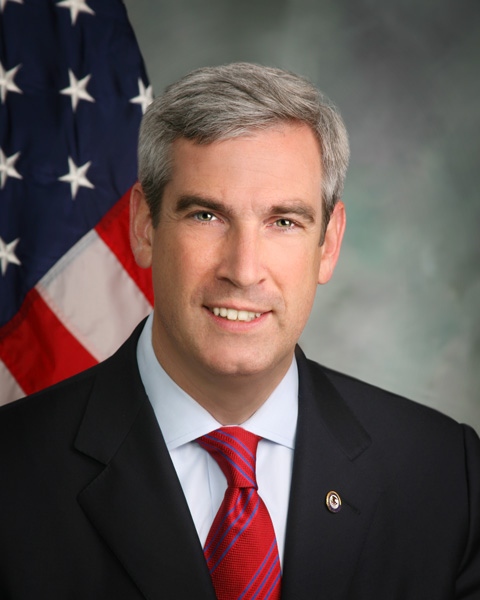
Tag: U.S. Attorney Neil H. MacBride

  • FEDS: Man Sentenced Yesterday To 105 Years In Offshore Scam That Endangered U.S. Military Filed ‘Hundreds Of Billions Of Dollars Of Fraudulent Default Judgments’ After Arrest In Previous Scam

    Though not using the phrase “sovereign citizen” when describing the courtroom actions of Roger Charles Day Jr., the Department of Justice said yesterday that Day “filed hundreds of billions of dollars of fraudulent default judgments against more than 100 people who Day claimed had prosecuted him unfairly.”

    Included among Day’s targets were “investigating agents, the prosecuting attorneys, Day’s former defense counsel and the U.S. district judge who sentenced him” in a New Jersey fraud case in federal court in the late 1990s, the Justice Department said.

    But not even a 97-month prison term handed down from the New Jersey caper deterred Day from a life of crime, the Justice Department said.

    Day, 47, was sentenced yesterday by U.S. District Judge John Gibney of the Eastern District of Virgina to 105 years in federal prison for a parts scam top U.S. officials said endangered the U.S. military.

    “Mr. Day’s greed put the men and women in the U.S. military in harm’s way,” said U.S. Attorney Neil H. MacBride of the Eastern District of Virginia.

    In August 2011 — after Day was found guilty on federal charges of conspiracy to commit wire fraud, wire fraud, conspiracy to engage in international money laundering and conspiracy to smuggle gold out of the United States — Assistant U.S. Attorney General Lanny Breuer said this:

    “Mr. Day masterminded a sophisticated and dangerous conspiracy to profit from the sale of defective parts to the U.S. military. He foolishly put our nation’s security at risk for the sake of personal riches.”

    Day, a fugitive, was captured in Mexico after “America’s Most Wanted” broadcast a story on him. He was extradited from Mexico in December 2010, the Justice Department said.

    Gibney yesterday ordered Day to forfeit 3,496 ounces of gold bars and coins, two sport utility vehicles and $2.1 million, the proceeds from the scheme targeted at the Defense Department.

    Meanwhile, Gibney ordered a $3 million fine and $6.2 million in restitution to the Defense Logistics Agency (DLA).

    “It is unpardonable that individuals endeavor to enrich themselves by stealing from the U.S. taxpayer through fraud, especially by denying critical goods to our warfighters combating terrorism in a hostile overseas environment,” said Robert E. Craig and Edward T. Bradley of the Defense Criminal Investigative Service (DCIS), in a joint statement.

    Day and coconspirators in the United States, Canada, Mexico and Belize, “formed at least 18 separate companies that posed as legitimate contractors and collectively used a computer program to win nearly 1,000 lucrative contract awards for the various companies.

    “Day and his conspirators then shipped defective parts to the [Department of Defense] on more than 300 of those contracts, receiving more than $4.4 million in payment on parts that Day purchased for less than $200,000,” the Justice Department said.

    The New Jersey case against Day in the 1990s also involved a bid to scam the Defense Department, the Justice Department said.

    And Day also was sentenced to 84 months in New Jersey state prison in the 1990s for a scam aimed at the city of Newark the Newark Board of Education, the Justice Department said.

    In his most recent scheme aimed at the Defense Department, “Day and his co-conspirators compounded the fraud by concealing their identities through the use of multiple nominee companies and by assuming others’ identities to operate the companies,” the Justice Department said.

    “When [the Department of Defense] requested proof that the companies had purchased and intended to supply the correct parts from approved manufacturers, Day and others submitted fabricated documents that falsely represented that the correct parts had been purchased,” the Justice Department said.

    After detecting the fraud,   the Defense Department “debarred several of the companies from doing further business with the military, the Justice Department said.

    But not even that caused Day to end his dangerous scheming, which had put the military and the American people at risk.

    Day simply “directed his conspirators to discontinue bidding through those companies and instead form and use new companies,” the Justice Department said.
  • BULLETIN: Family Of House Majority Leader Eric Cantor Threatened With Murder And Rape, Feds Say; Glendon Swift Of Lenoir City, Tenn., Arrested; FBI Says Cantor Was Called Vile Names And That Swift Threatened To ‘Destroy’ Him

    Rep. Eric Cantor, R-Va., and House Majority Leader.

    BULLETIN: A Tennessee man has been arrested by FBI agents and police after making threats against Rep. Eric Cantor and his family, federal prosecutors said.

    Cantor, R-Va.,  is U.S. House Majority Leader.

    Charged with threatening to assault or murder a member of the immediate family of a U.S. official was Glendon Llewellyn Swift, 62, of Lenoir City. He was arrested by the FBI and Lenoir City Police late yesterday, and made a primininary appearance this afternoon before U.S. Magistrate Judge C. Clifford Shirley Jr. in Knoxville, federal officials said.

    “Threatening to harm the family of a public official is a very serious charge, and we are grateful to the FBI and their law enforcement partners for their quick action in this case,” said U.S. Attorney Neil H. MacBride of the Eastern District of Virgina.

    Events unfolded in this fashion, according to a criminal complaint filed by an FBI agent:

    On Oct. 28 at 9 a.m., a Congressional staffer in Cantor’s office in Glen Allen, Va., called U.S. Capitol Police after listening to two disturbing voicemails left for Cantor the previous evening. Capitol Police contacted the FBI in Richmond.

    In the voicemails, Cantor was called a “Republican son of a bitch.” Religious slurs repeatedly were directed at Cantor, according to the complaint.

    In messages laced with screaming and profanities, the caller said he would “destroy” Cantor, while also threatening to come to Cantor’s home to “murder” his wife and “rape” his daughter.

    Investigators traced the call to Swift’s cellphone, according to the complaint. Yesterday, Swift was stopped by a marked patrol car in Lenoir City for a traffic violation, and FBI agents questioned him.

    Swift admitted making the calls, according to the complaint.

    Lenoir City is in Loudon County in East Central Tennessee. The city has population of about 8,600. One of the state’s largest cities, Knoxville in nearby Knox County, is about 35 miles away from Lenoir City.


  • URGENT >> BULLETIN >> MOVING: Former NASDAQ Managing Director Charged Criminally, Sued Civilly In Insider-Trading Case; Donald L. Johnson Pleads Guilty To Criminal Securities Fraud Amid Allegations He Cherry-Picked Information While Serving As Stock-Exchange Gatekeeper

    URGENT >> BULLETIN >> MOVING: A former managing director of the NASDAQ stock exchange has been charged by both the SEC and federal prosecutors in an insider-trading case.

    Donald L. Johnson, 56, of Ashburn, Va., already has pleaded guilty on the criminal side of things, the Justice Department said.

    For its part, the SEC said Johnson abused his position, made trades from his work computer and racked up $755,000 dollars in illegal profits over three years.

    Johnson, the SEC said, cherry-picked information on corporate leadership changes, earnings reports, earnings forecasts and regulatory approvals of new pharmaceutical products.

    “This case is the insider trading version of the fox guarding the henhouse,” said Robert Khuzami, director of the SEC’s Division of Enforcement. “Instead of protecting NASDAQ client confidences, Johnson secretly traded on client information for personal gain, even using his NASDAQ office computer to make the trades.”

    Federal prosecutors also used the fox-and-henhouse analogy.

    “Insider trading by a gatekeeper on a securities exchange is a shocking abuse of trust, and must be punished,” said Assistant Attorney General Lanny Breuer, head of the Justice Department’s Criminal Division.

    Meanwhile, U.S. Attorney Neil H. MacBride of the Eastern District of Virginia said Johnson padded his retirement by cheating.

    “He thought he could get away with it by using his wife’s account and inside information to make relatively small trades just a few times a year,” MacBride said.  “But he learned what every other trader on Wall Street must now realize: We’re watching.”

    Prosecutors gave the U.S. Postal Inspection Service credit for the criminal bust.

    Johnson was a managing director on NASDAQ’s market intelligence desk in New York between 2006 and September 2009, prosecutors said.

    “Johnson brazenly stole nonpublic information from NASDAQ and its listed companies in breach of his duties of confidentiality to his employer and clients,” said Antonia Chion, associate director of the SEC’s Division of Enforcement.

    Criminal securities fraud carries a maximum penalty of 20 years in federal prison and a maximum fine of $5 million.

  • Feds, State Team Up In Virginia To Short-Circuit White-Collar Crime Wave; ‘All Too Clear’ Problem National In Scope, Top Federal Prosecutor Says

    Neil H. MacBride

    Calling it an “unprecedented partnership” brought about by a financial-fraud problem that is national in scope, federal and state officials today announced the creation of the Virginia Financial and Securities Fraud Task Force.

    The Virginia Task Force, which is part of President Obama’s interagency Financial Fraud Enforcement Task Force, brings together criminal investigators and civil regulators to investigate and prosecute complex financial fraud cases in the nation and in Virginia.

    “It has become all too clear that the complex financial crimes we confront are national in scope,” said U.S. Attorney Neil H. MacBride of the Eastern District of Virginia. “They require criminal and civil authorities across the country to utilize every tool at their disposal to ensure that the guilty are held accountable. The Eastern District of Virginia has the legal authority to bring cases here with national significance, regardless of where the fraud occurs.”

    Virginia’s Eastern District encompasses nearly 5 million residents in cities such as Alexandria, Richmond, Norfolk, Newport News and other communities.

    Financial crime is jumping across local and state borders, a top SEC official said.

    “Financial fraud schemes can be sophisticated, difficult to detect, and span multiple jurisdictions,” said Robert Khuzami, director of the SEC’s Division of Enforcement. “Opportunities to coordinate civil and criminal law enforcement efforts, such as those provided by this task force, are vital to combating financial fraud.”

    America’s economic future must be safeguarded, a veteran investigator said.

    “Financial fraud is a threat to economic integrity and can harm individual investors,” said Stephen Obie, acting director of enforcement for the CFTC.

    A centerpiece of the strategy is “to root out unscrupulous financial activity and protect market participants,” Obie said.

    Virginia’s attorney general agreed.

    “This partnership presents a tremendous opportunity to share information and resources among the experts in order to prosecute and deter fraud perpetrated against our citizens,” said Attorney General Ken Cuccinelli. “The efficiencies of state and federal cooperation and of law enforcement working together should not only prove more helpful in protecting consumers, but it should also save the taxpayers money.”

    Another part of the strategy is to create a force-multiplier to weed out fraudsters and send a message that they’ll get caught, a veteran FBI agent said.

    “Large-scale financial crimes are on the rise and as such law enforcement agencies are working together to become force-multipliers in investigative and prosecutorial efforts,” said FBI Special Agent in Charge Michael Morehart. “The Richmond Division of the FBI welcomes the opportunity to work with our partners on this task force to demonstrate a commitment of aggressive investigative efforts and discourage criminal activity.”

    The top postal official in North Carolina’s largest city said he’s on board the effort.

    StopFraud.gov - Financial Fraud Enforcement Task Force“The Postal Inspection Service embraces the formation of the Virginia Financial and Securities Fraud Task Force,” said Postal Inspector in Charge Keith Fixel of the Charlotte Division. “This partnership with other state and federal agencies will enhance our ability to thoroughly investigate mail fraud and other financial related crimes that involve the nation’s mail system and ensure public trust in the mail.”

    Tax criminals and money-launderers also will be targeted, said the chief tax-fraud investigator in the District of Columbia.

    “Financial-fraud crimes create huge losses of tax revenue,” said C. Andre’ Martin, special agent in charge of the IRS Criminal Investigations Division. “This type of fraud threatens the integrity of our tax system and erodes the financial health of our communities. IRS-Criminal Investigation is proud to be part of a formidable law enforcement team that is focused on investigating these fraud schemes and we will continue our efforts to investigate the tax-evasion and money-laundering aspects of these types of crimes.”

    State securities regulators have a key role on the Task Force.

    “The State Corporation Commission [SCC] looks forward to working with our state and federal partners to enhance our ability to enforce the provisions of Virginia law governing the financial services industry, assist investors who have lost their money, and enhance the integrity of markets by targeting and eliminating financial and securities fraud,” said Philip R. “Duke” de Haas, SCC deputy general counsel—Financial Services.

    Officials said the Task Force will build on successes such as the prosecution of Edward Okun, sentenced to 100 years in prison for a $132 million fraud scheme.

    In cases in which it is appropriate for civil regulators to share information with criminal investigators, such information will be shared, officials said.

    The task force “is focused on facilitating the exchange of information on specific investigations,” officials said. “The independent legal responsibilities of each task member may limit the ability to share information; however, the task force members are committed to conduct parallel investigations and share as much information as they are allowed so every member may benefit from the different tools and resources each agency can provide.

    President Obama formed the interagency Financial Fraud Task Force in November.

  • Virginia Attorney Whose License Was Revoked After Firm Wrote Bad Checks For Huge Sums Convicted In Ponzi Scheme; Troy Titus Faces Up To 590 Years In Prison

    ponziblotterThese are some trying times for the legal profession. Disbarred Florida attorney Scott Rothstein is implicated in an alleged $1.2 billion Ponzi fraud in which prosecutors said attorneys from his shuttered, 70-attorney firm in Fort Lauderdale were getting paid from Ponzi proceeds that flowed from bogus “settlements” in cases involving sexual harassment or sexual infidelity.

    And now a federal jury in Virginia has found former attorney Troy A. Titus, 43, guilty of running a real-estate Ponzi scheme and other fraud schemes that fleeced clients out of more than $7 million.

    Titus was found guilty of 33 charges. He faces up to 590 years in prison. Sentencing is scheduled April 15 before U.S. District Judge Raymond A. Jackson.

    “[A] jury found Troy Titus stole millions from people who trusted him to protect their investments,” said U.S. Attorney Neil H. MacBride of the Eastern District of Virginia. “[His] conviction is a testament to the ability of our law enforcement partners to tackle complicated investment and mortgage fraud cases. Especially in the light of the recent economic crisis, we are even more determined to work together to aggressively fight financial fraud in this district.”

    A veteran FBI agent said enough is enough.

    “[W]e will continue to target those who, motivated by greed, prey on honest investors and damage our country’s financial confidence,” said A.J. Turner, special-agent-in-charge of the FBI’s Norfolk field office.

    Titus’ law license was revoked by the Virginia State Bar in 2005 after an investigation revealed a continuing pattern of writing bad checks for tremendous sums. Between November 2002 and May 2005, according to records, Sun Trust Bank and Monarch Bank notified both Titus and the Virginia Bar about 15 overdrafts on accounts Titus had the responsibility of maintaining.

    The Virginia Bar, which initially gave Titus an opportunity to right the ship after he explained that his accounting systems lacked controls and that he had taken corrective measures and hired a CPA, later determined he had engaged in a continuing pattern of “ethical misconduct” when more bad checks surfaced.

    Even after the CPA produced evidence and showed Titus in August 2004 that statements reflected that a key Titus account had a balance of $2.177 million, that checks totaling $4.746 million had been written on the account and that the account had an adjusted negative balance of $2.569 million, Titus pooh-poohed the situation and continued to overdraft the account by tremendous sums.

    Titus eventually was charged criminally. In March 2009, a superseding indictment was issued by a grand jury, accusing Titus of dozens of counts of fraud, including Ponzi fraud.

    “Titus approached clients or seminar participants and induced them into investing money with him to purchase and rehabilitate real estate, promising to return the money at a later date with a high rate of interest,” prosecutors said. “However, Titus obtained many of the real properties involved through fraud or transferring the properties into trusts controlled by him. Instead of using the funds as promised, Titus directed the investment income toward paying business or personal expenses, backfill investment losses, and at times to make token payments or repay previous investors.”

    The disgraced lawyer also took advantage of “elderly or incapacitated clients who provided him with income intended to be held in trust and took steps to conceal those uses from those who inquired about the management of the trust,” prosecutors said.

    Trial evidence and testimony “showed that Titus failed to make payments for the trust clients’ basic medical and housing needs,” prosecutors said. “Titus engaged in a similar scheme to defraud involving real estate closing funds he held in trust.”