UPDATED 11:27 P.M. ET (U.S.A.) In May, an email attributed to AdSurfDaily member Todd Disner declared, “Let the games begin!” The remark was in the context of a lawsuit Disner and fellow ASD member Dwight Owen Schweitzer intended to file against the United States once ASD members chipped in enough money to fund the complaint.
Those games apparently have begun with the filing today of a pro se “complaint for declaratory relief” by Disner and Schweitzer in the Southern District of Florida against the United States and Rust Consulting Inc., the government-approved claims administrator in the civil-forfeiture portion of the ASD Ponzi case.
The lawsuit asks a federal judge in Florida to find that the seizure of assets and business records belonging to Disner and Schweitzer was “illegal and void” and demands their return. It also asks the judge to order Rust to “disclose all information in its possession or available to it pertaining to” Disner and Schweitzer.
Among the claims in the lawsuit are that undercover agents from a U.S. Secret Service/IRS Task Force who joined ASD prior to the seizure of tens of millions of dollars from the bank accounts of ASD President Andy Bowdoin violated ASD’s Terms of Service and had a duty to report their alleged TOS violations, including the insertion of an agent’s undercover “MySpace” page in ASD’s advertising rotator, to the company.
Rust is headquartered in Minnesota. Although the complaint named the United States a defendant alongside Rust, the address listed for the United States by Disner and Schweitzer was the address of the office of U.S. Attorney Ronald C. Machen Jr. in the District of Columbia.
Disner, an unsuccessful pro se litigant in the ASD civil case brought by the government, is a co-founder of the Quiznos sandwich franchise. He lives in Miami. Schweitzer, a former attorney, also lives in Miami. The government’s case against ASD-related assets was filed in the District of Columbia in August 2008. Disner was denied standing in the District of Columbia on Aug. 31, 2009, more than two years ago.
Among other things, Disner and Schweitzer claim their private records as contained in ASD’s database were confiscated illegally by the government. They also claimed an affidavit filed in the forfeiture case by the U.S. Secret Service was flawed and that the government hired Rust to implement a remissions program “designed to collect evidence and coerced admissions from the plaintiffs to be used by the government” at the criminal trial of ASD President Andy Bowdoin.
Federal prosecutors in the District of Columbia — the venue in which both the criminal and the civil cases against Bowdoin and ASD-connected assets were filed — had a different take.
“The funds in this case were seized under properly issued judicial warrants,” Machen’s office said today. “Beyond that, the U.S. Attorney’s Office has no comment on the matter at this time. ”
Puzzlingly, the complaint filed by Disner and Schweitzer and recorded on the docket of U.S. District Judge Cecilia M. Altonaga today makes the assertion that “To date the plaintiffs are unaware of any remission payments having been made and specifically the plaintiffs were unable to get the information required for their submissions, all of which are still in the possession of the government.”
On Sept. 22 — more than six weeks ago — the PP Blog reported that thousands of ASD members who filed approved remissions claims would receive back 100 cents on the dollar. Members reported that the money was deposited electronically into their bank accounts beginning on Sept. 23. On Sept. 26, the government announced that $55 million was being returned, with the Secret Service describing ASD as a “criminal enterprise” and the Department of Justice describing the ASD scheme as “insidious.”
In a Sept. 28 email, even Bowdoin acknowledged that he was aware the government had returned money to members through the remissions process. Among other things, the ASD patriarch claimed the government had forced members to lie to receive compensation.
Disner and Schweitzer not only claim in their complaint that they are “unaware” of any money being returned, they also claim the remissions program was designed to “prevent, hamper and forestall the return” of funds.
Meanwhile, Disner and Schweitzer claim that ASD was a profitable venture, in stark contrast to assertions by the government that ASD was insolvent because it created a liability of $1.25 for each dollar it took in through the sale of purported “advertising.”
Disner and Schweitzer also took issue with government agents joining ASD and allegedly violating the ASD membership agreement, including an undercover agent who placed his undercover “MySpace” page in ASD’s advertising rotator. In August 2008, the government alleged that “ASD did not require, or even verify that the agent “had any product or service to sell.”
Had the agents “lived up to the obligations they took on by becoming members of ASD they should have reported their own violations of the ASD terms of service with the result that the sites they foisted upon ASD would have been removed and the benefits to them as advertisers’ would be forfeited as the ASD rules mandated,” Disner and Schweitzer argued.
EDITOR’S NOTE: The remarks below are excerpted from a speech last week in New York by Assistant U.S. Attorney General Lanny A. Breuer. As the PP Blog has previously reported, the Justice Department and agencies such as the FBI and U.S. Secret Service have been using undercover operatives to infiltrate criminal operations and networks used by the criminals.
One of the FBI investigations Breuer referenced was the Trevor Cook Ponzi scheme in Minneapolis. The scheme consumed tens of millions of dollars, defrauding victims of at least $158 million. Many mysteries remain in the case.
Meanwhile, undercover operatives also recently were used to expose penny-stock schemes operating in Florida.
It also is known that the Secret Service used undercover operatives in the AdSurfDaily case, the INetGlobal case, the Regenesis 2×2 case, the Legisi case and a case involving alleged international fraudster Vladislav Horohorin, accused of using criminal forums to peddle stolen credit-card information.
Here, now, some excerpts from Breuer’s speech . . .
Part of Trevor Cook's stash.
“Now, as I’m sure you know, financial criminals can be extraordinarily innovative, and they are often expert at covering their tracks. So we are always looking for creative ways to gather the evidence we need to bring financial criminals to justice. To that end, we have begun increasingly to rely, in white collar cases, on undercover investigative techniques that have perhaps been more commonly associated with the investigation of organized and violent crime.
“As part of this effort, we have significantly strengthened the Criminal Division’s Office of Enforcement Operations (known as OEO), which is the office in the Justice Department that reviews and approves all applications for federal wiretaps from across the country. We have a dynamic new OEO Director, Paul O’Brien, and we’ve substantially increased the number of attorneys at OEO who review these wiretap applications, adding to their ranks experienced prosecutors and recent graduates who have completed federal clerkships. As a result, the number of wiretaps we authorize – in all types of cases – has gone up.
“Let me give you just two examples of white collar cases in which we have used undercover techniques, both of which also highlight areas in which we have stepped up our white collar enforcement efforts more generally.
“The first example is the case of Trevor Cook, which was prosecuted by the U.S. Attorney’s Office in Minneapolis. Mr. Cook is just one of dozens of individuals whom we’ve prosecuted in recent months for participating in investment fraud schemes. Over the course of several years, Mr. Cook schemed to defraud at least 1,000 people out of approximately $190 million by pretending to sell them investments in a foreign currency trading program.
“In reality, he was pocketing the money or using it to pay off other investors. As was recently reported in the New York Times, we gathered evidence against Mr. Cook by using an undercover informant to record his transactions and conversations. [Cook] pleaded guilty earlier this year and was recently sentenced to 25 years in prison.
“Trevor Cook is one of literally hundreds of financial criminals who have preyed upon vulnerable, individual investors and bilked them out of their savings using investment fraud schemes. And as with Mr. Cook, we have been prosecuting these people aggressively, all over the country – from New Jersey and Connecticut to Texas and California, and everywhere in between.
“The second example comes from our enhanced efforts in the area of FCPA enforcement. Earlier this year, as I’m sure many of you know, we indicted 22 defendants in the military and law enforcement products industry for their participation in widespread schemes to bribe foreign government officials. These indictments resulted from the Department’s most extensive use ever of undercover law enforcement techniques in an FCPA investigation, and they represent the single largest prosecution of individuals in the history of our FCPA enforcement efforts. In September, one of the defendants in the case, Richard Bistrong, pleaded guilty . . .
“Over the last 18 months, we’ve devoted significant additional resources to the Criminal Division’s Fraud Section. We’ve recruited talent not only from white shoe law firms, but also from a deep pool of prosecutors around the country who bring with them extensive experience in prosecuting everyone from violent mobsters to dangerous terrorists. We are now bringing that extraordinary talent and experience to bear on prosecuting financial fraudsters.”
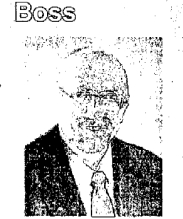
This grainy likeness of Legisi President Gregory McKnight is part of a PDF exhibit of evidence in the SEC's Ponzi case against the firm. This particular exhibit was gleaned on May 7, 2007, about 10 days prior to the entries in the case of undercover agents from the U.S. Secret Service and the Michigan Office of Financial and Insurance Regulation, according to court filings.
HYIP or autosurf Ponzi promoter? Player? Forum “expert?” Moderator? Cheerleader?
Get ready for a surprise: Your downline perhaps already has identified you as a pimp or even one of the masterminds.
If your plan is to continue to promote the programs on the Ponzi forums and though emails, you should know that things could be occurring behind the scenes that could put you four-square at the center of investigations. Not all HYIP and autosurf players are crooked. Not all of them understand the wink-nod nature of the HYIP and autosurf trades. In other words, they aren’t a crook or pimp like you and can’t be relied upon not to implicate you. They aren’t playing your game.
You, on the other hand, are a veteran pusher of Ponzi poison and perhaps a tax schemer who recommended yet another pig and painted it yet again with lipstick. Your victims very well may come to see themselves as your marks, as their knowledge of this shadowy and insidious business grows. Some of them will talk. Some of them have talked.
It’s now clear from court filings that some of them even are making handwritten notes and/or printing out emails and forum conversations — even if the forums purportedly are “private.”
And, speaking of “private,” how crazy are you going to look — and how vulnerable to prosecution are you going to be — if you happen to be pitching a purported “offshore” program that requires a loyalty oath and forces members to swear they aren’t government informants or agents?
Just agreeing to such bizarre terms potentially makes you a co-conspirator.
Here’s how silly you could end up looking later as you try to impress forum mates today with your “insider” knowledge and claims of due diligence. The reality you cannot deny is that an undercover investigation already could be under way into the program you’re pushing.
While you’re singing the praises of a company and talking about its purported expert management, you could be revealing yourself as just another willfully blind pimp while demonstrating your actual lack of knowledge about the programs you’re pushing.
Have you connected the dots yet? If not, here they are — in a nutshell: Your lack of knowledge can be construed as evidence of your guilt.You’re pushing programs you know virtually nothing about except what you’ve been told by people who rely on you to be the human equivalent of a trained seal who performs for a treat. You are not registered to sell securities, and you very likely are implicating yourself in a criminal wire-fraud, money-laundering and tax-evasion scheme.
There you are, pitching a program, professing your knowledge while perhaps even dissing the doubters, and you don’t even know the program you’re cheering already is the subject of an undercover investigation.
There’s a good chance the boss knows, though. He perhaps is in a secret panic. If word of the depths of the investigation leaks or the names of the agencies leak, well, the money stops streaming in. Maybe he didn’t tell you because he was too busy trying to figure out how to make it all go away when money was being seized in other investigations — and those seizures were leading to the choking of cash conduits for the programs you are pushing while purporting to be an expert.
Paperwork later could reveal you weren’t an insider at all (or at least not enough of one actually to have the ear of the boss), that you were just another commission-grubbing or “earnings”-hungry liar in a sea of commission-grubbing and earnings-hungry liars. You’d say anything for a commission, which is why you’re now the potential target of a criminal prosecution and an accompanying lawsuit filed by victims. You have criminal and civil exposure. At the very least, you could become an unindicted co-conspirator, which means the government holds the hammer and sees you as a potentially useful witness.
You never imagined yourself singing for your supper, of course. You were too busy picking the pockets of friends, neighbors and people you didn’t even know. If you get a break and become an unindicted co-conspirator, here’s what the jury will think as you’re singing for your supper: trained seal. Performed on cue for the schemers. Now batting the government’s ball to stay out of prison.
Jurors contemplating how you got yourself in this box actually will be willing to give an actual trained seal more credit. Seals perform for treats because they don’t know any better; you performed for money and did know better — and you likely knew the money was stolen to begin with.
Indeed, the marks who relied on your misrepresentations and claims of “due diligence” and other purported research could be maintaining a substantial paper trail. After all, it’s their money, and they want to make sure it’s safe. They’ve relied on your assertions. They’ll hold your feet to the fire when things start to go south, they’ll hold you to your claims and perhaps share your name, forum username and phone number with law enforcement.
What Willfully Blind Promoters Can Learn From The Legisi Case
Did you know that the U.S. Secret Service and the Michigan Office of Financial and Insurance Regulation (OFIR) sent undercover agents to interview Gregory McKnight, operator of the alleged Legisi Ponzi scheme, in May 2007, a full year before knowledge about the depths of an SEC investigation became public? Some Legisi members later learned the SEC was asking questions, but the inquiry was dismissed as routine. The SEC says Legisi continued to collect money up to November 2007, months after McKnight got the surprise of his life when he realized that two men with whom he had conversed actually were undercover agents.
It is likely that very few Legisi members knew that the Secret Service and OFIR had infiltrated Legisi in May 2007. Undercover agents walked right through the front door, according to court filings.
And did you know that the undercover agents were backed up by a Michigan state trooper who was only a short distance away — outside in the parking lot?
How silly do you think your forum posts, your cheerleading look now? You were championing a program that already was under investigation by at least three agencies that were in the process of sharing information and assembling a time-consuming case that crossed international borders. The public filings were 12 months away.
These are among many details about the probe, the paperwork for which originally was filed under seal by the SEC in May 2008. The Secret Service and OFIR agents posed as investors who wanted information on the Legisi program, which the SEC said was a massive Ponzi scheme. They recorded their discussion with McKnight, which took place in Legisi’s office in Flint, Mich. The Secret Service prepared a transcript of the conversation, which the SEC presented to a federal judge as part of 267 pages of exhibits used to gain an asset freeze.
After the undercover agents met with McKnight, they left the building and met with the trooper in the parking lot. A short time later, the agents — this time accompanied by the trooper — went back inside and presented their identification to McKnight, according to court documents.
Here’s what happened next, according to the SEC:
“Within hours of the interview, an announcement appeared on the Legisi website stating that the Legisi program was closed to new investors, effective immediately, and representing that Legisi had to close that afternoon because of a ‘massive influx’ of new investors.
“McKnight also cut off access to the Legisi website by the public by requiring a login and password to enter the site,” the SEC said.
After McKnight found out he had been talking to undercover agents, he told them that Legisi did not accept checks for the program. Even as the interview was taking place, an unnamed individual approached the office with a check made out to Legisi Marketing Inc., according to court filings.
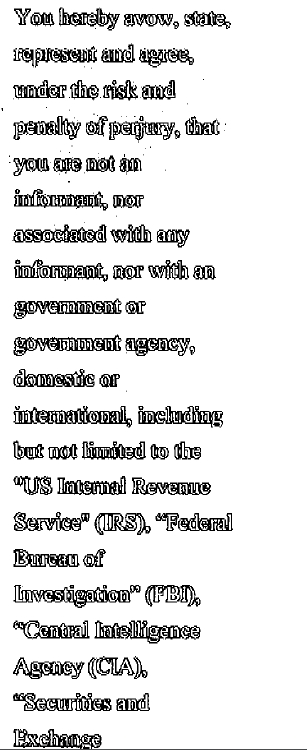
This section of the Legisi Terms of Service purports that members must avow they are not an "informant, nor associated with any informant" of the IRS, FBI, CIA and the SEC, among others. The others included "Her Majesty's Police," the Intelligence Services of Great Britain, the Serious Fraud Office, Interpol and others.
It has become clear that law enforcement is using multiple tools, including undercover operatives, infiltrations, Internet archives and notes kept by victims, to investigate and then prosecute HYIPs and autosurfs. Records viewed by the PP Blog show that the law-enforcement community is making one tie after another between and among various illegal investment businesses and their participants.
The common signatures of the promoters of these illegal enterprises are greed and wanton lawlessness — all so the scammers can enjoy the proceeds of theft. This work has not generated headlines; it mostly has gone about quietly, but there simply no longer is any doubt that multiple state and federal agencies have pooled resources and talents to destroy these insidious enterprises and a day of reckoning is at hand for the purveyors.
As the screen shot on the left shows, Legisi participants even were asked to certify that they weren’t “informants” or representatives of agencies such as the SEC, FBI, and IRS.
Last week the PP Blog wrote about the fraud case filed by the SEC against Mazu.com operator Matt Gagnon, Gagnon was accused of helping Legisi pull off a $72 million Ponzi scheme affecting more than 3,000 investors by using Mazu to shill for Legisi while not disclosing that “he was to receive 50% of Legisi’s purported ‘profits’ under his agreement” with McKnight.
Gagnon allegedly netted about $3.8 million in the scheme.
The filing of the complaint against Gagnon prompted the Blog to perform some more research into Legisi. Among the documents we obtained was the 267-page exhibit of evidence originally filed under seal by the SEC in the case against Legisi on May 5, 2008.
Prior to reading the document, we had wondered just how effective companies that purported to offer “private” HYIP and autosurf programs could be. For example, could these so-called “private” programs keep out what some investors describe as the prying eyes of government and the tax man?
If such purportedly programs offered a “private,” members’-only forum, could those forums have any expectation that the prying eyes of government and the tax man could be kept out?
“Private” is one of the big selling points of some HYIPs and autosurfs. We’ve always viewed the claims as dubious. After all, the schemes operate on the Internet. They involve people. People talk. It’s one thing to say you offer a “private” forum; it’s quite another to contain discussion to a single forum, perhaps especially when participants begin to smell a rat.
We learned this in a big way when we were covering events surrounding the collapse of the AdViewGlobal (AVG) autosurf last year. When some members finally removed their blinders, AVG had no way to contain discussion to its purportedly “private” forum — not that it should have had any expectation that it could contain discussion even if things were going swimmingly.
When AVG started to tank, some of its members couldn’t wait to share details about events that occurred in the “private” forum. Threats against them for purported copyright violations and to ban IPs and kick members out of the program for sharing information outside “association” walls did not work. In fact, they became the signatures of a scam in progress and the relentless efforts to hide it.
But getting back to Legisi and the issue of whether a “private” forum provided any protection for members and any insulation from the prosecution of Legisi . . .
It turns out that the government did not even have to “break in” to Legisi’s “private” forum, so to speak, to gain information on the program. Legisi members concerned about losing their money were keeping notes, including handwritten notes, and printing out page after page of posts from the “private” forum and Legisi’s own website.
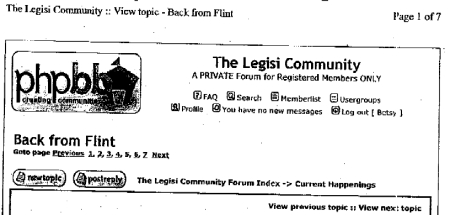
Included in evidence exhibits are page after page of posts from Legisi's "private" forum and other communications such as emails to customer service and printouts Legisi members made while visiting the company's website and keeping notes about the program.
Legisi members bothered by the company’s explanations and efforts to maintain secrecy when dealing with investors’ money turned over the information to the SEC.
Yep. Avatars, pictures, user names, real names and all.
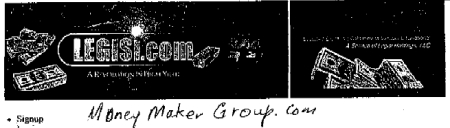
In this evidence exhibit given to a federal judge prior to the Legisi asset freeze, a Legisi prospect writes the name "Money Maker Group.com" in longhand. The prospect also wrote the name "Matt Gagnon" in longhand and a telephone number for Gagnon.
Prior to filing its case against Legisi, the SEC also had other hard-copy printouts from members, including emails and information from Legisi members’ back offices. At least one of the exhibits included the handwritten notes of a Legisi member.
The words “Money Maker Group.com” are spelled out in longhand on one of the exhibits, as are telephone numbers of individuals associated with the program. One of the numbers has the name “Matt Gagnon” spelled out in longhand above it.
Still promoting HYIPs and autosurfs? Still shilling in forums public and “private?”
 UPDATED 11:27 P.M. ET (U.S.A.) In May, an email attributed to AdSurfDaily member Todd Disner declared, “Let the games begin!” The remark was in the context of a lawsuit Disner and fellow ASD member Dwight Owen Schweitzer intended to file against the United States once ASD members chipped in enough money to fund the complaint.