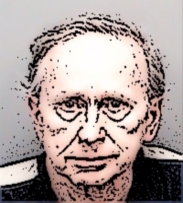
BULLETIN: Convicted Ponzi swindler Jeffrey Gordon Butler has been sentenced to 90 years and eight months in a California state prison.
Butler, 51, of San Juan Capistrano, Calif., was convicted in June 2009 of 693 felony counts, including making untrue statements of material fact in the offer and sale of securities, the offer and sale of unqualified securities, theft from elderly persons, using a scheme to defraud in the sale of a security and filing false tax returns.
Butler’s wife, Peggy Warmath Butler, 49, was convicted of four felony counts of filing false tax returns. She was sentenced today to one year in jail, followed by seven years’ formal probation.
Orange County prosecutors objected to her sentence, saying it was too light.
So many Ponzi victims testified in the sentencing phase of the trial that the process took four days to complete and was interrupted by the holidays. Because so many victims were nearing the end of their life spans, prosecutors recorded their statements on videotape prior to the trial and played them at the sentencing.
At least six victims died during the course of the trial, and 52 victims died prior to the case being brought before the jury.
“Many of Jeffrey Butler’s victims had trouble believing that he was capable of stealing their life’s savings,” said Tony Rackauckas, Orange County District Attorney. “He stole more than money from the people who trusted him. Jeffrey Butler also stole his victims’ dignity, independence, and dreams
“By sentencing him to 90 years in prison it means that Jeffrey Butler will spend the rest of his life in prison unable to victimize another person,†Rackauckas said.
Noobing promoter Jim Beach pitched the program using sign language on YouTube.
EDITOR’S NOTE: “Carolyn,” the subject of this story, is deaf. She uses a videophone and a human interpreter. The interpreter served as Carolyn’s voice for the interview, translating the Blog’s questions for Carolyn and her responses.
Here, now, the story . . .
A 64-year-old California woman — “Carolyn” — said she lost $5,300 in the Noobing autosurf. Carolyn is deaf. She described herself as a person of limited means financially, saying her experience with Noobing is keeping her awake at night and that the company simply pretended she did not exist when she repeatedly sought answers.
Carolyn, who lives in the Mojave Valley community of Needles in San Bernardino County, said she was introduced to Noobing, part of the Affiliate Strategies Inc. (ASI) umbrella of companies, in January 2009. The introduction was made by another deaf person who had 18 members in her downline.
Carolyn’s sponsor was in the downline of Noobing promoter Jim Beach, Carolyn said. The sponsor lost more than $6,000 in Noobing, Carolyn said.
ASI was named a defendant in a fraud lawsuit filed by the Federal Trade Commission in July 2009. Neither Noobing nor Beach is a defendant in the FTC action, but Noobing is mentioned in court documents filed by Larry Cook, the court-appointed receiver.
In a preliminary report, Cook said Noobing generated more than $590,000 in revenue in 2008 and and more than $541,000 in 2009 before going offline. He estimated that Noobing was in the hole nearly $550,000 since 2008, and noted that the ASI network of companies “were high revenue/low margin operations which required significant cash in-flows from new victims to meet current trade creditor and consumer refund obligations.â€
Beach used sign language and promoted the autosurf on YouTube, according to web records. Carolyn, who described herself as “fairly new” to the Internet, said she became increasingly worried about the money she had entrusted to Noobing.
On a website deemed “The Official Web Blog” of Noobing, the program was described as a “hit” among deaf people. Noobing, according to the Blog, was promoted at Deaf Expos in Kansas, Missouri, New Jersey and Texas in 2008 “to connect with the often overlooked hearing impaired business community.”
Deaf people “waited in long lines just for a chance to check out Noobing,” according to the Blog.
Beach, whom the Blog described as “Noobing Sales Manager” and a CODA — the child of a deaf adult — traveled extensively to recruit deaf members, according to the Blog.
Carolyn communicated with Beach at least three times in her early days with Noobing in 2009, but he told her he “left the management of Noobing in April 2009,” Carolyn said. He then asked her if she wanted to join a program involving the sale of vitamins. Carolyn declined to join the vitamin program.
Noobing was no help when she called to get answers, Carolyn said.
“Whenever I called Noobing, they would just hang up on me,” Carolyn said, adding that her sponsor also has ceased communicating with her.
She added that she “had to go to a debt counselor.”
“It’s a frustrating road to hoe,” Carolyn said. “It has been very frustrating.”
“It was on my [credit] card,” she said. “I just racked up my debt unbelievably.”
Carolyn provided this URL as an example of a site at which hearing-impaired members discussed and promoted Noobing:
Noobing was popular among members of AdSurfDaily, a Florida company implicated in an alleged $100 million Ponzi scheme. Carolyn said she was not a member of ASD, adding that she has contacted the Internet Crime Complaint Center operated by the FBI, the National White Collar Crime Center and the Bureau of Justice Assistance to complain about Noobing.
She also contacted the San Bernardino County Sheriff’s Department, and will meet with an investigator tomorrow, Carolyn said.
“I feel depressed,” she said. “I feel I’ve been really victimized. It’s hard to make ends meet. I can’t sleep at night; I’m constantly worried over my finances.”
Read an Aug. 3, 2008, story about the litigation against ASI and other defendants. The case largely centers around an alleged grant-writing scheme.
A gunman opened fire in the Lloyd D. George Federal Courthouse in Las Vegas this morning. Early reports are sketchy, but a court officer is reported to have been killed and a U.S. Marshal wounded.
The gunman is reported dead. People in the building are being evacuated, and federal agents are said to be conducting a floor-by-floor sweep. It is believed initially that the gunman acted alone. What motivated the shooting, which occurred just after 8 a.m., is unclear.
“A Deputy U.S. Marshal and Court Security Officer were shot at the Lloyd D. George Federal Courthouse in Las Vegas this morning,” the U.S. Marshal’s Service said. “The gunman was shot by Marshals Service personnel and has been pronounced dead. The Deputy U.S. Marshal is in stable condition at a local hospital. Unfortunately, the Court Security Officer succumbed to his wounds and passed away. We are not releasing any names until next-of-kin notifications are complete. The courthouse is still being secured. We do not know the motive for the shooting at this time and the investigation into the shooting is still underway.”
Two U.S. Senators — Harry Reid and John Ensign — have offices in the building.
“My thoughts are with the victims of today’s shooting and their families,” said Reid. “The law enforcement personnel who protect the courthouse put their lives at risk every day to keep the people who are inside safe and I greatly appreciate their service.â€
Shotgun casings reportedly were found in the lobby of the courthouse.
View on-scene YouTube video in which the shots at the Las Vegas federal courthouse can be heard:
UPDATED 12:04 P.M. ET (U.S.A.) BizAdSplash (BAS) now says it may be offline until Jan. 11. “due to the challenges of the transfer of our servers.”
A message website visitors see is confusing because it does not state plainly when the autosurf will return. Rather, it says BAS will come back online “on or before January 11th.”
The message is unsigned. BAS, which suspended member cashouts and declared a “crisis” in July because it had overpaid members, later returned. The site appears to have gone offline again Dec. 23, but initially reported that it would return today.
BAS lists its “chief consultant” as Clarence Busby, the former president of Georgia-based Golden Panda Ad Builder, the so-called “Chinese” option for AdSurfDaily members. The U.S. Secret Service seized tens of millions of dollars in a civil-forfeiture case against ASD and Golden Panda assets in August 2008.
After reconciliations, about $14 million was attributed to Golden Panda. More than $65 million was attributed to ASD.
All three of the so-called AdSurfDaily clone surfs that promoted “offshore” locations after the seizure of ASD and Golden Panda’s assets — BAS, AdViewGlobal and AdGateWorld — now have either have gone offline or are existing in unclear forms.
All three of the surfs tried to implement reconfigurations. None appears to have been able to sustain itself in a new form. BAS repeatedly has cited server problems as a reason for its absence.
UPDATED 5:25 P.M. ET (U.S.A.) Has the Pro-AdSurfDaily Surf’s Up forum followed in the footsteps of a Pro-AdViewGlobal forum and disappeared for the ages?
The URL for Surf’s Up — http://asdmembers.ning.com — is displaying the same message the AVG forum displayed when it vanished last summer after the controversial autosurf with close ASD ties stopped paying members. Surf’s Up also is known as the ASD Member Advocates Forum.
Surf’s Up received the official endorsement of ASD in November 2008, just days after a pivotal court ruling went against ASD.
“This social network has been taken offline by its owner,” the Surf’s Up site now says. Although there is an additional note that “It’s likely that the owner will bring it back online shortly,” the AVG site had the same note and never returned.
Other autosurfing-related sites hosted on ning.com have displayed the same message — never to return.
The note on Surf’s Up began to appear at some point today today. A “Page Not Found” message is found in the upper-left corner of the screen. The precise time the site went offline is unclear.
Also unclear are why the site went offline and who took it offline.
At one point, Surf’s Up had moderators in common with the AVG site. Recently, though, the Surf’s Up Mods who maintained the AVG forum have made few — if any — appearances on Surf’s Up.
The AVG forum debuted in the early days of AVG’s existence. References to AVG began to appear online in December 2008, less than a month after a Nov. 19, 2008, ruling by U.S. District Judge Rosemary Collyer that ASD had not demonstrated it was a lawful business and not a Ponzi scheme at an evidentiary hearing it requested.
AVG said it was headquartered in Uruguay. Members promoted it as a safe, offshore alternative to ASD that was outside the jurisdiction of U.S.-based regulators and law-enforcement agencies. Some participants later said Bowdoin was the silent head of AVG.
AVG suspended members cashouts in June 2009.
Surf’s Up made news during the Christmas holiday by publishing holiday greetings from ASD President Andy Bowdoin, implicated in an alleged $100 million Ponzi scheme. The forum also published a third-party note in which Bowdoin purportedly asked members for help in obtaining video of ASD “rallies” that might be helpful to his case.
Some ASD members said they were shocked that Bowdoin appeared to be addressing members as though it was business-as-usual for the embattled firm, which may owe members millions of ad impressions. Federal prosecutors said the surf engaged in wire fraud, money-laundering and the sale of unregistered securities — all while operating a massive Ponzi scheme.
The accreditation of a Colorado company implicated in an alleged $30 million “green” Ponzi scheme by the SEC has been revoked by the Denver/Boulder branch of the Better Business Bureau.
BBB now gives Speed of Wealth a rating of “F” — the worst possible score on a scale of “A+” to “F” — and says the accreditation was revoked because the company did not comply with BBB standards.
Speed of Wealth’s BBB accreditation was revoked on Dec. 16, precisely one month after the SEC accused the firm of selling a Ponzi scheme for Philadelphia-based Mantria Corp. A rating for Mantria was not immediately available. The BBB of the Mid-Atlantic region, Metro Washington, D.C., and Eastern Pennsylvania says on its website that the organization is in the process of updating its report on Mantria.
Under “Government Actions” in Speed of Wealth’s BBB listing, the organization summarizes the SEC allegations against Speed of Wealth and Mantria and provides links to the SEC’s charging document and news release in the case (emphasis added):
On November 16, 2009 the U.S. Securities and Exchange Commission “SEC” filed a complaint with charges against Mantria Corporation, Troy B. Wragg, Amanda Knorr, Speed of Wealth LLC, Wayde M. McKelvy, and Donna M. McKelvy alleging that they are involved in perpetrating a $30 million Ponzi Scheme, which they persuaded more than 300 investors nationwide to participate in purported environmentally- friend[ly] investment opportunities.
Click below view the entire press release and the complaint from the “SEC”:
PR Disasters Mark Speed Of Wealth, AdSurfDaily Cases
Speed of Wealth’s website now throws a server error and appears to have been disabled. In a column in the Denver Business Journal last month, reporter Renee McGaw said she attempted to email Wayde McKelvy, a Speed of Wealth principal, to get his comments on the SEC action.
McGaw reported that her email to McKelvy resulted in a steady stream of pitches to join wealth-building programs.
“YOU MUST START YOUR OWN BUSINESS Renee!†McKelvy exclaimed to McGaw in one email. “What You Have Been Taught About Building Wealth is DEAD WRONG!â€
The Denver Post also wrote about the Trump Network emails from McKelvy in the wake of the SEC action. A college professor interviewed by the newspaper said words such as “amazing,” “unbelievable” and “phenomenal” used by McKelvy to describe the Trump Network should be considered red flags.
The emails demonstrated that a crisis affecting one company can bring an unwanted spotlight on wholly separate brands. Indeed, the Denver Post reported that it contacted the Trump Network for comment on McKelvy’s emails. The calls were not returned.
Even the names of President Obama, former President Bill Clinton and Secretary of State Hillary Clinton became part of the Mantria/Speed of Wealth story. The companies used a video that included images of Obama, the Clintons and other politicians and media figures in promotional materials.
Meanwhile, the McKelvy emails were reminiscent of the experiences reporters had when they tried to contact Florida-based AdSurfDaily for comment after federal prosecutors seized tens of millions of dollars from the firm amid Ponzi allegations in August 2008.
Like Speed of Wealth, ASD also has a rating of “F” from the BBB, which cites government actions against the autosurf firm. Unlike Speed of Wealth, ASD has unresolved consumer complaints, according to the BBB.
Reporters who called ASD got a recording featuring the voice of ASD President Andy Bowdoin. Bowdoin, whom prosecutors later said had “followers,” intoned in the recording that that God was on the company’s side.
Thirteen months later, Bowdoin told an audience listening to a conference call that his ongoing legal fight against the government was inspired by the story of a former Miss America who now operates a Christian organization. The PP Blog contacted both the Miss America Organization and the Christian organization for comment.
The Miss America Organization did not return the call; the Christian organization, Salem Family Ministries, responded by saying it had no comment, except to say it did not recognize Bowdoin’s name. The Secret Service transcribed Bowdoin’s remarks in the conference call and presented them to the federal judge hearing the forfeiture cases against the firm.
Companies in legal crisis can lose the PR war quickly if their initial actions lead to more questions than answers. Within days of the federal action against ASD, Bowdoin invoked “Satan,” comparing the U.S. Secret Service to the 9/11 terrorists who killed nearly 3,000 people.
In a Nov. 19 conference call with participants, McKelvy described the SEC allegations as “ridiculous,” but at the same time acknowledged he possibly sold securities without a license, according to the Denver Business Journal.
But in the same conference call — just days after the SEC action — McKelvy also said he was turning his attention to the Trump Network, an MLM opportunity. The comment — and the emails Speed of Wealth sent out to promote the Trump Network — led to more headlines in newspapers, forums and Blogs.
EDITOR’S NOTE: There is a link at the bottom of this story to a report filed by Burton Wiand, the receiver in the Arthur Nadel Ponzi case in Sarasota, Fla. We encourage readers to read the document in its entirety. The Nadel case is not yet a year old. Nadel, who turned 77 today and is a onetime attorney, was disbarred in 1982 for taking money from a trust fund to pay off a loan shark, a fact allegedly hidden from investors. Nadel allegedly also employed an unlicensed accountant.
Among other things, the Wiand document shows that unwinding a Ponzi scheme is a monumental undertaking. At the same time, the document may leave some readers scratching their heads and asking how on earth any person actually could advocate for Ponzi schemes — and yet such advocacy occurs on a daily basis in the bizarre world of autosurf and HYIP Ponzi schemes, where so-called “leaders” get paid for recruiting people into Ponzis.
Here, now, the story . . .
Arthur Nadel turns 77 today. He is jailed in New York.
Burton Wiand, the court-appointed receiver in the alleged Arthur Nadel Ponzi scheme involving at least $350 million, has identified at least 85 investors who received more than they paid in and is working to identify more.
Clawbacks have begun in earnest, with the winners offered a choice of settling for 90 percent of the total they received and returning the money or being sued for 100 percent and paying lawyers to defend them in the lawsuits.
Meanwhile, fleeced investors in a separate Ponzi case in Tennessee are demanding that politicians who received campaign donations from the Dennis Bolze Ponzi scheme return the money so it can be used to compensate victims.
Bolze, 61, of Gatlinburg, Tenn., pleaded guilty Nov. 10 to all counts against him, and is awaiting sentencing. He was accused of wire fraud and money-laundering in a $21.5 million scheme.
WATE reported that Bolze gave money to a number of politicians.
Beyond the Bolze case, it is clear that substantial sums of Ponzi money made its way into the coffers of local, state and national politicians in various jurisdictions. It is equally clear that there is no uniform approach to returning the money. Some politicians have said they’ve spent the money. Others have said they donated it to charity after Ponzi allegations surfaced. Still others have returned money.
Unlike fleeced Ponzi investors who receive tainted largess directly, politicians’ ill-gotten gains may come indirectly from a polluted money stream linked to a Ponzi. There are allegations in Florida, for instance, that disbarred Fort Lauderdale attorney Scott Rothstein provided campaign donations from Ponzi proceeds, while at the same time paying lawyers in his now-shuttered, 70-attorney firm from Ponzi proceeds. It is possible that some of the Ponzi money paid to attorneys also made its way into the political process.
Elsewhere in Florida, there are allegations that Andy Bowdoin, president of Quincy-based AdSurfDaily — itself implicated in a Ponzi scheme — donated at least $5,500 to the National Republican Congressional Committee (NRCC) — before the alleged ASD Ponzi scheme was exposed in August 2008.
Meanwhile, the Miami Herald reported that Allen Stanford, implicated in an alleged $7 billion Ponzi scheme, also donated to politicians prior to the scheme being exposed. Like the Rothstein case, politicians in both major U.S. political parties received donations.
Nadel Clawbacks
In the Nadel case, Wiand estimated that the winners received at least $39 million in fictitious profits — ill-gotten gains from the scheme. He has settled with 26 investors to date, meaning that at least 59 potential clawback cases remain to be resolved. The number could increase because Wiand still is working to identify winners.
The Sarasota Herald Tribune reported that six of the 26 settled clawback cases were settled in the final two weeks of 2009. One investor agreed to return $207,000 in fictitious profits by making four payments over the next three years.
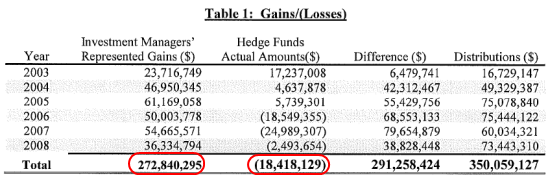
This chart from Burton Wiand's court filings in the Arthur Nadel case shows that the hedge funds purported to have recorded more than $272 million in gains between 2003 and 2008, when the funds actually lost more than $18 million. In 2007, the funds purported to have gained more than $54 million, but actually lost nearly $25 million.
The SEC approved the 90 percent settlement figure, Wiand said. He added that the window was closing on the discount deal.
In a November court filing, Wiand said that “those who do not settle with the Receiver should anticipate that litigation will be commenced in the immediate future” and that the discount “will no longer be available.”
It appears as though two groups of clawback targets exist: a group of 85 who received letters and were offered the discount, and a group of an unknown size that will receive settlement letters soon.
Wiand said the group of 85 represented about $16.2 million in fictitious profits from the scheme. The other group represents about $22.8 million.
A Louisiania man charged criminally in an alleged Ponzi scheme and sued civilly on the same day last month lied to investors, some of whom liquidated retirement savings and annuities only to suffer massive losses by entrusting funds to Matthew B. Pizzolato, a federal judge has ruled.
The case against Pizzolato is proceeding on separate tracks: a criminal prosecution by U.S. Attorney Jim Letten with the help of the FBI, the IRS, the U.S. Postal Inspection Service and the State of Louisiana Office of Financial Institutions, and a civil prosecution brought by the Commodity Futures Trading Commission.
U.S. District Judge Mary Ann Vial Lemmon of the Eastern District of Louisiana now has extended an asset freeze, enjoined Pizzolato from breaking commodities laws and issued some findings in the civil case.
Pizzolato is 26. He formerly resided in Tickfaw.
Among Lemmon’s findings were that Pizzolato and his co-defendants in the civil case — William Guidry, 35, of Plano. Texas, and Jacksonville, Fla., and Capital Funding Consultants LLC of Covington, La. — ripped off senior citizens. Guidry and Capital Funding’s assets also have been frozen, and they have been enjoined from breaking the law.
“Specifically, the order finds that Pizzolato, as part of a broader scheme in which he solicited $19.5 million, obtained more than $3.1 million from 24 mostly elderly investors, which he gave to Guidry to invest,” CFTC said.
“Despite representing to these elderly investors that their funds would be invested in safe, secure investments with guaranteed rates of return, Pizzolato gave the funds to Guidry to trade high risk commodity futures, among other things,” CFTC continued. “The order also finds that Guidry and Capital Funding misappropriated more than $221,815.53 of investor funds for personal purposes, and used some of those misappropriated funds to trade commodity futures in accounts owned by Capital Funding. The investors were not told about Guidry’s commodity futures trading losses. The order further finds that Guidry and Capital Funding commingled commodity pool participants’ funds with the funds of other persons.”
In the criminal case, which is being heard by U.S. District Judge Lance M. Africk, Pizzolato was charged with 52 counts of mail fraud, two counts of wire fraud, seven counts of money laundering, and single counts of securities fraud, obstruction of justice and witness tampering.
He faces more than 1,100 years in prison and a fine of more than $16 million, if convicted on all counts. As many as 160 people were duped, prosecutors said.
Prosecutors said Pizzolato attempted to silence employees with bribes of $20,000 and get them to destroy records to cover up the scheme. Meanwhile, they said Pizzolato obstructed justice by stealing documents that could incriminate him from the home of a client.
Among the luxury items Pizzolato purchased with investors’ money were a BMW 750LI, a Mercedes Benz S430V, a Range Rover Sport and a Chevrolet Corvette, prosecutors said. He also bought sports tickets, a $35,000 engagement ring, a $500,000 home in Ponchatoula, La., and spent $35,000 on Carnival cruises.
All in all, Pizzolato took about $19.5 million from clients and spent “nearly all†of it, prosecutors said.
A Minnesota man accused of operating a Ponzi scheme with Christian radio host Pat Kiley is not cooperating with the court-appointed receiver in the case and might have spent $30,000 on “gift cards” after the SEC and CFTC brought twin actions last month, according to the receiver.
The receiver, R. J. Zayed, described efforts to locate and claim assets tied to the alleged $190 million fraud as an international paper chase. On Dec. 21, Zayed said, the Ontario Superior Court of Justice recognized his appointment by a U.S. federal judge and granted him power over receivership assets in Canada.
Zayed said he was able to take control over a Cook property in Rainy River. Some investors said Cook had purchased a two-person submarine on eBay for $40,000 to access the island property, but Zayed did not mention the submarine in his initial receivership report to U.S. District Court Chief Judge Michael J. Davis.
“Based on the Receiver’s Canadian authority, the Receiver obtained a Certificate of Pending Litigation that has been filed against the property in Canada to prevent its transfer without the authority of the Receiver. In addition, the Receiver is in the process of obtaining the three necessary appraisals to sell the property.”
The situation involving land in Panama upon which a casino was planned is less clear because of litigation filed against receivership assets in the Central American country by Oxford FX Growth, one of the relief defendants named in U.S. litigation.
“Prior to the appointment of the Receiver, Relief Defendant Oxford FX Growth, L.P. secured Panamanian counsel and filed a lawsuit in Panama in an effort to prevent the sale of the real estate in Panama that was acquired with funds of the Receiver Estates,” Zayed said. “The Receiver has taken control of the Panamanian lawsuit, including the costs of litigation.”
Zayed said he had been in contact with legal counsel for Oxford FX Growth, and learned that four of five pieces of property had been “successfully attached” and secured by a bond in the amount of $200,000.
He also learned that Oxford FX Growth had filed a local claim in Panama against Cook, Gary Saunders and Holger Bauchinger for $12 million and that lawyers in Panama are attempting to perfect service.
The Cook/Kiley investigation is among a number of Ponzi probes in Minnesota. Like other Ponzi cases, it has included spectacular allegations that investor funds were diverted to acquire expensive automobiles and real-estate. Among the assets frozen in the case is the landmark Van Dusen Mansion at 1900 LaSalle Ave. in Minneapolis.
Zayed said he took control of the mansion and secured its furnishings and equipment on Nov. 24, with the assistance of the U.S. Marshal’s Service and the Minneapolis Police Department.
“Trevor Cook, Patrick Kiley, Graham Cook and Marc Trimble were found on and escorted from the premises without being allowed to remove any property (except for Patrick Kiley who was allowed to take his personal clothing and toiletries with him),” Zayed said. “All exterior locks were changed and security guards were posted to safeguard the property.”
He added that he found 41 computer hard drives and other media at the mansion and that they were “forensically copied.” Meanwhile, 21 computer hard drives and other media were found at a separate property at 12644 Tiffany Court in Burnsville, Minn. The data was copied, the premises and furnishing were secured, locks were changed and guards were posted.
To date, Zayed said he has seized six cars — a 1989 Rolls Royce; a 1985 Pontiac Fiero;Â a 1989 Mercedes 420 SEL; a 1998 BMW Z3; a 2000 Lexus; and a 2004 Audi RS6 — and “has identified additional vehicles that may be subject to the Receivership.”
Cook, he said, “has asserted the Fifth Amendment privilege and refused to cooperate with the Receiver.” Zayed also asserted that Cook might have depleted receivership assets after the SEC and CFTC brought their respective cases.
“In December, the Receiver received information that Mr. Cook had been purchasing gift cards in large denominations,” Zayed said. “As a result of this information, Mr. Cook turned over approximately $30,000 in gift cards and now faces Motions brought by the SEC and CFTC for a Rule to Show Cause as to why he should not be held in contempt of the Court’s asset freeze orders.”
A hearing on the motions is set for Jan. 8.
Zayed said he has been receiving “30 to 60” calls from investors each day. He established a website for information.
BizAdSplash, one of the so-called AdSurfDaily autosurf clones, always is “excited” about something.
This time it’s “excited” about 2010. The surf, however, says it will be offline for the first four days of the new year — and a note on the site suggests members could not log in for the final eight days of 2009.
BAS said the site was down “For Server Upgrades and other changes in our system.”
Known for going heavy on the syrup, BAS said “We are excited and look forward to a tremendous 2010. God Bless You All.”
BAS, which lists its “chief consultant” as former Golden Panda Ad Builder President Clarence Busby, also was “excited” after it crashed and burned last summer. In July, reports surfaced that BAS was behind on payments to members. On July 24, Busby, who is listed in Georgia corporation records as the surf’s registered agent, announced BAS was in a “crisis situation.”
BAS also says it is registered in Panama. Its Georgia address is UPS Store No. 2644 in Kennesaw.
Busby blamed the July crisis on overpayments to members — one of the excuses AdSurfDaily used in March 2007 to explain why it was not paying members. With Busby at the helm, Golden Panda’s assets were seized in 2008 as part of the ASD probe.
BAS launched after the federal action against ASD and Golden Panda in August 2008.
After BAS suspended payouts in July 2009, Busby announced the company was performing an audit. In August, the planned launch of a new site was delayed, but Busby explained exciting developments were in the offing.
By the middle of August, he promised, the company would show members how to make “instant money, very, very quickly.â€
“We need you to believe in us,†Busby said. “You’ll see why we’re excited. You’ll see why it’s important to hang on.â€
As the year of the Ponzi scheme comes to a close, the Financial Industry Regulatory Authority has issued an Investment Alert warning the public about a relatively new form of fraud: “green energy investments” that trade on investors’ affinity for keeping the planet clean.
Such schemes “promise large gains from investing in companies purportedly involved in developing or producing alternative, renewable or waste energy products,” FINRA said.
Among the companies it cited in its fraud alert was Philadelphia-based Mantria Corp., accused by the SEC last month of operating a Ponzi scheme pushed by Colorado-based Speed of Wealth LLC.
“Right now there are a lot of legitimate stories in the news about green energy initiatives, and con artists want to leverage people’s interest in green energy to make a quick buck at investors’ expense,” said John Gannon, FINRA senior vice president for Investor Education. “There is a lot of interest in companies that claim to provide green energy, but we issued this Alert to remind investors to be vigilant about avoiding investment scams, no matter how they are packaged.”
Citing the SEC’s Mantria case, FINRA said environmentally conscious investors should pay strict attention to how they’re approached in sales presentations. Language and hype used in pitches can provide important clues that a “fashionable hook” is being used to pick investors’ pockets.
“[T]he Securities and Exchange Commission alleges that promoters of purported eco-friendly investment opportunities lured 300 investors into a $30 million Ponzi scheme, encouraging participants to finance such ‘green’ initiatives of Mantria Corporation as a supposed ‘carbon negative’ housing community in rural Tennessee and a ‘biochar’ charcoal substitute made from organic waste,” FINRA said.
“Investors were falsely promised returns ranging from 17 percent to ‘hundreds of percent’ annually, FINRA continued, citing the SEC allegations. “The scammers encouraged investors attending seminars or online webinars to liquidate their traditional investments such as retirement plans, stocks, bonds, and mutual funds. Investors also were urged to borrow as much as possible against their home or business so that they could invest in Mantria. But, according the SEC’s complaint, Mantria did not generate any income from which such extraordinary returns could be paid.”
FINRA also cited other examples of alleged “green” fraud.
“One solar panel stock, for example, was touted as ‘set for a 200% gain,’” FINRA said. “A different stock in a China-based wind-power company was extolled as a ‘one in a million’ opportunity that could quickly climb to ’51X its current level.’
“In another instance,” FINRA continued, “an investment-related blog praised a company with a hydrogen-based solution, claiming the stock ‘soared 500% in one week’ and suggesting a nexus between federal energy research and the company’s prospects for growth. Specifically, the blogger noted: ‘The U.S. Government has a hydrogen initiative. Billions are being spent on hydrogen technologies. [The company] is again at the right place at the right time.’”
FINRA’s alert advises investors “to ignore unsolicited investment recommendations and to question the source of investment information. Investors should also be wary of investments that claim to be the next big thing and promise exponential returns.”
 BULLETIN: Convicted Ponzi swindler Jeffrey Gordon Butler has been sentenced to 90 years and eight months in a California state prison.