BULLETIN: The website of CenturionWealthCircle.com will not resolve to a server, and DNS data that appears in domain-registration info strongly suggest the site was suspended for spam and abuse.
The DNS data include this string on two nameservers: SUSPENDED-FOR.SPAM-AND-ABUSE.COM.
CenturionWealthCircle.com is a new darling of Ponzi scheme and criminals’ forums such as TalkGold and MoneyMakerGroup, both of which are referenced in federal court filings as places from which Ponzi schemes are promoted.
Some members of Club Asteria, an “opportunity” that traded on the name of the World Bank amid claims that members could experience a “passive” return on investment of 10 percent a week, also promoted Centurion Wealth Circle. Included among the Centurion Wealth Circle promoters was “Ken Russo,” who claimed on TalkGold (as “DRdave”) to have received $2,032 from Club Asteria during the month of June alone.
Club Asteria later suspended member cashouts and claimed its revenue had plunged “dramatically.” The firm, whose website appears to have been registered on or near the same date the AdViewGlobal autosurf suspended cashouts in June 2009, blamed members for its problems.
A photo of Hank Needham, Club Asteria’s purported owner, appears in a promo for ASD Cash Generator, which was implicated by the U.S. Secret Service is an alleged Ponzi scheme that gathered at least $110 million. ASD Cash Generator, also known as AdSurfDaily, was operated by Andy Bowdoin.
Bowdoin was indicted on Ponzi, securities and wire-fraud charges in December 2010. Two days ago — in a video soliciting $500,000 to pay for his criminal defense — Bowdoin blamed lawyers and a federal judge for his legal problems, claiming he had been “crucified” by federal prosecutors and the U.S. Secret Service.
See the Centurion Wealth Circle thread on RealScam.com, an antiscam site.
BULLETIN: The U.S. Federal Trade Commission and the Canadian Competition Bureau have taken down an alleged ‘Yellow Pages” scam in which businesses in the United States and Canada were deceived into paying for unwanted listings in online business directories.
The scam was centered in Europe, authorities from both countries said. The Competition Bureau said it is seeking $11.55 million in penalties.
U.S. targets received unsolicited faxes that included “a name such as YellowPage-Illinois.com, depending upon the location of the organization, and a ‘walking fingers’ logo similar to the one commonly associated with local yellow pages,” the FTC said.
In May 2009, the PP Blog reported that AdViewGlobal (AVG), an autosurf with close ties to Florida-based AdSurfDaily, sought to launch a new website. The launch ultimately failed, but not before it published a “Walking Fingers” logo and advertised the availability of a purported Yellow Pages directory service.
Whether AdViewGlobal was offering the purported service independently or through a vendor never was clear. What was clear is that regulators long have warned the public about Yellow Pages scams, which appear in various forms.
After AVG scrubbed its website launch and launched yet-another new site in the days following the failed launch, the Walking Fingers logo disappeared and the purported listing program that had existed only days earlier never again was referenced. Instead, AVG linked itself to a purported suite of new products and services and a purported bid to save the rain forest.
The appearance of the Walking Fingers logo on the AVG website and the purported directory program led to questions about whether AVG was immersing itself in yet another new scam.
U.S. officials said today that the most recent variant of the Yellow Pages scam operated from from Palma de Mallorca, Spain, and used “corporations based in England and the Netherlands.”
Named defendants in the case were Jan Marks; Yellow Page Marketing B.V., also doing business as Yellow Page B.V. and Yellow Page (Netherlands) B.V.; Yellow Publishing Ltd.; and Yellow Data Services Ltd., the FTC said.
“The FTC is committed to working with its law enforcement colleagues in Canada and around the world to stamp out international schemes that target U.S. consumers,” said David C. Vladeck, director of the FTC’s Bureau of Consumer Protection. “We applaud our friends in Canada for helping to coordinate this international effort.”
A top Canadian official called the alleged Yellow Pages scheme a “cross-border scam.”
“The [Competion] Bureau is pleased that the FTC has joined us in targeting the individuals and companies involved in this cross-border scam,” said Melanie Aitken, Commissioner of Competition. “International collaboration is key to cracking down on multi-jurisdictional scams.”
Churches, nonprofits, doctors’ offices and retailers were targeted in the scam, the FTC said.
The scam was designed to make fax recipients believe they had a preexisting relationship with the defendants and to dupe them into entering purported contracts and paying for listings. The Australian Competition and Consumer Commission also brought an action, the FTC said.
When AVG was claiming in 2009 that it had a listing service, promoters also were pumping purported “matching bonuses” of 200 percent and even 250 percent for autosurf enrollees and their sponsors.
AVG suspended cashouts about a month after displaying a Walking Fingers logo to which the acronym “AVGA” had been added.
In a fundraising video released last night, ASD President Andy Bowdoin said he was "crucified" by federal prosecutors and the U.S. Secret Service.
EDITOR’S NOTE: This story is based in part on the content of a video released last night in which AdSurfDaily President and accused Ponzi schemer Andy Bowdoin appeared. A group known as “Andy’s Fundraising Army” is seeking to raise at least $500,000 to pay for Bowdoin’s defense on criminal charges related to the alleged ASD Ponzi scheme.
UPDATED 10:23 P.M. EDT (U.S.A.) One day after an AdSurfDaily member claimed that “We plan to go after Akerman [Senterfitt] next,” ASD President Andy Bowdoin — without mentioning the law firm by name — suggested the firm was responsible for his legal troubles.
And Bowdoin — again not naming names — suggested that criminal attorney Stephen Dobson, who is not employed by Akerman Senterfitt, also was to blame. (In court affidavits, Bowdoin has referred to Stephen Dobson as Steven Dobson. The U.S. Court of Appeals already has rejected a claim by Bowdoin that he had been “hoodwinked” by Dobson into releasing his claims to money seized by the Secret Service. At the same time, the appeals court upheld a ruling by U.S. District Judge Rosemary Collyer that Bowdoin “knowingly and voluntarily” released his claims to the money. Bowdoin released the claims while Akerman Senterfitt was his counsel-of-record in the civil-forfeiture case.)
Bowdoin also blamed Collyer — again without naming names — for his predicament. Bowdoin described Collyer as a “single, lone judge.”
“Now, after that law firm (Akerman Senterfitt) finished the civil case, which we lost because of a single, lone judge (Collyer) [who] had the final say in verdict [and] not a jury, they told me they couldn’t represent me in a criminal case, that I needed a criminal attorney because there would be a federal indictment.
“They recommended a law firm in Tallahassee, Florida, so I retained the firm. But the lead attorney in that Tallahassee firm (Dobson) was an ex-U.S. Attorney. And I’m sad to say that he actually sold me out to the federal government,” Bowdoin said.
Bowdoin described Aug. 1, 2008 — the day the U.S. Secret Service seized tens of millions of dollars from his personal bank accounts in a Ponzi scheme probe — as the day “when the government attacked.”
In 2008, Bowdoin referred to the Secret Service and federal prosecutors as “Satan,” and compared the seizure to the 9/11 terrorists attacks. In a video released yesterday, he now claims he was “crucified” and “heavily ridiculed” by two U.S. Attorneys and three Secret Service agents.
Bowdoin said he hoped to raise $500,000 for his legal defense fund, asserting ASD was not a Ponzi scheme. An indictment against Bowdoin was unsealed in November 2010, and he was arrested on Dec. 1, 2010. He is free on bond.
In September 2009, federal prosecutors described Bowdoin as “delusional,” alleging that he was telling ASD members one thing and Collyer another.
Bowdoin — without using Miami-based Akerman Senterfitt’s name in the new video but describing it as a “big law firm with hundreds of attorneys and even offices in Washington, DC” — opined that the firm “didn’t do us any good.”
“So, I learned quickly that big is not always better or good when it comes to hiring a winning law firm,” Bowdoin said.
Collyer issued a key ruling against ASD in November of 2008, saying that ASD had not demonstrated at an evidentiary hearing it requested that it was operating lawfully. Bowdoin submitted to the forfeiture in January 2009, claiming in September 2009 that he had done so in the belief he possibly could avoid a prison sentence.
Sometime in December 2008 or January 2009 — the precise date is unclear — Bowdoin signed a proffer letter and acknowledged the government’s material allegations were all true, according to filings by prosecutors. Bowdoin has acknowledged in his own filings that he gave information against his interests.
Even as Bowdoin was not naming the names of Collyer and his previous counsel in his new video, he was not naming the names of his current counsel in the Ponzi case. Those names (Charles A. Murray and Michael R.N. McDonnell) are available in the public record, Bowdoin said.
Bowdoin sought unsuccessfully in 2009 to have Collyer, who also is hearing the criminal case, removed from the civil case. Earlier this year, Bowdoin sought unsuccessfully to have a judge in the the Northern District of Florida hear the criminal case, as opposed to Collyer.
UPDATED 3:59 P.M. EDT (U.S.A.) An email attributed to an AdSurfDaily member claims “We are now playing offense” and “We plan to go after Akerman Senifit (sic) next.”
Why the pronoun “we” was used was not immediately clear. Also unclear is why Akerman Senterfitt has been identified as a prospective target of litigation and what, precisely, constituted “offense” on the part of the unidentified “we.”
Akerman Senterfitt is the Florida-based law firm that represented ASD President Andy Bowdoin in the immediate aftermath of the August 2008 federal seizure of tens of millions of dollars from Bowdoin’s personal bank accounts by the U.S. Secret Service. The initial forfeiture case — and a subsequent forfeiture case brought by federal prosecutors in December 2008 — were filed as civil actions. ASD lost the cases in U.S. District Court for the District of Columbia and in the U.S. Court of Appeals — long after Akerman Senterfitt withdrew as counsel to Bowdoin and ASD.
Charles A. Murray was Bowdoin’s counsel of record when final orders of forfeiture were issued against proceeds seized from Bowdoin and when both appeals were decided against Bowdoin, who once claimed as a pro se litigant that he’d been denied “fair notice” of illegal conduct.
The email, which was attributed to ASD member Todd Disner, did not explain who comprised “we.” Nor did it explain how and why an apparent group of ASD members intended to “go after” the firm, Florida’s largest and one of America’s largest.
Akerman Senterfitt appears only to have represented Bowdoin and former ASD Chief Executive Officer Juan Fernandez in the August 2008 civil case. There is no record of the firm filing an appearance notice for individual ASD members on the docket of the case, giving rise to questions about how individual ASD members ever could succeed in a bid to sue a law firm that never represented them. In the earliest days of the litigation, some ASD members compared the legal skills of the firm in its representation of Bowdoin and ASD to those of “Perry Mason” — while at once describing a government attorney as a bumbling, hapless “Gomer Pyle.”
After a key court ruling went against Bowdoin and ASD in November 2008, some ASD members backed away from their earlier “Perry Mason” boast and blamed Akerman Senterfitt for Bowdoin’s legal troubles. The record of the case, however, shows that the government used ASD’s own words against it at an evidentiary hearing conducted in the fall of 2008 at Bowdoin’s request.
A voicemail message left by the PP Blog for comment at Akerman Senterfitt in Miami was not immediately returned. Bowdoin fired the firm without notice in 2009, according to court records.
On Jan. 13, 2009, with Akerman Senterfitt as counsel, Bowdoin submitted to the August 2008 forfeiture “with prejudice” and “consent[ed] to the forfeiture of the properties.” More than a month later — on Feb. 27, 2009 — Bowdoin filed a pro se pleading styled “NOTICE of Rescission and Withdrawal of Release of Claims to Seized Property and Consent to Forfeiture.”
In April 2009, Akerman Senterfitt advised U.S. District Justice Rosemary Collyer that Bowdoin and ASD “have decided to represent themselves without consulting their counsel.
“By way of example only,” the firm advised Collyer, “Mr. Bowdoin has recently filed, on a pro se basis, a series of motions. Mr. Bowdoin filed these motions without consulting with counsel and without bothering to advise counsel that he would be submitting motions on his own. Under these circumstances, the Akerman Senterfitt Law Firm cannot render effective assistance of counsel.”
The firm, which was still Bowdoin’s counsel of record when he began to file freelance motions, asked for leave to withdraw from the case, explaining that its representation had become “unreasonably difficult.”
Collyer released Akerman Senterfitt from the case on April 15, 2009.
By the close of April 2009 — in response to one of several pro se pleadings by Bowdoin — prosecutors advised Collyer that he had signed a proffer letter in the case and acknowledged that the government’s material allegations were all true.
Bowdoin himself later acknowledged that he had met with prosecutors over a period of at least four days in December 2008 and January 2009 and had provided information against his interests.
Neither Bowdoin nor the government has said whether Bowdoin had provided information against the interests of others. Bowdoin claimed in September 2009 that he had been “hoodwinked” into releasing his claims and cooperating with prosecutors by Steven Dobson, a criminal attorney recommended by Akerman Senterfitt.
The U.S. Court of Appeals for the District of Columbia Circuit unanimously rejected Bowdoin’s hoodwinking claim in March 2011.
There was no basis “to conclude that appellants were somehow tricked into releasing their claims,” the panel ruled. “Despite Bowdoin’s protests to the contrary, his own affidavit shows that he understood well that he was receiving no promise in return for relinquishing his claims.”
In his own court filings, Bowdoin acknowledged that his decision to withdraw his claims to $65.8 million seized by the Secret Service was made because of a “possibility” that he could avoid a jail term.
These are among the phrases to which Bowdoin swore on Sept. 15, 2009:
Dobson represented to me that I could possibly avoid prison or get a reduced sentence if I agreed to disclose details concerning ASD and releasing the assets.
I also signed a document stating that I would release my claims in the abovecaptioned civil in rem forfeiture proceeding, again thinking that necessary for a possible avoidance of a prison term.
I did all of this on the understanding that by cooperating I could possibly avoid a prison sentence.
I agreed not to exercise my rights in the civil forfeiture proceeding, anticipating from representations made by Dobson that this could possibly keep me out of prison.
Dobson lead [sic] me to believe that if I cooperated there was a possibility that I would not be incarcerated or imprisoned.
I believed that my cooperation would still result in a criminal sentence that could possibly not include imprisonment or incarceration.
I slowly came to understand what I understood from Dobson not to be the case: that my agreement to cooperate provided me no benefit in the criminal matter except the possibility of a reduced sentence if the judge desired which would still be a life sentence.
New Email Circulating Among ASD Members
Here, verbatim, is a new email circulating among ASD members. The email was attributed to Todd Disner. Disner, like Bowdoin, is among dozens of litigants who filed pro se pleadings in the civil portion of the case. (Italics added.)
Hi folks,
I talked to Andy the other day. He was in Atlanta airport coming home from his hearing in Washington . He said the government gave his attorney 10 discs full of files . The judge gave his attorney only 90 days to review all the documents . This was not fair but this is what the judge determined .
But what was really interesting was when he told me that the prosecution was very proud of 11,000 affidavits they received from us through Rust Incorporated. .
They “think” that they have evidence that now ASD was an investment.
Of course we knew that that was a trap to get unsuspecting and desperate people to sign just about anything in an effort to get their money back . (My question is where of the other 107,000 people who did NOT sign the affidavit?)
I’m sure that Andy’s attorney will speak to the coercive nature used to created that questionable evidence. To me it appears more and more that our government is operating with malice in this case. I think that will be apparent to any jury.
Andy’s attorney is filing a motion to REDO the affidavit, This is a powerful attempt to get our money back by asking the court to make the government issue a “reasonable” form; one that does not make us perjure ourselves in an effort to recover what is rightfully OURS.
Remember when we enrolled in ASD, we signed the “Term and Conditions” explicitly stating the ASD was NOT AN INVESTMENT. The existing form make liars out of us, one way or the other.
Andy was in good spirits and very confident about his case . Dwight helped him get money back from his second attorney . This is a story in itself. Its shows the way Andy has been treated by his previous attorneys.
We plan to go after Akerman Senifit next. (Andy’s first attorneys)
It is a tragedy how the government must stoop to such tactics in order to prove their case against Andy and ASD.
We are now playing “offense” and will see what happens.
Keep your spirits up and try to help the cause.
Best Regards,
Todd Disner [Phone number deleted by PP Blog]
Rust Consulting Inc. is the government-approved claims processor for victims of the alleged ASD fraud. ASD members who certify themselves crime victims through a process known as remission may be eligible to receive compensation through seized proceeds. The government announced nearly three years ago that it was establishing a restitution program.
Some ASD members have described the remissions program as a government plot. Meanwhile, two ASD figures — Kenneth Wayne Leaming and Christian Oesch — sought to sue the government last year for the spectacular sum of more than $29 TRILLION.
Disner started a drive earlier this year to raise money to help him and onetime attorney Dwight Schweitzer file a pro se lawsuit against the government.
In recent weeks, other ASD members have started a fundraising drive for Bowdoin, who was arrested on ASD-related criminal charges in December 2010.
There have been at least four efforts by subgroups of ASD members to raise money to litigate against the government since August 2008. Some ASD members who provided funding have contributed multiple times, becoming members of subgroups within subgroups that issued appeals for cash.
A defunct organization known as ASD Members International (ASDMI) purported in October 2008 to be a Missouri nonprofit whose aim was to litigate against the government even if it was proceeding lawfully and perhaps have prosecutors and investigators charged with crimes.
Separately, a group known as the ASD Members Business Association (ASDMBA) claimed it had gathered more than $100,000 to challenge the forfeiture and speed the return of seized funds. ASDMBA’s de facto head was Bob Guenther, a convicted felon.
ASDMBA members complained that Guenther provided no transparent accounting after soliciting funds.
Disner’s apparent group of ASD members is known informally as “ASD Justice,” the title of a Blog. No accounting has been released of the sums it collected. A plan by Disner and Schweitzer to sue the government in Florida’s federal courts appears to have stalled.
Bowdoin’s apparent group is calling itself “Andy’s Fundraising Army.” It has missed two launch dates this month, but now says it will launch tomorrow. The group has positioned Bowdoin as “David,” with the government cast as a lawless “Goliath.”
Do a purported fundraising site for accused Ponzi schemer Andy Bowdoin and a 2008 promo for AdSurfDaily that claimed famous companies had hopped aboard the ASD train have anything in common?
The fundraising site, which has missed two advertised launch dates this month, uses this photo of Bowdoin:
The 2008 promo for ASD, which appeared in PDF format, uses this cropped photo:
Here is a screenshot from the PDF that features the cropped photo of Bowdoin.
Background shadows and images in both the photo on the fundraising site and in the 2008 PDF suggest the images came from the same original or were taken from the same staged scene.
Among the claims in the 2008 PDF were that famous companies such as Google, Kodak, Starbucks, Quiznos Sub, Callaway Golf, Macy’s, Toshiba, NBC, Farmers Insurance, USA Today, Priceline.com and others were ASD advertisers.
No evidence has surfaced that any of the companies were ASD advertisers.
Bowdoin took the 5th Amendment at a 2008 evidentiary hearing he requested. ASD did not call any of the companies whose logos were featured in the PDF promo to the witness stand. Among the claims in the promo was this one:
“Not only are there over 75,000 small businesses advertising with ASD, but now major corporations are as well. Remember, a part of the daily rebate comes from the revenue corporations pay to advertise with ASD.”
The logos of 24 famous companies appeared below the claim.
Bowdoin was indicted last year on federal charges of wire fraud, securities fraud and selling unregistered securities.
A website that says it is raising “required” defense funds for accused Ponzi schemer Andy Bowdoin of AdSurfDaily now has missed its second launch date and claims it is working on a third.
Dubbed “Andy’s Fundraising Army,” the site first advertised a launch date of “on or before” July 15. It then advertised a “revised” launch date of July 20 (yesterday).
The site now is advertising a “Final Revised Launch Date” of July 26.
“As of today, July 20th, the launching of the Official Website for Andy’s Fundraising Army is almost here, as the Website is now fully completed except for one last important system is being finalized that correctly takes your donations Online (via credit and debit cards) and gets these funds safely transferred into the Attorney Trust Account,” the site says.
In May 2008 — while addressing a crowd at an ASD company “rally” in Las Vegas — Bowdoin defined himself as a “money magnet” and thanked God for making him one.
Among his claims from the stage was that the letter “e” in the words “success” and “failure” stood for “energy” (and also “effort”).
“And if you take it and focus it, it’s gonna turn your financial area in your life into dollars and cents,” Bowdoin said from the Vegas stage.
Bowdoin’s purported “army” says the accused swindler soon will release a new video as part of a bid to raise “the Legal Defense Fund minimum requirement of $500,000.”
In December, Bowdoin, 76, was indicted on charges of wire fraud, securities fraud and selling unregistered securities. Federal prosecutors in the District of Columbia said he disguised a securities business as an “advertising” service and conducted a multifaceted, international Ponzi scheme that gathered at least $110 million.
A purported “preview” site that gives visitors a glimpse at what the actual fundraising site will look like on July 26 claims the government is guilty of “Wrong Doing” and “SUPRESSION OF ALL ASD MEMBERS.”
If the purported fundraising site does launch on July 26, the launch will occur just two days short of the third anniversary of a significant date in ASD history.
On July 28, 2008, a Bowdoin shell company known as Bowdoin/Harris Enterprises purchased a 2009 Lincoln MKS for $48,244.03. The money for the car came from ASD Ponzi proceeds, according to federal prosecutors.
The state of Florida later dissolved Bowdoin/Harris. It also dissolved ASD.
Bowdoin/Harris became a corporation on June 5, 2008 — just days after the conclusion of the May 31 Las Vegas rally, according to records.
Andy Bowdoin has been positioned as "David" in a courtroom clash with "Goliath."
“David” apparently needs five more days of “testing” before he can equip himself properly to stone “Goliath” with $50 “rocks” in federal court.
A fundraising website for accused felon and MLM huckster Thomas A. “Andy” Bowdoin missed its advertised launch date Friday. Bowdoin, 76, was positioned as “David” on a “temporary” site that advertised his purported need to start an “official” site to raise a “minimum” of $500,000 to do battle with the government, which was positioned as “Goliath.”
The “temporary” site now has announced that the launch date of the “official” site has been “revised.” Bowdoin won’t begin collecting cash for $50 “rocks” until July 20, five days later than advertised.
Bowdoin, the head of Florida-based AdSurfDaily, was accused in December 2010 by federal prosecutors in the District of Columbia of wire fraud, securities fraud and selling unregistered securities.
ASD was a Ponzi scheme that had gathered at least $110 million, prosecutors said.
“As of today, July 15th, the launching of the Official Website for Andy’s Fundraising Army is in it’s (sic) final stages of creation & systems testing, and the new launch date is on target for this coming Wednesday, July 20th. (sic) only 5 days from now.”
Bowdoin has been described in federal court filings as being “tardy” on certain pleadings. The fundraising website also appears to be tardy.
ASD never told members that Bowdoin was involved in a previous securities swindle before he launched ASD in 2006, according to federal prosecutors.
And he never told incoming members that the original iteration of ASD collapsed under the weight of a Ponzi scheme in 2007 and that new members were paying his original set of victims when ASD later relaunched under a different name, prosecutors said.
Prior to a U.S. Secret Service raid on ASD in August 2008, the firm’s website was inaccessible for days at a time, according to members.
EDITOR’S NOTE: Clarence Busby Jr., a figure associated with at least four autosurfs — AdSurfDaily, Golden Panda Ad Builder, LaFuenteDinero and BizAdSplash — has encountered a recent string of troubles, including a mortgage foreclosure and tax liens. Owing to his association with ASD President Andy Bowdoin, who operated ASD and LaFuenteDinero and once had a partnership with Busby in Golden Panda, Busby also was forced to spend an unknown sum on legal fees after the seizure of ASD- and Golden Panda-connected assets in 2008.
Bowdoin said in September 2009 that he’d spent more than $1 million on legal fees in the first 13 months of ASD-related litigation. He was arrested on federal charges on Dec. 1, 2010, and had to arrange a bond of $350,000. Sixteen days later — on December 17, 2010 — federal prosecutors filed yet another (the third) civil-forfeiture complaint against Bowdoin-connected assets. Bowdoin filed appeals in the first two forfeiture cases, losing both and driving up his legal costs.
Despite the costly troubles encountered by both Bowdoin and Busby — and the remarkable staying power of those troubles, which next month will enter their fourth year — promoters on TalkGold, MoneyMakerGroup and other Ponzi forums still are pushing autosurfs and HYIPs.
They’re pushing them even though Bowdoin and others potentially face long prison sentences and have lost significant dollar sums and property as a result of their infatuation with what prosecutors have described as serial lawlessness.
On July 6, a federal judge ordered Gregory N. McKnight, the operator of the Legisi HYIP Ponzi scheme, to pay more than $6.81 million in disgorgement and penalties. Like ASD and countless schemes, Legisi was promoted on TalkGold and MoneyMakerGroup — and court filings in the Legisi case specifically reference MoneyMakerGroup.
Still pushing ‘surfs and HYIPs?
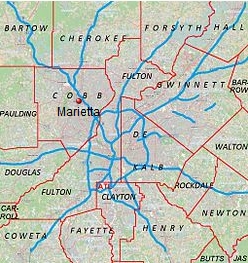
Apparently using a fill-in-the-blank litigation template, Clarence Busby Jr. sought foreclosure relief on a central Cobb County property in Marietta, Ga. Busby's filing also placed the property in Gwinnett County, which does not border Cobb County. (Graphic from Wikipedia.)
When former autosurf operator Clarence Busby Jr. filed a lawsuit last year last seeking relief from from a bank and other parties involved in a mortgage foreclosure against him, he’d already been put on notice by the Internal Revenue Service that the agency intended to collect thousands of dollars in back taxes from him, according to records in Cobb County, Ga.
The taxes were from 2009, according to records. During the same year, Busby launched an autosurf known as Biz Ad Splash — but the tax bill was for a different Busby entity.
On Aug. 11, 2010, the IRS prepared a federal tax lien against Busby and a company known as Freedom Achievement LLC for $15,481. The lien was formally recorded on Aug. 26, 2010. A note on the lien described Busby as “SOLE MBR” of Freedom Achievement, whose business purpose was not immediately clear.
About four months later — in December 2010 — Busby filed a pro se lawsuit demanding relief from Quicken Loans, OneWest Bank, MERSCorp and 1,000 “Doe” defendants in Cobb County Superior Court.
OneWest and MERS responded in January 2011 by moving to have Busby’s case transferred to federal court in the Northern District of Georgia because the lawsuit named defendants in multiple states and involved a controversy that exceeded the sum of $75,000.
Busby’s case was assigned to Senior U.S. District Judge Robert L. Vining Jr., who dismissed it for failure to state a claim. Beyond dismissing the lawsuit for failure to state a claim, Vining agreed with the defendants that Busby’s arguments had no legal merit. Busby’s pro se pleadings appeared to have come from a fill-in-the-blank legal kit.
These words appeared on the first page of Busby’s complaint: “COMES NOW, name here, as plaintiff” — and Busby did not insert his name in the “name here” space.
By contrast, some filings in the ASD/Golden Panda forfeiture case begin with these words, “COMES NOW, plaintiff United States of America, by and through its attorney.”
The Busby complaint also claims the Busby property in dispute is located in “Gwinnett County.” The document claimed elsewhere that the property was located in the city of Marietta in “Cobb County,” the venue in which Busby sued.
Marietta is situated in central Cobb County. Cobb County and Gwinnett County do not border one another. and the property is listed in Cobb County courthouse records, meaning it is possible that Busby used an existing legal template and never swapped out an existing reference to Gwinnett County — in the same manner in which he did not insert his name in the “name here” space.
Whether Busby’s apparent fill-in-the-blank oversights added to the defendants’ costs in successfully defending against the lawsuit is unclear. What is clear is that Busby came out on the losing end and that the defendants referenced the IRS tax lien against Busby in Cobb County in their response to his complaint.
Separately, the state of Georgia dissolved a Busby company known as Homeshare Investment Club Corp. The dissolution occurred on Sept. 13, 2010, less than a month after the IRS tax lien was filed against Freedom Achievement LLC, according to records.
Records pertaining to Homeshare Investment Club show that it used the same address used by Busby in the formation of Biz Ad Splash NA LLC.
BizAdSplash, or BAS, was an autosurf that ceased operating in January 2010. BAS launched in the aftermath of the ASD- and Golden Panda-related asset seizures. A separate address associated with the BAS filing in Georgia is the address of a maildrop in Kennesaw.
BAS purported to operate offshore. Its apparent U.S. domestic brand is listed in noncompliance by the office of Georgia Secretary of State Brian P. Kemp.
Members of BAS have complained to the PP Blog about not getting refunds from the autosurf. How much money the surf collected is unclear.
At the same time the state of Georgia was dissolving Homeshare Investment Club, it also was dissolving another Busby enterprise: Ocean View Enterprises Inc. Meanwhile, yet another Busby firm — Legacy Premier Properties Inc. — is listed in a state of noncompliance.
Even as bank failures and foreclosures were piling up in Georgia last year, a man associated with at least four failed autosurf companies was filing lawsuits against mortgage companies and 1,000 “Doe” defendants amid claims he did not know the “true names” of the “real lenders.”
Clarence Busby Jr. of Acworth, Ga., advised a Cobb County judge that it was “long standing black letter Mortgage law” from the 19th century that he should receive foreclosure relief from Quicken Loans, OneWest Bank, a service company and the “Does.”
In January 2011, the defendants moved to have the cases removed to federal court in Northern Georgia and filed for dismissal. The dismissal was granted in March.
A street address for Busby that appeared in both the county and federal filings corresponds with an address used by Biz Ad Splash NA LLC (BAS) in Georgia corporate filings dated May 13, 2009. BAS was an autosurf associated with Busby that went missing last year. Busby also was the president of Golden Panda Ad Builder, yet another autosurf, and a onetime business partner of Thomas A. “Andy” Bowdoin, the operator of the Florida-based AdSurfDaily autosurf.
The address BAS used in the Georgia filings was a mail drop, according to records.
Bowdoin was arrested in December 2010. The U.S. Secret Service said he had presided over an international Ponzi scheme that had gathered at least $110 million. Assets tied to both Bowdoin and Busby were seized as part of the ASD/Golden Panda probe, which also involved an autosurf known as LaFuenteDinero.
Busby was implicated in three prime-bank schemes by the SEC in the 1990s and was enjoined from violating securities laws by a federal judge. An FDIC-insured bank that once held Golden Panda funds failed in April 2011.
Georgia leads the United States in bank failures, with Florida nipping on its heels. Both states also are high on the list of mortgage foreclosures. Foreclosures tend to lower the value of surrounding properties.
Busby has described himself in court filings as a minister and real-estate professional. The actions in Cobb County that were removed to federal court were filed pro se, meaning Busby acted as his own attorney.
The defendants in the cases claimed Busby was seeking to “invalidate and/or void” in its “entirety” a $120,000 security instrument held on a property in Marietta, Ga.
Records suggest the property has been bought and sold twice in recent months for wildly different prices.
Among Busby’s claims in the Cobb County lawsuit was that the “true names and identities of any or all” of the “real” lenders, investors and others involved in his mortgage “were hidden from the plaintiff.”
BAS, which purported to be headquartered offshore, entered the autosurf world in January 2009 — after the ASD, Golden Panda and LaFuenteDinero-related asset seizures.
The entry of BAS began with the stern bang of a drum and a dire message in a promotional video: “The World Is In Crisis,” the video warned. “Turn On The News, And You’ll See. The Stock Market Is At A Record Low. Foreclosures Are At An All-Time High. Thousand’s (sic) Are Losing Their Jobs. Banks Are Closing. There Has To Be A Solution!”
The dire bang of the drum faded, replaced by a riff from an organ. The riff grew frantic, building toward a crescendo. The video never said the tones were from a 1999 work by Fatboy Slim: “Right Here, Right Now.”
Messages flashed in front of viewers’ eyes for more than a minute before the video announced the company’s name — BizAdSplash — and positioned the surf as the cure for all the economic misery in the world.
“Biz Ad Splash Has The Answer,” it said. “The Plan Is Simple. Advertise Your Business, A Product Or Service, Introduce Others To The Value Of Advertising. View A Few Ads For A Few Minutes A Day. Earn Profits. It’s That Simple!”
This old ad for AdSurfDaily features an image of Hank Needham, the purported owner of Club Asteria. An ASD affiliate link in the ad summons ASD’s old ASDCashGenerator.com URL, which went dormant after the federal raid on ASD’s Florida headquarters in August 2008. In recent hours, however, the old ASDCashGenerator URL began to resolve to an apparent new business opportunity known as Ad Sales Daily International. Needham’s one-time tie to ASD leads to questions about whether Virginia-based Club Asteria, through Needham or ASD downline members, could have benefited from ASD cash prior to the federal seizure of tens of millions of dollars from the personal bank accounts of ASD President Andy Bowdoin nearly three years ago. The Club-Asteria domain name was registered in June 2009, the same month an autosurf with ASD connections known as AdViewGlobal collapsed. Club Asteria’s domain now is registered behind a proxy, but once was registered to Needham, according to web records.
BULLETIN: (UPDATED 9:36 P.M. EDT (U.S.A.) A website identified in a 2008 forfeiture complaint as the site of a major financial crime allegedly engineered by AdSurfDaily President Andy Bowdoin and unidentified co-conspirators is active again and appears to be redirecting traffic to an entity named “Ad Sales Daily International” (ASDI) and a second entity known as ASD2Day.
“Make $10 per direct referral & $5 for every 2nd level indirect!” the site exclaims. “Recieve (sic) $2000 Account Initiation Credits! Hurry, while we are in pre-launch.”
A spokesman for U.S. Attorney Ronald C. Machen Jr. in the District of Columbia declined to comment on the development, saying that ASD is part of an active investigation.
The ASDI site is accessible through an affiliate link to Bowdoin’s old ASDCashGenerator.com site, which appears to have been re-registered in the name of Barbara Cruz, whose name previously has appeared in the context of ASD. The PP Blog accessed the ASDI site by clicking on an old ASDCashGenerator affiliate link . The link was within an ASD ad from 2008 that featured an image of Club Asteria’s purported owner Hank Needham.
The ASD ad with Needham’s image positioned ASD as a “Perfectly Credible Business” and included a contact email address that used the characters “ptigold.” The ASD ad, however, does not load Needham’s name as an ASDI affiliate when the link is clicked. Instead, it loads the name of another individual. The reason was not immediately clear.
This page for ASDI, an apparent upstart, is accessible when a link is clicked in an old ad for Andy Bowdoin's ASD Cash Generator program. The old ASD ad features a photo of Hank Needham, the purported owner of Club Asteria, but the ad does not load Needham's name as an ASDI affiliate when the link is clicked. Instead, the ad loads the name of another person. The reason was not immediately clear. Bowdoin is under federal indictment for wire fraud, securities fraud and selling unregistered securities. Questions have been raised about whether Club Asteria also was selling unregistered securities as part of a purported "passive" investment program.
A separate link within the ad with Needham’s image forwards to a page that displays pornography ads.
All or part of the old ASDCashGenerator site appears to be redirecting to the domain name of ASD2Day.com. In 2009, the ASD2Day site was registered with Cruz listed as the contact person at an address in Florida that state investigators had tied to a major insurance scam. Although Cruz now is listed as the registrant of the ASDCashGenerator site, the ASD2Day site is registered in the name of another individual.
In October 2009, the PP Blog published a story about the ASD2Day site, which was making odd claims about the state of the ASD litigation a year after the federal seizure of Bowdoin’s assets and assets linked to Golden Panda Ad Builder, an autosurf implicated by the U.S. Secret Service in the ASD probe.
ASD2Day.com claimed, among other things, that ASD could not be a Ponzi scheme because the script employed by the autosurfing firm could not be programmed to permit a Ponzi scheme to occur. It also made a puzzling claim that U.S. District Judge Rosemary Collyer was on an Aug. 28, 2009, deadline “to determine if the US Attorney General’s case against ASD should move forward.” (Also see this story and comments thread.)
Collyer was on no such deadline. In January 2010, Collyer issued a forfeiture order that awarded $65.8 million seized from Bowdoin’s bank accounts to the U.S. government, which is using the seized money to compensate victims of ASD. In July 2009, Collyer issued a forfeiture order for more than $14 million linked to Golden Panda, ASD’s one-time purported “Chinese” option.
The ASD ad that featured Needham’s image also made a veiled reference to Golden Panda.
A section of the ad read, “OPENING IN CHINA[:] July 2008.”
Undercover agents from a Secret Service/IRS task force began to investigate ASD and Golden Panda on July 3, 2008, according to court filings. The court process of seizing cash linked to both entities began on Aug. 1, 2008, with the issuance of seizure warrants.
It appears to be the case that all old ASD Cash Generator affiliate links, including the links in the ad that featured Needham’s photograph, now load the new ASDI webpage at the old ASD Cash Generator URL.
Claims made about Club Asteria are under investigation by Italian authorities. Club Asteria first slashed payouts to members then reportedly suspended them for 60 days. The firm also reportedly has had its PayPal account frozen.
Like ASD, Club Asteria was promoted on Ponzi scheme forums such as TalkGold and MoneyMakerGroup.
In a video dated July 8, a Club Asteria executive claimed the firm had “a philanthropic foundation both domestically and internationally where we help causes all over the world.”
Among the claims in the video, which appeared online after Club Asteria reportedly suspended payouts, was this one:
“We donate cows and pigs and water buffaloes and camels to help families all over the world.”
Virginia-based Club Asteria trades on the name of the World Bank. Members said payments came from an entity known as Asteria Holdings Limited (Hong Kong) — before the payments stopped.
One of Club Asteria’s principal concerns, according to a new video, is children.
Investigators long have fretted that some promoters of online business “opportunities” simply race from fraud scheme to fraud scheme, collecting commissions for introducing others to “programs” that prove to be scams.
Like the now-collapsed AdViewGlobal (AVG) autosurf, Club Asteria has blamed its reported problems on members. AVG had promoters and members in common with Bowdoin’s ASD, which the Secret Service described as a massive international Ponzi scheme.
Among other things, AVG plucked the heartstrings of members by telling them that the company was interested in saving the rain forest.
Some ASD members say this smiling and vigorous Andy Bowdoin is ready to do battle with the government in a "David vs. Goliath" clash. Bowdoin himself has advised a federal judge that he suffers from various medical maladies, including a lack of quality sleep, and his trial should be moved from the District of Columbia to Florida. The judge denied Bowdoin's bid to move the trial.
Although AdSurfDaily President Andy Bowdoin has described himself in court filings as an elderly man suffering from diabetes, lack of sleep caused by worrying about his ill wife, hyperlipidemia, coronary heart disease and multiple Transient Ischemic Attacks (ministrokes), some of his supporters apparently disagree with Bowdoin’s assessment of his own medical condition.
A website with a URL of AndysFundraisingArmy.com has posted a photo of Bowdoin purportedly taken on June 24. The photo shows a vigorous-looking Bowdoin seated in a chair and smiling broadly.
The website features a second photo of Bowdoin wearing a business suit, smiling at the camera and taking care of paperwork. A claim is made on the website that “over 88% of the members surveyed said that once Andy wins his court case and ASD is found to not be a Ponzi Scheme, they would want to immediately continue with their Ad Surf Daily business, because it is a proven, popular and successful way to advertise and build a great income with the ASD home business opportunity.”
What’s needed to get ASD restarted on a date uncertain — presumably with Bowdoin at the helm — is a $500,000 “minimum requirement” to pay for lawyers, according to the fundraising website. The website appears to have been registered using an address of a Florida law firm that is not the same firm associated with either of Bowdoin’s current civil and criminal attorneys.
Precisely who registered the site is unclear. The name on the domain registration is “Andys Defense Fund.”
And the fundraising website also makes other broad claims, including a claim that a survey sample of 140 ASD members can be reliably applied to a group of 123,000 ASD members as a whole.
“[P]er standard and accepted industry guidelines, public opinion surveying of 140 members of a large group of members that all share a common interest or purpose, of any size, even in the millions, will give an excellent cross section of the opinions and viewpoints of the entire group,” the fundraising site claims while asking ASD members to prepare to fork over a donation.
Among the claims below a subhead of “MORE GOOD NEWS” is that “A Recent Survey of ASD Members Proves that the Vast Majority of You Want to Join Andy’s Fundraising Army.”
The fundraising site, however, does not describe the characteristics of the 140 ASD members purportedly sampled. Nor does it define what specific surveying “standard” it applied or define the source of the purported “industry guidelines.”
Any claim that a small sampling result culled from individual ASD members can be applied to a much larger group is dubious, if not reckless. The fundraising site did not define any variables in the purported sample — for instance, whether the sample was top-heavy with members inclined to disbelieve the government’s take on events for personal or political reasons or out of fear they could become implicated in the ASD probe, whether the sample consisted of people who made money or lost money in ASD, the amount made or lost and the amount directed at ASD, whether members had large downlines, midsized downlines or small downlines and the degree to which downline members were affected by ASD developments and whether survey respondents had filed claims for restitution that the government announced more than two years ago would be paid from funds seized from Bowdoin’s personal bank accounts.
One of the accounts contained more than $31 million; another contained more than $23 million, and Bowdoin’s accounts contained more than $65.8 million in the aggregate, according to court filings. Bowdoin also allegedly moved “several million” dollars offshore prior to the August 2008 seizure of funds in his identified U.S. bank accounts. Meanwhile, ASD was alleged to have about $1 million in an account on the Caribbean island nation of Antigua in an account under a different name, according to court filings.
Although the fundraising site also claims Bowdoin “never backed down” in his battle against the government and “has always kept on fighting,” federal prosecutors said in 2009 that Bowdoin had signed a proffer letter in the case and acknowledged the government’s material allegations were all true.
Bowdoin’s own court filings show that he met with federal prosecutors over a period of at least four days, provided information against his interests and sought to cooperate because cooperation possibly could keep him out of jail.
Meanwhile, the fundraising site claims that Bowdoin lost his fight over the seized money “due to the lone decision made by that one single Civil Court Judge,” but it does not reveal that Bowdoin also lost two forfeiture appeals and that the U.S. Court of Appeals for the District of Columbia circuit upheld the rulings made by U.S. District Judge Rosemary M. Collyer.
At the same time, the fundraising site claims that ASD members who send in $50 or a smaller sum to fund a legal war chest “can finally have a strong fighting chance to get their advertising money returned to them.”
But the fundraising site does not reveal that the government already has set up a restitution program and that prosecutors alleged that ASD was an investment program disguised as an “advertising” program — one consisting of multiple illegal parts and one that Bowdoin and others were maneuvering to move offshore before it popped up on the radar of U.S. regulatory and law-enforcement agencies.
Nor did the fundraising site reveal that the government has alleged that ASD had “special” members and that at least some of the special members were participants in a previous autosurf fraud scheme.
 BULLETIN: The website of CenturionWealthCircle.com will not resolve to a server, and DNS data that appears in domain-registration info strongly suggest the site was suspended for spam and abuse.
 BULLETIN: The U.S. Federal Trade Commission and the Canadian Competition Bureau have taken down an alleged ‘Yellow Pages” scam in which businesses in the United States and Canada were deceived into paying for unwanted listings in online business directories.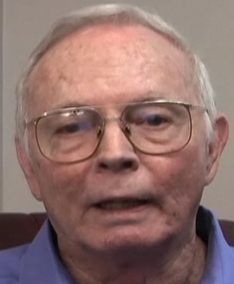



 A website that says it is raising “required” defense funds for accused Ponzi schemer Andy Bowdoin of AdSurfDaily now has missed its second launch date and claims it is working on a third.

 Even as bank failures and foreclosures were piling up in Georgia last year, a man associated with at least four failed autosurf companies was filing lawsuits against mortgage companies and 1,000 “Doe” defendants amid claims he did not know the “true names” of the “real lenders.”