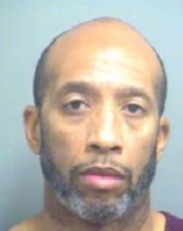
James Clark Howard III: At the center of three Florida fraud investigations. (Photo source: Boca Raton Police Department,)
The court-appointed receiver unraveling the affairs of a Florida firm accused by the SEC of operating a $27 million commodities fraud and selling unregistered securities says the company had “insiders and related parties” who took out twice what they put in.
Clawback actions are anticipated against unspecified “targets” because the money they received constituted “fraudulent transfers,” receiver David S. Mandel advised a federal judge.
Meanwhile, Mandel says Commodities Online shared office space with a law firm. On the second floor of the shared space was a “boiler room” with 12 cubicles, phone lines and computers.
At the same time, Mandel says an early analysis of records shows that the company had at least five bank accounts, including accounts at Bank of America, Fifth Third Bank, JP Morgan Chase, PNC Bank and Wachovia.
The insiders at Commodities Online put more than $5.36 million into the firm between Jan. 1, 2010, and April 1, 2011, and took out more than $10.84 million, according to the early analysis.
“[T]he Receiver was able to identify potential targets who received fraudulent transfers under §726.101 of the Florida Statutes,” Mandel said. “In the upcoming weeks, the Receiver intends to send letters to each of these targets demanding the disgorgement of profits and the recovery of fraudulent transfers.”
Although the firm operated only for about 16 months and allegedly told investors they would “earn 5% or more per month without price speculation,” Mandel’s preliminary analysis suggests more than $885,000 was allocated for “salaries” and more than $523,000 was allocated for “Legal and Professional” fees.
The firm was not registered with the SEC, according to court filings. Mandel said a forensic analysis continues and that records, including computer records, are being scoured for clues.
“Existing email from the Defendants has been downloaded and is being searched for potential transfers of funds or other related activity that may yield additional assets to be acquired for the receivership estate,” Mandel said.
And, he noted, there are “preliminary indications” that Commodities Online “may own a substantial quantity of iron ore located in Mexico,” but that ownership has not been verified.
“The Receiver has retained Mexican counsel to attempt to determine if the Defendants do, in fact, own the iron ore, and if so, to take whatever steps are required to safeguard the ore for later sale or liquidation, for the benefit of the receivership estate,” Mandel said.
At least two persons associated with Commodities Online have criminal records for offenses ranging from “narcotics and firearms felonies” to bank fraud and “transmitting a threat to injure,” according to the SEC.
Although the SEC did not identify the individuals, records show that Commodities Online figures James Clark Howard III and Louis Gallo were charged with the offenses. Implicated in a drugs and weapons case, Howard was sentenced to 57 months in federal prison in the 1990s.
Gallo was implicated bank-fraud and threats cases, and was on supervised release while the firm operated.
Howard is at the center of at least three financial storms in Florida, including the SEC case against Commodities Online. Separately, private litigants — including SSH2 Acquisitions, a company that listed former AdSurfDaily (ASD) member and Surf’s Up Mod Terralynn Hoy as a director — alleged last year that Howard was part of a separate Ponzi scheme that gathered at least $39 million.
Florida authorities charged him criminally in 2010 in a fraud scheme that allegedly targeted the Haitian American community.
ASD was implicated by the U.S. Secret Service in an alleged $110 million Ponzi scheme. Hoy has not been accused of wrongdoing.
James Clark Howard: Source: Boca Raton Police Department
UPDATED 2:25 P.M. EDT (U.S.A.) In a complex case unfolding in Florida, the SEC has filed fraud charges against two companies that allegedly sold unregistered securities and conducted a $27.5 million “investment scheme” involving “purported commodities contracts.” A receiver has been appointed to marshal the assets of the murky businesses, which are known as Commodities Online LLC and Commodities Online Management LLC.
Millions of dollars generated in the scheme were moved to Mexico and the Netherlands even as the SEC was issuing subpoenas in the case last month, according to court filings. The agency described the transactions as “extremely suspicious.”
Although the SEC successfully halted the alleged Commodities Online scheme on April 1, the only defendants named to date are the companies themselves. The agency described the individuals presiding over the scheme — a former managing member and a vice president — as convicted criminals.
One of the individuals, according to the SEC, was a “convicted felon who was, in March 2010, charged with grand theft and organized scheme to defraud in conjunction with an unrelated Ponzi investment scheme.”
The other, according to the SEC, was an individual who “pled guilty to bank fraud and narcotics charges in 2005 and to transmitting a threat to injure charge in 2007.”
The PP Blog confirmed that, on March 5, 2010, the Boca Raton Police Department arrested James Clark Howard, who is listed as a “managing member” of Commodities Online LLC in documents filed with the Florida Department of State on Jan. 26, 2010.
Howard was charged with grand theft and organized scheme to defraud in a Ponzi case that may involve as many as five companies and their associates acting in concert to scam investors. Boca Raton authorities said the Florida Office of Financial Regulation also was conducting an investigation.
On Feb. 11, 2011, Louis Gallo was identified as a manager of Commodities Online Management LLC in records filed with the Florida Department of State. The Sun Sentinel newspaper reported that Gallo is “on probation for bank fraud and a cocaine charge out of New Jersey federal court.”
AdSurfDaily Member And Surf’s Up Mod Emerges As Figure In New Florida Flap
Other records show that, on Sept. 15, 2010, a Nevada-based company that listed former AdSurfDaily member and Surf’s Up moderator Terralynn Hoy as a “director” sued Howard and others in federal court in Fort Lauderdale. The Nevada company — SSH2 Acquisitions Inc. — alleged that Howard and the others were running a Ponzi scheme into which SSH2 had plowed $39 million.
Hoy, who has not been accused of wrongdoing, was a member of Florida-based AdSurfDaily, which the U.S. Secret Service said in August 2008 was conducting an international Ponzi scheme involving tens of millions of dollars. After the ASD seizure, Hoy became a moderator at the pro-ASD “Surf’s Up” forum, which mysteriously vanished in January 2010 after cheerleading nonstop for ASD President Andy Bowdoin for more than a year.
Bowdoin was the target of a federal criminal probe the entire time Surf’s Up operated, according to court filings. In November 2008, just days after a key court ruling went against ASD, the firm endorsed Surf’s Up as its mouthpiece.
By February 2009, Hoy became a conference-call host and moderator of a now-defunct forum that promoted the now-defunct AdViewGlobal (AVG) autosurf. AVG, which had close ties to ASD, launched in the aftermath of the federal seizure of more than $80 million in ASD-related assets, the filing of two forfeiture complaints against ASD-related assets and the filing of a civil racketeering lawsuit against Bowdoin.
On June 30, 2009 — one day after Bernard Madoff was sentenced to 150 years in federal prison for his colossal Ponzi scheme — lawyers suing Bowdoin for racketeering alleged that AVG was an extension of ASD. In September 2009, federal prosecutors made a veiled reference to AVG in court filings in the ASD case.
AVG disappeared in June 2009, about a month after the grand jury that ultimately indicted Bowdoin for wire fraud, securities fraud and selling unregistered securities as investment contracts began to meet. The indictment against Bowdoin was unsealed in November 2010, and Bowdoin was arrested in Florida on Dec. 1, 2010.
Surf’s Up was known for unapologetic, unabashed cheerleading for Bowdoin, whom prosecutors said had swindled investors in Alabama in a previous securities caper during the 1990s. Clarence Busby, an alleged business partner of Bowdoin and the operator of the Golden Panda Ad Builder autosurf, swindled investors in three prime-bank schemes in the 1990s, according to the SEC.
More than $14 million linked to Golden Panda was seized as part of the ASD case — and yet the cheerleading for Bowdoin continued on Surf’s Up. The forum labeled ASD pro-se litigant Curtis Richmond a “hero” after he accused the judge and prosecutors of crimes in 2009.
Richmond was associated with a Utah “Indian” tribe a federal judge in a separate case ruled a “complete sham” after it filed enormous judgments against public officials in performance of their duties. Regardless, the cheerleading on Surf’s Up continued — even after it was revealed that Richmond had a contempt-of-court conviction for threatening federal judges and had been sued successfully under the federal racketeering statute by the Utah public officials and was ordered to pay nearly $110,000 in penalties and damages.
Federal prosecutors now say they have linked ASD to E-Bullion, a shuttered California payment processor whose operator — James Fayed — is accused of arranging the contract murder of his wife, a potential witness against him in a fraud case. E-Bullion has been linked by investigators in the United States and Canada to multiple Ponzi schemes.
SSH2, the company that listed Hoy as a director, alleged in September 2010 that Howard was part of a Ponzi scheme that also involved Patricia Saa, Sutton Capital LLC and Rapallo Investment Group LLC.
Howard had been arrested by the Boca Raton Police Department in March 2010, about six months before SSH2 accused him in the September 2010 lawsuit of operating a Ponzi scheme. In the lawsuit, SSH2 said it had conducted business with the defendants from “early 2009 through March 2010,” and ultimately turned over $39 million.
Howard and the defendants, according to the lawsuit, told SSH2 it was trading in commodities and “would produce profits of 40% per month or more, while not risking any of the invested funds.”
SSH2 did not say in the complaint how it had come to believe that a return of 40 percent a month with no risk was possible. Nor did the company describe its efforts to conduct due diligence on Howard and the other defendants.
Of the $39 million directed at Howard and the other defendants, SSH2 received back approximately $19 million in “fake and fraudulent ‘profits,’” according to the lawsuit.
If SSH2’s assertions that it conducted business with Howard and the others beginning in “early 2009” and expected a return of 40 percent a month are true, it means that the business was being conducted in a period after which both the Bernard Madoff Ponzi scheme and the alleged AdSurfDaily Ponzi schemes were exposed.
Both Madoff and ASD bragged about returns that were far less than the monthly returns allegedly offered by Howard and the other lawsuit defendants.
Madoff’s fraud was exposed in December 2008, about four months after ASD’s alleged fraud was exposed.
And if SSH2’s assertions against Howard and the others are true, it also means the transactions occurred during a period in which Hoy, later to emerge as an SSH2 director, also was moderating forums for ASD and AVG and also was serving as a conference-call host for AVG, which purported to operate from Uruguay and enjoy protection from U.S. regulators because of its purported “private association” structure.
ASD’s Bowdoin initially ceded the money seized by the Secret Service in January 2009, dropping his claims to the cash “with prejudice.” By the end of February 2009, however, Bowdoin sought to reenter the case as a pro se litigant and renew his claim to the money, which totaled about $65.8 million.
Bowdoin’s sudden reappearance in a case he had abandoned coincided with a meeting AVG reportedly conducted with Karl Dahlstrom, a convicted felon. In March 2009 — in a letter posted on Surf’s Up — Bowdoin claimed he had decided to reenter the case after consulting with a “group” of ASD members. Bowdoin did not name the members, but chided federal prosecutors in his letter, writing that his pro se pleadings should “really get their attention.”
For the balance of 2009, Surf’s Up continued to cheerlead for Bowdoin, despite the fact he never told the membership at large about a second forfeiture complaint that had been filed against ASD-connected assets in December 2008. Bowdoin also did not inform ASD members that he had been sued for racketeering and had signed a proffer letter in late 2008 or early 2009 and acknowledged that prosecutors’ material allegations against ASD were all true.
Surf’s Up continued to operate even after prosecutors revealed the existence of the proffer letter. In Bowdoin’s own court pleadings, he had acknowledged he had given information against his interests to prosecutors. Bowdoin said he hoped to work out a deal by which he could avoid prison time, despite the fact prosecutors had alleged he was at the helm of a massive Ponzi scheme.
In October 2008 — at the conclusion of an evidentiary hearing ASD had requested — Surf’s Up conducted an online party for ASD members, complete with images of champagne and fireworks. Members were fed one-sided accounts of what had happened at the hearing, and a federal prosecutor was described derisively as “Gomer Pyle.” ASD’s lawyers were described as the “Perry Mason” team.
A month later — in November 2008 — U.S. District Judge Rosemary Collyer ruled at ASD had not demonstrated at the hearing that it was a lawful business and not a Ponzi scheme. The AVG forum led by some of the Surf’s Up mods, including Hoy, launched shortly thereafter, and the Surf’s Up forum soldiered on.
AVG was positioned as a way for members to make up their losses in the alleged ASD Ponzi scheme.
Surf’s Up became infamous for deleting comments and information unflattering to Bowdoin. The forum also was used to hatch a rumor that the prosecution secretly had admitted ASD was not a Ponzi scheme but was clinging to the case in a bid to save face.
As time progressed, dozens of pro se litigants attempted to intervene in the ASD case, claiming the government had no “EVIDENCE.” These filings occurred despite the fact that some of the evidence had been a matter of public record since August 2008.
Critics referred to Surf’s Up, whose formal name was the ASD Member Advocates Forum, as the AS[Delusional] forum. Various tortured explanations for Bowdoin’s conduct appeared on the forum, and there were calls for a “militia” to storm Washington, D.C., and for a prosecutor to be placed in a medieval torture rack. Prosecutors and federal agents were derided as “goons” and “Nazis,” and critics were derided as “maggots.”
The SEC’s Case Against Commodities Online
On April 1, the SEC filed an action against Commodities Online that alleged it was selling unregistered securities and operating a commodities fraud that had absorbed at least $27.5 million. Florida attorney David S. Mandel was appointed receiver.
“In connection with the unregistered securities offerings, the Defendants made numerous material misrepresentations and omissions regarding the nature of Commodities Online’s business model and operations, the risks and earnings associated with investing in its securities, and the background of its co-founder and vice-president,” the SEC charged.
“On December 15, 2010, Commodities Online announced on its website that ‘[t]o date, we have 32 contract offerings that have been completed for which our steadfast subscribers have been paid. The dollar total of these contracts is approximately $7.5 million and the payout was in excess of $8.5 million, producing an average earning of over 14.5%.’
“That statement was untrue,” the SEC charged. “There is no evidence to support this amount of investor return. In fact, Commodities Online’s bank records show a net loss for the companies associated with these promised contracts. Further, the company’s records show a net outflow of cash for each of these associated companies.”
By March 14, 2011, the SEC charged, Commodities Online had upped its number of purported successful contracts to 48. That claim also was untrue, the agency charged.
Referring to Howard but not naming him, the SEC said that the company “failed to disclose that in 1997, he was convicted of federal narcotics and firearms felonies and sentenced to 57 months in prison. The Defendants never disclosed his past criminal background to investors either through the Commodities Online website or any other company communication to investors.”
Referring to Gallo but not naming him, the SEC said that, in 2005, he “pled guilty in the United States District Court for the District of New Jersey to bank fraud and narcotics charges.
“In 2007, in the same court, he pled guilty to transmitting a threat to injure,” the SEC continued. “He is currently serving a three-year term of supervised release, which expires in July 2011.”
In a separate filing accompanying the complaint filed on April 1, the SEC said that Commodities Online “recently sent approximately $3.8 million to entities and individuals in Mexico and the Netherlands.”
Investigators deemed the transactions “extremely suspicious,” given that the transactions allegedly occurred between March 15, 2001, and March 25, 2011. The SEC said it issued subpoenas to the defendants on March 15, the same day the international transactions began to occur.
Bartow County Bank, which once held deposits tied to Golden Panda Ad Builder and the alleged AdSurfDaily Ponzi scheme, has failed in Georgia.
The Georgia Department of Banking and Finance closed the small bank today and appointed the FDIC receiver. Bartow once held $644,266 linked to Golden Panda, federal prosecutors said in a December 2008 forfeiture complaint.
Bartow’s failure is expected to cost the Deposit Insurance Fund nearly $70 million, the FDIC said. Georgia leads the United States in bank failures.
Golden Panda President Clarence Busby and his daughter, Dawn Stowers, voluntarily ceded the money in the Bartow account to the government more than two years ago, according to court filings. U.S. District Judge Rosemary Collyer formerly ordered the money forfeited on March 31, 2010.
Golden Panda was the purported “Chinese” arm of the Florida-based ASD “autosurfing” enterprise, which prosecutors said was a $110 million Ponzi scheme. Most of the money from the scheme was routed through Bank of America, according to court filings.
Busby, who was implicated by the SEC in three prime-bank schemes during the 1990s, advised Collyer in 2008 that Golden Panda was formed after a “relaxing” day of fishing with Bowdoin and a minister on a Georgia Lake.
Along with the more than $644,000 in Golden Panda cash seized in the December 2008 forfeiture case, prosecutors also seized an $800,000 building in Florida for which Bowdoin had paid cash, according to court filings.
Prosecutors also seized a boat, cars and other equipment in the December 2008 complaint. In a forfeiture complaint filed in August 2008, prosecutors seized nearly $80 million held in Bank of America accounts, including $65.8 million in 10 accounts in Bowdoin’s name, and $14 million in Golden Panda-related accounts.
Collyer ordered Bowdoin’s money forfeited in January 2010. Golden Panda’s money was ordered forfeited in July 2009.
As was the case with many things associated with ASD, the December 2008 forfeiture case turned into Theatre of the Absurd. Although Bowdoin family members were named beneficiaries of much of the fraud outlined in the December complaint, neither Bowdoin nor a family member entered claims for the seized property.
Regardless, Bowdoin filed an appeal after Collyer ordered the money and property forfeited.
The FDIC said today that Bartow County Bank will repoen tomorrow as a branch of Hamilton State Bank. Bartow’s failure will cost the Deposit Insurance Fund an estimated $69.5 million.
“The FDIC and Hamilton State Bank entered into a loss-share transaction on $247.5 million of Bartow County Bank’s assets,” the FDIC said. “Hamilton State Bank will share in the losses on the asset pools covered under the loss-share agreement.”
Four other U.S. banks failed today, bringing the year-to-date total to 34. In 2007, only three banks failed in the United States.
Eight banks have failed in Georgia so far this year. Two have failed in Florida.
After the assets of ASD and Golden Panda were seized, some members immediately turned their attention to promoting other autosurfs. They also pushed HYIPs and cash-gifting schemes, saying the miserable businesses were a good way to make up for ASD/Golden Panda losses.
When an MLM program known as MPB Today launched in Florida last year, promoters urged foreclosure subjects and Food Stamp recipients to part with their money to join the business. Records show that one of the banks MPB Today used was operating under a consent agreement with the FDIC.
MPB Today said last year that it had recruited more than 30,000 members.
Florida has one of the highest foreclosure rates and bank-failure rates in the United States.
BULLETIN: It has happened again, this time in the Sunshine State.
Mark D. Leitner has been indicted in Florida on charges of filing false liens against federal prosecutors, investigators and court personnel involved in his criminal trial last year on tax charges.
Leitner, whose age and address were not provided in a Justice Department statement, was accused of filing liens for $48.489 billion against a number of federal employees. He was specifically accused of filing false liens, corruptly endeavoring to impede and impair the Internal Revenue Service and publicly disclosing Social Security numbers in the commission of illegal activity.
In at least five instances, Leitner disclosed the Social Security numbers of federal officials, prosecutors said. Records at the U.S. Court of Federal Claims, meanwhile, show that Leitner unsuccessfully tried to sue the United States last year.
Records at the Federal Bureau of Prisons show that Mark Daniel Leitner is an inmate at the Lewisburg federal penitentiary in Pennsylvania. His age is listed as 39.
Mark Daniel Leitner was convicted in Pensacola last year in a tax case, according to federal records.
The new case against Leitner is reminiscent of events surrounding the AdSurfDaily autosurf, which federal prosecutors described as a $110 million Ponzi scheme.
ASD figures Kenneth Wayne Leaming and Christian Oesch unsuccessfully sought to sue the United States last year, apparently for the staggering sum of $29 TRILLION, after key court rulings went against the Florida-based company operated by Andy Bowdoin.
Leaming and Oesch also used the U.S. Court of Federal Claims. As was the case with Leitner, their lawsuit bid was rejected.
ASD is known to have members who define themselves as “sovereign” beings who are not answerable to U.S. law.
In the Leitner case, prosecutors said that he “filed and mailed numerous harassing and frivolous documents to the court and personnel.”
Some ASD members claimed a federal judge owed tens of millions of dollars for her role in the ASD case. The U.S. Secret Service and federal prosecutors also were targeted with mail that demanded them to take certain actions.
See earlier story on Kenneth Wayne Leaming. See another one. Leaming, who claims to practice maritime law but appears never to have attended law school, has been sanctioned in Washington state for filing bogus liens, according to records.
See December 2010 story about a false-liens case against Andrew Isaac Chance in Maryland.
See an August 2010 story about a false-liens case against Thanh Viet Jeremy Cao in California.
See a June 2010 story about a false-liens case against Ronald James Davenport in Washington state.
BULLETIN: John Neil Hirst has been charged by the Serious Fraud Office (SFO) in the United Kingdom in a case that alleges he was at the helm of an international Ponzi scheme that targeted British, French and Americans through a company registered in Panama and Seychelles.
The company was known as Gilher Inc., the SFO said. Hirst operated from Mallorca, investigators said.
U.K. officials said Hirst, 59, appeared in Bradford Magistrates Court today to face charges of money-laundering and conspiracy to defraud. The scheme is believe to have gathered more than £10m (about $16.2 million U.S.), causing losses of about £6m (nearly $10 million U.S.).
Investigators said in November 2009 that Gilher hawked a “fund” that offered “a guaranteed return of 20% a year.”
It was the second major Ponzi case brought in Europe in recent weeks. German Cardona Soler was arrested in Spain last month in a case described as a $300 million Ponzi scheme that affected more than 100,000 investors globally.
The SFO investigation of Hirst “is still continuing in regards to the involvement of a number of additional individuals,” the SFO said today. Investigators did not name the other individuals or say how many others were under scrutiny.
“Gilher Inc was a Panama and Seychelles registered company, operated by Hirst, which invested funds on behalf of private clients who were mainly based in the UK and Spain,” SFO said. “The investigation started in November 2009 following complaints made to the SFO by investors and has been investigated with the assistance of West Yorkshire and Surrey Police and overseas law enforcement authorities.”
SFO did not identify the overseas authorities that assisted in the probe.
Cardona is a figure in the alleged EMG/Finanzas Forex Ponzi scheme, which has been tied to multiple fraud schemes in Florida and a narcotics probe in Arizona, according to U.S. court filings. Some of the U.S.-based legwork in the alleged caper was performed by members of the same Task Force that brought a $110 million Ponzi prosecution against AdSurfDaily President Andy Bowdoin of Quincy, Fla.
Cardona’s name also has surfaced in the George Theodule Ponzi scheme in Florida.
Both EMG/Finanzas and AdSurfDaily were promoted on Ponzi and criminals’ forums such as TalkGold and MoneyMakerGroup.
Hirst was ordered to remain at his residence and not to contact prosecution witnesses. He also was ordered to surrender his passport, SFO said.
“[I]f this company doesn’t have sales, it’s not a viable company. Every company has to have sales that’s what makes this company work because the great business model, not because it has a lot of outside resources, but with that said we have a lot of things planned in the next weeks and months ahead. This will create lots more wealth for you.”— Federal prosecutors, quoting Golden Panda Ad Builder President Clarence Busby in August 2008 forfeiture complaint that seized $80 million in the ASD/Golden Panda Ponzi case.
“Our electronic wallet offered by our financial partners can make a great difference to you and your family. If you don’t utilize these programs and services and take advantage of everything that Club Asteria offers, you are not helping yourself. Our services are priceless — but only if you take advantage of them.
“We are privileged to work for you and we hope that you feel privileged to be part of our Club that is striving to make a real difference for you and the rest of the world. When the revenue sharing is announced each week, remember that we are doing our part to bring about the best services and products — you need to do your part as well to maintain the highest revenue sharing.”— Club Asteria announcement to members, April 2, 2011.
Members of Club Asteria, an online “opportunity” that trades on the name of the World Bank, purportedly issues member payments from Hong Kong and is promoted on Ponzi scheme and criminals’ forums as a “revenue sharing” business, now say that the club’s worldwide membership roster has swelled to more than 230,000.
A new wave of “I got paid” posts appeared on TalkGold and MoneyMakerGroup over the weekend, and promoter “manolo” announced that a “matching bonus” program had been extended through April. Separately, other Club Asteria members are seeking to drive business to the firm, which touts its relationship with offshore payment processors, by issuing press releases in multiple languages.
Google News has picked up a number of the releases in recent days, including one dated March 28 that touts a Miami-based promoter and claims “Club Asteria is exploding in every corner of the world.”
When clicked, a URL in the press release takes visitors to a text and audio pitch for Club Asteria. “Some members are making in excess of $20,000 US Dollars per month,” the promo claims in bold. Prospects who pay Club Asteria a fee of $20 to join as a “GOLD Member” are offered a coaching program that promises the “best tips and tricks that you WILL need to succeed with Club-Asteria!” according to the promo.
Google rejected an application by the PP Blog in June 2010 to become part of its Google News service. The PP Blog covers online fraud schemes and is written by a journalist with more than 20 years’ experience.
“[W]e’re unable to include it in Google News at this time,” Google advised the Blog. “We don’t include sites that are written and maintained by one individual.”
Some Club Asteria members say the company is based in the United States. Why payments purportedly are issued from Hong Kong is unclear.
Forum posts that declare “I got paid” have been associated with Ponzi schemes that spread virally on the Internet. Such schemes have used press releases to sanitize the business “opportunities,” and also have made use of “matching bonus” programs and offshore processors.
A March 30 sales pitch from a Club Asteria promoter claims the program “ia (sic) a basically (sic) Human Development Program.”
The pitch continues with an all-caps paragraph that purportedly defines what the program is not and includes 15 exclamation points.
“A CHANCE TO CREATE INCOME FOR LIFE…!!! YES…!!! INCOME FOR LIFE FINANCIAL FREEDOM…!!! CLUB ASTERIA EARN AND SHARE, NO SCAM, NO HYIP, NO PONZI, NO GET RICH QUICK SCHEME. EARN $ 400 EVERY WEEK FOR LIFE LONG. JUST A TRUE INVESTMENT AND A GREAT WAY TO EARN AND SHARE THE WEALTH WITH ALL THE PEOPLE OF THE WORLD. RUN BY FORMER DIRECTOR OF THE WORLD BANK ANDREA LUCAS. NOW CLUB-ASTERIA IS PRELAUNCH PHASE. GET ON NOW TO GRAB PRELAUNCH OFFERS…!!! JOIN NOW…!!!”
Preemptive claims that emphasize what a program is not also have been associated with Ponzi schemes.
The World Bank said last month that it once employed a person named Andrea Lucas, but that she left her job as a department head in Washington, D.C., in December 1986, nearly 25 years ago. Lucas was not a member of the World Bank’s board of directors, as hundreds — and perhaps thousands — of promotions for Club Asteria have implied.
Some Club Asteria members have identified Lucas as a former World Bank “Vice president” and “Chairman.”
Although Club Asteria has been promoted as a “passive” investment opportunity in which customers would simply register, pay a fee and earn money from the efforts of others, Club Asteria now appears to be trying to distance itself from those claims — while keeping the “matching bonus” program intact.
Claims that members can make money passively by simply paying a fee and relying on Club Asteria to generate profits leads to questions about whether the company and its army of affiliates are selling unregistered securities as investment contracts. On March 17, the company said that members who registered for its program and paid a fee were in position to “help the people of Japan” after last month’s devastating earthquake.
About two weeks later, Club Asteria suggested that members were overselling the earnings program and making false claims.
“The revenue will go up or down depending on how many members actively take advantage of utilizing and/or selling any one of our programs or services,” Club Asteria said in an April 2 note on its website. “If anybody has told you something different, they are mistaken and incorrect. We share our revenue that is earned by our membership. There is no guarantee. It would be impossible to guarantee this.”
Club Asteria members earned a payout of 4.01 percent last week, according to “akledba,” who was posting on the MoneyMakerGroup Ponzi forum in 36-point type.
“Wow, that is great,” replied MoneyMakerGroup member “strosdegoz.”
“I didn’t realize it was higher than last week,” strosdegoz noted. Below the post was a link for a program called “Exotic FX,” which bills itself a “PRIVATE ASSET HAVEN.”
MoneyMakerGroup is referenced in U.S. federal court filings as a place from which the alleged Pathway to Prosperity and Legisi Ponzi schemes were promoted. The schemes gathered more than $140 million, according to court filings.
Club Asteria did not say how much money it had collected as a result of purported misrepresentations by members or how members could be assured that the firm’s money stream was free of Ponzi and scam proceeds. The company does not publish verifiable financial data. Because the “opportunity” is being promoted on well-known Ponzi forums, it is possible that serial fraudsters have polluted Club Asteria’s revenue stream with proceeds from autosurf fraud schemes, HYIP fraud schemes, MLM fraud schemes, Forex fraud schemes, “arbitrage” fraud schemes and other forms of online fraud.
“Matching bonus” programs have been one of the hallmarks of online Ponzi schemes, some of which swelled to victimize tens of thousands of participants. AdSurfDaily, an “autosurf” firm that also was promoted on the Ponzi boards, routinely used matching bonuses to attract prospects. ASD’s membership ranks swelled to 120,000, according to promos for the firm, which now is accused of operating an international Ponzi scheme that gathered at least $110 million.
In 2009, a firm known as AdViewGlobal (AVG), which is said to have recruited 20,000 members in only weeks after the seizure of ASD-related assets, also used matching bonuses. One promoter claimed that $5,000 sent to AVG turned into $15,000 “instantly.” AVG also was promoted on the Ponzi boards.
AVG collapsed in June 2009. Private attorneys suing ASD President Andy Bowdoin in a racketeering case have referenced AVG in court filings. Federal prosecutors who brought both civil and criminal charges against ASD have made veiled references to AVG in court filings.
Recent promos for Club Asteria have made claims such as these (below): (NOTE: These are verbatim and are from multipe websites, all of which could be driving money to Club Asteria.)
“Earn a realistic $400 a week… PASSIVELY!”
“Discover How You Can Earn $400 Per Week Passively With No Sponsoring Requirement And How To Make Money Starting Now!”
“We help you become financially secure, YOU help others become financially free. We are restoring balance of financial equality.”
“Join Our TEAM and Earn $400 weekly for $20”
“Club Asteria” A site of “World Bank’s former Vice president Andrea Lucas”
“We all can be millionaires in 2 years if we can afford to invest N15,300 ($100). Thanks to ANDREA LUCAS, a former World Bank Director who established the investment outfit, CLUB ASTERIA.” (Continued below graphic.)
This Club Asteria promo, which trades on the names of Google, Yahoo, MSN and America Online, claims Club Asteria members earn $400 a week "passively." Such claims lead to questions about whether Club Asteria members are selling unregistered securities as investment contracts.
“Be 100% passive and still earn $400 weekly from Real/Legal/Safe Co.”
“Hi, club Asteria is founded by former world bank Chairman. running in 141 countries worldwide,21 years experience,its main aim is to eradicate poverty by giving micro-loans.If u pays $20 monthly for life-long by taking gold membership,you earn weakly $400 for lifelong from 19 th Month.No-referrals.But,If u refer one member, U get $9 monthly for lifelong.”
UPDATED 1:14 P.M. EDT (U.S.A.) A Florida man who allegedly received $1.5 million from an international Forex fraudster now jailed in the United States has been arrested on charges of bankruptcy fraud, federal prosecutors said.
The three-count indictment against Jon Jerald Hammill, 39, of St. Petersburg, was unsealed yesterday. It marked the fourth major Ponzi-related event in Florida in recent days. The state is the site of some of the most complex fraud investigations in the nation, and the case against David R. Lewalski — from whom Hammill and his company allegedly received money — is no exception.
Hammill, whose arrest was announced in Washington yesterday by Assistant Attorney General Lanny A. Breuer, was accused of failing “to disclose that he had received more than $100,000″ from Lewalski’s company prior to the filing of his bankruptcy petition” in February 2009. He is further accused of not disclosing his ownership of a shell company into which payments from Lewalski’s Ponzi scheme were routed and not disclosing his business relationship with Lewalski.
Although Hammill’s Chapter 7 bankruptcy initially was granted in July 2009, U.S. Bankruptcy Trustee Donald F. Walton later reopened the case and sought to revoke Hammill’s discharge for fraud. In court filings, Walton said Hammill invoked his 5th Amendment right against self-incrimination when questioned about his dealings with Lewalkski’s company, which was known as Botfly LLC.
Breuer is the head of the Criminal Division of the U.S. Department of Justice. The federal probe into the alleged $29 million Botfly Forex caper is being led by U.S. Attorney Robert O’Neill of the Middle District of Florida, with the U.S. Postal Inspection Service in Washington as the lead agency. O’Neill and his predecessor — former U.S. Attorney A. Brian Albritton — have squared off against against a series of spectacular fraud schemes operating in the region.
Among the cases are the Beau Diamond Ponzi scheme, the David Merrick Ponzi scheme known as TIRN, the $220 million Forex Ponzi scheme of Jamaican David A. Smith and the alleged EMG/Finanzas Forex fraud. Investigators say they have traced proceeds from the EMG/Finanzas fraud to the international narcotics trade. A task force working in the region also did investigative legwork in the alleged AdSurfDaily Ponzi scheme.
Some of the cases have elements that only can be described as bizarre and deeply disturbing. In the Lewalski case, for instance, it is alleged that Lewalski discussed a plan by which he’d divert blame to the government for his legal predicament in a bid to get his victims to pay for his defense.
By making the government the bogeyman, Lewalski hoped victims would come to believe that he — as opposed to investigators — offered the best shot of getting back their money, according to court filings.
At least one person gave Lewalski $50,000 to pay for a lawyer — and this occurred after Lewalski had chartered a private Gulfstream IV jet at a cost of $172,744 to fly from the United States to Belgium one day after he was charged civilly in Florida, according to court filings.
One women — an attorney for the court-appointed receiver in Florida’s civil case — was made the subject of misogynistic rants by Lewalski, according to court filings. The rants were cited by federal prosecutors who argued successfully that Lewalski should not be released on bond.
Prosecutors also argued that Lewalski had spent astronomical sums of investors’ money on luxuries in the United States and Europe and advised investors to take the 5th Amendment when questioned. In court filings, prosecutors argued that Lewalski also sought to tamper with witnesses.
Lewalkski, prosecutors said, told “family members and other potential witnesses to stay quiet and not cooperate with law enforcement.”
The receiver’s attorney was called a “c[$%!]” and a “Nazi,” according to court filings. In one rant, Lewalski allegedly said, “So f[$%!] her what a bitch.” Court documents also allude to a woman who allegedly was called an “FDLE chick” and described by Lewalski as “nuts” and a “bitch.”
It was not immediately clear if Lewalski was talking about the receiver’s attorney or a different woman employed by the Florida Department of Law Enforcement when making the alleged “FDLE chick” remark. In the context of the remark, however, Lewalski is alleged to have discussed a “nuclear option.”
Separately, the U.S. Postal Inspection Service alleged that Lewalski complained to investors he defrauded about “recent ‘Orwellian’ totalitarian tactics” employed by U.S. investigators in Ponzi scheme cases, instead of accepting accountability for his fraud.
But even as Lewalski was grumbling that his U.S. assets had been frozen, he allegedly did not tell his investors what had happened to their money and why they had not been paid as promised prior to the seizure. Instead, according to the investigating postal inspector, he talked about money he was able to access in Europe after he left the United States hastily, saying he had as many as six offshore accounts.
Among Lewalski’s other claims was that he had been “investigated and cleared by the Securities and Exchange Commission,” according to court filings. Members of ASD also have claimed that ASD, which was accused of orchestrating a $110 million international fraud from Florida, was given the green light by the SEC.
No evidence has surfaced in either the ASD case or the Botfly case that the SEC approved of the companies’ operations. Meanwhile, ASD members also have directed rants at prosecutors and investigators, describing them as “goons,” “Nazis,” merchants of “Satan” and criminals. One ASD member proposed that a federal prosecutor be placed in a medieval torture rack, with ASD members at large drawing straws to determine who got the honor of turning the torture wheel.
Another ASD member proposed that a “milita” storm Washington in defense of ASD. Still another said that the company’s critics consisted of “Rats, Bed Bugs, Maggots, Cockroaches And Everything Else.”
Lewalski, 47, operated Botfly from his mother’s home in Bayonet Point, Fla., according to court records.
After being charged civilly by the state of Florida in April 2010, Lewalski immediately left the United States, spending the next seven months in Europe, according to court filings.
He is believed to have returned to the United States in October 2010, but investigators said he pretended still to be in Europe. Lewalski was arrested in New York on November 4, 2010. Prosecutors said he was staying in a luxury suite atop the Mandarin Oriental Hotel for which he had paid $143,000 in advance with investors’ money.
The Mandarin bills itself “the most breathtaking luxury hotel in New York,” and Lewalski’s suite overlooked Central Park, according to court records.
Charged by the CFTC were James A. Ward of Ft. Lauderdale, and Nathaniel R. Walker of Lauderhill. Also charged was their firm, Kastle & Hawke Inc. of Fort Lauderdale.
Florida has been plagued by spectacular fraud schemes. Just two days ago, David A. Smith, a citizen of Jamaica, pleaded guilty to charges in a $220 million Ponzi scheme. Last week, the U.S. Court of Appeals for the District of Columbia Circuit ruled that Ponzi-related orders of forfeiture totaling more than $65.8 million in a 2008 civil case would stand against Florida resident Andy Bowdoin, who now is charged criminally in the alleged AdSurfDaily Ponzi scheme. Prosecutors said Bowdoin’s ASD had gathered at least $110 million.
In the case against Ward and Walker, the CFTC said “the defendants never held or acquired any metals for customers and charged customers interest on non-existent loans.”
U.S. District Judge James I. Cohn has frozen their assets, amid allegations the company misappropriated at least $319,000 from customers hoodwinked in the scheme. Cohn also ordered books and records to be preserved.
“To conceal their fraud, the defendants allegedly manufactured and sent false account statements and transaction confirmations to customers,” the CFTC charged.
“K&H does not hold, nor has it ever acquired, any physical precious metals on behalf of customers,” the CFTC charged.
When customers wanted to sell the metals they believed they had acquired, Ward manufactured one excuse after another, the CFTC alleged. Customers were told that “rogue” traders were responsible for his inability to sell the metals, according to the complaint.
And they also were told that the metals could not be sold because of “problems in London,” because markets were closed for the holidays and because “force majeure” — things beyond the company’s control — had occurred, the CFTC charged.
One of the things that occurred was that the unregistered company had advertised it was selling palladium on a leveraged basis to customers, an unlawful act in itself, the CFTC said.
On the K&H website, the company told prospects they could take advantage of a “Leveraged Purchase Program” that allowed them to finance up to 77 percent of the costs of the precious metals over five years — “without having to make monthly payments or undergo credit checks,” the CFTC charged.
Customers were told the company’s approach would lead to hefty profits, but it was all a scam, the CFTC charged.
In April and May of 2010 — as the firm was explaining to customers why they could not claim their profits even as it was charging them interest on nonexistent loans — Ward withdrew $21,350 in cash from the company’s bank account “and spent nearly $9,000 at a grocery store chain, draining the bank account to a balance of less than $500,” the CFTC charged.
BULLETIN: Andy Bowdoin and AdSurfDaily Inc. have lost their appeal of a January 2010 order by U.S. District Judge Rosemary Collyer that $65.8 million be forfeited to the government in the August 2008 civil Ponzi scheme case against Bowdoin’s assets.
The U.S. Appeals Court for the District of Columbia unanimously upheld Collyer, rejecting Bowdoin’s claims he had been denied due process and been hoodwinked by his former attorneys into releasing his claims to the seized cash in January 2009.
“To begin with, there can be no doubt that appellants meant to withdraw their claims,” the panel ruled. “Their withdrawal motion expressly stated that they wished to ‘withdraw and release with prejudice’ their verified claims and that they ‘consent[ed] to the forfeiture of the properties.”
“Nor is there any basis to conclude that appellants were somehow tricked into releasing their claims,” the panel continued. “Despite Bowdoin’s protests to the contrary, his own affidavit shows that he understood well that he was receiving no promise in return for relinquishing his claims.”
Bowdoin’s withdrawal of his claims was “free and deliberate,” the panel ruled.
Although Bowdoin blamed one of his former lawyers for giving him bad advice, the appeals panel said nonsense.
“[F]ar from being negligent, appellants’ attorney had sound reasons for recommending that they cooperate with prosecutors by relinquishing their claims,” the panel ruled.
The ruling means that the government now has title to about $80 million seized in the ASD case. Bowdoin lost a previous appeal for a smaller sum in a separate forfeiture action brought in December 2008, and Collyer ordered the forfeiture of more than $14 million from Golden Panda Ad Builder in July 2009.
Golden Panda was the purported “Chinese” arm of ASD. It was operated by Clarence Busby, whom the SEC had implicated in three prime-bank schemes in the 1990s, according to court filings.
About $65.8 million of the total sum seized in the August 2008 forfeiture case was in Bowdoin’s personal bank accounts, including one account that contained more than $31 million.
Bowdoin initially released his claims to the money in January 2009. By late February of the same year, he sought to reassert his claims as a pro se litigant. He ultimately retained new counsel, and unsuccessfully sought to have Collyer removed from the case.
Collyer refused to step down, and issued the forfeiture order for $65.8 million in January 2010. At least one other ASD member also sought unsuccessfully to force Collyer to disqualify herself from hearing the case.
That member — Curtis Richmond — accused the judge of treason. In a separate case in Utah in 2008, Richmond claimed a federal judge owed him $30 million. That judge, too, refused to step down, finding that a purported Indian tribe with which Richmond was associated was a “sham.”
Richmond has claimed to be a “sovereign” being, as have other people with ties to ASD.
Bowdoin was charged criminally with wire fraud, securities fraud and selling unregistered securities in December 2010. The U.S. Secret Service said he was operating a Ponzi scheme that had gathered at least $110 million by disguising itself as a “advertising” business.
ASD perhaps created as many as 40,000 victims, according to court filings. The civil portion of the case featured dozens of templated, pro se filings from ASD members who asserted the government had no “EVIDENCE” of wrongdoing.
Almost three years into the case, some ASD members still are claiming the government has no evidence — despite the fact that the evidence has been discussed in open court and in public filings dating back to August 2008.
Two forums listed in federal court documents as places from which Ponzi schemes are promoted have published a series of “I got paid” posts from commentators who say they are members of Club Asteria (CA).
The “I got paid” posts on MoneyMakerGroup and TalkGold appeared after CA members had complained publicly about not getting paid and fretted about the firm’s slow-loading website.
Both the complaints and the “I got paid” posts lead to questions about whether CA’s revenue stream is polluted by Ponzi proceeds.
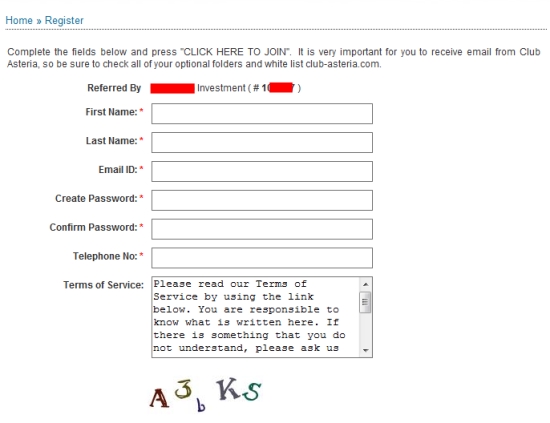
“It’s no scam now,” a poster on MoneyMakerGroup confidently opined after the “I got paid” posts began to appear. A link under the comment led to the affiliate’s CA registration page, which implied prospects were receiving guidance from an “Investment” company or professional financial adviser.
This Club Asteria affiliate's sign-up page is accessible from a link on the MoneyMakerGroup Ponzi forum. The registration page implies that CA prospects are receiving guidance from a professional "Investment" company or adviser. In May 2010, the U.S. Postal Inspection Service identified MoneyMaker group as a site from which the alleged Pathway To Prosperity Ponzi scheme was pushed. Pathway To Prosperity gathered more than $70 million, creating about 40,000 victims from "all of the permanently inhabited continents of the world," according to federal court filings in the Southern District of Illinois.
Separately on MoneyMakerGroup, another CA poster declared, “I am in over 35 forums and everyone is posting paid.”
In July 2010, the Financial Industry Regulatory Authority (FINRA) issued an alert about investment scams and how they spread on the Internet. Separately, court filings from May 2008 in the SEC’s case against an alleged $70 million Ponzi scheme known as Legisi include a handwritten note from a Legisi enrollee.
“Money Maker Group.com,” the note read in part. The note was part of a 267-page evidence exhibit the SEC presented a federal judge. The SEC alleged that Legisi created thousands of victims.
On both MoneyMakerGroup and TalkGold, posters have repeatedly noted that CA payments come from “Asteria Holdings Limited (Hong Kong).”
CA says it accepts money through SolidTrustPay and AlertPay, both of which are Canada-based payment processors. Both companies are referenced in federal court filings in the alleged AdSurfDaily Ponzi scheme, which the U.S. Secret Service said gathered at least $110 million and created as many as 40,000 victims.
ASD also was promoted on MoneyMakerGroup and TalkGold. Solid Trust Pay and AlertPay also are referenced in court filings in the Pathway To Prosperity Ponzi case.
CA also notes that it conducts business with CashX, another Canadian firm. When the ASAMonitor Ponzi scheme and criminals’ forum mysteriously vanished in October 2010, the site’s landing page initially redirected to CashX.
Some CA members are selling the “program” by describing what it is not. It is not a Ponzi scheme, and it is not an investment, they claim.
BULLETIN: U.S. District Judge Rosemary Collyer has rejected AdSurfDaily President Andy Bowdoin’s sweeping claim that the indictment against him should be dismissed because ASD met none of the three prongs of the “Howey Test” under federal securities laws and a Supreme Court precedent that determines what constitutes an “investment contract.”
Collyer’s refusal to dismiss the indictment may deal a crushing blow to autosurf operators monitoring the ASD case from the murkiest corners of the Internet and hoping that the Howey Test somehow could provide a legal cover to line up suckers and steal millions of dollars from them.
In a pointed, 15-page memo, Collyer walked through all of Bowdoin’s Howey challenges, concluding that a jury reasonably could find that ASD met all three prongs. Specifically, the judge ruled that a jury could find that ASD members were “investing,” that there was a “pooling of investment funds, shared profits, and shared losses” and that “ASD members were paid based on the efforts of others.”
Citing evidence that some ASD members apparently refuse to believe exists despite the fact it is part of the public record of the case, Collyer ruled that part of ASD’s current defense was at odds with statements that appeared on ASD’s own website and in offering materials.
“Based on the allegations set forth in the Indictment, the evidence already before the Court, and the government’s proffers of expected trial evidence, the Court finds that the allegations, if proven, would be sufficient to permit a jury to find that ASD members were investing,” Collyer ruled.
Dozens of ASD members claimed in pro se court filings in 2009 — when the case was in civil court — that “NO EVIDENCE” existed against ASD.
Collyer’s ruling also addressed the subject of payments to members, which ASD called “rebates.”
“Contrary to Mr. Bowdoin’s characterization of the ASD business, ASD’s promise to pay back 125% of the value paid to ASD by an advertiser strongly indicates that the joining of ASD via the purchase of an ‘advertisement’ on the rotator in fact constituted an ‘investment for a financial return,” Collyer ruled.
And, Collyer noted, “these alleged facts smack of an investment.
“Indeed,” she continued, “the government proffers that Mr. Bowdoin awarded ad packages to employees in the way that an employer awards bonuses. It argues that Mr. Bowdoin and the employees of AS[D] treated the ‘ad packages’ as shares from which they could expect to earn returns.”
Collyer cited passages allegedly spoken by Bowdoin himself in offering materials. Meanwhile, she rejected Bowdoin’s claim that the government’s assertion that he was selling “investment contracts” was unconstitutionally vague.
“Mr. Bowdoin’s attack on the facial vagueness of the term ‘investment contract’ as a type of security covered by the Securities Act is without merit,” she ruled. She noted that, despite the fact Bowdoin had argued that ASD met none of the Howey prongs, “Bowdoin did not provide evidence through affidavits or otherwise as to how ASD actually operated — or any other basis — from which the Court could draw legal conclusions on whether ASD operations met the Howey test.”
The prosecution, on the other hand, had supplied actual evidence, had entered it in the record of the case and provided a basis for the court to make preliminary determinations about what a jury potentially could find after considering the evidence, according to the ruling.
Bowdoin’s own words from promos appeared in the ruling. Although he argued to Collyer earlier this year that money sent in by members did not constitute an investment, “[d]irect statements from ASD seemingly contradict this defense,” the judge ruled.
Citing evidence entered by the government, Collyer pointed to a passage on ASD’s own website that said, “[a]dvertisers will be paid rebates until they receive 125% of their ad packages.”
And Collyer noted there is both written and recorded evidence, including at least one email attributed to Bowdoin is which he allgedly wrote, “[l]et’s don’t [sic] use the words investment and returns. Instead, lets [sic] use ad sales and surfing commissions. The Attorney Generals in the U.S. don’t like for us to use these words in our program.”
Prosecutors have argued for nearly three years that ASD engaged in wordplay to skirt securities laws and that Bowdoin was well aware that he was selling securities.
Bowdoin’s “motion to dismiss the Indictment ignores the teaching of the Supreme Court — that courts should examine the substance, not form, of a transaction and evaluate its economic reality,” Collyer ruled.