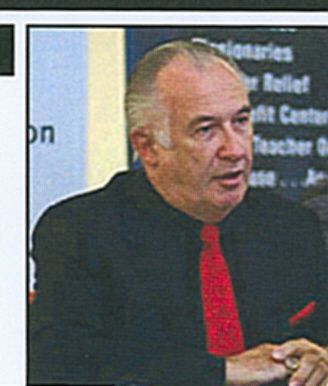
The PP Blog conducted an interview this morning with Scott Bowdoin, a son of AdSurfDaily President Andy Bowdoin. Scott Bowdoin stressed that he did not approve of his father’s conduct or support Andy Bowdoin in any way.
In August 2008, the U.S. Secret Service alleged that Andy Bowdoin was at the helm of a massive international Ponzi scheme disguised as an advertising business.
Scott Bowdoin said he consented to the interview to make it clear that his father does not enjoy the widespread support of his family.
“This is a man who ruined our name,” Scott Bowdoin said of his father.
“He is a man with no conscience; he has been doing this all his life,” Scott Bowdoin said.
The PP Blog will publish a lengthier story based on the interview later today.
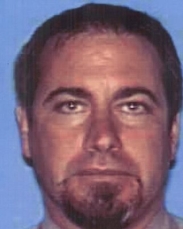
Robert Hodgins of Dallas-based Virtual Money Inc. is wanted by Interpol in an international money-laundering case that allegedly involves proceeds from the sale of narcotics. Virtual Money Inc.'s name is referenced in the AdSurfDaily autosurf Ponzi scheme case brought by the U.S. Secret Service and the PhoenixSurf autosurf Ponzi scheme case brought by the Securities and Exchange Commission. The case against VM and Hodgins was brought by the U.S. Drug Enforcement Administration and the IRS. PHOTO SOURCE: Interpol.
A Colombian national implicated in an international conspiracy to launder drug money has been sentenced to 45 months in prison, federal prosecutors announced.
Meanwhile, another figure in the alleged scheme — Robert Hodgins, the operator of Dallas-based Virtual Money Inc. (VM) — remains at large, prosecutors said. Hodgins is wanted by Interpol on a warrant issued by a federal judge in Connecticut.
Hodgins is Canadian by birth and lived in the Oklahoma City area of the United States, according to records.
VM’s name is referenced in the forfeiture allegations in the AdSurfDaily autosurf Ponzi scheme case brought by the U.S. Secret Service in the District of Columbia in August 2008. It also is referenced in the PhoenixSurf Ponzi prosecution brought by the SEC in Los Angeles in July 2007.
Juan Merlano Salazar, 36, of Medellin, Colombia, was sentenced to 45 months Aug. 9 by U.S. District Judge Mark R. Kravitz of the District of Connecticut. Salazar is among five defendants convicted so far in the money-laundering case, which allegedly involved the use of debit cards provided by VM to launder drug proceeds at ATMs in Colombia, according to court filings.
Hodgins also is alleged to have accepted $100,000 to launder drug proceeds in the Dominican Republic.
The Colombian narco business used “stored value cards” to enable drug proceeds to be withdrawn from banks in Medellin as Colombian pesos, prosecutors said.
Medellin was home base to the late drug lord Pablo Escobar.
In August 2009, the PP Blog reported that VM’s name appeared in advertising materials for ASD in 2007. Records suggest that Hodgins or a VM designate attended an ASD function in Orlando in November 2006, about a month after ASD began its rollout.
This 2007 ad for ASD promoted the VM debit card.
Some ASD members have said they observed large sums of cash and briefcases full of cashiers’ checks at ASD “rallies” in U.S. cities in the spring and summer of 2008, which led to questions about whether ASD was laundering money for a drug cartel and international criminals.
If the allegations against VM and Hodgins are true, it means the company that provided the debit cards ASD used was in the business of laundering money for at least one international narco business.
On Aug. 1, 2008, the U.S. Secret Service seized more than $80 million in the ASD case. The money allegedly was tied to at least three autosurfs: ASD, GoldenPandaAdBuilder and LaFuenteDinero.
ASD, which had operated under at least one other name and perhaps as many as three or more, claimed in 2007 that one of the reasons it could not make payments to members was that $1 million had been stolen by “Russian” hackers.
Prosecutors said ASD never filed a police report — not even to report the theft of a huge sum of money. ASD instead relaunched as ASD Cash Generator. By the summer of 2008, it was gathering tens of millions of dollars per week.
One bank account in the name of ASD President Andy Bowdoin seized by the Secret Service contained more than $31 million, according to court filings. Another account in Bowdoin’s name contained more than $23 million. Bowdoin was referenced as the “Sole Proprietor” of the accounts.
All in all, the Secret Service seized more than $65.8 million from 10 Bowdoin bank accounts, and more than $14 million from at least five bank accounts linked to Golden Panda, according to records.
EDITOR’S NOTE: The arrest of Vladislav Horohorin is notable on a number of levels. First, the arrest in Europe was a result of an online fraud scheme that allegedly crossed international borders and made its way to the United States, where criminal charges were filed. At the same time, the crime allegedly involved the transfer of money though international payment processors. Perhaps more than anything, however, the case against Horohorin demonstrates that the U.S. Secret Service is “plugged into” forums that promote international lawlessness. His arrest is very bad news for credit-card crooks and HYIP and autosurf Ponzi schemers — and their corrupt colleagues.
Here, now, the story on the arrest of Horohorin . . .
A credit-card trafficker based in Russia has been arrested in France on U.S. charges after the U.S. Secret Service infiltrated an online scheme operating internationally through Internet forums, the Justice Department said.
Undercover Secret Service agents “negotiated the sale of numerous stolen credit card dumps,” the Justice Department said.
Vladislav Anatolievich Horohorin, 27, was arrested in Nice. He was indicted under seal in November 2009 on U.S. charges of access device fraud and aggravated identity theft. The seal was lifted today.
Authorities said they believed he was “one of the most prolific sellers of stolen data” in the world, noting Horohorin was known in web forums as “BadB.” He lived in Moscow, and was a citizen of both Israel and the Ukraine.
The Justice Department revealed today that the U.S. Secret Service used an “online undercover identity” to interact with operators of the international scheme, which featured the sale of stolen credit-card information known as “dumps.”
Payments were transferred through online currency services, including a service known as “Webmoney” that was hosted in Russia, the Justice Department said.
“Cyber criminals who target U.S citizens should not fool themselves into believing they can elude justice simply because they commit crimes outside of our borders,” said Assistant Attorney General Lanny Breuer. “As this and so many other cases demonstrate, working hand in hand with our partners around the globe, we will do everything in our power to bring these criminals to the United States to answer for their alleged crimes.”
Horohorin was arrested Aug. 7 as he attempted to board a flight to Moscow. He will be extradited to the United States, the Justice Department said.
A top Secret Service official said the agency would be relentless in its pursuit of cyber-criminals.
“This arrest is an illustration of the success that comes from international law enforcement and private sector partnerships and confirms the Secret Service commitment to traversing the globe in pursuit of online criminals,” said Michael Merritt, assistant director for investigations.
In August 2008, Merritt was among the officials who announced the seizure of tens of millions of dollars in the alleged AdSurfDaily Ponzi scheme.
Assisting the Secret Service in the Horohorin probe were the French Police Nationale Aux Frontiers, the Netherlands Police Agency National Crime Squad High Tech Crime Unit, and the FBI’s Atlanta Field Office.
Horohorin was one of the founders of a network known as CarderPlanet, a forum through which criminals sold stolen financial data to other criminals.
Using his “BadB” forum identity, Horohorin “advertised the availability of stolen credit card information through these web forums, and directed purchasers to create accounts at “dumps.name,” a fully-automated dumps vending website operated by Horohorin and hosted outside the United States,” the Justice Department said.
“The website was designed to assist in the exchange of funds for the stolen credit card information,” the Justice Department said.
The website of AdViewGlobal (AVG), an autosurf with close ties to the alleged AdSurfDaily Ponzi scheme, has gone offline.
Why AVG’s site was offline was not immediately clear. One person told the PP Blog that the site had been “down for days.” AVG’s domain, which lists a registration address in Uruguay and appears to use a dedicated server that resolves to Panama, would not return a ping this morning.
Aug. 1 was the two-year anniversary of the seizure by the U.S. Secret Service of tens of millions of dollars in the ASD case. AVG, fueled by the participation of ASD members, launched in the aftermath of the ASD seizure and the filing of a racketeering lawsuit against ASD President Andy Bowdoin.
Promotions for AVG began to appear online less than a month after ASD lost a key court battle in November 2008. In January 2009, AVG graphics were seen on an ASD-controlled website, but AVG denied any ties to ASD. By February 2009, AVG was up an running, and some of the moderators of the Pro-ASD Surf’s Up forum started a forum to promote AVG.
AVG, whose site remained online after the company suspended payouts in June 2009 and announced it was conducting an audit of itself, perhaps is one of the oddest autosurfs of all time.
Although AVG denied any ASD ties, the person issuing the denial on behalf of AVG was a former ASD employee. Even while issuing the denial, the former ASD employee confirmed that Gary Talbert, a former ASD executive, was the chief executive officer of AVG.
AVG later went on to form a purported “private association” purportedly based in Uruguay. The surf bizarrely claimed U.S. Constitutional protections despite the competing claim it operated on foreign soil.
By June 25, 2009, AVG had collapsed — after running a virtually never-ending series of promotions that offered 200 percent bonuses to both existing members and the prospects they recruited. One promoter claimed that $5,000 placed with AVG turned into $15,000 “instantly!”
The surf later said it was the victim of a $2.7 million theft.
AVG went offline for a brief period in September 2009 after its domain-name registration expired. Records show that the domain name is valid until Sept. 22, 2010 — more than a month from today’s date.
Read this story for the names of other autosurfs/HYIPs promoted by ASD members.
Read this story on AVG threats directed at members and the media after its collapse.
Read this story on a method an AVG member said would help other members qualify for bonuses. (Make sure you read the comments from readers below the story.)
EDITOR’S NOTE: It is common for fraudsters to claim that “offshore” locations insulate HYIPs, autosurfs and other investment-fraud schemes from prosecution in the United States. It is equally common for purveyors to claim the schemes are harmless. The story of the alleged DMG pyramid scheme is one in which prosecutors allege a monstrous multilevel-marketing company created hundreds of shell companies and laundered money for narco businesses. The case is being prosecuted by U.S. Attorney Preet Bharara’s Terrorism and International Narcotics Unit.
Here, now, a story that destroys some of the myths advanced on the Ponzi boards . . .
U.S. officials now have confirmed the extradition of Margarita Leonor Pabon Castro from Colombia to the United States to face charges she helped a corrupt multilevel-marketing (MLM) company launder money for narcotics traffickers.
South American media first reported the extradition last week.
Pabon Casto, 36, was the legal adviser to David Eduardo Helmut Murcia Guzman (David Murcia), prosecutors said. Murcia, the head of D.M.G. Group (DMG), was extradited under heavy guard in January, and whisked to the United States by the U.S. Drug Enforcement Administration (DEA).
DMG used debit cards as the principal part of a pyramid scheme that largely targeted the poor in Colombia. The scheme is believed to have collected hundreds of millions of dollars from as many as 400,000 people before collapsing in 2008.
Pabon Casto was Murcia’s “personal friend,” sat on boards of companies related to DMG and “also assisted in accounting matters for DMG and in hiding information from Colombia’s
Superintendencia de Sociedades, an agency responsible for the regulation of corporations,” prosecutors said.
Part of the scheme involved the establishment of “hundreds of subsidiary and affiliated companies linked to DMG in countries including Colombia, Panama, and the United States,” prosecutors said.
Pabon Casto and six others now are charged with laundering narcotics proceeds through DMG and affiliated companies.
“With her alleged participation in a sophisticated money laundering conspiracy, Margarita Pabon Castro used her legal and accounting expertise to hide millions of dollars in dirty money,” said U.S. Attorney Preet Bharara. “Alongside our law enforcement partners here and abroad, the Manhattan U.S. Attorney’s Office will continue to pursue money launderers who profit from and drive the international drug trade.”
The DEA assisted in the extradition.
“By joining efforts with our law enforcement and prosecutorial partners, we identified, indicted and extradited those responsible for a million-dollar-a-year money laundering organization who worked for drug traffickers around the world,” said John P. Gilbride, DEA special agent in charge.
A California man accused of filing “false liens” against public officials in pursuit of their duties also filed a “bogus” tax-refund claim with the IRS for the preposterous sum of $82 billion, federal prosecutors said.
Thanh Viet Jeremy Cao and his business, Phoenix Financial Management Group, now have been permanently barred by a federal judge from preparing federal tax returns.
Cao was found in a civil case to have “prepared numerous federal tax returns” for clients, “claiming a total of over $200 million in tax refunds based on false representations of tax withholdings,” prosecutors said.
He filed for a bogus refund of $82 billion “on his own 2009 income tax return,” prosecutors said.
The scheme centered on a “frivolous” theory that the U.S. government established “secret” Treasury Department accounts for citizens in the 1930s and that citizens can “draw” on the accounts to pay their taxes and other debts. The theories sometimes are known as “redemption” or “straw man.”
One part of the bogus theory holds that the “secret” accounts contain enough money to make every American a millionaire and that the accounts can be tapped to satisfy debts, including tax debts. Another part of the theory holds that the secret money can be accessed by filing tax forms, including Form 1099-OID, which is why the fraud also sometimes is referred to as an “OID redemption†scheme
Cao is required to provide the government with a list of people for whom he has prepared tax returns since Jan. 1, 2005, and notify those people of the court’s order, prosecutors said.
A criminal prosecution against Cao is proceeding on a separate track.
See earlier story on Cao’s alleged “false liens” scheme.
Is it the maximum case of Kaboom! — coupled with the maximum case of denial?
The government of South Africa hit Maritjie Prinsloo with a whopping 122,000 counts of fraud, racketeering and money-laundering in a pyramid-scheme case that involved an estimated $205 million. (R1.5 billion.)
Prinsloo was found guilty last month. South African media now are reporting that she is blaming the government and an accounting firm for interfering in her business affairs while at once insisting she could have turned things around.
It was not immediately clear if the filing of 122,000 counts established a record. Prinsloo has been referred to in local reports as the “Pyramid Scheme Queen” and the “Krion swindler.” Members of her family also have been implicated in the scheme.
It is not unusual for Ponzi and pyramid schemers to blame the government for their legal predicaments and to claim the government made matters worse by taking action to stop a scheme before it could consume even greater sums of money. Online Ponzi forums, for example, are filled with claims that operators can turn things around if given more time, and victims routinely are discouraged, ridiculed and threatened with banishment by operators and their shills for contacting authorities and filing complaints.
A psychologist told the the Pretoria High Court that Prinsloo believes she did nothing wrong and could have turned around the business had the government not filed charges, according to this account in the Daily Dispatch.
Prinsloo was charged with more counts than there are seconds in a day (122,000 counts/86,400 seconds in a day). Had she been charged in the United States — and had she not waived the reading of the complaint — the court official tasked with the duty of ticking off the counts would have left voiceless.
Had the judge ordered one count read per second — and had the employee magically been able to comply with the order — the employee would have consumed 24 straight hours in reading the counts and still been left 35,600 counts short of finishing the job. The job then would have carried over to consume almost 10 straight hours of a second day, at one count per second.
During the first 24 hours of the reading of the complaint at the impossible rate of one count per second, the world’s population would have increased by about 220,000, according to estimates.
In the often bizarre and incongruous world of Ponzi and pyramid schemes, the fact that the world’s birth rate exceeds its death rate has been seized upon by some advocates as purported “proof” that it is impossible to operate such schemes and the government therefore cannot “prove” that a Ponzi or pyramid scheme exists.
Such claims were made by at least one member of AdSurfDaily, which the U.S. Secret Service described as a Ponzi scheme. Some members of ASD defended the firm by claiming that no Ponzi existed and that the government was interfering with commerce.
ASD President Andy Bowdoin, meanwhile, told members that the government had seized their money. In court filings, however, he told the presiding federal judge that the money belonged to him.
BULLETIN: Beau Diamond, the Florida man accused of fleecing investors out of millions of dollars in a Forex Ponzi scheme, has been found guilty of all 18 counts against him.
Diamond, 32, was the operator of Diamond Ventures LLC of Sarasota. He was arrested by the Pinellas County Sheriff’s Office in September 2009, after a probe by the FBI and Internal Revenue Service. The CFTC filed civil charges in the case.
In an unusual but not unprecedented approach, a sitting U.S. Attorney actually argued elements of the criminal case against Diamond in the courtroom instead of simply supervising the government’s case.
TIRN operator David Merrick pleaded guilty in May to money laundering and conspiracy to commit wire fraud and securities fraud in the TIRN Ponzi scheme.
In the Evolution Marketing Group/FinanzasForex case, prosecutors said investigators had tied some of the money collected in the alleged scheme to the international narcotics trade. Court filings in the case paint a picture of an incredibly elaborate maze of companies and bank accounts set up to confuse both investors and law enforcement. At least 59 bank accounts, 294 bars of gold and nine luxury vehicles have been seized in the case. One of the cars was a 2008 Lamborghini Murcielago valued at more than $430,000.
The EMG/Finanzas allegations are explosive because they showcase the now-undeniable fact that people who promote programs such as HYIPs and autosurfs because such programs may pay “commissions†to recruit new members may be operating as fronts or conduits for international drug dealers and money-launderers.
Albritton also is tackling the epidemic of mortgage fraud in Florida, which has one of the highest foreclosure rates in the United States and is experiencing a rash of bank failures.
As filed by prosecutors and the CFTC, some of the allegations against Diamond read like discussions commonly seen on HYIP Ponzi forums.
Among other things, the CFTC alleged that Diamond urged members not to call authorities when the scheme was going belly-up because involving the government only would make matters worse.
The Diamond Ventures enterprise quit paying in December 2008, telling some members they had not received checks because it took longer for the U.S. Postal Service to deliver mail near the holidays, CFTC said.
Other members were told Diamond had a problem with Bank of America and was transferring his accounts to JP Morgan Chase, CFTC said.
By Jan. 7, 2009, Diamond was explaining to customers that a “serious situation†had emerged. On Jan 9, he told customers that “the funds have been lost†due to a downturn in the world economy and unprecedented volatility, CFTC said.
What Diamond did not tell customers was that he had lost huge sums in forex trades, had sent customers bogus account statements showing they were money to the good — and blew a tremendous sum on gambling, air travel, jewelry and hotel accommodations, CFTC said.
By Jan 22, 2009, CFTC said, Diamond was urging customers not to “initiate a federal investigation†because such an event would lead to a situation in which “no one will see a penny, and I most likely will be behind bars,†CFTC said.
BULLETIN: Yet-another bizarre paperwork attack on U.S. law enforcement has occurred.
A California man has been charged with filing “false liens” in Nevada against federal officials and employees of the SEC, the Secret Service, the IRS, four federal judges and staff members of the U.S. Attorney’s Office for the Southern District of California, federal prosecutors said.
Thanh Viet Jeremy Cao was indicted by a federal grand jury in Las Vegas on charges of filing 22 false liens ranging from $25 million to $300 million against the officials, prosecutors said.
He also sought $20 billion in fraudulent tax refunds, prosecutors charged.
Cao resides in Orange County, Calif. If convicted on all counts, he faces up to 223 years in prison and a fine of up to $5.75 million.
“Cao corruptly obstructed the administration of the federal tax laws, by, among other things, filing retaliatory false liens against IRS employees, filing and attempting to file with the IRS false Forms 1099-OID (Original Issue Discount) that claimed fictitious income tax withholdings, filing and attempting to file false tax returns that claim fraudulent refunds totaling approximately $20 billion, and preparing at least five false tax returns for third parties that claimed fraudulent income tax refunds totaling in excess of $1.1 million based upon fictitious income tax withholdings,” prosecutors said.
In June, Ronald James Davenport of Deer Park, Wash., was charged with filing false liens against federal officials in Washington state.
Davenport sought the spectacular sum of nearly $5.2 billion from each of the officials, including U.S. Attorney James McDevitt of the Eastern District of Washington, an assistant U.S. attorney, a court clerk and an IRS agent, according to court records.
Prosecutors described Davenport as a “tax defier.†Davenport has described himself in court filings as a “sovereign.â€
Some members of the alleged AdSurfDaily autosurf Ponzi scheme and other HYIP schemes have been linked to tax-deniers and the so-called “sovereign” movement.
See earlier story that references the Davenport action. (The story also provides some background on court filings and other actions by ASD members.)
In a civil case that preceded the criminal indictment against Davenport, Senior U.S. District Judge Justin L. Quackenbush ruled in May that the liens “were filed to retaliate against the officers for their good-faith efforts to enforce the tax laws against Mr. Davenport.â€
Quackenbush struck the liens, which were filed in the form of UCC Financing Statements with the Washington State Department of Licensing, according to records. The liens not only were fraudulent, but also contained “sensitive personal information†that violated privacy laws, the judge ruled.
Davenport also filed instruments dubbed “Notice[s] of Claim of Maritime Lien†with the Spokane County Auditor’s Office, according to records. Those, too, were struck.
The act of filing false liens or sending “demand” letters to officials or litigation opponents in a bid to hamstring civil and criminal prosecutions has been referred to as “paper terrorism” and “mailbox arbitration.”
EDITOR’S NOTE: The PP Blog has covered a number of stories in which U.S. residents living overseas were extradited to the United States to face Ponzi charges. The case against Ronald Paul Shade is another one — and it’s one that demonstrates that an extradition can occur even if a defendant is not charged with a federal offense.
Indeed, the warrant for Shade’s arrest was issued by a state-level Superior Court judge in California, according to Interpol. Shade’s case is instructive because it defeats some of the myths propagated on Ponzi boards such as MoneyMakerGroup, ASAMonitor, TalkGold and MyCashForums. Among the myths is that “offshore” equals “safe” for both investors and Ponzi perpetrators.
Don’t tell that to Shade, now jailed in California after being extradited from Bangkok by local — as opposed to federal — prosecutors in California. His bail was set at $3.9 million.
And don’t tell it to Jeffrey Lane Mowen, extradited from Panama to face federal Ponzi charges in Utah and later indicted in an alleged murder-for-hire plot. Here’s a quick side note on the Mowen case: If you like the recruitment fees paid by HYIP, autosurf and corrupt MLM or commission-based investment programs and make claims about the “due diligence” you’ve performed and try to impress prospects with your insider knowledge, your willful blindness may put you at great risk.
Mowen had three prior convictions in Utah for securities fraud and two for theft, according to records. Despite Mowen’s criminal record and history as a fraudster, promoters still did business with him. Their faith drained millions of dollars from investors, the SEC said. Using language apt to cause unease in the Ponzi-promoting world, the SEC said at least one promoter “either knew or was reckless in not knowing that Mowen had multiple recent felony convictions involving crimes of dishonesty.â€
Indeed, the SEC said, the promoter learned in approximately late June 2007 that Mowen had been convicted of securities fraud . . . [but] “continued to solicit new investor funds for several months while failing to disclose Mowen’s criminal history to any of the Promoters or their investors.†Downstream promoters who entrusted the promoter “conducted virtually no due diligence in connection with [his] purported investment opportunities, but transferred investor money to [him] without any documentation or limitation on his use of the funds,†the SEC said.
Perhaps the biggest myth exposed by the Ronald Paul Shade case is that going offshore takes state attorneys general and local prosecutors totally out of play. Longtime PP Blog readers will remember that the “offshore” pitch was pivotal in promotions for AdViewGlobal, AdGateWorld, MegaLido and other autosurfs that surfaced in the aftermath of the seizure of tens of millions of dollars by the U.S. Secret Service in the AdSurfDaily Ponzi scheme case. Some ads claimed that the “offshore” surfs neutralized state-level investigators.
Shade, however, was brought back to the United States at the request of the San Bernardino County District Attorney’s Office in California to face state charges filed by local investigators.
Still promoting investment-fraud schemes on the Ponzi boards and supplementing your pitches with myths about “safety” and how the overseas schemes are insulated from prosecution? Perhaps this story on the dramatic extradition of Colombian national David Murcia to the United States will help you snap out of your delusion that Ponzi and pyramid businesses cause no harm and represent “freedom” of choice. Perhaps this story on Robert Hodgins, who goes to bed at night knowing he’s wanted by Interpol, will help you shape your thinking.
The cases of John and Marian Morgan, U.S. residents extradited from Sri Lanka, also are instructive.
Finally, it’s worth noting that, after the United States charged Canadian national Nicholas Smirnow in May with operating an HYIP Ponzi scheme, a MyCashForums poster was quick to claim that “the USA has no extridition (sic) agreement ion (sic) place with the Phillipines (sic) . . . “
The claim was false. Federal prosecutors said they are seeking Smirnow’s extradition. He was accused of operating a $70 million, international fraud known as Pathway to Prosperity (P2P).
Here, now, the story of Ronald Paul Shade’s extradition . . .
A California man living in Thailand was extradited to the United States to face charges he ripped off senior citizens in a real-estate Ponzi scheme, authorities said.
Ronald Paul Shade, 39, formerly of Riverside, was arrested by local detectives Friday at Los Angeles International Airport. He was charged by investigators from the San Bernardino District Attorney’s Office with 29 felonies, including financial elder abuse, filing forged documents with the County Recorder’s Office and grand theft.
San Bernardino County District Attorney Michael A. Ramos, who also is the president of the California District Attorneys’ Association, led the probe.
Among the detectives involved in the Shade probe was Michael Leibrich, a senior investigator with the DA’s office.
“From 2006 to 2008, Shade solicited money from numerous investors for his company, Orange Crest Realty,” investigators said. “Investors were promised a high rate of return for a short-term investment. Elderly victims later discovered that their life’s savings were being used to further a Ponzi scheme.”
Shade had been living in Thailand for about two years, investigators said.
In 2008, the California Department of Corporations issued a “desist and refrain” order against Shade and his company after alleging that they were selling unregistered securities and recruiting prospects by urging them to “Get 18% APR Today†through the company’s “wonderful†investment.
Shade and the company used a now-defunct website known as OCRFunding.com to pitch the purported program, authorities said.
Among the misleading claims made to investors, according to authorities, were these:
That Orange Crest Realty was founded in 1993. (Authorities said Orange Crest Realty was not incorporated until June 2004.)
That Orange Crest Realty is a “registered investment advisor.†(Authorities said neither Shade nor the company and its associates were registered.)
That each investment was secured by actual title to specific existing real property. (Authorities said that “each investment was not secured by real property.”)
That a Deed of Trust And Assignment of Rents in the Property would be recorded with the Office of the County Assessor/Recorder and the investor would be provided with the recorded deed. (Authorities said a deed promised an investor who sent in $50,000 was not recorded and the “investor never received a recorded deed.”)
That the investor would receive regular monthly interest payments. (Authorities said “payments ceased shortly after the investment was purchased.”)
San Bernardino County investigators were assisted in the extradition by the Southwest Regional Fugitive Taskforce of the U.S. Marshals Service.
The scheme, which allegedly gathered $14 million, also fleeced investors who responded to newspaper ads, investigators said.
UPDATED 4:51 P.M. EDT (U.S.A.) A convicted felon who emerged from prison and almost immediately launched a $1 million fraud scheme known as PPSN threatened to prosecute and sue a consumer who had filed an online complaint, federal prosecutors said.
Although the threat caused the consumer to withdraw the complaint against Philip Pestrichello, Pestrichello’s bid to rattle the consumer’s nerves ultimately backfired because he included a “fake lawsuit number” in a letter to the consumer. Prosecutors used the letter and Pestrichello’s checkered past to persuade a federal judge to deny him bail. He has been jailed since his February arrest, and now faces up to 20 years behind bars after entering a guilty plea in the case.
In the threatening letter, Pestrichello advised the complainant that “we will proceed by filing a lawsuit against you in The State of New York and you will be subject to prosecution, fines and penalties including monetary damages,” prosecutors said.
Pestrichello also threatened “victim-consumers who lodged on-line complaints warning others that PPSN was a scam,” prosecutors said.
The Federal Trade Commission and the U.S. Postal Inspection Service worked together in the Pestrichello case, which was brought in February as one of the undertakings of President Obama’s Financial Fraud Enforcement Task Force.
Pestrichello was running a scam enterprise known variously as “Preferred Platinum Services Network LLC†; “PPSN LLCâ€; “Home Based Associate Programâ€; and the “Postcard Processing Program,†prosecutors said. They added that he had been running scams since the early 1990s and had been sentenced to three years in prison in 2003 after being convicted of mail fraud in a work-at-home scheme known as “IMXT & Co.”
His most recent scam began in 2007 while Pestrichello was on federal probation after serving his time for the 2003 mail-fraud conviction, prosecutors said.
“For nearly 20 years, Philip Pestrichello has preyed on the especially vulnerable — the economically disadvantaged, the unemployed, the disabled, or elderly individuals — who are trying to supplement their income by working from home,” said U.S. Attorney Preet Bharara. “Pestrichello even began committing his work-at-home scam within one year from his release from prison for a prior scam. If Pestrichello thought he was unstoppable, he was wrong.”
Pestrichello, 38, of Bayville, N.J., now has pleaded guilty to mail fraud in the PPSN case. He faces up to 20 years in prison when sentenced by U.S. District Judge Kimba Wood on Oct. 26. A fraud case against Pestrichello’s wife, Rosalie Florie, is pending, prosecutors said.
It is common for fraudsters to threaten to sue customers, critics and journalists. Such threats were present in the $1.2 billion Ponzi scheme case of disgraced Florida attorney Scott Rothstein, who eventually was disbarred. He repeatedly threatened to sue a reporter who questioned his business practices in the weeks leading up the the exposure of the scheme.
Threats against customers and journalists also were part of the alleged AdSurfDaily Ponzi scheme case. ASD President Andy Bowdoin, according to August 2008 court filings, told customers that he had set aside $750,000 to sue critics.
“These people that are making these slanderous remarks, they are going to continue these slanderous remarks in a court of law defending about a 30 to 40 million dollar slander lawsuit,” Bowdoin said, according to federal prosecutors. “Now, we’re ready to do battle with anybody. We have a legal fund set up. Right now we have about $750,000 in that legal fund. So we’re ready to get everything started and get the ball rolling.â€
Less than a month after Bowdoin allegedly issued the threat in July 2008, the U.S. Secret Service raided ASD’s Florida headquarters. Prosecutors said the company was operating a $100 million Ponzi scheme and engaging in wire fraud and money-laundering.
Even after the raid, some ASD members continued to threaten Bowdoin’s detractors. One ASD member suggested Bowdoin’s critics would be dragged off in handcuffs for speaking out against the autosurf firm, publishing his version of lyrics from the television program “COPS†to put a chill on the purported slanderers.
“Bad Boys, Bad Boys, Whatcha Gonna Do?†he chanted on the now-defunct AdSurfZone forum, a predecessor site to the Pro-ASD Surf’s Up forum. “Whatcha Gonna Do>WHEN<THEY COME FOR YOU ?!!!â€
In June 2009, while the AdViewGlobal (AVG) autosurf was failing, members were threatened with lawsuits for sharing information that purportedly was “copyrighted.” Members also were told that they risked losing their Internet service for questioning the firm in public. Journalists who published information about AVG were threatened with lawsuits.
When the Pathway To Prosperity HYIP scheme was collapsing in 2008, members were threatened with “expulsion,” according to court filings.
“When complaints were made externally to service providers or supposed payment agents,
scathing rebukes were made to the ‘members,’” according to court filings.
In February 2010, Hospitalera.com Blogger Sybille Yates announced she had been threatened with a lawsuit for calling the INetGlobal autosurf a “scam” in September 2009.
On Feb. 23, the U.S. Secret Service raided INetGlobal’s Minneapolis offices. An affidavit by the U.S. Secret Service described the company as operating an international Ponzi scheme. A federal probe into INetGlobal’s business practices is ongoing.