Category: The Economy

  • EDITORIAL: Arguments Of Zeek Winners Continue La-La Land Narrative, But Come As No Surprise In MLM’s HYIP Wing

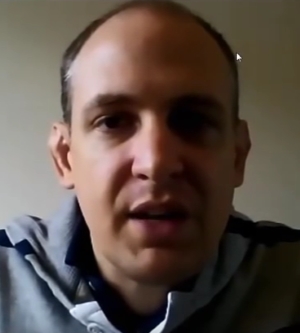
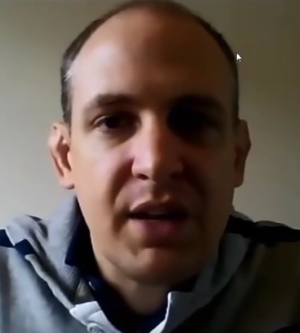
    Zeek receiver Kenneth D. Bell.
    Zeek receiver Kenneth D. Bell.

    Many people in the antiscam community applauded Kenneth D. Bell, the receiver for Zeek Rewards, when he sued more than 9,000 individuals more than two years ago for return of their gains from the scheme. Those gains — more than $200 million — came from Ponzi proceeds, Bell alleged.

    And he pointed out that the money rightfully should go to the hundreds of thousands of Zeekers globally who were “affiliate victims.” Court filings later would show that Zeek gathered on the order of $940 million in less than two years. Only TelexFree, another MLM HYIP scheme that was disintegrating when Bell announced his lawsuit against the Zeek “winners” in March 2014, may be bigger.

    More than 90,000 (gulp!) alleged TelexFree winners now are being sued by Trustee Stephen B. Darr. TelexFree infamously caused angry affiliates to pour into the company’s billion-dollar broom closet in Massachusetts. It was a good thing police were there to keep order.

    Thanks to the willful blindness and serial disingenuousness brought to you by serial MLM HYIPers such as Todd Disner, T. LeMont Silver and “Ken Russo,” huge class-action cases in which “winning” promoters of MLM securities schemes are named defendants now are a reality.

    Bell, unfairly maligned among some MLM HYIPers and even some apparent “sovereign citizens,” deserves a lot of credit for trying to bring a measure of financial justice to the hundreds of thousands of individuals ripped off by Zeek and for establishing a sort of blueprint for how Darr could proceed.

    This blueprint also is there in case the Traffic Monsoon receiver needs it. Traffic Monsoon, an alleged $207 million scheme, was broken up by the SEC last month. There already is evidence that Traffic Monsoon had promoters in common with TelexFree.

    It is true that the number of potential defendants across the HYIP sphere is staggering. But it is equally true that the number of victims of these cross-border schemes is even more staggering. This number is in the millions. The global losses are in the billions. Absent actions such as those brought by Bell and Darr, however, there would be virtually no financial accountability. Society would be saying that it’s OK to profit through the promotion of online Ponzi schemes.

    For years, the PP Blog has raised questions about the national-security implications of cross-border HYIP schemes. The narratives surrounding such schemes typically are bizarre, with anonymous Ponzi-board pitchmen typically beginning with “I am not the admin” of the “program.” It all goes recklessly downhill from there.

    To those who feel a chill every time one of these schemes gains a head of steam, it came as no surprise that the alleged Zeek “winners” are arguing they should get to keep their hauls. It is simply the natural progression of the HYIP narrative.

    Bell, a former federal prosecutor, is having none of this. Indeed, his is the voice of common sense.

    From his argument (italics/bolding added):

    Defendants still act as if Zeek was a legitimate business and Defendants were “internet marketing specialists” entitled to be paid as employees rather than investors in the scheme, all of which is of course pure fiction.

    Specifically, Defendants ask the Court to absolve the scheme’s net winners from their obligation to repay the victims’ money because of an alleged “limitation” on the timing of future claims included in the scheme’s website’s “Terms of Service” (or “TOS”), which in any event do not limit the Receiver’s claims against Defendants. The Court should resist Defendants’ invitation to create the dangerous loophole of allowing a fraudster to use the terms implementing a Ponzi scheme to limit the right of a subsequently appointed Receiver to recover funds paid to the winners of the fraudulent scheme. While such a rule would be a great recruiting tool for future Ponzi scheme operators, it is surely an unacceptable legal rule and public policy.

    Also, Defendants urge the Court to rule that by purchasing bids, posting online advertisements (which Zeek boasted would take only three to five minutes a day), and recruiting thousands of victims to the scheme, they provided “reasonably equivalent value” to ZeekRewards such that they get to keep the victims’ money that they won in the scheme. In other words, Defendants claim that those Defendants who spent the most time successfully promoting the scheme and multiplying the number of its victims should be given the most credit against the Receiver’s claims to recover their fraudulently transferred winnings. In fact, in arguing that they were supposedly rightly paid for their “services,” Defendants stretch to compare themselves to the utility company, which among many other differences does not invest money in their customers’ businesses hoping to share in compounding profits of 125% every ninety days.

    NOTE: Our thanks to the ASD Updates Blog.


  • Private Attorneys Now Investigating Traffic Monsoon

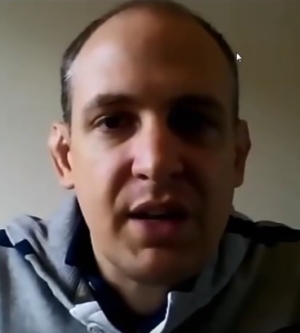
    Charles Scoville: From YouTube.
    Charles Scoville: From YouTube.

    UPDATED 1:15 P.M. EDT U.S.A. It has happened in previous cases involving alleged violations of federal securities laws, and now it’s happening with Traffic Monsoon.

    “The Peiffer Rosca Wolf law firm is investigating Traffic Monsoon, LLC and Charles Scoville’s alleged Ponzi scheme on behalf of investors – whom Traffic Monsoon called ‘members,'” the firm said in a PR release today.

    How the firm would proceed is unclear. The announcement, however, potentially means Traffic Monsoon and Scoville will be facing litigation on a front separate from the Ponzi case filed by the SEC on July 26.

    After the 2008 AdSurfDaily Ponzi case was filed by the U.S. Secret Service, private attorneys filed a racketeering complaint against ASD operator Andy Bowdoin (and others) that helped out a second Ponzi scheme known as AdViewGlobal.

    Class-action attorneys also filed complaints in the TelexFree and Zeek Ponzi- and pyramid cases. Certain TelexFree-related actions alleged racketeering and referenced a “program” similar to Traffic Monsoon: My AdvertisingPays. There also were counts of fraud against TelexFree principals and some individual promoters.

    Even if they don’t result in a recovery, the actions filed by private individuals — as opposed to government plaintiffs — force defendants to confront litigation on multiple fronts. Defense costs may soar.

    “The Peiffer Rosca Wolf lawyers are preparing to take action and seek compensation on behalf of those who invested in the alleged Ponzi scheme orchestrated by Traffic Monsoon and Scoville,” the firm said.

    Traffic Monsoon gathered at least $207 million, according to the SEC.


  • Does Mysterious TrafficMonsoon.plus Domain Have A Bogus Comodo Security Logo?

    trafficmonsoonlogoThe last time the PP Blog covered something such as this was in February 2015. That’s when “Moore Fund,” a preposterous Ponzi-board “program” that later vanished with an unknown haul, was using a “Norton Secured” logo unauthorized by Symantec to fool the masses.

    Unfortunately, the masses included members of The Achieve Community, who’d already been ripped off in that preposterous Ponzi-board scam.

    On July 26, 2016, the SEC accused Traffic Monsoon and alleged operator Charles Scoville of Utah of operating a Ponzi scheme that had gathered at least $207 million.

    Like Moore Fund and Achieve Community, Traffic Monsoon was a Ponzi-board scheme. The scheme operated from TrafficMonsoon.com, which now rotates to the website of Peggy Hunt, the court-appointed receiver.

    With TrafficMonsoon.com now under the control of the receiver, a new domain has surfaced: TrafficMonsoon.plus.

    To hear some TrafficMonsoon promoters tell it on YouTube and other web venues,  Traffic Monsoon will start anew at the .plus domain and somehow will rally the membership to defeat the SEC. The .plus site appears to a virtual duplicate of the .com as allegedly operated by Scoville, except for a few edits that claim the “program” now is operating from Finland.

    There have been scattered reports that whoever is operating the .plus site has access to the TrafficMonsoon database, property that may be counted among the seized assets.

    The TrafficMonsoon.plus domain has a “COMODO SECURED” logo in the lower-right corner. When clicked, it resolves to a page on the Comodo site that in part reads, “IdAuthority Credentials not available for this site.”

    As was the case with Moore Fund, the Comodo logo may be a bid to trick visitors to TrafficMonsoon.plus that a well-known global Internet security company is aboard the Traffic Monsoon train — or the train of the purported Traffic Monsoon members trying to reboot an alleged $207 million Ponzi scheme during an asset freeze.

    Comodo did not respond immediately to a request for comment.


  • BULLETIN: Utah Division of Securities Rejects Claims In Traffic Monsoon Promo That Scheme Had Been Given Clean Bill Of Health

    Charles Scoville of Traffic Monsoon.
    Charles Scoville of Traffic Monsoon.

    BULLETIN: The Utah Division of Securities — the state-level regulator — has rejected online claims that the agency had investigated Traffic Monsoon and had given it a clean bill of health.

    Federal regulators sued Traffic Monsoon and alleged operator Charles Scoville last week, alleging Ponzi fraud, securities fraud and the sale of unregistered securities to unaccredited investors.

    The PP Blog contacted the state Division on Aug. 1, after reading a Traffic Monsoon affiliate promo that in part read, “The State of Utah’s security division & Consumer Protection went to the offices of Traffic Monsoon to investigate their business model. The result of the investigation was that Traffic Monsoon wasn’t committing any kind of investment scheme or security fraud.”

    That simply didn’t happen, the Division said through Director Keith Woodwell early this afternoon in response to the PP Blog’s inquiry.

    “[T]he Division has not investigated Traffic Monsoon,” the agency said flatly.

    It added that it “never made any determinations as to whether Traffic Monsoon was ‘committing any type of investment scheme or security fraud’ and that it had “made no determination as to whether there was a pyramid scheme.”

    It is not unusual for promoters of MLM-type or direct-sales fraud schemes to claim that a scheme had passed muster with regulators.

    The Division said it had received one complaint about AdHitProfits, another Scoville scheme, in December 2013. No action was taken there, the Division said, because the Division determined there was no offer of securities under state law.

    Regardless, the Division said, it does not offer clean bills of health to schemes or issue statements of “nothing wrong.”


  • Some Traffic Monsoon Promoters Are Zeek Clawback Defendants

    trafficmonsoonlogoUPDATED 11:51 A.M. EDT U.S.A. Zeek Rewards’ receiver Kenneth D. Bell had no comment this morning on reports that some Zeek clawback defendants also were participants in Traffic Monsoon, alleged last week by the SEC to have been a Ponzi scheme that had gathered at least $207 million.

    The reports appeared on RealScam.com.

    In March 2015, Bell sued Adrian Hibbert of the United Kingdom, alleging he had received more than $82,000 in Ponzi proceeds from Zeek. Zeek was charged with fraud by the SEC in August 2012.

    Another Zeek promoter listed by Bell as a winner in that scheme — Frank Calabro Jr. of the United States — also promoted Traffic Monsoon. Bell has expressed concern about online pitchmen moving from one fraud scheme to another.

    “Winnings” from MLM or direct-sales fraud schemes may be subject to return through clawback litigation.

    Both Zeek and Traffic Monsoon were purported “revenue sharing” programs. Paul Burks, the operator of Zeek Rewards, potentially faces a long prison term after his conviction earlier this month on multiple fraud counts.

    On July 26, the SEC civilly charged alleged Traffic Monsoon operator Charles Scoville of Utah with fraud. He has not been charged criminally and is believed to be residing overseas.

    Peggy Hunt of the Salt Lake City office of the Dorsey & Whitney law firm has been appointed receiver over Traffic Monsoon. Neither she nor the firm responded immediately this morning to a request for comment on the issue of common promoters between Traffic Monsoon and Zeek.

    The law firm confirmed to the PP Blog last week that there would be a receivership website for Traffic Monsoon, but the site was not yet live. The URL has not been released.

    Some Zeek clawback defendants also were participants in the AdSurfDaily Ponzi scheme. ASD was a “program” similar to Traffic Monsoon broken up by the U.S. Secret Service in 2008 in a highly publicized action.

    In U.S. domestic clawback litigation and in cases filed against non-U.S. residents, Bell has sued thousands of alleged Zeek winners for return of their gains and interest.

    Hunt’s plans with Traffic Monsoon are unclear.

    Hibbert appears also to have a page promoting the “My Advertising Pays” scheme.  MAPS, as it is known, has caught the attention of class-action attorneys involved in litigation against the TelexFree scheme broken up by the SEC and the U.S. Department of Homeland Security in 2014. The litigation also includes Zeek figures.

    TelexFree and Zeek may be the two largest combined Ponzi- and pyramid schemes in history, generating on the order of $4 billion in illicit, cross-border business and affecting hundreds and hundreds of thousands of people.

    The MAPS’ page attributed to Hibbert claims that MAPs operator Mike Deese “has been in the trenches with Zeek, ASD, Banners Broker, Ad Hit Profits, and many other advertising revenue sharing companies some of which continue to thrive and some that are not.”

    AdHitProfits also was a Scoville scheme. BannersBroker was a cross-border fraud that led to arrests in Canada.

    Separately, the Zeek page attributed to Hibbert claims, “If you want to make money and get paid everyday, you have to look at Zeek Rewards and understand how it works.”

    The SEC and federal prosecutors in the Western District of North Carolina said Zeek worked as a Ponzi scheme.

    Visit the TrafficMonsoon thread at RealScam.com.


  • SEC: Claims That Traffic Monsoon Was A Successful Advertising Business ‘Merely An Illusion’

    “The complaint alleges that more than 99% of Traffic Monsoon’s revenue is derived from new investor funds, making claims that it is a successful advertising business merely an illusion.”U.S. Securities and Exchange Commission, July 28, 2016

    Charles Scoville.
    Charles Scoville.

    EDITOR’S NOTE: This (below) is the full litigation statement of the SEC on its Ponzi case against Traffic Monsoon and Charles Scoville. The statement was issued today. It asserts Traffic Monsoon “raised more than $207 million from investors worldwide, primarily in the U.S., India and Russia.” The case was brought July 26 in Utah federal court. The photo (left) of Charles Scoville is a screen shot by the PP Blog of a video on YouTube featuring Scoville. The SEC’s Salt Lake City office, referenced in the statement below, has experience uncovering online schemes, including the infamous Imperia IBC caper targeted at Americans and others with hearing impairments. Like  Traffic Monsoon, Imperia was a Ponzi-board “program” with a presence on sites such as MoneyMakerGroup and TalkGold. 

    **_______________________________**

    U.S. SECURITIES AND EXCHANGE COMMISSION

    Litigation Release No. 23604 / July 28, 2016

    Securities and Exchange Commission v. Traffic Monsoon et al., No. 2:16-cv-00832-JNP (D. Utah filed July 26, 2016)

    SEC Halts $207 Million Internet-Based Ponzi Scheme

    The Securities and Exchange Commission today announced that it has obtained an asset freeze against the operator of a Utah-based international Ponzi scheme that raised more than $207 million from investors worldwide, primarily in the U.S., India and Russia.

    In a complaint filed in federal court in Salt Lake City on July 26, the SEC alleges that Traffic Monsoon LLC and Charles Scoville, the company’s only member operated an Internet-based Ponzi scheme that they falsely represented to investors was an advertising company. According to the SEC complaint, Scoville began operating Traffic Monsoon in October 2014 as a combination Internet traffic exchange and pay-per-click program and recruited more than 162,000 investors around the world. According to the complaint, although Traffic Monsoon markets itself as a highly successful company, nearly all of its revenue is generated by other investors, not its products or services. The complaint alleges that more than 99% of Traffic Monsoon’s revenue is derived from new investor funds, making claims that it is a successful advertising business merely an illusion.

    The SEC’s complaint alleges that Traffic Monsoon and Scoville violated Sections 5(a), 5(c) and 17(a)(1) and (3) of the Securities Act of 1933 and Section 10(b) of the Securities and Exchange Act of 1934 and Rule 10b-5(a) and (c) thereunder. Among other things, the SEC’s complaint seeks permanent injunctions, prohibiting further violations of the laws charged, disgorgement of ill-gotten gains plus prejudgment interest and civil penalties from Traffic Monsoon and Scoville.

    The SEC’s investigation was conducted by Alison Okinaka, Scott Frost and Cheryl Mori of the SEC’s Salt Lake Regional Office. Daniel Wadley is leading the SEC’s litigation.

    SEC Complaint

    [SOURCE] http://www.sec.gov/litigation/litreleases/2016/lr23604.htm

    **_______________________________**


  • TRAFFIC MONSOON: Whack-A-Mole — For Sure

    trafficmonsoonlogoNews came early this morning that the SEC had moved against Traffic Monsoon, calling it a Ponzi scheme. Both the “program” and alleged operator Charles Scoville were charged civilly yesterday in Utah federal court with securities fraud and selling unregistered securities to unaccredited investors.

    Scoville also was the braintrust behind AdHitProfits, a Ponzi-board “program” in part targeted at people who also were targeted in the egregious 2013 Profitable Sunrise cross-border scam in which millions of dollars appear to have vanished overseas.

    As the PP Blog reported on June 2, 2013 (italics added):

    A spammer hit a Profitable Sunrise Facebook site yesterday with five drive-by offers for “AdHitProfits.” All five of the machine-gunned theft bids claimed the same thing: “make money every half an hour…100% commission let your money grow for you at high speed.”

    The AHP “program” also is being pitched on the Ponzi boards, with the thread-starter at MoneyMakerGroup bragging that “Payza, []STP & Liberty Reserve Accepted !!”

    LibertyReserve was described last week by federal prosecutors in New York as a criminal enterprise that had laundered more than $6 billion for Ponzi schemers, credit-card fraudsters, identity thieves, investment fraudsters, computer hackers, child pornographers and narcotics traffickers.

    Traffic Monsoon allegedly used PayPal, SolidTrustPay and Payza, a processing firm under fire from the court-appointed receiver in the Zeek Rewards Ponzi- and pyramid-scheme case. Payza also is involved in a federal investigation centered in the District of Columbia.

    In its complaint against Traffic Monsoon and Scoville, the SEC says PayPal restricted Traffic Monsoon during the winter, in January 2016.

    Our research shows that Scoville then turned to Payza for the heavy lifting and that Payza attended a Traffic Monsoon event in May 2016, during the spring and while funds in PayPal had been frozen by PayPal.

    From the SEC complaint (italics added):

    After the PayPal freeze, Scoville began using other payment processors more extensively: Solid Trust Pay, headquartered in Ontario, and Payza, headquartered in London with offices in New York. He has also used an account at JPMorgan Chase to receive investor funds.

    Zeek used both SolidTrustPay and Payza, as did the AdSurfDaily Ponzi scheme before it.

    Traffic Monsoon’s haul appears to have exceeded $200 million, potentially making it one of the largest advertising “revshare” schemes of all time. As things stand, it is larger than other well-known revshare frauds such as AdSurfDaily ($119 million) and Banners Broker ($156 million). Some of the Banners Broker cash reportedly ended up in KulClub, yet another Ponzi-board MLM scheme.

    Ponzi-board schemes are eviscerating wealth globally. It is not unusual for such schemes to use multiple payment processors and to target vulnerable population groups. Agencies from the U.S. Department of Homeland Security have been involved in a number of major investigations of Ponzi-board “programs.”

    It is unclear if DHS or other U.S. agencies with the power of arrest are involved in a Traffic Monsoon probe. History has shown, however, that when the SEC brings a civil case, other agencies sometimes carry out criminal investigations on a parallel track.


  • REPORT: SEC Moves Against ‘TrafficMonsoon,’ Calls It A Ponzi

    trafficmonsoonlogoThe SEC has filed a lawsuit against the Traffic Monsoon “program” and called it a Ponzi scheme that had gathered $207 million, the Salt Lake Tribune is reporting.

    The assets of Traffic Monsoon and alleged operator Charles Scoville have been frozen, the newspaper reports.

    On June 1, the PP Blog reported that Payza — a payment processor under fire from the court-appointed receiver in the Zeek Rewards Ponzi- and pyramid case brought by the SEC in 2012 — bragged about its attendance at a Traffic Monsoon event in May.

    Zeek’s Paul Burks was found guilty last week of multiple felonies for his operation of Zeek, a purported auction “program.”

    Traffic Monsoon, which may be a whack-a-mole scheme, is a purported “advertising “program” similar to the AdSurfDaily Ponzi scheme and other scams, including Banners Broker.

    The SEC warned about whack-a-mole schemes in March.

    More as the situation develops . . .


  • EDITORIAL: With Conviction Of Zeek’s Burks, Another Senior MLMer Faces Prospect Of Decades In Prison

    paulburkszeekUPDATED 4:31 P.M. EDT U.S.A. Zeek Rewards was always inexcusably horrid, fueled by serial willful blindness and the sort of practiced disingenuousness that props up so many MLM “programs.” In dollar volume, Zeek ended up being more than seven times larger than the $119 million AdSurfDaily MLM Ponzi scheme that put ASD operator Andy Bowdoin in federal prison for six and a half years. By this measuring stick, Zeek’s Paul Burks could be staring at 45 or more years.

    As things stand, Burks, 69, faces a maximum of 65 years. He was convicted July 21 of mail fraud, wire fraud, conspiracy to commit both and tax-fraud conspiracy. The jury reportedly returned the verdict in less than three hours.

    Bowdoin, 77 when he accepted a plea deal before trial in 2012, received the maximum term of 78 months under the deal after earlier facing decades in prison. He pleaded guilty to a single count of wire fraud and acknowledged ASD was a Ponzi scheme and that the “program” never had operated lawfully from its 2006 inception. Other charges that could have led to a longer term were not pursued.

    Burks did not have a plea deal. The $939 million dollar volume of the Zeek scam will not be the sole measuring stick considered by U.S. District Judge Max O. Cogburn Jr. when Burks’ sentencing date comes around. Even so, 45 years is not out of the question, given the terms imposed on other Ponzi schemers. Scott Rothstein, for example, received 50 years for a $1.2 billion scam.

    Rothstein reportedly cooperated with the government after his convictions with the hope of receiving a sentencing reduction. Whether Burks will have a similar option or be able to argue successfully for mitigation is unknown.

    What is known is that even 20 years for Burks, nearing his 70th birthday, is a virtual life sentence. Like Rothstein, he has some serious thinking to do.

    Zeek was a tragedy for many, many investors lured in by promises of enormous returns. Can there be any doubt it’s also a personal tragedy for Burks and his family, given what the Zeeker-in-chief now faces?

    Why Burks ever would choose to pursue Zeek after what happened at ASD remains an open question. The frauds were remarkably similar. Bowdoin went to jail for an MLM scam when he was 77. The ASD case practically screamed, “Don’t do this!”

    “This massive scam is one of the largest in breadth and scope ever prosecuted by this office,” U.S. Attorney Jill Westmoreland Rose of the Western District of North Carolina said about Zeek.

    Another problem for Burks is that North Carolina, a U.S. banking center, can be downright unfriendly to Ponzi schemers. Keith Franklin Simmons was sentenced to 50 years for his $40 million “Black Diamond” scheme, a scheme much smaller than Zeek. Although that sentence later was reduced on appeal to 40 years, four decades is hardly a bargain — and Zeek had something else in common with Black Diamond in addition to operating in the same federal district in the same state.

    Indeed, with both Zeek and Black Diamond, the Feds pursued actions against banks that allegedly were asleep at the wheel. Ponzi schemes put economic security at risk.

    Burks had to know that Zeek was going to cause his world to crumble. He’d been an MLMer for years, he knew about the ASD case, Bernard Madoff, Rothstein, Ponzi pain in general throughout society and bizarre happenings in his own company.

    Why he moved forward is a sort of maximum imponderable. Why so many in the trade followed him after ASD is an even more disturbing question.

    Zeek’s wing of MLM, which also includes ASD, TelexFree, WCM777 and others, has harmed millions and millions of people. It is a vast wasteland of wink-nod disingenuousness and racketeering. The cross-border nature of these schemes is truly frightening.

    Kenneth D. Bell, the court-appointed receiver for Zeek, is pursuing class-action litigation involving more than 9,000 alleged Zeek winners. It is known that some of the winners also participated in ASD. These winners were at the scene of two crimes. Some of them were at the scene of more than two.

    This is a major problem for MLM, whether the trade acknowledges it or not. Recruits were told Zeek couldn’t be a Ponzi scheme because MLM lawyers were involved.

    And they were told that Zeek was on the up-and-up because it issued 1099 tax forms. These longstanding MLM myths have been shattered in both criminal and civil prosecutions.

    With respect to Burks’ sentencing, the government’s recommendation is not yet known. Lengthy sentences for senior-citizen Ponzi schemers, however, are hardly unprecedented. Madoff, in his seventies, received 150 years.

    Richard Piccoli, 83, received 20 years for a scheme far smaller than Zeek in dollar volume and number of victims. Piccoli advertised in Catholic publications, and is believed to have caused about $25 million in losses to about 250 people.

    Zeek advertised online and in MLM publications, creating hundreds of millions of dollars in losses while creating hundreds of thousands of victims.

    NOTE: Our thanks to the ASD Updates Blog.



  • ‘Guaranteed50KIn30Days’ Was ‘Pyramid Promotion Scheme’: Nebraska Attorney General

    guaranteed50k“Guaranteed50KIn30Days” and associated programs were “pyramid promotion schemes” that depended on recruitment rather than product sales to “ultimate-user consumers,” investigators from the office of Nebraska Attorney General Doug Peterson said today.

    The PP Blog wrote about the schemes in July 2013 — in part because they were being pushed by affiliates who also pushed the Profitable Sunrise scam. Profitable Sunrise was aimed at Christians and caused massive, cross-border losses.

    From Peterson’s office (italics added):

    Today, Nebraska Attorney General Doug Peterson announced a settlement with Gage County based B & B Communications, Inc. and its principals, resolving an investigation which focused on the alleged operation of multiple pyramid schemes, through websites such as 2x2successteam.com, financialfitnessclub.com (formerly guaranteed50kin30days.com), ffcbridge.com, privatemillionairesclub.com, bandbonlineads.com (formerly onlineweathteam.com), and bandbsuccessclub.com.

    The settlement has three main components requiring B & B Communications, et al. to comply with multiple assurances regarding future conduct, make a payment of approximately $11,000 for consumer restitution to Nebraska consumers, and make a $15,000 payment to the State.  Consumers who qualify for restitution will be notified by the Attorney General’s Office in the near future. 

    Respondents included B & B Communications, Brian Barnhouse of Beatrice, Neb., and Steve Borgman of Whymore, Neb. Barnhouse and Borgman were B & B principals.

    Websites included 2X2SuccessTeam.com, FinancialFitnessClub.com (formerly Guaranteed50KIn30Days.com), FFCBridge.com, PrivateMillionairesClub.com, BAndBOnlineAds.com and BAndBSuccessClub.com.

    The respondents denied the state’s allegations, according to an Assurance of Voluntary Compliance.


  • IMPORTANT: Statement From TelexFree Trustee On Sept. 26 Claims Deadline

    UPDATED 11:23 A.M. EDT U.S.A. DEC. 22, 2016: The claims deadline has been extended from Dec. 31, 2016 to March 15, 2017, at 4:30 p.m. Prevailing Eastern Time. This marks the second deadline extension. Claims must be filed at TelexFreeClaims.com.

    Our brief on the earlier deadline is below:

    **_________________**

    The claims information below was received July 22, 2016, by the PP Blog from Stephen B. Darr, the court-appointed trustee in the TelexFree bankruptcy case.

    ** __________________________**

    September 26, 2016 at 4:30 p.m. (prevailing Eastern Time) has been established as the deadline for each person or entity (including individuals, partnerships, corporations, estates, trusts, joint ventures, and governmental units, wherever located), and Participants (collectively, “Claimants”) to file proofs of claim against the Debtors. Participants means persons or entities who purchased a membership plan in, or a voice over internet package (“VoIP”).

    Proofs of claim must be submitted electronically through the Portal and the Portal’s internet address is Telexfreeclaims.com.

    newtelexfreelogo