Category: The Economy

  • CKB168 CASE: 2 Promoters Plead Guilty To Criminal Counts; 3 Others Face Trial

    recommendedreading1Two U.S.-based promoters of the noxious CKB168 cross-border pyramid scheme aimed at Chinese-Americans have pleaded guilty to wire-fraud, the office of U.S. Attorney Eileen M. Decker of the Central District of California said.

    The SEC sued Cheong Wha “Heywood” Chang, 48, and his wife, Toni Chen, 47, in 2013. Federal prosecutors later charged them criminally, alleging they duped people into investing in a “Profit Reward Points” scam and then tried to obstruct the SEC investigation.

    Both reside in Hacienda Heights, Calif.

    “These defendants defrauded investors out of millions of dollars, and then they attempted to obstruct justice when the Securities and Exchange Commission filed a lawsuit,” Decker said. “The fraudulent conduct in this case has harmed many people, both in the United States and abroad.”

    The FBI handled the criminal probe.

    Various investment schemes with apparent footprints in Hong Kong have been pushed by online hucksters since the SEC moved against U.S. based Zeek Rewards in 2012. The agency said CKB and related entities purportedly sold children’s educational courses.

    What the purported opportunity really sold was the “false promise of easy wealth,” the SEC said in 2014.

    “Potential purchasers of CKB products must invest in CKB to get one of its courses,” the SEC said. “Defendants promise that those investors will earn exponential, risk-free returns. In addition to the course, each purchaser/investor receives “Profit Reward Points” (“Prpts”) with a purported value of $750.”

    From Decker’s office (italics added):

    Chang and Chen each admitted that made false statements to investors, including: CKB was a successful and profitable business; with each investment of $1,380, an investor would receive “Profit Reward Points” (PRPTs) that were worth $750 and could be exchanged for money; PRPTs would increase in value as a passive investment, even if investors did not actively recruit new investors to CKB or sell CKB courses; and PRPTs were analogous to, or could be converted into, pre-IPO or future shares of CKB that would increase greatly in value when CKB went public. These statements to investors were false.

    Also facing criminal charges of conspiracy and wire fraud from the SEC case are Wen Chen “Wendy” Lee, Daliang “David” Guo and Chih Hsuan “Kiki” Lin. They are scheduled to go on trial before U.S. District Judge Dale S. Fischer in November, Decker’s office said.

    Fischer has set a February 2017 sentencing date for Chang and Chen.

    The SEC alleged that Guo was atop the pyramid.

    In 2014, the CKB prosecution and other pyramid-scheme cases made the SEC’s highlight reel.


  • Payza Reports Web Outage

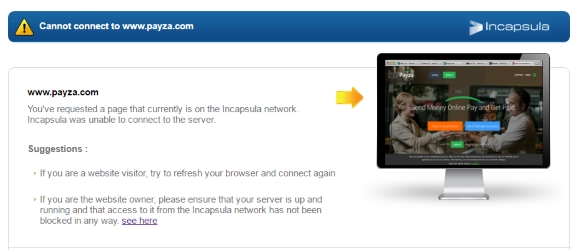
    This message was on the Payza website on April 25, 2016.
    This message was on the Payza website on April 25, 2016.

    Payza, an HYIP-friendly payment processor currently under fire from the receiver in the Zeek Rewards Ponzi- and pyramid-scheme case, is reporting on Twitter that it is experiencing a web outage.

    At the time of this PP Blog post, the outage appears to be more than four hours old. A post with no timestamp at the Payza Blog says the processor expects “everything to be back to normal within 18 hours. You may experience some interruptions and connection errors until that time on our website, member’s area, and Customer Support Pages.”

    Members of the Traffic Monsoon “program” are complaining on Facebook about the outage. Traffic Monsoon is a purported “advertising” venture reportedly served by Payza and shut off by PayPal.

    “Hello, what is going on with PAYZA?” one Monsooner asked. “I can’t get to the site and therefore I cannot buy more adpacks with the money I have on the account.”

    Another Monsooner ventured. “I saw other people have the same problem than me. Paya acknowledged they have problems but don’t say what kind of problems. Isn’t this worrying? First Paypal, now Payza, and still no news of the bank in Dubai.”

    The PP Blog observed a message from Incapsula when it tried to load Payza’s website.

    “You’ve requested a page that currently is on the Incapsula network,” the message read. “Incapsula was unable to connect to the server.”

    Incapsula provides DDoS protection. Whether a DDoS attack was responsible for the Payza outage was unclear.

    More may be known later this month on an investigation involving Payza and the Obopay payment processor by the U.S. Department of Homeland Security.

    UPDATE 4:23 P.M. EDT U.S.A. Payza says on Twitter that “Our website is back up and running smoothly, thank you for your patience.”


  • SEC, Trustee, Defense Attorneys Mum On Possible Deeper Ties Between TelexFree And DFRF Schemes

    Daniel Fernandes Rojo Filho in a YouTube promo for the alleged DFRF Ponzi- and pyramid scheme.
    Daniel Fernandes Rojo Filho in a YouTube promo for the alleged DFRF Ponzi- and pyramid scheme.

    The SEC declined Friday to say whether two individuals named prospective defendants in a massive class-action lawsuit brought by the Trustee in the 2014 TelexFree bankruptcy case were the same two persons charged with securities fraud last year by the agency in the DFRF Enterprises/Daniel Fernandes Rojo Filho Ponzi- and pyramid-scheme case.

    On June 30, 2015, Gaspar C. Jesus, 54, of Malden, Mass., and Eduardo N. Da Silva, 40, of Orlando, Fla., were among the nine named civil defendants in the DFRF/Filho case. Jesus allegedly received $56,000 from DFRF; Da Silva allegedly received $221,000.

    Filho, also charged criminally, “orchestrated” the DFRF scheme with the “assistance” of Jesus, Da Silva and others, the SEC alleged at the time. The agency also has referred to Da Silva as simply “Silva.”

    Promoters who move from one online investment fraud scheme to another and help scammers grease HYIP Ponzi wheels have posed a longtime problem. Both TelexFree and DFRF largely were aimed at Spanish- and Portuguese-speaking communities, the SEC has alleged.

    And that’s not all they had in common. Investors in both MLM-style “programs,” according to court filings, sometimes paid their sponsors directly, rather than paying the companies.

    “The amount of checks and cash that the individual defendants collected directly from investors is currently unknown,” the agency said about DFRF and how money entered the system last year.

    Such mechanics can led to secret deal-making and the siphoning of funds by insiders, creating smaller frauds inside of larger ones.

    On April 4, 2016, TelexFree Trustee Stephen B. Darr asked Chief Bankruptcy Judge Melvin S. Hoffman for permission to amend a defendant class-action case to include dozens of additional defendants alleged to be “winners” in the scheme.

    Among the proposed additional defendants were “Gaspar Jesus” of Lynn, Mass., and “Eduardo N. Silva” of Orlando, Fla.

    As noted above, the SEC declined to say whether the individuals were the same ones named in the DFRF/Filho case.

    Jonathan Shapiro, a Boston defense attorney representing Gaspar C. Jesus in the DFRF/Filho case, said on Friday he “cannot confirm that the person named in the [TelexFree] bankruptcy matter is the same person I represent in the DFRF matter.”

    On Saturday, Martin R. Rosenthal, a Boston attorney representing Eduardo N. Da Silva in the DFRF/Filho case, said he had “no comment” on whether his client was the same individual named in the Trustee’s proposed amended class action.

    Darr has alleged Eduardo N. Silva received more than $2.4 million from TelexFree. Gaspar Jesus was alleged by Darr to have received $882,936. The Trustee did not return a request for comment on whether the individuals were the same ones named in the SEC’s fraud case against DFRF and Filho.

    The SEC previously tied DFRF/Filho to TelexFree defendant Sann Rodrigues.

    Both DFRF and TelexFree spread in part on YouTube.

    The surname “Filho” also is referenced among the alleged “winners” in Darr’s proposed amended class action, though not specifically Daniel Fernandes Rojo Filho.

  • Faith Sloan’s Alleged TelexFree Haul: $710,319

    newtelexfreelogoUPDATED 3:32 P.M. EDT U.S.A. Faith Sloan received $710,319 from the TelexFree Ponzi- and pyramid scheme, according to filings by TelexFree bankruptcy Trustee Stephen B. Darr.

    Sloan, whose address was listed as Virginia Beach, Va., is a longtime Illinois HYIP huckster on Ponzi boards and social media. She and three other TelexFree promoters were charged in April 2014 with securities fraud by the SEC. The state of Illinois later barred her from the securities industry and warned her that violating the ban could result in a felony charge.

    Her alleged TelexFree haul was not known at the time.

    Darr, who has been investigating TelexFree for nearly two years, now wants to add Sloan and dozens of other alleged major winners as named defendants in a proposed class-action lawsuit filed in February that would return the winnings to the bankruptcy estate. Another proposed defendant is Randy Crosby, charged alongside Sloan by the SEC two years ago. His alleged haul, according to Darr, was $487,621.

    An individual identified as Sonya Crosby at the same address received $541,450, according to Darr. She, too, has been named a proposed defendant in the class action.

    As of April 4, no adequate class representative had been found, Darr advised Chief Bankruptcy Judge Melvin S. Hoffman of the District of Massachusetts.

    Sloan previously had complained that the SEC was picking on her, given that others in TelexFree had received more from the scheme and were not charged by the agency. As investigations evolve, however, the SEC sometimes files amended complaints or brings individual actions against defendants not charged out of the gate.

    Such as the case with HYIP huckster Matthew John Gagnon in 2010. He also was sued by a court-appointed receiver and charged criminally by the U.S. Secret Service.

    Alleged Zeek Rewards’ winner Trudy Gilmond wasn’t originally charged by the SEC. But as the probe continued, Gilmond was sued by both the agency and the receiver.

    Zeek receiver Kenneth D. Bell has expressed concerns about promoters moving from one fraud scheme to another. In March, SEC Enforcement Director Andrew Ceresney commented on the “whack-a-mole” nature of online pyramid schemes.

    Sloan has not been charged criminally. On the civil side, she is defending against the action filed by the SEC and also is named a defendant in multiple TelexFree fraud actions brought by private plaintiffs. If Hoffman approves Darr’s motion to file an amended complaint naming Sloan a “winner,” it would open a new litigation front against her.

    It is unclear if the SEC will name any additional TelexFree defendants.

    Darr’s motion to amend the complaint to include Sloan and additional defendants is available on the Trustee’s website. The proposed complaint is included as Exhibit A.


  • Banners Broker Figure May Be Using ‘Sovereign Citizen’ Tactics On Canadian Court Officials

    From a purported "Cease and Desist" order by Banners Broker figure Rajiv Dixit.
    From a purported “Cease and Desist” order by Banners Broker figure Rajiv Dixit. Red highlights by PP Blog.

    Remember when Simon Stepsys — now with the cross-border MyAdvertisingPays scheme — was pushing the uber-bizarre Banners Broker cross-border scheme?

    New court filings in Canada by the receiver and liquidators in the Banners Broker case now estimate the total haul of the alleged double-your-money pyramid scam at more than $156 million. That’s up from an earlier estimate by Toronto police of $93 million. If the $156 million figure proves correct, it would make Banners Broker a bigger fraud than the $119 million AdSurfDaily Ponzi scheme broken up by the U.S. Secret Service in 2008.

    Like MAPS, which currently is operating, ASD and Banners Broker purported to be “advertising” companies. The ASD case threw down the gauntlet on securities companies trying to evade the law by pretending to be “advertising” firms.

    But the apparent upstaging of ASD by Banners Broker in dollar volume in the purported “advertising” trade is not the only news.

    Rajiv Dixit, one of the Banners Broker figures who helped put Stepsys in the position of getting rich from online fraud schemes, was arrested in Canada in December 2015.

    Filings April 4 by the receiver and liquidators in the case show that Dixit may be trying to use “sovereign citizen” courtroom tactics against them in Canadian proceedings. In the United States, AdSurfDaily figure Kenneth Wayne Leaming tried the same thing in that case.

    The Banners Broker receiver and liquidators have reported Dixit’s alleged activities to the court.

    Specifically, they say Dixit, who calls himself  “the man master rajiv of the family dixit” [sic] and his targets “interlopers,” is trying to foist a bogus “Cease and Desist” order on them that threatens a fine of $36 per second if they don’t back off from their judicially mandated duties. Dixit apparently wants to be paid in “silver dollars.”

    From the receiver/liquidators (italics added):

    The Cease and Desist Notices go on to state that if the Court Officers and their counsel do not cease and desist “all actions and claims against Mr. Rajiv Dixit and or Rajiv Dixit forthwith” Dixit will invoice them $47,304,000.00 silver dollars “[p]lus, for each second starting at 12:00:01 AM until the cease and desist is complied with, each Respondent will be charged an additional $36.000 per second.”

    Leaming, a “sovereign citizen” now in a U.S. federal prison in part for harassing officials who played a role in the ASD case, once sent a bill demanding payment of 208,000 ounces of “99.9% fine silver” from a judge.

    Court filings in other cross-border cases — including Zeek Rewards and DFRF Enterprises — have signaled that “sovereigns” also were involved in those schemes.

    With Banners Broker, Dixit called his affiliates “stupid,” according to the new filings by the receiver and liquidators.

    Visit the RealScam.com antiscam forum to read the filings.


  • MyAdvertisingPays Incorporated In Jurisdiction Mentioned Prominently In ‘Panama Papers’; Its Payment Vendor Lists Individuals Referenced In At Least 2 Spectacular Fraud Schemes

    recommendedreading1 (1)8TH UPDATE 11:53 P.M. EDT U.S.A. Before we get to the news that a federal judge took only a day to dismiss an April 6 libel lawsuit filed by the MyAdvertisingPays (MAPS) scheme and operator Michael E. Deese against the TaraTalks Blog, we’ll note that the 16-page complaint confirms that MAPS is incorporated in Anguilla.

    Anguilla is a British overseas territory in the Caribbean. It is not illegal to incorporate offshore, but some schemes do so to avoid taxes or to engage in money-laundering and other crimes. There has been a longstanding concern that narcotics traffickers and even terrorists are using corporate shells to hide a criminal agenda.

    Class-action attorneys in the United States pursuing claims in the massive TelexFree fraud scheme operating from Brazil, the United States and other countries have called MAPS a Ponzi scheme and promoter Simon Stepsys a “Ponzi mogul.”

    Only days before the filing of the MAPS lawsuit and nearly instant dismissal, news of the “Panama Papers” and a giant leak to reporters broke through the International Consortium of Investigative Journalists. Anguilla was mentioned prominently as a tax haven. MAPS, originally incorporated in Mississippi, has been touting its Anguilla connection for months.

    MAPS, for two years, also has been touting its relationship with an e-wallet vendor known as VX Gateway that operates out of Panama. Here’s where things really get interesting.

    VX lists Roger Alberto Santamaria del Cid as a “subscriber.” Del Cid’s name has appeared on the PP Blog a couple of times. On Feb. 8, 2011, the Blog reported that his name had appeared in court filings in a federal forfeiture case involving assets linked to the notorious EMG/Finanzas Forex scheme in the Middle District of Florida. (See Paragraph 10 of this affidavit by a Task Force investigator.)

    Money from EMG/Finanzas was linked to the international narcotics trade. OpenCorporates lists del Cid here as a Finanzas “subscriber.” The site lists Tatiana Itzel Saldaöa Escobar as another Finanzas subscriber, and the same name appears alongside Del Cid as a VX subscriber.

    As the PP Blog reported on Feb. 10, 2011, del Cid’s name also had appeared as the contact person for Perfect Money, another financial vendor purportedly operating from Panama. The SEC has linked Perfect Money to the incredibly toxic Imperia Invest IBC offshore scheme that targeted thousands of people with hearing impairments.

    Del Cid apparently works as a nominee director of offshore companies with ties to Panama. (See April 7, 2013 story that mentions his name on the website of the International Consortium of Investigative Journalists: “Faux Corporate Directors Stand in for Fraudsters, Despots and Spies.”

    With American lawyers calling MAPS a Ponzi scheme and with MAPS having promoters in common with TelexFree and the alleged Zeek Rewards Ponzi- and pyramid scheme, MAPS went to federal court in Illinois to sue TaraTalks, a longtime critic of the scheme. The complaint is posted at the RealScam.com antiscam forum.

    The judge tossed the complaint in 24 hours, finding the court did not have jurisdiction, according to BehindMLM.com, another MAPS critic.

    TaraTalks, which calls MAPS a Ponzi scheme, operates on Google’s Blogger platform, but MAPS apparently can’t pin down the precise location. Nor can MAPS identify the author of TaraTalks and the author’s location. All three things are important for establishing diversity jurisdiction.

    But the complaint may have another jurisdiction issue. Although it says plaintiff Deese lives in “Harrison County, Louisiana,” no such place exists. Louisiana does not have counties; it has parishes, and there is no Harrison Parish.

    Whether MAPS is under investigation by any U.S. government agencies is unknown. Similar schemes have led to prosecutions, and references by class-action attorneys to MAPS potentially put it on the U.S. radar.


  • ‘Pay It Forward’ Gifting Scheme Leads To Felony Racketeering Charge, Sparks Child-Porn Probe In Michigan

    payitforwardAs the PP Blog reported more than six years ago, Pay It Forward (PIF) “programs” have a noxious history in HYIP and cash-gifting Scamland.

    A new case in Michigan, however, may be off-the-charts in terms of noxiousness. That’s because investigators looking into a PIF scheme there found child pornography on the alleged PIF operator’s computer, the office of Michigan Attorney General Bill Schuette said in February.

    Michael Skupin, 54, of Oakland County, was charged with six counts of possession of child sexually abusive materials five counts of larceny by conversion,and one count of Racketeering- Conducting a Criminal Enterprise.

    The PIF “program” was a Ponzi scheme that gobbled up $10,000 at a time from participants, Schuette’s office said.

    Records show that it’s not unusual for Ponzi schemers in Michigan to be charged with racketeering, a 20-year felony.

    “Victims allegedly made $10,000 cash investments in the [Skupin] scheme,” Schuette’s office said. “Their money would then cycle through a chart in which participants were eventually paid out of other new investors’ money.  The scheme was discovered when eventually there were no new investors signing and most people in the scheme lost all of their money.”

    The Oakland Press reported yesterday that Skupin was a former contestant on the “Survivor” television show.

    And, the publication reported, Skupin was accused of violating his release conditions while waiting trial on the charges against him.

    From the Oakland Press (italics added):

    Following his arraignment, the former reality TV contestant posted bond and was under house arrest with conditions that barred him from using the Internet except for work.

    But during a probable cause hearing Friday, April 8, in Clarkston’s 52-2 District Court, Judge Kelley Kostin ordered Skupin jailed because he violated the Internet bond conditions by posting on Facebook.

    Skupin now has made bail for a second time.

    PIF schemes have many price points — from low-dollar sums to high. In some PIF schemes, a recruiter may offer you the money to join a “program” — with the understanding you’ll do the same for your recruits. Some participants will purchase multiple “positions” for friends and family members, only to lose it all.

    Other such schemes may encourage you to purchase second and subsequent “positions” if you get paid — in effect, paying it forward to yourself, so you can get paid again.

    The money-cycling schemes ultimately collapse.


  • BRIEF: Get Prepared To File TelexFree Claims

    Good news for potentially hundreds of thousands of people with TelexFree claims. TelexFree bankruptcy Trustee Stephen B. Darr informed Chief Judge Melvin S. Hoffman yesterday that testing could begin this month on the electronic proof of claim form (ePOC) and the online claims portal administered by BMC Group Inc.

    If all goes well, the “ePOC and Portal will be up and running by early May 2016,” Darr noted.

    No formal opening date has been announced. When the system is in place, individuals will have at least 90 days to file claims.

    This is the section of the Trustee’s website that includes court filings in the bankruptcy case. Readers also may wish to view information contained within the tabs on the left side of the page. This is the tab for Information Regarding Claims.

    As of today, it notes that “There is no deadline yet for filing claims in the TelexFree cases and claims should not be filed at this time.”

    Darr’s status report to Hoffman yesterday suggested this could change in the coming weeks, so it’s time for claimants to prepare.

    Hoffman already has ruled TelexFree a Ponzi- and pyramid scheme.


  • Tax Problems Mount For TelexFree In Brazil, As Criminal Investigations Continue

    Carlos Wanzeler of TelexFree allegedly fled from the United States to Brazil while U.S. investigators were closing in on the company in 2014.
    Carlos Wanzeler of TelexFree allegedly fled from the United States to Brazil while U.S. investigators were closing in on the company in 2014.

    It’s easy enough to forget that TelexFree and its principals have epic legal problems outside the United States, where the company has been found a Ponzi- and pyramid scheme and alleged operators James Merrill and Carlos Wanzeler are under criminal indictment.

    History shows, however, that the problems began in the Brazilian state of Acre in 2013. That’s when the state government seized millions of dollars tied to the MLM “program,” amid pyramid-scheme allegations. In Brazil, TelexFree operated through a company known as Ympactus.

    Certain U.S. TelexFree promoters who allegedly pushed the “program” after the Acre action have been charged with fraud in the United States by the SEC.

    Now, GazetaOnline (Brazil) is reporting in Portuguese that TelexFree may owe billions of reais in back taxes to Brazil’s federal government. (See translation to English by Google Translate.)

    At the same time, the publication is reporting that two criminal probes into TelexFree by Brazil’s government for “suspicion of tax evasion, money laundering, and to act without authorization in the financial and capital markets” continue, according to a Google translation.

    Brazil’s government may have a claim to a large portion of the money seized in Acre. For starters, it appears to be going after about R$130 million (roughly $36 million U.S.) of the R$600 million seized. If the federal government is successful, the $36 million would be transferred from state court in Acre to federal court in Espirito Santo.

    NOTE: Our thanks to Mikaella Campos of GazetaOnline.


  • Second Guilty Plea From Purported JAG Lawyer Linked To SVM Global Initiative

    svmThe docket of of New York’s Kings Supreme Court (Brooklyn) shows that Kenneth Goldstein has pleaded guilty to a charge of unlicensed practice of law and a charge of offering a false instrument for filing.

    Goldstein, a purported JAG lawyer and figure in the SVM Global Initiative story, earlier pleaded guilty to the same charges in a separate case in Bronx County. The case in Kings County notes a plea agreement. Separate charges of aggravated harassment against Goldstein in Bronx County remain unresolved, according to the docket.

    Sentencing on the unlicensed practice and false instrument charges in Kings County tentatively is set for June 8. Goldstein, free on bond, next is scheduled to appear June 14 on both sets of charges in Bronx County. The Bronx docket suggests sentencing on the unlicensed practice and false-instrument charges there was postponed in March.

    SVM is operated by New Yorker Sheila V. Tabarsi, who once claimed that the “Bush administration” was involved in an “effort to dismantle this world economy” and that the effort has been “so concentrated” and “so diligent.” She has described herself as a former Air Force member, a medical intuitive, a psychic and a “Rev.” In turn, she has described Goldstein as a “USCG JAG OFFICER” and as “LIEUTENANT COMMANDER KENNETH GOLDSTEIN.”

    Published reports have described Goldstein as a former Coast Guard petty officer.

    After more than a year, SVM appears still not to have launched its purported matrix “program” to end poverty.

    In April 2015, the PP Blog reported that “sovereign citizens” might be involved in SVM and other online “programs,” including UFunClub. UFunClub is the subject of a major investigation in Thailand.

    At one point in 2015, Tabarsi described the PP Blog as part of a terrorist organization that sought to “INCITE A RIOT and commit unprovoked ATTACKS on DECORATED UNITED STATES WARTIME VETERANS” and additionally carry out a “HATE CRIME.”

    Goldstein has claimed to the PP Blog that Tabarsi “already presented her business plan to a senatorial body and has their seal of approval.”

    NOTE: Also see BehindMLM’s 2015 review of SVM and the MLM Skeptic Blog: “Is a Scam Targeting Veterans ‘to end poverty’ citing a FAKE JAG lawyer?”


  • RECEIVER: (1) Zeek Defendant Class Action May Conclude This Year; (2) Some Claimants Still Haven’t Signed Required Release; (3) $10 Million Settlement With NewBridge Bank

    This promo for Zeek promised "passive" income. The SEC has warned about such schemes for years.
    This promo for Zeek promised “passive” income. The SEC has warned about such schemes for years.

    Three significant pieces of news from Kenneth D. Bell, the receiver in the Zeek Rewards’ Ponzi- and pyramid-scheme case:

    In a March 28 announcement on the receivership website, Bell wrote that a defendant class-action lawsuit against more than 9,000 alleged Zeek winners in the United States may conclude this year.

    “We hope to bring to a conclusion in 2016 our class action against more than 9,000 net winners, which will be a significant milestone,” Bell wrote.

    Senior U.S. District Judge Graham C. Mullen of the Western District of North Carolina certified the defendant class of alleged U.S. winners last year. The class includes “all persons and entities who participated in ZeekRewards and received at least $1000 more in money from ZeekRewards than they put into the program.”

    The winnings came from Ponzi proceeds and must be returned, Bell contended.

    A successful conclusion to the class action could mean more money for Zeek victims, Bell has said.

    TelexFree Bankruptcy Trustee Stephen B. Darr has filed similar litigation in that scheme. Darr’s action may affect nearly 100,000 alleged TelexFree winners.

    Bell has raised concerns about some MLMers moving from fraud scheme to fraud scheme. The SEC has raised concerns about the “whack-a-mole” nature of some fraudulent schemes.

    Meanwhile, Bell wrote yesterday that tens of thousands of people who are eligible for a distribution from the receivership estate have not received a check because they haven’t filled out the required forms. Such individuals should “log into the claims portal and electronically sign the Court required Release and OFAC Certification.”

    “At some point, I will be required to distribute the funds that have been reserved for these claimants to other Affiliates who have completed the process and, therefore, hold Allowed Claims,” Bell wrote.  “I don’t want any claimant with a recognized claim to lose out on receiving a distribution simply because they did not complete all of the steps required by the Court’s Orders.”

    Bell also highlighted a $10 million settlement with NewBridge Bank, a Zeek vendor. Zeek operated through Rex Venture Group.

    “The settlement arose out of claims the receivership had against NewBridge Bank for its continuing to provide banking services to Rex Venture Group after mid-April 2012, by which time the receivership alleged that the bank and its executives knew or should have known that Paul Burks and RVG were using their accounts to conduct an illegal Ponzi and pyramid scheme,” Bell wrote.

    Details of the receivership’s potential claims and the settlement with NewBridge are available through links in the receiver’s March 28 announcement.