Blog

  • AP (VIA YAHOO NEWS): Zeek’s Paul Burks Says Participants At Fault For Losing Money In Alleged $600 Million Ponzi Scheme

    The Associated Press is reporting that Zeek Rewards operator Paul R. Burks claims that he is not at fault and that Zeek participants are to blame if they lost money.

    From the AP (via Yahoo News/italics added):

    “I never told anyone to invest more money than they could afford,” Burks snapped. “I didn’t tell them to do that. Never.”

    He said if they lost money, “it’s their fault. Not mine. Don’t blame me.”

    Read the full story.

    recommendedreading1Zeek rose in part through promotions on well-known Ponzi scheme forums such as TalkGold and MoneyMakerGroup. In August, the SEC alleged that Zeek was a $600 million Ponzi- and pyramid scheme operating from Lexington, N.C.  Court records suggest the SEC’s Zeek probe began at least in April 2012.

    Serial hucksters on the Ponzi boards often rationalize Ponzi train wrecks by claiming that no one advised participants to spend more than they could afford to lose.

    Convicted Ponzi schemer Dennis Bolze — one of the original so-called “mini-Madoffs” — tried a version of the “don’t invest more than you can afford to lose” rationalization in an unsuccessful bid to reduce his 27-year prison sentence for his brick-and-mortar scheme. A judge applied a sentencing enhancement in the Bolze case because senior citizens were among the victims.

    As the PP Blog reported on Jan. 12, 2012 (italics added):

    Bolze used a similar argument for a sentencing reduction, asserting that his victims invested only “discretionary money.”

    He further argued that age alone was  not sufficient to justify the enhancement “and that the present poor financial condition of his victims is not relevant to whether they were unusually vulnerable at the time they invested their money with him,” according to the 6th Circuit.

    Meanwhile, Bolze “denied that he forced anyone to invest” and claimed “that he did not know” certain investors “because his associate dealt with them.”

    The panel rejected each of those arguments.

    Burks, 66, has not been charged criminally. The SEC sued Burks and Zeek parent Rex Venture Group LLC last year.

    Ponzi-board hucksters have promoted numerous Internet-aided scams. AdSurfDaily, a $119 million Ponzi scheme opearting from Florida, had a presence on the boards. So did Legisi, a $72 million Ponzi scheme operating from Michigan. So did Pathway to Prosperity, a $70 million scam alleged to have penetrated 120 countries. So did Imperia Invest IBC, a shadowy entity that stole millions of dollars by targeting people with hearing impairments.

    The most recent Ponzi-board scam to make major news is Profitable Sunrise, another shadowy entity purportedly operated by “Roman Novak.” Profitable Sunrise purported to pay interest of 2.7 percent a day through its bizarrely named “Long Haul” plan targeted at Christians. Members were due a purported “Easter gift” on Monday, April Fool’s Day.

    The Profitable Sunrise website has been missing for more than two weeks. At least 34 U.S. states or provinces in Canada have issued Investor Alerts or cease-and-desist orders against Profitable Sunrise. The United Kingdom and New Zealand also have issued warnings.

    Research shows that Profitable Sunrise had members in common with ASD and Zeek.

  • FOR ZEEKERS: Court-Appointed Receiver Asks Federal Judge To Approve Claims Process, Bar Date — And More

    “In examining these facts, the Receiver has determined that because the VIP Points aspect of the multilevel marketing program did nothing more than redistribute funds among Affiliates in Ponzi-scheme fashion, points generated and/or accumulated by Affiliates will not be an includable part of an Affiliate’s claim for purposes of receiving a distribution from the Receivership Estate. Including any of these points as part of any claim of an Affiliate would merely effectuate a continued redistribution of funds from later-investing Affiliates to earlier-investing Affiliates. In other words, these Retail Profit Points were an instrument for the perpetration of the Scheme and will, therefore, not be honored as claims by the Receiver. Instead, the Receiver will solely recognize the actual cash paid to ZeekRewards by or for the benefit of an Affiliate, not Retail Profit Points accumulated by such Affiliates that were ‘earned’ through the perpetration of the Scheme.”Kenneth D. Bell, court-appointed receiver in the Zeek Rewards Ponzi scheme case, March 29, 2012

    recommendedreading1In a Good Friday filing, the court-appointed receiver in the Zeek Rewards Ponzi-scheme case has asked a federal judge to approve the claims process and a procedure by which claimants will be notified.

    Receiver Kenneth D. Bell also asked Senior U.S. District Judge Graham C. Mullen of the Western District of North Carolina to set a deadline for claims to be filed (the “bar date”).

    The claims process is largely designed to be handled over the Internet because there may be more than 800,000 claimants, nearly all of whom had an existing electronic relationship with Zeek, Bell advised Mullen.

    It is likely to be a bittersweet day for many Zeek affiliates. Some may be be happy because the approval motion means the receivership is advancing the ball down the field, meaning a key milestone has been met in the process of putting money back in victims’ hands. But it also may be a day that brings Zeek’s alleged fraud into fuller focus, causing winces among affiliates who trusted the “program” and their purported upline leaders.

    Here is the wince — and it’s one that occurs in Ponzi scheme after Ponzi scheme carried out on the Internet:

    Bell advised Mullen that claimants should not be compensated for Zeek’s so-called “Retail Profit Points” (RPP), saying the points “aspect of the multilevel marketing program did nothing more than redistribute funds among Affiliates in Ponzi-scheme fashion.”

    And, Bell advised Mullen, “these Retail Profit Points were an instrument for the perpetration of the Scheme and will, therefore, not be honored as claims by the Receiver. Instead, the Receiver will solely recognize the actual cash paid to ZeekRewards by or for the benefit of an Affiliate, not Retail Profit Points accumulated by such Affiliates that were ‘earned’ through the perpetration of the Scheme.”

    The process calls for affiliates to provide documentation of their claims. There will be a reconciliation process by which the cash outlay to Zeek will be balanced against the money affiliates may have received from Zeek, Bell advised Mullen.

    Visit the receiver’s “Case Documents” page to read the motion to approve the claims process and other filings. (The approval motion is titled, “Receiver’s Motion for Order Seeking Approval of (1) Claims Process, (2) Setting of Bar Date, and (3) Certain Notice Procedures.”

    Bell also published a “Letter from the Receiver” today. Read it here. (It is dated 3-29-13.)

    In August 2012, the SEC described Zeek as a $600 million Ponzi- and pyramid scheme that had duped people into believing they were earning an average of 1.5 percent a day on their money legitimately.

    It may be an especially introspective Easter weekend for some Zeek affiliates, given they also were involved with Profitable Sunrise, now the subject of Investor Alerts or cease-and-desist orders in at least 34 U.S. states or provinces in Canada. The United Kingdom and New Zealand also have issued warnings on Profitable Sunrise, whose website has gone missing.

  • BULLETIN: Feds Say New York Man Was Running $50 Million Real-Estate Ponzi Swindle; Gershon Barkany Arrested By FBI

    breakingnews72BULLETIN: A man in the Far Rockaway section of the New York City Borough of Queens was running a $50 million real-estate Ponzi swindle that duped investors into believing they were investing in a “risk-free” flipping scheme involving large properties in New York and New Jersey, federal prosecutors said.

    Gershon Barkany, 29, was arrested today by the FBI.

    “As alleged, Barkany promised a get-rich-quick investment scheme that really had potential to enrich only him,” said George Venizelos, assistant director-in-charge of the New York FBI office. “There were no investment properties, just a house of cards built on a foundation of lies.”

    From a statement by the office of Loretta E. Lynch, the U.S. Attorney for the Eastern District of New York (Italics added):

    According to the criminal complaint that was unsealed this morning, Barkany induced at least five investors to wire transfer large sums of money supposedly to purchase real estate in Manhattan, Queens, the Bronx and Atlantic City, New Jersey. According to one of the investor victims, Barkany claimed that the sellers of these properties would only close on the real estate sales contracts after Barkany had located a purchaser who would be willing to buy the property from Barkany at a higher price. In that way, Barkany assured the victim that the real estate deals would be “risk free.”

    In fact, the real estate deals did not exist. As part of Barkany’s Ponzi scheme, he diverted some of the funds he received to pay investors whom he had earlier defrauded. The defendant also lost some of the funds in gambling and otherwise used the money for his own benefit.

  • BULLETIN: AdSurfDaily/OneX Pitchwoman Rayda Roundy Faces Proposed Fine Of $81,250 In Utah For Alleged Unlawful Sale Of ‘Safevest LLC’ Securities In Ponzi Scheme Targeted At Christians

    breakingnews72BULLETIN: (UPDATED 4:58 P.M. EDT (U.S.A.) The state of Utah has proposed that Rayda Roundy of Hurricane be fined $81,250 and ordered to cease and desist from selling securities unlawfully in the state for her alleged role in hawking Safevest LLC.

    In May 2008, the SEC described Safevest as a fraud- and Ponzi-like scheme that had gathered at least $25 million in part by targeting the Christian community.

    Roundy later became a figure in the AdSurfDaily Ponzi scheme story. In August 2008, the U.S. Secret Service described ASD as a massive Ponzi scheme operating online. By April 2012, Roundy was tied in court filings in the ASD case to the mysterious “OneX” scheme, which federal prosecutors described as a financial pyramid that was recycling money in ASD-like fashion.

    ASD’s Andy Bowdoin started pitching OneX while he was awaiting trial on Ponzi-related charges flowing from the ASD case. Federal prosecutors said ASD had gathered at least $119 million in its scam. Bowdoin was sentenced in August 2012 to 78 months in federal prison.

    In September 2008 — just a month after the Secret Service had  seized more than $80 million in the ASD Ponzi case — the Utah Division of Securities accused Roundy in a civil filing of hawking Safevest unlawfully. Roundy denied the assertions.

    The case dragged on from 2008 into 2013. Roundy missed a hearing scheduled for March 6 after being warned the presiding officer would hold her in default if she did not attend, the state said.

    Utah proposed that the fine could be used to provide restitution. Roundy’s alleged Safevest target was described only as “ME.”

    In August 2011, the court-appointed receiver in the Safevest case announced that he “does not anticipate any distributions to the investor/victims as no significant funds have been recovered or are anticipated.”

    News about the proposed sanctions against Roundy occur against the backdrop of Investor Alerts or cease-and-desist orders being issued in at least 33 states and provinces in the United States and Canada against the Profitable Sunrise “program.”

    Profitable Sunrise allegedly was targeted at Christians. Its website has been offline for two weeks.

  • New Hampshire Joins Many Other States Or Provinces In Issuing ‘Profitable Sunrise’ Warning; [UPDATE: District Of Columbia, Georgia And West Virginia Now On List Of 34, Too]

    recommendedreading1 UPDATED 6:11 P.M. EDT (MARCH 28, U.S.A.)  The District of Columbia has issued a warning about Profitable Sunrise. So has West Virginia. Georgia has issued a cease-and-desist order. A majority of U.S. states now have taken action in one form or another against Profitable Sunrise. See the info in the Comments thread below . . .

    New Hampshire has joined the list of states or provinces warning about the “Profitable Sunrise” HYIP scheme. The unofficial tally now stands at 34.

    In Canada: New Brunswick, Quebec, Ontario, British Columbia, Alberta, Manitoba.

    In the United States: Kentucky, Ohio, Florida, Wisconsin, Nevada, Minnesota, California, Indiana, New Mexico, Texas, Delaware, North Dakota, South Dakota, Alabama, North Carolina, South Carolina, Alaska, Maryland, Maine, New Jersey, Louisiana, Tennessee, Oregon, Missouri, New Hampshire, District of Columbia (federal district), Georgia, West Virginia.

    Regulators in New Zealand (FMA) and the United Kingdom (FSA) also have issued warnings against Profitable Sunrise.

    The website of Profitable Sunrise has been offline for nearly two weeks. Boat-sharks have been using Facebook to suck Profitable Sunrise members into other HYIP scams, some of which purported to pay more than Profitable Sunrise’s bizarrely named “Long Haul” plan, which advertised 2.7 percent a day with a purported Easter holiday payout.

    Here is what New Hampshire has to say about Profitable Sunrise.


  • On The High Seas Of Facebook, The Search For New HYIP Blood In The Water Intensifies After ‘Profitable Sunrise’ Goes Missing

    “HYIPs use an array of websites and social media — including YouTube, Twitter and Facebook — to lure investors, fabricating a ‘buzz’ and creating the illusion of social consensus, which is a common persuasion tactic fraudsters use to suggest that ‘everyone is investing in HYIPs, so they must be legitimate.’”The Financial Industry Regulatory Authority (FINRA), July 15, 2010

    optiearnsmall

    FINRA issued a warning back in 2010 against HYIP schemes, pointing out that they often trade through social-media sites such as forums, YouTube, Twitter and Facebook. The warning came on the heels of the collapse of the Genius Funds “program” ($400 million) and the filing of criminal charges in the United States against Nicholas Smirnow, an alleged former bank robber in Canada who allegedly was running the Pathway To Prosperity (P2P) Ponzi scheme. P2P is alleged to have gathered more than $70 million.

    P2P even got a mention on the U.S. Department of Justice Blog. That mention came in the form of a warning about international mass-marketing fraud.

    Nearly three years later, Smirnow, 55, is still listed by INTERPOL as an international fugitive.

    So is Robert Hodgins, 68. Hodgins, a Canadian supplier of debit cards to HYIP schemes, is charged in a money-laundering case in the United States. It is alleged that cards Hodgins supplied were used by narcotics traffickers to offload millions of dollars in “profits” at ATMs in Medellin, Colombia.

    Speaking of Colombia . . . well, it was one of the staging grounds of the infamous D.M.G. Group (DMG) multilevel-marketing pyramid scheme of David Eduardo Helmut Murcia Guzman (David Murcia). Murcia, too, was tied to narcotics traffickers. His collapsed pyramid scheme gathered hundreds of millions of dollars. The anger spilled out onto the streets.

    Just about all of these schemes made absurd claims. Genius Funds, for example, promised a payout of 6.5 percent a week. Compare that absurd claim to the Profitable Sunrise claim of 2.7 percent a day through its bizarrely named “Long Haul” plan with a purported payout timed to coincide with Easter. A scheme bizarrely known as Cash Tanker was operating at the same time as Genius Funds. Like Profitable Sunrise, Cash Tanker purported to be a Christian enterprise. It’s gone now, too. So is Profitable Sunrise. Their members were cast into the sea like so much chum.

    Enter the Facebook boat-sharks and the contemptible “lifelines” they’re tossing toward the people struggling to stay afloat in rough seas . . .

    Despite all the warnings — despite all the publicity surrounding HYIP schemes — opportunists are descending on Facebook today to recruit Profitable Sunrise members (the people struggling in the water) into new scams. The same thing has happened repeatedly, perhaps most prominently in August 2012, after the SEC described the Zeek Rewards “program” as a $600 million Ponzi- and pyramid scheme.)

    Boat-sharks posting on a Profitable Sunrise Facebook site today are promoting schemes such as “SuperWithdraw,” “Whos12,” Maxi-Cash,” “FairyFunds,” “Roxilia,” “OptiEarn,” “AVVGlobal,” “ProForexUnion” and “MajestiCrown.” Some of the emerging schemes promise to pay even more than Profitable Sunrise.


  • DUBIOUS MILESTONE: ‘Profitable Sunrise’ Website Has Been Offline For 10 Days; ‘All Is Good,’ Pitchman Tells Conference-Call Listeners; Wild, Unverified Claims Made On Facebook And Ponzi Boards That ‘Program’ Will Resurface As 4-Percent-A-Day Scheme

    From a Profitable Sunrise promo online.
    From a Profitable Sunrise promo online.

    UPDATED 11:33 A.M. EDT (APRIL 1, U.S.A.) On April 1, the PP Blog published a story that informs Profitable Sunrise participants on how to contact state and provincial securities regulators in the United States and Canada.

    That story is here.

    April 1 was the date the Profitable Sunrise “Long Haul” plan was supposed to pay out. That didn’t happen.

    Here, below, our March 25 post . . .

    Now the subject of Investor Alerts or cease-and-desist orders in at least 30 states and provinces in the United States and Canada, the Profitable Sunrise HYIP has passed a milestone of sorts: Its website has been offline for 10+ days.

    Despite the extended outage, wild, unverified reports have surfaced on Facebook and the Ponzi boards that Profitable Sunrise will resurface in Hong Kong, restarting with a 4-percent-a-day scheme.

    Even if Profitable Sunrise still has control over servers — and even if it relaunches with a 4-percent-a-day scheme — history cannot be taken off the table. Part of HYIP history includes the renaming and relaunching of schemes designed to give scammers access to new cash to sustain the Ponzi deception. The “trick” has been used so many times in HYIP Ponzi Land that it has become a virtual cliché.

    The AdSurfDaily Ponzi scheme appears to have operated under at least three different names, all the while positioning itself as a “Christian” enterprise. An HYIP scheme bizarrely known as Cash Tanker once was promoted on the pro-ASD “Surf’s Up” forum. Cash Tanker, which promised a Profitable Sunrise-like 2 percent a day and used an image of Jesus Christ in promos, later collapsed.

    On March 6, the PP Blog observed information in a nonEnglish, international forum that strongly suggested an ASD promoter had become a key pitchman for Profitable Sunrise. The information suggested that the ASD promoter had assembled a “group” that carried a purported balance of more than $18.8 million in Profitable Sunrise.

    ASD collapsed in 2008.

    Because Profitable Sunrise traded on Bible verse and images of Jesus Christ and was promoted by self-identified Christians, the scheme now has caused divisiveness in the Christian community. Among the key unanswered questions: Who would benefit from such  divisiveness and was Profitable Sunrise deliberately structured to turn Believers against each other?

    Cheerleading for the “program” continues. On a conference call last week, a Profitable Sunrise pitchman assured listeners that “all is good” with the enterprise. The claim appears to have been based on second- and third-hand reports that morphed into a purported “consensus” among leaders/members given to confirming their own biases.

    “Everyone agrees that the Easter gift from the [Profitable Sunrise] Long Haul [plan] is on,” the pitchman said. “It’ll be given on schedule.”

    One speaker on the same call claimed “[w]e can do what we want,” despite government warnings and even legal proceedings to the contrary.

    “[W]e’re not selling any securities and we’re free citizens,” the speaker intoned.

    Separately, a claim was made on the MoneyMakerGroup Ponzi forum that the Howey Test from a famous Supreme Court case in 1946 does not apply to Profitable Sunrise because the “Howey Test is for Private Real Estate Loans.”

    Like many things surrounding Profitable Sunrise, the claim about the purported inapplicability of the Howey Test is absurd. The Howey Test is a key test of what constitutes an investment contract. Profitable Sunrise itself positioned the “program” as an investment opportunity. Meanwhile, various members of the “program” — including ones who continue to support it — have written or spoken publicly about their “contracts” that purport to pay up to 2.7 percent interest a day through a plan bizarrely known as the “Long Haul.”

    After he was charged criminally in 2010 for his role in the ASD Ponzi scheme, ASD President Andy Bowdoin argued that the Howey Test did not apply to ASD, a purported “advertising” company that purported to pay 1 percent a day.

    Despite Bowdoin’s Howey argument, a federal judge ruled that “these alleged facts smack of an investment.”

    And, the judge ruled, “Based on the allegations set forth in the Indictment, the evidence already before the Court, and the government’s proffers of expected trial evidence, the Court finds that the allegations, if proven, would be sufficient to permit a jury to find that ASD members were investing.”

    Bowdoin later pleaded guilty to wire fraud. He was sentenced to 78 months in federal prison.

  • No Immediate Comment From Zeek Receiver On Third-Party Lawsuit That References Zeek Pitchman T. LeMont Silver And 100 ‘Does’; MLMers Sue Each Other — And Receiver’s Law Firm Represents Plaintiffs In One Of The Cases

    gofunplacesUPDATED 8:48 A.M. EDT (MARCH 24, U.S.A.) Oz at BehindMLM broke the news that eAdGear Inc. and GoFunPlaces Inc. have sued Randal Williams and JubiMax LLC (and others) — and that Williams earlier had sued eAdGear and GoFunPlaces (and others).

    You’ll see a reference to Randal Williams in this August 2011 PP Blog story about a scheme known as “Fast Profits Daily,” a cycler matrix pitched in part from the Ponzi boards. Fast Profits Daily had promoter ties to Jeff Long’s AutoXTen cycler matrix. Two of the infamous claims surrounding AutoXTen was that $10 could fetch $200,000 very quickly and that the “program” was suited for churches.

    Long was fresh from the NarcThatCar and DataNetworkAffiliates MLM scams when AutoXTen was gaining a head of steam. (Memory Lane: DNA misspelled the name of its own departing CEO while at once claiming domain registration in the Cayman Islands, a tax haven.)

    There is plenty of offshore intrigue in the developing stories about eAdGear/GoFunPlaces/Williams/JubiMax matters, too.

    As for Fast Profits Daily? Well, it claimed that “ALL Purchases are FINAL and NO REFUNDS or CHARGEBACKS are allowed. Any attempts to acquire a refund or chargeback constitute theft and fraud, and are grounds for legal prosecution.”

    Pardon us while we vomit as we remember recent MLM history and the interconnectivity of schemes and report on some new history in the making . . .

    The stories by Behind MLM on the allegations flying between parties in the matters pertaining to eAdGear, GoFunPlaces, Williams and JubiMax aren’t apt to make the trade feel any better about itself, perhaps particularly since at least 30 regulatory agencies have issued cease-and-desist orders or Investor Alerts on the Profitable Sunrise scheme.

    MLMers rushed to Profitable Sunrise, too. This they did both before and after after the August 2012 Ponzi complaint by the SEC against the Zeek Rewards “program.” And they did it after the attorney general of North Carolina issued a warning on “reload scams.”

    The PP Blog yesterday sought comment from the Zeek Rewards receivership on the actions involving eAdGear, GoFunPlaces, Williams and JubiMax.

    That’s because eAdGear once filed a lawsuit against ZeekRewards.com, amid some strange circumstances.

    And it’s also because McGuireWoods, the law firm for the Zeek receivership, also is representing eAdGear and GoFunPlaces in their lawsuit against Williams and JubiMax and 100 “Does.” (It is not the Charlotte-based Zeek receivership suing Williams, JubiMax and the Does, it is Los Angeles-based attorneys from the same national law firm hired by the Zeek receiver.)

    Whether Kenneth D. Bell, the receiver in the Zeek case, was aware of the McGuireWoods-managed lawsuits against Williams and JubiMax is unclear. The receivership did not immediately reply to emails seeking comment.

    Also unclear is whether the lawsuits could pose any conflict for the receivership.

    In the eAdGear/GoFunPlaces lawsuit against Williams/JubiMax, the firms raise the name of T. LeMont Silver in the body of the complaint.

    Silver is a former Zeek pitchman who participated in a conference call with Zeek figure Robert Craddock to condemn the SEC and the receiver for their actions in the Zeek Ponzi case.

    Silver recently has been musing about “asset protection things” — this after the Zeek receiver has publicly stated that he has “obtained information indicating that large sums of Receivership Assets may have been transferred by net winners to other entities in order to hide or shelter those assets.

    Meanwhile, former Zeek pitchman Gregory Baker also participated in conference calls with Craddock. After Zeek, Baker became a pitchman for GoFunPlaces.


  • In Wake Of Profitable Sunrise Alert, British Columbia Issues 2 More Warnings Against HYIPs; Like Profitable Sunrise, Both ‘Programs’ Had Presence On TalkGold And MoneyMakerGroup Ponzi Forums

    recommendedreading1EDITOR’S NOTE: Thanks to PP Blog reader “Tony” for pointing us to the British Columbia Securities Commission (BCSC) warning against the Lucra Fund and Goldenarium HYIP schemes. Earlier this month, BCSC issued a warning on the Profitable Sunrise scheme.

    The British Columbia Securities Commission has issued warnings on HYIP “programs” known as Lucra Fund and Goldenarium. BCSC’s move follows on the heels of its move earlier this month to issue a warning against Profitable Sunrise.

    All three “programs” had a presence on well-known Ponzi scheme forums such as TalkGold and MoneyMakerGroup. The Zeek Rewards “program,” which the SEC in August 2012 described as a $600 million Ponzi- and pyramid scheme, also had a presence on the forums. So did many other collapsed schemes, including the $119 million AdSurfDaily Ponzi scheme, the $72 million Legisi Ponzi scheme and the alleged $70 million Pathway to Prosperity Ponzi scheme. P2P spead Ponzi misery to at least 120 countries, according to the U.S. Postal Inspection Service.

    BCSC said it became aware of Lucra Fund on March 11 “after a BCSC staff member received a promotional e-mail.

    “The sender of the e-mail wrote that Lucra Fund offered 5.5% daily returns, and promised a referral commission,” the agency said.

    And, it noted, “[t]he Lucra Fund website stopped working soon afterwards.”

    Among the talking points of Lucra Fund was that it employed “DDoS Protection By BlockDos,” according to a pitchman’s post at MoneyMakerGroup.

    That appears to be the same firm that provided protection for Profitable Sunrise. The Profitable Sunrise website also has gone missing. (At the time of this post, the Profitable Sunrise website has been inaccessible for nine days.)

    On March 19, BCSC said, the agency “became aware of what appears to be a BC-connected promotion of Goldenarium through Twitter. Similar to Profitable Sunrise, this high-yield investment promotion offered a minimum investment of $10 and high daily returns. It also offered a referral fee.

    “The Goldenarium website no longer works, and people on numerous Facebook pages connected to the scheme are questioning whether the entity will reactivate its website,” BCSC said.

    In August 2012, a pitchman on the DreamTeamMoney Ponzi forum described Goldenarium as “a company registered in England and Wales (United Kingdom) that “fulfills all the necessary requirements to provide a serious and highly reliable service to all our customers.
    In order to accomplish that we not only strictly comply with both United Kingdom’s Law and International Law.”

    Profitable Sunrise also described itself as based in the United Kingdom. It is now the subject of at least 30 Investor Alerts or cease-and-desist orders in the United States and Canada. The United Kingdom and New Zealand also have issued warnings against Profitable Sunrise.

    Before its 2011 collapse, "insectrio" used the logos of DreamTeamMoney, TalkGold and MoneyMakerGroup in sales pitches.
    Before its 2011 collapse, “Insectrio” used the logos of DreamTeamMoney, TalkGold and MoneyMakerGroup in sales pitches.

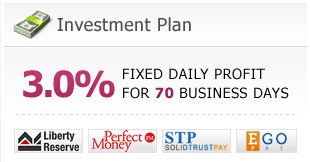
    In August 2011, the PP Blog wrote about the collapse of a bizarre “program” known as Insectrio that advertised an “Egg” plan purported to pay 103 percent after one day, a “Larva” plan purported to pay 120 percent after five days and other plans advertised to pay even more. It was enabled by the offshore processors LibertyReserve and PerfectMoney, two of the processors used by Profitable Sunrise.

    LibertyReserve and Perfect Money also are referenced in the SEC’s October 2010 fraud complaint against Imperia Invest IBC, a scheme that targeted deaf investors. Imperia also had a presence on the Ponzi boards.

    Insectrio used the logos of DreamTeamMoney, TalkGold and MoneyMakerGroup in promos.

    In July 2010, after the collapse of the P2P and Genius Funds HYIP schemes, the Financial Industry Regulatory Authority (FINRA) issued a warning about HYIP schemes,  pointing out that they trade through social media.

    FINRA specifically warned about websites that “Rank the latest programs and provide details of ‘payout options.’” At the same time, it warned about sites that “Allow web designers to buy ready-made HYIP templates and set up an ‘instant’ HYIP.” Meanwhile, it warned about sites that “Blog, chat and ‘teach’ about HYIPs.”

    “Some HYIP ‘investors’ proffer strategies for maximizing profits and avoiding losses — everything from videos showing how to ‘make massive profits’ in HYIPs and ‘build a winning HYIP portfolio’ to an eBook on how to ‘ride the Ponzi’ and get in and out before a scheme collapses,” FINRA said.

    “Other HYIP forums discuss how to enter ‘test spends,’ how to identify new HYIPs to maximize one’s chances of being an early stage payee and even how to check when a HYIP’s domain name expires so you can guess how long it might pay returns before shutting down,” FINRA noted.

    Read BCSC’s March 22 Investor Alert against Lucra Fund and Goldenarium. (The document references the earlier warning against Profitable Sunrise.)

  • RealScam.com, Antiscam Site, Is Under DDoS Attack

    recommendedreading1UPDATED 11:39 A.M. EDT (MARCH 21, U.S.A.) RealScam.com reports that the DDoS attack is continuing, but that measures have been taken to restore accessibility. The site is back online. Here, below, our earlier story . . .

    RealScam.com, a site that concerns itself with international mass-marketing fraud, is experiencing a DDoS attack, a source told the PP Blog this afternoon.

    “We’re seeing what we can do about it,” the source said.

    On the plus side, the source noted, the DDoS attack suggests RealScam is meeting its mission of informing the public about scams.

    The attack is occurring against the backdrop of government actions against the Profitable Sunrise HYIP “program.” RealScam posters have been following Profitable Sunrise developments closely. Forum posters also are monitoring developments concerning “Banners Broker,” another mysterious online “program.”

    Precisely why RealScam.com has been targeted is unclear. At least one purported member of Profitable Sunrise — writing on another site on Saturday — said he wished the hacker’s group “Anonymous” was paying attention to negative coverage of Profitable Sunrise on the web. The poster did not reference RealScam.com in his apparent call for a DDoS attack. Instead, he referenced another site carrying negative news about Profitable Sunrise.

    The attack against RealScam.com also occurs against the backdrop of remarks in Washington today by Michael J. Bresnick, executive director of President Obama’s Financial Fraud Enforcement Task Force. In an address to the Exchequer Club of Washington, D.C., Bresnick referenced mass-marketing fraud.

    “. . . the Consumer Protection Working Group has prioritized the role of financial institutions in mass marketing fraud schemes — including deceptive payday loans, false offers of debt relief, fraudulent health care discount cards, and phony government grants, among other things — that cause billions of dollars in consumer losses and financially destroy some of our most vulnerable citizens,” Bresnick said. “The Working Group also is investigating the businesses that process payments on behalf of the fraudulent merchants — financial intermediaries referred to as third-party payment processors.”

    Both Profitable Sunrise and Banners Broker — like many purported “opportunites” before them — have relied on banks and payment processors to keep cash flowing to the schemes. Bresnick did not mention either company in his remarks.

    “The reason that we are focused on financial institutions and payment processors is because they are the so-called bottlenecks, or choke-points, in the fraud committed by so many merchants that victimize consumers and launder their illegal proceeds,” Bresnick said. “For example, third-party payment processors are frequently the means by which fraudulent merchants are able to get paid. They provide the scammers with access to the national banking system and facilitate the movement of money from the victim of the fraud to the scam artist. And financial institutions through which these fraudulent proceeds flow, we have seen, are not always blind to the fraud. In fact, we have observed that some financial institutions actually have been complicit in these schemes, ignoring their BSA/AML obligations, and either know about — or are willfully blind to — the fraudulent proceeds flowing through their institutions.”

    Despite the absurd payout advertised by Profitable Sunrise (and claims that Banners Broker doubles money), some Profitable Sunrise members have complained on forums about credit unions in North Carolina and Alberta that have raised serious questions about Profitable Sunrise, a “program” that advertised a “Long Haul” plan purported to pay 2.7 percent interest a day.

    Zeek Rewards, which the SEC described in August 2012 as a $600 million Ponzi and pyramd scheme operating online, complained on its own Blog about credit unions raising questions about the Zeek “program.”

    The SEC later said that Zeek scammed hundreds of thousands of people by duping participants into believing that the “program’s” payout of about 1.5 percent a day came from legitimate means.

  • BULLETIN: Tom Clements, Colorado’s Top Prison Official, Reportedly Shot And Killed At His Home On Eve Of Final Passage Of Gun-Control Legislation

    Tom Clements: Source: Colorado Department of Corrections
    Tom Clements: Source: Colorado Department of Corrections

    Tom Clements, Colorado’s top prison official, reportedly was shot and killed last night while answering the door at his home in Monument, El Paso County.

    Motives surrounding the shooting are unclear. There are early reports that security for other Colorado officials has been tightened.

    Gov. John Hickenlooper has ordered flags be lowered to half-staff all public buildings statewide.

    Hickenlooper is scheduled to sign gun-control legislation into law in Colorado today after a mass-shooting at a movie theater in Aurora last year.

    The governor used Facebook this morning to address Department of Corrections employees about the shooting death of Clements.

    “I can hardly believe it, let alone write words to describe it,” the governor said.

    Hickenlooper credited Clements with improving Colorado’s prison system. “[H]e helped change and improve DOC in two years more than most people could do in eight years,” the governor wrote. “He was unfailingly kind and thoughtful, and sought the ‘good’ in any situation.”

    Clements was 58. He is survived by his wife and two children.