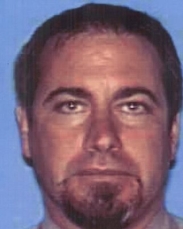
Tag: Nicholas Smirnow

  • WILLFUL BLINDNESS: With Legisi Operator Now Convicted Of Wire Fraud, HYIP Colleague And Fellow Ponzi-Forum Darling Nicholas Smirnow Of Pathway To Prosperity Listed As ‘Wanted’ By INTERPOL; Meanwhile, Cheerleading For JSS Tripler Continues

    Nicholas A. Smirnow. Source: Interpol "Wanted" notice.

    After the news broke yesterday that Gregory N. McKnight, the accused operator of the Legisi HYIP Ponzi scheme, had pleaded guilty to wire fraud in a $72 million caper, things only got worse for the serial Ponzi-forum cheerleaders — not that they’re likely to abandon their practice of willful blindness while reaching across oceans to pick the pockets of any person with cash and a pulse.

    Nicholas Smirnow, a convicted robber, burglar and drug dealer before he became an HYIP operator and darling of the TalkGold, MoneyMakerGroup and ASAMonitor Ponzi forums, is listed as wanted by INTERPOL.

    How long Smirnow has been on INTERPOL’s wanted list and the circumstances under which he was placed on the list were not immediately clear. An email yesterday by the PP Blog seeking comment from federal prosecutors in the Southern District of Illinois on the status of Smirnow and the case against him was not immediately returned.

    Smirnow, 54, also is known as Nicolay Smirnow, Alexander Judizcev, Nicholas Kachura and Jeff Prozorowiczm. He was charged in the Southern District of Illinois with fraud and money laundering-related crimes in May 2010 for his alleged operation of the Pathway To Prosperity (P2P) Ponzi scheme.

    When the charges against Smirnow were announced approaching two years ago, U.S. federal prosecutors said they intended to ask the government of the Philippines to extradite Smirnow to the United States. Whether Smirnow had been jailed in the Philippines and somehow later was set free after the U.S. arrest warrant was issued could not immediately be determined.

    What is clear is that INTERPOL is publishing a “Wanted” listing with the following physical details about Smirnow:

    Height: 1.76 meter
    Weight: 76 Kg
    Colour of hair: Brown
    Colour of eyes: Green

    The INTERPOL poster for Smirnow was up even as the SEC was announcing the McKnight conviction. (See “Wanted” poster, which is active at the time of this post.)

    A U.S. Postal Inspection Service affidavit in the Smirnow case references TalkGold, MoneyMakerGroup and ASAMonitor, which is now defunct. The affidavit also references AlertPay and SolidTrustPay, Canada-based processors often used by HYIP hucksters. The Smirnow criminal complaint also references the Canadian processors.

    The P2P scheme was almost unimaginably widespread, a postal inspector said in the 2010 affidavit.

    “Financial records of payment processors utilized by P-2-P to collect investment funds from investors show that approximately 40,000 investors in 120 countries established accounts with P-2-P,” the postal inspector said. “Despite the fact that the investment was supposedly ‘guaranteed, investors lost approximately $70 million as a result of [Smirnow’s] actions.”

    Ponzi-forum cheerleaders yesterday appeared either to be unaware of (or to have to ignored) the news about the guilty plea of Legisi’s McKnight and corresponding civil judgments against him totaling about $6.5 million.

    Some of them continued to focus on their efforts to promote JSS Tripler/JustBeenPaid, a “program” purportedly operated by Frederick Mann that also uses AlertPay and SolidTrustPay.

    AlertPay and SolidTrustPay also are referenced in court filings in the AdSurfDaily Ponzi case. A 2008 promo for ASD attributed to Mann asserted that Mann was an ASD promoter. ASD operator Andy Bowdoin faces a criminal trial in September 2012 on Ponzi-related charges of wire fraud, securities fraud and selling unregistered securities.

    JSS Tripler/JustBeenPaid asserts it pays a daily return of twice what ASD offered. ASD figure Kenneth Wayne Leaming has been linked to the so-called “sovereign citizens” movement and is jailed near Seattle on federal charges of filing false liens against public officials involved in the ASD case.

    McKnight’s base program in Legisi offered a return of .25 percent (one quarter of 1 percent) per day, according to a 2008 SEC filing.

    Mann’s purported base program offers eight times that return on a daily basis, according to JSS Tripler/JustBeenPaid promos. On an annualized basis, the “program” offers a return that is between 48 and 73 times higher than the returns of imprisoned Ponzi schemer Bernard Madoff.

    Madoff is serving a U.S. prison term of 150 years. McKnight faces up to 20 years, the SEC said yesterday.

    A promo for JSS Tripler/JustBeenPaid that appeared yesterday on a forum known as CariGold made this claim. (Italics added):

    JSS-Tripler now has 213,884 members —
    continuing to grow by over 3,000 new
    members a day. (If it hadn’t been for
    yesterday’s downtime, the number would
    have been “over 4,000.”) Thank you to
    our many promoters for doing such a
    great job!

    Purchases of new JSS-Tripler positions
    are on track for a new all-time record,
    today.

    More than a month ago — on Jan. 23 — the Italian securities regulator CONSOB announced that JSS Tripler promoters were under investigation. Ponzi-forum promoters pooh-poohed the news.

  • With CONSOB Probe Under Way In Italy And Certain U.S. Affiliate Sites Offline, JSS Tripler/JustBeenPaid Members Say AlertPay Is Sending Them Debit Cards: ‘Now I Can Start Using AP In Other Programs,’ MoneyMakerGroup Promoter Announces

    “You can only load money from your Alertpay account onto it. So, now I can start using AP in other programs & have an easy way to get my money to spend, by loading funds from my AP account onto the card. Then I can use the card like a regular debit card in stores, online & even withdraw the money off of the card via an ATM machine.”MoneyMakerGroup post by JSS Tripler/JustBeenPaid promoter, Feb. 16, 2012

    There’s none so blind as those who will not see.

    Only a little more than eight months ago — on June 3, 2011 — the U.S. Secret Service advised a federal judge in Maryland that HYIP schemes spread in part through coordinated posts on “discussion boards.” One of the boards referenced in a Secret Service affidavit aimed at seizing tens of millions of dollars in “criminal proceeds” linked to HYIP hucksters and other scammers was TalkGold.

    Yes, that TalkGold, the Ponzi cesspit, the same TalkGold to which promoters of JSS Tripler/JustBeenPaid race to fire up “I got paid” posts to help sustain a scam that advertises an annualized return of 730 percent on top of two-tier downline commissions totaling 15 percent — more, if members choose to “compound” their “earnings” by leaving them in the system.

    JSSTripler/JustBeenPaid promoters are doing this on the Ponzi forums even after CONSOB, the Italian securities regulator, announced a JSS Tripler-related action late last month and certain promoters’ websites in the United States suddenly have gone missing this month. Frederick Mann is the purported operator of the scheme.

    It was not the first time TalkGold’s name had been referenced as a place from which massive fraud schemes were promoted. The board was referenced in 2010 filings by the U.S. Postal Inspection Service in the Pathway to Prosperity (P2) case. So was MoneyMakerGroup, another Ponzi and fraud cesspit.  P2P operator Nicholas Smirnow was charged criminally, and investigators described P2P as an HYIP scheme that had spread to at least 120 countries and created as many as 40,000 victims. The alleged P2P haul: about $70 million.

    Courtroom references by the Secret Service to TalkGold in the context of fraud schemes date back at least to 2007.

    Here is how the Secret Service affidavit from June 2011 described the activities that occur on TalkGold and elsewhere. (Italics added):

    “Most of the individual posts to the boards are from those who invest in the pyramid schemes and those who operate and promote the illegal investment scams.”

    Based on the Secret Service affidavit and voluminous evidence culled in the aftermath of the 2007 E-Gold investigation that had led to 2008 guilty pleas on charges related to unlicensed money-transmitting and money-laundering, the judge authorized the seizure of tens of millions of dollars from the E-Gold accounts of alleged scammers who’d set up shop through E-Gold to fleece the masses.

    On June 20, 2011, U.S. District Judge Ellen L. Hollander ordered the money “arrested.” The forfeiture is pending, and the final sum seized is unclear. But the website of a court-appointed claims administrator includes this notation. (Emphasis added):  “Approximately $90 million has been seized and/or restrained from the sale of e-metal held in accounts at E-Gold.”

    These things are exceptionally noteworthy in the context of the forfeiture case:

    • E-Gold is assisting investigators in ridding itself of corrupt proceeds warehoused as a result of the money-laundering allegations in 2007. It has cooperated with prosecutors in identifying accounts linked to HYIP scammers and other hucksters.
    • The Secret Service agent who filed the affidavit is the same agent who led the 2008 AdSurfDaily Ponzi scheme investigation, which resulted in the forfeiture of at least $80 million and criminal charges against ASD operator Andy Bowdoin.
    • Even though the agent allegedly has been targeted with false liens by so-called “sovereign citizens” for his work in the ASD Ponzi case, he continues to serve in a capacity that is vital to the security of the United States. He has conducted numerous investigations involving money-laundering and other crimes. These cases, according to court filings, have resulted in the seizure of more than $300 million in “criminally derived proceeds.” That is more than a quarter of a billion dollars. The agent and his colleagues have worked with a Task Force whose members reverse-engineer fantastically complex financial crimes.
    • The court-appointed administrator handing the claims process is the same company that handled a similar process in the ASD Ponzi case.

    E-Gold has done the right thing in cooperating with investigators.

    Coming Soon To An ATM Near You

    Any person who spends so little as five minutes on the Ponzi boards knows that Canada-based AlertPay is conducting business with serial promoters of outrageous frauds — frauds that have grave consequences to individual pocketbooks and frauds that have grave ramifications to national and international security.

    And now, according to posts that originate on forums referenced in multiple U.S. court filings about massive international fraud schemes, AlertPay is sending debit cards to the scammers.

    “Thanks Mann & Co.,” the excited poster announcing her coup on MoneyMakerGroup said, adding five smilies to accent her glee after her earlier reference to ATMs and stores that now could be used to offload profits from a scheme that advertises a return of 2 percent a day.

    In an earlier post, the MoneyMakerGroup member said she received the AlertPay debit card in her mailbox in North Carolina.

    “Now I’m able 2 get my money out FAST!!!!!!!!!!!!” she roared.

    Below her post was a link to a “program” known as “Expert Invest Group” that purports to pay “up to 20000% After 30 days.” The company says its accepts AlertPay, Perfect Money and “Liberty Reserver (sic).”

    A (Brief) Pictorial Study In Contrasts

    1.

    MoneyMakerGroup post from Feb. 16 by promoter of JSSTripler/JustBeenPaid. The post highlights the utilty of AlertPay debit cards in joining other "programs" and offloading profits at ATMs and retail outlets.

    2.

    From Paragraph 55 of a U.S. Secret Service affidavit filed in U.S. District Court in Maryland on June 3, 2011.
  • DISTURBING: JSS Tripler-Related Domain Listed In CONSOB Action Is Based In United States — But Suddenly Starts Redirecting To ‘JustBeenPaid’ Site In The Netherlands; Claim That ‘We’re Not Located In Any Unfriendly Political Jurisdictions’ Exposed As Rank Deception

    On Jan. 23, CONSOB, the Italian securities regulator, made public an action against promoters of JSS Tripler, a “program” that advertises an annualized return of 730 percent. The claim alone would be enough to make Bernard Madoff or Charles Ponzi himself blush.

    Or projectile-vomit.

    But if the CONSOB action were not trouble enough, one of the JSS Tripler-related domains listed in the agency’s action is hosted in Utah, according to domain records. The domain, which forms its root with a hyphen splitting the proper name of JSS Tripler — i.e., JSS-Tripler.com — continued to serve pages from Utah for several days after CONSOB’s Jan. 23 announcement. The domain, for instance, published daily updates on the number of days JSS Tripler itself purportedly had been in action.

    Among the graphics on the Utah-hosted landing page was an image of a JSS Tripler pitchwoman who appeared to be Asian in descent. Assuming the woman actually exists, her nationality remains a mystery. At a time uncertain between Feb. 2 and Feb. 3, however, the site stopped serving content and instead began to redirect to a JustBeenPaid subdomain styled “marketing” that is hosted in the Netherlands.

    Whether a U.S. resident or citizen of another country who reached across international borders applied the redirection is unclear. What is clear is that the United States could join Italy in exercising  jurisdiction over JSS Tripler and its promoters if it chose to do so. The site also is accessible through individual U.S. states, meaning regulators at the state level also could exercise jurisdiction.

    A state’s choice to exercise jurisdiction over the sale of unregistered securities is hardly unusual in the HYIP sphere. Florida, for example, exercised jurisdiction over AdSurfDaily and operator Andy Bowdoin. North Dakota exercised jurisdiction over Pathway to Prosperity and operator Nicholas Smirnow. Oregon exercised jurisdiction over an abomination known as “I Need Cash,” a cycler operated by Kristopher K. Keeney.

    JustBeenPaid and Frederick Mann, a murky figure who once claimed to be an ASD promoter, are the purported operators of JSS Tripler. The Netherlands subdomain shows an image of a man at the top of the page. That man is described on the site as “Louis Paquette, JBP Affiliate Sales & Marketing Director.”

    The redirection, which occurs in Utah, according to server data, is virtually immediate — meaning that the previous content and photo of the woman of Asian descent no longer load and that the traffic is switched to the Netherlands page that shows the purported image of Paquette.

    Among other things, this development raises questions about who caused the Utah server to redirect to the Netherlands domain and precisely why the change was made on the heels of the CONSOB action. Whether JustBeenPaid or JSS Tripler themselves had control over the Utah domain is unknown.

    At a minimum, though, the presence of the Utah domain may be evidence that JustBeenPaid/JSS Tripler not only sold unregistered securities to U.S. citizens, but did so from inside the United States with a U.S. promoter or a promoter from another country with access to the Utah server at the helm. And because the redirect to the JustBeenPaid subdomain in the Netherlands occurs from inside the United States, it exposes a JustBeenPaid/JSS Tripler lie that the “opportunity” protects itself and promoters from investigation and/or prosecution.

    Even if the redirection were not occurring in the United States, the CONSOB action destroys the myth that the “opportunity” is outside the reach of law enforcement.  So does the simple fact that any regulator in the world could take action against the “opportunity” and its promoters. Indeed,  the cross-border nature of the scheme puts investors in virtually all jurisdictions at risk. Individual promoters could be targeted for investigation/prosecution in multiple jurisdictions — and if actions such as those begin to occur, the access of Just BeenPaid/JSS Tripler to cash sources could dry up.

    A claim by a MoneyMakerGroup Ponzi-forum promoter that Just BeenPaid/JSS Tripler has paid out more than $10 million to investors may demonstrate the vast reach of the “opportunity” and its ability to tap funding sources while siphoning undisclosed sums for itself. Just BeenPaid/JSS Tripler may be no Madoff, but $10 million still is a massive sum, one that should raise eyebrows in the worldwide law-enforcement community.

    Content accessible from the Netherlands-based JustBeenPaid subdomain — marketing.justbeenpaid.com — raises other troubling concerns. This statement (next paragraph) appears at the bottom of a “login” page in the JustBeenPaid root domain. The statement is accessible through the “marketing” subdomain. (Indent/italics added):

    Secure Offshore Servers
    — Our servers are in a strategic location.
    We pay special attention to security.
    Our servers are organized so upgrading and expansion are very easy.

    Offshore Business
    — Our business operations are geographically decentralized.
    We don’t have any central office.
    We’re not located in any “unfriendly political jurisdictions.”

    As a practical matter, the mere fact the page is accessible through a redirect that occurs in the United States may destroy any claims that JustBeenPaid/JSS Tripler protects members against “unfriendly political jurisdictions.” Any transaction that occurred or occurs through the Utah domain necessarily involves wires in the United States.

    Regardless of the domain or email address through which business is conducted, any U.S.-based promoter of JustBeenPaid/JSS Tripler is using wires inside the United States, a situation that brings wire fraud into play — in addition to the securities issues.

    A more troubling question, perhaps, is why JustBeenPaid/JSS Tripler even would have the need to make such a claim if its international business is above-board. The same enterprise also claims to have a U.S. patent, a specious claim in the context of securities because the U.S. Patent and Trademark Office does not regulate the securities markets of the United States or any other country.

    Is JustBeenPaid/JSS Tripler The BCCI Of The HYIP World?

    In the early 1990s, a corrupt international banking enterprise known as Bank of Credit and Commerce International created a worldwide financial scandal. The bank perhaps was best known by its acronym — BCCI — and purportedly was designed to be “offshore everywhere.”

    JustBeenPaid/JSS Tripler is making the same sorts of claims associated with BCCI, a spectacularly bright red flag if ever there was one.

    But if that bright red flag were not enough, other content accessible through the “marketing” subdomain of JustBeenPaid sends signals that positively glow of danger. Indeed, a “Member Agreement” link accessible through the site includes this language. (Indent/italics added):

    6. I affirm that I am not an employee or official of any government agency, nor am I acting on behalf of or collecting information for or on behalf of any government agency.

    7. I affirm that I am not an employee, by contract or otherwise, of any media or research company, and I am not reading any of the JBP pages in order to collect information for someone else.

    Any political jurisdiction in any part of the world easily could construe those words as an invitation extended by JustBeenPaid/JSS Tripler to investors to join an international conspiracy engaging in organized crime and mass-marketing fraud.

    The same type of claim became an element of the Legisi HYIP prosecution in the United States. The Legisi prosecution, which ultimately involved the SEC, began as an undercover operation between the U.S. government and the state government of Michigan.

    Even more land mines emerge when one considers that JustBeenPaid/JSS Tripler  is being promoted on Ponzi boards such as MoneyMakerGroup and TalkGold, both of which are referenced in U.S. federal court files as places from which Ponzi schemes are promoted.

    Veteran forum and social-network hucksters are promoting JustBeenPaid/JSS Tripler, including promoters linked to the AdSurfDaily Ponzi scheme case in the United States and CONSOB’s earlier action involving Club Asteria, another Ponzi forum darling.

    Depending upon how the universe lines up, JustBeenPaid/JSS Tripler could find itself starving for cash in very short order. It is a program that is thumbing its nose at law enforcement across the globe — and its willfully blind promoters could find themselves named in individual actions just about anywhere.

    It is the very definition of an international financial conspiracy of the most dangerous sort, a sort of emerging BCCI of the HYIP world.

    BEFORE

    This is the top of the page at the JSS-Tripler.com domain as it existed on Jan. 30, 2012.

    AFTER

    This is the top of the "marketing" subdomain of JustBeenPaid.com as it exists today. Prospects who visit the Utah-based JSS-Tripler domain referenced in the "BEFORE" screen shot above now are redirected to the Netherlands-based "marketing" subdomain of JustBeenPaid. The switch occurs in Utah, according to server data.
  • ‘DAVE’ UPDATE: JSS Tripler 2 (T2) Blocks Public Access To Forum; Purported ‘Admin’ Claims Members Distorting ‘The Facts’ As He Announces ‘Scan’ Of Member-Critics On MoneyMakerGroup; Faith Sloan Chides Legendary Huckster ‘Ken Russo’ With ‘Oopsies’

    UPDATE: “Dave,” the purported “admin” of an increasingly bizarre HYIP known as JSS Tripler 2 (T2), has blocked public access to the T2 forum.

    T2, which purportedly was born after a meeting of Ponzi-forum minds, is using payment processors notoriously friendly to Ponzi and fraud schemes. The “program” is trading on the name of a different Ponzi scheme even as it preemptively denies that T2 itself is a Ponzi scheme and advertises a return of 2 percent a day on top of referral commissions.

    But payouts can’t be made because an AlertPay account in the name of “Chris,” an apparent one-time business partner of “Dave,” was frozen, “Dave” has asserted.

    The action blocking the public from the forum was taken because naysayers were copying information from the forum and using it to make critical posts elsewhere, according to “Dave.”

    Forum closures, post deletions, traffic blockages and leeching off the name recognition of other “programs” often are signatures of scams-in-progress. (See July 2009 story on the roller-coaster ride of the AdViewGlobal (AVG) forum, which rose from the carcass of the alleged AdSurfDaily Ponzi scheme and was accompanied by threats that AVG critics would be banned, sued or lose their Internet connections.) Similar claims have accompanied events at T2.

    Purported ‘Scan’ Of MoneyMakerGroup

    And “Dave,” posting on the T2 forum as “foradmin,” also claims he has performed “a scan over on [MoneyMakerGroup”] to “see who is turning against us and promoting T2 as a scam.”

    “Dave” did not say precisely what his “scan” entailed or how he intended to hold naysayers accountable for their off-site posting activities. Nor did he explain how scanning MoneyMakerGroup for T2 traitors could help T2 solve its core problem: the apparent blockage of the “Chris” AlertPay account that was used to launch T2 in the fall of 2011.

    Although “Dave” and “Chris” purportedly are battling electronically across continents, “Dave” purportedly is telling T2 members there is reason to be hopeful that onetime T2 business partner “Chris” will stop being a wretch long enough to get the “program” restarted, according to forum posts.

    But even the amount purportedly trapped in the AlertPay account when the freeze ensued and things purportedly turned sour between “Dave” and “Chris” is in dispute. “Dave,” according to forum posts, has claimed at least two separate sums: $200,000 and $160,000.

    The reporting disparity only leads to more questions about T2. “Dave,” according to forum posts, is advocating for T2 members not to file AlertPay disputes. T2 says it sells “dream positions” (DPs) for $10 each and something called “dream matrices” (DMs) for $20.  T2 bills itself as the place “WHERE YOUR DREAMS COME TRUE.”

    With a representation of a sparking-silver  crescent moon encasing the phrase “2%” in glowing gold — and against a backdrop of twinkling stars in multiple sizes — T2 goes about the business of impressing website prospects.

    Among the veteran hucksters in its ranks is Ponzi-forum legend “Ken Russo.”

    OINKER ALERT: ‘Ken Russo’ Assesses Criminality Of ‘Chris’

    “Ken Russo” — a man whose fraud bona fides only grow as he leads participants into one train wreck  after another and habitually posts his “earnings” in forums listed in federal court filings as places from which Ponzi schemes are promoted — claims to have communicated with “Chris” and decided that the lack of follow-up communications from “Chris” suggests that “Chris has “committed a serious crime” and that he “should cooperate fully at this time.”

    Whether “Ken Russo” called police on “Chris” is unclear. Also unclear is how any police investigation would proceed once officers determined that “Ken Russo,” too, was promoting a “program” whose advertised annualized return was on the order of 730 percent — with recruitment commissions on top of that — while simultaneously insisting it was not a Ponzi scheme after having been born on a Ponzi forum listed in federal court files and claiming to be trying to rebirth itself from Thailand.

    The word “MoneyMakerGroup” is spelled out by a fraud victim in longhand in a 2008 evidence exhibit in the Legisi HYIP scheme, which triggered both civil (SEC) and criminal investigations (U.S. Secret Service) and charges. Legisi, another Ponzi forum darling, allegedly gathered more than $72 million and sparked an undercover probe by the Secret Service, which assigned an agent to pose as an interested investor.

    Mazu.com operator and forum huckster Matthew J. Gagnon was charged both criminally and civilly in the Legisi case, with the SEC describing Gagnon as “a danger to the investing public.” Civil judgments totaling more than $2.5 million have piled up against Gagnon. The evidence exhibit filed in the case (referenced above and partially displayed on the right) shows “Money Maker Group.com” in longhand, along with Gagnon’s name and phone number in longhand.

    “Dave” asserted last week that “Chris” would be arrested — and then “Dave” purportedly left England for Thailand, apparently with the expectation that an unidentified police agency would mop up on “Chris” after “Dave” boarded a plane for the Indochina Peninsula.

    Thailand now has emerged as the purported venue from which “Dave” now claims he is back in communication with “Chris,” after “Chris” purportedly had ducked him in England when both men were in the country simultaneously.

    After being subjected to arrest threats, “Chris,” according to Dave, is starting to understand that he is in an impossible legal thicket and is displaying a willingness to solve the purported AlertPay problem.

    “Chris,” according to “Dave,” apparently also recognizes that T2 members who live in England might pose a localized threat to “Chris,” something that reportedly has made “Chris” more amenable to making sure money gets back in the hands of T2 members.

    “Dave” did not say what police agency he purportedly called on “Chris.” Whether “Chris” will construe “Dave’s” purported actions and the prospect of local menacing by individual T2 members as extortion bids is unclear.

    Despite preemptively denying T2 is a Ponzi scheme, “Dave,” appears not to recognize that prosecutors might construe at least one of his forum remarks as a virtual confession that T2 was selling unregistered securities as investment contracts and positioning the “program” as a passive investment opportunity.

    “Dave,” according to “Dave,” worked his “ass” off and created a condition under which members “can sit and watch TV and make a fantastic return.” Meanwhile, the T2 website claims that “Dream Positions are perfect for the ‘passive type’ member.”

    Faith Holds Forth

    HYIP aficionado Faith Sloan has trained her sights on both “Dave” and “Ken Russo.”

    Sloan, who published a “JSS Tripler2 (T2) Calculator” on her Blog and speculated that her “$1500 outlay of cash” compounded for 75 days would morph into an “account value of $6,623.75” of which “$5,123.75” would be profit, announced that “Dave” booted her off the T2 forum — apparently for making him look bad.

    Events at T2, she now ventures, may be “borderline insane.” And “Dave” may be “EXTREMELY INCOMPETENT” or perhaps “just a little SCAMMER boy” — if not a “hybrid mix.”

    In July 2010, the Financial Industry Regulatory Authority (FINRA) ran a public-awareness campaign that warned about HYIP scams that spread on social-media sites. FINRA described the HYIP sphere as a “bizarre substratum of the Internet.”

    The awareness campaign occurred against the backdrop of criminal charges being filed by the U.S. Postal Inspection Service against Nicholas Smirnow, a one-time bank robber and drug dealer and the alleged operator of the Pathway To Prosperity HYIP fraud scheme.

    Pathway To Prosperity generated more than $70 million and created 40,000 victims from 120 countries, according to court filings.

    Whether Sloan acquainted herself with FINRA’s public-awareness campaign about HYIPs and documents by Professor James E. Byrne that explained the alleged fraud behind Pathway to Prosperity is unclear. Also unclear is whether Sloan is aware that the U.S. Department of Justice has spotlighted the Pathway To Prosperity case as an example of international mass-marketing fraud.

    What is clear is that T2’s asserted payout rate is nearly as absurd as Pathway to Prosperity’s. It’s also clear Faith Sloan — despite her T2 calculator — is publicly challenging fellow HYIP purveyor “Ken Russo” to get real.

    “Ken Russo,” Faith Sloan declares on her Blog, is “a crybaby!”

    And “Ken Russo,” she asserts, made a bad call on a program known as “Dollar Monster” and has “NOT made any money with his $24000.00 in JSSTripler2 . . .”

    “Oopsies,” she chides “Ken Russo.”

    Whether “Ken Russo” actually has $24,000 riding in T2 is unclear.


  • UPDATE: ‘OneX’ Site Pushed By AdSurfDaily President Andy Bowdoin Will Not Resolve To Server; Conference-Call Talker Identified As ‘J.C.’ Assures Listeners That God Is On Board The OneX Train And That A ‘Paved Road’ Is In Firm’s Future

    Andy Bowdoin

    UPDATED 6:59 A.M. ET (DEC.29, U.S.A.): The OneX site now is resolving to a server, although the site still appears to be down. (UPDATE 6:25 P.M. ET DEC. 29: The OneX site now appears to be back online after an absence of days. Whether is is fully functional is unclear.) Web data now suggest OneX is using a server in the United States. It previously used a server in Europe. Here, below, our post that reflected earlier events . . .

    At the time of this post, the website for “OneX” — a “program” pushed by AdSurfDaily President Andy Bowdoin — will not resolve to a server.

    Nor will the site return a ping. The ping returns “Timed out” error messages. Because the site will not resolve to a server, a message that the site “will be available in the next 24 hours” no longer appears at the URL for OneX.

    The development means that some or all OneX members and prospects are in an even greater information vacuum. The site has been inaccessible for days, although the PP Blog has learned OneX conducted a conference call yesterday and assured listeners the site would return after server problems caused by “inexperience” were solved.

    The call featured various cheerleaders, including a man identified as “J.C.,” apparently a company official.

    “J.C.,” explaining that he did not enjoy hype, assured listeners that “God” was on the side of OneX and that he anticipated 2.5 million riders on the OneX train by March.

    It was revealed during the call the OneX is using Canada-based Solid Trust Pay (STP).

    STP was one of the payment processors used by ASD and has a reputation for fueling Ponzi and fraud schemes. STP was among the processors used by alleged international swindler Nicholas Smirnow of Pathway To Prosperity, which the U.S. Postal Inspection Service said last year had defrauded tens of thousands of people from 120 countries.

    During the OneX conference call, J.C. explained that many members were showing “unbelievable tolerance” for the website problems.

    “Those who are not being patient do not understand what’s there,” J.C. asserted.

    Among other things, J.C. appealed to callers not to send in support tickets.

    “We’re having some — it’s load problems,” J.C. asserted, calling the development “teething problems.”

    J.C. also assured listeners that the company was “a thousand times” more frustrated than OneX members who cannot access the site.

    The OneX IT team was inexperienced in the area of “load testing” and wished to apologize for its lack of experience, J.C. said.

    “. . . We don’t know how to do heavy load-testing,” J.C. asserted.

    That the OneX website was being “slammed” by traffic was a “good thing,” J.C. asserted.

    “Hey,” he insisted, “these are pioneering days.”

    “We’re on a mission from God,” J.C. asserted.

    Bowdoin, who is facing trial on criminal charges of operating a Ponzi scheme through ASD that gathered at least $110 million, told conference-call listeners in October that God created OneX to help him win his criminal case.

    Although J.C. apparently agrees with Bowdoin that God is steering the OneX ship, J.C. told listeners that they should expect no support from their sponsors.

    Bowdoin has claimed that he is providing “leads” to his OneX recruits and that enrollees could make nearly $100,000 by paying $5.

    A woman on yesterday’s OneX call, which apparently was organized by a downline group with access to OneX management, claimed there were plenty of reasons to be excited about OneX.

    “In three months, we can look back . . . and laugh,” the woman claimed, later asserting the company started out “on horseback.”

    “You’re pioneers,” J.C. asserted. “This is huge.”

    OneX “leadership” will “roll up their sleeves” to solve problems, another woman asserted.

    J.C. said the firm would provide a “paved road” for members one day.

  • As Promos On Ponzi Forums Continue And Members Claim IRS Recognition, Club Asteria Acknowledges That Its Members Used PayPal ‘To Cheat Fellow Members’; Says Fraudsters Were Turned Over To Unidentified ‘Authorities’; Existing Members Of Virginia-Based Firm Told To Use Offshore Processors

    This May 1 promo for Club Asteria describes its as an "investment company" and instructs prospects that "you will not again anything unless you invest." The promo advertises returns of up to 7 percent a week. "I am happy because even if I am not doing anything I still manage to earn from it," the promo claims.

    In June 2010, the U.S. Department of Justice used its Blog to warn about the emerging threat of “mass marketing fraud,” specifically citing the criminal allegations of a $70 million Ponzi fraud against Nicholas Smirnow of Pathway To Prosperity (P2P).

    P2P was promoted on the TalkGold and MoneyMakerGroup Ponzi forums.

    A little over a month later, in July 2010,  the Financial Industry Regulatory Authority (FINRA) described the HYIP sphere as a “bizarre substratum of the Internet” and issued a fraud alert. FINRA also referenced the P2P case. At the same time, it pointed to the collapsed Genius Funds Ponzi, believed to have consumed $400 million.

    Genius Funds also was promoted on TalkGold and MoneyMakerGroup.

    In December 2010, the interagency Financial Fraud Enforcement Task Force led by U.S. Attorney General Eric Holder specifically warned the public to be wary of social-networking sites and chat forums. The warning was part of “Operation Broken Trust,” a law-enforcement initiative in which investigators described more than $10 billion in losses from recent fraud cases.

    One of the cases described was the SEC’s action against Imperia Invest IBC, a murky offshore business accused of stealing millions of dollars from the deaf.

    Imperia Invest also was promoted on TalkGold and MoneyMakerGroup.

    Last week, promoters of a Virginia-based company known as Club Asteria (CA) announced on the Ponzi boards that PayPal had frozen CA’s funds and blocked its access to the PayPal system. Although CA has been presented as a wholesome “opportunity” recognized by the Internal Revenue Service as a nonprofit organization (see graphic below), the CA promoter who announced the PayPal news last week on MoneyMakerGroup simultaneously was promoting two “programs” that purportedly pay 60 percent a month.

    Some CA promoters claim CA pays 520 percent a year. Even jailed Ponzi schemer Bernard Madoff would blush at such advertised rates of return.

    MoneyMakerGroup is referenced in federal court filings as a place from which Ponzi schemes are promoted. So is TalkGold, another well-known forum in the HYIP world.

    This morning — also on the MoneyMakerGroup — a different CA promoter announced that CA’s Andrea Lucas had responded to last week’s PayPal news. Even as the CA member was announcing on a known Ponzi scheme and criminals’ forum that Lucas had issued a statement on the PayPal matter, he simultaneously was promoting two HYIPs and something called One Dollar Riches.

    “OneDollarRiches allows you to parlay a small investment of just one dollar into a constant stream of cash, day in and day out!” according to its ad. “You can make 100 times your investment in just a few days by following our simple step by step instructions.”

    The mere presence of CA promotions on the Ponzi boards leads to questions about whether the firm’s receipts are polluted by Ponzi proceeds. Paying members from such proceeds would put CA members in possession of tainted money — and banks into which they deposited those proceeds also would be in possession of tainted money.

    Lucas, according to the CA website, now has publicly acknowledged last week’s actions by PayPal. Details, though, were spartan. CA did not say how much money PayPal had frozen. Meanwhile, the firm instructed members to fund their accounts by using offshore processors.

    At the same time, CA urged members not to spread bad news about the company on forums. Members who shared negative information were subject to having their CA accounts revoked, according to the company.

    “Members shall not publically (sic) disparage, demean or attack Club Asteria, its members, services or charitable activities,” CA remarks attributed to Lucas on the CA website read. The remarks were dated May 16 and appeared in the “News” section of the site.

    In the same announcement, Lucas acknowledged that a “small group” of CA members “used their PayPal accounts to cheat fellow members.”

    The company claimed it had turned the members “over to the authorities,” but did not identify the authorities or say whether they were based in the United States or elsewhere.

    CA, which said PayPal was “acting with integrity,” then counseled its members to rely on offshore processors.

    “First, if you have been paying for your membership through PayPal, please discontinue your subscription with PayPal immediately and start using one of the other approved payment processors AlertPay, Towah or CashX to ensure that your membership stays current,” the remarks attributed to Lucas read.

    “Second, Do NOT use online forums, websites or social networks to lodge blame or complaints about PayPal or your Club Asteria team,” the remarks continued. “There is no benefit or purpose in this, and it only serves to create discord and spread rumors. Not only that, doing so is a direct violation of Code of Ethics & Conduct, Rule 8 and can result in immediate revocation of your membership.”

    CA’s bizarre announcement occurred against the backdrop of thousands of bizarre promos for the firm that appear online. Some promos claim $20 spent with CA monthly turns into a lifetime income of $1,600 a month. Others claim CA is a “passive” investment opportunity, which raises questions about whether CA — whose members claim the program typically pays out about 3 percent to 4 percent a week or up to 208 percent a year — is selling unregistered securities as investment contracts.

    Lucas has been referred to in promos as a former “chairman” and “vice president” of the World Bank. Several promos have described her as a Christian “saint.”

    CA’s claims that only a “small group” of members is causing problems may be dubious. Wild claims have been made in promo after promo for the firm, which says it is not in the investment business.

    This promo for CA contains a link that resolves to an active CA affiliate site. The affiliate site has a low affiliate ID number, suggesting the affiliate was one of CA's earliest members. The promo claims CA is a 501 (c)(3) nonprofit organization recognized by the IRS.
  • Egg-Themed Domains Used To Promote HYIPs That Flushed Hundreds Of Millions Of Dollars Go Missing — Plus, An Update On Data Network Affiliates Amid Suggestion Thyroid Cancer Sufferers Can Benefit From Product Called ‘O-WOW TurboMune’

    Four egg-themed domain names used to drive business to HYIPs that ended in spectacular flameouts and foreshadowed a warning from the Financial Industry Regulatory Authority (FINRA) have gone missing.

    The domains — including one that redirected to an HYIP site known bizarrely as Cash Tanker, which used an image of Jesus Christ to promote a purported payout of 2 percent a day — first were promoted on the pro-AdSurfDaily Surf’s Up forum  by a poster who used the handle “joe” in December 2009.

    The egg-themed promo featured a pitch that HYIP participants were wise to spread risk by not keeping all of their eggs in “ONE BASKET.” It also hawked Gold Nugget Invest (7.5 percent a week); Saza Investments (9 percent a week); and Genius Funds (6.5 percent a week).

    Despite an active criminal investigation into the business practices of ASD President Andy Bowdoin and alleged co-conspirators — and despite a RICO lawsuit filed by members against Bowdoin and repeated warnings from various regulators about the dangers of HYIPs and autosurfs — the egg-themed promo claimed in all-caps that “I MAKE 2000.00 A WEEK” and directly solicited ASD members to part with their money.

    One Surf’s Up member dissed critics of the promo, calling them “dead wrong.”

    “I also make a lot of money from those four and your remarks tell me you don’t know anything about them,” the member claimed. “[T]hey are very reputable [companies] who have been around for years….and the money is NOT made from ‘new’ people’s money….google them and look at various forums and see what others have to say about them….I don’t even know Joe, but I can vouch for the programs!”

    A  series of spectacular collapses that consumed each of the HYIPs then followed over a period of just weeks, demonstrating that spreading risk across multiple HYIPs by putting eggs in multiple HYIP baskets was spectacularly poor advice that had produced a recipe for financial disaster.

    In July, FINRA said that Genius Funds cost investors about $400 million. The regulator launched a public-awareness campaign, one component of which was an ad campaign on Google designed to educate and inform the public about HYIP fraud.

    “Open the cyber door to HYIPs, and you will find hundreds of HYIP websites vying for investor attention,” FINRA said. “It is a bizarre substratum of the Internet.”

    Records show that the government of Belize had issued a warning about Gold Nugget Invest nearly a month before the egg-themed promo had appeared on Surf’s Up and at least two members had vouched for the program.

    FINRA also pointed to criminal charges filed by the U.S. Postal Inspection Service in May against Nicholas Smirnow, the alleged operator of an HYIP Ponzi scheme known as Pathway To Prosperity that fleeced more than 40,000 people across the globe out of an estimated $70 million.

    Gold Nugget Invest (GNI) collapsed in early January 2010, about a month after the egg-themed promo had appeared on Surf’s Up. Surf’s Up went offline just days prior to the collapse of GNI, which was explained in bizarre fashion.

    Using baffling prose, a purported GNI manager claimed the program ended after it had attempted to gain “a crystal clear vision of our financial vortex” during the fourth quarter of 2009.

    After the collapse of the programs in the original egg-themed pitch on Surf’s Up, the domains then were set to redirect to other HYIPs.

    Some ASD members later turned their attention to promoting MLM programs such as Narc That Car/Crowd Sourcing International (CSI), Data Network Affiliates (DNA) and MPB Today.  CSI and DNA purport to be in the business of paying people to write down the license-plate numbers of cars for entry in a database. MPB Today purports to be in the grocery business.

    DNA, which once instructed people of faith that it was their “MORAL OBLIGATION” to hawk a purported mortgage-reduction program offered alongside the purported license-plate program, now appears to have morphed into a program known as One World One Website or “O-WOW.”

    An email received by members of the O-WOW program this weekend purported that a man suffering from terminal thyroid cancer had derived benefit from an O-WOW product known as “TurboMune” and that members somehow can earn “24% Annual Interest on their money” by giving it to O-WOW.

    If members don’t pay O-WOW before Nov. 30, they’ll earn a lower rate of interest (18 percent), according to an email received by members.

    Like DNA, O-WOW is associated with Phil Piccolo. During a radio program in August, Piccolo threatened critics with lawsuits and planted the seed that he could cause critics to experience physical pain. DNA has an “F” rating from the Better Business Bureau. So does CSI. So does United Pro Media, a company formerly operated by MPB Today’s Gary Calhoun.

    See the PP Blog’s Dec. 4, 2009, story on the egg-themed pitches on the Surf’s Up forum.

  • KABOOM! Feds Release Info On ‘Alpha Trade Group’ Forex Scheme With Ties To Mexico, Panama; Records Suggest Scheme Was Collapsing Even Prior To Promos On TalkGold, MoneyMakerGroup Forums

    Yet another HYIP scheme pushed on the TalkGold and MoneyMakerGroup forums has been outlined by federal prosecutors — this time in Florida.

    The name of the scheme was Alpha Trade Group (ATG), and web records show that the scheme was pitched on TalkGold and MoneyMakerGroup beginning on Oct. 7, 2009. Court records, meanwhile, show that ATG already was under investigation by the U.S. Department of Homeland Security when the first posts to promote the scheme appeared on the forums.

    Just days earlier, on Sept. 25, 2009, a U.S. bank closed an account prosecutors later linked to the scheme, according to court records. Taken together, the court and web records strongly suggest that the ATG investment “opportunity” first was advertised on MoneyMakerGroup and TalkGold when the scheme already was in a state of collapse because one of its key money conduits had been blocked.

    This screen shot shows the first post about Alpha Trade Group appeared at the MoneyMakerGroup Ponzi forum on Oct. 7, 2009 — days after a U.S. bank already had closed an account linked to the scheme amid fears it was being used to launder money.
    This screen shot, taken from Paragraph 23 of a federal affidavit in the ATG Ponzi case, shows that a U.S. bank closed an account later linked to the scheme at least 12 days prior to the ATG promo on the MoneyMakerGroup forum. Court records show the scheme already was under investigation by federal authorities before the sales posts were made on the MoneyMakerGroup and TalkGold forums.

    It is possible that the scheme was in a state of collapse even earlier than September 2009. Court records show that at least one bank account tied to the business was closed on June 18, 2009 — nearly four months prior to the first posts promoting the scheme on MoneyMakerGroup and TalkGold.

    One MoneyMakerGroup poster — apparently angry that the program was being advertised in public — scolded the poster who started the thread.

    “Please take down your posts,” the scolder wrote. “ATG asked all of the members not to advertise. Otherwise your account with the company will be closed. Go to recent e-mails from the company. This is serious. Please comply.”

    The post scolding the advertiser appeared on Oct. 29, more than three weeks after the original sales pitch appeared on the forum and more than a month after federal agents began their probe into ATG.

    By Feb. 22, 2010, federal prosecutors and Immigration and Customs Enforcement (ICE), a division of the U.S. Department of Homeland Security, were in federal court in Orlando filing a forfeiture complaint.

    The Feds sought the seizure of $316,418.50 in a bank account linked to the scheme, according to court records. The forfeiture complaint alleged a Forex Ponzi scheme, and prosecutors linked the fraud to ATG, a Florida company known as Online Market Solutions and at least four individuals: Jose Cecilio Martinez Beltran, Francisco Amaury Suero Matos, Yehodiz Padua Valentin and Welinton Bautista Castillo.

    Unnamed “others” also were referenced in the complaint.

    “Investment opportunities offered by Alpha Trade Group promised participants unusually high monetary returns on investments and for referring other persons to the programs,” prosecutors said, in a statement to victims. “In reality, the investment opportunity was little more than ‘Ponzi’ or ‘Pyramid’ scheme, in which if participants actually received funds, those funds were generated by investments made by other Alpha Trade Group investors.”

    A federal judge ordered the money forfeited on July 26, according to court records.

    The case was brought by the office of U.S. Attorney A. Brian Albritton of the Middle District of Florida. Albritton’s office is handing a number of highly complex financial-fraud schemes.

    Websites such as TalkGold, MoneyMakerGroup, ASAMonitor and MyCashForums have promoted one fraud scheme after another. TalkGold, MoneyMakerGroup and ASAMonitor are specifically referenced in court documents filed in the Pathway To Prosperity (P2P) fraud scheme.

    P2P’s Nicholas Smirnow was charged in May by the U.S. Postal Inspection Service and federal prosecutors in Southern District of Illinois with operating a massive HYIP Ponzi scheme that affected investors across the world.

    MoneyMakerGroup also is referenced in court filings by the SEC in the alleged Legisi Ponzi scheme.

    Earlier this month, the U.S. Department of Justice announced that the U.S. Secret Service had helped bring about the arrest in France of an alleged international thief in part by monitoring criminal forums.

    Vladislav Anatolievich Horohorin, 27, was arrested by French authorities in Nice. Court filings show that the Secret Service used undercover agents and “undercover communications” to develop the case.

    Federal records show that ATG purported to be registered in Panama and was using “various corporations and fictitious names registered in Florida” to pull off the scheme.

    Among the names used was “Orsa Investment Group LLC,” according to an affidavit filed in the case. The scheme began in April 2009, according to court filings.

    An ICE agent said in an affidavit that the Internet and “business opportunity meetings” in Central Florida were used to promote the scheme.

    Read the ATG forfeiture complaint, which paints a picture of a commission-based, multilevel-marketing (MLM)  scheme within a Forex fraud scheme — and other schemes within schemes.

  • Judge Extends Asset Freeze In Matt Gagnon Fraud Case; Issues Order To Preserve Evidence And Require Weekly Financial Report To SEC

    Matt Gagnon of Mazu.com.

    A federal judge has extended the freeze on the assets of a website operator accused by the SEC of shilling for a Ponzi schemer and then trying to extort money from the schemer when the fraud was collapsing.

    Severe restrictions placed on Mazu.com operator Matt Gagnon by U.S. District Judge George Caram Steeh of the Eastern District of Michigan illustrate the financial and legal dangers of using the Internet to promote murky businesses. At the same time, orders issued by Steeh destroy myths advanced on Ponzi forums that website operators are insulated from prosecution and that their business contacts and customers cannot be sucked into a Ponzi probe.

    Demonstrating the life-altering nature of Ponzi schemes and the monumental legal entanglements and inconvenience that flow from such schemes, the judge also ordered Gagnon to submit a “sworn” statement “each Friday” to the SEC. The order requires Gagnon to account for “all funds received” during the week, including funds received “by others on his behalf.”

    Steeh also ordered Gagnon and his “officers, agents, servants, employees, attorneys, nominees, banks, brokers, dealers, financial institutions, and those persons in active concert or participation with any one or more of them” not to destroy evidence.

    Steeh’s order applies to “books, records, documents, correspondence, ledgers, accounts, statements, files, electronically stored information, and other property of or pertaining to the Defendant,” regardless of the location of the information.

    At the same time, the judge ordered expedited discovery in the case and freed up $2,000 for Gagnon “to pay living expenses.”

    Gagnon was accused in May of using his website to pitch the alleged Legisi HYIP Ponzi scheme, which the SEC described as a $72.6 million fraud. The judge’s orders followed on the heels of an awareness campaign by the Financial Industry Regulatory Authority (FINRA) to educate the public about HYIP schemes and the filing of criminal charges by the U.S. Postal Inspection Service against Nicholas Smirnow, accused of operating a $70 million Ponzi HYIP scheme known as Pathway to Prosperity (P2P).

    FINRA issued its HYIP warning on July 15, calling the HYIP universe a “bizarre substratum of the Internet” and saying “HYIPs are old-fashioned Ponzi schemes dressed up for a Web 2.0 world.”

    In May, federal prosecutors declared in court filings in the P2P case that “[a] large percentage, if not all, HYIPs, are Ponzi schemes.” In its HYIP alert, FINRA built on that theme, declaring that “[v]irtually every HYIP we have seen bears hallmarks of fraud” and noting that schemers were using websites, forums and social-media sites such as Twitter and Facebook to spread Ponzi misery globally.

    “From January 2006 through approximately August 2007, Gagnon helped orchestrate a massive Ponzi scheme conducted by Gregory N. McKnight . . . and his company, Legisi Holdings, LLC,” the SEC said.

    “Gagnon promoted Legisi but in doing so misled investors by claiming, among other things, that he had thoroughly researched McKnight and Legisi and had determined Legisi to be a legitimate and safe investment,” the SEC said.

    Among other things, the SEC alleged that Gagnon “had no basis for the claims he made about McKnight and Legisi.

    “Gagnon also failed to disclose to investors that he was to receive 50% of Legisi’s purported ‘profits’ under his agreement with McKnight,” the SEC said. “Gagnon received a net of approximately $3.8 million in Legisi investor funds from McKnight for his participation in the scheme.”

    In its complaint against Gagnon, the SEC alleged he moved from one fraud scheme to the next and even had promoted a scheme operated by the late Bryan K. Foster, a convicted felon. Some of the money from the alleged Legisi Ponzi scheme ended up in the control of Foster, who was running a purported investment program of his own.

    The allegation that proceeds from one fraud scheme ended up as proceeds of a second scheme demonstrates the interconnectivity of schemes in the age of the Internet.

    “Gagnon has been unrelenting in his efforts to raise money from the public through fraudulent, unregistered offerings,” the SEC said in May. “He remains a danger to the investing public.”

    See earlier story titled “Requiem For The Forum Pimps . . .”  The story discusses some of the history of the Legisi Ponzi case.

  • MYTH-SHATTERING CASE: Local Prosecutors Extradite Ronald Paul Shade From Thailand To Face Real-Estate Ponzi Charges; Shade Also Accused Of ‘Financial Elder Abuse’

    Ronald Paul Shade: Source: Interpol

    EDITOR’S NOTE: The PP Blog has covered a number of stories in which U.S. residents living overseas were extradited to the United States to face Ponzi charges. The case against Ronald Paul Shade is another one — and it’s one that demonstrates that an extradition can occur even if a defendant is not charged with a federal offense.

    Indeed, the warrant for Shade’s arrest was issued by a state-level Superior Court judge in California, according to Interpol. Shade’s case is instructive because it defeats some of the myths propagated on Ponzi boards such as MoneyMakerGroup, ASAMonitor, TalkGold and MyCashForums. Among the myths is that “offshore” equals “safe” for both investors and Ponzi perpetrators.

    Don’t tell that to Shade, now jailed in California after being extradited from Bangkok by local — as opposed to federal — prosecutors in California. His bail was set at $3.9 million.

    And don’t tell it to Jeffrey Lane Mowen, extradited from Panama to face federal Ponzi charges in Utah and later indicted in an alleged murder-for-hire plot. Here’s a quick side note on the Mowen case: If you like the recruitment fees paid by HYIP, autosurf and corrupt MLM or commission-based investment programs and make claims about the “due diligence” you’ve performed and try to impress prospects with your insider knowledge, your willful blindness may put you at great risk.

    Mowen had three prior convictions in Utah for securities fraud and two for theft, according to records. Despite Mowen’s criminal record and history as a fraudster, promoters still did business with him. Their faith drained millions of dollars from investors, the SEC said. Using language apt to cause unease in the Ponzi-promoting world, the SEC said at least one promoter “either knew or was reckless in not knowing that Mowen had multiple recent felony convictions involving crimes of dishonesty.”

    Indeed, the SEC said, the promoter learned in approximately late June 2007 that Mowen had been convicted of securities fraud . . . [but] “continued to solicit new investor funds for several months while failing to disclose Mowen’s criminal history to any of the Promoters or their investors.” Downstream promoters who entrusted the promoter “conducted virtually no due diligence in connection with [his] purported investment opportunities, but transferred investor money to [him] without any documentation or limitation on his use of the funds,” the SEC said.

    Perhaps the biggest myth exposed by the Ronald Paul Shade case is that going offshore takes state attorneys general and local prosecutors totally out of play. Longtime PP Blog readers will remember that the “offshore” pitch was pivotal in promotions for AdViewGlobal, AdGateWorld, MegaLido and other autosurfs that surfaced in the aftermath of the seizure of tens of millions of dollars by the U.S. Secret Service in the AdSurfDaily Ponzi scheme case. Some ads claimed that the “offshore” surfs neutralized state-level investigators.

    Shade, however, was brought back to the United States at the request of the San Bernardino County District Attorney’s Office in California to face state charges filed by local investigators.

    Still promoting investment-fraud schemes on the Ponzi boards and supplementing your pitches with myths about “safety” and how the overseas schemes are insulated from prosecution? Perhaps this story on the dramatic extradition of Colombian national David Murcia to the United States will help you snap out of your delusion that Ponzi and pyramid businesses cause no harm and represent “freedom” of choice. Perhaps this story on Robert Hodgins, who goes to bed at night knowing he’s wanted by Interpol, will help you shape your thinking.

    The cases of John and Marian Morgan, U.S. residents extradited from Sri Lanka, also are instructive.

    Finally, it’s worth noting that, after the United States charged Canadian national Nicholas Smirnow in May with operating an HYIP Ponzi scheme, a MyCashForums poster was quick to claim that “the USA has no extridition (sic) agreement ion (sic) place with the Phillipines (sic) . . . “

    The claim was false. Federal prosecutors said they are seeking Smirnow’s extradition. He was accused of operating a $70 million, international fraud known as Pathway to Prosperity (P2P).

    Here, now, the story of Ronald Paul Shade’s extradition . . .

    A California man living in Thailand was extradited to the United States to face charges he ripped off senior citizens in a real-estate Ponzi scheme, authorities said.

    Ronald Paul Shade, 39, formerly of Riverside, was arrested by local detectives Friday at Los Angeles International Airport. He was charged by investigators from the San Bernardino District Attorney’s Office with 29 felonies, including financial elder abuse, filing forged documents with the County Recorder’s Office and grand theft.

    San Bernardino County District Attorney Michael A. Ramos, who also is the president of the California District Attorneys’ Association, led the probe.

    Among the detectives involved in the Shade probe was Michael Leibrich, a senior investigator with the DA’s office.

    “From 2006 to 2008, Shade solicited money from numerous investors for his company, Orange Crest Realty,” investigators said. “Investors were promised a high rate of return for a short-term investment. Elderly victims later discovered that their life’s savings were being used to further a Ponzi scheme.”

    Shade had been living in Thailand for about two years, investigators said.

    In 2008, the California Department of Corporations issued a “desist and refrain” order against Shade and his company after alleging that they were selling unregistered securities and recruiting prospects  by urging them to “Get 18% APR Today” through the company’s “wonderful” investment.

    Shade and the company used a now-defunct website known as OCRFunding.com to pitch the purported program, authorities said.

    Among the misleading claims made to investors, according to authorities, were these:

    • That Orange Crest Realty was founded in 1993. (Authorities said Orange Crest Realty was not incorporated until June 2004.)
    • That Orange Crest Realty is a “registered investment advisor.” (Authorities said neither Shade nor the company and its associates were registered.)
    • That each investment was secured by actual title to specific existing real property. (Authorities said that “each investment was not secured by real property.”)
    • That a Deed of Trust And Assignment of Rents in the Property would be recorded with the Office of the County Assessor/Recorder and the investor would be provided with the recorded deed.  (Authorities said a deed promised an investor who sent in $50,000 was not recorded and the “investor never received a recorded deed.”)
    • That the investor would receive regular monthly interest payments. (Authorities said “payments ceased shortly after the investment was purchased.”)

    San Bernardino County investigators were assisted in the extradition by the Southwest Regional Fugitive Taskforce of the U.S. Marshals Service.

    The scheme, which allegedly gathered $14 million, also fleeced investors who responded to newspaper ads, investigators said.

  • GO FINRA! Regulator Tackles Online HYIPs; Issues Warning On ‘Social Media-Linked Ponzi Schemes’; References P2P, Genius Funds, ‘Con Artists’ And ‘Bizarre Substratum’ Of Internet

    EDITOR’S NOTE: It has become increasingly clear that regulators and the law-enforcement community are rallying around a common theme that web-based promoters are using discussion forums and social-networking sites in bids to sanitize HYIP Ponzi schemes by positioning them as attractive investment opportunities and even a thrilling form of gambling that pays commissions.

    Today the Financial Industry Regulatory Authority (FINRA) launched an awareness campaign aimed at taking the lipstick off financial pigs and exposing them for the economy-killing, filthy hogs they are. FINRA did not mince words, calling the HYIP universe a “bizarre substratum of the Internet.”

    Here, now, the story . . .

    The Financial Industry Regulatory Authority (FINRA) has launched a public-awareness campaign and issued an investor alert on HYIP schemes that use social-media sites such as YouTube, Twitter, Facebook and online forums and “rating” sites to spread Ponzi misery globally.

    “HYIPs are old-fashioned Ponzi schemes dressed up for a Web 2.0 world,” said John Gannon, FINRA’s senior vice president. “Some of these schemes encourage people to bring in new victims, while others entice investors to ‘ride the Ponzi’ by attempting to get in and get out before the scheme collapses.”

    FINRA is supplementing its educational campaign with an advertising campaign.

    “By using Google AdWords, we are hoping to reach anyone searching the Internet for HYIPs before they fall into the hands of con artists,” Gannon said.

    FINRA’s campaign occurs against the backdrop of remarkable law-enforcement actions against the alleged Legisi Ponzi scheme pushed by Matt Gagnon of Mazu.com, the alleged Pathway To Prosperity (P2P) Ponzi scheme pushed on forums such as ASA Monitor, MoneyMakerGroup, Talk Gold and MyCashForums, and the collapse of an HYIP known as Genius Funds.

    It also occurs against the backdrop of “prelaunch” buzz surrounding a mysterious program known as WebsiteTester.biz, which is spreading virally on the Internet through electronic news releases, references on promoters’ websites and daily updates on Twitter.

    Promoters’ advertising is heavy for WebsiteTesterBiz, despite the fact the company’s domain name is registered behind a proxy, its purported parent company’s domain name is registered behind a proxy and there is a paucity of any verifiable information about either firm.

    FINRA specifically referenced the alleged P2P Ponzi in its educational materials. It also provided a link to information published about the collapsed Genius Funds HYIP by the British Columbia Securities Commission. Alarmingly, FINRA said the Genius Funds’ fraud costs investors a staggering $400 million.

    Federal prosecutors who filed criminal charges against P2P operator Nicholas Smirnow declared in May that “[a] large percentage, if not all, HYIPs, are Ponzi schemes.”

    In its resource material, FINRA is building on that theme.

    “[V]irtually every HYIP we have seen bears hallmarks of fraud,” FINRA said. “We are issuing this alert to warn investors worldwide to stay away from HYIPs.”

    P2P gathered more than $70 million. Legisi also gathered more than $70 million, according to court records.

    Separately, the alleged AdSurfDaily autosurf Ponzi scheme gathered at least $80 million and perhaps $100 million or more, according to records. Autosurfing is a form of HYIP fraud. The U.S. Secret Service acted against ASD in August 2008.

    In February 2010, an autosurf known as INetGlobal also came under investigation by the Secret Service. The SEC has acted against autosurfs known as 12DailyPro, PhoenixSurf and CEP, which gathered tens of millions of dollars combined — fueled by online promotions.

    Citing FBI statistics, FINRA said “the number of new HYIP investigations during fiscal year 2009 increased more than 100 percent over fiscal year 2008.”

    The regulator specifically warned about websites that “Rank the latest programs and provide details of ‘payout options.’” At the same time, it warned about sites that “Allow web designers to buy ready-made HYIP templates and set up an ‘instant’ HYIP.” Meanwhile, it warned about sites that “Blog, chat and ‘teach’ about HYIPs.”

    “Some HYIP ‘investors’ proffer strategies for maximizing profits and avoiding losses — everything from videos showing how to ‘make massive profits’ in HYIPs and ‘build a winning HYIP portfolio’ to an eBook on how to ‘ride the Ponzi’ and get in and out before a scheme collapses,” FINRA said.

    “Other HYIP forums discuss how to enter ‘test spends,’ how to identify new HYIPs to maximize one’s chances of being an early stage payee and even how to check when a HYIP’s domain name expires so you can guess how long it might pay returns before shutting down,” FINRA noted.

    One of the tips offered by FINRA was to be on the look out for “typos and poor grammar” in sales pitches.

    “This is often a tip-off that scammers are at work,” FINRA said.

    FINRA said HYIP scammers often don’t share critical information with investors.

    “HYIP operators cloak themselves in secrecy regarding who manages investor money, where the company is located or where to go to get additional information,” FINRA said.

    Claims about being “offshore” also are made, FINRA said.

    “Be aware that generally persons or firms offering securities to U.S. residents must be licensed by FINRA and registered with the SEC,” FINRA said.

    The sky often is positioned as the limit in the HYIP universe, which often relies on “online payment systems” — some of which “have been tied in recent years to criminal activity, including money laundering, identity theft and other scams,” FINRA warned.

    “High-yield investment programs (HYIPs) are unregistered investments created and touted by unlicensed individuals,” FINRA said. “Typically offered through slick (and sometimes not-so-slick) websites, HYIPs dangle the contradictory promises of safety coupled with high, unsustainable rates of return — 20, 30, 100 or more percent per day—through vague or murky trading strategies.”

    Read FINRA’s warning on HYIPs. (Make sure you click on the links in the body of the warning.)

    Read a PP Blog story about an alleged penny-stock scheme that was operated on Facebook and Twitter. Read a PP Blog story on P2P, and also one on Genius Funds and others.

    Read more about P2P. Read more about Legisi.