From an SEC filing today that alleges Faith Sloan violated the TelexFree asset freeze by sending money to a “program” known as Changes Worldwide LLC. Redactions by PP Blog.
BULLETIN: (4th Update 10:01 a.m. EDT June 13 U.S.A.) The SEC has accused Faith Sloan of violating the asset freeze imposed against her in the TelexFree pyramid- and Ponzi case by sending nearly $15,000 to Changes Worldwide LLC for the purchase of “business promo packs.” On its website, Changes Worldwide identifies Robert Craddock as its copyright agent. He also is believed to be an affiliate for Changes Worldwide.
Whether the SEC would seek return of the money from Changes Worldwide was not immediately clear. Recipients of ill-gotten gains can become relief defendants in SEC actions.
Craddock emerged as a figure in the Zeek Rewards Ponzi scheme case, with the SEC asserting in 2012 that he encouraged affiliates not to cooperate with the court-appointed receiver in the Zeek case. The receiver said at the time that he had obtained information “indicating that large sums of Receivership Assets may have been transferred by net winners to other entities in order to hide or shelter those assets.”
While a purported consultant for Zeek in July 2012, Craddock, citing alleged trademark and copyright violations, sought to shut down a Hubpages site by K. Chang that questioned the Zeek program, which the SEC and federal prosecutors later described as an $850 million fraud. K. Chang publishes the MLM Skeptic site.
One of the assertions against Sloan today by the SEC is that she had the sole power of direction and was the sole beneficiary of a real-estate trust, but amended trust documents after the TelexFree freeze to transfer her interest to her mother — in violation of the asset freeze. Sending money to Changes Worldwide and a separate entity known as Changes Trading LLC also violated the freeze, the SEC alleged.
The SEC said that it had linked Sloan to three transactions with Changes Worldwide on April 25, eight days after Sloan learned of the asset freeze. Two of the transactions were for $5,000 each, and a third was for $4,854, the SEC asserted.
On April 28, 11 days after she learned about the freeze, Sloan sent $3,990 to Changes Trading, using two separate checks for $1,995 each, the SEC alleged.
Neither of the “Changes” entities nor Craddock has been accused of wrongdoing, but the alleged Sloan transactions lead to questions about whether MLM promoters accused of fraud are hiding money in other “programs” and abusing trusts in bids to avoid detection and keep their interests in schemes intact.
A crime known as structuring also could be occurring if the transactions are set up to evade bank-reporting requirements. In a civil action against TelexFree in April, the Massachusetts Securities Division raised the issue of structuring.
The SEC said today that Sloan had asserted her Fifth Amendment right against self-incrimination over a TelexFree related matter involving the asset freeze cited in a preliminary injunction. The injunction requires her to identify her assets. She has not been charged criminally, but it is known that a criminal probe is under way.
Faith Sloan in a TelexFree promo. Source: YouTube.
UPDATED 8:55 P.M. EDT U.S.A. Veteran HYIP huckster Faith Sloan told a federal judge presiding over the SEC’s TelexFree case that she is a victim of the company and was duped by TelexFree executives James Merrill, Carlos Wanzeler and Steve Labriola.
And, the former Noobing, Zeek Rewards and Profitable Sunrise pitchwoman asserted, she also was duped by MLM attorney Gerald Nehra, a lawyer for TelexFree.
Sloan was among four TelexFree promoters charged with fraud by the SEC. Four executives also were charged.
“Sloan believed what Defendants Carlos Wanzeler, James Merrill, Steve Labriola and their attorney, Gerald Nehra, had told her, until TelexFree continued to miss the deadlines for the launch of its new products, which were to be the foundation of TelexFree’s growing business going forward into 2014,” Sloan said in court filings through her attorney.
Those new products, Sloan said, included “MyFinancialAdvantagePlan,” “Mobile App,” “TelexCommerce” and “TelexMobile.”
Taking a swipe at Nehra, Sloan contended that she and fellow promoters were “excited” about TelexFree after Nehra “had stood on the stage and publicly announced that TelexFree was ‘on a solid legal ground’, because they were selling a real product.”
Nehra made the remark at a TelexFree rah-rah fest in Newport Beach, Calif., in July 2013, according to YouTube videos. The remarks followed a June 2013 action in Brazil in which certain TelexFree assets were frozen and new registrations were suspended, amid pyramid-scheme allegations.
Sloan did not say why she continued to promote TelexFree with serious pyramid allegations on the table, except to suggest that Nehra’s remarks paved the way for her to continue with TelexFree. Nor did Sloan say whether her experience promoting Noobing, Zeek and Profitable Sunrise provided her any clues that something could be amiss at TelexFree.
MLM attorney Gerald Nehra offering remarks about TelexFree; Source: YouTube.
Sloan was not charged in the Noobing, Zeek and Profitable Sunrise cases. Regulators say Noobing, an HYIP that targeted people with hearing impairments, was attached to a government-grants swindle. It effectively was shut down by the FTC.
Zeek, meanwhile, was an $850 million pyramid- and Ponzi scheme, and Profitable Sunrise was a cross-border securities swindle effectively run by a ghost that potentially raked in tens of millions of dollars. Both “programs” collapsed after SEC actions.
In April 2014, the SEC described TelexFree as an epic, billion-dollar cross-border pyramid and Ponzi-swindle that engaged in securities fraud and the sale of unregistered securities. All four of the “programs” offered returns that bested Bernard Madoff on orders of between 20 and 70 to one on an annualized basis.
Regulators have been warning about HYIP schemes for years, saying they offer returns that are too good to be true and make cosmetic tweaks to dupe the masses.
Many such schemes proliferate because serial promoters turn blind eyes to obvious markers of fraud such as preposterous interest rates, a presence of a “program” on Ponzi-scheme forums, the presence of other serial fraud promoters and fractured relationships with payment vendors during the course of the fraud. The schemes pay commissions to unlicensed promoters to sell securities to recruits and typically have an illegal investment arm attached.
When a scheme collapses, serial promoters disingenuously point fingers of blame back at management. Though the blame is deserved, it ignores the promoters’ roles in driving dollars to scams.
Sloan also today accused Merrill and Labriola of threatening to boot her from the “program” after she made unflattering remarks about it — after she’d been in the “program” for a year or so and suddenly realized something was wrong at TelexFree.
“In response to her public complaints, Labriola, with the approval of the Defendant, Merrill, threatened to terminate Sloan’s relationship with TelexFree shortly before they filed for bankruptcy protection on April 13, 2014,” Sloan contended in a “verified” memorandum of law filed by her attorney. The document seeks to have the charges against Sloan dismissed.
From Sloan’s motion (italics added):
Sloan became a “promoter” of TelexFree early in 2013. Sloan attended public webinars (web-based seminars) along with thousands of other TelexFree “promoters”. During those webinars, Sloan was told by TelexFree leaders that they were growing a company based on remarkable new products such as the “MyFinancialAdvantagePlan” (MFA), “Mobile App” “TelexCommerce” and “TelexMobile”, which was built on the backbone of Sprint, Verizon, and T-Mobile. All these products were due to be launched during the last quarter of 2013. The Mobile App was touted as being on a par with “WhatsApp”, which had been purchased by Facebook for 19 billion dollars. Based on what she was told by her fellow Defendants, Sloan and her fellow “promoters” were excited about the future of TelexFree, especially after the companies’ lawyer, Gerald Nehra, had stood on the stage and publicly announced that TelexFree was “on a solid legal ground”, because they were selling a real product.
Sloan’s troubles aren’t limited to the SEC case. She’s also a defendant in at least three prospective class-action lawsuits that allege fraud and racketeering.
Nehra is accused in the class-action complaints of turning a blind eye to TelexFree’s fraud to line his own pockets and dupe the masses.
In the Legisi HYIP Ponzi case, HYIP figure Matthew John Gagnon tried a defense similar to Sloan’s defense in the SEC civil case. It didn’t work.
Gagnon was held civilly liable and eventually was charged criminally for making a secret deal with Legisi to promote its scam, which had payouts similar to TelexFree, Noobing, Zeek and Profitable Sunrise. He was sentenced to five years in federal prison.
Like the criminal side of the TelexFree case, the Legisi case was brought after an undercover investigation.
BULLETIN: (12th Update 9:50 p.m. EDT U.S.A.) In resisting former TelexFree President James Merrill’s latest bid to make bail in the criminal case against him, federal prosecutors said today that TelexFree “has a disturbingly cult-like quality.”
Meanwhile, in separate action in the SEC’s civil case against TelexFree, the agency has accused alleged TelexFree pitchwoman Faith Sloan of lying to a federal judge in a declaration that asserted she did not hear about the TelexFree action until weeks after it had been filed.
Although Merrill attorney Robert Goldstein argued yesterday that TelexFree may have much higher retail-sales numbers than the government believes from its VOIP product — somewhere on the order of $200 million — the office of U.S. Attorney Carmen Ortiz countered today that TelexFree owed $5 billion to its promoters when the scheme collapsed.
Prosecutors also argued that U.S. Magistrate Judge David Hennessy made the right call last month when he ruled Merrill should continue to be jailed.
The “massive amount of revenue the company received between February 2012 and April 2014 did not come from its VOIP product selling like hotcakes, but from an ongoing influx of investor dollars, which it then paid out in commissions.
“Becoming a TelexFree ‘promoter’ cost $340 or $1425, depending on the level of buy-in,” prosecutors continued. “But once someone signed up they were able, for example, to make a guaranteed 200% to 300% annual return on their investment for doing basically nothing and without selling a single VOIP product.”
Merrill knew it was a sham while TelexFree members accorded him “rock star status,” prosecutors contended.
Thousands of promoters “remain fanatically loyal to the company which, despite the bankruptcy and three government enforcement actions, they see as helping hard working people make a little money on the side,” prosecutors argued.
From prosecutors’ argument that Merrill should remain jailed (italics/carriage returns added/light editing performed):
As the government emphasized at Merrill’s detention hearing, understanding the risk of releasing him requires understanding the unique aspects of the TelexFree phenomenon. It is these aspects that ultimately convinced the Magistrate Court that this case is unlike the general run of white collar cases.
First, like many “multi-level marketing” companies, TelexFree has a disturbingly cult-like quality. Egged on by the company itself, promoters spoke of “reaching their dreams” and being “100% TelexFree.” TelexFree’s promoter extravaganzas – in the United States, Brazil and Spain, among other places – were recorded and posted on YouTube. These events had a “boisterous . . . rock concert atmosphere,” at which crowds of promoters cheered James Merrill when he took the stage . . .
Merrill would have the crowd “do the wave.” As the “American face” of TelexFree, crowds of foreign promoters lined up to have their pictures taken with Merrill; his wife conceded that he was “treated like a minor celebrity.” . . . In or about November 2013, TelexFree rented a cruise ship and invited thousands of promoters to join a cruise off the coast of Brazil. Merrill addressed the crowd of (at least) hundreds from the promenade deck, helicopter hovering in the background.
Second, thousands of these promoters do not live in the United States, but in Canada, the Caribbean, and Central and South America . . . Thousands remain fanatically loyal to the company which, despite the bankruptcy and three government enforcement actions, they see as helping hard working people make a little money on the side.
Many TelexFree promoters, at least the earlier ones, made substantial sums from their involvement.
Third, TelexFree itself exists in several foreign countries, including Canada, Brazil, the United Kingdom and the Dominican Republic. According to Canadian corporate filings, Merrill and Wanzeler are the directors of TelexFree Canada . . . the Facebook page for which lists 7,691 “likes” and shows dozens of supportive messages, all written after the bankruptcy and enforcement actions were filed. Merrill and Wanzeler are also the directors of TelexFree’s Dominican entity. This is nothing, however, compared to TelexFree’s presence in Brazil, where thousands of Brazilian promoters took to the streets in June 2013 when the Brazilian government sued TelexFree’s Brazilian entity for running a pyramid scheme.
Even though Goldstein argued yesterday that Merrill — unlike his TelexFree co-defendant Carlos Wanzeler — remained in the United States to face justice after the April 15 raid at TelexFree headquarters, prosecutors asserted that evidence exists that Merrill and Wanzeler were “like brothers.”
Wanzeler, they argued, “has access to substantial funds and has been Merrill’s close friend for 20 years.”
“According to bank records, in February 2013, Wanzeler gave Merrill a check for $865,000, using funds drawn from TelexFree’s Brazilian operations,” prosecutors said. “In December 2013 – around the time he withdrew $3,000,000 for himself – Merrill authorized the transfer of about $7,000,000 to Wanzeler from TelexFree accounts. The real risk here is not Merrill fleeing to Brazil, but Wanzeler helping him from that location.”
And, they continued, “TelexFree has substantial assets overseas. The government has managed to freeze millions of dollars in United Kingdom and Singapore accounts, but various accounts remain unfrozen. There is a TelexFree account in Cayman with the Royal Bank of Canada. It remains unfrozen and the account balance is unknown. Similarly, the government has seized a $10,000,000 cashiers’ check made out to TelexFree Dominicana SRL – TelexFree’s Dominican entity – but no Dominican accounts are frozen. Finally, in or about 2013 Merrill and Wanzeler traveled to Singapore, where we know there are three accounts in the names of TelexFree and Carlos Wanzeler. One of these accounts is frozen, but not the other two.”
Merrill, prosecutors said, had traveled to Brazil four times since 2008, and also has ventured to Spain and Japan.
But TelexFree’s “network of supporters is not just overseas,” prosecutors argued. “[Merrill] knows several TelexFree promoters in the United States who made substantial sums with the company, and would be in a position to assist him.”
These things and more make Merrill a flight risk, prosecutors asserted, noting he potentially faces an effective sentence of life in prison in the United States.
Hennessy, who ordered Merrill jailed last month, already has spoken to these issues, prosecutors contended. From prosecutors, quoting the judge at an earlier hearing (italics added):
There’s evidence, and I certainly think it’s persuasive, that the defendant had a key role in a massive Ponzi scheme. He faces 20 years in jail [on the single charge in the complaint], and there’s something unique to this case that I haven’t really seen in other cases where as a result of his participation in TelexFree, and in the alleged Ponzi scheme, the crime itself has created for the defendant a type of world outside the United States to which the defendant belongs. There are associates outside the United States, including the defendant’s close friend and former business partner, Carlos Wanzeler. There are bank accounts outside the United States, and it’s unclear how much money is in those accounts and whether the defendant has either direct signatory authority over those accounts or has the ability to instruct others to withdraw money from those accounts for the defendant.
“In short,” prosecutors argued, “Judge Hennessy concluded that this was not the usual white collar case essentially because, unlike the usual white collar defendant, Merrill (a) potentially faces life in prison, and (b) should he decide to flee, a preponderance of the evidence shows that he has somewhere to go, and the means to go there . . . As the Magistrate Court found, in several countries there are ‘promoters who may be willing to assist the defendant.’”
And, prosecutors argued, the judge expressed concern not only that Wanzeler could help Merrill flee, but that “Wanzeler might have a more personal stake in Merrill not being available to the government.”
As for Sloan, the SEC said she was playing fast and loose with the truth.
The PP Blog reported on April 25, eight days after news of the lawsuit broke on an international basis, that the SEC asserted it had spoken to Sloan on April 17 and advised her she was being sued. Sloan, the SEC contended, wanted to know back then why the agency was “picking on” her.
Faith Sloan. Source: YouTube.
But Sloan now maintains she first learned of the case in “late May,” according to the SEC.
“The bottom line is simple: Sloan has known about this case since April 17,” the SEC alleged today. “She was told how to get a copy of the Complaint but refused to provide an address where the Commission could serve her pursuant to Rule 4. On May 6, she was served with the Summons, the Complaint, and the April 16 Order. Her assertion —made under penalties of perjury —that she did not hear about the case until late May is a flagrant falsehood.”
The Wall Street Journal and the New York Times are reporting tonight that golfer Phil Mickelson’s name has surfaced in an insider-trading probe that also involves billionaire investor Carl Icahn and Las Vegas sports bettor William “Billy” Walters.
Reports say Mickelson was approached today by the FBI at the Memorial golf tournament hosted by Jack Nicklaus in Dublin, Ohio. The SEC also is investigating.
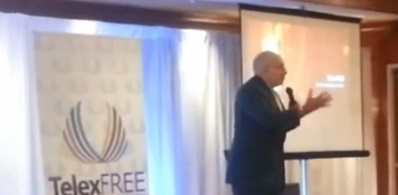
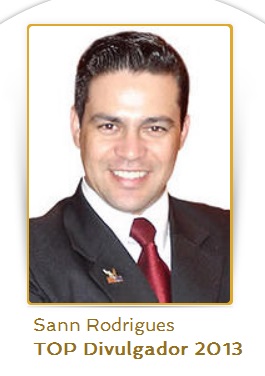
Sann Rodrigues. From a promo for a March TelexFree event in Spain at which Sann Rodrigues was feted.
Politicians appear to have spared themselves some embarrassment, but MLM had another La-La Land PR train wreck today.
iG (Brazil) is reporting that an effort to honor accused TelexFree pitchman and two-time SEC defendant Sann Rodrigues in a Brazilian Senate hall today was thwarted. The effort to fete Rodrigues appears to have been staged by a Brazilian MLM cheerleader, who reportedly also wanted Rodrigues named to the Multilevel Marketing Regulatory Agency of Brazil, which is not a government arm despite its name.
The effort collapsed when iG contacted a Senate member, iG reported.
From a translation from Portuguese to English by Google translate (italics added):
The event was canceled after the iG contacting the office of Senator Cicero Lucena (PSDB-PB), which had made the reservation request the auditorium Petronio Portella Senate at the request of Regino Barros.
An assessor’s office reported that such requests are common and that senators do not participate in drawing up the list.
Earlier this month Rodrigues was accused of racketeering by TelexFree members suing the enterprise and several individuals, including accused TelexFree Ponzi schemers James Merrill and Carlos Wanzeler and MLM attorney Gerald Nehra.
TelexFree staged a March 1 and March 2 awards ceremony in Madrid, Spain, at which Rodrigues was feted. Nehra also was feted, but appears not to have shown up to accept the award.
Merrill, Wanzeler and Steve Labriola, another TelexFree SEC defendant, also were feted at the Madrid event. Merrill was jailed in the United States two months later, and Wanzeler allegedly fled to Brazil and became a fugitive.
The massive TelexFree pyramid- and Ponzi scheme began to collapse on March 9, just a week after the Madrid event, according to court filings and other documents.
“Rodrigues used investor funds to buy expensive automobiles, including a Lamborghini, a Ferrari, and two Mercedes Benz,” the SEC charged in an amended TelexFree complaint earlier this week. (See May 27, 2014, PP Blog story.)
In 2006, Rodrigues was named an SEC defendant in a complaint that charged he operated a pyramid scheme involving phone cards. The phone-card scheme was targeted at the Brazilian community, the SEC said at the time.
TelexFree also offered a communications product and, like the 2006 Rodrigues scheme, was targeted at the Brazilian community. TelexFree also targeted Latinos, according to records.
BULLETIN: (8th update 9:10 p.m. EDT U.S.A.) In an amended complaint in the SEC’s pyramid- and Ponzi case against TelexFree, the agency says alleged TelexFree fugitive Carlos Wanzeler was using investors’ money to build a “small real estate empire” that consisted of 34 properties in Massachusetts and Florida.
Wanzeler, 45, also allegedly acquired a 40-foot yacht for “$273,878 in cash,” along with two other boats and “a fleet of fancy automobiles.”
“He paid $192,868 for two Ferrari F340 Spiders in March 2013 and $56,610 for a Porsche in February 2013. He also bought three BMW’s and a Toyota Highlander,” the SEC charged.
TelexFree purported to be a VOIP firm branching out into apps, cell phones and credit repair.
On the real-estate front, the SEC charged, Wanzeler went through at least $6.3 million — mostly in cash — to acquire the 34 properties, including $950,000 for the home he shared with his wife in Massachusetts and $450,000 for a home for his son in Florida.
From the SEC’s complaint (italics added)
“He made most of the acquisitions using companies under his control including: (i) JC Real Estate Management Company LLC, a Nevada limited liability company that was formed in July 2012 with Wanzeler and [James] Merrill as managers; (ii) Above & Beyond the Limit, LLC (“Above & Beyond”), a New Mexico limited liability company that [Joe] Craft formed for Wanzeler in September 2012, (iii) CNW Realty State, LLC, a Nevis corporation that was formed in October 2012 with Above & Beyond as manager; (iv) KC Realty State LLC, a Florida limited liability company that Craft formed in October 2012 with Katia Wanzeler as manager; (v) Acceris Realty Estate, LLC, a Massachusetts limited liability company that Craft formed in February 2013 with Katia Wanzeler as manager; and (vi) Makeover Investments LLC, a Florida limited liability company that was formed in July 2013 with Marilza Wanzeler, Wanzeler’s 65-year-old mother, as a manager.”
James Merrill is TelexFree’s alleged co-owner with Carlos Wanzeler. Joe Craft is TelexFree’s former CFO. All three men are accused of fraud at TelexFree and receiving millions of dollars from the company.
Nevis is an island in the Caribbean.
Steve Labriola, another TelexFree executive accused of fraud, received $46,600 through the New Mexico entity in 2013 and only $8,500 from TelexFree, according to a preliminary analysis by the SEC.
TelexFree filed for bankruptcy protection in the United States on April 13, with Wanzeler and Merrill effectively appointing Craft to the TelexFree CFO post, according to court filings. It’s almost certainly the case that TelexFree members at large did not know about the network of other companies associated in one way or another with the Wanzeler family, Merrill and Craft.
In its bankruptcy filing, TelexFree sought to reject its contracts with members. The SEC has described the TelexFree “program” as a massive pyramid- and Ponzi swindle. A U.S. Bankruptcy Judge intends to appoint a trustee in the TelexFree case, the Wall Street Journal reported late this afternoon.
“The information available to date indicates that, between November 2012 and February 2014, Wanzeler and members of his family received almost $13.7 million from TelexFree,” the SEC charged.
Investor funds were used to make the real-estate acquisitions and to purchase the cars, yacht and boats, the SEC charged.
Today’s amended complaint also alleges that TelexFree promoter Santiago De La Rosa used investor cash to support his lifestyle, including “$501,000 in cash for a house in Lynn, Massachusetts” and money spent on a BMW and Mercedes-Benz.
Accused promoter Randy Crosby, meanwhile, “paid $70,000 in cash for a Porsche in September 2013 and $99,000 in cash for another Porsche in December 2013, the SEC charged, citing information available to date.
At the same time, the SEC charged while citing information available to date, accused promoter Faith Sloan “received more than $160,400 from TelexFree investors and $51,000 from TelexFree itself.”
Accused promoter Sanderley Rodrigues (a/k/a Sann Rodrigues) received $317,220 from TelexFree between September 2012 and March 2013 through entities known as WWW Global Business Inc. and VICSS Inc., the SEC charged, again citing information available to date.
The SEC further alleged that Rodrigues had claimed to have made $3 million through TelexFree.
“Rodrigues used investor funds to buy expensive automobiles, including a Lamborghini, a Ferrari, and two Mercedes Benz,” the SEC charged.
La Republica, a newspaper in Peru, is citing information from police and reporting that a TelexFree promoter in the country was kidnapped Thursday afternoon and held in a van. The PP Blog cannot independently verify the report, which suggests the kidnapping was carried out by TelexFree members who ordered the man to withdraw money from a bank to make them whole.
In Peru and across the world, individual TelexFree members recruited others into MLM downlines. La Republica’s report suggests the kidnappers’ extortion plot failed, but one person reportedly was captured while others fled.
Court records in the United States allege that some TelexFree sponsors collected money from individual recruits, rather than directing the recruits pay TelexFree directly. Such a practice may establish a dangerous black-market economy while setting the stage for scams to occur inside of scams.
How the asserted Peruvian kidnapping victim handled TelexFree transactions is unclear. Even if recruits paid TelexFree directly, however, it’s no guarantee against an angry mob. In a 2009 Ponzi case in the United States, the FBI warned against Ponzi victims taking matters into their own hands. Four persons were charged criminally in an alleged shakedown bid associated with the 2009 case in California.
“In their guilty pleas the defendants admitted to creating an environment that was intimidating and causing the individuals to believe that they were not free to leave,” the FBI said in 2010.
On April 1, 12 days before TelexFree declared bankruptcy in the United States, unhappy affiliates jammed the “program’s” office in Massachusetts. Police were called to defuse the situation.
It’s often the case in the HYIP sphere that individual promoters push multiple scams simultaneously, potentially setting the stage for recruits to take multiple baths. It is known, for example, that some TelexFree promoters also were pushing WCM777 and Wings Network.
The SEC has called WCM777 an $80 million fraud scheme. Wings Network has been accused in Massachusetts of selling unregistered securities as investment contracts. Vulnerable populations often are targeted in HYIP scams.
There have been reports of at least two TelexFree-related suicide deaths. Some TelexFree affiliates spammed reports of the deaths with offers to join the “program,” which the Massachusetts Securities Division has described as a combined pyramid- and Ponzi scheme that gathered more than $1.2 billion.
In April, the U.S. Securities and Exchange Commission sued TelexFree and eight managers/executive or promoters, alleging a massive fraud scheme.
Some promoters continued to promote TelexFree after a Brazilian court froze TelexFree-related assets last year and suspended new registrations in that country. Promoters’ solicitations to prospects to join the “program” continued even after a judge and prosecutor in Brazil were threatened with death.
As the PP Blog reported on May 22, the FBI and the U.S. Department of Homeland Security have established a website for TelexFree victims. So has the Massachusetts Securities Division, as the PP Blog reported on April 25. As the PP Blog reported on May 15, the U.S. Securities and Exchange Commission has published TelexFree information in English, Spanish and Portuguese.
BULLETIN: The staff of the Nevada Public Utilities Commission has recommended that TelexFree’s telecom application be denied, saying the firm filed the application and then almost immediately filed for bankruptcy protection.
Based on the bankruptcy filing, the financial information provided by TelexFree during the application process “cannot be relied upon at this time,” the PUC staff said.
Records in the state show that TelexFree applied to be a Nevada telecom provider on April 1, but filed for bankruptcy only 12 days later. Class-action litigants who’ve alleged racketeering at TelexFree have said “massive discrepancies” exist in the firm’s accounting.
Meanwhile, the Nevada PUC staff said it was aware TelexFree had been charged civilly with fraud by the U.S. Securities and Exchange Commission and that its assets had been frozen. At the same time, the staff said it was aware TelexFree also is the subject of state-level civil action by the Massachusetts Securities Division.
Moreover, TelexFree did not provide the required “biographies for its company officers or other relevant information” to verify assertions that it possesses the necessary technical capability to provide interexchange services in Nevada, the staff said.
When the staff tried to call a toll-free number provided by TelexFree to verify the company had a working customer-service operation, “the call did not go through and Staff was unable to reach a company representative.”
Among other things, TelexFree says this on its website (italics added):
TelexFREE has suspended all business activity while we address certain issues in the Bankruptcy Court and address pending proceedings by the SEC and other government agencies. Since we are not currently in a position to support our network, it is likely Customers will experience either interruption or discontinuation of service. Independent Associates and Promoters should not be representing TelexFree on a going forward basis absent approval of a new compensation plan by the Bankruptcy Court.
TelexFree also may face licensing challenges in Minnesota, Alabama and other states.
MSD has alleged TelexFree was a combined pyramid- and Ponzi scheme that gathered more than $1.2 billion. The firm’s bankruptcy petition initially was filed in Nevada, but a judge there transferred the case to Massachusetts, which the SEC described as the company’s nerve center.
Alleged TelexFree co-owners James Merrill and Carlos Wanzeler have been charged criminally in federal court in Massachusetts with wire-fraud conspiracy.
(2nd Update 2:12 P.M. EDT U.S.A.) Acceris Realty Estate LLC, a Massachusetts company that listed Katia Wanzeler as its registered agent, was formed by Joe H. Craft in February 2013, according to corporation records in Massachusetts.
Craft, accused by the SEC last month of securities fraud at TelexFree, is TelexFree’s former CFO. The appearance of Craft’s name in the Acceris document raises new questions about the length and breadth of his ties to TelexFree. It also raises questions about his knowledge of ancillary businesses with ties to TelexFree and his objectivity when appointed TelexFree CFO on April 13 in what effectively was a board meeting conducted by co-owners Carlos Wanzeler and James Merrill.
Both Carlos Wanzeler and Merrill now are accused of felonies in the operation of TelexFree, with federal prosecutors alleging they engaged in a wire-fraud conspiracy. Merrill was arrested and jailed on May 9. Carlos Wanzeler has been labeled a fugitive. Records show both men also are under criminal investigation for securities fraud and money laundering.
Massachusetts resident Katia Wanzeler, the wife of Carlos Wanzeler, was arrested last week on a material-witness warrant at John F. Kennedy International Airport in New York by the U.S. Department of Homeland Security. Court papers link her name to Acceris and say she sought to board a plane bound for Brazil.
The extent of her knowledge about TelexFree, Acceris and her husband’s business activities is unclear. A court document in the material-witness case signed by Katia Wanzeler asserts her husband “owns [a] real estate company” and that “some houses” may be in the name of Katia Wanzeler.
The document further asserts that Katia Wanzeler received an “unknown” amount of compensation from a real-estate business and had $3,000 in cash on her person when arrested in New York. The source of the cash and how she had traveled to JFK Airport are unclear in court filings.
Carlos Wanzeler ducked into Canada and flew to Brazil after raids on TelexFree’s office in Marlborough (Mass.) and his home in Northborough (Mass.) in April, according to prosecution filings.
Records in Worcester, Mass., link Acceris to at least four properties: two on Coburn Avenue, and one each on Barnard Road and Mount Avenue. The $162,600 Barnard Road property lists “WANZEIER, CARLOS” as the assessed owner, apparently misspelling the TelexFree co-owner’s last name. “WANZELER, CARLOS” is listed as the assessed owner of the $120,300 property on Mount Avenue. The two Coburn Avenue properties list Aurora Loan Services LLC, a Colorado firm in the mortgage-lending and servicing business, as the assessed owner. The properties have an estimated combined value of $337,100. Aurora appears to have no ties to TelexFree.
The Craft link to Acceris may suggest that TelexFree money was diverted to acquire real estate, not for operational purposes at TelexFree, which says it is a VOIP company. A TelexFree-related entity in Brazil (Ympactus) linked to Carlos Wanzeler and TelexFree figure Carlos Costa also purportedly was in the real-estate development business, perhaps using funds from TelexFree members to fund a purported project involving Best Western Hotels.
“The representation and other suggestions that TelexFree has a business relationship with Best Western is false,” the SEC alleged last month.
It is somewhat common in the HYIP sphere for “programs” to plant the seed they have ties to major companies as a means of leeching off famous brands and sanitizing purported opportunities. It also is common for “programs” quietly to divert resources and plow them into investments or acquisitions external to the “opportunities.”
Much to the surprise of members of the AdSurfDaily “advertising program” taken down by the U.S. Secret Service, now-jailed ASD operator Andy Bowdoin suddenly announced at a 2008 “rally” in Florida that ASD had a real-estate division. ASD later was alleged to have peeled off money from members to retire the mortgage on a Florida home occupied by Bowdoin’s stepson and the stepson’s wife, both of whom later emerged as alleged players in an ASD reload scheme known as AdViewGlobal.
Other ASD money allegedly was peeled off to purchase a building and a lakefront property in Florida equipped with a Cabana boat, jet skis and other marine equipment. The Feds seized the properties and equipment as fraudulent proceeds of ASD’s $119 million scam.
It is believed that AdViewGlobal’s start-up capital consisted at least in part of money not seized in the Secret Service probe of ASD because Bowdoin and others had hidden it to avoid capture by law enforcement. AdViewGlobal, for instance, appears to have had at least one bank account in Switzerland, along with access to cash held by offshore processors such as AlertPay and SolidTrustPay. Both AlertPay and SolidTrustPay later were linked to the $850 million Zeek Rewards Ponzi- and pyramid scheme.
Acceris marks at least the second possible TelexFree offshoot linked to Craft. In April, the SEC said Craft incorporated an entity known as TelexFree Financial Inc. of Coconut Creek, Fla. TelexFree Financial, TelexFree Inc. of Massachusetts and TelexFree LLC of Nevada filed for bankruptcy two days before the SEC brought its fraud action.
When federal agents raided TelexFree’s Marlborough (Mass.) headquarters on April 15, they allegedly found Craft in possession of 10 TelexFree-related cashier’s checks, including one made out to Katia Wanzeler for more than $2 million.
New TelexFree CEO Stuart MacMillan said in bankruptcy court that he did not believe that “Mr. Craft was attempting to divert any of the Debtors’ cash or other resources.”
Both MacMillan (as CEO) and Craft (as CFO) were appointed to their TelexFree positions by Carlos Wanzeler and James Merrill during what effectively was an emergency board meeting in the hours immediately before TelexFree’s April 13 bankruptcy filing.
The Acceris corporation record in Massachusetts that identifies both Katia Wanzeler and Craft was filed 14 months before Craft was appointed TelexFree CFO and raises questions not only about his objectivity when appointed, but also whether he knew TelexFree had planned to divert resources into real estate.
Under certain conditions, such diversions can constitute securities fraud and embezzlement.
MacMillan said during the bankruptcy proceeding earlier this month that Craft resigned as CFO on April 17.
A Florida attorney the SEC has described as “anything but lawyerly” is now the subject of an FBI “Wanted” poster and is considered “armed and dangerous.”
The FBI issued the poster after Michael Ralph Casey “failed to appear for a court hearing and a bench warrant was issued for his arrest by the United States District Court, Southern District of Florida.”
Casey, 67, was required to appear in court on April 29, but did not show, the FBI said. Along with James C. Howard III and Louis N. Gallo III, Casey was charged both civilly and criminally in September 2012 for his alleged role in Commodities Online.
The SEC has described Commodities Online as a securities swindle led by two convicted felons (Howard and Gallo) with narcotics rap sheets. The “program” allegedly was married to a boiler-room operation and tried to sanitize itself by bringing in Casey, who allegedly turned a blind eye to the scam.
Commodities Online is alleged to have gathered tens of millions of dollars. The “program” operators were accused of moving millions of dollars offshore while the SEC was closing in in 2011.
The alleged Commodities Online swindle also is notable for peripheral ties to other HYIP debacles. A Nevada company known as SSH2 Acquisitions sued James Clark Howard in 2010, alleging it had been ripped off in a Ponzi scheme. AdSurfDaily Ponzi figure Terralynn Hoy, later listed as an alleged winner in the Zeek Rewards Ponzi scheme, was listed in Nevada records as a director of SSH2.
Meanwhile, BWFC Processing Center LLC, the registered agent of SSH2, is associated with Joseph Craft, a figure in the alleged TelexFree pyramid- and Ponzi scheme.
ASD was an alleged $119 million Ponzi scheme; Zeek was alleged to be a combined Ponzi- and pyramid swindle that gathered $850 million, and TelexFree has been described by regulators as a combined pyramid- and Ponzi fraud that gathered $1.2 billion.
Hoy was a moderator at the now-defunct “Surfs Up” forum that cheered for ASD Ponzi schemer Andy Bowdoin. She also moderated a defunct forum that led cheers for AdViewGlobal, an ASD reload scam that collapsed in 2009. Surf’s Up disappeared mysteriously in early 2010. Earlier this year, the court-appointed receiver in the Zeek case identified Hoy as a Zeek winner.
BULLETIN: With the MLM world only now coming to grips with the alleged $1.2 billion TelexFree Ponzi- and pyramid fraud, the special master in the Zeek Rewards criminal action has compared the Zeek case to the Bernard Madoff and Allen Stanford Ponzi schemes and the notorious Enron securities swindle involving former CEO Jeffrey Skilling.
Special Master Kenneth D. Bell made the comparison as a means of bringing some logistical efficiencies to the criminal case in which former Zeek executives Dawn Wright-Olivares and Daniel Olivares were charged in December 2013.
Like TelexFree, Zeek operated as an MLM HYIP “program.”
Bell, who also is the court-appointed receiver in the SEC’s civil case against Zeek, has proposed in his role as special master that the court impose electronic noticing procedures on the criminal side of things to keep victims informed.
The Madoff swindle, Bell noted, included “thousands” of victims. Stanford’s swindle, meanwhile, included “tens of thousands” of victims. So did the Enron case.
In each case, Bell noted, judges approved electronic noticing procedures because of the impracticality or downright impossibility of dealing with so many victims on an individual basis.
“In light of the vast number of potential victims spanning the globe in [the Zeek] case, it is difficult to envision a better candidate” for electronic noticing, Bell advised the court.
And, Bell noted, “[b]y many counts, the ZeekRewards scheme created more victims than any other Ponzi scheme in history. As a consequence of its internet-based focus, the scheme generated more than 700,000 victims in over 150 countries.”
Wright-Olivares and Olivares turned blind eyes to Zeek’s massive fraud, which gathered more than $850 million, according to court filings.
It is possible that the alleged TelexFree Ponzi/pyramid is even larger than Zeek in terms of both victims and dollars consumed, a circumstance apt to trigger alarm in the law-enforcement community because of the relentlessness and brazenness of the cross-border schemes. Until final TelexFree numbers become known, Zeek continues to hold the title of of the largest HYIP swindle in U.S. history.
As special master, Bell is proposing that the court permit noticing on both a U.S. Department of Justice website and the website of the Zeek receivership. Many Zeek victims already are familiar with the receivership website.
TelexFree figures James Merrill and Carlos Wanzeler were charged criminally last week. They’re also defendants in an SEC civil action.
The SEC charged Zeek in August 2012. TelexFree may have surpassed it in raw fraud volume less than two years later.