Tag: SEC

  • SOUTH CHINA MORNING POST: American Among 5 Detained In Hong Kong Pyramid-Scheme Investigation; Unidentified Firm Said To Promote ‘Cloud-Based’ Internet Apps And To Have Gathered Nearly $100 Million

    ponziblotterFLASH: The South China Morning Post is reporting that an American and four others have been detained in a pyramid-scheme investigation involving HK$750 million (about U.S. $96.7 million). The publication did not identify the detainees. Nor did it identify the company, which is said to promote “cloud-based internet productivity and communications applications” and to be headquartered in the United States.

    The arrests occurred Wednesday in the Hong Kong area of Hung Hom, after a police raid, the SCMP reported, citing unidentified police sources. (NOTE: The PP Blog has established a tentative identification of the company, but is not publishing the name until it can be fully confirmed.)

    From the SCMP (italics added):


    Investors were lured with the promise of lucrative returns and told the company had investments in information technology in various countries and plans for a public listing, the source said. (Emphasis added by PP Blog.)

    Initial investigations showed each of them was required to pay a HK$25,000 membership fee to join the company, which in return would give them lucrative dividends when the firm was listed on a stock market,” he said.

    The American “is understood to be from another firm,” and authorities are seeking to determine if the firms are linked, the SCMP reported.

    Schemes in which investors are recruited based on assertions that they’ll receive a handsome payout when a firm later  “goes public” may be on the uptick.

    In October, the SEC charged five companies, three executives and eight promoters in what it described as a “worldwide” pyramid scheme operating through entities from Hong Kong, Canada and the British Virgin Islands.

    At the center of the scheme were entities known as CKB and CKB168, the SEC said. Investors were told they’d accumulate “profit rewards points” that could be converted “into shares of CKB stock when the company conducts an initial public offering (“IPO”) on the Hong Kong Stock Exchange sometime during 2014, the SEC said.

    “Despite Defendants’ representations to the contrary, the Prpts are worthless and cannot be meaningfully traded, sold or exchanged. Nor has CKB taken required steps to prepare for the promised IPO and, in fact, does not meet the Hong Kong Exchange’s current listing requirements. Even if the IPO were to occur, CKB would have to go public as one of the world’s largest companies in order to honor conversions of the ever-expanding universe of Prpts,” the SEC said.


  • OUR ANSWER: ‘Nuts!’ PP Blog Receives Threat That ‘Authorities’ Will Move Against It If It Doesn’t Remove Content About Profitable Sunrise Figure Nanci Jo Frazer And Others; Email Claims FBI ‘Fully Aware Of All Your Consistent Attempts’ To Harm Frazer Group

    profitablesunrisethreateningemails

    “No!” Make that “Hell no!” — or, as Gen. Anthony McAuliffe once famously scribbled at the prompting of Gen. Harry W.O. Kinnard during the Battle of the Bulge, after soldiers for the Nazi Third Reich demanded surrender: “Nuts!”

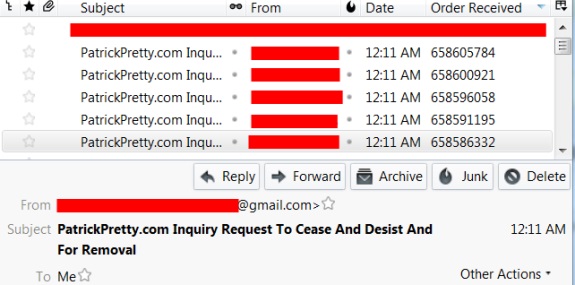
    At 12:11 a.m. ET today, the PP Blog inexplicably received five duplicate emails from an IP in the vicinity of Tiffin, a city in North Central Ohio. The emails were sent through the Blog’s contact form and threatened that “the authorities” would get involved if the Blog did not remove content about Nanci Jo Frazer and other Profitable Sunrise story figures by Nov. 15, nine days from today. The emails were signed “Nanci Jo Frazer,” but the Blog cannot independently confirm Frazer was the sender.

    Why the Blog received five emails is unknown. The Blog tested the form after receiving the duplicated submissions, and it appears to be working properly, meaning it does not appear to be sending multiple copies of inquiries from readers. The Blog, however, did experience an outage that lasted approximately two hours yesterday. The outage occurred shortly after an IP from Ukraine made an appearance here at approximately 1:50 p.m. (Bots that leave a Ukranian signature have been circling the Blog for weeks.) The precise cause of yesterday’s outage, which occurred after the Blog reported on an HYIP/prime-bank scam in California outed as part of an FBI undercover operation that began in 2006, remains unclear.

    In any event, the Blog will not remove any Frazer or Profitable Sunrise-related content unless ordered to do so by a U.S. federal judge. Nor will it submit to threats that incongruously are mixed with appeals to the Christian faith to make posts go missing. HYIP schemes are all about incongruities and preposterous constructions: “secret” or “safe” or “guaranteed” or “insured” investments that purportedly are “offshore” and able to deliver Christians and other people of faith legitimate interest rates of hundreds or even thousands of percent each year, for instance.

    For security reasons, the Blog will not reply to the emails at the Gmail address entered by the sender. Instead, it will publish the content of the emails in this  space. The FBI is free to make its own assessment about acts attributed to the agency by the sender in or around Tiffin. The Blog also will continue to publish Profitable Sunrise-related stories. Such stories are in the public interest.

    The emails build on a conspiracy theory that has been circulating for weeks: that the Blog somehow acts in concert with fraudsters, cyberstalkers and at least one felon posing as a Christian do-gooder to subject Nancy Jo Frazer and her ministry to harm. Meanwhile, the emails plant the equally false seed that the Blog is part of a group involved in Bitcoin scams.

    Among other things, the emails seek to chill the Blog’s reporting by contending that “The FBI is fully aware of all your consistent attempts to keep my name and our FocusUp Ministries Board members, our staff, voluteers and even my husband (who had no connection) tagged to negative , damaging words (such as scam, fraud and Ponzi) along with negative press and stories we are not connected to at all.” (No editing performed by PP Blog.)

    “Last week through a phone conversation, the Senior investigator from the FBI, instructed me to have my attorney send you a Cease and Desist and demand for immediate removal of your unauthorized usage of materials, videos, audio, all radio & TV media, articles and all types of communication connected to FocusUp Ministries and our Board Members, staff and volunteers: including Nanci Jo Frazer (Nancy Frazer) and Albert Rosebrock, David Steckel (volunteer), Jon Simmons (staff pastor) also my husband David Frazer,” the emails read in part. (No editing performed by PP Blog.)

    The emails did not identify the purported “Senior investigator from the FBI” who purportedly gave the sender instructions on how to accomplish the deletion of PP Blog content the apparent Frazer group supporter finds both objectionable and actionable. The PP Blog is willing, however, to voluntarily provide the IP address of the sender to the FBI, the SEC, the Ohio Office of the Attorney General or other law-enforcement agency in the United States that has an interest in the Profitable Sunrise case.

    No subpoena will be necessary; we’ll simply provide the information and copies of the email, once the Blog verifies the request is genuine.

    Over the years, the PP Blog has encountered various bids to chill its reporting on the HYIP sphere, including a sustained DDoS attack in 2010 and traffic floods in 2011 for which the Blog received a claim of responsibility. The Blog forwarded the claim to a U.S. law-enforcement agency.

    In 2012, during a period of heavy reporting on two specific HYIP schemes, the Blog received repeated threats believed to be from different senders. Two of the threats were not aimed at the Blog. The first was received Aug. 6, 2012, and was aimed at three prominent U.S. politicians: one Democrat and two Republicans.  This communication appeared to have been sent from Switzerland and questioned why the American politicians are “still alive and running around.” The email further described an American subject of the PP Blog’s crime reporting as a “true Patriot[]” who, like other purported “Patriots,” believed in “sending out mercenaries to take out those corrupt bankers, USG politicians, agents, judges and attorney’s [sic].”

    Such content is consistent with members of the so-called Patriot Movement or similar U.S. extremists who identify themselves as “sovereign citizens.” Because the communication appears to have originated in a country famous for banking secrecy, it leads to questions about whether U.S. domestic extremists were networking with counterparts in Europe or perhaps were there themselves to “defend” HYIP schemes and chill reporting on the outrageous frauds by suggesting that mercenaries and assassins were at their disposal.

    The second communication, received Aug. 29, 2012, was aimed at the alleged operator of a huge international Ponzi scheme. This communication appears to blame the accused operator for not properly defending the purported opportunity from investigations by the U.S. government.

    “why you don’t stand to back [program name deleted by PP Blog][?]” the communication read in part.

    “we lost our money. we will kill you . . .”

    The communication concluded by slurring the alleged Ponzi operator as a “dog.” It appears to have been sent from Pakistan.

    Yet-another 2012 communication believed to be from a different sender suggested that members of the PP Blog’s family might die if the Blog continued to report on HYIP schemes. The Blog forwarded all of these communications to a U.S. law-enforcement agency.

    In 2009, the Blog repeatedly was stalked by an apologist for the AdSurfDaily and AdViewGlobal Ponzi schemes who sought to engineer an SEO campaign against the Blog. This tactic was repeated in 2012 by an apologist for the JSSTripler/JustBeenPaid scheme which, like ASD and AVG, may have ties to the “sovereign citizens” movement.

    This specific individual appears to have been inspired in part by an infamous troll whose posts and visits bear an IP signature from the United Kingdom. The troll has been attacking antiscam sites since at least 2009, often incorporating sexual innuendo, antiChristian themes and elements of misogyny into his bizarre and vulgar game plan. In any event, the JSS/JBP apologist he inspired asserted he’d defend purported operator Frederick Mann “so help me God.” He also targeted specific PP Blog readers in an SEO campaign carried out on a free Blogger site — all while spreading absurd conspiracy theories and utterly preposterous lies. At the same time, he appears to have embedded code in certain communications as a means of trying to identify potential federal witnesses and perhaps even obtain/isolate the identities undercover federal agents may use online.

    Requests for the Blog to delete content are not always menacing, but can be described fairly as mind-bogglingly bizarre. In 2010, an affiliate of the MPB Today MLM scheme asked the Blog to delete a story that reported President Obama and former Secretary of State Hillary Rodham Clinton were being depicted as Nazis in a promo designed to recruit MPB Today affiliates. A separate script from the same MPB Today recruiter described the Obama family as welfare recipients who aspired to eat dog food and put these words into the mouth of First Lady Michelle Obama: “Hmm, I should prolly call my Food Stamp worker now that I’ve joined MPB.”

    The Blog declined the deletion request.

    MPB Today operator Gary Calhoun later was jailed in Florida on state-level racketeering charges. Federal prosecutors contended in July 2012 that crimes such as access-device fraud and fraud in connection with identification documents had occurred. Some MPB Today affiliates claimed the purported grocery “program” had been endorsed by the U.S. government and Walmart and that impoverished prospects should sell their Food Stamps to raise the $200 needed to join MPB Today. At least one MPB Today affiliate referenced pipe bombs in a promo.

    In May 2009, the PP Blog reported that the AdViewGlobal scam announced it had secured a deal with a new offshore wire facilitator. The AVG announcement was made on the same day the President of the United States announced a crackdown on offshore fraud. The PP Blog later was asked by AVG’s purported facilitator to remove the story. The Blog refused.

    The purported AVG facilitator — KINGZ Capital Management Corp. — later was linked to the epic Trevor Cook Ponzi scheme in Minnesota and was booted from the National Futures Association. AVG earlier had collapsed in a pile of Ponzi rubble. Even as it was going down, critics of the “program” and even members concerned about where their money had gone were threatened with lawsuits and ISP terminations for speaking out online.

    Federal prosecutors later linked the AVG scam to the $119 million AdSurfDaily Ponzi scheme broken up by the U.S. Secret Service in 2008. ASD story figure Kenneth Wayne Leaming, a purported “sovereign citizen,” is serving a federal prison sentence for targeting federal employees involved in the ASD case with bogus liens seeking billions of dollars, assisting a known tax fraudster in the filing of false liens, harboring federal fugitives in a case unrelated to ASD and being a felon in possession of firearms.

    HYIP schemes are a cancer on America and the rest of the globe because they permit the murkiest of figures to acquire tremendous sums of money that endanger the United States and other nations. They are a scourge on society in no small measure because they attract “sovereign citizens” and other extremists whose intent is to undermine legitimate markets and create widespread confusion, if not anarchy. People of faith often are targets of HYIP scammers. The scams often switch forms, but the criminality remains largely the same.

    In the case of Profitable Sunrise, the SEC has alleged that potentially tens of millions of dollars were driven to an individual potentially operating overseas. This individual’s identity may not be known. The allegations alone are chilling.

    Frazer and her associates are not named in the SEC civil action. But Frazer and two of her alleged business associates — husband David Frazer and Nancy Frazer business associate Albert Rosebrock — are named in a Profitable Sunrise-related civil fraud action filed by the state of Ohio in July.

    As noted above, the PP Blog will not remove any Frazer or Profitable Sunrise-related content. Here, now, the verbatim content of the emails received by the Blog at 12:11 a.m. today. (The Blog added carriage returns to make the contents more readable.)

    The Emails

    Dear Patrick;

    I am send you this private (not to be published or shared) email to you as a Christian brother, from your Christian sister, in hopes to have your assistance to stop all media coverage concerning our Ministry and our volunteer board members without having to get the authorities involved to get this accomplished.

    We understand that you have been trying to find the truth about Profitable Sunrise. The FBI has fully reviewed every document, communication and record we have and has returned everything to us. Our lead investigator stated that it is clear that we were a victim of “innocent ignorance”.

    The investigation resulted in no criminal charges being filed. The Federal Government has confirmed we are not being named in this case. Kansas is in the process of dismissing the case and Ohio has stated they do not have enough information to move forward (after losing the majority of the assets at our hearing on August 30th, 2013). We are so thankful that we are finally being vindicated and can speak out soon.

    2013 has been a refining year but so many awesome miracles have occurred that I cannot just feel there was no positive purpose. We believed that Profitable Sunrise was the “real deal”. We know that many of you believe that BitCoin is the “real deal” but in Texas, it is now declared a security and to some- part of a Ponzi? We sometimes learn things the hard way.

    The FBI is fully aware of all your consistent attempts to keep my name and our FocusUp Ministries Board members, our staff, voluteers and even my husband (who had no connection) tagged to negative , damaging words (such as scam, fraud and Ponzi) along with negative press and stories we are not connected to at all. Thus driving traffic to your website for your own purpose.

    Last week through a phone conversation, the Senior investigator from the FBI, instructed me to have my attorney send you a Cease and Desist and demand for immediate removal of your unauthorized usage of materials, videos, audio, all radio & TV media, articles and all types of communication connected to FocusUp Ministries and our Board Members, staff and volunteers: including Nanci Jo Frazer (Nancy Frazer) and Albert Rosebrock, David Steckel (volunteer), Jon Simmons (staff pastor) also my husband David Frazer.

    I am requesting that Patrickpretty.com and all associate websites, blogs and media… Cease and Desist immediately from using images, text, tags,YouTubes, Powerpoints, articles, documents and recordings associated in any way with the patrickpretty.com website, which is containing or referring to Nanci Jo Frazer, Nancy Frazer, David Frazer, Albert Rosebrock, David Steckel, Jon Simmons and FocusUp Ministries and/or any of our associate Ministries, as you are not authorized to use our names or image for any purpose without written permission.

    We have spent hundreds of hours of research to help authorities in everyway to fully understand and solve this case. We are almost to the point whereas I can share what I have learned to help avoid this event from happening again. I believe in going to my Christian brother first to resolve an issue. I believe that your heart is in the right place.

    We need to see that everything is deleted and completely removed from the Internet by Friday, November 15th, 2013 so we can all move on. I hope you honor this and that we can start over and have this be a much better story for all.

    Thanks Patrick!
    Nanci Jo Frazer

  • ‘Minister Of The Gospel’ Accused Of Offering Undercover Agent Discount To Join ‘Secret’ HYIP Program Found Guilty Of Wire Fraud And Conspiracy

    onciuEDITOR’S NOTE: It doesn’t come any crazier than HYIP prime-bank schemes. This is another example . . .

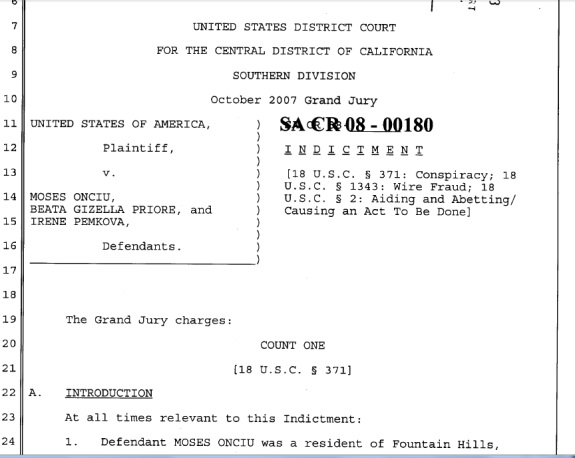
    UPDATED 7:47 P.M. ET (U.S.A.) Moses Onciu, a self-styled “Minister of the Gospel” and director of David and Goliath International Ministries Inc. of Fountain Hills, Ariz., has been found guilty in federal court in California of HYIP-related criminal charges. (Wire fraud and conspiracy.)

    Onciu appears yesterday to have personally announced the guilty verdicts against him on a subdomain of a website styled DIYTrade that may operate from Hong Kong. On DIYTrade, Onciu promotes an Arizona company known as Allied Petroleum LLC, which claims to be “a Christian based company that believes in Jesus Christ as Lord, His virgin birth and his death and resurrection. We espouse the principles of Godly business practices and believe that God has given clear direction to those that truly wish to walk upright in their life and business.”

    OCWeekly, a publication in Orange County, Calif., first reported the news of the Onciu guilty verdicts on Oct. 24. PonziClawbacks.com picked up the story on the same day.

    How things will proceed at Allied Petroleum is unclear, given that Onciu was indicted in 2008 as part of what federal prosecutors called an “undercover investigation into fraudulent high yield investment schemes” and now has been found guilty. As part of the sting, the FBI created an “undercover entity (UCE) in Newport Beach, California that purported to be a financial advisory firm,” according to the indictment.

    Undercover agents posed either as “partners of the UCE seeking to invest their own funds or as wealthy clients of the UCE seeking to invest substantial monies,” according to the indictment.

    Onciu was accused in the indictment of pumping a “select, secret” HYIP that “would yield a 300% to 650% return in 30 to 45 days at no risk.”

    Along the way, according to the indictment, a Onciu co-defendant named Irene Pemkova of Las Vegas explained that David and Goliath was a “humanitarian foundation under the Central Intelligence Agency (CIA) umbrella” and that Onciu was a “former, highly placed CIA officer.”

    In an allegation similar to allegations in the Profitable Sunrise HYIP case brought by the SEC earlier this year, the 2008 indictment alleged that Pemkova asserted that a “humanitarian project was required for entry into the program.”

    Onciu, meanwhile, told an undercover agent during a conference call in December 2006 that he “usually doesn’t do transactions of less than $100 million” and that “making a return of 100% a month is not abnormal,” according to the indictment.

    With an undercover agent on the line, Onciu asserted that his role was to provide the required “humanitarian element” and that the “program is highly confidential and the government does not want people talking about such programs,” according to the indictment.

    Onciu also offered to reduce his fee, as a means of inducing the undercover agent to join the program, according to the indictment.

    During the same 2006 time period, Onciu co-defendant Beata Gizella Priore of Glen Head, N.Y., spoke on the phone with an undercover agent and purported to be in Europe, according to the indictment.

    Priore told the agent that a “client of hers invested $1 million in the program and made a return of $6.5 million,” according to the indictment. Priore, who has pleaded guilty, later had a personal meeting with the undercover agent.

    Among other things, New York resident Priore asserted she was “calling from the trading group in Frankfurt,” had been in the HYIP business for seven years and that the “program required a minimum investment of $1 million,” according to the indictment.

    Records in New York show that a person by the same name in the same town was disciplined by the state Office of the Professions in 1998 after admitting to “having been convicted of Criminal Possession of a Controlled Substance in the Fourth Degree.” The profession was identified as “Certified Dietitian and Certified Nutritionist.”

    In the Nov. 4 web post, Onciu appears to be claiming that Priore’s surprise  guilty plea in the 2008 HYIP case undercut his defense and that Pemkova created a false narrative that he was a CIA operative, thus subjecting him to the conspiracy charge. The post did not explain Onciu’s take on the allegations that he’d offered an undercover agent a discount to join the program and apparently decided that, in this instance, he’d accept less than the $100 million usually required to do business with him.

    Nor did the post explain how making a return of 100 percent a month in a secret HYIP program that required a humanitarian element was not abnormal.

    Although I was only the introducing party I was charged as a co conspirator in this case and ultimately was the only one tried due to the other two parties legal standing: one took a guilty plea for a reduced sentence and the other took an insanity plea, leaving me as the only defendant,” the post read in part.


  • BULLETIN: U.S. Citizen Presiding Over New Zealand Firms Ran Ponzi, Stole Millions And Was Aided By Pitchmen In Utah And Louisiana, SEC Says

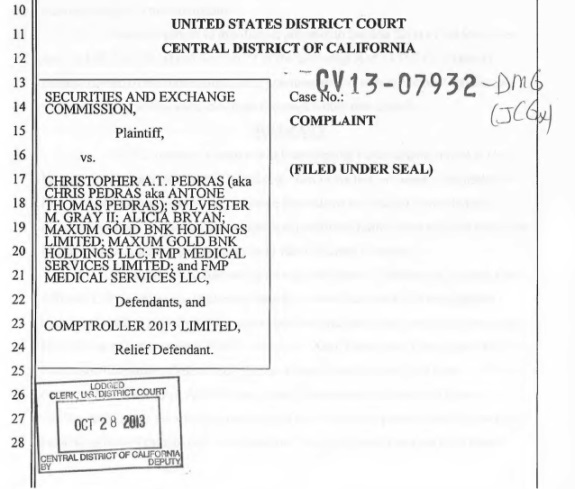
    secpedrasBULLETIN: The SEC has gone to federal court in the Central District of California and alleged that a U.S. citizen running companies in New Zealand and relying on pitchmen in Utah and Louisiana operated a Ponzi scheme and stole millions of dollars from investors.

    A federal judge has approved an emergency asset freeze, the SEC said.

    Named defendants, according to the SEC, were Christopher A.T. Pedras, a U.S. citizen who resides in Turlock, Calif., and operates firms in both America and New Zealand; Sylvester M. Gray II of Kaysville, Utah; and Alicia Bryan of Bossier City, La.

    Pedras presided over “sham investment opportunities ranging from a bank trading program to kidney dialysis clinics,” the SEC said. The agency added that Pedras “advised investors not to respond if contacted by the SEC.

    “He characterized SEC investor questionnaires as ‘fake’ and stated that the SEC’s investigation was motivated by a ‘personal vendetta’ against him,” the agency said.

    As part of the scam, the SEC alleged in its complaint, “In March 2012, Pedras conducted an in-person seminar at Paramount Studios in Los Angeles for actual and prospective investors. At the seminar, he described the nature and benefits of the Maxum Gold Trade Program and the safety of investors’  funds in escrow accounts.”

    Bryan, the agency said, has a criminal record and pleaded guilty in September 2008 “to a charge of attempted felony theft in the State of Louisiana, arising from her attempt to cash a counterfeit check from her then-employer, an internet company for whom she collected charitable donations and sent them to a purported disaster relief organization overseas.”

    “Rather than conducting any legitimate business activity, Pedras and his partners were simply operating a Ponzi scheme that was ultimately doomed to collapse,” said Michele Wein Layne, director of the SEC’s Los Angeles Regional Office. “This emergency action stops them from fraudulently raising any more money from U.S. investors.”

    The scams gathered at least $5.6 million from U.S. investors, the SEC said.

    Corporate defendants include Maxum Gold Bnk Holdings Limited of New Zealand; Maxum Gold Bnk Holdings LLC of Nevada; FMP Medical Services LLC of Nevada; FMP Medical Services Limited of New Zealand.

    From a statement by the SEC (italics added):

    The SEC alleges that Christopher A.T. Pedras, who has residences in Turlock, Calif., and New Zealand, misled his initial investors into believing they were investing in a profitable trading platform in which his company served as an intermediary between global banks.  When Pedras and his companies encountered difficulty paying the promised 4 to 8 percent monthly returns, they began steering investors to a different investment program to purportedly increase the value of their investment by 80 percent by funding kidney dialysis clinics in New Zealand.  Pedras’s business partner Sylvester M. Gray II and lead sales representative Alicia Bryan helped him solicit investors for both programs, and the money was never invested as promised.  Earlier investors were paid supposed returns with funds received from newer investors, and Pedras stole more than $2 million and spent another $1.2 million on sales agents.

    Pedras also is known as Chris Pedras and Antone Thomas Pedras, the SEC said.

    The New Zealand Financial Markets Authority filed a prospectus cancellation against Pedras’ FMP Medical Services Limited last month, saying it that marked “the first time that FMA has cancelled an offer document.”

    The cancellation means “FMP must stop the offer and that it cannot allot any shares,” the New Zealand agency said. “FMP must immediately repay any investors who have subscribed to the offer.”

  • URGENT >> BULLETIN >> MOVING: SEC Charges 3 Executives, 8 Promoters Of Alleged ‘Worldwide’ Pyramid Scheme Operating From Hong Kong, Canada And British Virgin Islands; ‘CKB’ And ‘CKB168’ Fraudsters Allegedly Targeted Asian-American Community, Agency Says

    breakingnews72URGENT >> BULLETIN >> MOVING: 3RD UPDATE 5:46 P.M. EDT (U.S.A.) The SEC says it has gained an asset freeze and charged three executives and eight promoters of a worldwide pyramid scheme operating through five entities from Hong Kong, Canada and the British Virgin Islands.

    Promoters of the scheme, which “purportedly” sells Internet-based children’s educational courses, gathered at least $20 million “from U.S. investors, and millions of dollars more from investors in Canada, Taiwan, Hong Kong, and other countries in Asia, the agency charged.

    Entities known as CKB and CKB168 are “at the center of the scheme,” the SEC said. The complaint, which was brought on an emergency basis and initially filed under seal, is filed in U.S. District Court for the Eastern District of New York. U.S. District Judge Roslynn Mauskopf has granted an asset freeze. The seal has been lifted in the case.

    “CKB has little or no real-world retail consumer sales to generate the extraordinary returns promised to investors,” the SEC said. “In fact, CKB has no apparent source of revenue other than money received from new investors. Bank records show that the bulk of the money raised has been paid out to accounts controlled by CKB executives and as commissions to promoters of the pyramid scheme.”

    Various investment schemes with apparent footprints in Hong Kong have been pushed by online hucksters since the SEC moved against U.S. based Zeek Rewards in 2012. On Oct. 14, BehindMLM.com reported that a scheme known as WCM777 operating from Hong Kong through an entity in the British Virgin Islands suddenly announced it was closing its U.S. operations.

    Whether WCM777 had promoters in common with the CKB entities was not immediately clear. What is clear is that the SEC has taken action against three MLM or MLM-like “programs” that promised outsize returns since August of last year, amid allegations that were selling unregistered securities as investment contracts. (These are Zeek Rewards in August 2012; Profitable Sunrise in April 2013; and the “CKB” entities through an emergency action filed Oct. 9 and announced today, after the seal was lifted yesterday.)

    Accompanying the CKB actions was the issuance today by the SEC of an Investor Alert “about the dangers of potential investment scams involving pyramid schemes posing as multi-level marketing programs,” the SEC said. The Zeek and CKB cases are referenced in the Alert.

    “CKB’s operators and promoters profited by abusing relationships of trust within the Asian-American community and promising investors they can earn more money by recruiting other investors instead of selling actual products,” said Antonia Chion, an associate director in the SEC’s Division of Enforcement.  “What CKB really sells is the false promise of easy wealth.”

    Here is how the SEC described the eight U.S. promoters charged:

    • Daliang (David) Guo is a China native and a resident of Coram, N.Y., who was among CKB’s first U.S. promoters. He currently sits atop an investment pyramid, and claims in a testimonial on the CKB website to have earned more than $1 million within eight months.
    • Yao Lin is a resident of Fresh Meadows, N.Y., who was among CKB’s first U.S. promoters. He currently sits atop an investment pyramid, and claims in a CKB website testimonial to have earned more than $300,000.  The SEC’s complaint alleges that bank and credit card accounts he controls have received approximately $450,000 from CKB investors.
    • Chih Hsuan (“Kiki”) Lin is a Taiwanese native and resident of Las Vegas who claims in a CKB website testimonial to have earned “one million USD” in her first two months of investing.  She operates a website through which “CKB members” can log in to a password-protected area. She is within David Guo’s pyramid. The SEC’s complaint alleges that bank accounts she controls have received approximately $1.8 million from CKB investors.
    • Wen Chen Hwang (“Wendy Lee”) is a Taiwanese native and resident of Rowland Heights, Calif., who claims in a CKB website testimonial to have made $53,000 within four months. She is within Yao Lin’s pyramid. The SEC’s complaint alleges that bank accounts she controls have received approximately $2.2 million from CKB investors.
    • Toni Tong Chen is a resident of Hacienda Heights, Calif., and a certified public accountant who was formerly associated with a registered broker-dealer and held securities licenses. She and her husband claim to have earned six-digit commissions and in excess of a 100 percent return on their investment. They are connected to Wendy Lee and have made presentations at her weekly seminars in Los Angeles.
    • Cheongwha (“Heywood”) Chang is a Chinese native and the husband of Toni Tong Chen. He was formerly associated with a registered broker-dealer and held securities licenses. The SEC’s complaint alleges that bank accounts that he and his wife control have received approximately $2.1 million from CKB investors.
    • Joan Congyi Ma is a resident of Arcadia, Calif., who was formerly associated with a broker-dealer and held securities licenses. She is connected to Wendy Lee and has helped her organize seminars and other events in Los Angeles. In her CKB website testimonial, she references the day she met Yao Lin as her “lucky day.” The SEC’s complaint alleges that bank accounts she controls have received approximately $200,000 from CKB investors.
    • Heidi Mao Liu is a resident of Diamond Bar, Calif., who was formerly associated with a broker-dealer and held securities licenses. She is connected to Wendy Lee and has provided testimonials at her seminars in Los Angeles. She also operates her own website that promotes the CKB scheme. The SEC’s complaint alleges that bank accounts she controls have received approximately $1.2 million from CKB investors.

    YouTube video pitches and a claim that at least one promoter had acquired five properties in Las Vegas through the scheme were used to dupe the masses, the SEC said.

    “Kiki Lin,” the SEC said, “exemplified the pitch in a videotaped recording posted to the Internet, telling potential investors that in the ‘pyramid triangle system, we spread it from one to ten, and ten to hundred, and hundred to thousand, thousand to ten thousand.’ Kiki Lin later added, ‘And for those who really want to make money, who are really hard working, in a short time you would all be like John,’ who she claimed ‘made money to buy five houses in Las Vegas.’”

    The charged executives include:

    • Rayla Melchor Santos, whom the SEC said is a Philippines national “who is featured on the CKB website as its founder. Santos is known as “Teacher Sam” and “has traveled to New York and other areas of the U.S. to participate in meetings and seminars to promote CKB.”
    • Hung Wai (“Howard”) Shern, whom the SEC said is a Canadian citizen and resident of Hong Kong “who is featured on the CKB website as the director of CKB168 International Marketing.” And Shern “is one of the signatories to bank accounts used to receive and transfer funds from CKB investors, and has traveled to New York and other areas of the U.S. to participate in meetings and seminars to promote CKB.”
    • Rui Ling (“Florence”) Leung, whom the SEC said is a Hong Kong national “who is described on the CKB website as its chief financial officer. And Leung “is one of the signatories to bank accounts used to receive and transfer funds from CKB investors, and approximately $4.6 million has been transferred from CKB bank accounts to bank accounts in her name and the names of entities she controls. Leung portrays herself as a professional investment adviser who will assist CKB in its supposed future public offering.”

    From the SEC complaint (italics added):

    2. Through publicly available websites, promotional materials, seminars, and videos posted to the internet, as well as through other efforts intended to create the appearance of a legitimate enterprise, Defendants have falsely portrayed CKB as a profitable multi-level marketing company that sells web-based children’s educational courses.

    3. What CKB really sells, however, is the false promise of easy wealth. Potential purchasers of CKB products must invest in CKB to get one of its courses. Defendants promise that those investors will earn exponential, risk-free returns. In addition to the course, each purchaser/investor receives “Profit Reward Points” (“Prpts”) with a purported value of $750.

    Investors are told that they will eam “passive” returns in the form of Prpt dividends and 2-for-1 splits, and that they will be able to buy and sell their Prpts in an online exchange accessible through the CKB website. Investors also are promised that they will earn massive retums by converting their Prpts into shares of CKB stock when the company conducts an initial public offering (“IPO”) on the Hong Kong Stock Exchange sometime during 2014. Some Defendants allege that these returns can be achieved without any risk of loss.

    4. Despite Defendants’ representations to the contrary, the Prpts are worthless and cannot be meaningfully traded, sold or exchanged. Nor has CKB taken required steps to prepare for the promised IPO and, in fact, does not meet the Hong Kong Exchange’s current listing requirements. Even if the IPO were to occur, CKB would have to go public as one of the world’s largest companies in order to honor conversions of the ever-expanding universe of Prpts.

    Still, while essential to the scheme, Prpts are not its only incentive. The scheme’s ultimate goal is to tum investors into recruiters. CKB lures investors with the promise of even greater “active” returns, in the form of commissions and bonuses, for recruiting new, “downline” participants into the program. In contrast to Prpts, active recruitment is the only way to make actual significant money.

    The CKB defendant entities include:

    • WIN168 Biz Solutions Limited (WIN168), which the SEC described as a “private Hong Kong company” that “maintained bank accounts at HSBC in Hong Kong that were used to receive and transfer funds from CKB investors located in the United States and elsewhere. Those accounts received wire transfers from banks located in New York.”
    • CKB168 Biz Solution Inc., which the SEC described as a Canadian company in Toronto that “has maintained bank accounts at TD Bank in Canada that have been used to receive and transfer funds from CKB investors.”
    • CKB 168 Limited, which the SEC said shares a business address with WIN168 and operated from Hong Kong. Its alleged “sole director is CKB168 Biz Solution Limited (“CKB168 Biz Ltd.”), a British Virgin Islands corporation with its office in Tortola,” the SEC said, further alleging that “CKB168 Ltd. maintained a bank account at HSBC in Hong Kong that was used to receive and transfer funds from CKB investors, including wires coming from New York.”
    • CKB 168 Holdings Limited, which the SEC described as sharing a business address with WIN168 and CKB168 Ltd. “Sample stock certificates shown to prospective investors indicate that CKB 168 Holdings is the entity whose shares have been offered to the public,” the SEC said.
    • Cyber Kids Best Education Limited, which the SEC described as the controller of “five bank accounts at Shanghai Commercial Bank Ltd. in Hong Kong, at least two of which were used to receive and transfer funds from CKB investors located in the United States.”

    “WIN168, CKB168 Biz, CKB168 Holdings, CKB168 Ltd., and CyberKids Best have never been registered with the Commission in any capacity and have never registered any offering of securities under the Securities Act or any class of securities under the Exchange Act,” the SEC charged.


  • PROFITABLE SUNRISE CASE: Did Fake Reporter Use Photo Of Real Reporter In ‘Story’ Titled ‘Nanci Jo Frazer WINS in Court – A Case Of Innocent Ignorance?’

    “The judge ruled in Nanci & David Frazer’s favor along with Albert Rosebrock (ministry board members) . . . to release frozen funds. The FBI and the Federal government is categorizing Frazer as having suffered from a case of ‘innocent ignorance’ as she worked for nine months doing customer support for a UK Collateral Loan company.”Lede from “story” on Topix.com, Oct. 5, 2013

    Is a photo of a real reporter being used by a fake reporter in the aftermath of the Profitable Sunrise scheme.
    Is a photo of a real reporter being used by a fake reporter in the aftermath of the Profitable Sunrise scheme? (Screen shot brushed by PP Blog.)

    This is what is known from the publicly accessible court docket in Ohio’s July 8 fraud case against alleged Profitable Sunrise promoter Nancy Jo Frazer (also known as Nanci Jo Frazer), Focus Up Ministries and others: On Sept. 24, the docket of the case noted that the judge had ordered the release of $20,000 to Frazer and her husband (David Frazer) to pay legal bills. Another $8,000 was made accessible to Albert Rosebrock, another defendant, to pay legal bills.

    The $20,000 ordered returned to the Frazers was in the form of a cashier’s check David Frazer had surrendered to the court after Ohio’s July action. Rosebrock’s money came from a bank account the judge ordered frozen after the Ohio action was filed. The docket shows that the judge authorized $8,000 from this frozen account to be made accessible to Rosebrock, but the freeze remains on any other money in the account. Freezes also remain on seven other accounts Ohio authorities have associated with the defendants. (Of the eight accounts originally ordered frozen in July, all eight remain frozen.)

    Importantly, Ohio’s civil case remains ongoing. So does a civil case by the SEC at the federal level. The SEC action does not name the Frazers or Rosebrock defendants, but suggests that pitchmen could have promoted Profitable Sunrise without even knowing who was running the purported “opportunity.”

    Purported Profitable Sunrise operator “Roman Novak” and his brother “Radoslav Novak,” a purported attorney associated with Profitable Sunrise, may be fictitious, according to the SEC, which has described Profitable Sunrise as a murky and massive international pyramid scheme that potentially gathered tens of millions of dollars.

    “Profitable Sunrise operates for the benefit of unknown individuals and/or organizations doing businesses through companies formed in the Czech Republic and using bank accounts in the Czech Republic, Hungary, Latvia, and China, among other places,” the SEC alleged in April.

    “There is more than a slight possibility, as with many offering frauds, that the people described in the [Profitable Sunrise] website, including the Novak brothers, do not exist,” the SEC said.

    Enter ‘scampoliceinsider’

    On Oct. 5, 11 days after the Sept. 24 Ohio docket entry, someone using the handle “scampoliceinsider” and a photo of a news reporter posted something that resembles a news story on the Topix.com site for Ogdensburg, NY., near the Saint Lawrence Seaway and the border with Canada.

    Gregg Evans, a poster and occasional guest columnist at the PP Blog and a regular poster at the RealScam.com antiscam forum, posted a link to the Topix story at RealScam.com on Oct. 13.

    Among other things, “scampoliceinsider” asserts on Topix that “I WILL GIVE YOU THE INSIDE SCOOP YOU DID NOT KNOW” and that “I am investigating a fraud within a fraud. I am the one who does what others won’t bother to do.” Moreover, “scampoliceinsider” asserts that he or she believes in “The truth backed by facts.”

    Here is the headline on the Topix “scampoliceinsider” story: “Nanci Jo Frazer WINS in Court – a Case of Innocent Ignorance.” The headline stressed the word “WINS” in uppercase. Nowhere does the story mention that Ohio’s case is ongoing and that any money ordered unfrozen was further ordered to be used for the express purpose of paying legal bills. Instead, the story contends that Ohio authorities had known since October 2012 that Profitable Sunrise was a fraud and that the authorities “failed to inform the public and especially Nanci Frazer.”

    It further positions Frazer as a victim of harassment from “A tight group of online individuals [who] have been targeted to be running their own bitcoin scheme” and claims the purported bitcoin schemers “stole Frazer’s image, identity and training videos while she was on vacation” in a bid to drive traffic to their own websites “and cash in on their own fraud.”

    Meanwhile, a strangely worded passage in the story contends that “The FBI and the Federal government is categorizing Frazer as having suffered from a case of ‘innocent ignorance’” while she “worked for nine months doing customer support for a UK Collateral Loan company.” (This would be Profitable Sunrise, which perhaps would be better described as a purported collateral-lending company.)

    Like the bitcoin and associated claims, the story does not substantiate the “innocent ignorance” claim. At the same time,  the story ventures that “The last straw was watching Toledo 11 Fox News put her children in harms way by airing a hateful and false, damaging, home made video story from one of the online stalkers- James L Paris is was a convicted criminal for Securities fraud(they never checked out his background).” (Unedited by PP Blog.)

    The Fox Toledo outlet now is “in position to be turned in to be put under regulators [sic] scrutiny and to be liable for a full investigation which connects them to another scam,” according to the Topix story.

    Paris is the editor of ChristianMoney.com and recently published an ebook on what he describes as his pressure-packed, nerve-racking experience writing about Profitable Sunrise and the enmity directed at him from certain members of the Christian community. Paris denies he is a convicted criminal, saying that he once was named in a civil securities action in Maine after his brother embezzled money from a Paris company and hid the act from Paris and accountants.

    (DISCLOSURE: The PP Blog is referenced in the Paris ebook. The Blog does not personally know Jim Paris, has no business association with him and does not benefit from the book, which was offered by Paris for free online for several days earlier this month and now costs $4.99 at Amazon.com. The book is titled, “Exposing The Ponzi Masters – The Profitable Sunrise Scam: How I Exposed It, How They Tried To Stop Me.” The Blog obtained the book free on Oct. 9 through a link supplied by Paris at RealScam.com. On Oct. 11, the Blog posted to RealScam.com about the book, opining that it believed the Paris book would “serve his intended audience in the Christian community well.” In its RealScam.com post, the Blog also drew some comparisons to the AdSurfDaily Ponzi scheme. ASD, like Profitable Sunrise, was targeted at people of faith.)

    Now, back to the Topix story referenced above . . .

    The photo of the reporter that appeared alongside the Frazer story on Topix in Ogdensburg, near the Canadian border, appears to be a low-resolution copy of a professional portrait/publicity still of a real reporter, a broadcast journalist who started her career at a California TV station in 2010 and accepted a job in 2012 at a station in Nevada, where she works as a weekend anchor. The photo does not identify the reporter by name and appears to have been taken while the reporter was working for the California TV station prior to moving on to the Nevada station.

    It may be the case that a fake reporter posting at Topix found an image of the real reporter online and used it as an avatar to add credibility to the story on Frazer published at the site. The PP Blog believes it has established the identity of the real reporter and emailed her yesterday to determine if the image on Topix was being used without her knowledge and consent and to rule out that she was the author of the Topix post. As of the time of this post, the Blog has not heard back from the reporter, which is not unusual. Media people have busy schedules. (For the purposes of this post, the Blog is not identifying the real reporter by name and has brushed the screen shot above to obscure her face and the identity of a TV station that, like the reporter, may have no knowledge of Frazer or Profitable Sunrise or the Ohio case.)

    In the Blog’s view,  the Topix story does not read like one prepared by a trained, working journalist. Rather, the story on Topix reads like fractured marketing and PR fluff of the type often seen in the HYIP sphere. At least part of it seeks to demonize both the media and the government. Similar situations occurred after the action by the United States against ASD in 2008. Online scammers have been known to pose as legitimate members of the media to add presumptive authority to a scheme.

    In 2011, the famous brand of Consumer Reports was appropriated by scammers to drive dollars to an acai-berry scheme, the FTC said. Meanwhile, “fake” news sites in the United States using the image of a real reporter from France were used in the acai  scheme.

    The PP Blog would be very surprised if the Topix story was authored by a real reporter, especially one using the handle “scampoliceinsider” and trying to stick it to a TV station in Toledo, other media outlets and Ohio authorities in this bizarre fashion.


  • EDITORIAL: Zeek: The ‘Reverse Rolaids’ Of MLM

    From an old Rolaids commercial. Source: YouTube
    From an old Rolaids commercial. Source: YouTube

    Rolaids products are back on store shelves after a recall that lasted nearly three years — and that may come as particularly good news for sufferers of the ongoing Zeek Rewards sickness.

    And with the TelexFree MLM story potentially churning hundreds of thousands of stomachs and getting stranger and stranger with each passing week, Rolaids may have a chance of regaining its past glory under the new leadership of Sanofi US and its consumer-health business Chattem Inc.

    One way to look at Zeek Rewards is as a sort of reverse Rolaids, a brand of antacids that provides heartburn relief and became legendary for its claim that it consumed “47 times its weight in excess stomach acid.”

    Another way Rolaids worked its way into the American consciousness was by asking a simple question that Sanofi says became “one of the most recognized advertising taglines of all-time”:

    “How Do You Spell Relief? R-O-L-A-I-D-S.”

    Zeek: The ‘Reverse Rolaids’

    While wanting you to believe that it cured financial pain for small businesses and upstart entrepreneurs, Zeek and its combined MLM and auction “programs” actually created it by consuming victims at 44 times its weight. We arrive at this rounded figure (and reverse-Rolaids observation) by dividing the estimated number of Zeek “losers” (840,000) by the population of the North Carolina city of Lexington (18,936).

    Indeed, Zeek was to causing financial pain what Rolaids was to relieving your sick stomach.

    In August 2012, the SEC described Zeek as a massive Ponzi- and pyramid scheme that duped people into believing it paid a legitimate return of about 1.5 percent a day.

    Zeek, through Rex Venture Group LLC, operated from Lexington, turning a Southern city famous for its hospitality and delectable barbecue into the MLM Heartburn Capital of the World.

    Rolaids products were pulled from store shelves in late 2010, because “wood and metal particles were potentially introduced into the products during the manufacturing process at an outside supplier” and because customers detected “a musty or moldy scent,” according to the AP and NBC News.

    Lexington, unfortunately, inherited the MLM Heartburn Capital title from Quincy, Fla., home base of the $119 million AdSurfDaily MLM scam in 2008. Zeek, the SEC said, gathered about $600 million.

    A court-appointed receiver has been gathering up money for Zeek victims for more than a year and prepping to sue Zeek profiteers and insiders. He’s also in the process of seeking court approval to dismantle Zeek’s Heartburn Factory in Lexington.

    Though coincidental to the dismantlement of Zeek in a tranquil American city that never wanted the MLM Heartburn Capital title from Quincy, the comeback of Rolaids amid continuing stomach-churning events in MLM La-La Land perhaps is occurring at the perfect time.

    Best of luck as you relaunch, Rolaids.

  • BULLETIN: SEC Sanctions Troy Dooly For Zeek-Related Work; MLMHelpDesk Blogger Ordered To Pay More Than $6,000 In Disgorgement, Penalties And Interest

    breakingnews72BULLETIN: (UPDATED 9:04 P.M. EDT (U.S.A.) The SEC has sanctioned MLMHelpDesk Blogger Adam “Troy” Dooly, amid allegations he accepted money from the Zeek Rewards MLM “program” operated by Rex Venture Group LLC without disclosing to Blog readers and radio listeners that Rex “was paying him” to publicize the Zeek venture.

    Section 17(b) of the Securities Act “prohibits publishing, giving publicity, or circulating ‘any notice, circular, advertisement . . . or communication which, though not purporting to offer a security for sale, describes such security for a consideration received or to be received, directly or indirectly, from an issuer . . . without fully disclosing the receipt, whether past or prospective, of such consideration and the amount thereof,’” the SEC said.

    Zeek has been described by the SEC in court papers (August 2012) as a $600 million Ponzi- and pyramid fraud that was selling unregistered securities as investment contracts. Dooly consented to the sanctions and an accompanying cease-and-desist order without admitting or denying wrongdoing.

    “In each instance of public relations or promotion in various media outlets, Dooly failed to disclose to his readers and listeners that RVG was paying him for such publicity,” the SEC asserted in an administrative filing dated today. “Dooly believed that, pursuant to a non-disclosure agreement, RVG maintained the exclusive right to determine whether or not to disclose Dooly’s consulting agreement and the amount of compensation. Because RVG did not authorize such disclosure, Dooly declined to reveal his compensation and, in at least one instance, Dooly denied (or misled his audience about) receiving compensation from RVG (apart from reimbursement of expenses) when asked about his compensation during a public radio program.

    Dooly, 49, has settled with the SEC by agreeing to pay disgorgement of $3,000, prejudgment interest of $98.81, and civil penalties of $3,000 to the court-appointed receiver in the case. The receiver is Kenneth D. Bell, who is in the process of preparing lawsuits against Zeek winners and insiders.

    From the SEC (italics added):

    2. From at least April 2012 until August 2012, Dooly served as a paid consultant to Rex Venture Group, LLC (“RVG”), the parent company of ZeekRewards.com (“ZeekRewards”), the self-described “affiliate advertising division” for a penny auction website known as Zeekler.com. ZeekRewards operated as a multi-level marketing program offering subscription memberships to affiliates who then recruited new affiliates and bought and gave away as samples, or sold, bid packages for the penny auction website. Rather than promoting penny auctions, however, RVG primarily marketed ZeekRewards to investors as an opportunity to earn passive income indefinitely through their participation in the program.

    3. Under two successive contracts, RVG agreed to pay Dooly $6,000 per month to provide various consulting and public relations services that included, among other things, responding to negative press about RVG and ZeekRewards; providing live reporting from company events; conducting video chat interviews to “promote company, founders, officers, products and culture”; and providing media exposure to facilitate market penetration and improve public perception. In furtherance of the foregoing, Dooly promoted ZeekRewards on his website, MLMHelpdesk.com; posted blog entries and youtube.com videos giving publicity to ZeekRewards; and conducted at least one radio interview promoting the company.

    4. Dooly provided the agreed services until ZeekRewards was shut down by the SEC in August 2012 for operating an illegal pyramid and Ponzi scheme. For all his services, Dooly earned $24,000 in consulting fees, but he never received the last $6,000 payment because the company’s assets were frozen (thus receiving only $18,000). Of that total, $3,000 or approximately 17% was attributed to public relations or promotion in various media outlets.

    See “EDITORIAL: A Friday Evening In MLM Radio La-La Land” from the PP Blog on June 10, 2012.

    The SEC moved against Zeek a little more than two months after Dooly interviewed then-Zeek executive Dawn Wright-Olivares on ACES Radio Live.

    Read the SEC order against Dooly.


  • BULLETIN: Florida Woman Sued Civilly, Charged Criminally In Alleged Ponzi- And Affinity-Fraud Scheme Targeted At Colombian-Americans

    breakingnews72BULLETIN: The SEC has sued a Florida woman, amid allegations she swindled Colombian-Americans and other Colombians in a $4 million Ponzi scheme that duped investors into believing her purported “immigration bail bonds” program was backed by the FDIC and an “investment broker” later blamed for payout delays.

    The woman — Jenny E. Coplan of Tamarac — also has been charged criminally by federal prosecutors in the Southern District of Florida, the SEC said.

    Coplan’s age is listed as 54.

    “Coplan deliberately misled investors into believing their investments were safe and secure when in reality she was lining her own pockets,” said Eric I. Bustillo, director of the SEC’s Miami Regional Office.  “Her predatory scheme exploited the trust and friendship of members of her own community by using empty promises to convince them to trust her with their hard-earned savings.”

    All in all, the SEC said, Coplan “raised approximately $4 million from more than 90 investors in Florida, California, Georgia, Texas, Canada, and Colombia.”

    Records cited by the SEC show that Coplan controlled at least four Florida LLCs, all of which used the word “Immigration” in their names. All of the entities have been dissolved.

    Elements of the case are similar to elements of the $119 million AdSurfDaily Ponzi scheme case brought by the U.S. Secret Service in 2008. Like Coplan, ASD operator Andy Bowdoin was associated with various dissolved business entities in Florida. And as is the case in the allegations against Coplan, some ASD promoters claimed ASD was backed by the FDIC, suggesting money sent to the enterprise by insured.

    Some promoters of TelexFree — a current HYIP scheme operating in Brazil and the United States — also have claimed that money sent to their “program” was insured, purportedly making it impossible for participants to lose money. TelexFree may be an affinity-fraud scheme initially targeted at Brazilian-Americans and Brazilians in general. The scheme now has entered many countries.

    From the SEC’s complaint against Coplan (italics added):

    16. Coplan, who is herself a member of the Colombian-American community, developed relationships with other Colombian-Americans and Colombian immigrants through a business she operated providing immigration services. Coplan then offered individuals the opportunity to invest in Immigration Services and the bail bond program.

    17. In about June 2009, Coplan told at least one investor that this was an investment opportunity she offered to her friends and family initially, and then later opened it to everyone. Coplan also told prospective investors she wanted to help them achieve financial stability. To cultivate potential investors, Coplan sometimes mingled with investors’ friends and family members at their social gatherings. A large number of at least one investor’s friends and family members invested.

    “Coplan never placed investor funds with any investment broker, and their money was never FDIC insured,” the SEC alleged.  “Instead, she paid supposed profits to earlier investors using funds from newer investors in classic Ponzi fashion, and she stole approximately $878,000 of investor money for her own personal use.”

    From a statement by the SEC (italics added):

    The SEC alleges that Coplan created fictitious investor statements that she disseminated to hide her misuse of the money and lead investors to believe their investments were growing.  Furthermore, Coplan e-mailed one investor two purported FDIC statements reflecting insured balances of $107,000 and $250,000, lulling the investor to think the investment was particularly safe.  When her scheme began to unravel in 2011, Coplan blamed the purported investment broker for the delay in interest payments to investors, telling them the broker held the investors’ funds to cover deficiencies because Coplan had failed to meet certain monthly investment quotas.  Even though Immigration General Services had virtually no funds in its bank accounts and was unable to honor investors’ increasing redemption requests, Coplan tried in late 2011 to create a false appearance that the company was back to business as usual.  She issued non-sufficient fund checks to investors purporting to be their monthly profits.  Through her continued misstatements, Coplan was able to raise another $578,000 from new investors before the scheme collapsed entirely.

    Coplan’s investors were told they’d fetch returns of between “60 to 108 percent annually,” the SEC charged.

  • BREAKING BAD: Already-Convicted Narcotics/Firearms Felon With Peripheral Tie To AdSurfDaily And Zeek Ponzi Cases Pleads Guilty In ‘Commodities Online’ Caper After Saying He Approved Another Felon’s Request To Transfer More Than $5 Million To Mexico On Heels Of SEC Subpoena

    EDITOR’S NOTE: In case you haven’t seen the series finale, there are no spoilers in this post. “Breaking Bad” ended its original run on AMC, and America said goodbye (or good riddance) to Walter White, the money-launderer next door, last night. The fictional White, of course, had been pursuing clandestine wealth, recklessly disregarding the safety of his family, destroying the lives of people who got in the way of his self-consuming greed and risking U.S. national security for five TV seasons. (At one point, he’d amassed at least $80 million in cash — enough to equip a small army of thugs or terrorists had they found its hiding place. Lo and behold, a group of neo-Nazi racketeers/murderers in part supplying Czech narcotics traffickers through a Houston-based methylamine supplier and upstart meth manufacturer did find it. Put another way, a white-supremacist group that openly shot at cops and murdered a bicycle-riding child to prevent him from tattling about the heist of a train carrying a meth precursor gained unwarranted economic power in the tens of millions of dollars.)

    Like the world of narcotics traffickers, the HYIP world is filled with Walter White-types, the wire fraudsters and money-launderers next door. Beyond that, claims of great faith in God and miraculous money-making systems often accompany HYIP schemes. If you’re repeatedly joining murky HYIP schemes or pushing them, you’re engaging in the same sort of self-indulgence and self-deception chronicled each week on “Breaking Bad,” a program whose greed- and desperation-driven central character — Walter White — openly defies the U.S. government, helps crime thrive in the United States, Mexico and (now) Europe, sets the stage for political instability and for hostilities to develop among friendly nations, and rationalizes it as a necessary means of making money for his family.

    The MLM equivalent of a Walter White could be in your upline or downline. Such a figure also could be very close to the money flow, staying out of sight but positioning himself to influence or even extort the public face of the scheme.

    White broke bad when he morphed from a mild-mannered, noble but financially struggling chemistry teacher and family man into a brutal and conniving meth kingpin after his cancer diagnosis — on the theory that manufacturing and selling meth would help him pile up some cash to provide for his family after his death. Bodies in Mexico and the United States have piled up around him ever since, including the bodies of 167 people who perished when two planes collided over Albuquerque after an air-traffic controller who couldn’t concentrate on work accidentally directed them into each other because he’d been reduced to emotional rubble by his daughter’s drug-related death. (She asphyxiated on her own vomit; the airplane death toll in Albuquerque was only one less than the real-life Oklahoma City domestic-terrorist attack in 1995, which killed 168 when the Alfred P. Murrah Federal Building was bombed by Timothy McVeigh.)

    Another body was that of White’s own brother-in-law, a DEA agent murdered by a neo-Nazi White had hired to kill his business partner (and onetime chemistry student) Jesse Pinkman, the boyfriend of the woman who drown in her own puke. Yet-another body (actually a body part) was that of a DEA informant’s head mounted on a turtle after being severed by a Mexican cartel to send a message. The head and turtle were booby-trapped with explosives that detonated, killing a DEA agent. Still-another body was that of Gus Fring, a Chilean national, New Mexico drug kingpin and onetime White boss who laundered funds through chicken restaurants, pretended to be a supporter of the DEA and was killed by a wheelchair bomb planted by White in the nursing home in which Fring’s enemy Hector Salamanca, a onetime cartel enforcer, resided.

    White’s form of money-laundering was the classic car wash. But the writers easily could have provided him a different front, perhaps that of respected teacher who’d gravitated to the commodities field and relied on MLM-style pitchmen and boiler rooms to drum up business for the side operation and help clean up the cash.

    ** _______________________________ **

    James C. Howard III
    James C. Howard III

    Court documents in the Commodities Online Ponzi caper describe “purported” purchases of “iron ore” and “related equipment” by the Florida-based firm in Mexico. The documents also point out that the enterprise was led by two individuals previously convicted of narcotics crimes in the United States and that more than $5 million mysteriously was wired to “accounts in Mexico” in March 2011 after one of the felons approved the wiring “directions” of the other — this after the first felon had received an SEC subpoena and the second had found out about it.

    Separately, the court-appointed receiver in the case says that, “after substantial investigation, including extensive interviews, depositions, and on-site investigation conducted both in the United States and Mexico, the Receiver concluded that the Defendants had no recoverable iron ore or related equipment in Mexico.”

    What they did have in Mexico, if anything, remains unclear. Also unclear is how much of the money sent to Mexico will be recoverable

    More than two years after the SEC moved against Commodities Online, the precise nature of its business remains murky. As noted above, one of the things that is known is that two of the firm’s managers were associated with narcotics earlier in their lives and had criminal records for felonies and and yet somehow had managed to become investment executives.

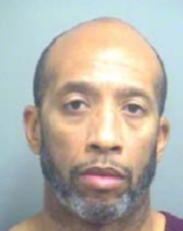
    Now, one of those felons — James Clark Howard III — has pleaded guilty to mail- and wire-fraud conspiracy for his role in the Commodities Online scam.

    And, according to Howard’s proffer in the criminal side of the case, he approved the “directions” of fellow felon Louis N. Gallo III to wire millions of dollars to Mexico after Howard had been subpoenaed by the SEC.

    Gallo was in Mexico, according to the proffer — and that’s an oddity because he was on U.S. federal probation at the time. The Sun Sentinel newspaper reported in 2012 that “Gallo was sentenced in 2008 in New Jersey for bank fraud, intent to distribute cocaine and transmitting a threat to injure.”

    And, according to the proffer, Howard was one of the controllers of an enterprise known as SSH2 Acquisitions Inc., which has been sued amid allegations it, too, was conducting a Ponzi scheme. Howard also has been implicated in a separate Ponzi scheme targeting Haitian-Americans in Florida.

    Terralynn Hoy, who has not been accused of wrongdoing, is listed in Nevada as a onetime director of SSH2. SSH2 sued Howard, alleging he was conducting a Ponzi scheme.

    Hoy earlier had been a cheerleader for AdSurfDaily, which proved to be a $119 million Ponzi scheme. After that, she became a cheerleader for AdViewGlobal, a 1-percent-a-day Ponzi scheme federal prosecutors linked to ASD President Andy Bowdoin, now serving a 78-month sentence in federal prison for the ASD scam. Hoy later was listed by Zeek Rewards as an “employee.” In August 2012, the SEC described Zeek as a $600 million Ponzi and pyramid scheme.

    Bowdoin, like Howard, was a convicted felon, according to court records.

    AdViewGlobal launched in 2009, even as ASD was the subject of a major federal investigation. Zeek, whose business model strongly resembled the models of ASD and AVG, launched after both ASD and AVG had collapsed. With two convicted felons linked to the narcotics business at the helm, Commodities Online appears to have gathered more than $20 million.

  • URGENT >> BULLETIN >> MOVING: SEC: Las Vegas-Based Ponzi Scheme Targeted Japanese Investors, Gathered At Least $800 Million, Planned To Have New Marks Prop Up The Massive Swindle — And Started In 1998

    breakingnews72URGENT >> BULLETIN >> MOVING: (SECOND UPDATE 4:28 P.M. EDT (U.S.A.) The SEC says Edwin Fujinaga and his company MRI International Inc. were operating a Ponzi scheme from 1998 onward that gathered at least $800 million and targeted Japanese and other investors.

    After MRI received a letter in March 2013 from the SEC instructing it not to destroy evidence, the SEC said, “a truck from a “document shredding company . . . picked up boxes of documents from MRI.”

    An MRI executive assistant “made several telephone calls to prevent the pickup,” the SEC charged, alleging that “Fujinaga called her and said, ‘Why are you concerned about this?’”

    “MRI fired the executive assistant because of her efforts to prevent the document destruction,” the SEC charged.

    Fujinaga is 66. He resides in Las Vegas, the SEC said. Part of the scam featured “tours” of MRI’s offices in Las Vegas. The alleged scam is evoking images of Bernard Madoff’s colossal Ponzi scheme, in the sense it appears to have gone undetected for years.

    At the same time, the alleged Fujinaga/MRI fraud is reminiscent of the epic Trevor Cook Ponzi scheme in Minnesota, in the sense that investors appear to have been lulled into a false sense of security because the company had a physical presence. It is somewhat common for fraudsters to tout a brick-and-mortar presence as “proof” no fraud scheme is occurring, even though case after case has demonstrated that the frauds may be buried deep inside an enterprise that at first glance appears to be legitimate.

    MRI investors “were told that their money would be used to buy accounts from U.S. medical providers with outstanding balances to collect from insurance companies,” the SEC said. “Fujinaga and MRI falsely represented that they purchased the accounts at a discount so they could recover the full amount and turn a profit for investors. They purchased no such accounts in reality, and merely used investor money to pay the principal and interest due to earlier investors in typical Ponzi fashion.”

    Similar to other Ponzi schemers whose operations are on the verge of collapse, Fujinaga appeared in 2012 to be preparing to double-down on his fraud, the SEC complaint suggests.

    In a memo, the SEC charged, Fujinaga “proposed to resolve the delinquencies by doubling the amount of money raised from new investors.”

    The SEC alleged that Fujinaga wrote: “I propose that we reinstate our consultants to fund raise for MRI to secure a larger base of consultants soliciting funds and possibly double the amount off funds raised on a monthly basis.”

    Cooperation between the United States and Japan was instrumental in exposing the massive international swindle, the SEC said, noting that the “Financial Services Agency of Japan (JFSA) and the Japanese Securities and Exchange Surveillance Commission (SESC)” exchanged “documents and other evidence critical to the case.”

    “Cross-border cooperation can successfully halt fraudsters who attempt to use international boundaries to avoid prosecution,” said Gerald W. Hodgkins, associate director in the SEC’s Division of Enforcement. “The close coordination between the SEC and Japanese regulators was critical to freezing Fujinaga’s assets and foiling his scheme.”

    From a statement by the SEC (italics added):

    According to the SEC’s complaint, the Ponzi scheme began in October 1998. Fujinaga, who lives in Las Vegas, operated from there but also had a sales office in Tokyo. MRI and Fujinaga hosted Japanese investors in the U.S. for solicitation presentations and tours of MRI’s Las Vegas offices. They told investors they could invest in either U.S. dollars or Japanese yen, and promised returns ranging from 6 to 10.32 percent depending on the size and duration of the investment. Fujinaga and MRI falsely represented that they used investor money solely and exclusively to buy medical accounts receivable. Besides misappropriating money between investors, Fujinaga illicitly transferred investor money to MRI’s operating accounts, where it was used to pay for general operating expenses instead of medical accounts. He also transferred money to other entities he owned that were not in the business of collecting medical account receivables. Investor funds also were siphoned to another company owned by Fujinaga called The Factoring Company, which bought Fujinaga’s cars and paid his bills.

    Here is a section from the SEC’s complaint, which was filed under seal two weeks ago (italics added):

    As all Ponzi schemes eventually do, the fraudulent enterprise perpetrated by Fujinaga and MRI collapsed. Since at least 2011, MRI has been in default on the payments it is obligated to pay investors. More than 8,000 people invested in MRI and, as of 2012, MRI’s investments totaled approximately $813 million. Notwithstanding MRI’s defaults to investors, this is an ongoing Ponzi scheme, in which Fujinaga and MRI have planned to make up their losses by enlisting new investors for the same treatment suffered by existing investors.

    Investors in places other than Japan also were targeted, the SEC said. Those countries included Canada, Malaysia and New Zealand.