Tag: SEC

  • UPDATE: Nicholas Cox, Figure In North Carolina Fraud Scheme Operating Near Ground Zero For Zeek Rewards, Sentenced To Federal Prison

    With the alleged $600 million Zeek Rewards Ponzi scheme dominating local headlines in North Carolina’s Piedmont Triad region, including the city of Lexington in Davidson County, an earlier, smaller fraud scheme operating in the region largely fell out of the news.

    ponziblotterBut the Integra Capital Management LLC Ponzi and fraud scheme operated by Nicholas Cox and Rodney Whitney is back in the headlines. Cox, 35, of Lexington, has been sentenced to three years in federal prison, followed by three years’ supervised release, for his role in Integra Capital’s $3.2 million commodities and Forex swindle.

    Whitney, 50, from the nearby community of Archdale, pleaded guilty in January. He was sentenced to five years in federal prison.

    The Integra Capital scam, which had a Ponzi component, operated between September 2006 and August 2009, the CFTC said in September 2010. Among other things, the fraud scheme was notable for destroying a myth: that “opportunities” that send out 1099 tax forms to investors could not possibly be operating a scam.

    Cox and Whitney were charged both civilly and criminally. The CFTC led the civil probe; the U.S. Postal Inspection Service led the criminal investigation. Cox was arrested in May 2011 in Denton, N.C. Like Zeek’s home base of Lexington, Denton is in Davidson County.

    During Zeek’s run, some promoters argued that the enterprise could not be a scam because it collected data to be used on tax forms. Promoters also argued that Zeek was above-board because it was registered as a corporation in North Carolina.

    Records show, however, that Integra Capital also was registered as a North Carolina corporation — with business addresses in the Triad cities of High Point, Denton and Archdale. Neither Integra’s registration nor the issuance of tax forms proved to be proper barometers for investors to follow.

    What matters in Ponzi and financial-fraud schemes is how the money moves within the sphere of the actual practices of a business, not whether a company is a registered entity that issues tax forms.

    Citing court documents, the U.S. Department of Justice said that “Cox and Whitney obtained and misappropriated more than $3.2 million in investor funds and fabricated account statements and tax forms to conceal their fraud.”

    In December 2012, Cox pleaded guilty to one count of conspiracy to commit mail fraud, five counts of mail fraud and one count of conspiracy to commit money laundering. Earlier, in March 2011, Whitney pleaded guilty to one count of conspiracy to commit mail and wire fraud and one count of conspiracy to commit money laundering.

    “Cox and Whitney used the money invested by later investors to pay the monthly investment returns they had promised to earlier investors,” prosecutors said today.

    And the Triad duo also bought real estate, funded other business ventures and purchased automobiles and other personal goods and services, prosecutors said.

    In September 2012, the SEC said Lexington-based Zeek was a “classic” Ponzi scheme in which “[m]ost of ZeekRewards’ total revenues and the ‘net profits’ paid to investors” were “comprised of funds received from new investors.”

  • INCREDIBLE: JSSTripler/JustBeenPaid Operator Frederick Mann Now Billed As Pitchman For Upstart Scheme Known As ‘ClickPaid’

    Frederick Mann is back, according to "ClickPaid."
    Frederick Mann is back, according to “ClickPaid.”

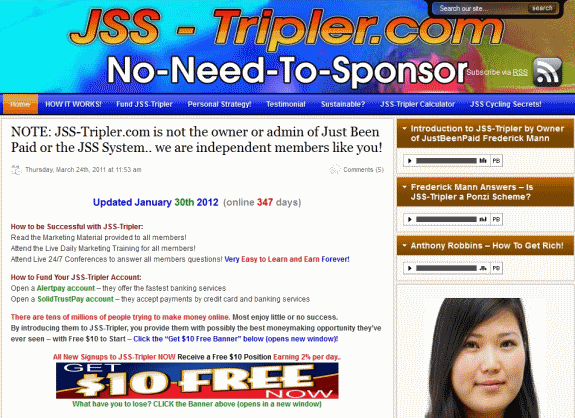
    UPDATED 8:51 A.M. ET (FEB. 20, U.S.A.) Frederick Mann, a former pitchman for the AdSurfDaily Ponzi scheme and the operator of the bizarre JSSTripler/JustBeenPaid “program” that advertised a return of 2 percent a day and morphed into a “program” known as “ProfitClicking” in the days after the SEC called rival HYIP Zeek Rewards a $600 million Ponzi- and pyramid scheme in August 2012, is back, according to promos for a new “opportunity” known as “ClickPaid.”

    The news comes as ProfitClicking appears to be in a state of collapse. Like ASD, Zeek, JSS/JBP and ProfitClicking before it, ClickPaid has a presence on the MoneyMakerGroup and TalkGold Ponzi forums. Mann purportedly “retired” from JSS/JBP last year, but not before claiming that government workers  were part of  “a criminal gang of robbers, thieves, murderers, liars, imposters.”

    Frederick Mann
    Frederick Mann

    He also speculated that the U.S. government could target JSS/JBP’s servers in a “cruise missile” attack.

    Mann is believed to be in his eighties and, at a minimum, to be sympathetic to the “sovereign citizens” movement. At the time of this post, ClickPaid is showcasing a ProfitClicking-like launch-countdown timer on its website. Visitors are invited to listen to a “World Wide Pre Launch Live Broadcast Call with Frederick Mann” tomorrow. A tab/subtab on the website styled “MEDIA/Upcoming Events” claims Mann will “personally” introduce “Click Paidto [sic] the world” tomorrow and will be featured on “the live launch call” Feb. 27.

    The ClickPaid Terms — like the Terms of JSS/JBP and ProfitClicking — makes members affirm they are not with the “government.”

    If the nongovernment affirmation were not enough, Click Paid also says it reserves the right to enroll Click Paid members in other programs. (Verbatim/italics added):

    19. From time to time, the Click Paid managers may import the entire Click Paid membership into another program, maintaining the Click Paid genealogy. This will also be done on the basis that people imported into the other program will have to activate their accounts by a certain deadline in order to become members of the other program. If they don’t activate their accounts by the deadline, they will be dropped from the other program. One benefit of this procedure is that Click Paid members receive their Click Paid downline in the other program (to the extent that accounts are activated). Another benefit is that those who don’t want to be in the new program will be dropped automatically if they do nothing. Prior to such an import,Click Paid managers will inform all Click Paid members via email and in the Member Area of the expected import and the reasons for it. Subsequent to the import, managers of the other program will email those imported from Click Paid to explain the benefits of the other program, and to provide them with the procedure to activate their accounts, should they wish to become members of the other program. More than one email may be sent by the managers of the other program. (Click Paid members who don’t activate their accounts in the other program by the deadline will be dropped from that program.) Click Paid members agree to receive the emails referred to in this rule 19. (Privacy: Any import per this rule 19 will be on the basis that the managers of the other program will not abuse the Click Paid email addresses in any way. Once the deadline has been reached, all unactivated accounts in the other program will be deleted and the email addresses for these deleted accounts will not be retained by managers of the other program.)

  • Legisi HYIP Pitchman Matthew John Gagnon Pleads Guilty, Admits He Didn’t Disclose ‘Touting’ Compensation Of More Than $1 Million And Caused More Than $7 Million In Losses

    Matthew John Gagnon
    Matthew John Gagnon

    Legisi HYIP Ponzi-scheme pitchman Matthew John Gagnon has pleaded guilty in the Eastern District of Michigan to a criminal charge of not disclosing he’d been paid more than $1 million by Legisi and its operator Gregory N. McKnight to tout the “program” online.

    In a plea agreement now public after being fashioned in October and November, Gagnon admitted he’d caused more than $7 million in losses to more than 50 Legisi investors. Legisi gathered about $72 million and collapsed in 2008, according to court filings.

    Legisi was promoted on Ponzi-scheme forums such as TalkGold and MoneyMakerGroup. Gagnon, who was accused of willful blindness and potentially faces up to five years in federal prison when sentenced in May, pitched the “program” through Mazu.com. The MoneyMakerGroup forum is specifically referenced in an evidence exhibit in the Legisi case.

    In the agreement, Gagnon admitted he touted Legisi as a “winner” and “not a scam.” On any given day, any number of hucksters make the same claims about any number of “programs” on the Ponzi boards. Willful blindness — in no small measure — drives the scams.

    Legisi’s Terms of Service sought to make members affirm they were not an “informant, nor associated with any informant” of the IRS, FBI, CIA and the SEC, among other agencies, according to documents filed in federal court. McKnight, like Gagnon, faces sentencing in May. Prosecutors have sought a 15-year term for McKnight.

    Both McKnight and Gagnon also face millions of dollars in civil judgments that flowed from a case brought by the SEC in 2008. The U.S. Secret Service and state authorities in Michigan also investigated Legisi.

    Prosecutors recommended a three-level sentencing reduction for Gagnon, noting he has accepted responsibility for his role in the scam and has assisted authorities.

    U.S. District District Judge Mark A. Goldsmith is scheduled to sentence Gagnon on May 7.

    Zeek Rewards, an alleged $600 million Ponzi- and pyramid fraud, also was touted on the MoneyMakerGroup and TalkGold forums. The SEC brought the Zeek case in August 2012.

  • UPDATE: Sentencing For Legisi HYIP Operator Gregory McKnight Postponed Again Pending Depositions; Now Set For May 7

    Gregory McKnight. From PDF of federal court file.
    Gregory McKnight. From PDF of federal court file.

    Sentencing for Gregory N. McKnight, the operator of the Legisi HYIP Ponzi scheme, has been postponed until May 7. McKnight had been scheduled to be sentenced today. The postponement marks at least the fourth in the case.

    McKnight pleaded guilty to wire fraud a year ago this month. The docket of the case in federal court in the Eastern District of Michigan notes that today’s sentencing was postponed because McKnight is participating in depositions. Although federal prosecutors have asked for a 15-year sentence for McKnight, filings suggest that McKnight hopes to earn a sentencing reduction for assisting the court-appointed receiver in the case recover money for victims of the $72 million fraud.

    On Jan. 31, U.S. District Judge Mark A. Goldsmith denied a motion by McKnight to be removed from a tether. Although details were not immediately clear, tethering is a form of electronic monitoring.

    Legisi was promoted on Ponzi scheme forums such as TalkGold and MoneyMakerGroup. The SEC charged McKnight and Legisi in May 2008. A criminal charge followed.

    The U.S. Secret Service and state authorities in Michigan also were involved in the Legisi probe.

    See Nov. 28, 2012, PP Blog story.

  • Woman Sentenced To 80 Years In Texas State Prison For Felony Theft In Case That Flowed From Ponzi And Fraud Scheme

    Karen Patricia Bowie: Source: Collin County Sheriff's Office.
    Karen Patricia Bowie: Source: Collin County Sheriff’s Office.

    Karen Patricia Bowie, whom the SEC described in 2009 as a citizen of Canada who bought a house in Maine with fraud proceeds from the Titan Wealth Management LLC Ponzi scheme in Texas, has been sentenced to 80 years in Texas state prison.

    The Texas State Securities Board described Bowie, 61, as a “foreign notes scammer,” saying she “personally benefited from $2 million of investor funds.”

    Bowie was prosecuted criminally under Texas state law for felony theft by the Collin County District Attorney’s Office.

    Thomas Lester Irby II, whom the state described as a Bowie business partner, was sentenced in 2010 to 24 years in state prison. Irby was Titan Wealth’s owner. The company was based in Plano, Texas.

    Judge Benjamin N. Smith of the 380th State District court in Collin County sentenced Bowie after a week-long trial, prosecutors said.

  • URGENT >> BULLETIN >> MOVING: Purported Charity ‘We The People Inc. Of The United States’ Was ‘Only A Front To Sell Bogus Investment Products’ To Senior Citizens, SEC Charges

    americaatrisk4URGENT >> BULLETIN >> MOVING: (UPDATED 3:14 P.M. ET U.S.A.) The SEC has gone to federal court in the Southern District of Florida, alleging that an enterprise known as “We The People Inc. of the United States” (We the People) was a “front” that covered up a fraud scheme aimed at senior citizens in multiple states.

    “We the People” are the first three words of the U.S. Constitution. Scammers have been known to trade on patriotic themes to fleece investors. Senior citizens may be particularly vulnerable to such pitches

    Separate civil complaints have been filed against Richard K. Olive, 47, and Susan L. Olive, 48, of Vero Beach, Fla.; We the People, a Massachusetts entity operating from Tallahassee, Fla; and William G. Reeves, 61, an attorney in Tallahassee.

    The scam sold an investment product described as a “charitable gift annuity” or CGA, the SEC alleged.

    In the “We the People” scam, the SEC said, investors were told told to tranfser assets and that they “would receive an income stream, penalty free withdrawals, and tax benefits.”

    And the scammers gathered at least $75 million, affecting at least 400 investors in Florida, Texas, Colorado and at least 27 others states, the SEC said.

    The Olives are accused of telling lies to lure senior citizens with limited investment experience into the scam.

    “The Olives raised millions from senior citizens by claiming that We The People’s so-called CGAs provided attractive financial benefits and were re-insured and backed by assets held in trust,” said Julie Lutz, Associate Director of the SEC’s Denver Regional Office. “Investors were not given the full story about the true value and security of their investments.”

    From the SEC (italics added):

    According to the SEC’s complaint against the Olives filed in U.S. District Court for the Southern District of Florida, investors were coaxed to transfer assets including stocks, annuities, real estate, and cash to We The People in exchange for a CGA. We The People claimed to operate as a non-profit organization while it was offering the CGAs from June 2008 to April 2012. However, We The People was not operating as a charity but instead for the primary purpose of issuing CGAs and using the proceeds to pay substantial sums to the Olives, third-party promoters, and consultants. On rare occasions when We The People did actually direct money raised toward charitable services, it was insignificant. For instance, the organization made public statements that it donated $21.8 million in relief aid to AIDS orphans in Zambia, but in fact the supplies were donated by others and We The People merely made a small payment to the third party that was shipping the supplies.

    Criminal probes into the scam have been under way since at least 2010, and Richard Olive was indicted in Tennessee last year, the SEC said.

    Reeves, the lawyer, “entered into a cooperation agreement with the SEC, and the terms of his settlement reflect his assistance in the SEC’s investigation and anticipated cooperation in its pending action against the Olives,” the agency said.

    Under the settlement, Reeves will be suspended from appearing or practicing before the SEC for at least five years. He also has consented to a judgment, with financial penalties pending, the SEC said.

    Meanwhile, the SEC said, “We The People consented to a final judgment that will enable the appointment of a receiver to protect more than $60 million of investor assets still held by the company. The final judgment also provides for disgorgement of ill-gotten gains and provides injunctive relief under the antifraud and registration provisions of the federal securities laws.”

    More from the SEC’s complaint against “We the People” (italics added):

    Investors often learned about We The People’s investment product from promoters who signed marketing agreements with We The People. We The People would provide these promoters with materials, including flyers, letters, illustrations, and even videos, to use in soliciting the investments. We The People paid these promoters significant commissions, ranging from 7-10%.

    Read SEC statement and find links to complaints here.

  • BULLETIN: Receiver Says $12 Million In Zeek Money Located ‘In An Eastern European Country’ — But Has Not Been Returned

    breakingnews72BULLETIN: (2ND UPDATE 8:47 P.M. ET U.S.A.) The court-appointed receiver in the Zeek Rewards Ponzi-scheme case says he has located $12 million in receivership assets held in an unspecified “eastern European country” — but the funds have not been returned.

    “This account is owned and was used by a payment processor outside the United States to provide funds to a foreign e-wallet that processed payments for ZeekRewards,” receiver Kenneth D. Bell said in court filings. “The Receiver previously caused the Freeze Order to be sent to the foreign financial institution which holds this account and demanded that the funds held in that account be turned over to the Receivership Estate. The foreign payment processor who owns this account was also sent the Freeze Order and a demand notice for the turnover of the funds in this account. However, neither the financial institution nor the foreign payment processor responded to the demands sent by the Receiver. Additionally, the Receiver has worked with the foreign e-wallet to seek to have these funds returned. While cooperative, the foreign e-wallet was unable to cause their customer to provide the funds held in this account to the Receiver.”

    Bell also confirmed today that the U.S. Secret Service “continues to pursue” money related to Zeek. Meanwhile, he announced a “Final Liquidation Plan” and proposed claims process will be filed tomorrow in U.S. District Court for the Western District of North Carolina. Zeek was based in Lexington, N.C. Senior U.S. District Judge Graham C. Mullen is presiding over the Zeek case.

    Massive Paper Chase Under Way

    In August 2012, the SEC described Zeek as a $600 million Ponzi- and pyramid scheme. What has transpired since then speaks to the enormous logistical challenges law enforcement and court-appointed receivers may confront when a fraud scheme goes viral on the Internet and spreads globally.

    Bell noted today that the receivership has communicated to “over 7,000 financial institutions” on the subject of cashier’s checks sent to Zeek by affiliates. Some affiliates also sought to fund their accounts with “certified checks, personal checks, bank money orders, and personal money orders.”

    One of the earliest problems with marshaling assets was the sheer volume of instruments sent to Zeek, according to Bell’s filing.

    “As of December 31, 2012, the Receiver presented over 140,000 financial instruments for deposit,” Bell said. “Many of these items were returned and not paid for various reasons. The Receiver Team is working with financial institutions to re-present instruments that were returned in error, and it is working to identify all instruments that were improperly returned.”

    One Zeek vendor alone was in possession of 85,000 cashier’s checks and other instruments, Bell said.

    “After reviewing these instruments, reviewing the records of the Receivership Defendant, communicating with [Zeek vendor Preferred Merchant Services] and working with a forensic accounting vendor, the Receiver Team was unable to definitively ascertain which instruments had already been processed and presented for payment by PM,” Bell said. “In order to maximize recovery to the Receivership Estate, the Receiver Team elected to present all of these instruments for payment. Approximately 34,000 of these instruments worth approximately $15 million were accepted and paid. Approximately 50,000 of these PM instruments were returned, which resulted in returned check fees of approximately $450,000.”

    Bell negotiated to reduce the return charges by 25 percent, he said.

    Beyond that, Bell said, “[t]he Receiver has been receiving numerous communications from financial institutions and Affiliate-Investors regarding cashier’s checks that have never been presented for payment,” adding that he is “unaware of any additional locations where cashier’s checks payable to the Receivership Defendant might be stored.”

    The receiver “determined that he does not have rights under the Uniform Commercial Code or the Receiver Orders to claim an interest in cashier’s checks that were never received by the Receiver or the Receivership Defendant,” Bell said. “Therefore, the Receiver has taken the position that although any cashier’s check that is subsequently received by the Receiver is a Receivership Asset and will be deposited, financial institutions should consider any cashier’s check that has not been presented by the Receiver or the Receivership Defendant as having been lost, and may refund the remitters of such cashier’s checks without fear of liability to the Receiver.”

    Crunching Numbers

    Zeek’s database included 1.6 billion records, which are now being analyzed, Bell said.

    “This analysis has taken longer than initially anticipated due to several issues: problematic transactions with questionable accuracy, the validity of database records, and the lack of available documentation (including look-up tables, database dictionaries, and source code documentation which are commonly used to understand the organization and function of a database’s components). In the absence of these tools, [receivership team member FTI Consulting Inc.] has been required to perform extensive testing of the data to validate the proposed calculations and to rely on disparate third-party sources, including Paul Burks, e-wallet vendors, financial institutions, and subpoena responses, for understanding the organization and function of the database components.”

    Compounding matters, according to today’s filing, was the sheer number of Zeek participants, including participants who had multiple usernames.

    “There are approximately 2.2 million unique users (“Affiliates” or “usernames”) in ZeekRewards,” Bell said. “The number of Affiliates does not reflect the number of unique individuals who participated in ZeekRewards, as it is likely that some individuals had more than one username. Approximately 1 million Affiliates paid money into the ZeekRewards Program . . .”

    And, Bell noted today, “[a]t this time, the Receiver has identified over 800,000 net-loser usernames in the Receiver Defendant’s records.”

    Taxing Matters

    The section below is verbatim from the receiver’s filing today (italics added):

    During the fourth quarter, the Receiver Team worked to determine which federal tax filings needed to be made with respect to income taxes, payments made to service providers, and payments made to Affiliate-Investors. The efforts were focused on the latter two issues because of the earlier filing deadline (January 31, 2013). The Receiver Team, including FTI, had discussions with RVG’s outside tax and accounting advisors to ascertain what had been filed for 2011 and earlier. After analyzing the issues, consulting with these various entities, and reviewing [Zeek operator Rex Venture Group LLC] ’s records, the Receiver Team determined that it would be necessary to file and issue 1099s to certain Affiliate-Investors and began the process of compiling the data necessary to issue the 1099s.

    Since the receivership began in August, Bell said, it has been determined that “some individuals who RVG classified as ‘independent contractors,’ to whom it had issued 1099s, were misclassified pursuant to IRS regulations.

    “Accordingly,” he continued, “the Receiver Team has reclassified them as employees and is issuing them W-2s. The Receiver Team will begin the process of identifying, misclassified employees, paying back taxes, and determining whether the Receivership Estate should pay any back wages owed to such employee as a result of RVG’s misclassification.”

    Pursuing International ‘Winners’

    Offshore members of Zeek expecting a free pass from the receivership may have to think again if they are classified as “winners.”

    “The group of net-winners identified to date includes numerous individuals residing outside of the United States, with the largest foreign winners living mainly in countries with established legal systems which are signatories to the Hague Convention for international service of process,” Bell said. “While the pursuit of ‘clawback’ claims against these foreign net winners raises various service issues and other challenges, the Receiver intends to include these winners as parties to domestic litigation based on their contacts with the ZeekRewards Program in the United States so long as doing so will not delay the litigation against domestic winners. The Receiver will also pursue cost-effective foreign litigation to establish the repayment obligation and/or to collect judgments where necessary and appropriate.”

    Claims Process

    Bell said he will file with the court tomorrow “the proposed claims process” as part of a “Final Liquidation Plan.”

    From Bell’s filing today (italics added):

    The Receiver anticipates filing a motion seeking approval of the Claims Submission Process by the conclusion of the first quarter of 2013. The Claims Motion will seek (i) approval of the claims submission process, (ii) to establish the date by which claims must be filed against the Receivership Defendant (the “Bar Date”), and (iii) approval of the noticing procedures to be used in providing notice of the Bar Date and the claims submission process.


  • OBAMA IN VIDEO: ‘You Don’t Want To Mess With Mary Jo’; President Announces Nomination Of Mary Jo White To Lead SEC

    UPDATED 5:56 P.M. EDT (U.S.A.) President Obama formally introduced Mary Jo White to the American people today. White, 65, is Obama’s choice to lead the SEC.

    “You don’t want to mess with Mary Jo,” Obama said.

    White is the first woman ever appointed U.S. Attorney for the Southern District of New York. Today marked another first for her: She is the first woman ever to have led a U.S. Attorney’s Office to be nominated to lead the SEC. White, now in private practice as a defense lawyer, has led prosecutions of Mafia figures, terrorists and financial criminals.

    The nomination may signal that the President views the SEC as an increasingly important agency in the context of national security, in addition to its traditional role of policing Wall Street and the securities markets.

    Obama also renominated former Ohio Attorney General Richard Cordray to head the Consumer Financial Protection Bureau. Cordray, 53, has been leading the bureau for a year under a recess appointment. Obama today called for an up-or-down vote by the Senate, which has been squabbling over the upstart bureau.

  • URGENT >> BULLETIN >> MOVING: Mary Jo White, Famed Terrorism And Financial-Crimes Prosecutor, Gets Nod From President Obama To Head The SEC

    recommendedreading1UPDATED 12:53 P.M. ET (U.S.A.) In a move that may signal that the White House sees the SEC as an agency that is playing an increasingly important role in matters of national security and economic security, President Obama is set to nominate famed attorney and former federal prosecutor Mary Jo White to head the SEC. The White House is expected to make a formal announcement this afternoon.

    White House Press Secretary Jay Carney confirmed at a gaggle this morning that the President would announce the nomination this afternoon.

    White, currently in private practice, once led the U.S. Attorney’s Office for the Southern District of New York, commonly known as the Manhattan U.S. Attorney’s office. She also has held positions in the Eastern District of New York.

    Over the years, White has led complex white-collar fraud investigations, and made her name prosecuting organized crime and international terrorism cases. She became a national figure in the 1990s, presiding over the prosecution of Ramzi Yousef in the World Trade Center bombing. And White also prosecuted Mafia figure John Gotti.

    Reporters questioned Carney on the White nomination this morning. From the White House press gaggle (italics added/verbatim from transcript):

    Q Jay, which of those regulated by the SEC know about Mary Jo White’s qualifications? And does it suggest a new level of aggressiveness of regulatory enforcement?

    MR. CARNEY: Well, I can confirm that the President, later today, will announce his intention to nominate Mary Jo White to serve as chair of the Securities and Exchange Commission. I’ll obviously leave some of this to the President, but it’s certainly out there and been confirmed.

    Mary Jo White — for those of us, as you were, here in the ‘90s, know of her extraordinary record as a U.S. attorney in the Southern District of New York. I mean, she prosecuted a number of large-scale white-collar crimes in complex securities and financial institution fraud. She brought justice to the terrorists responsible for the bombing of the World Trade Center and for the bombing of American embassies in Africa. She also served as a director of the Nasdaq Stock Exchange.

    As you know, the SEC plays an essential role in the implementation of Wall Street reform and rooting out reckless behavior in the financial industry. The President believes that that appointment and the other one — the re-nomination he’s making today — demonstrate the commitment that he has to carrying out Wall Street reform, making sure that we have the rules of the road that are necessary and that are being enforced in a way that ensures we don’t have the kind of financial crisis that we had that led to the worst economic crisis that we’ve seen since the Great Depression.

    Q Don’t mess with the SEC.

    MR. CARNEY: Look, she’s got an incredibly impressive résumé, and the President is very pleased to be able to nominate her.

  • BULLETIN: Prosecutors, FBI Say Man Engineered $28 Million Securities Fraud By Manipulating Court With Aid Of ‘Sham Lawsuits’ Brought By ‘Florida-Based Lawyers’ Who Obtained ‘Pleadings From A Single Manhattan-Based Law Firm’

    breakingnews72BULLETIN: The former president and chief executive officer of Unico Inc. in San Diego has been indicted on federal charges of conspiracy to commit securities fraud and obstruction of justice, amid spectacular allegations of legal chicanery.

    Mark Anthony Lopez was accused of conspiring with New Jersey-based stock trader Mark Allen Lefkowitz to manipulate the share price and volume of Unico’s stock to benefit corporate insiders at the expense of shareholders. Lefkowitz already has pleaded guilty.

    Among the stunning allegations is that Lopez and Lefkowitz manipulated a court in Florida into approving litigation settlements while not revealing they effectively were staging lawsuits as part of a conspiracy to exploit an SEC loophole.

    From a statement by U.S. Attorney Laura E. Duffy of the Southern District of California (italics added):

    To carry out the fraud, Lopez and Lefkowitz exploited Section 3(a)(10) of the Securities Act of 1933 C a little-known provision that allows companies to issue unregistered shares of stock to settle “bona fide” debts. Lopez, on behalf of Unico, would enter into purported loan agreements with various shell corporations owned by Lefkowitz, most of which were based in the Turks and Caicos Islands. It was understood by the conspirators that Unico would purposefully default on the loan agreements so that Lefkowitz’s companies could initiate sham lawsuits against Unico.

    Each and every one of these sham lawsuits would be brought by Florida-based lawyers in a Sarasota, Florida court. The Florida attorneys, even though they represented opposite sides in the lawsuits, would obtain their pleadings from a single Manhattan-based law firm that oversaw the sham lawsuits. Very soon after each lawsuit was filed — and typically within the very same week — Lopez and Lefkowitz would draft a written settlement agreement. The terms of the written settlement agreement would be extremely favorable to Lefkowitz. In short, Lopez would agree to settle Unico’s debt by issuing unregistered shares of stock worth on average seven times the debt that Unico actually owed. According to a secret side-agreement with Lopez, Lefkowitz would sell the shares on the open market to unsuspecting buyers and kick back a portion of the proceeds to Unico. This kickback would take the form of a new loan — which would have the added benefit of continuing the fraud scheme.”

    Lopez, prosecutors said, also sought to obstruct an SEC probe by “refusing to turn over emails, which he printed and concealed in two manila folders marked ‘Files Deleted’ and another marked ‘Not Released to SEC Subpoena (Delete).’”

    More obstruction occurred when Lopez “redacted portions of an email and tried to delete it from his computer, and later lied to the SEC under oath during deposition testimony,” prosecutors said.

    He potentially faces up to 65 years in federal prison, if convicted on all counts, prosecutors said.

    Duffy’s office said that the alleged misdeeds of Lopez attacked “the very heart” of the U.S. financial system.

    “When these corporate leaders ignore that duty and use their positions to enrich insiders, it not only harms shareholders, but also threatens to undermine confidence in our financial markets and slows our country’s ongoing economic recovery,” Duffy said.


  • On Date Of Obama Inauguration, ‘Program’ Promo Turns President Into Pitchman For ‘Ultimate Power Profits’

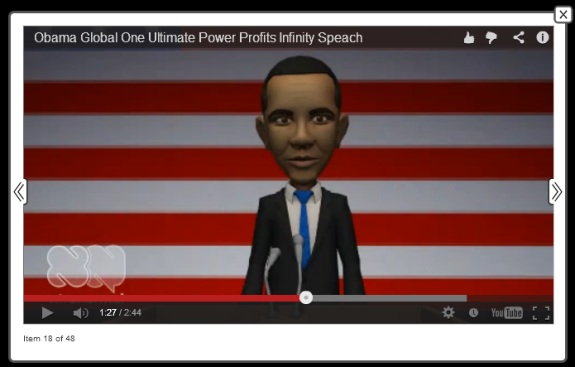
    ultimatepowerprofitspresUPDATED 11:08 A.M. ET (U.S.A.) On a day Americans cherish as a great symbol of the continuation of Democracy, images of their President are being used to create the impression he has endorsed a “program” HYIP hucksters sought to popularize in the aftermath of the August 2012 collapse of the Zeek Rewards “program” amid SEC allegations that Zeek was just another massive Internet scam.

    “Just join their team and you will receive all the help you need to grow your own business,” an animated Obama tells prospects in a video promoting Ultimate Power Profits. “By doing so, your earnings will increase. There is no hidden agenda. They showed me how their system worked and I was impressed. It is a fully legal and U.S.-patented system they use to make money.”

    Obama’s image previously was used in affiliate promos for MPBToday, a purported MLM “grocery” program whose operator was arrested on a racketeering charge in Florida last month. A building that housed MPB Today’s operations is the subject of a federal forfeiture action in U.S. District Court for the Northern District of Florida. The forfeiture case was filed July 31, 2012.

    Less than three weeks later — on Aug. 17, 2012 — the SEC alleged Zeek was a $600 million Ponzi and pyramid scheme. Zeek and MPBToday are known to have promoters in common, including serial Ponzi scheme pitchman “Ken Russo,” also known as “DRdave.”

    On Aug. 18, only a day after the SEC’s Zeek action late on Friday afternoon, the PPBlog began to receive spam about the UltimatePowerProfits “program.” (See Comments thread below this story. The Blog established a Ponzi-forum tie between Zeek and Ultimate Power Profits.)

    On Aug. 20, the office of North Carolina Attorney General Roy Cooper — which also had been investigating Zeek — issued a warning on “reload scams” in the wake of the SEC’s Zeek action.

    Ultimate Power Profits is not the first “program” to make a claim about a “U.S. patent.” The JSS/JBP scam, which purported to pay an annualized return of 730 percent and purportedly was operated by former AdSurfDaily Ponzi-scheme pitchman Frederick Mann, also made a claim about a U.S. patent.

    It is not uncommon for HYIP scams and MLM frauds to plant the seed that a “program” is endorsed by an agency of the U.S. government or a U.S. politician. ASD’s Andy Bowdoin was accused in 2008 of trading on the name of George W. Bush, then the President of the United States and Obama’s predecessor.

    Images of former President Bill Clinton and Secretary of State Hillary Clinton were used in the massive Mantria “green” Ponzi scheme in 2009.

    In 2012, JSS/JBP came under the lens of CONSOB, the Italian securities regulator. Some promoters, however, didn’t miss a beat. (Compare the images in the screen shots below. The first is from a promo for an emerging “program” known as RicanAdFunds; the second is from a promo for Zeek; the third is from a promo for JSS/JBP.)

    1.

    ricanfundschapmansmall

    2.

    chapmanzeek

    3.

    jss-triplersmall1